





A pain medicine plan needs to be clear before surgery
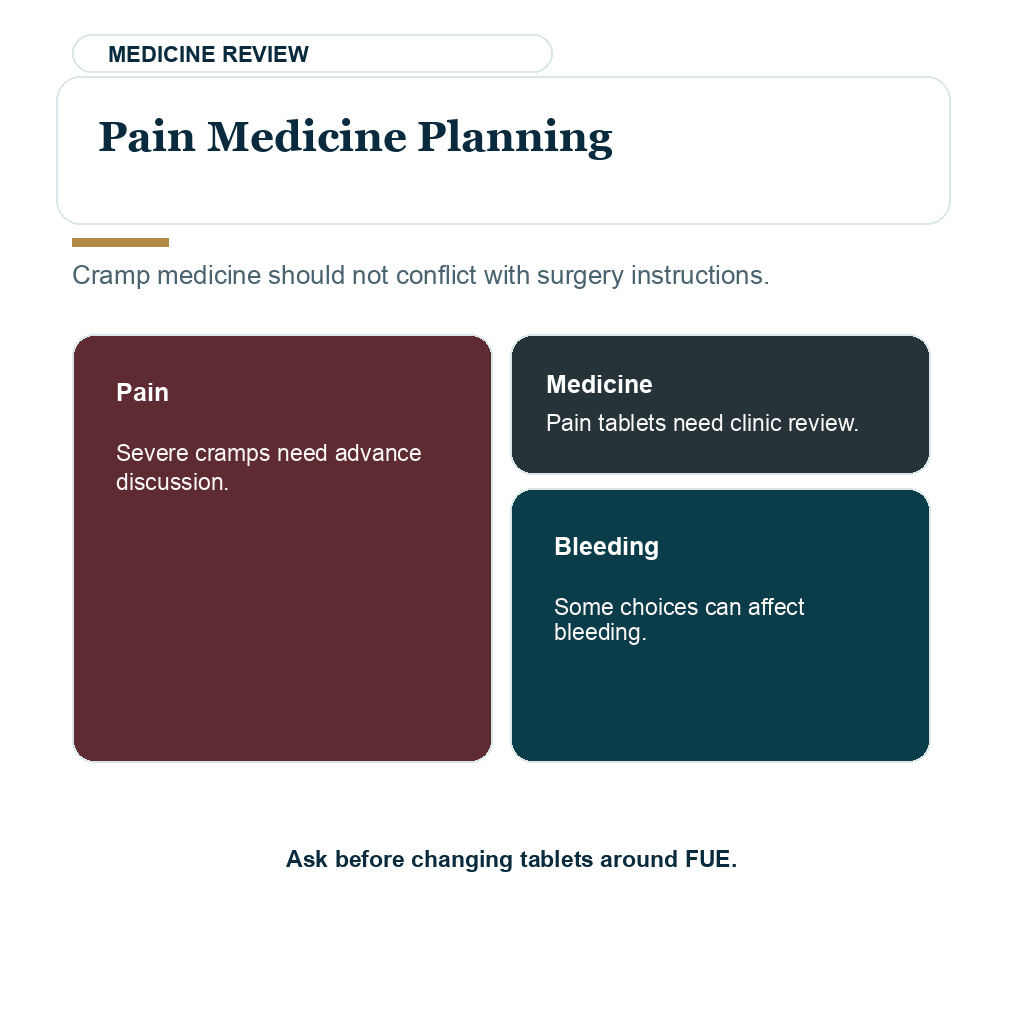
Many women use ibuprofen, naproxen, aspirin, paracetamol, or prescription medicine for period pain. These medicines are not all the same around surgery. Some can affect bleeding. Some may be unsuitable when asthma, stomach ulcers, kidney disease, liver disease, heart disease, blood pressure problems, dehydration, or bleeding risk is part of the history.
Do not add or change pain medicine on your own because cramps started. Write down what you normally take, how much you took, and when you took it, then share that with the clinic. When period pain medicine is part of the plan, I treat ibuprofen before hair transplant as a medication planning issue, not an afterthought.
One approved tablet in a written plan is different from repeated unplanned doses close to surgery. The first can be documented. The second can make bleeding, stomach symptoms, dizziness, blood pressure, and hydration harder to interpret.
After surgery, pain control should stay simple and documented. If you already need medicine for cramps, the aftercare plan should not leave you guessing which tablet is for the scalp and which one is for the period. During the first recovery days, painkillers after hair transplant need the same clarity.
Heavy bleeding can change the surgery conversation
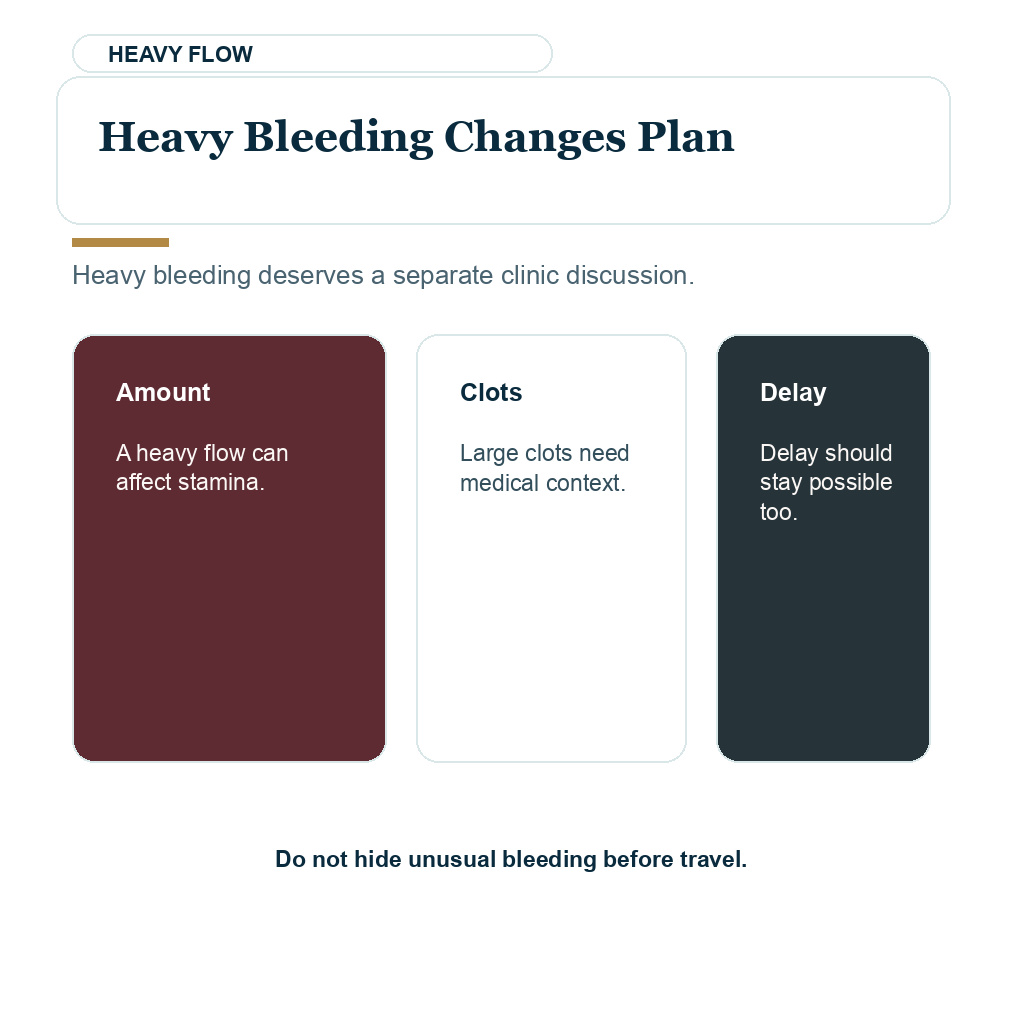
A normal flow does not make the scalp bleed more. Very heavy bleeding can still matter because it may reveal anemia, dehydration, weakness, or a bleeding pattern that needs medical attention. The concern is not that menstrual blood reaches the grafts. The concern is whether you are medically steady enough for an elective procedure.
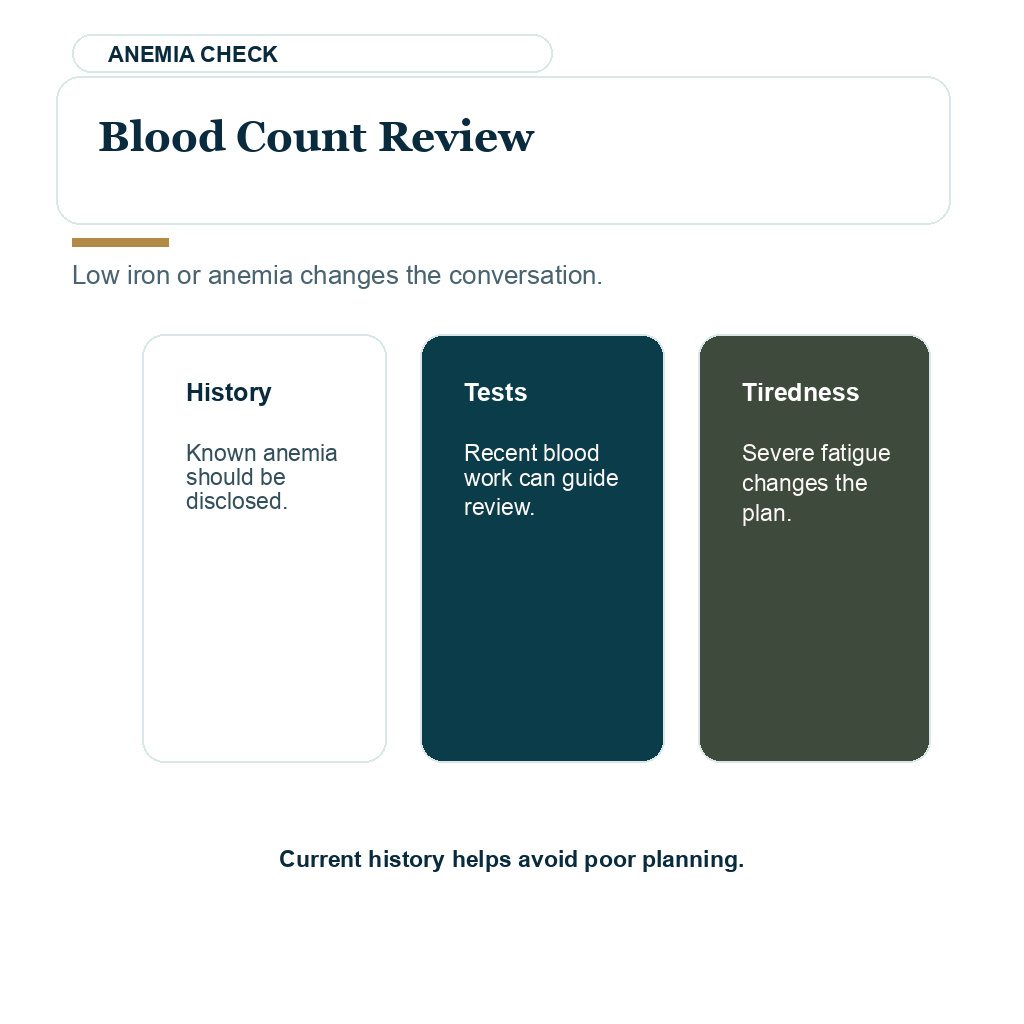
If you have known heavy periods, fibroids, endometriosis, a bleeding disorder, previous iron infusions, very low ferritin, or repeated fainting during periods, say that early. I do not want to discover this while you are already on the treatment chair.
A period on its own does not cancel hair transplant surgery. The decision is whether this cycle makes this surgery day sensible, which is more helpful than one fixed rule for every patient.
A period that starts after arrival in Istanbul can still be managed
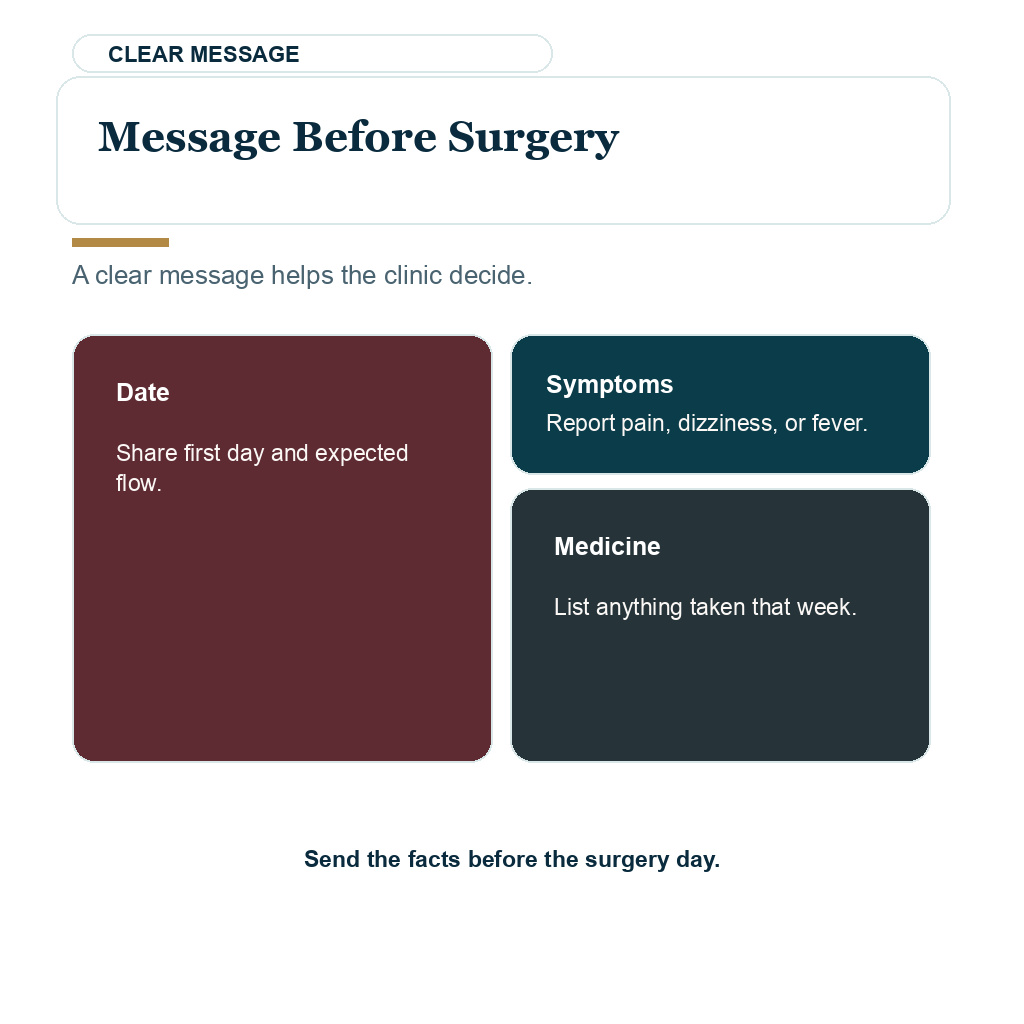
If your period starts after you arrive, message the clinic instead of panicking. Include the first day of bleeding, whether it is normal for you, how heavy it is, what symptoms you have, and which medicines you have taken. A short, clear message helps me decide whether the plan can continue or needs adjustment.
Do not take aspirin, extra ibuprofen, herbal products, or unfamiliar tablets because you want to keep the date. Do not skip food or fluids unless your written surgery instructions tell you to. Do not hide dizziness because you fear cancellation. I need the real picture before I decide whether the plan can continue.
If the period is normal and you feel well, the day may continue with small comfort adjustments. If you are weak, faint, vomiting, or bleeding unusually heavily, it may be safer to delay than to force an elective procedure.
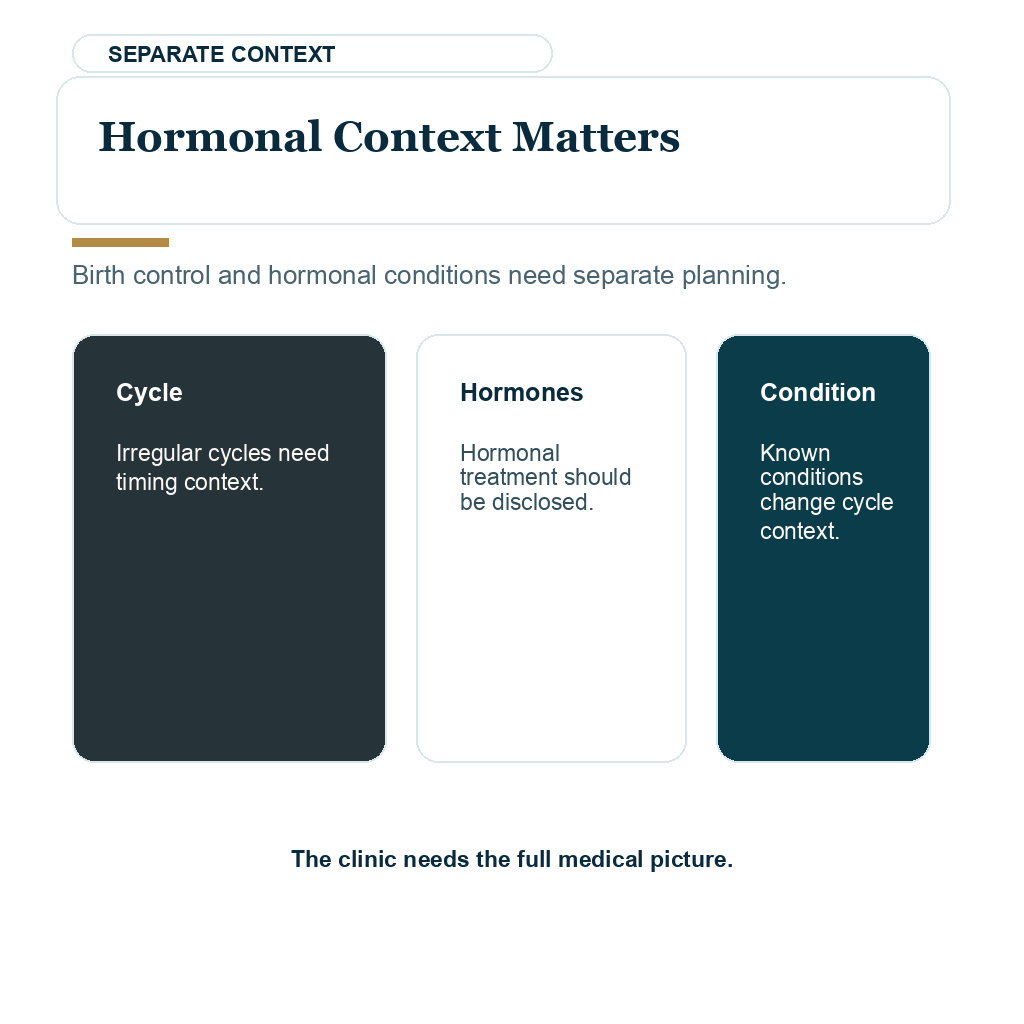
Birth control and hormonal conditions need separate planning
If you use hormonal contraception, do not stop or change it just to move your period without medical advice. Changing hormones close to surgery can create more confusion than it solves. The birth control and FUE planning for female hair loss guide explains why medication history and hair loss stability belong in the same planning conversation.
If you have PCOS, irregular cycles, very heavy periods, acne, androgen sensitivity, or hormonal treatment, the transplant decision should look beyond the calendar. The donor plan and the hair loss diagnosis matter. The guide to PCOS and hair transplant planning is more relevant when irregular cycles are part of a wider androgen or shedding pattern.
Pregnancy, possible pregnancy, IVF timing, and breastfeeding are different questions from a routine menstrual period. If pregnancy may be possible, disclose it before surgery, because pregnancy, IVF, and hair transplant timing can change whether surgery should go ahead and when it should be planned.
A clear message helps the clinic decide safely
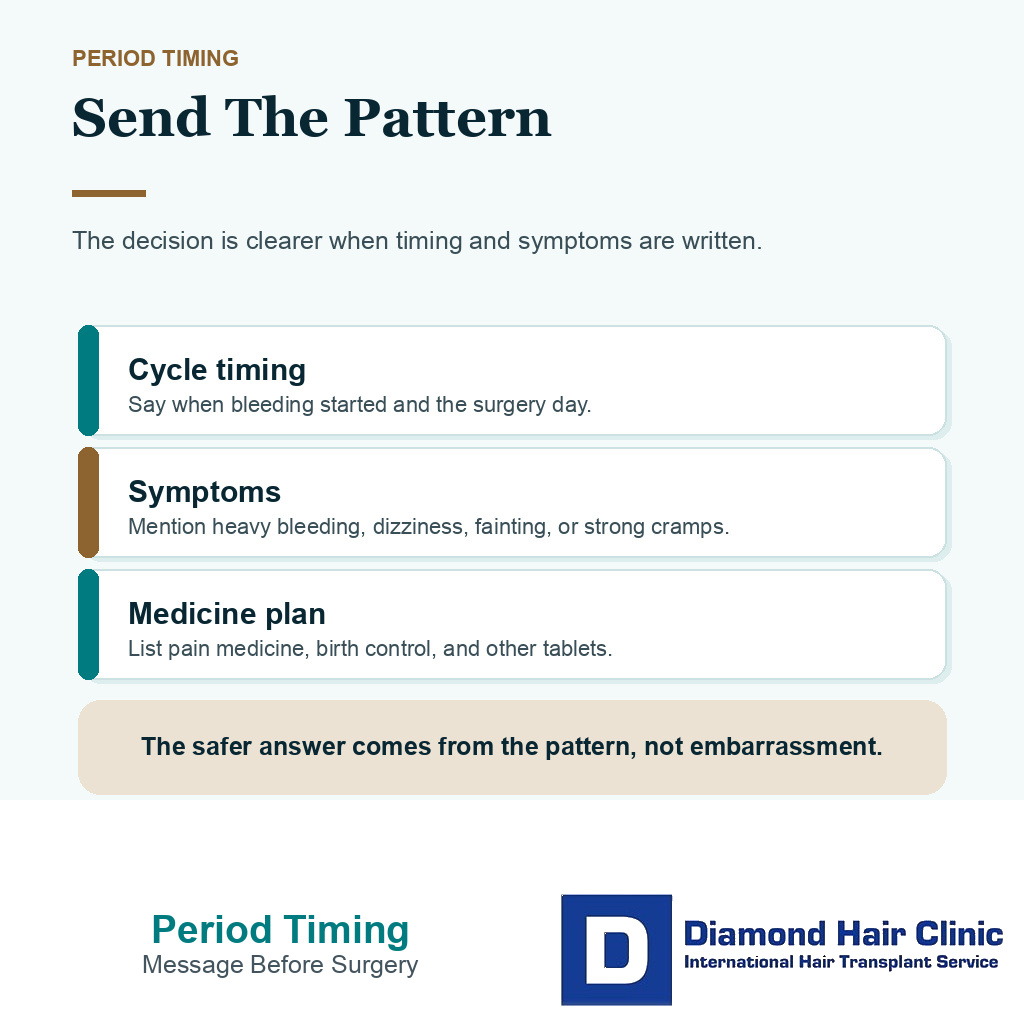
Share the timing before you travel, not on the morning of surgery. That gives the team room to separate simple comfort adjustments from a medical timing review.
The message can be short, but it has to be direct. I can only help keep the plan medically coherent if the team knows what is happening. If the coordinator asks for a blood test, doctor note, or timing change, that is not a punishment. It is part of responsible elective surgery.
The most useful message is sent before the clinic has to make a rushed decision. Surgery morning is late. The night before is better. Before travel is best when your periods are often heavy or unpredictable.
A clear message separates ordinary period discomfort from symptoms that should slow the plan down.
Fainting and dizziness need extra caution
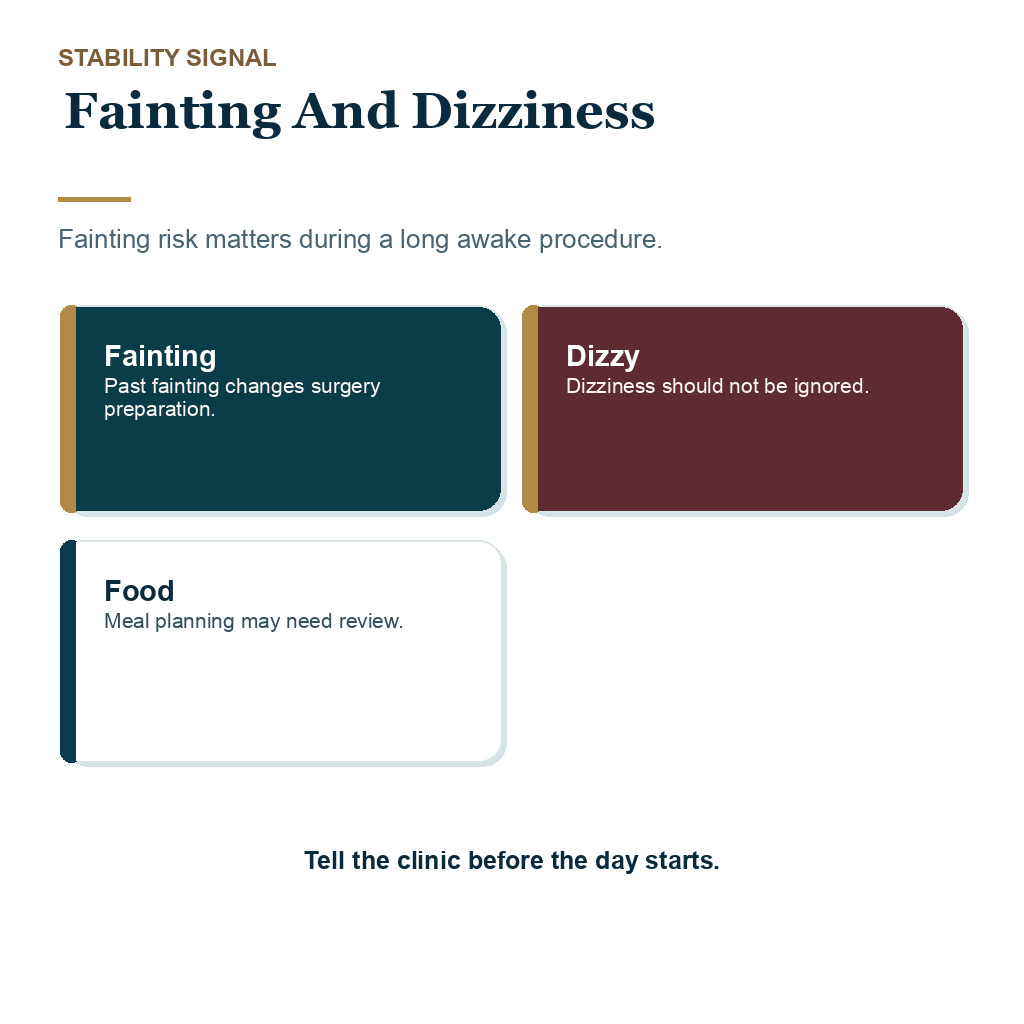
Fainting and dizziness need more care than mild cramps. Some people faint from pain, dehydration, anxiety, low blood sugar, anemia, or standing too quickly. A long clinic day can expose that weakness. If you have a history of fainting during periods, let the clinic know before the day starts.
The fainting and dizziness before hair transplant guide explains why these symptoms are not just nerves. They affect safety, positioning, hydration, and whether the team should slow down or delay.
If you feel faint on surgery morning, say it. Do not try to be brave in silence. A delayed procedure is easier to manage than fainting during preparation, after local anesthesia, or while walking back to the hotel.
Menstrual symptoms should stay visible on surgery day
Do not cancel automatically just because your period started, and do not force the date if your body is clearly not ready. I look at the symptoms, bleeding, medicine plan, and blood count risk before I decide whether the date should move.
If the period is normal, your symptoms are mild, and your pain medicine plan is clear, surgery may still be reasonable. If bleeding is heavy, pain is severe, anemia symptoms are present, or you need unplanned medicine, the date should be reviewed.
A careful hair transplant plan respects the person, not only the graft count. For women, that means the surgical date should fit the real medical picture, including the menstrual cycle when it matters.

Read this review excerpt
He was very thorough in every little detail and I never felt pressure to do anything I wasn’t sure of.