


Thyroid Stability and Surgery Timing
A hair transplant may be possible if you have thyroid problems, but I do not plan surgery until the thyroid condition is diagnosed, treated, and reasonably stable. If thyroid levels are actively changing, medication was recently adjusted, symptoms are strong, or shedding is sudden and diffuse, I usually wait before using donor grafts. The same diagnosis first timing matters for women considering a hair transplant with PCOS, where hormones and shedding can blur the surgical picture.
This matters in a very practical way. A hair transplant moves healthy donor follicles into areas of permanent thinning. It does not correct hypothyroidism, hyperthyroidism, Hashimoto’s thyroiditis, Graves’ disease, or any other thyroid imbalance. If the thyroid problem is still disturbing the hair cycle, the operation may be technically correct, but the patient may still feel that the result is confusing because native hair keeps shedding around the transplanted grafts.
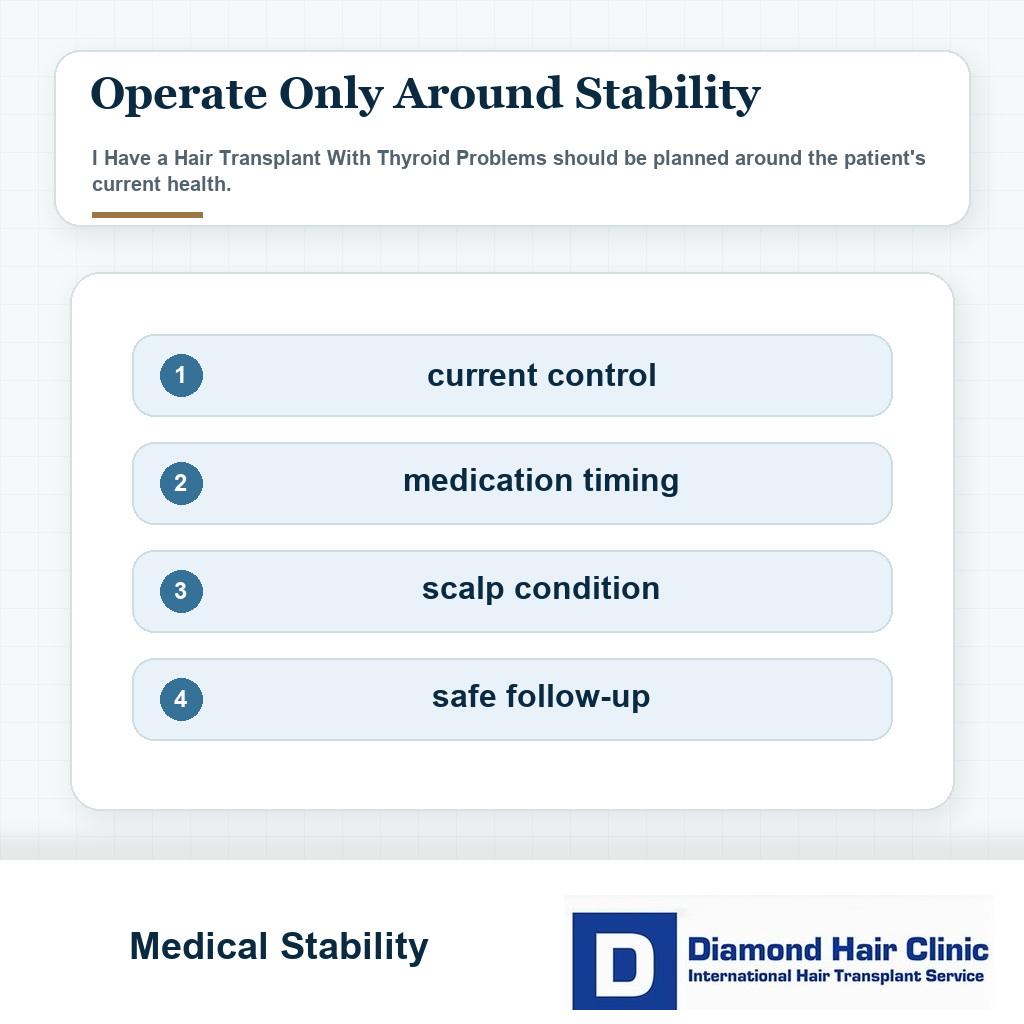
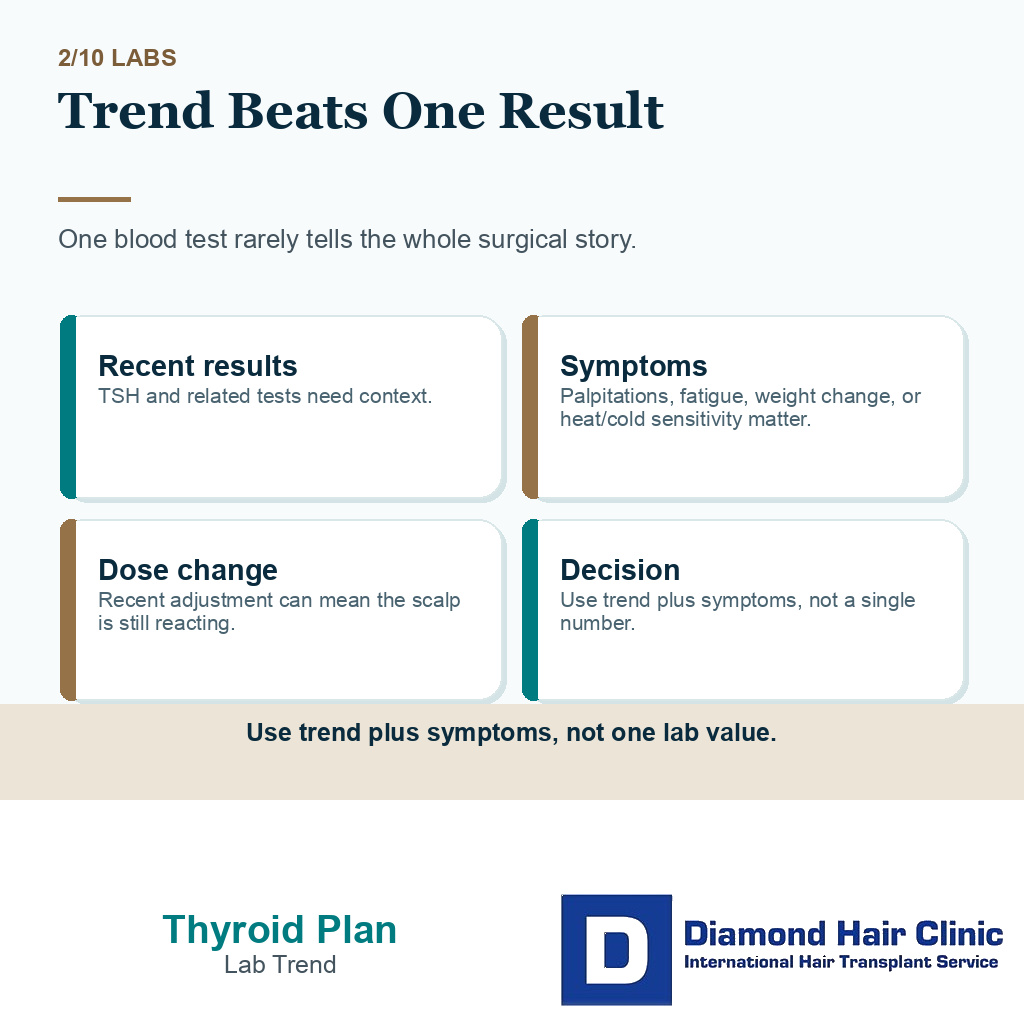
The diagnosis label alone is not enough to accept or reject surgery. I need to know how controlled the thyroid condition is right now. Stable does not mean perfect forever. It means the recent blood results, medication dose, symptoms, and shedding pattern are not moving in a way that would mislead the surgical plan. Hair transplant timing with thyroid disease depends on both medical control and a readable hair pattern, not one lab result. When the thyroid picture is not stable, the safer first step is medical control and observation. After a dose change, older shedding photos are a weak map for surgery until the pattern settles again.
Thyroid levels matter before a hair transplant
Thyroid hormones influence the hair cycle. When the thyroid is underactive or overactive, some patients develop diffuse shedding, reduced hair quality, dry or brittle hair, eyebrow thinning, or a general loss of volume that does not behave like simple pattern hair loss. When the hairline has not moved but the whole scalp looks thinner, the medical pattern needs to be understood before grafts are planned.
It matters because hair transplant planning depends on reading the scalp correctly. I need a clear picture of which hairs are permanently miniaturizing, which hairs may recover after medical treatment, and which areas truly need grafts. If those questions are blurred by active thyroid imbalance, the plan can become too aggressive or simply poorly timed.
The same diagnosis first logic applies to other medical causes of shedding. A hair transplant after cancer treatment, or a case with abnormal blood tests before a hair transplant, should not be planned from one photograph while the medical background is still unclear.
Thyroid disease can look like balding
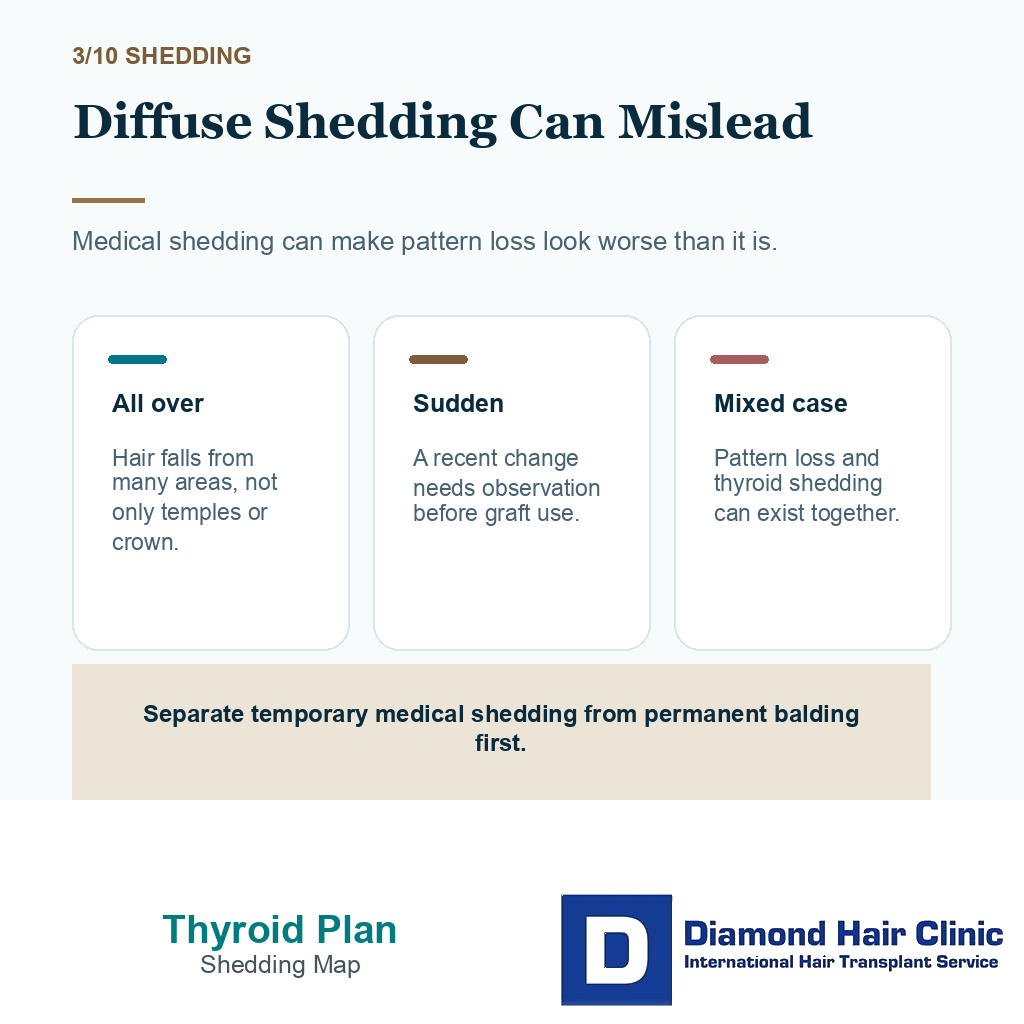
It can. Thyroid related shedding can make the scalp look thinner even when the underlying pattern hair loss is not severe. Some patients notice hair falling from all over the scalp. Some notice weaker hair texture. Some feel that their hair suddenly lost body and coverage.
That can look frightening, especially for a patient who already has male pattern hair loss. The difficult part is that both problems can exist together. A patient may have real hairline recession and crown thinning, and still have thyroid related diffuse shedding at the same time.
If I transplant without separating these problems, the surgery may answer only one part of the patient’s concern. The grafts may grow, but the patient may still feel thin because the surrounding native hair is going through a medical shedding phase. Diagnosis has to come before design.
Separating thyroid shedding from pattern hair loss
Pattern hair loss usually follows a recognizable map. The hairline recedes, the temples weaken, the crown opens, or the mid scalp gradually loses density in a predictable way. Thyroid shedding is often more diffuse. It may affect the whole scalp, and the timing may be sudden or connected with symptoms, medication changes, illness, weight change, or abnormal blood results.
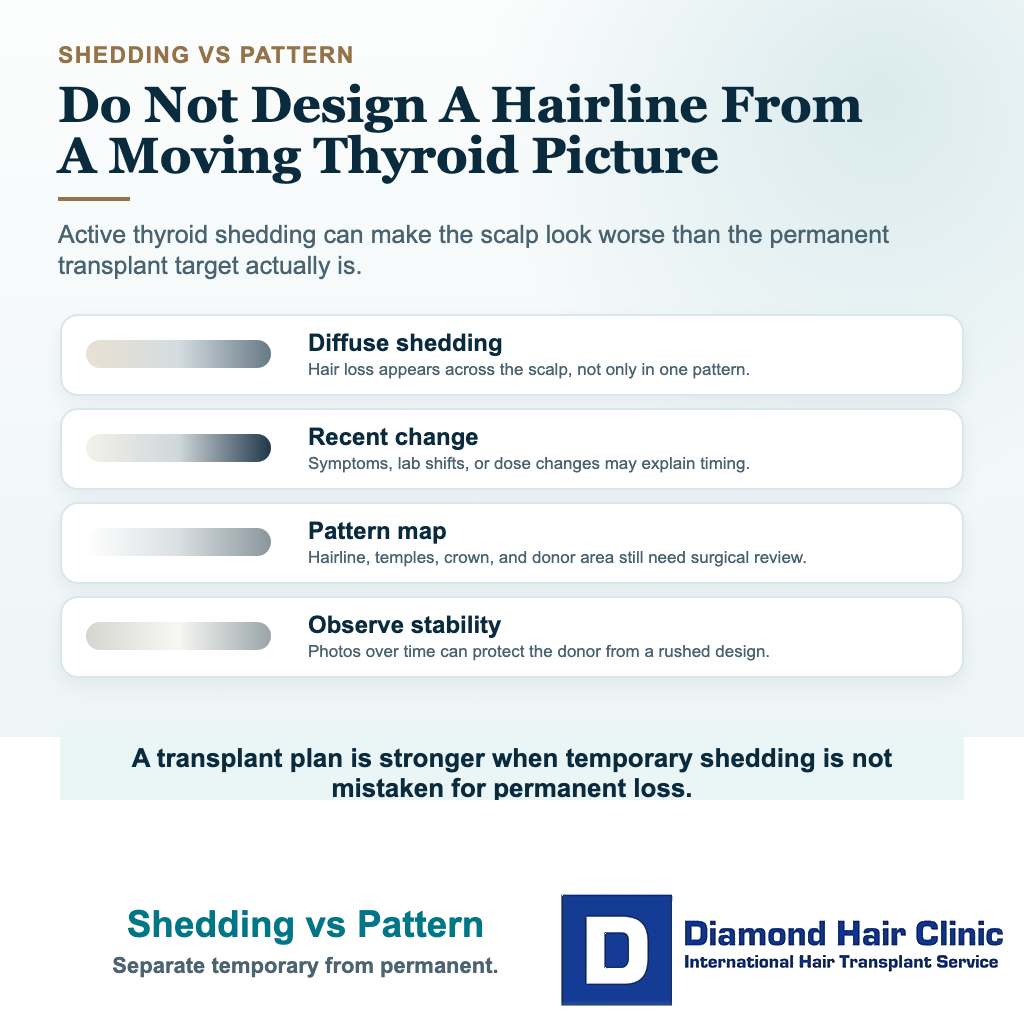
In consultation, I look at the donor area, the miniaturization pattern, the family history, the speed of change, and the medical history. I ask when shedding started and whether it changed after thyroid treatment. A patient with diffuse thinning should not be planned in the same way as a patient with a stable frontal recession.
Sometimes the answer is not available in one visit. A few months of stable thyroid treatment and consistent photographs can make the picture much clearer. Waiting is not a weak decision when the diagnosis is still moving. It can protect the donor area and prevent a design based on temporary thinning.
Show the latest thyroid result together with the dose history. I trust the timing more when the medicine has stayed steady for a while, and when symptom or shedding changes are included in the same picture.
If I would delay surgery
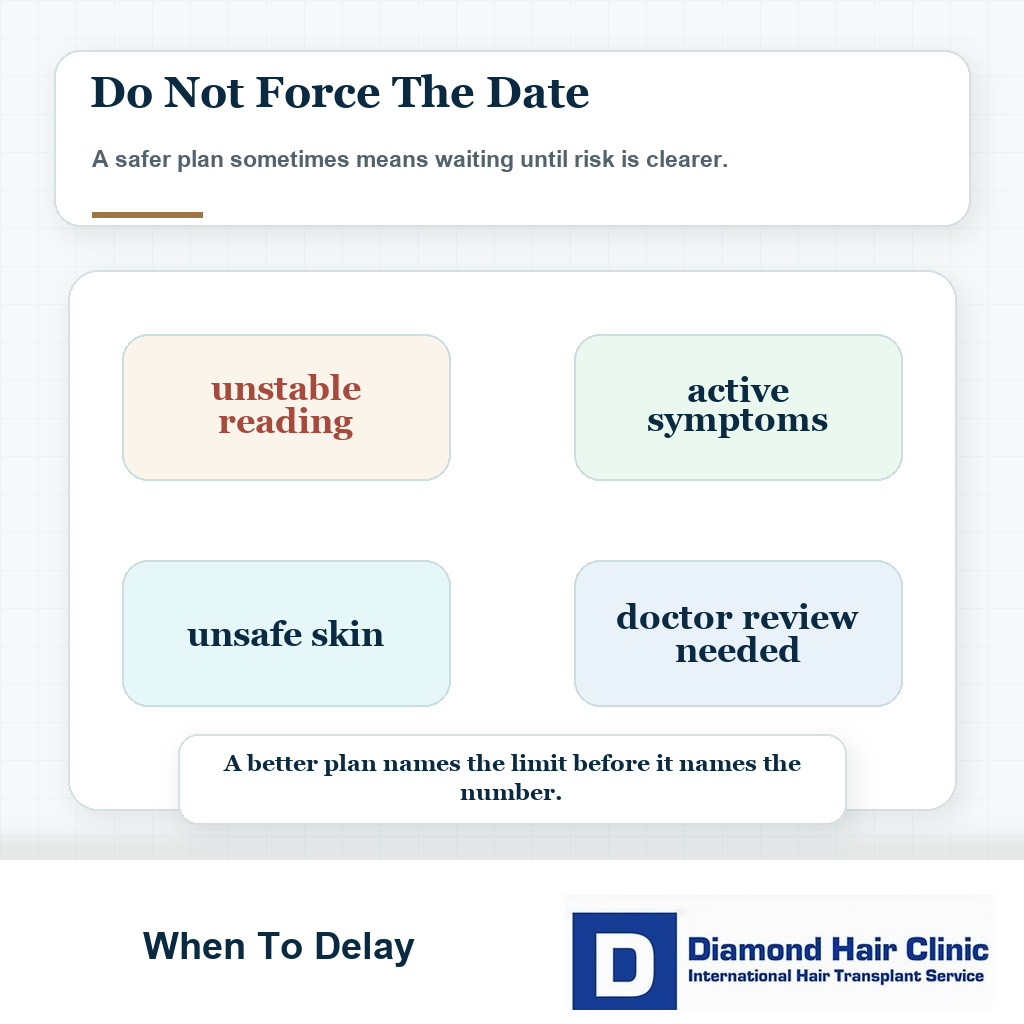
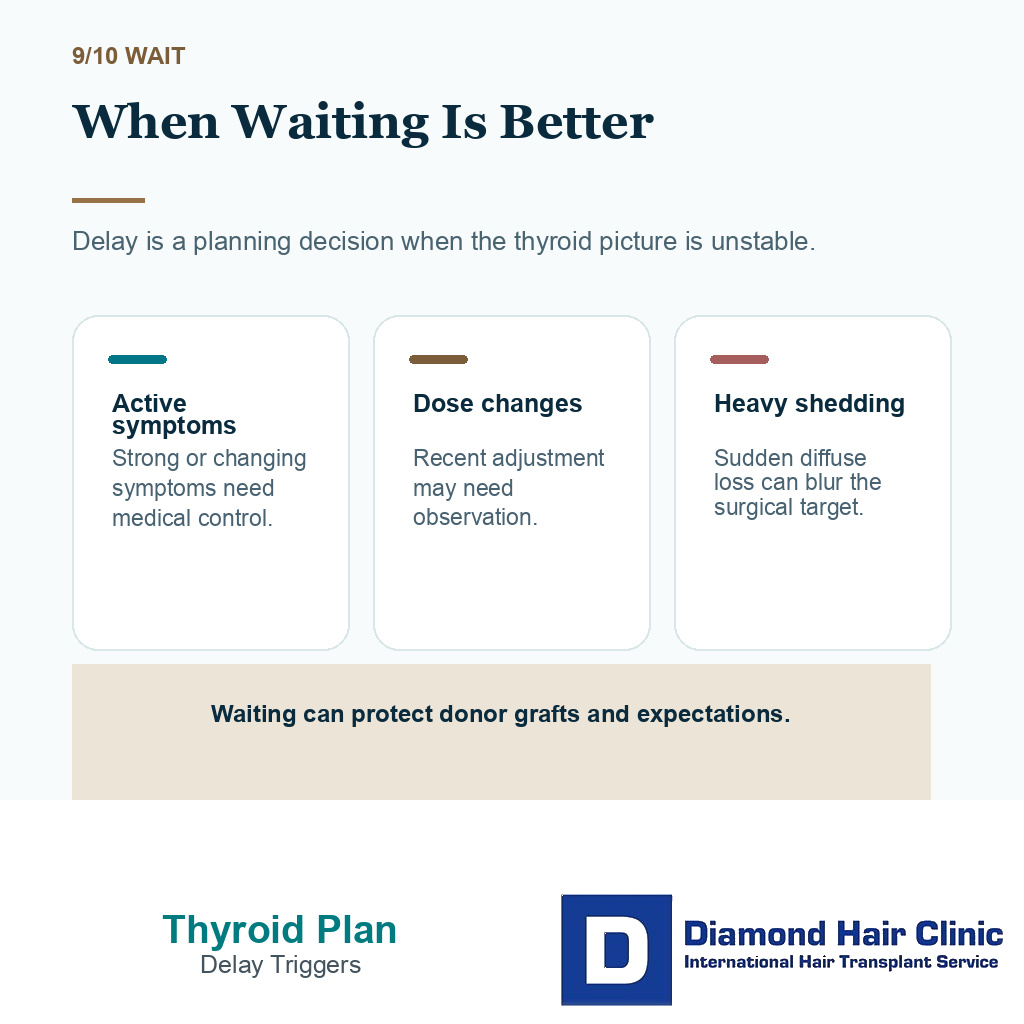
I delay surgery if the thyroid diagnosis is new, the medication dose was recently changed, the blood results are clearly abnormal, or the patient has strong symptoms such as unexplained weight change, fatigue, tremor, heat intolerance, cold intolerance, racing heart, or marked anxiety connected with thyroid imbalance.
I also wait if shedding is sudden and heavy. If hair is falling from the entire scalp, the first question is not where to place grafts. The first question is why the hair cycle is disturbed. Surgery should not be used to cover uncertainty.
Waiting does not mean the patient can never have surgery. It means the thyroid condition should be controlled enough for the hair loss pattern to be judged fairly. A delayed operation can be a better operation if it gives the surgeon and the patient a clearer map.
Thyroid medication usually does not prevent surgery
Usually, no. Thyroid medication by itself is not a reason to reject a patient. Many patients who take thyroid medication can still be candidates for surgery when the condition is stable, the treating physician is satisfied, and the hair loss pattern is suitable for transplantation.
What I avoid is sudden medication change made only because of surgery fear. Do not stop thyroid medication before a hair transplant unless the treating physician specifically advises it. Stability is usually more helpful than panic.
If the patient recently started medication, recently changed the dose, or still has symptoms, I need a period of stability before final surgical planning. The issue is not the word thyroid. The issue is whether the body is in a steady enough state for the plan to be reliable.
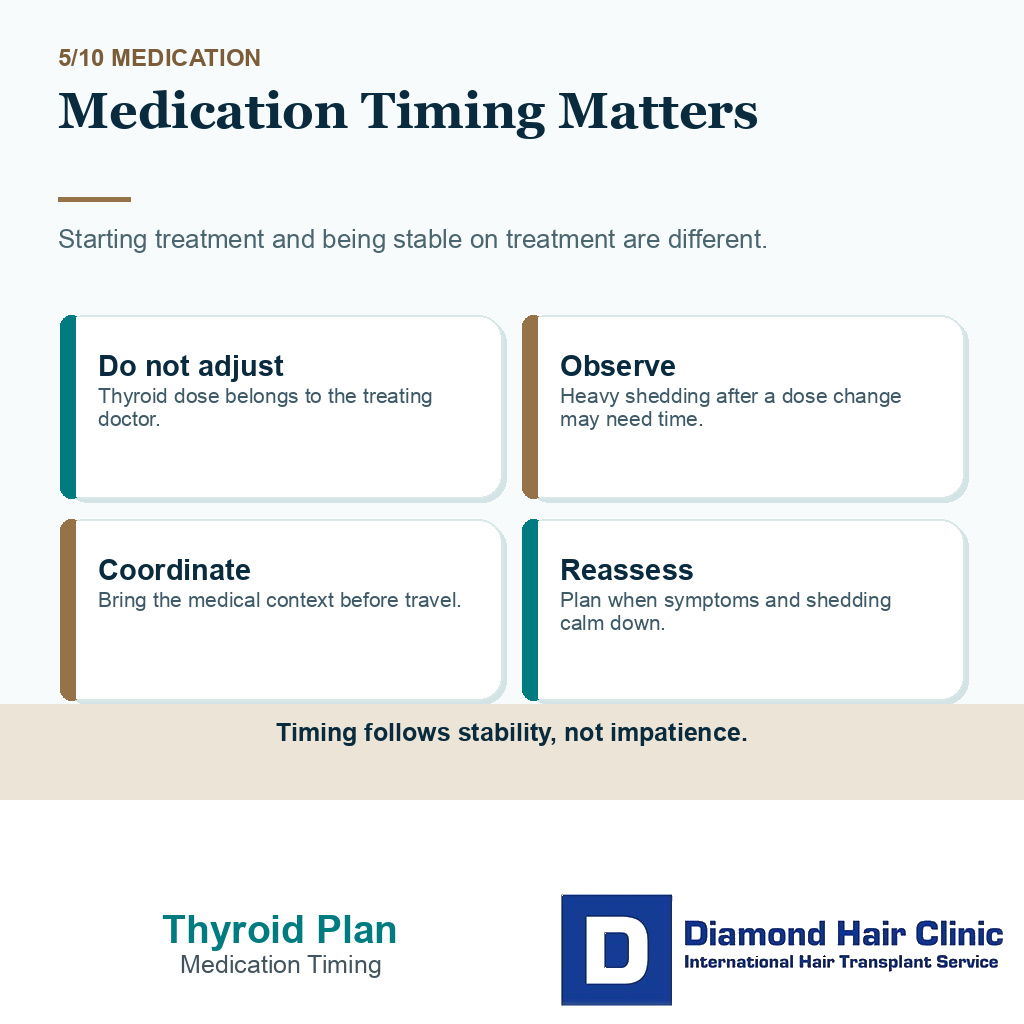
Starting thyroid treatment is different from being stable on thyroid treatment. I do not need perfection, but the dose, symptoms, and shedding pattern should stop changing in a way that would mislead the plan. Otherwise, the transplant may be judged while the scalp is still reacting to a medical problem.
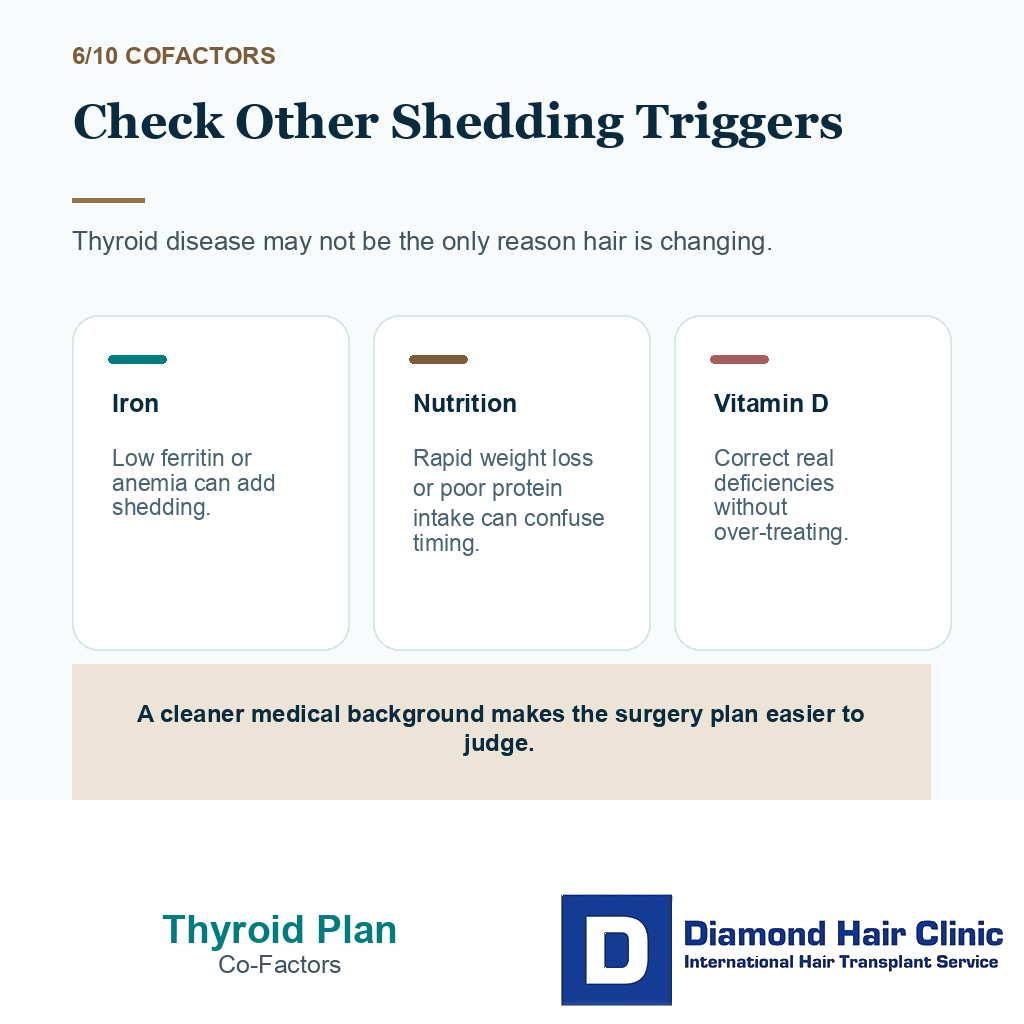
This 10 slide carousel explains why thyroid stability comes before judging shedding or surgery timing. Swipe sideways, use an arrow, or choose a number below the image.



Thyroid medication can sometimes affect shedding
Patients often worry that the medication is making the hair fall. Sometimes shedding appears around the same period that treatment begins, so the patient naturally connects the two. Commonly, the underlying thyroid imbalance and the delayed hair cycle response matter more than the tablet itself.
This timing often creates anxiety. Hair shedding can lag behind the medical trigger, so the timing may feel unfair. A patient may start treatment and still shed for a while because the hair cycle does not reset immediately.
I do not adjust thyroid medication. That belongs to the patient’s doctor. My role is to decide whether the scalp is stable enough for surgery. If the patient is still shedding heavily while treatment is being adjusted, I usually wait and reassess.
Active thyroid shedding can make surgery misleading
A hair transplant result is judged by the total appearance of the scalp, not only by whether the transplanted grafts survive. If the grafts grow but native hair continues to shed, the patient may look at the mirror and think the transplant failed.
I explain the difference between graft growth and native hair behavior before surgery. Transplanted donor hair can grow well, while surrounding native hair may still change because of thyroid imbalance, genetic hair loss, stress, iron deficiency, or another medical factor.
The same distinction matters in patients who ask whether hair loss can continue after a hair transplant. The answer is yes. Surgery does not freeze every native hair. It improves selected areas, and the long term plan must respect what may continue to change.
Thyroid disease changes hairline and density planning
When the thyroid picture is unstable, density promises need to be treated carefully. The transplanted hair can improve an area, but the surrounding native hair may still be moving through a shedding cycle. If the patient expects surgery to make every thin area thick immediately, disappointment becomes likely.
I also avoid using grafts to chase temporary thinning. Donor grafts are limited. They should be used for permanent structural planning, not for panic coverage during a medical shedding phase. In the crown, large numbers of grafts can be consumed quickly if the plan is not disciplined.
A natural hairline also depends on judgment. If the design is too low or too dense while the rest of the scalp is medically unstable, the result can age poorly. The design needs to still look natural if native hair changes later.
Iron, vitamins, and nutrition also matter
Often, yes. Thyroid disease is not the only medical factor that can affect shedding. Low ferritin, anemia, low vitamin D, poor protein intake, rapid weight loss, and medication changes can all make the hair cycle harder to interpret.
This should be understood narrowly. It does not mean every patient needs endless testing. It means the story should make sense. If a patient has thyroid disease and heavy diffuse shedding, I assess whether there are other correctable problems as well. Low ferritin, anemia, and hair transplant planning belong in that discussion when iron status may be part of the shedding, and vitamins after a hair transplant should be used with judgment rather than fear.
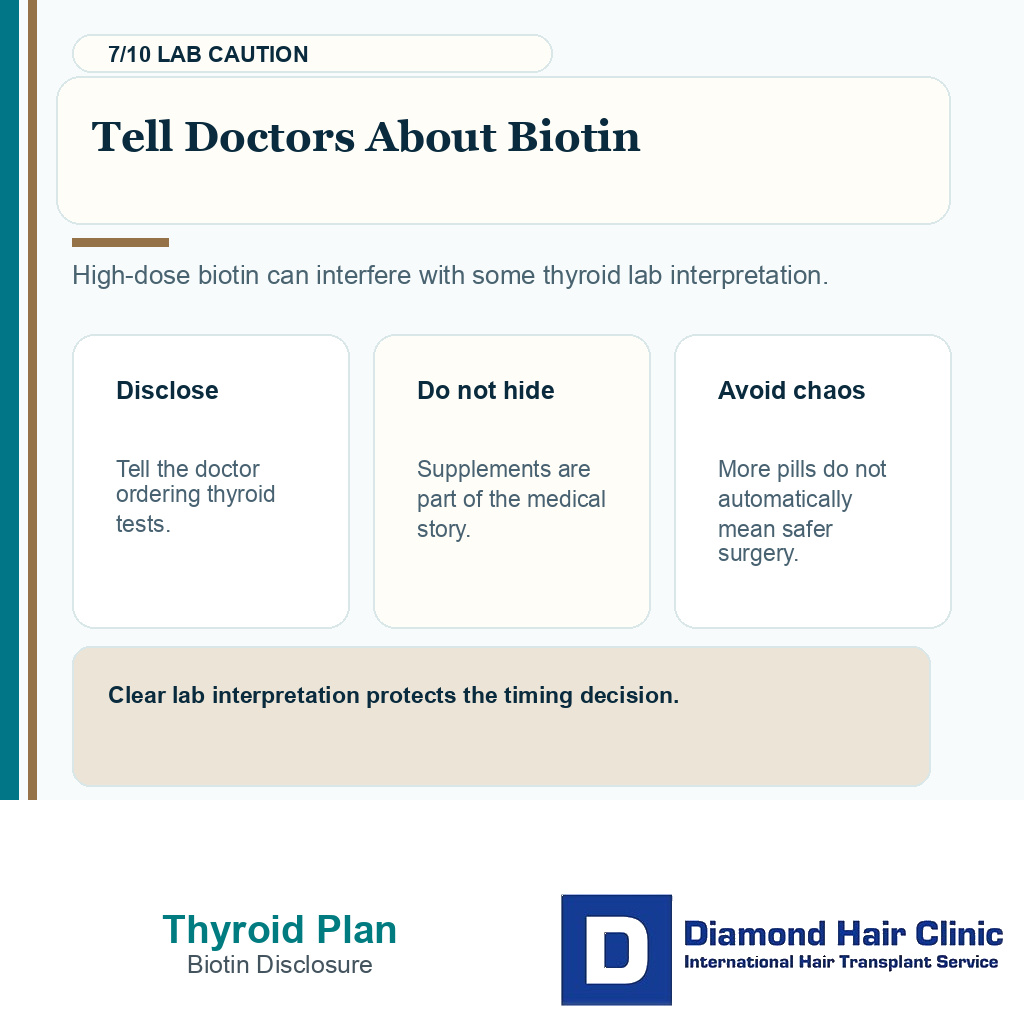
If you take high dose biotin before FUE or a hair supplement that contains biotin, tell the doctor ordering your thyroid blood tests. Biotin can interfere with some thyroid lab measurements, so the person interpreting the result needs to know what you are taking.
Do not self treat aggressively to prepare for surgery. More supplements can create confusion rather than safety. The better approach is to review the likely causes, correct what is truly abnormal, and then plan the surgery from a more stable medical background.
Thyroid problems can make shock loss more confusing
After a hair transplant, some shedding can be part of the normal recovery process. Transplanted hairs often shed before new growth begins, and native hairs can sometimes shed temporarily around the operated area. This can be emotionally difficult even in a patient with no thyroid history.
For a thyroid patient, the anxiety can be stronger because shedding may already be part of the story. The patient may not know whether the hair falling is normal after surgery shedding, thyroid related shedding, or progression of native hair loss.
I discuss expectations before surgery because this distinction matters. If a patient understands native hair shock loss after a hair transplant and also understands the thyroid history, recovery becomes less frightening. I am not promising that nothing will shed. I am explaining what kind of shedding is expected and what kind deserves review.
Improvement after thyroid treatment changes the plan
If the hair improves after thyroid treatment becomes stable, the patient may need a smaller transplant, a different distribution of grafts, or sometimes no surgery at that moment. I do not rush surgery while medical shedding is still active.
Improvement does not always mean every hair returns. Some patients still have genetic hair loss that needs surgical planning. But when part of the thinning improves, the surgical plan becomes more precise. I can use fewer grafts, protect the donor area, and focus on the zones that truly need permanent reconstruction.
I see that as a good outcome, not a delay failure. The patient has gained clarity. In hair restoration, clarity is valuable because the donor area cannot be spent twice.
Thyroid patient can still be a good candidate
A thyroid patient can still be a good candidate when the condition is treated, stable, and properly disclosed. The donor area should be strong, the recipient goal should be realistic, and the hair loss pattern should be clear enough to plan.
The plan needs a slower decision if the patient has active diffuse shedding, unstable blood results, poor donor quality, unrealistic density expectations, or a desire to fix every thin area in one session. Those concerns matter more than the diagnosis label alone.
Candidacy has to be judged individually. Being a good candidate for a hair transplant depends on timing, donor capacity, diagnosis, and long term planning, not only the wish for more hair.
Records to bring to the consultation
Bring your thyroid diagnosis, medication name and dose, recent blood results, supplement list, and the timeline of your shedding. Tell the surgeon when the thyroid problem was diagnosed, whether medication changed recently, whether symptoms are controlled, and whether the shedding improved or worsened after treatment. Include who changed the dose and when, not only the current tablet strength. Record the date of each result, because an old normal panel may not describe today’s shedding.
Consistent photos are also useful. They help show whether the hair is gradually miniaturizing in a pattern or suddenly shedding across the scalp. I ask about recent weight loss, illness, low ferritin, vitamin deficiency, stress, and any medication changes.
The more complete the history is, the safer the plan becomes. Share the medical details even if you worry they may slow the process down. Hidden information can lead to the wrong design, the wrong density expectation, and unnecessary anxiety during recovery.
Promises to avoid for thyroid patients
The promise should not be that surgery will solve every thin area, stop all native hair change, or replace thyroid treatment. Those promises would make the operation sound stronger than it really is.
The responsible promise is careful planning. If the thyroid condition is stable and the hair loss pattern is suitable, surgery can improve selected areas. If the medical picture is unstable, the better decision may be to wait, treat, and reassess.
This can feel frustrating when the patient is ready for surgery, but it protects the result. Hair transplant surgery needs planning for the scalp the patient truly has, not for a temporary shedding phase that may change after treatment.
My guidance for this case
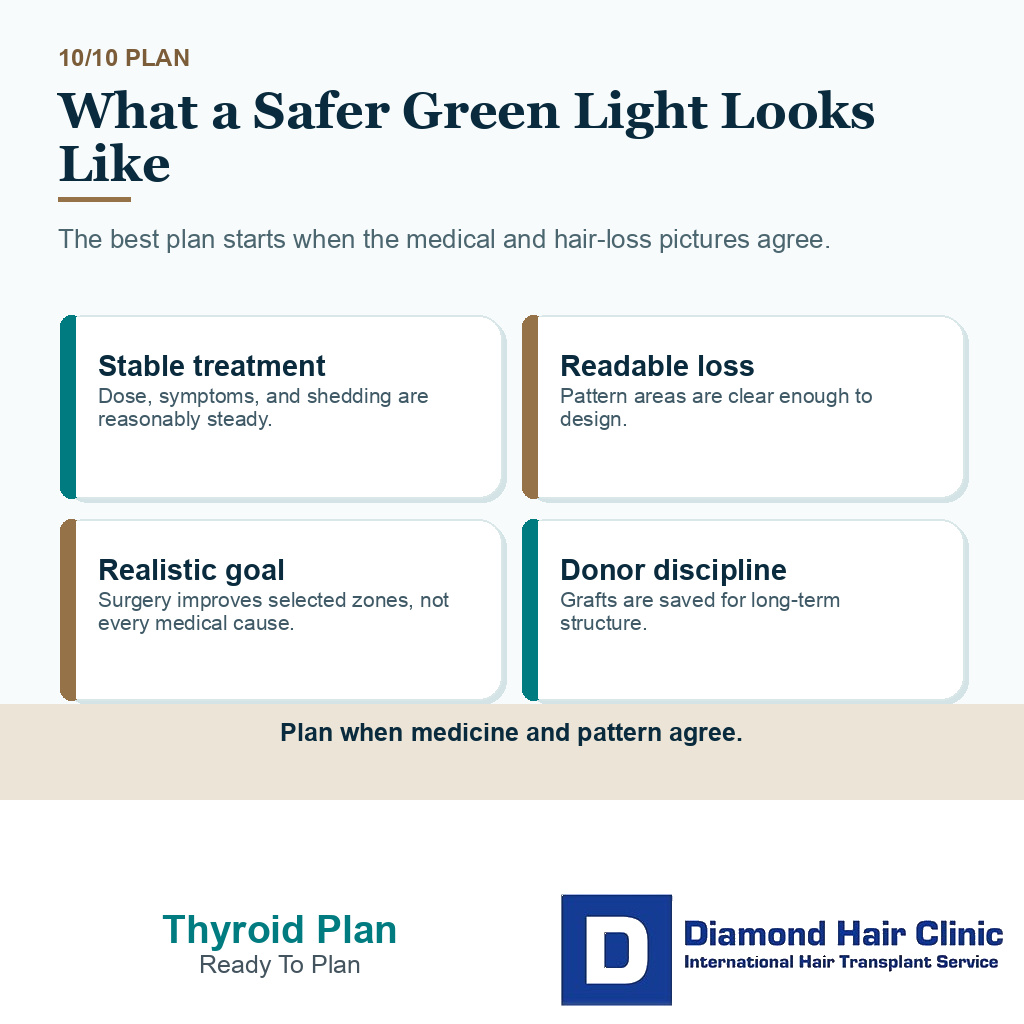
If you have thyroid problems and want a hair transplant, I first ask whether the diagnosis is clear enough to plan from. If your thyroid condition is stable, your treating doctor is satisfied, your shedding is not actively worsening, and your pattern hair loss is visible and predictable, surgery may be reasonable.
If the thyroid condition is newly diagnosed, symptoms are still strong, medication is being adjusted, or shedding is sudden and diffuse, I usually wait. That waiting period can protect your donor area and make the final surgical decision more accurate.
With thyroid disease, careful planning means respecting the medical background before drawing the hairline. Once the thyroid picture is stable, the transplant plan becomes more realistic and safer for the long term.
Read this review excerpt
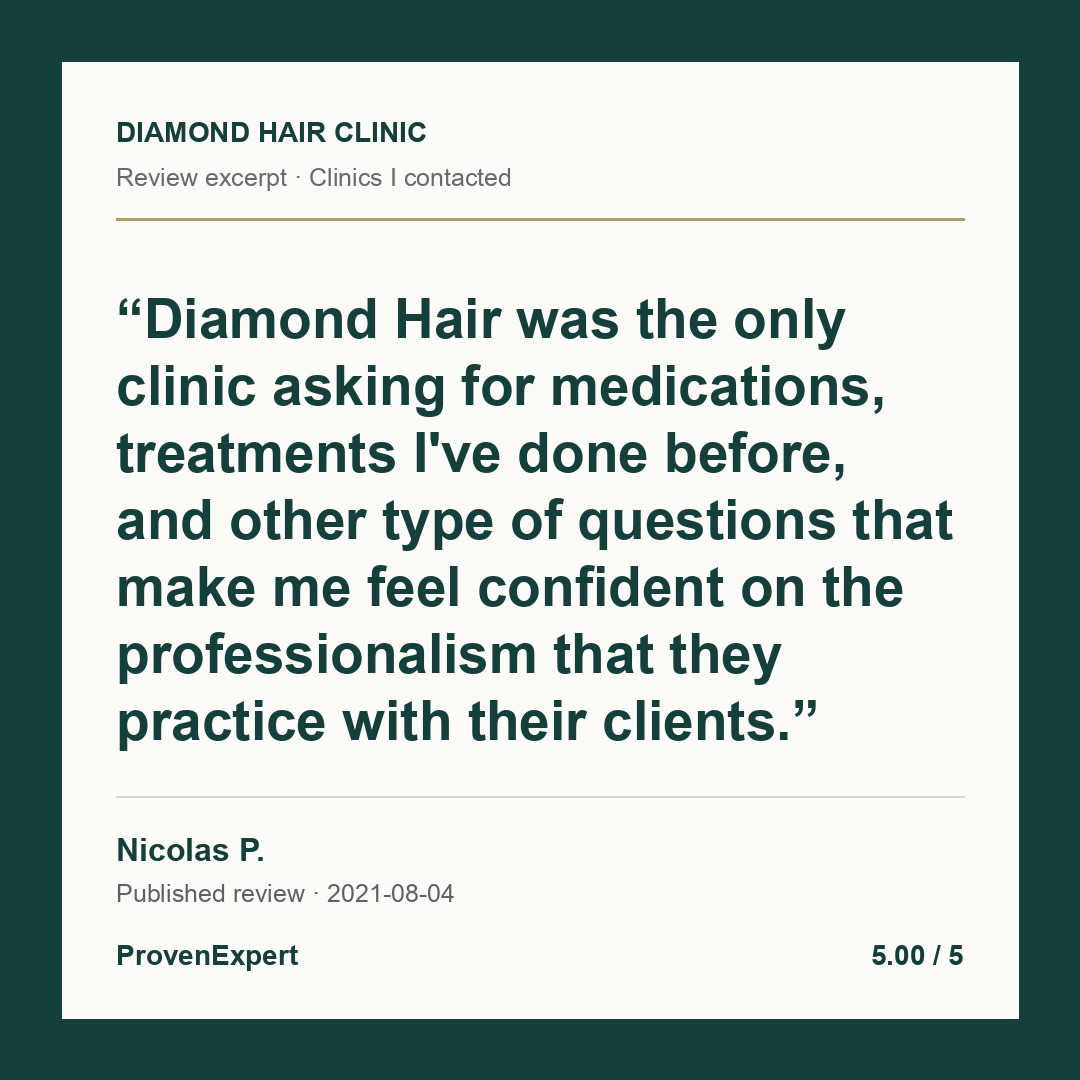
Diamond Hair was the only clinic asking for medications, treatments I've done before, and other type of questions that make me feel confident on the professionalism that they practice with their clients.