


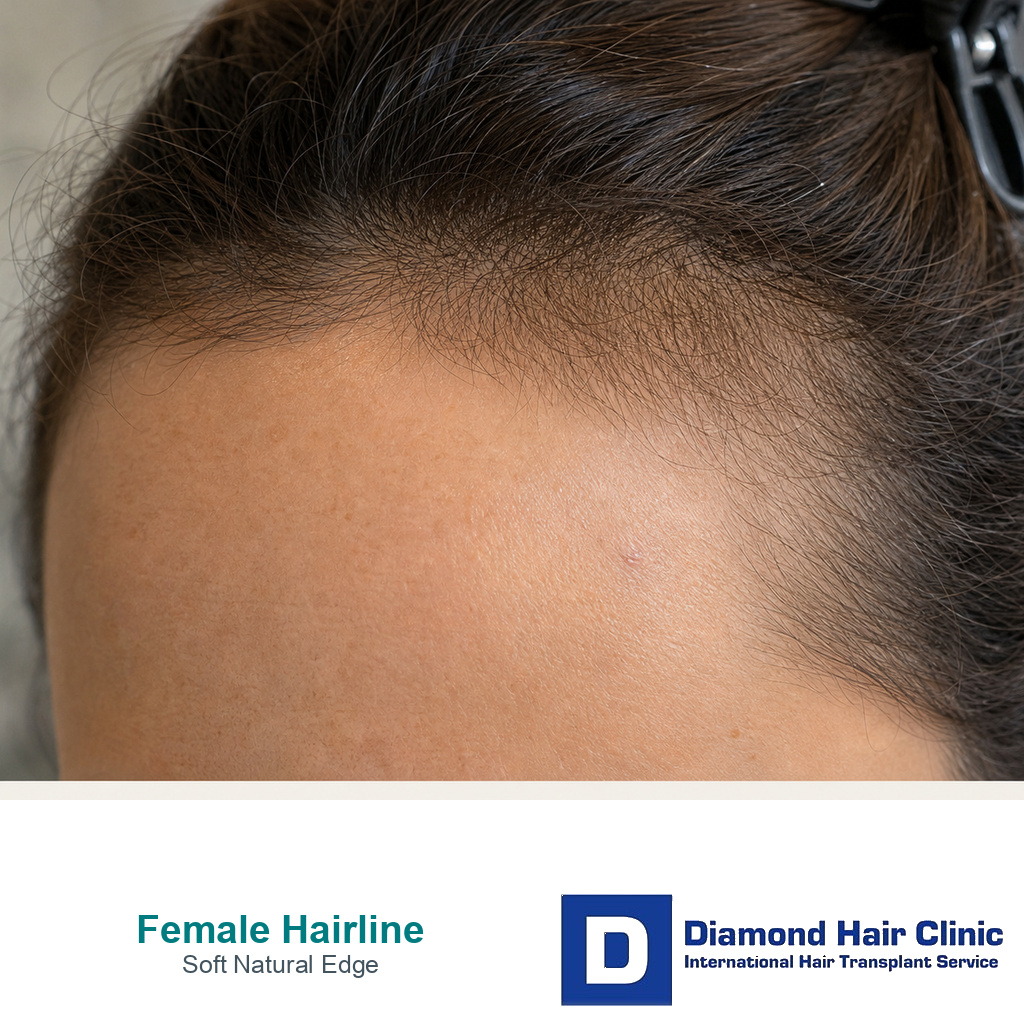
Female Hairline Softness and Natural Design
Women can have a natural hairline transplant, but only when the diagnosis, donor area, and design are right. A female hairline transplant is not just a smaller version of a male hairline transplant. The result should be compared with a result from hair like yours, especially when density, parting pattern, temple shape, and long term loss pattern are different from a typical male hairline case. The best female hairline frames the face softly instead of drawing a sharp border or chasing the lowest possible line. In the first weeks after surgery, close photos can make the edge look harsher before shedding, styling, and surrounding hair settle. In women after menopause, the hairline plan should also be judged against the wider diagnosis described in menopause hair loss before hair transplant surgery.
For Afro textured, coily, or very curly hair, I do not judge the plan from a straight hair female hairline example. Curl direction, single hair selection, temple softness, and how the edge behaves when the hair is tied back all change whether the result looks feminine and natural.
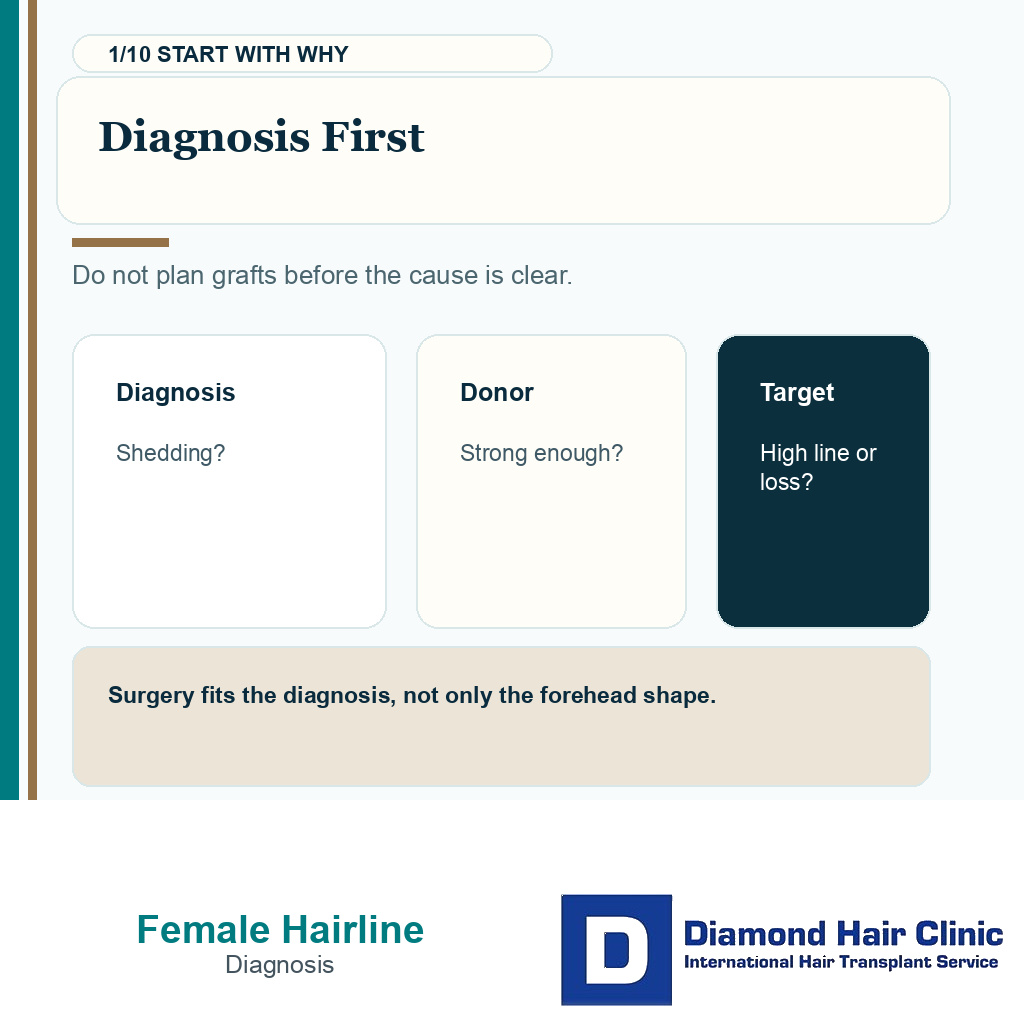
I first ask why the hairline looks thin, high, or recessed, not how many grafts can be placed. A woman with a naturally high forehead may be a good surgical candidate. A woman with diffuse thinning, active shedding, PCOS related hormonal hair loss, or a weak donor area may need medical evaluation first.
Older photographs and the story of how the hairline changed help separate a lifelong high hairline or M shape from newer recession. A shape that has looked similar since adolescence or runs in the family is a different starting point from a line that is continuing to move. I still examine the scalp for miniaturization and diffuse thinning before designing surgery.
The decision has to be careful because diagnosis, donor safety, and facial softness all have to fit. Female hairline surgery can be very rewarding, but it should be conservative, personal, and diagnosis led. I look at whether we are softening the frame, lowering a naturally high forehead, or rebuilding hair that was actually lost, because those are not the same operation.
Female and male hairline planning are different
I plan it differently. A typical female hairline is usually softer, rounder, and more dependent on temple balance than a typical male pattern hairline. The edge should not look like a hard wall of grafts.
Natural hairline design matters deeply in women because the hairline is part of facial expression. It affects how the forehead, eyebrows, temples, and cheekbones are seen together. A line that looks strong in a drawing can look heavy in real life.
One female template does not work for every patient. Some women need a lower central line, some need corner softening, and some need temple support more than lowering. A feminine result comes from proportion and direction, not from simply moving the whole border down.
If you bring a preferred hairline drawing, use it as a conversation starter, not a final boundary. The surgical line still has to respect temple flow, forehead movement, donor supply, and how you wear your hair every day.
I watch how the patient wears her hair. A woman who ties her hair back, parts it in the middle, or stands under bright light will notice details that a standard front photo may hide. When the front edge will be visible during recovery, private travel after female hairline FUE should be planned without letting a scarf, hood, or hat rub the new hairline.
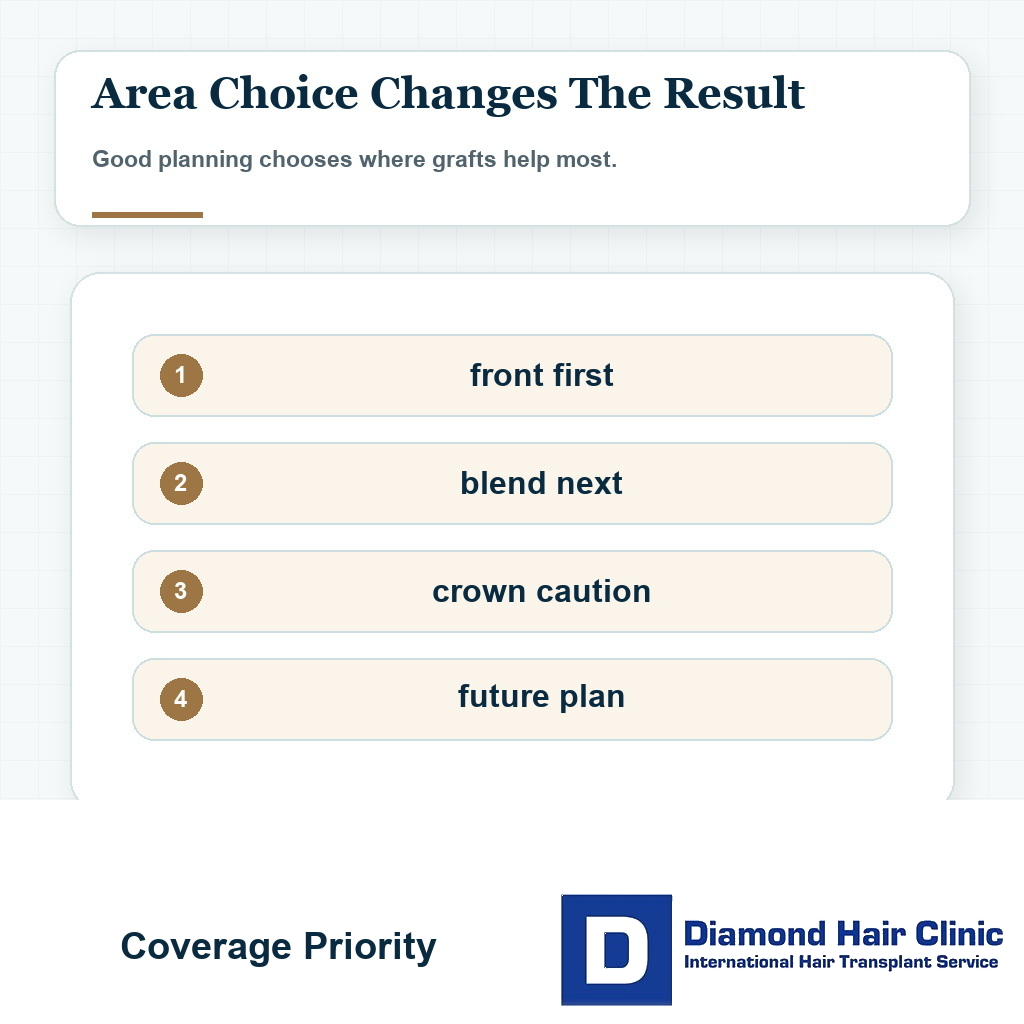
Diagnosis comes before female hairline surgery
Diagnosis comes first because women can lose hair for several different reasons. Some have a naturally high forehead. Some have traction damage from years of tight hairstyles. Some have hair pulling related hair loss. Some have female pattern hair loss. Some have telogen shedding, iron deficiency, thyroid problems, postpartum changes, or medication related shedding.
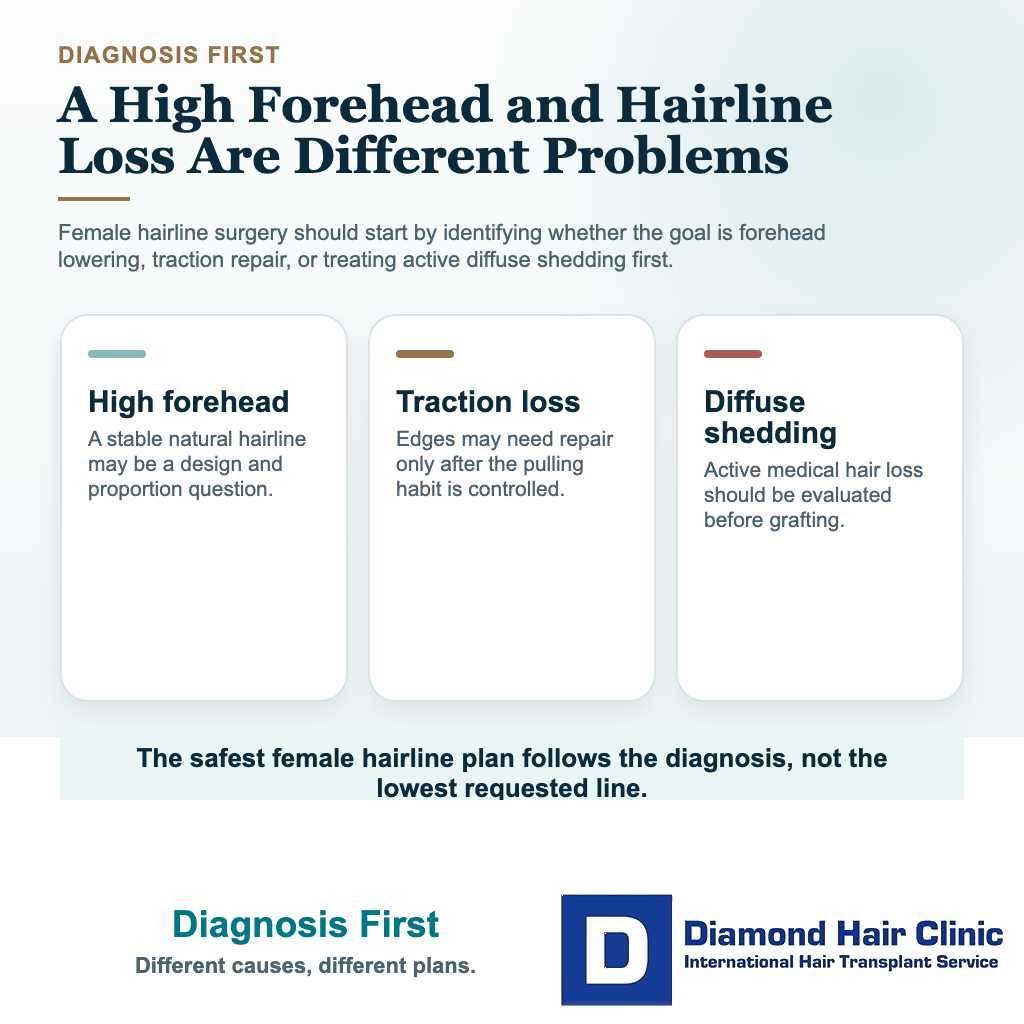
Scarring conditions such as frontal fibrosing alopecia also have to be considered, especially when frontal recession appears with eyebrow thinning, scalp redness, itching, or loss of follicular openings. That is not the same decision as lowering a naturally high forehead.
If I treat all of these as the same problem, I may create the wrong plan. Being a good candidate for a hair transplant means the donor area is safe, the cause is understood, and surgery is likely to solve the right problem.
Diffuse thinning needs careful donor review before hairline planning. If the donor area is also miniaturizing, transplanted hair may not behave like a permanent solution. Then, surgery may be technically possible but strategically unwise.
Lowering a naturally high female forehead
A hair transplant can lower a naturally high female forehead in specific cases. The safest candidates usually have a stable hairline, good donor density, no active diffuse loss, and realistic expectations about density and growth time.
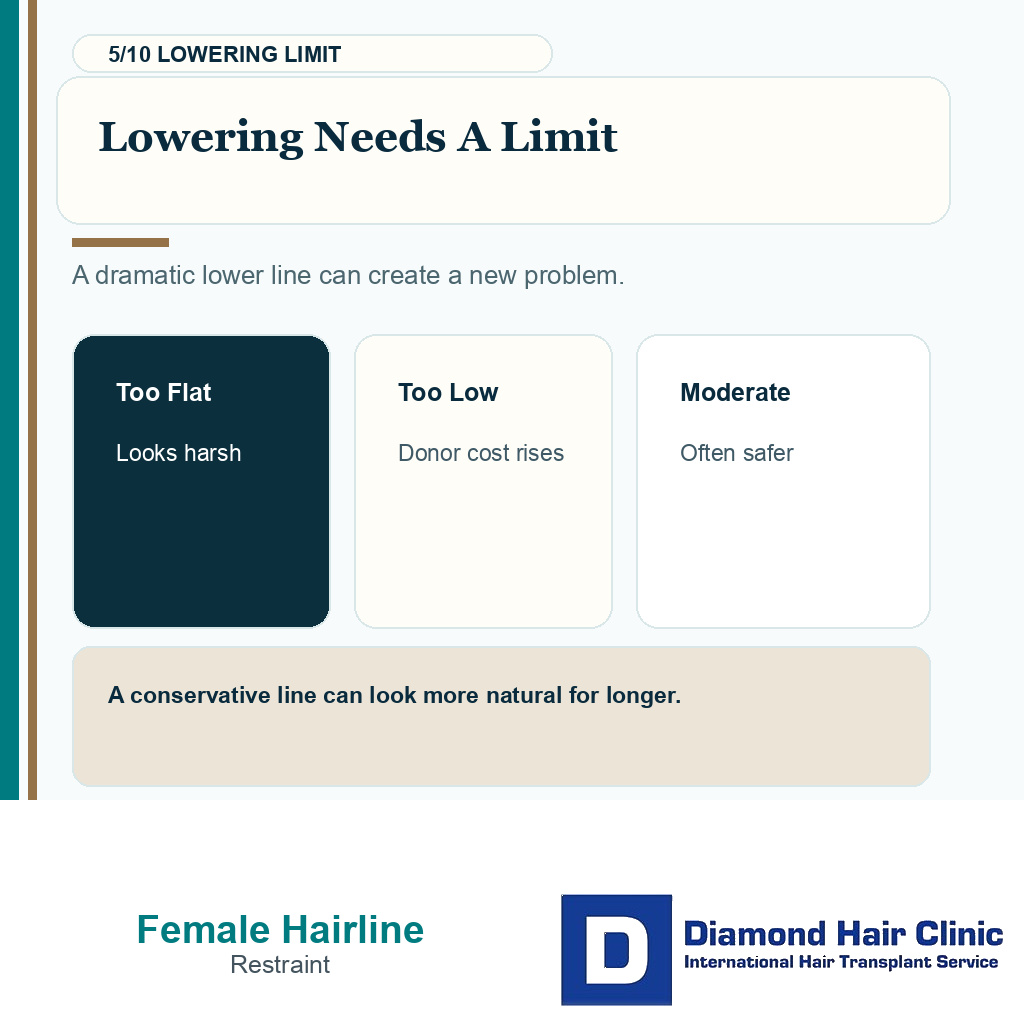
A hair transplant for a naturally high forehead must be measured carefully. Lowering the line too far can make the forehead look shorter, but it can also make the result look artificial, dense at the edge and thin behind it, or too heavy for the face.
The line cannot be designed from the patient’s wish alone. I design it from the face, the existing hair, the donor supply, the forehead muscles, the temple shape, and how the result should age.
I also separate lowering the whole frontal line from softening corners, rounding the frame, or improving temple balance. A lower line can still look less feminine if the donor hair is too coarse for the edge or if the temples do not blend with the way the patient normally wears her hair.
Hair transplant versus forehead reduction surgery
Forehead reduction surgery moves the scalp forward by removing forehead skin. A hair transplant places follicular units into the forehead area to create a new hairline over time. These are very different decisions.
Forehead reduction can create an immediate lowering effect, but it involves an incision along the hairline and depends on scalp laxity. A transplant avoids that kind of linear frontal incision, but the result grows gradually and may need enough grafts to create a soft transition.
Some women are attracted to dramatic lowering because it seems faster. I understand that feeling, but aggressive lowering can create a new problem. If the front is lowered too much without enough density behind it, the result may still look unnatural. Sometimes the most natural improvement is a moderate transplant plan, not the most aggressive lowering.
Donor shaving and visibility
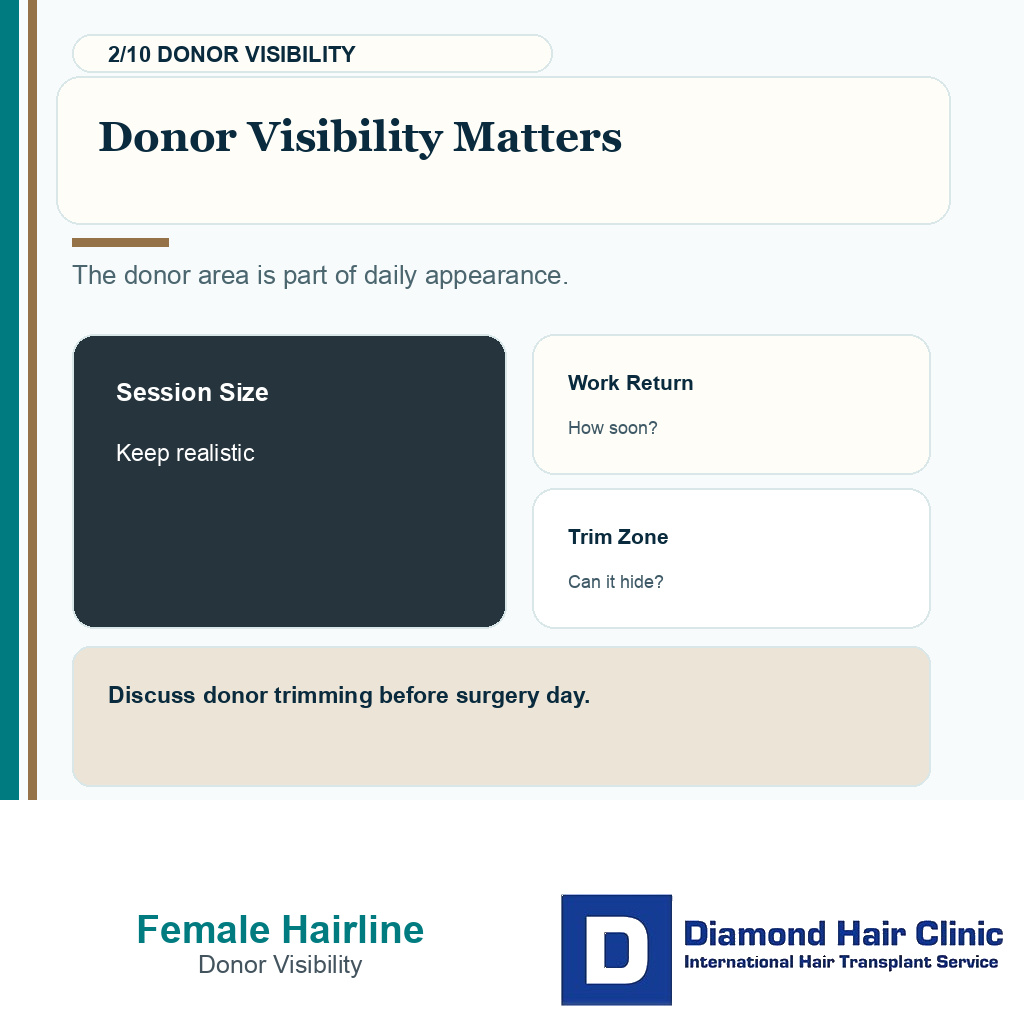
For many women, donor trimming is one of the most practical concerns. In many FUE cases, at least part of the donor area needs to be trimmed so the grafts can be removed safely and accurately. Some women can hide a limited shaved zone under longer hair, but this depends on donor density, hairstyle, graft number, and how the hair is normally worn.
This discussion should not wait until the day of surgery. If a woman needs to return to work quickly or cannot accept visible donor trimming, the plan must be realistic from the beginning. A smaller session, a concealed donor shave, or delaying surgery may be better than surprising the patient with a change she was not emotionally prepared for.
The donor area is not only a technical zone. It is part of the patient’s daily appearance. The surgical plan should include how the donor will look during the first weeks, not only how the hairline may look after full growth.
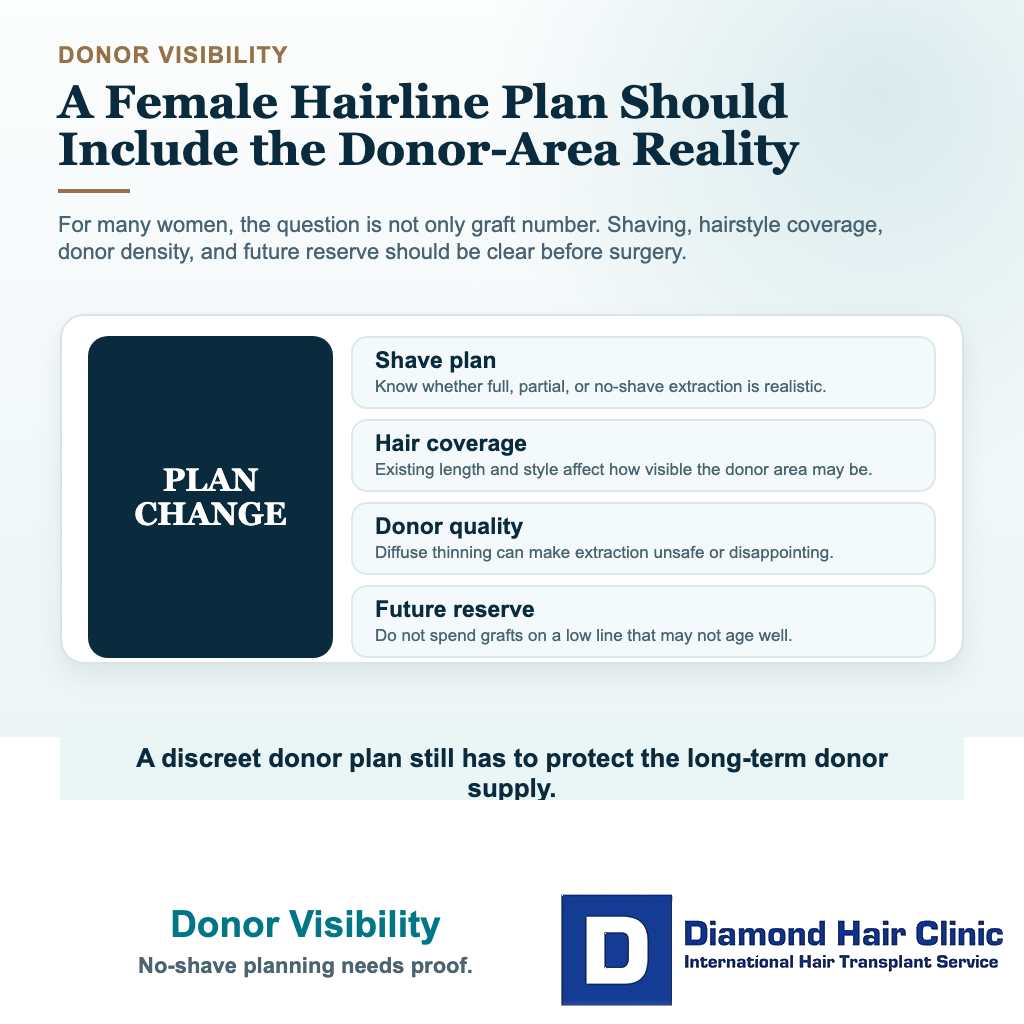
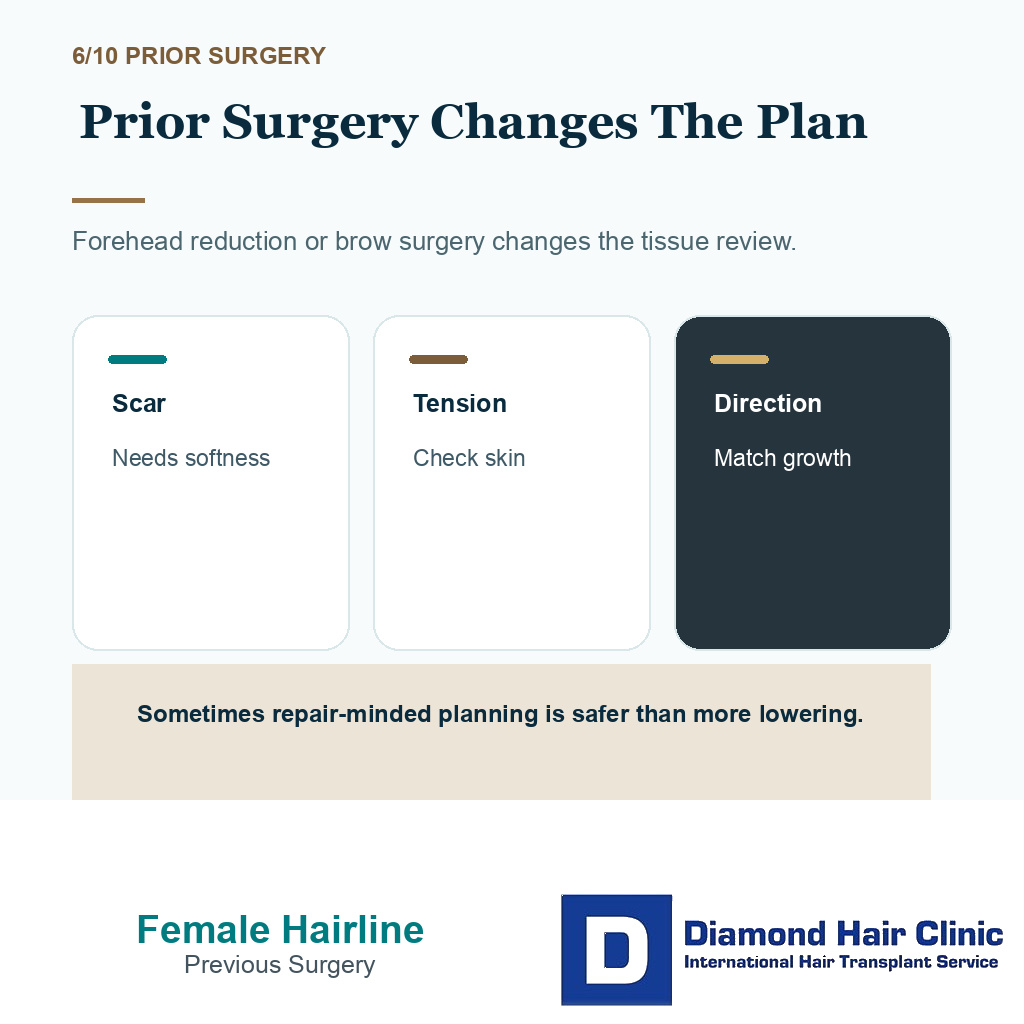
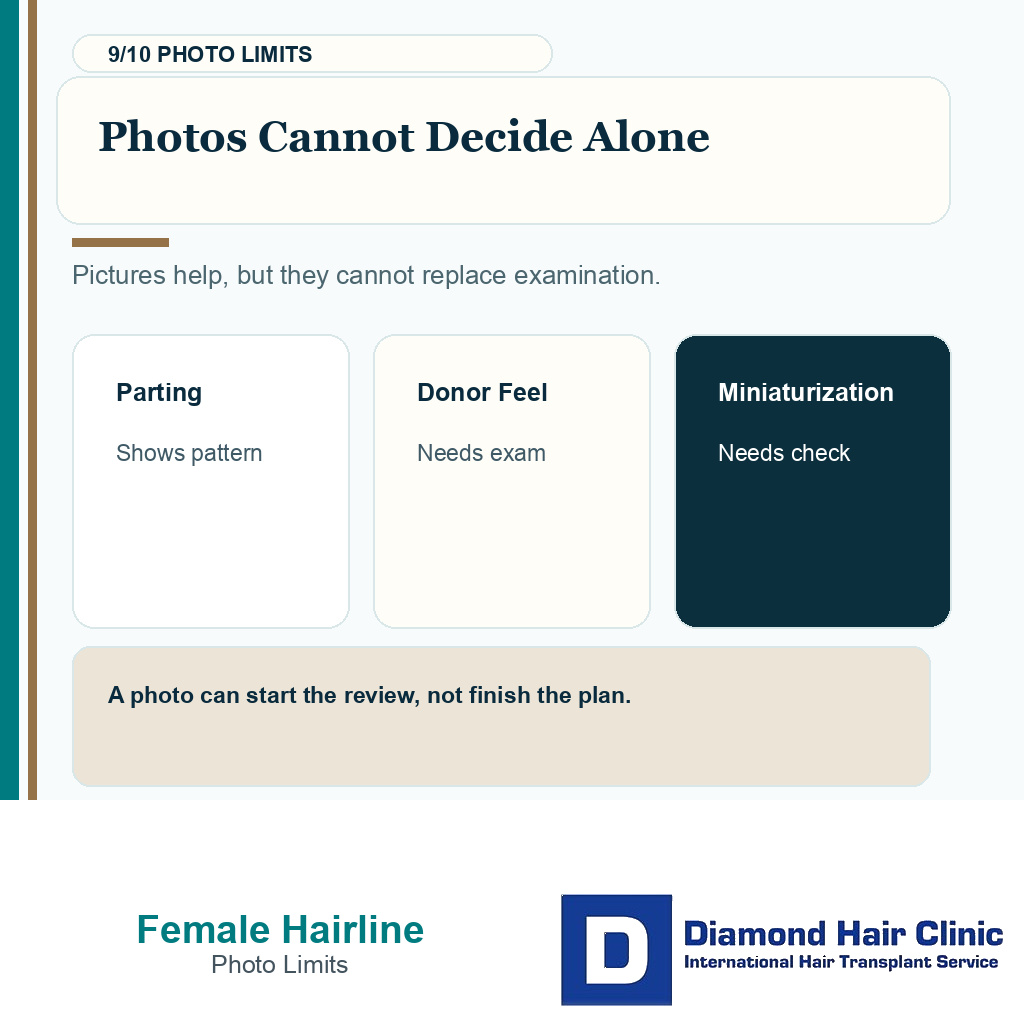
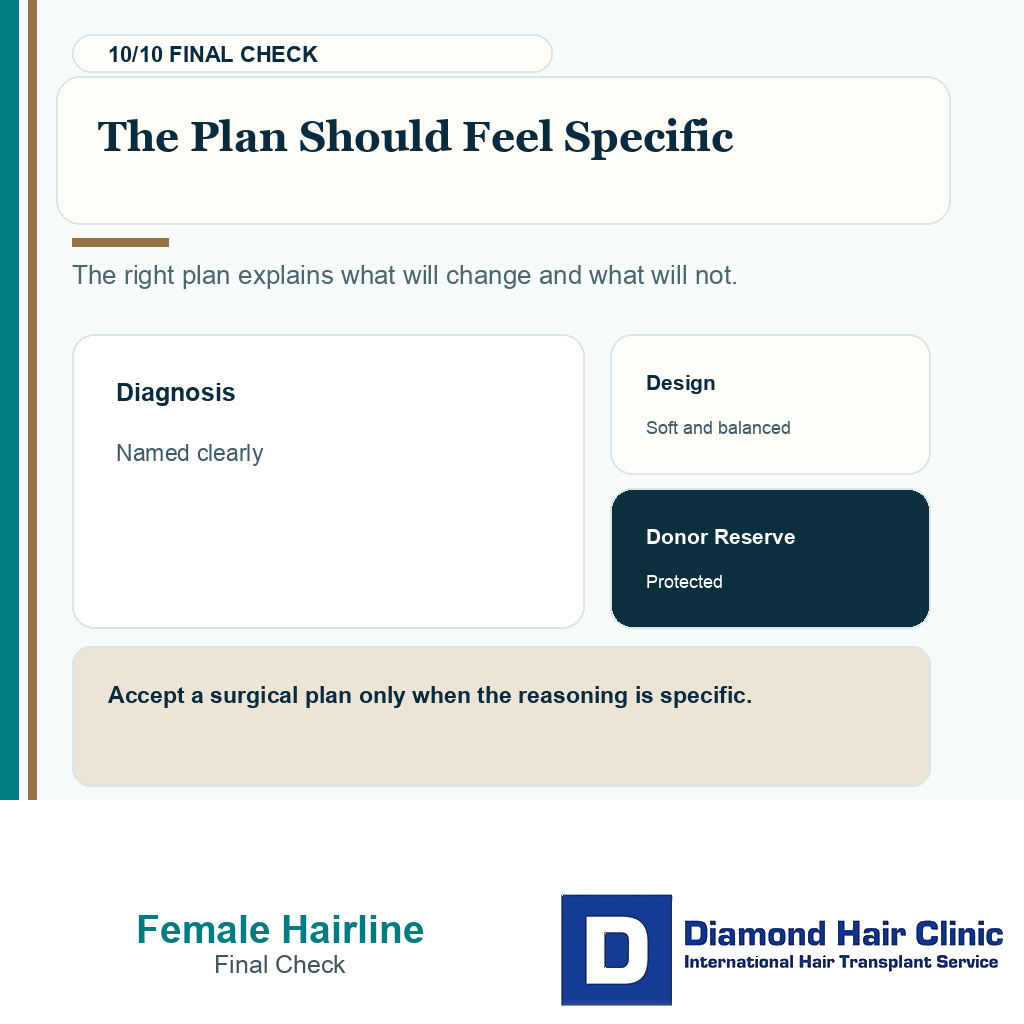
Use the 10 female hairline planning slides below to review diagnosis, donor visibility, softness, temple balance, and restraint before judging a design. Swipe the carousel, use the arrows for one step at a time, or choose a number below the image to jump to that point.


Natural female hairline details
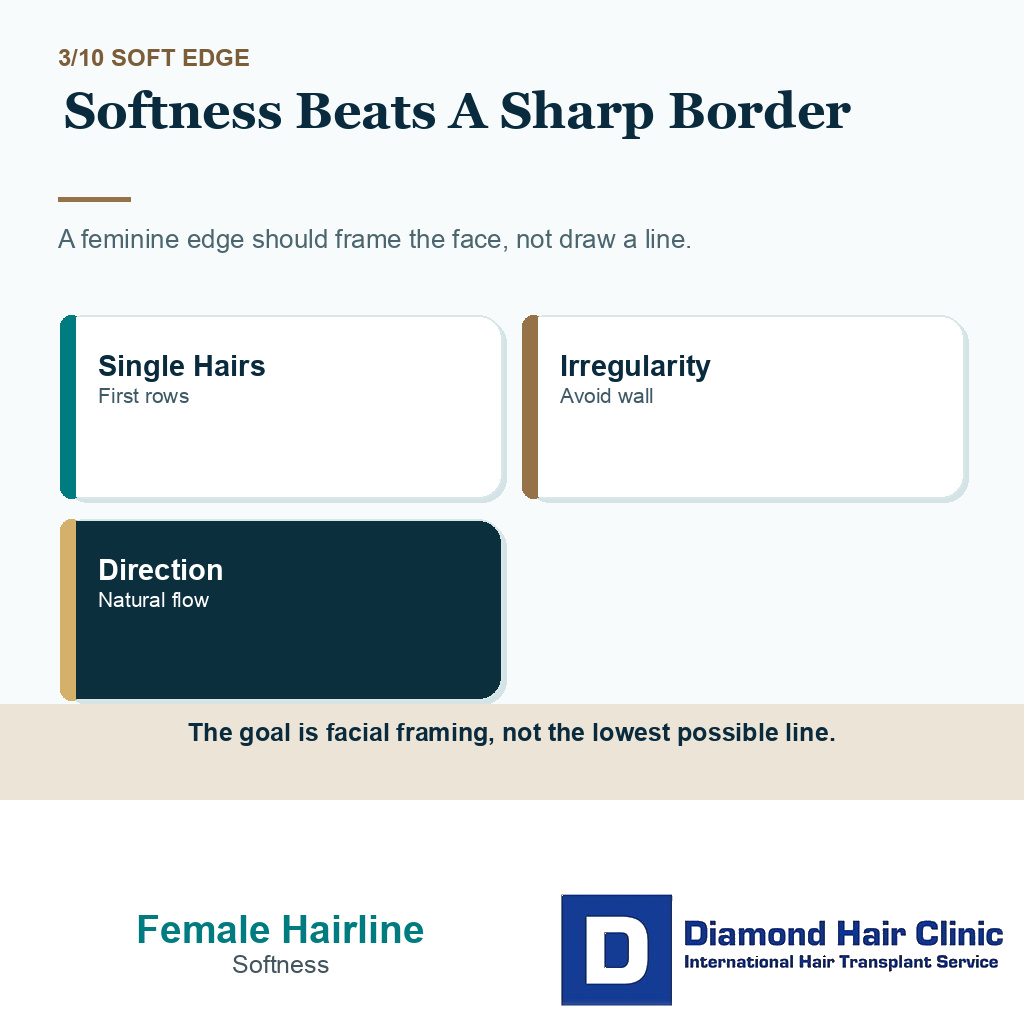
A female hairline looks natural when it has softness, direction control, irregularity, and a gradual transition. The first rows should use appropriate single hair grafts. The direction should match how hair naturally leaves the scalp. The temples should support the face without boxing it in.
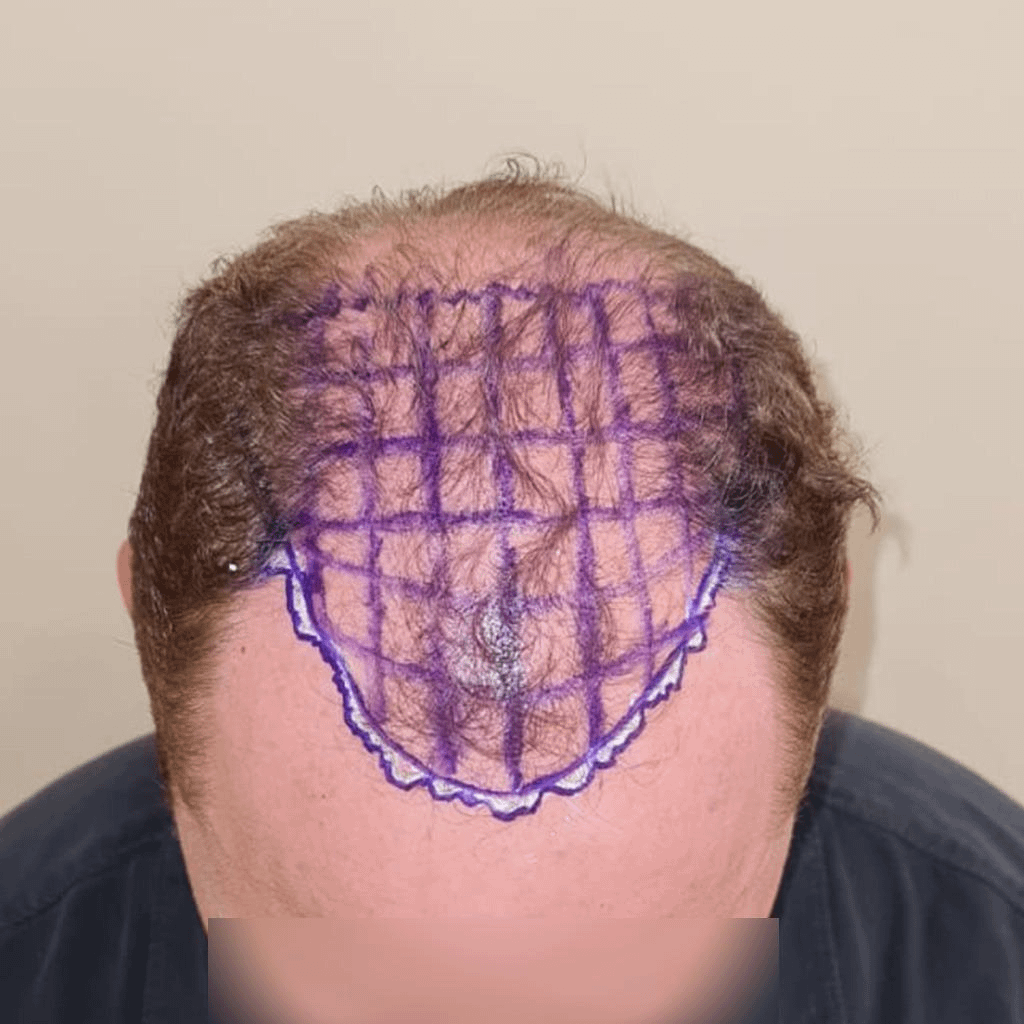
The front row should not look like a drawn line. Low flat hairlines may look dramatic at first, but drama is not the same as naturalness. A good female hairline should still look right when the hair is dry, wet, tied back, and seen from the side.
A natural hair transplant result is not only about growth. The new hair has to behave naturally in daily life.
Temple handling in women
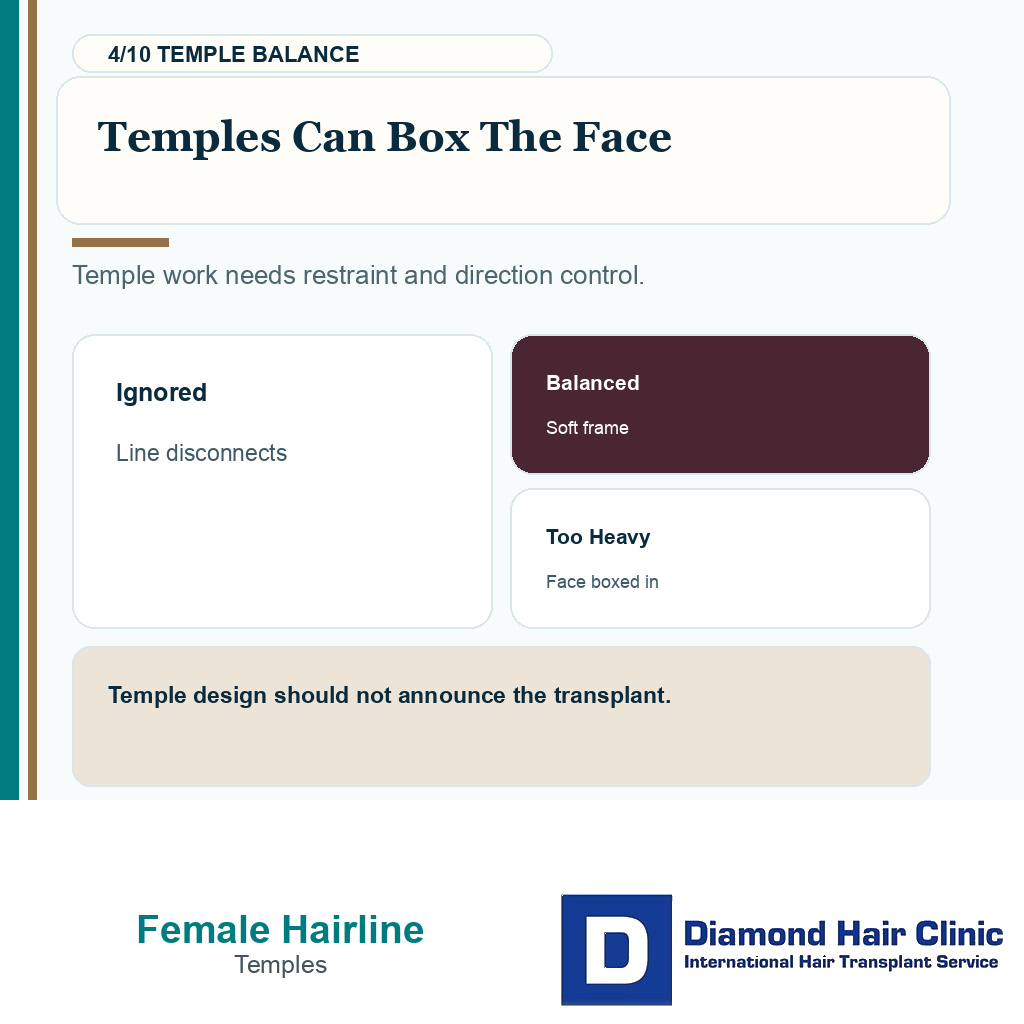
The temples are one of the most delicate parts of female hairline work. If they are ignored, the new frontal line can look disconnected. If they are filled too heavily, the face can look boxed in or unnatural.
In a repair setting, I also check whether the transplanted line connects with the original female hairline. A transplanted edge may grow and still look operated if it sits like a separate border in front of the native temples or fringe. Repair may need softening, removal, or transition work rather than simply adding more density.
Temple direction changes quickly, and the hair often lies flatter and finer in this area. Restoring a temple point needs more judgment than simply filling empty skin.
Do not approve the temple area as one shaded block. Ask the surgeon to mark the frontal corner and temporal point separately, then review the line between them from both sides and against older photos from before the hairline changed. A design can look soft from the front yet change the face frame when that side transition runs in a different direction from the natural hairline. The aim is not to copy a male or female template. It is to restore the patient’s own proportion and transition.
In women, softness and balance usually matter more than dramatic temple reconstruction. The purpose is to restore framing without making the transplant announce itself.
Previous forehead or brow surgery
Previous forehead reduction, brow lift, or facial surgery can change the planning. Scar position, skin tension, hair direction, and density behind the existing hairline all matter. A transplant may help soften scar tissue or improve the hairline after a previous procedure, but the surgeon must examine the tissue carefully.
I handle more lowering after a previous forehead procedure cautiously. Sometimes the concern is not that the hairline needs to come lower. Sometimes the concern is that the transition zone is too sharp, the density behind it is too light, or the scar needs softer camouflage.
In these cases, the best plan may be repair minded rather than aggressive. The purpose is to make the hairline look more natural and less operated on, not to keep moving it down until the donor area is strained.
Female hairline transplant becomes risky when diagnosis or donor strength is unclear
A female hairline transplant is risky when the donor area is weak, when shedding is active, when the diagnosis is unclear, when the patient wants a very low dense line, or when the clinic treats the case like a standard male frontal transplant.
The donor area must be protected because women may need future medical treatment or future surgery if hair loss progresses. If grafts are spent to create an overly low hairline, there may be less donor reserve for later needs.
It is also risky to transplant into an area where native hair is unstable without explaining native hair shock loss. In some women, the emotional stress of temporary shedding can be as significant as the technical operation itself.
Fine hair and hairline density
Fine hair can still create a beautiful result, but it needs realistic planning. Fine hair gives less visual coverage per graft than thicker hair. This means the surgeon must be more careful with density promises, area size, and the position of the new edge.
Fine hair transplant planning is not only about adding more grafts. If the hairline is lowered too much, even a good number of grafts may look thin because the surface area is too large.
A slightly more conservative line that looks soft and natural is better than a dense border that consumes too many grafts and still looks exposed under light.
Medical treatment before surgery in women
Often, yes. If there is active shedding, diffuse thinning, hormonal influence, low ferritin, thyroid imbalance, scalp inflammation, or miniaturization behind the hairline, medical evaluation should come before surgery.
Medication before a hair transplant is not a delay for its own sake. It can be the difference between operating on a stable situation and operating while the biology is still changing.
I may also ask for relevant medical information or blood tests before a hair transplant when the history suggests a correctable cause. A transplant moves hair. It does not diagnose every reason a woman is losing hair.
Photos alone cannot decide the plan
Photos can start the conversation, but they should not be the decision. Photos may show forehead height and the visible hairline, but they may not show donor miniaturization, scalp condition, density behind the front, or the true cause of the change.
A hair transplant plan from photos can be helpful for early assessment, but female hairline surgery often needs closer evaluation before the final line is drawn. The surgeon should examine caliber, part width, temples, donor quality, and whether the thinning is stable.
A photo can start the discussion. It should not replace diagnosis.
Female hairline planning lens
Four checks before a female hairline plan looks natural
Female hairline planning starts with diagnosis, not only with shape. The plan has to protect donor strength, preserve softness, and fit the temples and forehead.
Diagnosis first
Why does the hairline look thin or high?
A naturally high forehead, traction loss, diffuse thinning, hormonal shedding, and female pattern hair loss are different problems.
Photos can show the shape, but they cannot prove donor stability, shedding pattern, or whether the hairline problem is surgical.
This planning frame cannot diagnose hair loss or confirm surgery. A female hairline plan still has to fit donor reserve, recipient anatomy, hair type, medical history, and the risk of future hair loss.
Female hairline density planning
The density should be enough to look natural, but not so aggressive that it damages the long term plan. The first rows need softness. The area behind the edge needs support. If all grafts are pushed into the very front, the line may look dense while the zone behind it looks thin.
Too many grafts in one area can create unnecessary risk. Density has a biological limit. The scalp needs blood supply, the donor needs protection, and the result needs balance.
A female hairline often benefits from a soft transition rather than a heavy wall. Once it matures, the transplant should not need to be hidden with styling.
Hairline loss from traction
When the hairline loss comes from traction, I first want to know whether the damaging hairstyle has stopped. Tight ponytails, braids, extensions, or repeated tension can permanently weaken the frontal and temple hairline.
A hair transplant for traction alopecia can help specific cases when the traction has stopped and the scarring pattern is stable. But if the same tension continues after surgery, the transplanted area may be placed back into the same harmful environment.
For traction cases, I am especially careful around the temples. These areas can be cosmetically powerful, but they are also unforgiving if the angle, density, or styling advice is wrong.
Growth expectations for women
Women should expect a growth stage that can feel awkward, especially if the native hair is long and the transplanted hairs are short. The new hairs may grow in unevenly before they have enough length to blend with the rest of the hairstyle.
I discuss styling habits before surgery because early growth can be visible in daily life. A woman who wears her hair pulled back may notice the early growth stage more than someone who wears bangs or a softer front style. The operation may be finished in one day, but the cosmetic integration takes time.
Bring photos of your normal hairstyle as well as the hairline you like. A part line, ponytail, fringe, wet hair, or exposed temple can reveal design issues that a single front drawing hides.
Temporary shedding, short new hairs, and uneven early texture can create anxiety. This should be explained before surgery rather than discovered alone afterward.
I also explain that the new front may look sparse before it looks soft. Long native hair and short transplanted hair do not blend immediately. This is normal, but it can be emotionally difficult if the patient expected the new hairline to look finished as soon as hair starts growing.
Planning the growth period is part of planning the surgery. Before the operation, it should be clear whether she can use a fringe, part the hair differently, avoid tight styling, or schedule meaningful events around the slower cosmetic stage.
A female hairline has to soften the face
I think of the operation as facial framing, not only hair replacement. The new hairline should match the face, the donor area, the diagnosis, the patient’s age, and the way she lives with her hair.
If surgery is appropriate, it can make a meaningful difference. If the diagnosis is unclear, waiting is not weakness. It is careful planning.
A responsible female hairline transplant is personal. It is not a package, not a standard graft number, and not a copied celebrity hairline. It is a surgical design that protects naturalness, donor supply, and future options.
Read this review excerpt
We also had a levelled conversation about my hairline and results I could expect based on my donor density area.