


Hair Pulling Stability Comes Before Graft Planning
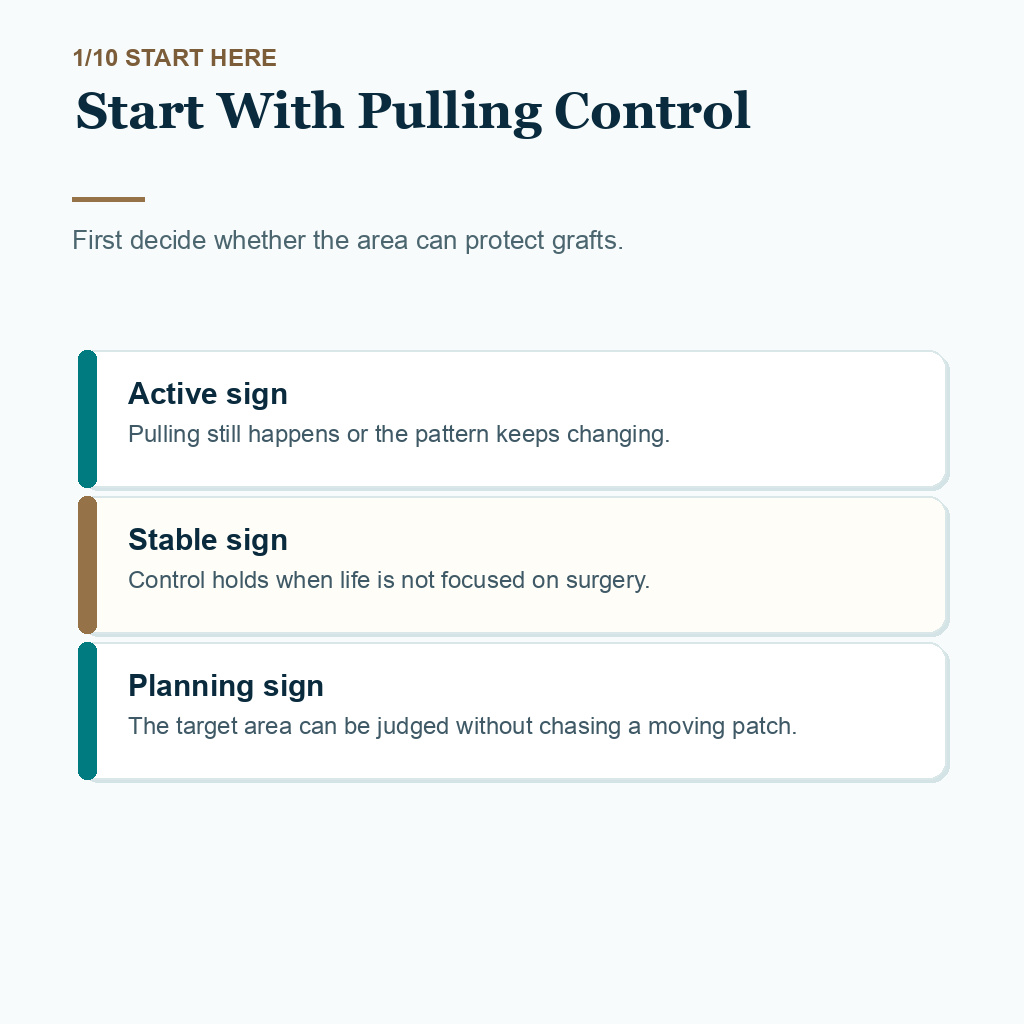
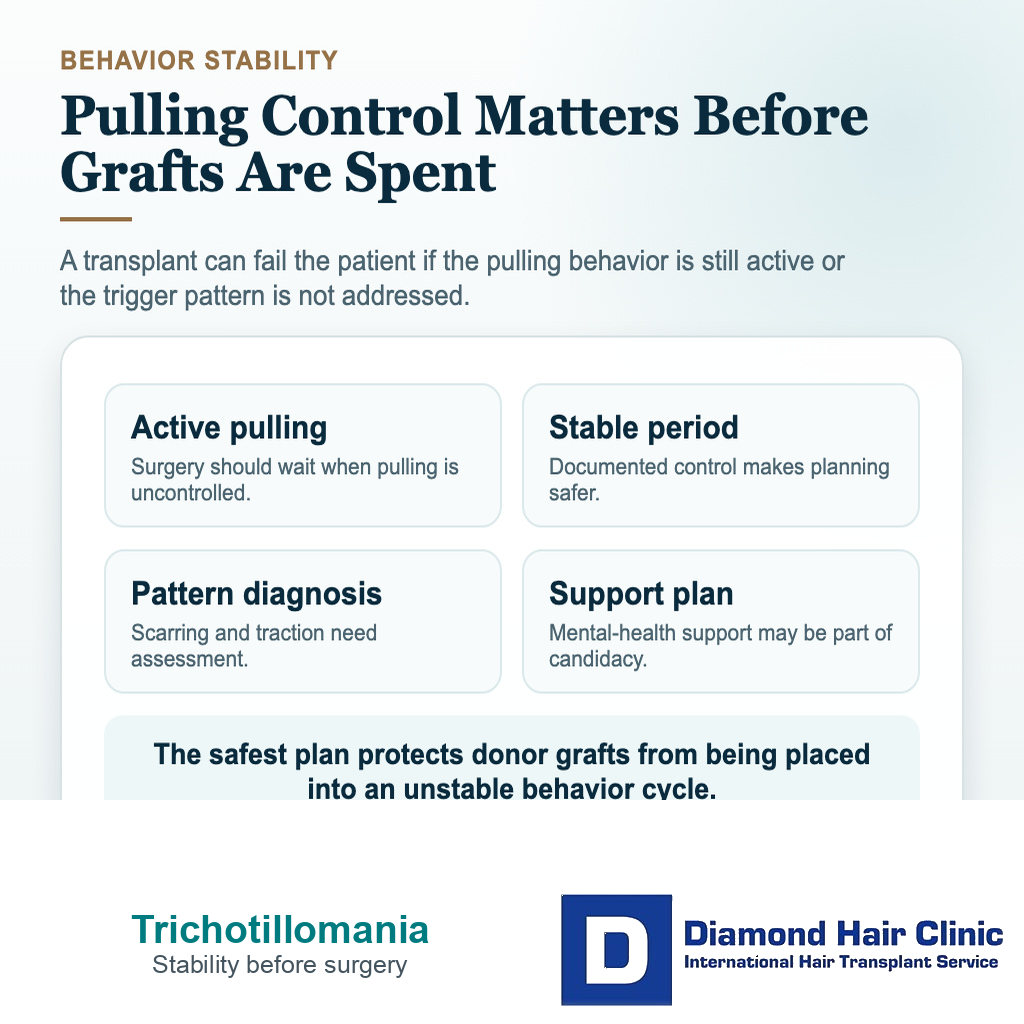
A hair transplant can be possible after hair pulling, but not while the pulling is active or poorly controlled. If the habit is still happening, I ask you to wait, because new grafts can be pulled out, the real pattern of permanent loss is hard to judge, and donor grafts may be used in an area that is not ready for surgery. A relapse plan matters because regrowth can bring back close checking, mirrors, or tweezers even after a quiet period. The first decision is not how many grafts you need. Stability means the scalp and pulling pattern are controlled enough to protect new grafts from the same repeated force.
Doctors call repeated hair pulling trichotillomania when it becomes a persistent hair pulling disorder. I do not use that word to judge or label you. I use it because it changes the timing, the diagnosis, and the responsibility of the surgical plan.
Active hair pulling changes the surgical decision
Active hair pulling changes the decision because I am not only repairing an empty area. I am placing living grafts into an area where the same force may continue. If that force is still present, the transplant can become part of the problem instead of the solution.
During hair transplant candidacy review, I first confirm that the cause of hair loss is understood. Male pattern hair loss, female pattern thinning, traction from hairstyles, autoimmune patch loss, scarring disease, and repeated pulling are not the same surgical problem. They can look similar in a photo, but they do not behave the same way.
If the pulling is active, I usually pause the surgical plan. A technically possible operation can still be a poor plan if the grafts cannot be protected. This is not a judgment about character or discipline. It is surgical risk management.
Pulling control should come before graft planning
I do not reduce this to one fixed number for every person, but I want a meaningful period of control, a scalp that has stopped changing, and support in place if the urge returns. I commonly want at least 6 to 12 months of reliable control before grafts are planned. If the pulling was severe, hidden, or repeatedly relapsing, longer may be safer.
The reason is practical. A short quiet period can happen because surgery feels close, the patch is upsetting, or the person is trying very hard before a consultation. That effort matters, but it may not be enough to protect transplanted grafts for the long term. I am looking for a pattern that holds when life becomes stressful again, not only when surgery is close. A recent pattern of pulling urges matters as much as the bald patch photo, because surgery does not protect grafts from the behavior returning later.
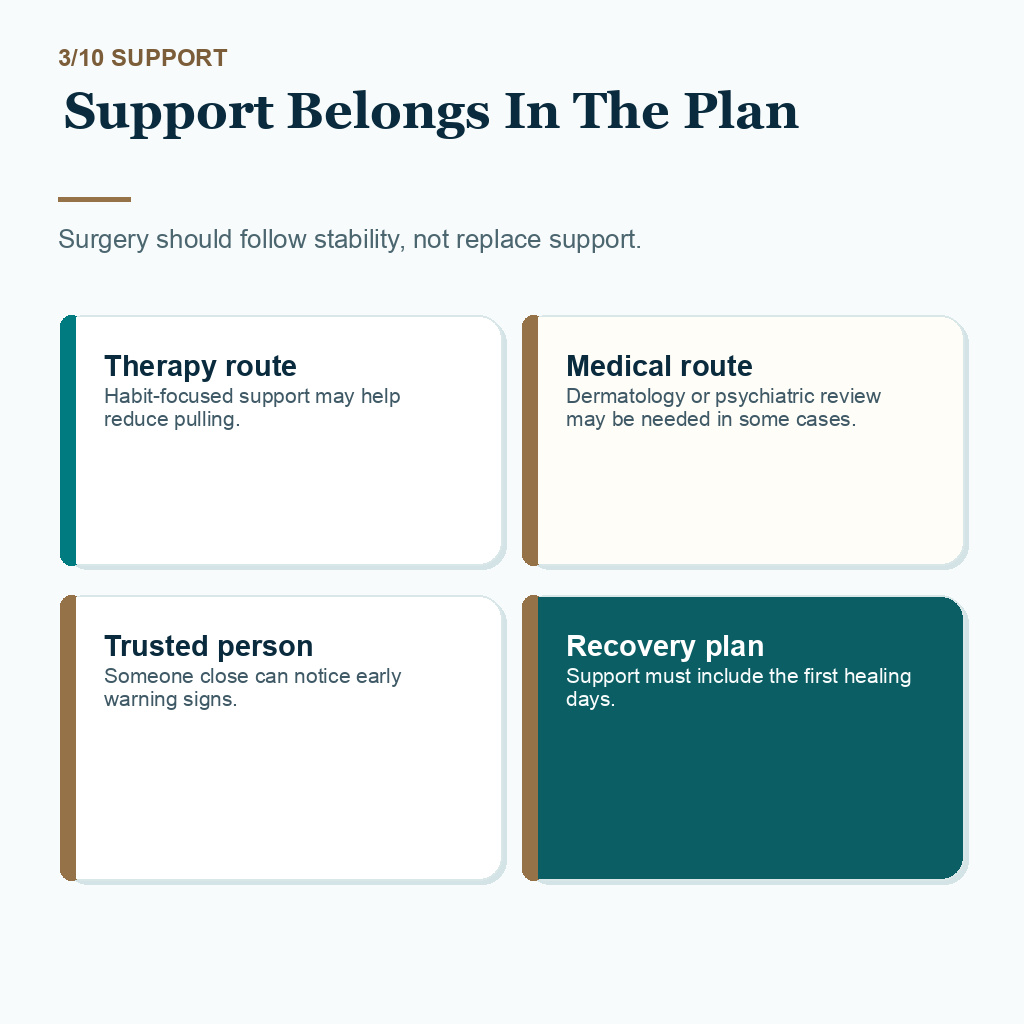
In some cases, the hair pulling needs proper support before I discuss grafts. That may mean a dermatologist, psychologist, psychiatrist, therapist, or the doctor already involved in care. The exact support depends on the person, but the surgical principle is the same. Surgery should follow stability, not replace it.
I also look for clarity in the history. Someone may say the pulling has stopped, but the scalp pattern, broken hair lengths, or new thin areas may suggest the urge is still returning. A direct conversation at this stage is better than discovering the problem after surgery, when donor grafts have already been used.
I connect the decision to the broader warning about operating too early. Hair transplant planning should not chase a moving target. With hair pulling, the moving target is not only biological hair loss. It is also the behavior that created or worsened the gap.
Support should be in place before surgery
If hair pulling has been recurrent, surgery should wait until a practical support plan is already in place. That may include habit reversal therapy, cognitive behavioral therapy, a therapist familiar with body focused repetitive behaviors, dermatology review, psychiatric support, or another plan that has already helped reduce pulling.
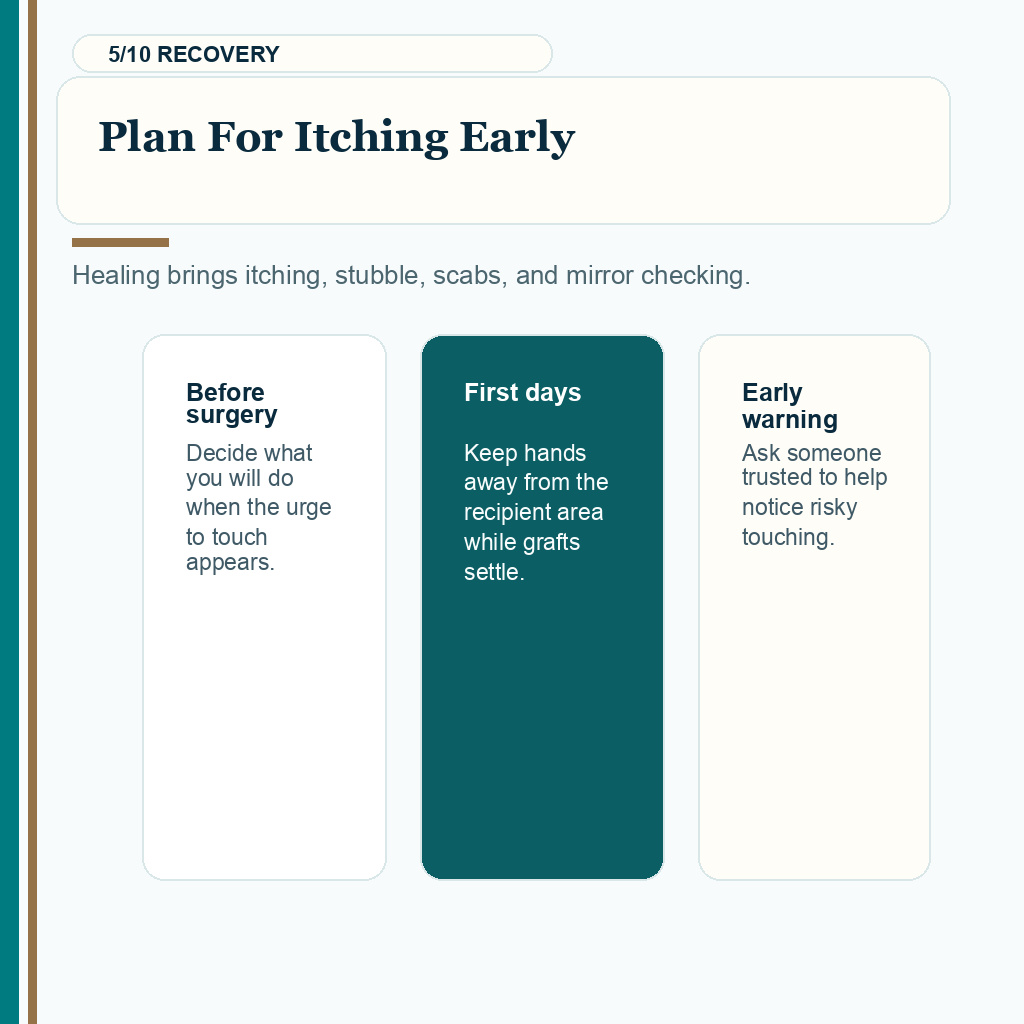
I am not asking for a perfect label or a promise that the urge will never return. I am asking whether you have a realistic way to protect the recipient area during the first healing days and protect the growing hairs later. Surgery itself can create stress, mirror checking, touching, itching, short stubble, scabs, and worry, so the support plan must include the recovery period too.
The practical plan should be specific. It may include keeping hands away from the recipient area, reducing mirror checking, planning what to do when itching starts, and having someone trusted notice early warning signs. A vague promise to be careful is weaker than a plan you have already practised.
If tweezers, magnifying mirrors, or close checking are part of the pulling routine, arrange the recovery room before surgery. Fresh grafts should not rely on willpower alone, so remove the tools that make automatic pulling easier and agree on what to do if the urge returns.
Automatic pulling changes the readiness question. When pulling happens while studying, working, watching television, or falling asleep, graft planning should wait until awareness and interruption strategies are stronger.

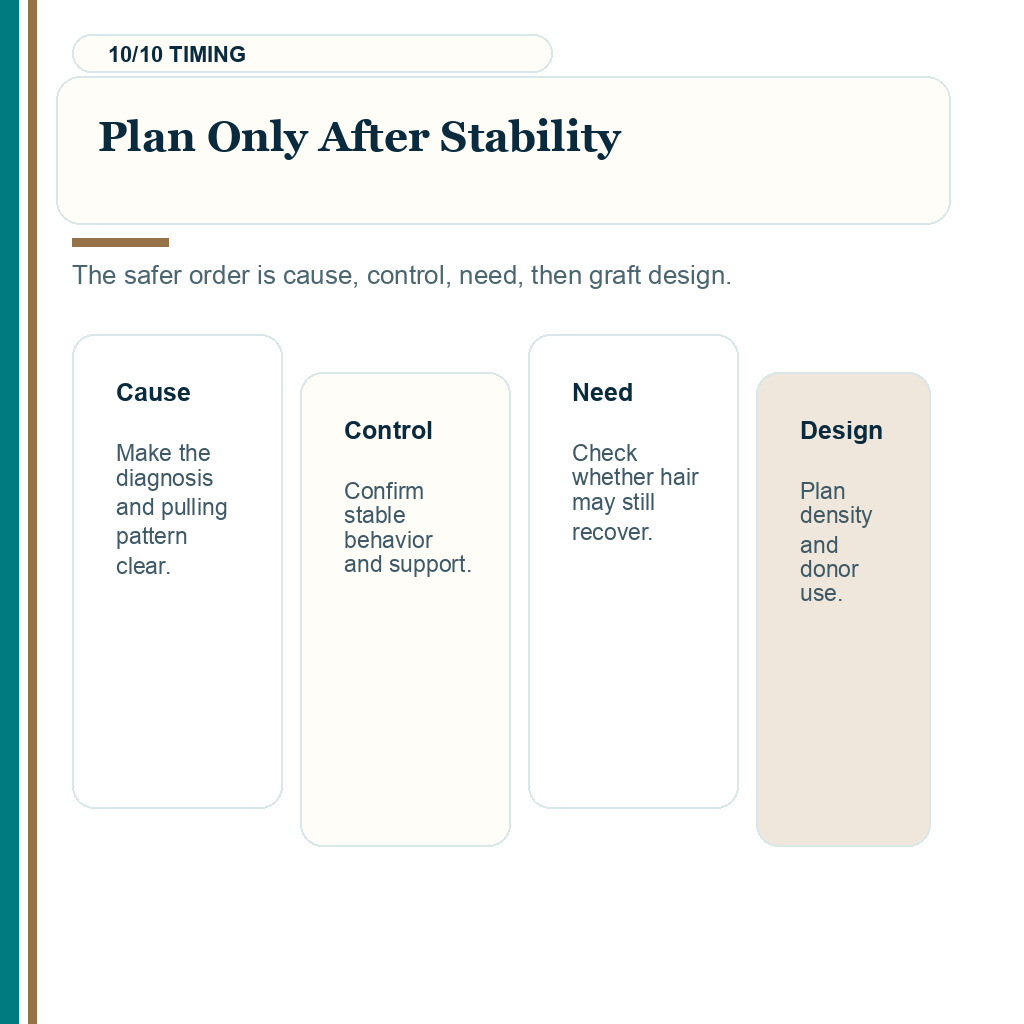
The decision should start with stability, not graft numbers.
Use the 10 hair pulling readiness slides below to separate active pulling, calm time, support planning, hand control triggers, itching plans, early healing, photo evidence, regrowth potential, donor risk, and the point where graft planning becomes safer. Swipe the carousel, use the arrows one step at a time, or choose a number below the image to jump to that point.




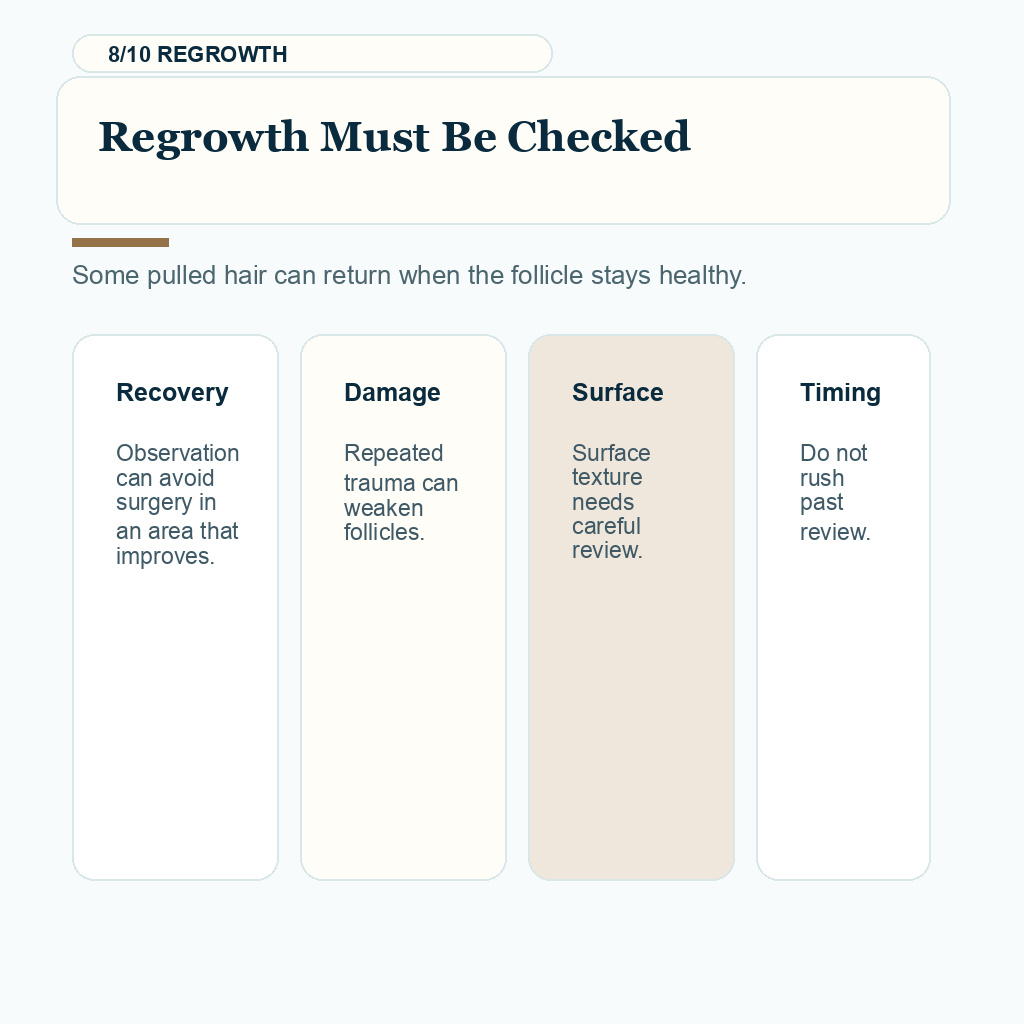

Hair lost from pulling can sometimes regrow
Some hair lost from pulling can regrow if the follicle is still healthy and the pulling stops. Some areas become weaker after repeated trauma. In longer cases, the scalp may have fewer active follicles, texture changes, or damage that behaves like scarring that makes spontaneous regrowth less likely.
This cannot be judged responsibly from one selfie. I need to look at the shape of the loss, the hair caliber around the patch, the scalp surface, the direction of nearby hairs, the history of pulling, and whether the area has improved during periods without pulling. I look closely at planning a hair transplant from photos alone.
A straight answer is understandable because the patch can be emotionally difficult to see every day. But a rushed transplant into an area that might still recover naturally, or an area that is still being pulled, can waste grafts that may be needed later.
This differs from traction alopecia and alopecia areata
Hair pulling can overlap visually with other patchy or tension related hair loss, but the cause is different. Traction alopecia usually comes from repeated hairstyle tension such as tight braids, extensions, or tied back styles. Trichotillomania comes from repeated pulling, often in moments of stress, focus, boredom, or anxiety.
Alopecia areata is different again because it is an autoimmune patchy hair loss condition. Surgery is usually unsafe if the condition is active because transplanted hair may be affected by the same disease process.
I also separate hair pulling from scarring alopecia, where inflammation can permanently damage follicles and must be quiet before surgery is even considered. The diagnosis matters because the operation is only one part of the decision. If the cause is misunderstood, the graft plan may be wrong from the beginning.
Transplanted hair can be pulled out again
Transplanted hair is not protected from pulling just because it came from the donor area. Once a graft grows in the recipient area, it behaves like hair in that location. If it is repeatedly pulled, the hair shaft can be removed, the follicle can be irritated, and in severe repeated trauma the area may become weaker again.
In the early healing period, the risk is even more direct. Fresh grafts need time to settle. Rubbing, scratching, picking, or pulling can physically disturb the grafts before they are secure. Surgery should not begin while you are still fighting an urge that could put the new grafts at risk in the first days.
A transplant does not treat the pulling behavior. It can only replace hair in a stable area. That distinction protects you from disappointment and protects donor grafts from being used too soon.
Preoperative checks matter before deciding on grafts
I first check whether the pulling is active, occasional, or truly controlled. Then I look at whether the patch is stable, whether there is regrowth, whether the scalp surface looks healthy, and whether you understand what would happen if the pulling returns after surgery.
I also have to understand the wider hair loss pattern. Trichotillomania can exist together with androgenetic hair loss. There may be patchy pulling at the hairline with diffuse thinning behind it, or pulling in one area with progressive recession or crown thinning elsewhere. These mixed patterns change the plan.
I also ask where the pulling happens. Pulling from the recipient area is different from pulling from the donor area. If the donor area has been repeatedly traumatized, the graft supply may be less reliable than it first appears.
The consultation should include donor assessment, not just recipient area measurement. A small patch may look easy to fill, but every graft comes from the donor area. If future work may be needed for genetic hair loss, donor management becomes even more important.
Surgery can be reasonable after pulling is controlled
Surgery becomes more reasonable when the pulling is controlled, the diagnosis is clear, the area has remained stable, and there is evidence that the missing hair is unlikely to return on its own. Emotional readiness also matters. You need to understand the slow timeline of transplant growth, not expect surgery to remove all anxiety immediately.
In a stable case, I am not trying to create dramatic density. The plan should restore a natural pattern that fits the surrounding hair. This can mean careful hair direction, soft spacing, and cautious graft use, especially around the hairline or temple.
For women, this planning can be delicate because the hairline, part line, and styling pattern often matter as much as the bald spot itself. The principles I use in female hairline planning are relevant here. The transplant must look natural when the hair is parted, tied back, or worn normally, not only under clinic lighting.
A high graft number can be the wrong answer
A large graft count can sound reassuring because it feels like a strong solution. In this situation, it may be the wrong starting point. If the diagnosis is unclear or the pulling is not controlled, more grafts only increase the amount of donor hair being placed into an unstable situation.
I become more careful when the consultation jumps quickly to numbers without discussing behavior control, regrowth potential, scalp condition, and future hair loss. A patch created by pulling is not always an empty hole to fill. It is a decision about timing, stability, and whether surgery is likely to remain protected after the operation.
The first operation must not create the next repair problem. Delaying a transplant is better than spending donor grafts too early and leaving you with another area of loss, another surgery, and less donor capacity for the future.
Clinic promises need caution
Be careful if a clinic tells you this is only a graft count problem. Be careful if nobody asks whether the pulling is active. Be careful if the plan is built from photos alone, if the doctor does not discuss diagnosis, or if the clinic promises that transplanted hair will solve the behavior.
After a good consultation, the limits should feel clearer. It should explain what needs to be stable, what can be repaired, what should be observed, and what may be better treated without surgery first. If the answer sounds fast, certain, and emotionally convenient, I slow down.
A rushed decision is a reason to slow down, and a second opinion before surgery can protect you. A second opinion is not only for complicated repair cases. It is also useful when the first plan seems to ignore the reason the hair was lost.

A careful delay can protect the donor area and prevent a rushed repair problem.
Planning changes for women with hair pulling
Many women hide hair pulling for a long time because they feel embarrassed or afraid of being judged. I should say this clearly. The purpose of the consultation is not to shame you. The purpose is to understand the cause of the loss well enough to avoid a bad surgical decision.
Women may pull from the hairline, temples, crown, part line, or a hidden area that can be covered with styling. The emotional pressure can be high because even a small visible patch may change how you feel in public. That pressure can make surgery feel urgent.
That urgency is exactly why I slow the decision down. If the area is stable and good support is in place, surgery may be part of the answer. If the pulling is still active, the better first step is to control the behavior and protect the scalp before using donor grafts.
Stability comes before new grafts
With trichotillomania, the transplant question starts with control of the pulling pattern. I need a clear history of where you pull, what triggers it, how long it has been stable, and whether treatment or support is in place.
Grafts placed into an unstable pulling area can be put at risk by the same habit that caused the patch. Hiding that history only makes the surgical plan weaker.
Clear cause and stable behavior make surgery easier to judge. Until then, protecting donor hair matters more than filling the patch quickly.

Read this review excerpt
told me the quality of my donor hair and what he could take out and advised me what will the be best outcome with what donor hair I had.