


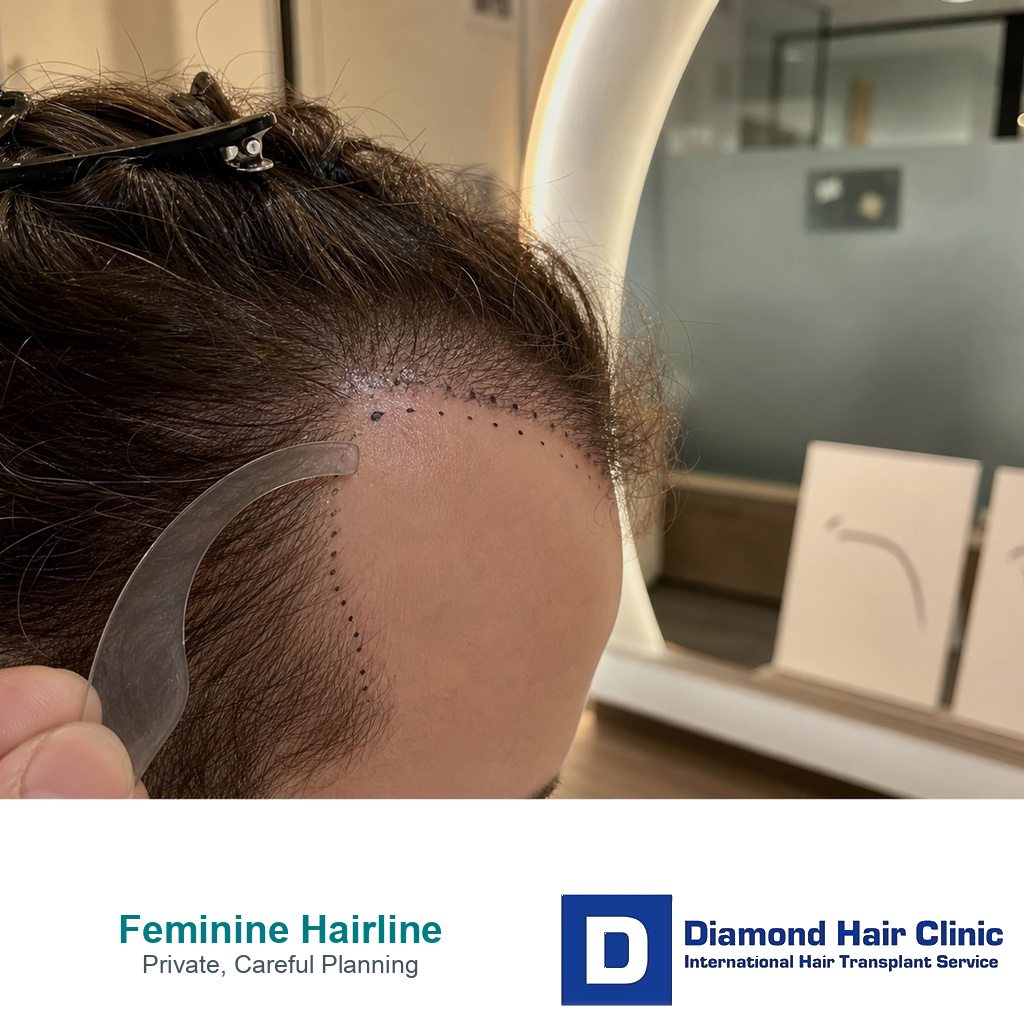
Transgender Hair Transplant for a Feminine Hairline
A hair transplant can help a transgender woman create a softer, more feminine hairline, but only if the plan is made around her face and future hair loss, not around a generic graft number. It works best when the main issue is recession, temple shape, or a high but transplantable frontal line.
If the main concern is forehead height, brow position, or planned facial feminization surgery, I clarify the sequence before any grafts are placed. A safer result comes from matching the hairline shape to the face, protecting the donor area, and planning around hormone history, future hair loss, and density limits. If a clinic treats this like a standard masculine hairline restoration, the plan is not personal enough.
Bring the hairstyle goal into the consultation. Lower corners alone do not create a feminine hairline. It also has to work when the hair is parted or tied back, and it must respect temple shape, forehead proportions, how soft the front edge should look, donor reserve, and any future facial surgery.
Moving hair is only one part of the decision. The decision depends on whether the new hairline will make the face feel softer in a natural way, age well, and still leave enough donor capacity for the future. A soft frame still needs stable donor hair. I do not trade a feminine outline for a donor choice that may thin or age poorly.
A transgender hair transplant needs different hairline planning
A transgender hair transplant often has a different artistic goal from a typical male pattern hair transplant. In many male hairline restorations, the plan is to rebuild recession while keeping a mature, slightly angular, age appropriate frame. In a transgender woman, the goal may be to soften the upper face, reduce the visible M shape, round the temples, and create a hairline that supports a feminine appearance.
Some patients search for this as an MTF hair transplant or a hairline feminization hair transplant. I understand those terms, but in the consultation I bring the conversation back to the person in front of me. The hairline needs to fit her face, keep the temples soft, and use donor hair without creating a future problem.
I do not think of it as just adding more grafts. I think of it as hairline design with a very specific facial goal. The direction of the hair, the use of fine single hairs at the front, the transition into the temples, and the height of the central hairline all matter.
A straight, dense, heavy border can look artificial even if many grafts grow. In this type of case, the unsafe part is not only a thin result. The unsafe part is a result that technically grows but still feels wrong to the patient because the outline remains too masculine or too harsh.
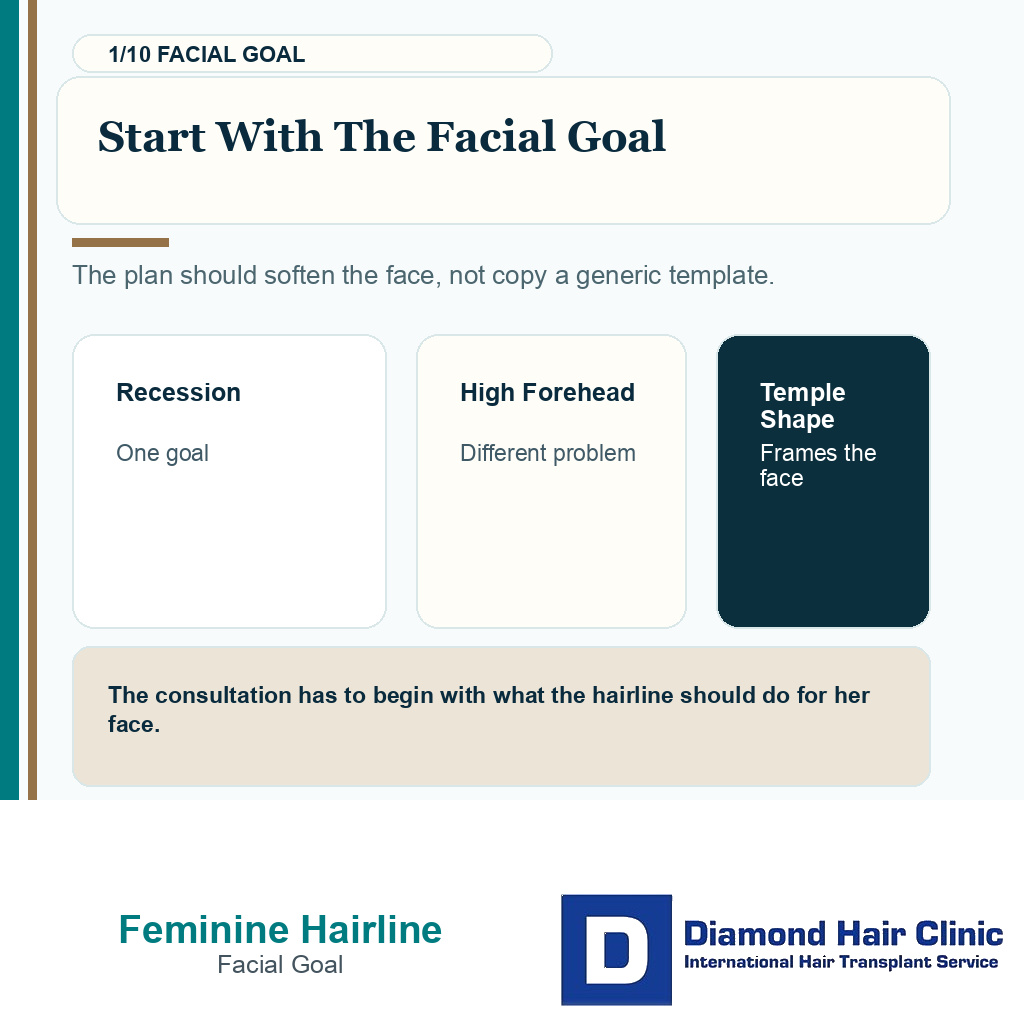
For me, the consultation has to begin with the patient’s actual goal. Some transgender women want to correct recession. Some want a softer frame for the face. Some are deciding between a female hairline transplant, hairline lowering surgery, or a combined facial plan. These choices can sound similar online, but surgically they are very different.
A hair transplant is not always enough when forehead shape also matters
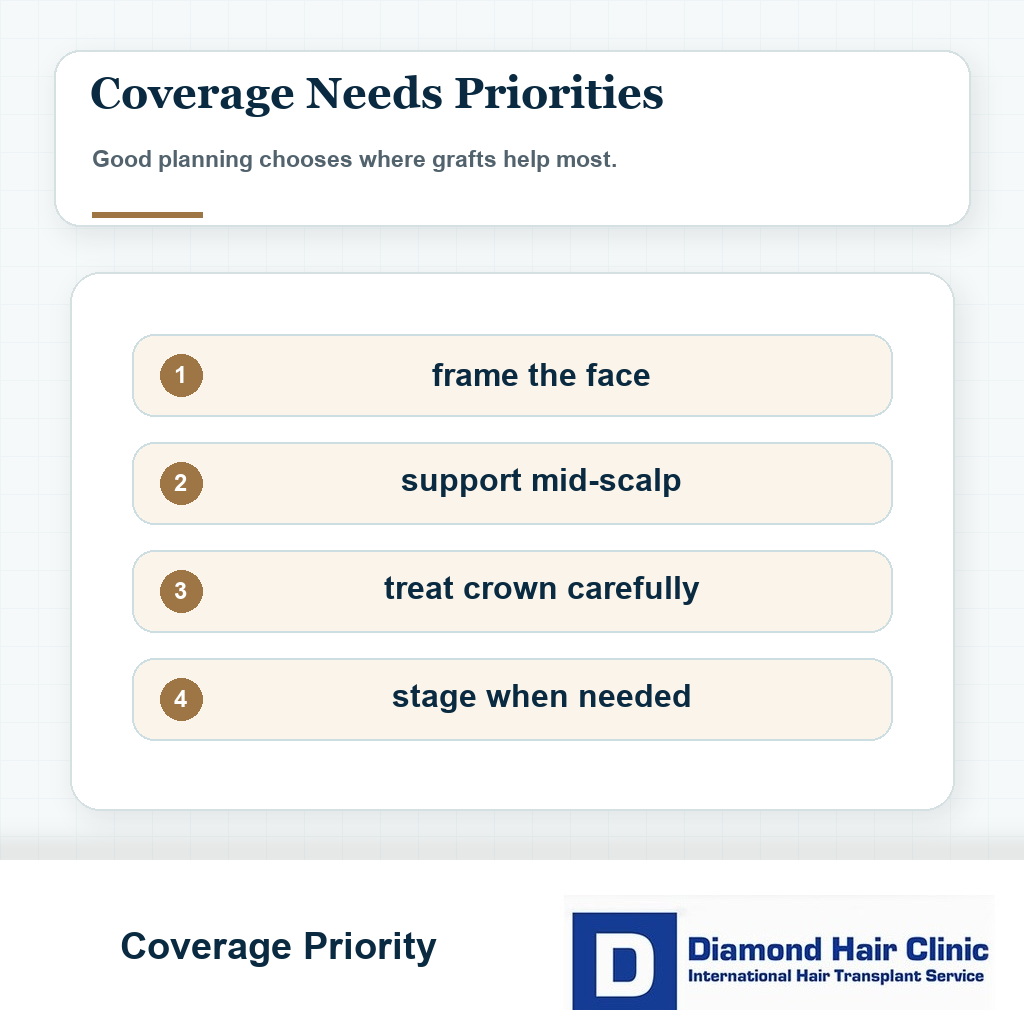
Hair transplant may be enough when the main problem is recession at the temples, a high but reasonable frontal line, or a hairline shape that can be softened with grafts. It may not be enough when the forehead height, brow bone, or broader facial structure is the main concern. When that happens, facial feminization surgery or hairline lowering may need to be discussed before the transplant sequence is decided.
Here is the practical difference. A hair transplant creates a hair bearing outline by moving follicles. Hairline lowering or forehead surgery can change the position of the scalp, forehead, or upper facial frame. A graft can soften an outline, but it cannot move the brow bone or physically shorten the forehead by itself. If those procedures are planned later, a transplant designed too early may place grafts in an area that no longer fits the final anatomy.
Timing matters. If a patient is planning forehead surgery or hairline advancement, I need to know that before I design a transplant. A hairline that looks well planned before facial surgery may not be ideal after the forehead position or scalp position changes.
Hairline distress can be real and heavy. Still, rushing grafts into the wrong place can make a later correction harder, especially if forehead surgery changes the position of the scalp or the frame of the upper face.
When the patient mainly has a naturally high forehead, the discussion is closer to lowering a naturally high forehead. When the patient has true recession from androgenetic hair loss, the plan must also include the pattern of loss and the donor reserve. When FFS is planned, the hairline should be part of the wider facial plan, not a separate quick fix.
Sequence hair transplant with facial feminization surgery carefully
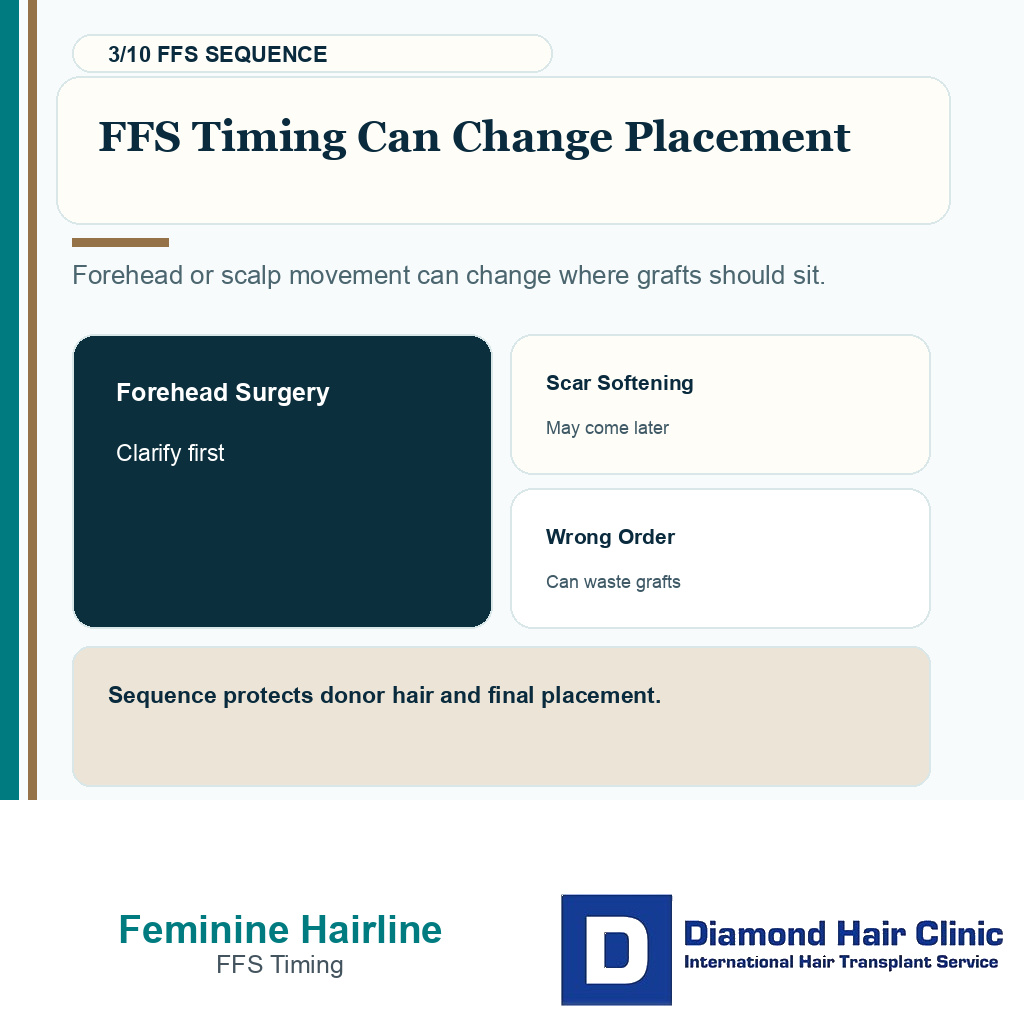
If facial feminization surgery may include forehead contouring, brow work, hairline advancement, or scalp movement, I usually want that plan clarified before grafts are placed. The sequence matters. A transplant fixes follicles into the skin, and facial surgery may later change the forehead frame, the scalp position, the scar position, or the shape that the new hairline needs to support.
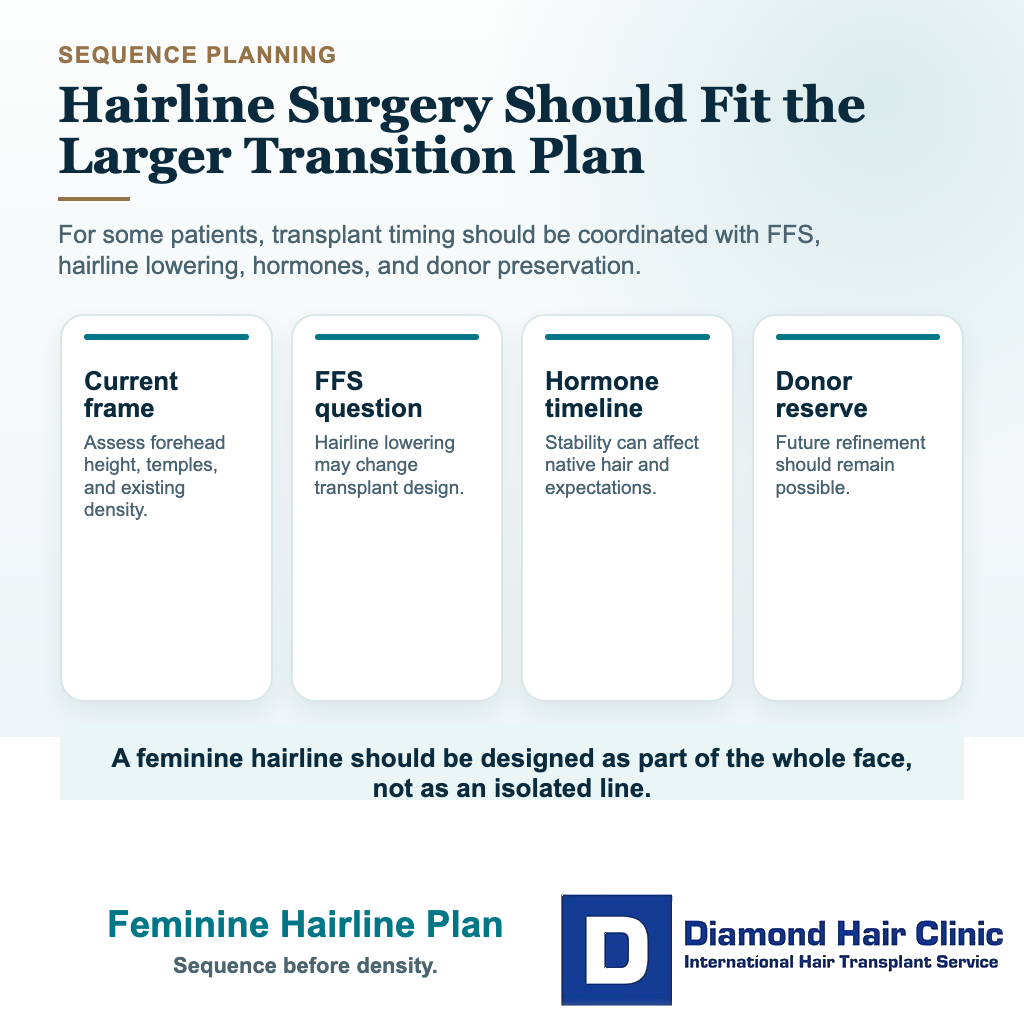
Sometimes the better sequence is facial surgery first, then hair transplant later to soften a scar, refine the temples, close small gaps, or add density once the facial frame has settled. In other patients, a transplant can come first if no forehead or scalp advancement is planned and the main problem is recession, temple shape, or a high but stable hairline.
After FFS or hairline advancement has already been done, I examine the scar line before drawing new grafts. Covering a scar does not mean lowering the whole front as far as possible. I check the scar position, nearby hair direction, and the way the front will connect with the temple points. A few carefully placed grafts may soften the line or close small gaps, but the final shape still has to stay light, feminine, and easy to style.
Bring any FFS plan, surgeon notes, photos, and expected hairline advancement details to the hair transplant consultation. This avoids designing one hairline for today and needing a different one after facial surgery. That is not a delay tactic. It is a way to use donor grafts once, in the position most likely to remain correct. I also want to know what is still moving in the wider transition plan. Hormone timing, planned FFS, brow or forehead work, current shedding, and future donor needs can all change how aggressive the first hairline should be. A transplant can be affirming and still be staged carefully so it does not close options the patient may need later.
Choosing the right feminine hairline shape
I start by looking at the whole face, not only the empty corners. The forehead height, temple shape, eyebrow position, frontal hair direction, age, hair caliber, and existing hair density all change the plan. A feminine hairline is often softer and more rounded, but it should not be copied from another person’s photo.
Use inspiration photos to explain the feeling you want, not as a template to copy. The final hairline has to fit your own forehead, temple angles, hair direction, parting habits, and donor budget. A neutral outline can also be a design goal when a distinctly feminine hairline is not what you want.
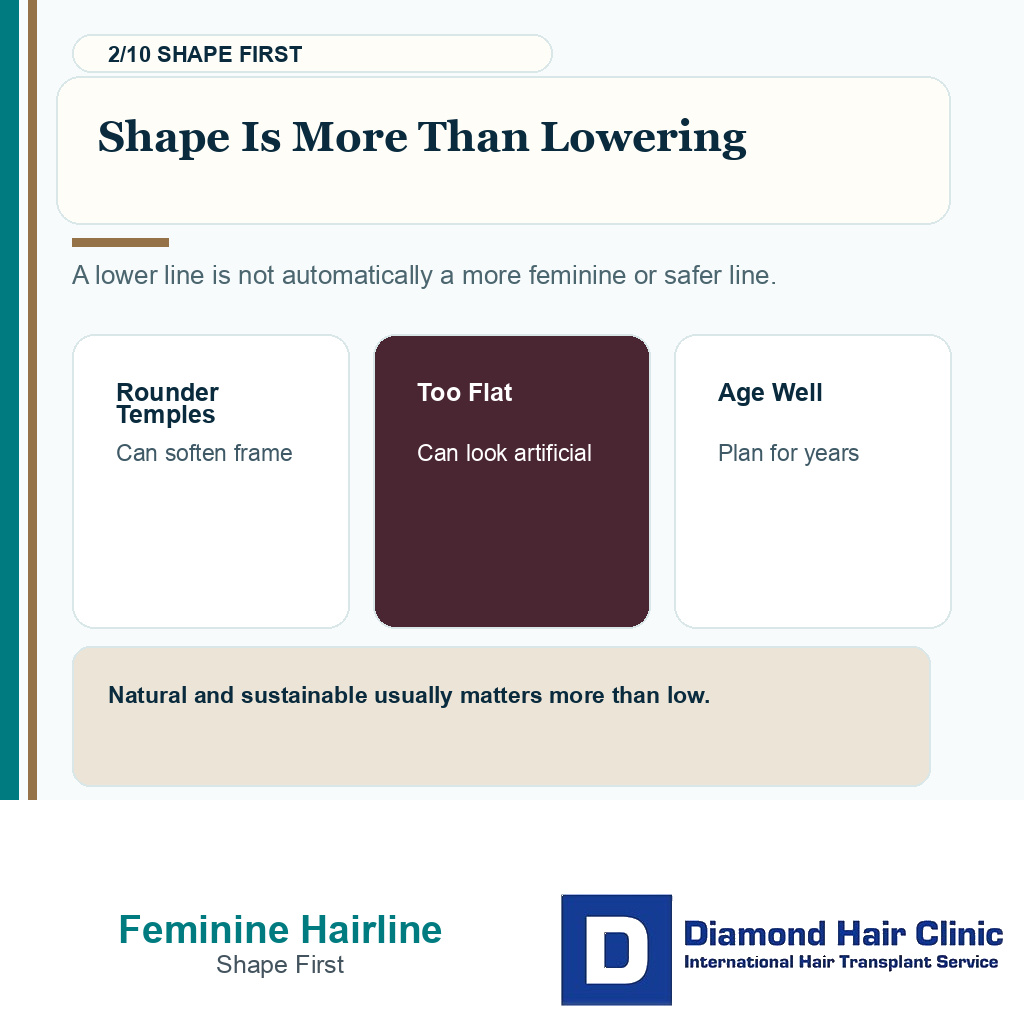
The most common mistake is drawing the line too low or too flat. A low line can look attractive on a screen before surgery, but it may not age naturally. It can also consume too many grafts in the front and leave fewer grafts for future thinning.
I pay special attention to the temple area. It can change facial framing a lot, but it is also unforgiving. If the angle, direction, or density is wrong, the result can look planted. A soft feminine outline needs gradual transition, not a hard border.
The better hairline is usually the one that looks natural and sustainable, not simply the lowest possible position. The plan should help the patient feel more aligned with herself without creating a new surgical problem later.
Donor management still matters after transition
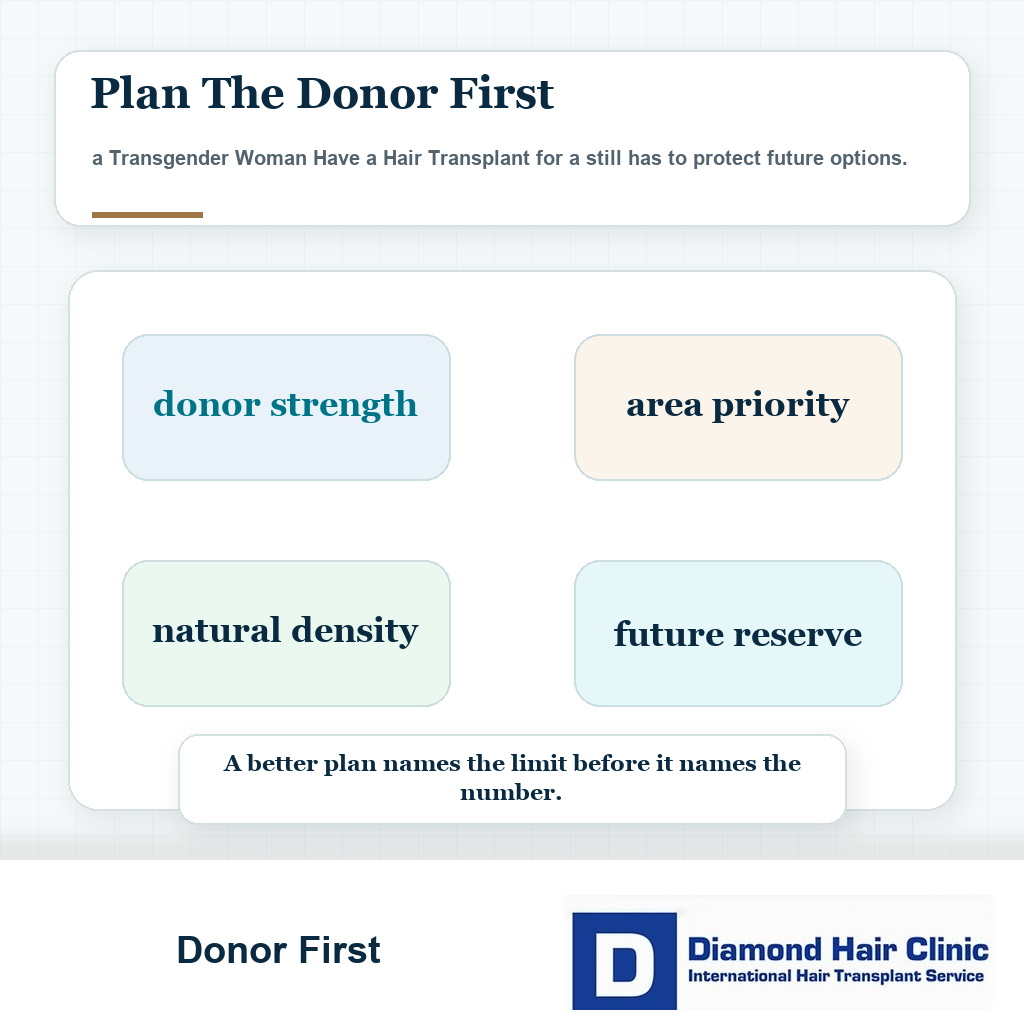
A hair transplant does not create new hair. It moves follicles from the donor area to the recipient area. Donor management still matters in every transgender hair transplant.
Some patients have strong donor hair and limited recession. Others have a history of male pattern hair loss with thinning that may involve the crown, middle scalp, or donor margins. I cannot ignore that history just because the goal is feminine hairline design.
Hormone therapy and medical treatment may change the future hair loss picture for some patients, but I do not treat them as a guarantee. I still examine the donor area, the miniaturization pattern, the family history, and the stability of the hair loss before I decide how much can be safely moved.
The donor area is a lifetime resource. If too many grafts are used to force a very low hairline in one session, the patient may have fewer options later. This matters even more when the hairline carries emotional importance, because a repair after a poor design can be more difficult than doing the first plan conservatively.
Hormone therapy can change the surgical plan
Hormone therapy can be relevant to the surgical plan, but it does not replace a proper scalp examination. Not every transgender woman is on the same hormone plan, and not every hairline responds in the same way. Feminizing hormone therapy and anti androgen treatment may slow androgen driven hair loss in some patients, and in some cases the hair may look stronger with time.
But I do not treat hormone therapy as a surgical guarantee. It may not fully rebuild temple recession, it may not solve a naturally high forehead, and it does not make donor planning unnecessary. The safer approach is to look at the scalp as it is now, understand the medical plan, and decide whether surgery should happen now, later, or in a smaller first stage.
If the hair loss pattern is still changing quickly, the plan needs more caution. If the donor area is strong and the hairline goal is realistic, the plan may be more straightforward. If there is diffuse thinning or uncertainty about future loss, I may recommend waiting, medical coordination, or a more limited first session.
I check the difference between a receding hairline and a naturally high hairline. These two problems can look similar in the mirror, but they are not the same surgically. A patient with active recession needs future planning. A patient with stable high forehead anatomy may need a different design conversation.
For patients already working with an endocrinologist or gender affirming medical team, the hair transplant plan needs to be medically coherent. It should support the patient’s overall medical plan, not create confusion around timing, medication, or future procedures.
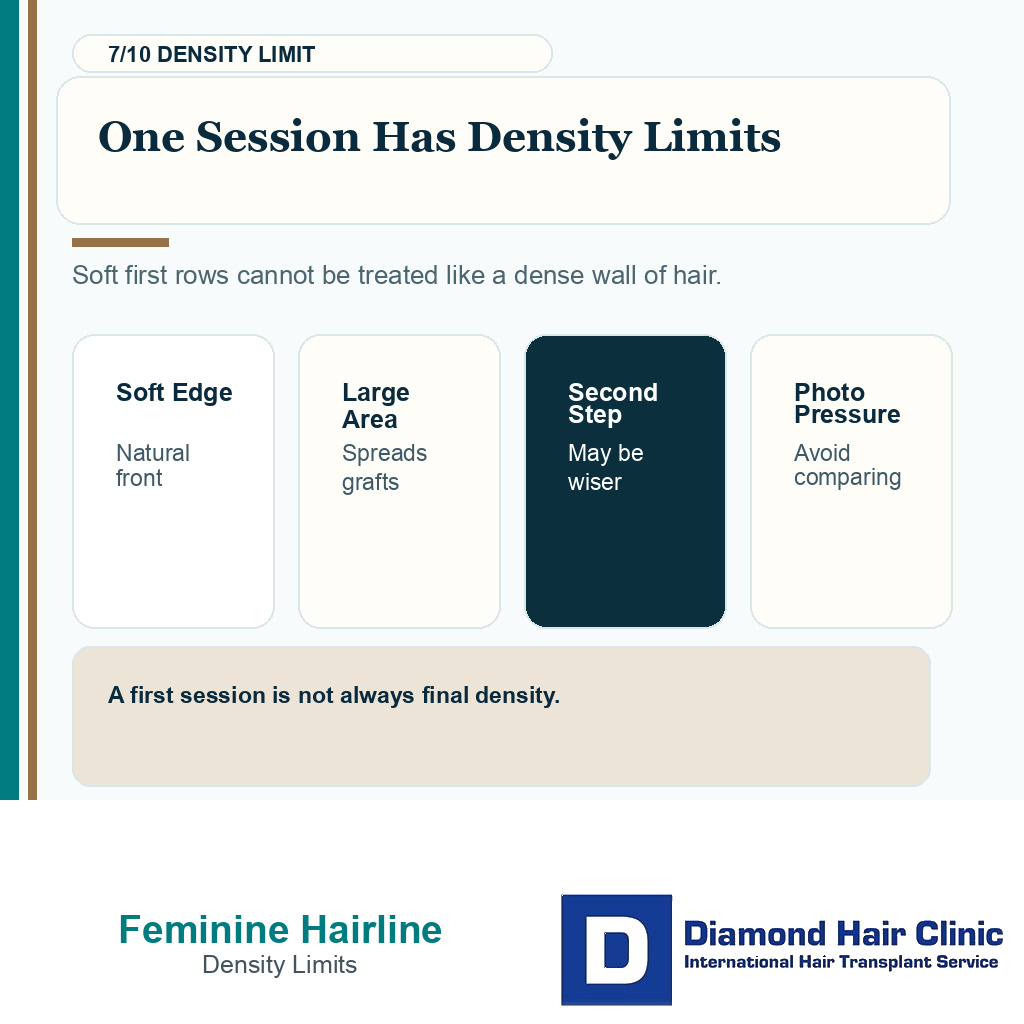
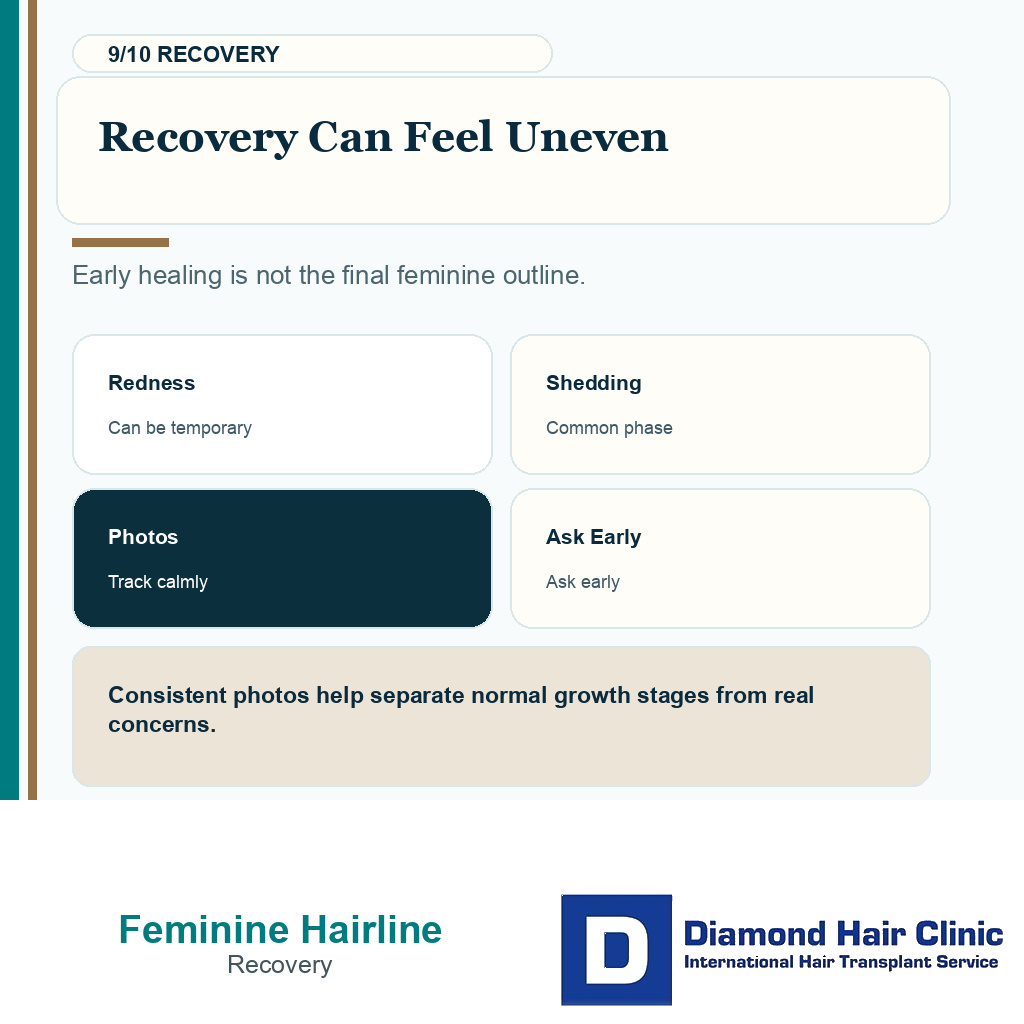
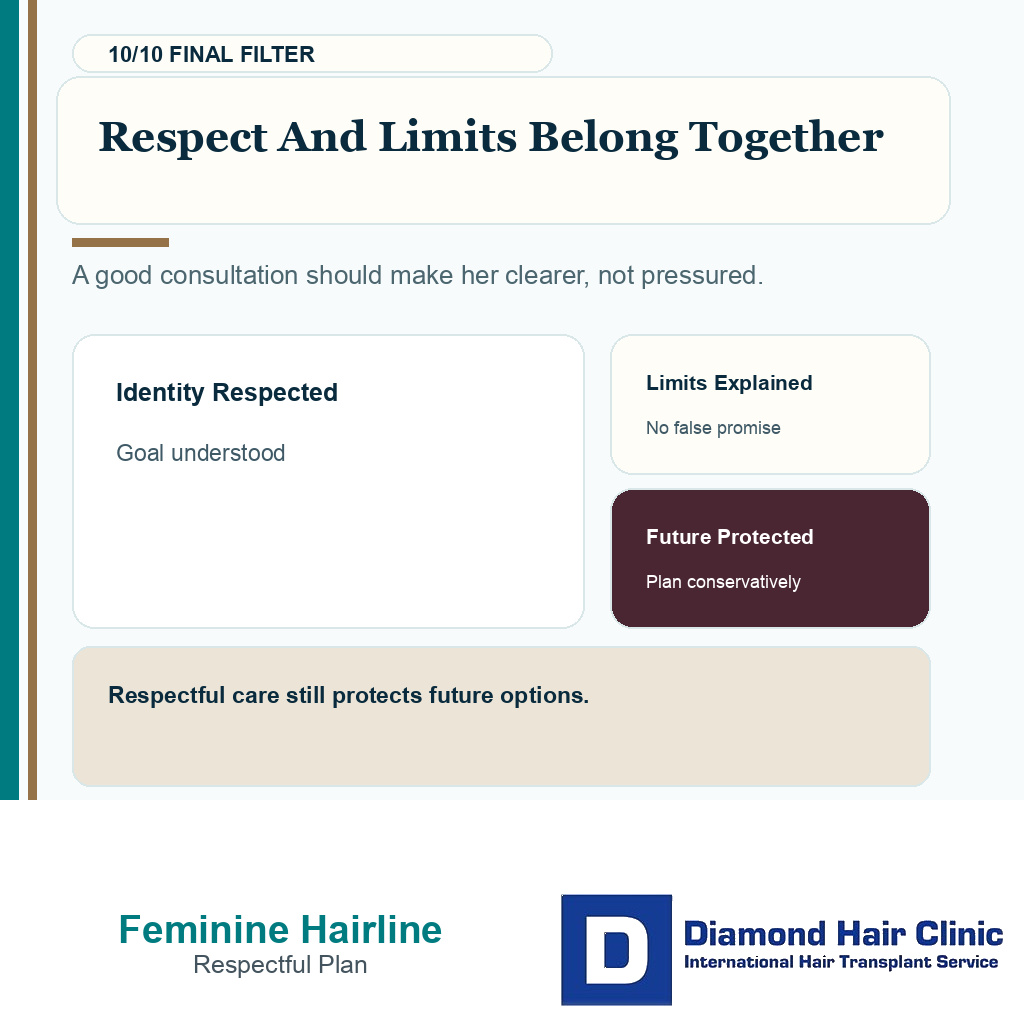
Use the 10 feminine hairline planning slides below to connect hairline shape, FFS timing, hormone context, donor reserve, density limits, and respectful surgical planning. Swipe the carousel, use the arrows for one step at a time, or choose a number below the image to jump to that point.



One surgery can only create limited density
One surgery can often create a meaningful improvement, but it cannot always create the final density a patient imagines. The limit becomes clearer when the goal is lowering and rounding the hairline, filling the temples, and improving visual density across a larger area at the same time.
This needs careful explanation because many patients compare themselves with perfect photos. A feminine hairline transplant has to look soft at the front, so the first rows should not be packed with thick multi hair grafts. That softer edge is more natural, but it also means the illusion of density must be built with judgment.
Sometimes one session is enough. Sometimes a second refinement is more responsible than trying to force everything into one operation. The answer depends on donor strength, hair caliber, contrast between hair and skin, the size of the recipient area, and how low the patient wants the line.
The most natural result is not the one that uses the most grafts. It grows in the right direction, frames the face naturally, protects the donor area, and still makes sense years later.
Technique choice depends on design, shaving, and donor safety
The best technique is the one that fits the patient’s donor area, hair length needs, design goal, and future plan. A FUE hair transplant can be a good option when individual follicle extraction is suitable and donor harvesting can be done safely. It is often attractive because it avoids a linear strip scar.
DHI hair transplant may also be discussed in selected cases, especially when placement between existing hairs is important. But I do not choose the surgery based only on the name of the technique. DHI is not a separate miracle category. It is a way of handling and placing follicular units. FUE, DHI, and other method labels do not guarantee a feminine or natural hairline.
The more important questions are who designs the hairline, who controls the recipient area incisions or placement, how the grafts are selected, whether the first rows use finer hairs, and whether the clinic understands the patient’s goal. Technique matters, but judgment matters more.
If a clinic sells a method as if the method solves the problem by itself, pause. A method is a tool. The surgeon’s planning decides whether that tool creates softness or leaves a harsh outline.
Feminine hairline promises that need caution
A very low feminine hairline promise deserves caution when the donor area, future hair loss risk, temple design, and possible FFS timing have not been carefully examined. A graft number given too quickly, especially from photos alone, should also make the patient pause.
Another weak point is a clinic that shows only dramatic best case results and avoids discussing limitations. A patient may be told that a very dense front can be built in one session, but nobody explains what happens to the crown, middle scalp, donor area, or future options.
For a transgender woman, the consultation should also feel safe and clear. She should be able to say that she wants a feminine hairline without being misunderstood, rushed, or pushed into a standard masculine design. Respect is not separate from surgical quality. If the design goal is unclear, the design can be wrong even when the grafts grow.
Before committing, she should understand the design, the donor plan, the realistic density, the recovery, and what surgery cannot do. These are the kinds of details that should be clear before you book a hair transplant.
Recovery and growth still take time
The early recovery is not the final result. The hairline may look sharp, red, sparse, or emotionally difficult at different stages. This can be especially stressful for a patient whose hairline is connected to gender presentation.
Patients should not judge the final femininity of the design too early. The first months can be uneven. Some hairs shed. Some areas appear slower. The edge may look less soft until growth, length, and styling begin to work together.
Some concerns do need attention. Severe pain, signs of infection, unusual crusting, or a design that was clearly not what was agreed should be addressed. But normal early healing should not be confused with a failed result.
It helps to track hair transplant growth with consistent photos and realistic timing. Frequent anxious checking can make normal stages feel like failure. A good follow up process gives the patient a steadier way to understand what is happening.
Hairline dysphoria needs careful surgical planning
Hairline dysphoria can make the decision feel urgent. I take that seriously. A hairline can affect how a patient sees herself every morning, how she styles her hair, and how safe she feels in public. But in surgery, urgency is not always a good guide.
In this type of case, emotional need and surgical safety both have to be taken seriously. A respectful consultation should not make her choose between being understood and being protected surgically. Taking dysphoria seriously does not mean agreeing to the most aggressive design. It means making a plan that reduces distress without creating a future repair problem. A rushed low hairline, overused donor area, or wrong sequence with FFS can create a problem that is much harder to live with later.
A good plan should leave her clearer, not more pressured. A useful consultation should explain what hair transplant can improve, what it cannot change, when waiting may be wiser, and how the hairline should fit the rest of the face.
She should feel able to ask direct questions. If she cannot talk openly about wanting a feminine hairline, the clinic may not understand the real goal. That is not a small communication issue. It can change the surgical design.
The hairline has to fit her face
For a transgender woman, the operation is not just closing recession. The design may need temple rounding, forehead balance, density, staging with facial surgery, or a softer frame that fits how she wants to present.
The booking record should include the hairline drawing, planned zones, estimated graft range, and who will perform each surgical step. A feminine design also has to fit donor strength, future loss, facial proportions, and any FFS sequence. The written plan gives you something concrete to compare if the design, graft count, or surgical team changes.

Read this review excerpt
told me the quality of my donor hair and what he could take out and advised me what will the be best outcome with what donor hair I had.