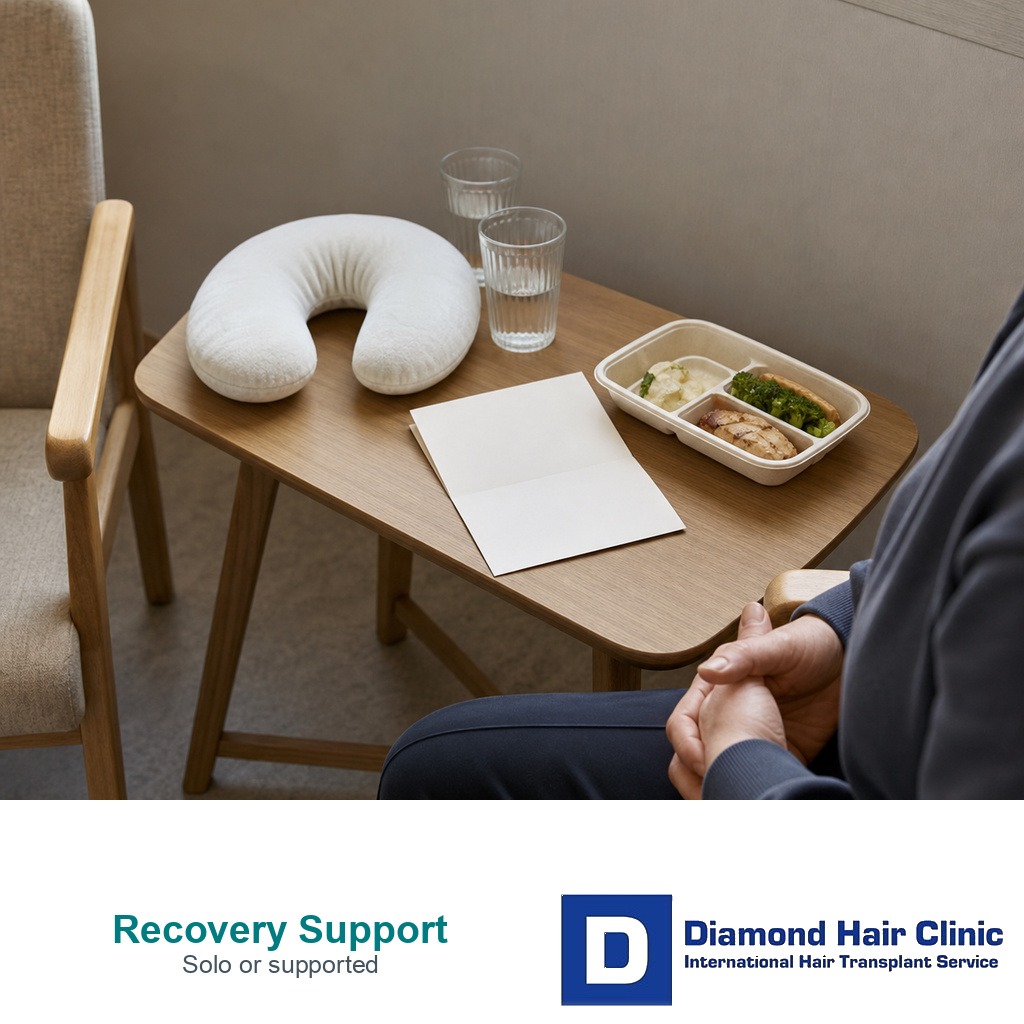
Recovering Alone Can Be Reasonable When the First Night Is Planned
Not every healthy adult needs someone beside them after a hair transplant, but recovering alone should never mean improvising. Solo recovery is more reasonable when you are alert after local anesthesia, transport to the hotel is arranged, food and water are easy to reach, written instructions are clear, and clinic contact is already set before the first night begins.
The exception matters. If sedating medication, stronger pain medicine, dizziness, impaired alertness, balance problems, or a clinic discharge rule applies, follow that instruction and do not travel or drive alone. Getting back to the hotel safely is one decision. Managing the first night, sleep position, medicine timing, warning signs, food, water, and clinic messages is a different job.
If you are alone, make the evening light before surgery day. Put luggage where it does not need lifting, keep food and water within reach, and arrange transport so you are not bending into cars or crowded trains while tired.
Solo recovery can be reasonable when the setup is clear
Hair transplant surgery is usually performed with local anesthesia, and many patients are awake, walking, and able to communicate clearly after the operation. That does not make the evening ordinary. Your scalp has just been operated on, the grafts need protection, and your attention may be tired after a long surgical day.
Going alone is more realistic when the clinic has explained the first night clearly, your accommodation is close, the transfer plan is arranged by someone else, meals and water are easy to reach, and the surgical team is easy to contact. Do not plan to drive yourself after a long surgical day unless the clinic has specifically cleared it and no sedating medicine has been used. Solo recovery is less realistic when you must navigate crowded streets, carry luggage, buy supplies, translate instructions, manage children, or make several decisions while you are tired.
Think in practical terms before you book. Can you get from the clinic to your room without stress? Can you eat without searching for food late at night? Can you sleep in the correct position without rearranging the room? Can you send photos or messages if the clinic asks for them? If those answers are already solved, solo recovery may work well. If they are not solved, a companion, hotel assistance, or stronger planned support becomes useful.
The first 72 hours are when small mistakes happen
The first 72 hours after a hair transplant are mainly a practical setup problem. Small mistakes happen easily when a person is tired. A patient bends down to tie a shoe. Someone lifts a heavy bag into a car. A tired patient rubs the forehead or forgets the sleeping angle. Another person tries to clean the grafts because the scalp looks unusual. These are not dramatic events, but they are exactly the kind of avoidable pressure the plan should remove. Those first days are about planning, not permission to treat the recipient area casually. The first 10 to 14 days still require protection from rubbing, scratching, pressure, and direct trauma.
Before surgery day, the practical setup should be simple. Loose clothing, easy meals, drinking water, prescribed products, a charged phone, a clean pillow arrangement, and a transfer plan all matter. A short surgery day checklist helps because it keeps the first evening from turning into a search for basic items. This is the same reason I remind patients that a hair transplant trip is still surgery. The first days should be quiet recovery days, not sightseeing days squeezed between aftercare steps.
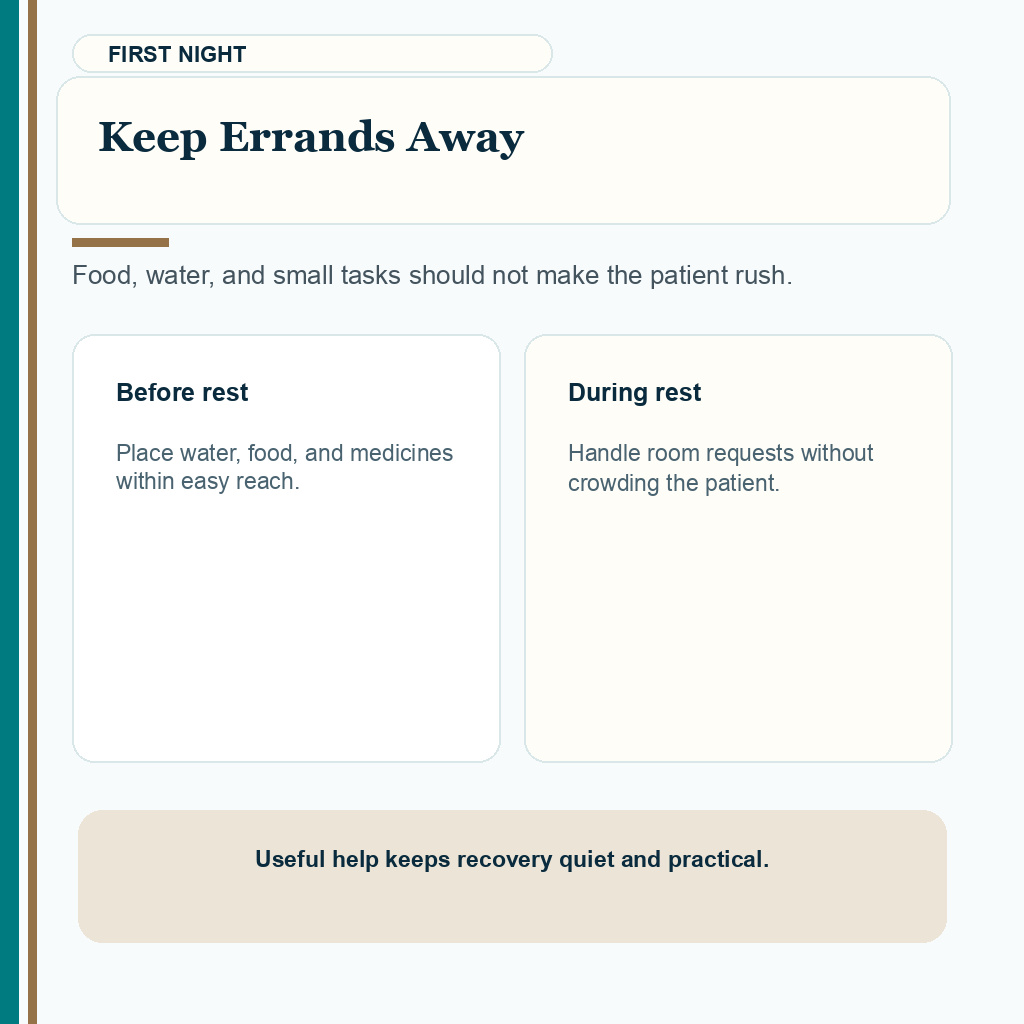
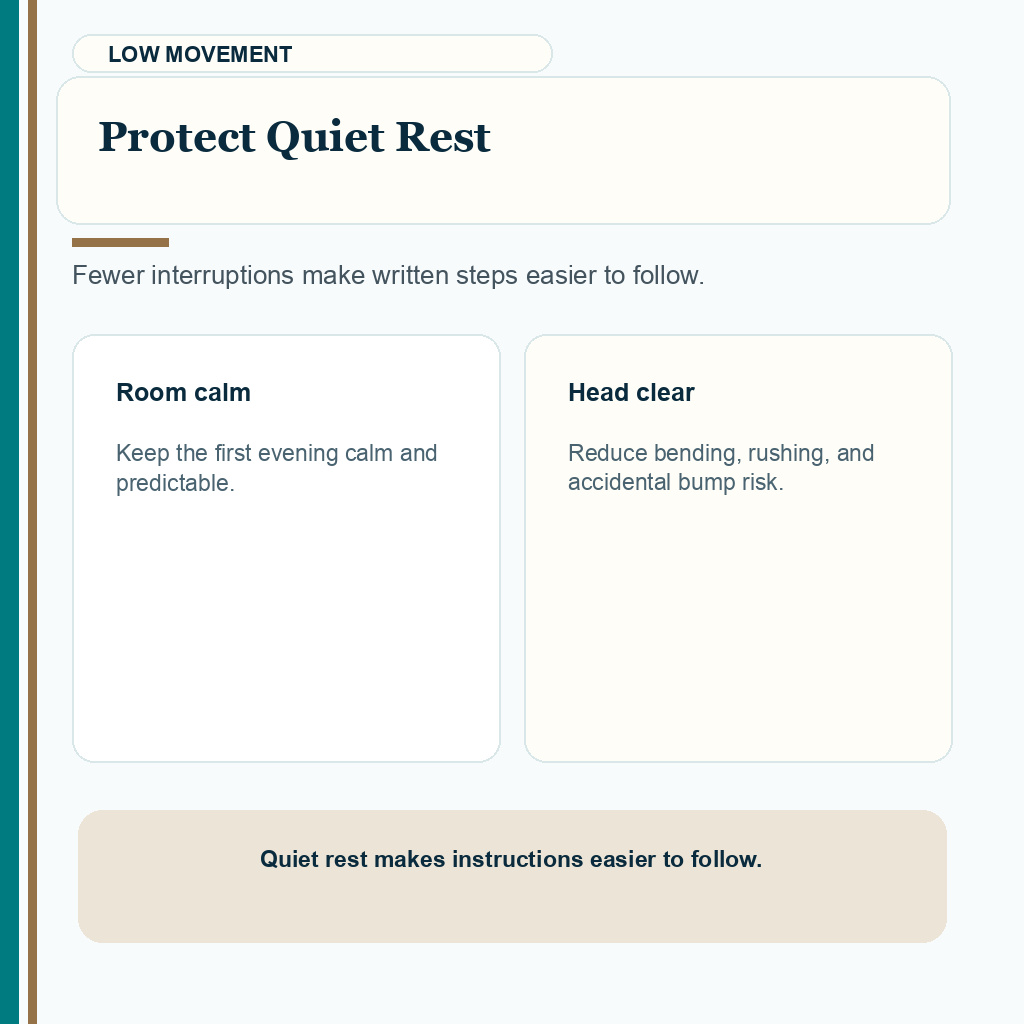
For the first hotel night, the room should be ready before the patient returns from surgery. Water should be near the bed, the phone charger plugged in, medicines and written instructions visible, pillows arranged, loose clothing ready, and food already decided. Shoes should be easy to put on without bending. The point of a first night plan is not comfort for its own sake. It keeps a tired patient away from lifting, rushing, searching, and unnecessary contact with the grafts.
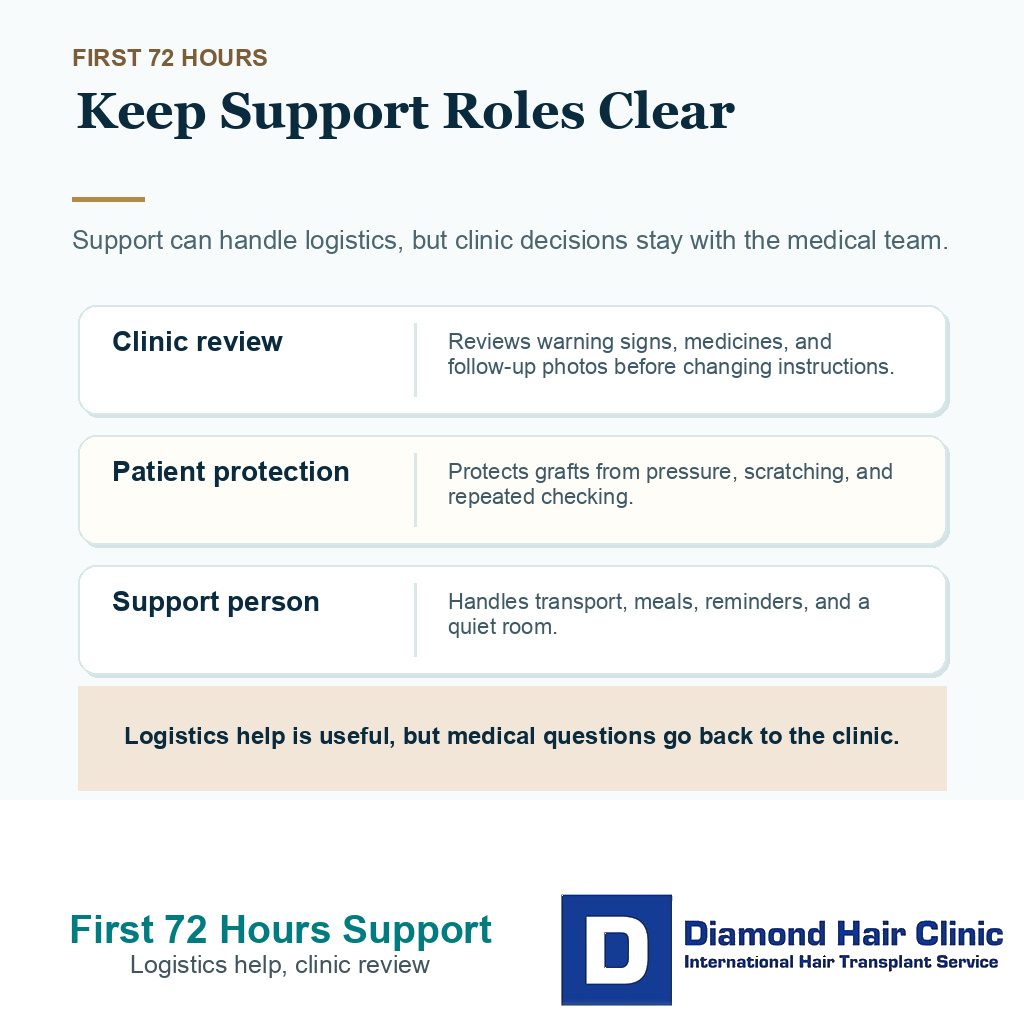
Support does not always mean one person beside you every hour. It may mean clinic transport, reception help at the hotel, room service, a family member reachable by phone, and clear follow-up messages from the surgical team. What matters is that you are not forced to solve basic logistics while protecting fresh grafts. If your support is remote, make sure one person knows the clinic name, the hotel, and how to reach you after surgery. If support is only by phone, decide who will answer if you are asleep, worried, or unsure which photo to send.
Arranged support is often enough
Help that is already in place is often enough for a healthy adult who travels carefully, reads instructions well, and stays close to the clinic or hotel during the first days. The help can be practical rather than personal. Clinic transfer, hotel reception, room service, written medication instructions, photo review, and direct clinic contact can sometimes do more than a companion who is unsure what to do.
The strongest solo setup is usually boring. You know how you will leave the clinic. You know where dinner is coming from. You know where you will sleep. You have your products and medication instructions in writing. You understand your early recovery instructions, and you know when your follow-up after surgery will happen. That kind of structure reduces anxiety because you are not guessing.
Solo recovery becomes weaker when it depends on willpower. Telling yourself that you will manage somehow after a long operation is not a plan. If you are tired, hungry, and worried about touching the grafts, even simple decisions can feel larger than they are. International patients who travel alone to Turkey should make the travel side concrete before surgery day. Here, I am focusing on the support decision after surgery, especially during the first night and first few days.
Some patients prefer to come alone because they do not want family, friends, or colleagues involved. Privacy is understandable. Secrecy from the clinic is different. If you will be alone, tell the clinic before surgery so transport, first night contact, washing review, and urgent instructions are settled without pretending someone else will help.
A companion helps when there are too many moving parts
A companion or extra help makes sense when the first days have too many moving parts for the patient to manage comfortably. That may be because of long transfers, language difficulty, high anxiety, dizziness, a history of fainting, poor sleep, limited mobility, complicated medication routines, or home duties that cannot wait. Parents should be especially careful. Lifting, chasing, bathing, or sleeping beside young children can create accidental contact and bending. If that is your situation, planning childcare after hair transplant is more important than trying to prove that you can do everything alone.
First 72 Hours Support Map
The map separates practical support from medical clearance. Use it to decide what should be arranged before you leave the clinic, not to override your written instructions.
Solo can work
Best fit when transport, meals, sleep setup, products, and written clinic instructions are already settled before surgery day.
- Protects independence without forcing rushed decisions.
- Risk to avoid recovery turning into errands.
Arrange support
Useful when you do not need a companion, but you do need practical help around the hotel and clinic schedule.
- Protects food, transfers, photos, reminders, quiet rest.
- Risk to avoid someone inventing new aftercare steps instead of following written instructions.
Bring a companion
Helpful when stress, language, walking, medicine timing, or unfamiliar travel would make the first evening harder.
- Protects slower movement and fewer practical mistakes.
- Risk to avoid the companion examining grafts or deciding medication.
Plan stronger help
Needed when children, caregiving duties, medical complexity, sedation rules, or poor access to local help could interrupt recovery.
- Protects the first week from avoidable pressure.
- Risk to avoid warning signs being discussed privately instead of sent to the clinic or urgent local care.
There is also a medical boundary. A companion for comfort is different from a responsible adult required after sedation, stronger medicine, poor balance, or a clinic discharge rule. Most hair transplant patients are treated with local anesthesia, but local anesthesia does not always mean no impairment if sedating medicine is added. If sedation is planned, if you have a medical condition that affects alertness or balance, or if you are told not to travel alone after medication, follow those instructions strictly. This is not a place to negotiate with convenience. A companion should reduce practical risk, not replace clinical judgment.
What should a helpful companion actually do?
A useful support person keeps ordinary tasks away from the patient. They help with transport, food, water, luggage, phone messages, reminders, and a quiet room. They can notice if you are becoming anxious or rushing. They can help you remember the sleeping angle and keep the environment calm. If you are unsure about the resting position, keep the clinic’s instructions close and understand why sleep position after hair transplant matters for graft protection.
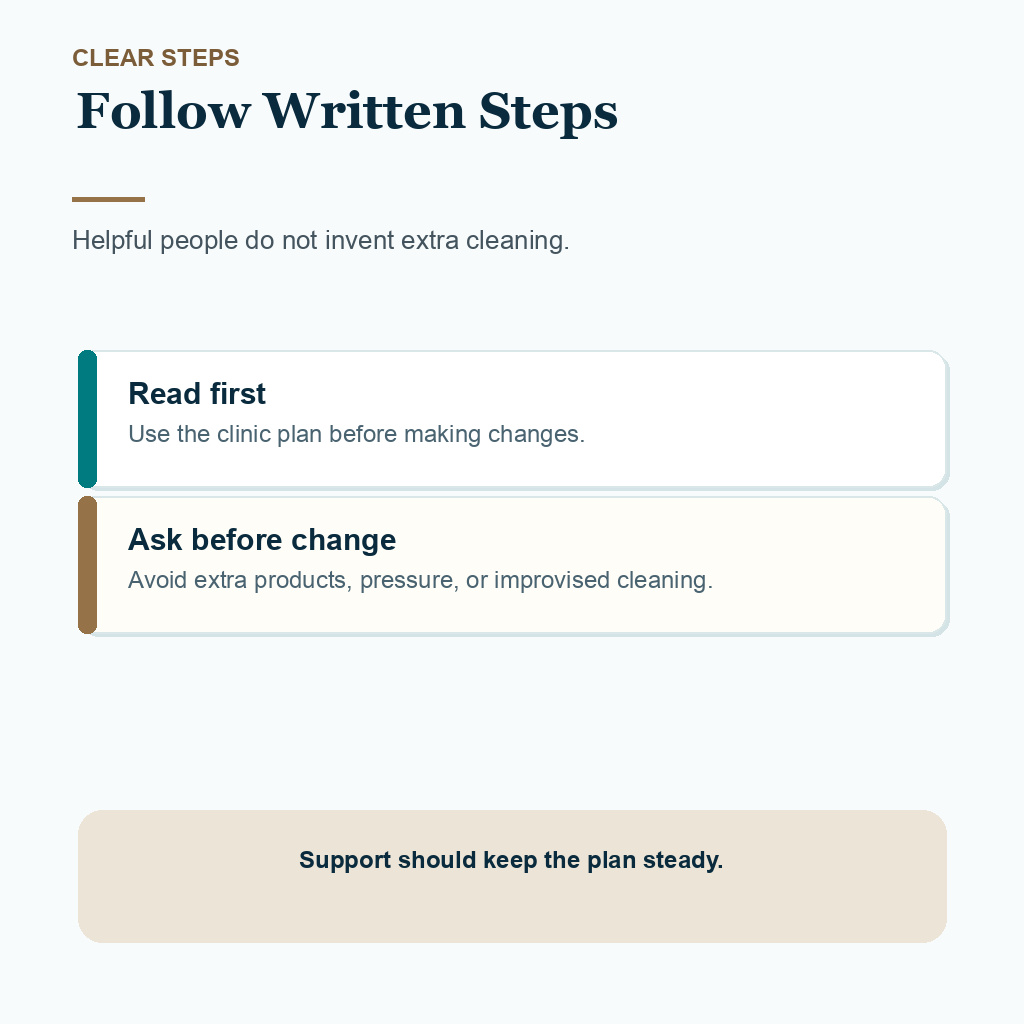
The best support person is steady, not dramatic. They do not keep staring at the grafts, searching the scalp every few minutes, or comparing you with photos from other patients. They are not there to become a second surgeon. They help you follow the plan you were given. If the clinic asks for photos, they can help take clear photos without touching the recipient area. If you are unsure about washing, they should help you read the written instructions before experimenting with gentle washing after hair transplant.
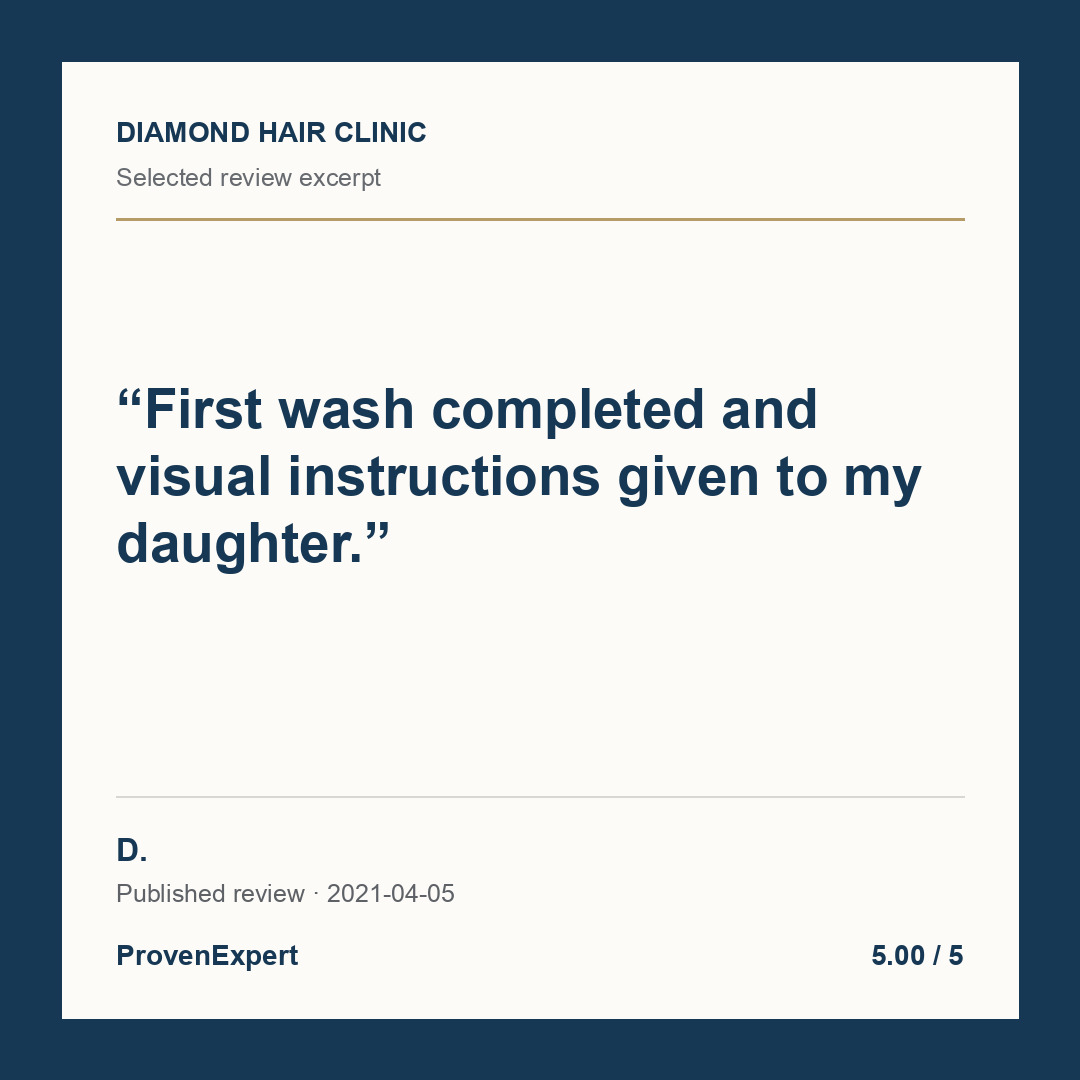
Read this review excerpt
First wash completed and visual instructions given to my daughter.
Support also means reducing social pressure. The first nights are not the time for guests, restaurant plans, alcohol, late walks, or long conversations about whether the scalp looks normal. A quiet person who can bring water and protect rest is more valuable than a crowd that makes the patient feel watched.
Help must not replace clinic instructions
A companion should not clean the grafts unless the clinic has explicitly taught that step for your case. They should not rub, pick, scratch, massage, apply extra products, remove scabs early, change medication timing, or decide that a symptom is harmless. Fresh grafts do not need amateur inspection. They need the right amount of protection and the right communication with the clinic.
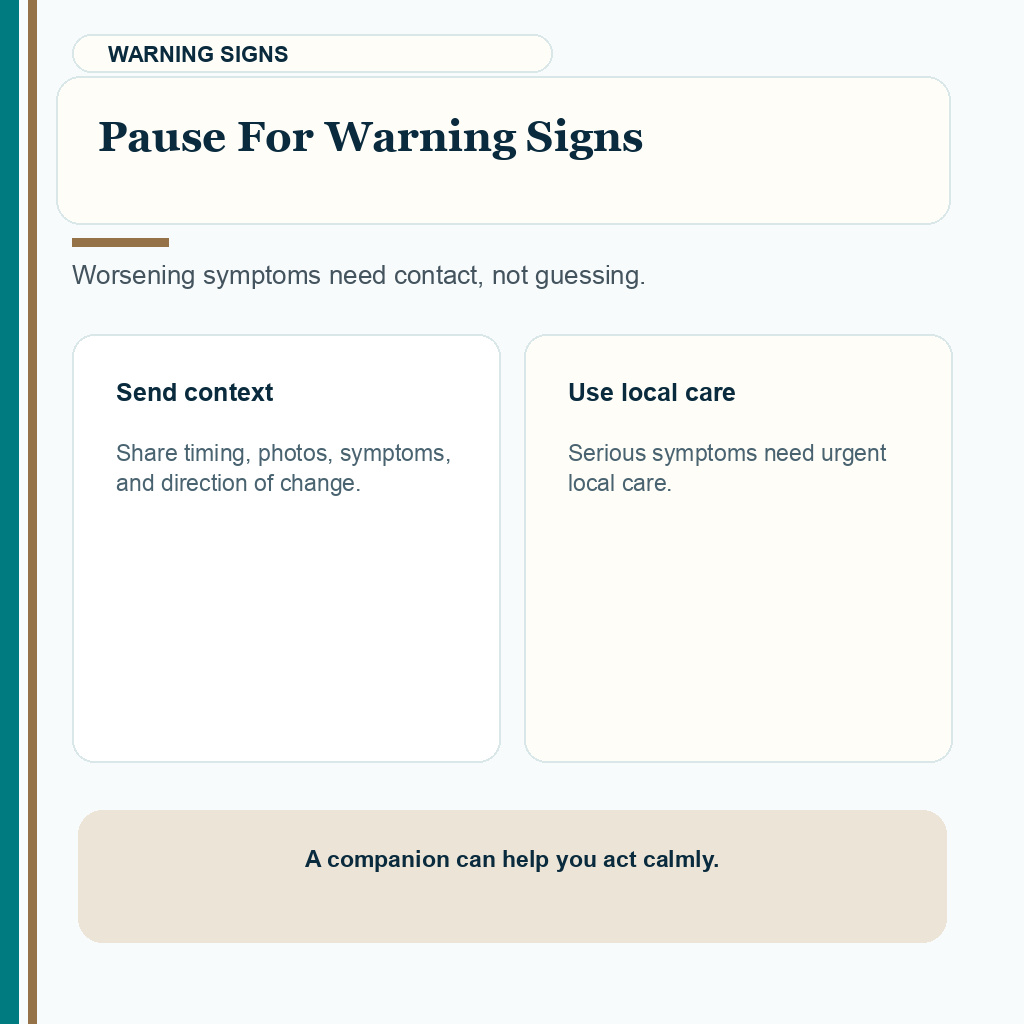
Contact the clinic if you have worsening pain, spreading redness, pus, bad smell, persistent bleeding, trauma to the grafts, fever, swelling that worries you, repeated dizziness, fainting, confusion, severe weakness, or a possible medication reaction. It is useful to understand swelling warning signs, but warning signs should not become a private debate between the patient and companion. If symptoms are severe, if breathing or chest symptoms appear, if you feel unsafe standing or traveling, or if you cannot reach the clinic quickly, urgent local medical care is the support plan.
This boundary matters most around the recipient area. If someone accidentally touches the grafts, do not start rubbing or cleaning aggressively to fix it. Pause, protect the area, and ask the clinic what to do. If the concern is specifically about contact with the grafts, the boundary for touching grafts is worth understanding before anyone tries to help.
Night one is easier with steady help
Plan the first evening before surgery. Arrange transport, a simple meal, medicines and aftercare products within reach, and a sleeping setup that protects the grafts. Decide who can steady you if anxiety rises and who can photograph the scalp under steady light when the clinic asks for an update.
If you are traveling alone, make the plan more concrete, not more heroic or dependent on willpower. Stay close to the clinic, keep your room quiet, arrange meals in advance, avoid luggage strain, and keep clinic contact instructions easy to find. Tell the clinic before surgery day that you will be alone, so transport, any photo review steps, washing instructions, and urgent contact steps are clear before you leave the clinic. If someone comes with you, explain their role before surgery day. They are there to protect calm recovery, not to perform medical tasks. With late flights, heavy bags, or a long transfer, planned help matters more than confidence. Companions help most when their role is clear before the first evening, not after a problem starts.
For me, the dividing line is whether the evening is already simple before surgery starts. Solo recovery can be reasonable when the transfer is arranged, the room is ready, food and water are within reach, and the patient knows how to reach the clinic. It becomes a poor setup when a tired patient has to solve transport, sleep, medicines, warning signs, luggage, childcare, and anxiety at the same time. If the first 72 hours will be crowded with travel stress, mobility problems, language difficulty, sedation rules, or unclear logistics, bring help or arrange stronger support. Solo recovery should feel organized before you leave the clinic, with medical questions going back to the team and ordinary problems kept away from the grafts.