A Hair Transplant Trip Is Still Surgery, Not a Holiday
If you travel for FUE, the first week should be planned around the operation, not around a tourist list. Flights, hotel nights, a companion, paid plans, and the wish to see Istanbul can make every free hour feel valuable. I still want the early plan to be medical first. Stay close to the hotel and clinic, keep movement short, protect washing and sleep, and cancel any plan that adds heat, sweat, alcohol, water exposure, crowd pressure, or rubbing.
The scalp does not heal better because the trip was expensive, stressful, or in a beautiful city. Newly placed grafts, small donor wounds, swelling, washing, sleep, medicines, and clinic access still need priority.
The first week is not empty time. It is protected surgical time, not empty vacation time to fill with pressure. Used well, those days give the scalp quiet handling, give the clinic a chance to review healing before departure, and give you enough room to change the plan if a symptom appears before the flight home.
Build the first days around plans you can cancel. A museum ticket, long walk, or dinner reservation should never become more important than sleep, washing, and an easy way back to the hotel.
The first week after FUE should feel deliberately quiet
A good recovery week can look boring from the outside. In practice, it means a simple transfer back to the hotel, early sleep, light food and water, the first wash or clinic review when planned, short shaded walks only if you feel steady, and no pool, spa, nightlife, heavy bags, or full tourist days. If you feel dizzy, sedated, faint, dehydrated, nauseated, or unsteady after a long surgical day, even the short walk waits.
FUE is still surgery. The recipient area has thousands of fresh sites. The donor area is healing after extractions. Swelling can move, sleep can be awkward, and the first wash or review can change the plan. If you fill the same week with long sightseeing, spa, pool, nightlife, alcohol, and crowded transport, you add pressure before the scalp has had enough quiet time.
I am not saying you must hide in your room every minute. I am saying the trip should have a medical order. First decide how many days to stay in Turkey after a hair transplant, then use those days as recovery time rather than free space to fill.
Extra days in Istanbul are not wasted if you rest
Patients sometimes say, “I have two extra days, so what can I do?” My answer starts with why those days exist. They let you take photos in the same light, ask a question before leaving Istanbul, watch whether swelling is settling, repeat the washing routine carefully, keep medicine timing predictable, drink water, sleep, and avoid a rushed flight decision.
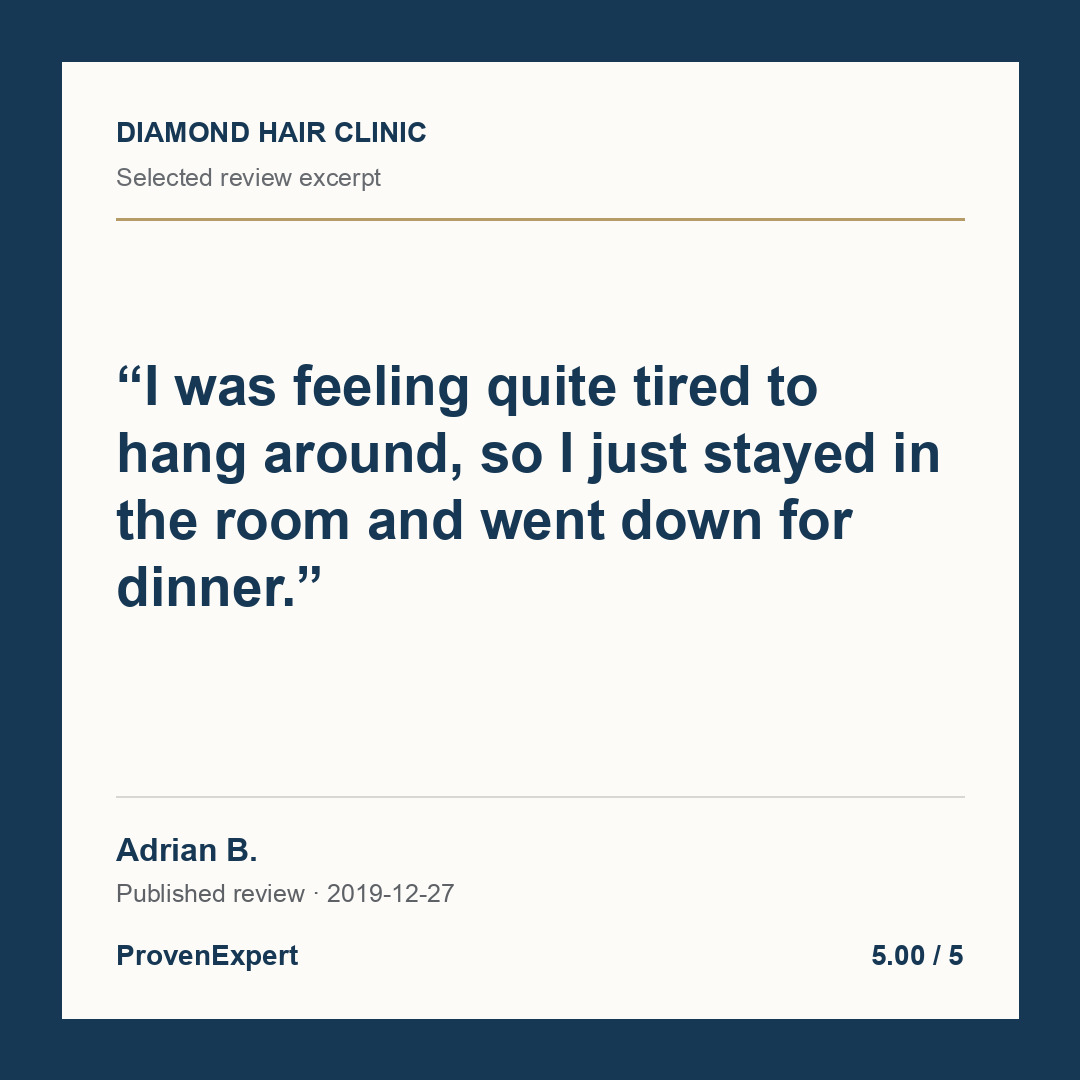
Read this review excerpt
Selected review excerpt
I was feeling quite tired to hang around, so I just stayed in the room and went down for dinner.
If a graft area is irritated, if the donor feels unusual, if swelling looks different, or if you need reassurance before flying home, being near the clinic is useful. A quiet hotel day can be more valuable than a full tourist day because you are not spending recovery energy on heat, friction, crowds, stairs, sweating, or delayed contact with the clinic.
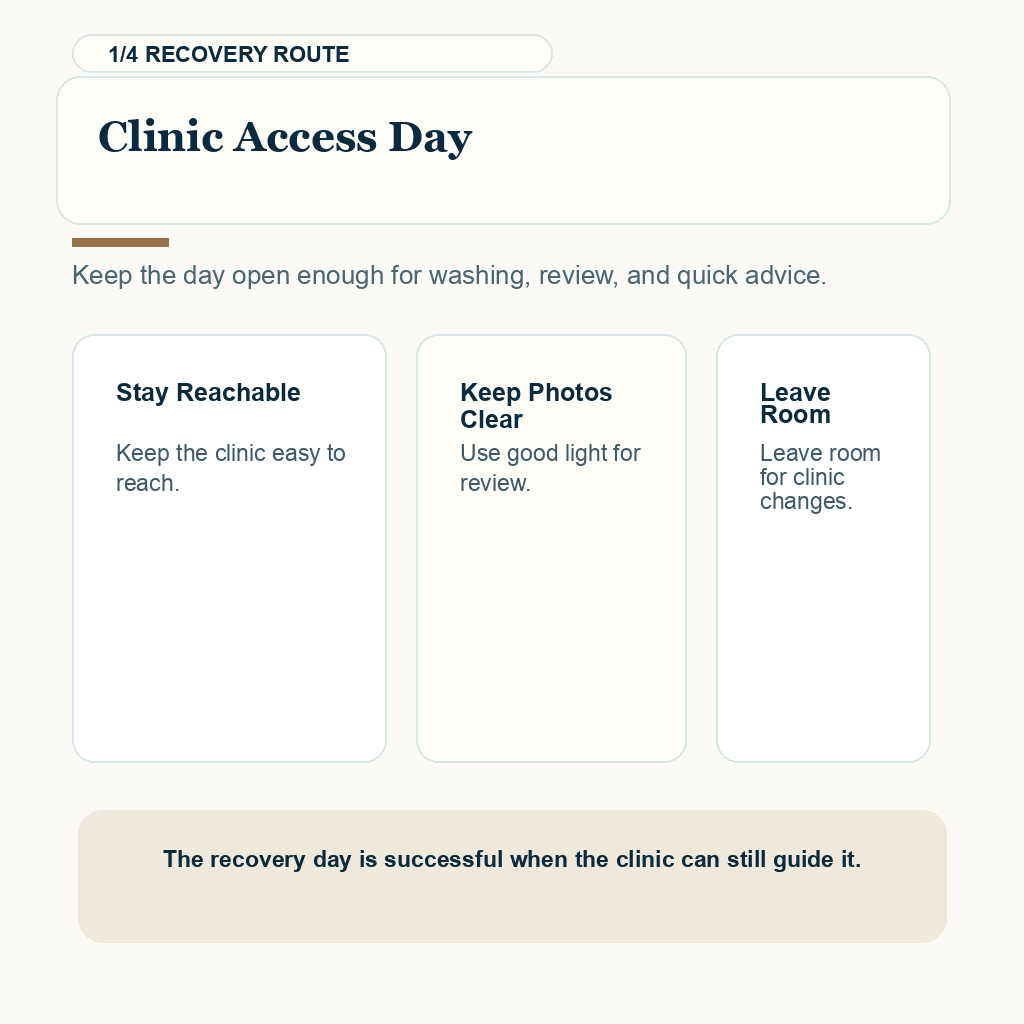
Contact with the clinic is part of recovery. Before travel, confirm which channel handles photos, who reviews symptoms, and what cannot wait for a routine reply. Weekend and public holiday dates require the same follow-up coverage as an ordinary weekday. A complete schedule names the person who reviews photo or symptom messages when the usual contact is away. A clear FUE contact route before travel belongs in the plan because hotel rest is safer when communication is already defined.
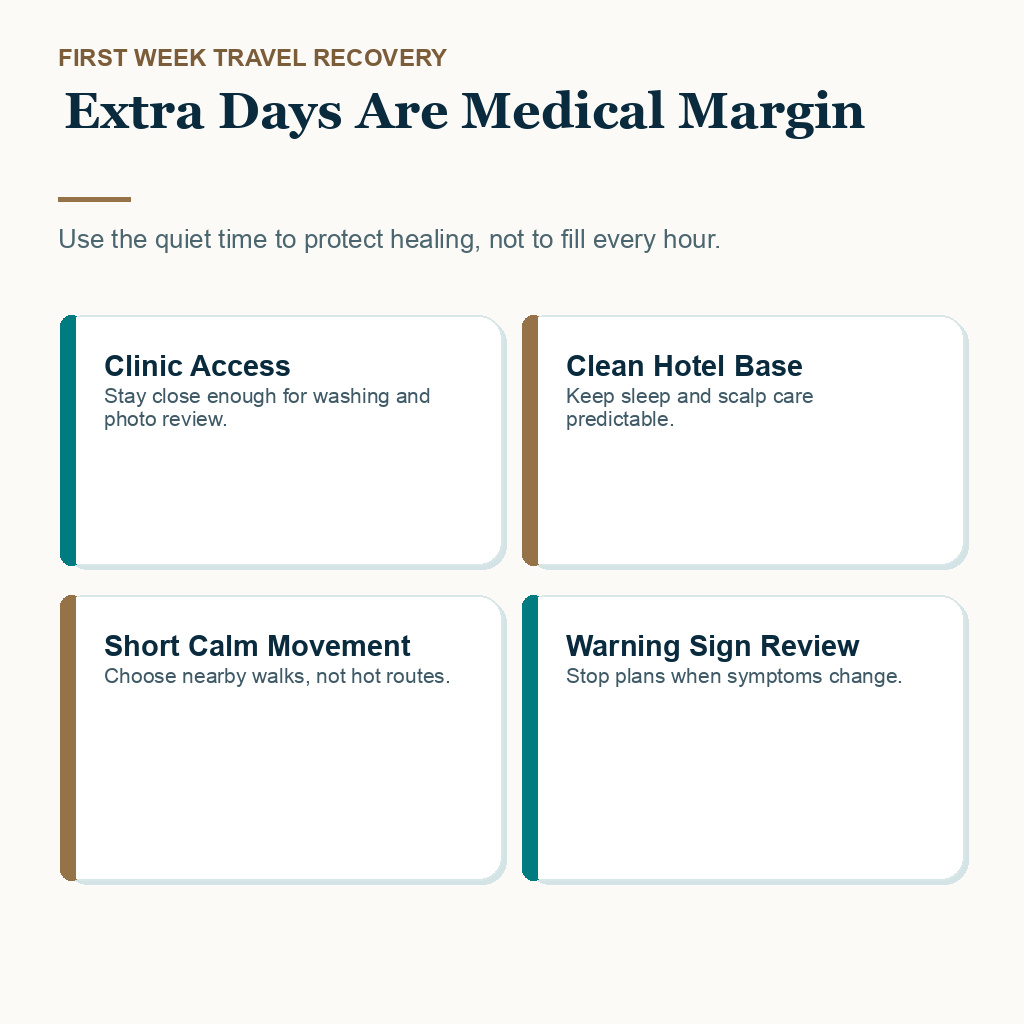
Which activities create the wrong kind of recovery pressure?
The risky activities usually share the same pattern. They add heat, sweat, water exposure, friction, alcohol, crowd pressure, fatigue, or poor sleep. A quiet meal near the hotel and a long evening that ends with alcohol, smoke, late sleep, and a tight cap are not the same plan.
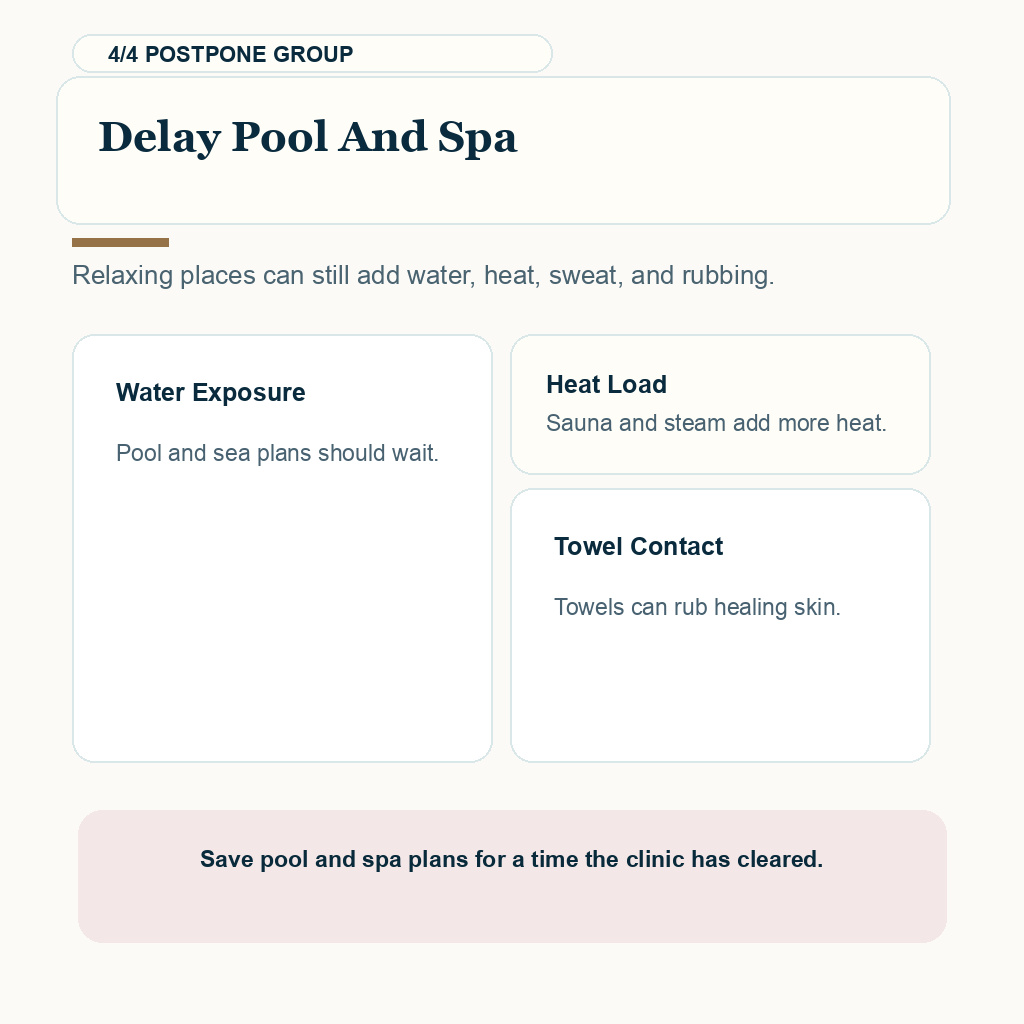
Pool time, sea water, jacuzzi use, and hot tubs should not be treated as simple relaxation during early healing. I separate swimming after hair transplant from ordinary holiday water activity because soaking and shared water add avoidable risk. Sauna, hamam, steam rooms, and spa plans built around heat also need caution. Treat sauna after hair transplant as a medical timing question, not a short relaxation session.
Alcohol is another common holiday pressure. It can affect judgment, sleep, bleeding risk, medicines, and whether you follow aftercare correctly. If drinks are part of the trip plan, treat them as alcohol after a hair transplant, not as a small social detail.
Strong sun and real exercise need recovery restraint. A brief shaded walk is different from hours outside, gym training, climbing hills, or carrying bags because you feel energetic. Use the separate guidance on sun after a hair transplant and exercise after a hair transplant as recovery limits, not optional holiday choices.
Restaurants and short walks can stay simple
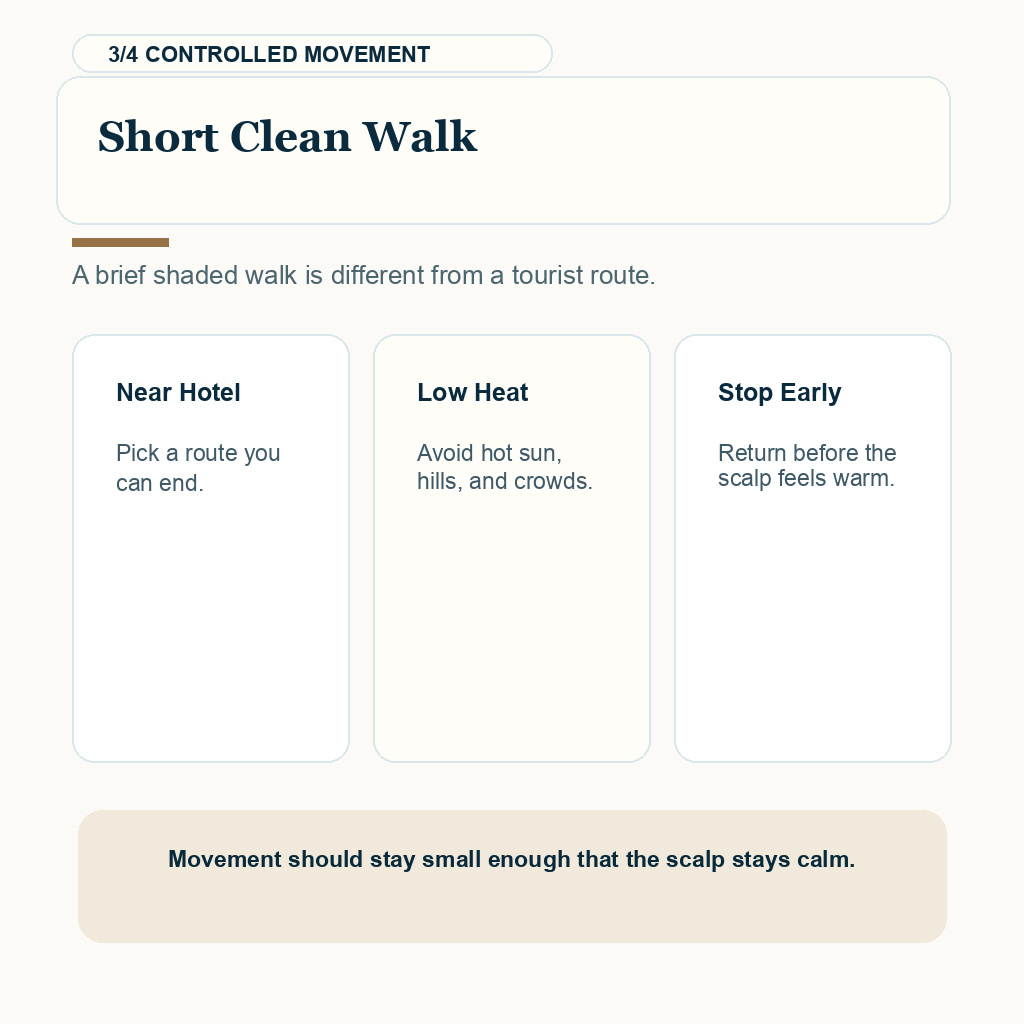
A trip planned around recovery can still include small normal moments. A short shaded walk near the hotel, a simple meal, or sitting somewhere quiet may be fine when the clinic’s instructions allow it and the scalp is not being heated, rubbed, bumped, or exposed. Keep it close, avoid heavy bags, choose an easy route back, and do not let a small outing become a full day outside.
A short walk in the shade is not the same as spending all day walking in heat. A nearby early dinner is not the same as nightlife, alcohol, smoke exposure, crowds, and late sleep. A taxi back to the hotel is not the same as pushing through crowded transport while a hat or headrest keeps touching the grafts.
Keep the plan easy to abandon. If swelling increases, if the donor area hurts more, if the recipient area gets bumped, or if you feel unwell, the correct decision is to stop the outing and contact the clinic. A good first week plan always has a quick route back to the hotel.
The hotel room is part of the medical plan
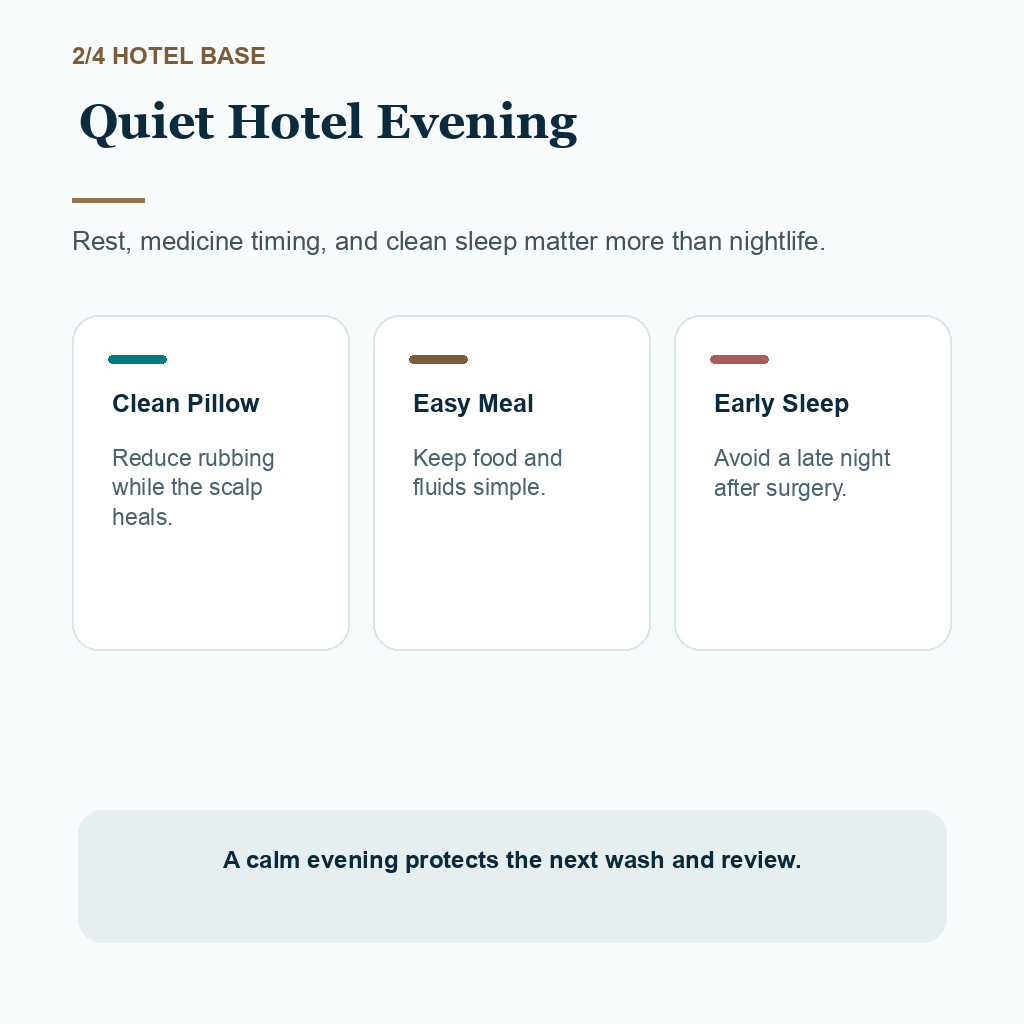
After FUE, the hotel room is not just a place to leave luggage. It is where you sleep, wash carefully, take medicine, prepare photo updates, protect the scalp from crowds, and avoid accidental friction. A room without smoke, easy clinic access, simple meals and water nearby, and good bathroom light for photos matters more than a hotel gym, spa, or tourist location.
Plan hotel checkout like part of recovery. Keep bags organized before surgery when possible, avoid lifting suitcases overhead, and use help for luggage so the last morning does not become the most careless part of the trip.
Keep the room simple. For bedding, towels, and headrests, clean hotel contact after FUE means clean pillowcases, towels used as barriers rather than scalp tools, and contact points that do not rub the recipient area. If you are unsure about washing, follow the clinic’s hair transplant aftercare first. For the first wash, use the washing steps after hair transplant instead of hotel advice or internet guesses.
The hotel room also protects you from the small mistakes that happen when people are tired. Towels, tight hats, sunglasses, pillows, crowded elevators, and hurried dressing can all create unnecessary contact. If contact happens, do not panic. Look for bleeding, pain, skin opening, worsening redness, or visible graft movement, then share photos instead of repeatedly touching the area.
Should you say yes to the activity?
When a companion asks whether you can go somewhere, do not answer from excitement or guilt. Put the activity through a recovery filter first. Ask what it adds to the scalp, including heat, sweat, water, friction, time away from the clinic, fatigue, alcohol, or sleep loss.
The filter below is not a medical clearance tool. It helps you organize the decision before you ask the clinic. If you feel guilty cancelling a paid plan, remember that the grafts do not know the plan was prepaid. I am deliberately strict about pool or spa plans because relaxation can still add water, heat, sweat, and rubbing.
Itinerary pressure filter
Use the filter to separate plans that protect recovery from plans that add heat, sweat, water exposure, friction, fatigue, or distance from clinic review.
Hotel recovery base
This is the lowest pressure plan. It keeps you near the clinic, protects washing and sleep, and gives you time to notice swelling, bleeding, pain, or unusual skin changes.