


Flight Home Changes Need Symptom Review Before Travel
A delayed flight home after FUE usually starts as a planning problem, yet it can become medical when symptoms change. The first job is to separate a simple travel delay from warning signs that need clinic review or urgent local care.
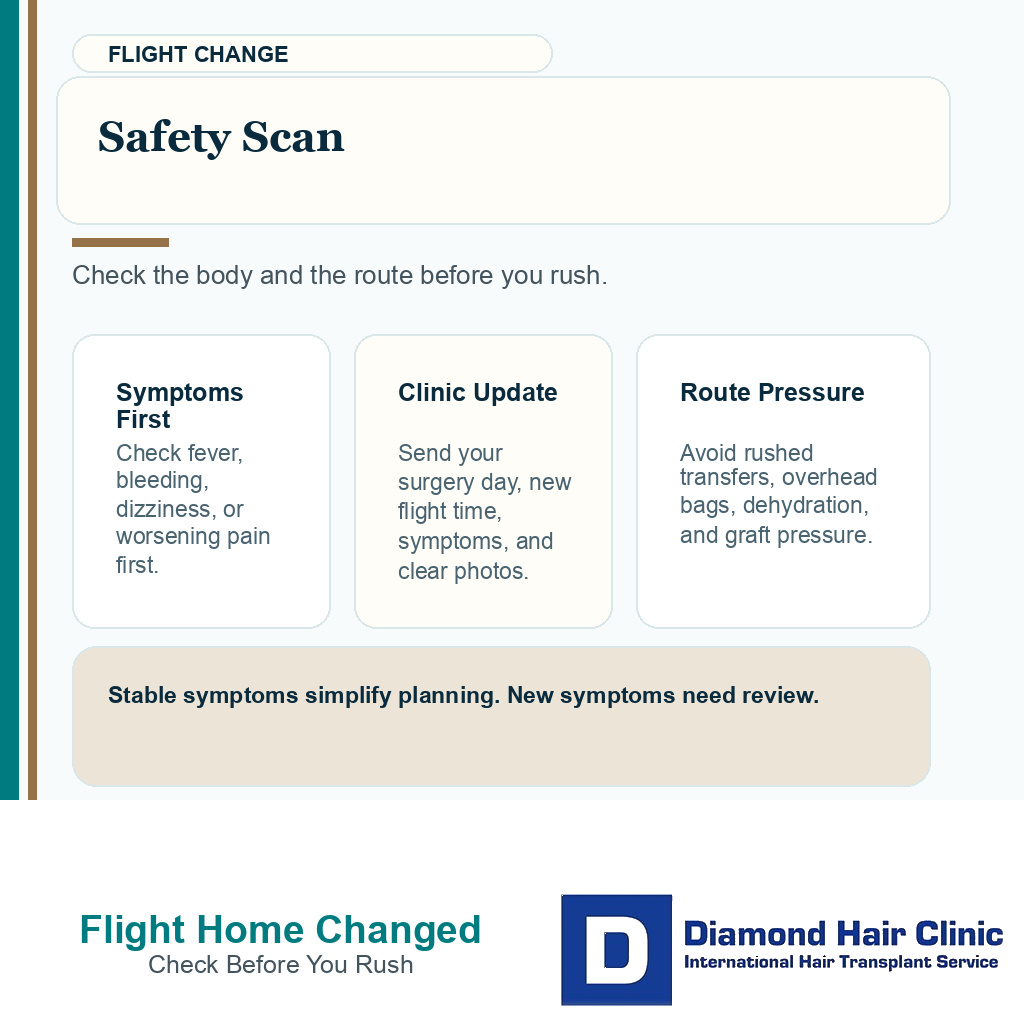
If swelling, mild soreness, and tiredness are stable, a few extra airport hours usually becomes a planning problem. If bleeding, fever, discharge, dizziness, vomiting, dehydration, or worsening pain appears, the travel plan should pause while you contact the clinic or seek local medical help.
I want the return trip to stay simple. That means no rushed lifting, no hidden symptoms, no guessing at medication timing, and no forcing a connection just because the ticket says so.
Check symptoms before solving the ticket
Before you solve the airline problem, look at the body. Are the swelling and tenderness similar to what the clinic told you to expect? Is the recipient scalp calm? Are you able to drink water, eat a light meal, take medications as instructed, and avoid touching the grafted area?
Usual flying after a hair transplant guidance assumes the recovery is stable and the route is predictable. When the itinerary changes, I look again at symptoms, clinic contact, luggage, hydration, and whether the patient can still travel without rushing or hiding a warning sign.
A delayed return is easier when the symptoms are stable and the patient can still follow aftercare. It becomes more serious when the delay adds exhaustion, dehydration, heavy luggage, missed washing instructions, or new symptoms.
A planned flight home should also account for the first wash, bandage removal if it is part of the clinic routine, swelling visibility, and whether the patient is travelling alone. Leaving too quickly can turn small instructions into airport decisions, especially when the hotel checkout time and flight time do not match the recovery plan.
Visible wetness or seepage from the donor dressing before departure needs review while you are still close to the clinic. Share a clear photo before leaving the hotel or treatment centre. The team can then decide whether the dressing needs changing or a direct check before a journey with several connections.
Send the clinic the useful facts
When travel changes, a short clear message helps more than a long anxious explanation. Tell the clinic the surgery date, current day after FUE, new flight time, what symptoms changed, whether there is bleeding or fever, and whether you can send photos in normal light.
Do not hide the practical details. A short delay while sitting calmly is different from an overnight airport wait with heavy bags. A missed connection with airline assistance is different from running across terminals while carrying luggage, missing aftercare steps, or trying to sleep with the grafts exposed.
If you are abroad for surgery, keep the clinic contact route saved before you leave the hotel. This is part of a safe Turkey stay length plan, not an afterthought at the airport.
Stable swelling does not always mean cancel the trip
Swelling after FUE can look dramatic, especially around the forehead and eyes. If it was expected, is not rapidly worsening, and your clinic has already explained it, a changed flight may not need to cancel travel by itself.
Still, the delay changes comfort. Long sitting, salty airport food, poor sleep, and low water intake can make the face feel tighter. If swelling is part of the delay, I look at whether it is stable, expected, and similar on both sides, or whether it is worsening with pain, heat, fever, or discharge. My page on swelling after a hair transplant gives the wider recovery context, but a changing symptom still needs direct review.
The mistake is treating stable swelling as proof that nothing else matters. The scalp still needs gentle handling, clean routines, and a controlled route through the airport.
Airport waiting creates avoidable risks
The hardest part of an early flight home is often the time before boarding. Patients bend for bags, rush through security, sleep in awkward positions, drink too little water, and touch the head when they are tired.
Seat choice is mainly a protection question. The calmer route is the one with less luggage lifting, less crowd pressure, and fewer chances for the head to bump a bin, seat edge, or another passenger.
In practical recovery planning, cabin altitude is usually less important than the things that happen around the flight, including bumps in the queue, rushed luggage handling, dehydration, poor sleep, and headwear that rubs or needs constant adjustment. Women with a visible front hairline can use a low contact plan in private travel after female hairline FUE, because a quiet flight plan is safer than repeated fixing in public.
The guide to airport security after a hair transplant is useful when screening or headwear questions add stress. For a delay, keep the plan simple. Keep hands away from the grafts, let airport staff or a travel companion handle heavy bags, and do not let a gate change turn into rushed headwear adjustments.
If you must wait for hours, choose a quiet seat where nobody is brushing past your head. Keep the grafted area uncovered unless the clinic gave different instructions. Avoid sleeping with the recipient scalp pressed against a chair, wall, or bag.
Luggage and rushed transfers need a different plan
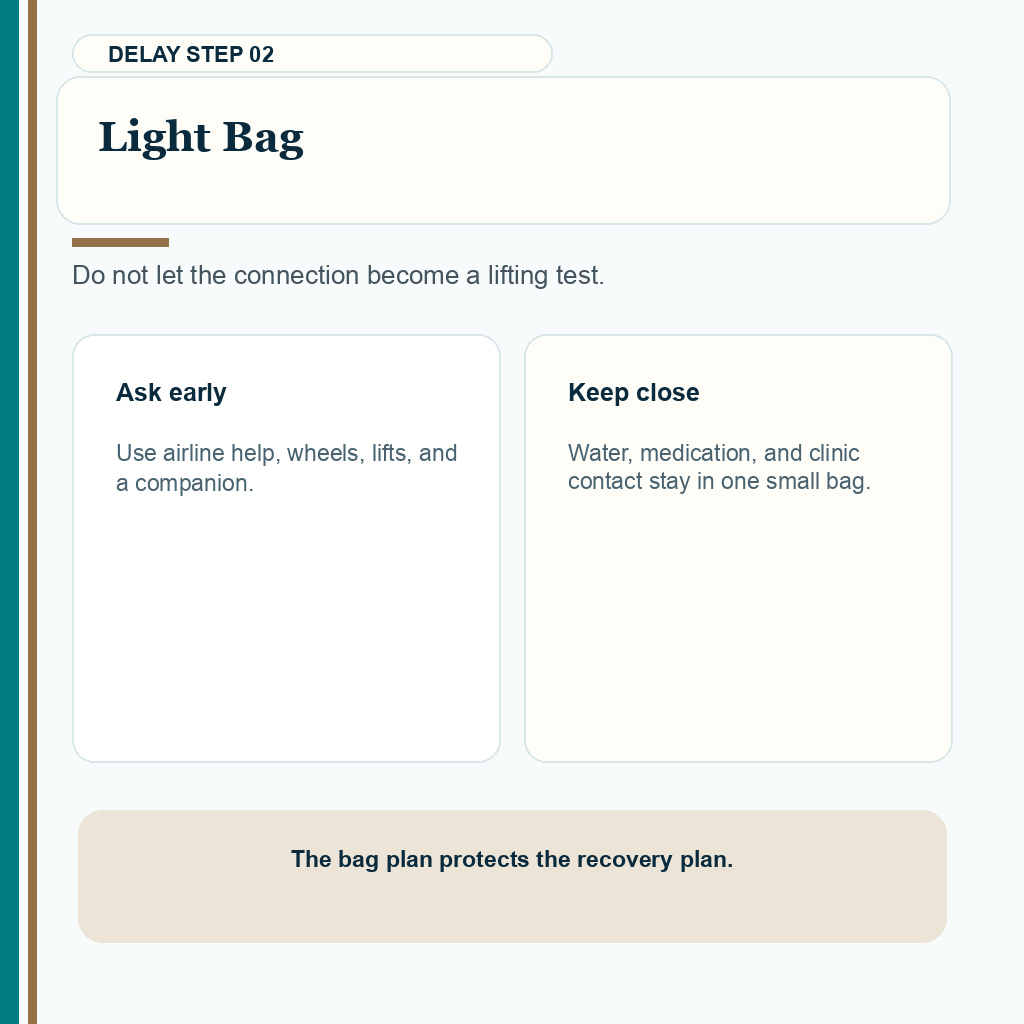
A missed connection can push patients into the exact behavior I try to avoid after surgery. They lift overhead bags, run through terminals, carry backpacks tight against the body, and bend quickly at counters. That is unnecessary pressure during early recovery.
If the route changes, an airport assistance plan should be requested before the choice becomes running through terminals with luggage. Check in heavy luggage when possible. Use wheels, elevators, and help from a companion. Keep your aftercare items, medications, water, and clinic contact in a small easy bag. A clear baggage plan before the flight home makes this easier because essentials stay reachable while heavy items can be handled with help.
This is also why travel insurance for a hair transplant abroad matters. The value is not only money. It can give you better options when a delay creates a hotel, rebooking, or medical review decision.
Illness during the delay changes everything
Nausea, vomiting, diarrhea, fever, or dizziness can make a delayed flight much more than inconvenient. Dehydration makes recovery harder, and vomiting or faintness can make travel unsafe even when the scalp itself looks calm.
If you feel sick at the airport, do not reduce the decision to whether the grafts look fine. If nausea is part of the problem, nausea after FUE explains why repeated vomiting can turn a travel delay into a hydration and safety problem.
Bowel symptoms during the trip need separate planning. Diarrhea after a hair transplant deserves caution because fluid loss can make a long airport wait harder to tolerate.
If the illness seems connected to food, the guide to food poisoning around surgery is useful because worsening symptoms may change whether boarding is sensible that day.
A stable patient can often wait. A patient who cannot keep fluids down, feels faint, has fever, or is becoming weaker should contact the clinic and seek local medical care when needed.
Use the signal tower for the flight decision
Use the signal tower below to sort the travel problem before changing the plan. It is not a replacement for your clinic’s instructions. It helps you separate a simple delay, a missed connection, an overnight stay, changing symptoms, and the more serious situation where you cannot reach the clinic.
Flight change signal tower
Use this signal tower when the return trip changes after FUE. Start with body stability, then judge the travel pressure. A short delay, a missed connection, an overnight hotel, changing symptoms, and no clinic contact are not the same decision.
Simple delay
Expected swelling, mild soreness, and fatigue can be monitored if they are not getting worse.
Choose a quiet seat, drink water, avoid leaning on the recipient area, and do not lift overhead bags.
Send a short clinic update if you are unsure, then keep the route uneventful.
An overnight hotel can reduce recovery risk
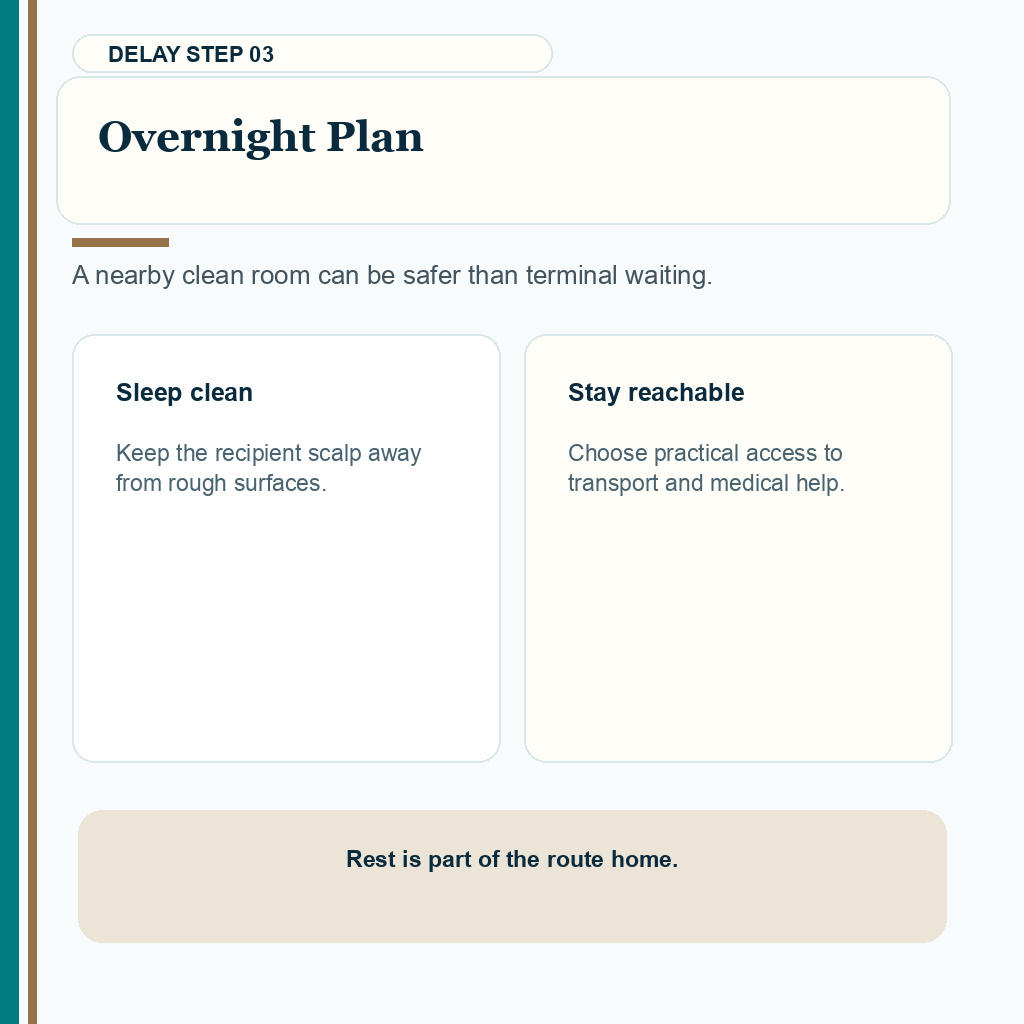
Patients sometimes see a hotel as failure because they planned to go home that day. In reality, a clean nearby hotel can be safer than a full night in the terminal when you are exhausted, swollen, and still responsible for aftercare.
If you stay overnight, keep the recipient scalp away from pillows, towels, headboards, and rough bedding. Use clean hands. Keep medication and washing timing close to the clinic plan. Stay near transport and medical help rather than choosing the cheapest distant option when symptoms are uncertain.
The hotel choice is about controlled recovery conditions until the route home becomes simple again.
Medication timing should stay predictable
A delay can make patients skip doses, double doses, or take medication at odd times because the time zone feels confusing. Do not improvise. Keep the written clinic plan with you and message the clinic if the timing becomes unclear.
A flight delay should turn the plan into exact logistics. The new flight time, sleep location, delayed wash or medicine step, and symptom stability decide what can wait until after boarding.
Water matters here. Long queues and dry airport air can make patients drink less. Keep a bottle available when security rules allow it, eat lightly if you can, and avoid alcohol during the disrupted return. If electrolytes were recommended or you are losing fluid, the guide to water and electrolytes after FUE can help you think more clearly.
The predictable version is best. Take what was prescribed, at the intended interval, with enough water and food if required.
Know when not to board yet
Do not board simply because the airline found a seat if your symptoms now look unsafe. Fresh bleeding from the recipient area, spreading redness or heat, discharge that looks like pus, fever, fainting, chest pain, severe headache, repeated vomiting, or rapidly worsening swelling needs medical review, not willpower.
Long travel after surgery also deserves blood clot awareness, especially if you have a previous DVT or pulmonary embolism, clotting history, limited mobility, or another doctor has already warned you about travel risk. Swelling or pain in one calf, chest pain, difficulty breathing, coughing blood, fainting, or a fast or irregular heartbeat needs urgent medical help, not a boarding decision. If this history applies to you, review blood clot history and hair transplant planning with your doctor or clinic before a long flight. Do not begin aspirin, blood thinners, or compression stockings at the airport just because the route changed. Those decisions need medical advice from a doctor who knows your clot risk.
Fever after a hair transplant matters because fever is not a travel detail. It can be a sign that the plan needs medical attention before you move farther away from help.
Most delayed flights do not become emergencies. The reason to name these signs clearly is so a patient does not confuse airline pressure with surgical clearance.
Turn the new itinerary into a clean handoff
Once the route is settled, send the clinic the new arrival time, where you will sleep, and whether symptoms stayed stable. If you miss a planned next day check, ask what photos or notes they want instead. A delayed trip should still leave a clear follow-up trail.
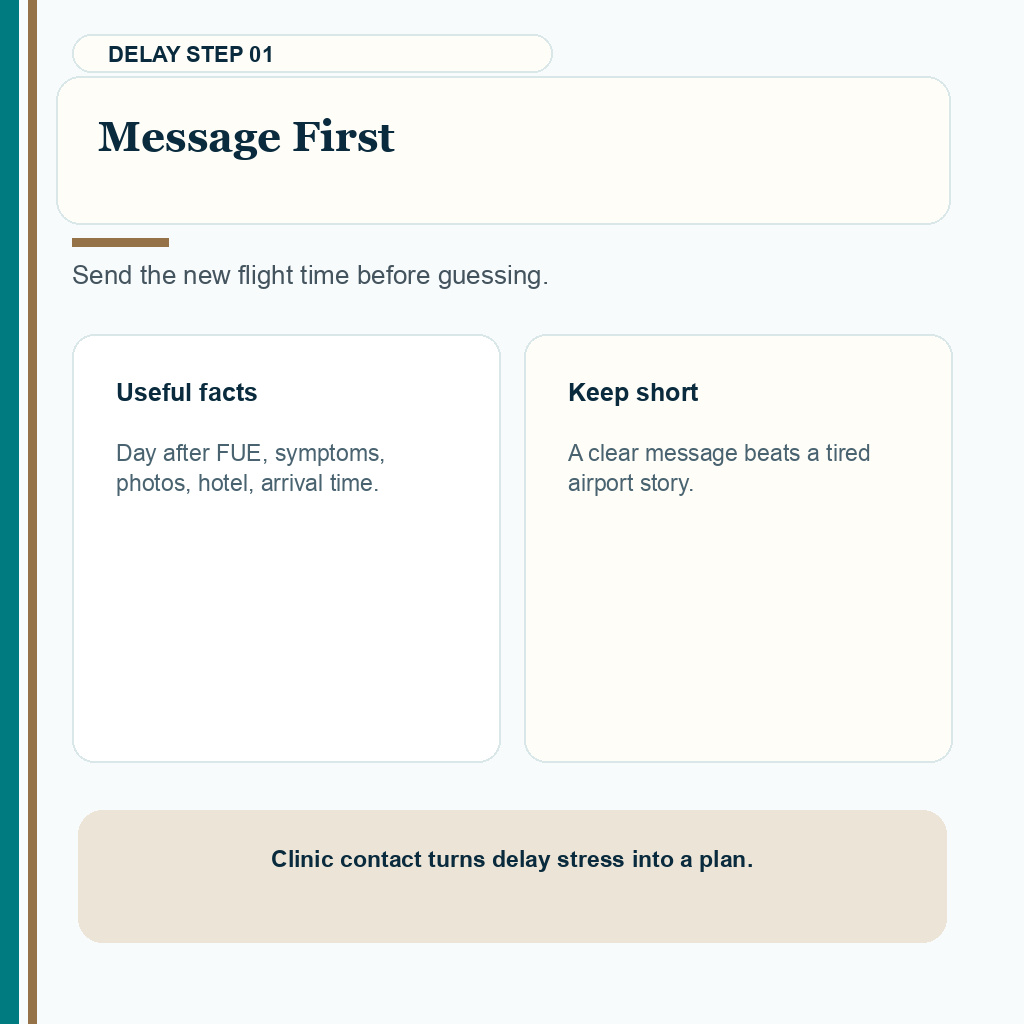
This kind of update also protects you from relying on memory after a tiring travel day. Write down symptoms, medication timing, flight changes, and any accidental contact with the scalp while the details are fresh.
If the airline delay creates a new appointment problem, tell the clinic early. It is easier to adjust follow-up when the team knows the exact constraint.
Warning signs matter more than the new flight time
The right time to keep moving is when the symptoms are stable, the clinic can be reached if needed, medication timing is clear, hydration is possible, luggage is handled without strain, and the route home no longer depends on rushing.
A flight change after FUE should make you slower and more organized, not panicked. If the issue is only logistics, choose the route that keeps medication, hydration, and luggage manageable. If your body is sending warning signs, pause the itinerary and get medical review before distance makes the problem harder to manage.

Read this review excerpt
Absolutely everything regarding logistics was conveyed in a clear and timely manner via WhatsApp by Dr. Mehmet’s office.