


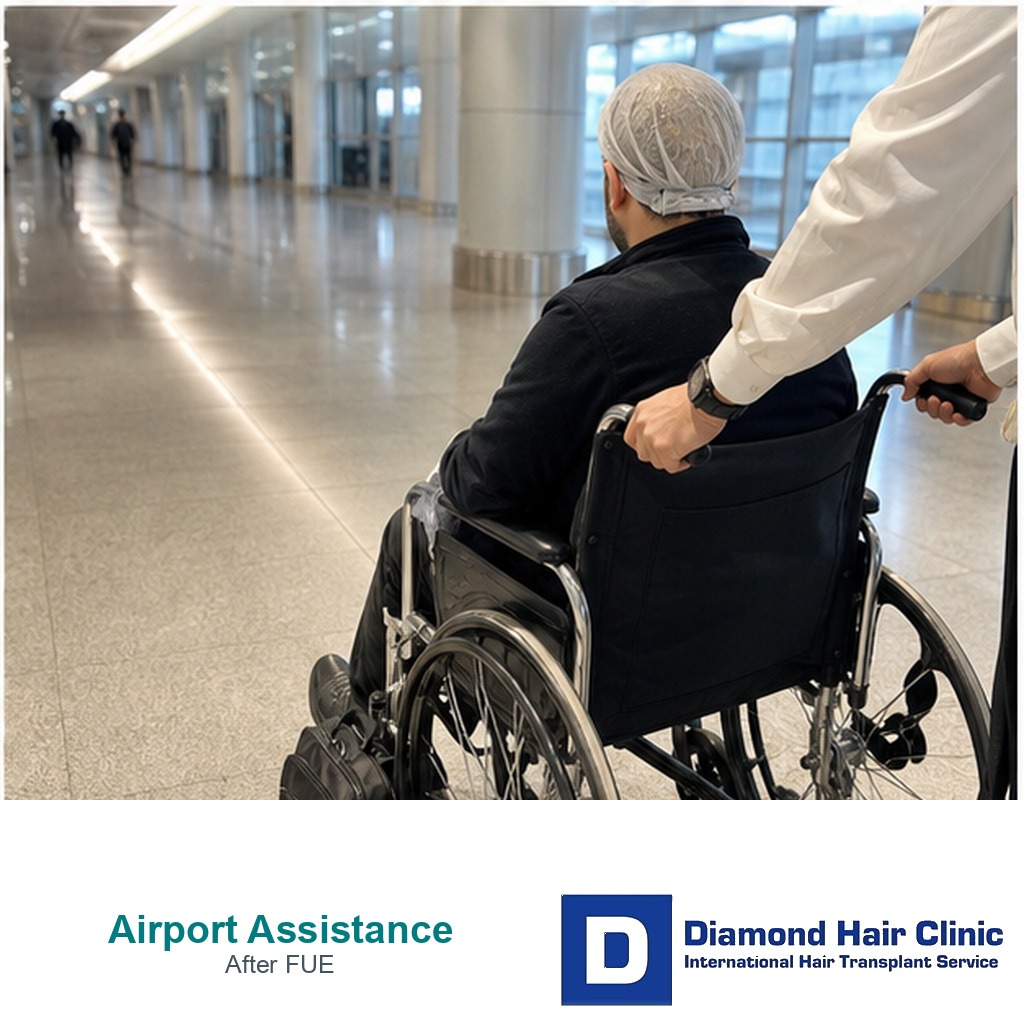
Should You Request Airport Assistance After FUE?
After FUE, airport assistance is worth arranging when the airport itself is likely to make you rush, stand too long, lift bags, or handle a connection while you are tired or swollen. The flight may be acceptable, but the terminal can still be the harder part when walking, queues, luggage, and swelling meet at the same time. Long walks, queues, bus gates, overhead bags, and late gate changes all arrive while the grafts and donor area are still in early recovery.
Make this decision before you leave the clinic or hotel, not when the terminal is already busy. If you already know the airport is large, the connection is tight, you are traveling alone, or you feel dizzy, faint, unusually swollen, or bleeding, do not wait until the boarding gate. Ask for wheelchair or special assistance early, keep the luggage plan light, and let symptoms decide whether travel should change before the airport day begins.
When you request it, describe the need simply as recent scalp surgery, no rushed walking, no overhead bag lifting, and less crowd contact.
You do not have to give every airport worker your full medical story. A simple request for slower walking, no overhead lifting, and protection from crowd pressure is usually enough. The private surgical details can stay with your clinic and the airline assistance process when needed.
Assistance should reduce rushing and long standing. It should not keep you completely still for the whole journey. On longer travel, move your legs, drink water, and take short slow walks when it is safe and your medical plan allows it.
The airport walk can matter more than the flight
Many patients focus first on the aircraft seat, cabin pressure, graft dryness, or sleeping position. Yet the first difficult part of the journey may happen before boarding. An unexpectedly long walk, a slow line, a bus gate, or standing with documents and a bag can be more demanding than the time in the seat.
Some patients will not need a wheelchair. Someone who is walking comfortably, carrying very little, and taking a direct flight may manage without assistance. A large airport, tight connection, crowded transfer, or early fatigue changes that calculation, because the time before boarding deserves its own plan.
Medical permission to fly and the physical load of the terminal are different decisions. The general timing rules for flying after a hair transplant cover the flight itself. You may be fit to fly and still need help with the distance, queues, or luggage before boarding.
Request assistance before the airport becomes difficult
I am more likely to recommend special assistance when a patient is traveling alone, faces a long terminal walk, or already knows that airports are tiring. It means less rushing, less carrying, and less time standing soon after surgery.
A connection creates more points where help may matter. Compared with a direct flight, it can add another security check, a long gate change, a second boarding line, or a bus transfer. When transfer time is short, assistance can keep you from trying to make up every delay by walking faster.
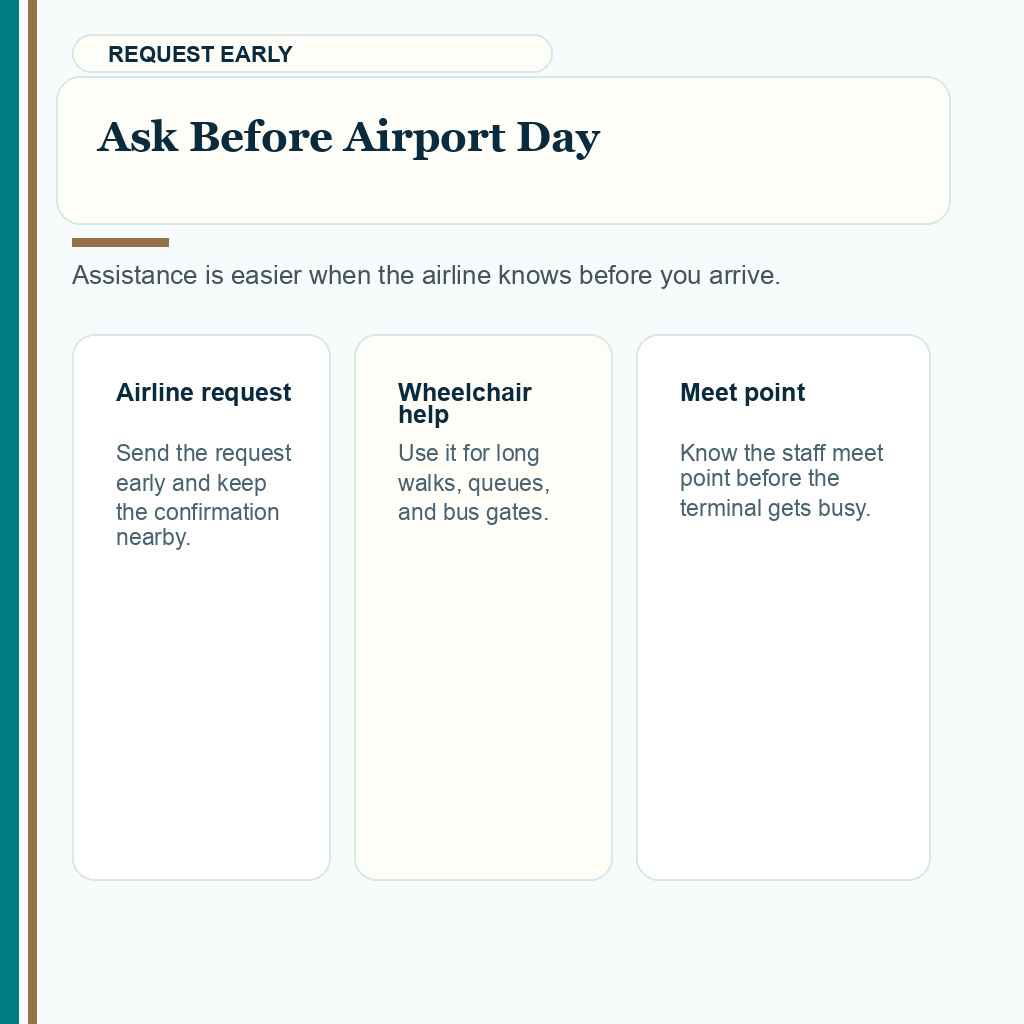
Ask before you need it. Airlines and airports usually handle assistance better when the request is made before travel day. The exact deadline depends on the airline and airport, so do not wait until checkout if the plan already looks difficult. Keep the confirmation easy to find on your phone, and know where the assistance desk or meeting point is. Even with confirmed assistance, leave extra time. Help reduces the rush, but it does not make a tight connection calm.
For a connecting itinerary, confirm that assistance continues across every terminal and airline change. Help arranged for the first leg does not guarantee that someone will meet you at the transfer point, so keep the handover details with the booking confirmation.
Confirm exactly what the assistance covers. Wheelchair help may reduce walking and queue strain without covering bag drop, passport control timing, a bus gate, or lifting a cabin bag into the overhead bin. Arrange luggage help separately when needed, rather than discovering at boarding that it is not included.
Airport assistance can be practical even when you can walk. It keeps luggage, queues, bending, and rushed walking from taking over the first recovery days.

Direct flights, connections, and extra nights change the recovery journey
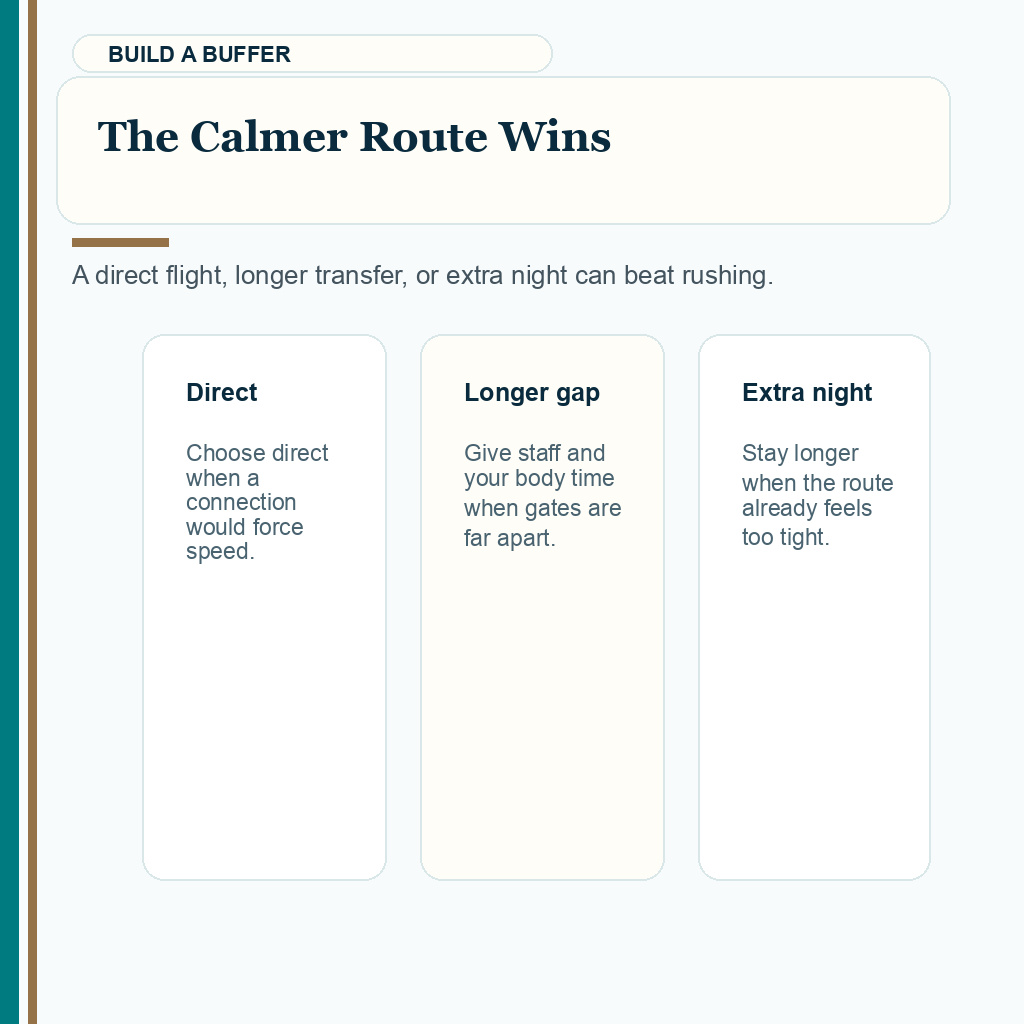
A direct flight is often easier after FUE because it removes extra queues, gates, transfers, and timing decisions. When a connection is unavoidable, the timetable must allow slow movement rather than merely show that the flights connect on paper.
A tight connection changes the whole atmosphere of travel. The clock starts controlling your pace while you pull a bag, check screens, and try to reach the gate before boarding closes. You need enough time to walk slowly, use the toilet, wait for assistance staff, drink water, and board without lifting. If the timetable leaves no room for those steps, the connection is too tight for a comfortable journey after surgery.
The original itinerary may no longer suit how you feel that day. The guidance on flight home changes after FUE explains the options when you need to change the timing or route home. Changing a flight can be manageable. Rushing or lifting to force the original itinerary is not a safe solution.
If the airport plan already feels too compressed while you are still at the hotel, take that seriously. An extra night in Istanbul can be simpler than a rushed transfer with a sore scalp, a swollen forehead, or luggage you should not be handling alone. For travel timing around the clinic stay, how many days to stay in Turkey for a hair transplant can help you think through the wider schedule.
Luggage belongs inside the assistance plan
Wheelchair assistance reduces the walking load, but luggage still needs its own plan. You may face an overhead cabin bag, a heavy suitcase on the belt, or an awkward bag that makes you hurry. Leaving those tasks unresolved defeats part of the reason for arranging help.
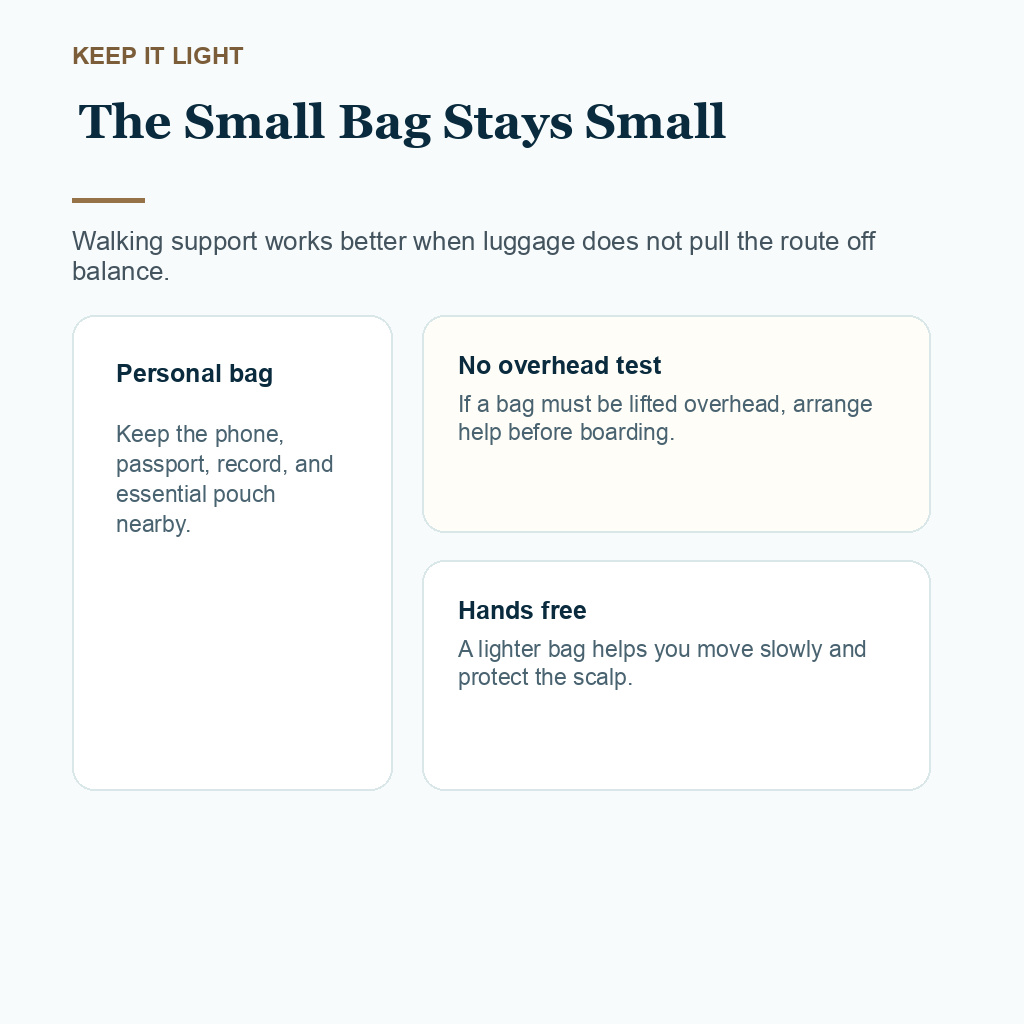
Keep the close bag small. Passport, phone, charger, clinic contact, medication instructions, and a small aftercare pouch are usually enough. Heavy or bulky items should not be the reason you move quickly or strain. Heavy overhead lifting is mainly a risk because it adds strain, bending, crowd contact, and accidental scalp bumps. If one brief lift happened without bleeding, an open spot, direct impact, or worsening pain or swelling, the risk is usually lower, but do not repeat it.
Before boarding, tell staff if your cabin bag needs overhead lifting. It is safer to have the bag checked, kept small, or lifted by someone else than to reach overhead because everyone around you is moving quickly.
A light bag plan matters as much as the assistance booking. Cabin bag or checked bag after a hair transplant and heavy lifting after a hair transplant are separate issues, but both belong in the same travel plan. A wheelchair route with a heavy overhead bag is still a risky moment.
Head covering needs a fit check. If you plan to use a loose cap, surgical cover, or hood because you feel exposed in the terminal, confirm the timing and fit before travel. A cover that slides, sticks to grafts, traps heat, or has to be adjusted every few minutes can turn a careful airport plan into another risk of rubbing or bumping the grafts.
Check the airport plan before checkout
Before hotel checkout, I like patients to check the likely walking distance and connection time, decide who will handle the luggage, and know which symptoms would make travel unsafe. Keep the assistance confirmation and meeting point with the travel documents so the plan does not depend on memory at the terminal.
The answer does not need to be dramatic. A long walk plus a small bag may be fine with assistance. A short walk plus heavy luggage may still need help. A direct flight with enough time may be easier than a connection with no room for delay. The safest airport plan is usually the one that removes rushing, overhead lifting, and last minute decisions while you are swollen or tired.
Airport Assistance Planner
Use the part of the journey most likely to make you hurry, lift, or stand too long.
Distance
Request assistance early when the terminal walk is long or uncertain. This keeps the airport from turning into a rush.
Bus gates, distant counters, and slow queues make walking load harder to predict.
Arrange the meeting point and keep the confirmation easy to find.
Connection
A tight transfer turns a possible flight into a speed test. A longer gap, direct flight, or extra night may be more manageable.
The risk is not the second flight alone. It is the hurry between flights.
Choose a transfer that lets assistance staff and your body move slowly.
Luggage
Assistance works best when the bag plan is light. Keep essentials close and arrange help before anything has to be lifted.
A bag that must be lifted can turn a careful plan into a strain moment.
Let staff or a companion handle the heavier items whenever possible.
Symptoms
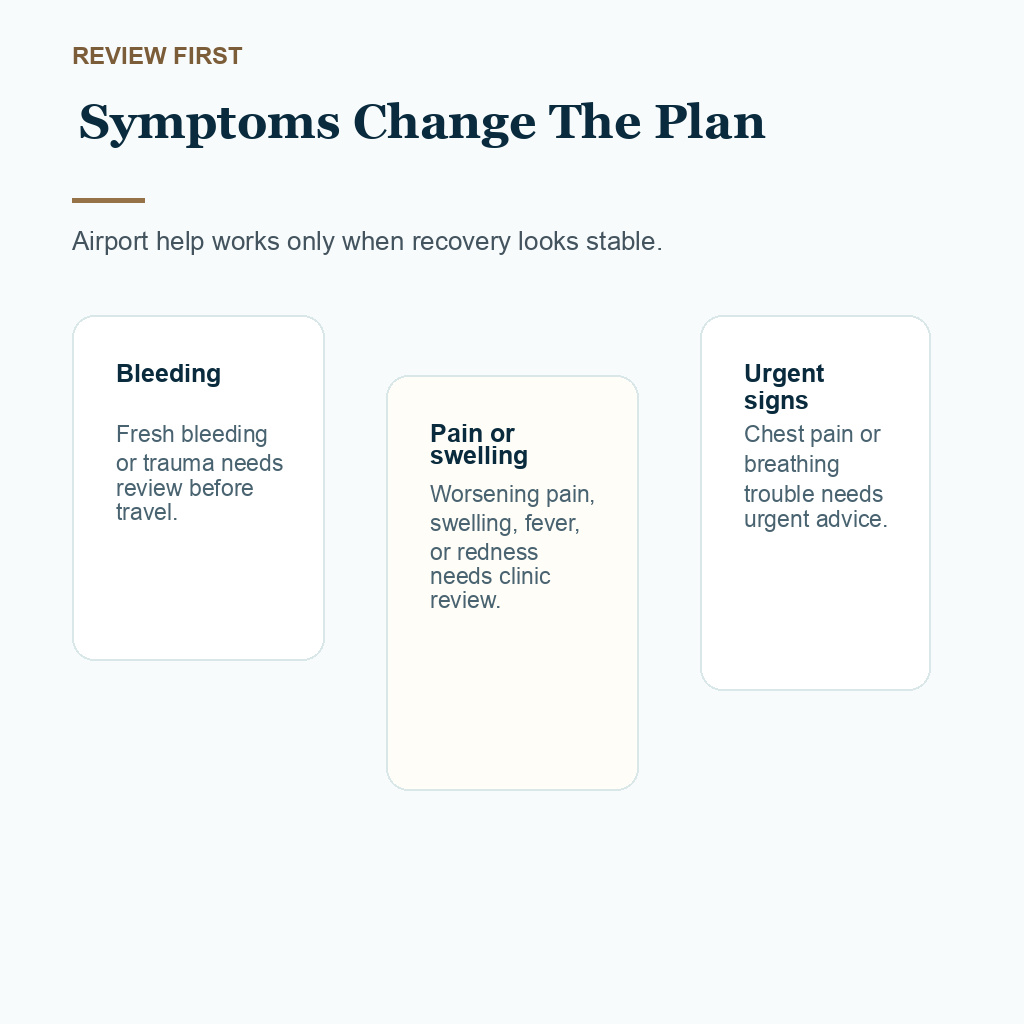
Airport support does not replace medical clearance. Fresh bleeding, a clear scalp hit, fever, worsening redness, dizziness that does not settle, chest pain, breathing difficulty, or a painful swollen calf or leg should change the plan before the airport does.
The airport question pauses when symptoms need clinic or urgent medical review.
Do not use wheelchair help as a substitute for medical advice.
Symptoms can change the airport plan
Airport assistance must not be used to push through symptoms that need review. Pause airport travel for fresh bleeding that keeps returning, spreads, soaks gauze, follows trauma, or does not settle with clinic instructions. Fever, worsening redness, increasing pain, persistent dizziness, fainting, or swelling outside the expected recovery pattern also shifts the decision from walking support to whether travel should continue at all.
If dizziness is active, sit or lie down, alert the clinic or medical staff, and do not continue through the airport until you have been reviewed and steady again.
For scalp and skin changes, redness, scabs, and pimples after a hair transplant gives a better place to separate normal healing changes from signs that need review. For metal detectors, scanners, and screening contact, airport security after a hair transplant keeps that topic separate from wheelchair or special assistance.
There are also symptoms that are not about the scalp. Chest pain, trouble breathing, fainting, coughing blood, or a painful swollen calf or leg are urgent medical warning signs, especially around long travel. With those symptoms, do not continue to the airport and do not try to solve the problem with wheelchair help. Seek urgent local medical care first, then update the clinic.
Airport assistance is a recovery choice, not a pride test
Arrange airport help when the alternative is rushing, carrying awkward luggage, standing in long queues, bending repeatedly, or struggling toward the gate while swelling or tiredness is already making the day harder.
Traveling alone makes small airport tasks accumulate. A companion can carry a bag or speak to staff while you sit. Without one, keep the airline assistance confirmation, transfer contact, boarding details, and clinic instructions together and easy to reach. The broader guidance on traveling alone to Turkey for a hair transplant can help before the return journey is fixed.
A workable airport plan leaves room to walk slowly, sit when needed, and keep heavy bags away from the scalp and donor area. If swelling, dizziness, bleeding, stronger pain, or another symptom changes the day, simplify the journey or pause it. Recovery is not the time to prove that you can push through.
Read this review excerpt
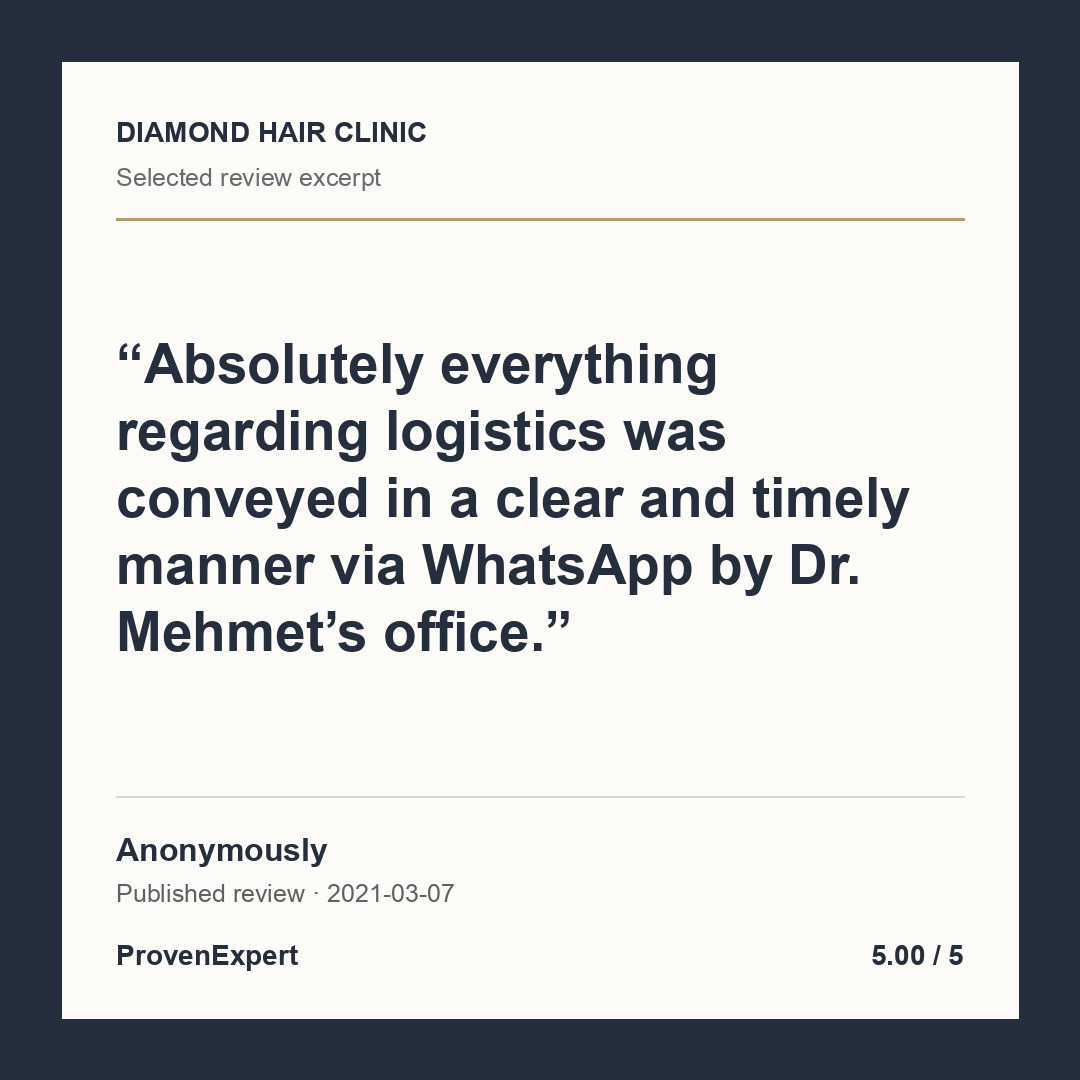
Absolutely everything regarding logistics was conveyed in a clear and timely manner via WhatsApp by Dr. Mehmet’s office.