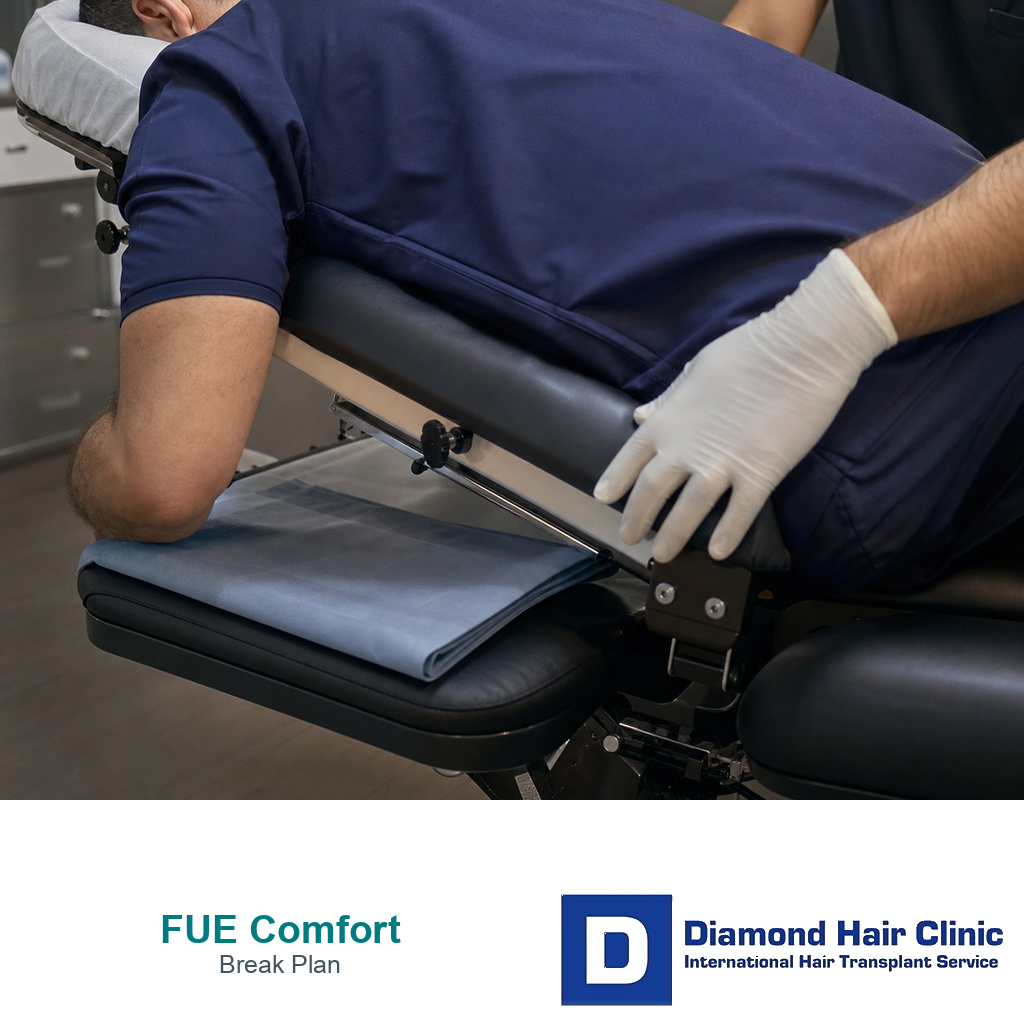
Lying Face Down During FUE Should Not Be a Surprise
In many FUE cases, part of the extraction stage is done while you are lying face down or partly turned so the donor area can be reached safely. This should be explained before surgery day, not discovered when you are already tense on the chair.
Neck, back, breathing, anxiety, and break limits all change how comfortably and safely the long session can be planned. Face down positioning is not a small comfort detail. It affects stillness, team access, and how predictable the day feels.
If you worry about lying face down during FUE, tell the clinic before surgery day. The plan can include face cradle adjustment, shoulder and hip support, planned stretch or bathroom breaks, and a clear signal for discomfort before extraction starts. You should not have to stay silent through discomfort. You need a position you can hold without clenching, lifting your head, or turning suddenly. If lying face down is difficult because of back, neck, balance, or transfer limits, the FUE mobility planning guide explains what to disclose before surgery day. If a denture, retainer, aligner, or mouthguard changes jaw comfort while prone, the dental appliance plan before FUE needs review before surgery day.
Comfort is not only comfort during extraction. If the position makes you tense, twist, or lift your head repeatedly, the team should know the break signal before starting.
This is not the same question as anesthetic injection pain, sedation, or general fatigue during a long procedure. Positioning deserves its own conversation because many patients only discover the face down part when they are already tense on the chair.
Will I be face down for the whole operation?
FUE has different body positions during different stages. Extraction often needs the donor area exposed, which commonly means lying face down or partly turned while the team works from the back and sides of the scalp. Implantation may use a different position. The exact setup depends on the graft plan, donor access, team sequence, and patient comfort.
Vague reassurance such as “you will be fine” is not enough for every patient. Most patients manage the position, but chair fit, face support, shoulder position, and break rhythm still have to match the patient. A long FUE day also needs food, break, and stamina planning. The face down issue is where patient comfort, stillness, and careful donor work meet.
Needle pain, medication, and body position are different worries. If the fear is anesthetic injection pain, discuss that separately from whether you can hold a supported position. If the question is sleepiness or medicine during surgery, that needs its own medical review. Here, the practical issue is whether your neck, back, breathing, and anxiety limits allow you to stay supported and still enough for accurate FUE work.
What should I tell the clinic before surgery day?
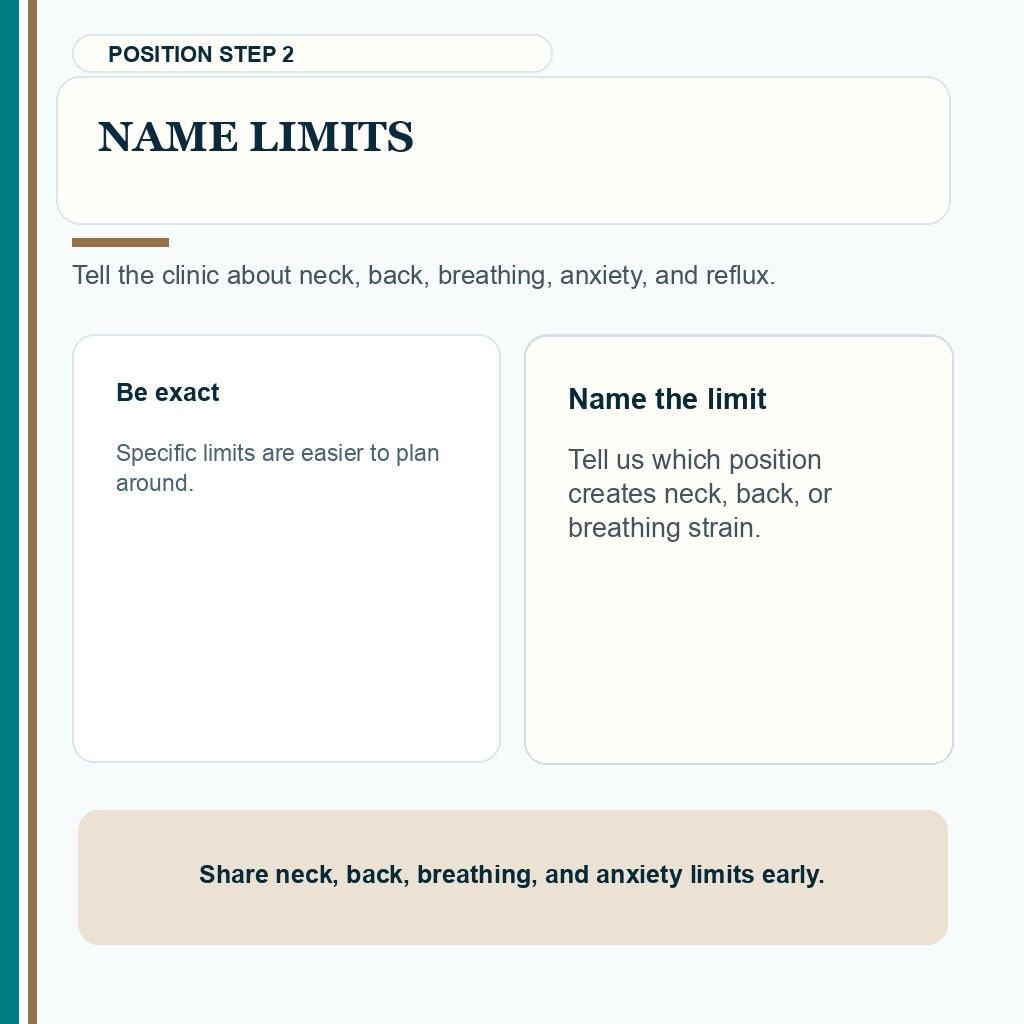
Small details matter when a patient has to stay still. Previous neck surgery, disc problems, shoulder stiffness, migraine triggers, jaw pain, reflux, nasal blockage, sleep apnea concerns, sciatica, or chronic lower back pain should be mentioned before the day of surgery. These issues may still allow FUE, but they change how carefully the position should be tested.
Accessories can affect stillness
Earrings, necklaces, facial piercings, and hard hair accessories can feel minor until the headrest, neck position, or donor access makes them irritating. An early review of jewelry, piercing, and nail preparation for FUE keeps the positioning plan quiet.
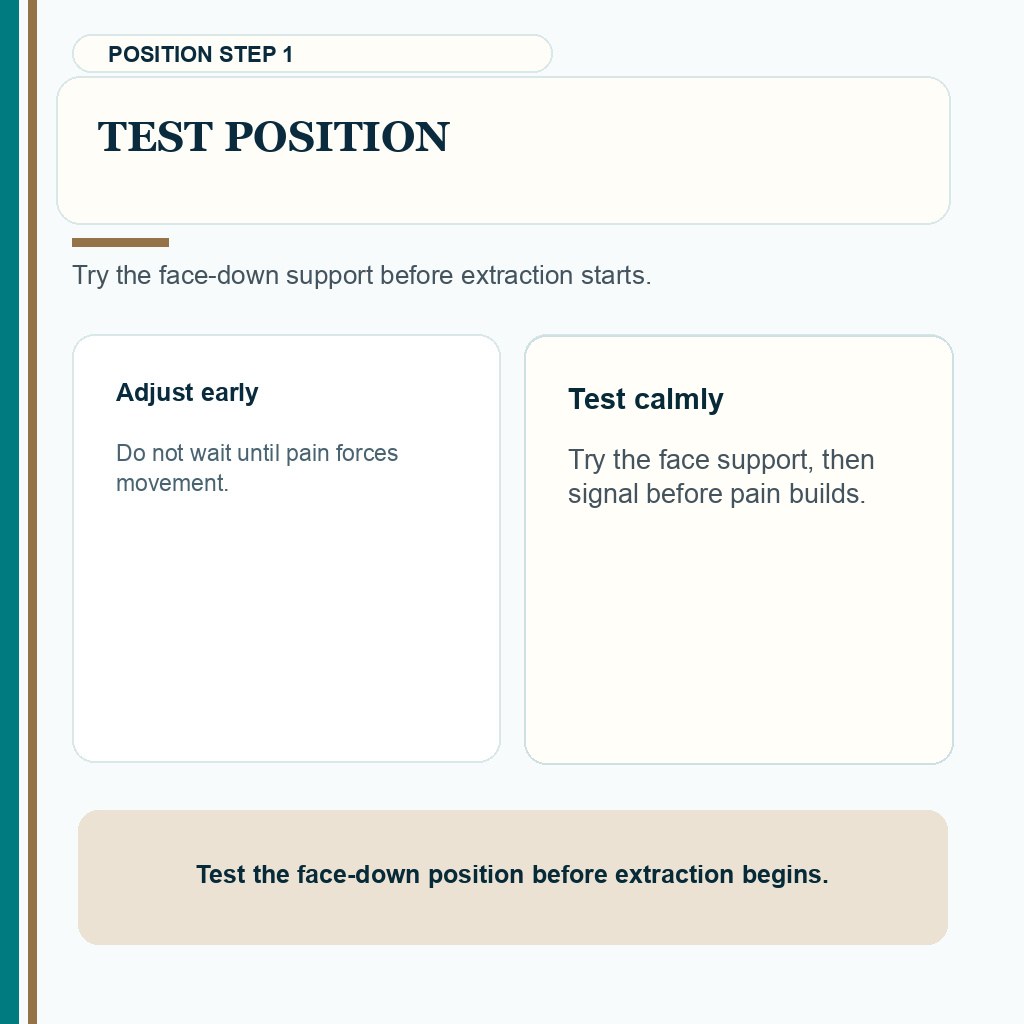
Before travel, try lying face down briefly in a supported position and notice whether the first problem is neck pressure, blocked breathing, reflux, shoulder pain, or panic. Send that pattern to the clinic so the chair setup and break plan are not discovered during extraction.
A patient who waits until the extraction has already started may be more likely to tense up, shift, lift the head, or ask for an urgent stop. It is much easier to adjust the face cradle, chest support, pillow height, arm position, or planned break rhythm before discomfort becomes panic.
Do not hide this information because you are afraid the clinic will cancel surgery. It is safer to know the limitation and build a realistic plan than discover it halfway through extraction. If there is a serious medical limitation, we review it before grafts are committed.

Can I ask for breaks during FUE?
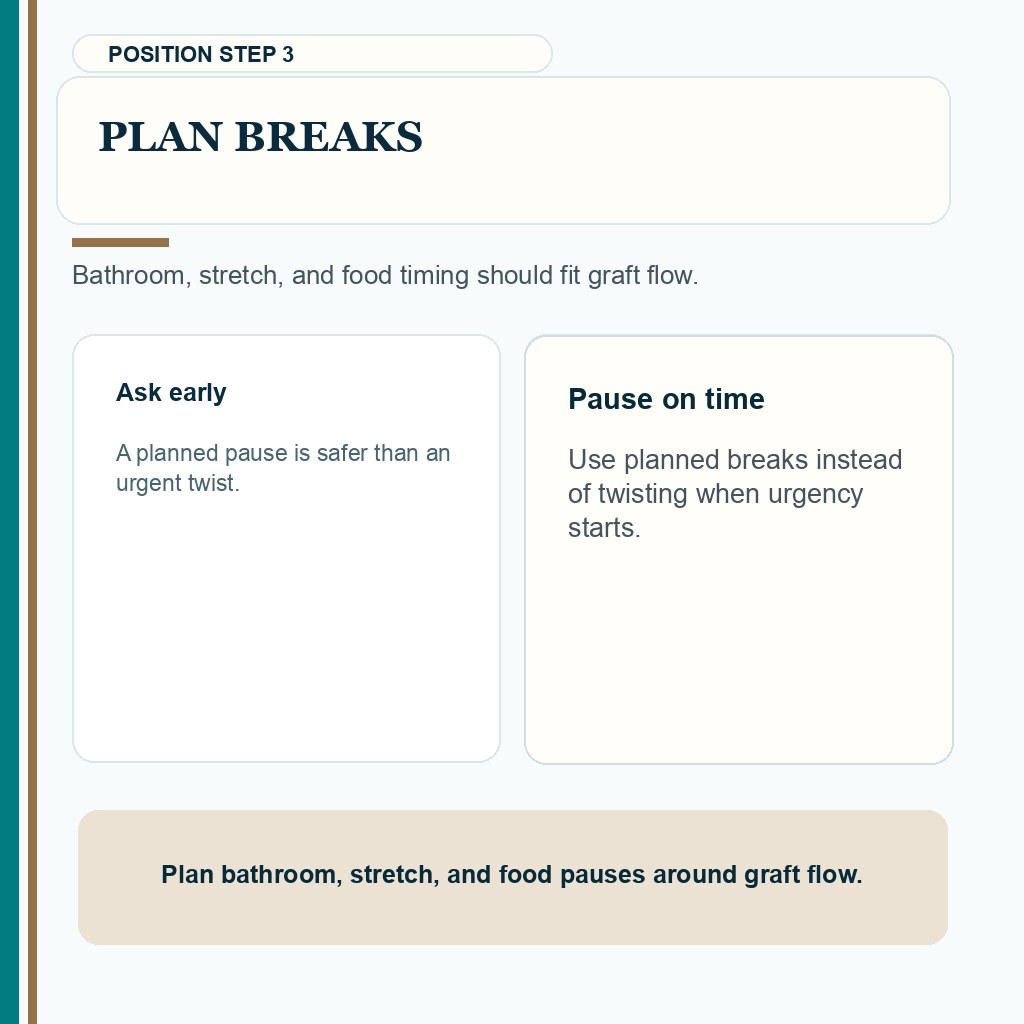
Bathroom breaks, food, stretching, and movement during FUE are possible in real life, but the timing should be coordinated with the surgical flow. The team is extracting grafts, sorting them, keeping count, monitoring quality, and preparing the next stage.

Read this review excerpt
my lunch was sitting waiting on me in Dr Mehmet office where I enjoyed that 30 mins break after lying on my stomach for so long.
For the same reason, bathroom breaks during FUE deserve their own boundary. Do not drink excessive coffee, skip food, or arrive dehydrated, then hope the body behaves perfectly for hours. A good day is planned around ordinary human needs.
Breaks are also part of graft handling discipline. They should not become chaotic pauses that interrupt the team at the wrong moment. If you know you have urinary urgency, low blood sugar episodes, back spasm, or anxiety with long stillness, say it before the first incision.
Is chair anxiety the same as needing sedation?
Some patients are not afraid of the surgery itself. They are afraid of being face down, unable to watch what is happening, or unsure how to communicate discomfort. Name that anxiety before the day starts. That planning is even more important when a patient uses a hearing aid or cochlear implant during FUE, because speech may be harder once the head is positioned.
Sedation is not a universal solution and should not be treated as a shortcut for poor planning. Local anesthesia, adrenaline response, and alertness can change how a patient experiences the day, so hair transplant anesthesia and adrenaline should be considered separately from the face down position. Even when sedation is appropriate, the team still needs a clear plan for neck pressure, breathing difficulty, nausea, panic, bathroom urgency, or sharp pain.
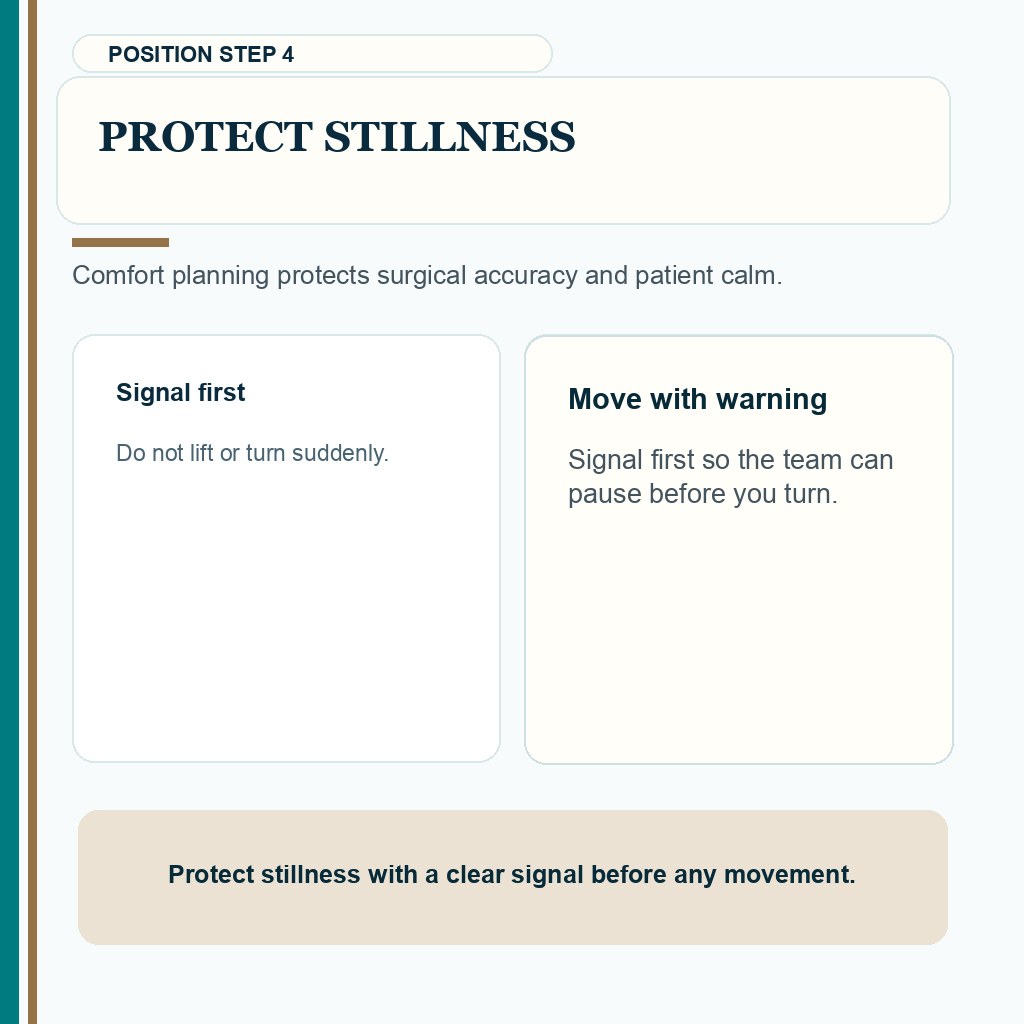
Agree on a simple signal before the first stage begins. If you feel neck pressure, breathing difficulty, nausea, panic, bathroom urgency, or sharp pain, the team needs to know before you lift or turn your head. A patient who knows how to signal early usually stays calmer and moves less abruptly.
If you feel short of breath, sharp pain, nausea, panic, or a strong need to lift your head, signal the team early instead of trying to endure it.
Stillness protects extraction accuracy
Stillness is not about being tough. It protects surgical accuracy. During extraction, the surgeon and team are working around follicle angle, donor density, and safe spacing. Sudden movement can interrupt rhythm and makes fine work harder.
A good positioning plan protects both patient comfort and graft quality. Repeated unplanned stops can interrupt extraction, sorting, and implantation. They can also affect how long grafts wait outside the body. The patient’s role is not to manage graft flow. It is to signal early enough for the team to keep the day steady.
After surgery, a neck pillow has a different job. It supports sleep position and swelling control after the operation, while the surgical face cradle is about donor access and stillness during extraction. For the hotel night, a neck pillow after hair transplant can be useful aftercare support, but it does not replace the preoperative positioning discussion.
Choose the strongest positioning signal before surgery day
The planner below is a practical filter. It does not diagnose back or neck disease, and it does not replace medical review. It helps you choose which details need attention before the FUE day starts.
FUE positioning comfort planner
Choose the signal that worries you most. A good plan separates support, timing, and communication instead of forcing a patient to stay silent on the chair.
Neck or jaw pressure is the first signal
Face down discomfort often starts at the neck, jaw, forehead, or shoulder. The team should know this before an hour of extraction has already passed.
If two signals fit, discuss both. The clinic can only plan around the problem you actually mention.
A simple positioning sequence keeps the day controlled
The four steps below are simple. Test the face down position, name any real limitation, agree when breaks can happen, and protect stillness before discomfort becomes urgent. You are not managing the operation. You are giving the team the information that keeps the day controlled.