



Hair Gel, Wax, and Hairspray Need Safe Timing
For most patients, I avoid hair gel, wax, clay, pomade, or hairspray touching the recipient area during the first 10 to 14 days after a hair transplant. In my own aftercare, I also stay conservative with cosmetic products on a freshly treated scalp during the first 90 days.
There is a difference between a tiny amount of light product on the hair shafts away from the recipient area for a specific event and regular use of sticky waxes, strong clays, wet look gels, or hairspray on or near the scalp. My 90 day caution is mainly about regular cosmetic products on a freshly treated scalp, not about a careful exception where product stays on the hair after clean healing and clinic agreement. The scalp has to be closed, settled, clean, and easy to wash before product becomes a reasonable discussion. That timing is stricter for chemical styling after FUE because the product may combine scalp contact, heat, sectioning, and stronger washing.
The product itself is usually less important than the rubbing, residue, and extra handling around it. You also need to know when it is safe to comb hair after a hair transplant, because product often makes the hand work harder. The real issue is the behavior around the product. Rubbing, pulling, scratching residue out of the scalp, sleeping with product pressed into the recipient area, or using a heavy product on irritated skin can create problems that were avoidable.
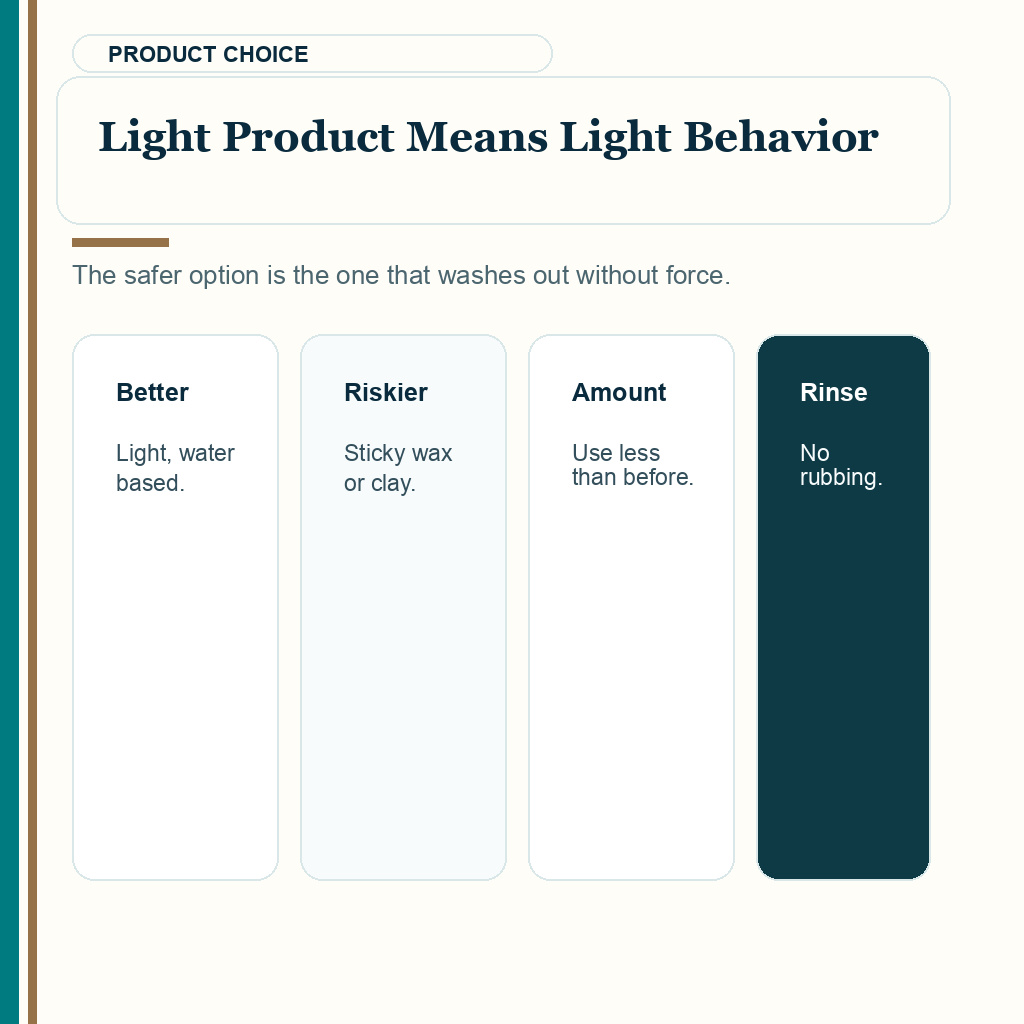
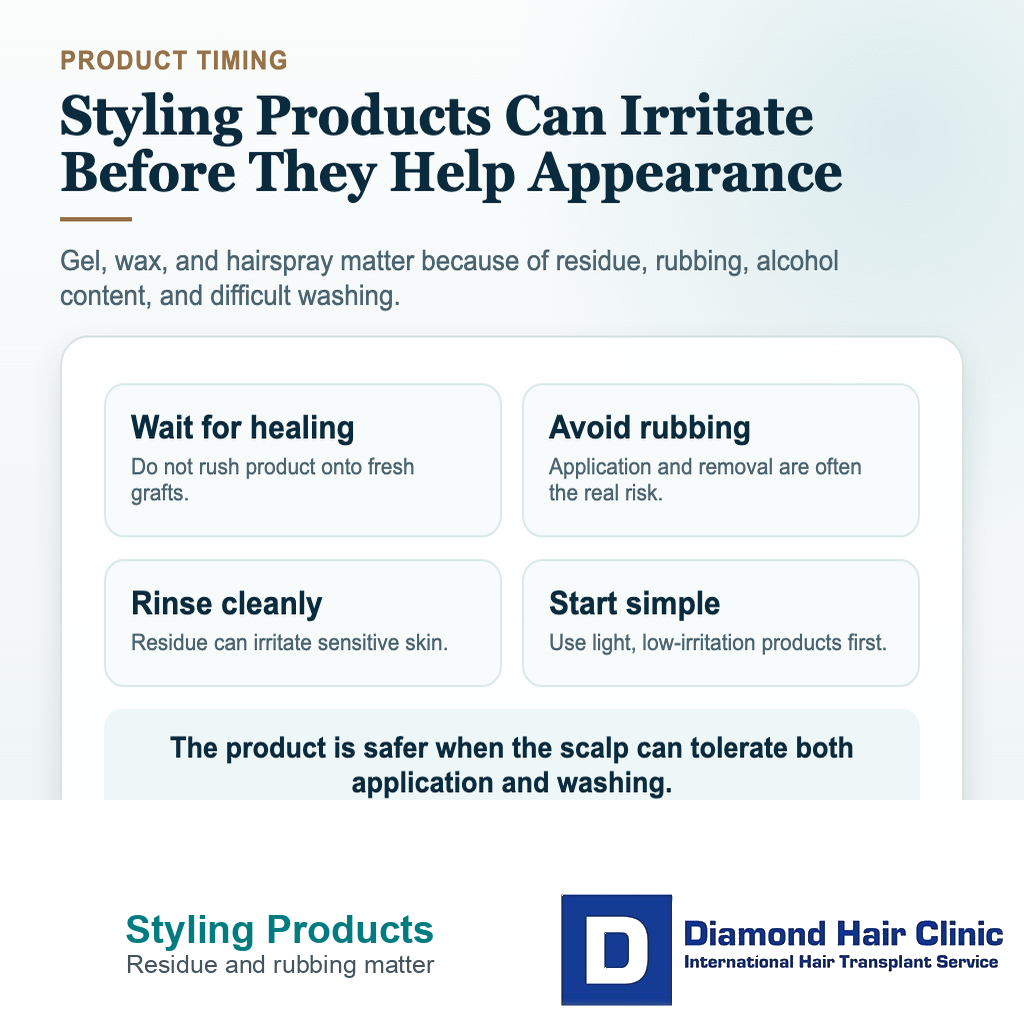
Pick the product by removal, not shine. Light product on hair shafts is easier to wash out than wax, clay, powder, or spray that needs rubbing near the scalp. Early styling is safer when the product rinses away easily without rubbing the recipient area.
Judge the product by the evening wash as much as the morning look. If removing it needs firm rubbing near healing skin, the product is not ready even if it looked light when applied.
If the scalp still has redness, pimples, open scabs, itching, folliculitis, or slow healing, wait and share clear photos with the clinic before testing a new product.
Styling products should wait at first
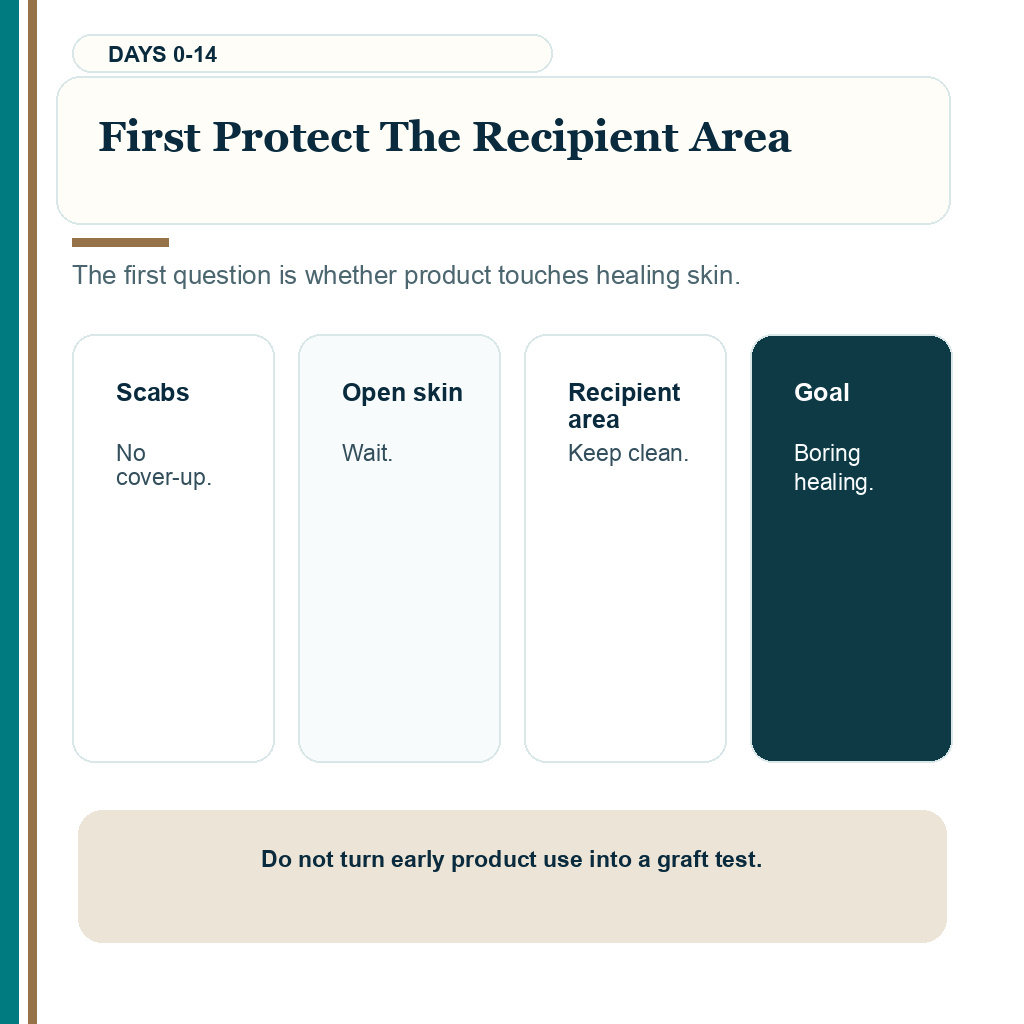
In the first days after surgery, the recipient area is not ordinary skin. Tiny grafts have been placed into small openings, and the early healing phase depends on clean protection, gentle washing, and avoiding trauma. This is this reasoning behind the broader early aftercare rules.
A styling product adds several variables at the wrong time. It can make the hair sticky, make you rub more during washing, leave residue around the grafts, or trigger itching in a scalp that is already healing. Even if the product itself is not dangerous, the behavior around the product can become risky.
During the first 10 to 14 days, I usually keep the instruction simple. Do not style the recipient area. Do not try to cover the scabs with gel, spray, wax, powder, or oil. Let the healing phase stay boring and predictable.
Styling changes after the first 10 to 14 days
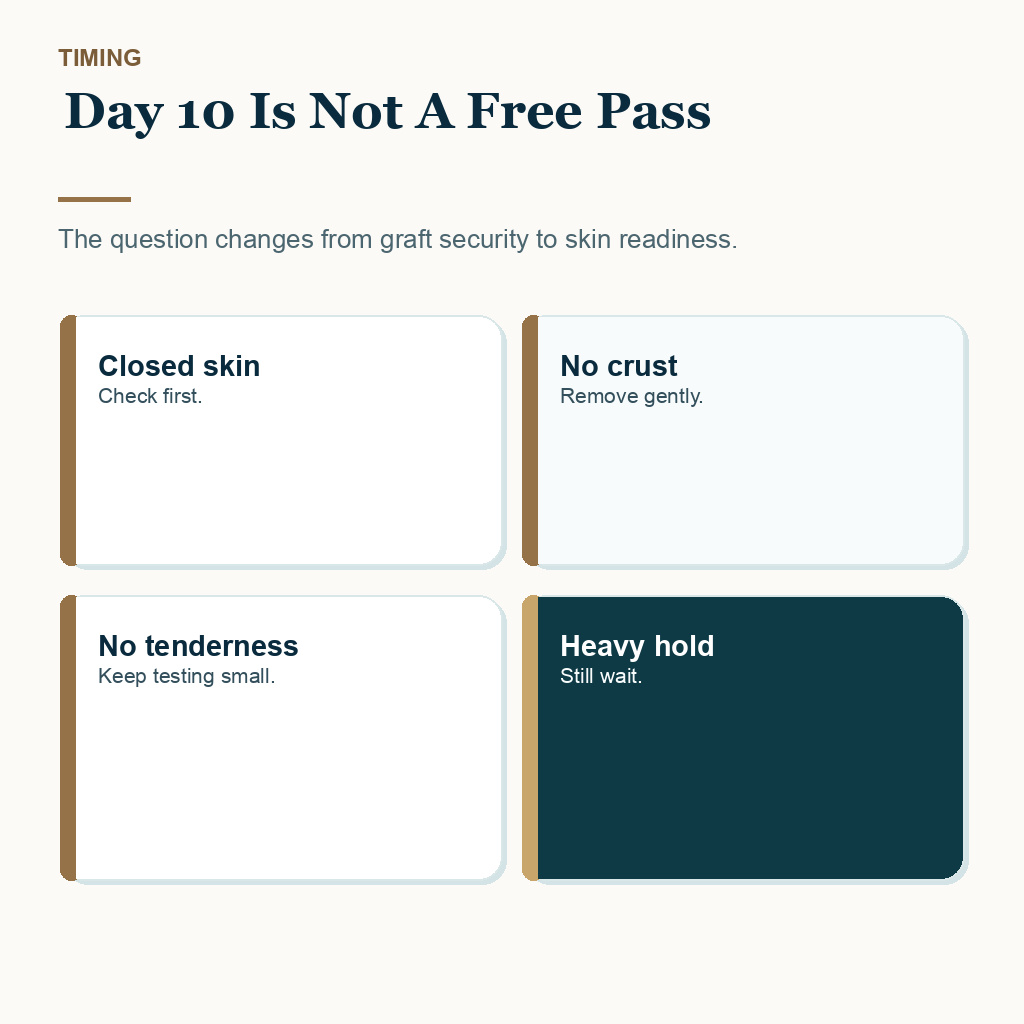
By around day 10 to day 14, many uncomplicated cases have passed the most delicate period for protecting the grafts. That does not make every styling product suitable. The remaining decision is whether the skin has healed enough and whether the product can be washed out without rubbing or pulling.
If the scabs are gone, there is no bleeding, no crust stuck to the hairs, and you can follow a normal washing routine without tenderness, a small amount of light product on the hair shafts may be reasonable for selected situations. I still do not like heavy wax or hard gel pushed into the recipient area at this stage.
This is not permission to turn the recipient area back into a normal styling surface. It only means the graft protection question has changed. The skin may still be reactive, and regular cosmetic product use can still create residue, itching, pimples, or unnecessary washing force.
The safest timing is not a single universal day. Quick clean healing with no irritation is different from prolonged redness, pimples, seborrheic tendency, or a habit of scratching. The product should wait until the scalp is ready, not until the calendar feels convenient.
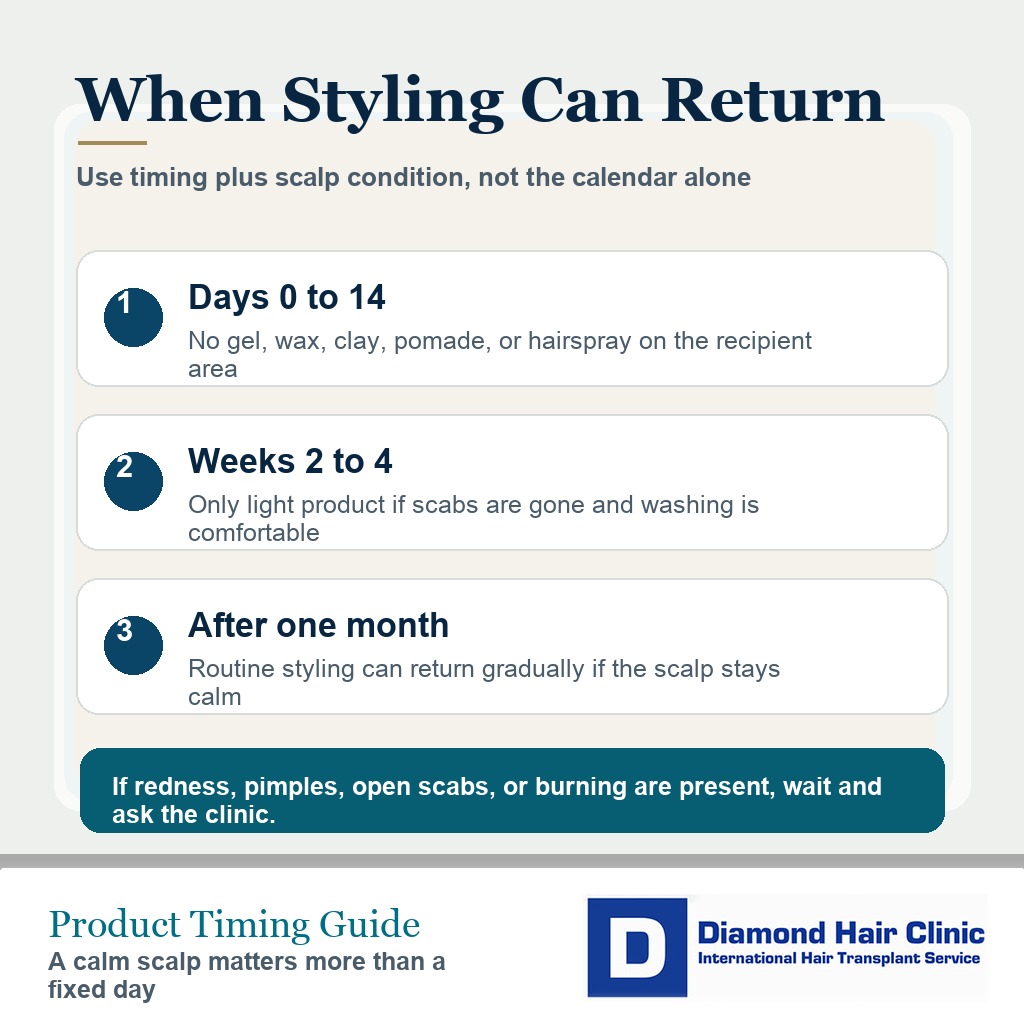
The 10 styling product slides below separate the no product window, day 10 limits, light product choice, hair shaft application, hairspray drift, density appearance, bedtime residue, reaction signs, sweat, and event planning. Swipe sideways, use the arrows one slide at a time, or choose a number below the image.


Styling product readiness filter
Should gel, wax, or hairspray wait today?
Use this after the timeline to weigh product strength, application zone, and how the scalp reacts.
Do not use gel, wax, clay, pomade, or hairspray on the recipient area. Keep the scalp clean and easy to wash instead of hiding scabs with product.
Styling products that are easier on the scalp
When the scalp is ready to restart styling, I usually prefer a light, water based product that washes out easily. A flexible cream, light paste, or mild styling lotion is often easier to control than a strong, cement like clay, heavy wax, thick pomade, or wet look gel.
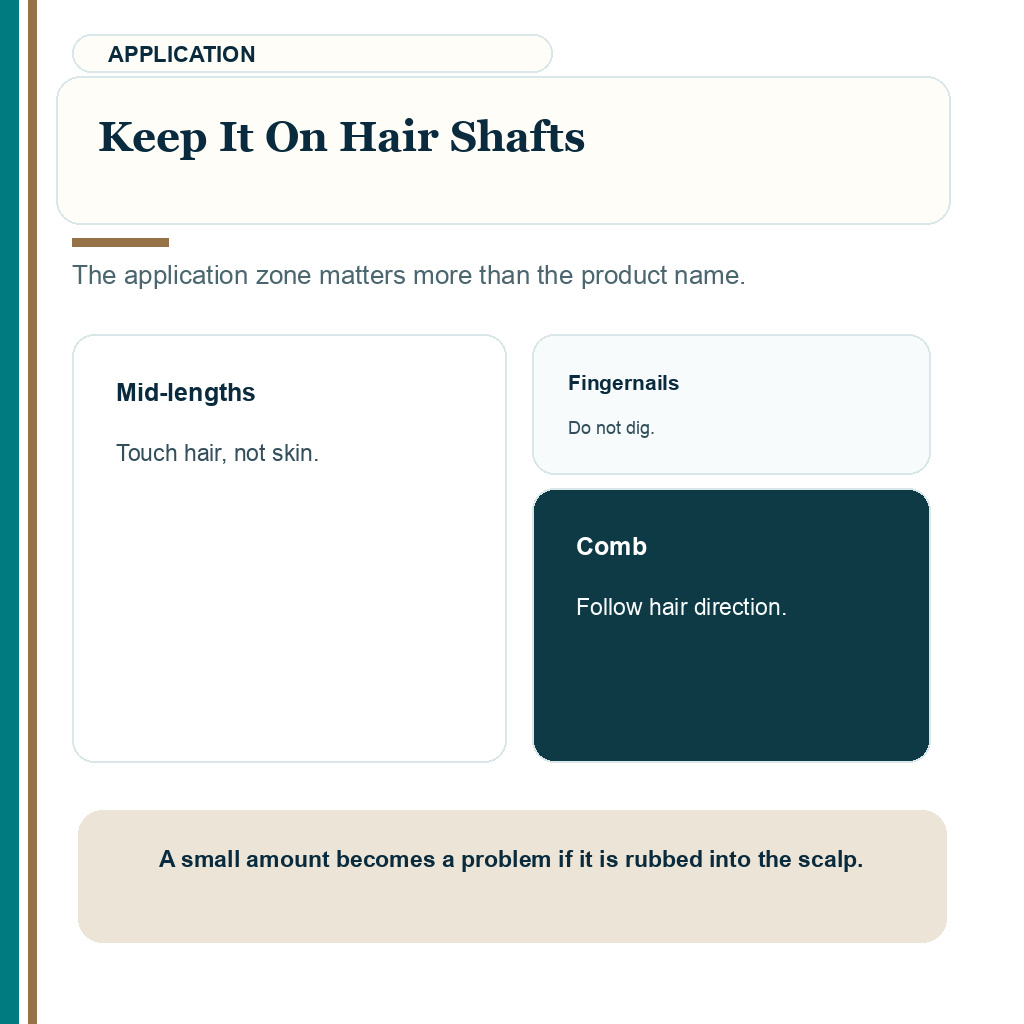
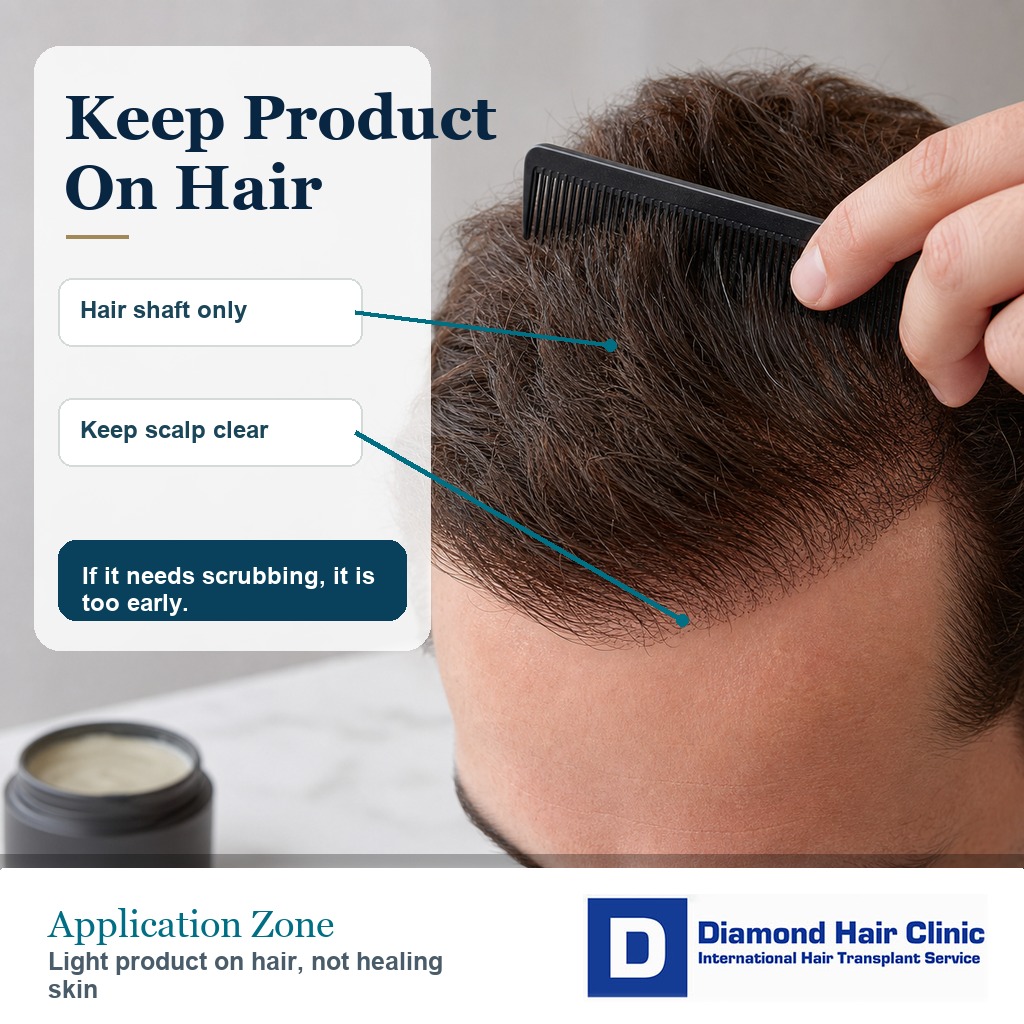
The product should mainly touch the hair shaft, not be rubbed into the scalp. A small amount is enough. If the style needs a lot of product to hold, that is usually a sign to wait longer, use a softer style, or accept a less controlled look during recovery.
Some people use camouflage products because they want to look presentable during the awkward months. That is a separate decision from gel or wax. I discuss hair fibers after a hair transplant separately because fibers, powders, and setting sprays behave differently from wax or gel.
Product label details to check
The label does not replace surgical judgment, but it can prevent obvious mistakes. Choose products that are easy to wash out, less oily, less fragranced, and not designed to glue the hair into place. Heavy pomades, oil rich waxes, strong resins, and very stiff sprays are more likely to create residue or make you rub harder during washing.
Words such as oil free, non comedogenic, fragrance free, or gentle can be helpful, but they are not a guarantee. A product can look harmless on the label and still irritate one person’s scalp. The first use should be small, controlled, and easy to remove.
Existing acne tendency, folliculitis, seborrheic dermatitis, eczema, or fragrance reactions should slow the product decision. In those cases, the safest product is often no product until the skin has fully settled.
Applying gel, wax, clay, or pomade safely
Use less than you used before surgery. Warm a tiny amount between your fingers, touch the mid lengths and ends of the hair, and keep the product away from the healing scalp. Do not dig through the recipient area with fingernails, and do not comb aggressively against the direction of the new hairs.
The first test should be on a normal day, not before an important event. Use a small amount in the morning, wash it out gently the same evening, and see how the scalp reacts over the next day. If there is itching, burning, extra redness, or pimples, stop and let the clinic review photos.
I also separate styling from cleansing products. Dry shampoo after a hair transplant can leave powdery residue, while hair oil after a hair transplant can sit heavily on the scalp. Gel, wax, clay, and pomade have their own problem, which is stickiness and removal.
Hairspray can irritate the scalp after surgery
Hairspray looks lighter than wax, but it can still irritate the scalp. It may contain fragrance, alcohols, resins, propellants, or preservatives. It can also land on the recipient area even when you are trying to spray only the hair.
If hairspray is used too early, you may rub the scalp to remove stiffness or flakes. That rubbing is the part I dislike. Spray can also irritate the eyes, nose, or sensitive skin in some people.
If you need hold, keep the spray away from the scalp, use the smallest amount, and wash it out gently. Do not spray a close, wet burst directly into the recipient area. If you already know that fragranced products irritate your skin, check ingredients in hair products before experimenting on a healing scalp.
Gel can make the result look thinner
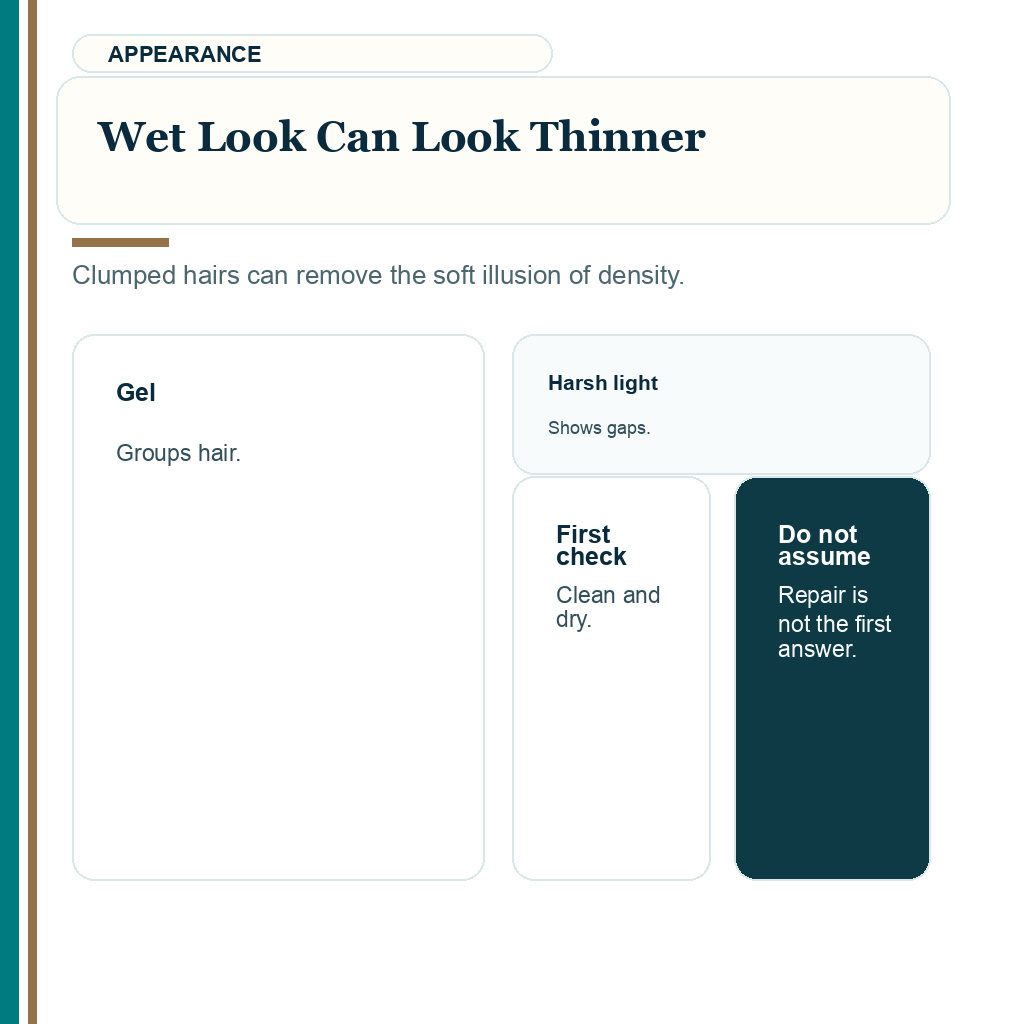
Wet look gel, heavy pomade, and strong wax can clump hairs together. When hairs stick into groups, the scalp becomes more visible between the groups. You may look in the mirror and think the transplant has failed, when the product has simply removed the soft illusion of density.
The density illusion matters because a transplant does not copy the density of a full teenage scalp. It creates a natural visual improvement by placing grafts carefully and using hair angle, direction, caliber, and styling length. A product that separates hairs can make even a good result look thinner under harsh light.
If gel makes gaps look worse, do not immediately assume repair surgery is needed. First judge the hair dry, clean, and styled lightly. Gel, wax, or hairspray can clump short hairs and make the area look more open in harsh light. Residue can also leave shine on the scalp, so judge the result after the product is washed out and the hair is sitting naturally. If you are worried about true density, compare it with the separate guide on why some hair transplant results look thin.
Sleeping with styling product is a bad idea
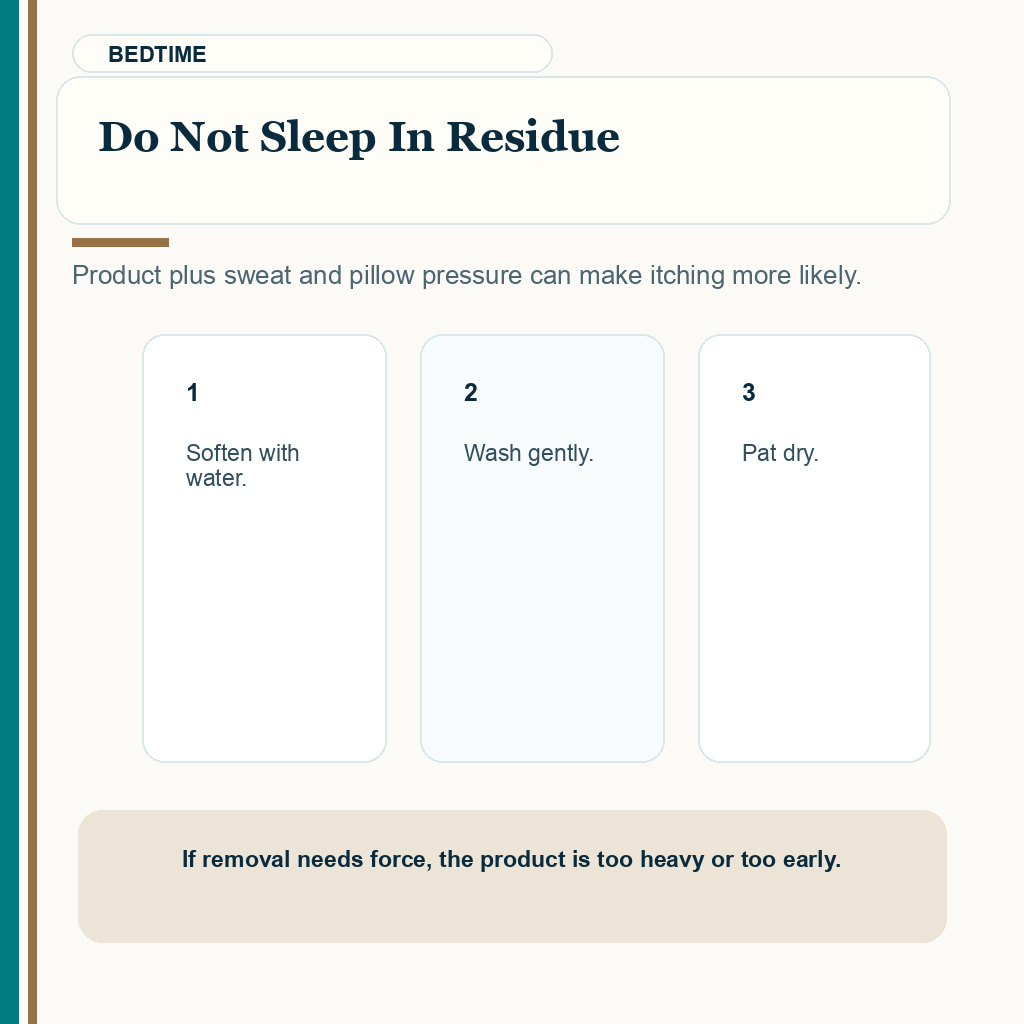
Once the scalp is fully healed, sleeping with a small amount of product once in a while is unlikely to be the main issue for most people. Early after surgery, keep the routine cleaner. Product mixed with sweat, pillow pressure, and scalp oil can make itching and irritation more likely.
With wax, clay, pomade, or hairspray during the early months, wash it out gently before bed when possible. Do not scrub. Let water soften the product, use a mild shampoo if your clinic has allowed it, and pat dry rather than rubbing hard. If removal requires force, the product is probably too heavy or too early for that scalp.
Daily residue is more important than one careful use. A small amount washed out gently is different from several days of layered product, scratching flakes from the scalp, and then worrying about pimples or shedding.
Red, itchy, or pimply scalp after styling
Stop the product first. Do not add more products to solve the reaction. A healing scalp can become irritated by fragrance, preservatives, occlusive ingredients, aggressive washing, sweating under product, or simple friction.
If the reaction is mild, removing the product and returning to a clean, gentle routine may be enough. If you see painful pimples, spreading redness, pus, swelling, fever, or worsening tenderness, ask for medical review. Product residue can confuse the picture, but folliculitis after a hair transplant needs proper judgment rather than guessing.
Do not squeeze pimples in the recipient area. Do not use random steroid creams, acne creams, alcohol wipes, or strong medicated shampoos unless your doctor approves them. The scalp needs the right treatment for the cause, not a stronger product routine.
Sweating changes the answer
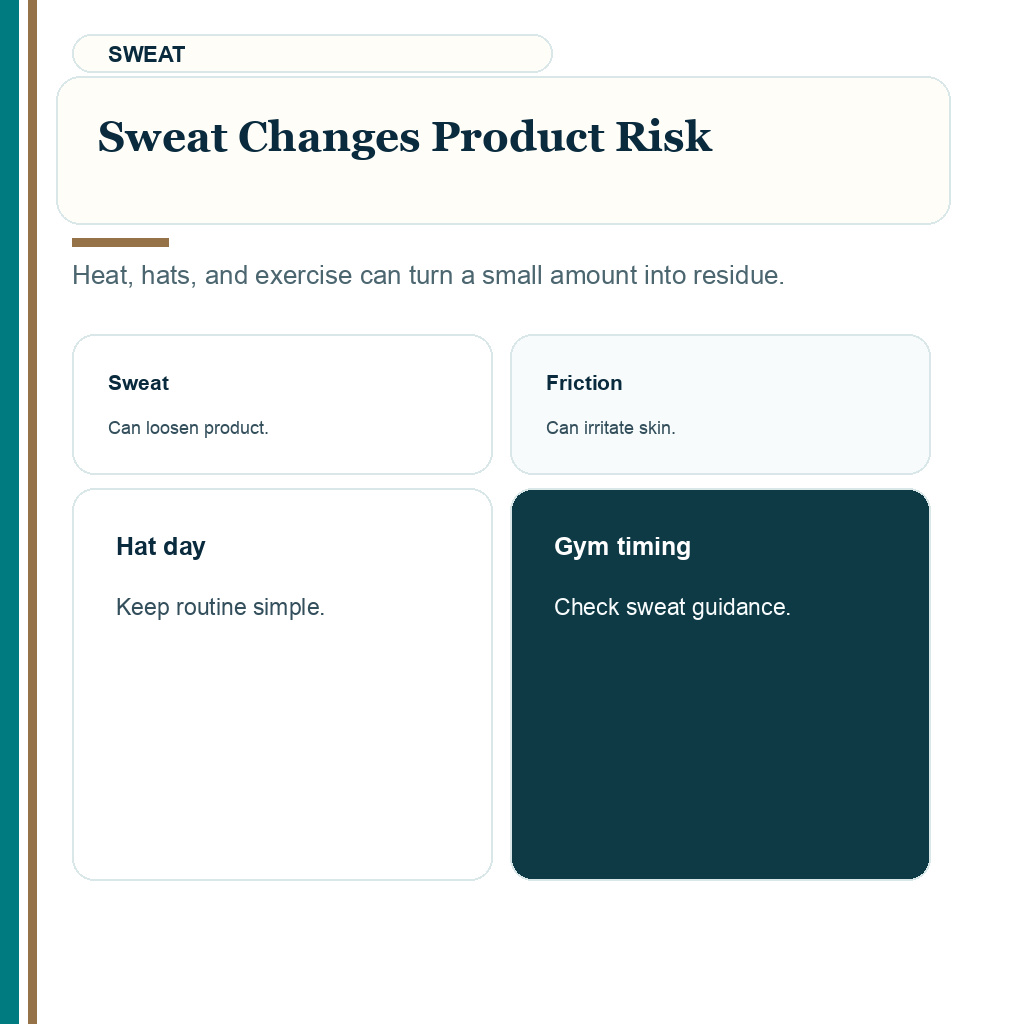
Sweat changes the product behavior. Gel, wax, and hairspray can run, loosen, trap residue, or make the scalp itch more when you sweat. Avoid styling products before exercise, sauna, very hot weather, or a long day under a hat during early recovery.
Sweat alone is usually not the main problem. Sweat plus product plus friction is more irritating. Strong wax, sweating, hairline rubbing, and aggressive washing can create several small irritations at once.
If your main concern is gym timing or heat, read the guidance on sweating after a hair transplant before adding styling products back into the routine. Conditioner is a separate timing decision because it behaves differently from wax, clay, gel, or spray.
Normal styling returns gradually
Many people can gradually return to more normal looking styling after the first month if the skin has settled, the product is light, and the product stays mostly on the hair rather than the scalp. That is still different from treating the recipient area as fully normal.
My broader aftercare remains cautious with cosmetic products on a freshly treated scalp in the first 90 days, especially if there is redness, folliculitis, sensitivity, repair work, or dense hairline work. By three to six months, the conversation is usually less about graft safety and more about hair quality, density appearance, scalp sensitivity, and product choice.
Still, normal styling should not mean aggressive styling. Avoid pulling hard on short new hairs, scraping the scalp with a comb, or using heavy hold products every day if they make the scalp itchy. A transplant can be healed while the growing hairs are still changing texture and thickness.
Later in recovery, product choice becomes a grooming decision rather than a search for a product made only for transplanted hair. Choose by hair texture, the finish you want, scalp tolerance, and whether the product washes out without force. A cream may suit hair that becomes stiff with wax. Clay or powder may add texture but can also make spacing look more obvious. Test one product at a time, use a small amount, and compare the result with the hair clean as well as styled.
Separate heat and chemical services from styling products. A hair dryer after a hair transplant creates a heat and airflow question, while hair dye adds chemical irritation and allergy concerns. Do not treat all hair products as the same risk.
The clinic answer should not be too casual or too rigid. “Use anything after one week” ignores slow healers, product residue, folliculitis, and people who rub too hard. A useful answer should consider the stage of healing, the condition of the recipient area, the product type, how it is applied, and how easily it washes out.
Events before the scalp is ready need a safer plan
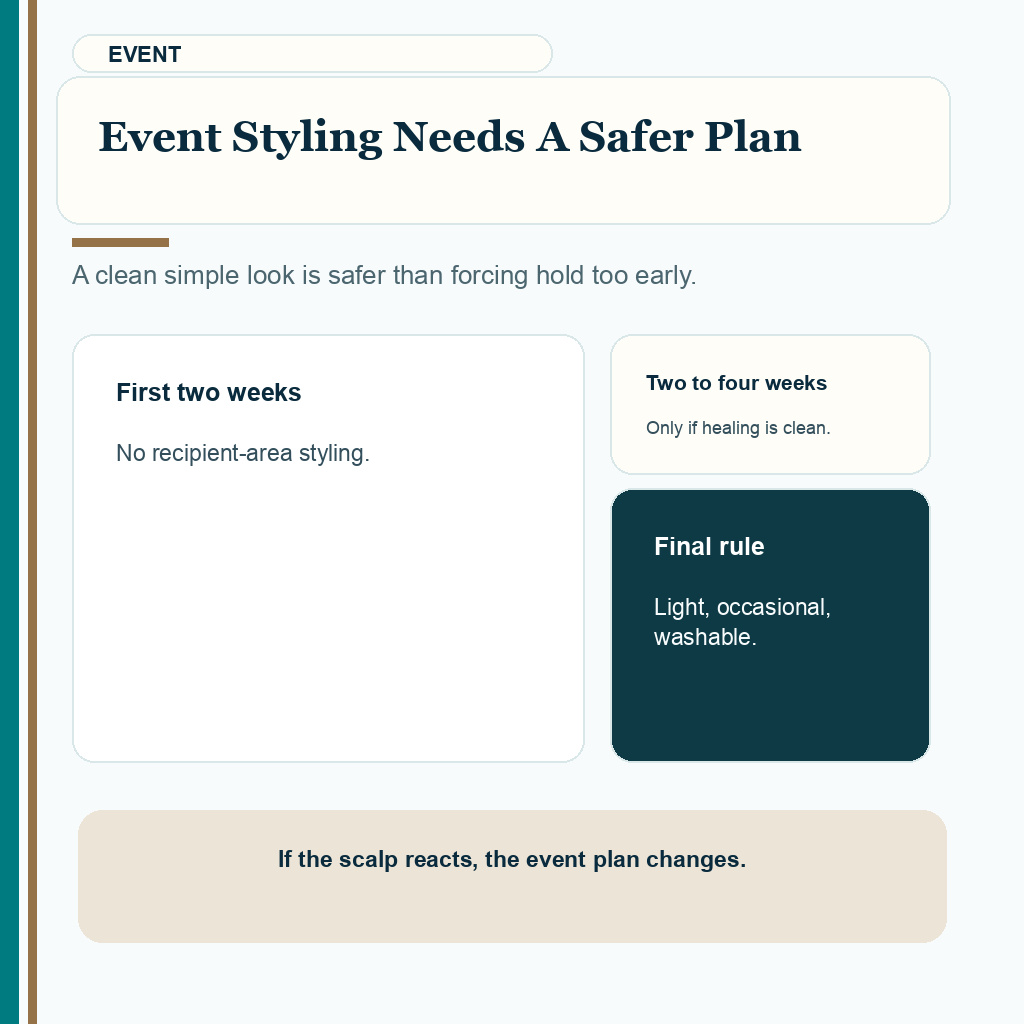
If you have an event in the first two weeks, I would not use styling products on the recipient area. It is better to accept a simple clean look than to create avoidable friction on a healing scalp. A loose hat may be allowed later depending on the clinic’s instructions, but it should not rub the grafts.
Between two and four weeks, the answer depends on your healing. If the skin is closed and comfortable, a very small amount of light product on the hair shafts may be acceptable for an occasional situation, but I would still avoid sticky wax, heavy clay, wet look gel, and strong hairspray close to the scalp.
After the first month, a careful routine is usually easier. Use less product than before surgery, keep it away from the scalp when possible, wash gently, and watch how your skin responds. If the product makes the hair look thinner, greasy, separated, or stiff, choose a lighter finish rather than assuming the transplant is weak.
Asking before using styling products
Ask before using styling products if you still have scabs, bleeding, open areas, strong redness, painful pimples, pus, unusual swelling, burning, or a known history of scalp dermatitis. Also ask if you had repair surgery, dense work in a delicate hairline, poor healing, or instructions that differ from the timing above.
Photos help more than long descriptions. Show the clinic the recipient area in good light, the donor area if it is also irritated, and the exact product you want to use. The answer should be based on your scalp, not on another person’s timeline.
My personal rule is conservative but practical. Protect the grafts in the first 10 to 14 days, let the scalp settle before regular styling, use the lightest product that does the job, keep it mainly on the hair rather than the skin, and wash it out without force. That approach lets you return to normal grooming without turning a small styling decision into a recovery problem.

Read this review excerpt
Every single one of my questions was answered and they made sure I had all the details I needed to make an informed decision.