


Sunscreen Timing for the Transplanted Scalp
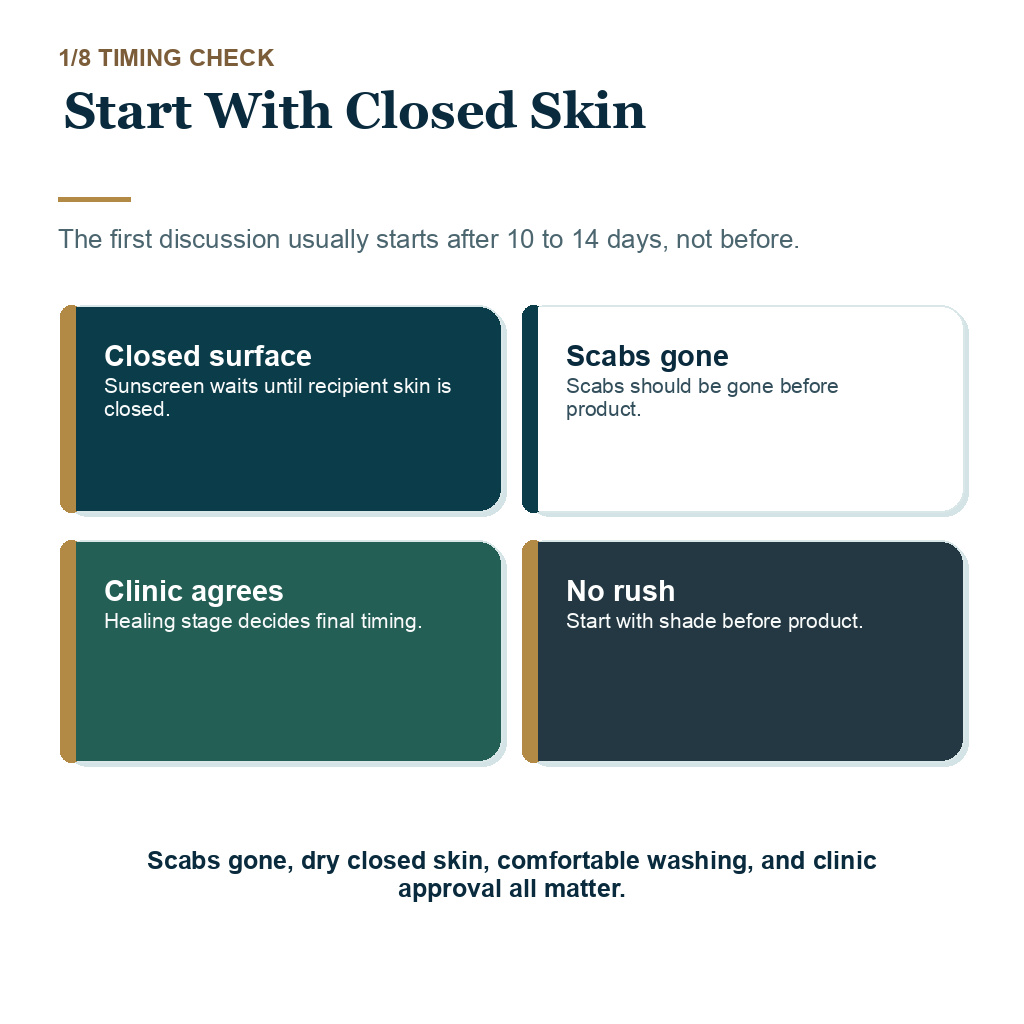
You can usually start considering sunscreen after the first 10 to 14 days, but only when the recipient area is closed, the scabs have come away, washing is comfortable, and your clinic agrees. Before that, do not put sunscreen directly on the grafted area unless your surgeon specifically tells you to do so. In the early days, protection means shade, avoiding strong sun, and keeping the scalp free from unnecessary product. If the question is the morning before surgery rather than aftercare, use FUE morning starts with clean skin to keep sunscreen and other residue off the area before assessment.
Real sun exposure needs a separate decision. If the scalp is already burned before surgery, read about a sunburned scalp before a hair transplant before trying to solve the problem with sunscreen. Avoid strong direct sun after a hair transplant for at least 1 month, and treat prolonged or intense sun carefully for about 2 to 3 months. When the scalp is ready for product contact, use a broad spectrum, water resistant SPF 30 or higher. Reapply every 2 hours while you are outdoors, sooner after sweating or water exposure. That rule is not a clock running all day indoors, and it is not permission to keep a healing scalp in strong sun for hours.
Why is sunscreen different from shade or a loose hat?
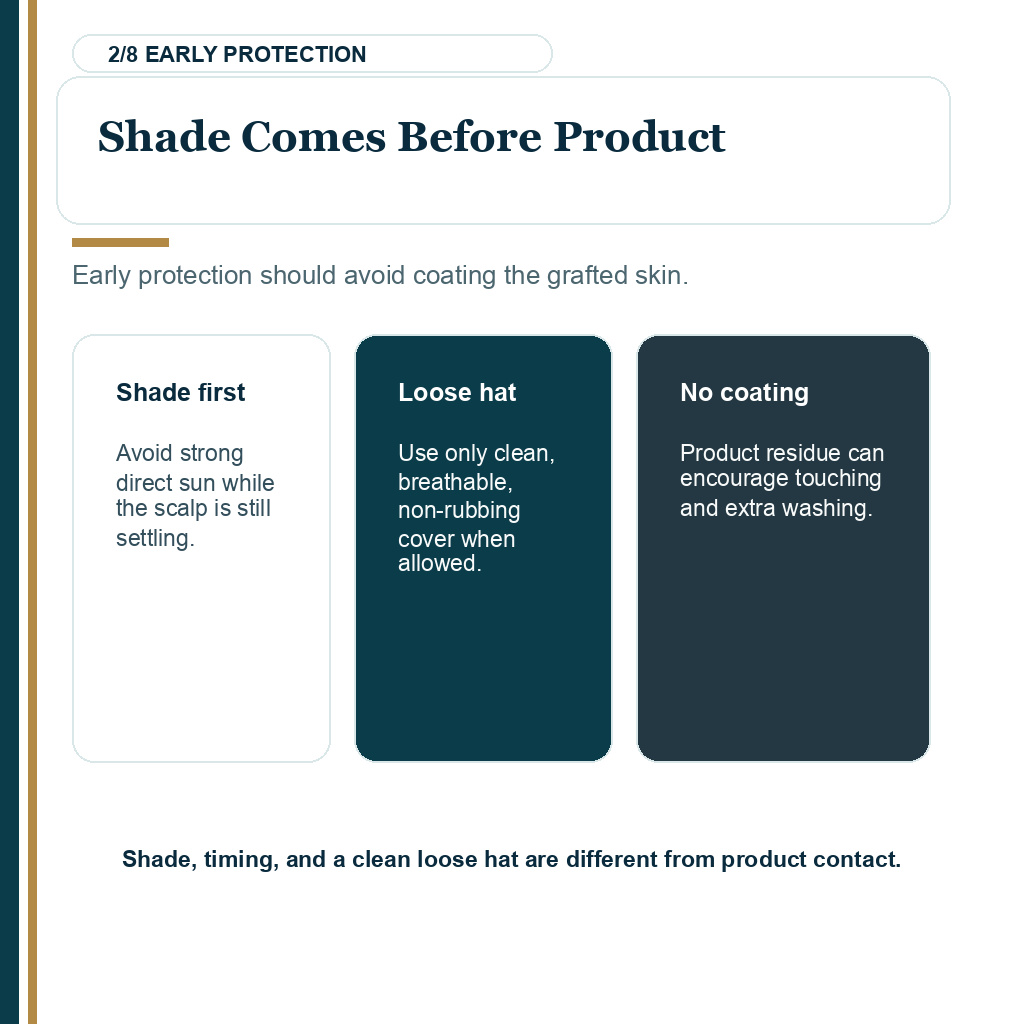
Shade and a loose hat protect the scalp without coating the healing skin. Sunscreen is different because it must touch the skin, spread across the surface, stay there during heat or sweat, and later be removed. That contact is the reason timing matters.
In the first stage, I want the recipient area left alone as much as possible. The grafts are settling, small crusts are forming, and the skin is not ready to behave like ordinary skin. A product that is harmless on healed skin can become a problem if it encourages rubbing, residue, blocked crusts, itching, or aggressive washing.
A loose hat also has timing rules because pressure and friction can matter when you wear a hat after a hair transplant. Sunscreen adds a separate layer because it is a surface product, not only a covering.
I look at two questions. Is the scalp healed enough for product contact? And is the planned sun exposure reasonable for this stage of recovery?
Earliest safe time to consider sunscreen
The first reasonable discussion is often after the first 10 to 14 days, when the grafts are more stable, the scabs have come away normally, and the skin is closed enough for gentle washing. This is not permission to spend hours in strong sun. It is only the point when product contact may become safer for a scalp that has closed and is washing comfortably. Sunscreen timing and sun exposure timing are separate decisions, and a closed scalp is not ready for a long sunny walk just because product contact is possible.
The timing also depends on graft location. A hairline transplant may leave the forehead and frontal scalp exposed. A crown case may be harder to cover without pressure. If the recipient area is still crusted, wet, painful, or easily irritated, sunscreen should wait.
This decision connects with when hair transplant grafts are secure, but graft anchoring is not the only factor. Secure grafts and comfortable skin are not exactly the same thing. A graft may be harder to dislodge while the surface skin is still too sensitive for repeated product use.
For a brief walk outside before that stage, shade, a careful route, and short exposure are better than trying to solve the problem by rubbing sunscreen into fresh grafts.
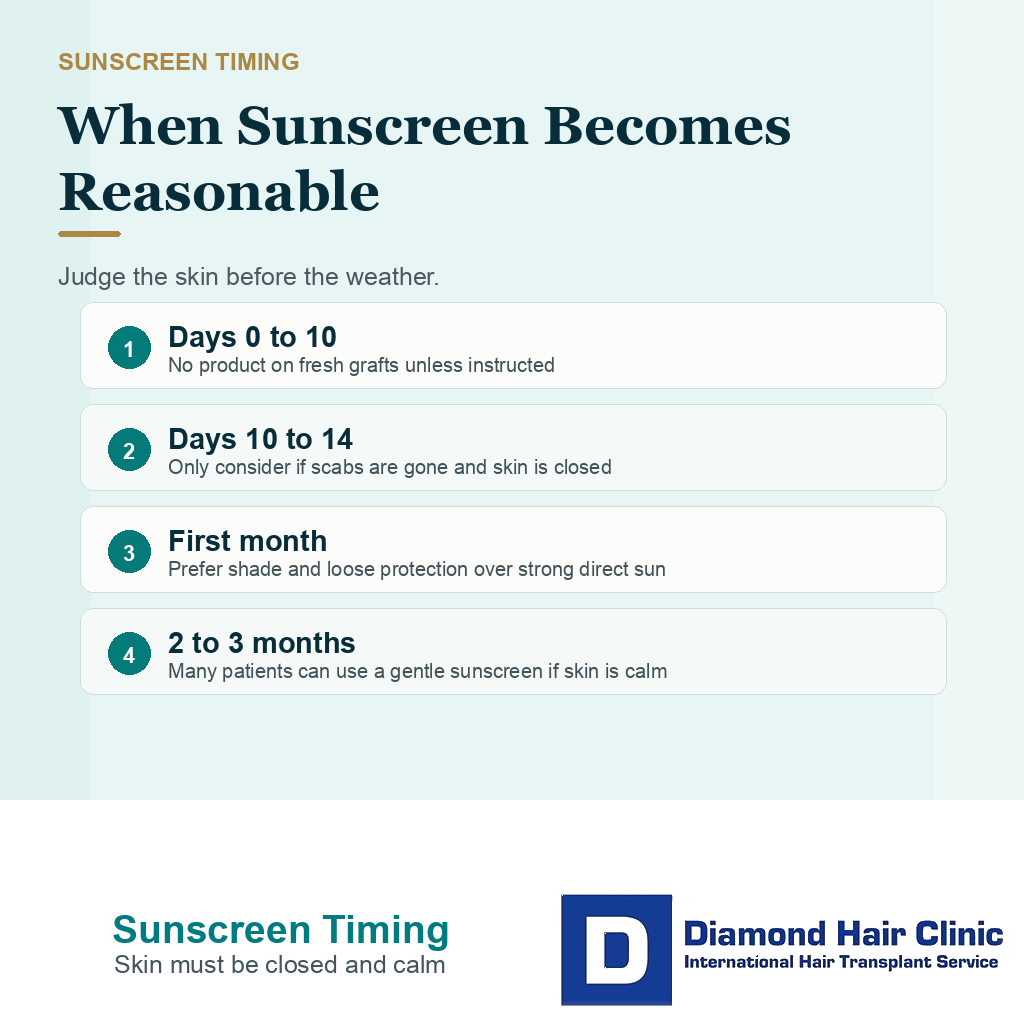
The skin has to be closed enough for sunscreen. How sunny the day is comes second.
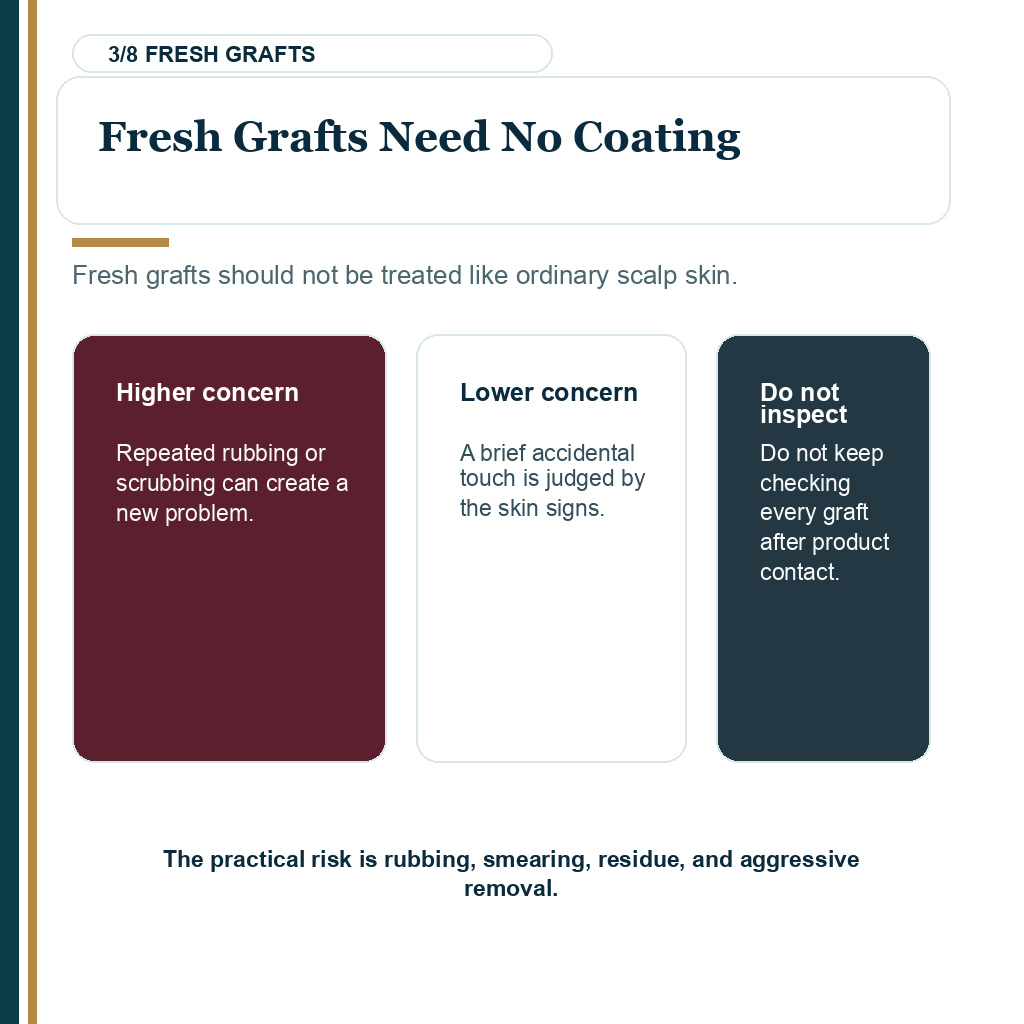
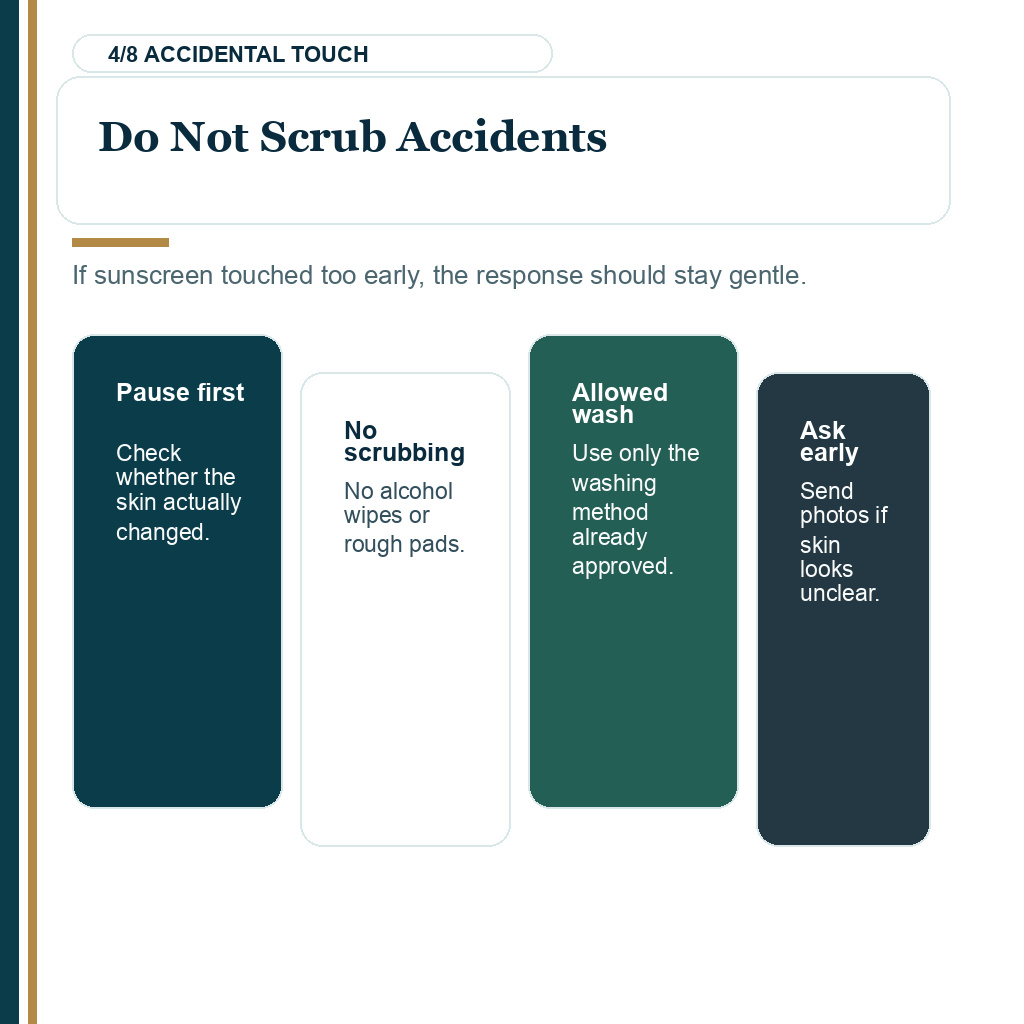
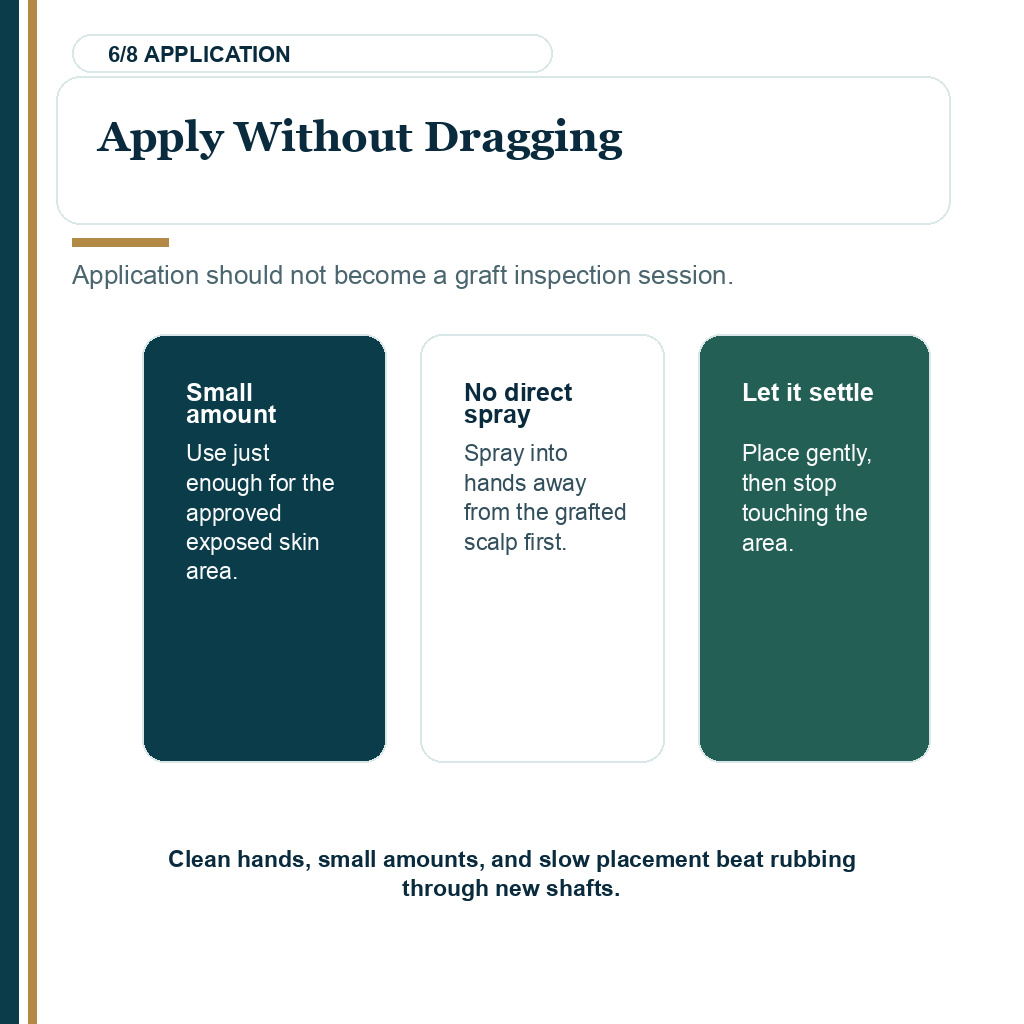
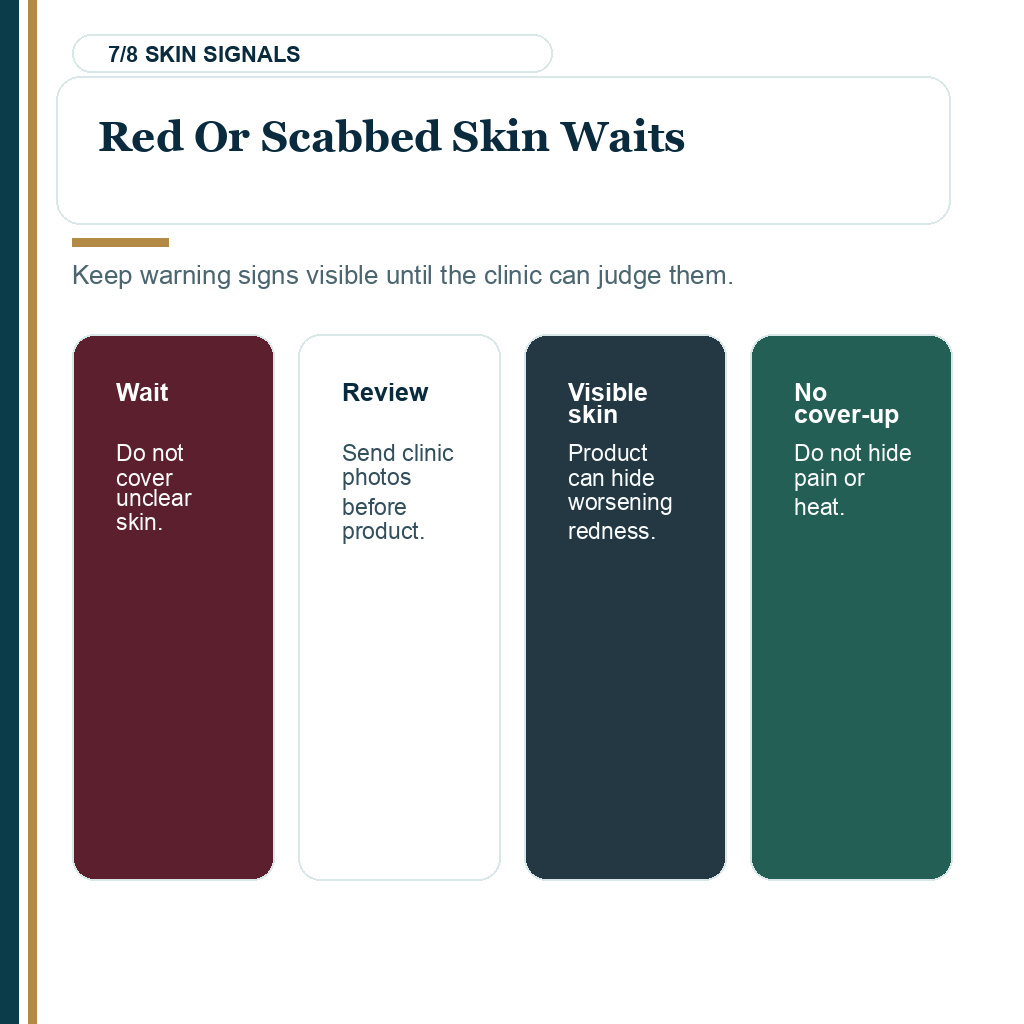
Use the 8 sunscreen timing slides below to separate closed skin timing, shade before product, fresh graft contact, accidental early touch, SPF choice, gentle application, red or scabbed skin, and beach or pool exposure. Swipe the carousel, use the arrows one step at a time, or choose a number below the image to jump to that point.

Why should I avoid sunscreen on fresh grafts?
Fresh grafts should not be treated like normal scalp. The recipient area has thousands of small healing openings. During the first days, the priority is to avoid anything that makes you touch, smear, scratch, wipe, or wash more aggressively than needed.
One small trace of sunscreen is not usually the main concern. The practical risk is the behavior around the product. A brief accidental touch is different from rubbing sunscreen through crusts, reapplying it repeatedly, and then scrubbing it off before the scalp is ready. If the product stings, you may also keep checking the area.
I am just as careful with aloe vera or moisturizer after a hair transplant. A product can feel soothing and still be wrong for the recipient area if the timing, amount, skin condition, or removal method is poor.
In the early window, physical protection is safer than product complexity. Stay out of strong sun, keep the scalp clean, and follow the washing protocol instead of adding extra products because the weather is inconvenient.
If sunscreen touched the grafts too early
If sunscreen touched the grafted area too early, do not panic and do not scrub it off. First judge what actually happened to the scalp. If there is no fresh bleeding, no open spot, no graft material on the fingers or towel, and no new pain or swelling, one accidental contact is usually less concerning than aggressive cleaning afterward.
Remove it only through the washing method your clinic has already allowed. Do not use alcohol wipes, exfoliating pads, strong shampoo, or repeated rubbing to make the scalp clean. That can create more risk than the sunscreen itself.
If the product is sticky, heavily applied, burning, trapped around scabs, or difficult to remove gently, contact your clinic with a close photo and timing details. Include the surgery day, the product used, how much touched the recipient area, whether you rubbed it, whether the skin is open or bleeding, and whether symptoms are getting worse.
Spray sunscreen deserves extra caution because it can settle where you did not mean to apply it. In early recovery, shade and physical protection are safer than trying to solve strong sun exposure with product.
Sunscreen type for a healing scalp
When sunscreen is allowed, choose a broad spectrum sunscreen with SPF 30 or higher. Water resistance is useful if you will sweat or be outdoors for longer, but water resistance does not mean the product can be forgotten for the whole day.
Read the label instead of trusting the front of the bottle. Broad spectrum means UVA and UVB protection, SPF 30 or higher is a reasonable minimum, and water resistant still has a time limit. It is not waterproof. If the bottle is expired, overheated in a car, or too thick to remove gently, choose another product.
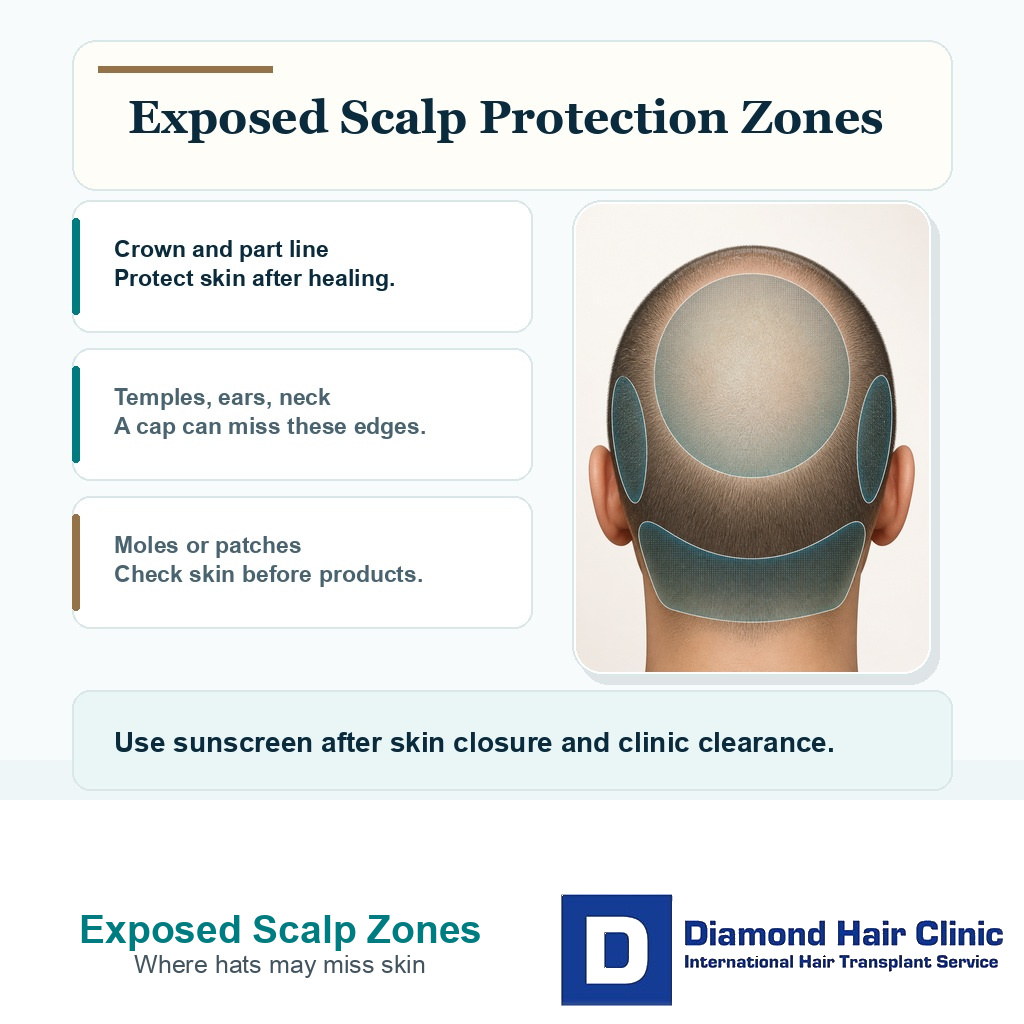
If the scalp is thin before surgery or remains thin after surgery, sunscreen is not only a recovery product. It becomes ordinary skin protection once the skin is closed and your clinic has cleared product use. Hair growth may change how much scalp is visible, but it should not make you ignore exposed crown, part line, or donor skin during long outdoor days.
For a sensitive healing scalp, a plain fragrance free product is often easier to tolerate than a heavily perfumed cosmetic formula. Some people do better with a mineral sunscreen, such as zinc oxide or titanium dioxide, because it may sting less on irritated skin. Others tolerate a light lotion better. The best choice is not the strongest looking label. It is the product the skin accepts and you can remove gently.
Avoid thick greasy layers, strong alcohol based sprays, glitter products, tanning oils, sunbed or tanning bed sessions, and formulas that need hard scrubbing. Sunscreen should protect healing skin. It should not become a styling product, a camouflage product, or a reason to touch the grafts repeatedly.
Before using a new product on the transplanted area, test a small amount on normal skin first, or on a healed edge away from the grafts if the clinic has already allowed product contact. If it burns, itches, or leaves a heavy film there, do not spread it across the recipient area.
If a product burns, creates strong itching, leaves heavy residue, or makes redness worse, stop using it and contact the clinic with a close photo. Do not keep applying it because the label says it is gentle.
Spray, lotion, stick, or mineral sunscreen
A lotion gives more control over where the product goes, but it must be applied gently. A stick can be useful around the forehead later, but it can also drag if the skin is not ready. A spray may seem convenient, yet it can miss areas, enter the eyes, leave alcohol on sensitive skin, or make the patient spray too close to the grafts.
If you use a spray later, do not spray it directly toward the face or grafted scalp. Spray it into your hands away from the scalp, then place it gently only where the skin is ready. In early hairline recovery, that extra control is often more important than speed.
For the transplanted scalp, avoid any method that requires pressure. If the product cannot be placed without rubbing, the scalp may not be ready. If the hair is already growing through, work with small amounts and avoid forcing product into the skin.
Regular product use, including hair gel, wax, or hairspray after a hair transplant, only becomes sensible when the scalp is closed, settled, and easy to wash.
For many people, the better early plan is not finding the perfect sunscreen texture. It is reducing sun exposure enough that sunscreen does not need to carry the whole job.
Applying sunscreen without rubbing the grafts
Apply only when the skin is ready. Use clean hands, a small amount, and slow contact. Light placement is different from massaging through crusts or dragging a finger across new hair shafts.
If the recipient area still feels tender, tight, wet, or scabbed, wait. If the area is healed enough, place the sunscreen gently and give it time to settle before going outside. Do not use the application as an excuse to inspect every graft.
Apply it to clean, dry skin rather than over sweat, dust, oil, concealer, or hair fibers. If the scalp is already sweaty or dirty, the answer is not another layer of product. The answer is to shorten the exposure, move to shade, and wash only in the way your clinic has allowed.
Reapplication matters when you are actually outdoors. A broad spectrum SPF 30 or higher is normally reapplied every 2 hours outside, sooner after sweating after a hair transplant or water exposure. That does not mean you need to touch the scalp every 2 hours while you are indoors. It also means repeated reapplication in the first weeks is a sign that the exposure may be too much.
Use sunscreen as one layer of protection, not as permission to stay in midday sun. Shade, shorter exposure, and a loose protective hat still matter.
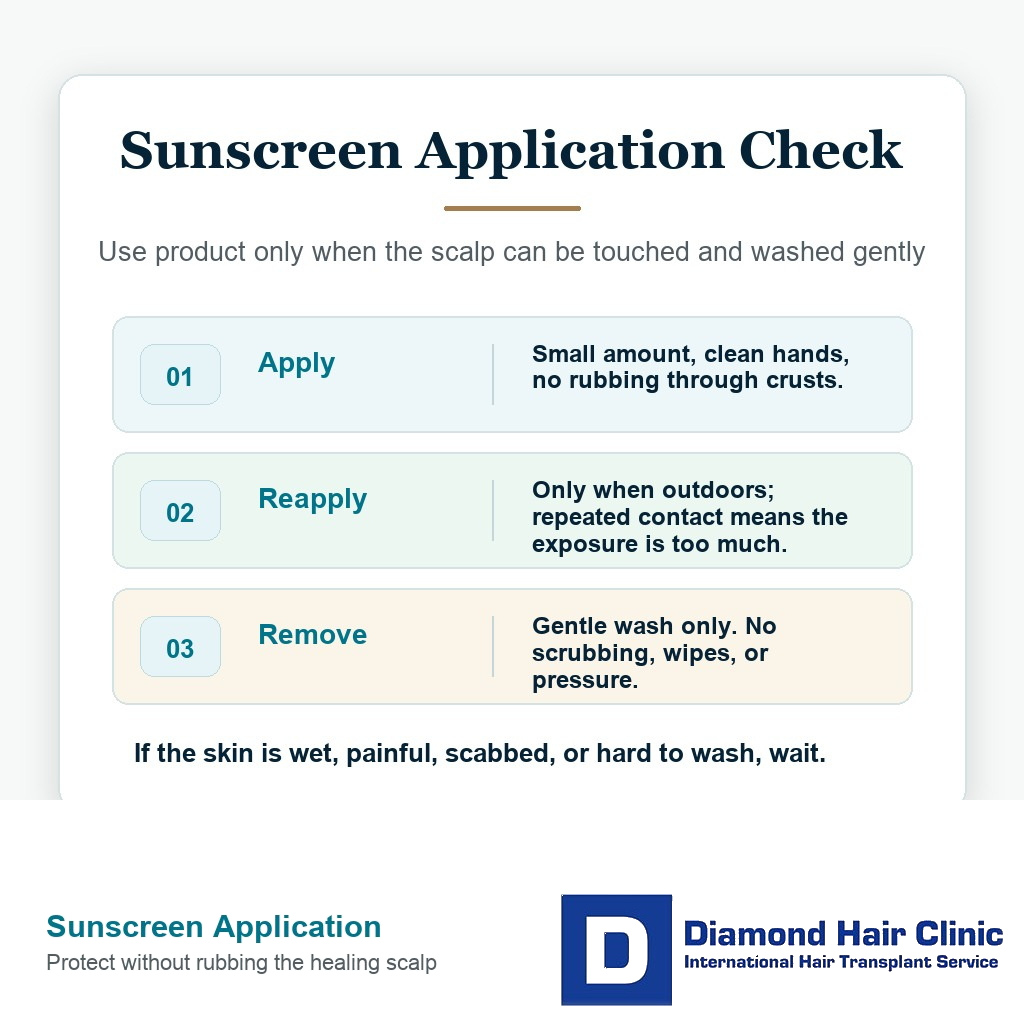
The right sunscreen still needs gentle application, gentle removal, and physical sun protection.
If the scalp is still red or scabbed
If the scalp is still scabbed, wet, painful, increasingly red, hot, swollen, draining, or sensitive to light touch, do not cover the problem with sunscreen. The clinic needs to see the skin clearly. Product can hide the pattern and delay the right advice.
Mild redness can be part of healing, but worsening redness needs judgment. Redness, scabs, or pimples after a hair transplant need review when they worsen, drain, hurt, or become difficult to see under product.
If redness is the reason you want sunscreen, ask whether you are trying to protect the scalp from ultraviolet light or hide a healing concern. Protection is reasonable after the skin closes. Hiding a worsening sign is not.
If sunscreen would cover a mole, rough patch, or changing spot, review that scalp mark before hair transplant planning instead of hiding it under product.
Sunburn on a healing scalp is a different problem from ordinary redness. If the scalp burns, becomes painful, blisters, weeps, or darkens sharply, contact the clinic and avoid more exposure. Do not treat a burn by adding more products without medical advice.
Hat and shade still matter with sunscreen
In many early situations, a loose hat or shade is still useful even when sunscreen is allowed. Sunscreen reduces ultraviolet exposure, but it does not stop heat, sweat, rubbing, long exposure, or the temptation to keep touching the scalp.
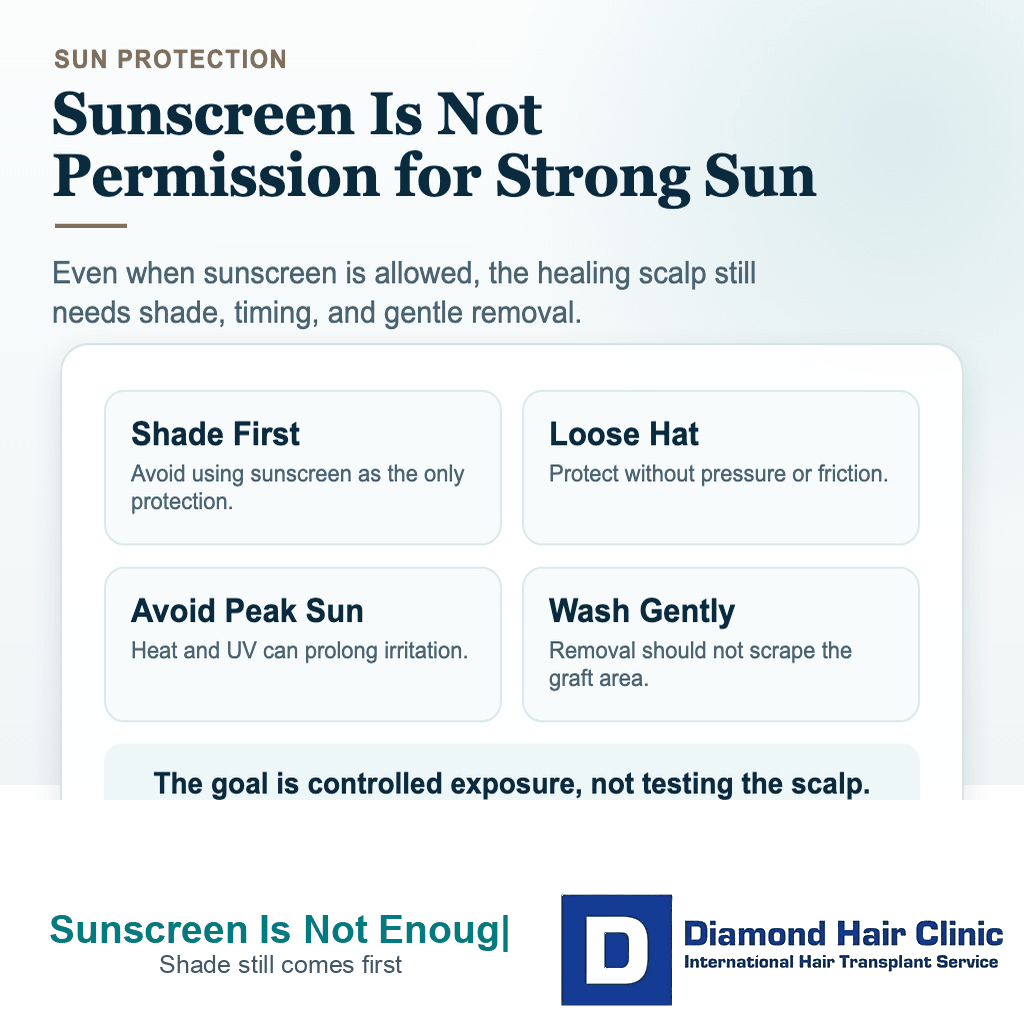
The hat must be chosen carefully. It should be clean, loose, breathable, and easy to put on without scraping the grafted area. A tight cap that rubs across the hairline can be worse than no cap in the first stage.
For strong sun, layered protection is safer. Short exposure, shade, a loose hat when it is safe, and sunscreen after the skin is ready. No single measure should be used as an excuse for careless exposure.
A few minutes of unavoidable daylight is different from choosing a beach, pool, or outdoor work day. When patients treat sunscreen as permission to stay outside, the problem becomes heat, sweat, rubbing, and repeated product removal, not only ultraviolet light.
This comes up before outdoor work as well. If the job requires a hard hat, helmet, long sun exposure, or heavy sweating, that is not a sunscreen question alone. Work timing and headwear safety need separate planning.
Beach or pool exposure needs extra caution
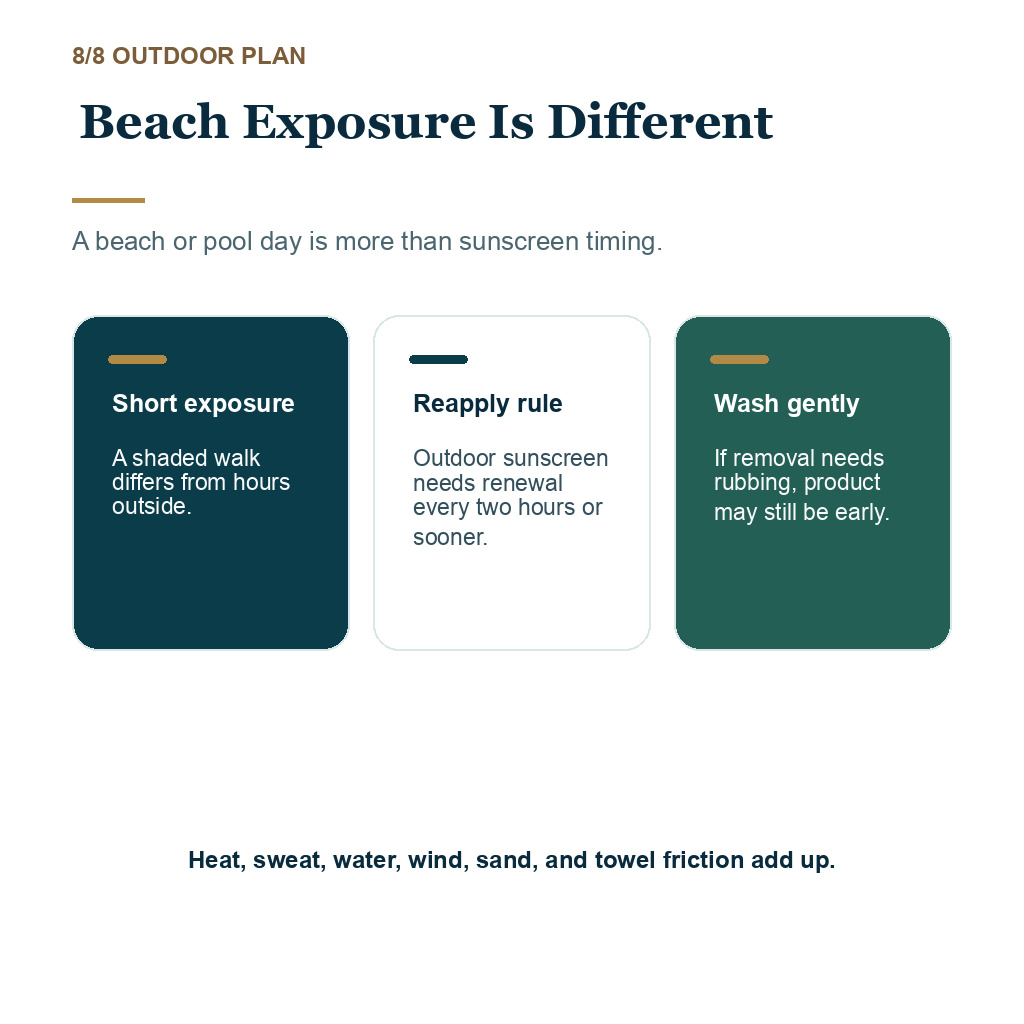
A beach or pool day is a higher risk environment because sunscreen is only one part of the exposure. The scalp may face heat, sweating, saltwater, chlorine, wind, sand, towel friction, and social pressure to stay outside longer than planned.
I separate a short shaded walk from a real beach day. Going to the beach after a hair transplant is not just sunlight. It is repeated small irritations added together.
Brief unavoidable daylight, repeated outdoor work, and a beach day do not need the same protection plan.
Swimming also needs more time. If you are thinking about pool or sea exposure, the timing for swimming after a hair transplant matters separately. Sunscreen does not make chlorine, saltwater, wet towels, or swim caps safe for a healing scalp.
Water resistant sunscreen also does not make a beach or pool day safe by itself. Heat, sweat, water, and towel friction mean more reapplication and more removal later. If the scalp is not ready for that cycle, the trip is too early even if the sunscreen label looks strong.
If a trip is unavoidable, keep it boring. Stay in shade, avoid midday heat, do not swim early, do not lie with the recipient area against a towel, and do not repeatedly wipe sweat or sunscreen from the grafted zone.
Washing sunscreen off at night
Sunscreen should not stay as a thick layer on a healing scalp overnight. Once sunscreen is safe enough to use, it also has to be safe enough to remove gently. If you cannot wash the area without rubbing, the product may still be too early.
Use the washing stage you have actually reached. Water, foam, pressure, towel drying, and normal products return in stages, including when you wash your hair normally after a hair transplant.
Do not use rough towels, fingernails, exfoliating pads, alcohol wipes, or strong cleansers on the recipient area. A gentle wash approved by the clinic is enough when the skin is ready. If residue remains, ask the clinic rather than scrubbing harder.
If residue keeps staying behind, use less product next time or switch to a lighter formula after the clinic approves. Do not add oil cleansers, makeup remover, alcohol, or aggressive shampoo just to remove sunscreen from a healing recipient area.
Tell the clinic when daily sunscreen is part of work, sport, travel, climate needs, or a thin scalp routine. Someone walking briefly between shaded places is not in the same situation as someone working outdoors, sweating under headwear, or reapplying product several times a day. The answer may involve a shorter outdoor schedule, different headwear, a different formula, or waiting longer before direct product on the transplanted area.
Fresh grafts need shade before sunscreen
Ask five questions. Are the scabs gone? Is the skin closed and dry? Can you wash gently without rubbing? Is the exposure short and controlled? Has the clinic approved product contact on the recipient area?
If any answer is no, use shade, timing, and physical protection instead of sunscreen on the grafts. If all answers are yes, choose a plain broad spectrum SPF 30 or higher, apply it gently, keep exposure short, and remove it carefully later.
My decision is conservative because waiting rarely costs you much, while irritating fresh grafts can create avoidable healing problems and a lot of anxiety. Sunscreen becomes useful after the scalp is ready. Before that, protection means keeping the healing scalp out of trouble, not adding another product to manage.
Read this review excerpt
He was very thorough in every little detail and I never felt pressure to do anything I wasn’t sure of.