


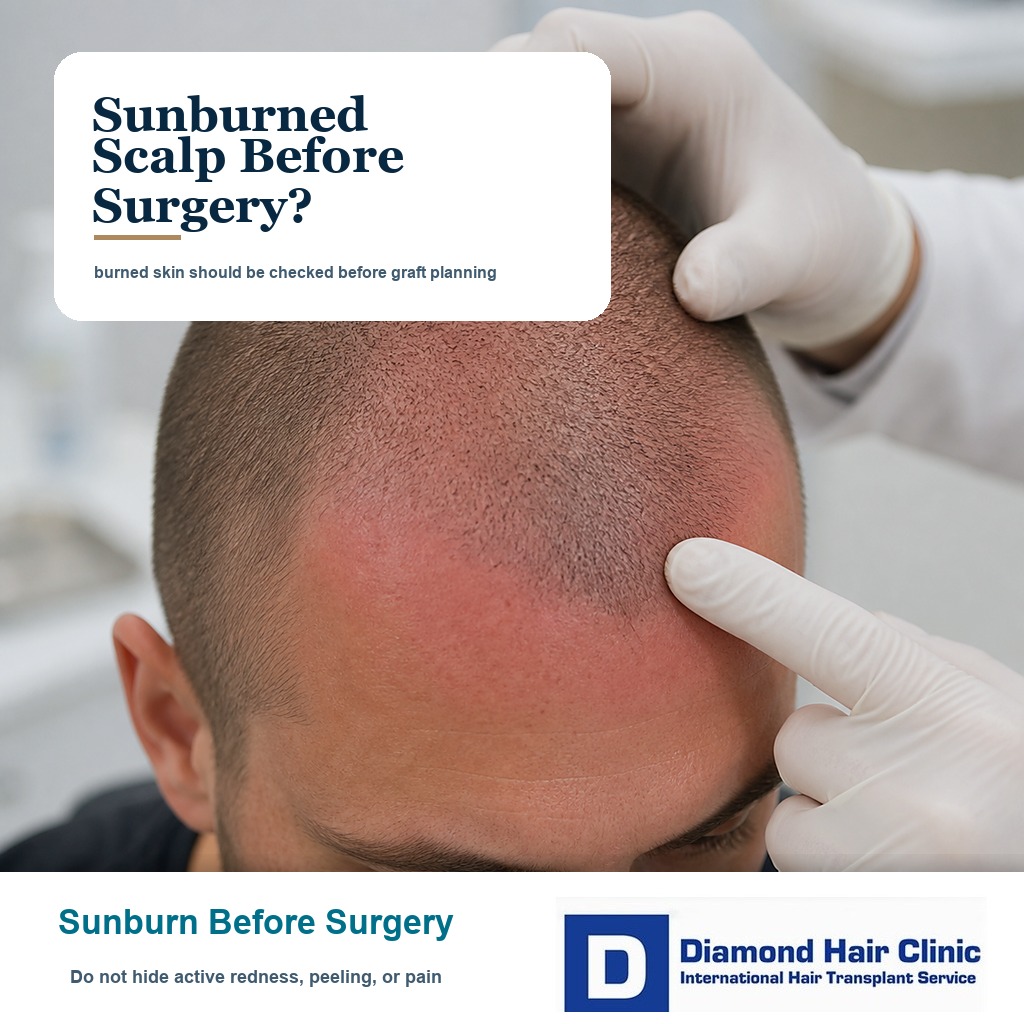
Sunburned Scalp Before FUE Surgery
Active burn, peeling, or heat should be separated from ordinary light exposure before the timing decision is made.
Many mild scalp sunburns settle within several days. A stronger burn with tenderness, peeling, swelling, or blisters can need one to two weeks or longer before surgery is sensible. The booking matters less than whether the skin can tolerate anesthesia, extraction, recipient area work, cleaning, and early healing without adding avoidable burn or irritation risk.
Sunburn timing signal map
Which sunburn sign changes surgery timing?
Choose the closest scalp finding before deciding whether photos, waiting, or local medical care are needed.
Share clear photos and explain the timing. Do not judge sunburn recovery by the calendar alone, because the skin still has to look and feel calm.
Do not judge sunburn recovery by the calendar alone. The skin may need more time before anesthesia, extraction, recipient work, cleaning, and early healing.
This usually changes the surgery plan until the surface closes and can be washed without pain, bleeding, or new irritation.
Get local medical care and inform the clinic. These signs are not a normal scheduling detail, and surgery timing should not be the first priority.
Share photos before adding more sun, beach time, sunscreen, hats, or cover products, and say whether the redness is fading, staying the same, or spreading. Travel does not make inflamed scalp safe for surgery.
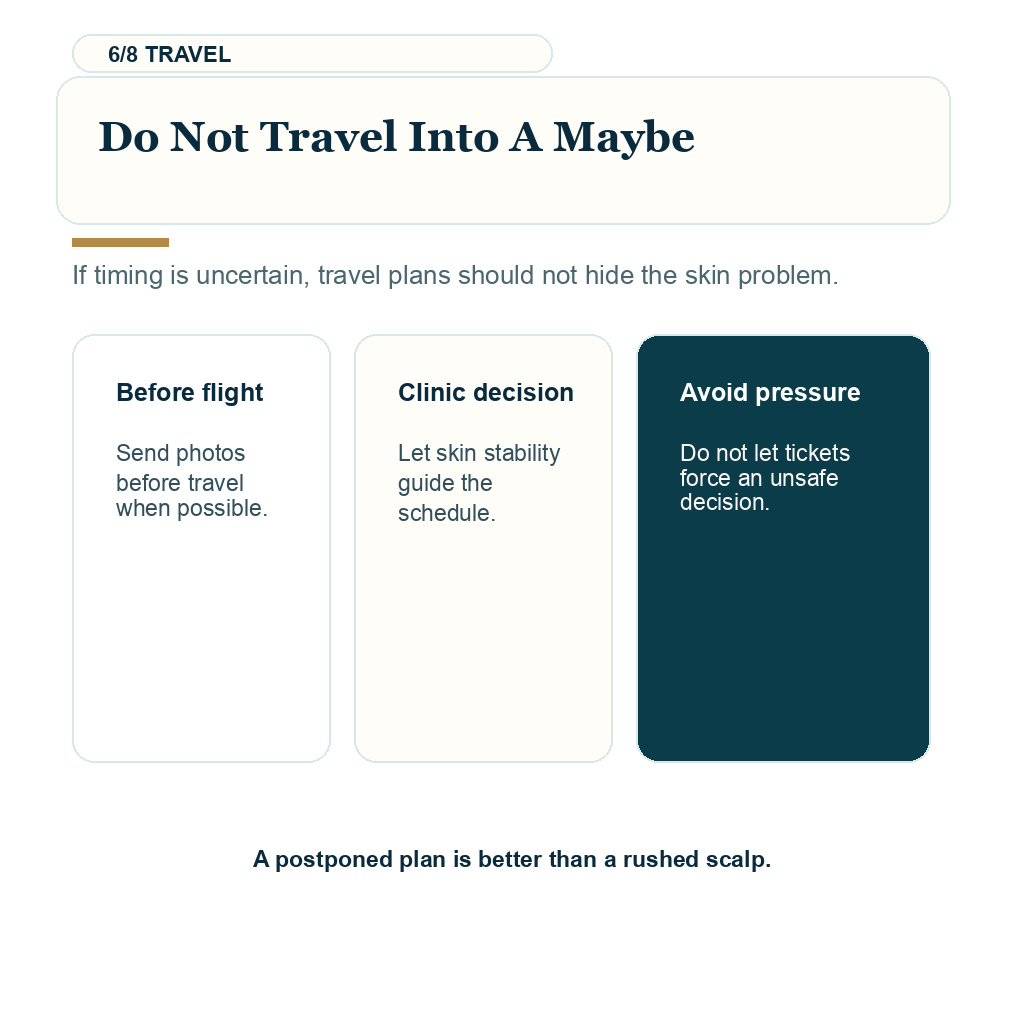
Send the burn photos before you travel when the redness sits in the planned donor or recipient area. It is better to adjust timing early than discover on surgery morning that the skin is not ready.
Surgeon checkpoint The booking matters less than whether the skin can tolerate surgery and early healing without avoidable irritation.
Sunburned scalp is already inflamed before surgery
Hair transplant surgery asks the skin to tolerate a lot in one day. The donor area has to handle shaving, local anesthesia, many tiny extraction points, and hours of manipulation. The recipient area has to tolerate incision creation, graft placement, cleaning, and the first stage of healing. When the scalp is sunburned, that surface is already inflamed before the operation begins.
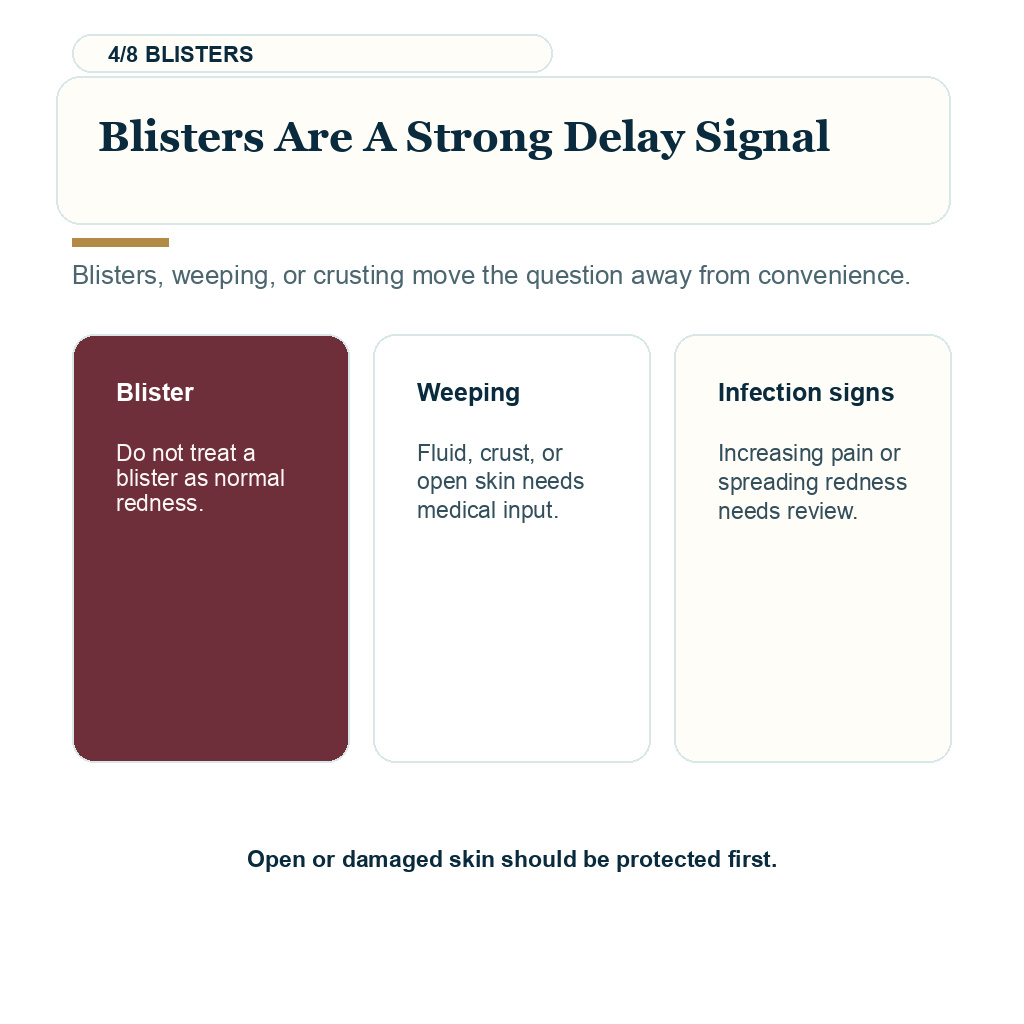
That changes how I judge the day. Tight, hot, tender, itchy, swollen, or peeling skin is not the same as settled skin. If blisters appear, the injury is deeper and open skin or infection becomes a more serious concern. I do not want to add thousands of controlled surgical wounds to skin that is already injured.
This is different from the question of when you can go in the sun after a hair transplant. That page is about protecting healing grafts after surgery. The issue here is whether the scalp is suitable before the procedure begins.
Pain, heat, swelling, peeling, or blisters can delay surgery
Surgery normally waits if the planned donor or recipient area is painful, hot, swollen, blistered, peeling, crusted, weeping, or clearly more inflamed than the surrounding skin. Fever, chills, spreading redness, discharge, or feeling generally unwell makes the decision more urgent because the burn may no longer be only simple sun irritation.
If there are large blisters, pus, red streaking, worsening pain, fever, chills, dizziness, nausea, confusion, or dehydration symptoms, the priority is medical assessment, not a hair transplant decision. Those signs should be reviewed before travel or surgery is discussed again.
Photo embarrassment should not drive the decision. The medical question is whether the skin can safely tolerate controlled trauma. A transplant creates many small wounds. If those wounds are added to burned skin, healing may become less predictable and the early appearance after surgery becomes harder to interpret.
Location changes the answer. A burn only on the forehead is not judged the same way as a burn across the planned hairline, crown, or donor area. A burn in the recipient area can make skin quality, incision planning, and hairline design harder to judge. A donor area burn can make extraction more uncomfortable and place small wounds into irritated skin.
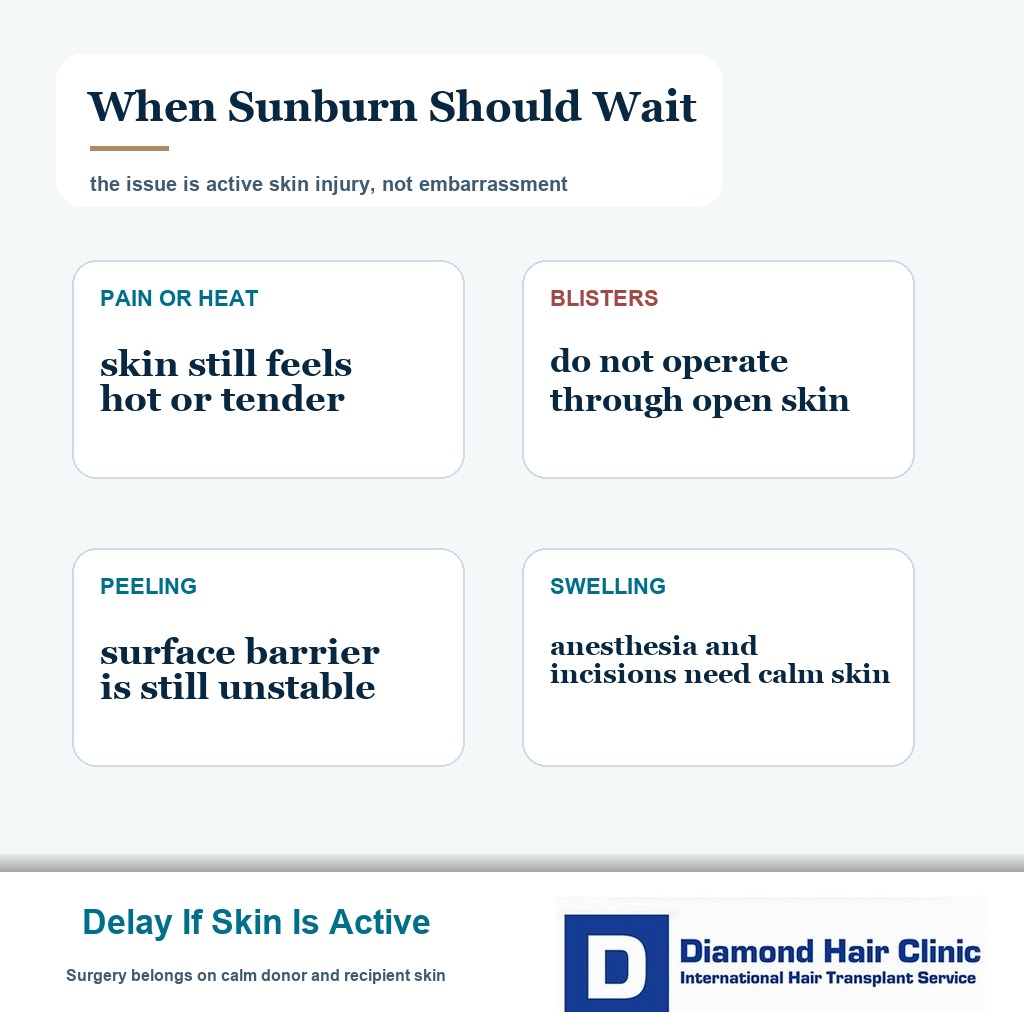
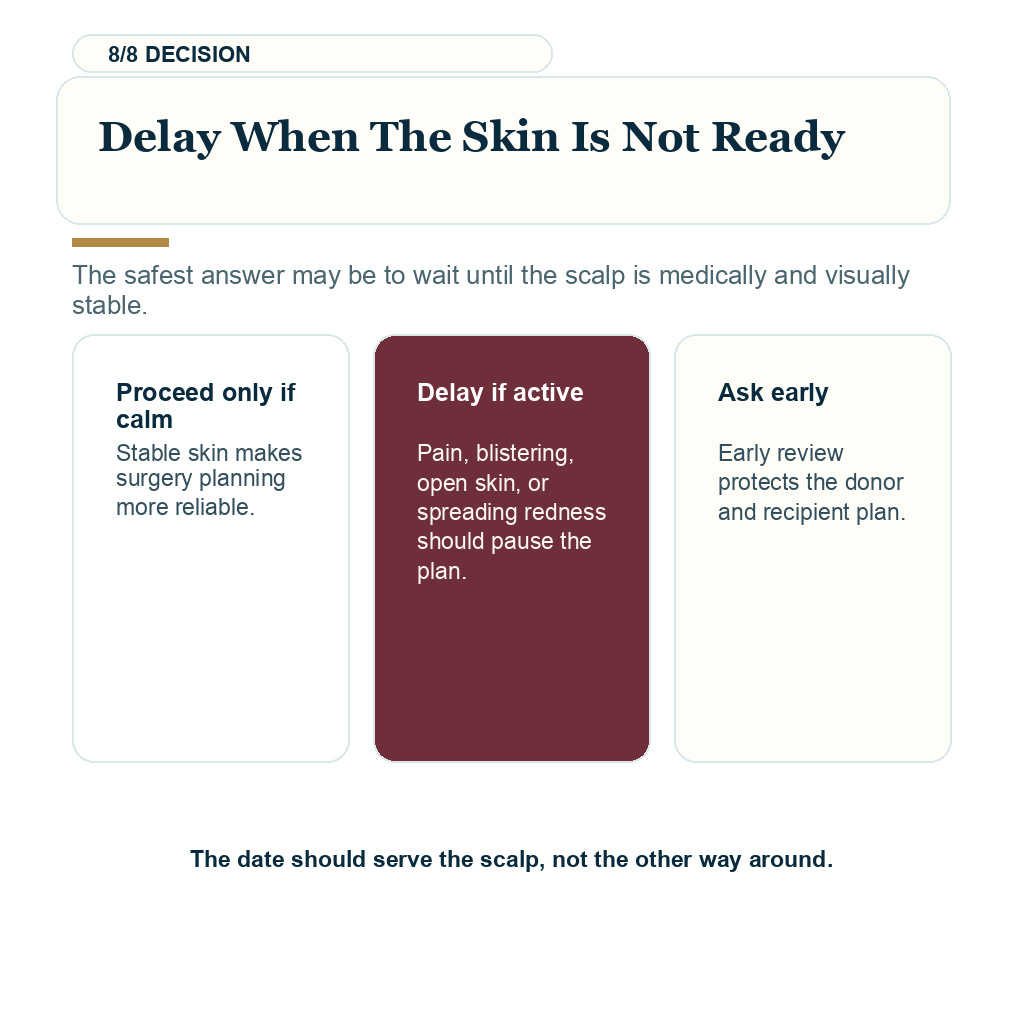
Active heat, pain, peeling, blistering, or swelling should be checked before surgery is allowed to continue.
Waiting time depends on how the skin is healing
There is no fixed number that fits every scalp. A mild burn that is only slightly pink and no longer tender may settle within a few days. A moderate burn with peeling, tenderness, or swelling can require one to two weeks or longer. A blistering burn is a stronger warning sign and should not be hidden just to keep a surgery date.
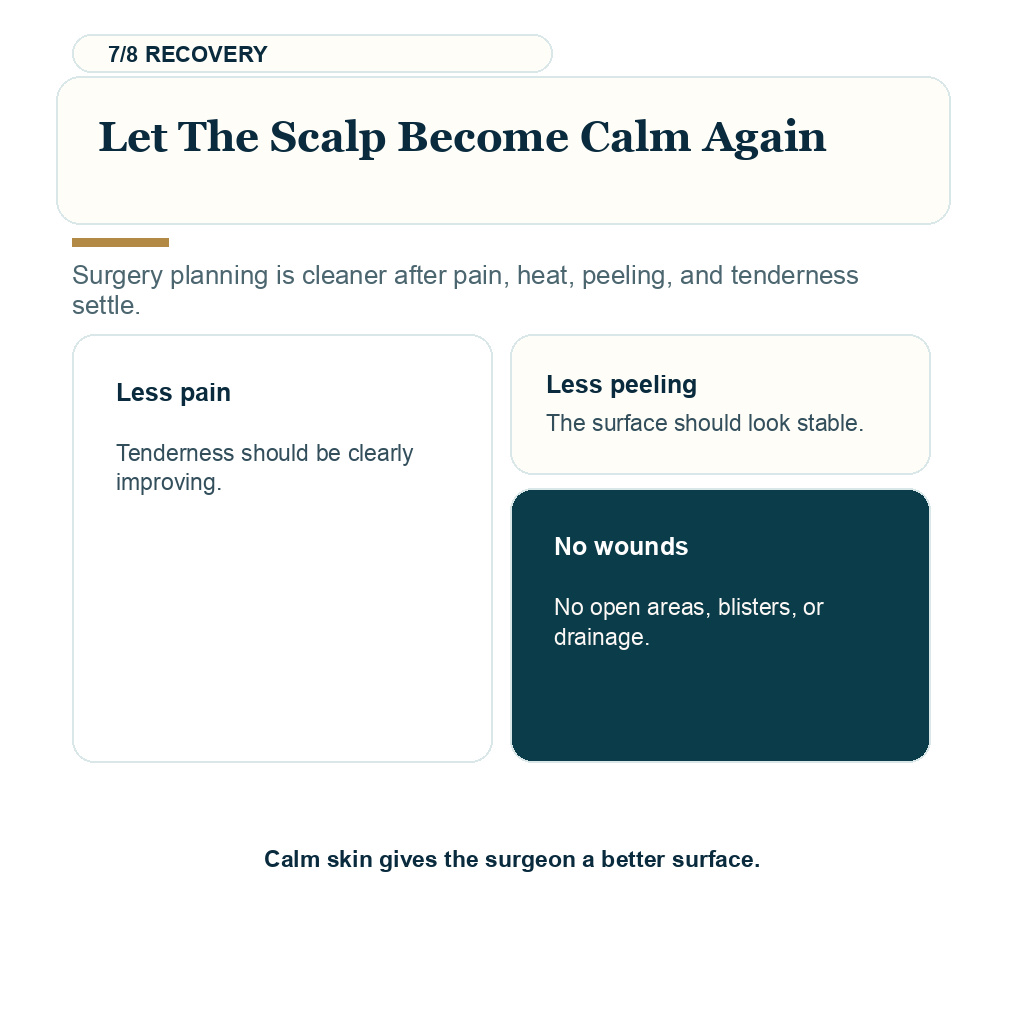
Before surgery, the skin should no longer feel hot, painful, swollen, tight, or itchy from the burn. There should be no blisters, no open areas, no wet skin, no crusting, and no active peeling in the area that will be operated on. If only the forehead is affected, that is different from a burn across the planned donor or recipient area.
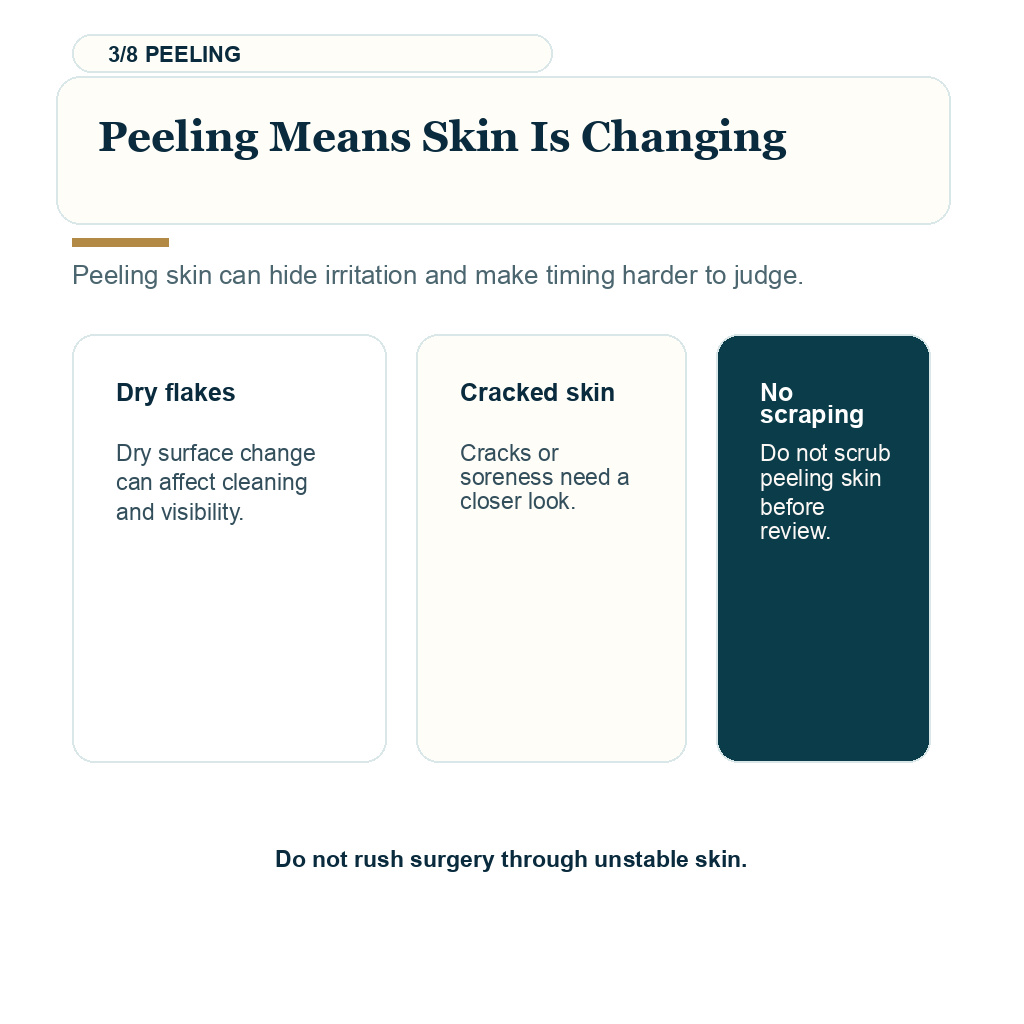
Do not peel the skin, open blisters, scrub flakes away, or test shaving on an irritated scalp just to see if it is ready. If the clinic needs the area shaved or closely trimmed, that should wait until the skin can tolerate light touch and gentle washing without pain.
If your surgery is already scheduled and the burn happens close to travel, share clear photos immediately. Do not wait until the morning of surgery. A safe postponement is frustrating, but it is better than trying to force a procedure through damaged skin.
The direction of the skin matters more than the calendar alone. Less heat, less tenderness, and less swelling from one day to the next is reassuring. Increasing shine, itching, pain, peeling, or darker inflamed color is not. Calendar timing matters, but the trend matters more.
Tender skin is not ready just because redness is fading
Color alone is not enough. A scalp can look less red in photos and still be too tender, hot, tight, itchy, or fragile for surgery. This matters even more when redness is harder to see on darker skin, because symptoms may tell more than the photograph.
Before surgery, the scalp should tolerate gentle washing, light touch, and the planned shaving or trimming without pain. If ordinary preparation would hurt, the skin is probably not ready for local anesthesia, extraction, or recipient area work. Letting the skin finish healing and then reassessing the donor and recipient areas gives the surgeon a calmer surface to examine.
If the burn happened close to travel, follow the clinic’s instructions before hair transplant surgery and send updated photos instead of trying to solve it with extra creams, concealer, or another day in the sun.
Photos before travel should show the whole surgical area
Use bright natural light without filters. Include the frontal hairline, the top of the scalp, the crown if it is part of the plan, both sides, and the back donor area. The clinic needs to see whether the sunburn is only on the forehead, directly in the future recipient area, across the donor area, or spread over the whole scalp.
Describe symptoms plainly. Say when the burn happened, whether the skin hurts, whether it feels hot, whether it is peeling, whether there are blisters, and whether the area is improving or worsening. If you have applied creams, oils, aftersun products, steroid creams, antibiotic creams, or pain medicine, mention that too. Do not try to make the scalp look better for photos with concealer, heavy moisturizer, powder, hair fibers, wet hair, or a fresh layer of product.
The best photo set is a bare, dry scalp after gentle washing, not immediately after aftersun, aloe, oil, sunscreen, or moisturizer has been applied. If the product changes the shine or color, take one photo before product and explain what you used afterward.
This matters more when you are traveling to Turkey. Timing and medical review matter when planning how many days to stay in Turkey after a hair transplant. Before travel, early review matters. Nobody benefits if the scalp problem is discovered only on the surgery morning.
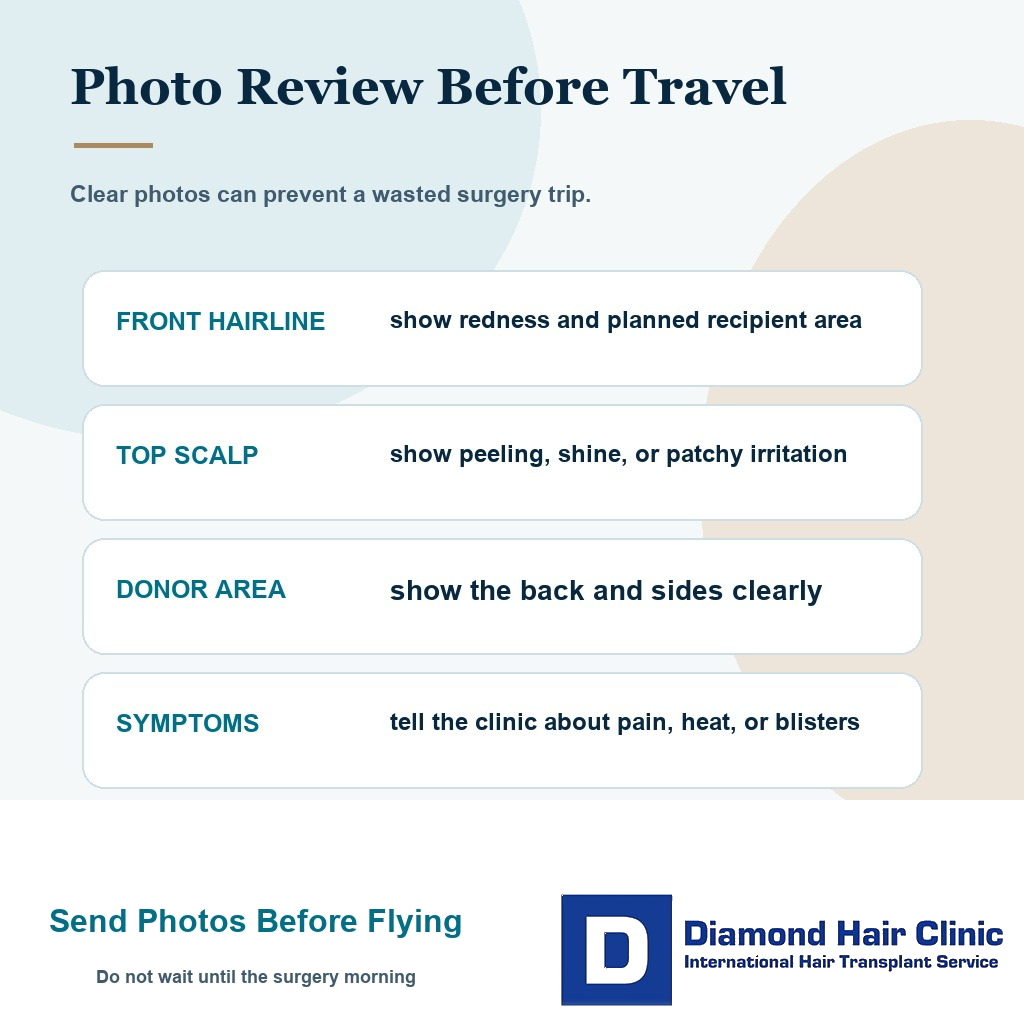
Clear photos before travel help the clinic judge whether the scalp is calm enough for surgery or needs more time.
Use the 8 sunburned scalp readiness slides below to separate redness, pain, peeling, blisters, photo review, travel timing, recovery stability, and delay triggers. Swipe sideways, use the arrows, or choose a number below the image.



Sunburn before surgery does not kill grafts that are not placed yet
A sunburn before surgery does not kill grafts that have not yet been transplanted. The concern is more practical. It can make the surgical skin less suitable on the day of the procedure, which affects comfort, visibility, wound behavior, and how confidently the plan can be carried out. The skin findings matter more than the original booking date.
After grafts are placed, the question becomes more sensitive. Newly transplanted skin is healing from many small incisions, and UV injury can add inflammation, pigmentation changes, delayed healing, or unnecessary anxiety. The timing of when grafts become secure after a hair transplant and sun protection guidance both matter for that reason.
Still, do not judge everything from one close photo. Redness can come from surgery, sun exposure, product irritation, swelling, folliculitis, dermatitis, or early infection. Share photos and symptoms so the clinic can judge the pattern, not only the color.
Sunburn after surgery needs review by symptoms
If the sunburn happens after surgery, contact the clinic and describe the timing. The concern is highest when the burn affects the recipient area during early healing, especially with pain, blistering, open skin, discharge, increasing redness, swelling, or fever.
Do not scratch, peel, scrub, or pick at burned skin over a transplanted area. Do not pull loose flakes away to inspect the grafts. Blisters should not be opened at home. Do not apply random creams, oils, alcohol based products, or medicated lotions unless your clinic approves them. Mild pinkness with no pain is one situation. Worsening heat, pain, swelling, wet skin, or discharge is a different situation.
The existing pages on redness, scabs, or pimples after a hair transplant, infection signs after a hair transplant, and black scabbing or possible necrosis after a hair transplant explain why worsening symptoms should not be dismissed as ordinary redness.
Sunscreen cannot cover an active burn for surgery
Before surgery, sunscreen is a protection tool, not a cover for active irritation. If the scalp is already burned, the first step is shade, cooling, and time for the skin to settle. If the skin is peeling, painful, blistered, or wet, adding more products can irritate it further and make the assessment less clear.
Avoid alcohol based sprays, numbing sprays, acids, retinoids, harsh dandruff products, and unapproved medicated creams on the burned scalp before review. A product reaction can look like sunburn, and sunburn can look worse after the wrong product.
If surgery is close, avoid deliberate tanning, tanning beds, long beach days, and uncovered sun exposure on the scalp. Do not test a new sunscreen or aftersun product on irritated scalp skin just before surgery. The page about going to the beach after a hair transplant is mainly about timing after surgery, but the same conservative idea matters before surgery. The scalp should arrive settled, not freshly burned.
After surgery, timing for sunscreen is a separate question because product contact with grafts matters. Follow the timing for when sunscreen can be used after a hair transplant instead of guessing from ordinary skin product habits.
Sunburn is not the same as eczema or folliculitis
Sunburn is a UV injury. Scalp eczema, psoriasis, seborrheic dermatitis, and folliculitis are different problems, so they should not all be treated as the same red scalp. The decision changes when there is scaling, open scratches, pustules, painful bumps, drainage, or a condition that keeps flaring.
I separate simple sun redness from active scalp disease. The pages about scalp eczema and hair transplant surgery and folliculitis before hair transplant surgery explain why inflammation needs the right diagnosis before surgery.
When redness could be sunburn, dermatitis, infection, or product irritation, do not diagnose it alone from internet images. Share photos and symptoms. In some cases, dermatologist review is safer than keeping the date and hoping the skin behaves normally.
Sunburn discovered in Turkey still needs to be disclosed
Tell the clinic before the procedure starts, preferably before you leave the hotel for surgery. Do not cover the redness with a cap, hair fibers, powder, concealer, or heavy product. Do not arrive hoping that nobody notices. A surgeon needs accurate skin information to protect the donor area and recipient area, especially if the skin is painful, blistered, wet, or still peeling. When the issue is product or cosmetic cover on surgery morning, FUE morning starts with clean skin gives the cleaner route for disclosure and clinic review.
A balding or closely shaved scalp can burn faster than patients expect because there is less hair between the skin and the sun. Do not wait for surgery day to reveal that the skin is hot, peeling, tender, or covered by a new rough patch. The useful step is early disclosure, fresh photos, and no extra sun while the scalp settles.
If you are already in Turkey, show the photos before coming to the clinic if possible and keep the scalp shaded while waiting for instructions. Do not use another beach day, sauna, steam room, pool, or tanning session to make the trip feel worthwhile after the burn has already happened.
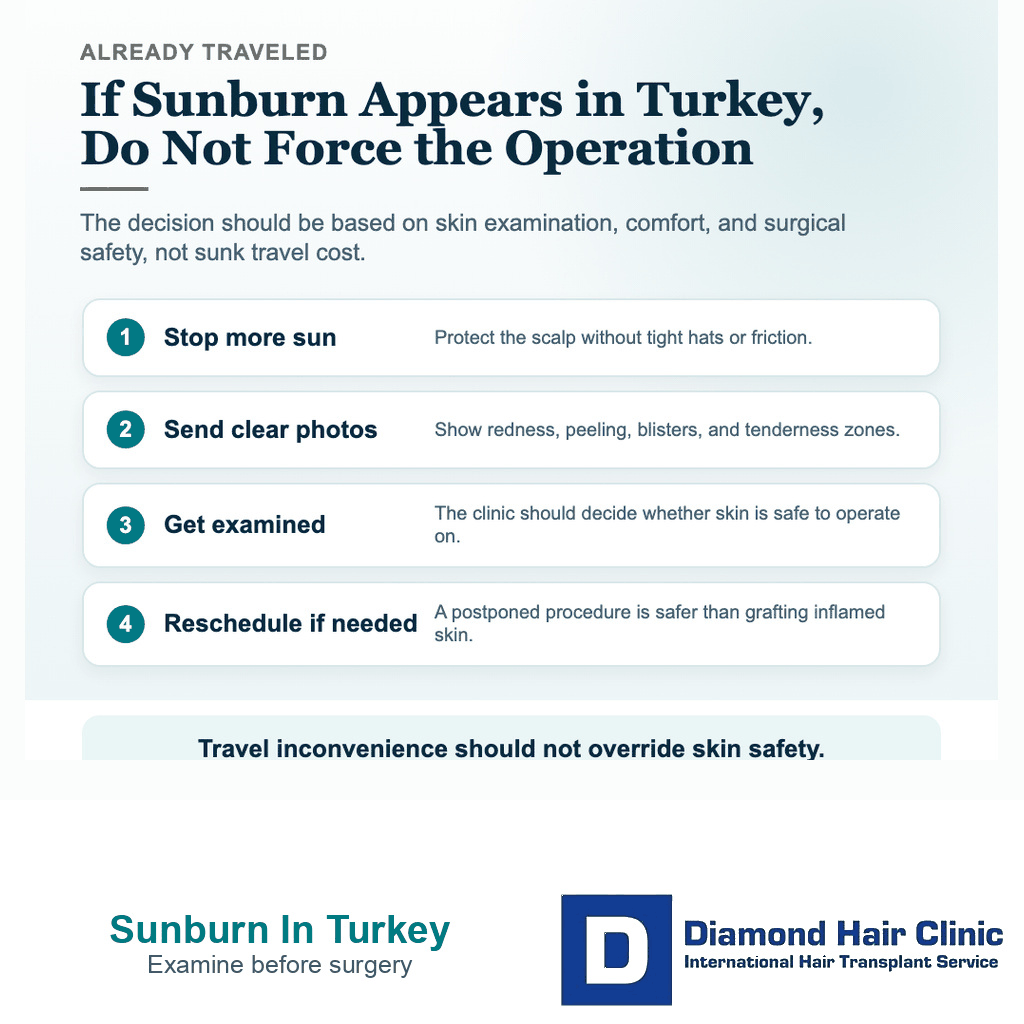
If the burn is mild and settling, the surgeon may examine the scalp and decide that the procedure can continue. If the burn is active, the responsible decision may be to postpone, adjust the plan, or wait until the skin is safer. The answer depends on the location and severity of the burn, not only on the calendar.
If you are traveling alone, be practical about this early. A delayed procedure may change hotel nights, flight timing, transfer arrangements, and who can help if you need review. Recovery logistics matter when traveling alone to Turkey for a hair transplant.
Flying is different from adding more sun exposure
If surgery is postponed because of sunburn, the priority is to avoid making the burn worse. Stay out of direct sun while the scalp heals. Use shade and loose protection that does not rub the burned area. Do not tan the scalp again while waiting for a new date.
Flying itself is not usually the problem when no surgery has been performed, but dehydration, heat, sweating, and more sun exposure can keep irritated skin unsettled. If surgery was performed, follow the clinic’s travel advice and the page about flying after a hair transplant instead of treating it like a normal trip.
Small decisions can protect the whole plan. Avoid long walks under strong sun before surgery. Avoid sightseeing without scalp protection. Do not gamble with a planned recipient area just because the date is close.
Burned skin has to look calm on surgery day
The scalp should be seen clearly before surgery goes ahead. A safe hair transplant depends on more than graft numbers and a planned hairline. It depends on the condition of the donor skin, recipient skin, medical history, current inflammation, and whether the recovery instructions can be followed properly.
When flights, hotel, and time away from work are already arranged, postponement can feel like losing control of the plan. I understand that pressure. But donor grafts are limited, and recipient skin has to heal predictably. If the surface is not suitable today, protecting the operation matters more than protecting the appointment date.
If the skin is comfortable, intact, settled, and no longer reacting, surgery may still be reasonable. If the scalp is painful, blistering, peeling, swollen, hot, infected, or worsening, postponement protects you and the result. A delayed surgery is not a failure. Sometimes it is the correct medical decision.
Do not hide scalp sunburn before a hair transplant. Share clear photos early and describe the symptoms clearly, so the surgeon can judge whether the skin is ready. The aim is not to keep a date at any cost. The aim is to operate on skin that can heal predictably.
Even without a dramatic burn, sun or heat can make healing skin look more reactive. The pink recipient area after sun or heat article helps you document flares and decide when review photos are needed.

Read this review excerpt
Every single one of my questions was answered and they made sure I had all the details I needed to make an informed decision.