



Harmful Ingredients in Hair Products
After surgery, a hair product question is usually a healing question before it is a cosmetic one. You are asking whether shampoo, conditioner, hair dye, styling spray, scalp treatment, or heat and airflow from a hair dryer can disturb the transplanted area, irritate the donor area, or affect the final result.
When a product reaction matters before FUE
This is the same product family, but the timing question is earlier. If shampoo, conditioner, styling spray, scalp treatment, or dye leaves burning, redness, flakes, or residue before surgery, review the surgical timing issue in product irritation before FUE.
The answer should be practical, but not careless. Most ordinary hair products will not destroy healthy transplanted grafts once the scalp has healed. The practical distinction is timing, scalp contact, and how strongly the product makes the skin react. A mild rinse off shampoo used at the right time is very different from hair dye, bleach, chemical straightening, a leave on spray, or a strong medicated shampoo used too early. The wrong product can dry the scalp, trigger itching, worsen flakes, cause redness, make the skin burn, or push a patient to scratch a sensitive area. After surgery, that reaction matters more than the marketing claim on the bottle.
In recovery, a simple routine is safer than a crowded routine. You do not need ten complicated products. You need the recipient area and donor area clean, settled, and not overloaded while the skin is healing.
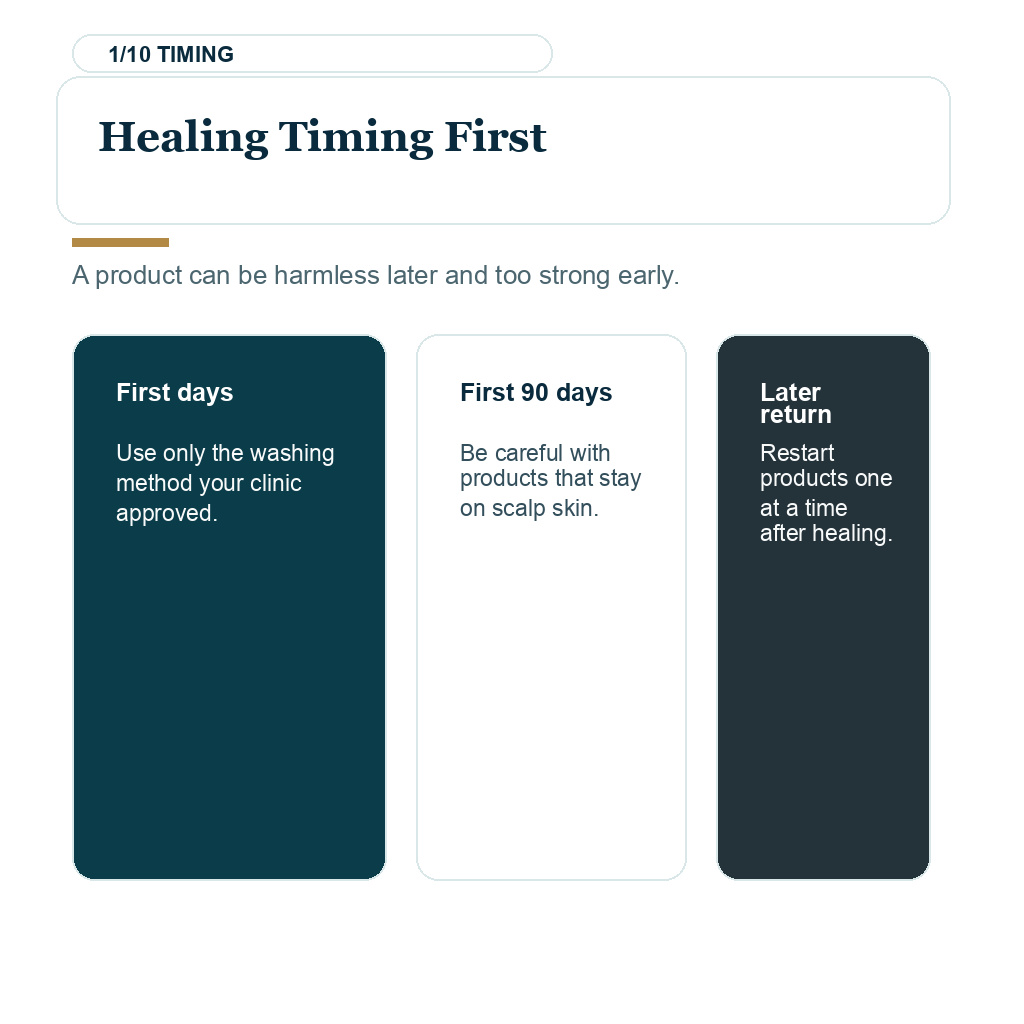
In the first 10 to 14 days, use only the products and washing method your clinic has approved. During the first 90 days, be especially careful with anything that stays on the scalp, changes hair color or texture, creates fumes, or forces stronger washing. After that, reintroduce products one at a time so the scalp reaction is easy to understand.
This guidance is not meant to make you afraid of every ingredient. Product choice should not become panic medicine. The useful approach is to know which ingredients deserve caution, which claims are exaggerated, and how to keep the scalp comfortable while it heals.
Product ingredients matter most while the scalp is healing
After a transplant, the scalp is not in its normal daily state. The recipient area has small healing sites. The donor area is also recovering. The skin barrier can be more reactive than usual, especially in patients who already have dandruff, eczema, psoriasis, contact allergy, or oily scalp problems.
At the beginning of recovery, the rule is strict. Use only what your clinic recommends. Avoid experimenting. Do not apply random oils, sprays, dyes, fibers, gels, retinoid or tretinoin formulas, or medicated shampoos on the transplanted area because the skin is still healing. This follows the same basic aftercare principle. The early scalp needs gentle handling, not aggressive product testing.
Later, when scabs are gone and the scalp is stable, the issue becomes less about graft survival and more about scalp comfort and long term hair quality. A harsh product may not kill a graft, but it can make the scalp irritated. An irritated scalp makes people scratch, wash too often, treat too much, and worry. That cycle is common, and it can make recovery feel much harder than it needs to be.
Ingredients that deserve the most caution first
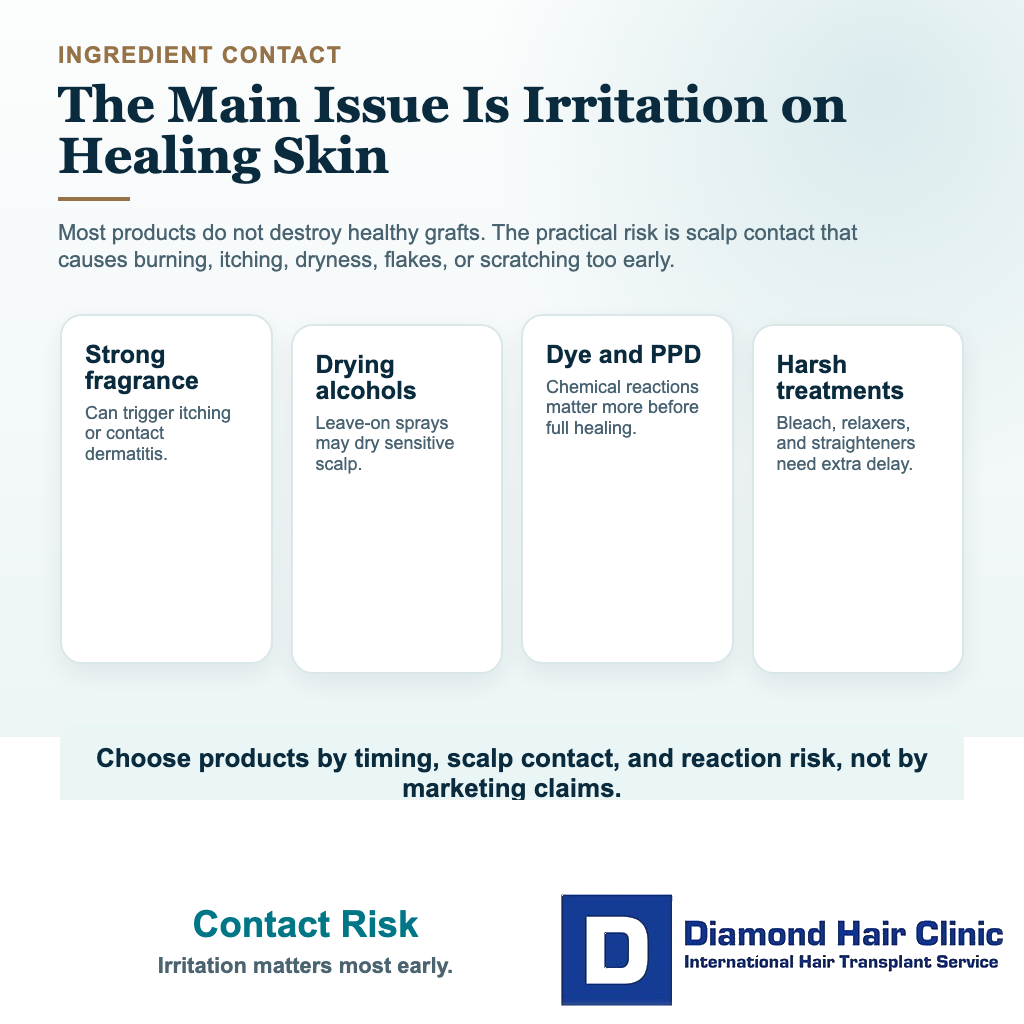
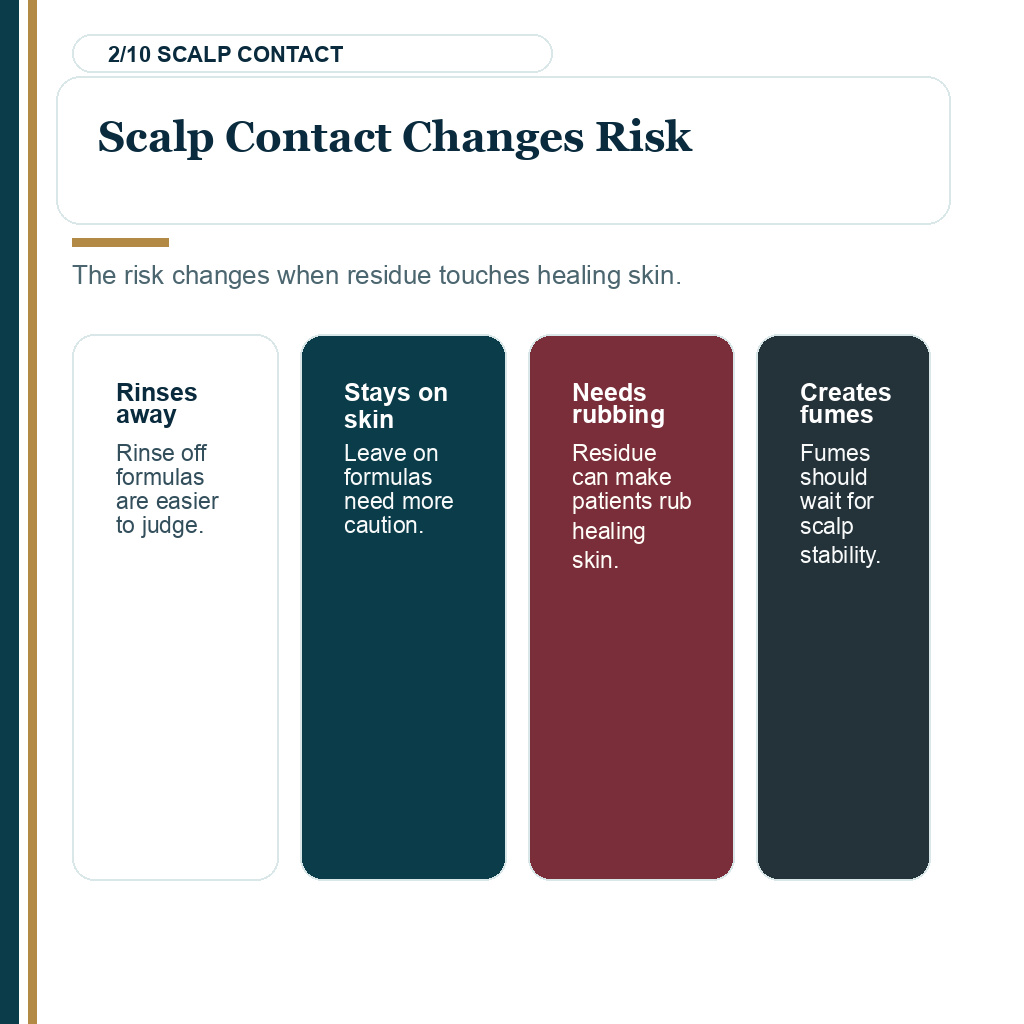
The ingredients are not all equal. After a hair transplant, the highest caution usually belongs to products that change the hair chemically, sit on the scalp for a long time, create strong fumes, or make the patient rub harder to remove residue.
That means hair dye with PPD, bleach, chemical straightening, keratin smoothing, formaldehyde releasing treatments, strong medicated shampoos used without guidance, alcohol heavy sprays or gels, and heavy styling products near the recipient area deserve more caution than an ordinary mild shampoo used correctly.
The second group depends on the patient. Fragrance, essential oils, preservatives, sulfates, silicones, mineral oils, and waxes may be tolerated by one person and irritate another. I judge those by the scalp response, the timing after surgery, and whether the product encourages itching, pimples, flakes, or aggressive washing.
Shampoo risk depends on timing and scalp reaction
A normal shampoo used at the right time does not usually damage properly anchored grafts. Patients often imagine that one ingredient in a shampoo can suddenly ruin the result. In real life, the bigger risks are poor surgical planning, traumatic graft handling, poor implantation, infection, heavy scratching in the early period, smoking, and not following proper aftercare.
Still, I do not ignore product ingredients. If a shampoo causes burning, redness, severe dryness, or heavy itching, it is not a good shampoo for that patient. If a patient has seborrheic dermatitis after hair transplant, the scalp may react differently from someone with normal skin. If a patient is using minoxidil or other treatments, the scalp may already be sensitive. Product choice should match the patient, not the marketing label.
The best product after a transplant is not the fanciest one. It is the one that does not make your scalp react.
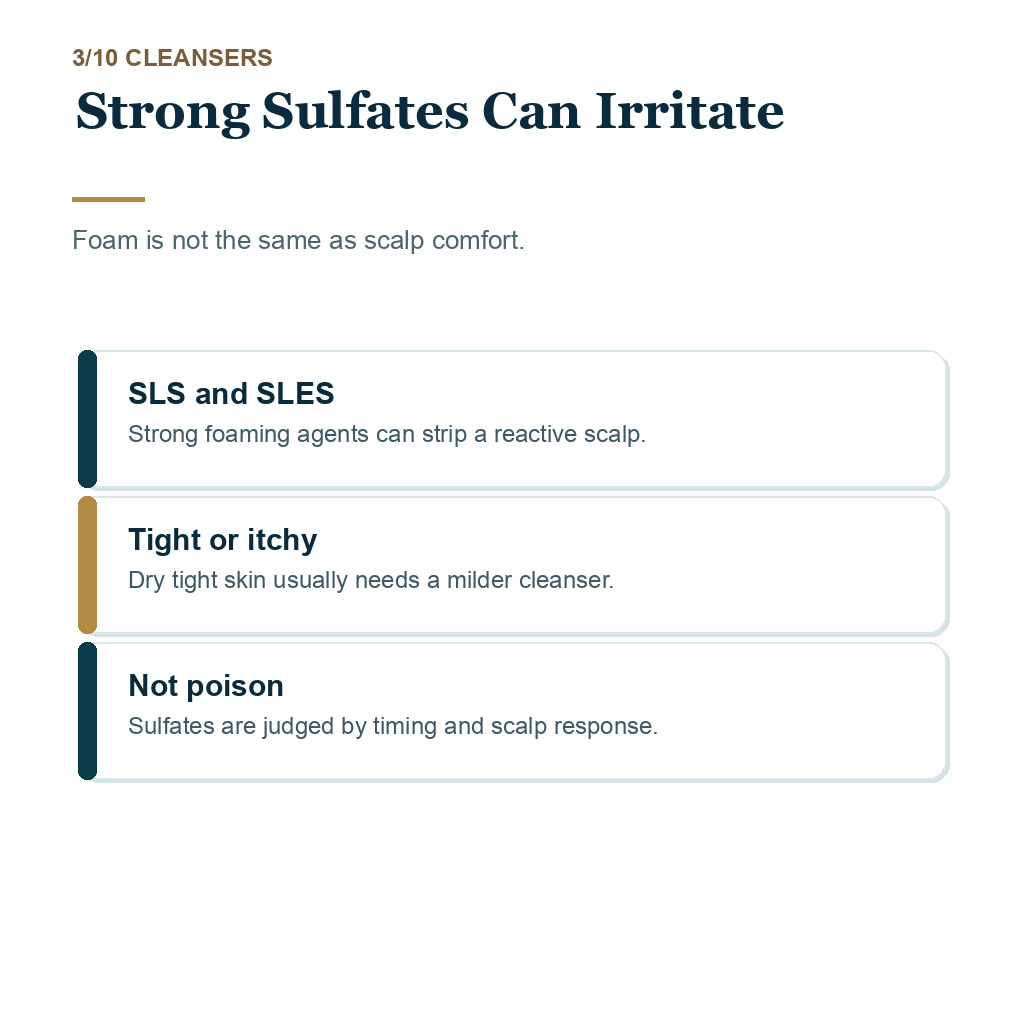
Sulfates can be too strong for a reactive scalp
Sulfates are cleansing agents. They help shampoo foam and remove oil. The most common names patients see are sodium lauryl sulfate, sodium laureth sulfate, and ammonium lauryl sulfate.
Sulfates are not poison. That would be inaccurate. Some people use sulfate shampoos for years without any visible scalp problem. But after a hair transplant, and especially in patients with a dry or reactive scalp, these ingredients can be too strong. They may remove too much oil, leave the scalp tight, and make itching or flaking worse.
For the early recovery period, a gentle cleanser is usually the better starting point. For some patients, a mild sulfate free shampoo is more comfortable. This is especially true if the patient has redness, dryness, or a history of scalp irritation. Later, if the scalp is fully settled and the patient tolerates a regular shampoo, there is no need for extra fear. The decision should come from the scalp response.
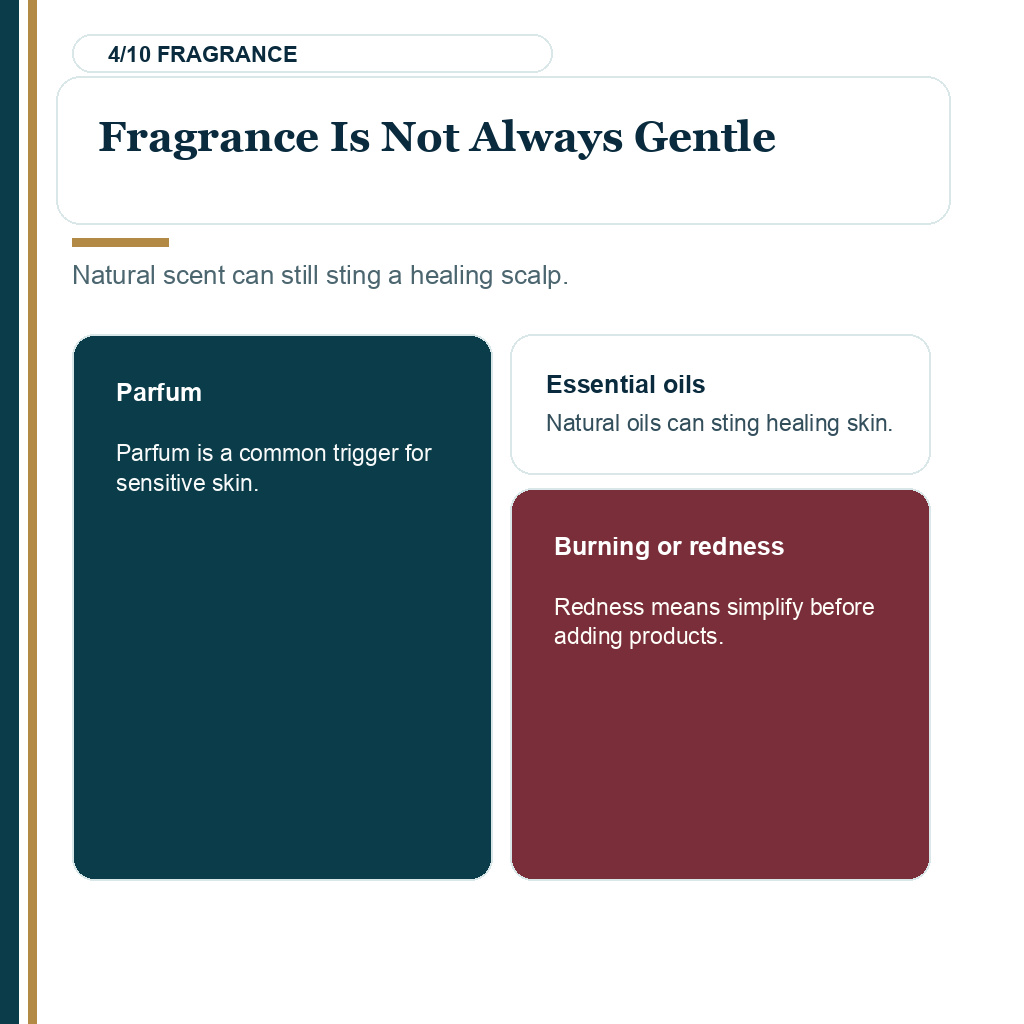
Fragrance and parfum often cause scalp reactions
Fragrance is one of the most common reasons a product feels pleasant in the bottle but unpleasant on the skin. On a label, you may see fragrance, parfum, aroma, essential oil blend, limonene, linalool, citronellol, or similar names.
The difficulty is not only synthetic fragrance. Natural fragrance can irritate too. Tea tree, peppermint, rosemary, lavender, menthol, and citrus oils may sound gentle, but on a healing or sensitive scalp they can sting. I see many patients assume that natural automatically means safer. It does not.
If your scalp burns, itches, or becomes red after a product, simplify the routine instead of adding another product to fight the reaction. Choose a fragrance free product for a period of time and watch the scalp. For transplant patients, this is often a very practical step.
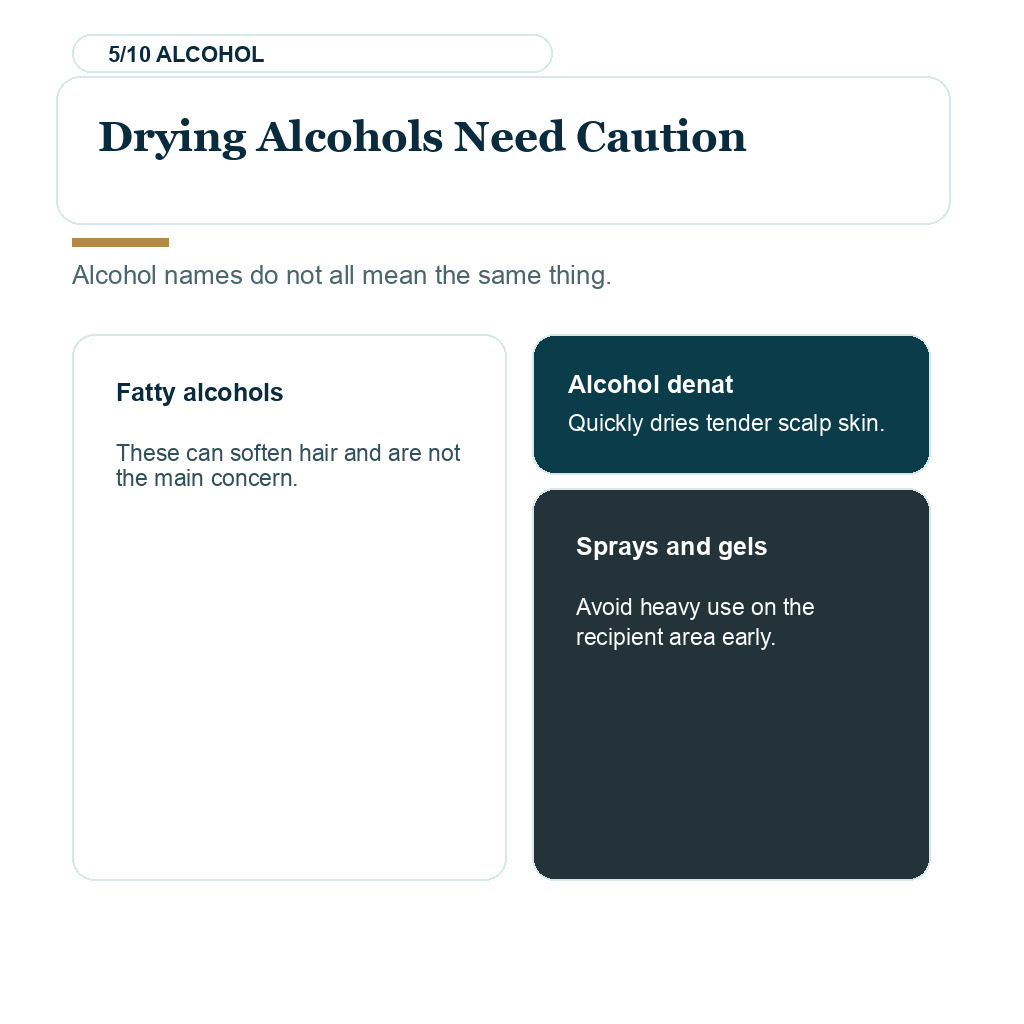
Drying alcohols can make itching worse
Alcohol is a confusing word on labels because not every alcohol behaves the same way. Fatty alcohols such as cetyl alcohol and stearyl alcohol can be used in conditioners and may feel softening. These are not usually the problem.
The drying alcohols worth watching more carefully include alcohol denat, SD alcohol, ethanol, and isopropyl alcohol, especially when they appear high on the ingredient list. They are common in sprays, gels, quick drying styling products, and some scalp solutions.
After a transplant, alcohol heavy styling products on the recipient area deserve caution during early healing. They can dry the skin and make itching more intense. If you are using a scalp treatment such as minoxidil, timing should follow your surgeon’s plan, especially if stopping minoxidil before a hair transplant is part of the protocol.
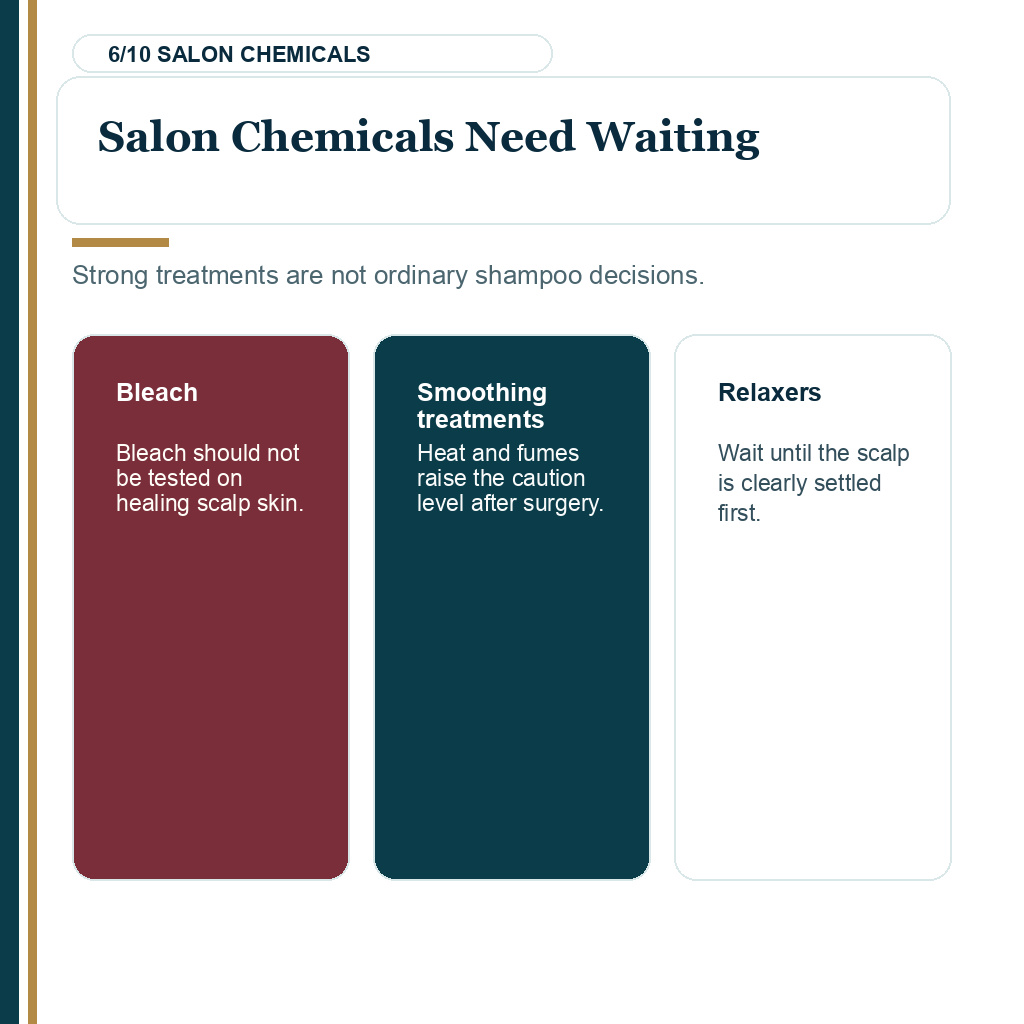
Formaldehyde releasing treatments need stricter caution
Formaldehyde releasing hair smoothing and straightening treatments deserve a different level of caution. These are not ordinary shampoos. They may involve heat, fumes, strong chemicals, and prolonged scalp exposure. On labels or product information, patients may see names such as formaldehyde, formalin, methylene glycol, paraformaldehyde, DMDM hydantoin, imidazolidinyl urea, diazolidinyl urea, or quaternium 15.
Do not do chemical straightening, keratin smoothing, relaxers, or aggressive salon treatments around the transplant period. Even months later, extra caution is sensible if the scalp still feels sensitive. The transplanted area is not the place to test a strong salon process. For timing, heat, and stylist instructions, review keratin, perms, relaxers, and flat irons after FUE before booking the salon.
If a product needs strong heat to seal it into the hair, or if it creates eye burning, throat irritation, scalp burning, or strong fumes, it is not a gentle choice for someone protecting a surgical result.
Hair dye and PPD need careful timing
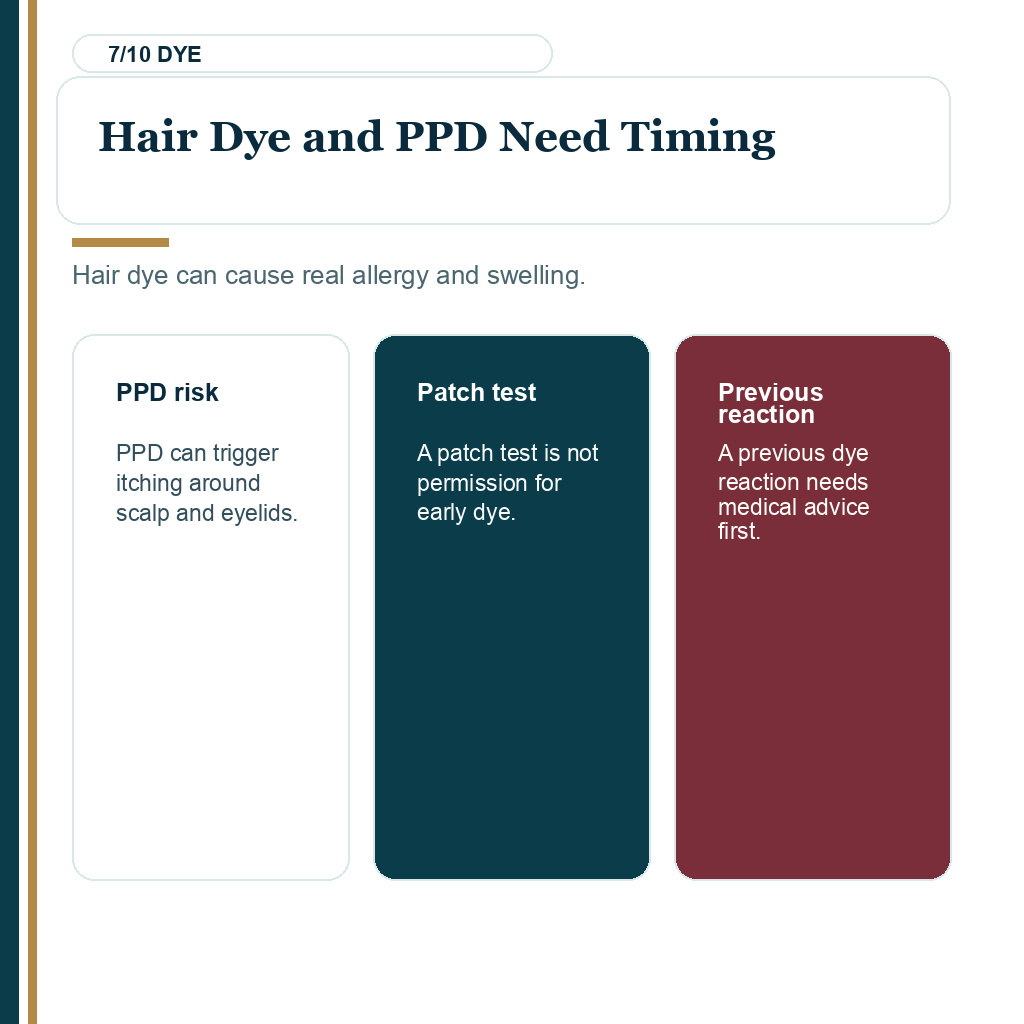
Hair dye deserves careful discussion because it can cause real allergic reactions. The ingredient I pay close attention to is paraphenylenediamine, often called PPD. It is used in many permanent darker hair dyes.
A mild reaction can look like itching around the scalp, ears, forehead, or eyelids. A stronger reaction can create swelling, redness, crusting, and serious discomfort. This matters after hair transplant because patients may want to dye their hair to blend the new and native hair, but timing has to be respected.
It is usually safer to wait until the scalp has fully healed before dyeing the hair. If there is any redness, sensitivity, pimples, dermatitis, or open irritation, wait longer. A patch test can reduce risk, but it is not permission to dye a healing scalp early. If you have reacted to hair dye before, do not test your luck on a healing scalp. Speak with a dermatologist or your surgeon first.
Parabens and phthalates are not always the main problem
Parabens and phthalates come up often because these names are everywhere in cosmetic marketing. I understand the concern, but I am deliberate about making a product decision from fear alone.
Parabens are preservatives. Some people prefer to avoid them, and some sensitive patients may react to preservatives in general. But in daily hair transplant practice, the bigger visible problems I see are usually irritation, dryness, fragrance reactions, medicated shampoo overuse, contact allergy, and heavy residue.
Phthalates may be used in fragrance related formulations, and they are not always easy for a patient to identify from the label. If a patient wants to reduce this exposure, the simplest practical step is to choose fragrance free products rather than only looking for a phthalate free claim.
So I keep the answer balanced. If you can choose a plain product without parabens, phthalates, and strong fragrance, that may be reasonable. But do not assume that a label saying clean, organic, botanical, or natural means the product is automatically better for your scalp.
Preservatives can trigger contact dermatitis
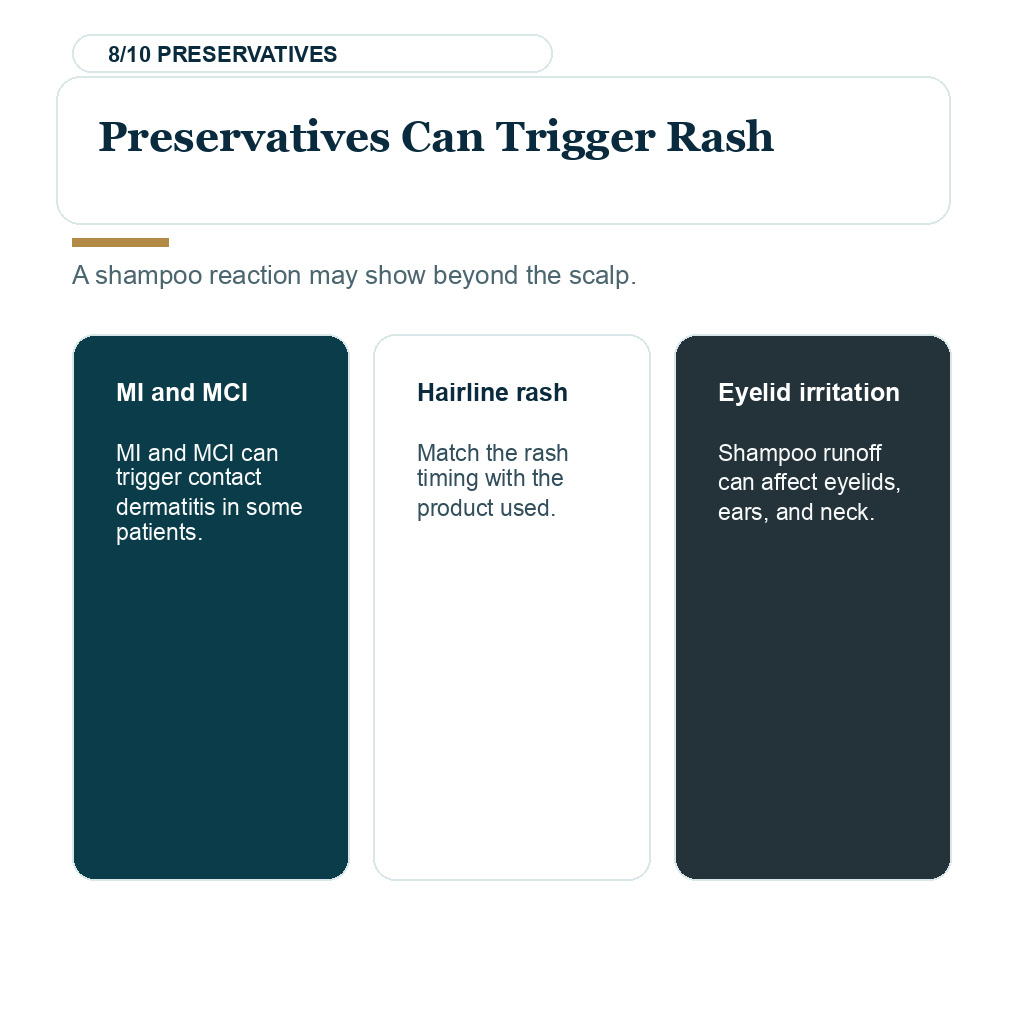
Preservatives are necessary in many water based products because they prevent contamination. But some preservatives are known to trigger contact dermatitis in sensitive people. The names patients should recognize include methylisothiazolinone, methylchloroisothiazolinone, formaldehyde releasers, and sometimes other preservative blends.
If you repeatedly get itching, redness, eyelid irritation, ear irritation, or a rash along the hairline after using a product, think about contact dermatitis. The reaction may not happen only where you apply the product. Shampoo can run over the forehead, ears, neck, and eyelids, so some patients do not immediately connect the rash to the shampoo.
After transplant surgery, if a product creates persistent irritation, stop it and contact your clinic. Do not keep applying more products to cover the reaction. The scalp usually improves faster when we remove the trigger and keep the routine plain.
Silicones, mineral oil, and waxes can cause buildup
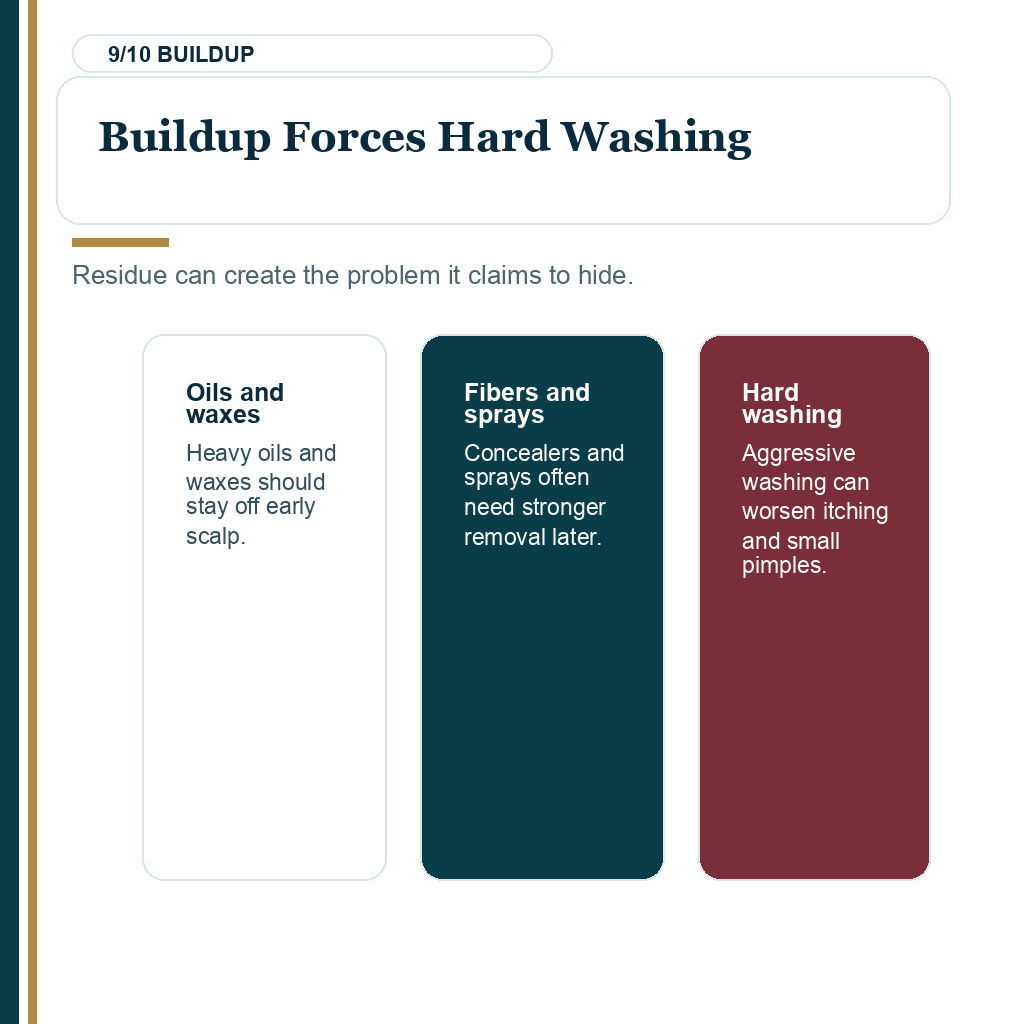
Silicones, mineral oil, petrolatum, waxes, and heavy styling creams are not simply dangerous. Many of them are used to make hair look smoother, shinier, and easier to manage. The difficulty is residue.
When a product leaves a heavy film, patients often need stronger shampooing to remove it. Stronger shampooing can dry the scalp. If residue sits on the scalp, it may also trap sweat and oil, which can aggravate itching or small pimples in some people. After a transplant, less buildup and less aggressive washing are usually better.
If you use styling products, keep them on the hair shaft rather than rubbing them into the scalp. Avoid the transplanted area early on. With hair fibers, sprays, and concealers, timing matters, especially because residue often needs firmer washing to remove. I explain that separately when discussing hair fibers after hair transplant.
Medicated shampoos need the right timing
Medicated shampoos can be helpful when they are used for the right reason. Ketoconazole, selenium sulfide, zinc pyrithione, salicylic acid, coal tar, and similar ingredients may be used for dandruff, seborrheic dermatitis, or scalp inflammation. The issue is not that they are bad. The issue is timing and frequency.
In the early period after surgery, I avoid patients using strong medicated shampoos on the grafts without guidance. Later, if the scalp is healed and there is dandruff or dermatitis, these products may be useful, but overuse can dry the scalp and hair. If seborrheic dermatitis flares while the usual shampoo is paused, leave oils and home mixtures out of the recovery routine. Keep the routine plain while the clinic reviews the product label and scalp reaction.
If you need medicines after surgery, or if you already use scalp treatments, follow a proper plan. Timing and individual planning matter with medications after hair transplant, because a useful treatment can still be irritating if it is used too early or too often.
Choosing a safer product after surgery
Use a plain method. Follow the exact washing instructions from your clinic during the early days. Once the scalp is healed enough for normal washing, choose a mild product with a short ingredient list and watch how your scalp behaves.
Do not judge a recovery kit by the clinic logo or package price. The full ingredient list should be readable, and every item should have a stated purpose. The clinic should also separate products required for early washing from optional products and explain whether the same active product is available separately. An opaque bundle should not be assumed necessary for graft survival.
Start with a gentle shampoo that is fragrance free, sulfate free, and not loaded with strong botanical oils. If you are prone to dermatitis, choose even more carefully. If you have a history of allergy, patch testing with a dermatologist can be very useful.
Foam, smell, and the word natural can all mislead. More foam does not mean better cleaning, a pleasant fragrance can still irritate skin, and a natural essential oil can still burn a sensitive scalp.
Popularity does not make a product safe for your scalp. The practical test is whether your scalp stays comfortable after using it.
Scalp warning signs after using a product
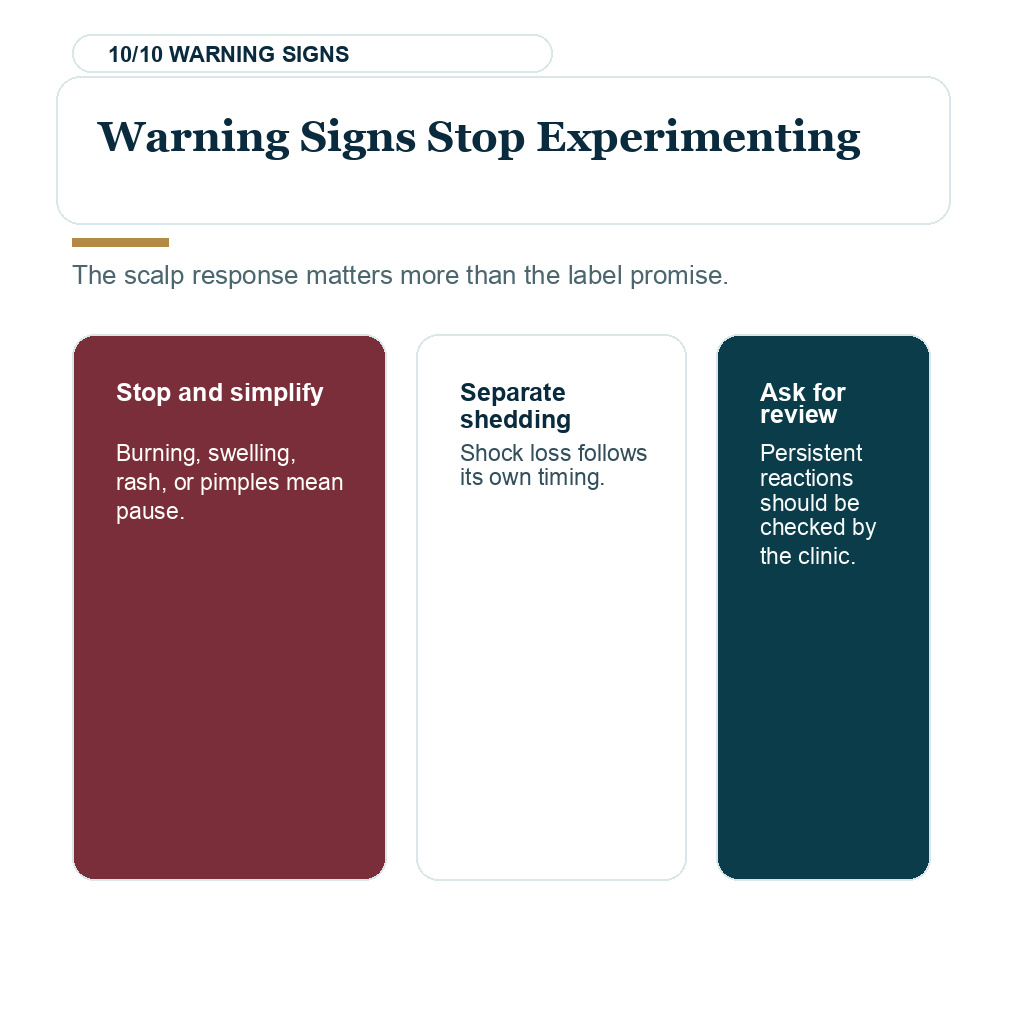
If a product does not suit you, your scalp usually gives you signals. Pay attention to burning, tightness, unusual redness, sudden itching, flakes that worsen after use, small pimples, swelling around the hairline, eyelid irritation, or a rash near the ears and neck.

I separate brief stinging that settles after rinsing from a reaction that keeps spreading, swelling, crusting, or making the patient scratch. The first may simply mean the product is too harsh for that moment. The second may be irritation or allergy that deserves medical advice.
For a clinic review, the useful details are the product name, ingredient list, timing, and one clear scalp photo. That record is better than trying several fixes at once.
Photograph the ingredient panel too, not only the front of the bottle. The marketing name rarely shows the part most likely to matter when a scalp reacts.
Some shedding can happen during the normal transplant timeline, especially during the shock loss phase. But if shedding appears together with burning, inflammation, scratching, or a new product reaction, the scalp should be checked rather than ignored. I am not trying to blame every shed hair on shampoo. The aim is to keep the skin healthy enough to support recovery.
A comfortable scalp does not replace surgical quality, but it is one quiet foundation of a natural transplant result.
Use the 10 product safety slides below to separate healing timing, scalp exposure, harsh cleansers, fragrance, drying alcohols, salon chemicals, hair dye and PPD, preservatives, buildup, and warning signs. Swipe the carousel, use the arrows one step at a time, or choose a number below the image to jump to that point.
Returning to normal hair products gradually
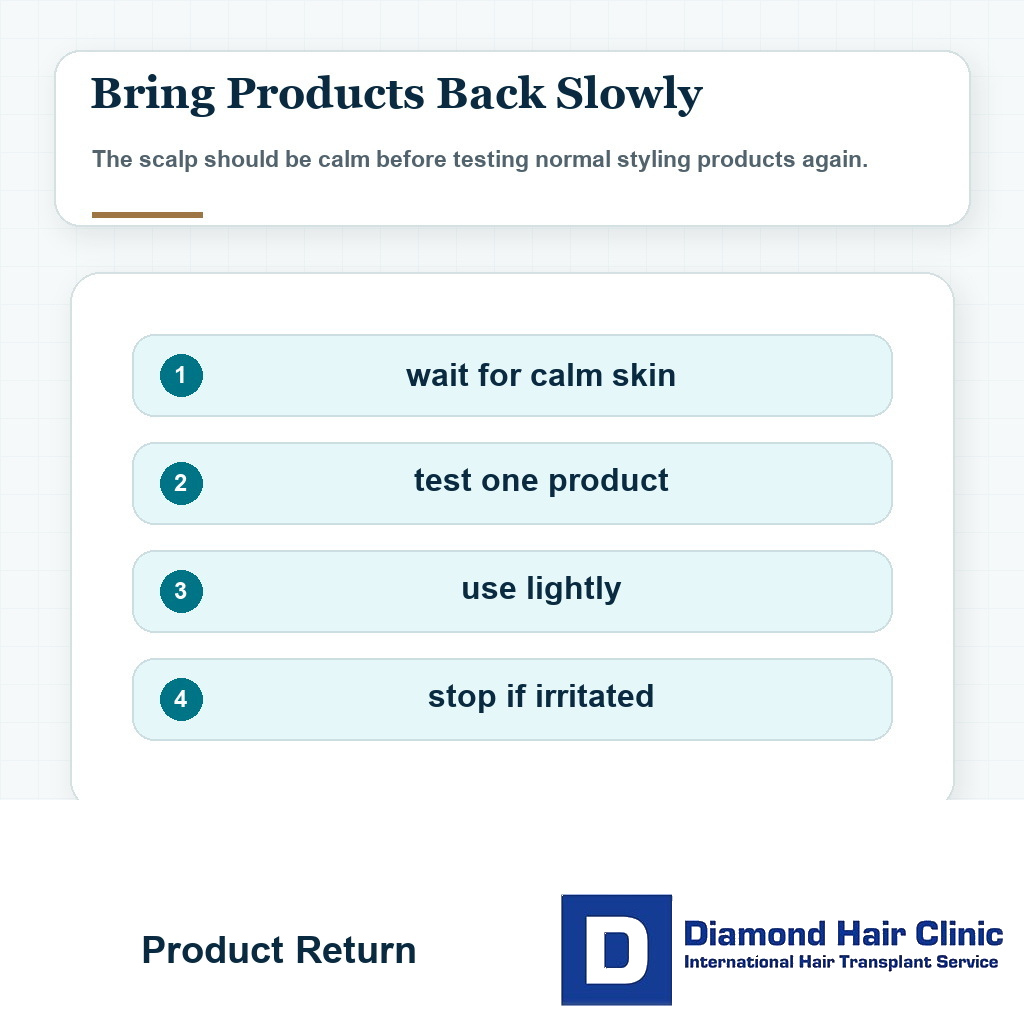
There is no single date that fits every patient. It depends on healing speed, skin sensitivity, the size of the procedure, crust removal, redness, and whether the patient has scalp disease. In the first 10 to 14 days, I want the routine to follow the clinic protocol closely. In the first 90 days, I stay cautious with dye, strong styling products, chemical salon treatments, and anything that leaves heavy residue on the recipient area.
Once the scalp is healed, many patients can return gradually to some of their usual products. I still suggest adding one product at a time. If you restart shampoo, conditioner, styling cream, spray, minoxidil, and dye all in the same week, you will not know which one caused a reaction if the scalp becomes irritated.
For patients who travel to Istanbul for surgery, salon treatments should not be rushed immediately after returning home. A transplant result is a long term investment. It deserves patience.
Protect healing skin before testing products
In the early period, use only what your surgeon recommends. Avoid hair dye, harsh shampoos, strong fragrance, heavy styling products, chemical straighteners, and aggressive scalp treatments. Do not use burning or tingling as proof that a product is working. On a healing scalp, burning is usually a warning, not a benefit.
As the scalp heals, choose products that keep the skin comfortable. Avoid ingredients that repeatedly make you itch, flake, burn, or scratch. Be especially careful with strong sulfates, fragrance, drying alcohols, formaldehyde releasing treatments, PPD hair dye, methylisothiazolinone, methylchloroisothiazolinone, and heavy buildup products if your scalp reacts poorly to them.
A product can make recovery more comfortable or more irritating, but it cannot replace the surgical foundation. The real foundation is the surgical plan, graft quality, donor protection, natural hairline design, careful implantation, and proper follow up.
The principle I trust is to protect the scalp instead of overloading it.
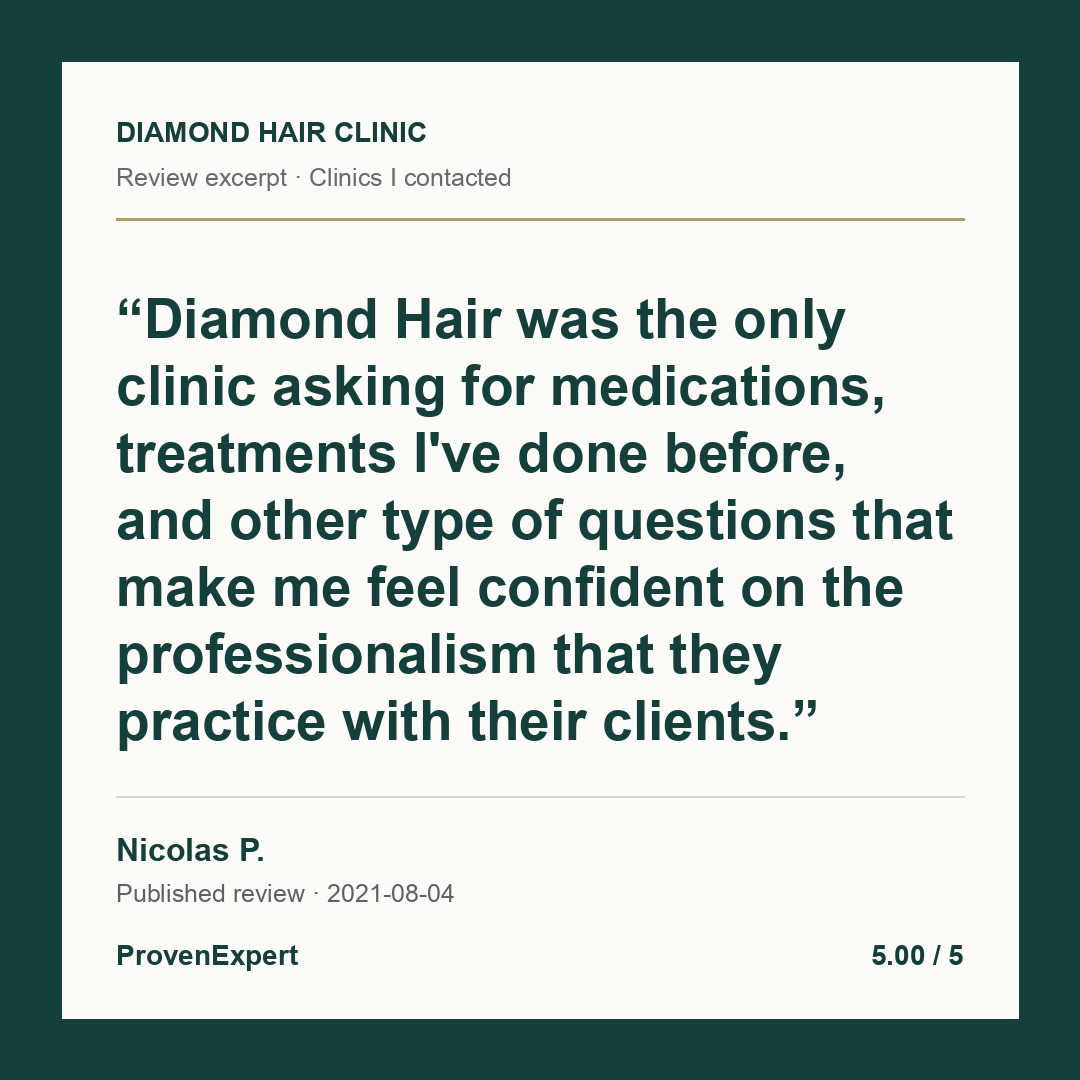
Read this review excerpt
Diamond Hair was the only clinic asking for medications, treatments I've done before, and other type of questions that make me feel confident on the professionalism that they practice with their clients.