


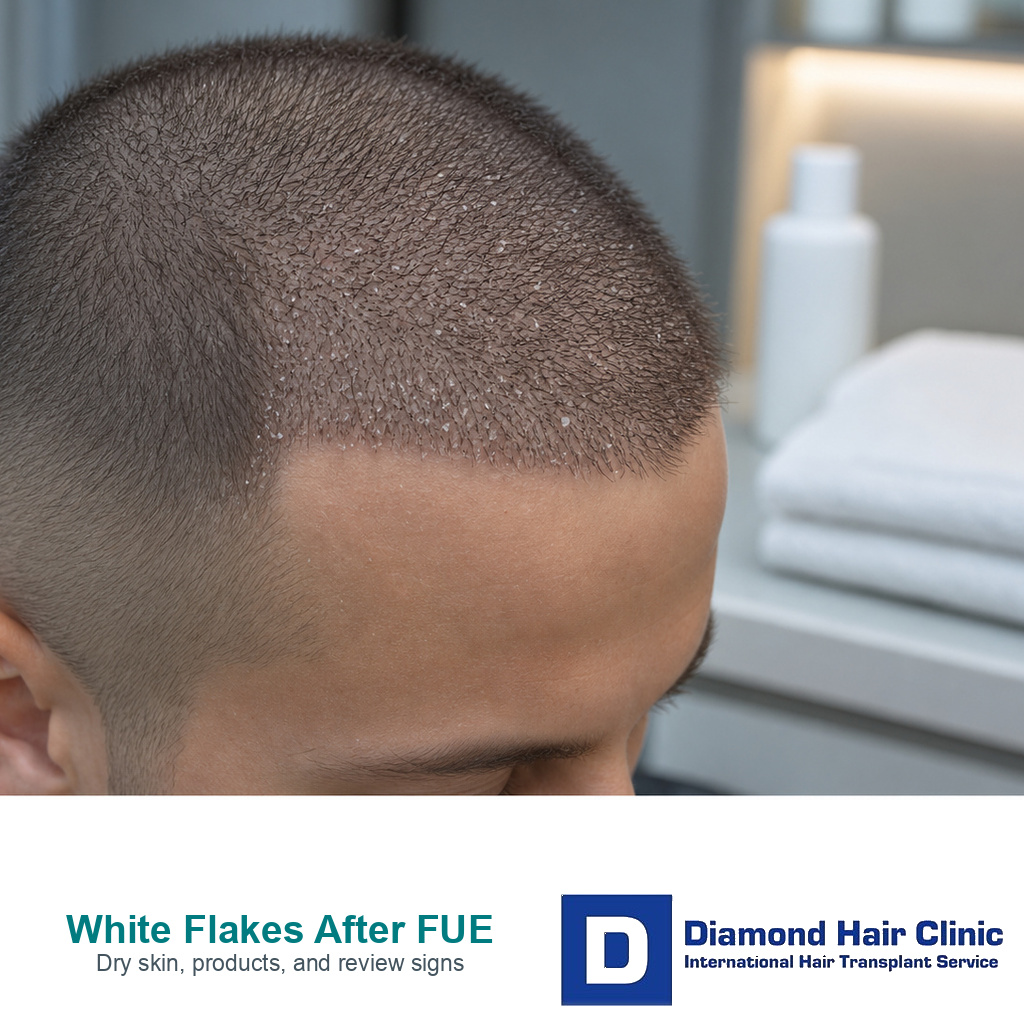
Flakes around weeks 3 to 6 often need a better washing rhythm
Around weeks 3 to 6, the scalp is often closed, but not back to normal. The skin can still be dry, short hair can make scale more visible, and products may be restarting. Some people also stay too gentle for too long. They avoid normal washing because they fear graft loss, so dead skin and product residue stay on the scalp and look worse. At that stage, the answer may be more complete rinsing and pressure approved by the clinic, not picking with nails.
This is also when shedding becomes visible. A hair can come away with a white flake and look frightening. Flakes alone are not the same as losing a graft. A graft problem is more concerning when there is bleeding from a fresh wound, a clear traumatic pull, a painful open spot, or a piece of tissue attached immediately after forceful removal. Later shedding with dry skin is usually a different event.
Itching often overlaps with this stage. If the main problem is the urge to scratch, itching after hair transplant becomes the issue to control. The solution is not to scratch harder. It is to reduce triggers and keep the scalp settled.

White flakes need timing and symptom review, not aggressive scraping.
Dry skin versus dandruff
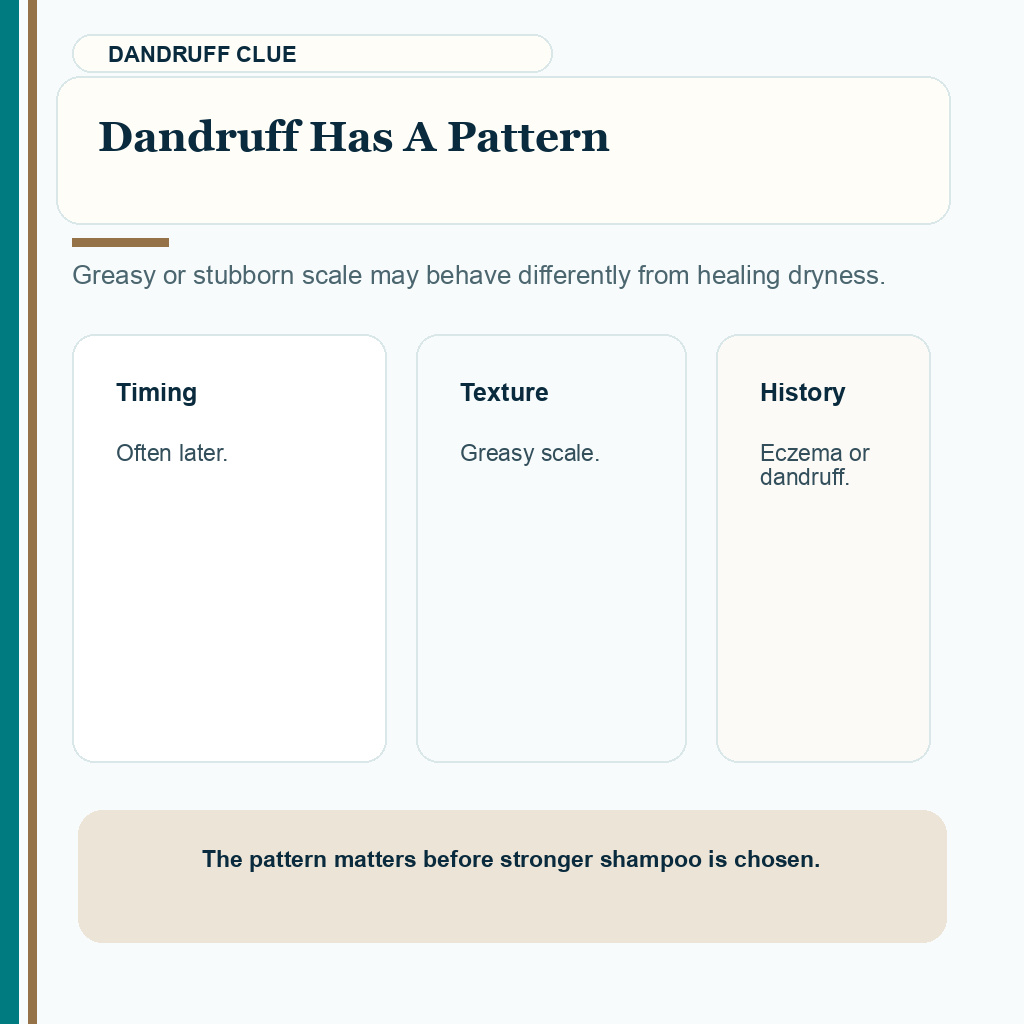
Dry healing skin usually feels tight and fine. It may appear after washing, after sleeping, or when the scalp has been exposed to air, sun, heat, or repeated cleansing. Dandruff or seborrheic dermatitis often behaves differently. It may be greasy, yellow or white, recurrent, itchy, and stubborn, especially if dandruff was present before surgery. It can come back once hair and oil production return to the scalp.
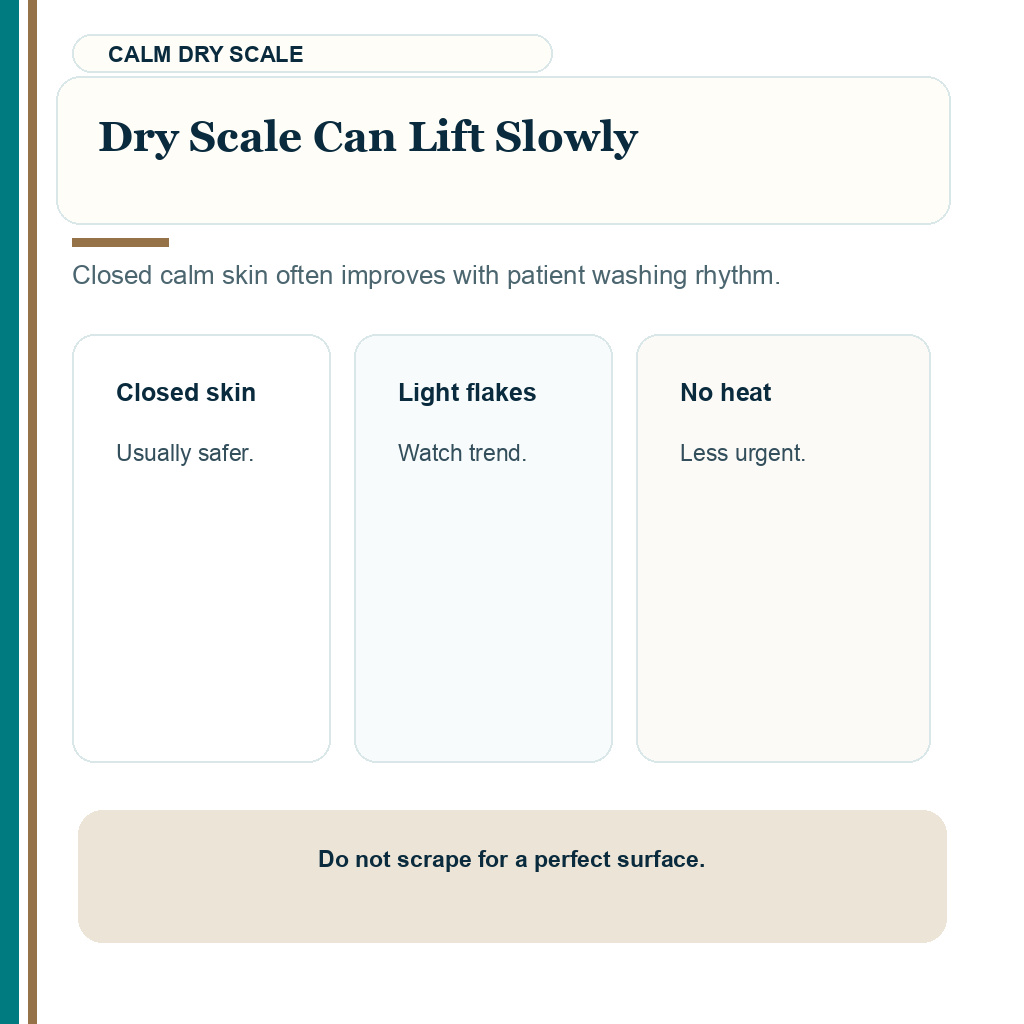
I separate these situations by looking at the pattern. Fine dry flakes on settled skin are closer to dry scalp after hair transplant than thick scale, oily yellow or white buildup, repeated redness, burning, or flaking that keeps returning months later. A person with scalp eczema, seborrheic dermatitis, psoriasis, or frequent dandruff needs a different plan from someone with short term dryness after scabs.
Random product experiments can make the scalp harder to judge. The scalp may need less product, not more. Existing inflammation before surgery follows a different pathway, so I separate mild flaking from active inflammation in itchy scalp before hair transplant before grafts are placed.
Loose flakes do not pull out grafts
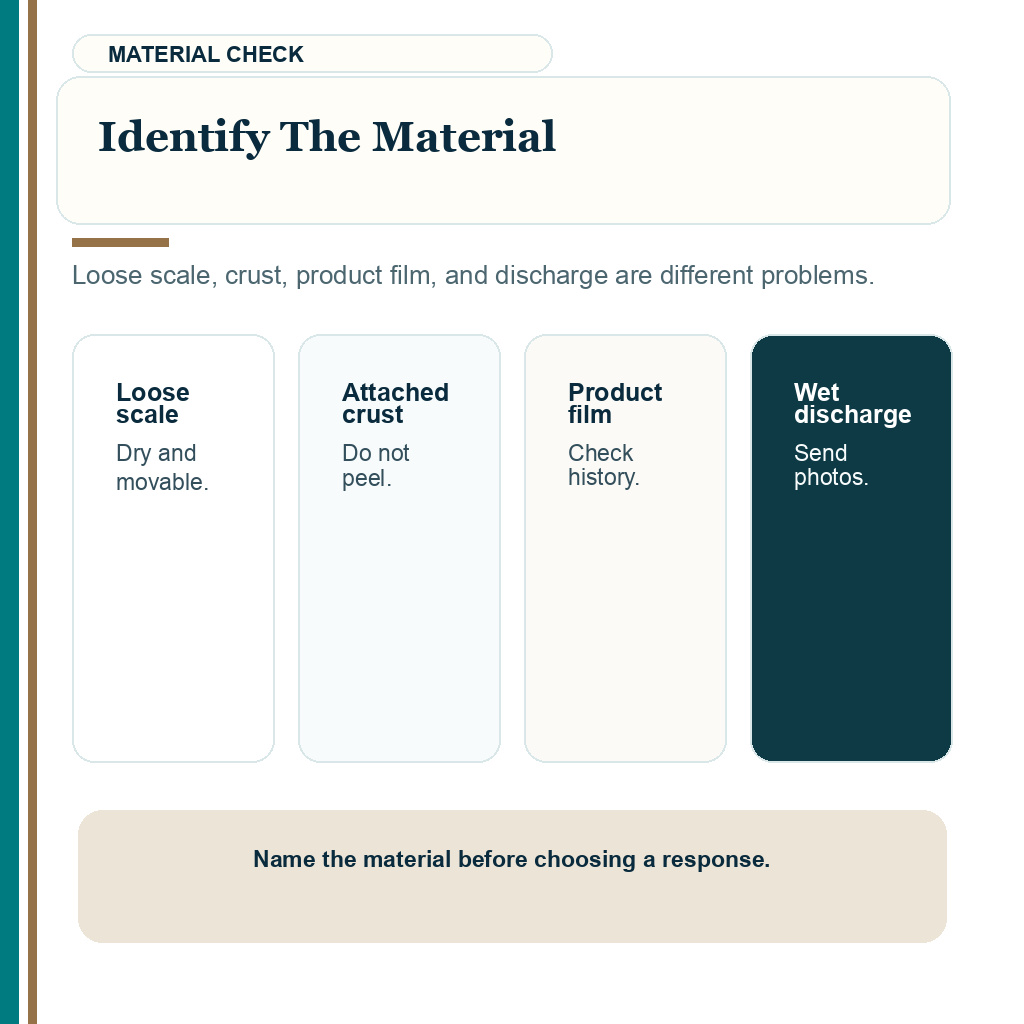
A flake does not have the power to destroy a graft by itself. What matters is how it is removed. If you soften the scalp as instructed and flakes loosen during gentle washing after the appropriate stage, small hairs may shed with them. That usually reflects the normal shedding phase, not graft failure. I become more cautious when the material was attached and came away only after force, bleeding, pain, or a fresh open spot.
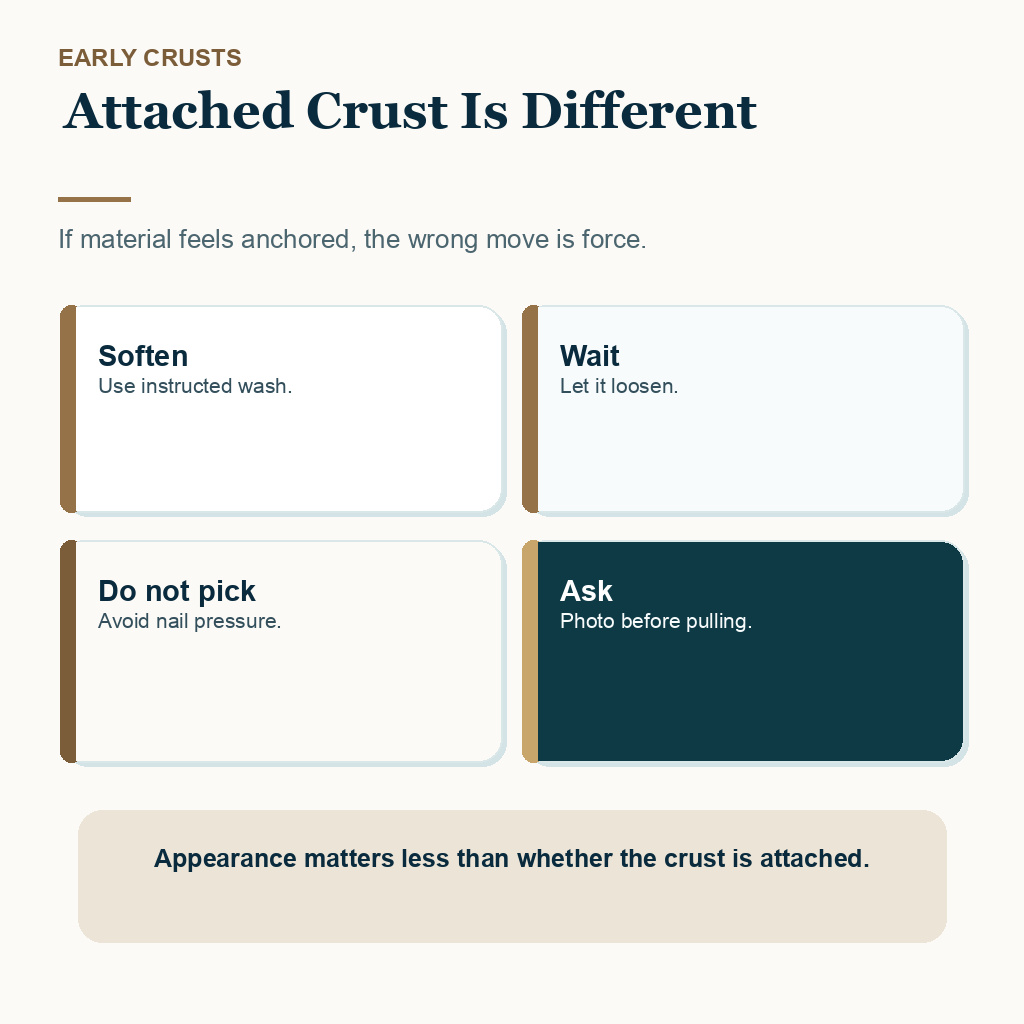
Force is different. If you dig with fingernails, scrub hard, use a comb edge, pick at stubborn scabs, or try to peel attached material, the risk changes. If material feels anchored, leave it for the next instructed wash or ask the clinic. Do not test it by pulling. Early recipient area does not need a perfect cosmetic surface every morning. A settled scalp matters more than a perfectly clean scalp in the early recovery window. A clean scalp achieved through scraping is not a safer scalp.
A soft toothbrush, makeup brush, comb edge, cotton bud, or similar tool does not become safe just because it looks gentle. If material is attached, tools can still create focused traction. Send photos and follow the washing plan rather than brushing the recipient area until it looks clean.
When someone is afraid that a scab or flake carried a graft, I compare the timing, bleeding, pain, and the look of the material. I use the same distinction in redness, scabs, or pimples after hair transplant. Some crusting belongs to healing, while some patterns deserve review.
Minoxidil or product residue as a cause
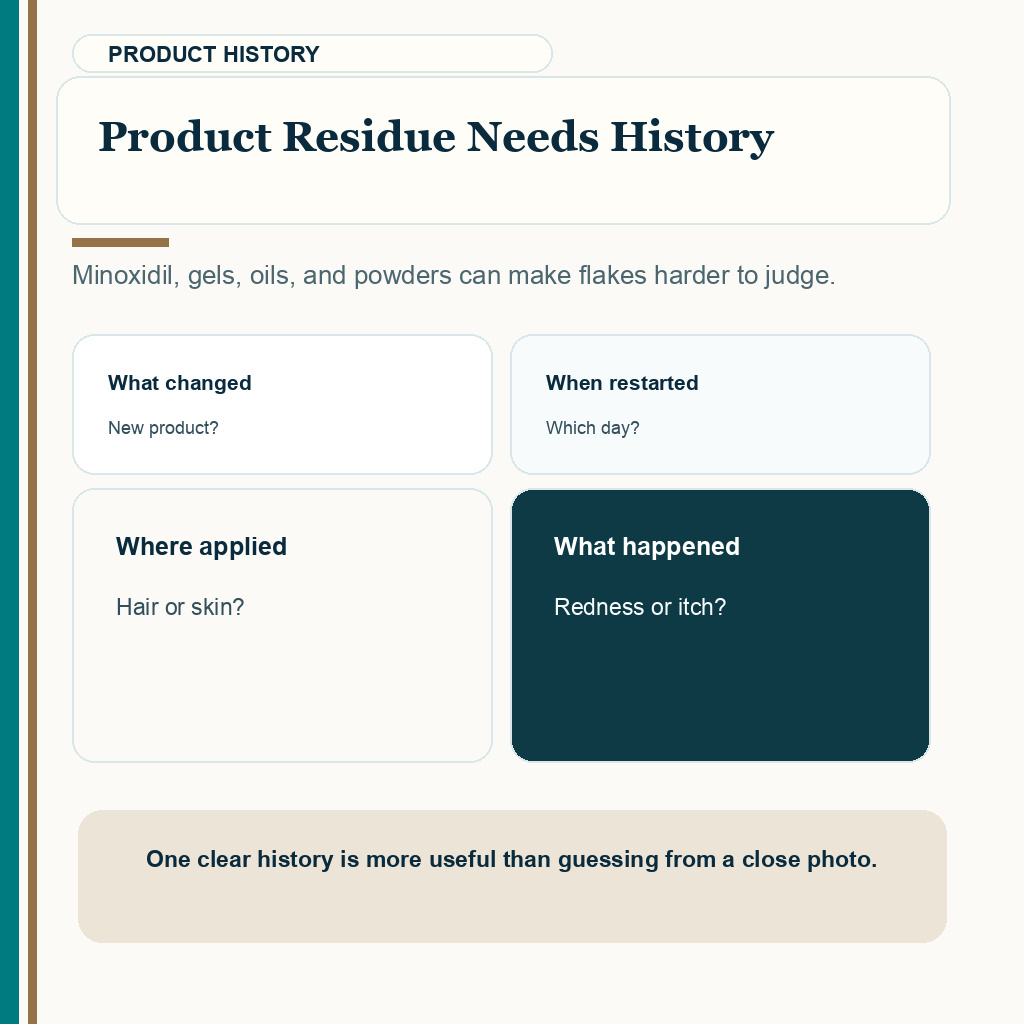
Product residue becomes more likely when flakes appear soon after restarting topical minoxidil, dry shampoo, styling powder, fibers, gel, oil, or a heavy conditioner. Liquid minoxidil can dry into a pale residue on some scalps, and some formulas can irritate sensitive skin. The timing matters. When a product was applied, how often it was used, and whether flakes sit on the hair shaft, the skin surface, or only where the product lands can change the interpretation. Dry shampoo and fibers can leave powder in short hair and make normal scale look worse.
If the flakes sit on top of the hair or appear after a product dries, I ask what changed in the last week. The answer may be changing timing, reducing residue, washing more appropriately, or pausing the product with clinic guidance. It is not always a new disease of the scalp. Do not add a second product to hide the first product’s residue.
For transplant patients using minoxidil, benefit is only one part of the decision. The scalp also has to be ready for the formula. With minoxidil after hair transplant, timing and irritation matter as much as the growth benefit. Powder products bring their own timing concerns. Dry shampoo after hair transplant should not be treated like a harmless cosmetic shortcut.
White flakes that need medical review
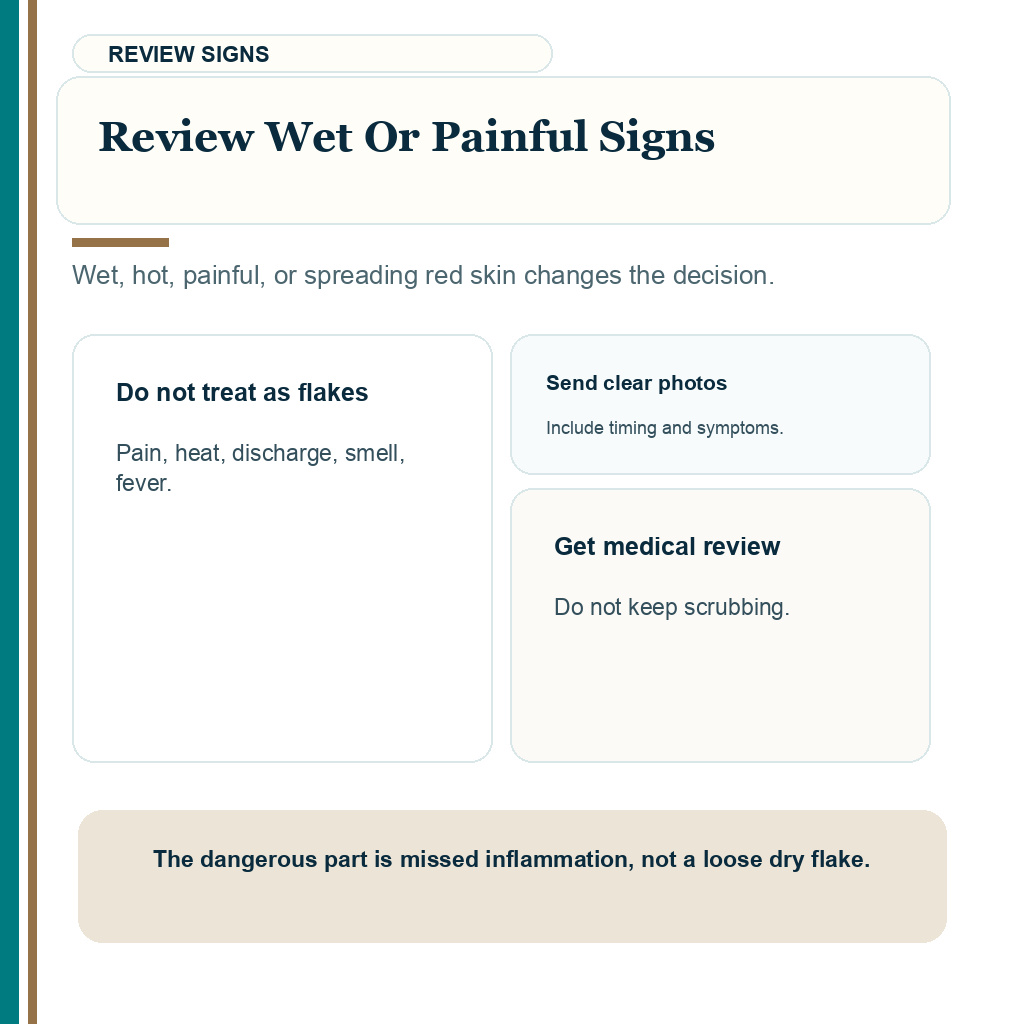
White flakes deserve review when they do not behave like mild dry skin. Pain, heat, increasing tenderness, spreading redness, pus, smell, fever, or worsening swelling changes the situation. So does wet crusting, bleeding after picking, yellow fluid that looks cloudy, or a tender bump that is growing instead of settling.
The other reason for review is persistence. If flaking is still strong months after surgery, or if it keeps returning despite a reasonable washing routine, I consider dandruff, seborrheic dermatitis, eczema, psoriasis, folliculitis, product irritation, or a medication/product trigger. A transplant does not make the scalp immune to normal dermatology problems. Persistent flakes deserve diagnosis, not an endless rotation of shampoos.
Wet, yellow, painful, smelly, or infected looking changes need the same triage I use for yellow scalp fluid after FUE. Random ointment can trap residue and irritate the area when there is no medical reason for it, so antibiotic ointment and hair graft healing should stay tied to clinic instructions.
Washing approach that protects the scalp
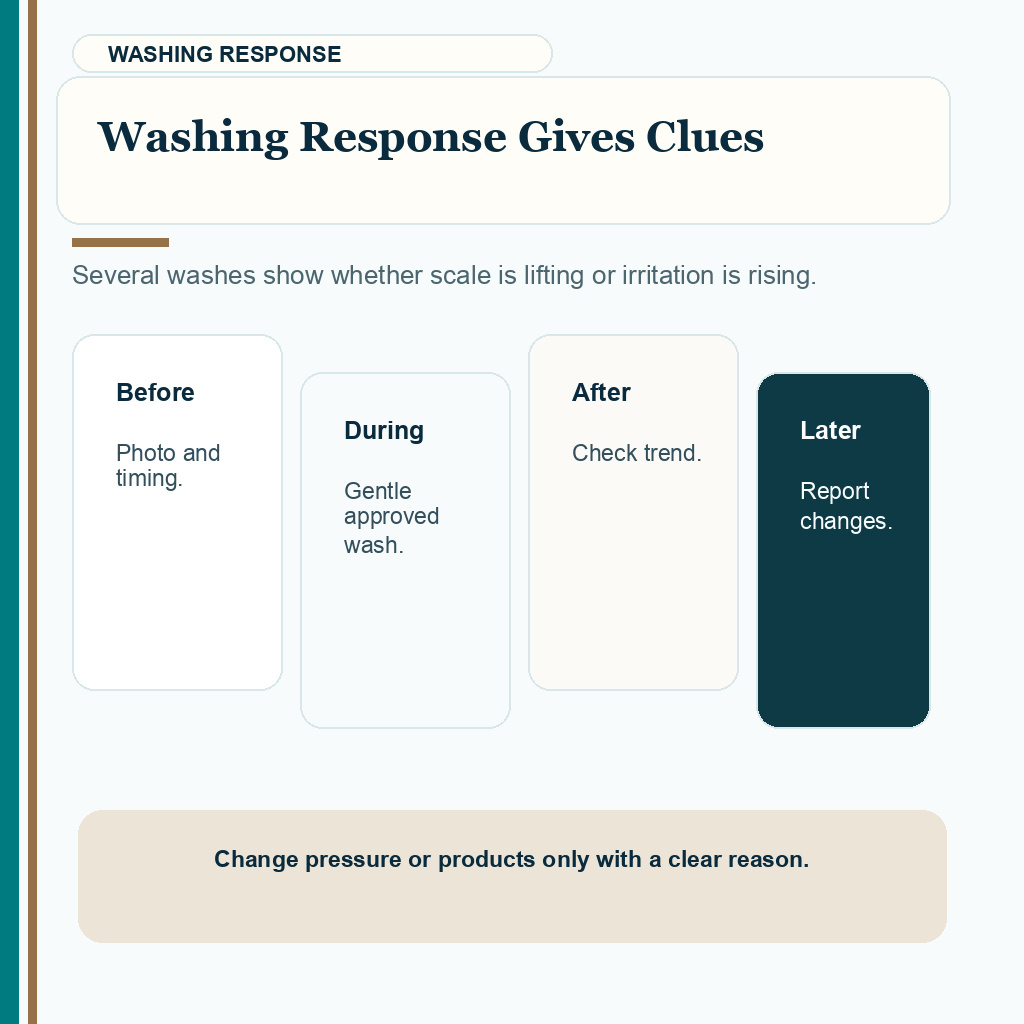
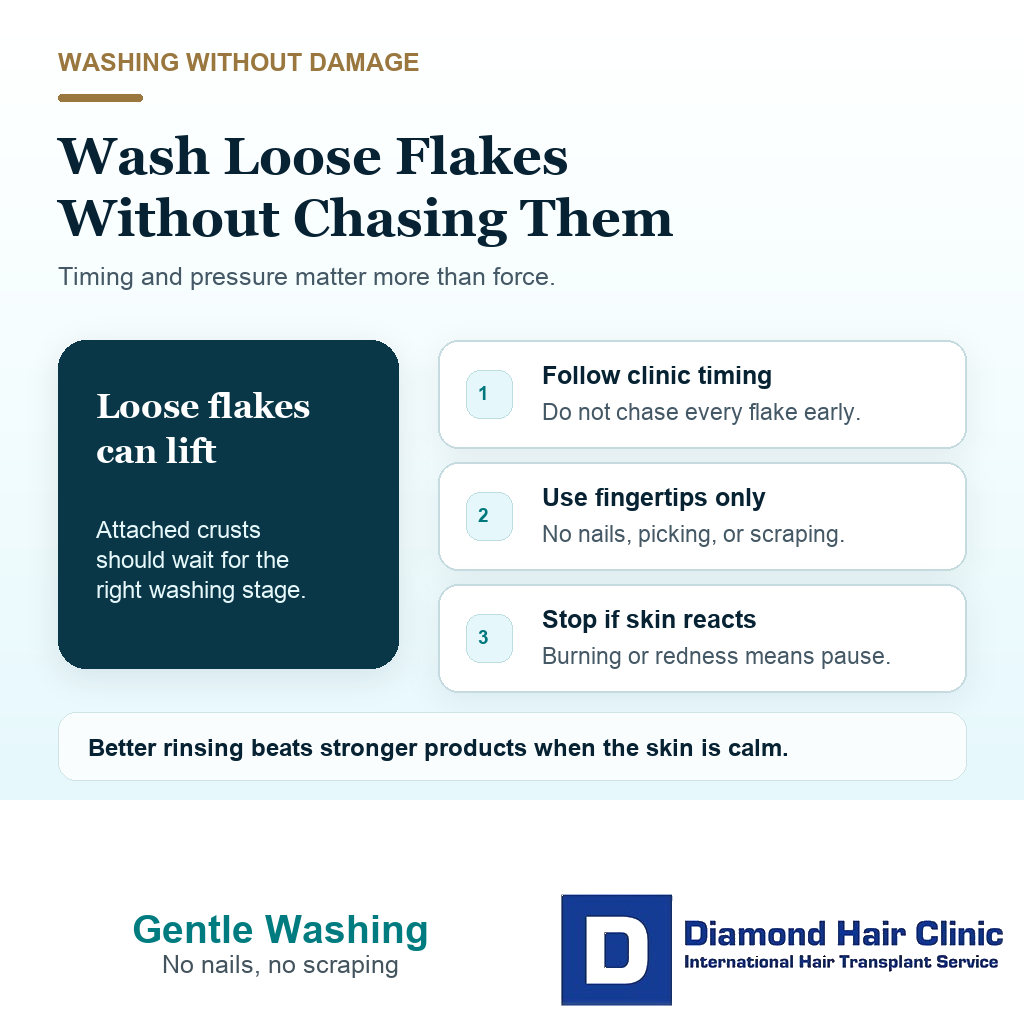
Washing should become firmer only when the timing allows it. In the early stage, use the clinic’s method. Do not use nails. Do not chase every flake. Once the scabs are gone and normal washing has returned, gentle fingertip massage can help remove loose scale. The pressure should feel like washing skin, not sanding it. Rinse long enough to remove shampoo residue, because leftover cleanser can look like new flaking.
If flakes return because you have been too gentle for too long, the answer may be a better rinse and a more complete wash, not stronger medicine. If the scalp burns after shampoo, looks redder after every wash, or feels tight and angry, the routine may be too harsh. Treat timing before choosing a stronger product.
Conditioner, oils, moisturizers, and gels are common traps. A mild rinse out conditioner on hair lengths is different from rubbing product into the recipient area. I separate conditioner after hair transplant, hair oil after hair transplant, and aloe vera or moisturizer after hair transplant because each product touches the healing skin differently.
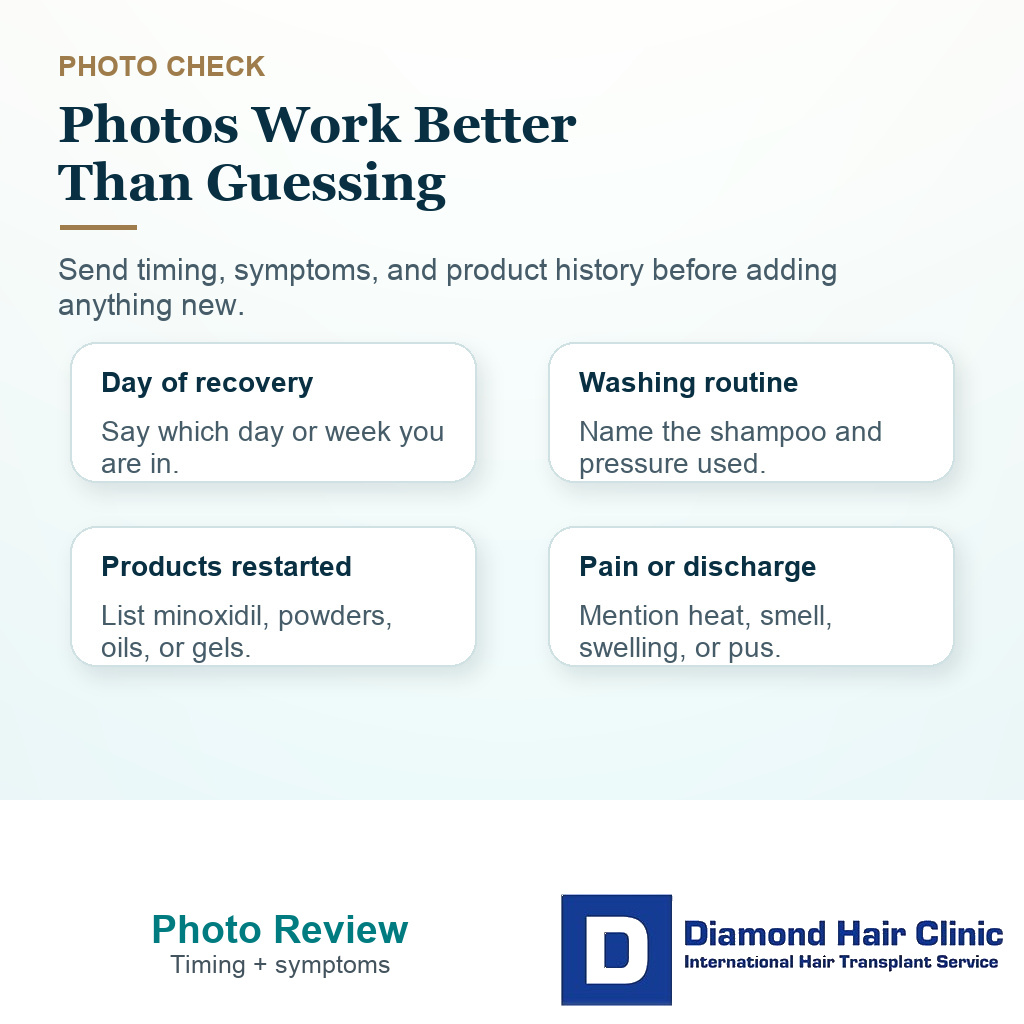
Photo review is more useful when symptoms, timing, and products are described together.
Dandruff shampoo or ketoconazole timing
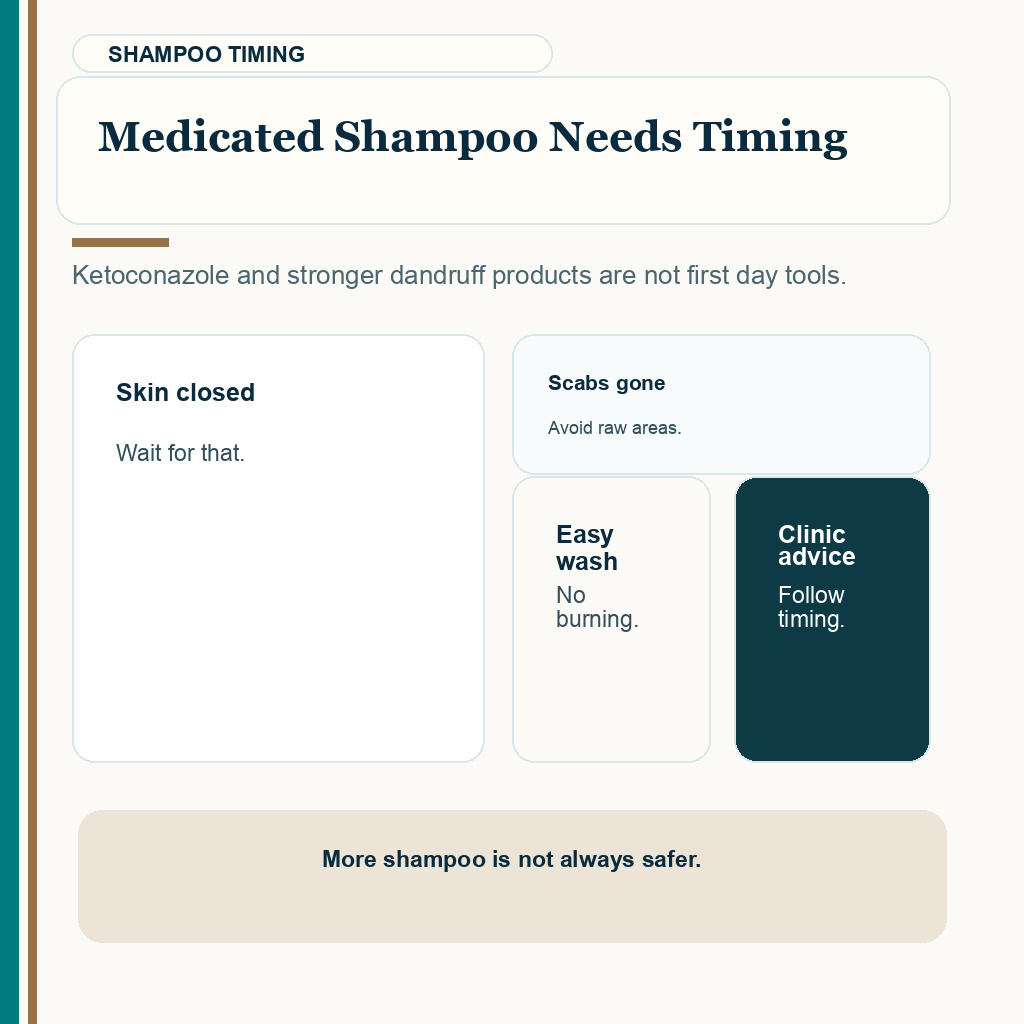
Dandruff shampoo is not a first day recovery tool. In my routine, I keep stronger dandruff treatment products away from the recipient area until the skin is closed, scabs are gone, and normal washing is comfortable. For many patients, that means after the first 2 weeks. Stronger or prescription formulas may need more time, especially if the scalp is still raw or sensitive.
Ketoconazole can be useful when true dandruff or seborrheic dermatitis is present, but it can also irritate a healing scalp if used too early or too aggressively. If it burns, worsens redness, or dries the skin sharply, the routine needs review. More shampoo is not always better. Do not leave medicated shampoo on longer than instructed because the scalp is flaky.
The specific timeline is covered in ketoconazole shampoo after hair transplant. For patients with known eczema or dermatitis, the broader planning issue is explained in scalp eczema and hair transplant surgery.
Products to avoid on a flaky recipient area
A flaky recipient area tempts people to add something, such as oil, cream, aloe, ointment, dry shampoo, stronger shampoo, itch spray, or hair fibers. I understand the instinct, but the early grafted scalp is not ordinary dry skin. Heavy products can leave residue, irritate healing skin, or make it harder to judge infection signs.
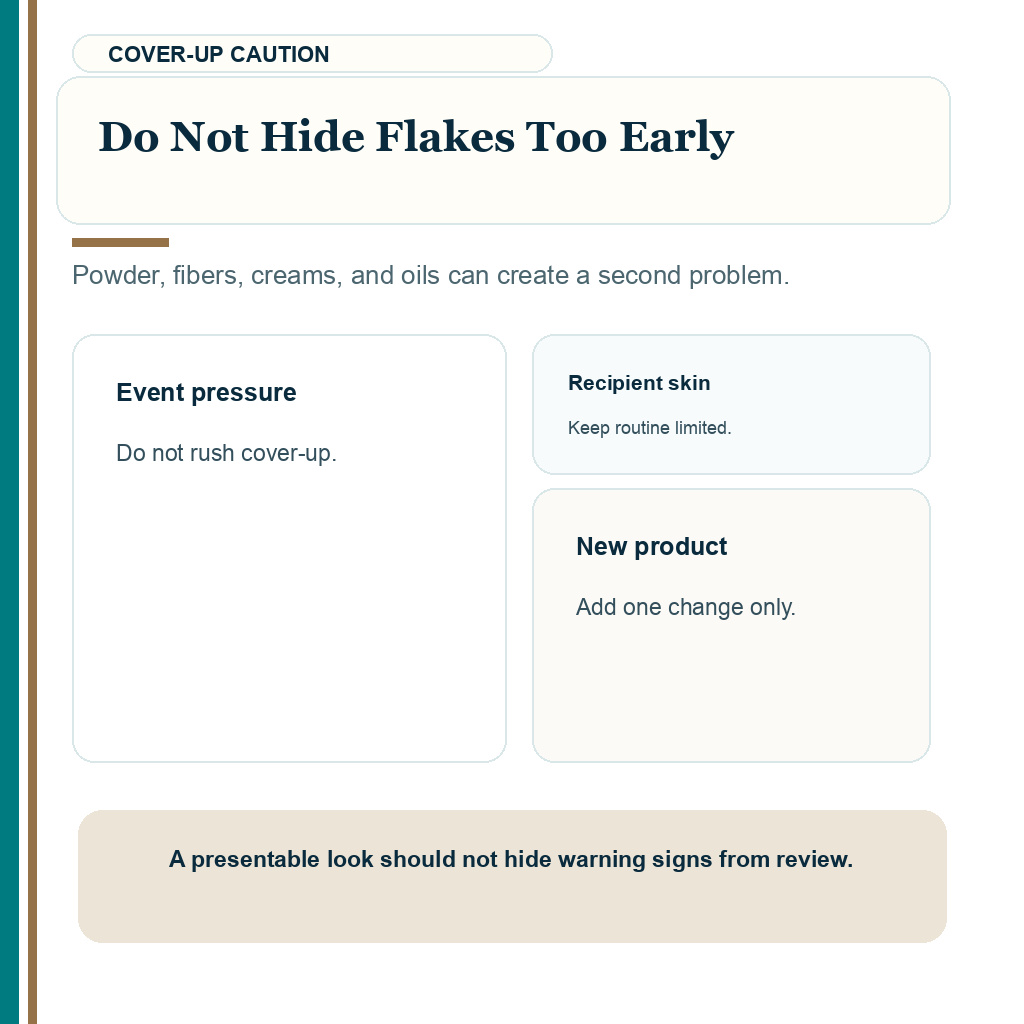
Do not mix multiple products at once. If you add three things and the scalp becomes red, itchy, or greasy, nobody can tell which product caused the problem. Use the most limited routine that your clinic has approved. If a product is needed, add one change at a time and watch the response for several washes before adding another variable.
Social events, travel, work, or photos can tempt patients to hide flakes too early. Trying to hide flakes with powder can create a second problem. If you need to look presentable, discuss timing and product choice rather than covering the scalp too early.
Photos that help the clinic judge white flakes
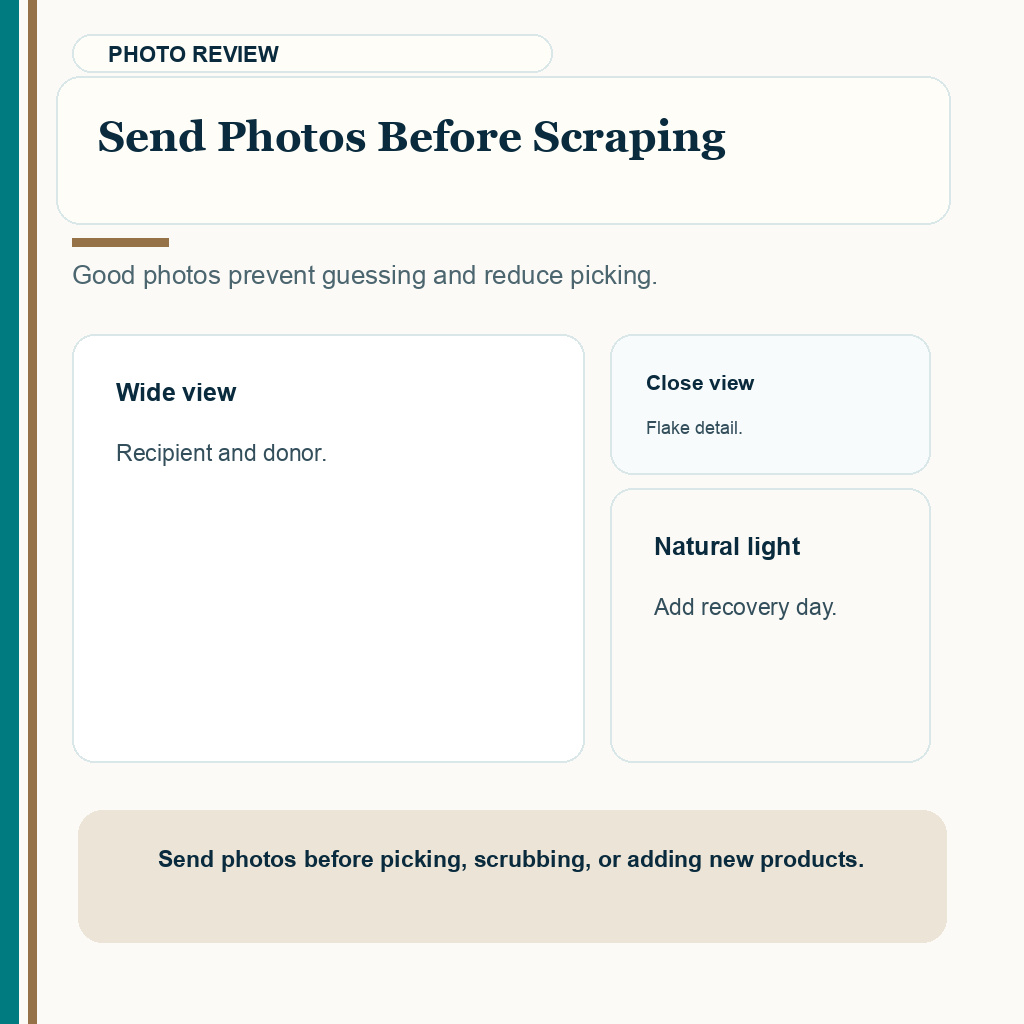
Take clear photos before you start picking, scrubbing, or applying new products. Good photos include one wider photo that shows the full recipient and donor zones, one close photo of the flaky area, and one photo in natural light if possible. Also say the surgery date, the day of recovery, when you last washed, what shampoo you are using, whether minoxidil or another product was restarted, whether the flakes are loose or attached, whether they sit on hair or skin, whether hairs are coming away with force or during gentle washing, and whether there is pain, heat, discharge, bleeding, smell, fever, or swelling.
A close image without timing can make every flake look dramatic. Timing and symptoms decide the level of concern. If the skin is settled and the flakes are loose, a limited routine usually fits. If the symptoms suggest infection or active dermatitis, I need to see the scalp before product masks the pattern.
Line between flakes and warning signs
I do not worry about every white flake. I worry about force, inflammation, and poor judgment around products. You can damage the recovery process by trying to make the scalp look clean too early. You can also wait too long when the scalp is clearly painful, wet, hot, or worsening.
I draw the line by skin behavior. Loose flakes on settled skin can usually be handled gently. Attached crusts, painful scale, wet discharge, spreading redness, pimple type bumps, or persistent dandruff type inflammation need a closer look. If the skin is angry, treat the scalp before chasing appearance. Do not try to defeat every flake. Keep the scalp simple so the grafts can heal and you can return to normal washing at the right pace. The goal is a stable scalp, not a perfect close image without flakes every day.

Read this review excerpt
Upon arriving home, I sent 4 photos (of each side of head) after every washing process to doctor for checking where I was given personal advice for how to take care of my healing head.