


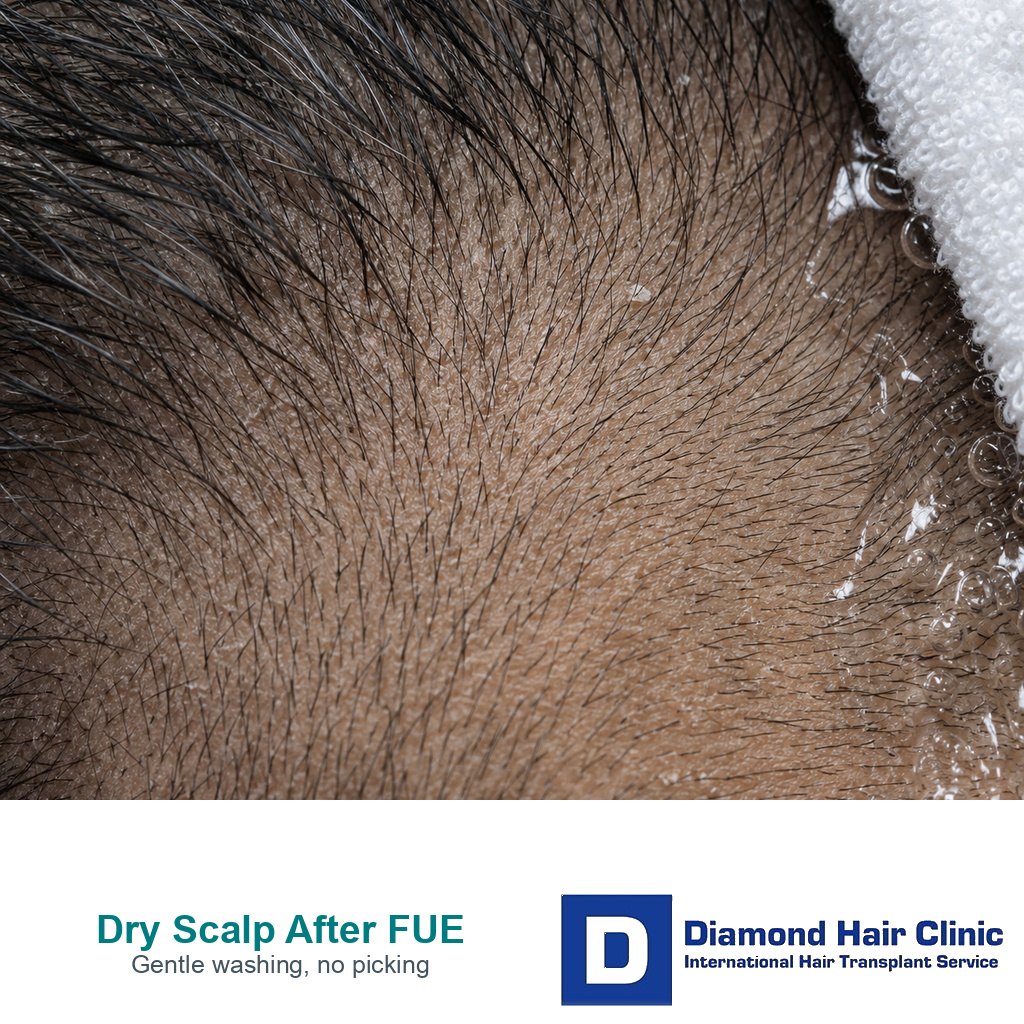
Dry Flakes and Itching Need Gentle Scalp Handling
Dry scalp, white flakes, and itching after FUE are usually a skin comfort problem, not proof that grafts are drying out or falling out. I still read the pattern closely. Loose dry scale on quiet skin is different from wet yellow crust, spreading redness, pain, pus, fever after hair transplant, or an itch that makes you scratch the grafts.
The trouble usually comes from how the patient reacts to the dryness. Scratching and picking, harsh shampoo, products that contain alcohol, heavy oils, or random medicated treatments can irritate healing skin. Trying to remove every flake on the same day can create more irritation than the flakes themselves. Scratching, rubbing, and extra products can make that irritation harder to calm. Dry skin is usually manageable. Aggressive handling is the real risk.
Dry scalp action sorter
Handling dry flakes today
Check the scalp condition before you scratch, pick, add a product, or assume the grafts are failing. The handling plan depends on what the skin looks like right now.
Keep the approved washing routine and avoid panic checking. Loose dry scale on quiet skin is usually handled with patience, gentle water, and time rather than force.
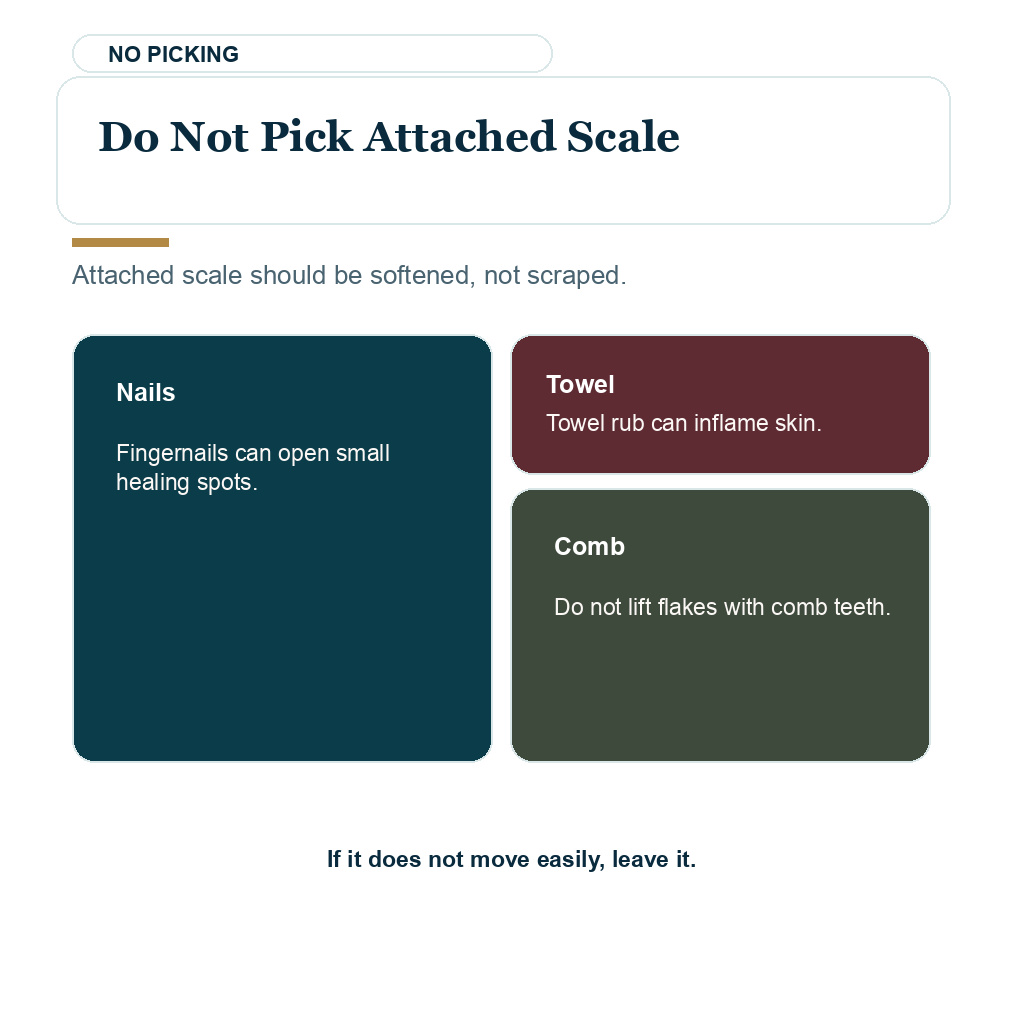
Leave it instead of lifting it with fingernails, a towel, or a comb. Let the approved wash soften the area and keep anything that does not move easily for the next wash.
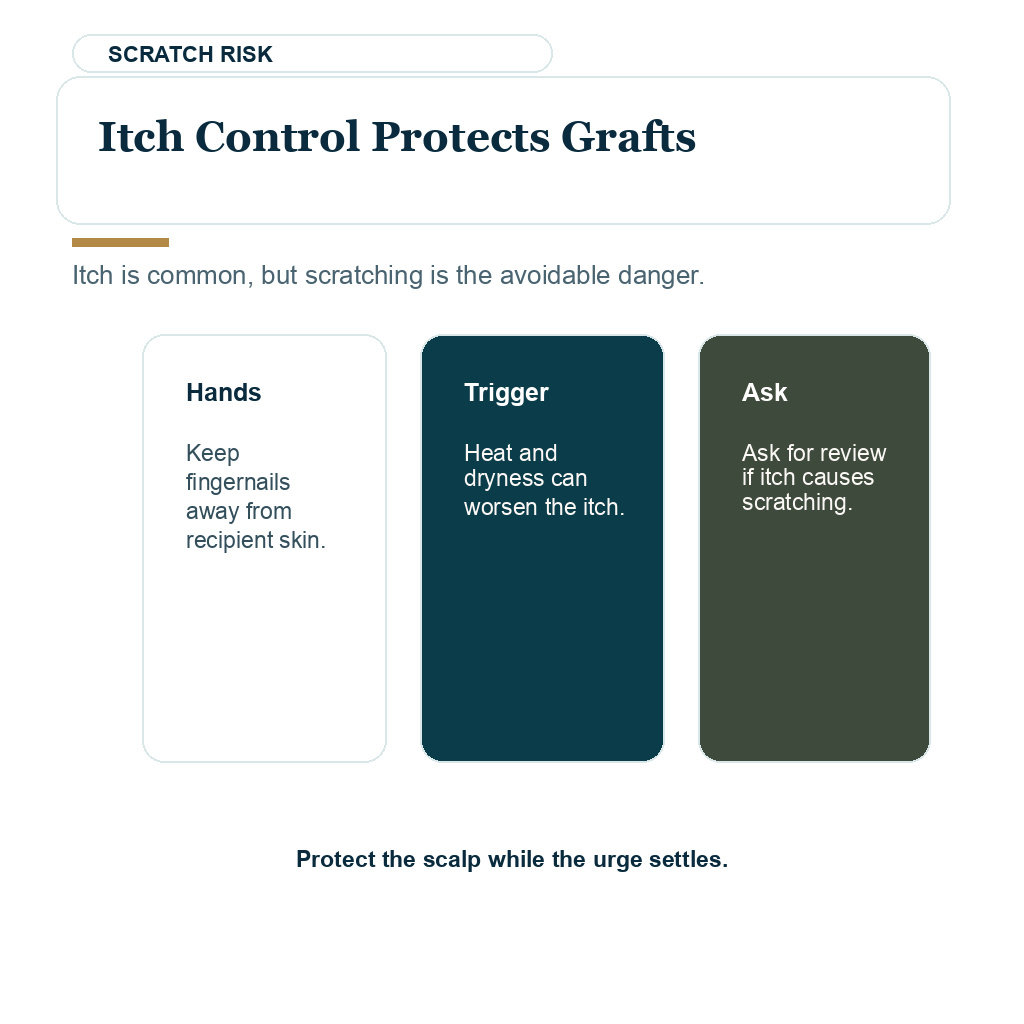
Treat the scratch urge as the risk signal. Keep fingernails away, check whether washing has become too fearful or too harsh, and ask before changing the routine.
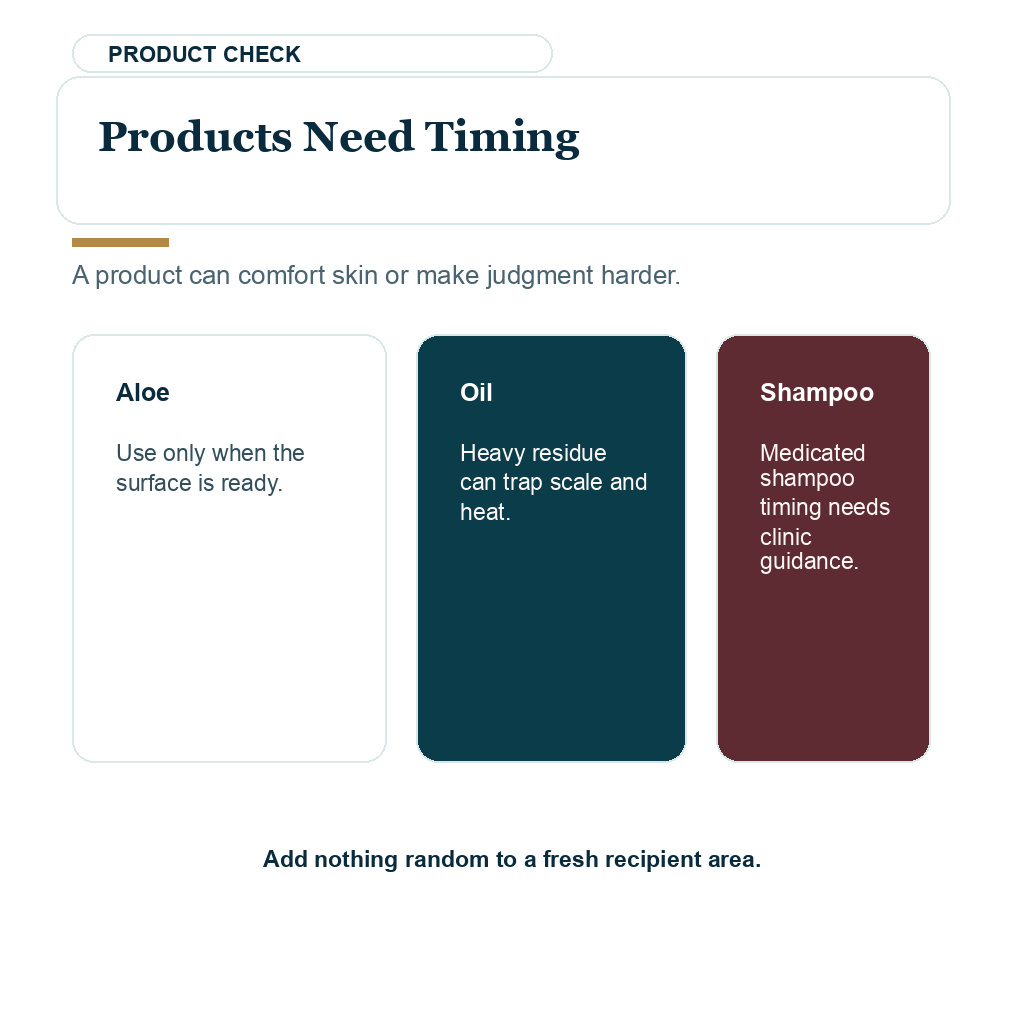
Pause before adding products. Timing, the treated area, ingredient strength, residue, and whether the surface is closed all matter more than stopping flakes immediately.
This is no longer a simple dry flake question. Stop changing products, take clear daylight photos, note the surgery day, and ask for review if redness is spreading, the scalp feels hot, pain is worsening, or you feel unwell.
The safer rule is to soften loose flakes and observe the scalp, but escalate when the skin looks inflamed, wet, painful, or infected.
Dry flakes usually need gentle washing, not panic
In the first recovery period, the scalp has been washed, numbed, handled, and exposed to cleaning solutions. The skin barrier may feel tight. Small flakes can appear in the recipient area, the donor area, or both. That can happen even when the transplant is healing normally.
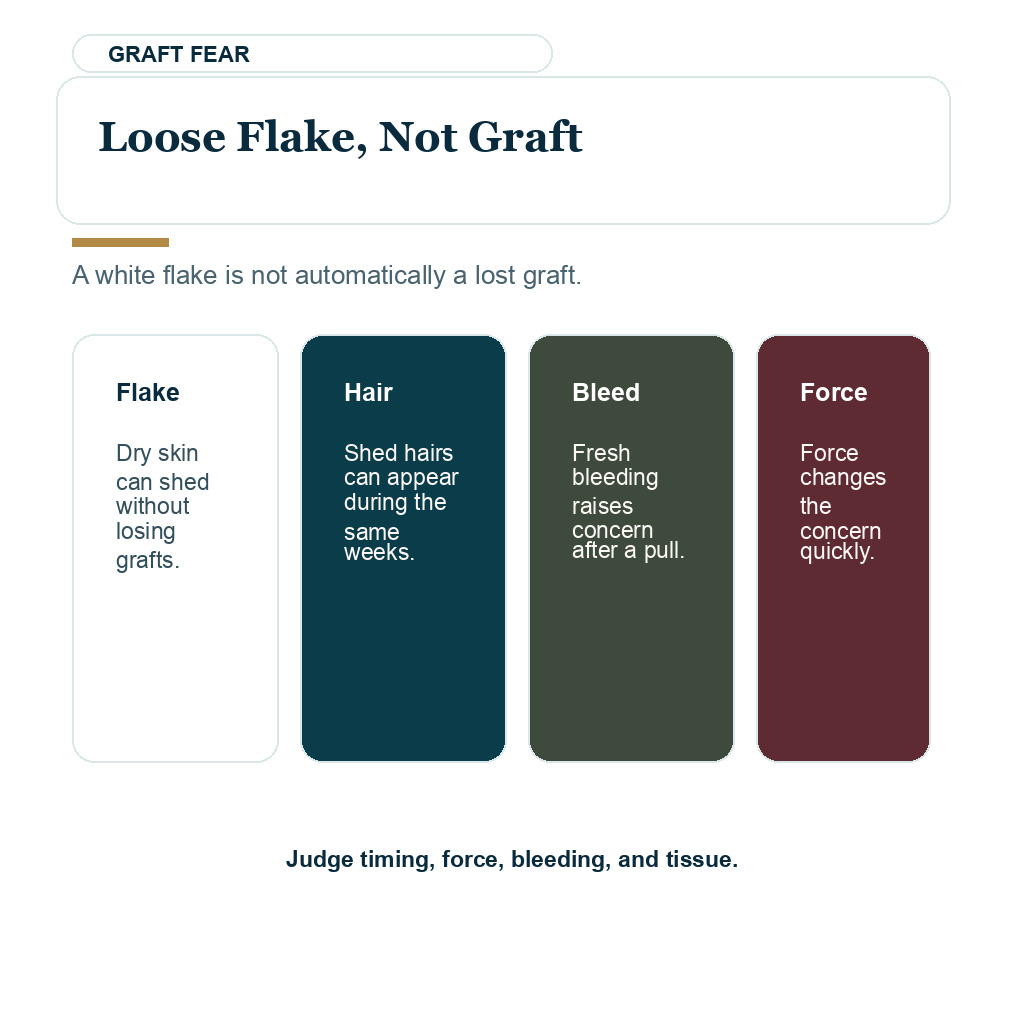
A graft is not the same thing as dry skin or loose scale. When a real graft is lost early, there is usually a small bleeding point or a clear tissue plug, not only a dry white flake. The concern about scabs coming off after hair transplant needs that bleeding, tissue, timing, and force context.
Still, I do not want anyone scraping the scalp to prove that everything is fine. If flakes are attached, soften them with the approved washing routine and let them loosen gradually. Pulling at dry skin can create irritation, small wounds, or unnecessary panic.
The scalp can feel tight and dry while healing
Dryness can come from several ordinary recovery factors. Washing may be more cautious than usual, or sometimes too incomplete because the grafts feel fragile. Travel, hotel air conditioning, cold weather, low humidity, stress, and sleep changes can make the skin feel tighter. A history of eczema, dandruff, or seborrheic dermatitis can also become more obvious when the normal routine changes.
Itching often appears with dryness. That alone does not mean infection. It can be part of healing, part of shedding, or part of the skin barrier settling down. When the main symptom is the urge to scratch, itching after hair transplant explains why the donor and recipient areas can feel different.
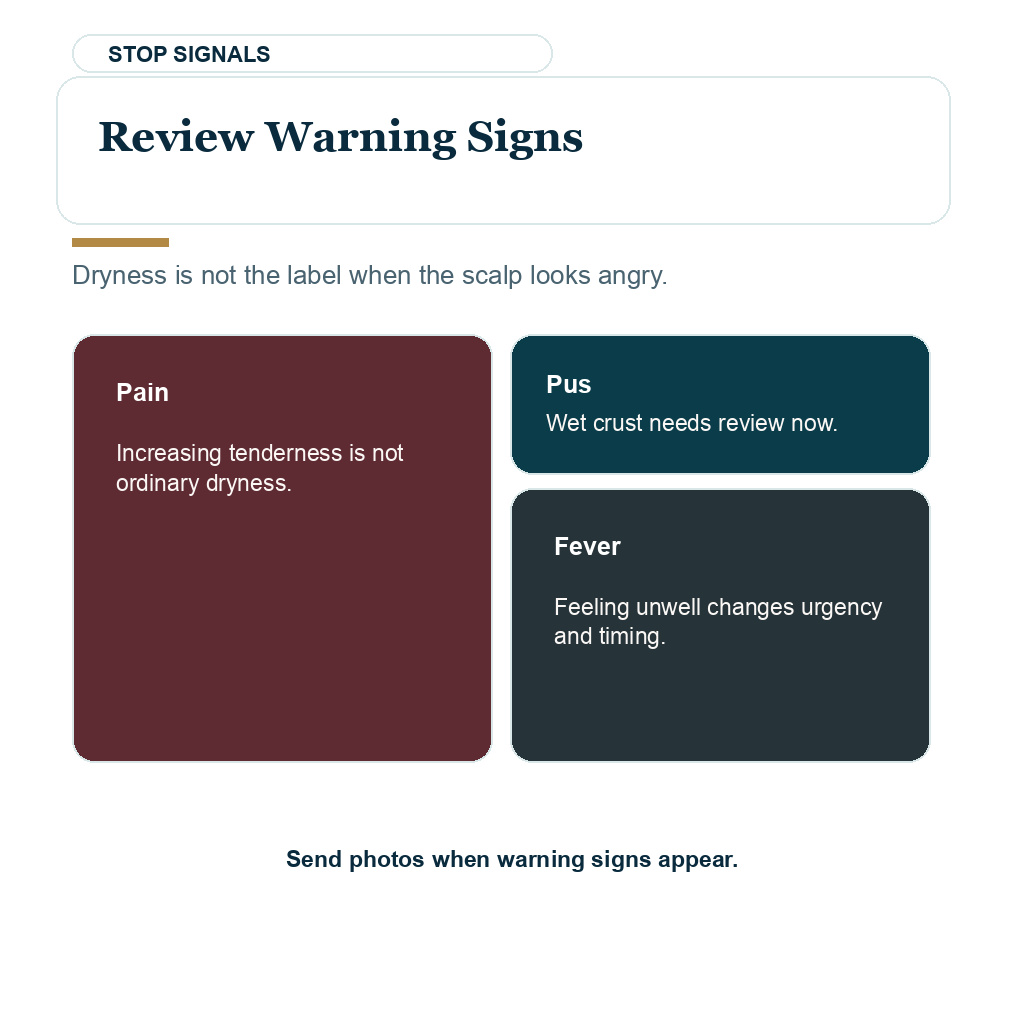
The response changes with the pattern. Mild dryness that improves after gentle washing can usually be managed patiently. Increasing pain, pus, spreading redness, fever, or a hot swollen area needs clinic review.
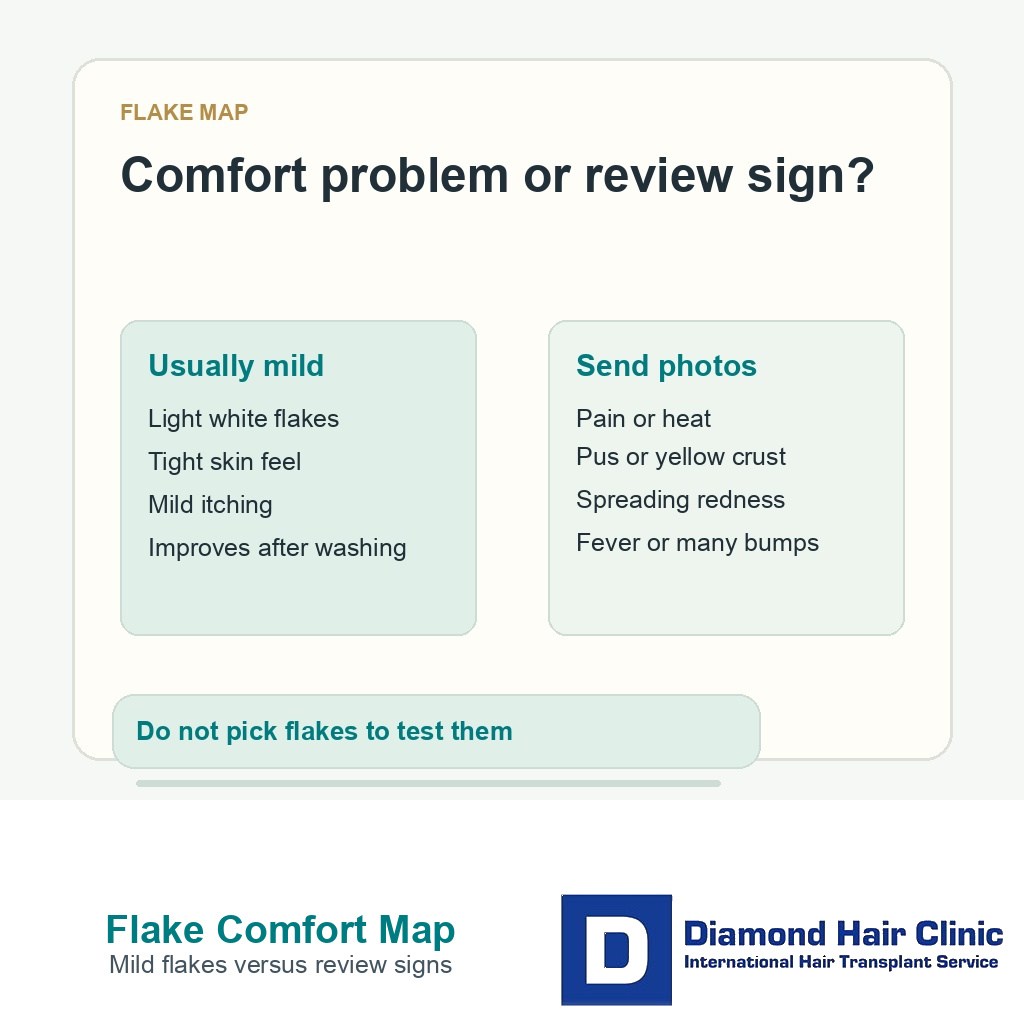
Dryness is usually managed by gentle timing, but pain, pus, spreading redness, or fever should be reviewed.
Picking flakes or scratching can create avoidable risk
Picking is the fastest way to turn a small dry skin problem into a recovery problem. Even after the grafts become more secure, scratching can inflame the skin, open small spots, and make you keep checking the mirror. The more aggressively the scalp is checked, the more irritated it can look.
There is a real difference between instructed washing and testing the grafts. Soft contact during the approved wash is not the same as rubbing with fingernails, scraping with a towel, using a comb, or pulling at a flake to see whether it is attached.
If flakes sit around the grafts, keep washing exactly as instructed. Use the approved lotion or foam stage if it is part of your protocol. Rinse gently and pat dry. Fingernails and combs should stay away from the recipient area. If a flake does not move, leave it for the next wash.
Do not cover dry scale with oil just because it looks cleaner in the mirror. If the product leaves residue, the next wash may need more force, and that is exactly what the scalp is trying to avoid.
Write down every product you added after the dryness started. If the list grows each day, the clinic may first need you to stop experimenting before judging the scalp itself.
Donor skin can feel rough, prickly, or dry while tiny extraction points heal. It may be safer to send a clear photo than to rub the area until it becomes red.
Safer washing for a dry scalp
Some dryness problems start because washing becomes too fearful. I understand the fear, but avoiding water for too long allows dead skin, dried lotion, and surface debris to build up. Then the scalp looks worse, and the urge to pick becomes stronger. Dry hair or skin that feels tight is not a reason to switch from the prescribed schedule to washing every other day. First separate dry hair shafts from attached scale and irritation, then review whether the wash frequency or product should change.
Follow the timing you were given. Washing grafts safely after FUE is about technique, not force. The wash should soften and clear the surface without rubbing the grafts aggressively.
Use lukewarm water, gentle pressure, and the normal shampoo timing approved by the clinic. Very hot water, long showers, aggressive massage, and strong fragrance products can make dryness worse. If a product stings or burns, stop and ask before using it again.
Do not work shampoo into a dry scalp unless your clinic has specifically instructed you to. Wet the area as directed, then use the light washing method you were given. If loose hairs appear on your hand afterward, that alone does not prove graft loss. Fresh bleeding, an open spot, or increasing pain should be photographed and sent to the clinic.
Moisturizer, aloe, and conditioner need timing
Aloe, moisturizer, conditioner, and oil can sound like simple comfort steps, but timing matters. A product that is harmless on normal skin can be too heavy, sticky, or irritating on a fresh recipient area. The decision depends on the recovery day, the area involved, and whether the surface is closed and easy to clean.
If the scalp is still in the early graft protection period, do not improvise. Ask first. Later, when the surface is closed and the clinic agrees, a simple product may help comfort. If you are considering aloe vera or moisturizer after hair transplant, the timing should come from the condition of the skin, not only from the urge to stop itching immediately.
Conditioner is also a timing question. It may help hair feel softer later, but I do not want conditioner sitting on healing grafts too early. If conditioner is the product you want to add back, keep conditioner after hair transplant separate from urgent scalp comfort.
Dandruff and seborrheic dermatitis are different from ordinary dryness
Not every flake is simple dryness. Dandruff, seborrheic dermatitis, psoriasis, or eczema can flare when routines change. Fine dry flakes on quiet skin are different from oily yellow scale, strong redness, greasy buildup, repeated flares, or itching that was already present before surgery. Mention that history to the clinic instead of treating every flake as ordinary dryness. When the concern is greasy coating rather than dryness, use the oily scalp after FUE guide to keep cleaning gentle.
If seborrheic dermatitis is known or suspected, the recovery plan may include specific shampoo timing. seborrheic dermatitis and hair transplant surgery is mainly about keeping inflammation controlled before and after surgery, not treating every dry flake as the same problem.
Medicated shampoos, including ketoconazole, should not be restarted randomly in the first days. They can be useful for the right patient at the right time, but timing matters. ketoconazole shampoo after hair transplant also needs timing guidance, especially if the scalp burns or becomes drier after use.
Dryness needs review when warning signs appear
Ask for review if the dryness is getting worse instead of better, if flakes are thick and stuck, or if the scalp is painful. Include clear daylight photos when there is pus, yellow crust, spreading redness, heat, fever, bleeding, a bad smell, or many small bumps that look like pimples. Those signs need a different response from ordinary dry flakes.
Folliculitis can sometimes look like small pimples. Irritation can also create red spots. Clear daylight photos from the front, top, donor area, and each side help me see whether the pattern is local or spreading. When bumps are part of the picture, I review folliculitis and hair transplant surgery separately from simple dryness.
When redness, scabs, or pimples are difficult to judge, use the more cautious path and ask. The same warning signs appear in redness, scabs, or pimples after hair transplant, where the decision is based on worsening symptoms rather than appearance alone.
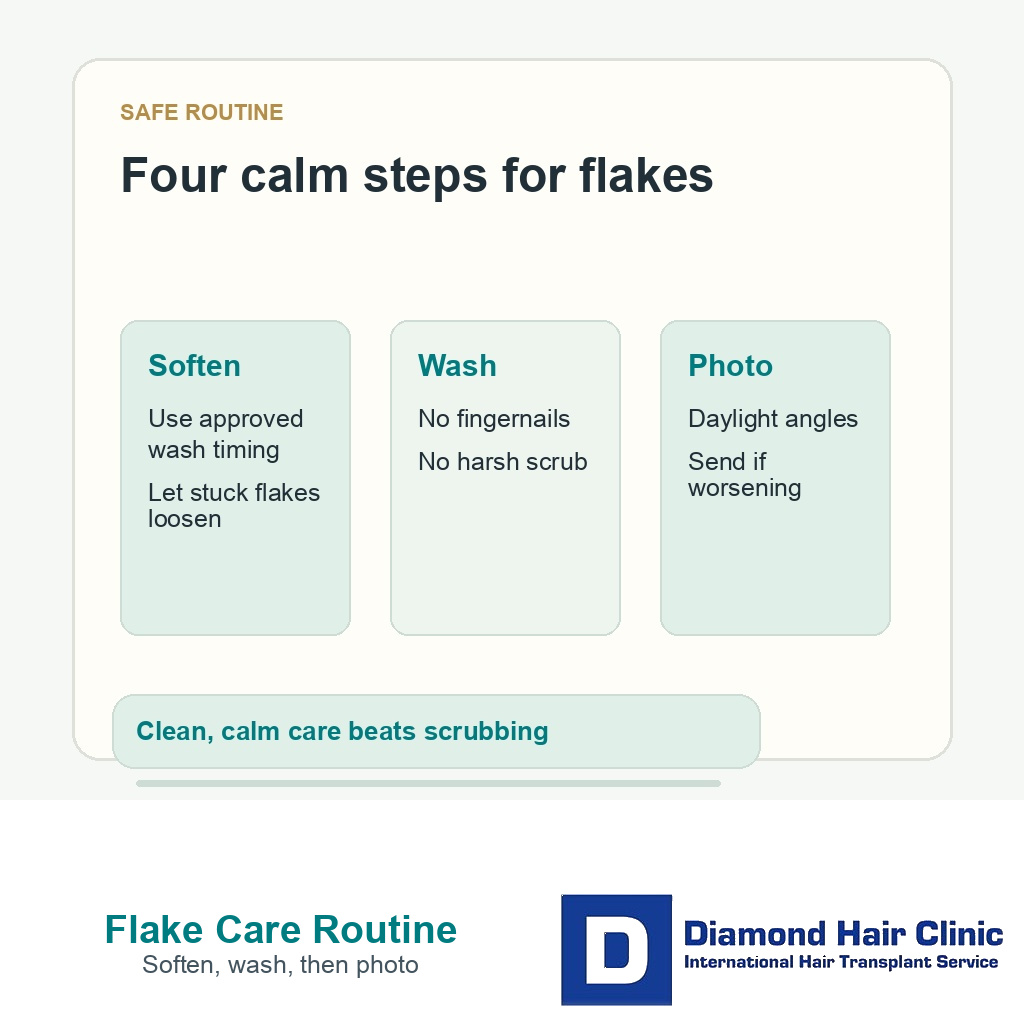
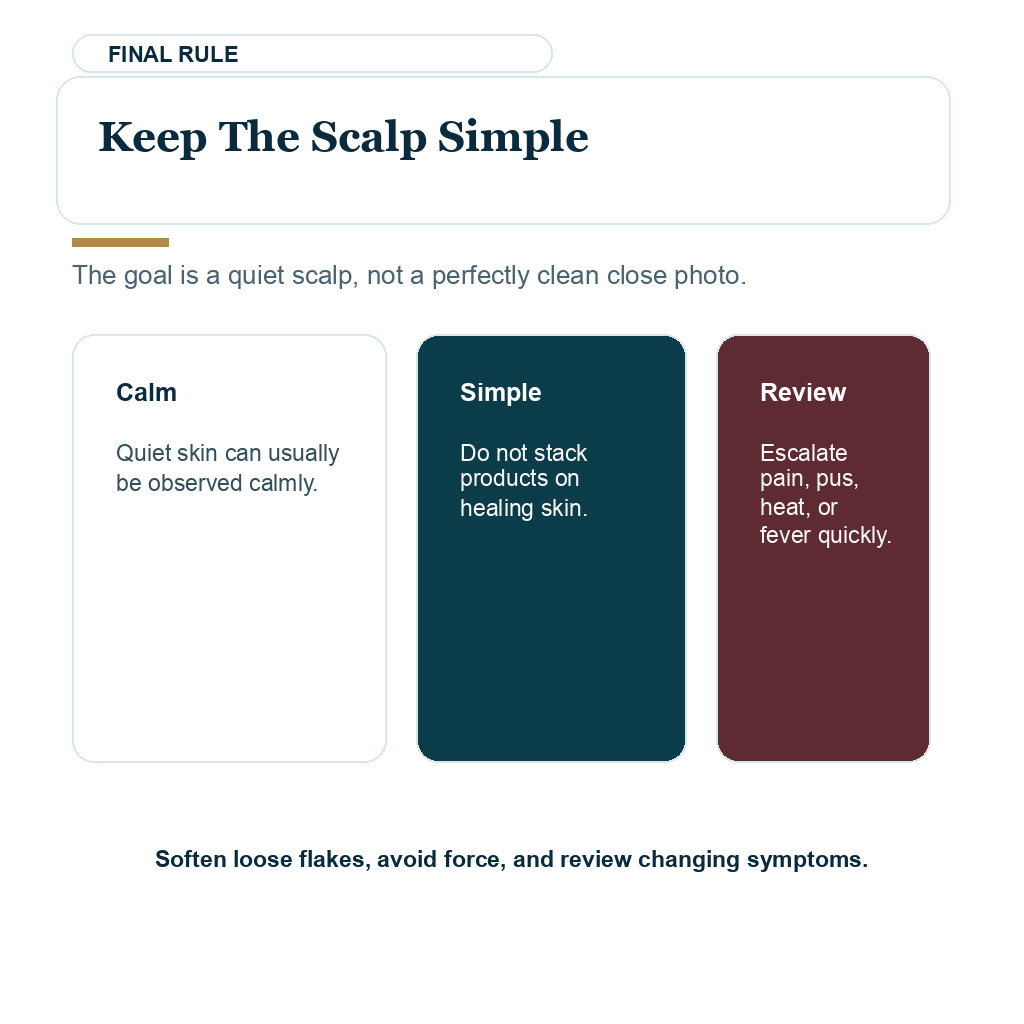
The safer routine is to soften, wash, and photograph instead of picking dry flakes.
These 10 dry scalp slides separate loose flakes, attached scale, washing pressure, itch control, products, dandruff, warning signs, travel dryness, shedding overlap, and the final no picking rule. Swipe sideways, use the arrows one slide at a time, or choose a dot below the image.
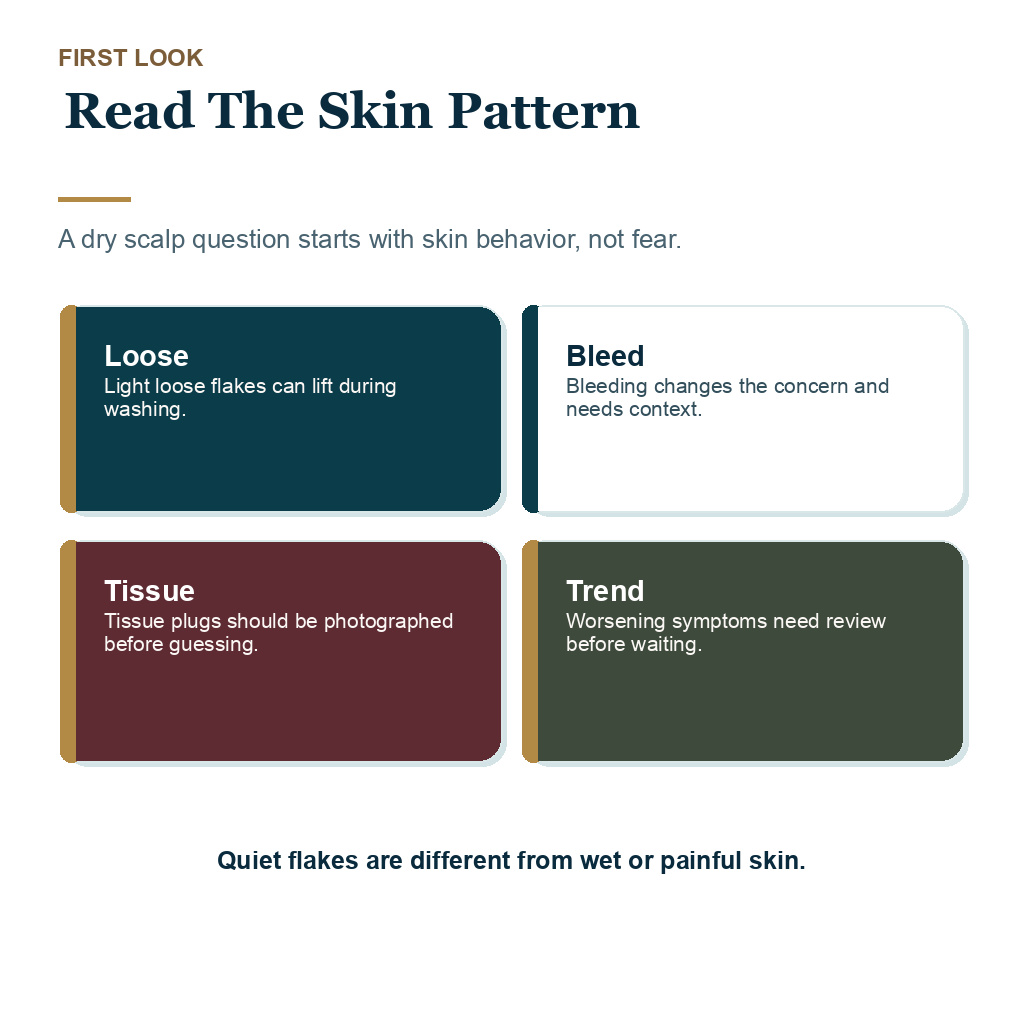


Flakes and shedding can happen at the same time
Another reason dry scalp creates panic is timing. Flakes can appear during the same weeks when transplanted hairs start shedding. You may see white skin pieces, short hairs in the sink, and a rough surface in the mirror on the same day. It is easy to connect all of those changes and assume the transplant is failing.
One shower or one mirror check rarely tells the whole recovery story. I look at the skin, the wash routine, the symptoms, and the photos over several days. If the surface is quiet and the only problem is dry flaking, the plan is usually patience and gentle handling. Stronger products every day usually create more irritation, not faster healing.
If shedding is the main fear, separate it from the skin question. Dryness needs comfort and safe washing. Shedding follows the hair cycle. Mixing the two fears often leads to rough handling, and rough handling is exactly what I want to avoid.
Hotel air and weather can make dryness worse
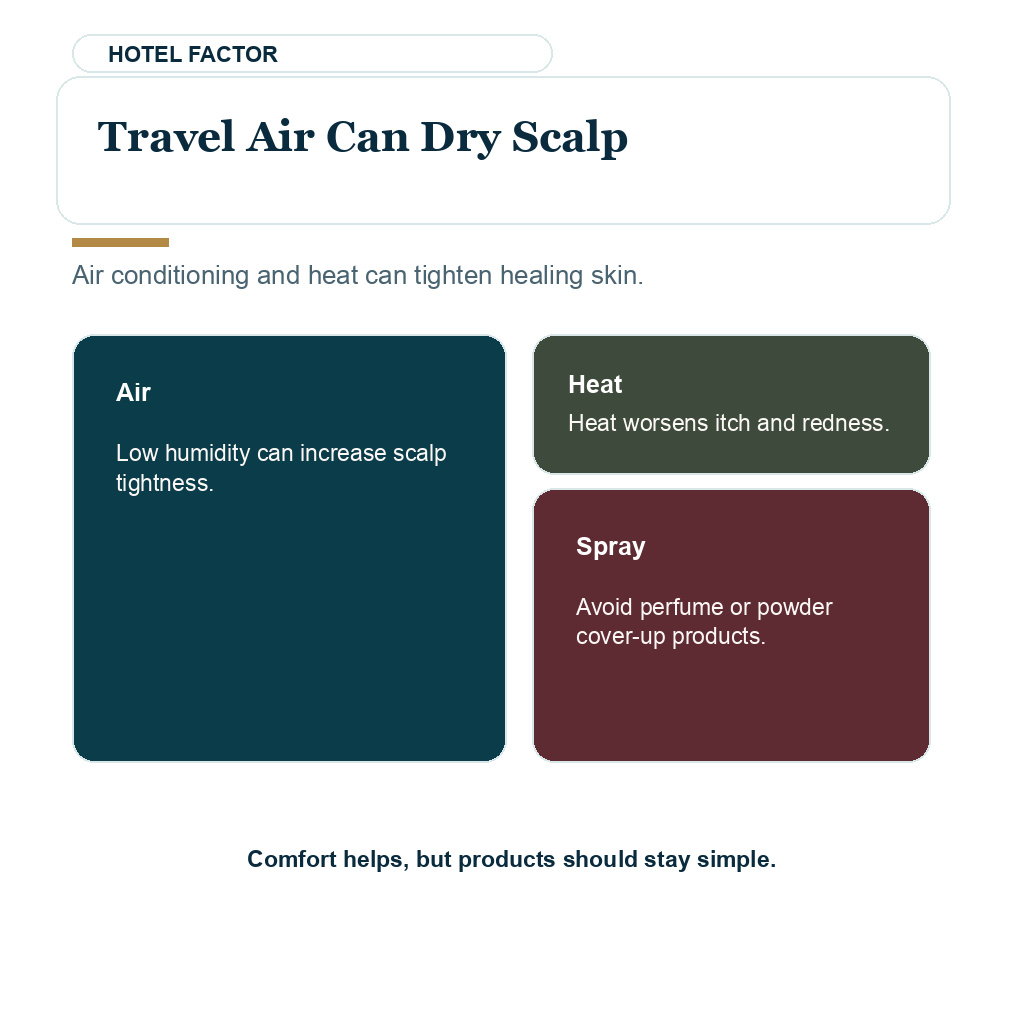
Many international patients notice dryness in the hotel. Air conditioning, heating, low humidity, and travel fatigue can make the skin feel tighter. That does not mean the transplant is failing. It means the environment is drying the skin while the scalp is already sensitive.
A moderate room, enough water, and the approved wash routine usually help more than adding cosmetic cover. Heat from a dryer and residue from perfume, styling spray, dry shampoo, or powder can blur what the scalp really looks like. The dry shampoo after hair transplant page covers powder timing when residue could sit on healing skin and make flakes less clear during review.
If you use a humidifier at home, keep it clean and do not create a damp, unventilated room. Comfort is useful. A wet, dirty device near a healing scalp is not.
Dry flakes need gentle routine, not scratching
Dryness after FUE is usually a skin handling issue first. Mild flakes, tightness, or itching often settle with the washing schedule, enough water, and time.
Scratching, picking, strong oils, random creams, and skipped washing make the scalp harder to read. Heavy crusting, sticky yellow scale, pain, spreading redness, bumps, fever, or discharge needs review.
Loose dry flakes on calm skin usually call for gentle washing and patience, not scraping or a heavier product routine. Photograph changes in the same light. Increasing pain, wet or yellow crust, spreading redness, pus, fever, or a cluster of bumps belongs in a clinic review rather than another home treatment.
Read this review excerpt
First wash completed and visual instructions given to my daughter.