Scalp Readiness Comes Before Normal Shampoo
In an uncomplicated recovery, normal shampoo usually returns gradually around 10 to 14 days after FUE. I make that change when the scabs have separated, the skin is closed, washing feels easy, and the scalp is not becoming more red, painful, wet, or irritated.
A stronger shampoo is not the emergency tool for the last attached scabs after FUE. If the crust is still fixed to the skin, the scalp is telling us the washing step needs timing and gentle softening, not a harsher bottle used once to force the surface clean.
The bottle matters, but timing and technique matter more. A mild everyday shampoo used gently is different from a strong dandruff shampoo, a clarifying shampoo, a medicated product, or scrubbing because you want every flake gone. If the bottle is meant to treat dandruff, treat the first use as a treatment step, not as an ordinary wash. Normal shampoo is a readiness decision, not a reward for reaching a date on the calendar.
After the early healing phase, I judge shampoo by how the scalp responds, not by label promises that it is natural, free of harsh chemicals, or growth boosting. Dryness, itching, burning, residue, or flakes are reasons to simplify the routine first. The real issue may be dandruff, dermatitis, irritation, or normal shedding, so repeated product switching can make the picture harder to read.
Comfortable washing supports recovery, but it does not replace a long-term plan for native hair that may keep thinning.
Shampoo readiness map
Choose the shampoo route from scalp signs
The date helps, but the scalp decides. I look at scabs, skin closure, irritation, product strength, and washing pressure before I call a shampoo routine normal again.
Readiness check
A mild shampoo test belongs after the scalp is closed and calm
Scabs gone, skin closed, washing easy, no fresh bleeding, and no increasing redness.
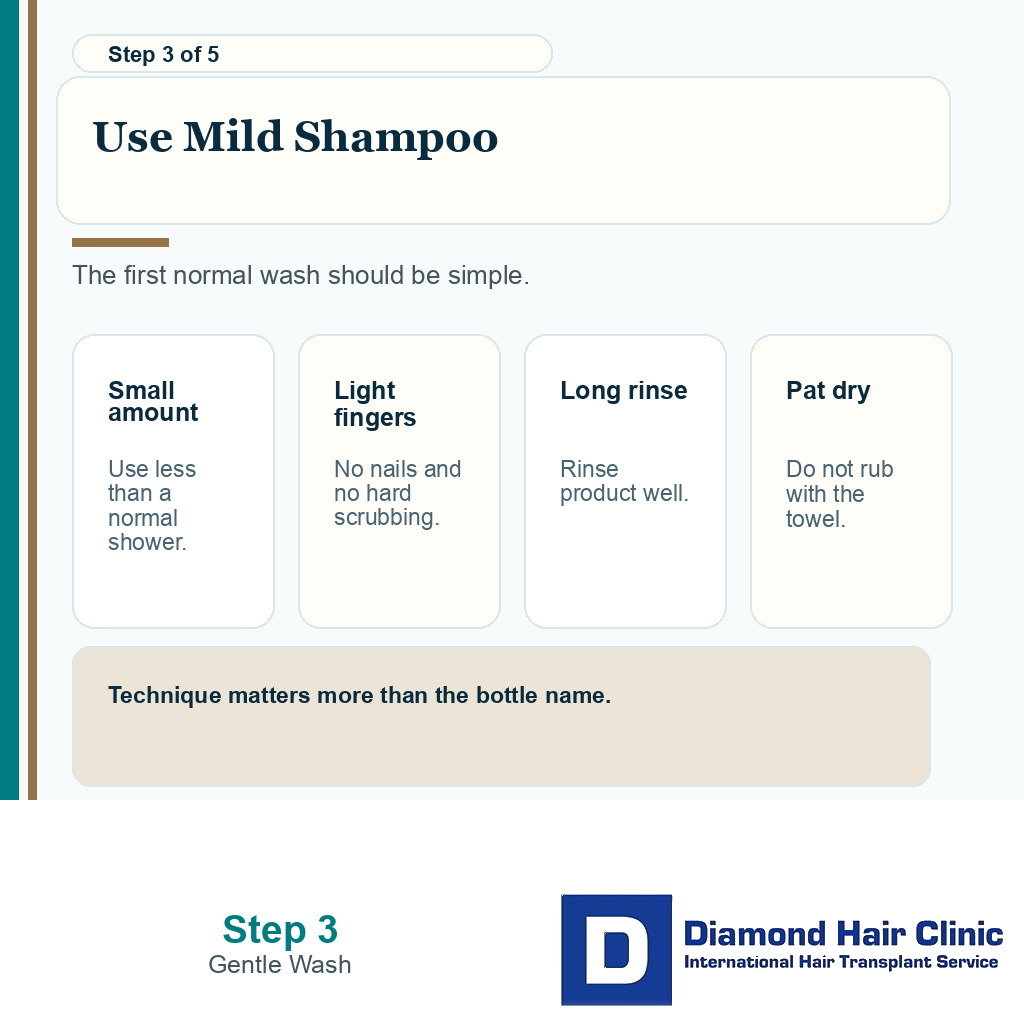
Use a small amount of mild shampoo, lather in the hands, rinse well, and pat dry.
Do not turn the first normal wash into scrubbing or product testing.
The first test should be uneventful, with no sting, no extra redness, and no urge to wash again. If the first normal wash stings or increases redness, return to the simpler routine before adding another product. Keep the first normal wash boring. If a new bottle leaves residue or makes you want to scrub again, step back before adding conditioner, oil, or another treatment.
The calendar matters less than the scalp
The common window for returning toward normal washing is around 10 to 14 days. That window fits many straightforward FUE recoveries because scabs have usually loosened, the skin has started to close, and the grafts are more stable. But the number is not the whole decision.
I check whether the recipient area is dry rather than wet, settled rather than increasingly red, and easy to wash without force. If there are still attached scabs at day 14, open spots, bleeding, pus, strong tenderness, or a hot painful area, do not compensate with stronger shampoo. Wait on normal shampoo and send clear photos for review. The base routine should still follow the written hair transplant aftercare plan you were given.
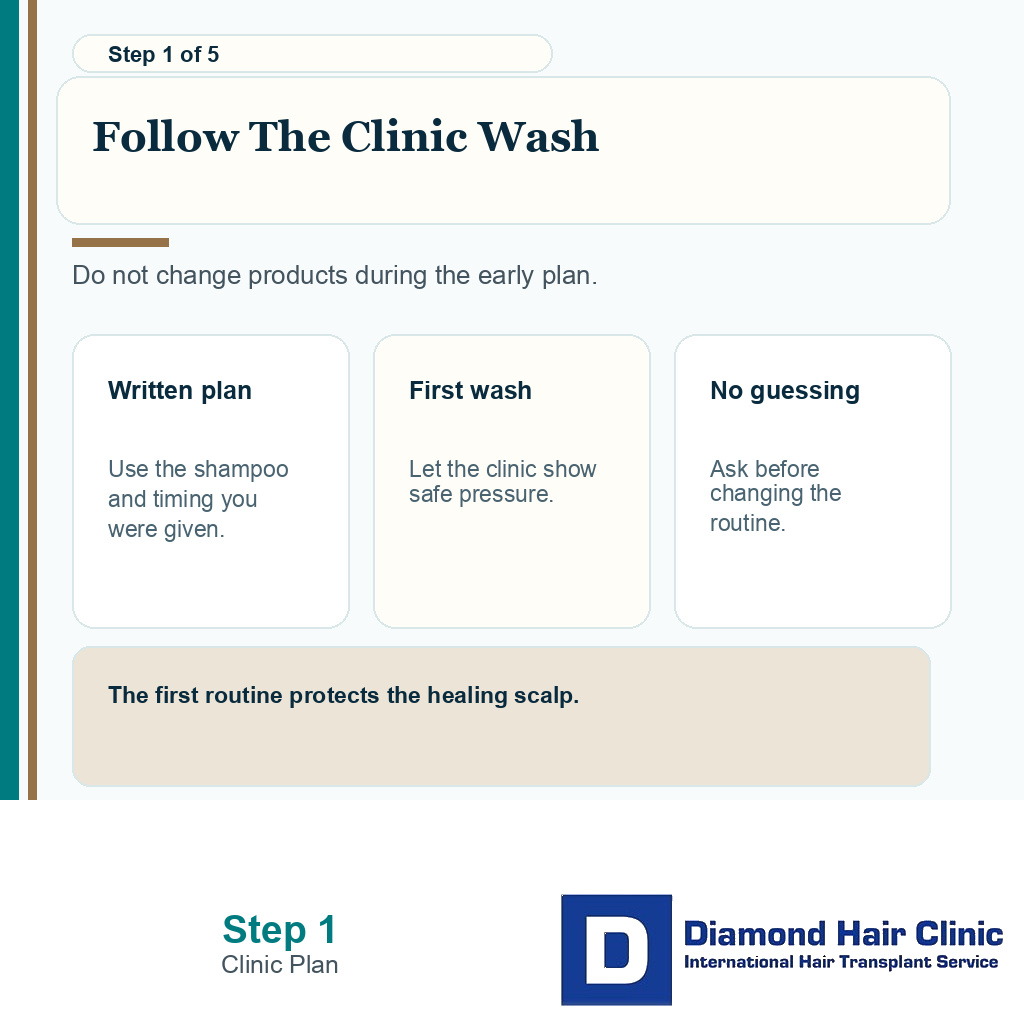
I separate the first wash from the return to ordinary washing. The early wash after a transplant is controlled and medical because the aim is to protect grafts, soften crusts, and avoid rubbing. The later routine is about returning slowly without pretending the scalp is already ordinary skin.
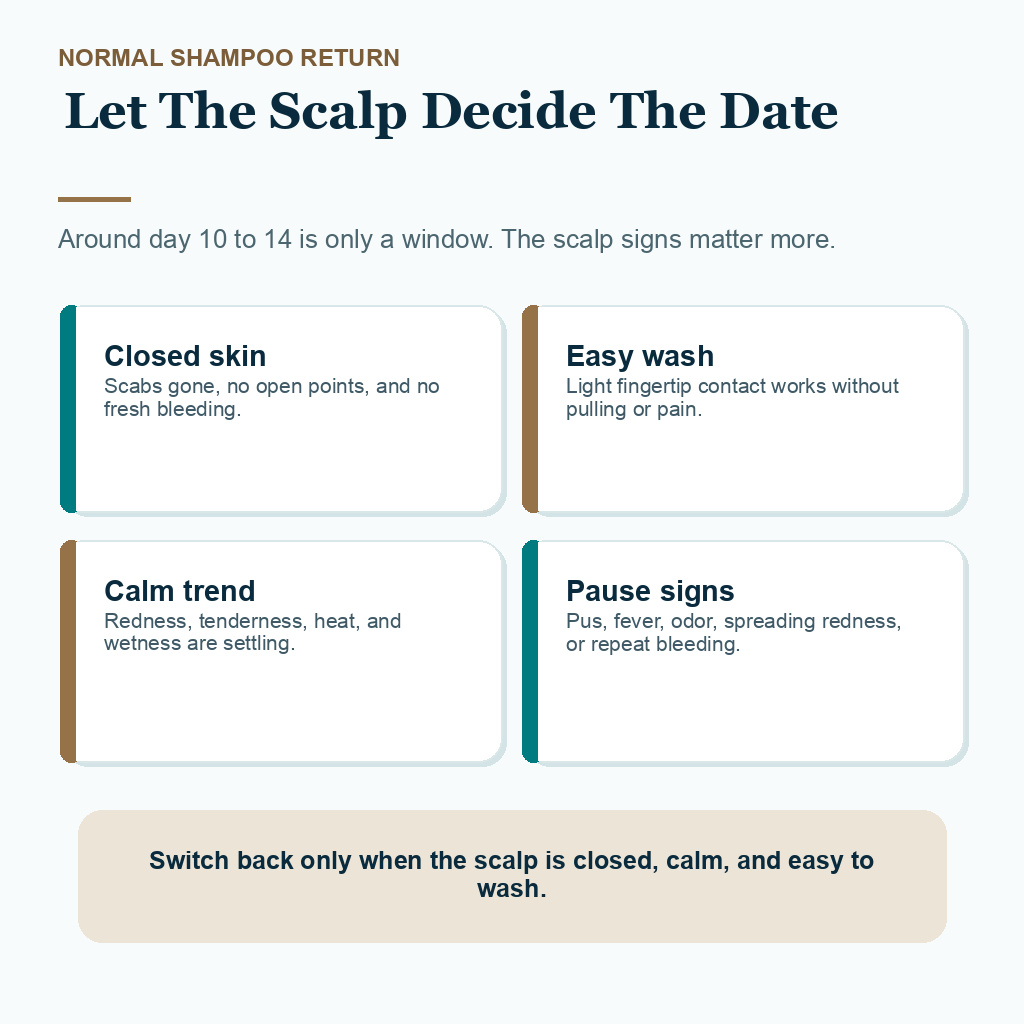
Switch back when scabs are gone, washing is easy, and warning signs are absent.
Start with a mild shampoo that rinses away easily
If your scalp is settled, choose a first normal shampoo that is mild, easy to rinse away, and unlikely to leave a heavy film. It does not have to be expensive. It does not have to promise hair growth. It has to clean without making the healing skin burn, itch, or flake more.
If you used a certain simple shampoo before surgery without irritation, it may be reasonable to return to it gradually after the early healing window. If your old shampoo was strongly fragranced, very drying, heavy with oils, or made your scalp itch even before surgery, the transplant is not the time to prove it is fine. Choose a simpler product first.
Baby shampoo is not magic. It is familiar and often gentle, so it can be useful during the transition while the scalp still feels sensitive. But staying on baby shampoo for months is not required for everyone. If the scalp is clean, closed, and comfortable, the decision can move from fear to tolerance.
Should you use stronger dandruff shampoo as a shortcut?
Dandruff shampoo is a common question because the scalp may feel oily, flaky, or itchy after the scabs are gone. I understand the temptation. Before surgery, a medicated dandruff shampoo may have been the only product that controlled the scalp. After FUE, I make that decision carefully.
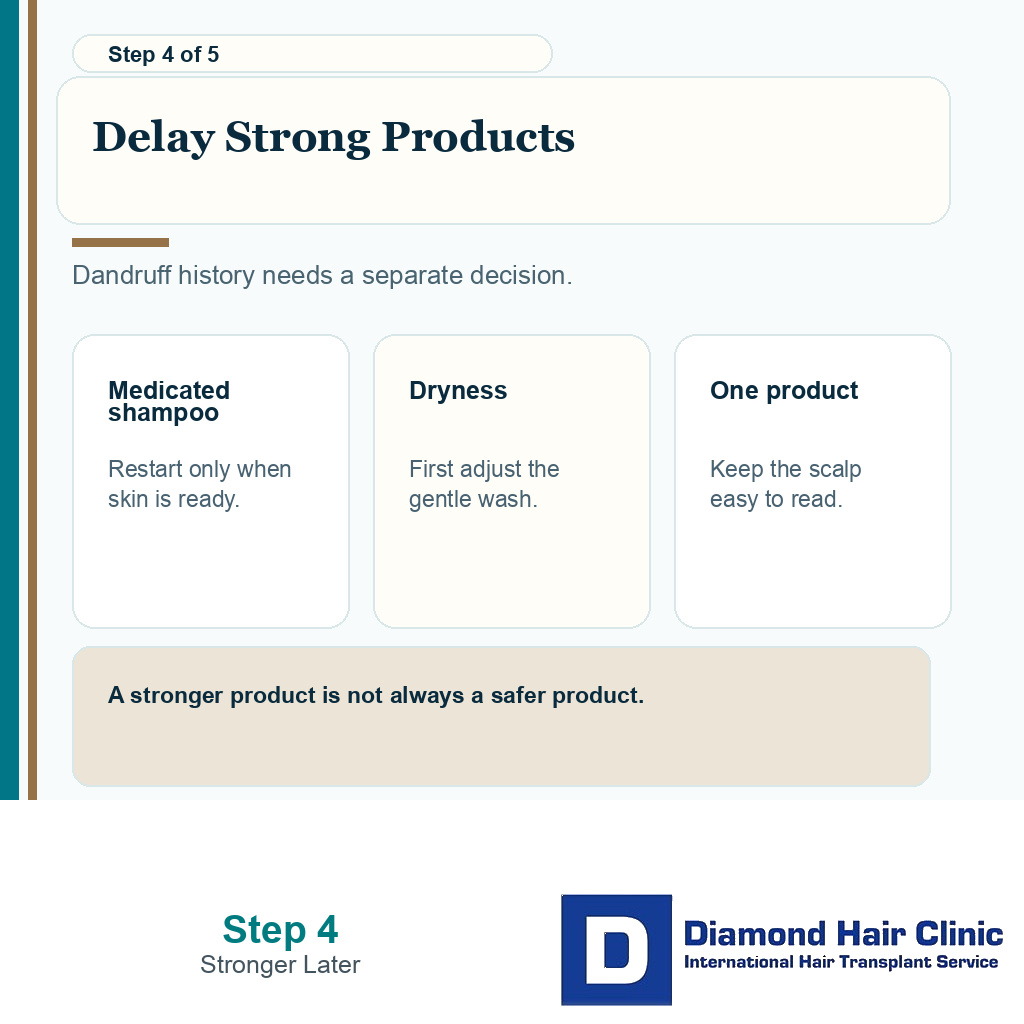
An ordinary shampoo is mainly a cleaning product. A medicated shampoo is a treatment decision. Ketoconazole, selenium sulfide, zinc pyrithione, tar shampoos, and strong dandruff routines can help the right scalp at the right time, but they can also dry or irritate healing skin. A medicated option such as ketoconazole shampoo after a hair transplant needs separate timing because the medication, strength, timing, and diagnosis matter.
Mild dandruff usually starts with gentle washing and observation. With a history of seborrheic dermatitis, eczema, or severe flakes, the product that previously worked should be restarted only when the scalp is ready for that treatment. Treating every flake as a reason for a strong shampoo can irritate a scalp that only needed patience.
The washing motion matters more than the bottle
By the time normal shampoo is considered, the worry often moves from the bottle to water pressure, fingertips, towel drying, and whether a few hairs in the foam mean graft loss. These details matter because a good product can still cause trouble if it is used with the wrong pressure.
After scabs have separated and the skin is closed, you can usually begin a more normal lather, but not an aggressive scrub. Lather the shampoo in your hands first. Apply it with light fingertip contact rather than fingernails. Rinse thoroughly. Let the water and foam do the work. Pat dry instead of rubbing with a towel. Scrubbing is the part that creates risk when the scalp is still sensitive.
If small hairs shed during washing after the early graft anchoring phase, that by itself does not mean graft loss. After hair transplant grafts become secure, a shed visible hair shaft is not the same as the living follicle. A lost graft concern becomes more serious when there is fresh bleeding, visible tissue, a new open spot, or pain that is increasing.
Dryness and flakes should not lead to product stacking
Dryness, white flakes, and mild itching are common reasons patients start adding products too quickly. One day it is a new shampoo. The next day it is oil, conditioner, aloe, minoxidil, a dandruff shampoo, and a serum. Then the scalp becomes harder to read.
One change at a time gives clearer information. If the scalp is dry, first check whether washing is too frequent, water is too hot, shampoo is too strong, or the product is not rinsed well. When I see dry scalp after a hair transplant or white flakes after a hair transplant, I separate loose scale, product residue, crust, and wet discharge before adding another product.
That fear is understandable. A flake with a hair can look dramatic. But adding several treatments at once can create redness and itching that did not need to happen. A plain routine gives you cleaner information.

Use one mild change first, then judge how the scalp responds.
Conditioner and styling products return more slowly
Shampoo is mainly a cleaning step. Conditioner, masks, oils, leave in products, wax, spray, and styling creams behave differently because they can coat the hair and scalp or require stronger washing later. I treat shampoo and conditioner as separate decisions.
A mild rinse off conditioner may return after the scalp has settled, but I usually keep it away from the recipient area at first and use it mainly on the hair lengths. I handle conditioner after a hair transplant separately because it can coat the hair and may need more washing later. With products that contain strong fragrance, alcohol, heavy oils, dyes, or residue, the concern is irritation and cleanup, not only the ingredient name. I also separate shampoo you rinse away from dry shampoo and root sprays, because powder or pigment can sit on the scalp and may need rubbing to remove.
I put clean skin before cosmetic feel. If a product makes the scalp sting, burn, itch, or look more inflamed, stop it and return to the simpler routine while the clinic reviews the pattern.
Warning signs change the shampoo plan
Do not use normal shampoo to push through warning signs. If the scalp is becoming more painful, hotter, wetter, more swollen, or more red, the shampoo brand is no longer the main issue. The scalp may need review.
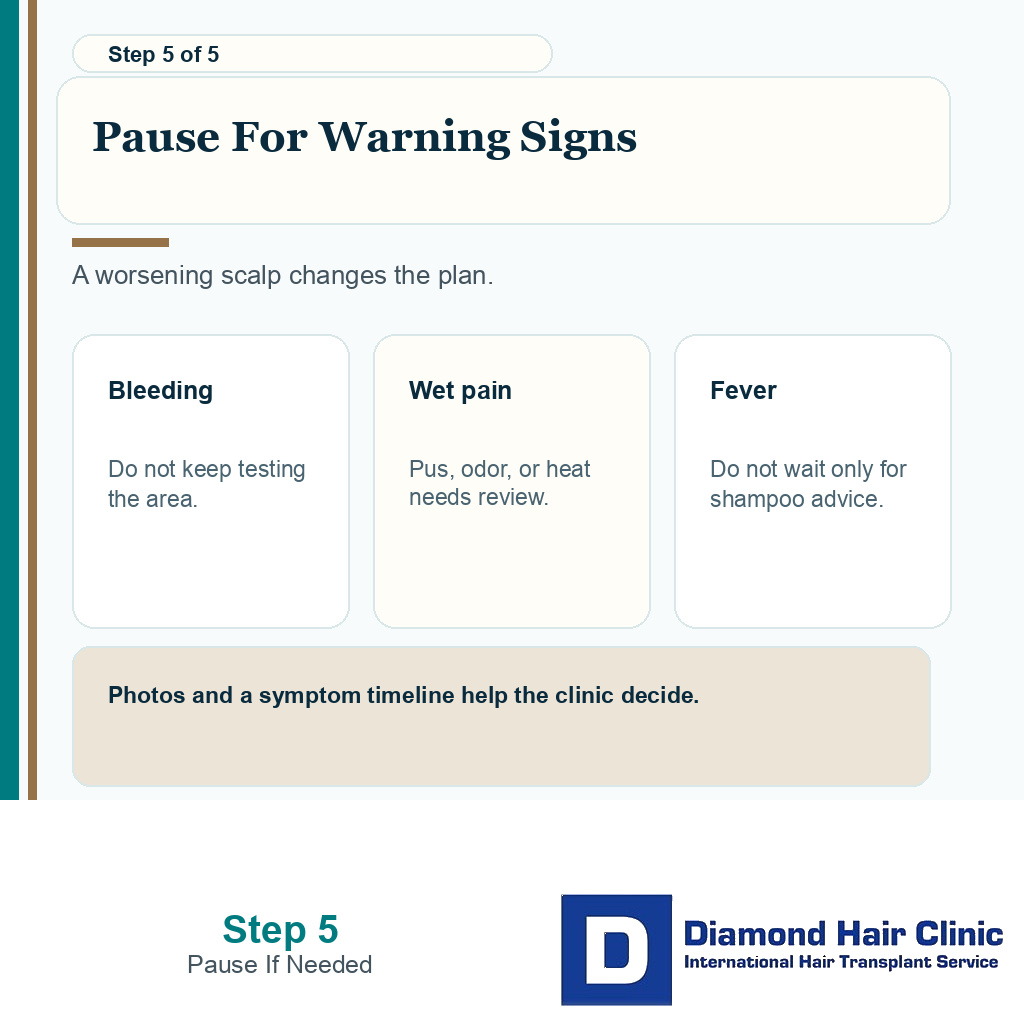
Stop and ask for review if washing causes repeated bleeding, a wound looks open, one area becomes increasingly tender, pus appears, the scalp smells bad, you develop a fever, or redness spreads instead of settling. The warning pattern matters more than whether the shampoo is mild. I use the same separation described in redness, scabs, and pimples after a hair transplant when deciding whether this is normal settling or a symptom that needs review.
Do not try to solve a worsening scalp by rotating through shampoos. Take clear photos in normal light, write down the day after surgery, the product used, and the symptoms, then contact the clinic. If you feel unwell or the symptoms look urgent, seek local medical care instead of waiting for a message reply.
Normal shampoo should return one product at a time
After the clinic wash plan is finished and the skin is closed, the first normal shampoo should be a small test. Use one mild product, rinse it away gently, and keep every other scalp product unchanged that day.
Make the first normal shampoo a quiet trial. Choose a day when you are not adding conditioner, oils, dandruff treatment, or minoxidil, so any stinging or flakes can be read clearly. A single new shampoo gives the scalp a cleaner test that day.
If there is stinging, wet skin, fresh bleeding, stronger redness, flakes that worsen, or an urge to scratch, step back to the simpler routine and let the clinic review the scalp. Once several washes stay calm, conditioner, dandruff treatment, oils, or minoxidil can be reconsidered one at a time.

Read this review excerpt
Upon arriving home, I sent 4 photos (of each side of head) after every washing process to doctor for checking where I was given personal advice for how to take care of my healing head.