


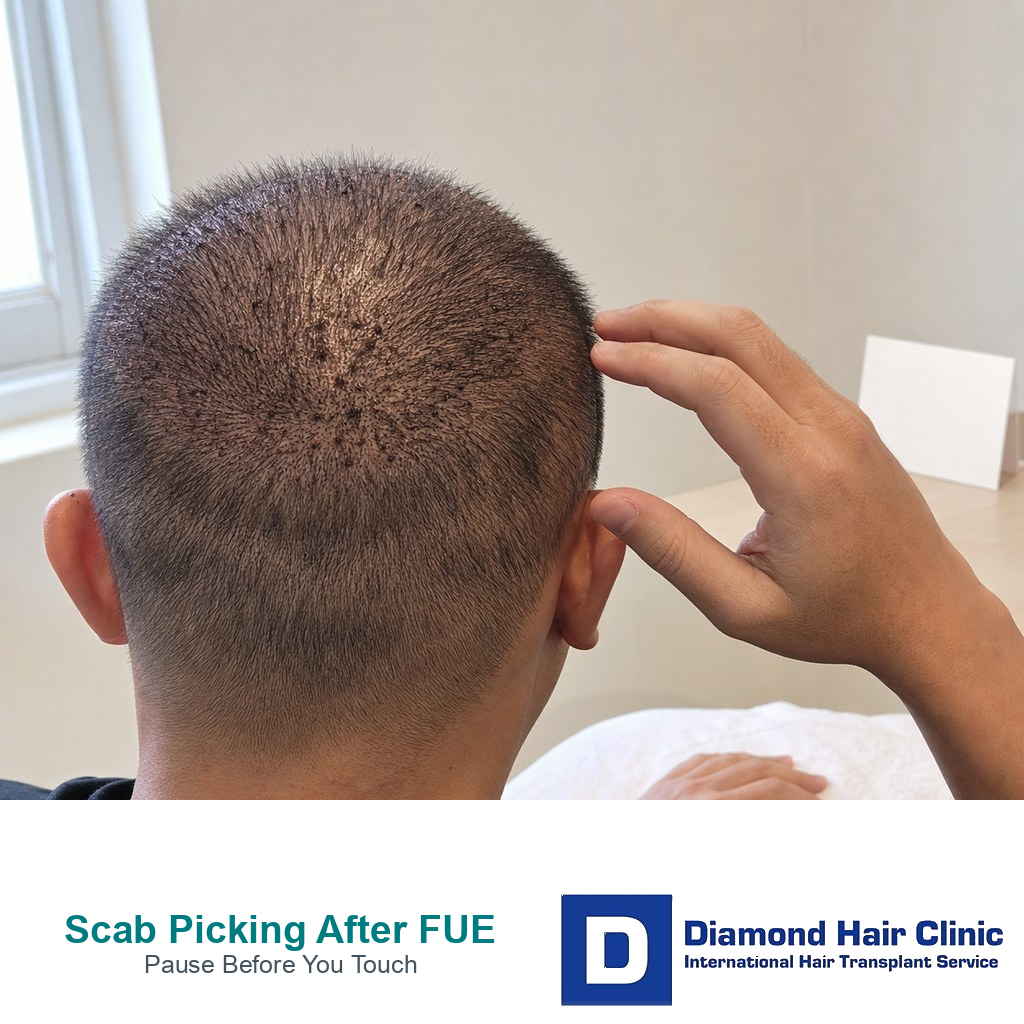
Scab Picking in Early FUE Healing Requires More Than Willpower
If you know you keep picking scabs, rubbing tiny crusts, squeezing bumps, or checking the graft area again and again, I do not treat that as a simple reminder problem. After FUE, the scalp does not need a stronger lecture. It needs a realistic prevention plan before the urge arrives.
In practice, keep fingers away from the recipient area, use the washing rhythm your clinic gave you, and send clear photos instead of testing whether a crust is ready to move. Contact the clinic quickly if picking causes bleeding, an open wet spot, worsening pain, spreading redness, heat, drainage, or fever.
If you already picked once, stop there. Do not test the spot again to see whether it is secure. Take one clear photo set, note the day after surgery, what touched the area, whether there was fresh bleeding or wet skin, and then leave the scalp alone while you send the clinic the facts.
The risky moment is usually the force used to make a stubborn crust come off. If a scab is not soft enough to move with the wash plan, chasing it with fingernails creates more risk than leaving it for clinic review.
For the next few hours after you notice one stubborn crust, make the goal smaller. No mirror loop, no fingernail check, no towel test, and no second attempt to prove the same spot is safe. One clear photo after the scalp dries is more useful than going back to the same scab until it finally moves.
No bleeding and no open wet point is reassuring, but it is not a medical examination. If you already suspect you may pick, pop, scratch, rub, or inspect too much, I take that seriously. This is not a diagnosis of OCD, trichotillomania, or body dysmorphia. It is a practical recovery plan for protecting grafts when your hands want to solve the problem before the scalp is ready.
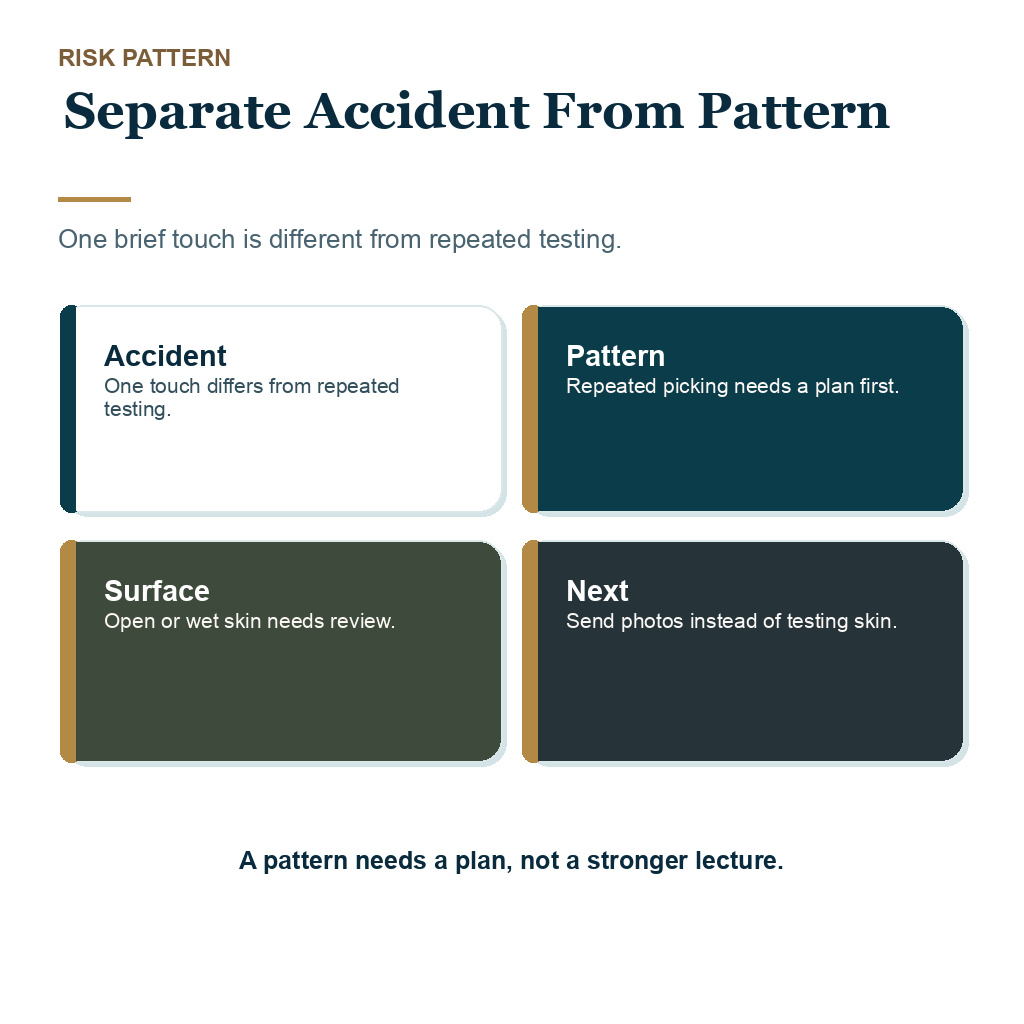
One accidental touch is not the same as repeated picking
A single accidental brush while changing clothes, brief pillow contact, or one mistaken touch is handled differently from repeated picking at crusts. I judge one brief contact by the force, timing, bleeding, and visible change, the same details I use when answering touching grafts after hair transplant. The more serious pattern is different. The patient keeps going back to the same scab, pimple, crust, or hair because it feels impossible to leave alone.
Repeated picking changes the risk. It can turn a healing surface into repeated trauma. It can make a small scab bleed again. It can make a bump more inflamed. It can also make anxiety worse, because each new check creates another question.
Separate the event from the habit. Did you touch once and stop, or are you returning to the area again and again? Did a towel rub the scalp, or are you rubbing until it feels clean or dry? Did a scab loosen during washing, or did you lift it with a nail? Those details decide the next step.
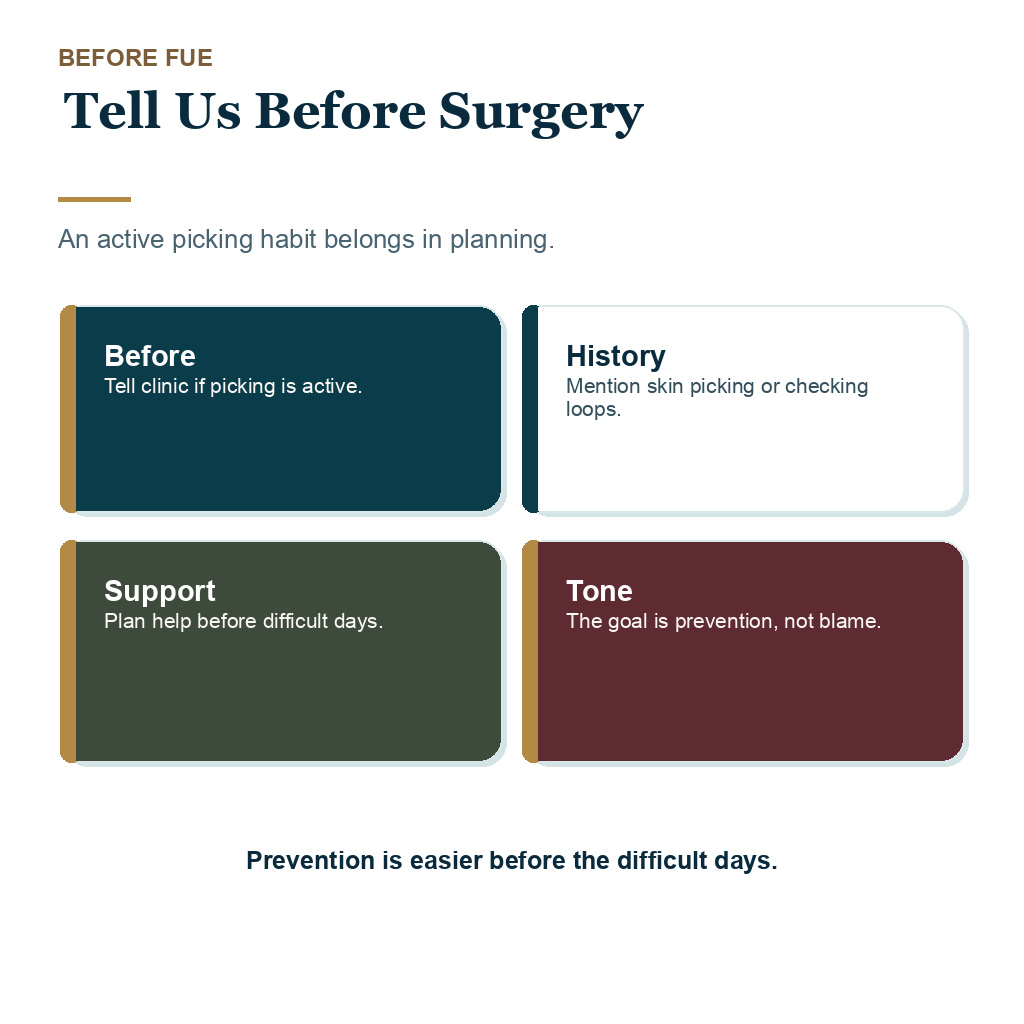
Tell the clinic before surgery if the habit is active
If you already know you pick skin, pull hairs, pop pimples, or repeatedly check tiny skin changes, tell the clinic before surgery. This is not embarrassing information. It is surgical planning information. The early recovery period asks you to leave the recipient area alone when it may itch, crust, feel tight, look uneven, and tempt inspection.
Active hair pulling can change candidacy and recovery planning, so I treat trichotillomania and hair transplant as a separate conversation when it is relevant. Repeated mirror or photo reassurance loops can also overlap with body dysmorphia and hair transplant. I do not use those labels casually. I ask because grafts are a commitment, and the first days after surgery can put pressure on the exact habit we need to control.
Sometimes surgery should wait until the recovery environment is realistic. That may mean a support person, clearer clinic contact rules, shorter inspection windows, fewer mirrors, or delaying if the behavior is too active to control.
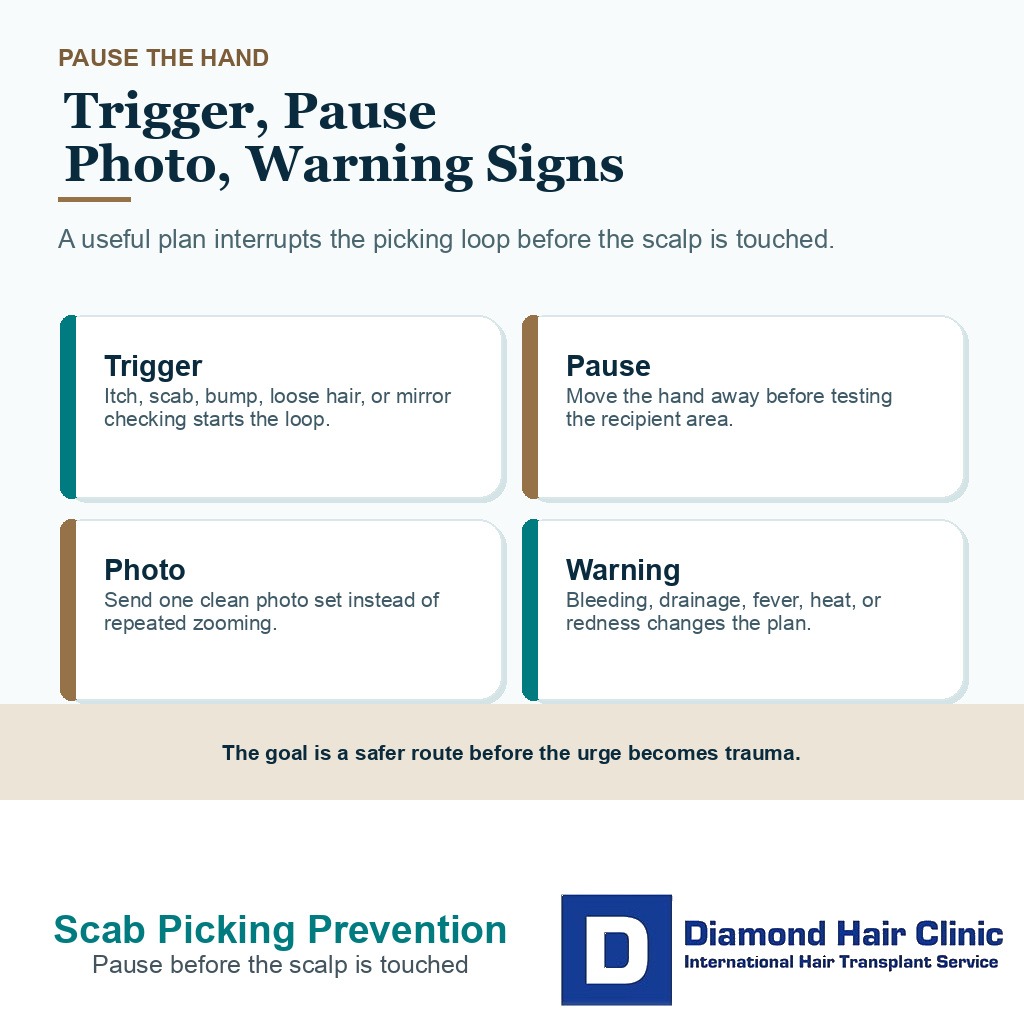
Scabs can look ready before the skin is ready
Scabs can look loose before the scalp is ready for force. Healing is happening under the crust, not only on the surface you can see. A crust may catch a small hair, sit unevenly, or look darker in photos than it does in the mirror. None of that makes nail removal safer.
Spray or soaking can make crusts look softer, but that does not turn them into something to pick. The safer marker is loosened crusts coming away during the instructed wash, without fresh bleeding, force, or repeated checking with the fingernail.
A visible crack, lifted edge, or small space between crusts is exactly the kind of detail that tempts picking. Treat it as a stop sign, not as permission to clean the area with a nail. If it is dry and calm, follow the washing rhythm your clinic gave you. If it is wet, bleeding, painful, spreading, or happened after you picked, send a photo and stop touching it.
When patients see hair inside a scab, I first separate a dry flake that releases during washing from a scab lifted by a nail. A dry scab with hair is closer to lost grafts after hair transplant scabs. A scab pulled until there is fresh bleeding, wet skin, or an open point changes the urgency.
If a scab is still attached, do not lift an edge with a fingernail, towel corner, comb, cotton bud, or tweezers. Follow the washing timeline you were given. If the clinic instructed gentle soaking or washing at a certain stage, stay inside that instruction. For the broader washing rhythm, follow washing hair after hair transplant. The useful distinction is simple enough without testing it. A scab that lets go during softening and washing approved by the clinic is not the same as a scab that only lifts because you caught the edge.
A crust that loosens during washing is different from one you keep trying to loosen in the mirror afterward.
When a softened scab tempts you to help it
What if the crust moves during washing?
A crust that slides away with the wash is different from a crust you lift with a nail. Let the water, foam, and fingertips move gently within the clinic timing. If saline spray made the edge look softer, that still does not turn it into something to test. Fresh bleeding, a wet open point, or pain means the area needs review before more cleaning.
What if I already picked once?
Stop the repeat cycle first. Take one clear photo set, write down what happened, and keep your hands away from the area while you wait for medical guidance. More checking usually makes the evidence less useful.
Pimples and bumps should not be squeezed
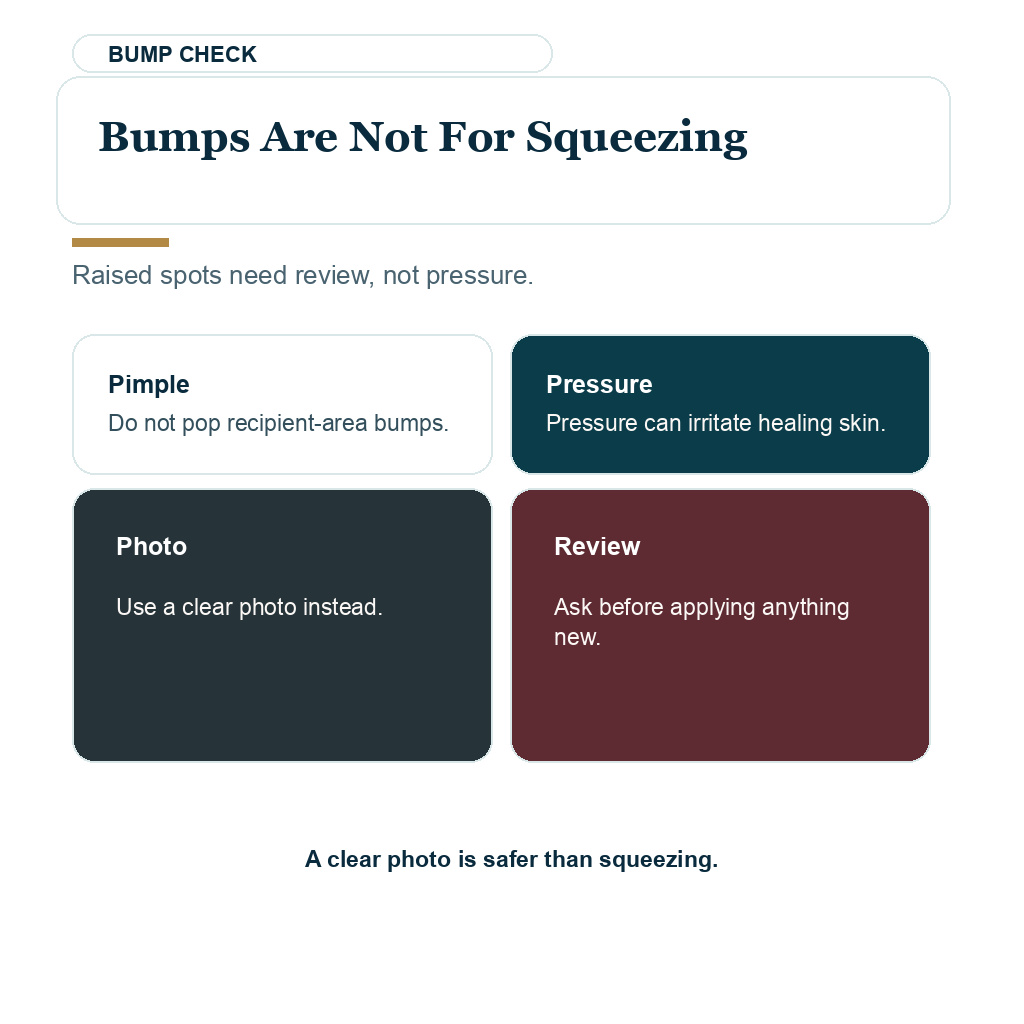
A bump or pimple can feel like something that must be drained. I understand the urge, but squeezing a healing scalp is not a clean solution. Pressure can irritate the area, break the surface, spread inflammation, and make it harder to judge what was there before you touched it.
A small quiet bump is different from a hot, painful, spreading, or draining bump. If redness, scabs, or pimples are the main issue, compare the pattern with redness, scabs, and pimples after hair transplant. If there is spreading redness, heat, drainage, swelling, worsening pain, or fever, the safer comparison is infected hair transplant, because warning signs change the urgency.
Do not put random creams, antiseptics, antibiotic ointments, acne gels, hydrocolloid patches, tape, or home remedies on the recipient area without instruction. If you think a spot needs treatment, ask before putting anything on it. For product questions, antibiotic ointment and hair graft healing sets a safer boundary than experimenting on fresh grafts.
Itching needs a barrier between the urge and the hand
Itching is one of the most common triggers for picking. Scratching often begins as relief and becomes inspection. A patient scratches once, feels a crust, checks the crust, sees a hair, presses again, and then sends a worried message after the scalp is already irritated.
When itch is the main trigger, use the clinic’s aftercare plan rather than nails. If the itch feels broader than one scab, treat itching after hair transplant as a comfort and warning sign question, not as permission to scratch. The practical barrier is to move the hand away, change position, stop the mirror check, and send a photo if the itch is localized, worsening, or paired with redness or bumps.
Drying can also become a picking moment. A towel should not become a tool for rubbing crusts away. If the scalp feels wet after washing, the safer action is careful drying, not friction. When towel pressure is the trigger, drying scalp after FUE without rubbing grafts gives the safer boundary.
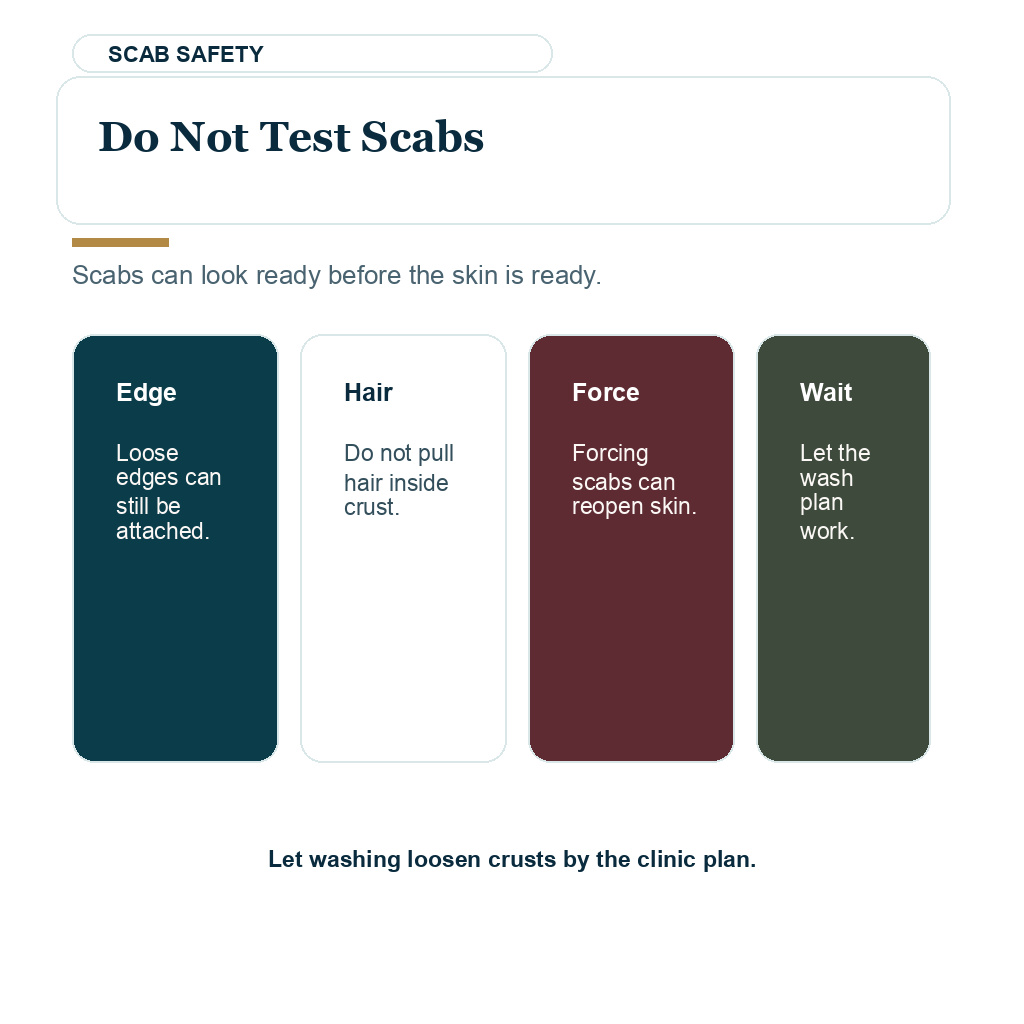
Pause the urge before your hand reaches the scalp
The pause point below is not a mental health diagnosis and it is not a substitute for clinic review. Choose the state that best matches the moment, then use the route that keeps your hands away from grafts before you touch, squeeze, scrape, or cover the area.
FUE picking urge decision splitter
Choose the closest state before your fingers go back to the scalp. The safer response changes when the trigger is itch, a stuck scab, a tempting bump, repeated checking, or an open/wet spot.
Itch urge with calm skin
When the skin looks calm and the main problem is itch or restlessness, the goal is to stop the hand before it becomes scratching.
If two states fit, choose the more cautious one. A simple itch is one route. Itch plus an open wet point, fever, spreading redness, or drainage is no longer only an itch route.
Replace repeated checking with one clean photo set
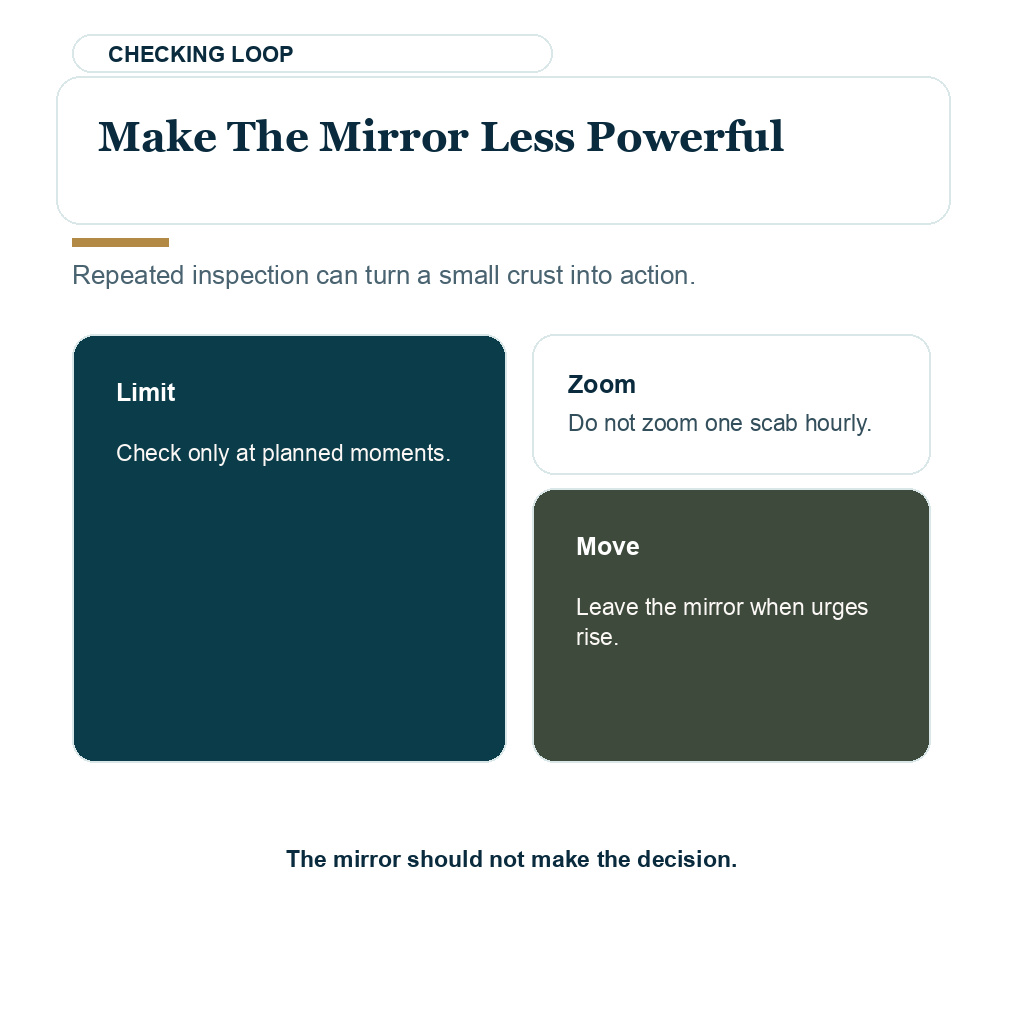
Repeated checking feels productive because it creates information. In reality, it often creates worse information. The scalp is touched, lighting changes, the camera zooms too much, anxiety rises, and the patient can no longer tell whether the skin changed or the checking changed it.
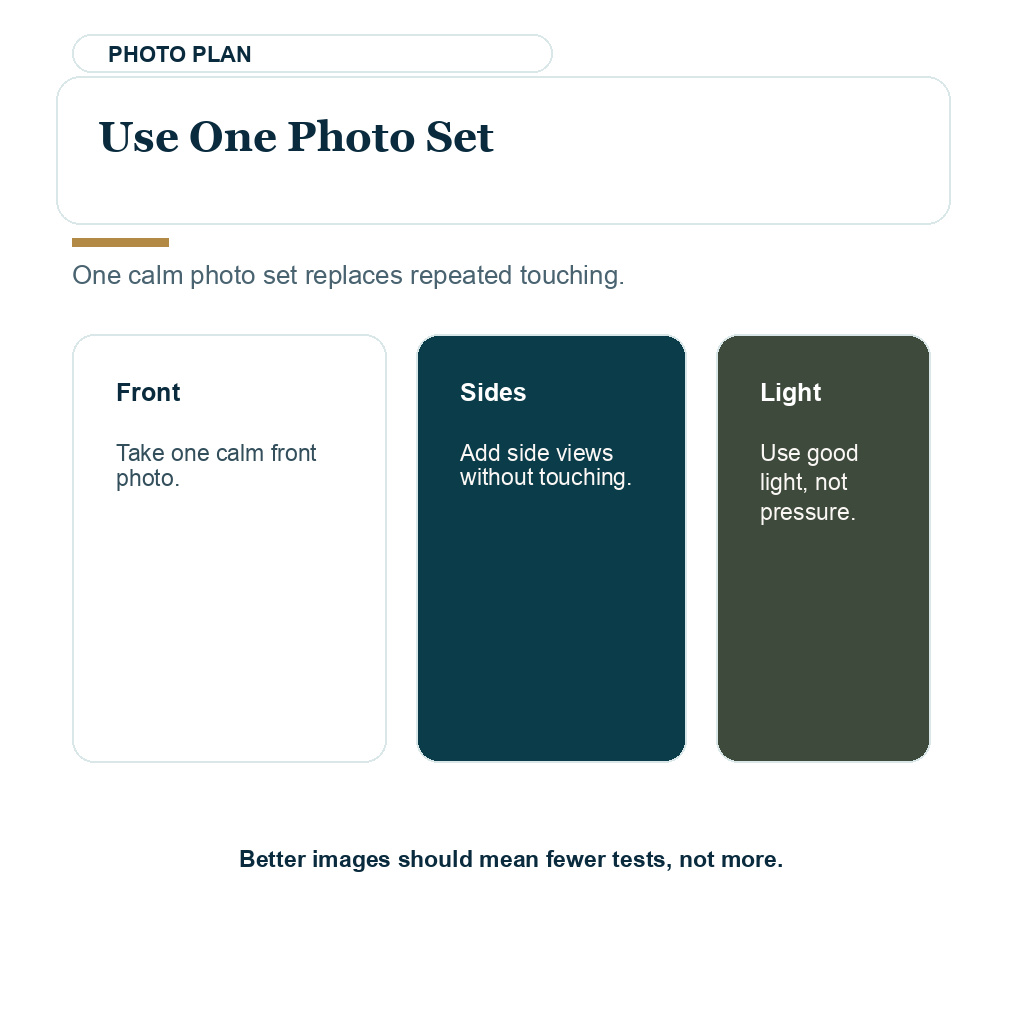
Use one clean photo set instead. Take photos in steady light, from the same distance, with the area in focus. Include the day after surgery, what happened, whether there was bleeding, whether the spot is wet or dry, whether pain is increasing, and whether there is fever. If AI advice about scabs after FUE made you want to pick, send the story before touching the area again. Good photo quality matters more than another panic close-up. The early hair transplant review photos method keeps the comparison cleaner than taking a new zoomed image every few minutes.
If you wake up after contact during sleep, the question becomes the event and the visible result, not how many times you can check it afterward. For that specific situation, sleeping on grafts after hair transplant is the closer guide. General advice about sleeping position is less useful once the contact has already happened.
Use the visual slides as a pause before touching the scalp
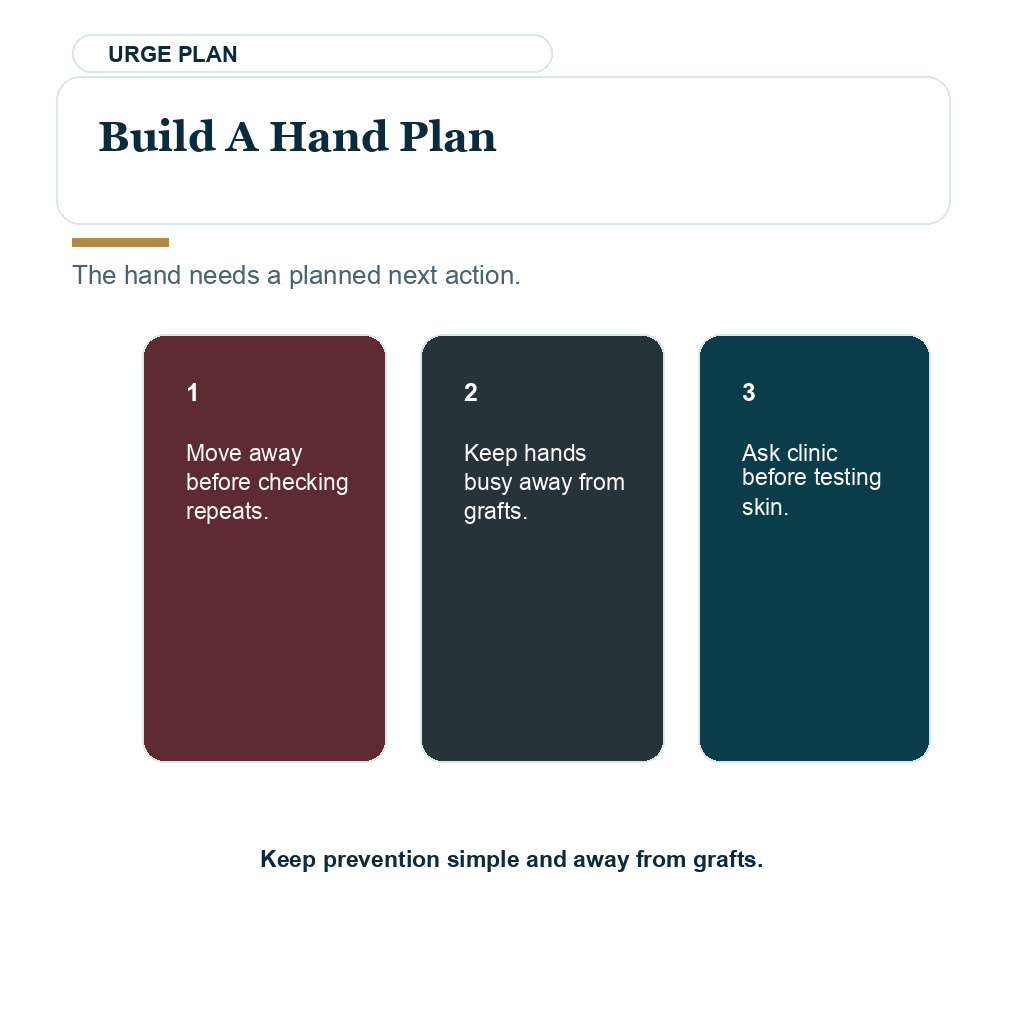
Use the 10 slides below as a short pause before your hand reaches the scalp. They move from stopping the first touch to sending a clear update before you add products, scrape a scab, or squeeze a bump.



Scab picking starts with prevention, not punishment
The safest moment to handle picking is before the itch or anxiety is strong. Put distance between the scalp and the mirror, keep washing gentle, and decide in advance who you will contact if you touch a healing area.
Keep the routine plain. Avoid long close-up checks, repeated phone zooming, and anything that sticks to the grafts. Short fingernails can help if they are already normal for you, but gloves, tape, patches, or tight coverings can create a new problem unless the clinic specifically asked for them.
If you picked, rubbed, squeezed, or disturbed the area, write down the day after surgery, what happened, whether there was bleeding or wet drainage, and whether pain, heat, swelling, fever, or redness is increasing. One clear photo set and a truthful message are more useful than another hour of checking.
I treat this as a recovery behavior that needs structure, not shame. The goal is to stop the next touch, protect the grafts, and separate normal scab shedding from a warning sign that needs medical attention.
Read this review excerpt
First wash completed and visual instructions given to my daughter.