


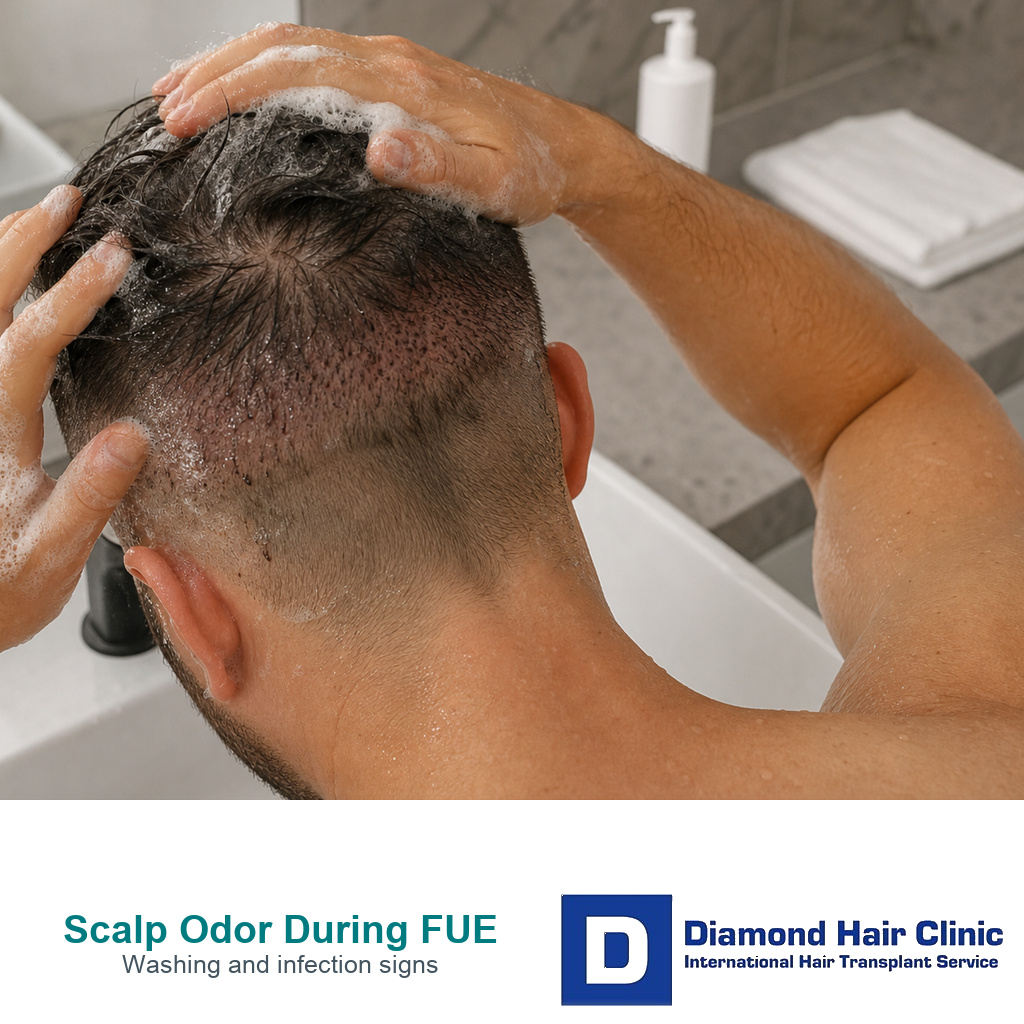
Scalp Odor Needs Symptom Review, Not Guesswork
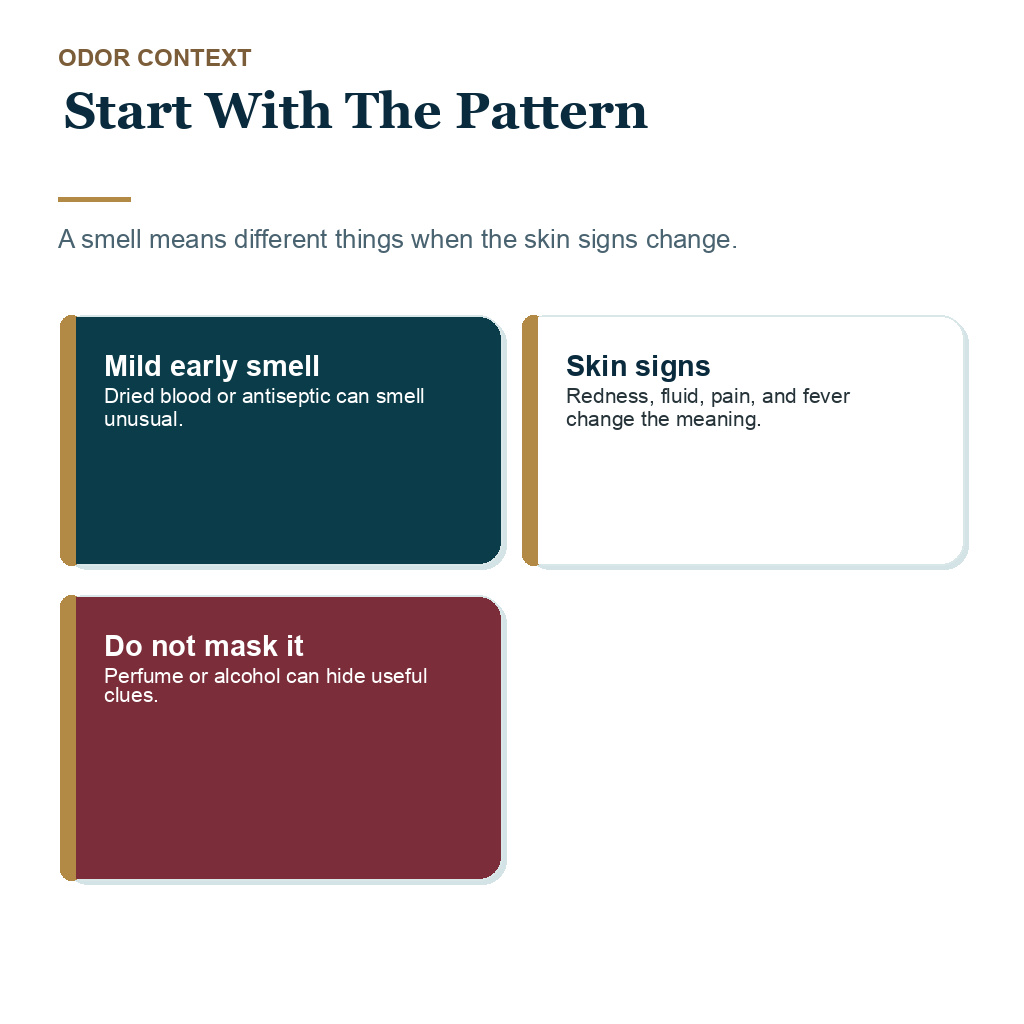
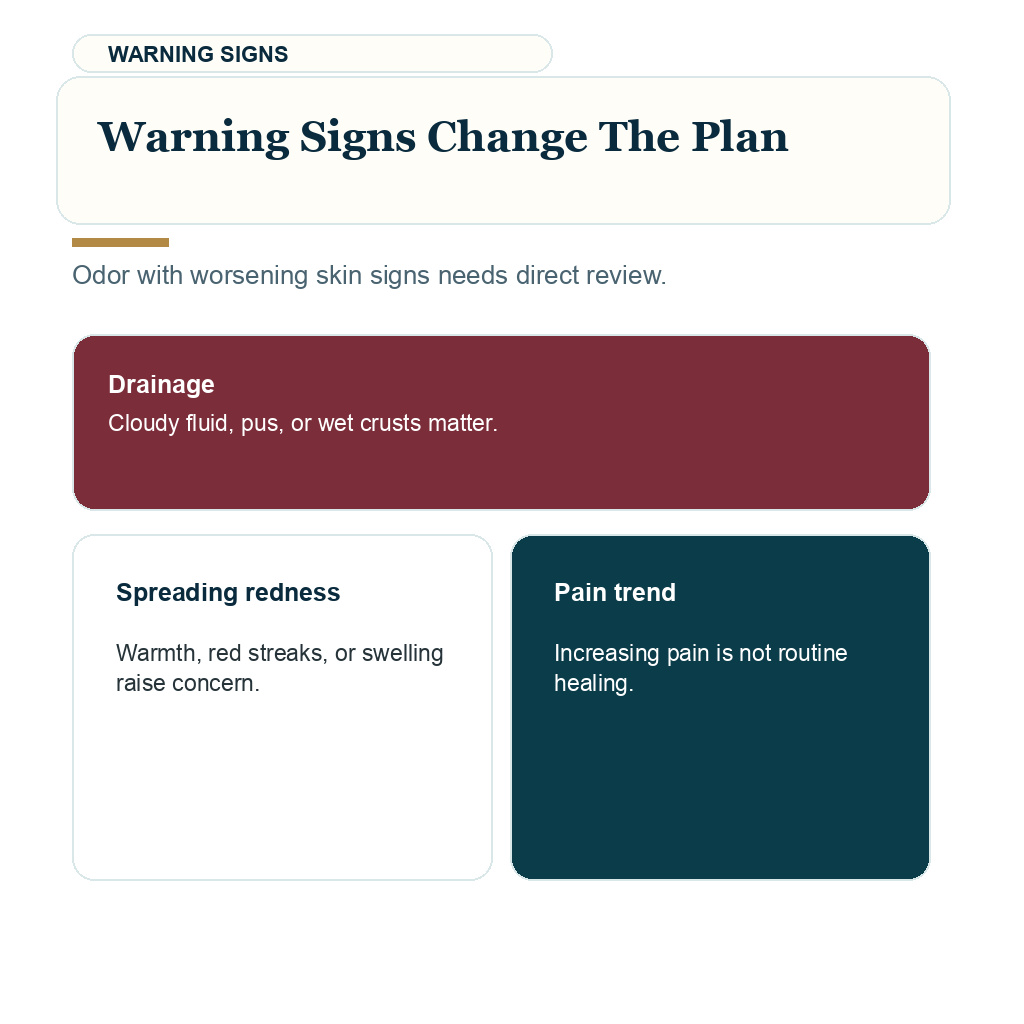
If you notice a bad smell after a hair transplant, judge it with the skin signs around it. A mild unusual odor in the first days can come from dried blood, antiseptic solution, bandage material, surgical fluid, sweat, oil, or cautious washing. A smell that comes with cloudy drainage, pus, spreading redness, red streaking, warmth, increasing pain, fever, chills, or feeling unwell needs review the same day.
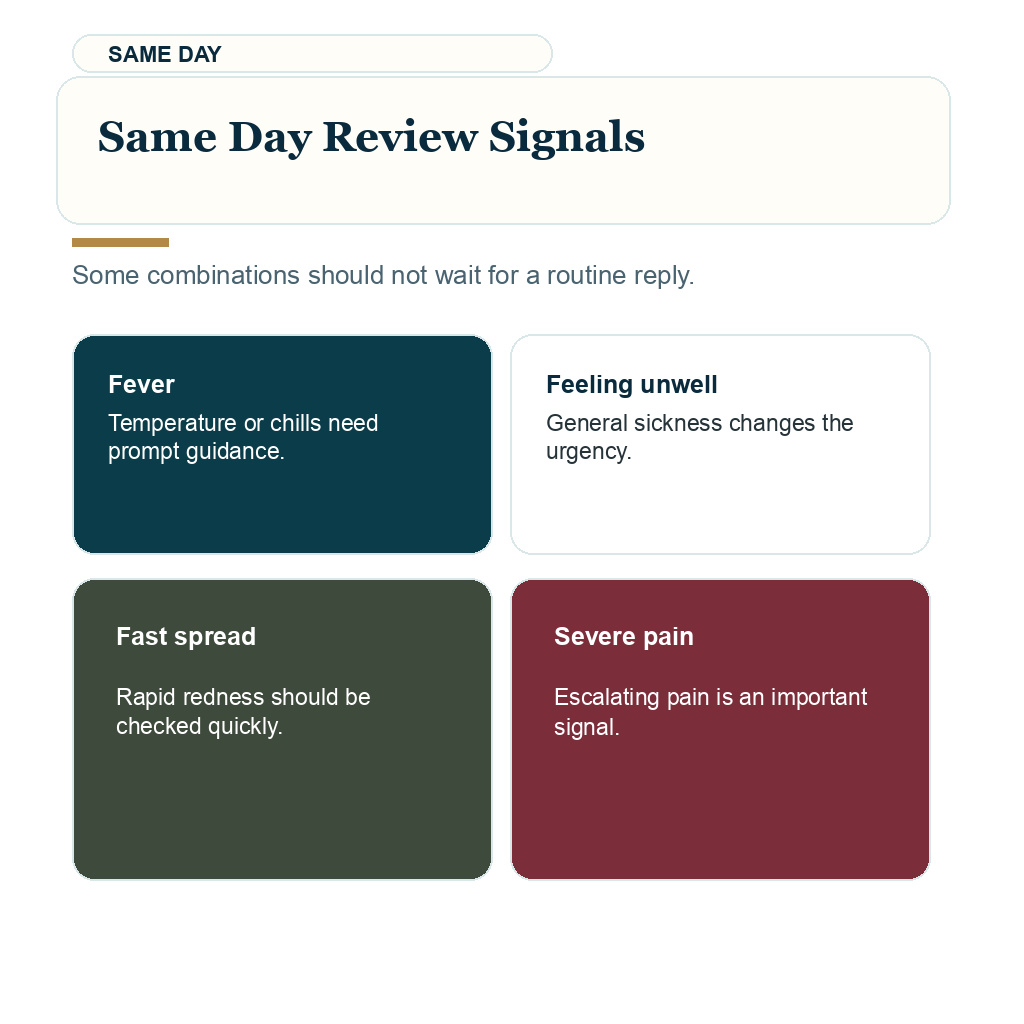
I look at scalp odor as a pattern, not as one isolated word. Tell us when it started, whether it is getting stronger, whether there is fluid or pus, whether the donor or recipient area feels tender, and whether your temperature is raised. Odor is only one clue, and it has to be read with the skin signs around it. Smell with worsening skin signs is a different situation. If fever, rapidly spreading redness, red streaking, or escalating pain is present, do not wait for a routine next day reply.
Mention whether the smell improves after the scheduled wash, returns from one spot, or stays on the pillow or dressing. That pattern is more useful than describing odor strength alone.
Do not try to prove the smell has gone by covering it with perfume, oil, dry shampoo, or extra product. Those layers can hide the skin pattern the clinic needs to see.
A new shampoo, oil, hat, pillow spray, or dressing used before the smell started can change the interpretation from skin warning to product residue.
Scalp smell can change after FUE
FUE is a clean surgical procedure, but it still leaves thousands of tiny healing points. In the first few days, the scalp may carry dried blood, antiseptic residue, tumescent fluid, crusts, and bandage odor. The donor area may also feel damp or heavy while fluid settles and leaves the tissue.
You may become more aware of smell because you are afraid to wash properly. Many people avoid shower pressure, keep the scalp covered, sleep upright, sweat during travel, and touch the area less than usual. Those habits can make ordinary oil and dried residue smell stronger than expected.
One word like “bad” or “weird” is not enough to understand scalp odor. I separate harmless residue from the warning pattern. The same odor can mean very different things on day one, day ten, or one month after surgery.
Mild early odor is less worrying with calm healing
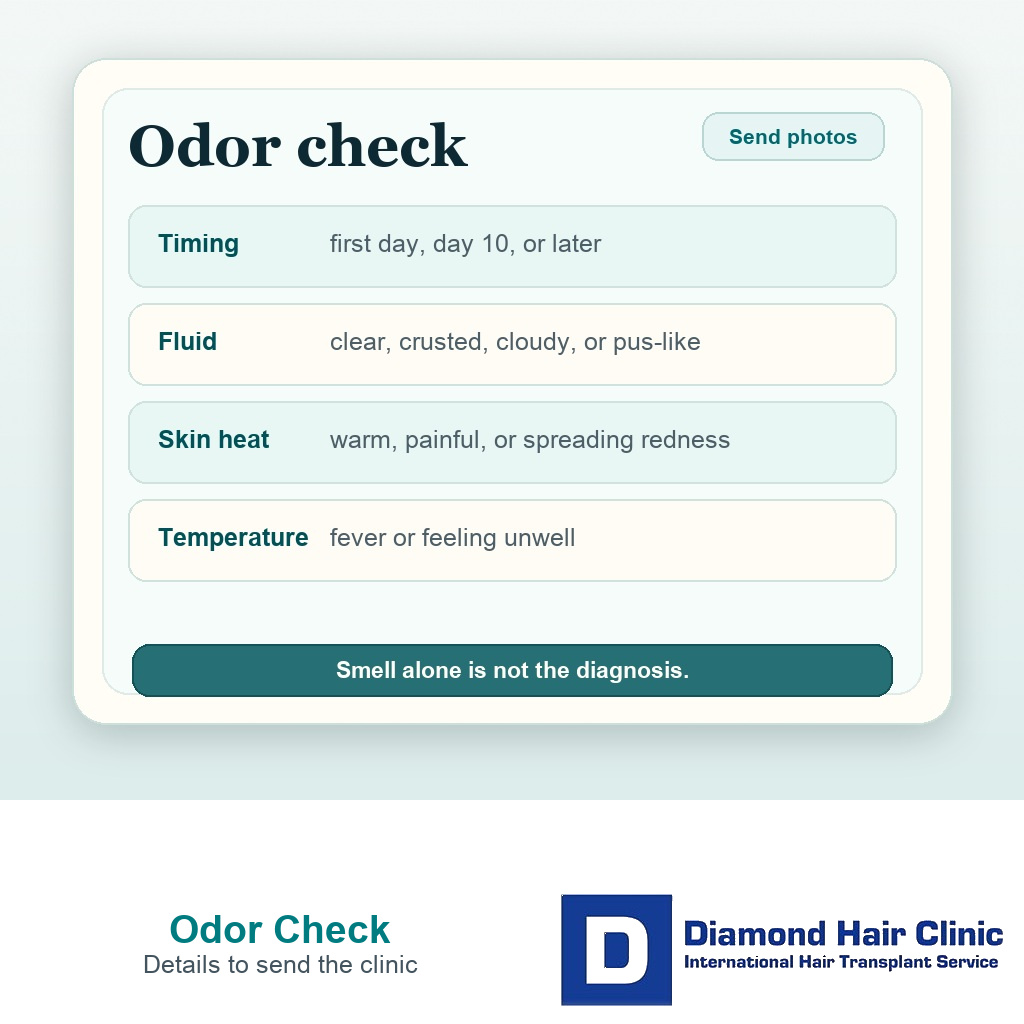
Odor is less worrying when it is mild, early, not getting worse, and not paired with increasing pain, heat, discharge, or fever. A faint smell from dried blood or clinic solution on the first night is not the same as a strong foul odor from a wet, painful, inflamed area.
It is also less worrying when the scalp looks calmer day by day and the smell improves after the correct wash. If the recipient area is dry, the scabs are settling, the donor area is not warm or swollen, and you feel well, I treat the smell as a hygiene and healing question first.
The key is movement over time. Improving smell with improving skin is less concerning than worsening smell with worsening skin. If the smell is the only thing that changed, include clear photos and describe your washing routine before trying stronger products. A short note such as “smell improved after the wash and the skin stayed dry” is more useful than only saying the odor is bad.
Smell becomes a warning with worsening skin signs
Smell becomes more concerning when it appears with cloudy yellow or green drainage, pus, spreading redness, red streaks, warmth, increasing swelling, stronger pain, fever, chills, or a general sick feeling. Those combinations are closer to infected hair transplant warning signs, and they deserve direct medical review, not quick reassurance from a single message. Rapidly spreading redness or pain that is worsening instead of settling should not be watched passively. Diabetes, immune suppression, or recent contamination lowers the threshold for same day review because photos alone can miss how quickly an infection is developing.
In a hair transplant, I also pay attention to one sided change. If one part of the recipient area smells worse, becomes more tender, feels hot, or starts leaking fluid while the rest of the scalp is settling, that is more important than a general mild odor after a long travel day.
When the fluid is difficult to classify, compare the smell with the warning pattern around yellow scalp fluid after FUE. If temperature is part of the picture, use the guidance on fever after hair transplant and ask for review quickly.
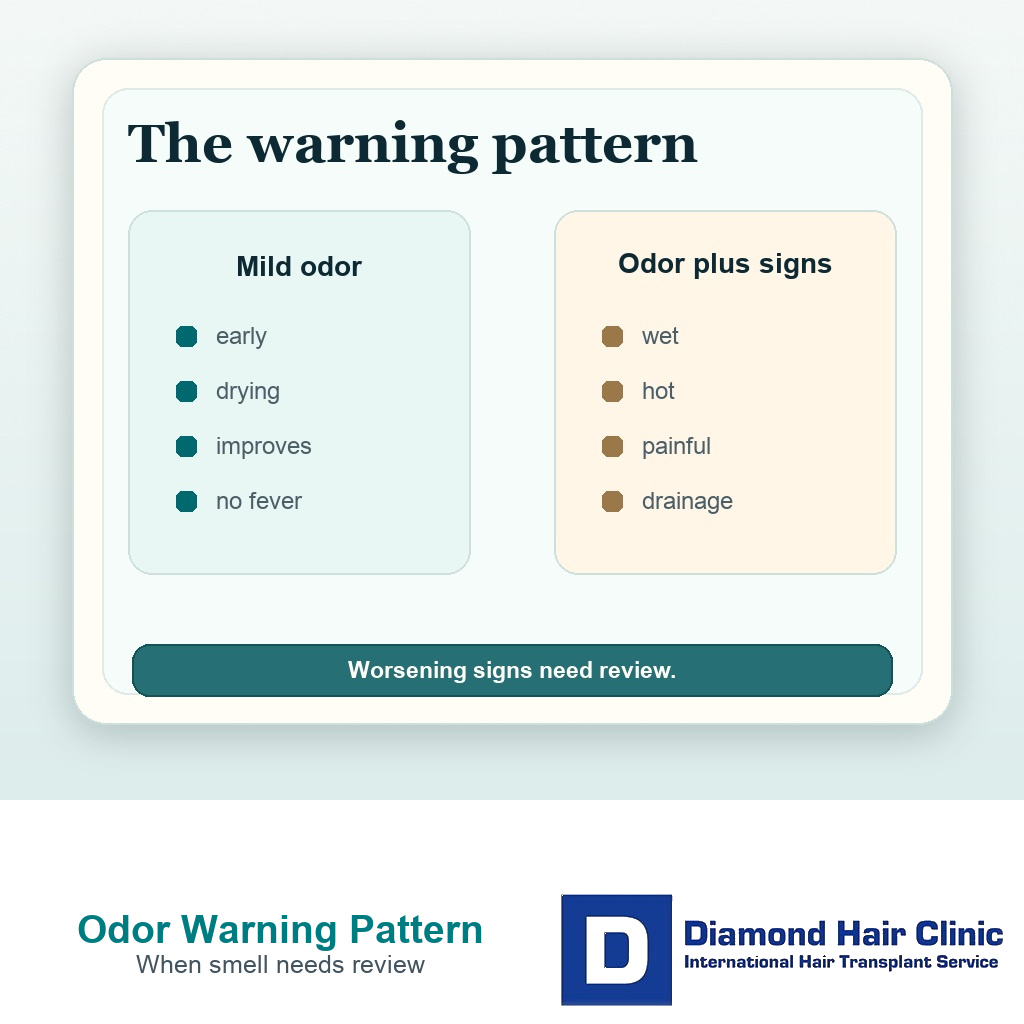
Details to check before messaging the clinic
Before you message the clinic, check the area in good light. Look at the recipient area, donor area, bandage line if one was used, and any place where the smell seems strongest. Take one close photo and one wider photo from the same light, then check your temperature if you feel unwell. Do not scratch, scrape, or squeeze the area just to prove whether fluid is present.
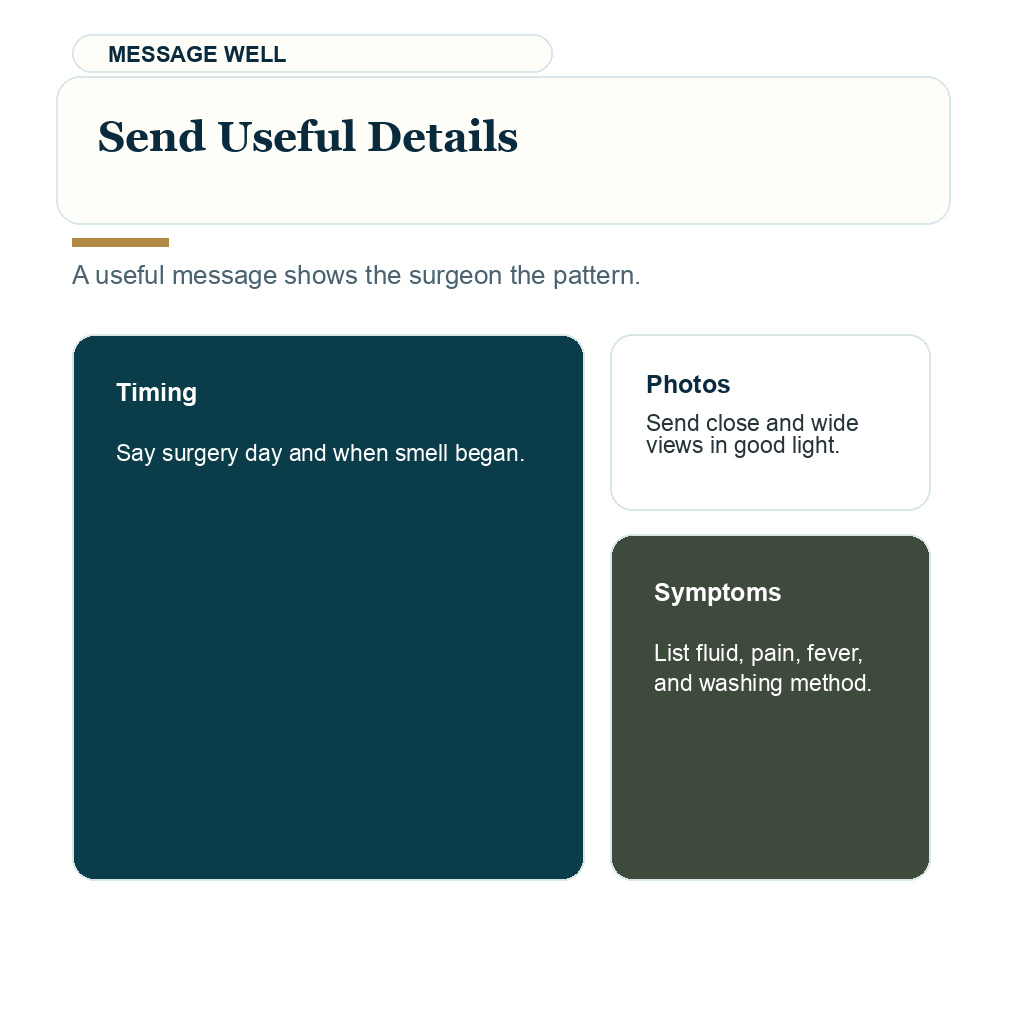
Send the clinic clear photos from several angles, the day after surgery, your temperature if you checked it, the exact washing method, the shampoo or lotion you used, whether there is drainage, and whether the smell is improving or getting worse. Name the exact area where the smell is strongest and include one close photo plus one wider photo so the pattern can be judged. These details give the surgeon a usable clinical picture instead of a vague message.
Do not hide fever, antibiotics, diabetes, immune problems, or recent contamination. If you wore a tight hat, sweated heavily, touched the grafts, slept against a dirty pillowcase, or used a product that was not recommended, say it plainly. The point is not blame. The point is to protect the scalp.
Cautious washing can make odor worse
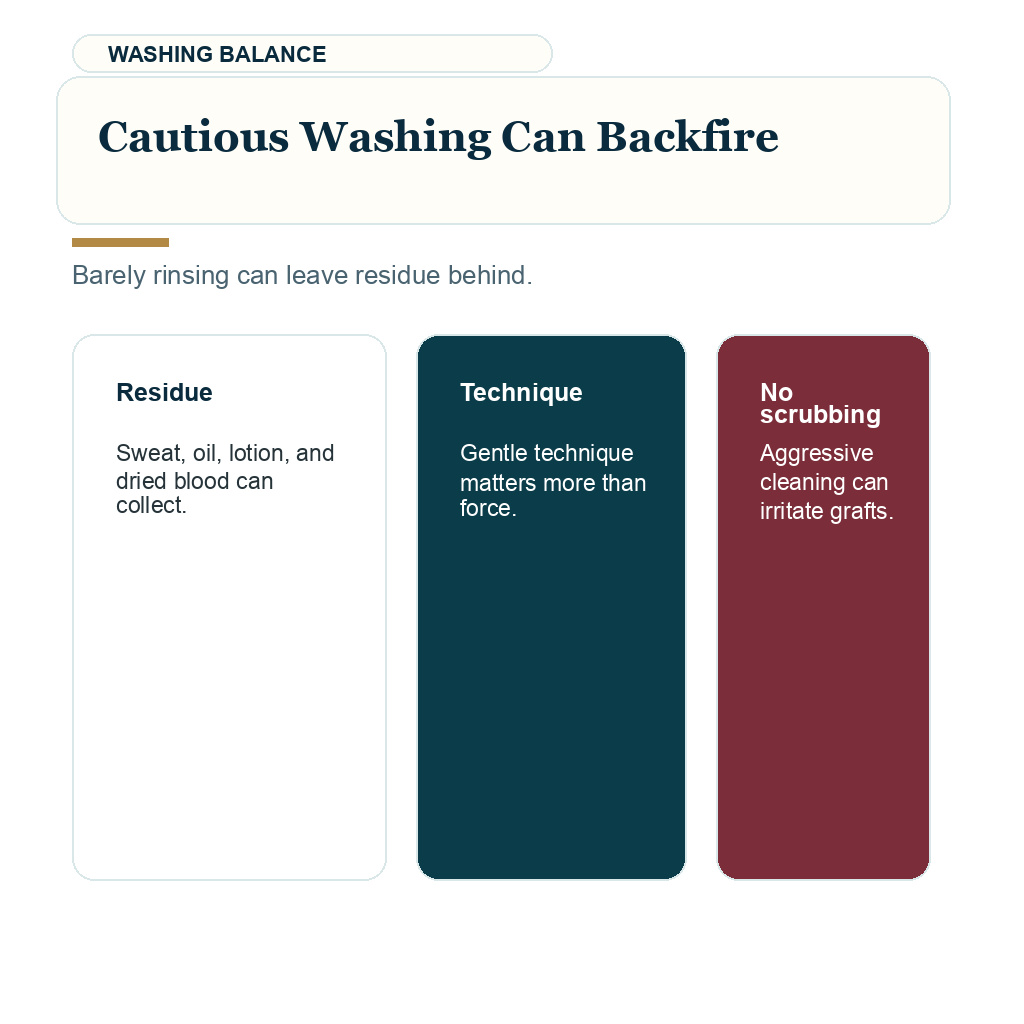
Cautious washing can make odor worse when you barely rinse because you are afraid of moving grafts. Dried blood, lotion, sweat, and oil then stay longer than intended. That does not mean aggressive scrubbing is the answer. The washing method needs to match the stage of healing.
During early recovery, the recipient area needs gentle handling, while the donor area can often tolerate more direct cleaning sooner. The exact instruction depends on the clinic protocol and the day after surgery. Technique matters more than force, especially when you begin washing hair normally after a hair transplant.
If odor improves after careful washing and the skin looks calmer, that is useful information. If odor remains strong or the skin becomes wetter, hotter, or more painful after washing, document the area and stop experimenting with products. If the smell improves briefly and then returns stronger with wetness or tenderness, mention that pattern instead of repeating the wash again and again.
Avoid harsh shampoo, alcohol, and unreviewed antibiotic cream
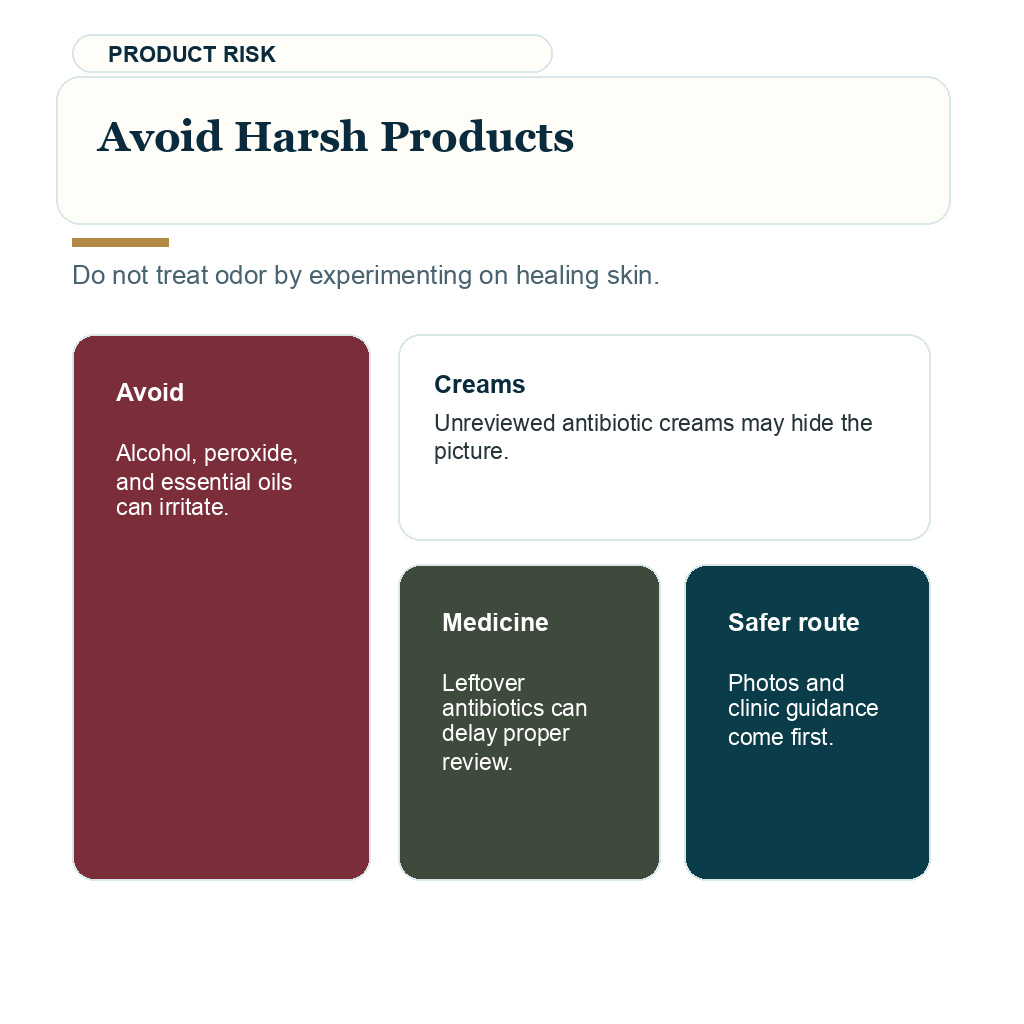
Do not use alcohol, peroxide, strong antiseptics, essential oils, harsh anti dandruff shampoo, or antibiotic cream on the grafted area just because of smell. These products can irritate healing skin, soften scabs too aggressively, or hide the real appearance that the surgeon needs to assess.
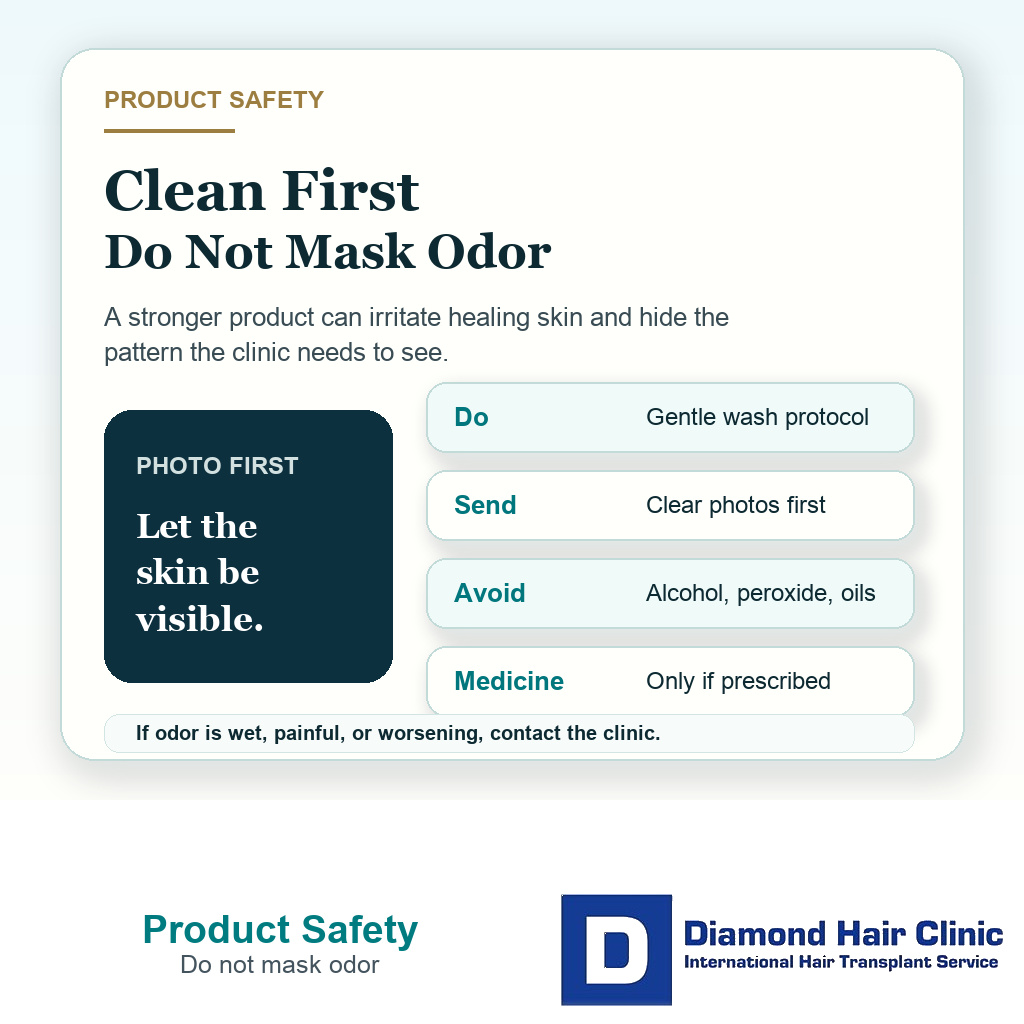
When odor appears after FUE, photo review and the correct wash are safer than masking the smell with harsh products.
A bad smell by itself is different from odor with pus, spreading redness, heat, or fever. Do not guess antibiotics, use leftover tablets, or apply antibiotic cream to hide the smell before the scalp is reviewed.
Topical products can irritate the skin, hide the surface pattern, or delay proper review. Antibiotic ointment around graft healing has to be handled carefully for that reason. If oral medicine is being considered after surgery, antibiotics after hair transplant should fit the clinical picture. Leftover antibiotics can partially mask the problem, be the wrong choice, or delay proper review when pus, fever, or spreading redness is present.
Odor from the donor area needs its own look
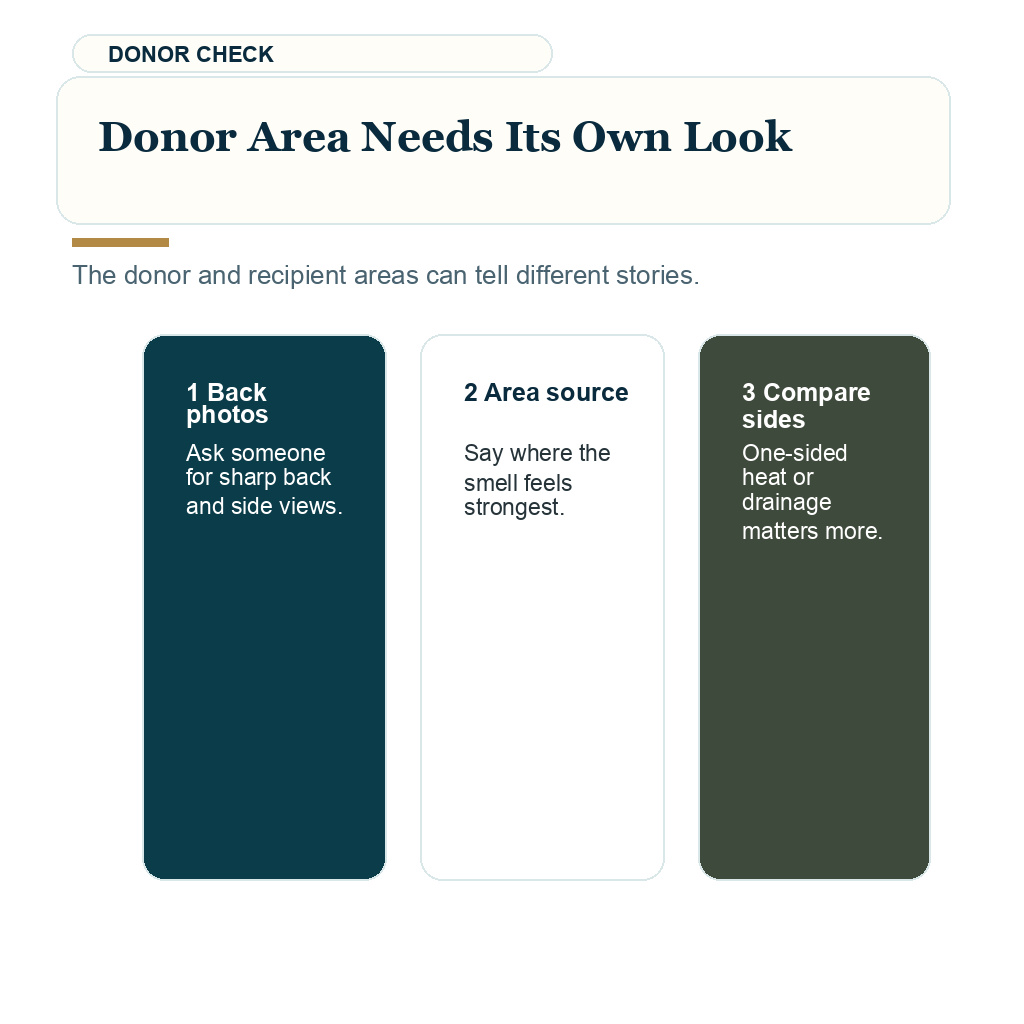
The donor area can smell different because it is the part that was harvested, bandaged, and pressed against the pillow or neck support. It may collect sweat, dried blood, and ointment residue. It is also harder for you to see clearly without help.
Odor from the donor area is less worrying if the skin is drying, the dots are closing, pain is settling, and there is no wet discharge. It is more concerning if the area becomes hotter, more swollen, increasingly painful, or starts producing cloudy fluid.
Do not judge the donor area only from how it feels. Ask someone to take sharp photos from the back and both sides. Painful bumps, spreading redness, or drainage that looks like pus can fit folliculitis and hair transplant surgery, where photo review matters.
Oily scalp, sweat, and products can explain some smell
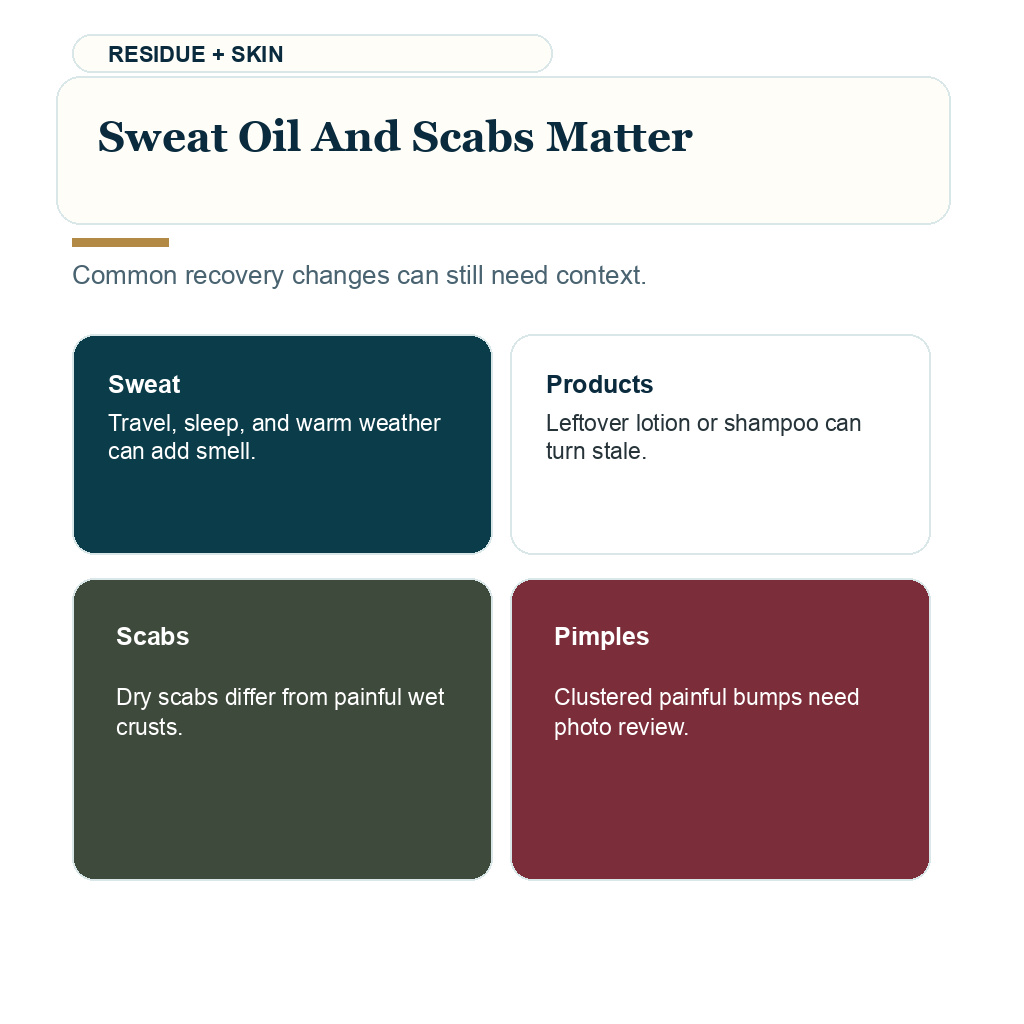
The scalp can become greasy around the forehead or hairline while the skin is healing. Sweat during sleep, travel, warm weather, or anxiety can add to the smell. A product left on the scalp can also create a stale odor.
These causes do not tend to create fever, spreading redness, or thick cloudy drainage. They often improve with the correct wash, clean pillowcases, keeping the scalp uncovered when appropriate, and avoiding unnecessary products.
If sweating is the main trigger, treat sweating after hair transplant as more than a comfort issue when heat, friction, or poor washing enter the picture. If the odor is linked to itching, crusts, or dandruff like scaling, the scalp may need a different review than a basic wound infection check.
Scabs, redness, and pimples change the review
Scabs, redness, and small pimples can appear during recovery without meaning the transplant is failing. But the combination matters. A dry scab with mild odor is not the same as a painful wet crust with spreading redness and bad smell.
In those photos, I check whether the redness is local or spreading, whether pimples are isolated or clustered, whether the surface is dry or wet, and whether you have fever or increasing tenderness. A second photo a few hours later can be useful if you are worried the red area is expanding. I use that same visible pattern when I look at redness, scabs, or pimples after hair transplant.
Itching can also make you touch or scratch the area, which increases irritation and contamination risk. If itching is part of the problem, use the guidance in itching after hair transplant instead of using random scalp products.
First steps after noticing a bad smell
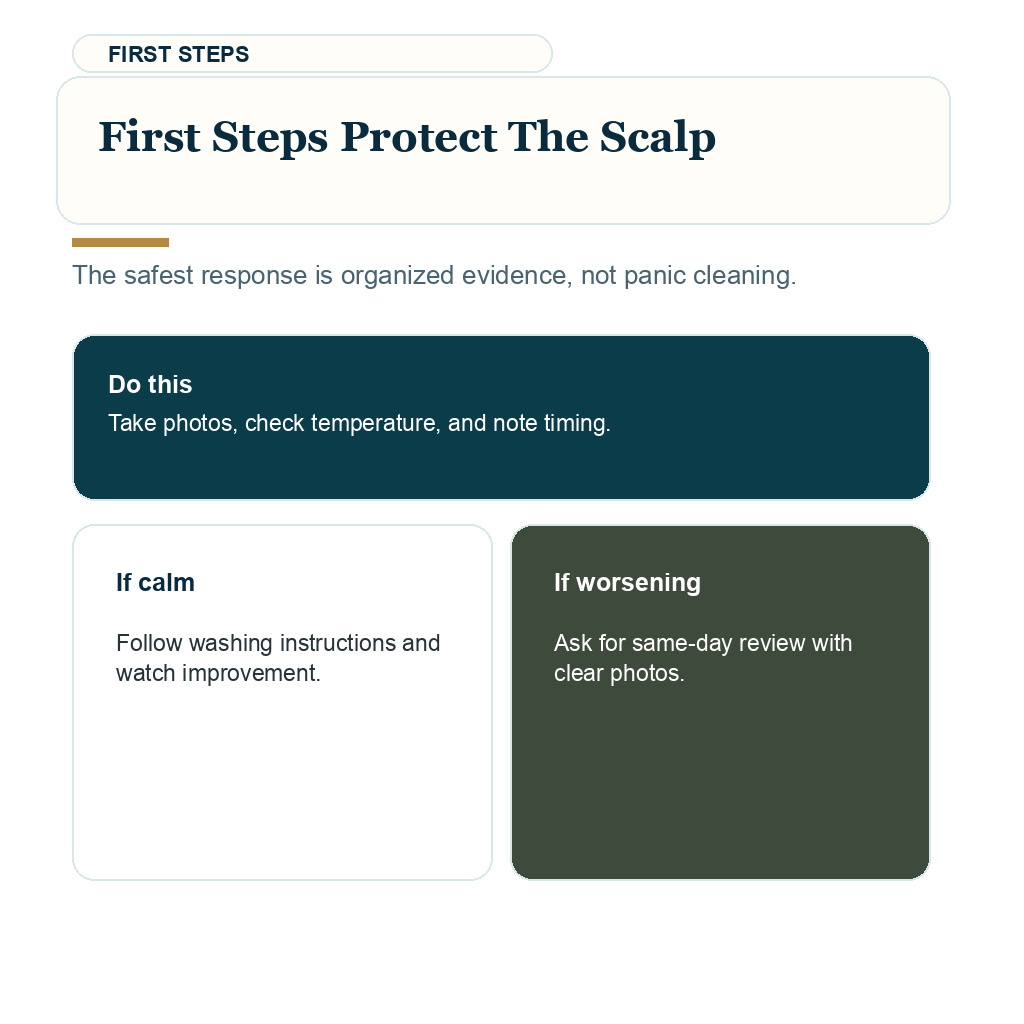
First, do not scrub the grafts, squeeze scabs, or cover the odor with perfume, alcohol, essential oil, or a stronger shampoo. Take photos. Check your temperature. Write down the surgery day, the first day you noticed the smell, what you used on the scalp, and whether there is fluid.
With no fever, no spreading redness, no increasing pain, and no cloudy drainage, follow the clinic’s washing instructions and send a message with photos. If the smell is strong, worsening, wet, painful, or paired with fever, chills, cloudy drainage, red streaks, or rapidly spreading redness, ask for clinic review the same day. If you cannot reach the clinic and infection signs are present, local medical review is safer than waiting.
Smell can happen after FUE. It matters most when the pattern moves away from clean healing and toward infection, irritation, poor washing, or contamination.
Below, I separate mild healing odor, warning signs, same day review signals, photo details, washing technique, product risks, donor area checks, sweat or residue, scabs or pimples, and first steps. Use the arrows one step at a time.

Advice from another clinic or online source
Be careful with reassurance from one person’s recovery. Someone who had odor and healed well does not prove that your odor is harmless. Someone who had an infection does not prove that every smell is dangerous. The advice I trust asks about timing, drainage, fever, redness, warmth, pain, washing routine, product use, and photos.
I become cautious when smell is dismissed without photos, or when a patient is told to start products without a clear reason. Even if the clinic is far away, follow-up still matters. Good judgment comes from the actual scalp appearance and symptom pattern, not from a fixed online rule.
If you are already unsure whether the transplant center is responding properly, follow up after hair transplant surgery is part of surgical safety, not a luxury extra.
My clinical view on scalp odor after FUE
I take scalp odor seriously because it is often something you notice before you can describe the skin clearly. But I do not treat smell as a diagnosis by itself. The surrounding pattern matters more than the word “odor.”
If the scalp is dry, improving, comfortable, and the smell fades with correct washing, the concern is lower. If the odor is strong, wet, painful, spreading, or comes with fever, cloudy drainage, red streaking, or a general sick feeling, review should happen quickly. That helps avoid two mistakes. Harmless residue should not frighten you, and a true infection sign should not be dismissed until it becomes harder to treat.
A hair transplant is not protected by pretending every symptom is harmless. It is protected by clean washing, accurate photo review, clear warning sign awareness, and a clinic that responds when the pattern changes.

Read this review excerpt
Upon arriving home, I sent 4 photos (of each side of head) after every washing process to doctor for checking where I was given personal advice for how to take care of my healing head.