Local Anesthetic Allergy Needs Proof Before FUE
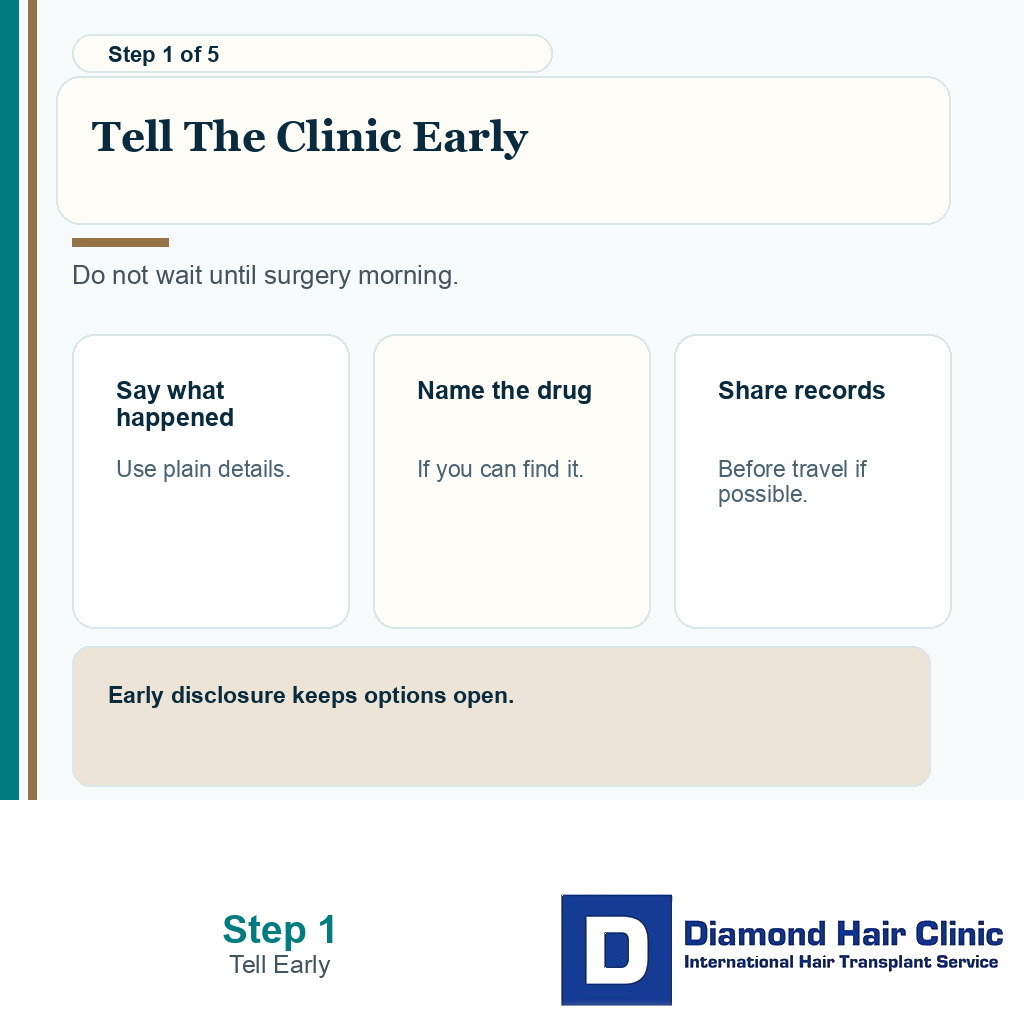
If you believe you are allergic to local anesthetic, a hair transplant should not start with guesswork. The first question is not “Can we still do the surgery?” The first question is what actually happened, which medicine was used, how quickly the reaction began, and whether a doctor confirmed an allergy or only suspected one.
Many people use the word allergy after a frightening dental injection, a racing heart, dizziness, fainting, shaking, or feeling unwell after a procedure. Those reactions matter, but they are not the same problem. The reaction story needs proof before surgery day. Bring the dental or hospital note if you have it, because “I reacted to anesthesia” can mean different medical problems. That same word can lead to very different plans depending on the symptom pattern.
Proof matters before FUE
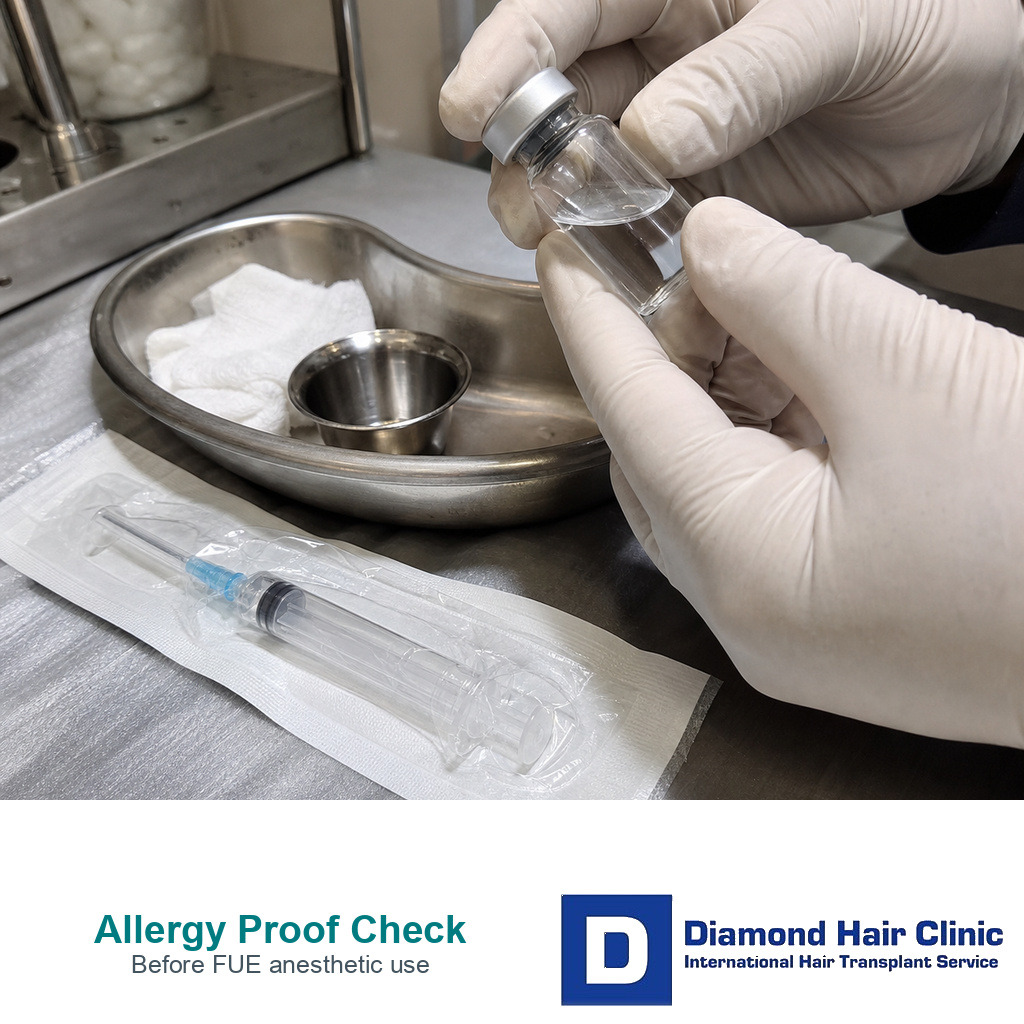
FUE is usually done with local anesthesia. You stay awake, the scalp is numbed, and the surgery depends on a reliable anesthetic plan. If the clinic only hears the word allergy on the morning of surgery, there may not be enough time to separate a true allergy from an adrenaline effect, vasovagal fainting, panic, local anesthetic toxicity, medication interaction, or another medical event.
The details matter before travel whenever possible. A real allergy can change the anesthetic choice and may require allergy specialist input. A reaction that points away from allergy may need a different plan, slower injection, monitoring, or clearer preparation. Both deserve attention, but they are handled differently.
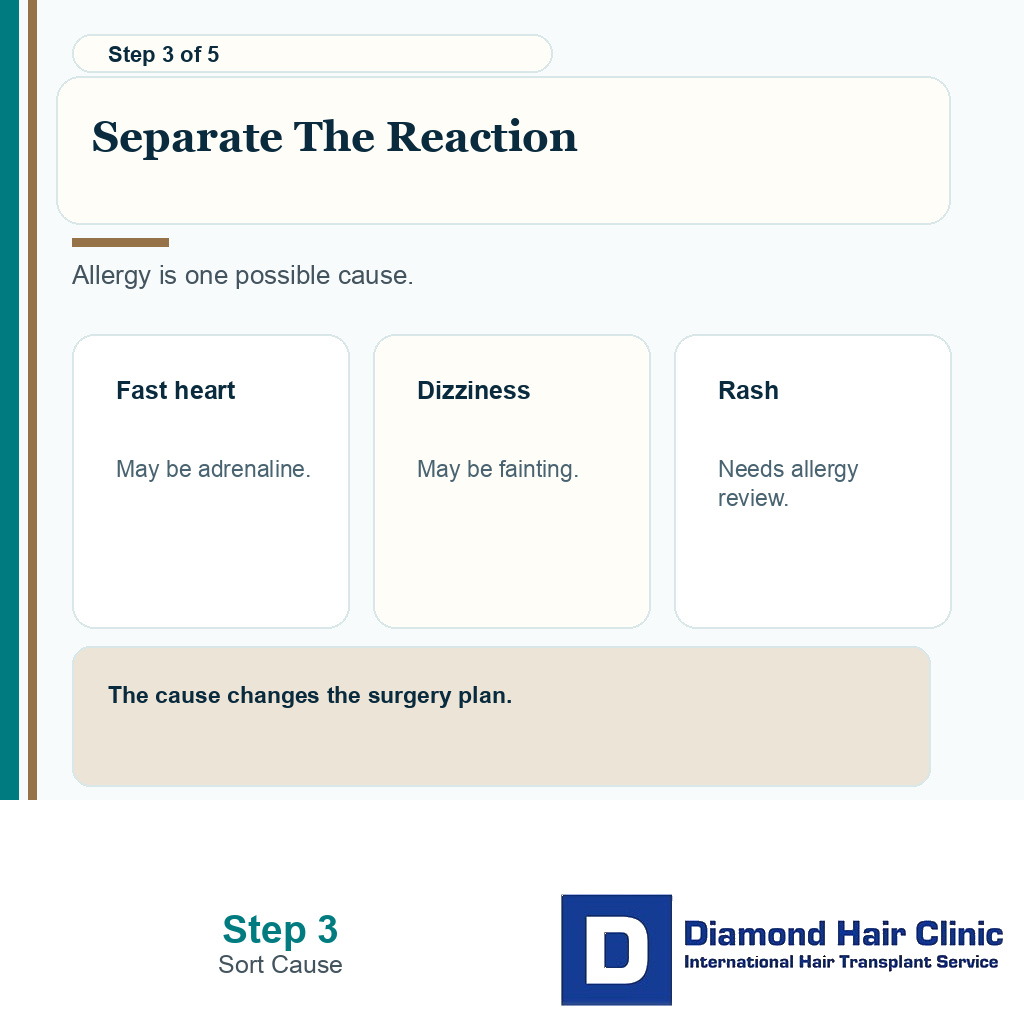
A fast heartbeat can happen when adrenaline in hair transplant anesthesia is used with the numbing medicine. That feeling can be frightening, but by itself it does not prove an allergic reaction.
Dental records that list the numbing drug and adrenaline are more useful than the word allergy alone. That old reaction may belong to the anesthetic, the adrenaline mix, or another medicine used during the visit.
The details to collect
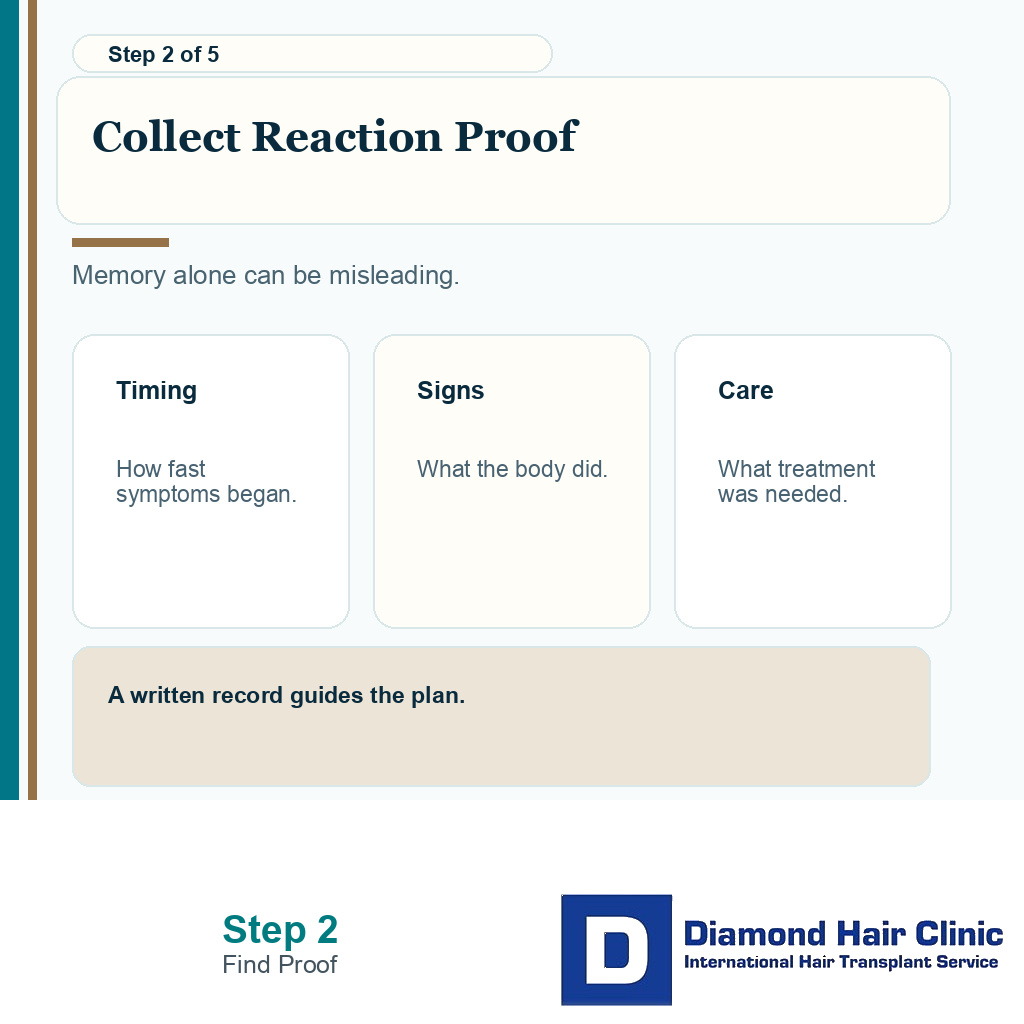
One sentence saying you are allergic does not give enough information. Send the useful details. Include the medicine name if you know it, such as lidocaine, articaine, bupivacaine or prilocaine, or explain that it was an unknown dental injection. Describe what you felt and how many minutes after the injection the symptoms started, if you remember. Mention any rash, swelling, breathing difficulty, fainting, chest pain or vomiting, and whether you only felt a racing heart. The timing helps because symptoms during numbing are judged differently from swelling noticed later in recovery.
Also describe the treatment you needed and whether the symptoms settled without treatment. Include any antihistamine, steroid, oxygen or epinephrine given by a doctor, and any hospital care. Send any written allergy note, and include whether you later received dental anesthesia again without trouble.
If you can obtain the dental or hospital record, send it before booking surgery. A record is more useful than memory, especially when the reaction happened years ago.
When old records are missing, write the sequence before booking. The injection, first symptom, treatment, and any later dental numbing without trouble are more useful than a single allergy label.
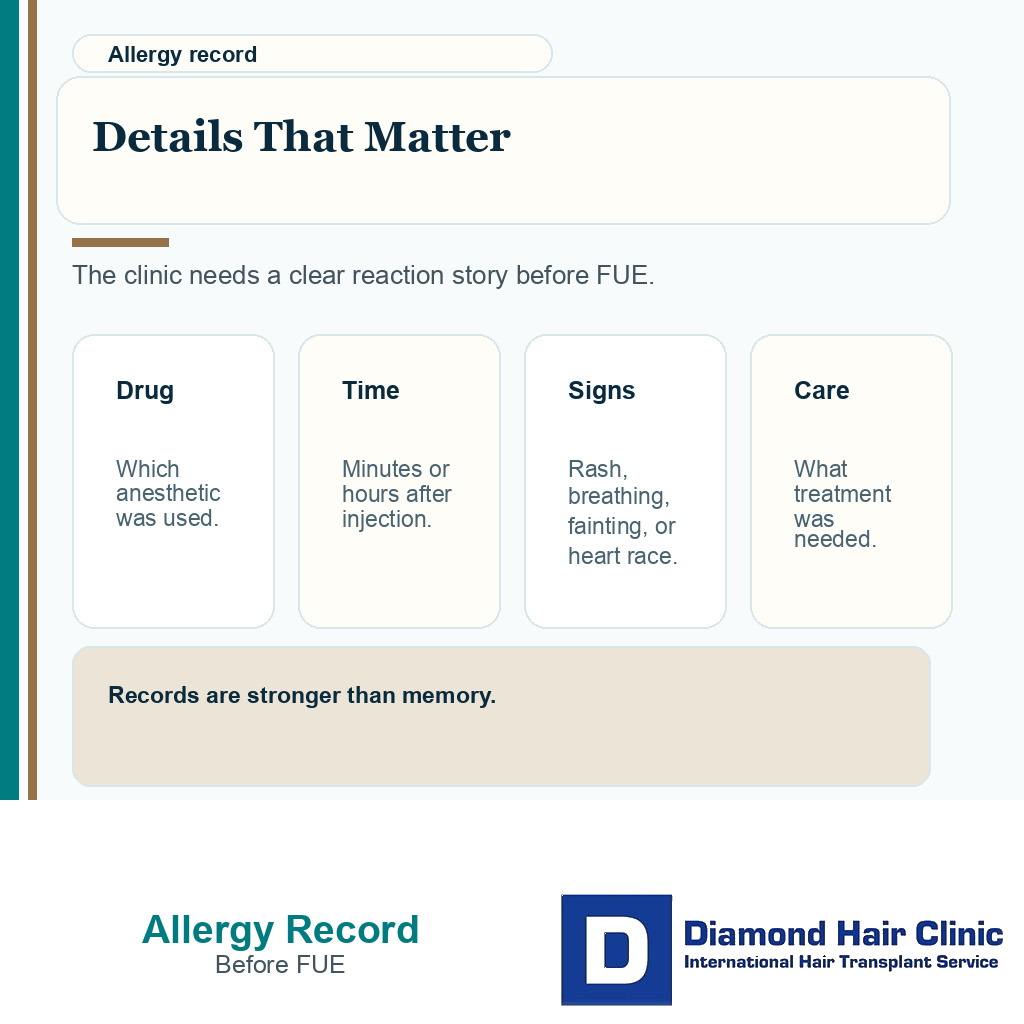
A clear reaction record helps the clinic decide whether surgery can proceed, whether the anesthetic plan needs to change, or whether specialist review should happen before travel.
Reactions that are not always allergy
A true allergy is only one possibility, so the old reaction needs to be sorted before the surgery day rather than guessed in the chair. Some people feel shaky or notice palpitations after a dental injection because adrenaline was mixed with the anesthetic. Some faint because of needle fear, pain, fasting, dehydration, or anxiety. Some develop warning signs such as ringing in the ears, metallic taste, confusion, numbness around the mouth, or a seizure when local anesthetic toxicity is a concern. Some react to another medicine, disinfectant, latex, or antibiotic used at the same visit.
If the main symptom was a racing heart, heart racing around hair transplant safety is the better question. If the main event was collapse or near fainting, dizziness or fainting around hair transplant needs its own plan. Those are different questions from allergy, and they should not be hidden under the same label.
Needle anxiety can also make the body react strongly. If the fear is mainly the injection itself, I would plan around needle fear and hair transplant anesthesia and how painful anesthetic injections may feel separately, before assuming the only issue is allergy.
Symptoms that need more caution
The history needs more caution when it includes widespread hives, swelling of the lips or throat, wheezing, breathing difficulty, low blood pressure, repeated vomiting, hospital care, epinephrine treatment, or a doctor telling the person never to receive a specific local anesthetic again.
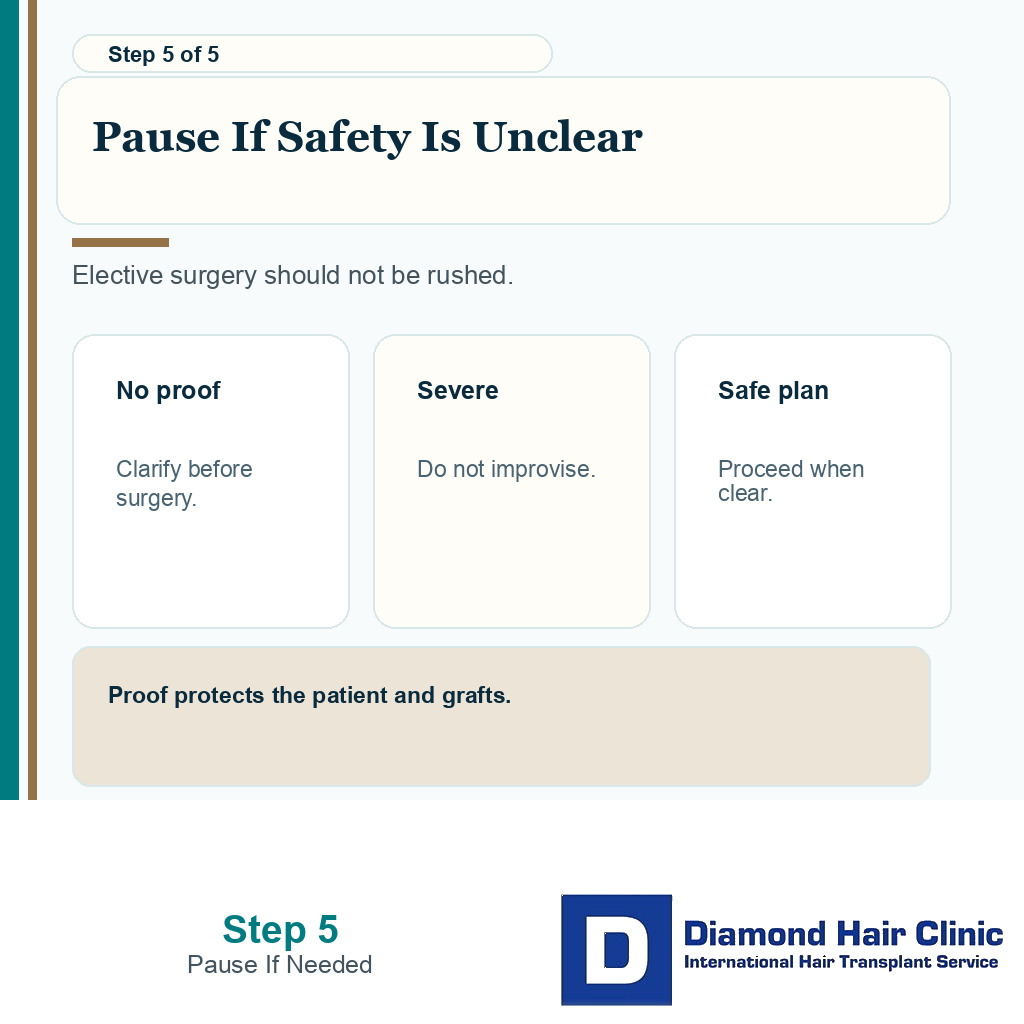
A frightening but unclear story also needs caution. If someone says they nearly died from anesthesia but has no record and no medicine name, a hair transplant room is not the place to improvise. The risk should be clarified first.
A severe unexplained reaction should pause routine surgery planning. That does not mean a hair transplant is impossible. It means the route must be medically clearer before the scalp is numbed.
Allergy specialist review can help
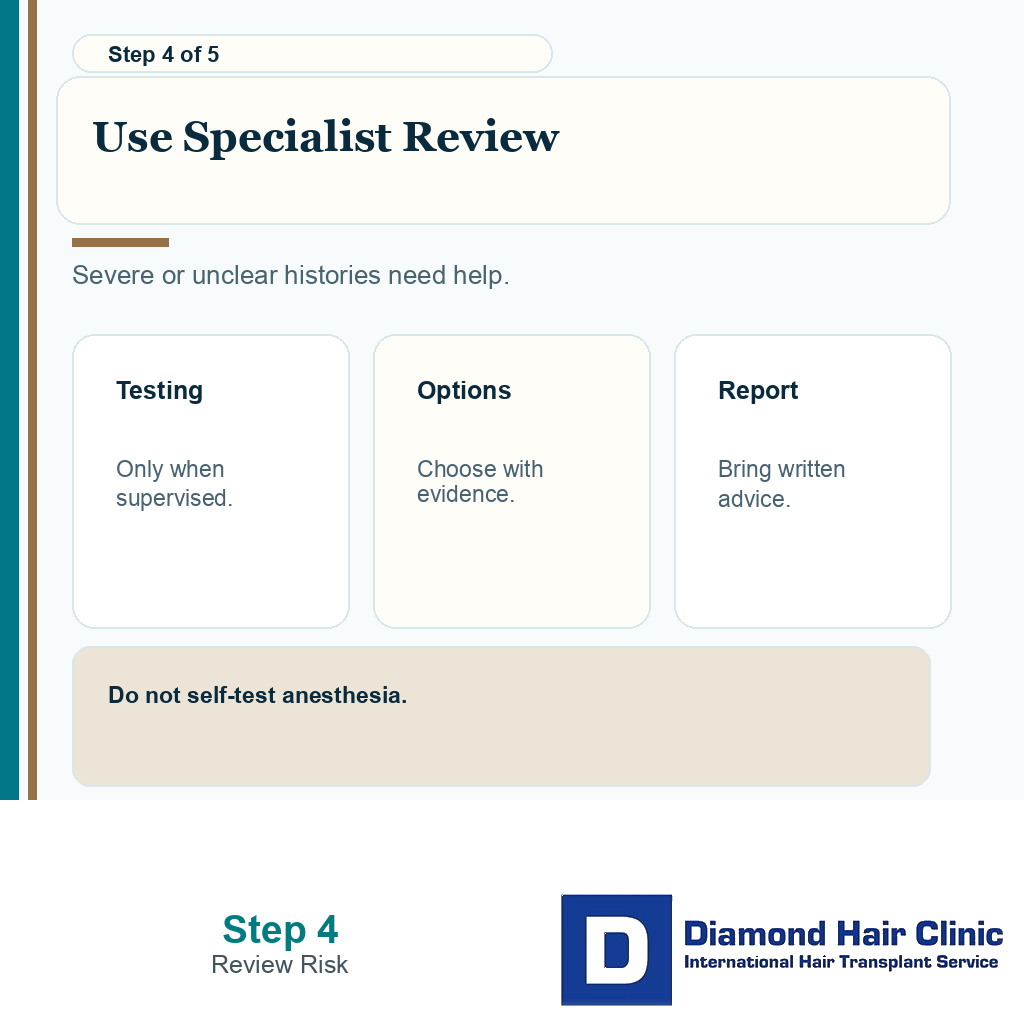
Yes, when the history is concerning or unclear. An allergy specialist can decide whether testing, supervised challenge, or an alternative anesthetic plan is appropriate. I do not ask patients to test themselves at home, and I do not treat a casual test dose as proof for a serious history.
If a specialist confirms tolerance to a particular anesthetic, that information helps the clinic plan. If the specialist advises avoiding a drug or preservative, that also helps. The useful question is what can be used safely during surgery, not whether the old reaction sounds dramatic enough.
Bring the written report, not only a verbal summary. The exact medicine, test result, and recommendation are what matter.
Dental anesthesia history changes the discussion
Dental anesthesia history is common. Many patients have received local anesthetic for fillings, extractions, implants, or root canal treatment. That history can be reassuring if the patient tolerated it well. It can also be useful if a reaction happened, because dental clinics may have records of the medicine used.
If you have had normal dental injections since the old reaction, tell the clinic. That does not erase every risk, especially if the old event was severe, but it changes the discussion. It may show that one medicine, one setting, adrenaline, anxiety, or another drug caused the problem rather than every local anesthetic.
If the dental reaction was only a racing heart or shaking, I would first ask whether adrenaline caused that sensation, rather than treating it as proof of allergy. If the reaction was swelling, breathing difficulty, or emergency treatment, it deserves allergy review before travel.
Surgery day planning changes
When the history is mild and points away from allergy, surgery may proceed with planning. That may include slower injection, careful observation, blood pressure checks, and a clear explanation of what sensations are expected. It may also include avoiding unnecessary stimulants before surgery.
When the history is unclear or severe, the plan should pause before rushing. A hair transplant is elective. It can be planned when the anesthetic risk is understood. Rushing surgery because travel is already arranged is not good medicine.
When the history includes collapse, chest symptoms, or a heart concern, ECG and chest X ray before FUE may become relevant. High blood pressure before hair transplant and beta blockers before hair transplant also matter when the reaction story includes cardiovascular symptoms or medication changes.

Not every anesthesia reaction has the same cause, so the plan should match the real risk.
Antibiotics and sedatives can confuse the story
Yes. A patient may blame local anesthetic when the reaction came from an antibiotic, painkiller, disinfectant, latex, sedative, or another medicine. If the old procedure included several drugs, the record becomes even more important.
If your reaction was linked to antibiotics, antibiotic allergies before FUE are a separate planning issue. If the question is about taking Xanax, Valium, or another calming medicine before surgery, sedation and anxiety medication before hair transplant should be planned before combining assumptions.
Do not hide medications, supplements, or allergy labels because you want the procedure to go ahead. The clinic can only plan safely with the real list. Even familiar tablets can matter in medication before hair transplant planning.
Details to send before booking
Send a short written summary and any records. The summary should include the procedure, year, drug if known, symptoms, timing, treatment, later anesthesia exposures, confirmed allergy labels, and current medications. Include photos if there was a rash and you still have them.
If anything changed after booking, send the update immediately. A new allergy diagnosis, hospital visit, antibiotic reaction, heart symptom, or fainting episode should not wait until surgery morning. Medical changes after booking a hair transplant can change the plan even when the date is close.
Earlier information gives the clinic more options. Late information often leaves only two choices, rush or postpone. Planning is safer.
Unsafe shortcuts to avoid
Do not travel with a serious unexplained allergy story and hope the clinic can solve it in minutes. A credible severe reaction must be taken seriously. Do not test a numbing cream, dental injection, or leftover medicine without medical supervision. A clinic should not promise that every allergy can be bypassed.
It is also unsafe to treat online reassurance as clearance. Another patient may have felt palpitations and still had surgery. Your history may be different. The anesthetic dose, medicine, adrenaline content, health background, and reaction pattern all matter.
When in doubt, slow the decision down before travel. I want the record, the medicine name, the timing, and the symptom pattern on the table first. If the story still sounds serious or unclear after that, specialist review or postponement is safer than trying to solve the anesthetic plan in the chair.

Read this review excerpt
He was very thorough in every little detail and I never felt pressure to do anything I wasn’t sure of.