


Headache Symptoms Need Careful Context
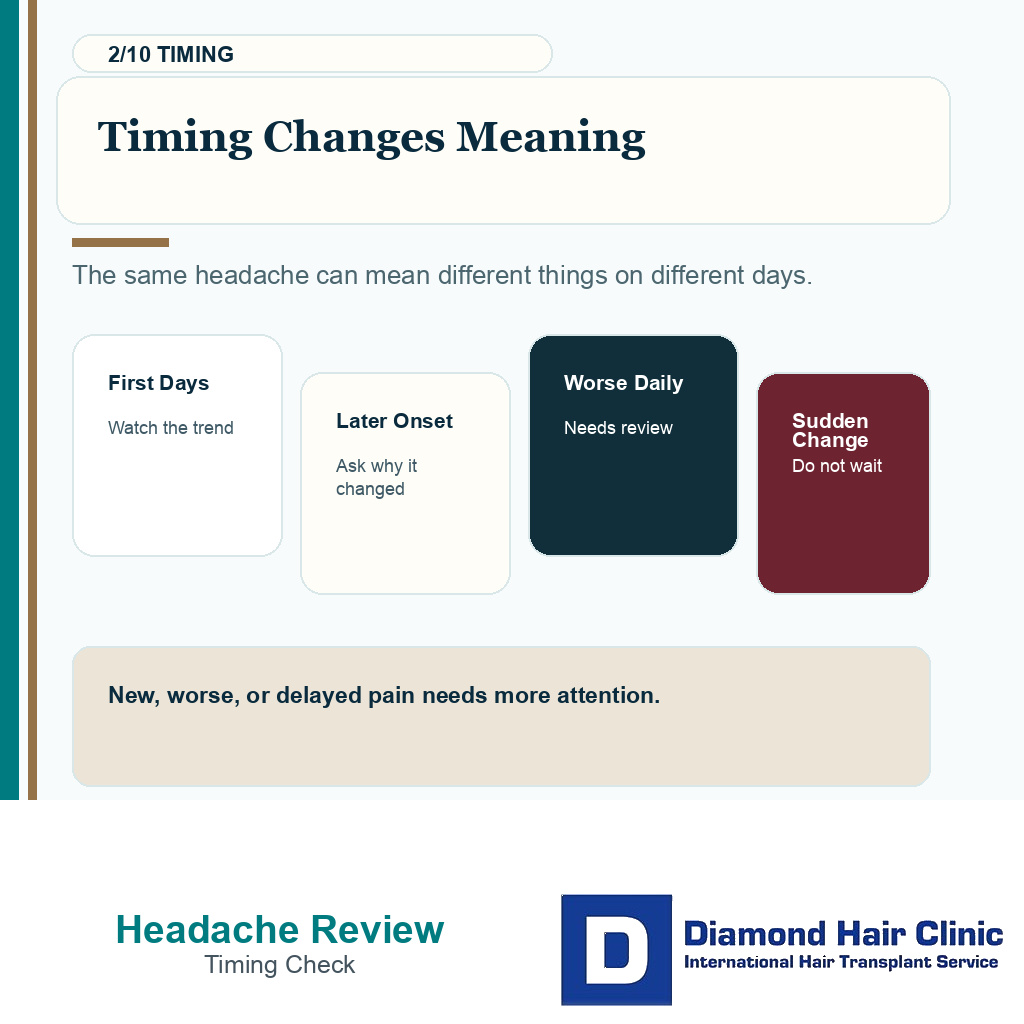
A headache after a hair transplant can be part of the first recovery days when it is mild, familiar, improving, and not linked with warning symptoms. Tight scalp, poor sleep, swelling, travel, caffeine changes, dehydration, and ordinary surgical discomfort can all contribute. A sudden, severe, worst ever headache, fever, stiff neck, confusion, weakness, vision change, fainting, uncontrolled blood pressure, or pain that feels completely different from your usual pattern needs medical review. If the headache feels medically unusual, the first decision is safety, not checking graft appearance.
Pain level alone is not enough. I look at when the headache started, where it sits, whether it is improving or worsening, what medicine was taken, migraine history, sleep, caffeine changes, travel dehydration, and whether swelling, dizziness, nausea, fever, or vision symptoms are present. Those details decide how urgent the review is. If a doctor orders urgent imaging, MRI and CT scans after hair transplant can be coordinated without delaying medical care.
Keep a short headache log with location, start time, medicine response, and any swelling, fever, vision change, or neck stiffness. That is more useful than one pain score.
A headache on travel day deserves context. Note sleep, water, caffeine, nicotine, blood pressure, medicines, and swelling before assuming the grafts are involved. Meals and caffeine changes belong in the update too, because travel can disturb both.
Common Reasons Headache Can Happen After Surgery
A hair transplant is a long procedure. You may stay in one position for hours, receive local anesthesia, travel shortly before or after surgery, sleep differently, drink less fluid than usual, change caffeine intake, and feel scalp tightness during early healing. Any of these can contribute to head pressure or headache.
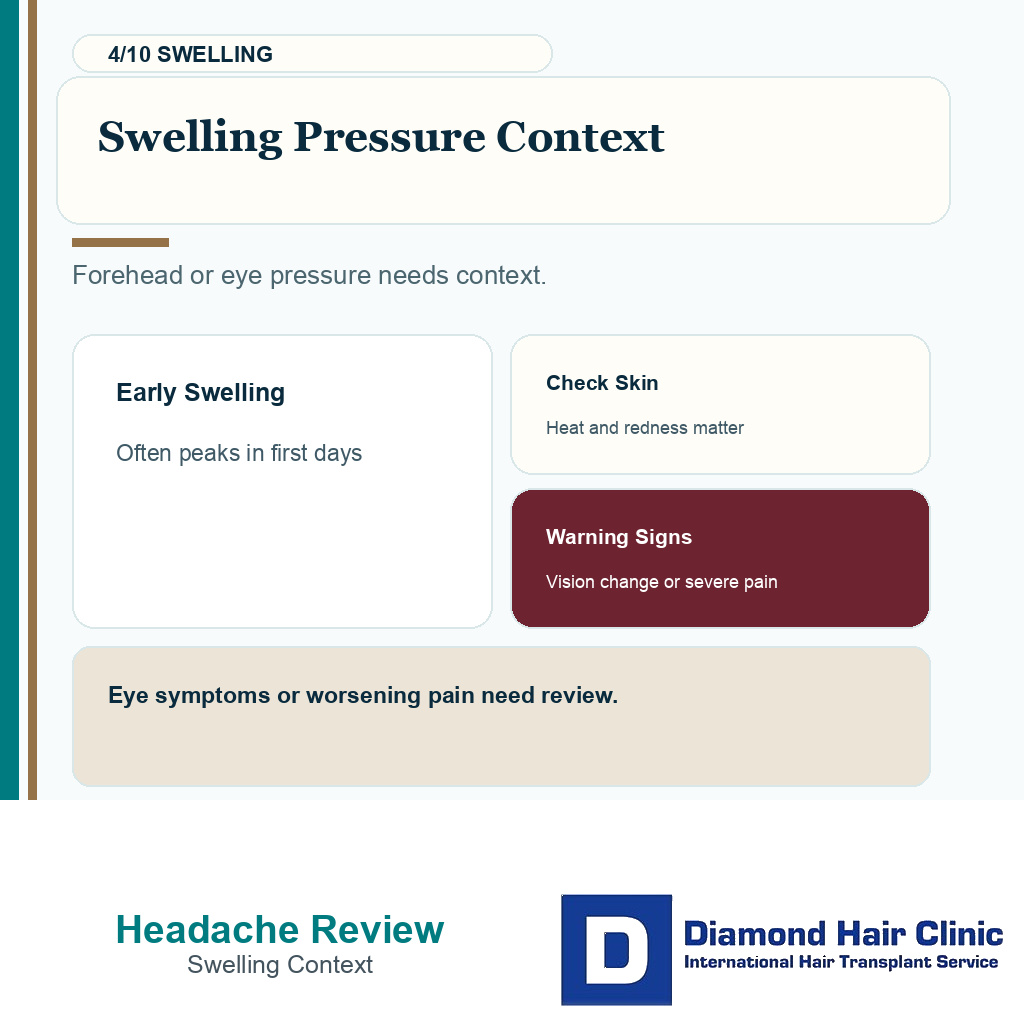
Swelling can also create a heavy forehead feeling. Some patients feel pressure around the eyebrows or behind the eyes when fluid moves downward in the first days. Pressure from swelling is not proof that grafts are damaged. I read it together with the swelling pattern, pain level, skin appearance, and your general condition. When swelling is the main concern, I compare the headache with the usual timing and warning signs described in swelling after hair transplant.
Headache can also come from ordinary postoperative discomfort. Tightness in the recipient area, soreness in the donor area, and scalp sensitivity can radiate differently from one person to another. If pressure or pulling is centered in the scalp rather than the head itself, scalp tightness after FUE needs trend and photo review rather than being interpreted like migraine. Recovery discomfort should gradually settle, respond to the written medication plan, and stay separate from warning signs that do not fit routine healing.
Headache Needs Medical Review With Warning Signs
A sudden, severe, rapidly worsening, or unfamiliar headache is different from routine recovery. I take it more seriously when it comes with fever, stiff neck, confusion, seizure, fainting, weakness, numbness, double vision, chest symptoms, shortness of breath, very high blood pressure, or a recent head injury.
After a hair transplant, the scalp itself must also be checked. Increasing redness, discharge, spreading warmth, worsening swelling, open wounds, or strong pain around one area can point toward a local problem rather than a simple headache. When headache appears with fever, discharge, or worsening skin signs, I also think about infection after a hair transplant.
Severe headache with neurological symptoms is not an aftercare question. It is a medical safety question. When those symptoms appear, contacting the hair transplant clinic is still helpful, but local medical assessment should not wait.
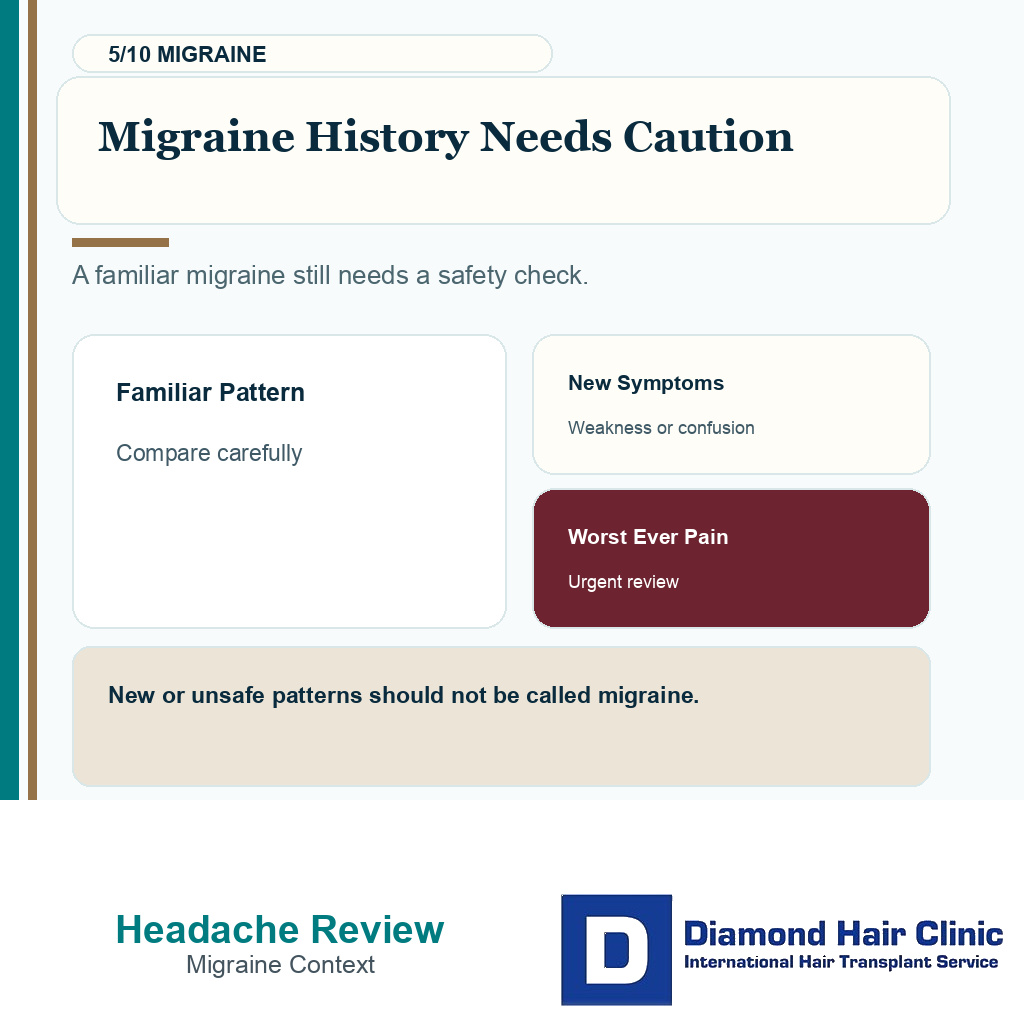
A known migraine history does not cancel red flags. New weakness, numbness, trouble speaking, double vision, confusion, fainting, seizure, stiff neck, high fever, or the worst headache of your life needs urgent medical assessment even if you have had migraines before.
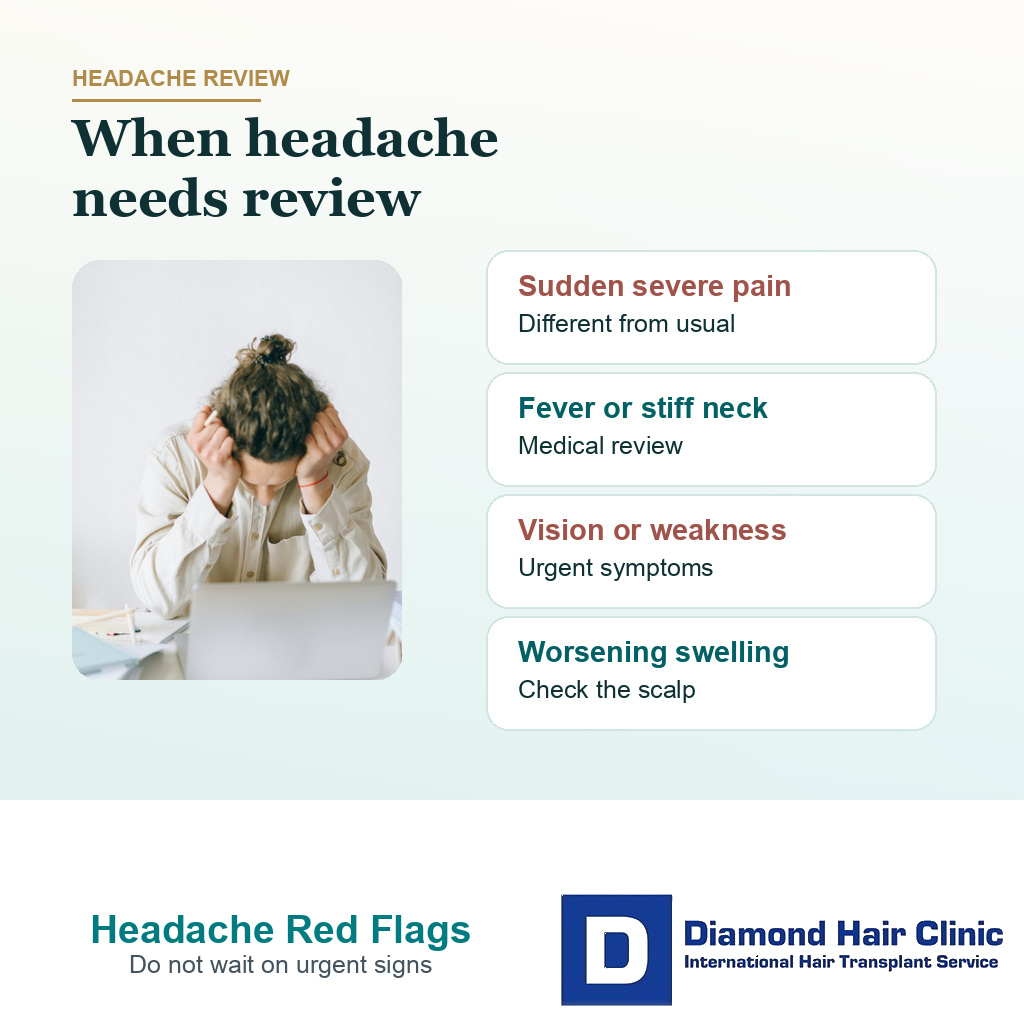
Headache after a hair transplant is judged by timing, severity, associated symptoms, and whether it matches your usual pattern.
Hair transplant planning if you get migraines
Many people with migraine can still have a hair transplant, but migraine history belongs in the plan. Usual triggers, usual medicine, the last attack, aura, and any previous urgent treatment help separate a familiar migraine pattern from a new warning sign. If migraines are already part of your medical history before travel, agree the migraine plan before FUE surgery day before the long chair day starts.
Migraine is not simply a bad mood or low pain tolerance. It can include throbbing pain, nausea, vomiting, light sensitivity, sound sensitivity, aura, and a drained feeling afterward. If missed sleep, dehydration, fasting, bright light, stress, or caffeine change can trigger your migraine, the clinic should know before surgery.
After surgery, compare the headache with your usual migraine pattern. Is the location familiar? Is the aura the same? Did it build the same way? Did your usual approved medicine help? A headache that is sudden, different, stronger, neurologic, or linked with fever should not be treated as routine migraine just because you know migraines.
The medication plan also matters. Some people use triptans, nausea tablets, painkillers, beta blockers, antidepressants, seizure medicines, or newer migraine injections. Do not change these medicines alone around surgery. When the question is specifically about triptan use after surgery, I treat sumatriptan and migraine attacks after hair transplant as its own medication safety discussion.
Painkiller options after a hair transplant
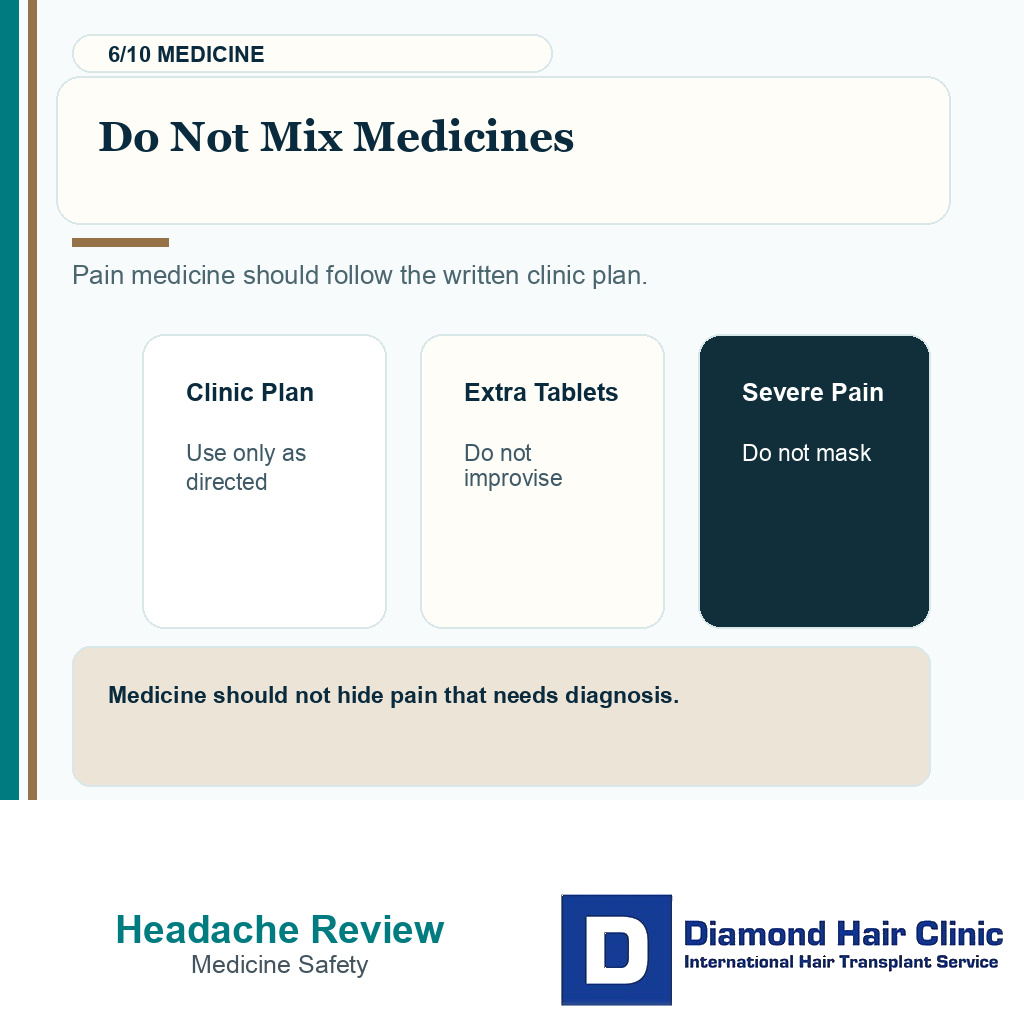
Painkiller choice should follow the written instructions from the clinic. Do not improvise by mixing several tablets, doubling doses, or adding an inflammatory pain medicine because the headache feels annoying. The first days after surgery are still a period when bleeding risk matters, and some medicines can affect bleeding, blood pressure, stomach irritation, sleep, or interactions with other drugs.
Paracetamol or another pain medicine still needs the clinic’s protocol, liver history, alcohol use, other medicines, and the type of pain to be considered. Painkillers after a hair transplant are a medication safety decision. They do not replace diagnosis when the headache itself looks unusual.
If the headache is mild and improving, the written medication plan may be enough. If the headache is severe, unusual, or linked with warning signs, masking it with stronger painkillers can delay the review that actually matters. Medicine should not be used to hide a headache that needs diagnosis.
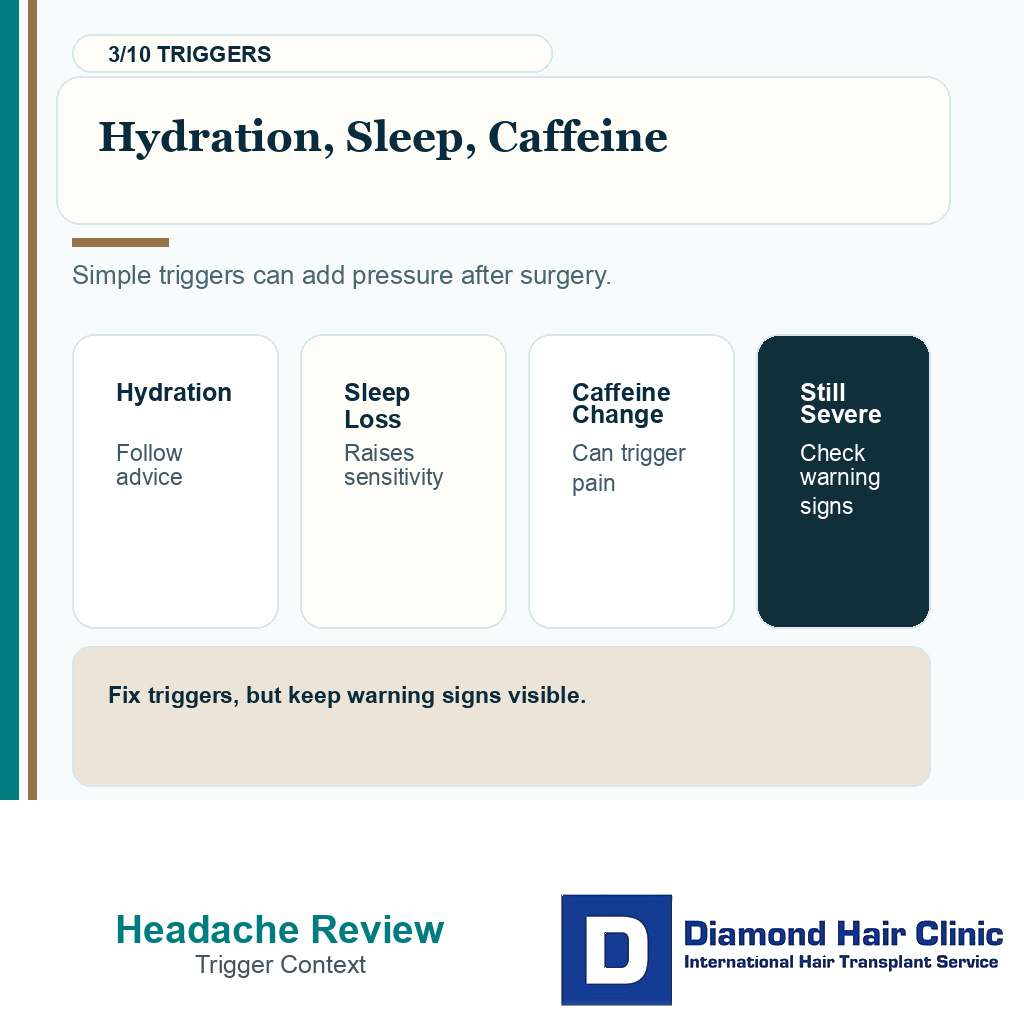
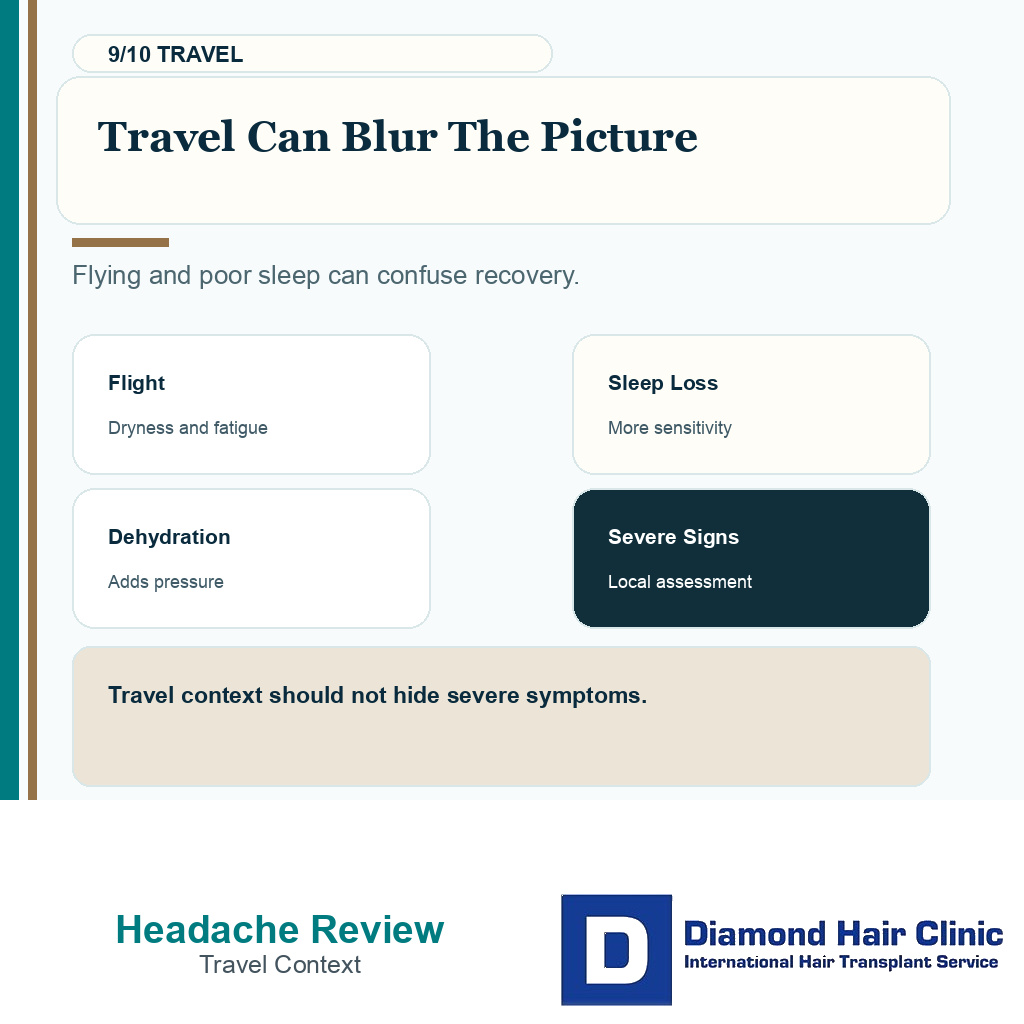
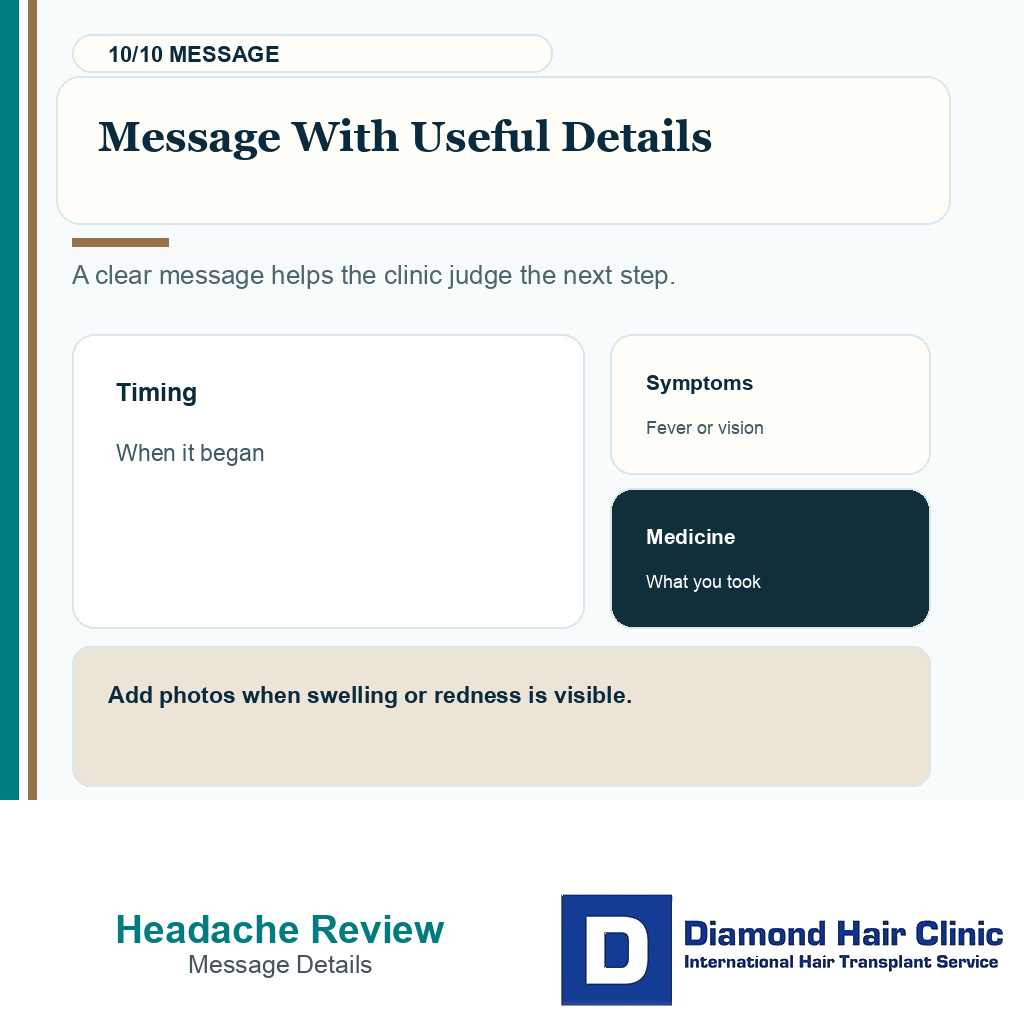
Swipe through the 10 slides below to separate mild improving headache context from warning signs that need medical review. Use the arrows for one step at a time, or choose a number below the image to jump to that point.


Swelling, bruising, and headache interpretation
Forehead swelling can make the head feel heavy or tight. As fluid moves downward, you may feel pressure around the eyes, temples, or upper nose. This can be uncomfortable, and it can look alarming in the mirror, but the pattern usually needs to be judged with timing, symmetry, pain, skin temperature, and vision.
If there is eyelid swelling or bruising, I separate expected pressure from the warning signs described in black eye bruising after hair transplant. A mild pressure sensation with expected swelling is different from severe eye pain on one side, vision change, hot painful swelling, rapidly worsening bruising, or fever.
Do not judge only by appearance. A bruise that looks dramatic can be less dangerous than a quiet but worsening headache with fever or neurological symptoms. The whole picture matters more than the bruise alone.
Headache with dizziness or high blood pressure
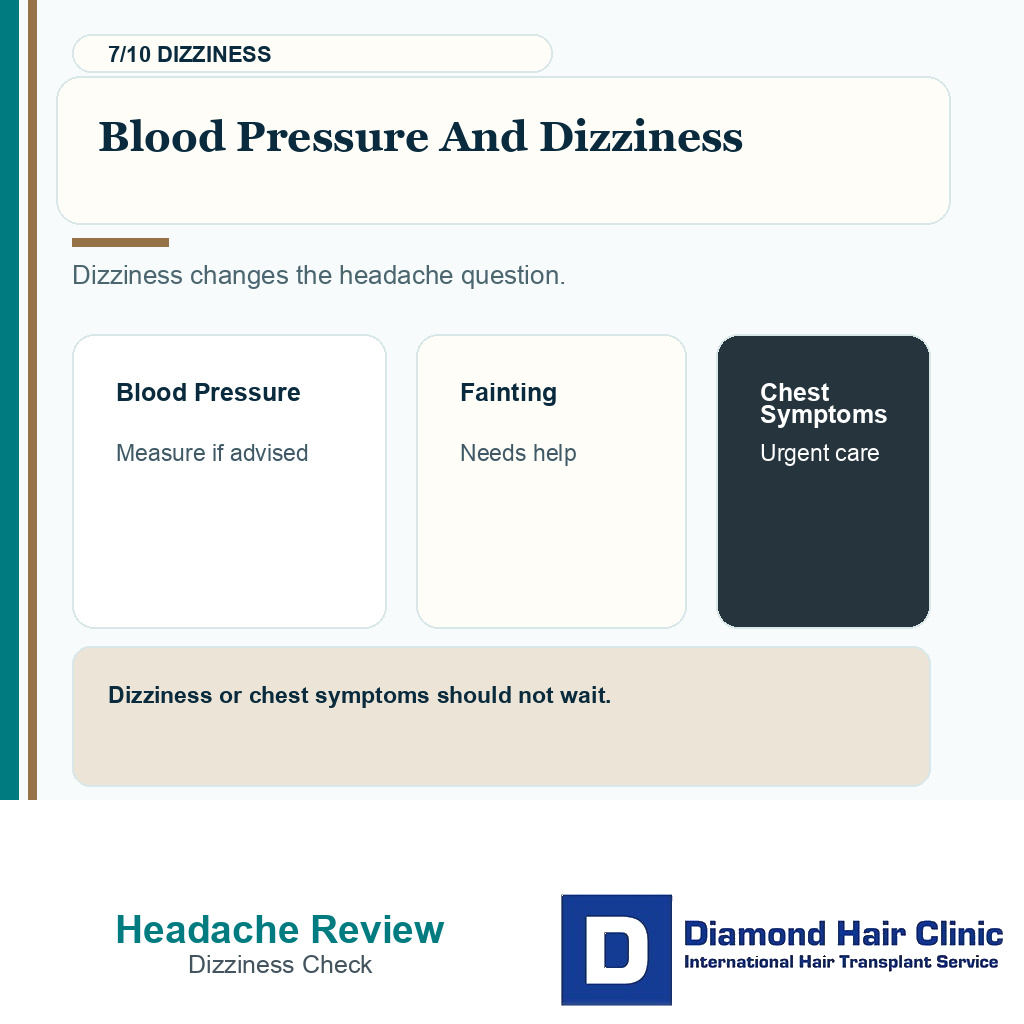
Headache with dizziness deserves more attention than headache alone. It may still come from poor sleep, dehydration, not eating enough, anxiety, or travel fatigue, but it can also overlap with blood pressure problems, fainting risk, medication effects, or illness. If you feel faint, cannot stand safely, have chest symptoms, or have a very high blood pressure reading, the situation should be reviewed promptly.
When dizziness is present, I treat sitting or lying down early as the first practical step. Do not walk alone, shower, or travel across the city while feeling unstable just to avoid worrying the clinic. That pattern overlaps with fainting and dizziness around hair transplant surgery.
Blood pressure is also important. Pain and anxiety can raise a reading, but high readings still need context. High blood pressure and hair transplant surgery needs planning that starts with control. A headache plus a very high reading should not be brushed aside as stress without proper assessment.
Travel, sleep loss, caffeine, and headache triggers
Travel can create a headache even before the scalp has anything to do with it. Long flights, poor sleep, dehydration, missed meals, jet lag, stress, bright airport lights, and a sudden caffeine change can all trigger headache or migraine in a vulnerable patient.
Your normal routine before the operation matters. One ordinary coffee is different from repeated espresso shots, energy drinks, gym products with a lot of caffeine, or sudden withdrawal after heavy daily caffeine. One pattern can trigger headache. The other can raise palpitations, anxiety, or blood pressure on surgery morning. Caffeine and travel planning need the same attention described in coffee on surgery morning and jet lag and long flights before hair transplant.
Sleep is another part of the picture. Upright sleeping, hotel discomfort, swelling anxiety, and checking the mirror at night can make the headache worse. Sleeping pills after hair transplant should be handled separately instead of being mixed casually into headache treatment.
Headache does not usually mean graft damage
Usually, headache does not mean graft damage. Graft injury is more related to direct trauma, rubbing, scratching, strong pressure, picking, or losing a graft with bleeding from the recipient area. A headache by itself does not pull grafts out of the scalp.
But headache can change behavior. Pain can make you rub the forehead, press the scalp, sleep badly, bend suddenly, or touch the recipient area too often. The headache is not the direct graft injury, but the reaction to the headache can create avoidable contact with the healing area.
If vomiting happens with a migraine or severe headache, the situation changes. Vomiting after a hair transplant is different from ordinary head discomfort because repeated vomiting, dizziness, dehydration, or bleeding needs a clearer plan.

Headache alone usually does not damage grafts, but rubbing, pressure, vomiting, or bleeding changes the situation.
Message the Clinic With Clear Headache Details
Send the timing, location, intensity, and pattern. Write when it started, whether it is improving or worsening, where it hurts, whether it is throbbing or feels like pressure, what medicine you took, your temperature if available, blood pressure if measured, and whether there is nausea, vomiting, vision change, dizziness, weakness, numbness, fever, stiff neck, chest symptoms, or swelling.
Also say how fast the headache reached its worst point. A headache that peaks suddenly in seconds or minutes is different from pressure that builds slowly after poor sleep or swelling. That timing detail helps the clinic decide whether this is aftercare guidance or local urgent medical help.
Photos can help when there is swelling, bruising, redness, discharge, or a painful scalp area. Do not send only a close up that hides the whole situation. A front photo, side photo, donor photo, and a short description of symptoms are more useful.
The message should help the clinic separate routine recovery from a warning sign. A vague message saying “I have headache, is this normal?” is harder to interpret than a short structured update with timing, medicines, symptoms, and photos.
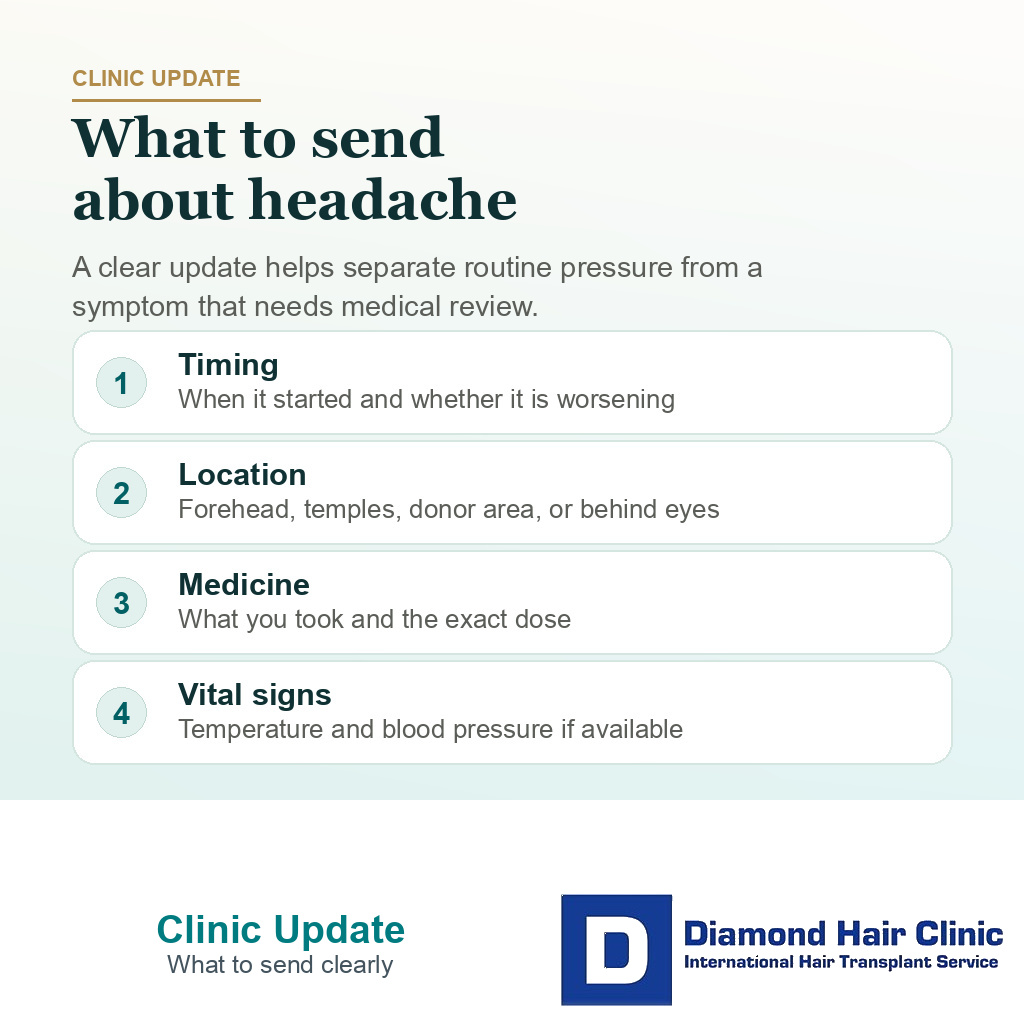
A useful headache update includes timing, severity, medicines, blood pressure when available, and warning symptoms.
Judging headache after the first week
A headache after the first week deserves context. It may come from migraine, tension, sleep, stress, scalp sensitivity, numbness returning as nerves recover, poor posture, dehydration, or an unrelated medical issue. It should not be blamed on the transplant automatically, especially if the scalp itself looks calm.
Still, delayed symptoms should not be ignored when they are worsening or unusual. I review whether there is donor area pain, recipient area redness, swelling, fever, discharge, new medication, a migraine history, blood pressure changes, or another illness. When scalp sensation is the main issue rather than deep headache, I separate it from numbness after hair transplant.
If the pain is mostly in the donor area and becomes severe, it belongs closer to severe donor area pain after FUE. If it is a migraine pattern, migraine planning is needed. If it is a sudden new headache that feels medically different, local evaluation matters.
Separate warning signs from recovery discomfort
A sudden severe headache, fainting, weakness, confusion, chest symptoms, vision change, fever, head injury, uncontrolled blood pressure, or rapidly worsening swelling belongs in medical care first. That is not a styling or transplant result question.
Milder pressure after FUE can come from poor sleep, travel fatigue, dehydration, caffeine change, bending, tight positioning, or normal early swelling. Follow the medication instructions and keep the scalp free from rubbing while you watch whether the pattern settles.
If poor intake or fluid loss is part of the story, the water and electrolytes after FUE guidance can help with steady fluids while warning signs stay in a separate category.
The update to the clinic should give concrete details. Include where the pain is, when it started, what makes it worse, what you have taken, and whether any warning sign is present. That separates ordinary recovery advice from a headache that needs a different route.

Read this review excerpt
Upon arriving home, I sent 4 photos (of each side of head) after every washing process to doctor for checking where I was given personal advice for how to take care of my healing head.