



MRI and CT Scan Safety During Recovery
If you need an MRI or CT scan after a hair transplant, the scan itself is usually not the threat to the grafts. The bigger questions are why the scan is needed, whether it is urgent, whether contrast or sedation is involved, and whether anything will press, drag, or rub the healing scalp.
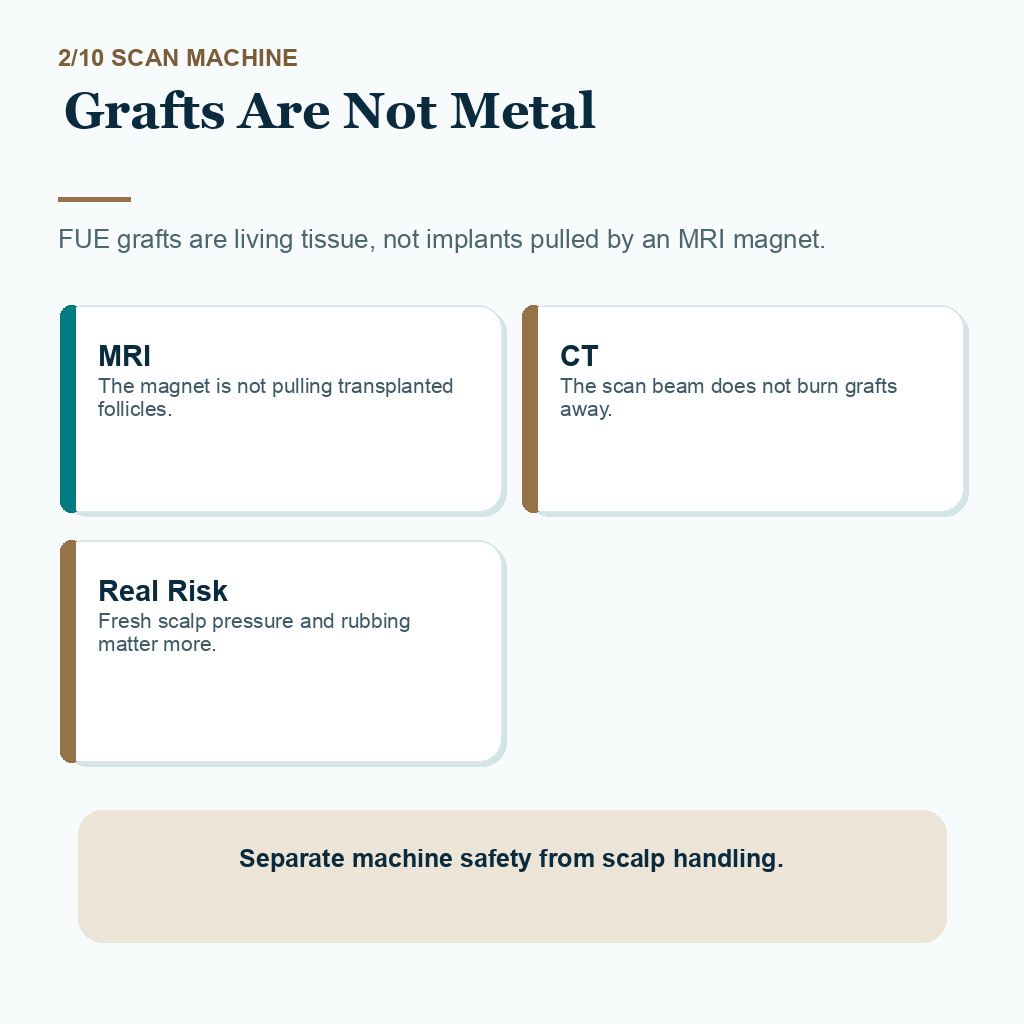
FUE grafts are living tissue. They are not metal implants. They do not get pulled by an MRI machine, and a CT scanner does not burn them away. Still, a recent hair transplant is a fresh surgical area. The recipient area, donor area, forehead swelling, scabs, tenderness, and recovery instructions all matter when the appointment is planned.
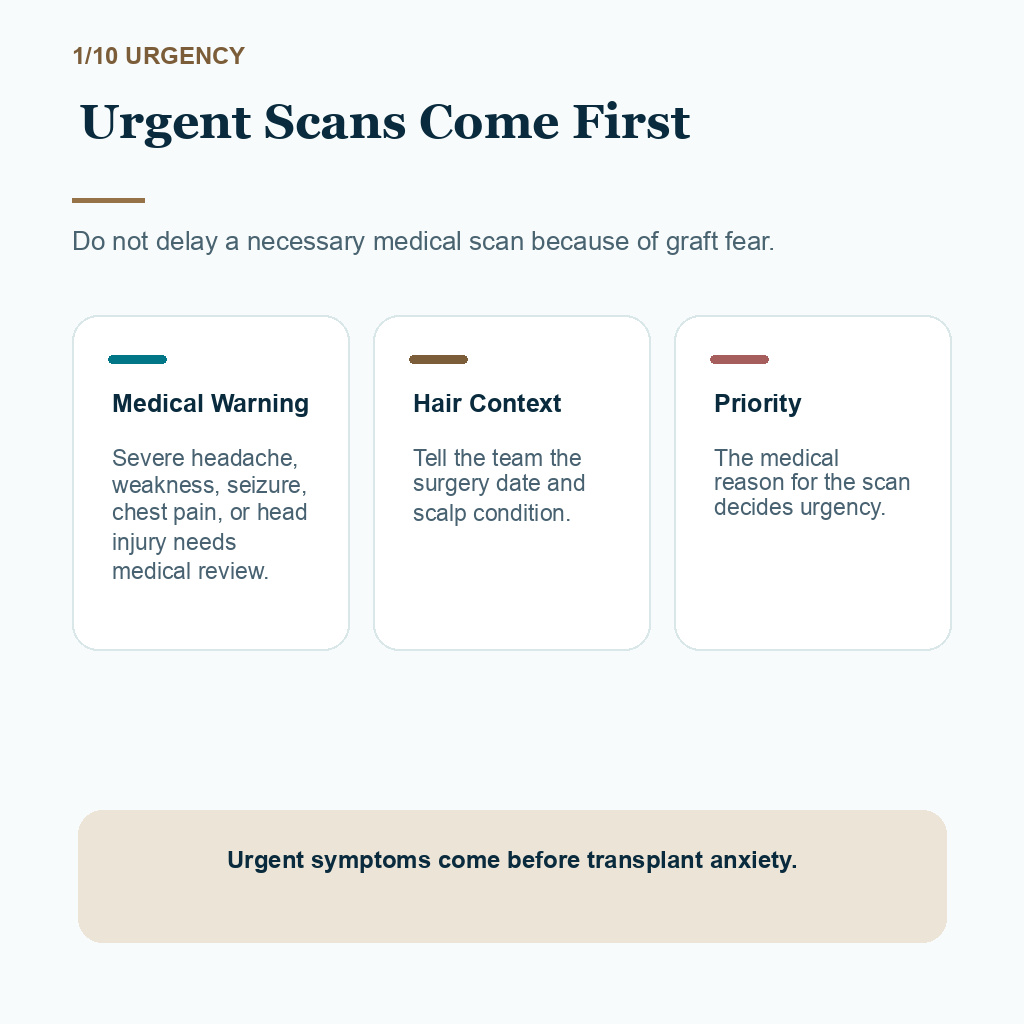
A necessary medical scan should not be delayed because of graft fear or an online guess. If the scan is for a severe headache, head injury, neurological symptom, chest symptom, or another urgent medical concern, the doctor or emergency team comes first. Hair transplant recovery should not make you ignore a real medical warning.
Scan priority map
Choose the scan priority before protecting the scalp
The scan decision starts with why imaging is needed. Hair grafts are not metal implants, but the healing scalp still needs gentle positioning and clear communication.
Urgency check
Urgent symptoms should not wait for graft reassurance
Head injury, severe headache, weakness, confusion, vision change, seizure, chest pain, or breathing trouble.
Follow the emergency or ordering doctor. Tell them when the hair transplant was done.
Do not delay urgent imaging while waiting for the clinic to reassure you about grafts.
A real medical warning outranks graft anxiety. The scalp can be protected during the scan.
Do MRI and CT scans usually damage transplanted grafts?
In a standard hair transplant, the grafts themselves should not be damaged by the MRI magnet or by CT imaging. Hair follicles are not metal. The small crusts on the scalp, transplanted hair shafts, and healing donor dots are also not metal implants.
The more realistic risk is physical handling around the scan. Your head may rest on a support. A coil or padding may sit close to the scalp during MRI. You may be asked to lie still for a period of time. If the scalp is very tender, swollen, bleeding, or crusted, pressure and friction matter more than the imaging machine.
Timing still matters. In the first days after surgery, grafts are more vulnerable to rubbing, scratching, and accidental trauma. Once the grafts are more secure, the concern shifts toward comfort, swelling, scab softening, and whether any symptom needs medical review. For that timeline, use the separate guidance on when hair transplant grafts become secure.
Radiology team details before the scan
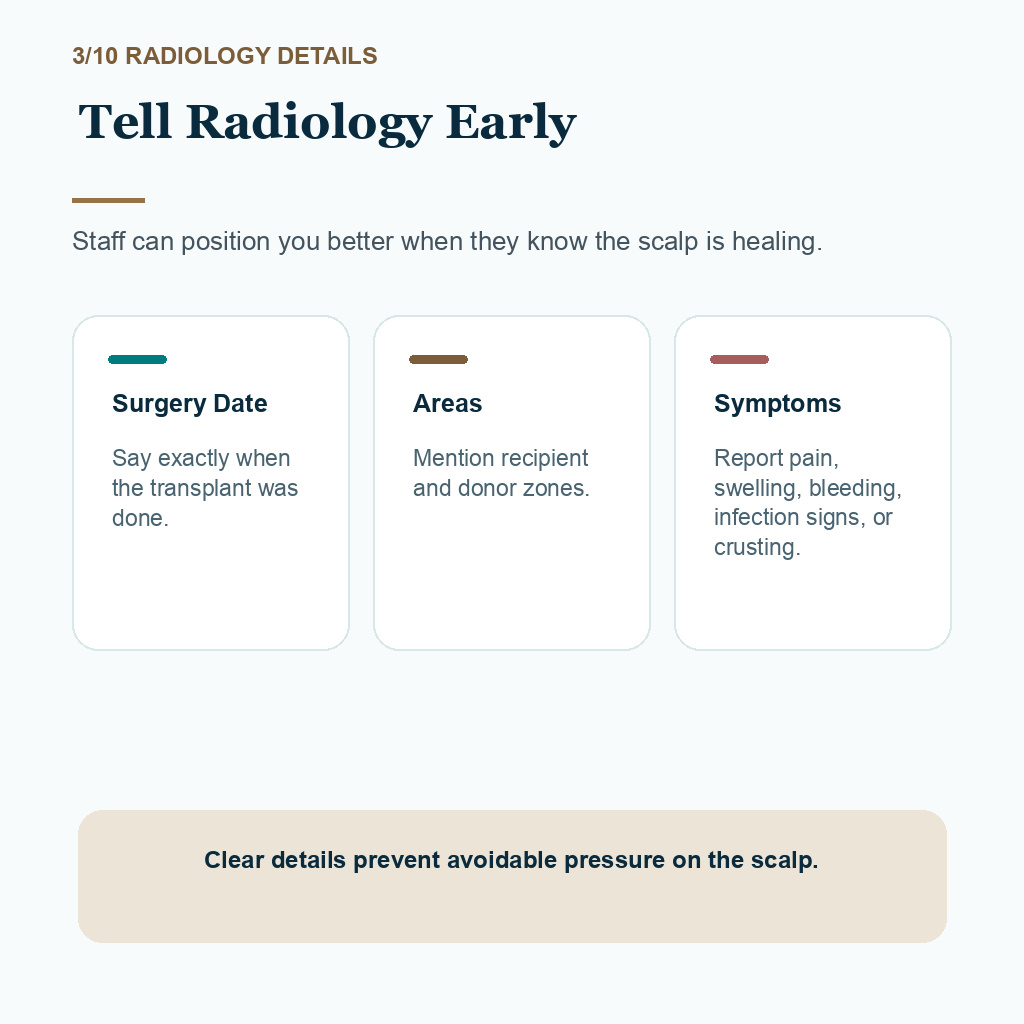
Tell the radiology team that you recently had hair transplant surgery, when it was done, where the recipient and donor areas are, and whether the scalp is painful, bleeding, swollen, infected, or still crusted. This is not because the grafts make the scan unsafe. It is because staff need to position you without unnecessary pressure on a healing area.
Before imaging begins, fresh grafts need practical protection from pillow pressure, straps, headphones, or head supports where adjustment is possible. This is positioning hygiene, not a reason to delay imaging another doctor has decided is medically necessary.
Call the radiology team before you arrive if the scan uses a head coil, tight support, or long still position. It is easier to plan padding calmly than to negotiate scalp contact after you are already on the table.
You should also answer the standard scan safety questions carefully. Mention any pacemaker, aneurysm clip, cochlear implant, metal fragment, stent, recent surgery, kidney disease, allergy history, pregnancy status, breastfeeding status, or medication that the radiology team asks about. MRI screening is mainly about magnets and implanted material. CT contrast screening is mainly about kidney function, allergy history, pregnancy status, and the reason for the scan.
Those questions belong to the radiology team and the doctor who ordered the scan. The hair transplant clinic can help with scalp handling, photo review, and whether the scan instructions fit the recovery plan.

Urgent scans should not wait for graft concerns
A scan should not wait if the doctor or emergency team believes it is medically urgent. Severe or unusual headache, weakness on one side, confusion, vision change, seizure, fainting, chest pain, breathing trouble, major head injury, sudden neurological change, or symptoms that feel dangerous belong with medical review first.
Some hair transplant recovery symptoms can feel dramatic but still be local. Forehead swelling can move downward. Donor tenderness can feel strange. Poor sleep can make a normal headache feel stronger. But a new neurological symptom, worsening severe pain, repeated vomiting, fever, or a hard impact to the head should not be explained away as routine recovery.
If the concern is mainly a headache after surgery, compare it with the warning pattern explained in headache symptoms after hair transplant. If swelling is the concern, use the separate page on forehead swelling after hair transplant. If there was a hit to the head, read about head bumps and graft risk, but urgent medical symptoms still come first.
The 10 slides below work as a scan triage guide. Check urgency first, then MRI metal screening, contrast or sedation, scalp positioning, warning symptoms, travel timing, and the details to send the clinic. Swipe sideways, use the arrows, or choose a number below the image.

Who decides contrast safety?
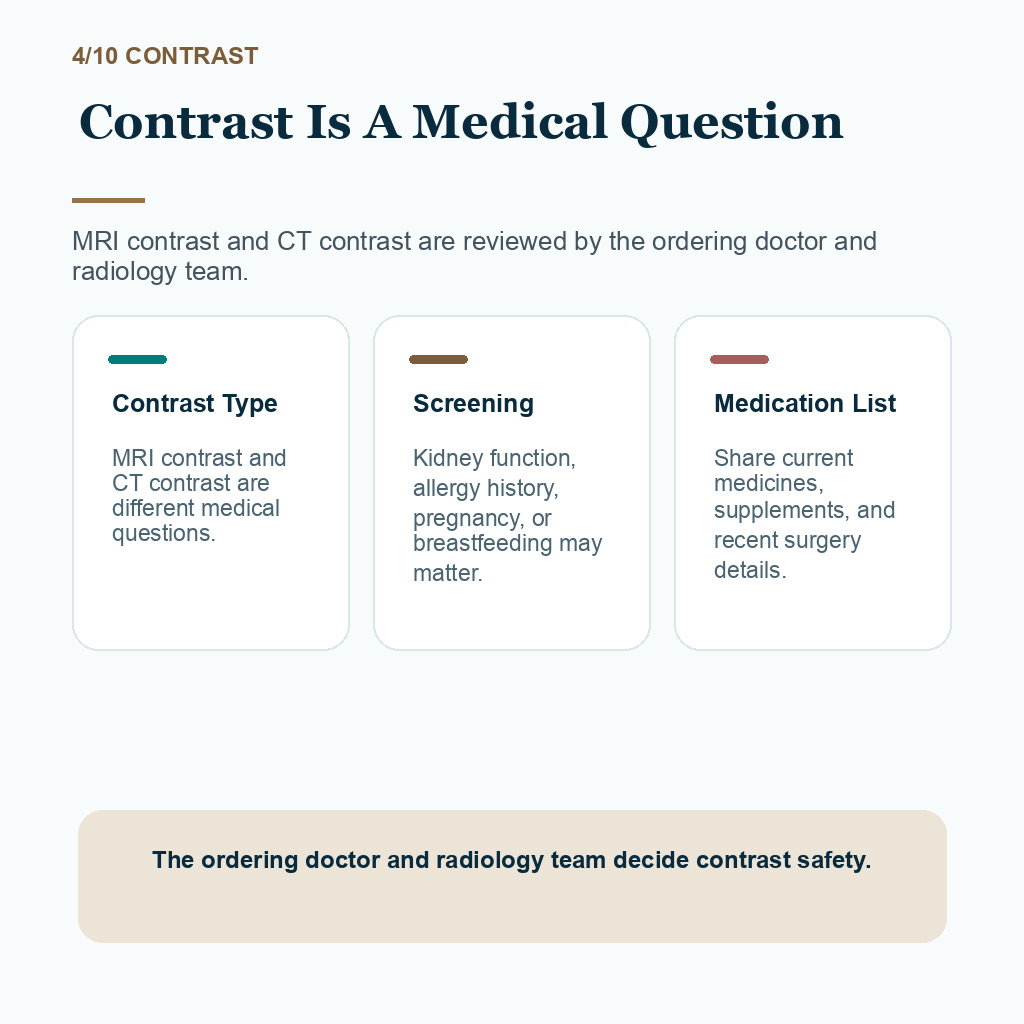
Contrast is not a graft question by itself. MRI contrast and CT contrast are different materials used for different reasons, and the safety review belongs to the doctor and radiology team. They may ask about kidney function, previous contrast reaction, asthma, allergy history, pregnancy, breastfeeding, diabetes medicine, or other medical details.
A recent hair transplant does not by itself forbid contrast. The key is to avoid hiding information. Tell the radiology team about the surgery date, current medication list, antibiotics, pain medicines, supplements, and any unusual recovery symptom. Tell the hair transplant clinic if the scan involves sedation, a long appointment, contrast instructions, fasting, or a medication change after booking hair transplant.
The same general principle applies to other medical events around FUE. A separate operation, emergency procedure, or medical treatment should be coordinated instead of improvised. If imaging is part of a bigger medical event, use the same timing discipline I explain for major surgery around hair transplant timing.
Protecting the scalp on the scanner table
Protecting the scalp is mostly practical. Avoid rubbing the recipient area against the table, pillow, coil, strap, or clothing. Ask whether the head can be supported gently. Do not let staff tape, press, or adjust equipment across fresh grafts unless there is a medical reason and the ordering team understands the recent surgery.
The main scalp risk is pressure, rubbing, or dragging across fresh grafts, not the CT scanner or MRI magnet. Brief support needed for the scan is different from avoidable rubbing over the recipient area. Explain the transplant clearly instead of refusing a medically needed scan.
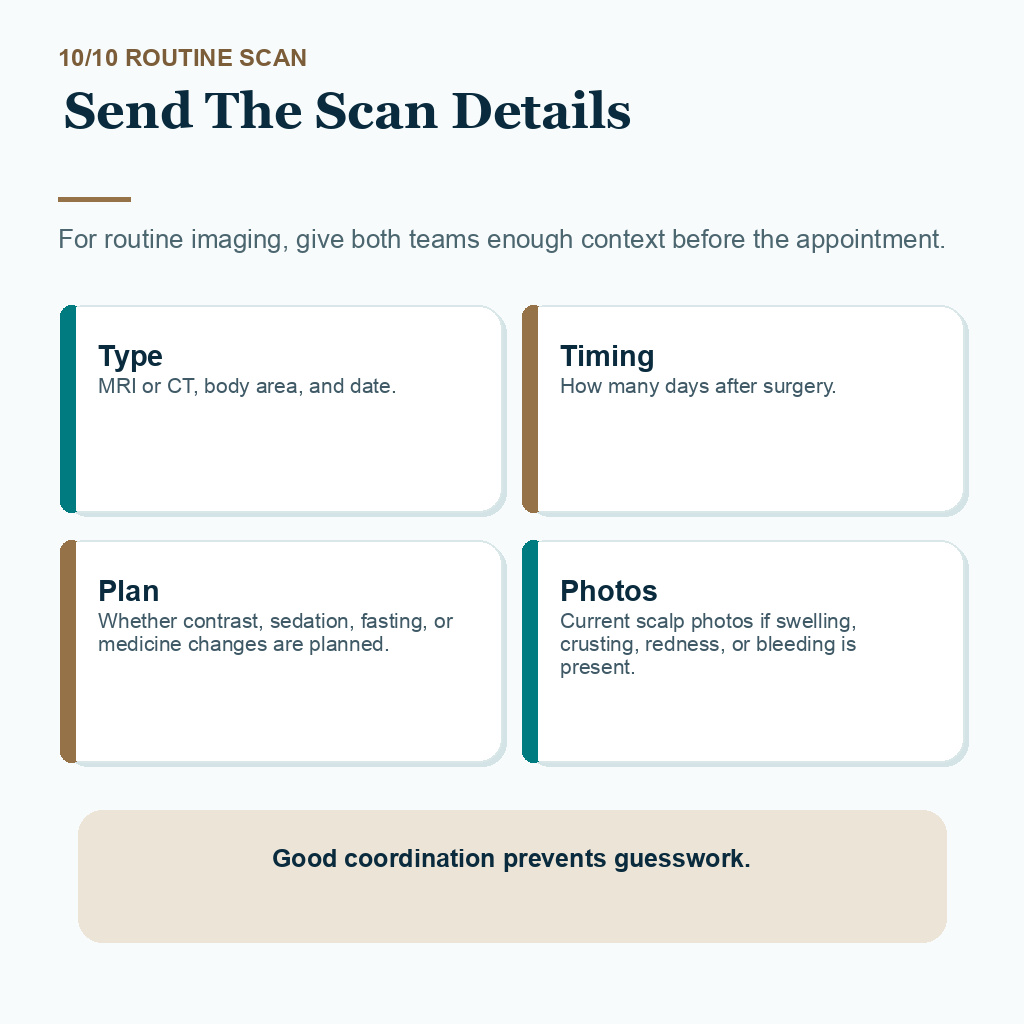
If the scan is in the first week, tell the clinic before the appointment when possible. Send photos if there is swelling, bleeding, thick scabbing, or unusual redness. If you already need the scan urgently, do not delay urgent medical review while waiting for a perfect hair transplant answer.
For routine scans, it is reasonable to schedule at a time when the scalp is less tender and scabs are settling. Routine does not mean secret. Tell both teams so radiology can position your head safely and the clinic can judge the recovery context.

Head, neck, and face scans need extra positioning caution
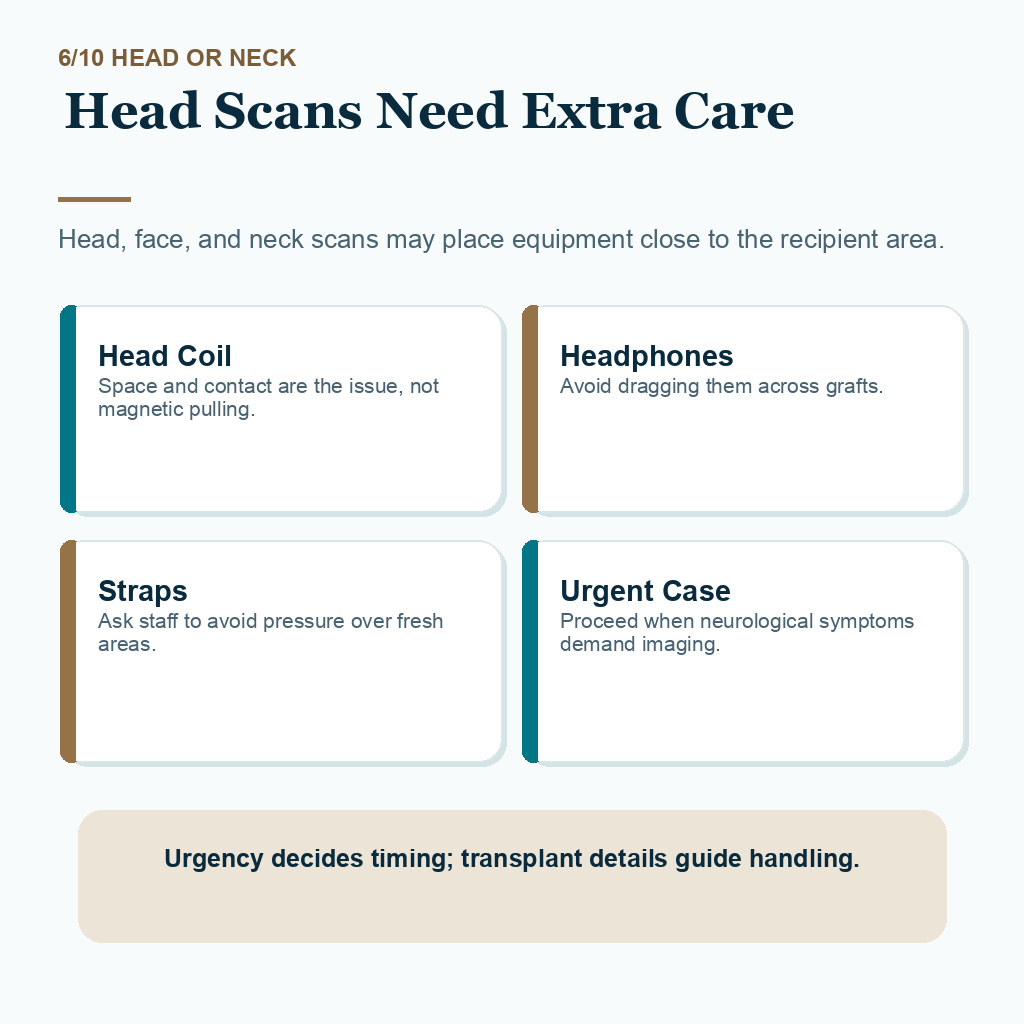
A scan of another body area may still put your scalp against a pillow or table, but a head, face, or neck scan needs more direct positioning around the transplant area. Ask the radiology team not to drag straps, towels, headphones, or a coil across the recipient area. If the scan uses a head coil, the issue is usually space and contact, not magnetic pulling of the grafts.
If the transplant is very recent, send photos to the clinic before a routine head or neck scan when timing allows. For urgent neurological symptoms, trauma, or severe pain, go ahead with the scan and tell the team exactly when surgery was done. The medical reason for the scan decides urgency. The transplant details guide scalp handling.
How are CT and MRI different after a hair transplant?
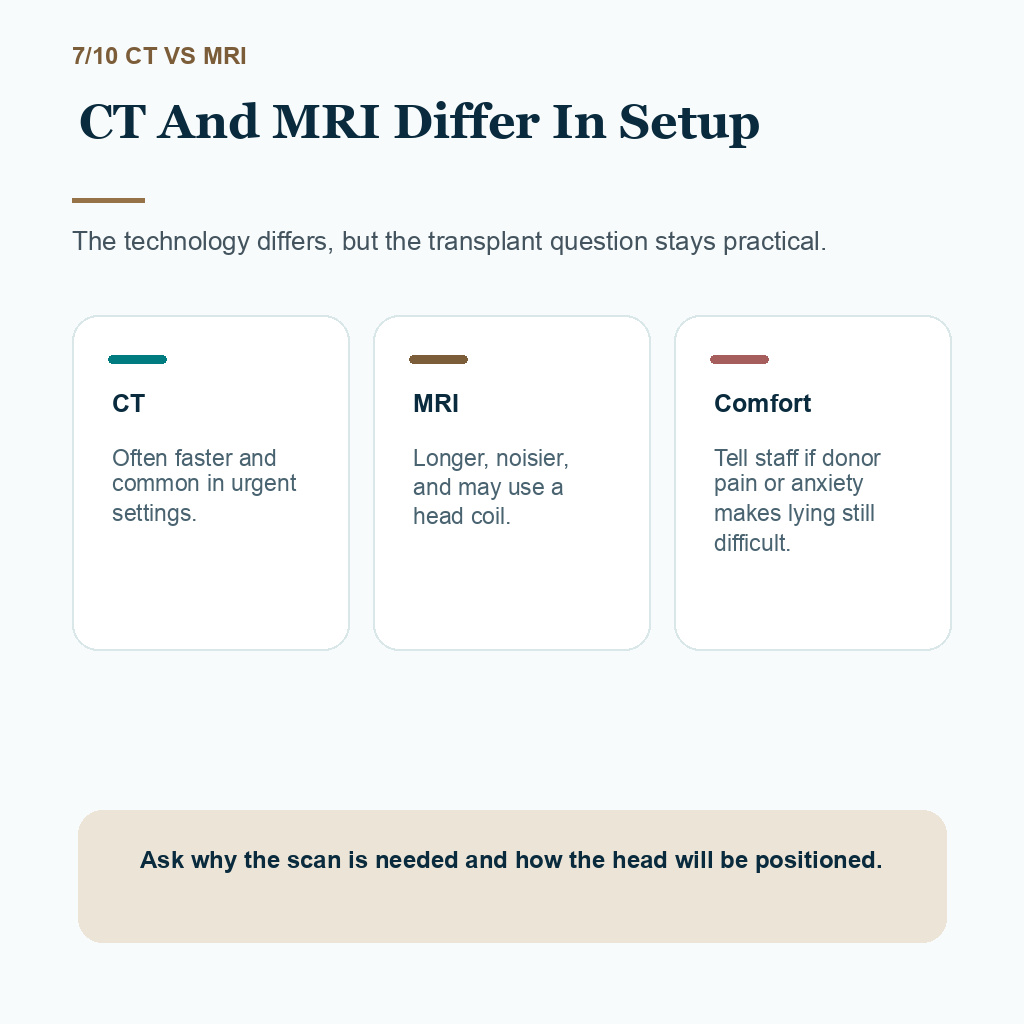
CT and MRI are different technologies, but the hair transplant concern is similar. The grafts are not the object being pulled or scanned into failure. The useful questions are why the scan is needed, how urgent it is, whether contrast is planned, and whether the scalp will be protected during positioning.
CT is often faster and may be used in emergency settings. MRI can take longer and may involve a head coil, noise, and stricter magnet safety screening. If you are anxious, claustrophobic, or unable to lie still because the donor area is painful, tell the team before the scan starts.
This is different from screening before surgery. If a clinic asks for ECG, chest imaging, or blood tests before FUE, that is a readiness question before the procedure. The separate page on ECG and chest imaging before FUE explains why those checks may be used before surgery rather than after it.
Which symptoms need urgent medical review?
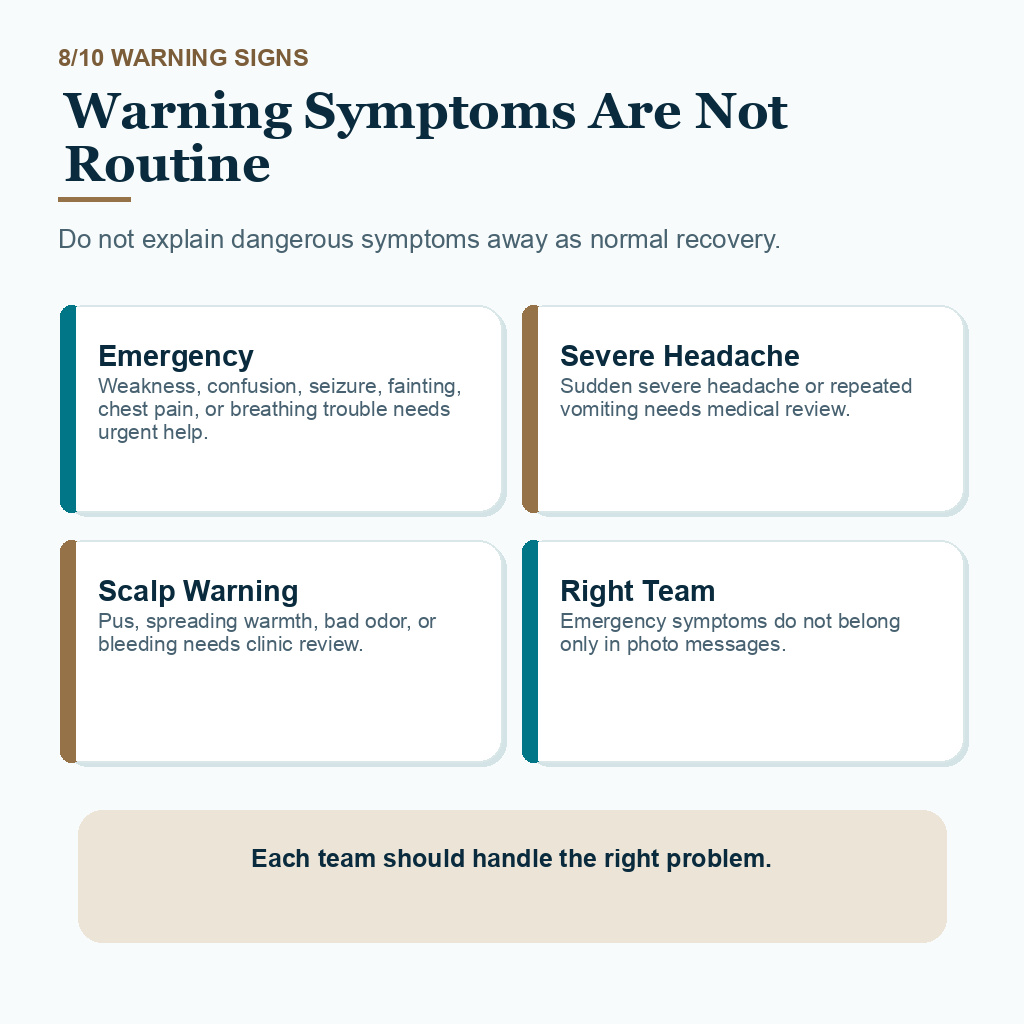
Seek urgent medical help if you develop one sided weakness, facial drooping, severe confusion, seizure, fainting, chest pain, breathing difficulty, a severe sudden headache, repeated vomiting, high fever, uncontrolled bleeding, or a significant head injury. These symptoms are not normal hair transplant questions.
Call the clinic quickly for scalp specific warning signs such as increasing redness, pus, spreading warmth, worsening pain, bad odor, thick yellow fluid, or bleeding that does not settle with the instruction you were given. The clinic can review the scalp, but emergency symptoms should not be routed only through WhatsApp photos.
Recovery works best when each team handles the right problem. Radiology handles scan safety and image protocol. The ordering doctor handles the medical reason. The hair transplant clinic handles graft protection, donor area comfort, and recovery instructions.
Travel timing can change the scan decision
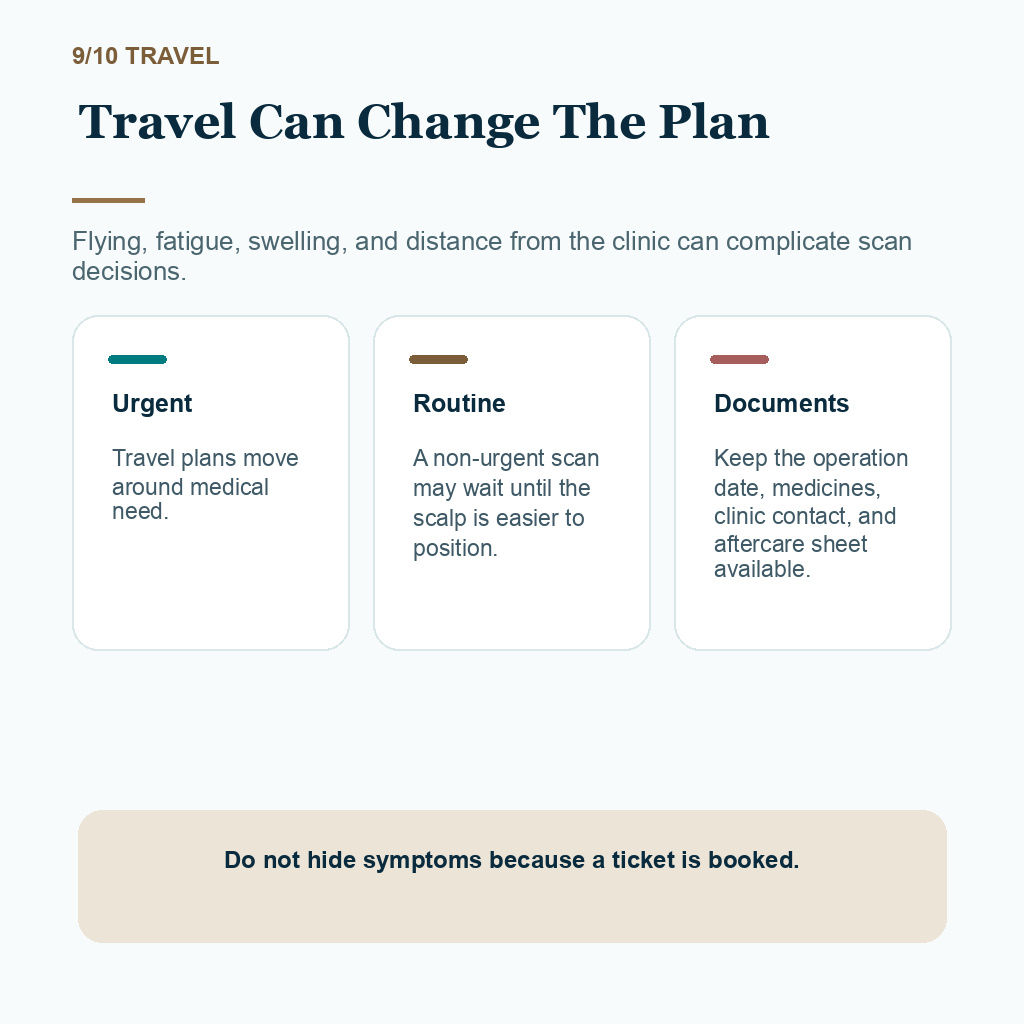
Travel can complicate scan decisions because you may be away from the clinic, tired, swollen, anxious, or about to fly. If a scan is medically urgent, travel plans should move around the medical need. If the scan is routine, ask whether it can wait until you are home and the scalp is easier to position.
If you are flying soon after surgery and develop worrying symptoms, do not hide them because the ticket is booked. The newer guidance on recovery concerns after flying home from a hair transplant explains why travel anxiety should be separated from real warning signs.
Keep your operation date, medication list, clinic contact, and hair transplant recovery instructions sheet available during travel. If another doctor needs to order imaging, those details help them understand the timing without guessing.
What should you send before booking a routine scan?
For a routine scan, send the clinic the scan type, body area, date, whether contrast is planned, and how many days have passed since surgery. Ask whether any scalp handling detail should be added to the appointment note. If the scan is urgent, go through the medical team first and update the clinic as soon as practical.
Before the appointment, avoid styling products, scratching, heavy rubbing, tight hats, or anything that makes the scalp more irritated. For MRI, remove and disclose hair clips, pins, hairpieces, extensions, concealers, or anything that may contain metal. Bring the medication list and the surgery date. If the recipient area is still crusted, tell staff not to drag fabric, straps, or padding across it.
When the scan uses a head coil, strap, or firm padding, tell the technician where the grafts and donor soreness are before you lie down. Small positioning changes can protect the scalp without delaying necessary imaging.
After the scan, return to the clinic recovery plan unless the doctor who ordered the scan gives a medical reason to change it. If there was contrast, sedation, new medicine, or an unexpected diagnosis, tell the clinic. Small coordination prevents avoidable confusion.
A medically needed scan should not be canceled because of graft fear
Do not cancel a necessary MRI or CT scan because of transplanted grafts, and do not treat a fresh scalp casually. Both points matter.
Urgent medical symptoms come first. Routine imaging can usually be planned around comfort and scalp protection. Contrast questions belong to radiology and the ordering doctor. Graft handling questions belong to the hair transplant clinic.
When you message the clinic, include the scan type, reason, date, surgery day, current photos, and whether contrast or sedation is planned. With those details, I can advise on scalp handling without pretending to answer the radiology question.
Read this review excerpt
First wash completed and visual instructions given to my daughter.