


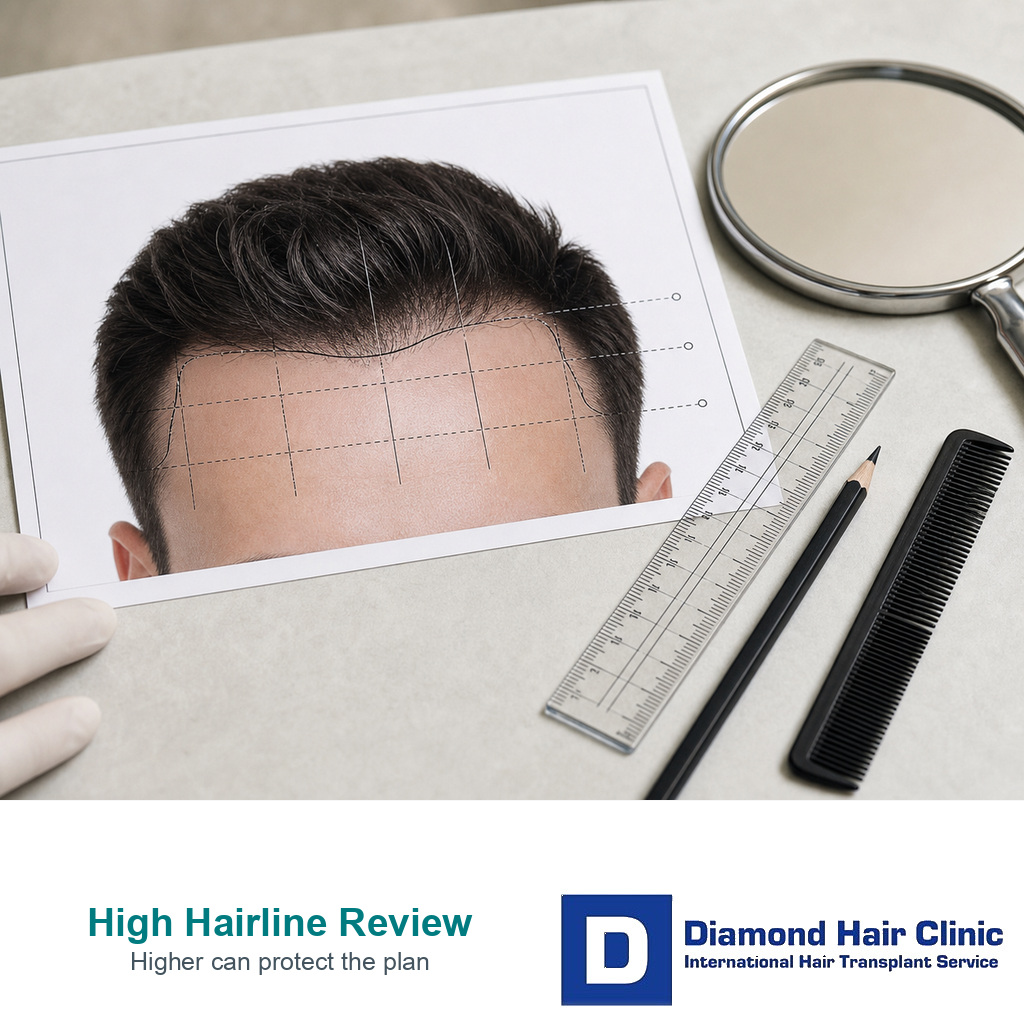
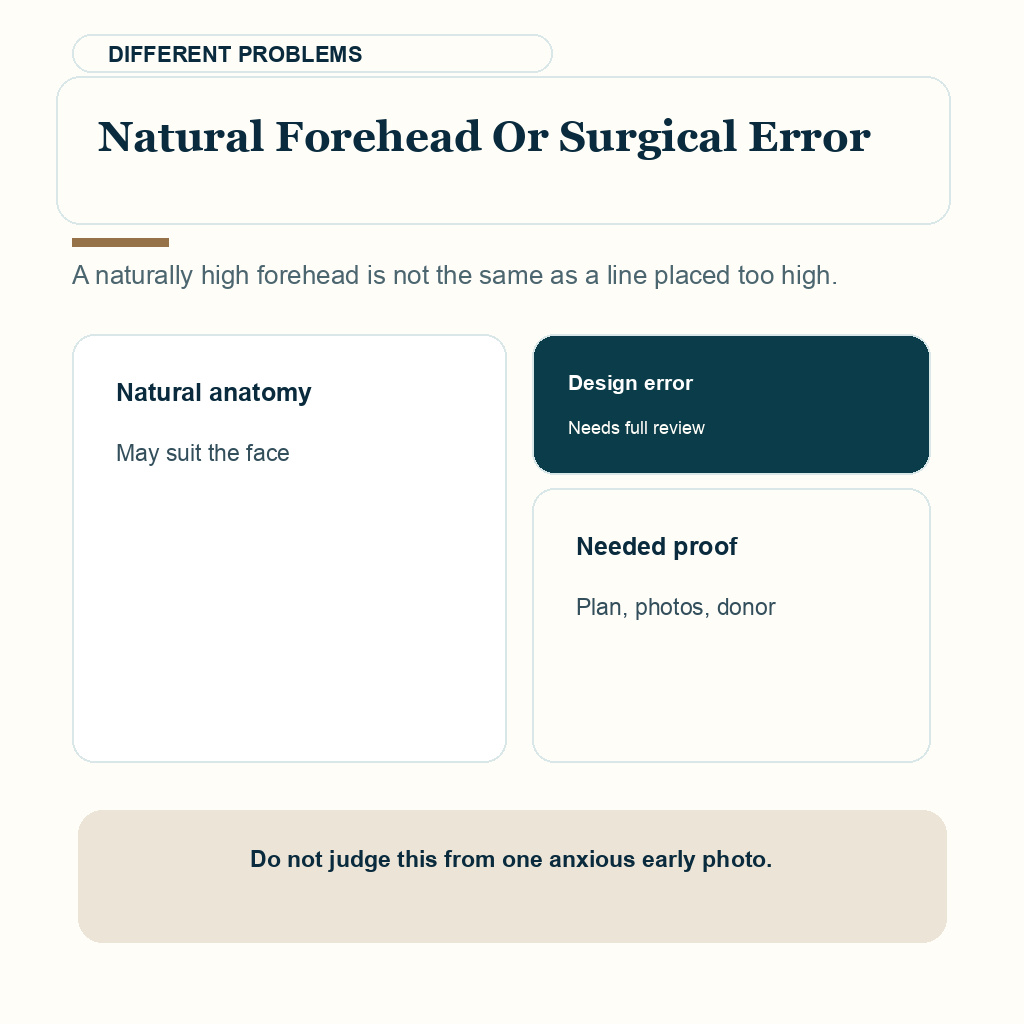
A naturally high forehead is a different problem
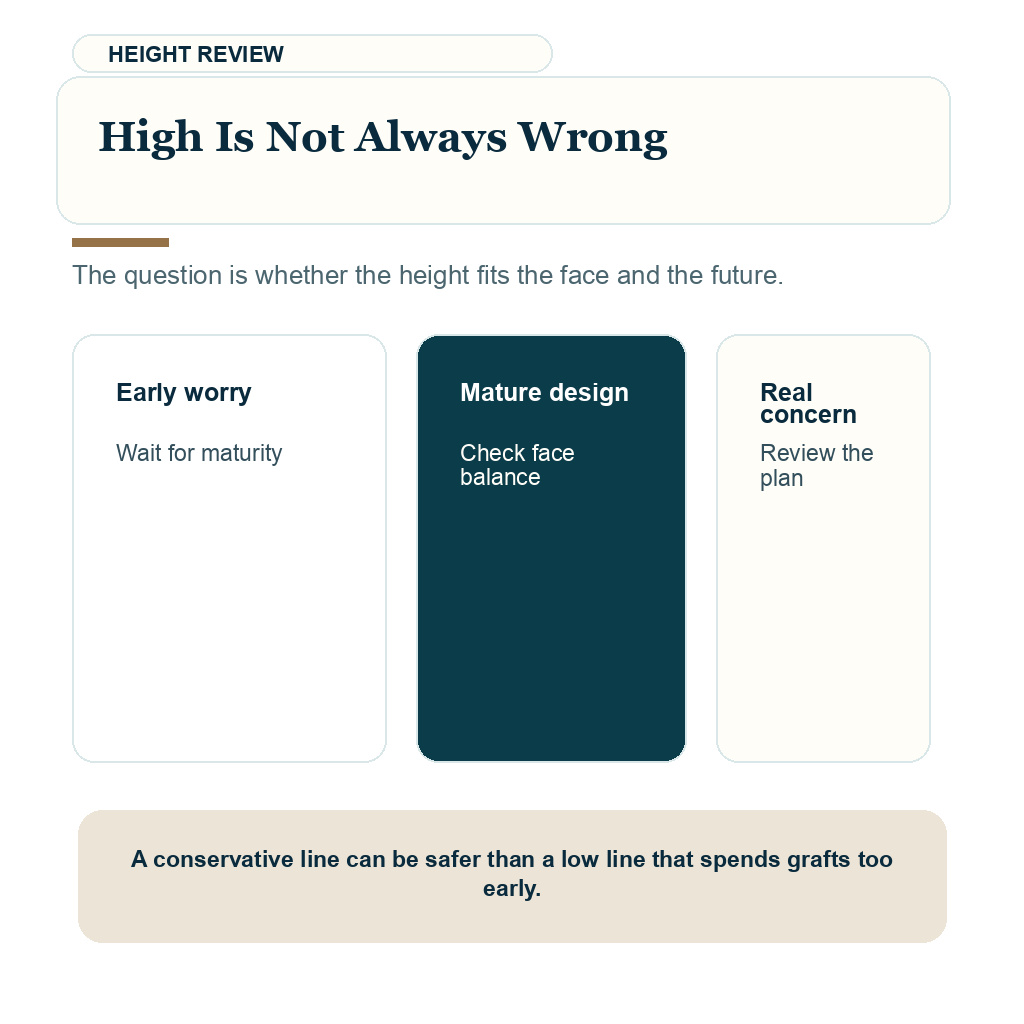
Some people naturally have a higher forehead even before hair loss begins. For that face shape, a transplant may improve framing without making the face look like it belongs to a different person. I am not trying to erase your natural anatomy.
A different problem is a transplanted hairline that was placed too high despite enough donor capacity, stable loss, and a face that would have accepted a lower design safely. That judgment cannot be made from one anxious early photo. It needs the original design, the day one placement, the mature result, the temples, and the donor plan all reviewed together.
If the concern is a naturally high forehead rather than a transplant result, my article on whether a hair transplant can lower a naturally high forehead may be the closer question. The planning logic overlaps, but the starting point is different.
Comparisons before asking for lowering
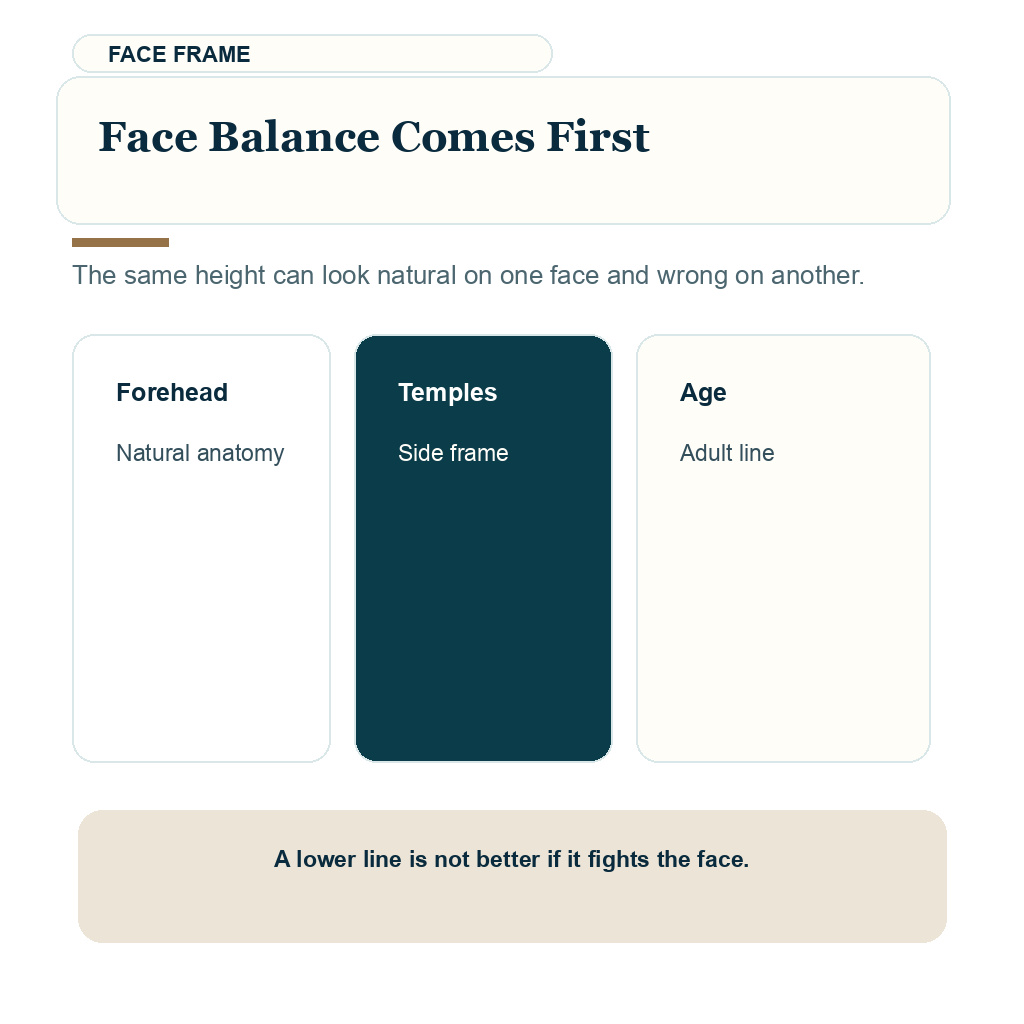
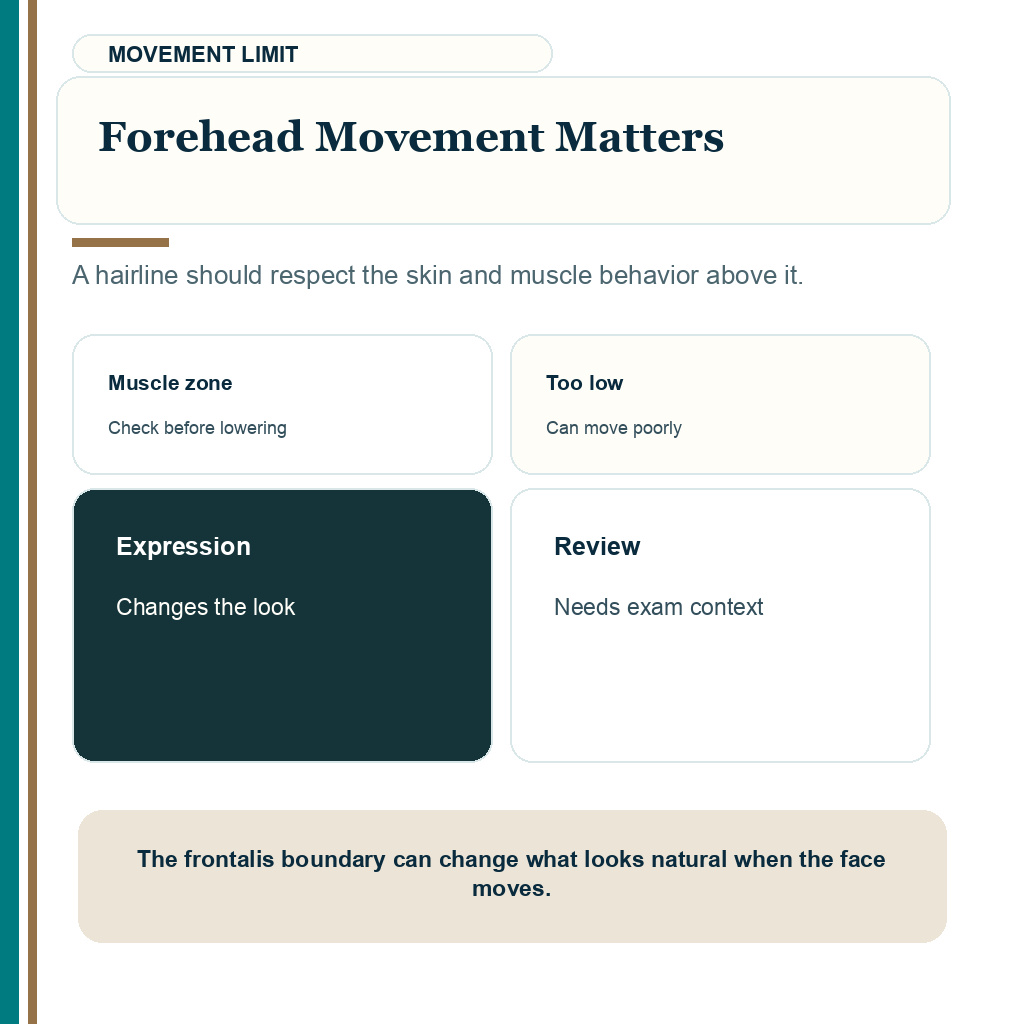
Before thinking about revision, compare the hairline with your real facial proportions, not only with photos online. The same hairline height can look mature and natural on one face, too high on another, and too low on a third. Hair color, forehead shape, temple recession, eyebrow position, and density behind the hairline all change the impression.
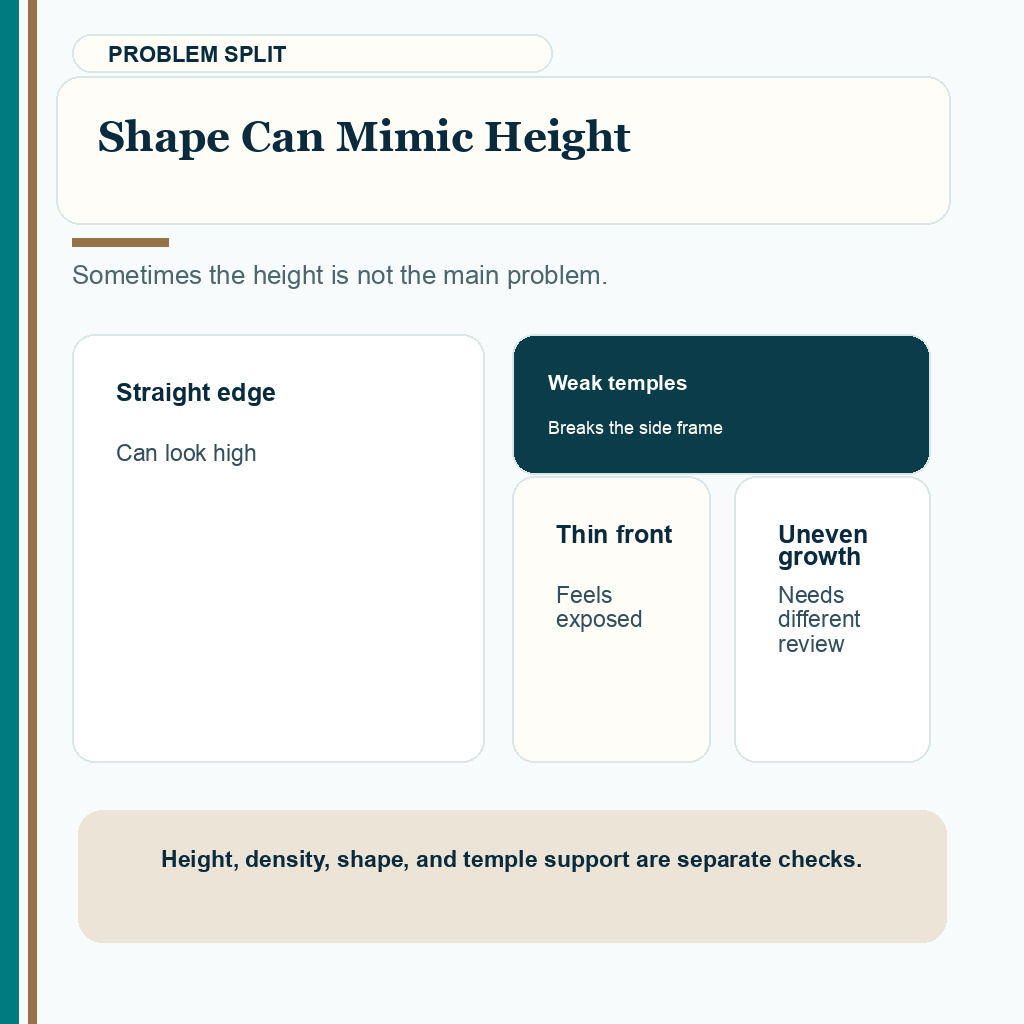
Also compare the hairline with the temple points. A frontal line that is lowered without respecting the sides can make the face look rounded, heavy, or disconnected. If the temple points are weak, a lower front alone may not solve the concern. The side frame matters, and the same planning limit applies when deciding whether temple points can be restored with a hair transplant.
Another comparison is the hairline’s shape. Some people call a hairline too high when the real issue is a straight shape, poor irregularity, weak temple transition, or uneven density. If the concern is asymmetry or growth imbalance, the page about an uneven hairline after a hair transplant may be closer to the real concern than hairline height.
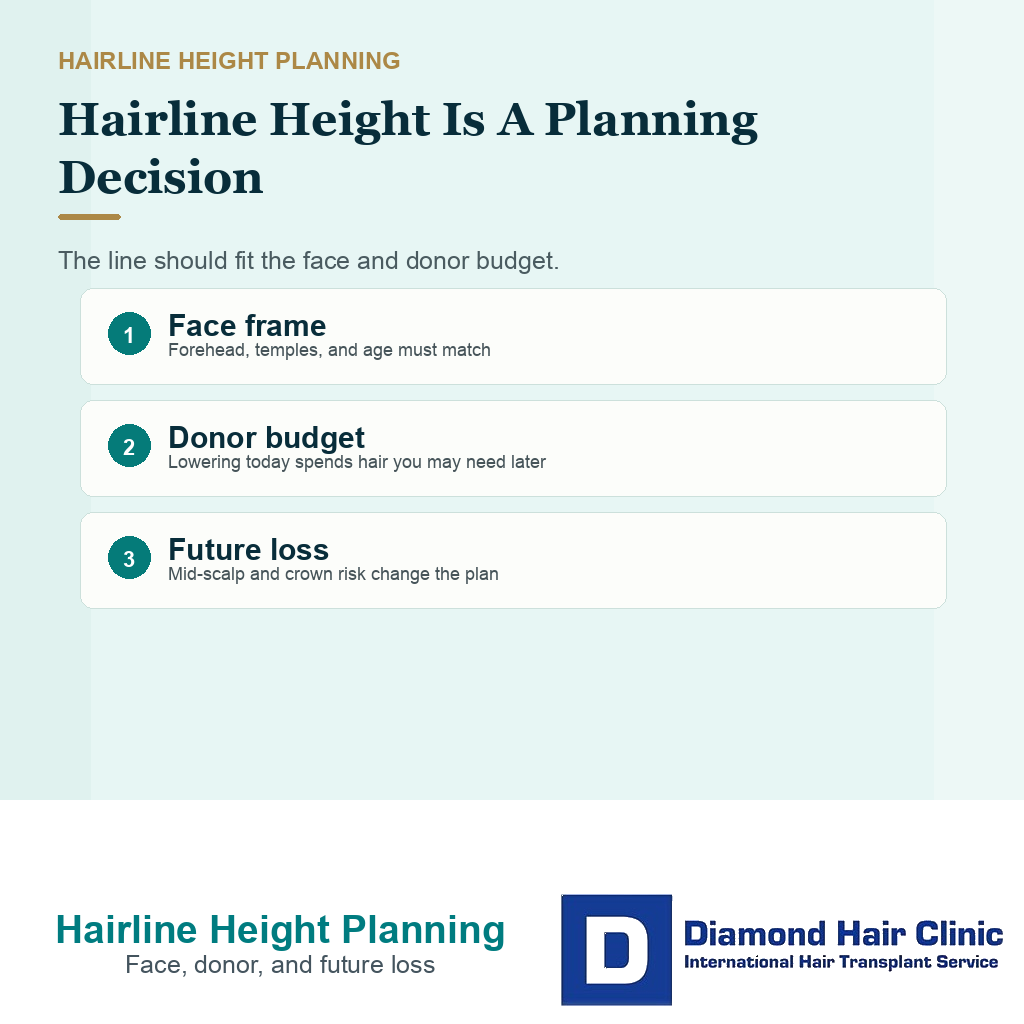
Judge hairline height with the whole face, donor area, temples, and future hair loss in mind.
Safe timing for lowering the hairline
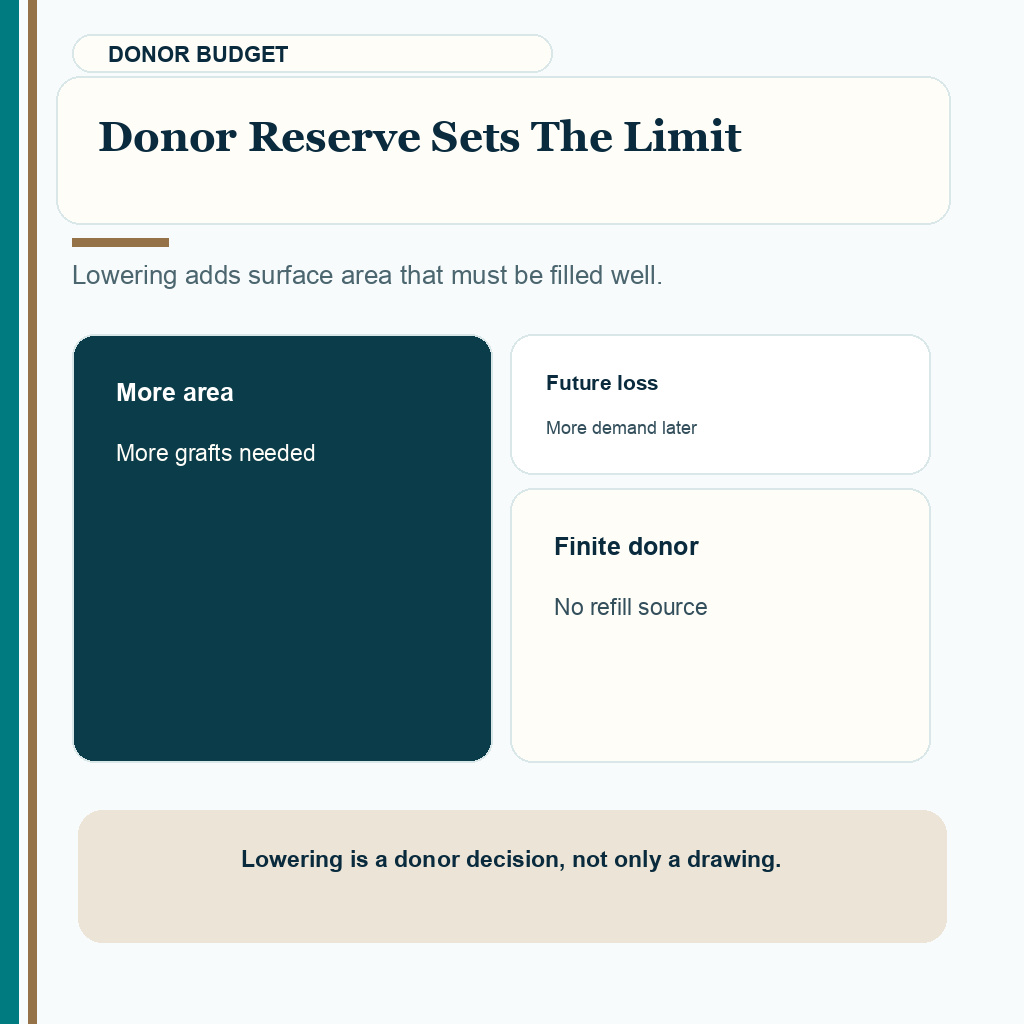
Lowering can be safe when the first result is mature, the donor area is strong enough, the existing hairline is natural enough to build in front of, and future hair loss risk has been considered. A small adjustment may be reasonable if it improves facial framing without using too many grafts or creating a dense front that the rest of the scalp cannot support.
The safer cases are measured and clearly diagnosed. The result is mature, the hair loss pattern is stable, the donor reserve is visible, and the lowering target is modest. The new lower line should still look age appropriate. It should not chase a teenage hairline or an edited social media reference.
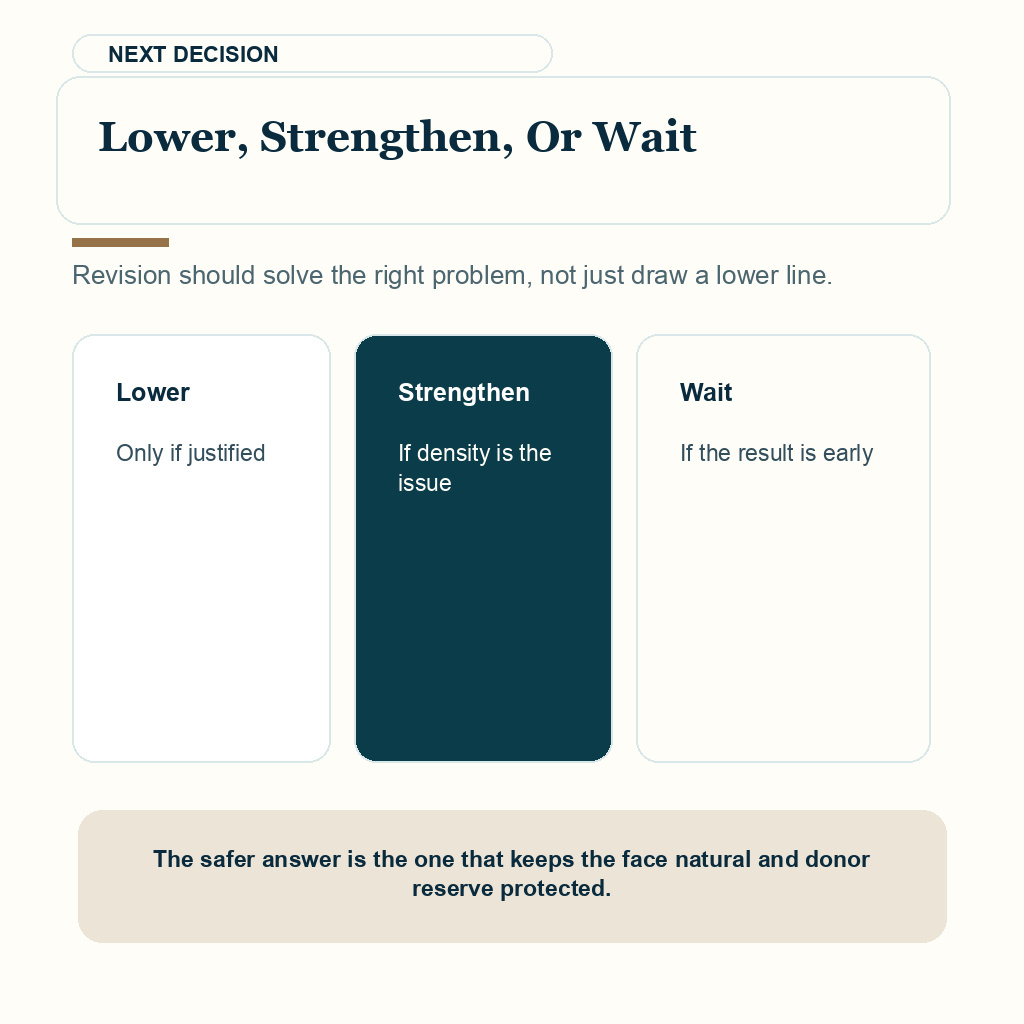
Sometimes a second session is better used to strengthen the existing frontal zone rather than lower the line. If the hairline is high but soft, natural, and well angled, adding density may improve the frame without spending as many grafts as a full lowering. The decision overlaps with the broader question of whether a second hair transplant is worth it.
Lowering the hairline can be a bad idea
Lowering is a bad idea when donor capacity is weak, hair loss is still active, density behind the hairline is poor, or expectations are unrealistic. It is also risky when the first hairline is already low enough for the face but the comparison is with someone who has a different forehead, donor area, age, and hair loss pattern.
Extra caution is needed when a young person wants the line lowered because any mature recession feels unacceptable. When the underlying hair loss is still moving, surgery can spend grafts in the wrong order. The page about having a hair transplant too early while hair loss is active is an important warning for that pattern.
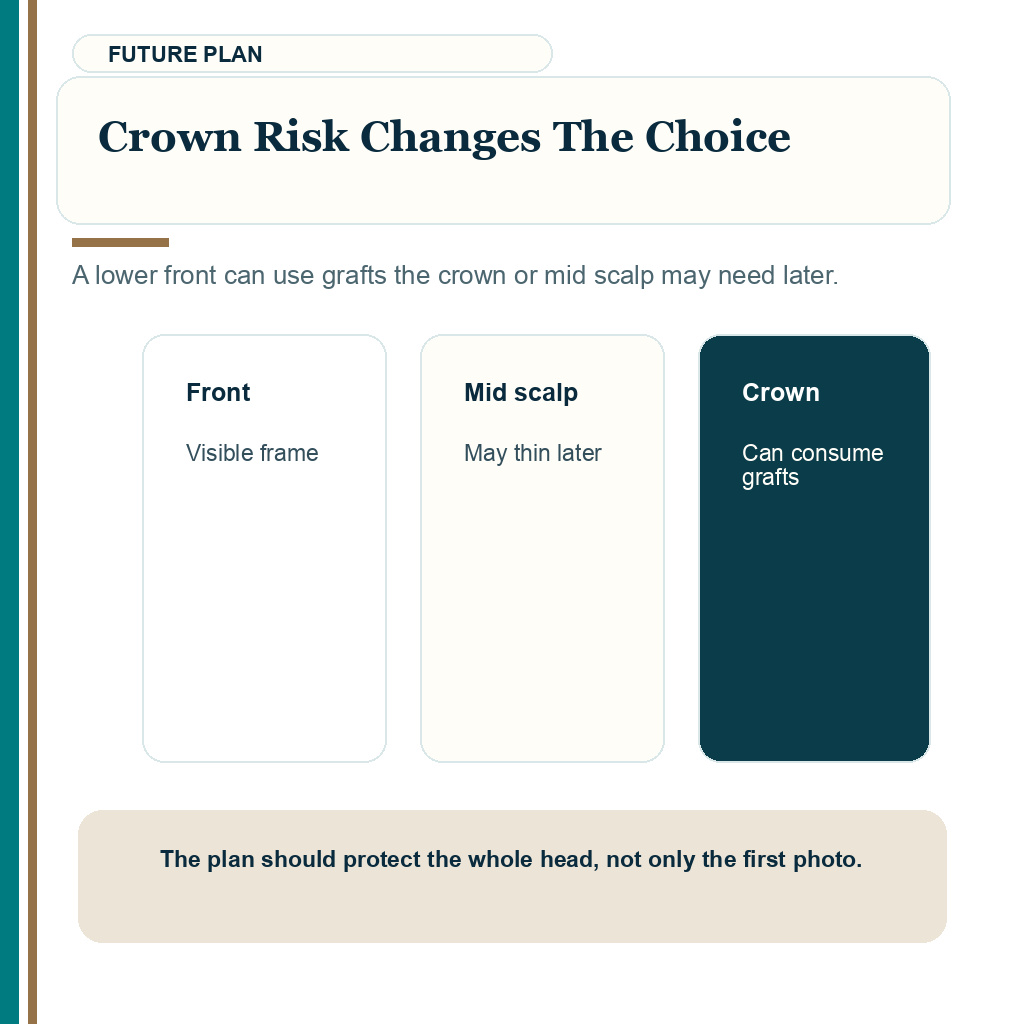
Lowering can be especially unwise if the crown has not been discussed. The crown can consume many grafts and still look thinner than the front because of the whorl pattern and wider surface area. You may prefer a lower front today, but if crown thinning becomes a bigger problem later, the donor area may already be under pressure. When that future crown risk is real, choosing hairline or crown first has to be a surgical planning decision, not only an emotional preference.
Age changes the right hairline height
Age changes how I judge a hairline. A hairline that looks attractive at 25 can look artificial at 45 if it is too low, too flat, or too dense compared with the rest of the scalp. A mature hairline can still be attractive. It often looks more natural because it matches the face and leaves grafts available for future changes.
This does not mean every patient needs a high hairline. It means the plan should respect the face and the future. A man with stable hair loss in his 40s may have more flexibility than a man in his early 20s with strong family history and early crown thinning.
The long term question is whether the hairline will still make sense as you age. The line needs to mature with the person rather than only look good in the first set of photos. That aging concern is discussed in more depth in the article about whether a hair transplant will still look natural as you get older.
Clinic explanations before drawing the hairline
A clinic should explain why the hairline is being placed at that height, what decision is being made, and how the design protects the donor area. The discussion should include the temples, mid scalp, crown, hair caliber, density expectations, and whether medication is part of the long term plan.
Be careful if the consultation makes the decision sound too easy. A clinic can draw a low line quickly, but the surgery has to support that line with grafts, angle, direction, density, and future planning. If the person drawing the line is not the person medically responsible for the plan, you may never hear the real limitations.
Package style planning built around a dramatic front can hide the real surgical tradeoff. If you are comparing clinics in Turkey, you should know who designs the hairline, who checks the donor area, who decides the graft distribution, and who is responsible if the plan is too aggressive. The hairline should not be treated as a sales drawing separate from donor management.
Styling or density can change the impression of height
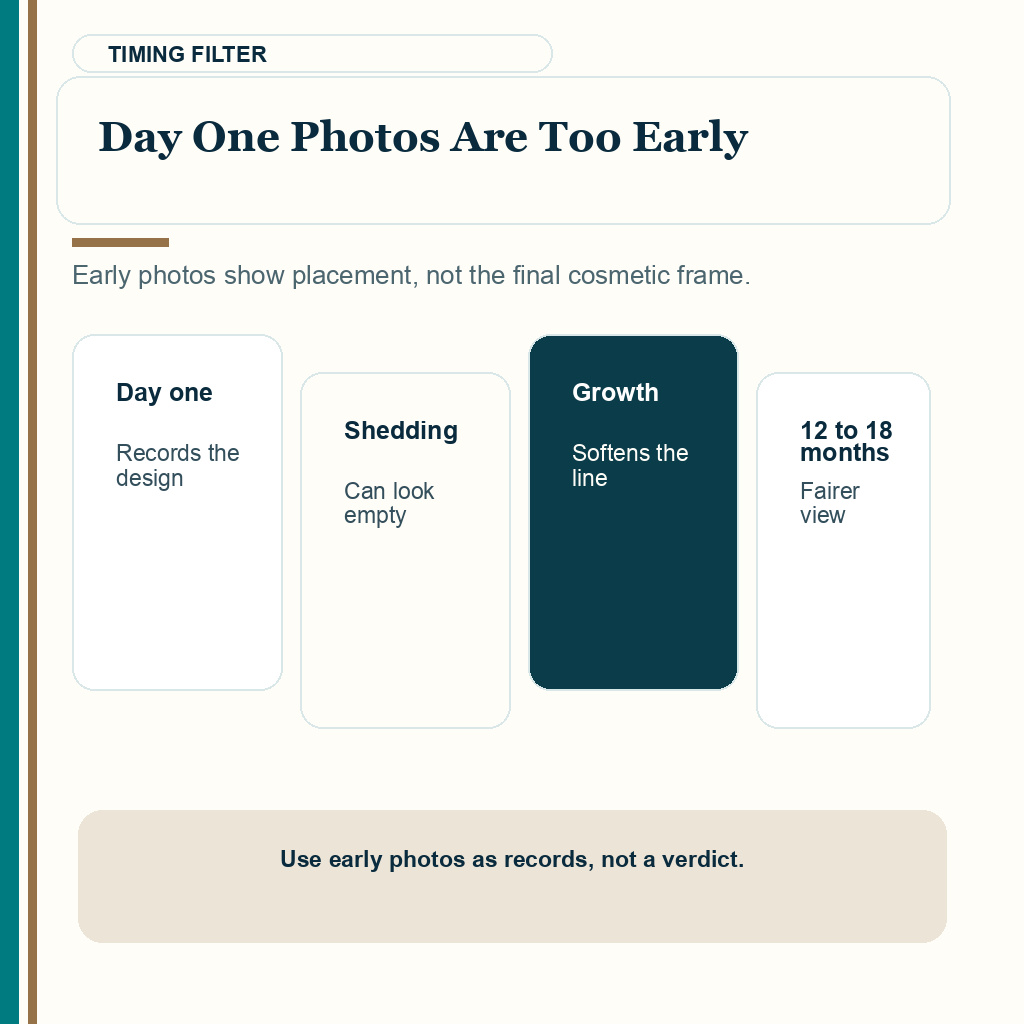
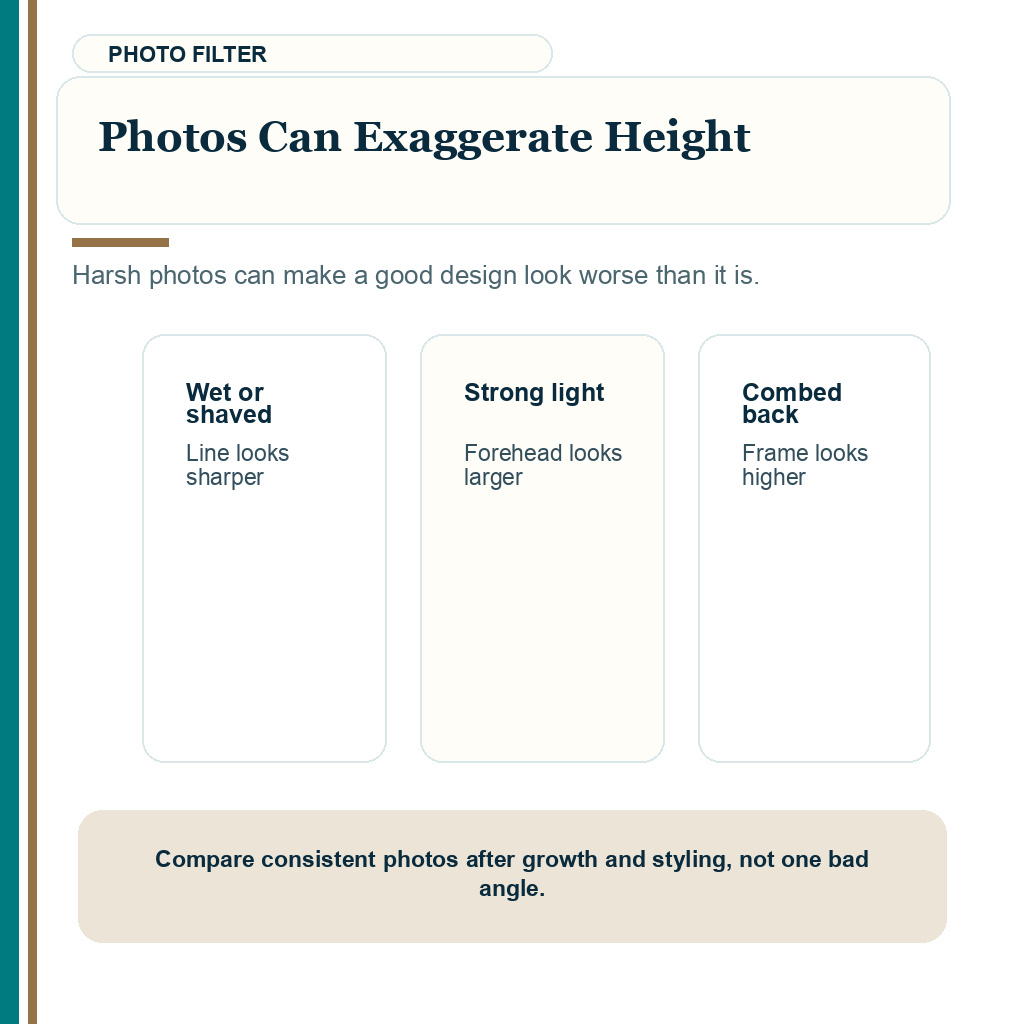
Styling and density can change the impression of height. A hairline may look higher when the hair is shaved, wet, harshly lit, or combed straight back. Once the hair grows, even moderate density can soften the frame and make the same line look more natural.
Density behind the first rows matters a lot. A high but softly designed hairline with good direction can look better than a lower line that is thin, straight, or pluggy. Sometimes the smarter correction is not lowering the line but improving the transition, density, or styling options.
If the concern is that the result looks too thin rather than truly too high, why some hair transplant results look thin may be more useful. Height, density, and shape are different problems, and they need different solutions.
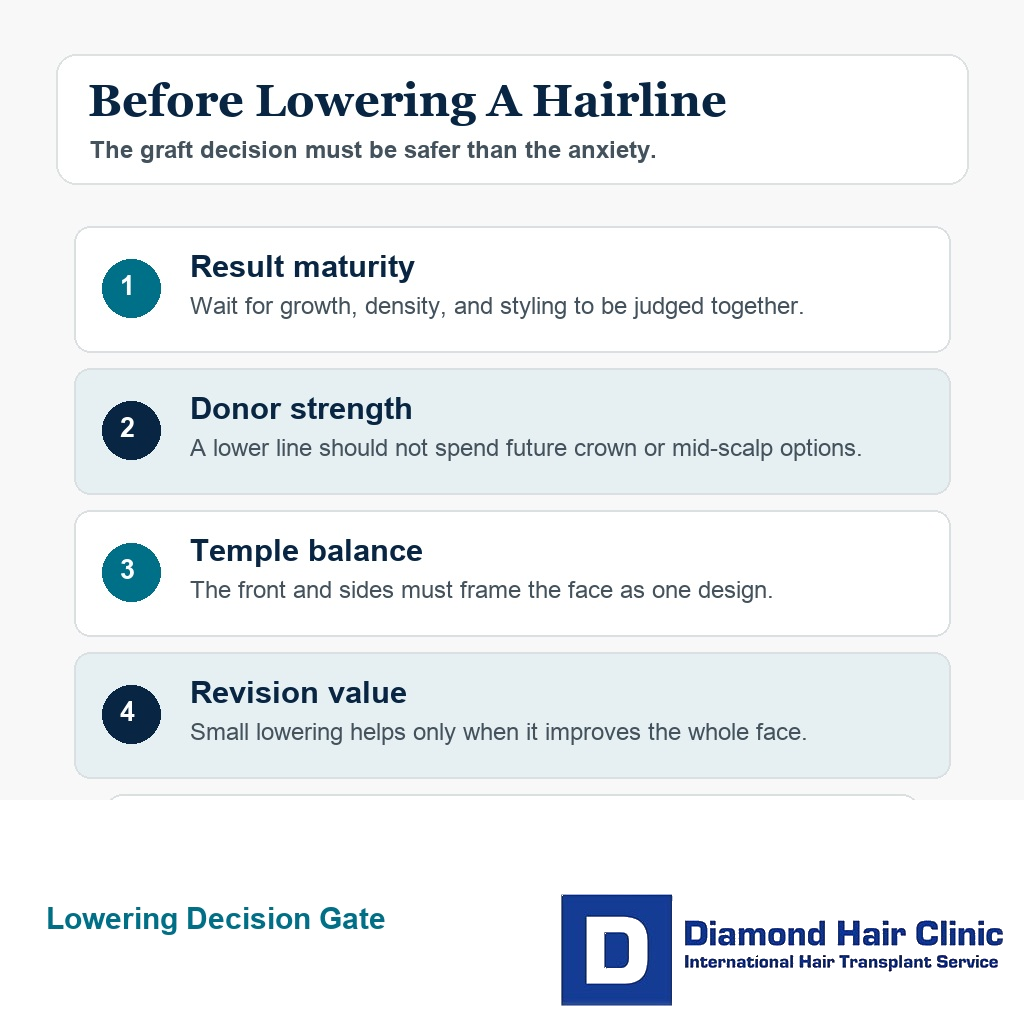
A lowering procedure should improve the face without spending grafts that the patient may need later.
When lowering the hairline is worth discussing?
If the surgery is recent, give the result time unless there is an obvious design problem that needs early documentation. Take consistent photos, attend follow up, and avoid comparing your healing stage with someone else’s final result. If the hairline is still bothering you after maturity, seek a proper assessment in person rather than asking only for a lower line.
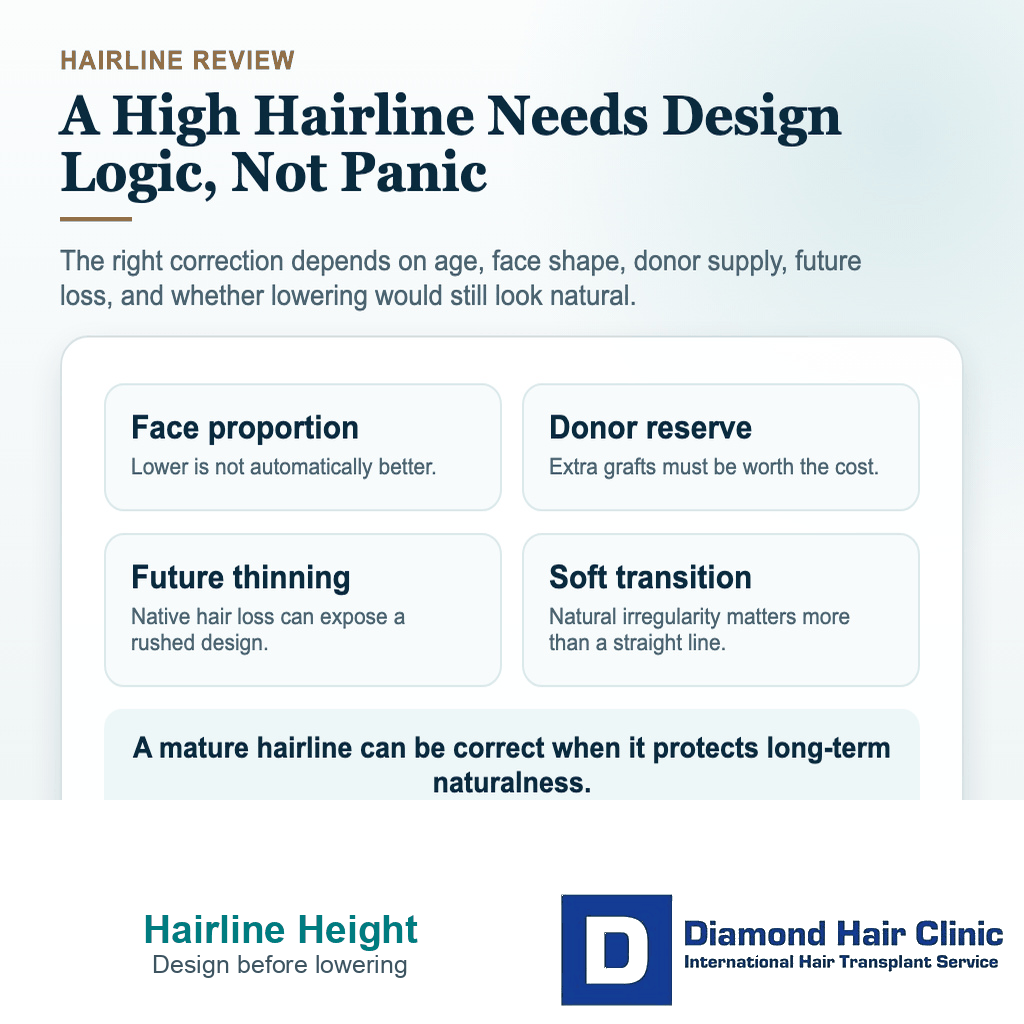
The assessment should separate the real problem in plain language. Sometimes the line is genuinely too high for the face. Sometimes the density is still maturing, the shape is too straight, the temple transitions are weak, or the donor area is not strong enough to support a lower front safely. Lowering should make the whole result better. It should not solve one concern by creating a thinner, harsher hairline that is harder to maintain later.
The goal is to protect you from regret in both directions. A hairline that is unnecessarily high may leave the face poorly framed, and that can sometimes be improved. But an unnecessarily low hairline can spend donor grafts, age badly, and make future repair harder. The right decision is the one that keeps the face natural today while preserving enough donor capacity for the years ahead.

Read this review excerpt
told me the quality of my donor hair and what he could take out and advised me what will the be best outcome with what donor hair I had.