


Finasteride After Gynecomastia or Hormone Sensitivity
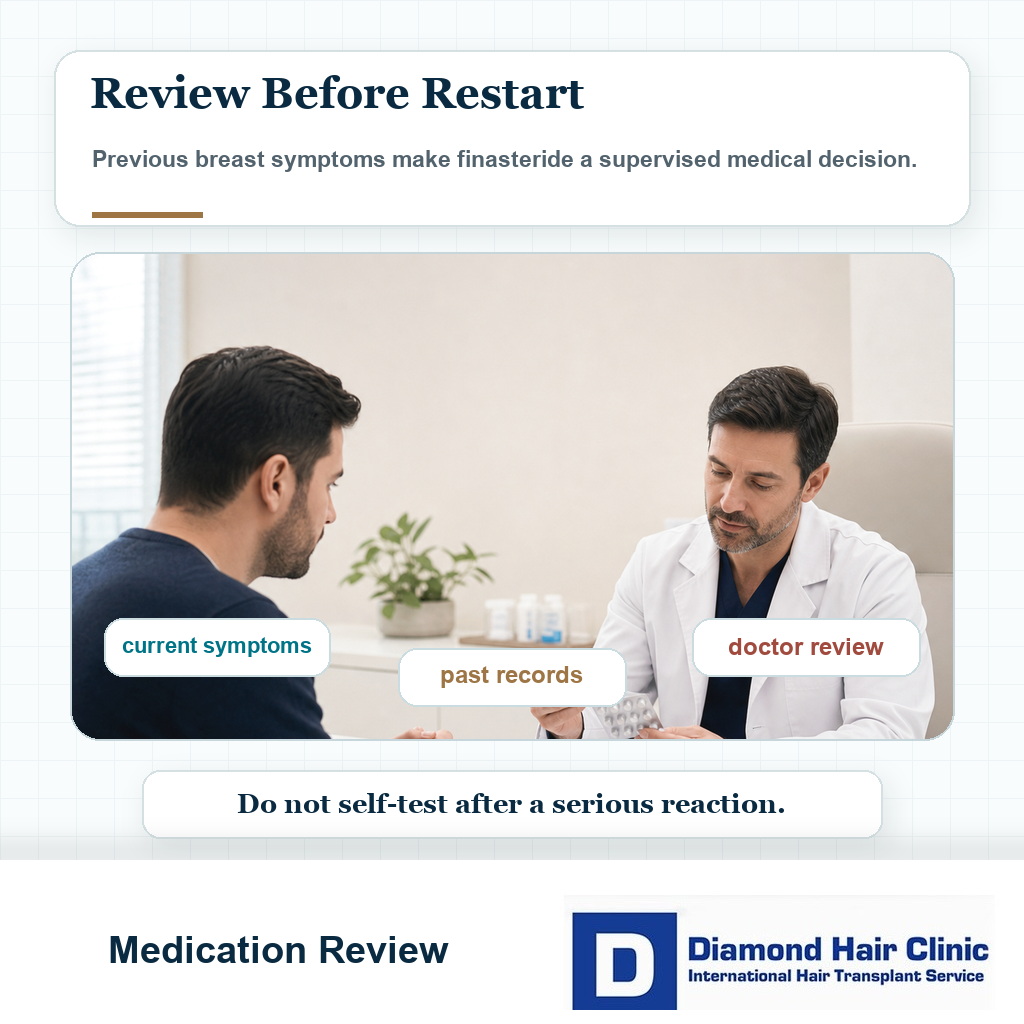
Do not restart finasteride on your own if you previously had gynecomastia, breast tenderness, hormone sensitivity, or a medically complicated reaction. The first step is a proper review with the doctor who understands your hormone history, then a hair transplant plan that does not depend on wishful thinking.
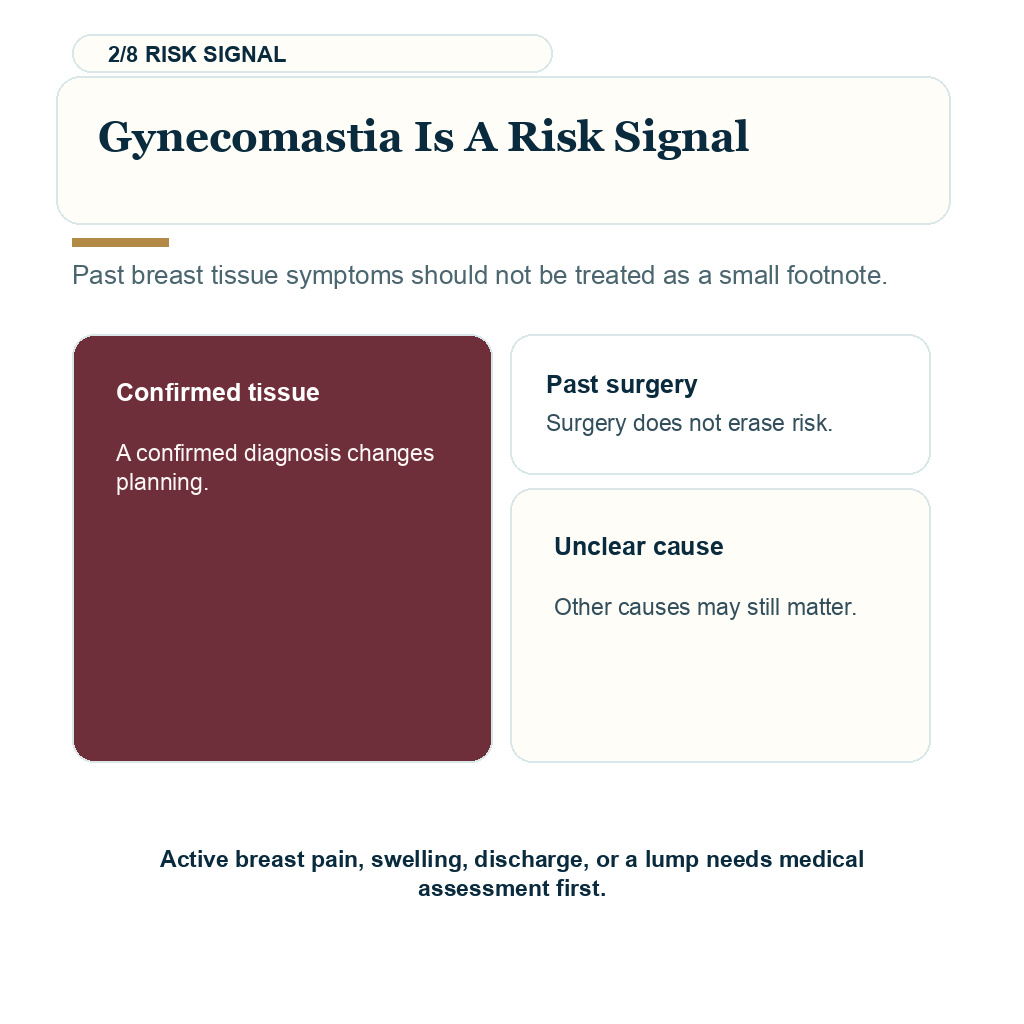
If you currently have breast pain, swelling, nipple discharge, or a new lump, the first step is medical assessment before any hair loss medication decision.
A hair transplant may still be possible without finasteride, but it has to be planned as a different risk profile. With a hair transplant without finasteride, the design, graft number, crown plan, donor use, and expectations must be more carefully planned when medication support is uncertain. That planning concern also applies to how finasteride side effects change the transplant plan.
This answer needs to be medically careful, not frightening. Finasteride is helpful for many men with male pattern hair loss, but previous breast tissue symptoms, gynecomastia, or hormone sensitivity change the risk conversation. That history should not be ignored just to protect a transplant result.
Gynecomastia history changes the conversation
A history of gynecomastia does not by itself mean finasteride is impossible, but it does mean the decision needs medical review before any restart. The review needs to identify whether the breast tissue appeared during finasteride use, during puberty, during another medication, during hormone therapy, or without a clear cause.
If finasteride was the suspected trigger, the threshold for caution is higher.
If the patient remembers breast symptoms but not the exact diagnosis, that history still needs to be taken seriously, and records help when they are available. Tenderness, swelling, confirmed glandular tissue, and fear after a previous reaction are not the same detail, but each one changes the discussion.
If the patient had surgery for gynecomastia, future risk cannot be treated as zero just because surgery was done. The amount of remaining gland tissue, the original cause, and the patient’s current hormone situation matter.
Dutasteride versus finasteride after hair transplant becomes a medical conversation here, not a casual argument about which drug is stronger.
Gynecomastia can recur in some patients
It may be possible in some patients, especially if some glandular tissue remains or if the original hormonal tendency is still present. Previous gynecomastia surgery must not be presented as a guarantee that future risk has disappeared.
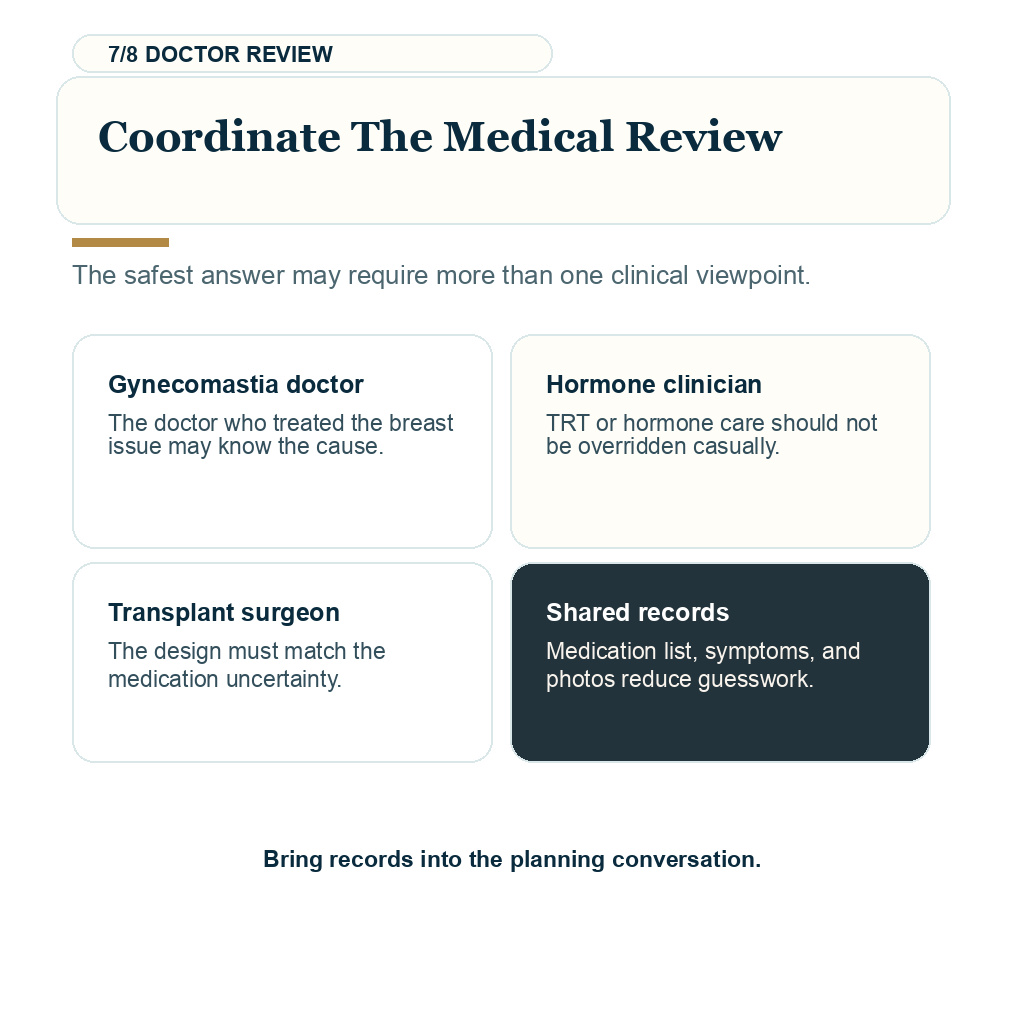
The right person to answer this is usually the doctor who treated the gynecomastia or an endocrinologist familiar with the patient. That medical context matters before a transplant plan is built around restarting finasteride.
If the patient is very anxious about recurrence, that anxiety also matters. A medication plan that the patient cannot tolerate emotionally may fail even if it seems logical on paper.
Hair transplant without finasteride
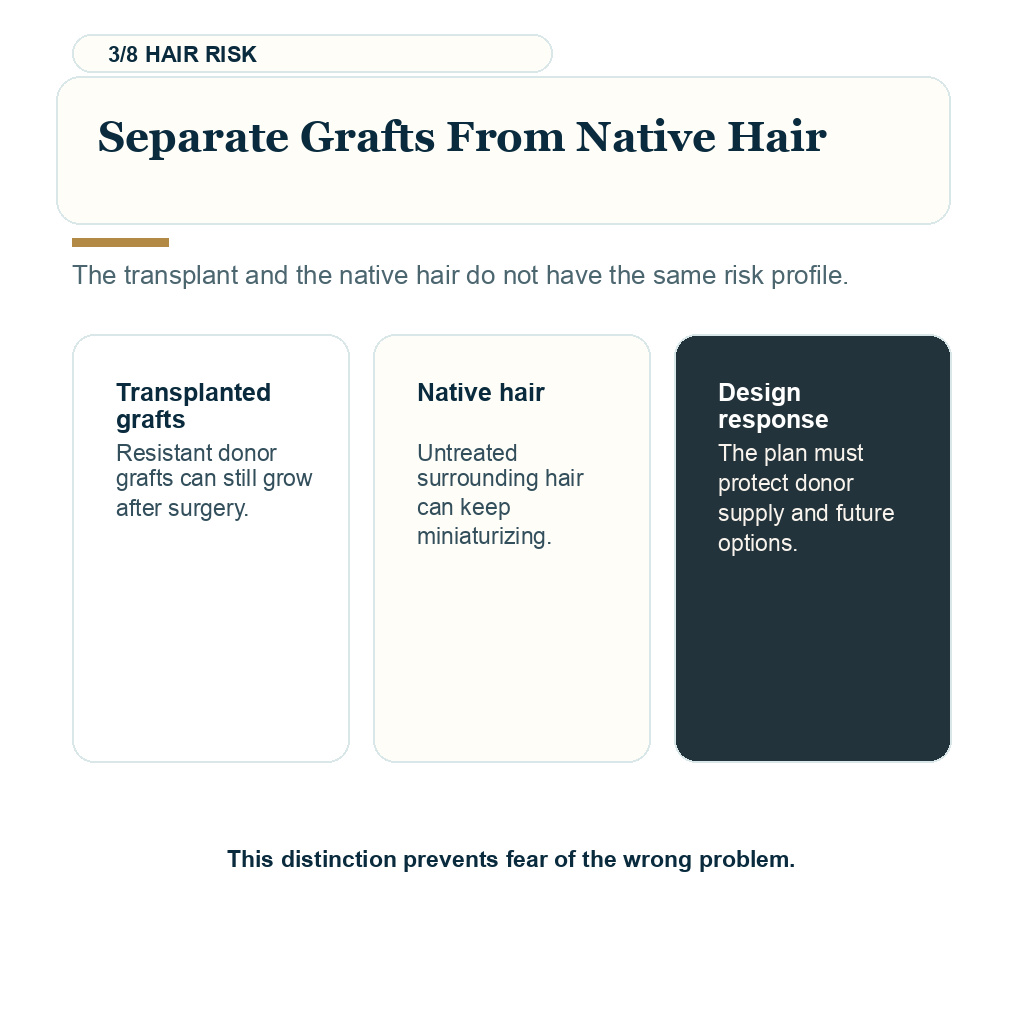
Some patients can have a hair transplant without finasteride. The transplanted grafts can still grow because they come from a more resistant donor area. The issue is not usually graft survival. The issue is the native hair around the transplant.
If the native hair continues to thin, the patient may later see a gap behind the transplanted hairline, weaker mid scalp, or a crown that continues to open. This does not necessarily mean that the transplant failed. It means the underlying hair loss continued.
That is the concern behind continued hair loss after a hair transplant. Surgery moves hair. It does not switch off the biology of the remaining native hair.
Finasteride protects native hair more than grafts
Finasteride usually matters more for the native hair than for the transplanted grafts. The grafts taken from the safe donor area are selected because they are more resistant to male pattern hair loss.
The reason medication is still discussed after a transplant is that many patients still have native hair in the frontal zone, mid scalp, and crown. If that hair continues to miniaturize, the transplant can look thinner over time even when the grafts survived well.
The wrong fear can take over the plan. Refusing finasteride does not make every graft fail, but it can make the long term plan more limited.
Natural DHT blockers are not equal substitutes
Natural DHT blockers are not an equal substitute for properly prescribed medical treatment. They may be part of a broader routine for some patients, but they must not make the surgical plan look safer than it really is.
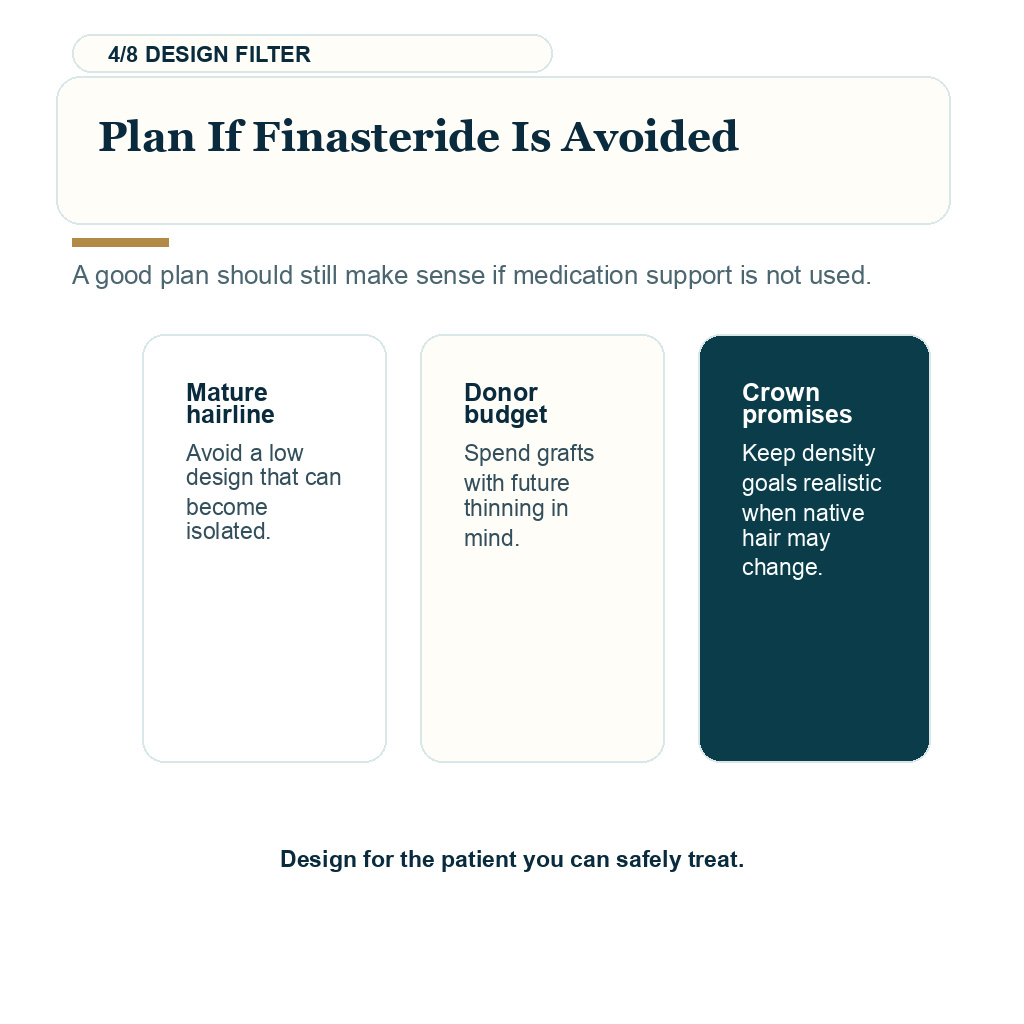
When finasteride cannot be used, weak promises are not enough. The surgical plan needs adjustment. That may mean a more mature hairline, fewer promises about crown density, and closer monitoring after surgery.
Natural supplements also have side effects and interactions. They are not always safe just because they are sold without a prescription.
Checks before a medication decision
The review needs to include age, speed of hair loss, family pattern, donor strength, crown involvement, previous side effects, current medications, and whether the patient is already being treated for hormone related issues.
The history needs to clarify what happened with gynecomastia. Was there tenderness, swelling, confirmed glandular tissue, surgery, recurrence, or anxiety without clear diagnosis? These details change whether a medication discussion is even sensible, and how cautious that discussion needs to be.
Hormone blood tests are only part of that assessment. A result within the laboratory range does not explain a new lump by itself or guarantee that a previous breast reaction cannot recur. The history, examination and any further investigations need to be considered together. I would not turn one reassuring blood result into permission to restart a medicine while breast symptoms remain unexplained.
Sometimes the better choice is to stabilize the medical situation first. Timing matters before surgery is treated as the easy answer, especially when judging medication before a hair transplant.
Hairline design becomes more conservative
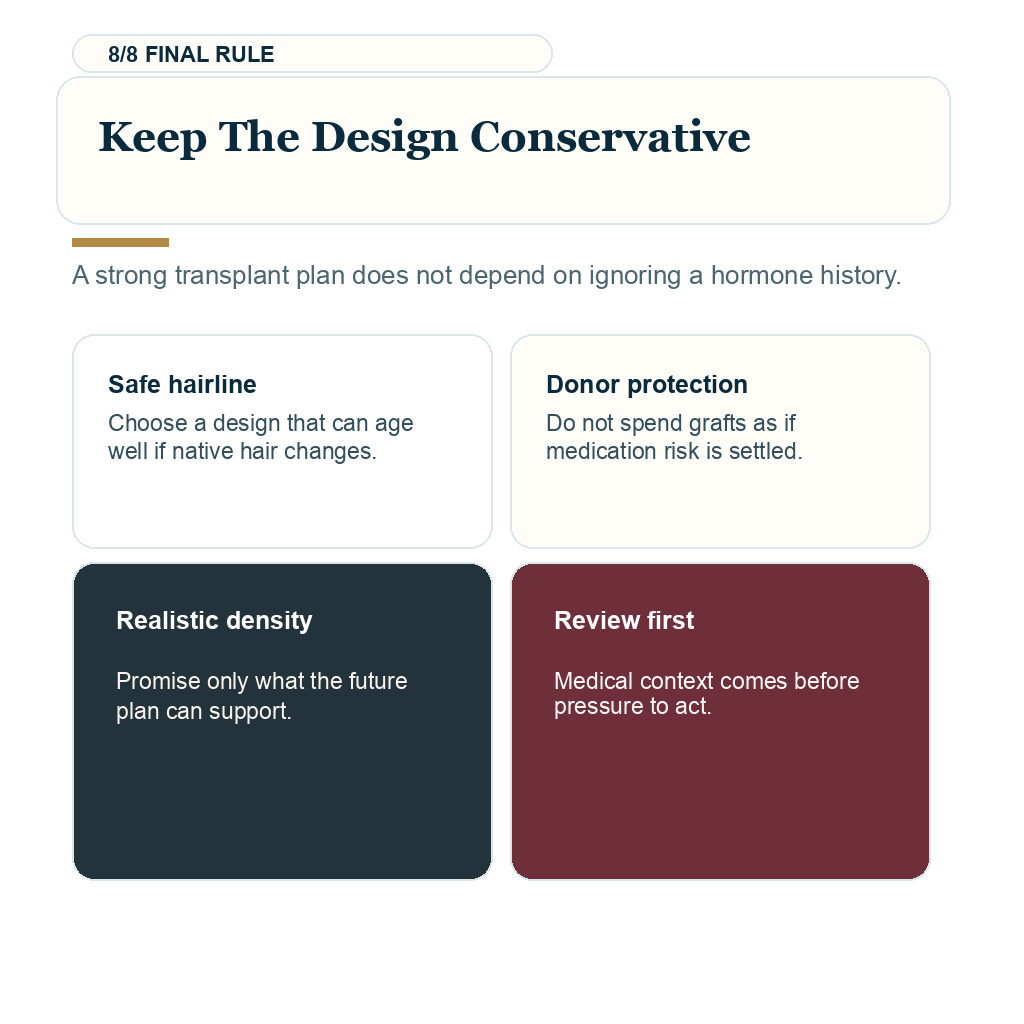
If a patient cannot or should not use finasteride, the design usually becomes more conservative. A low aggressive hairline can look attractive now, but it can become isolated if native hair continues to thin behind it.
The safer design protects the patient’s future. That often means a mature hairline, careful density distribution, and a plan that does not spend too many grafts at the front while ignoring the mid scalp or crown.
Hairline design cannot be separated from medical tolerance. The line on the forehead should reflect the patient’s long term risk, not only the patient’s preferred photo.
TRT or high estrogen sensitivity
When a patient is on testosterone replacement therapy or has known hormone sensitivity, the medication discussion needs to involve the doctor managing that treatment. A hair transplant surgeon must not casually override that medical context.
TRT can change the hair loss conversation because androgen activity, estrogen balance, and individual sensitivity may all influence the patient’s risk profile. Planning a hair transplant while on TRT needs extra attention to native hair stability and donor use.
When finasteride tolerance is uncertain, the surgical plan and medication plan cannot be separated. The patient’s hormone history, design expectations, and future hair loss risk must be weighed together.
Starting finasteride only after surgery
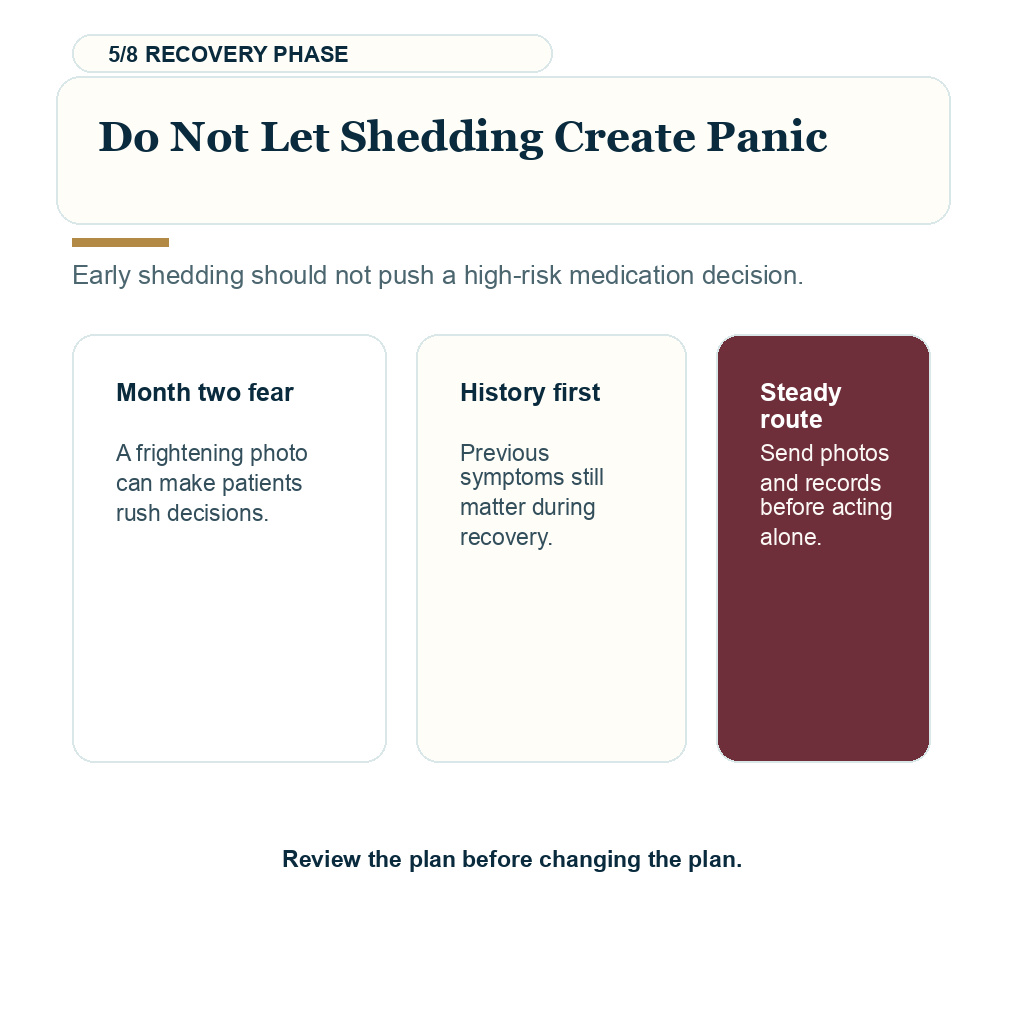
Sometimes patients consider starting finasteride only after surgery, but this needs review before the operation. Starting, stopping, and changing medication during recovery can create confusion when the scalp is already going through shedding and early growth phases.
If a patient has a history of gynecomastia, they must not start medication in panic after seeing shedding. That decision needs to come from symptoms, history, and medical supervision, not from a frightening month two photo.
Medication tolerance should not be tested during an emotional shedding month. A calm baseline makes new breast symptoms, scalp shedding, and recovery changes easier to separate.
For finasteride before and after a hair transplant, the timing of medication should be part of planning, not an emotional decision after surgery.
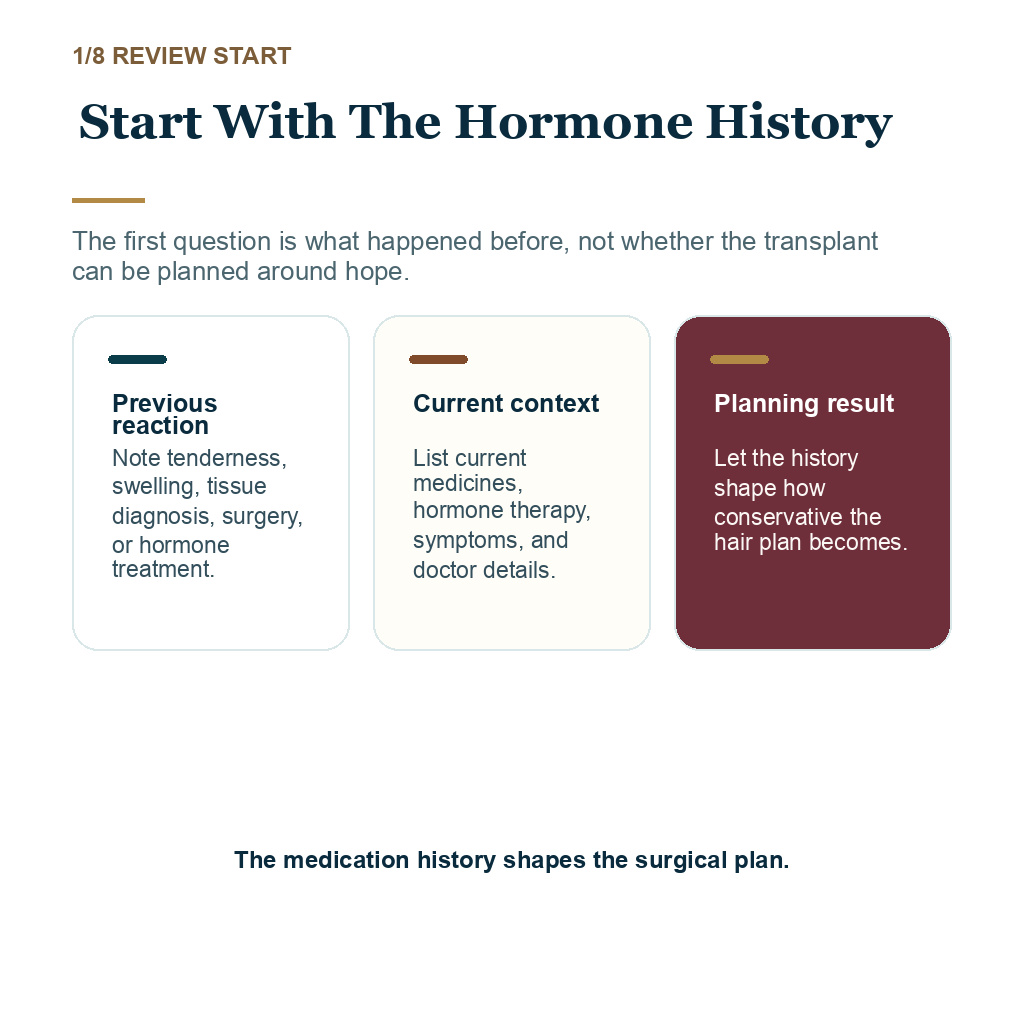
Use the 8 finasteride review slides below to keep hormone history, native hair risk, and transplant design in the same decision. Swipe sideways, use the arrows, or choose a number below the image.
Topical finasteride still needs supervision
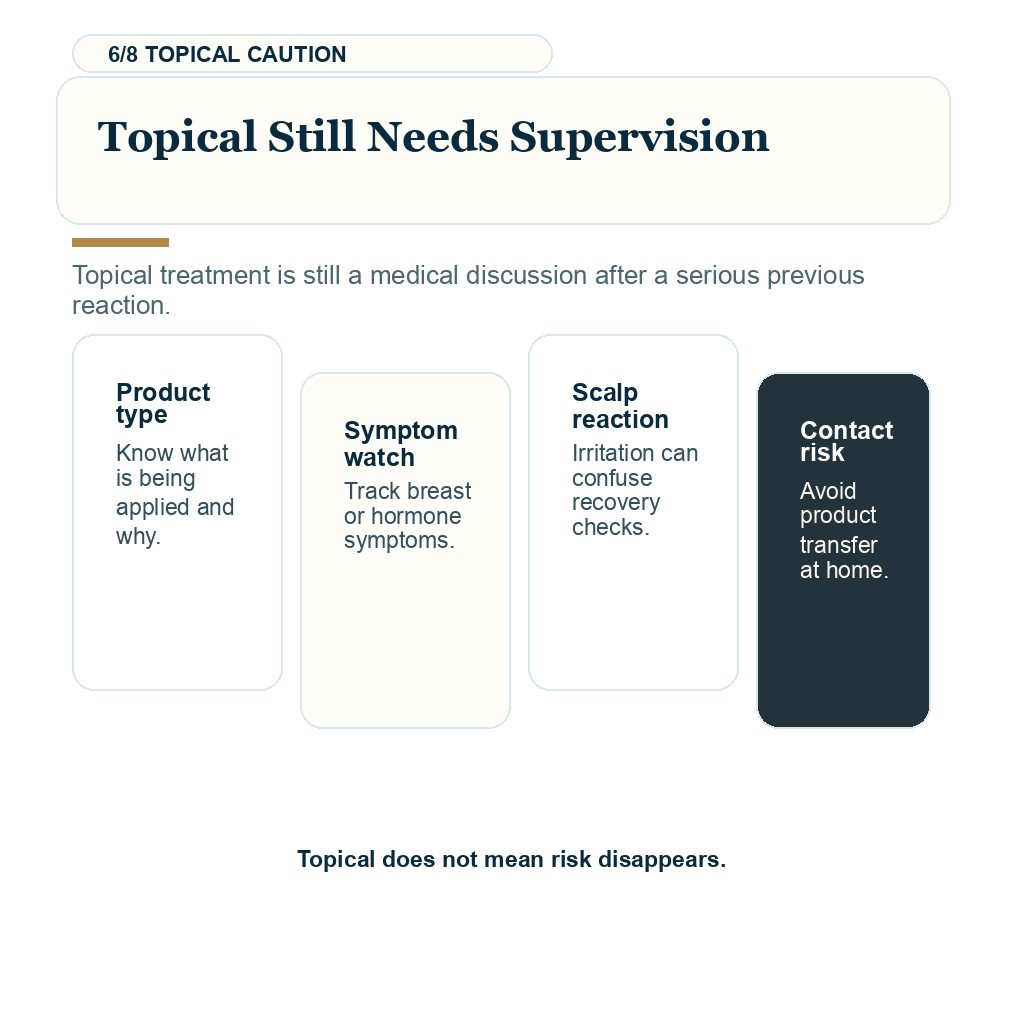
Topical finasteride may reduce systemic exposure for some patients, but topical does not mean the medication stays only on the scalp. A patient with previous gynecomastia or strong hormone sensitivity cannot assume topical treatment removes all concern.

If topical treatment is considered, the discussion still needs dose, application area, symptoms to watch for, and who will supervise the trial. It must not be treated as a casual experiment after a serious previous reaction.
Compounded topical products also need caution because they can irritate the scalp, may not come with the same approved labeling as oral medication, and can transfer to another person through skin contact if handled poorly. That matters especially around pregnant partners or anyone who should avoid finasteride exposure.
Dose adjustments need careful review. A smaller dose may reduce exposure for some patients, but it does not erase a previous reaction. This is not only about whether the patient can tolerate one tablet today. It is whether the plan can stay safe and steady over time.
Options when finasteride is not the right choice
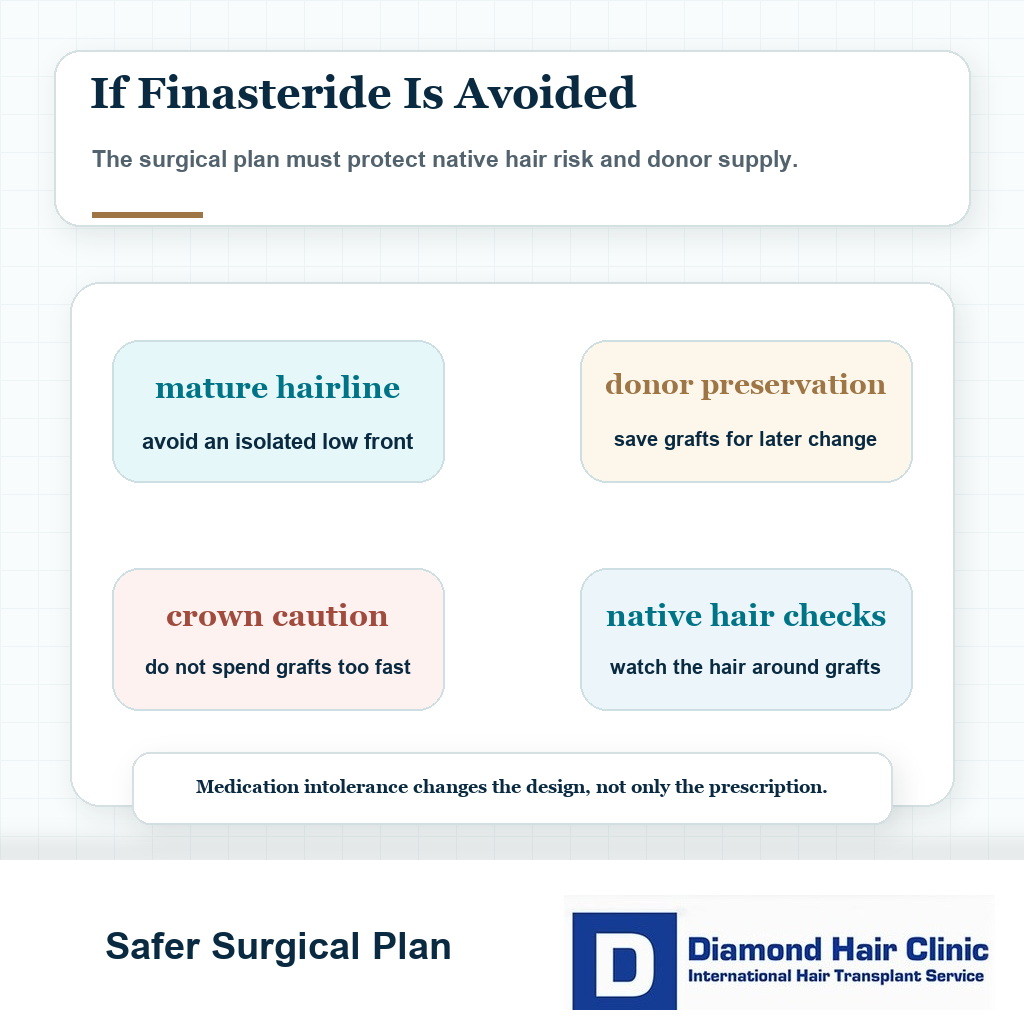
If finasteride is not the right choice, the plan needs to be built around donor preservation, mature design, careful graft distribution, and realistic expectations. Some patients may discuss minoxidil, PRP, or other supportive options with their doctor, but these are not identical substitutes for finasteride.
For example, oral minoxidil around hair transplant may be relevant for some patients, but it has its own medical considerations. PRP or exosomes after a hair transplant may support the broader plan in selected cases, but they must not be presented as a guarantee.
Medication intolerance changes the surgical strategy. It does not simply cancel surgery, but it removes some safety margin.
Native hair monitoring after surgery
If the patient avoids finasteride because of gynecomastia or hormone sensitivity, the surrounding native hair needs careful monitoring. The transplanted grafts may grow well while native hair continues to miniaturize.
This matters most in diffuse thinning and crown thinning. The patient may celebrate good early transplant growth, then later notice that the hair behind it is weaker. That can be emotionally difficult if it was not explained before surgery.
This risk is discussed in more detail in diffuse thinning hair transplant because native hair stability is central to the whole plan.
Small dose trials need medical supervision
A small dose discussion belongs with a doctor who understands the patient’s history. Experimenting on your own is not appropriate after gynecomastia, breast tenderness, or strong hormone sensitivity.
A medically supervised trial and testing on your own at home are not the same thing. If any trial is considered, the stop rules need to be clear before the first dose. Breast tenderness, swelling, nipple sensitivity, a new lump, nipple discharge, mood changes, and sexual side effects need serious attention and prompt discussion with the supervising doctor.
Tolerating a medication for a short time is not the same as committing to it for years. The long term plan matters.
Crown planning becomes more cautious
The crown can consume many grafts and still look thin because of the spiral pattern and the way light hits the scalp. If medication support is uncertain, crown promises need to be more cautious.
A patient who cannot use finasteride may still be a candidate for crown hair transplant, but the donor plan must be realistic. The plan should avoid spending too many grafts on the crown if the front and mid scalp may need protection later.
That is not pessimism. It is donor management. The patient’s limited donor hair must serve the whole lifetime plan.
Donor management without medication
When medication is not used, planning needs to assume native hair may continue to thin. Donor management becomes central. The donor area must be protected because future work may be needed.
A dense low hairline can become isolated if the hair behind it keeps miniaturizing. A conservative hairline may feel less dramatic on day one, but it usually protects the patient better over time.
A surgery should not be designed only to look good in the first year. The plan must still make sense if the patient cannot use finasteride later and native hair keeps changing.
Deciding with the patient’s own doctor
The decision needs to include the hair goal, previous gynecomastia history, current hormone situation, comfort with risk, possible alternatives, and willingness to monitor native hair over time.
A past breast symptom story is easier to review when it has dates. Note whether tenderness, swelling, surgery, or stopping the drug happened before, during, or after finasteride, and whether any symptom is active now.
It must not be made from fear or pressure. If the patient does not feel comfortable with finasteride, the surgical plan needs to respect that and become more conservative.
If the patient stopped medication before and is unsure what happens next, stopping finasteride after hair transplant may help frame the native hair risk.
Hormone sensitivity changes the medication discussion
If medication is avoided, the plan needs to be built around donor preservation, mature hairline design, careful coverage priorities, and regular monitoring. It must not pretend the native hair will stop changing by itself.
Sometimes delaying surgery is safer until the pattern is clearer. The question of whether medication can delay a hair transplant is relevant when the patient is still actively thinning but uncertain about treatment.
If you had gynecomastia or strong hormone sensitivity, finasteride is not a casual decision. The medication decision needs medical supervision, and the surgical design must stay safe even if finasteride is avoided.

Read this review excerpt
Every single one of my questions was answered and they made sure I had all the details I needed to make an informed decision.