


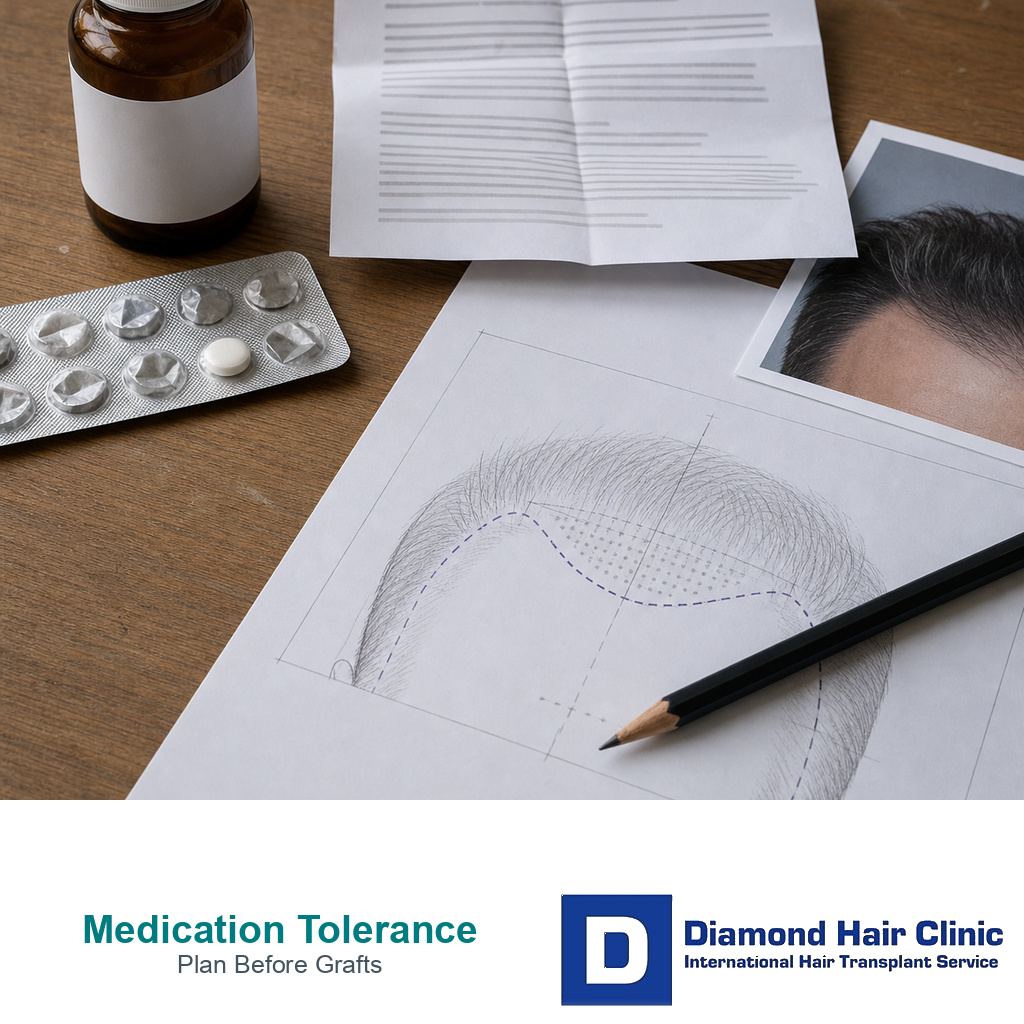
Finasteride Side Effects Change the Transplant Plan
If you have had side effects from finasteride, or you are not willing to stay on it, the hair transplant plan has to change before surgery. That does not mean you can never have a transplant. It also does not mean your concern should be dismissed as fear.
The design has to make sense even if native hair continues to thin. The plan cannot depend on a medication you already know you may stop.
In my consultation room, I separate the medication discussion from the surgery discussion first. Finasteride may help some men protect miniaturizing native hair. Surgery moves donor hair. These are related, but they are not the same tool. When tolerance is uncertain, I make the surgical design more conservative, more staged, and more realistic about future loss.
If you switched to saw palmetto after side effects, I still treat it as a separate planning detail. Saw palmetto around FUE planning is not the same as knowing whether prescription medication can be used, paused, or avoided without changing the donor plan.
Medication tolerance changes surgical design
Many men arrive feeling trapped between two extreme messages. One message says a transplant without finasteride is pointless. The other says medication side effects are irrelevant and surgery alone will solve the problem. Neither position is careful enough.
Medication tolerance affects planning in the same way donor quality, age, family history, hair caliber, scalp contrast, and the speed of hair loss affect planning. If a man can use finasteride comfortably and it helps stabilize his hair, that can widen some options. If he cannot tolerate it, or if he is too anxious to take it consistently, the design has to respect that reality.
A transplant plan should not be built on a medication promise. It should be built on what you can actually do over the next five, ten, and twenty years.
It also should not be built on a fallback promise that minoxidil, PRP, a laser cap, or another transplant will cancel the same risk. Those options may have roles in selected patients, but they do not make an aggressive design safer when finasteride is not reliable.
Side effect history and daily treatment fatigue need separate entries before surgery. A man who had breast tenderness, mood change, or sexual symptoms is different from a man who simply hates the routine, even though both may need a design that is less dependent on medicine.
Before any graft number is promised, medication tolerance needs to be clear. If you are already struggling with side effects, a low hairline cannot depend on medication doing all the work. I first ask what the hair will look like if the medication stops.
Medication fear should be named before the hairline is designed. A patient who may stop treatment later needs a design that still respects future native hair loss.
Side effects that need specific review
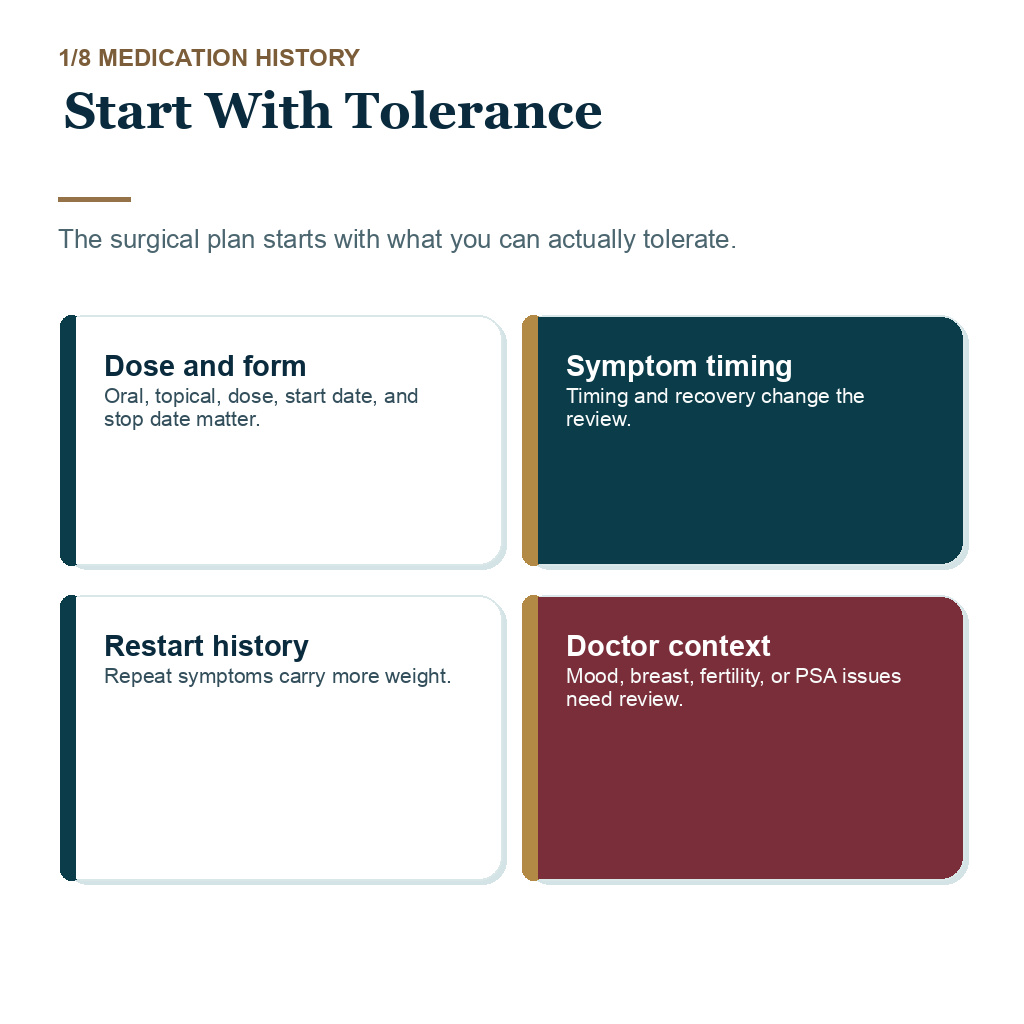
When someone tells me finasteride caused side effects, I need the details. What dose was used? Was it oral or topical? How long was it taken? What symptoms appeared? Did they improve after stopping? Was there breast tenderness, mood change, sexual dysfunction, fertility concern, testicular discomfort, or another symptom that needs medical review? When the concern is mental clarity rather than only sexual, breast, or fertility symptoms, I use a separate finasteride brain fog planning review before the graft plan depends on medication tolerance.
Some details guide the transplant design, and some are medical safety issues. If depressed mood, depression, suicidal thoughts, strong sexual side effects, breast symptoms, or fertility concerns appeared while using finasteride, that is not a routine cosmetic note. The prescribing doctor should be involved before the surgical plan is fixed. If suicidal thoughts or thoughts of self harm are present, hair surgery should wait and urgent medical help comes first.
If the concern is sperm banking or freezing sperm before fertility treatment, I do not treat that as proof that finasteride caused infertility. I treat it as a reason to bring the prescribing doctor, fertility clinic, or urologist into the plan before a graft number is promised.
Breast symptoms need specific wording, not just a general note. Persistent breast tenderness, swelling, a lump, nipple discharge, or a change on one side needs the prescribing doctor’s review before the transplant plan depends on continued medication use.
I ask because a vague note saying “cannot take finasteride” is not enough for surgical planning. A man who had mild temporary concern after one week is different from a man who tried medication twice and stopped because symptoms returned each time. A man with gynecomastia history is different again, so finasteride after gynecomastia or hormone sensitivity needs a more cautious medical conversation.
The same is true when someone starts with a lower dose because he is afraid of sexual side effects. The lower dose may be part of a prescribing discussion, but it does not remove the need to document symptoms, tolerance, and how much the surgery depends on protected native hair.
Switching to dutasteride after libido or erectile symptoms on finasteride is not a shortcut around that history. The new medicine may be tolerated differently, but the surgical design should still assume medication support is uncertain until the response and side effects have been lived with long enough to judge.
If the concern is fertility or fatherhood timing, I separate that from the hairline design. The useful details are semen volume, semen analysis, time to conception, anxiety after reading side effect stories, or a previous urology review. I am trying to identify what is medically relevant before donor hair is used, not treat every concern as the same risk.
PSA testing and prostate cancer follow up belong in the medication history. Finasteride and dutasteride can lower PSA values and change how screening or recurrence monitoring is interpreted. If you have prostate cancer history, a urologist, an oncologist, family prostate cancer concern, or active PSA monitoring, the doctor following that side of your health needs to know about any DHT blocking medication before a hair plan depends on it.
A PSA number should not be adjusted privately or treated as a cosmetic medication detail. If medication is medically unsuitable, the transplant plan has to become more conservative rather than pretending native hair is protected.
Sexual side effects that return or do not settle after stopping finasteride
If erectile function or libido symptoms do not settle after stopping finasteride, or if they return after a medically supervised restart, that is more than a small hair transplant note. The prescribing doctor should review it. In some cases, especially when symptoms are persistent, repeated, or worrying for the patient, a urology review may also be needed.
From the transplant side, the planning question is different. I do not build an aggressive hairline or high graft number around DHT blocking medication that the patient may not be able to use reliably. If that medication is uncertain, I plan as if native hair may continue to thin. That usually means a more conservative hairline, careful density targets, more donor reserve kept back, and more caution with the crown.
If a patient is afraid of finasteride or dutasteride side effects, I do not use that fear to excuse a weak donor plan. Side effect concern changes how conservative the transplant should be because native hair may keep thinning, but it does not make aggressive donor extraction safer and it does not repair donor depletion later.
Transplanted hair and native hair are different
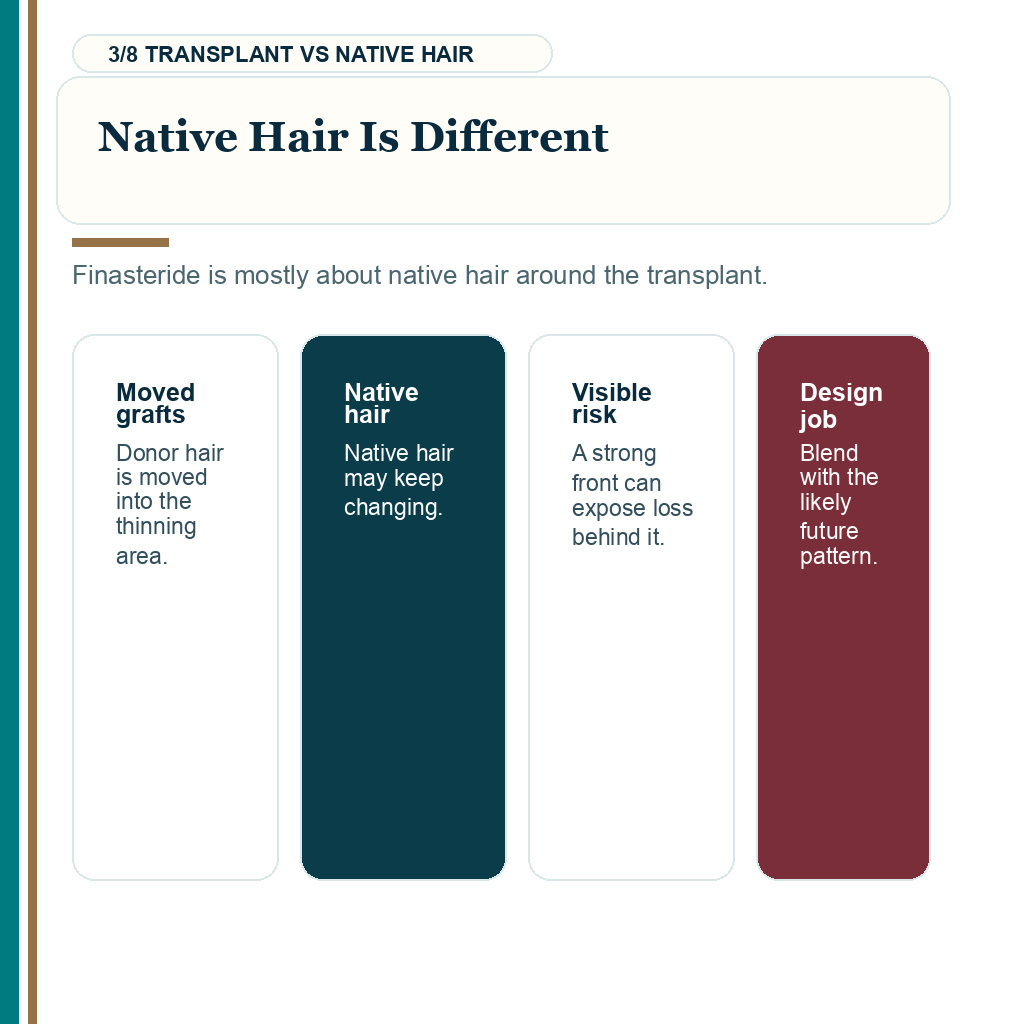
A common misunderstanding is that finasteride is used to make transplanted hair grow. In most cases, the more important issue is the native hair that remains around the transplant. Transplanted grafts are taken from the donor region, which is usually more resistant to androgenetic hair loss. Native hair on top may still be miniaturizing.
This distinction matters. If I create a dense frontal hairline in front of unstable native hair, the result may look good early and awkward later. The transplanted hair may remain in front while the hair behind it continues to thin. That is the “island” or “band” fear many men describe, and it is a real planning concern.
Hair transplant without finasteride comes down to this tradeoff. If medication is not reliable for you, the surgical plan must be able to age without pretending the native hair is frozen in time.
Planning changes when finasteride is not reliable
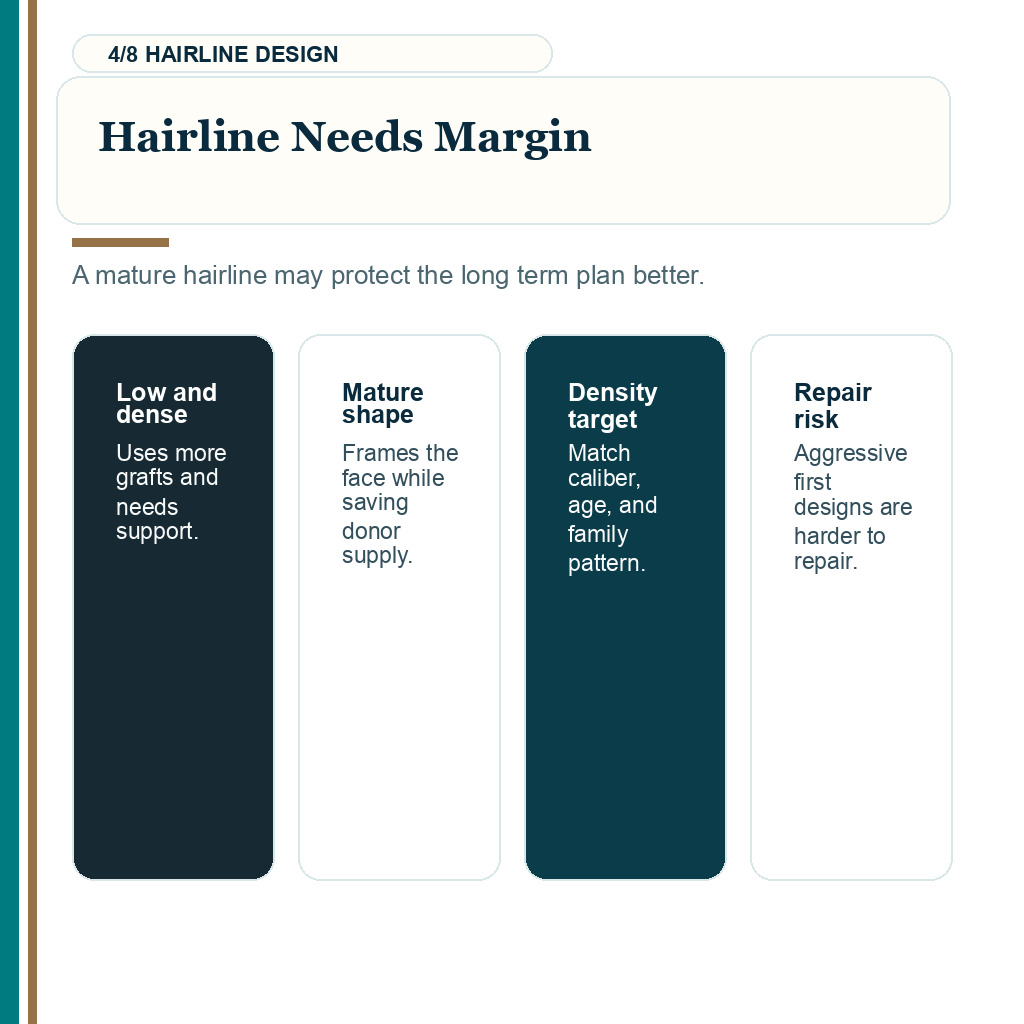
The first place I adjust the plan is the hairline. A low, dense, juvenile hairline uses more grafts and creates a stronger obligation to maintain the hair behind it. That may be acceptable for a carefully selected, stable case. It is less acceptable when future loss is likely and medication tolerance is uncertain.
A more mature hairline can still improve the face. It can frame the forehead, reduce the exposed look, and restore a natural shape without spending donor hair as if the future does not exist.
Conservative design is not a weak result. It is often the difference between a result that still looks natural later and a result that creates a repair problem. Men in their late twenties or thirties need this caution because the final hair loss pattern may not yet be clear. Hair transplant planning in your 30s and family hair loss history both affect how low and dense the first hairline should be.
Graft numbers can protect future options
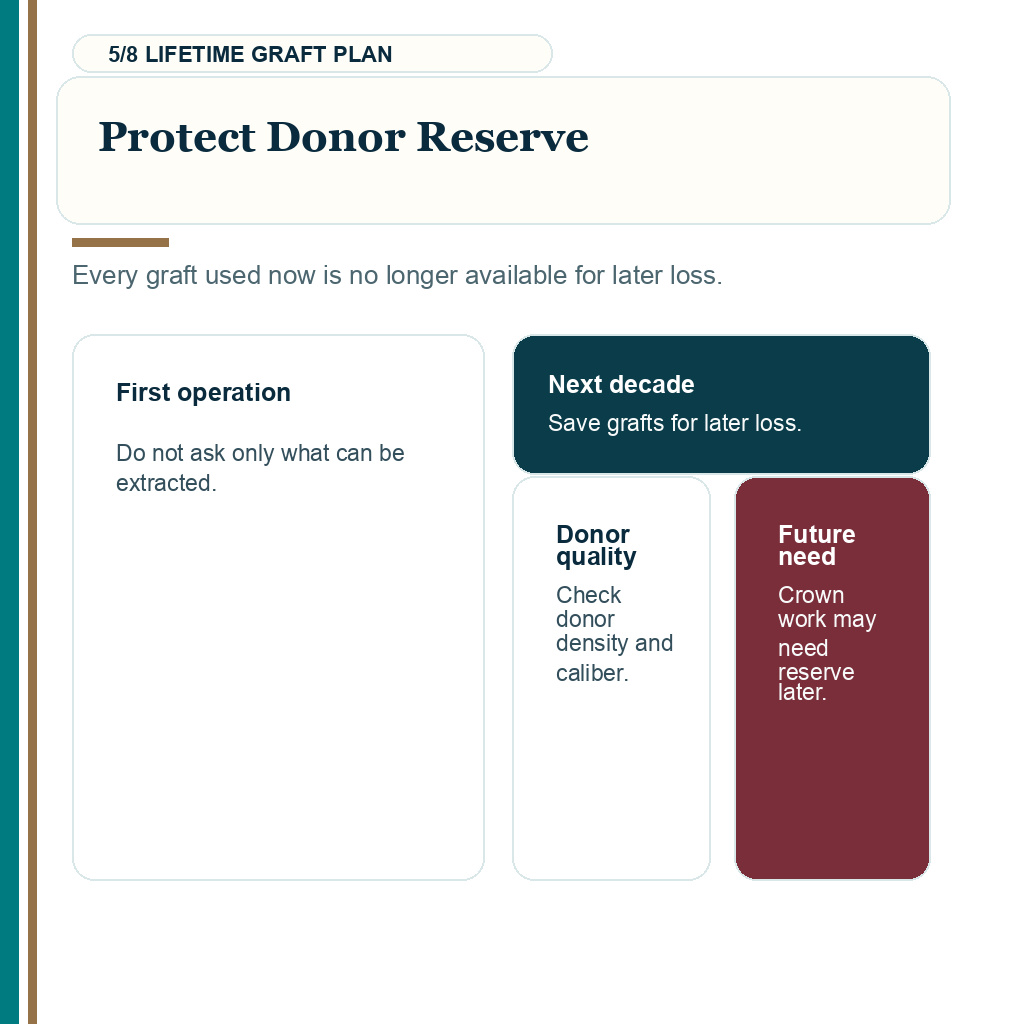
When medication cannot be counted on, donor management becomes even more important. Every graft used today is a graft that cannot be used later. This sounds obvious, but it is often forgotten when a man is offered a high graft number to make the first result look dramatic.
My first question is not, “How many grafts can we extract?” It is, “How many grafts can we use now while still protecting the next decade?” The donor area is examined carefully, including density, hair caliber, extraction pattern, and signs of retrograde thinning or diffuse donor weakness.
If more native hair may be lost and finasteride cannot be used reliably, the donor has to cover more future possibilities. The donor is not an unlimited reserve, which is why lifetime graft planning and donor limits matter. A high number in the first operation can feel reassuring in the short term, but it can reduce flexibility if the crown, midscalp, or previous design needs attention later.

Medication tolerance changes the surgical design. The hairline, crown, and donor reserve should be planned together.
Use the 8 medication tolerance planning slides below to compare side effect history, medication assumptions, native hair risk, hairline design, donor reserve, crown caution, topical or minoxidil details, and when waiting is safer. Swipe the carousel, use the arrows one step at a time, or choose a number below the image to jump to that point.


Crown planning needs extra caution
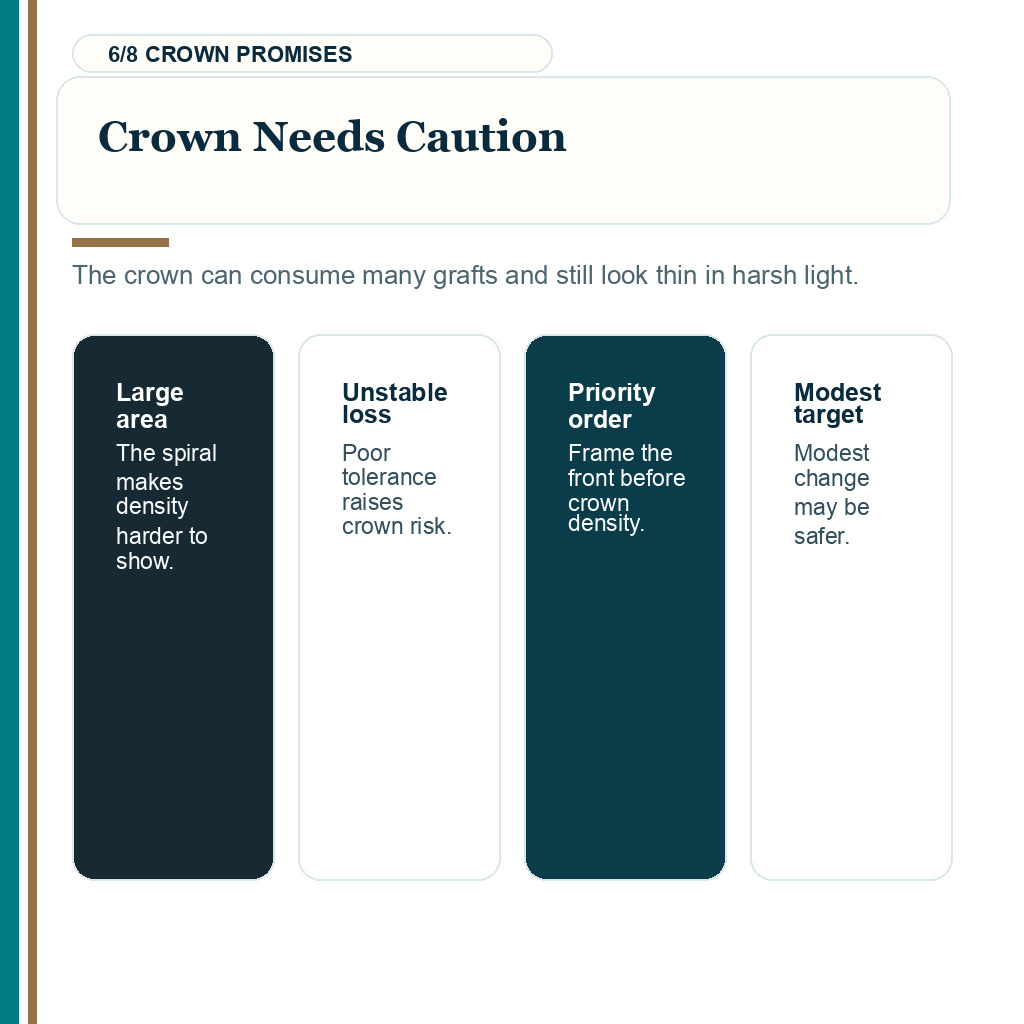
The crown can consume a large number of grafts because of the spiral pattern and the size of the area. When hair loss is progressive and medication cannot stabilize it well, I am cautious about chasing full crown density too early.
This does not mean the crown is ignored. It means the priority may need to be a natural frontal frame, a conservative midscalp connection, and a realistic crown strategy instead of trying to make every area dense at once.
When the crown is treated aggressively in an unstable case, two problems can appear later. First, there may not be enough donor left for the front or midscalp if hair loss progresses. Second, the crown can still look thin in harsh lighting even after many grafts, which creates disappointment despite technically surviving grafts.
If medication tolerance is poor, crown planning has to be explained in plain language. A modest crown improvement may be the responsible target, because promising density that the donor cannot support creates a worse problem later.
Diffuse thinning changes the risk
Side effects are not the only factor. The pattern of hair loss matters. Clear recession with stable density is different from diffuse thinning across the top. Diffuse thinning often means there is more miniaturized native hair mixed among the transplant target zones.
In those cases, surgery can be harder to plan because grafts must be placed among existing weak hairs, and the visual result depends on what those native hairs do later. If the patient cannot tolerate medication, the long term cosmetic uncertainty increases.
Medication tolerance has to be read together with diagnosis. When thinning is diffuse, diffuse thinning and hair transplant surgery require extra caution because the planning is harder. If there are signs of retrograde alopecia or DUPA, the concern becomes even stronger because donor safety itself may be uncertain.
Topical options and minoxidil in the real plan
Topical finasteride, lower dose approaches, minoxidil, and other medical options are not interchangeable with oral finasteride. I handle the choice medically, not casually. A topical option may be worth discussing in selected cases, but it is not a guaranteed way to avoid systemic symptoms, and it should not be used to force a surgical plan that already feels unsafe.
Topical use also needs practical handling details. If a partner is pregnant, trying to become pregnant, or may touch the treated scalp, discuss residue transfer from hands, pillows, hats, towels, or shared bedding with the prescribing doctor. Do not treat a topical spray as irrelevant just because it is not swallowed. I review the product, dose, application area, side effects, and exposure risks before building surgery around it.
Minoxidil may improve growth support or thickness in some cases, but it does not block the androgen driven process in the same way finasteride is intended to. That difference matters when a transplant plan is being made. If you are considering topical finasteride before or after surgery or minoxidil after hair transplant, the surgical plan still needs to match the real medication routine.
If the alternative is an online blend or compounded spray, the discussion should include the exact product list. Irritation history, dose, and vehicle can change surgical timing when a patient is using online topicals before FUE planning.
If you are losing hair despite treatment, I treat the consultation differently. A medication record is useful only if we know whether the hair is stable, still thinning, or shedding for another reason. Someone who is still losing hair on medication before a transplant needs a different discussion from someone who is stable without medication.
Waiting can make more sense
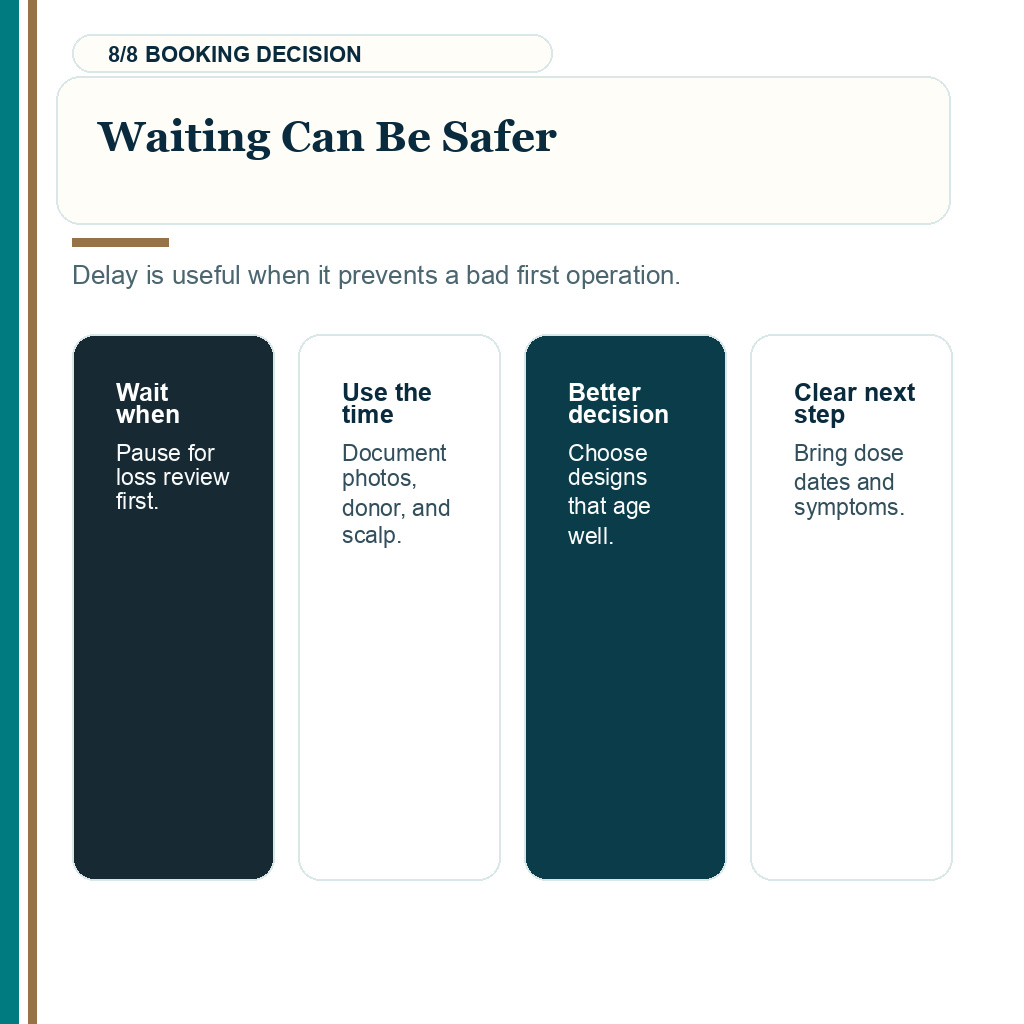
Immediate surgery is not always the right move. If hair loss has accelerated recently, if you are very young, if the donor is questionable, if diffuse thinning is active, or if medication side effects are unresolved, waiting can be the more responsible choice.
Waiting does not mean doing nothing. It can mean documenting hair with standardized photos, checking donor stability, reviewing family pattern, treating scalp inflammation, discussing non surgical options, or allowing time to see whether a medication can be tolerated under medical guidance.
Delay is useful when it prevents a bad first operation. Repair surgery is usually harder than careful first planning. Waiting six to twelve months with good documentation can create more clarity, even if surgery is still chosen later.
Promises to be careful with
The promises to avoid are clear. Finasteride is not required for every transplant, but side effects are not impossible. I also cannot promise that symptoms will or will not persist after stopping. Minoxidil can support some plans, and dutasteride may be a medical discussion in selected patients, but neither one repairs poor graft placement, wrong angle, donor overuse, or native hair loss planning that was ignored. Transplanted hair also does not protect the whole top of the scalp. Careful planning has to accept uncertainty instead of hiding it behind a graft number.
I will not draw an aggressive hairline, spend the donor heavily, and then blame you later if you cannot continue a medication that was already a concern before surgery. That is poor planning.
The consultation needs to be transparent. If you cannot use finasteride, surgery may still be reasonable. But the result may need to be more conservative. The crown may need a smaller target. A second operation may need to be part of the long term picture. The donor must be protected. Expectations must be written around real life, not an ideal medication routine.
If medication concerns are also making the booked date feel unsafe, review the surgical plan as you would with second thoughts before a hair transplant, so the date, graft number, donor reserve, and future hair loss all make sense without forcing a medication decision.
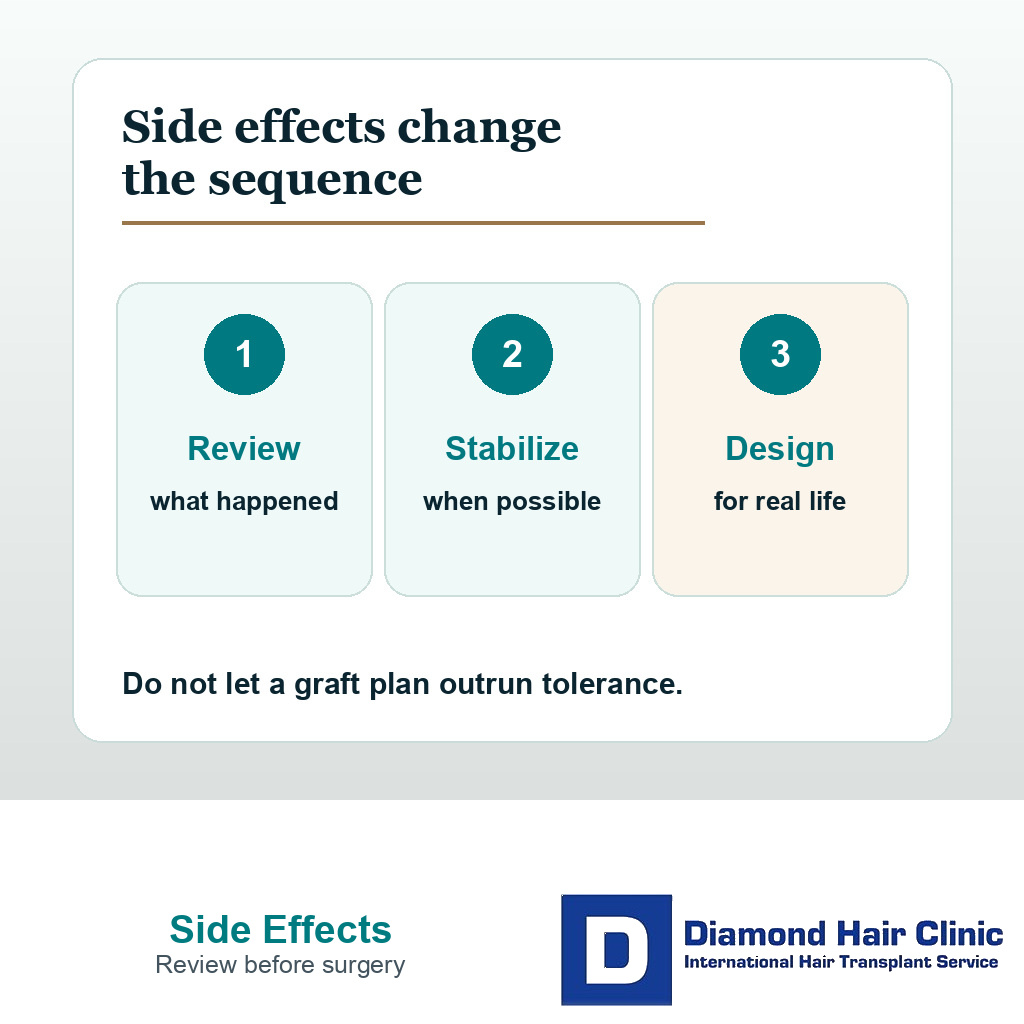
From there, I judge stability, donor reserve, and whether the surgical design can age without medication support.
Discussing this without pressure
At Diamond Hair Clinic, tell me about medication concerns early, even if you are afraid the answer will be “no surgery.” I need the history before the plan is fixed. If you had side effects, tell me what happened. If you are afraid of finasteride, say that clearly. If you tried it and stopped, bring the timeline. Bring the dose, oral or topical form, start date, stop date, restart attempts, side effect timing, PSA or urology context, and fertility context if relevant. If another doctor told you surgery is impossible without it, bring that question too.
Skin cancer anxiety should not be used to erase a real side effect history. Finasteride and dutasteride may be relevant to native hair planning, but they are not scalp sun protection. If the scalp is exposed or has changing spots, sunscreen, shade, and dermatology review are separate decisions from whether a DHT blocker is suitable.
Then we can decide the correct sequence. One answer may be a conservative frontal transplant with a staged future plan. Another may be postponing surgery until hair loss is better understood. Another may be trying a medically supervised non surgical plan first. In some cases, surgery is not wise because the donor and future loss pattern do not support it.
This is a planning discussion, not an argument about finasteride. The purpose is to protect you from a surgical plan that only works on paper. When medication tolerance is uncertain, the transplant should become more conservative, not more aggressive.
If your concern is side effects, the consultation should answer this directly. What will this hair transplant look like if your native hair continues to change? If the plan still looks natural and keeps the donor area safe under that scenario, surgery may remain possible. If the plan collapses without medication, it needs to be redesigned before a single graft is taken.
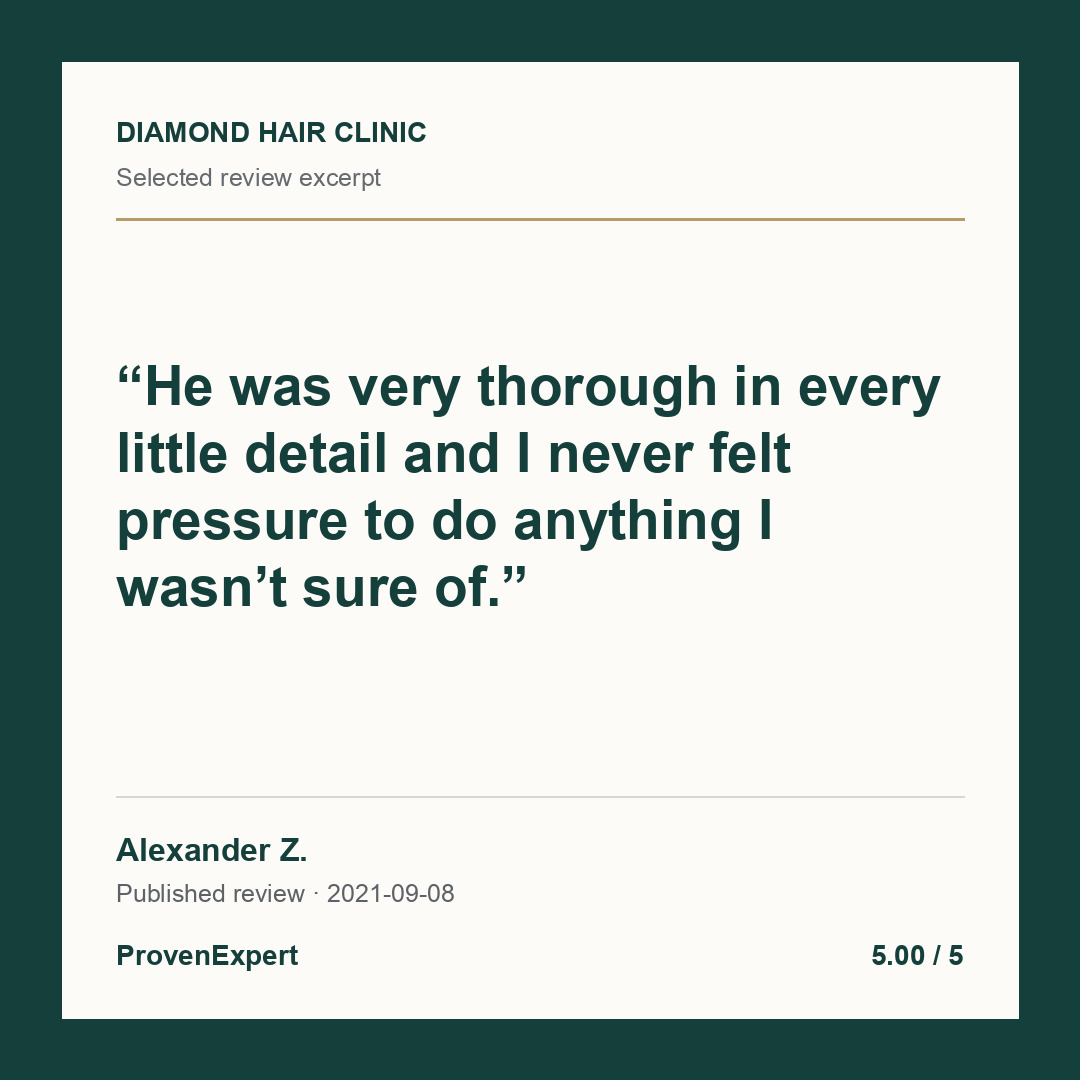
Read this review excerpt
He was very thorough in every little detail and I never felt pressure to do anything I wasn’t sure of.