


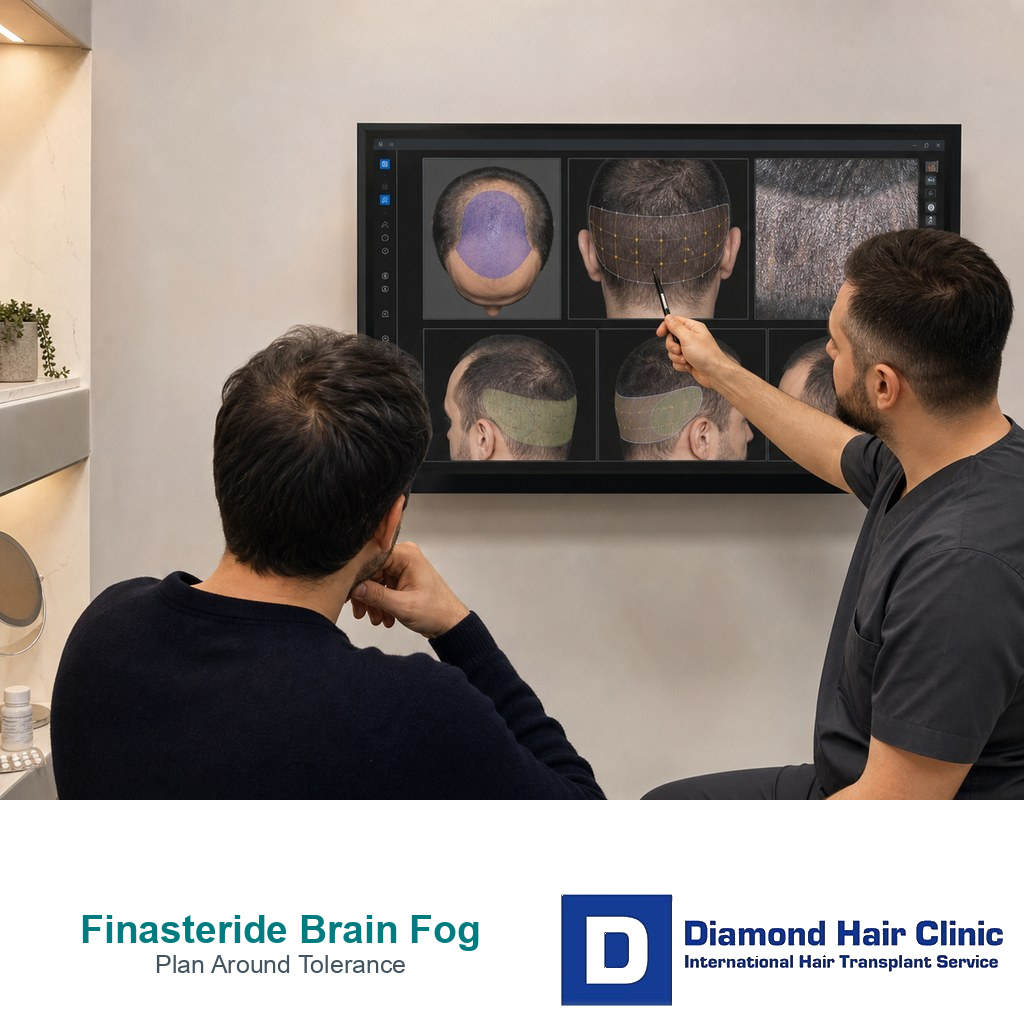
Brain Fog on Finasteride Changes Hair Transplant Planning
When a patient tells me he feels mentally foggy, slower, flat, or not like himself after starting finasteride, I do not treat it as a small side note. First I separate the medication question from the surgery question. Only after that do I decide whether the hair transplant plan should move forward, become smaller, or wait.
The transplant plan should not depend on a medicine the patient may not be able to tolerate consistently. That does not prove finasteride caused every symptom, and it does not make surgery impossible. It means the design has to respect uncertainty, native hair risk, and mental health history.
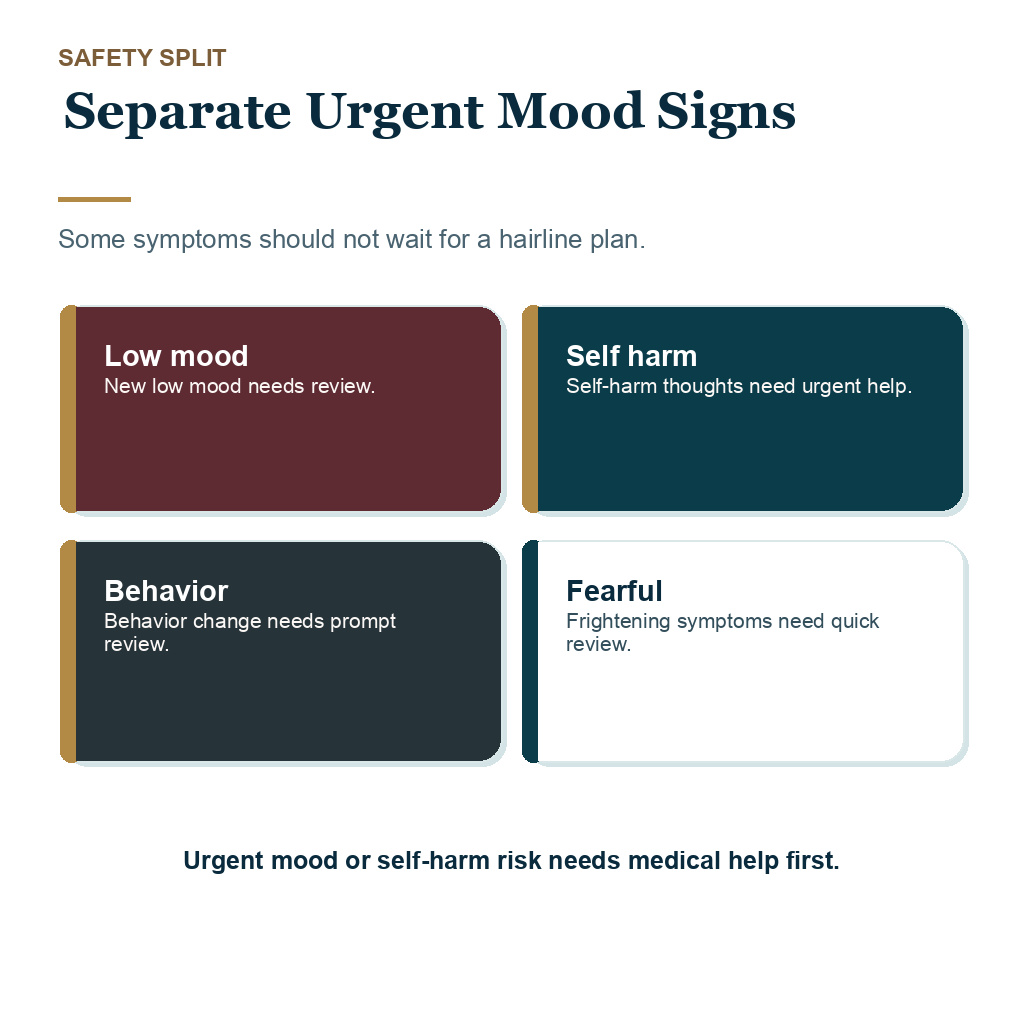
If there is low mood, severe anxiety, thoughts of self-harm, or a sudden change in behaviour, the next step is medical help, not a hairline design discussion. If the concern is milder but persistent brain fog, reduced focus, or feeling slower at work or while driving, it still belongs in the planning conversation before surgery pressure builds.
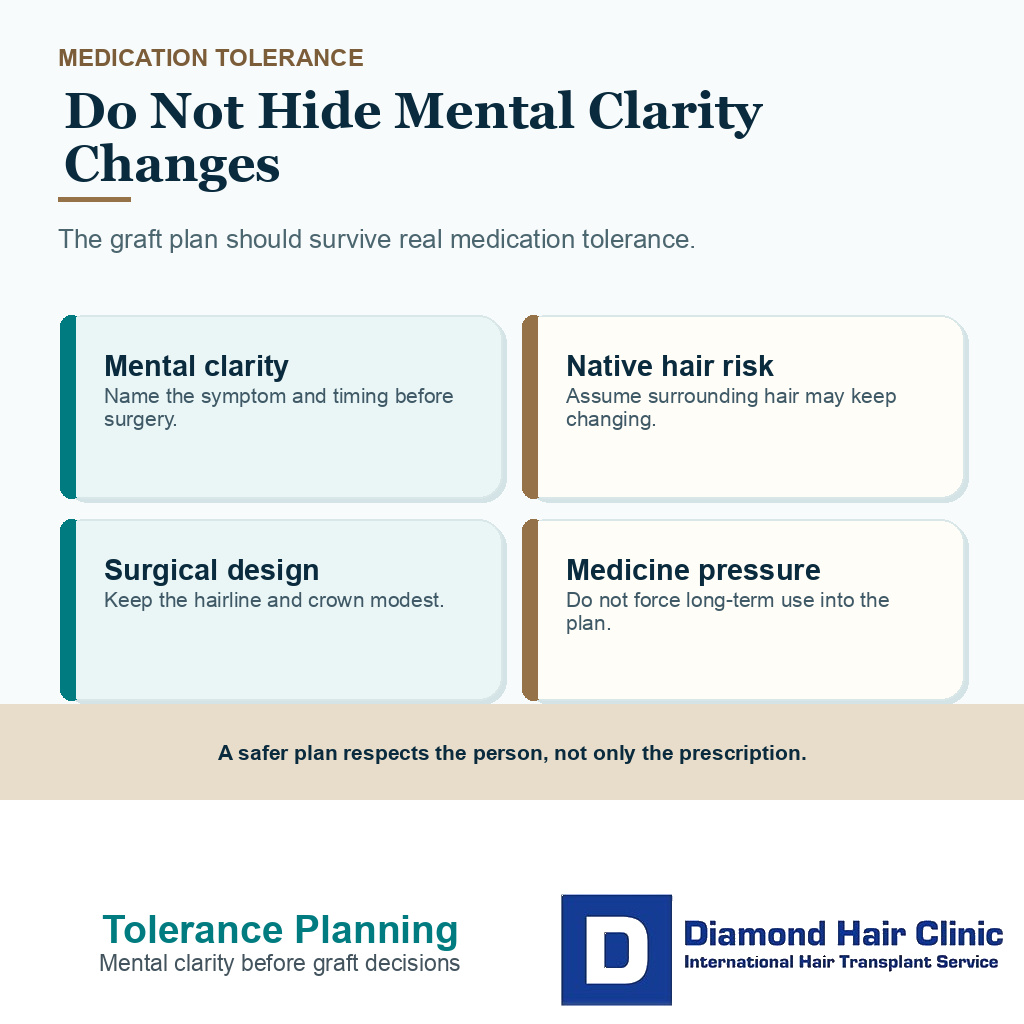
Mental clarity is part of medication tolerance
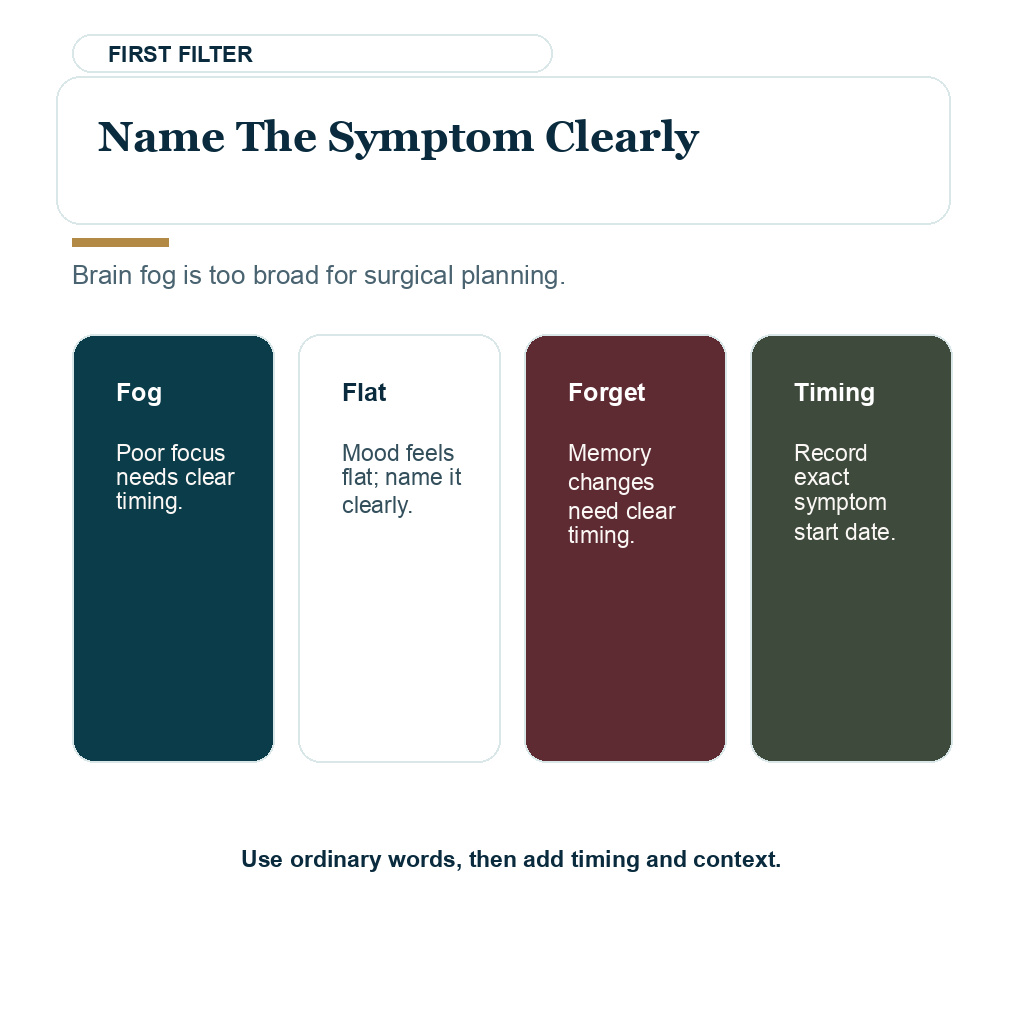
Most finasteride conversations focus on sexual side effects, shedding, or whether the medicine is needed after surgery. Patients also describe cognitive worries in everyday language such as brain fog, poor focus, flat mood, forgetfulness, or feeling mentally slower.
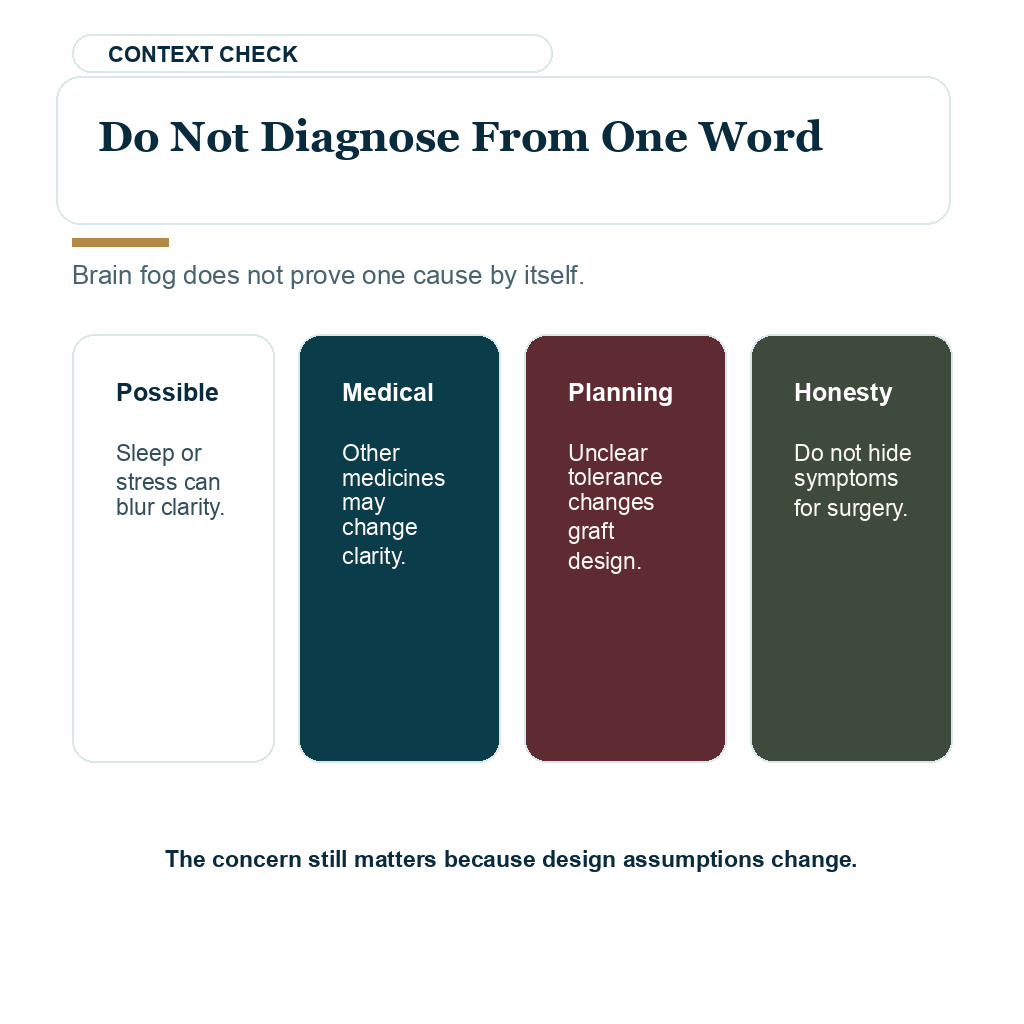
I cannot diagnose the cause from that word alone. Sleep loss, anxiety, depression, work stress, other medicines, alcohol, cannabis, thyroid disease, low iron, and many other factors can affect mental clarity. But the concern still matters because a transplant plan can quietly assume that finasteride will be used for years.
I also separate fear from a timing pattern. A man who feels anxious after reading frightening stories needs one kind of conversation. A man who repeatedly feels different after starting, increasing, stopping, or restarting a medicine needs a medication timeline and prescribing doctor review.
I want the medication history clear before surgery. If someone is forcing himself to continue because he is afraid of losing hair, the operation may become built on pressure rather than a stable plan.
For the clinic, the useful pattern is simple. Say when it started, whether it improved away from the drug, and what else changed in sleep, mood, work, alcohol, or other medicines.
First separate brain fog from urgent mood symptoms
Brain fog is a patient word, not a single medical diagnosis. I first separate it from symptoms that need urgent medical attention. New or worsening depression, severe anxiety, thoughts of self-harm, marked behaviour change, confusion that affects safety, or symptoms that feel frightening need timely doctor review.
If you take 1 mg finasteride for hair loss and develop depression, suicidal thoughts, or a clear new mood change, stop taking it and contact your prescribing doctor as soon as possible. If you have harmed yourself or feel at risk of serious harm, seek emergency medical help immediately.
I also ask directly about libido, erections, ejaculation, testicular pain, breast tenderness, and whether symptoms continued after stopping, because sexual or hormone symptoms can affect mood and need the prescribing doctor involved.
If you already take antidepressants before FUE or other mental health medicine, I do not want silent changes. Medicine stability and prescribing doctor input should be clear before elective surgery.
If the symptom is not an emergency but is affecting work, exams, relationships, memory, driving, or daily decisions, it is still not a hairline design detail. It is a reason to slow down, write the timeline, and speak with the prescriber before the operation becomes the pressure point.
Build the hairline around real medicine tolerance
Finasteride can help some men protect miniaturizing native hair. That role is surgical because native hair loss affects how much donor hair we may need later. But medication support is not the same as donor supply.
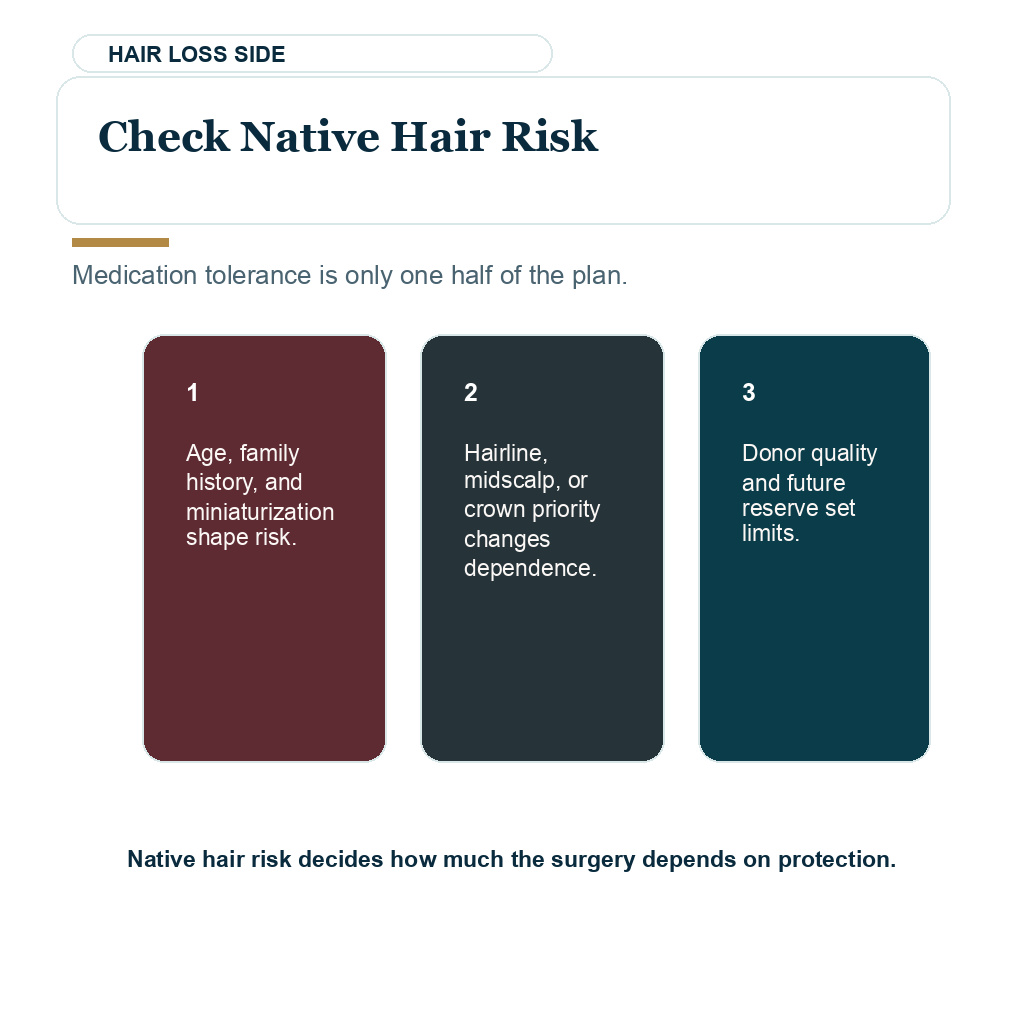
When I judge finasteride and native hair protection, the narrower question here is tolerance. If you may stop the medicine, I design as if the surrounding native hair could continue thinning.
If finasteride has thickened some miniaturized native hair, I do not count that improvement as permanent donor supply. I still ask what the result would look like if those native hairs weaken after stopping or if the medicine cannot be continued.
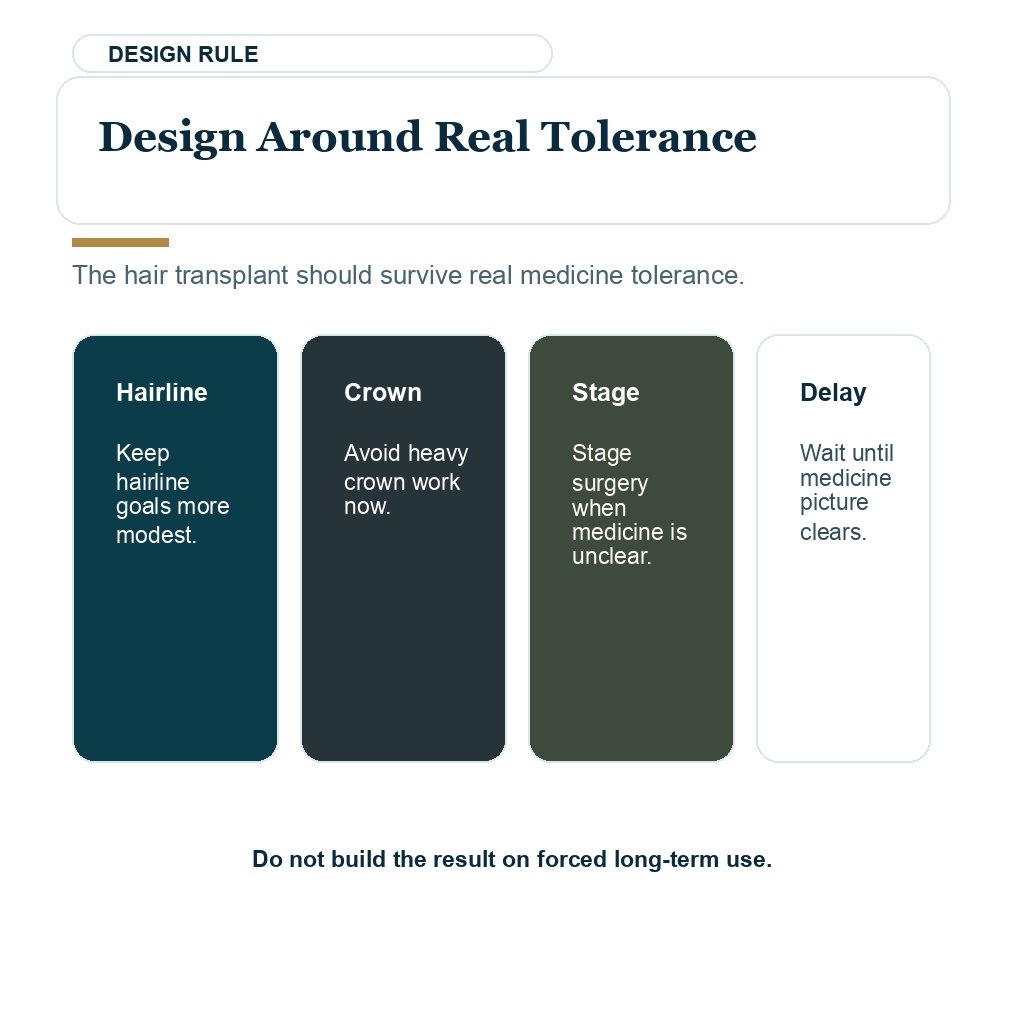
That often means a more measured hairline, a crown plan that asks whether medication response can reduce or delay grafts, or a staged plan. It may also mean delaying surgery until the symptom pattern is understood well enough that the transplant is not built on forced medication use.
A plan without finasteride is different from a failed plan
Some men can have a good transplant without finasteride, but the design must admit that native hair may keep changing. The risk is not only losing more hair. The risk is creating a transplanted pattern that looks isolated when the original hair behind it thins.
Without stable medication tolerance, hair transplant planning without finasteride has to become more conservative, not more aggressive. A person who cannot tolerate the medicine may still be a candidate, but the graft budget, hairline height, crown ambition, and future options have to be handled differently.
A short-term plan is also different from long-term tolerance. If you plan to use finasteride only for a few months, or only around the surgery, I still design for the likely pattern after the medicine is stopped. The first result should not depend on a promise you already know may not be realistic.
Stopping or avoiding finasteride should not be treated as a moral failure. It is a planning variable. A smaller first session, a delayed operation, a second stage plan, fibers, scalp micropigmentation, or accepting more scalp visibility may all be safer than spending donor hair as if the medicine problem does not exist.
Topical finasteride is not an automatic escape
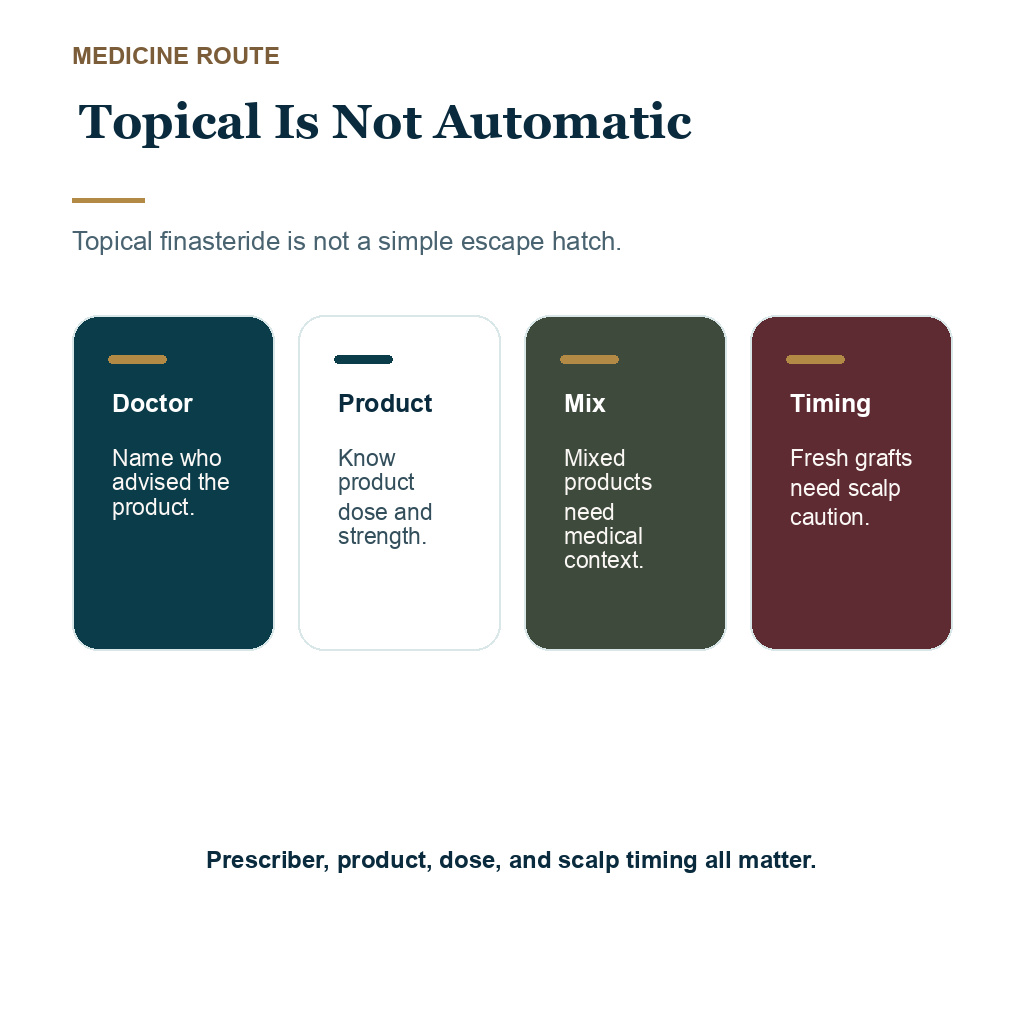
Topical finasteride can be useful in selected patients, but it is still finasteride. An approved spray, a compounded formula, and an online combination product are not the same safety conversation. Some absorption can occur, so previous mental clarity, mood, sexual, breast, fertility, or partner pregnancy concerns still need medical review.
The topical decision belongs in medical context, especially when the product is compounded, mixed with minoxidil, or obtained from an online provider. For the local scalp timing, I use topical finasteride around FUE because applying any topical onto fresh grafts is a different problem from long-term medication tolerance.
If you report mental clarity or mood concerns with oral finasteride, I do not treat a topical product as the immediate answer. I ask who prescribed it, the exact concentration, the amount used each day, the surface area treated, whether it is mixed with minoxidil, and whether symptoms appeared with oral use, topical use, or both.
If a clinic says a very aggressive design is not safe without oral finasteride, I do not read that as punishment by itself. It may be safe candidate selection. But you should hear exactly what changes in the design if oral medicine is not tolerated, and you should never hide symptoms to pass a screening conversation.
Use a tolerance timeline before changing surgery
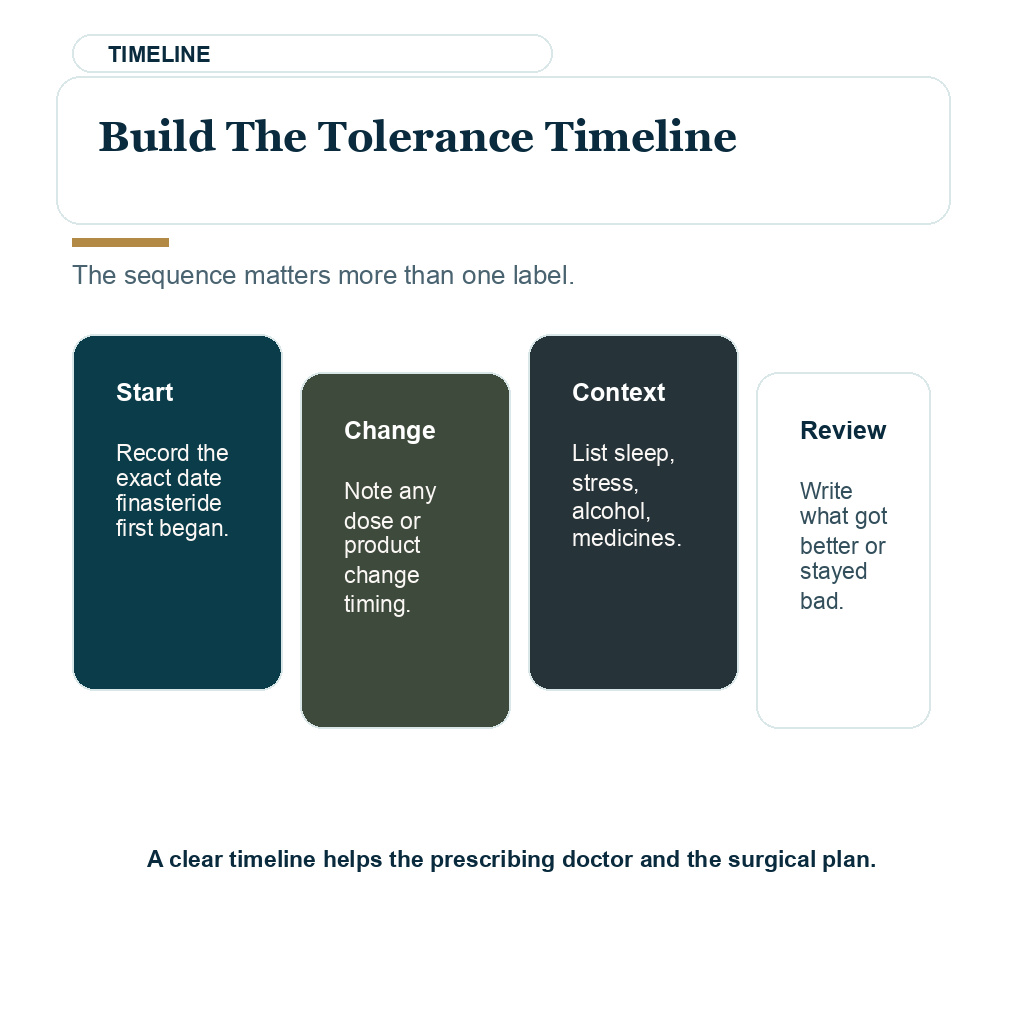
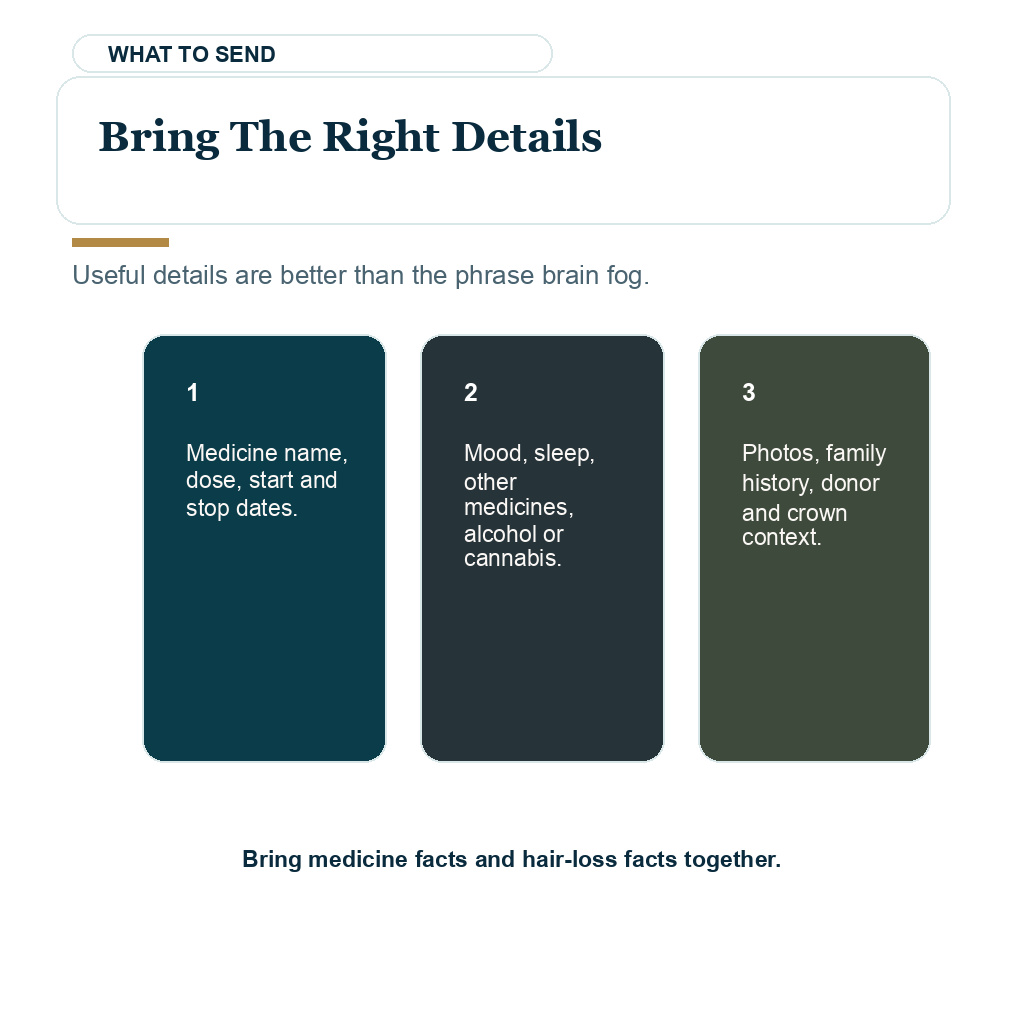
Before the operation, a simple timeline helps. I want to know when finasteride started, when the symptom started, whether the dose or formulation changed, and whether sleep, stress, alcohol, cannabis, antidepressants, ADHD medicine, or another treatment changed at the same time.
Bring a simple symptom timeline, not only a conclusion. The dates of starting, stopping, dose changes, sleep changes, stress, mood symptoms, and other medicines help decide whether surgery should wait or the design should become more conservative.
That timeline does not need to prove everything. It only needs to show whether medication tolerance is stable enough to be used as a design assumption. If the timeline is unclear and surgery is elective, the surgical plan may be to pause the surgical decision until the medical picture is more settled.
Do not restart, lower the dose, switch to topical, or test the medicine again just to protect a transplant date. If a supervised trial is considered, the patient and prescriber should agree on the stop rules before the first dose.
I also separate this from general fear of side effects. Fear can be real and still not be a symptom. Anxiety after reading stories needs a different conversation from a repeated mental change after starting, stopping, or restarting medicine.
How does tolerance change the graft plan?
The map below shows the planning logic I use. It does not tell you to start, stop, or change finasteride. It shows why medication stability and surgical dependence must be judged together before the design becomes too aggressive.
Medication tolerance and graft planning
This is not a diagnosis or dosing tool. It is a way to separate the medicine situation from the graft plan before I decide how much the first operation should try to achieve.
The result should not lean on a perfect medication future
If someone feels stable on finasteride and the surgical plan is modest, I still document the medicine history, but I do not make the graft plan depend on a perfect medication future.
- Confirm the dose, duration, and stability.
- Keep native hair risk in the design.
- Do not promise that medicine will protect every surrounding hair.
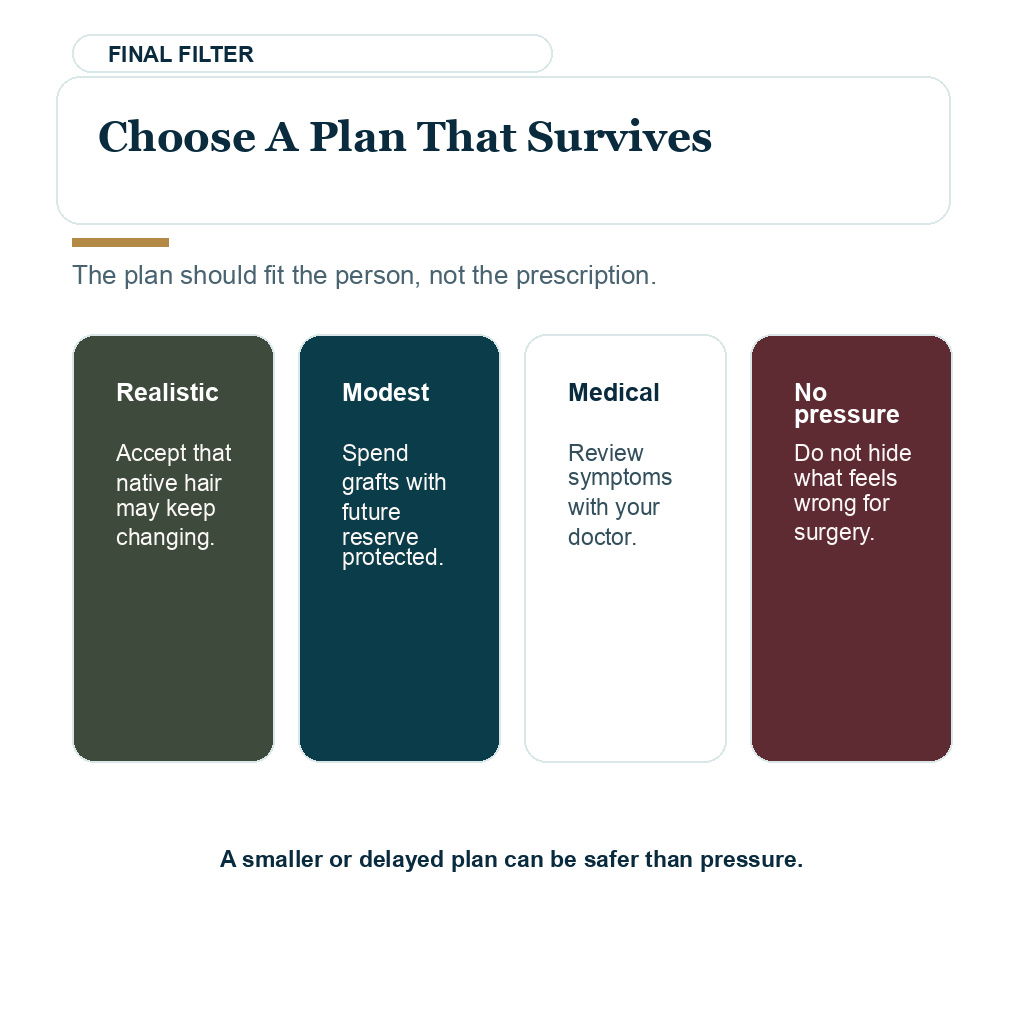
If you are in the caution lane, do not solve it with panic or secrecy. Keep the design modest until the medicine question is clearer. A smaller or delayed plan is often safer than an ambitious design that depends on silence about side effects.
Details I need before planning grafts
For this topic, I need more than the word brain fog. I need the medicine name, dose, start date, stop date if relevant, who prescribed it, the symptom timeline, sleep pattern, mood changes, sexual or breast symptoms, other medicines, supplements, alcohol or cannabis use, and whether a doctor has reviewed the symptom.
I also need to know whether you have adjusted the dose on your own, tried microdosing, used it every other day, stopped, restarted, or switched from oral to topical finasteride. Those details are not there for judgment. They tell me whether the medicine situation is stable enough to use in a surgical plan.
On the hair loss side, I need age, family history, miniaturization, previous medication response, photos in good light, donor quality, and whether the crown or hairline is the main concern. I still need the finasteride side effects and transplant planning context, but cognitive or mental clarity concerns deserve to be named directly.
If there is a history of gynecomastia, fertility concern, hormone sensitivity, or concern about exposure during a partner’s pregnancy, I also review finasteride after gynecomastia or hormone sensitivity and finasteride, dutasteride, and fertility before treating the medication plan as settled.

Design the transplant for the person, not the prescription
A hair transplant is not a way to force long-term medication tolerance. Surgery should fit the person in front of me. If a medicine is tolerated, useful, and medically appropriate, it can support native hair planning. If it creates symptoms the patient cannot accept, the surgical plan has to become more conservative or wait.
The donor area is finite, and native hair can continue thinning. Those facts do not disappear because a medication exists. They become more important when the patient is unsure whether he can stay on it.
A rejected aggressive plan is not the same as rejection as a patient. Sometimes it means the safe version is smaller, higher, staged, delayed, or designed with less crown ambition so that the donor area is not spent against an unstable medication plan.
If you feel mentally unlike yourself after starting finasteride, do not hide it to get a more aggressive hair transplant plan. Bring the symptom timeline, medication details, and hair loss photos into the consultation so the surgery can be designed around reality, not pressure.

Read this review excerpt
Every single one of my questions was answered and they made sure I had all the details I needed to make an informed decision.