



Donor Hair Permanence and Graft Stability
Patients usually mean two different things when they ask whether a hair transplant lasts forever. Well selected donor grafts are expected to be long lasting, but the whole scalp is not frozen in time. Hair taken from the true safe donor area is usually more resistant to DHT, but I do not describe it as impossible to lose.
The transplanted grafts and the full visual result are different things because native hair, donor borders, and planning can still change the result. Transplanted hairs may keep growing while native hair around them continues to thin. The crown can continue to open, the donor borders can prove weaker than expected, and a hairline that looked balanced at year one can need a different review years later.
I separate durable graft growth from the durability of the whole result. The safe donor area has to be judged on the patient, not assumed from a diagram, and that includes checking donor miniaturization before surgery. Many disappointments years after surgery are not caused by transplanted grafts suddenly disappearing. They are caused by ongoing native hair loss, grafts taken from a less stable part of the donor area, weak donor biology, poor planning, or a clinic promise that made the patient believe surgery had stopped future hair loss.
Does a hair transplant last forever?
When surgeons use the word permanent, we usually mean that hair moved from the safer back and side zones of the scalp tends to keep its donor characteristics after transplantation. The donor area has to be examined carefully before surgery because it is not just the place where grafts are taken from. It is the reserve that decides whether the result can age well. The donor zone must be chosen carefully before anyone calls the grafts permanent.
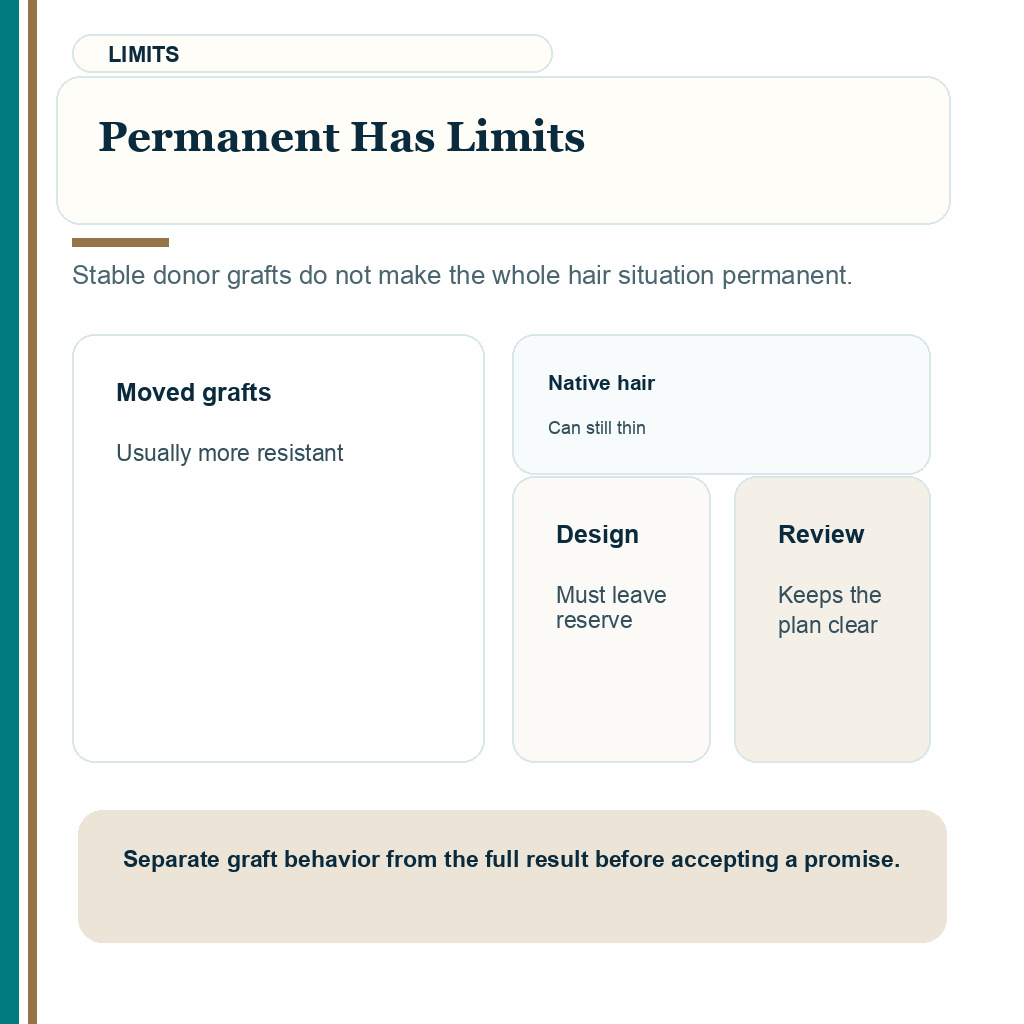
Permanent does not mean that every hair on the head is frozen in time. Hair still goes through natural cycles. A patient can still shed, age, develop medical hair loss, or lose native hair in untreated areas. The transplanted follicles may remain stable, but the visual result can still change if the surrounding hair becomes thinner, the crown expands, or the donor borders prove weaker than expected.
Once the follicles are growing normally, transplanted scalp hair can usually be grown and cut much like donor hair. Transplantation does not give it a special short maximum length. Early growth can look wiry or behave differently while the shaft matures, and each follicle continues to cycle through growth, rest, and shedding.
What usually lasts is the transplanted graft behavior. What can still change is the native hair behind and around it, the crown, the donor borders, and the balance of the result as the patient gets older. A transplanted frontal band can look isolated later if the hair behind it keeps miniaturizing.
A hair transplant moves stronger hair into an area where hair has been lost. It does not create new donor supply, and it does not stop the patient’s original tendency toward hair loss. I treat the donor area as a limited surgical reserve, not as an unlimited source of permanent hair.
That is the part patients miss when they hear that donor hair resists DHT. The transplanted grafts may be the steadier hair, while the original hair around them still needs diagnosis, monitoring, and sometimes medical support.
How I decide whether donor hair is reliable enough to move?
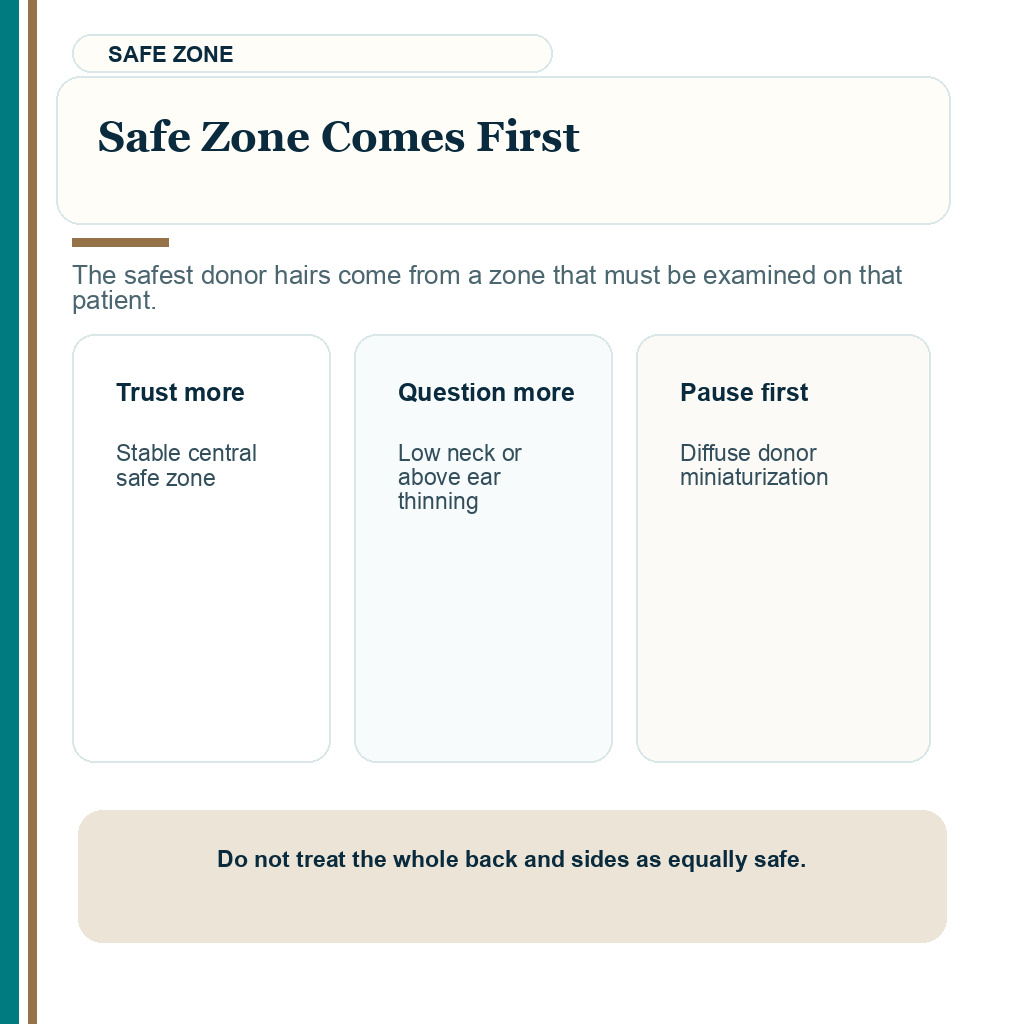
Donor permanence is not guaranteed by location alone. I look at density, hair shaft thickness, miniaturization, family pattern, age, thinning above the ears, thinning low in the nape, previous extraction marks, and whether the safest zone is wide enough for the planned graft number. The practical question is whether the lowest and highest donor borders were checked, because permanence depends on the safe zone actually used.
For that reason, a permanent hair explanation must still include a refusal point. If the donor looks unstable, the correct answer may be a smaller plan, delay, medical stabilization, or no surgery. Moving weak donor hair does not turn it into strong hair.
The written plan needs to separate graft survival, native hair loss, and donor selection. A patient can have good graft growth and still look thinner later if the original plan ignored the hair that would continue to change.
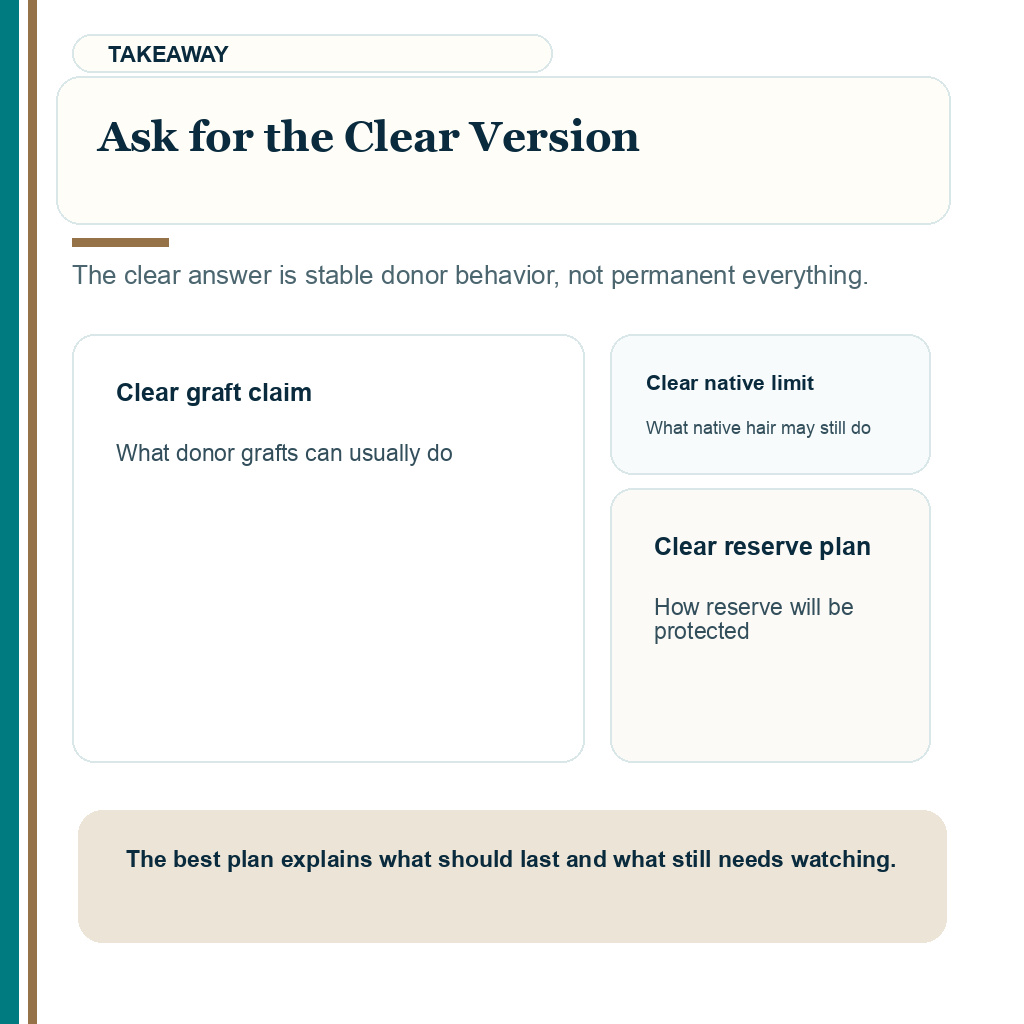
A claim that a transplant is permanent needs a clearer question. Which part do they mean, the moved grafts, the native hair around them, the donor borders, or the overall hairstyle? Those answers are not identical. Good planning explains what is expected to last and what still needs monitoring as the scalp changes with time.
Choose a stage to follow the hair being moved, the native hair left in place and the donor supply that remains.
Hair chosen for the grafts
I examine the donor borders and look for miniaturization. Hair at the back of the head is not all equally reliable.
Native hair
Hair in the front, middle and crown can continue to thin. That possible progression affects the hairline and coverage plan.
Remaining donor reserve
The available supply has to serve this operation and possible later needs. A high graft request cannot make that supply larger.
An unstable donor can mean a smaller plan, delay or no surgery. Moving weak hair does not make it stronger.
Donor regrowth after extraction
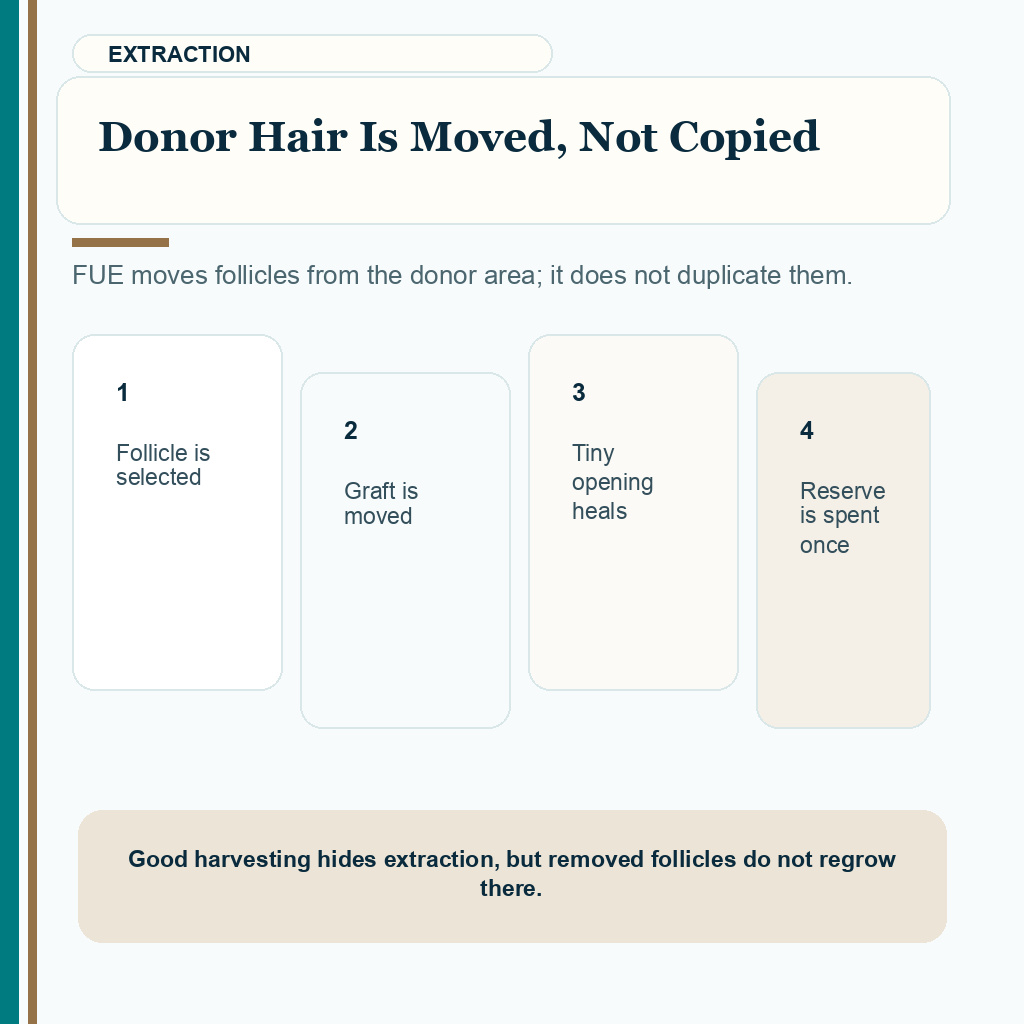
This is another point that patients often misunderstand. In FUE, the follicle is moved from the donor area to the recipient area. It is not copied. The small extraction points heal, and the surrounding hair may cover them well when the harvesting is conservative, but the removed follicles do not grow back in the same place.

Early donor redness, short hair, or temporary shedding can make the donor area look worse for a while after surgery. That is different from the removed follicle growing back. It is also different from true overharvesting, where too much hair has been removed or the extraction pattern has been uneven.
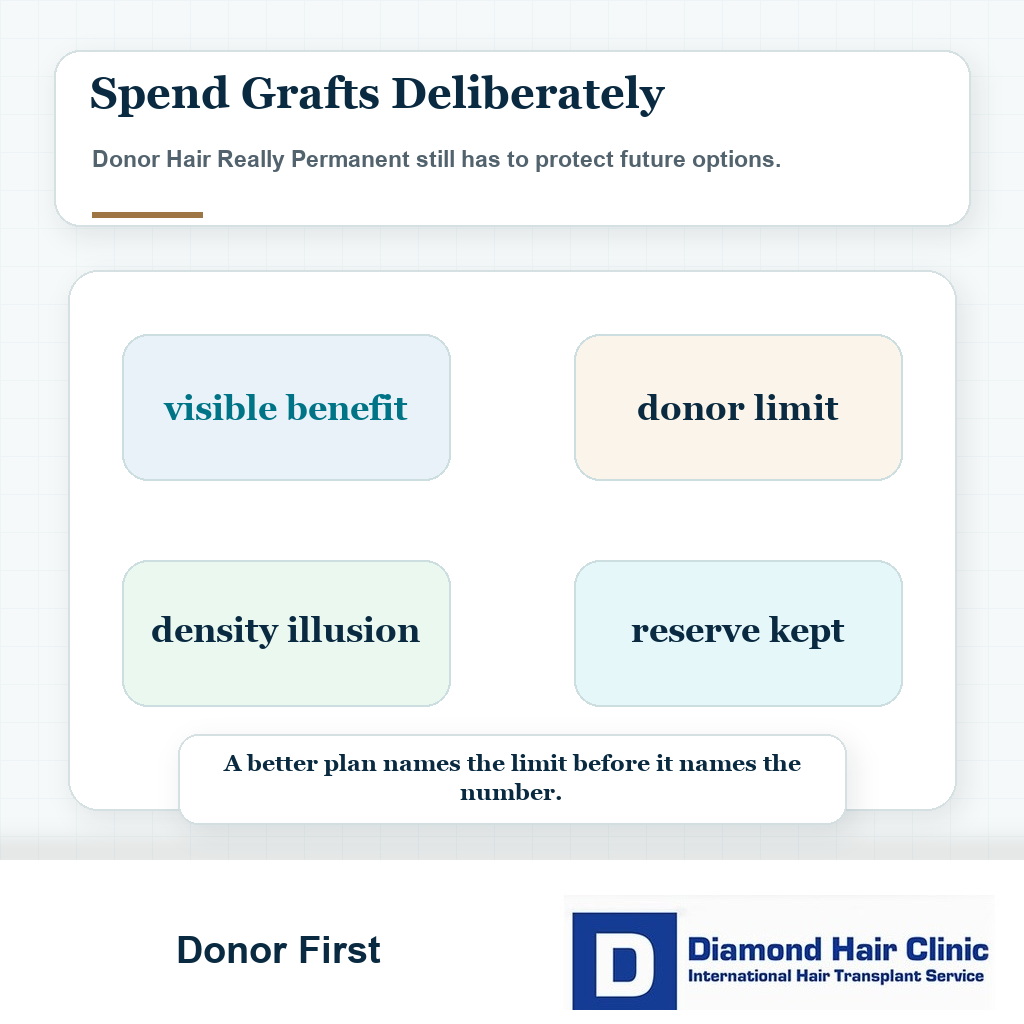
I plan around the limited number of lifetime grafts a patient can safely use. If too many grafts are removed, or if they are removed unevenly, the donor area can look thin even if the transplanted hair grows. The plan has to protect both sides of the surgery, the area receiving hair and the area giving hair.
A very short haircut can reveal an extraction pattern that longer hair hides, so donor planning should not rely on one photograph taken after the hair has grown long.
Donor stability over the years is separate from protecting grafts while they heal. The activity choices below concern early contact, pressure, sweat and accidents. The timing still follows your clinic’s aftercare instructions.
Donor hair stability compared with native hair
In male pattern hair loss, the hair on the top, frontal scalp, middle scalp, and crown is usually more sensitive to androgen driven miniaturization. The hair in the safer donor zone is usually more resistant. That is the biological reason a transplant can work.
But the word usually is important. I still examine hair caliber, density, miniaturization, family history, age, loss pattern, and whether the donor area looks stable under magnification. A patient can have hair at the back of the head and still have a weak donor area for surgery.
If the donor hair is strong, the hairline is planned with discipline, and the grafts are placed naturally, the transplanted hair can be the most dependable part of the long term result. If the donor is already thinning or the clinic harvests too widely, the promise of permanence becomes much weaker.
Thinner appearance despite graft survival
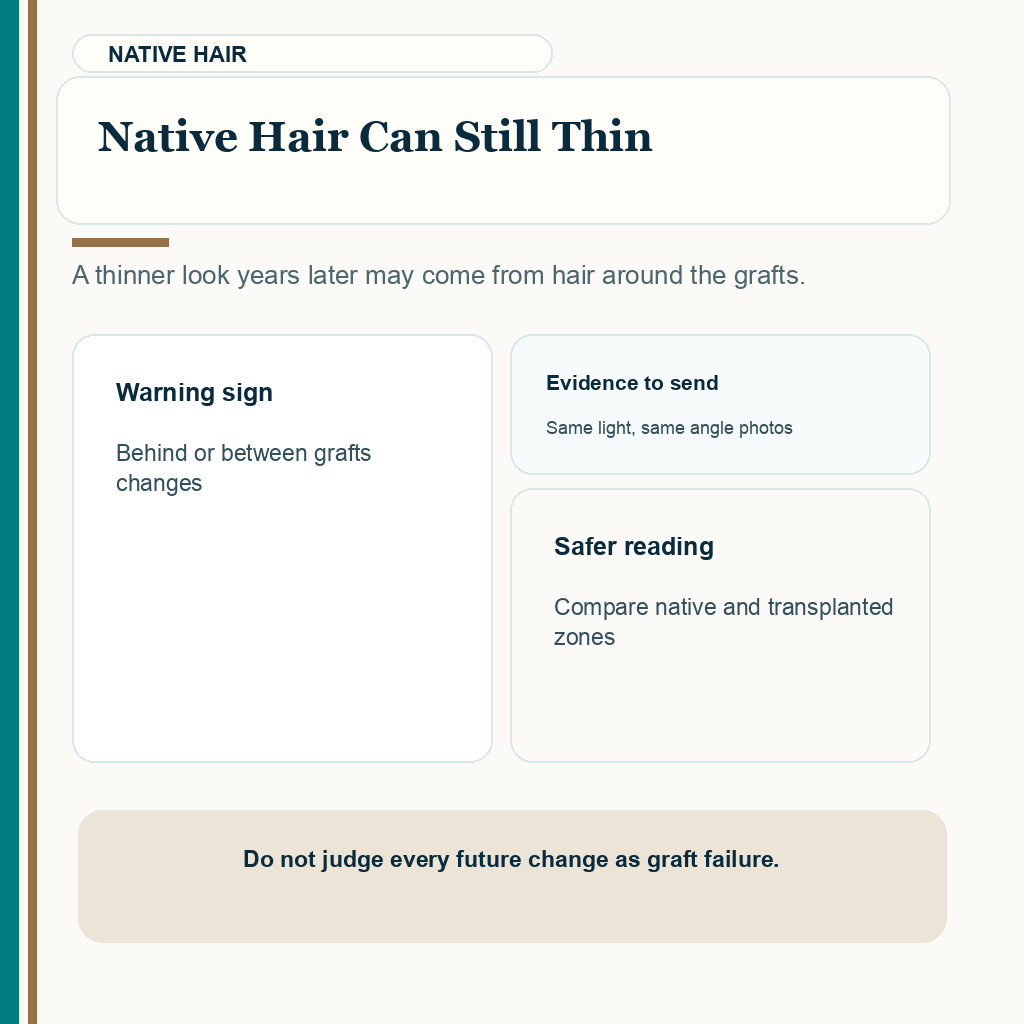
This is a common misunderstanding I see. A patient may say, “My transplanted hair is falling out years later,” when the real problem is that the native hair around the transplant has continued to miniaturize. The transplanted hairs may still be present, but the frame around them has changed.
I judge a transplant by more than the first twelve months. I consider what happens five, ten, or twenty years later. If the original plan spends too many grafts on a very low hairline or ignores future crown loss, the result can become difficult to maintain even when the grafts themselves grew well.
Stable at twelve months and thinner years later
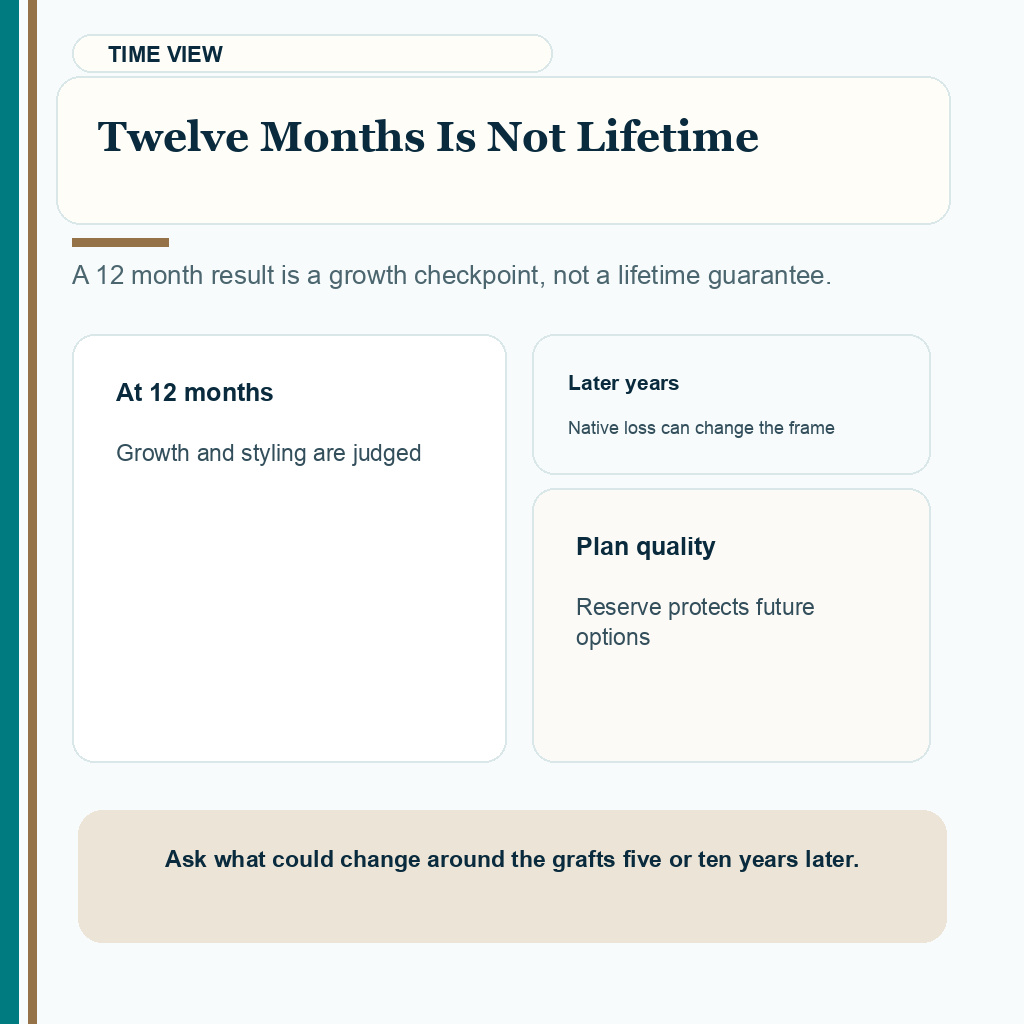
The twelve month result is an important checkpoint, but it is not a promise that the whole scalp will look unchanged forever. At twelve months I am judging growth, angle, density, and whether the grafts have matured. Years later, I am judging a different question. I am asking what changed around the grafts and whether the donor hair chosen at surgery was truly stable.
If the native hair behind the hairline thins, the transplanted hairs can stand out more. If the crown opens, the front may still be growing but the overall result feels weaker. If grafts were taken too high, too low, or from a donor area with miniaturization, those hairs may not behave like safer donor hair.
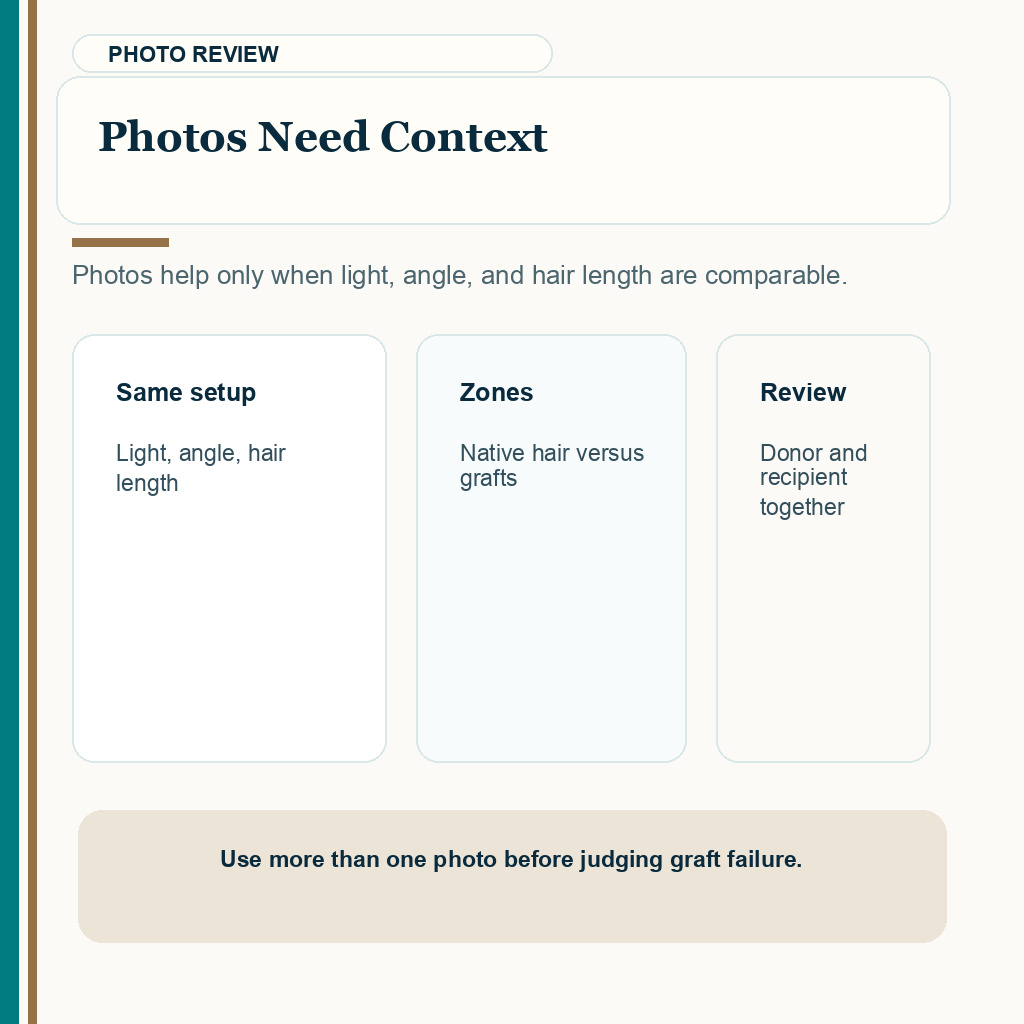
Good baseline photos, a surgical map when available, and consistent follow up photos help separate these possibilities. One harsh bathroom photo is not enough to decide that every graft has failed. The practical issue is whether the thinning is in the transplanted zone, the native zone, the donor area, or the boundary between them. Careful photo comparison and scalp examination usually give a clearer answer than guessing.
This is the same clinical distinction I make when explaining why hair loss can still continue after a hair transplant. It is also one reason I separate graft survival from why some hair transplant results look thin. Surgery can improve coverage, but it cannot remove the biology of future native hair loss.
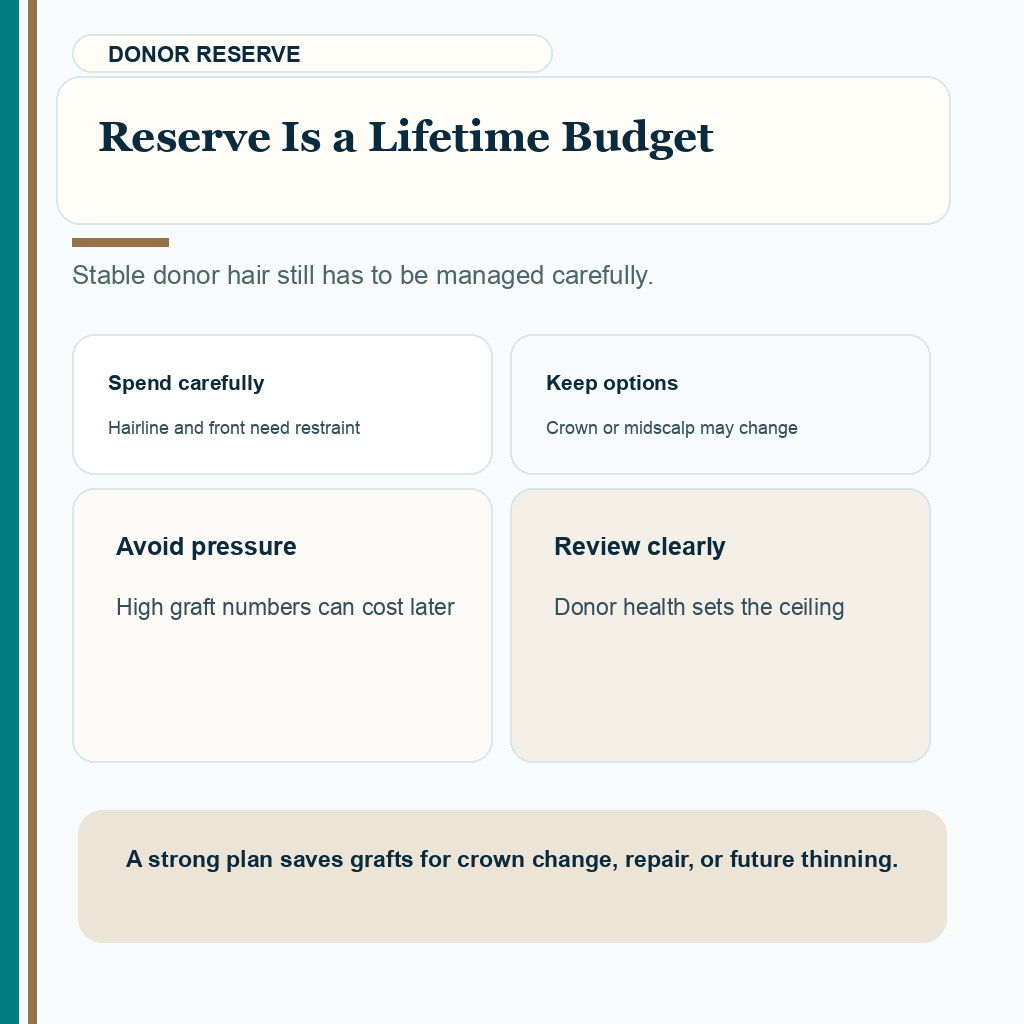
These 10 donor permanence slides separate stable donor graft behavior, native hair loss, donor extraction limits, safe zone selection, miniaturization, twelve month versus long term review, medication context, photo review, donor reserve, and how to judge a clear permanence claim. Swipe sideways, use the arrows one slide at a time, or choose a number below the image.

Transplanted hair reliability over time
Transplanted hair becomes less reliable when the grafts were not taken from a truly stable donor zone, when the donor area itself is miniaturizing, or when the patient has a pattern such as retrograde thinning or diffuse unpatterned alopecia. In those cases, the issue is not only whether there is enough hair to move today. I need to know whether that hair is safe enough to trust for the future.
I pause with patients who show thinning above the ears, thinning low in the back of the scalp, or diffuse miniaturization across the donor area. If I suspect retrograde alopecia or DUPA, the plan may need to become smaller, delayed, medically supported, or refused.
If donor supply is not dependable, the correct surgical answer may be no. A rushed surgery can spend the patient’s best remaining grafts and still leave a result that does not hold well.
Medication and donor hair permanence
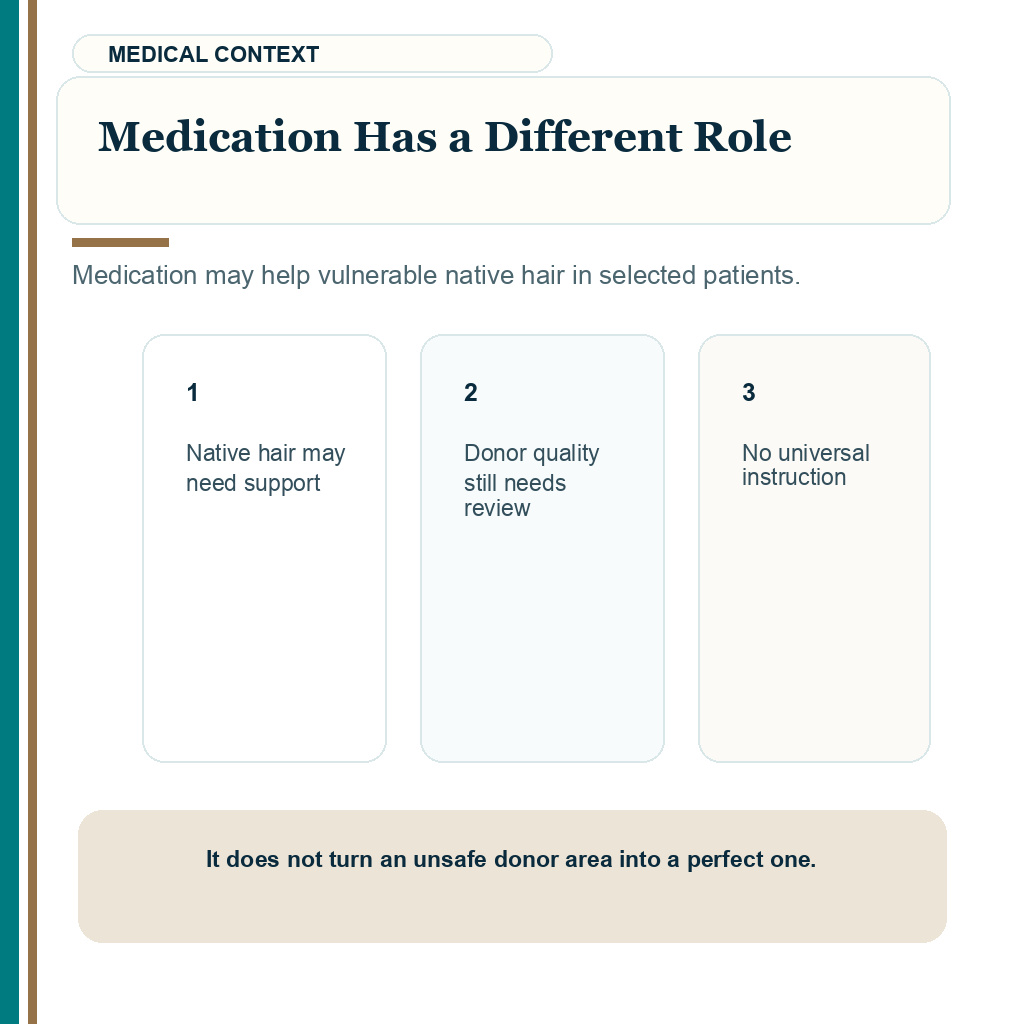
Medication does not turn an unsafe donor area into a perfect donor area. It can help protect or stabilize hair in the right patient, especially native hair that is still vulnerable to ongoing loss. The transplanted grafts usually depend less on medication than the surrounding native hair, but the full visual result may depend on both.
Some patients can have a hair transplant without finasteride, especially if their pattern is stable, their donor reserve is strong, and the plan is conservative. Other patients are much riskier without medical stabilization because their native hair is still changing quickly.
When I discuss finasteride before or after a hair transplant, I am not trying to give the same answer to every patient. I am trying to understand which hair is transplanted, which hair is native, which hair is still miniaturizing, and what the result may look like if the patient avoids medication completely.
If a patient cannot use finasteride or dutasteride because of side effects, fertility planning, PSA monitoring or prostate follow up, or another medical reason, the surgical plan has to respect that limit. Medication is not a loyalty test. It is planning information that can change hairline height, crown ambition, donor reserve, and long term follow up.
Safe donor zone importance
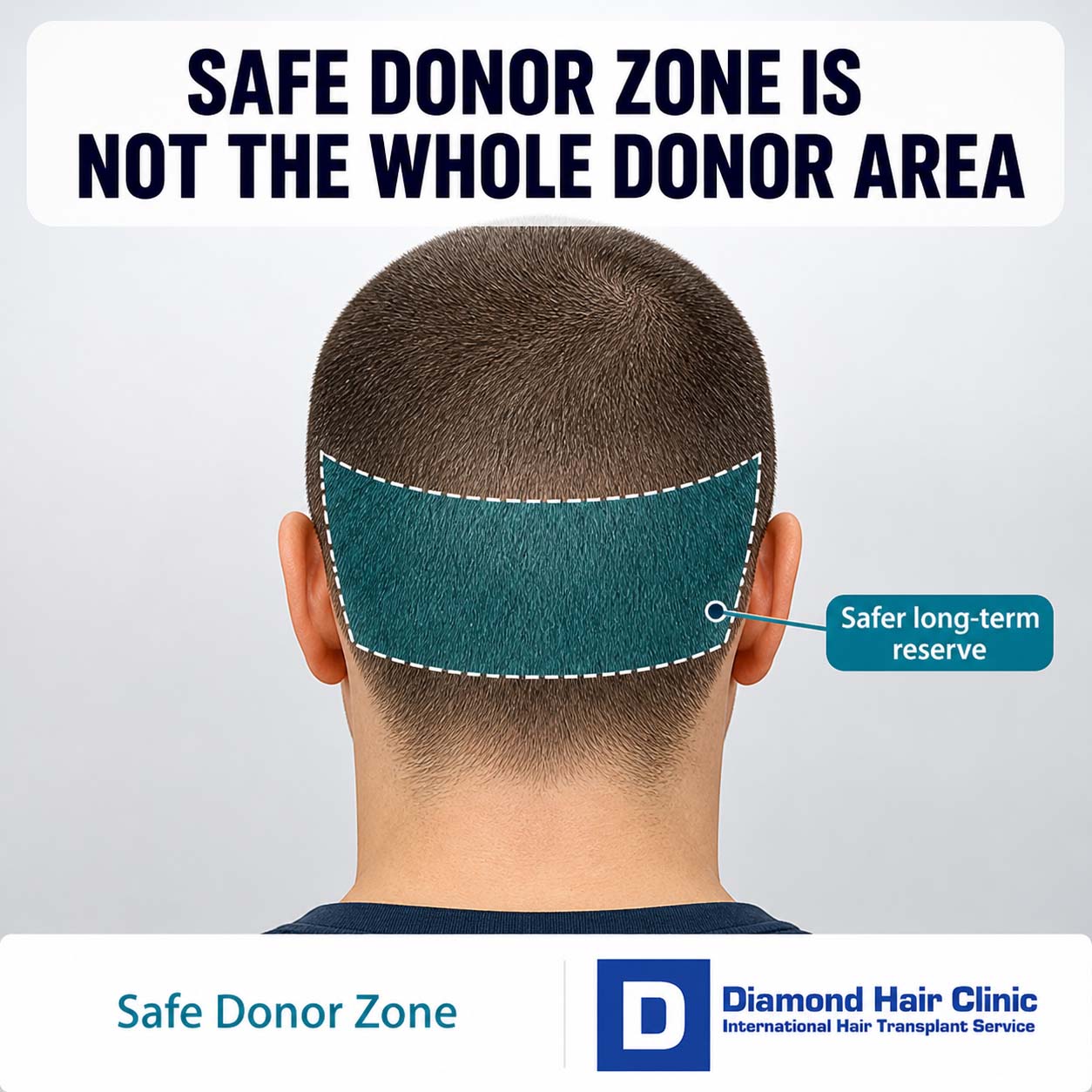
The safe donor zone is not a decorative line on the scalp. It is the area most likely to provide grafts that behave well over time. If a clinic moves outside that zone to chase a larger graft number, the patient may receive hairs that look useful today but may not be stable enough for the years ahead.
It is also not the entire back and sides of the head. The safe zone has to be judged on the patient in front of me. Age, family history, donor density, retrograde thinning, and miniaturization can all change how confidently I trust different parts of the donor area.
High graft promises need close scrutiny. A large number can sound attractive in a message or consultation, but the number means very little unless the extraction pattern is safe. A result is not stronger because more grafts were removed. It is stronger when the right grafts were used for the right reason.
The unsafe part is not only a thin donor area after surgery. It is also overharvesting the donor area so the patient loses future options. Once good donor supply is spent, no clinic can simply create it again.
Explaining permanent results clearly
Permanence should be explained with limits. Transplanted hair from the right donor zone is expected to be long lasting, but the plan still has to protect the future. The explanation should include native hair, medication, crown progression, donor capacity, and age, because all of those details change how reliable the answer is for one person.
If a clinic says the result is permanent but does not examine the donor area carefully, does not discuss future loss, and does not explain who is medically responsible for the plan, the explanation is incomplete. The word permanent can be used responsibly, but it can also become a shortcut that makes surgery sound simpler than it is.
A hair transplant guarantee is not a substitute for surgical judgment. It may support a carefully written clinic policy, but it cannot make a weak donor stronger, a rushed hairline safer, or an unrealistic graft number more ethical.
Donor management when hair is stable
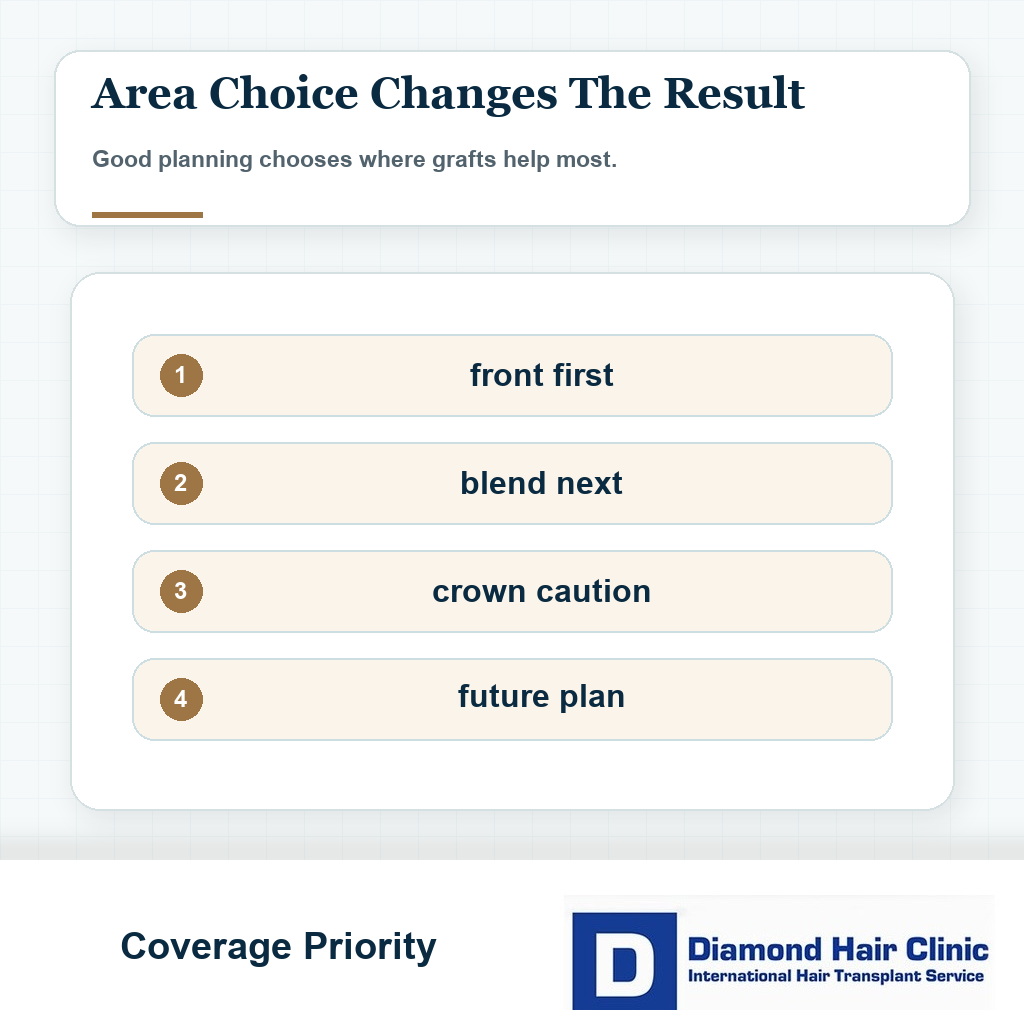
Even stable donor hair is limited. The donor reserve is finite. Donor management is part of hair transplant planning because the first operation cannot be judged in isolation. Coverage today has to be weighed against what grafts the patient may need later if the crown opens, the middle scalp thins, or a previous result needs repair. Even permanent donor hair has to be planned carefully, because follicles taken from the donor area do not grow back there.
Younger patients, advanced hair loss, fine hair, high contrast between hair and skin, or very dense coverage requests all make this more serious. In these cases, the best answer is often not the most dramatic answer. A natural hairline and careful graft use can protect the patient from needing a desperate correction later.
When judging whether a second hair transplant may be needed, the first question is how the original safe donor supply was spent. A second surgery is easier to consider when the first surgery left the donor area healthy and did not chase early density at the expense of long term planning.
Thinner transplanted area years later
First, do not assume immediately that every transplanted graft has failed. The right assessment is more careful than that. The first question is whether the thinning is in transplanted hair, native hair, the crown, the middle scalp, the donor area, or the transition between transplanted and native hair. If this worry appears after a result once looked stable, I review it the same way I review transplanted hair thinning years later, by separating grafts, native hair, donor quality, and timing.
I also have to know when the change happened. Shedding in the first months after surgery is not the same problem as thinning several years later. A stressful illness, medication change, untreated androgenetic hair loss, scalp inflammation, or a poorly selected donor zone can all create different explanations.
I examine the scalp before making the decision whether more grafts make sense. Sometimes medication, time, scalp treatment, or better documentation is the wiser first step. Sometimes a carefully limited touch up is reasonable. Sometimes another surgery would only spend more donor hair without solving the real reason the result looks thinner.

Permanent donor hair still has limits
Donor hair from the safe zone is usually durable, but permanence is not a license to spend grafts without restraint. The diagnosis, extraction pattern, hairline height, crown plan, and likely future thinning still control the result.
A transplant that grows can still look wrong if the design is too low, too straight, or too dense for the years ahead. Planning has to include how the result will look as you age, not only whether the grafts survive.
The best long term result is usually quiet. It grows, blends, leaves donor reserve, and can adapt if native hair changes later.

Read this review excerpt
told me the quality of my donor hair and what he could take out and advised me what will the be best outcome with what donor hair I had.