A Hair Transplant May Stop Before the Planned Graft Count
If a hair transplant stops before the planned graft count, I do not judge the day by the missing number alone. I first ask why the operation stopped, what was already placed, how the donor and recipient areas looked at that moment, and whether continuing would protect or risk the result. A lower final count can still be the right surgical decision. Sometimes stopping protects the result better than chasing the plan.
Patients often remember the promised package number more clearly than the surgical reason. They were told 4,700, 5,000, 6,000, or more grafts, then the day ends below that plan. Anxiety starts immediately. The written answer should explain timing, scalp response, graft handling, and whether any remaining work belongs in a later session. Those questions deserve a calm written answer, not a rushed promise to finish the count at any cost.
Document the stop reason while the day is still fresh. The useful explanation is the final number, what changed, and what that means for the next plan. A fast second pass should be based on donor response, swelling, bleeding, graft quality, comfort, and a safer reason to continue, not on completing the old number at any cost.
The missing grafts are not the first problem
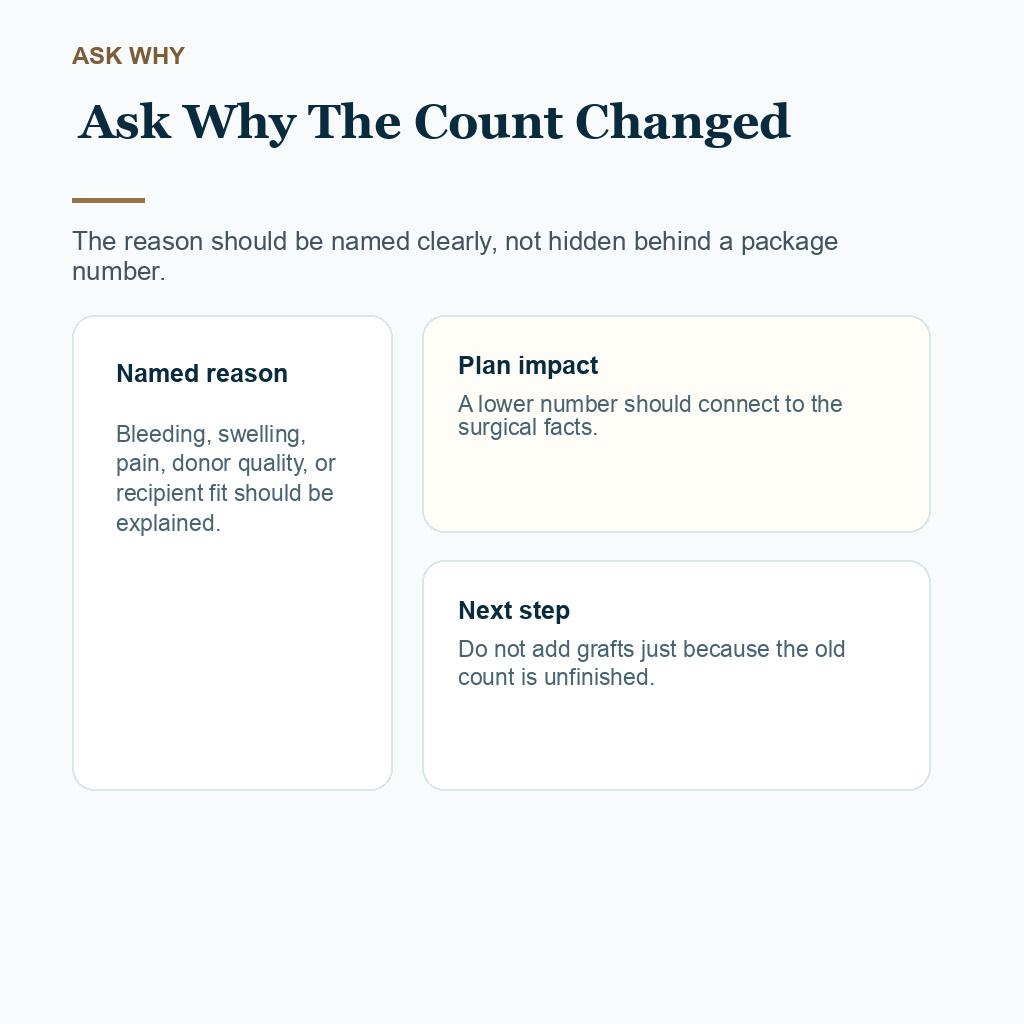
The first problem is the reason for the stop. A planned number is an estimate built before the full surgical reality is visible. Once the scalp is shaved, anesthetized, extracted, opened, and observed through a long session, the surgeon may see details that change the operative plan. For that reason, graft number changes on surgery day should be explained in clinical language rather than treated as a quiet adjustment.
I want the patient to know what changed. The explanation should cover donor limits, bleeding, swelling, visibility, pain control, graft placement speed, and whether the recipient area was already full enough for natural placement. The missing grafts only make sense after that reason is named.
This is different from blaming the patient or dramatizing the day. Hair transplant surgery is elective surgery. If the facts during the operation show that pushing forward is less safe, the responsible answer may be to slow down, reduce the target, stage the plan, or stop.
That limit should be written before travel, not only after extraction has already started. The written scope should name who can reduce the target, what donor or scalp finding justifies stopping, and whether a smaller first session or a delay would be the responsible plan.
A surgeon may pause for safety reasons
A surgeon may pause when visibility, bleeding, swelling, pain control, patient fatigue, local anesthetic exposure, donor quality, graft handling, or recipient area fit changes during the case. These are not all the same problem. Some settle with time and review. Some mean the plan should be smaller. Some mean the remaining work belongs in another stage. Some mean the case should end.
Long surgical days are why long hair transplant session planning matters. A long operation needs breaks, monitoring, disciplined graft handling, and a stopping rule. The stopping rule is not a sign of weakness. It is how the team avoids turning a long plan into a rushed finish.
Pain also deserves respect. In pain and graft count planning, the question is not only whether a patient can tolerate discomfort. Poorly controlled pain can affect stillness, blood pressure, anxiety, communication, and the ability to continue safely. More numbing medicine is not an unlimited answer. The team has to track dose, comfort, monitoring, and the reason pain is changing.
A planned stage is different from an unplanned stop
Smaller hair transplant sessions can be planned from the beginning. That is not the same as stopping because the scalp reaction, bleeding, swelling, pain control, donor quality, or placement pace changes during surgery. Planned staging is a strategy. An unplanned stop is an event that needs an explanation.
That distinction changes the decision path. A planned second day may already have a known purpose. After an unplanned stop, another session should not happen only because the old number is unfinished. The surgeon needs to explain what changed, why the remaining area still needs grafts, and why the scalp now supports more work.
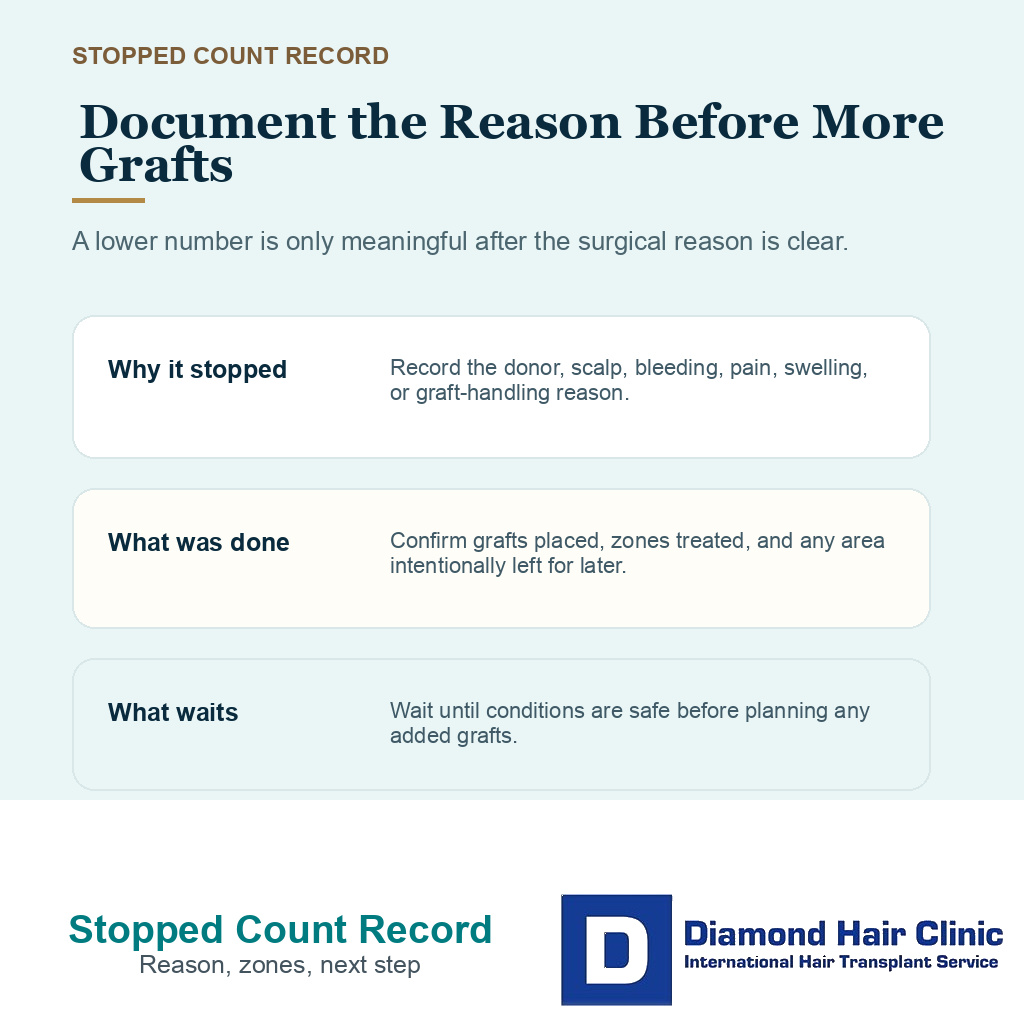
It is reasonable to ask for the reason. The final graft count, treated zones, untreated zones, follow-up plan, and reason for the change should be documented clearly enough that another surgeon could understand the logic later.
The decision is what protects the result
When the number changes, I move the discussion away from payment math and toward result protection. The patient needs to know whether the responsible option is to pause, reduce, split, or stop.
Graft count decision planner
Pause, reduce, split, or stop
Reassess before more grafts are added
The issue may settle, but the team needs a fresh look at visibility, bleeding, swelling, pain control, fatigue, or graft handling before continuing.
Clarify What changed during the operation, and what must improve before more grafts are placed?
Write down Reason for the pause, grafts already placed, zones covered, symptoms watched, and the review plan.
The decision may be a pause, a lower count, a staged second plan, or a clean stop. None of those should be hidden behind vague language. If the team says the scalp was reactive, the patient needs to know what that means in practice. If the team says donor quality changed the plan, the patient needs to know whether future reserve is still protected. Aftercare should match the areas actually treated, not the larger map that was planned before the stop.
Chasing the number can wait until the scalp is ready
Patients often ask whether the remaining grafts should be added very soon. Sometimes staged work can be reasonable, but the timing has to be case-specific. The scalp, donor area, swelling, bleeding pattern, graft placement quality, anesthesia exposure, and patient recovery all matter. A few days cannot be judged safely from the outside.
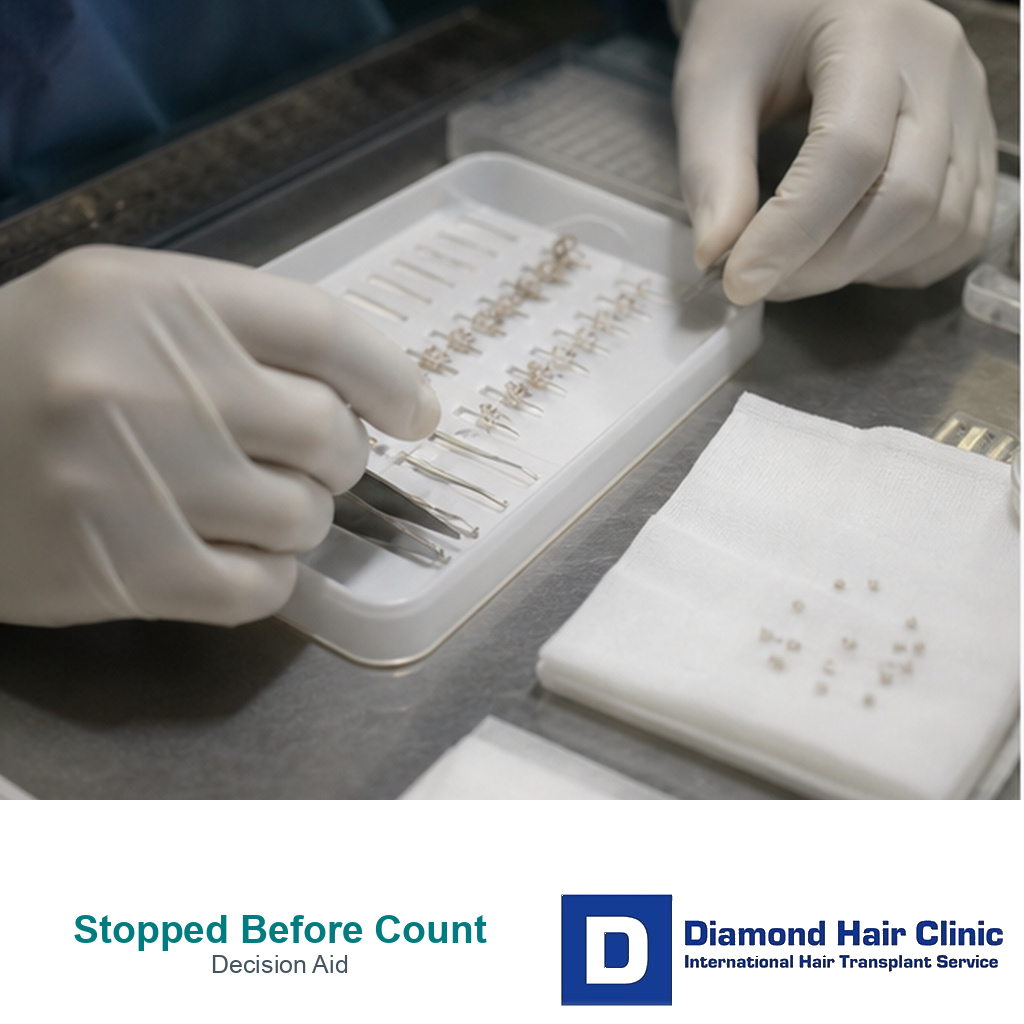
Grafts are living tissue. They need gentle handling, hydration, suitable holding conditions, and efficient implantation. Recipient skin also has limits. If the team keeps adding grafts only to satisfy a number, too many grafts can become a planning mistake rather than a better result.
Very large targets also depend on donor safety and team capacity. 5,000 graft FUE planning and 7,000 grafts over two days both depend on donor safety, team discipline, and realistic coverage priorities. The largest possible number is not the same as the best possible plan.
Documentation comes before any added session
Before any added session, I want four things written down. First, the grafts already placed and the zones treated. Second, the reason the original plan stopped. Third, the remaining area and why it still needs grafts. Fourth, the safety condition that must be met before more work is done.
Graft count verification is not only about a final total. It has to connect the count to the plan. The patient needs to understand the difference between planned grafts, extracted grafts, prepared grafts, implanted grafts, and the number that was not placed because the plan changed. If the plan changes during surgery, I want the team to explain what changed and which safe options exist before continuing with any work that can wait.
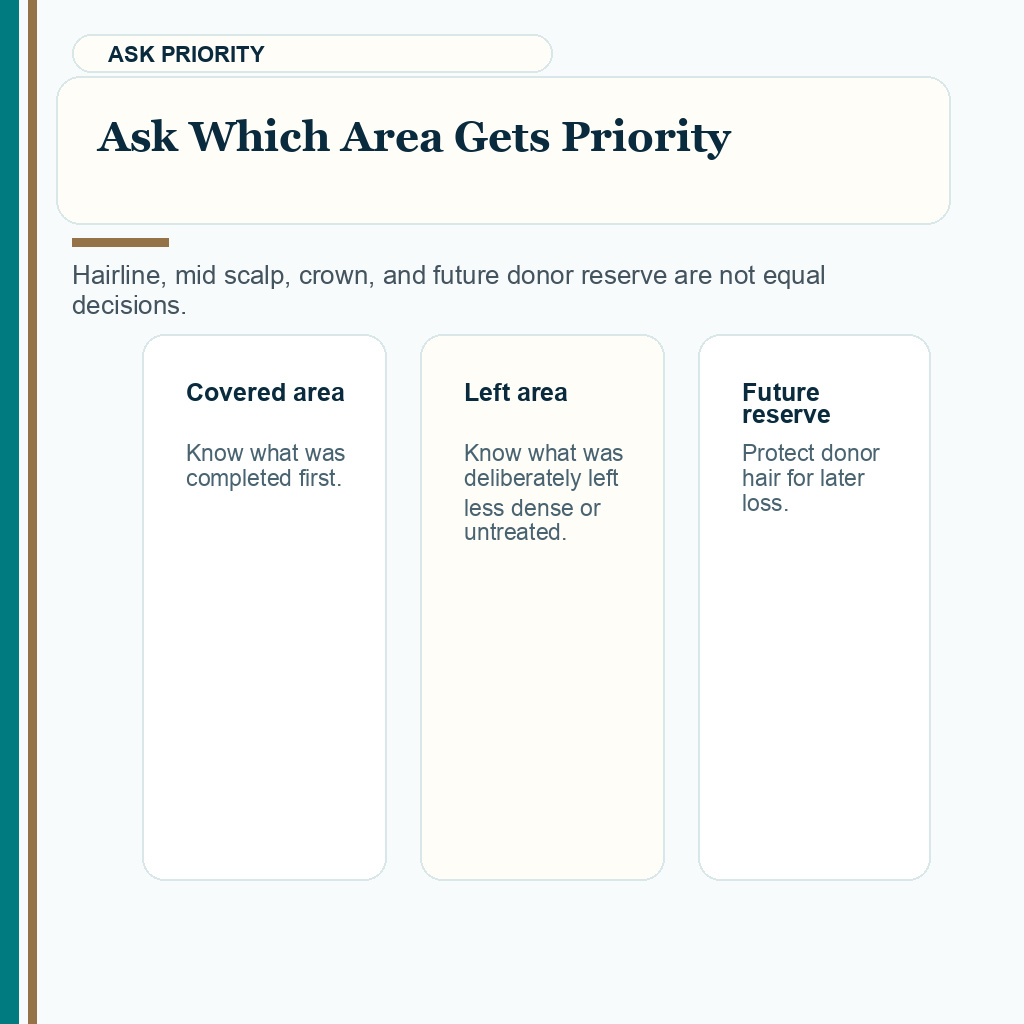
The documentation should also say what changed in expectation. If the hairline is complete but the crown is delayed, that is one expectation. If the midscalp received fewer grafts because donor safety became more important, that is another. If the original number was simply too aggressive, the patient deserves to hear that directly.
The donor plan may change after a lower count
The donor area is finite. If a case stops below the planned count because donor quality, donor density, extraction pattern, or future reserve becomes concerning, stopping can protect later choices. A weak donor and high graft quote conflict should never be solved by pushing the donor harder just because a target was written earlier.
Sometimes a lower count preserves lifetime graft planning. That can feel disappointing on the day of surgery, especially when the patient expected a dramatic transformation. But spending too many grafts in one area can make later loss harder to manage. A result has to be judged across years, not only by whether a package number was reached.
If the donor is still strong and the scalp becomes calmer, a later stage may be reasonable. If the donor warning is real, the later stage may be smaller or not recommended. The right answer comes from donor measurement and surgical review, not from the emotional pressure of an unfinished number.
Warning signs override the graft count
After a stopped or reduced session, the patient needs to know which symptoms are routine and which symptoms need quick contact. Contact the surgical team quickly for severe or worsening pain, uncontrolled bleeding, spreading redness or heat, pus or foul drainage, fever or chills, dark or worsening skin changes, wound opening, sudden swelling that is getting worse, or any symptom that feels unexpected for the plan you were given.
Medicines and scalp treatments should not be started or changed at home because advice outside the surgical team sounded convincing. If another doctor prescribed a blood thinner or pain medicine, involve that prescriber and the surgical team before changing it. The team that treated the scalp needs photos, timing, symptoms, and the operation notes. If symptoms feel urgent or systemic, seek local medical care rather than waiting for routine follow-up.
The important point is not to panic about every scab or every area that looks thin early. The important point is to have a clear aftercare route, a direct clinic contact plan, and written warning signs after the operation changes.
The record matters when the count changes
If a session stops below the planned graft count, the next conversation should be factual. Ask what changed in the scalp or donor area, what was completed, what was left untouched, and whether the reason affects healing or a later session.
The number itself is not the whole result. A smaller session can be the right call when pushing further would strain graft handling, spend donor hair poorly, or make recovery less predictable.
Promised, harvested, viable, and placed grafts belong in separate parts of the record. These numbers can differ for legitimate reasons, but the package number alone is too thin a record after a session ends lower than expected.
Clear explanation matters more than chasing a target. Leave with the reason, the photos, the aftercare plan, and a sensible path for review.
If the session ends lower than the package number
| Write down | What it clarifies |
|---|---|
| Original planned range | Whether the number was a fixed promise or a flexible surgical estimate |
| Final placed count | What was actually used in the recipient area |
| Reason for stopping lower | Whether the change protected donor safety, graft handling, or tissue capacity |
| Untreated area | Which zone still needs review before any later session |
| Follow-up timing | When healing and growth should be reviewed before more grafts are planned |
This record also protects the next conversation if the same case later becomes a surgery day graft number change question.

Read this review excerpt
We also had a levelled conversation about my hairline and results I could expect based on my donor density area.