


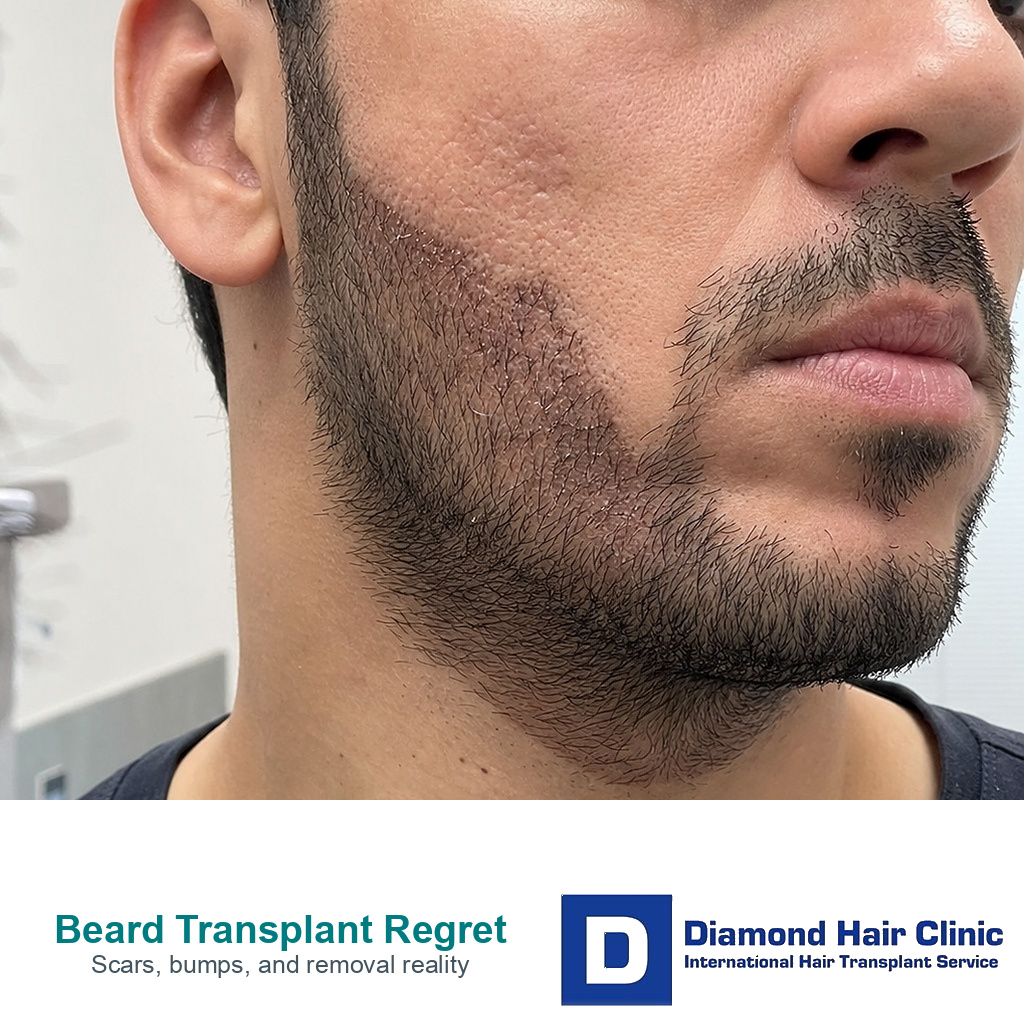
Beard Transplant Regret and Repair Limits
Beard transplant regret can sometimes be improved, but it is rarely a simple undo. The first question is what caused the regret. It may be unwanted hair, poor angle, an artificial border, too much density, raised skin, scar tissue, or a decision that never should have been made. Each problem needs a different answer, and some problems can only be softened rather than erased.
If you are considering the operation, keep the plan conservative. When a beard transplant already feels regrettable, slow down before another aggressive procedure and review the skin, direction, and density first. The first step is to diagnose the skin surface, hair angle, density, border design, and scar pattern. A repair plan should explain what can realistically improve, what may remain visible, and what could become worse if the wrong tool is used.
Look at the beard both clean shaven and with short stubble before deciding what failed. Redness, surface bumps, hair angle, and an abrupt border may look like one problem in close photos, but each points to a different repair conversation.
Before repair, separate what people can see from what you can feel with your fingers. Visible border problems, raised texture, and painful active bumps belong to different repair conversations.
Beard transplant regret feels different from scalp regret
The face gives less cover than the scalp. A small texture issue on the scalp may be hidden by longer hair, styling, lighting, or surrounding native hair. On the cheek, jawline, upper lip, or chin, the skin surface is seen during shaving, talking, smiling, and close social contact.
I approach a beard transplant differently from a standard scalp hair transplant. The question is not only whether hair can be moved. The question is whether the face will still look natural when the beard is grown out, trimmed short, or shaved close.
A clean shave is the hardest test for a beard transplant. A result that blends when the beard is grown out can still look obvious if graft angles, raised texture, or border density are visible after shaving. If close shaving matters to you, bring that up before density or graft count becomes the main focus.
Many regret stories begin with a wish for a sharper beard outline, denser cheeks, or a more masculine shape. The disappointing result is often not only about poor growth. The problem may be wrong density, wrong border, wrong angle, thickened skin, or a design that looks drawn onto the face instead of belonging there.
Beard transplant can be reasonable
A beard transplant can be reasonable when the goal is limited, the existing beard pattern gives a natural guide, the skin is settled, and the person accepts that a conservative result is safer than a dramatic redesign. Small patch repair inside the natural beard footprint is very different from building a new cheek line from almost nothing.
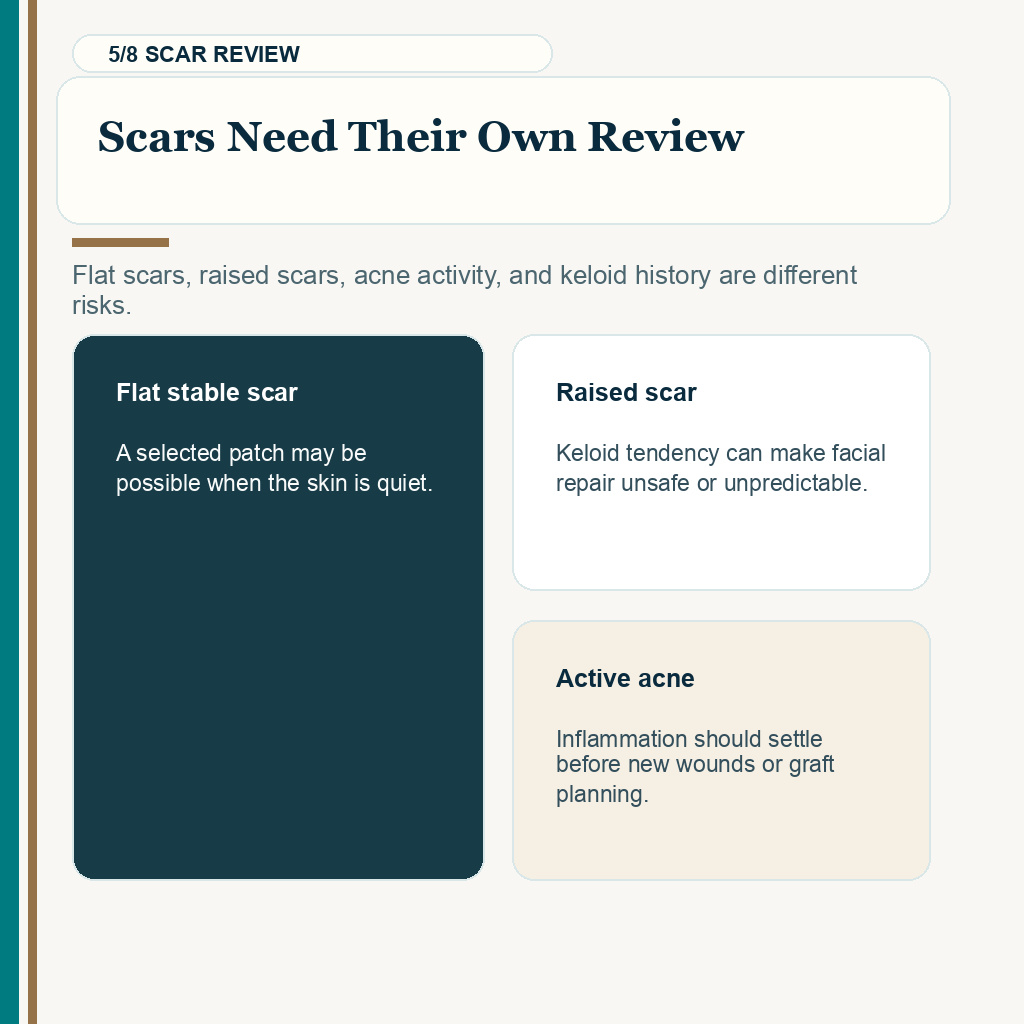
Scar cases need an even more careful review. A small stable patch from acne, trauma, or a previous wound may be a stronger candidate than active acne, inflamed skin, keloid tendency, or changing facial hair expectations. In beard transplant for acne scars and patchy growth, scar tissue and skin activity must be checked before surgery.
Age and motivation matter too. A young man who dislikes a naturally sparse beard may feel urgency now, but the face changes, style preferences change, and shaving habits change. Facial hair surgery should solve a stable problem, not a temporary insecurity.
Bumps and cobblestoning are harder to hide on the face
Men often describe bumps, ridging, cobblestoning, thick skin, or a rough surface after a poor beard transplant. These terms are not always used precisely, but the concern is real because the skin no longer feels or looks flat. The problem becomes more visible when the beard is shaved short or when light hits the cheek from the side.
Hair transplantation can create recipient area complications such as folliculitis, pitting, raised texture, poor direction, or visible scarring when planning and technique are weak. On the scalp, a bumpy hairline after hair transplant can create similar worries. On the face, the same surface issue can feel more personal because it cannot be hidden easily.
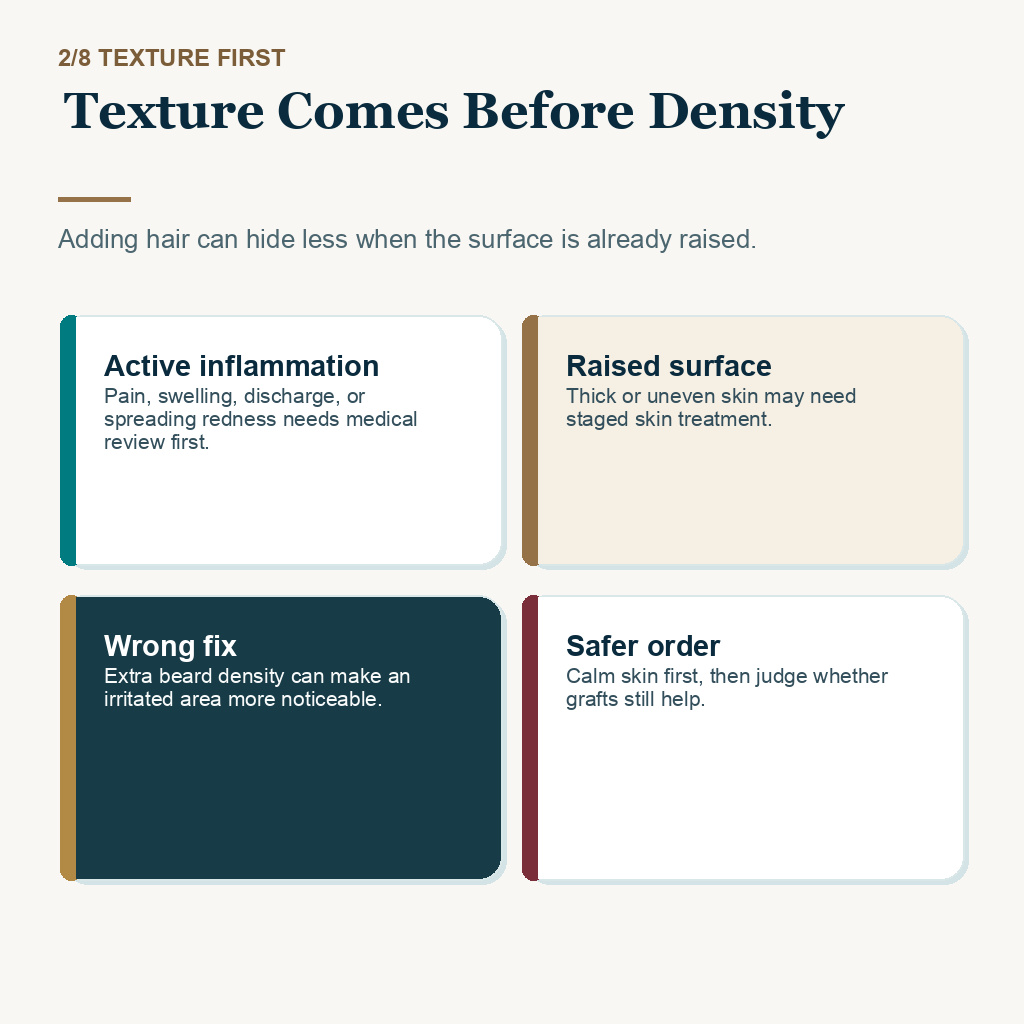
Bumps can come from different causes. Some are inflammatory and may improve with medical treatment. Some are related to graft placement depth, dense implantation, scar response, or skin remodeling. A mirror photograph cannot always separate these. Treatment depends on the cause of the texture. The diagnosis matters before laser, extraction, steroid injection, resurfacing, or another repair is considered.

Facial surface problems are judged by skin texture, graft angle, border design, and close shave visibility.
Causes of artificial beard transplant results
The most artificial beard transplants fail at the border and direction. A straight cheek line, rounded upper beard edge, dense block under the lower lip, or identical spacing can look like makeup, tattooing, or a pattern rather than natural facial hair.
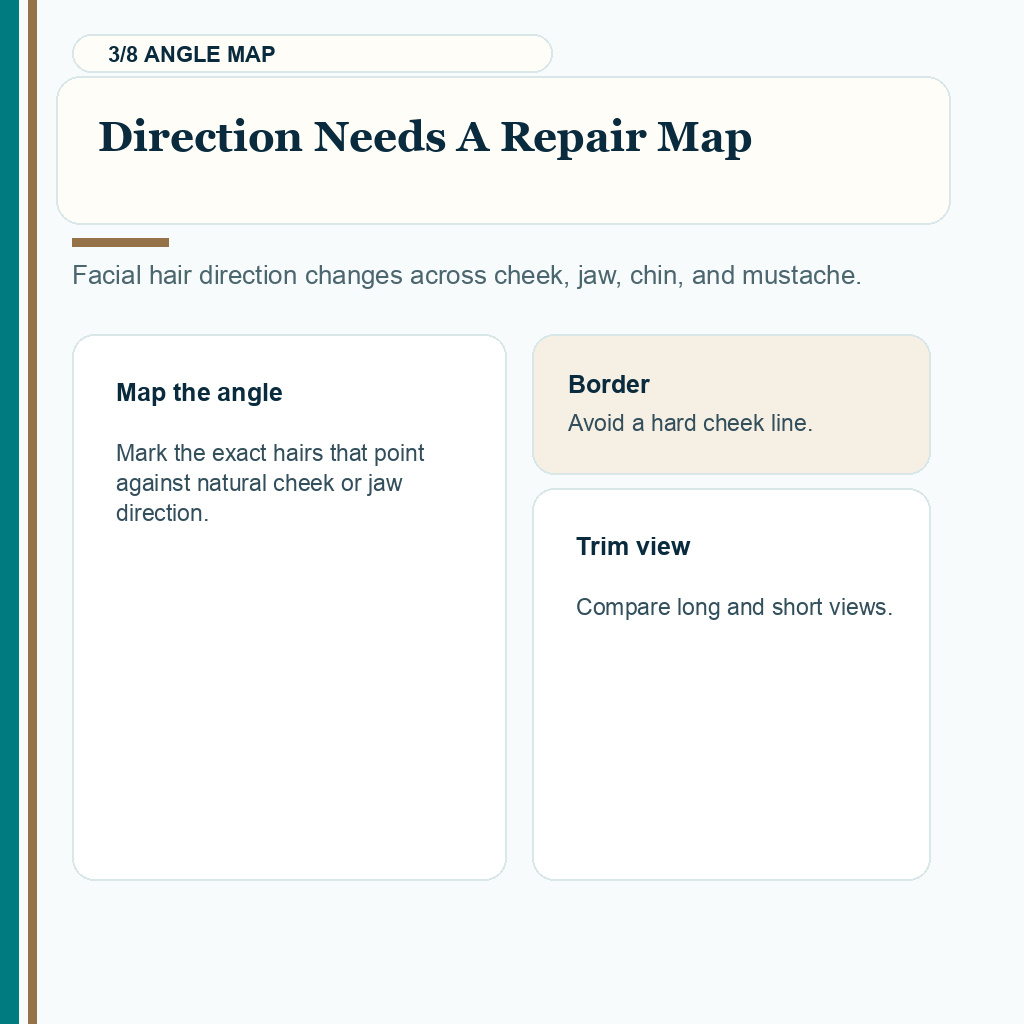
Natural beard hair does not grow like a flat carpet. The angle changes across the cheek, jaw, chin, and mustache area. The density also changes. Some areas should remain softer. A beard that is too perfectly outlined can look more surgical than masculine.
Sideburn work creates a transition between scalp hair, the area in front of the ear, and the beard. Before planning a repair, compare both sides and decide whether the problem affects the whole sideburn or a smaller zone of width, density, or direction. That distinction should be clear before any removal method is chosen.
The upper lip needs careful planning too. In mustache hair transplant planning, direction and density matter more than simply filling every empty space. A mustache or beard can become unnatural when the surgeon ignores how facial hair lies against the skin.
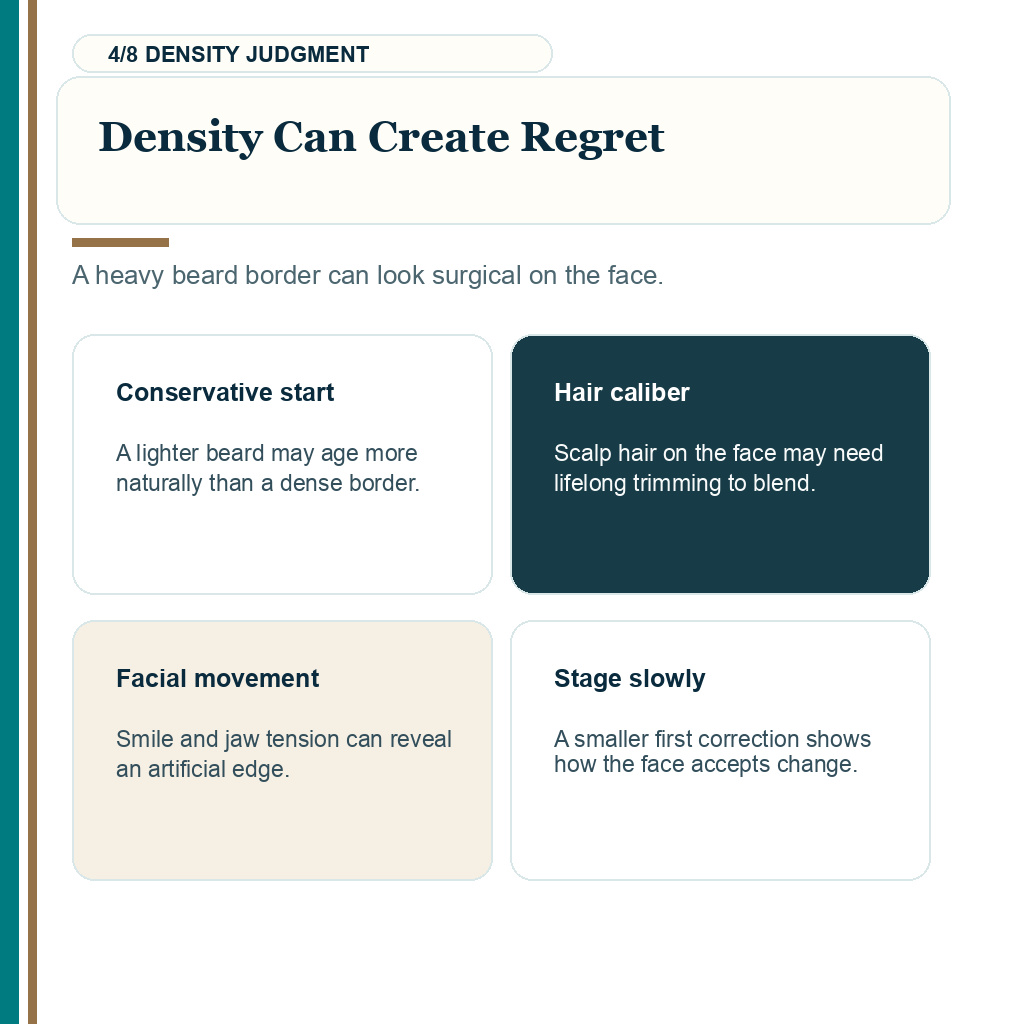
Donor hair behavior also matters on the face. Scalp hairs used for beard work may grow longer and need more trimming than native beard hairs. Mixed grafts with several hairs near the cheek border, lower lip, or mustache can look coarse because the face needs fine spacing and very controlled direction.
Checks before treating a scar or patchy jawline
A small scar or patchy jawline area may sound like an easy target, but facial scar tissue deserves a separate examination. I check whether the scar is flat or raised, whether the skin is still active, whether acne or folliculitis is present, whether there is a history of thick scars, and whether the surrounding beard gives enough direction for natural placement.
Hair transplant into scar tissue needs careful case-by-case planning. Scar tissue can accept grafts in selected cases, but blood supply, depth, stiffness, and skin quality vary. The face adds another layer because even a small surface irregularity can be visible.
If there is keloid history, hypertrophic scarring, or raised scars after acne or piercing, the plan should slow down. Hair transplant and keloid scars need this caution because the best cosmetic result is not created by ignoring the healing pattern.
Graft limits for the face
There is no responsible universal number because face size, existing beard pattern, hair caliber, skin type, scar tissue, and desired style all matter. For facial work, staged planning is often safer. A smaller first session can show how the skin heals and how the hair direction looks before the face is filled too aggressively.
High graft numbers can sound impressive in marketing, but on the face they can create a new problem, which is a dense edge that cannot be softened easily. More grafts are not always more natural. In beard surgery, the design must respect the natural border and your shaving habits.
The face should not be used as a place for experimental density. If someone wants a full beard from very sparse growth, the answer may be no, or at least not in one aggressive operation. A light but natural beard is easier to live with than a dense border that looks planted every time it is trimmed.
Difficulty of beard transplant removal or repair
Removing transplanted beard hair is not the same as undoing a drawing. Options may include laser hair removal, electrolysis, graft extraction, skin resurfacing, medical treatment for inflammation, or staged camouflage. Each option has limits. Removing hair may not remove raised skin. Flattening skin may not remove every hair. Extraction can create new marks.
Repair planning must identify the main problem first. Is the density too high? Is the angle wrong? Is the border too sharp? Is the skin raised? Is the scar visible? Or does the whole decision feel emotionally wrong even if the technical result is not extreme? Each answer leads to a different repair path.
Repair should not start with the most aggressive tool. Laser, electrolysis, extraction, resurfacing, steroid treatment, and camouflage each solve different problems. Active inflammation is different from a healed scar, buried graft, wrong hair angle, or excessive density.
Bad hair transplant repair and pluggy hairline transplant repair follow one repair rule. Repair is harder than careful first surgery. On the face, that lesson is even stronger because texture and direction are visible at conversation distance.

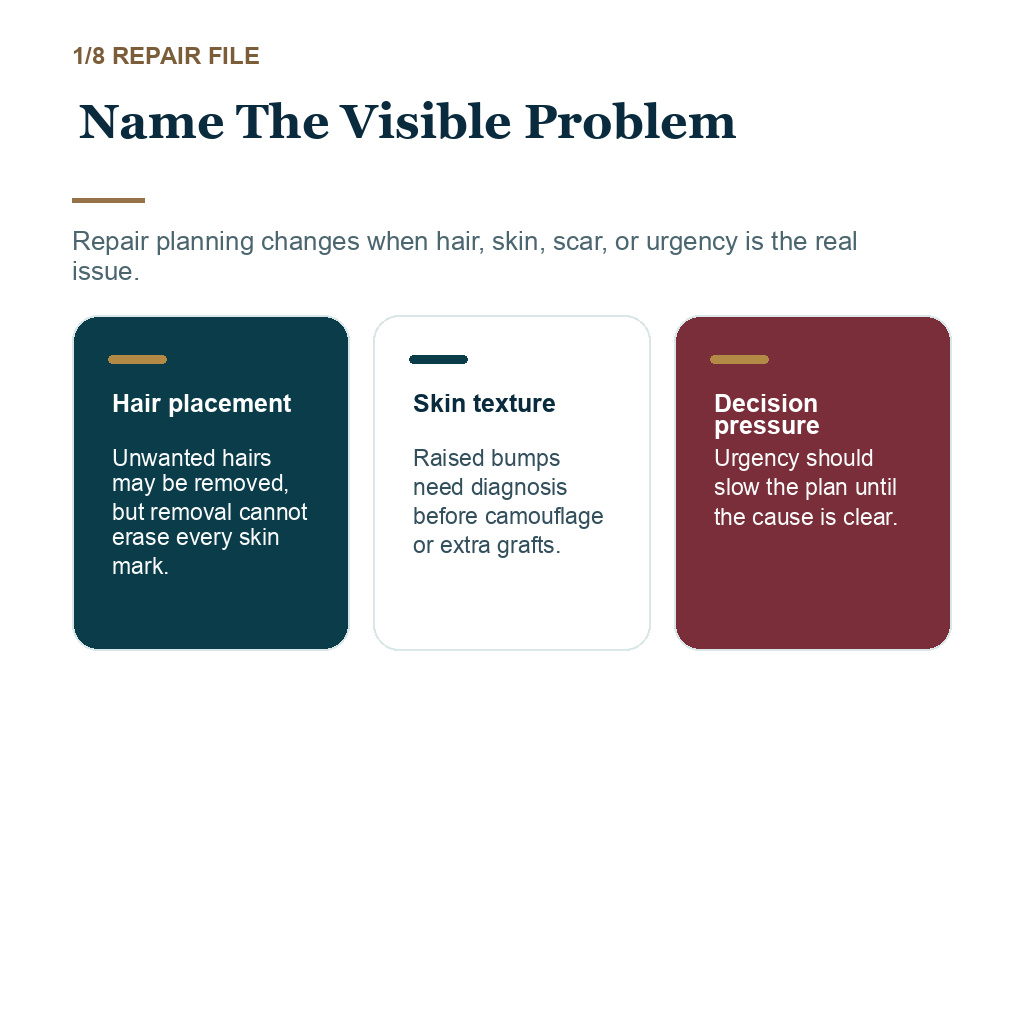
Beard transplant repair should first identify whether the main problem is unwanted hair, skin texture, timing, or design.
Judging a clinic before facial hair surgery
Before facial hair surgery, beard design, recipient openings, graft extraction, graft placement, and responsibility for an unnatural result should all be named. A sales package is not enough. You need a named medical plan and clear surgeon responsibility.
Surgeon involvement in hair transplant surgery matters here because facial hair surgery requires angle control, conservative density, scar judgment, and clear refusal when the request is unsafe. If the clinic cannot explain those details before payment, that is not a small communication problem.
Be careful with urgency, discounts, limited slots, and package upgrades. Facial work should not be sold under pressure because hair transplant booking pressure can silence the most important questions before you have had time to think.
Reading beard result photos
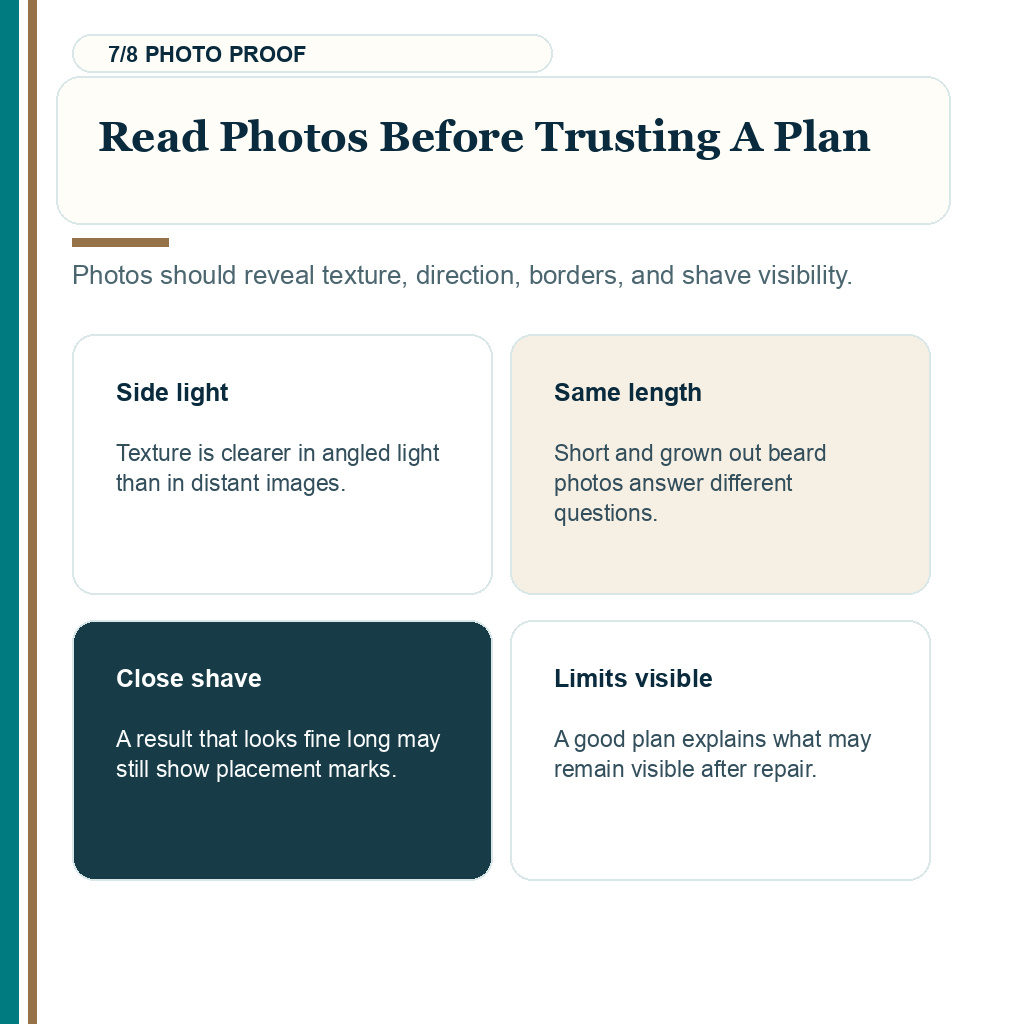
Beard transplant photos can be misleading when the beard is grown longer, photographed in soft light, or shown only from flattering angles. A full beard can hide surface texture. A close shave reveals it. Ask for different lengths, different lighting, and close views of the cheek line, under lip area, chin, and jaw.
A close shave view is the stress test. If a result only looks good with longer hair covering the skin, it may not answer the question that causes most regret, which is how the cheek and jawline look when you trim short or shave around the transplanted hairs.
Also ask whether the result is one session or several, whether there was existing facial hair, and whether any repair or laser work was done later. A photo without context can make an aggressive plan look safer than it is.
How to judge hair transplant before and after photos matters even more with beard work. Add one more rule. Always imagine the same result shaved short.

A safer beard transplant decision checks the natural footprint, skin status, surgeon role, and conservative density.
If you already have bumps, thick skin, or regret after surgery
If you already regret a beard transplant, take clear photos in natural light, side light, and close shave if you normally shave. Record the surgery date, graft number, donor area, whether the implanted hairs were singles or mixed grafts, when the texture appeared, and what treatments you have already tried.
For an operation done abroad, keep the record file separate from the wish to undo it. Save the consent form, graft count, written aftercare, surgeon or clinic role details, payment record, and follow-up messages before laser, extraction, or another beard procedure is started. That file helps a repair doctor separate a medical complication from a design problem.
Do not repeatedly scrub, pick, squeeze, abrade, or treat the area on your own with strong acids or steroid creams without medical review. Facial skin can become more irritated, discolored, or scarred. If there is pain, spreading redness, discharge, fever, or worsening swelling, the issue is medical before it is cosmetic.
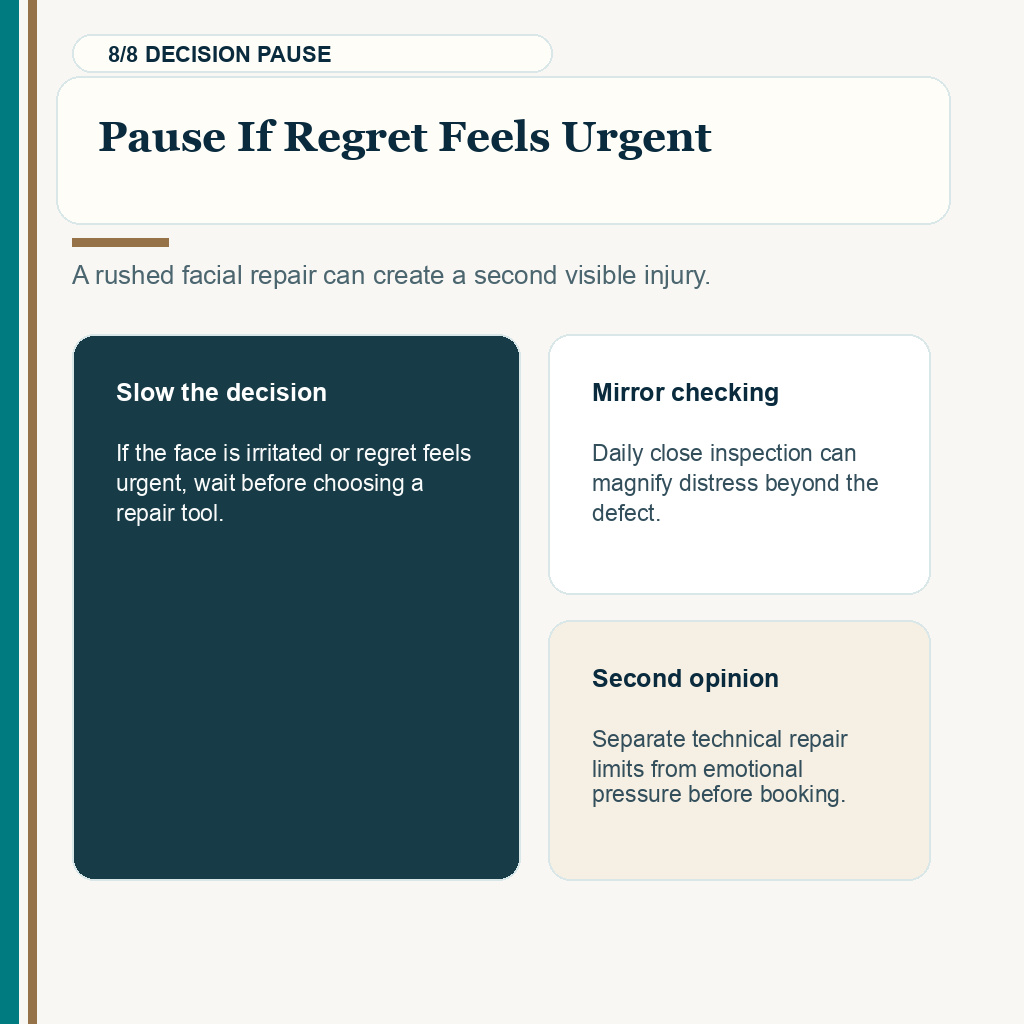
If the concern is stable texture or design, seek a careful repair opinion. The review may involve dermatology, laser expertise, electrolysis, or hair transplant repair experience. It may also involve waiting until the tissue has matured enough to judge. A fast emotional repair decision can create a second injury.
Use the 8 beard repair limit slides below to separate unwanted hair, raised texture, wrong direction, facial density, scar behavior, removal tools, photo proof, and emotional timing before any repair decision. Swipe the carousel, use the arrows one step at a time, or choose a number below the image to jump to that point.

Emotional pressure and the decision
Facial hair is tied to identity, masculinity, age, self image, and social comparison. That emotional weight can make a risky plan feel urgent. It can also make a technically small imperfection feel unbearable after surgery.
If the beard concern causes obsessive mirror checking, repeated photo comparison, social withdrawal, or a feeling that life cannot continue without a specific beard shape, surgery needs to pause. Body dysmorphia and hair transplant decisions matter here because surgery cannot safely carry the full weight of self worth.
I am not saying every unhappy man after beard surgery has a psychological condition. I am saying the emotional frame must be checked before a permanent facial change. A conservative no can be more protective than an operation that creates a new visible problem.
A beard transplant changes skin that is hard to hide
Beard surgery deserves more restraint than a drawing on the face. The donor choice, angle, density, border, scar risk, and how the beard looks when shaved short all matter.
A small stable patch inside an existing beard pattern is different from building a new facial identity because pressure or comparison feels urgent. If close shave examples are missing, if bumps or thick skin are already present, or if the design depends on aggressive density, slowing down is the wiser move.
Regret after facial hair surgery is not a minor inconvenience. The aim is to protect skin texture, natural beard borders, emotional stability, and the option to walk away before the face is permanently changed.

Read this review excerpt
told me the quality of my donor hair and what he could take out and advised me what will the be best outcome with what donor hair I had.