
Lighting can create a false failure verdict
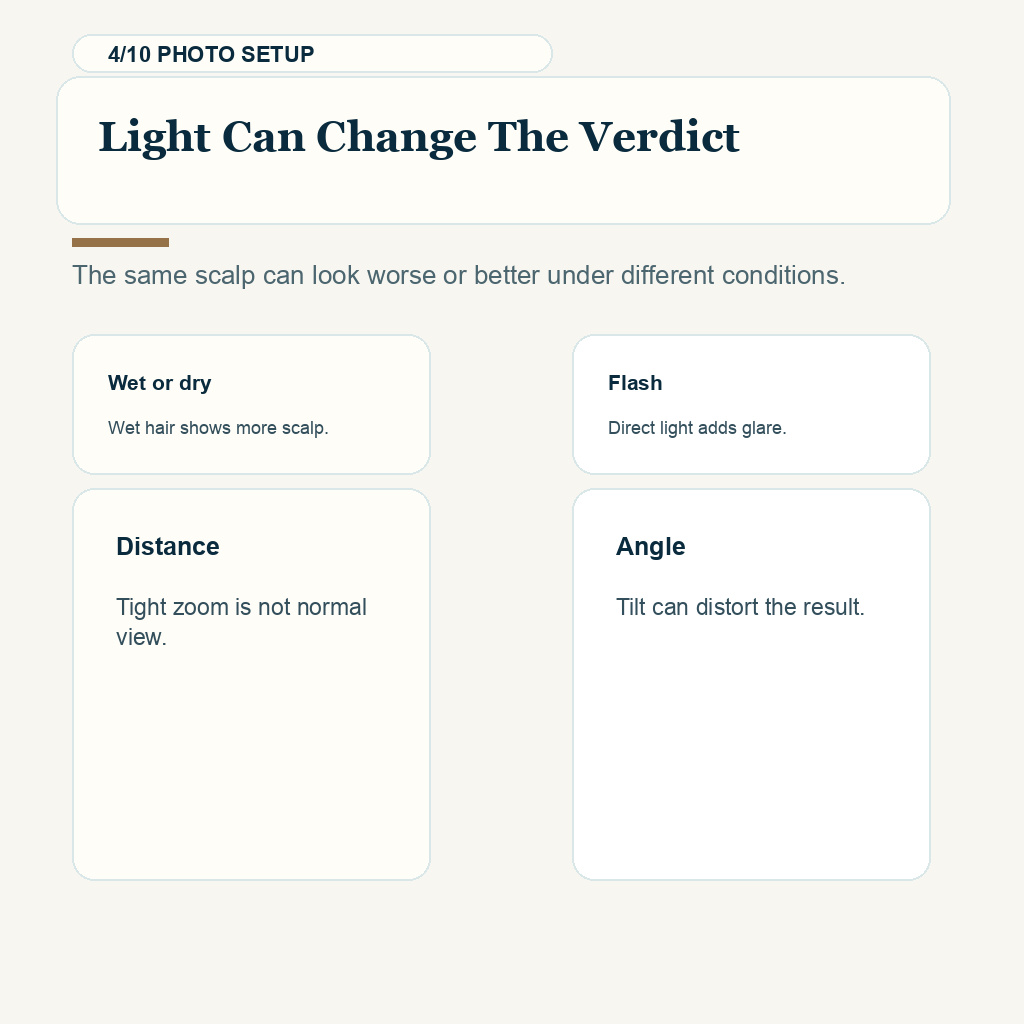
Harsh bathroom light, flash, wet hair, oily hair, very short hair, and extreme zoom can all exaggerate the scalp. Soft window light, dry hair, longer length, and a front view from normal distance can make the same area look better. Neither photo is false by itself. Each one answers a different question. A harsh photo can be useful for documenting a worry, but it should not be used as the only verdict on final density.
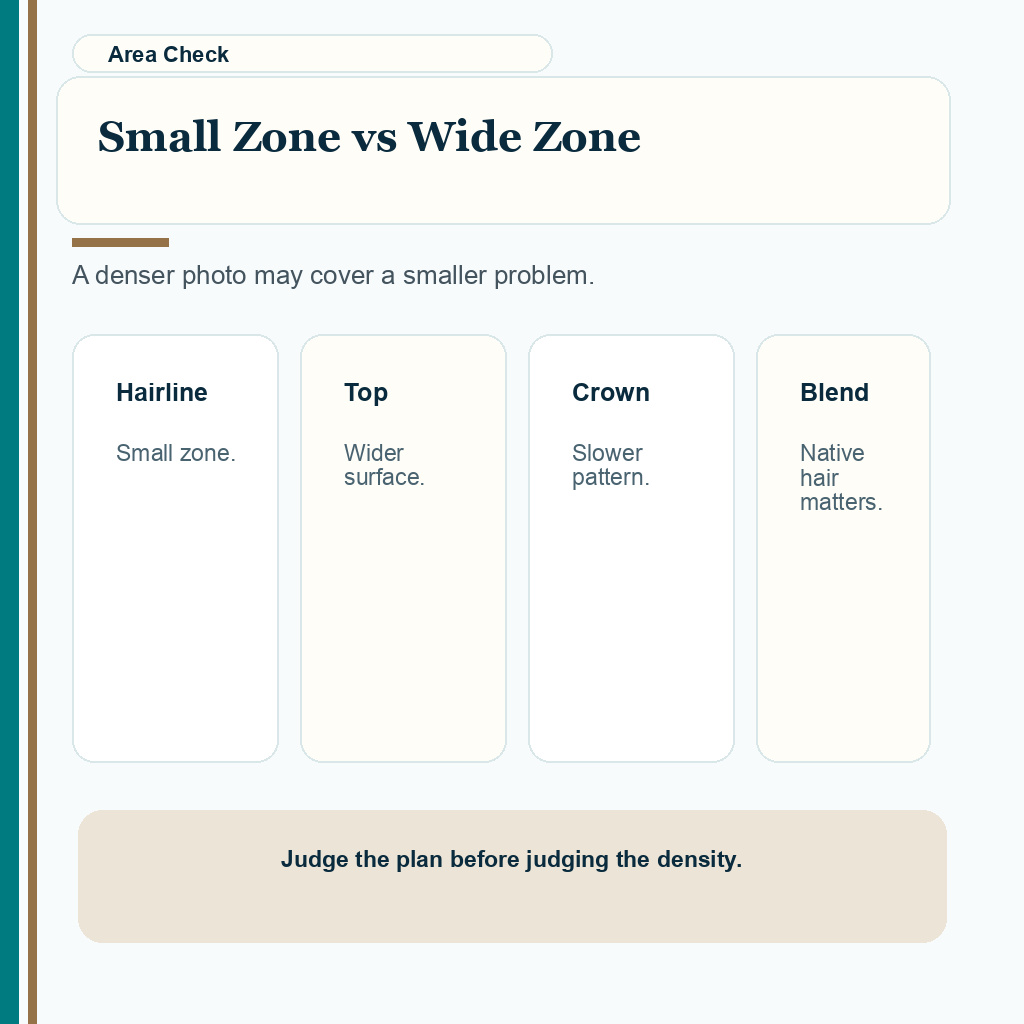
The mistake is mixing the conditions. If your photo is wet under direct light and the comparison photo is dry in softer light, you are not comparing two results. You are comparing two lighting setups. The same problem happens when one photo shows only a tight gap and the other shows a full face result from a flattering distance.
Open the original image file at its highest available resolution before judging a small pattern from a thumbnail or reposted screenshot. Look once at normal viewing size, then inspect the same area more closely. Normal size shows whether the concern is visible in an ordinary view, while the closer look can reveal detail the small preview hid. If the concern appears only after heavy zoom, the image is too weak for a confident conclusion.
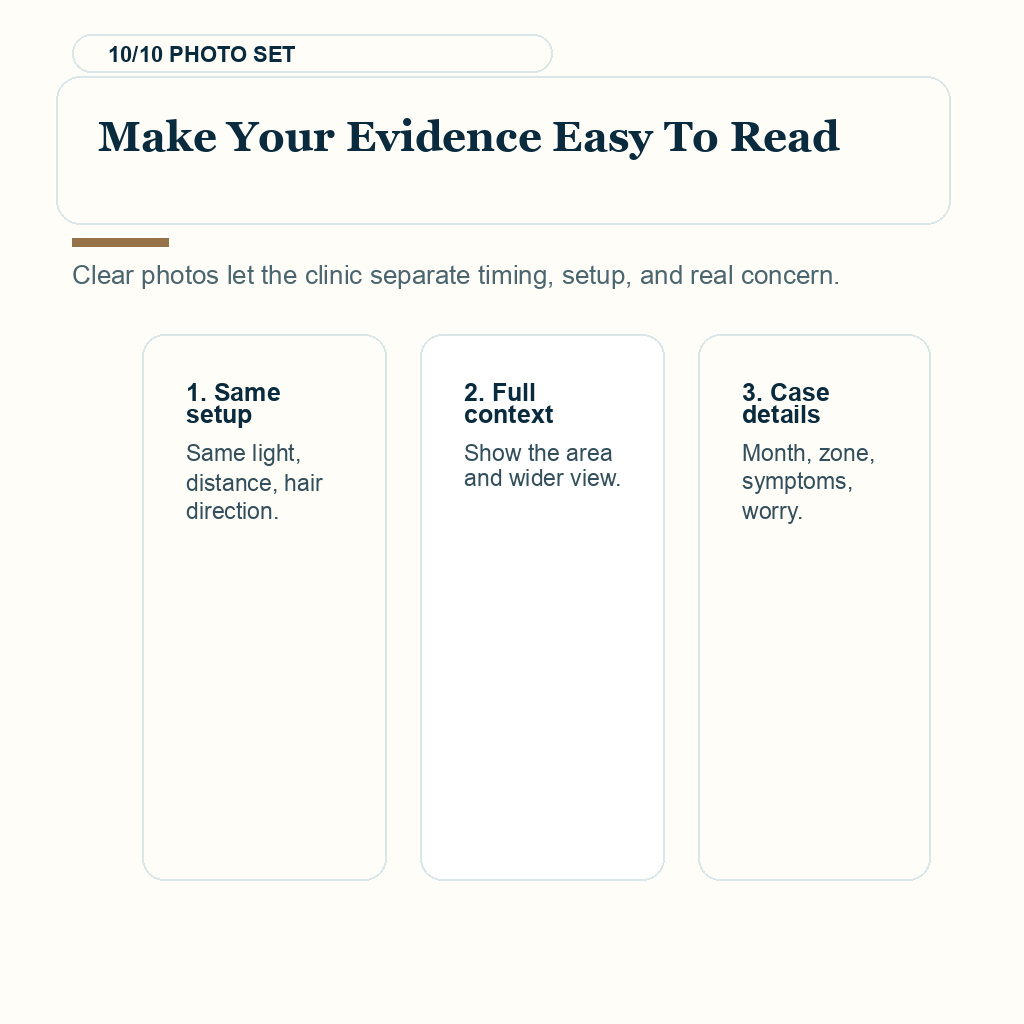
Progress photos also need a sequence that makes sense. A no shave case, a changed haircut, wet hair, or a different parting line can make the order feel confusing. A fair comparison keeps the same angle, light, hair state, and treatment map.
Video can add useful context, but it does not make a comparison automatically fair. It still needs comparable light, distance, hair condition, and recovery stage, plus a sequence rather than one selected clip.
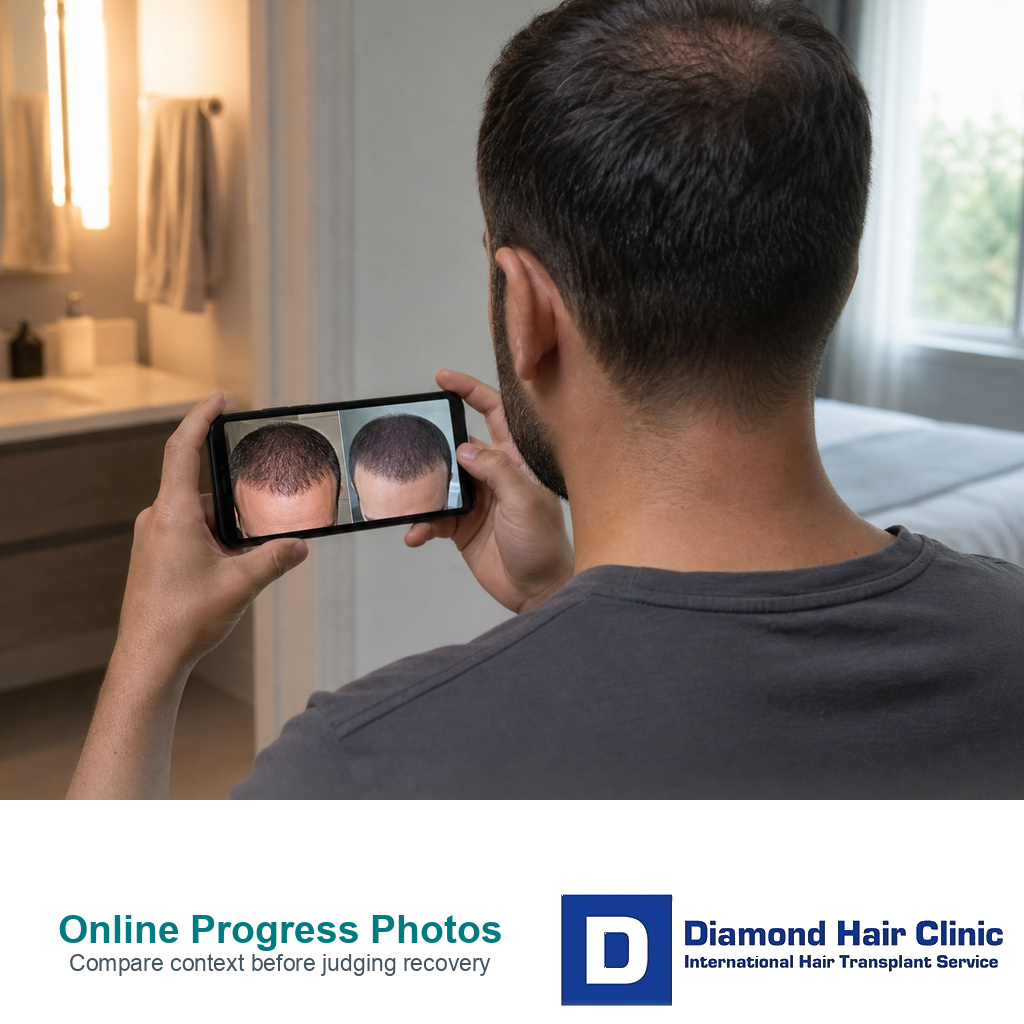
Before I give a dramatic case any weight, I also check whether the account belongs to the patient or the person sharing it has permission, and whether the original timeline can be traced. A reposted image without an attributable source or chronological record is weak evidence for choosing a clinic. Another problem is that online photos are not always raw comparisons. Some are taken after styling, with hair fibers, concealer, powder, filters, or editing. Some clinic galleries also show selected best case images rather than every ordinary recovery path. I do not use that kind of photo as a verdict unless I understand how it was taken and whether anything was used to make the scalp look darker or fuller.
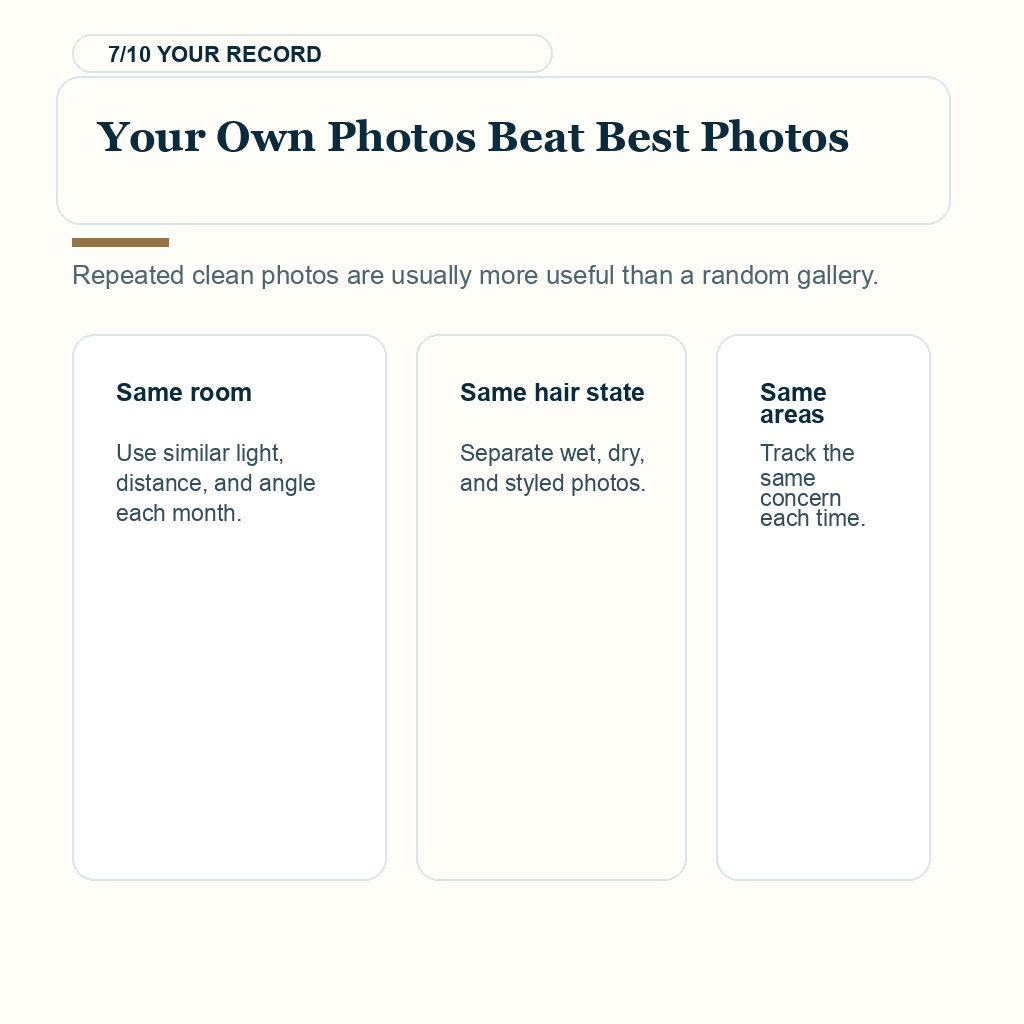
For your own tracking, consistency matters more than drama. Use the same room, same distance, same hair condition, and same angles when tracking hair transplant growth without panicking, so the trend becomes easier to read. That record is more useful than ten random comparisons.
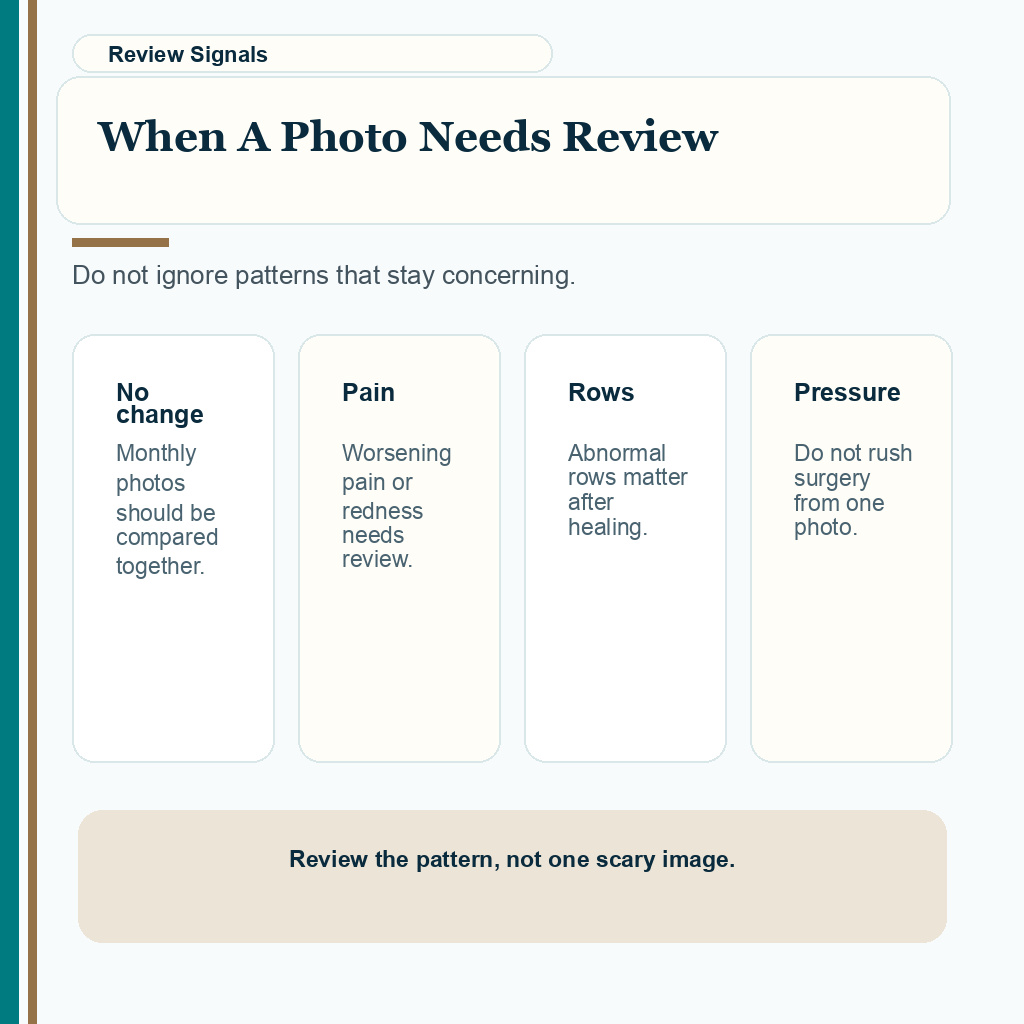
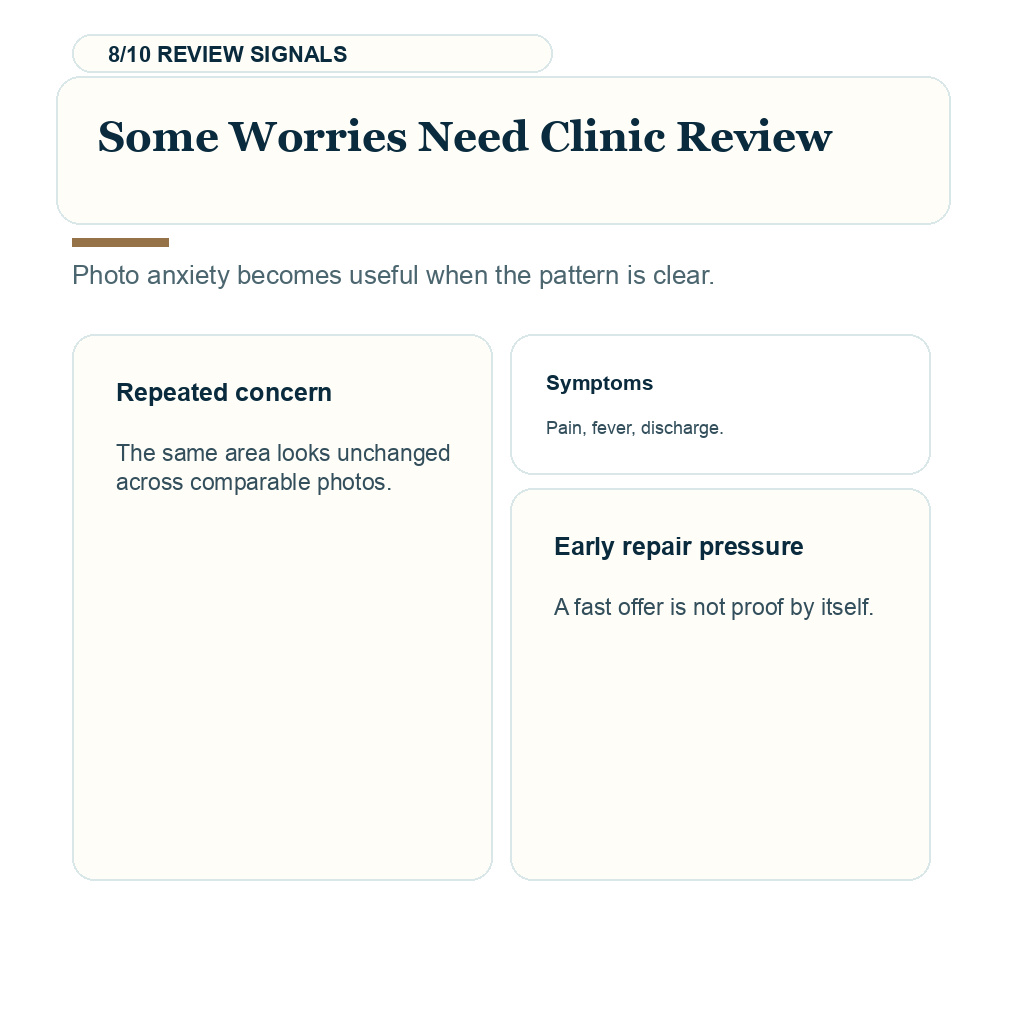
If the concern is only thinness under harsher light, first make the comparison fair. If there is worsening pain, spreading redness, discharge, fever, fresh bleeding, or swelling that is getting worse, stop comparing online photos and ask for medical review.
Online replies become risky when they turn one harsh photo into an early repair plan. I first check the camera conditions, symptoms, growth stage, treated zones, and donor reserve. Without that work, a touch up suggestion is pressure, not a surgical plan.
Lighting and wetness change the view
Soft light can make the scalp less noticeable. More direct overhead light can reveal it more clearly. When hair is wet, strands gather together and leave wider visible gaps between them. A photograph taken under one condition can therefore look very different from a photograph taken under another.
The illustration below shows these viewing conditions. It is generated, not a record of a patient’s scalp or a treatment result. Small details can vary between the panels, so it must not be used to count hairs or compare measured density.
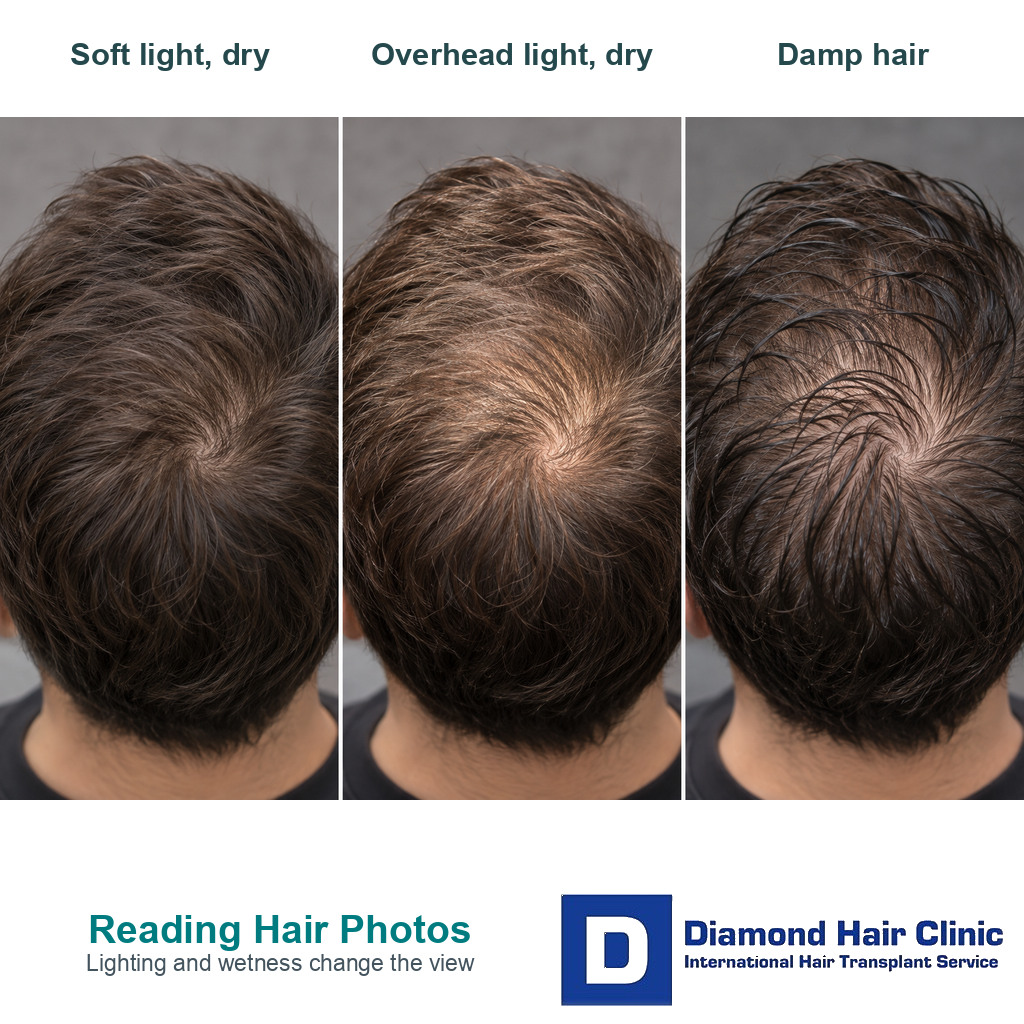
A fair progress comparison needs repeatable photographs. Keep the view, hair condition, lighting and camera distance as consistent as possible. If the concern remains under comparable conditions, the next review should use the patient’s own earlier photographs and operation record.
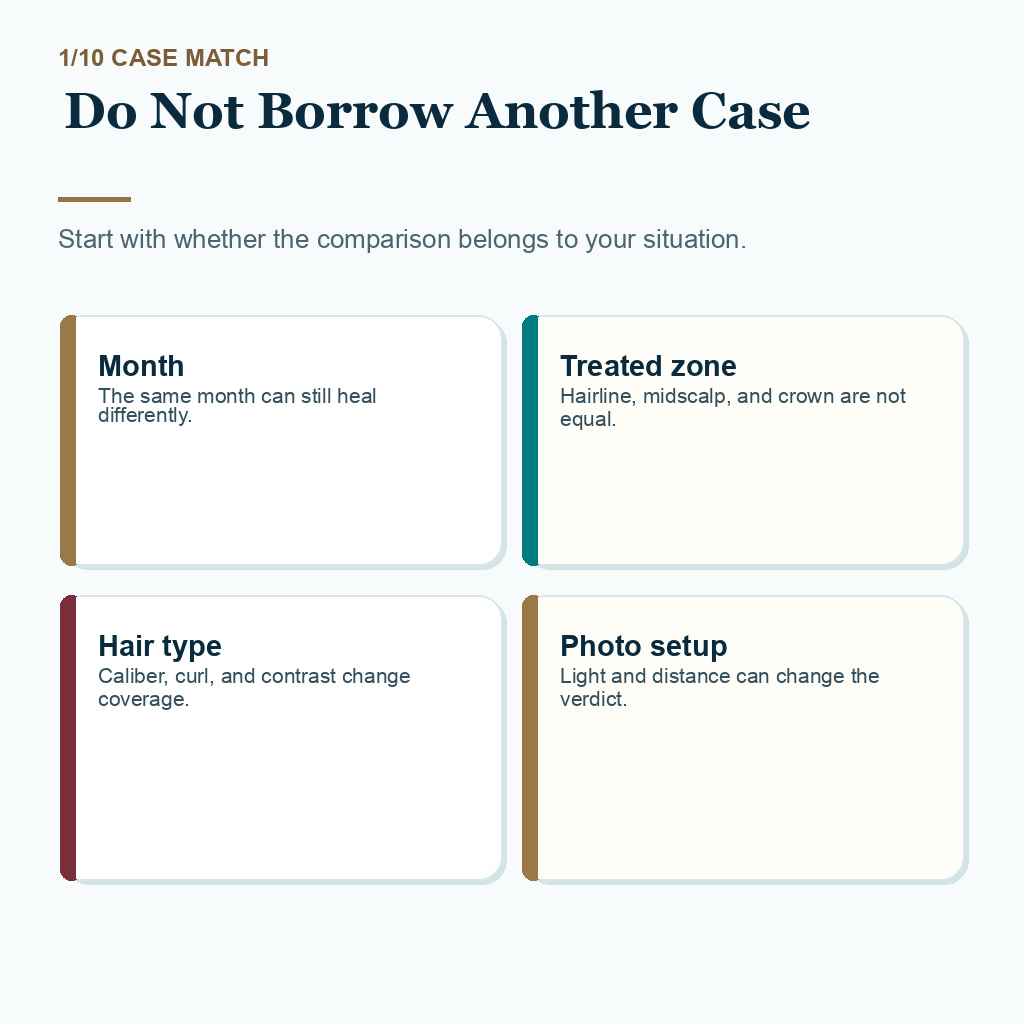
Comparison photo proof check
Before you let another photo decide your mood, run a short proof check. It will not diagnose the result, but it can tell you whether the comparison is strong enough to influence your thinking.
Use the photo to clarify the concern
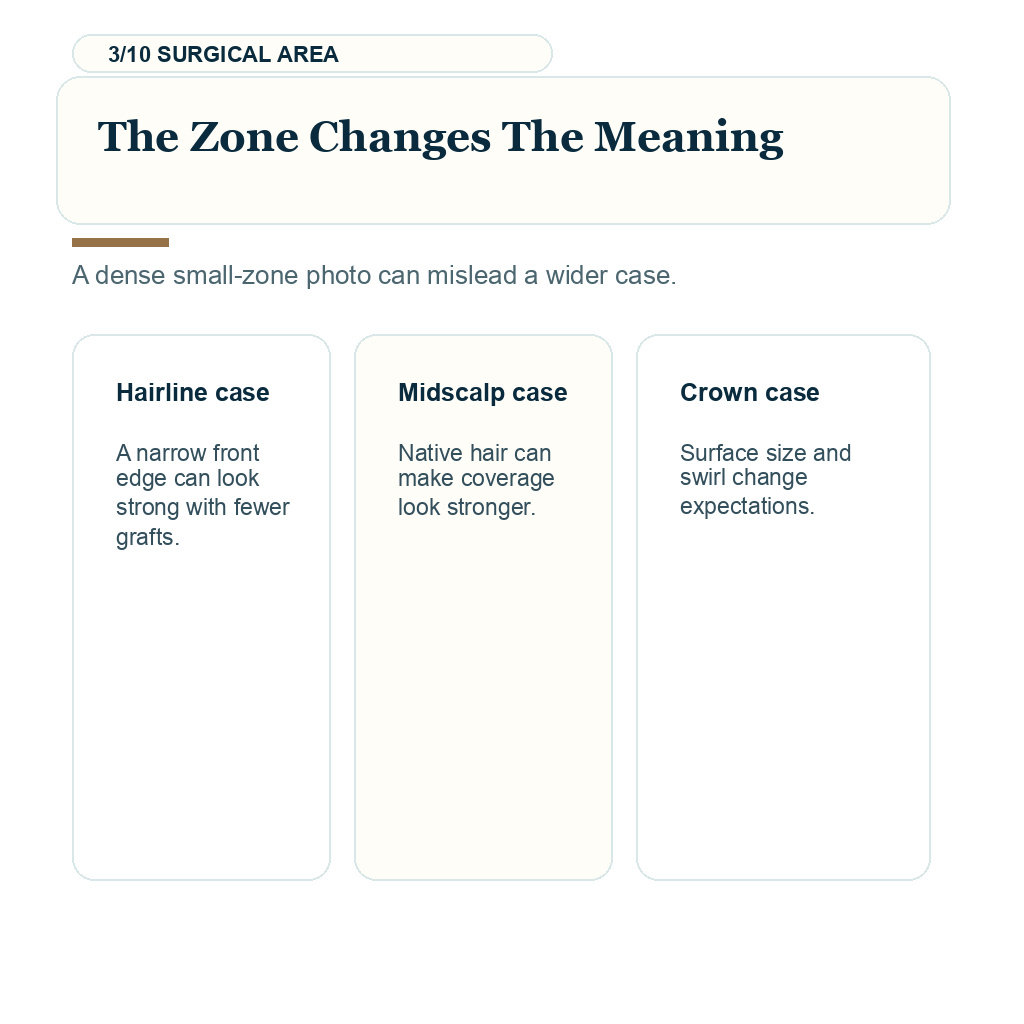
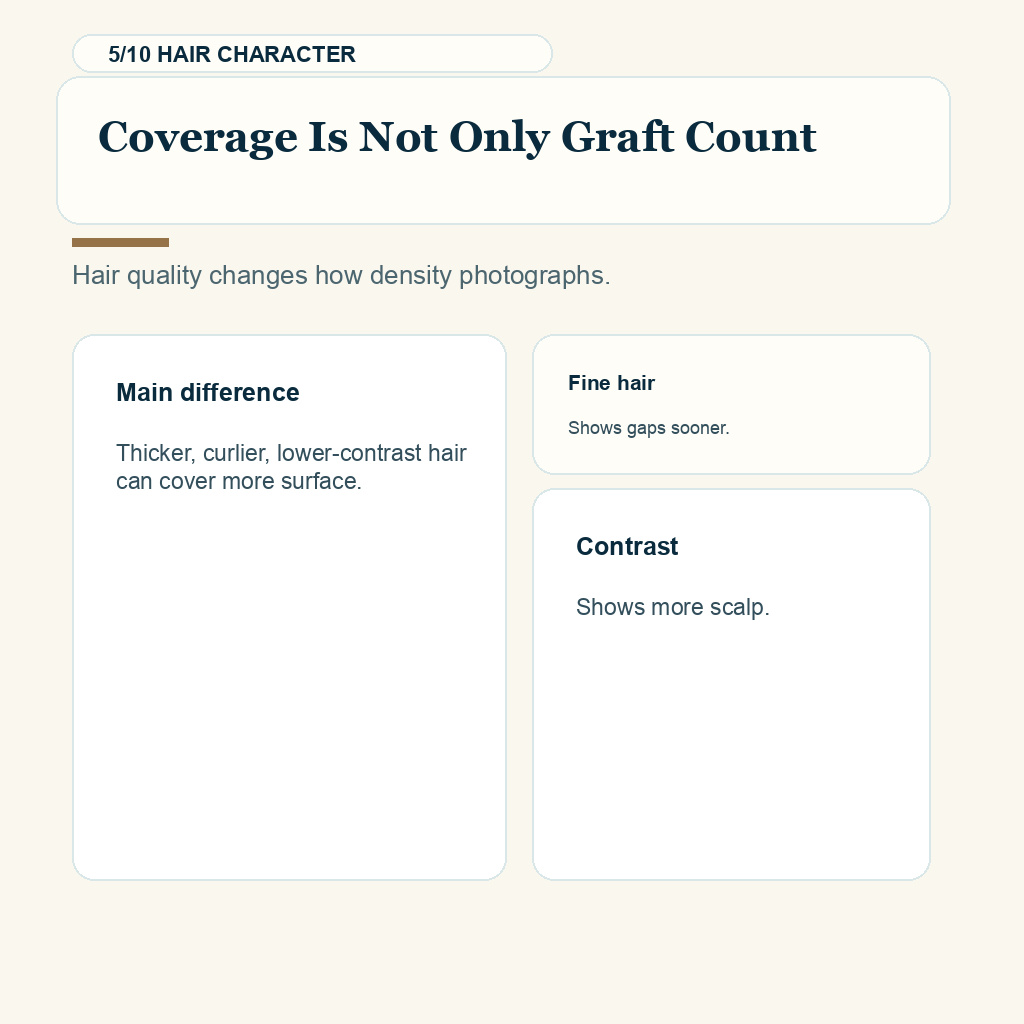
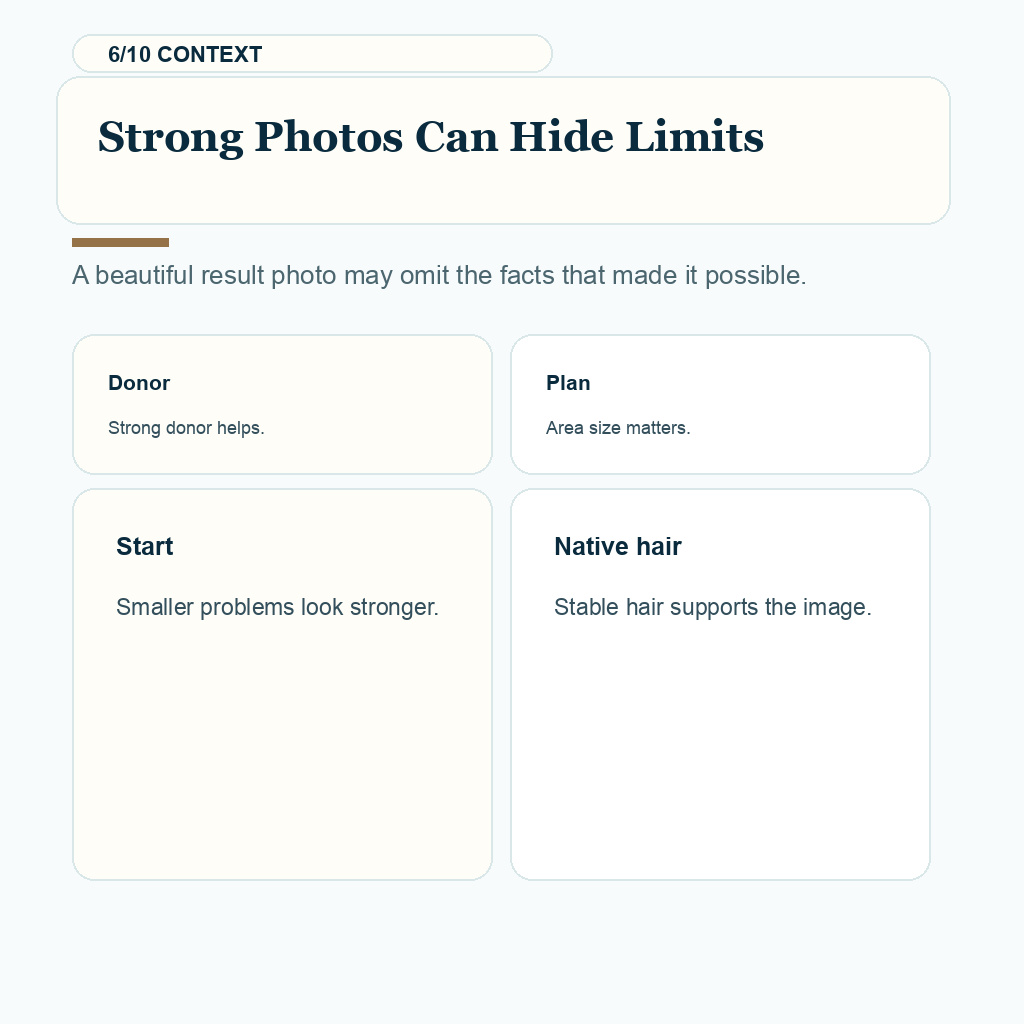
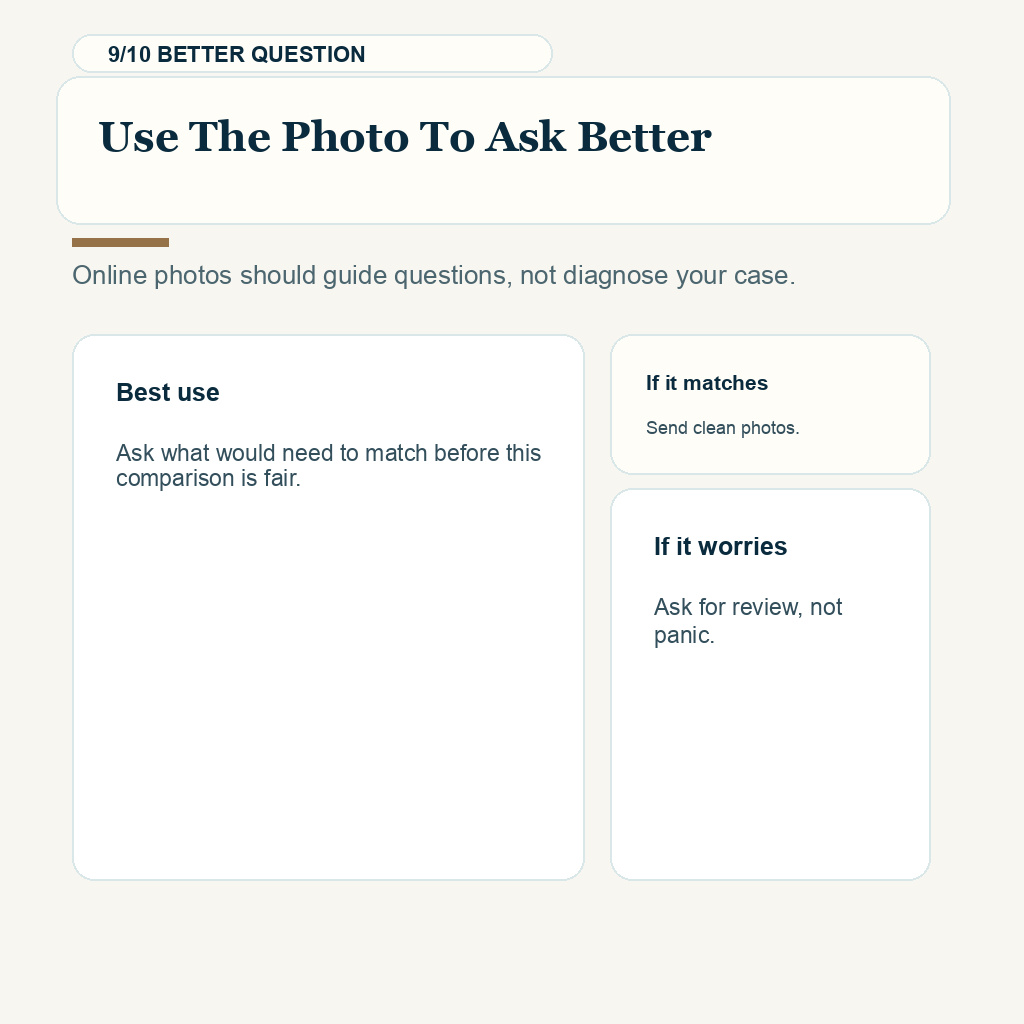
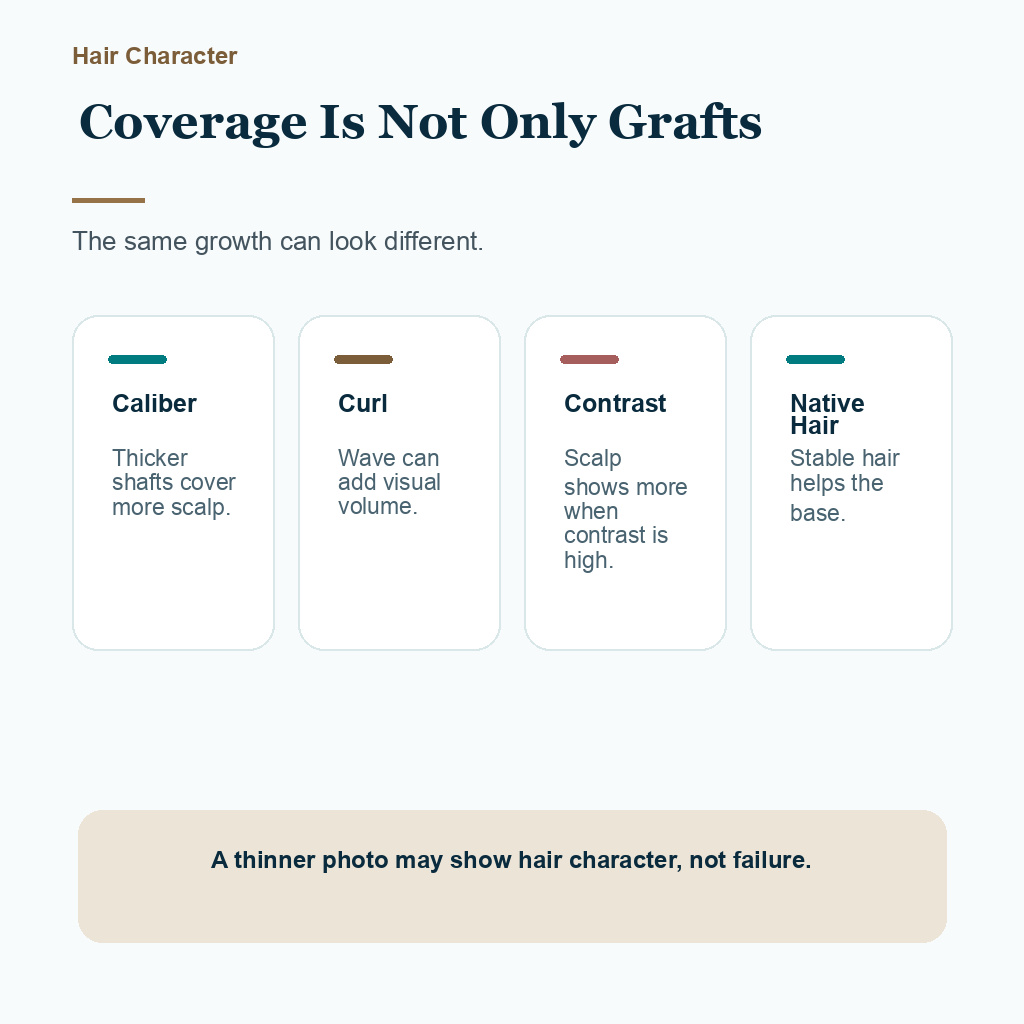
An online photo can still help you clarify what is worrying you. Compare the treated area, hair thickness, maturity of the result, lighting, and stability of the native hair behind the transplant before using it to judge your own recovery.
A fair comparison protects you from two mistakes. The first mistake is panic, where you decide the transplant failed from a photo that was never comparable. The second mistake is blind reassurance, where every concern is dismissed as impatience. Good follow-up sits between panic and denial.
If your own photos are random, improve them before making a conclusion. If you need to send photos to the clinic, the guide to early hair transplant review photos can help the surgeon see timing, views, symptoms, and the story behind the image. Better evidence usually creates a more useful answer.

Read this review excerpt
Upon arriving home, I sent 4 photos (of each side of head) after every washing process to doctor for checking where I was given personal advice for how to take care of my healing head.
Information I need before a photo changes the plan
A photo can make the patient worry, but it cannot decide the medical plan alone. I need the date after surgery, treated zones, graft number, donor condition, pre-op photos, immediate post-op graft distribution if available, crown and temple views, symptoms, washing stage, medication history, and whether fibers, concealer, styling products, filters, or different lighting were used.
If the photo shows redness, discharge, worsening pain, crusting that is not settling, or a donor area that looks suddenly patchy, the photo becomes a medical follow-up issue. If it only shows thinness under harsher light than usual, the first step is a fair comparison, not a repair decision.
When the concern is still unclear, I compare the new photo with the patient’s own earlier photos before changing the plan. The next step should come from a sequence, not from one online result that may not match the case.
Comparison signs that need review
Some comparison worries can wait for a fairer photo series. Others deserve review.
If repeated comparable photos at a stage where change should be visible show no movement, if there is fresh bleeding, worsening pain, spreading redness, discharge, fever, crusting that is not settling, swelling that is getting worse, clearly abnormal graft angles or rows after healing, or pressure toward another surgery very early, the concern deserves a proper clinical look.
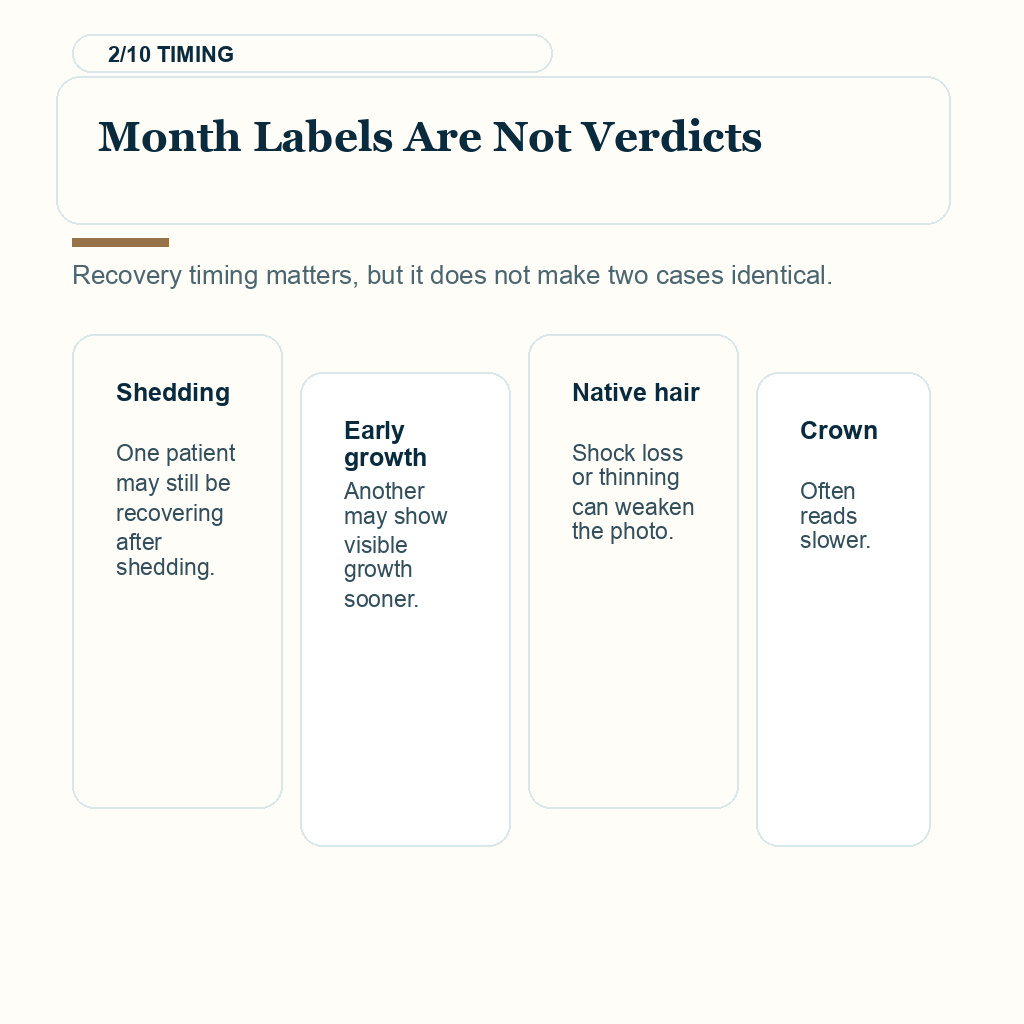
One comparison photo is not enough for me to plan repair. A small density worry in an immature result is not the same as a mature repair plan that spends more donor reserve. For many frontal and midscalp cases, review around 12 months gives a fairer judgment. Crown work, slow growers, and texture changes can need closer to 15 to 18 months. I discuss a second transplant, small density correction, graft removal, or repair plan only after the result is mature enough to judge and the original problem is clear. If the worry has moved from comparison into failure fear, read whether a hair transplant has failed or is being judged too early.
Also pay attention to how much the checking is affecting your life. If you cannot stop comparing, cannot sleep, or feel pulled into daily inspection, the issue is no longer only photographic. Slow the photo routine down before it takes over the whole recovery experience.