Online Feedback Should Not Decide Your Hair Transplant Plan
Online feedback can be useful, but it should not decide your hair transplant plan. Use it as a question list, not as a second surgeon. Bring those questions back to your photographs, donor area, graft record, medical history, recovery timeline, and the surgeon responsible for the plan.
A strong online reaction can feel convincing when daily life looks better but close photos still look thin. I bring that reaction back to medical facts such as recovery stage, treated zones, donor reserve, native hair, medication changes, and whether the same area is improving in matched photos.
I understand why feedback online can feel powerful. A patient sees one confident reply about graft numbers, density, donor thinning, hairline shape, clinic choice, or recovery progress, and suddenly the whole plan feels unsafe. Sometimes that reply points to something worth checking. Sometimes it is only panic from a case that does not match yours.
The difference matters. A hair transplant is not decided by a crowd reaction. It is decided by diagnosis, donor planning, hairline design, graft handling, recipient area creation, postoperative review, and long-term judgment. Feedback can help you notice missing issues. It cannot examine you.
Online feedback is a signal, not a diagnosis
A safer way to read online feedback is to separate the signal from the verdict. A signal sounds like, “Ask who designed the hairline,” “Check whether the graft count matches the area,” or “Send photos taken in the same light to the clinic before changing care.” A verdict sounds like, “Your result is ruined,” “Cancel immediately,” or “Take this treatment now.”
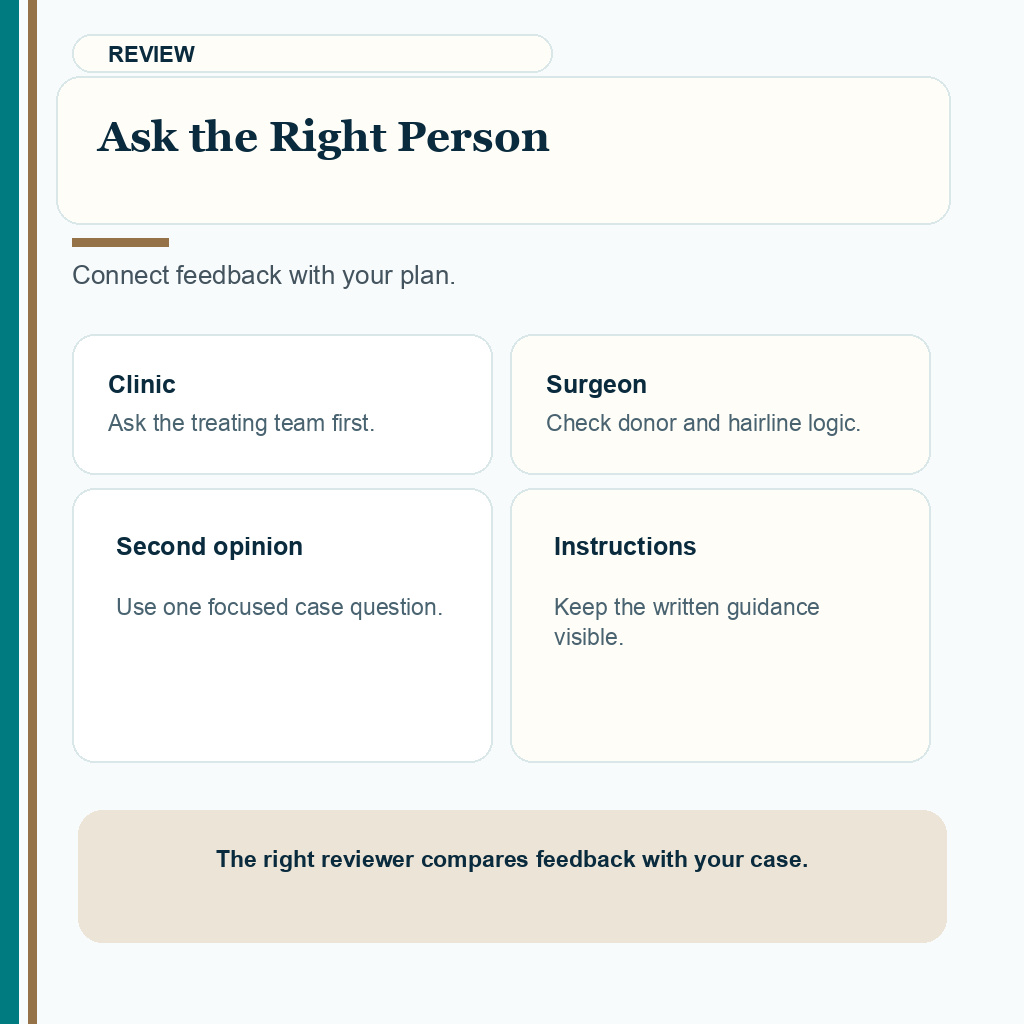
Before you give a reply medical weight, identify the role behind it. A patient can describe personal recovery and point to a question. A clinic representative can explain the clinic’s process. A licensed clinician can offer general medical information. None of those roles becomes the treating surgeon for your case without the records, examination, and responsibility to act on the answer. Confidence, account age, upvotes, and technical vocabulary do not change that boundary.
My public Reddit replies remain linked to their original threads so readers can see the surrounding discussion, but they are still general information rather than an individual assessment.
The signal may be useful because it names a clinical question. The verdict is risky because it pretends to know your donor capacity, hair caliber, future hair loss, surgical record, timing, medication history, and healing pattern without examining them.
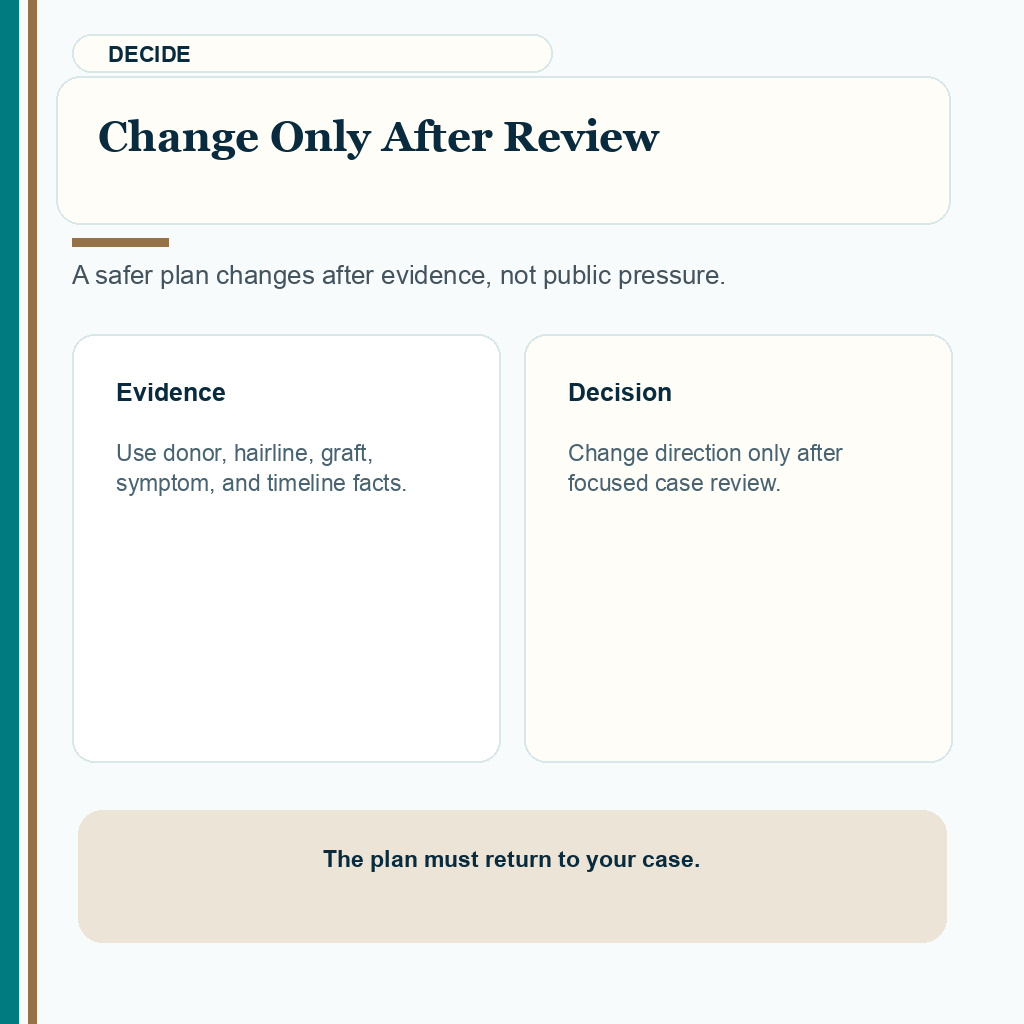
A comment that says too late, too many grafts, or go ahead can be useful only if it becomes a question for examination. It should not become the medical answer by itself or a reason to change care without review.
I use this clinical boundary when patients ask about online image advice. A photograph or reply can raise a concern, but it cannot perform the review, so AI advice about early FUE recovery photos should never replace clinical follow-up, even when the language sounds confident.
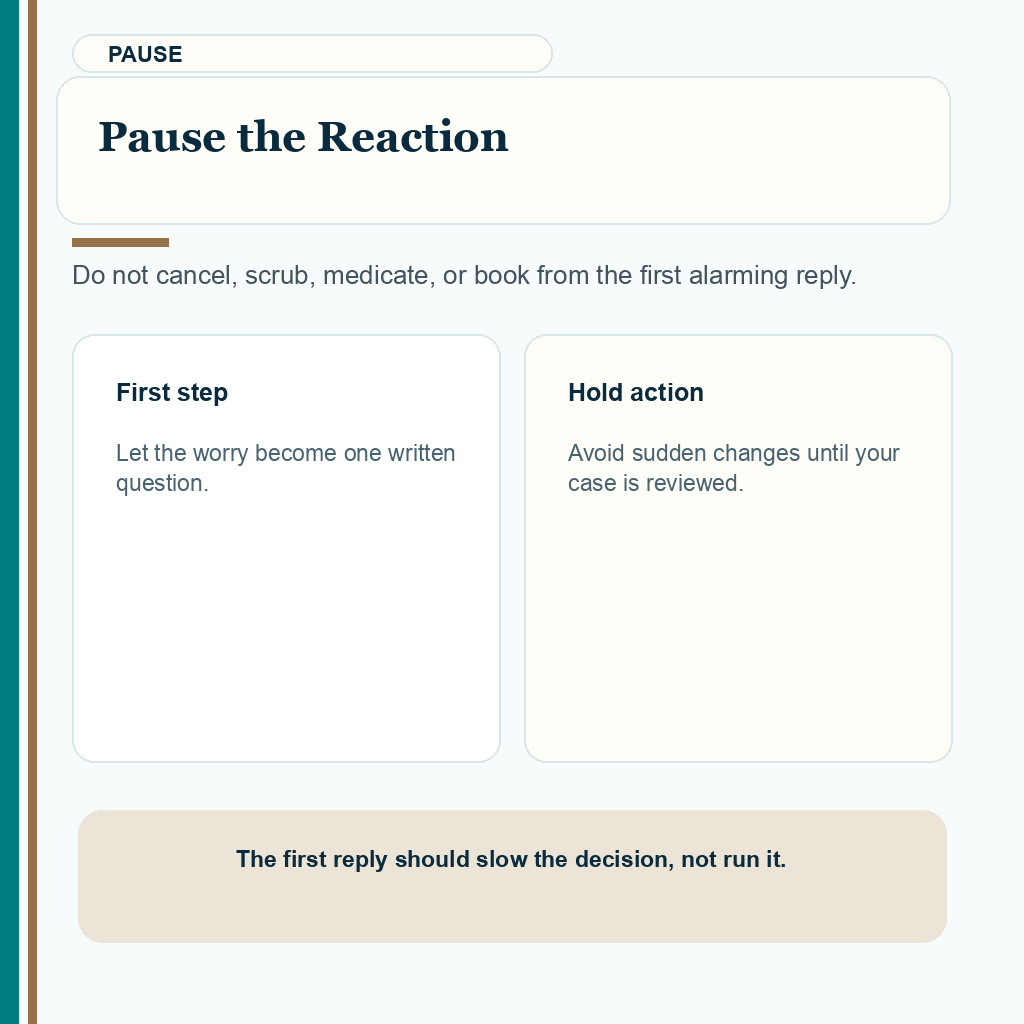
When feedback makes you anxious, do not ask, “Who is right online?” Ask, “What fact would a surgeon need before changing the plan?” That question brings the discussion back to evidence.
If several replies pull you in opposite directions, do not average them into a new plan. Keep the replies that point to a fact your surgeon can check, and ignore the ones that only add urgency.
The useful reply names a question
A useful reply is usually specific, limited, and looking for evidence. It does not try to run your case from a distance. It tells you what to clarify.
For example, if someone says the hairline looks low, the useful question is not whether strangers like the hairline. The useful question is whether the proposed hairline respects your age, face shape, donor reserve, future loss risk, temple balance, and long-term styling needs. If someone worries about graft numbers, do not choose the number that sounds more generous. Ask whether both clinics are planning the same recipient area, the same density, the same crown priority, the same hairline height, and the same donor safety margin. A larger number can be reasonable in selected cases, but it is not better if it spends grafts your future hair loss may need later.
Clinic choice works the same way. Public reviews can help you notice patterns, but they do not replace verifying who evaluates you, who designs the plan, who performs the surgical steps, and who follows you after surgery. A clinic’s social feed may look active because a small circle of people keeps responding. That does not show whether the published cases resemble yours, how the donor was managed, or who would be responsible for your surgery. A strong video, before and after post, or review can start a useful question, but it cannot prove that the same surgeon, donor conditions, graft handling, or long-term plan applies to you. When you read hair transplant reviews in Turkey, the practical value is not the star rating alone. The value is whether the review helps you ask better questions about accountability, planning, and follow-up.
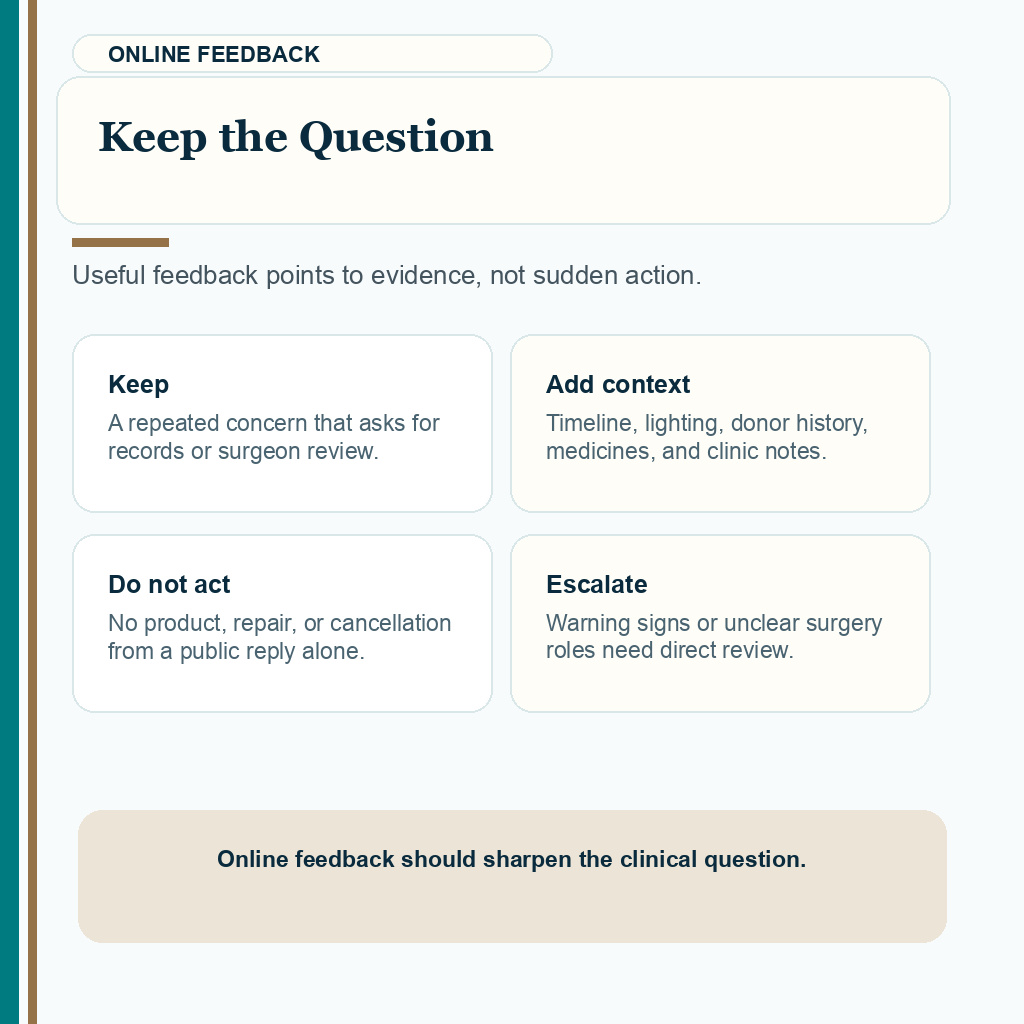
Keep feedback that asks for facts. Be careful with feedback that gives orders. Drop feedback that depends on fear, insults, impossible certainty, or one cropped image.
Compassionate feedback can still name a technical concern. Someone may be happier with the coverage while a low hairline, poor angles, weak density, or donor thinning deserves a calm review. The useful response respects that improvement, explains the concern clearly, and leaves insults out of it.
Medication arguments need the same filter. A confident reply for or against finasteride or minoxidil should become a question about diagnosis, side effects, tolerance, and surgical design, not an order to start or stop treatment.
The missing facts matter more than the loudest reply
Most online feedback is missing the same facts that decide the case. That does not make the person malicious. It means the medium is limited.
Online graft guesses can become planning signals without becoming instructions. When a reply pushes a larger session in the mid to high thousands, it may reflect a real concern about broad baldness and crown demand, but it still cannot measure donor reserve or recipient density limits. The decision still needs a zone map, a donor exam, and a staged explanation of what will wait.
Lighting can make density look weaker or stronger. Wet hair can expose scalp that dry hair covers. A six month photo can look very different from a twelve month result. A high hairline can be conservative in one patient and wrong in another. A crown case may need a different graft strategy than a frontal case. Native hair loss may continue around transplanted hair, changing how a result looks over time.
This limit also matters when online hair transplant photos can mislead you during recovery. The photo may be real, but the comparison may be unfair. You need timing, lighting, angle, hair length, graft count, donor characteristics, native hair status, medication history, and the original plan.
Planning from photos alone has the same limitation. A photo can show the visible problem. It cannot measure donor supply, miniaturization, scalp laxity, hair caliber, medical suitability, or the long-term cost of using grafts now. A hair transplant plan from photos should stay preliminary until the clinical review is complete.
The loudest reply is not always the most useful one. The most useful reply is the one that points to a missing fact you can actually verify.
Turn feedback into a surgeon review packet
If online feedback worries you, slow the reaction down and build a short review packet. This is not a complicated document. It is a way to stop panic from driving the next step.
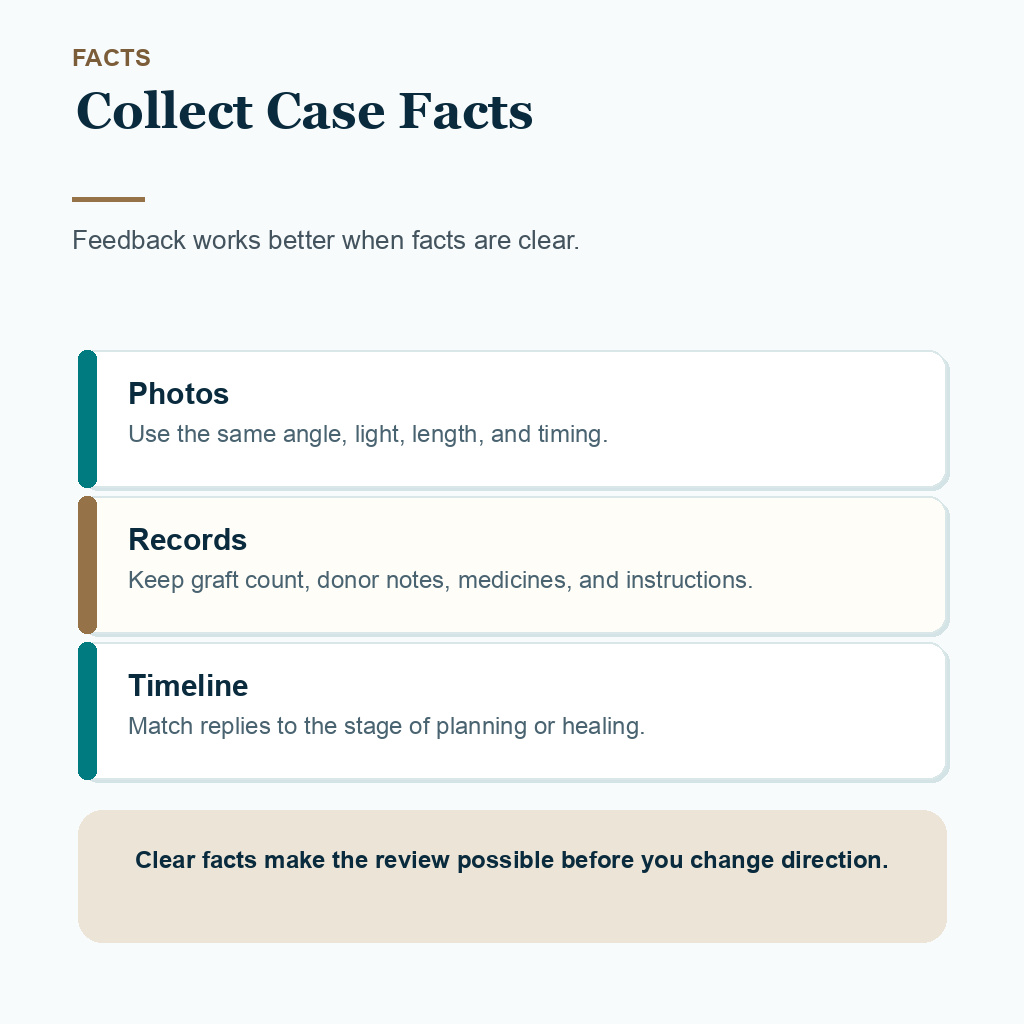
I use two different packets. Before booking, the packet should include the proposed graft number, marked zones, hairline drawing if there is one, donor photos, age, family pattern, medication history, previous surgery, and who is responsible for the surgical steps. After surgery, it should include the surgery date, graft count, treated zones, photos taken in the same light, current symptoms, and the instructions you were given. Those are different questions. A booking doubt asks whether the plan is sound. A recovery doubt asks whether the healing pattern needs review.
Also be careful with what you post publicly. A face photo, donor close-up, clinic document, operation report, or medication detail can identify more than you intended. For a real plan change, private review with the responsible clinic or a surgeon is stronger than public exposure.
Start with the exact question. Do not send twenty screenshots and ask whether everything is okay. Write one sentence such as, “I received feedback that my planned hairline may be too low for my donor reserve. Can we review the design against my future loss risk?” Or, “I was told my graft count sounds high for the area. Can we review the planned recipient zones and donor management logic?”
Then attach the facts that make the answer possible, including photos taken in the same light, the proposed graft number, recipient zones, donor photos, medication history, surgery date if you are already postoperative, current symptoms if there are any, and the clinic instructions you were given.
Make the upload useful before relying on opinions. Dates, wet or dry hair state, lighting, hair length, donor views, and medication history matter because missing context can make confident replies sound stronger than they are.
Do not let outside advice rewrite your care instructions. Washing, topical products, graft care, sleeping position, donor area care, medication, and supplement use should stay aligned with the surgical plan, not one confident reply. Around surgery, medicines and supplements should not be started, stopped, restarted, or adjusted without the responsible medical team. A medicine prescribed for another condition belongs with the prescribing doctor. Changes that affect the scalp belong with the clinic.
Anxiety about graft numbers is a good example. Public feedback may make you ask why one clinic recommends one number and another clinic recommends a different number. That question is reasonable. It should lead to graft count verification, not to a decision based on the biggest number or the most confident reply.
Different estimates can also happen because clinics are not always measuring the same thing. One may include a wider zone, another may protect donor reserve more aggressively, and another may be chasing a density target that is not wise for your future. Before you assume a number is wrong, review why hair transplant graft numbers differ and ask what each estimate is trying to achieve.
Feedback review signals
Choose the feedback type before you choose the action.
Fresh reply
Write down the concern, then wait until you can compare it with your own plan and records.
Send the original plan, photos taken in the same light, graft estimate, donor photos, and one focused question.
Repeated pattern
Look for the same concern from more than one credible source, then ask what clinical fact would confirm it.
Bring the repeated concern, source pattern, original plan, and the fact that needs checking.
Missing case match
Treat the reply as low weight when it cannot match your donor area, timing, hair caliber, or medical history.
Include photos, timing, hair length, medications, donor notes, and why the comparison may not fit.
Second opinion trigger
Ask one narrow clinical question when the plan still feels wrong after you gather the facts.
Show the original recommendation, the exact doubt, case photos, and the decision that may change.
Medical warning
Route worsening pain, spreading redness, discharge, fever, trauma, or feeling unwell to the clinic or urgent care.
Escalate symptoms, timing, photos if safe, current instructions, and direct clinical contact.
A simple packet changes the tone of the decision. You are no longer trying to win an online argument. You are asking the person responsible for the plan to answer one clinical question clearly.
Read this review excerpt
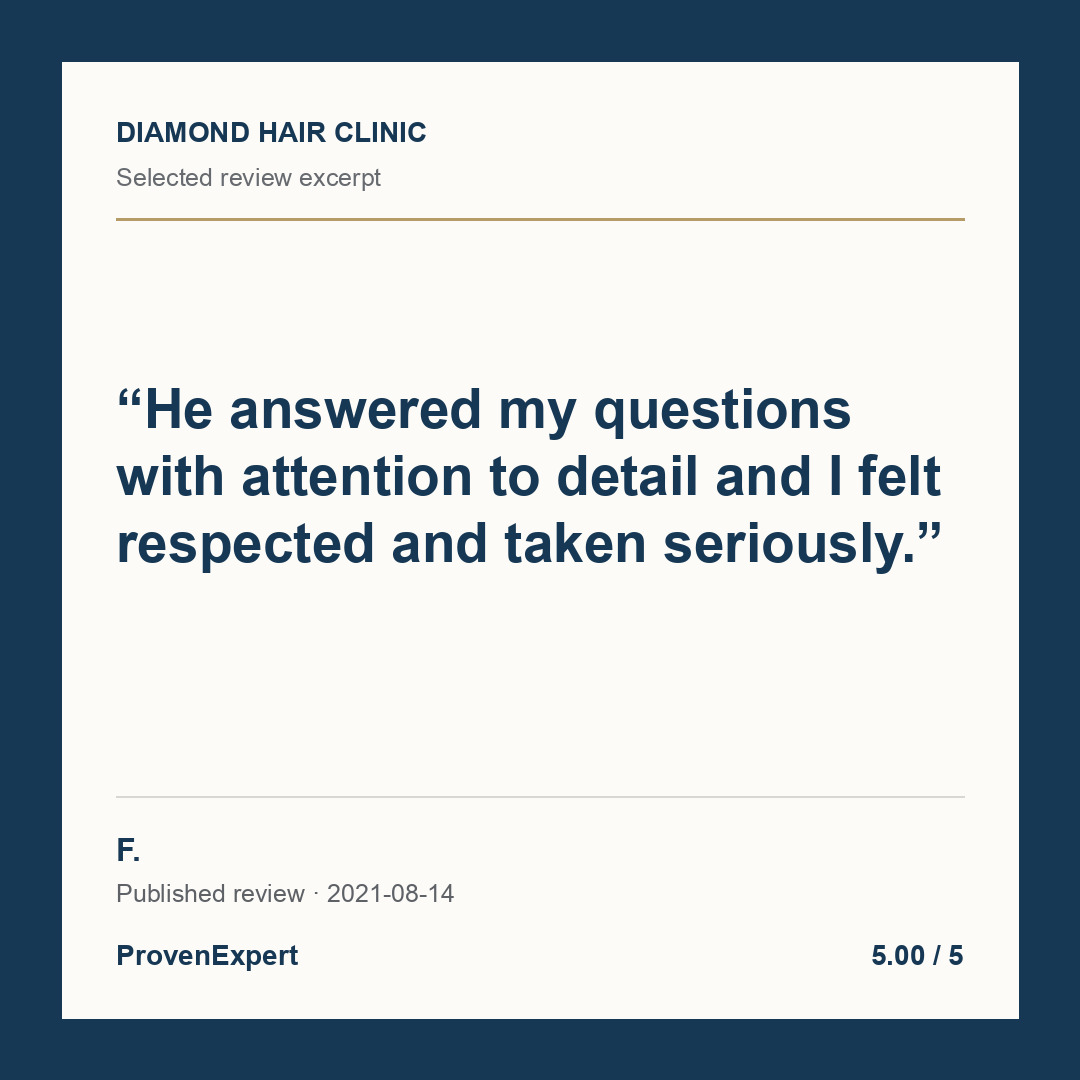
He answered my questions with attention to detail and I felt respected and taken seriously.
Some feedback should pause the decision
Some feedback deserves more than a note. If several independent signals point to the same accountability problem, pause before booking, especially if a deposit, discount deadline, flight, or surgery date is pushing you to move faster than the medical explanation. If nobody can explain who evaluates your donor area, who designs the hairline, who makes the recipient area incisions, who manages complications, or who follows you after surgery, that is not just an online disagreement. It is a clinic responsibility question.
Before you accept a plan, make sure surgeon involvement in your hair transplant is clear enough that you know who is accountable for the decisions that matter. Hairline design, donor harvesting strategy, recipient area incisions, graft placement oversight, medical suitability, and follow-up cannot be reduced to sales language.
Feedback about the donor area also needs careful handling. A single photo cannot diagnose overharvesting, but donor supply is finite and should be protected. If feedback raises a donor concern, ask for an examination, donor photos, extraction pattern review, and long-term planning logic. The question is not, “Do strangers think my donor looks bad?” It is, “Does the donor area still support the plan without compromising future options?” If the concern is serious enough to change the plan, I review it as a donor management problem because donor area overharvesting after hair transplant surgery can limit future options. I do not treat one cropped image as a verdict.
Early donor or recipient area photos can look harsher because of scabs, redness, haircut length, swelling, lighting, or shock loss. That can be reviewed in follow-up. Postoperative warning signs should not be debated online. Worsening pain, spreading redness, pus or foul drainage, fever, persistent bleeding, clear trauma, or feeling generally unwell should be routed to your clinic or urgent medical care. For routine uncertainty after surgery, hair transplant follow-up is where the worry belongs.
A second opinion needs a narrow question
A second opinion can protect you when a plan feels wrong, but it works best when the question is narrow. A broad question such as “Is this clinic good?” usually produces another opinion without enough structure. A narrow question gives the surgeon something real to review.
I also want the second opinion to say what should stay the same. A useful review does not only criticize the first plan. It explains which parts are reasonable, which parts need more evidence, and what finding would actually justify changing direction.
Ask about the part of the plan that would change your decision, such as donor reserve, proposed hairline height, crown timing, graft number, recipient area priorities, medication stability, repair timing, or who is responsible for each surgical step. In younger patients, this question should include hair loss stability, family pattern, medication history, and whether future loss has been taken seriously. Online pressure to start or stop treatment should become a medical question, not something you change on your own. Bring the original plan if you have it. Bring photos taken in the same light. Bring the reason feedback worried you, but do not treat that feedback as proof.
That is how a second opinion becomes useful instead of becoming one more voice in the noise. Before you seek a second opinion before a hair transplant, decide which clinical question would change your choice and what evidence the reviewing surgeon should see.