


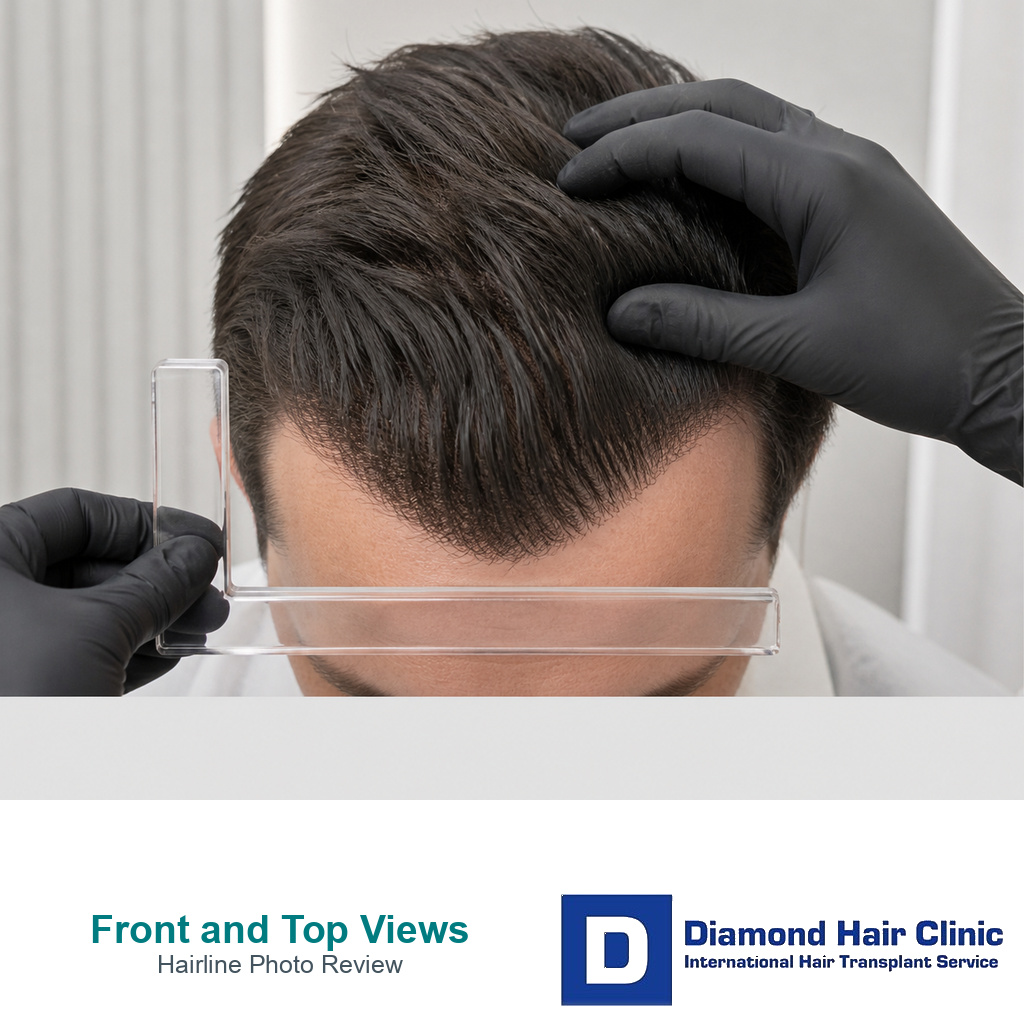
A Hair Transplant Hairline Can Look Different From the Front and Top Views
A transplanted hairline can look lower, flatter, or more uneven from the front while the top view appears smoother because those views are judging different things. The front view shows how the line frames the face. The top view shows curve, direction, and scalp contrast. Neither view alone proves the design is right or wrong without repeatable distance, light, and timing.
Take one set at eye level and one from above without changing the mirror distance. Mixed angles can turn a view problem into a design panic. A short slow video can sometimes show whether the concern is the line itself or the way one still photo freezes a harsh angle. Keep both views from the same session, because a separate top photo taken later can make the comparison unfair. Front and top views should be paired with both side views and a relaxed face. A hairline that looks acceptable from above can still fail the facial frame if the temples, direction, and forehead movement are not checked.
If you also have fever, fresh bleeding, discharge, spreading redness, worsening pain, an open wound, fast swelling, clear trauma, or symptoms that are getting worse instead of settling, contact your clinic promptly. When those warning signs are absent, the better first step is usually a fair repeat photo set and surgeon review, not a repair decision from one anxious angle.
The front view judges the face, not only the line
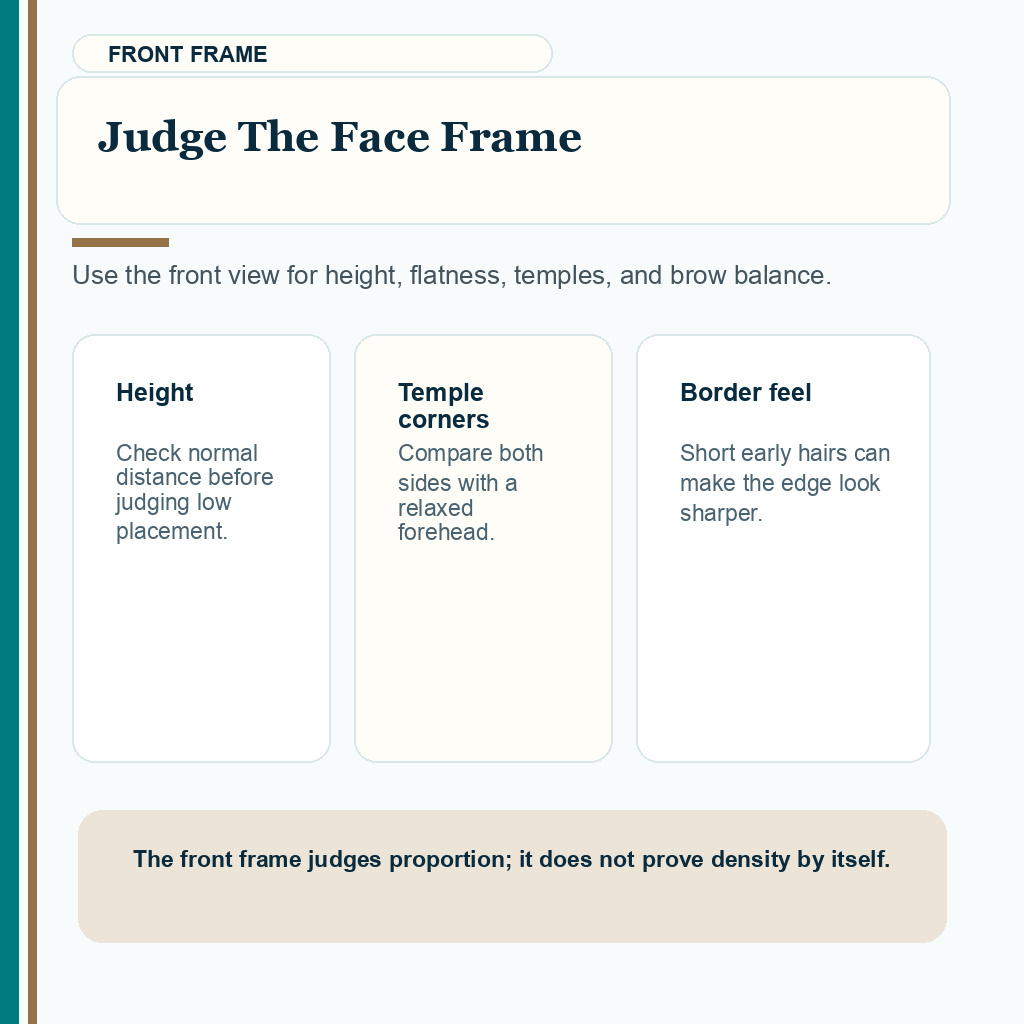
The front view is the strictest view for hairline height because it puts the new edge against the eyebrows, forehead, temple corners, and facial symmetry. A few millimeters can feel larger here than it does from above. Short new hairs can also draw a harder border than mature hair will later.
When I judge hairline design, I am not only looking at the outline. I look at facial proportion, temple transition, direction, irregularity, density gradient, age, donor supply, and whether the design will still make sense years later. A front photo can raise a real concern, but it still needs context.
One side may also look more pronounced because the brow, forehead muscle, temple hollow, or hair direction is not perfectly identical on both sides. Perfect symmetry is not the goal in natural hairline work. The goal is a line that looks soft, balanced, and believable on the patient’s face.
The top view shows curve more than facial balance
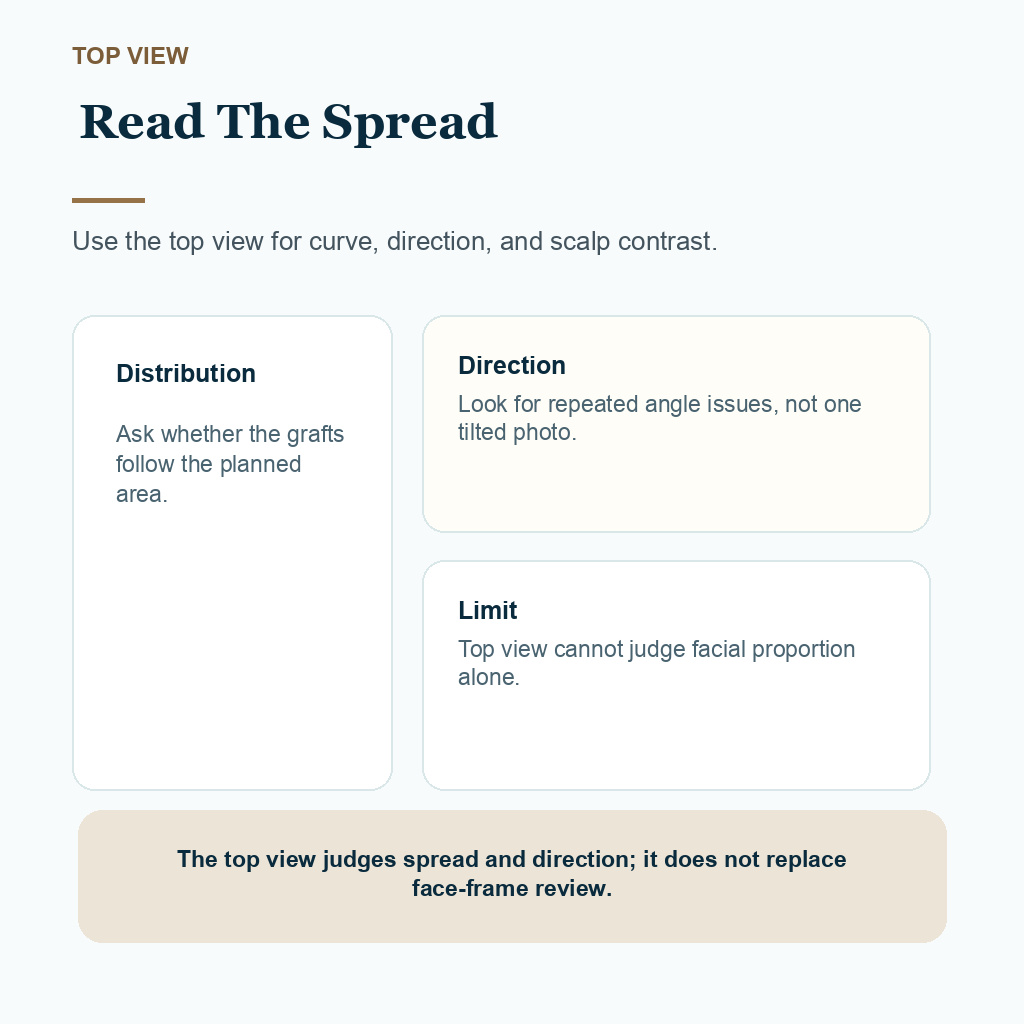
The top view is useful, but it is not a verdict. It can show the broad curve, distribution, direction, and whether the planted area follows the intended shape. It can also hide how low the front edge feels when the face is visible.
I treat photos as only a starting point. A top view may make an aggressive or flat line look acceptable because the forehead and eyebrows are out of the frame. A front view may make a reasonable design feel harsh because short hairs, lighting, and expression make the border stand out.
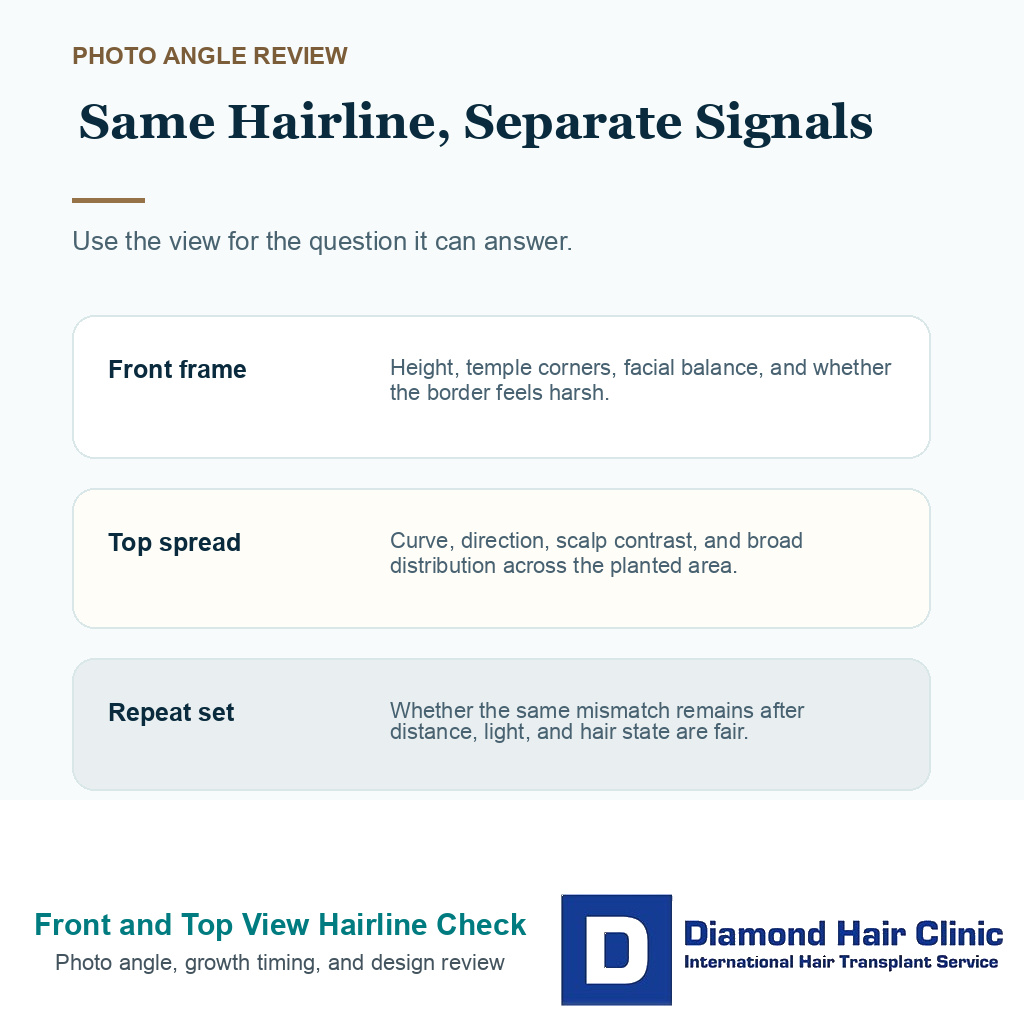
I do not dismiss the front view because the top view looks better. I also do not call the design failed because one front photo looks bad. The two views need to be compared as separate evidence.
Early growth can sharpen the border
Early transplanted hairs do not behave like the final result. Many graft hairs shed in the early weeks, and new growth can start unevenly. Around the early growth window, short hairs may stand up, catch light, and make the leading edge look darker, flatter, or more drawn on than it will when length and layering improve.
Around this stage, early growth can still look empty or uneven before the result is mature. Some areas may wake up before others. If one side grows slower after a hair transplant, the photo can exaggerate asymmetry even when the final pattern has not declared itself yet.
This does not mean every worry is harmless. A line that was truly placed too low, too straight, or with poor direction may still need later review. The point is timing. Early growth is evidence in progress, not the final design.
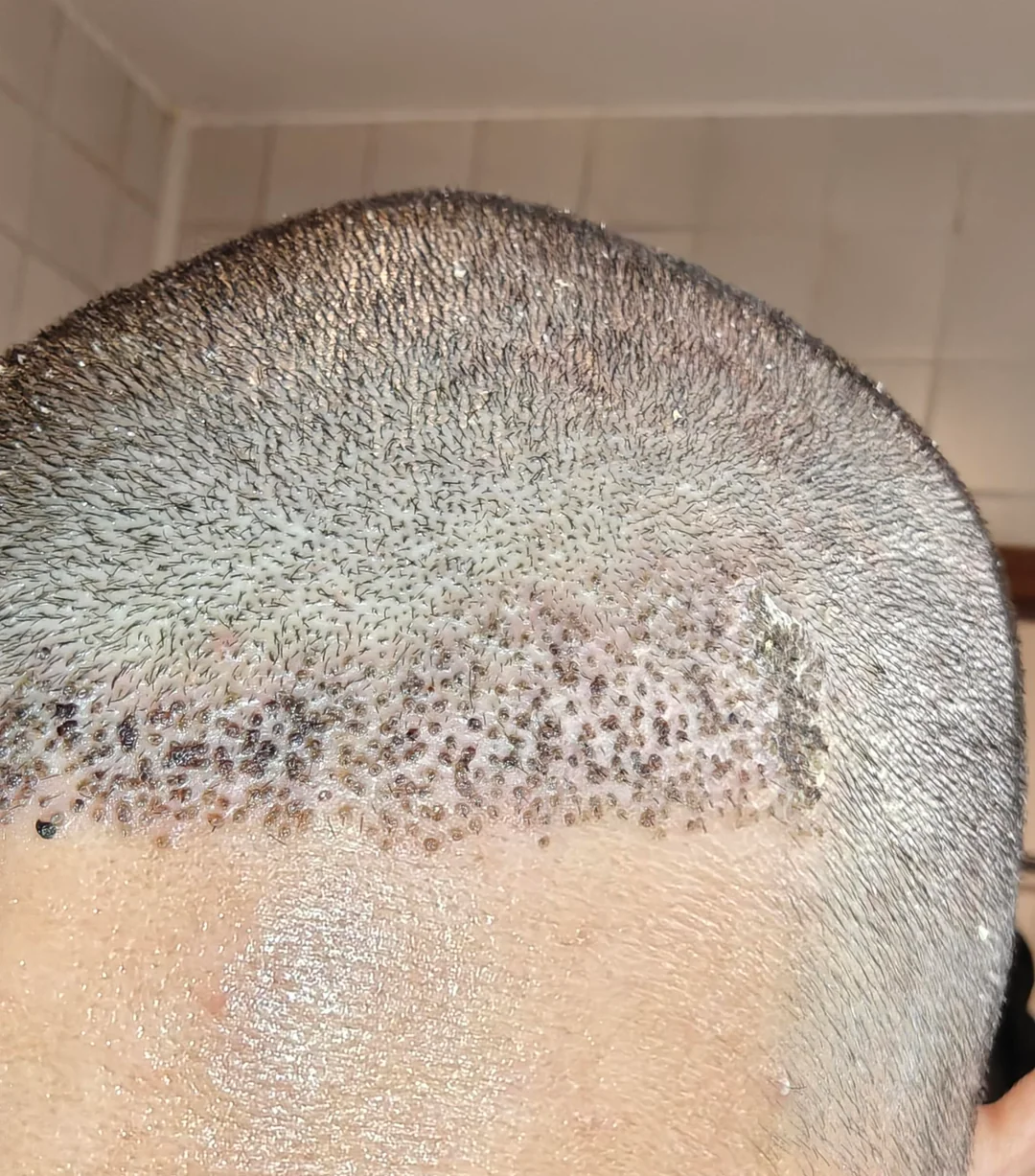
When the worry is a thin strip behind the hairline
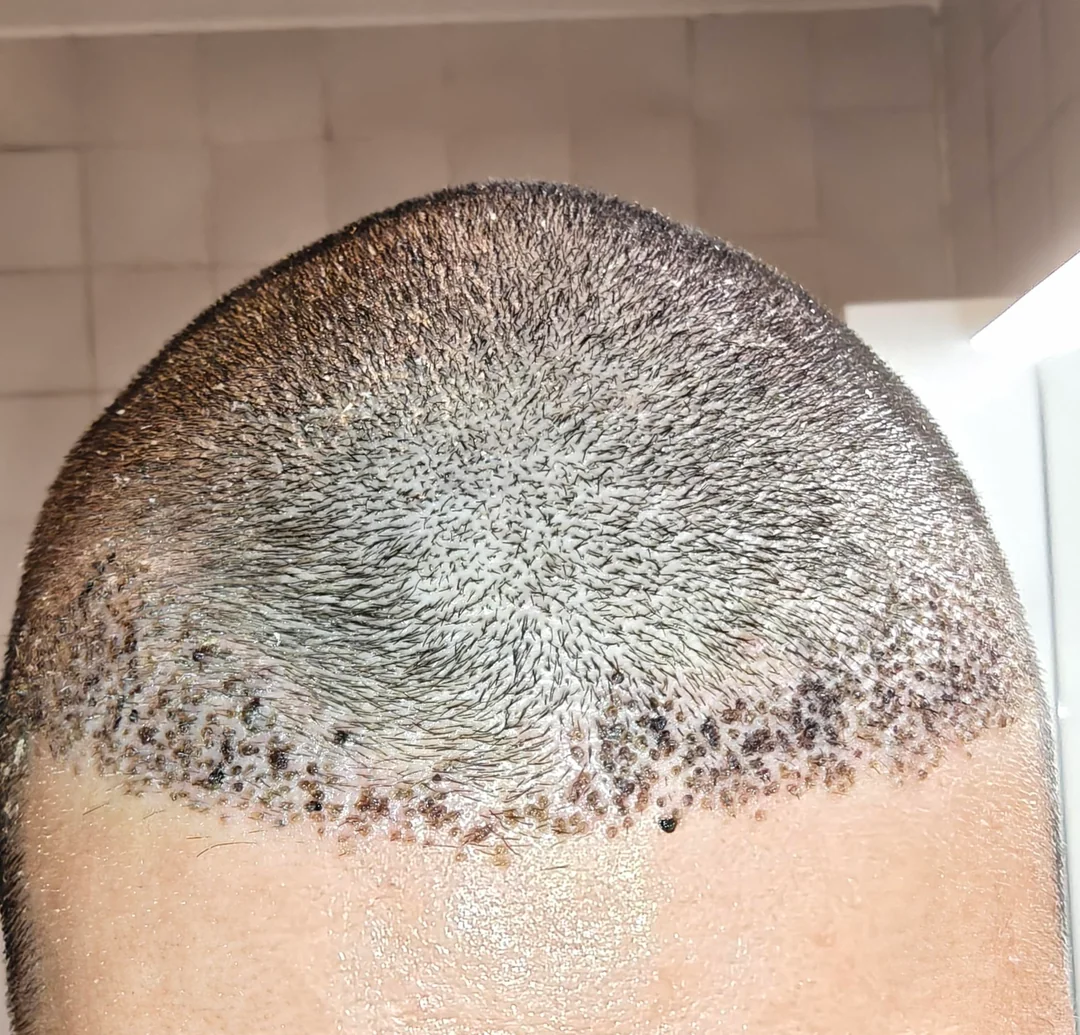
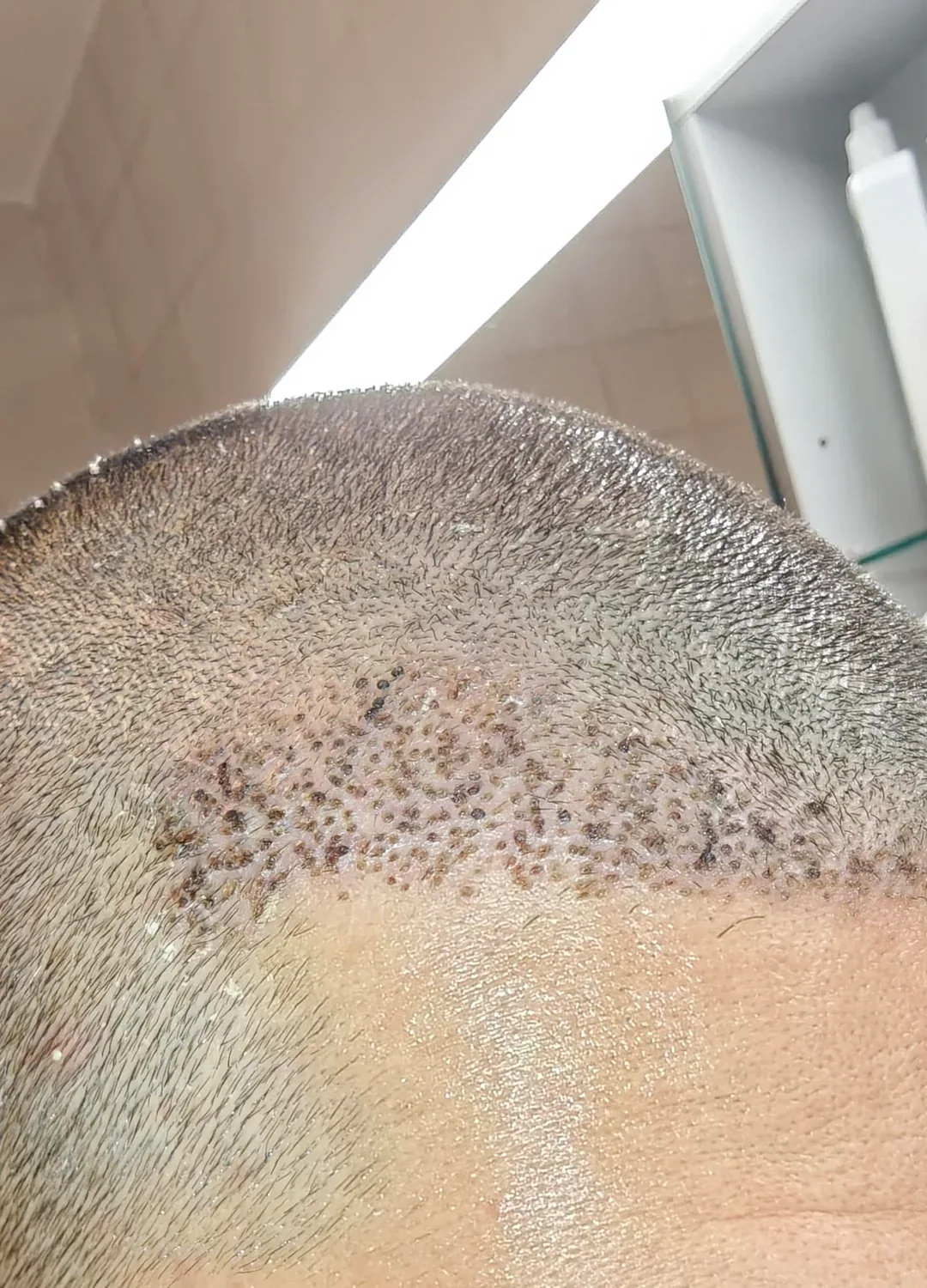
A narrow band between native hair and the grafted area is a different concern from a low or straight hairline. In the first weeks, scabs, swelling, shaved native hair, and short graft stubble can make the join look sharper than it will later. I still want the early placement photos saved, because they show whether the area was planned as a soft transition or left too empty. The safer reaction is to document the same area, let the skin settle, and review the border as growth becomes comparable rather than judging the final density from one marked photo.
Camera distance and mirroring can change the hairline frame
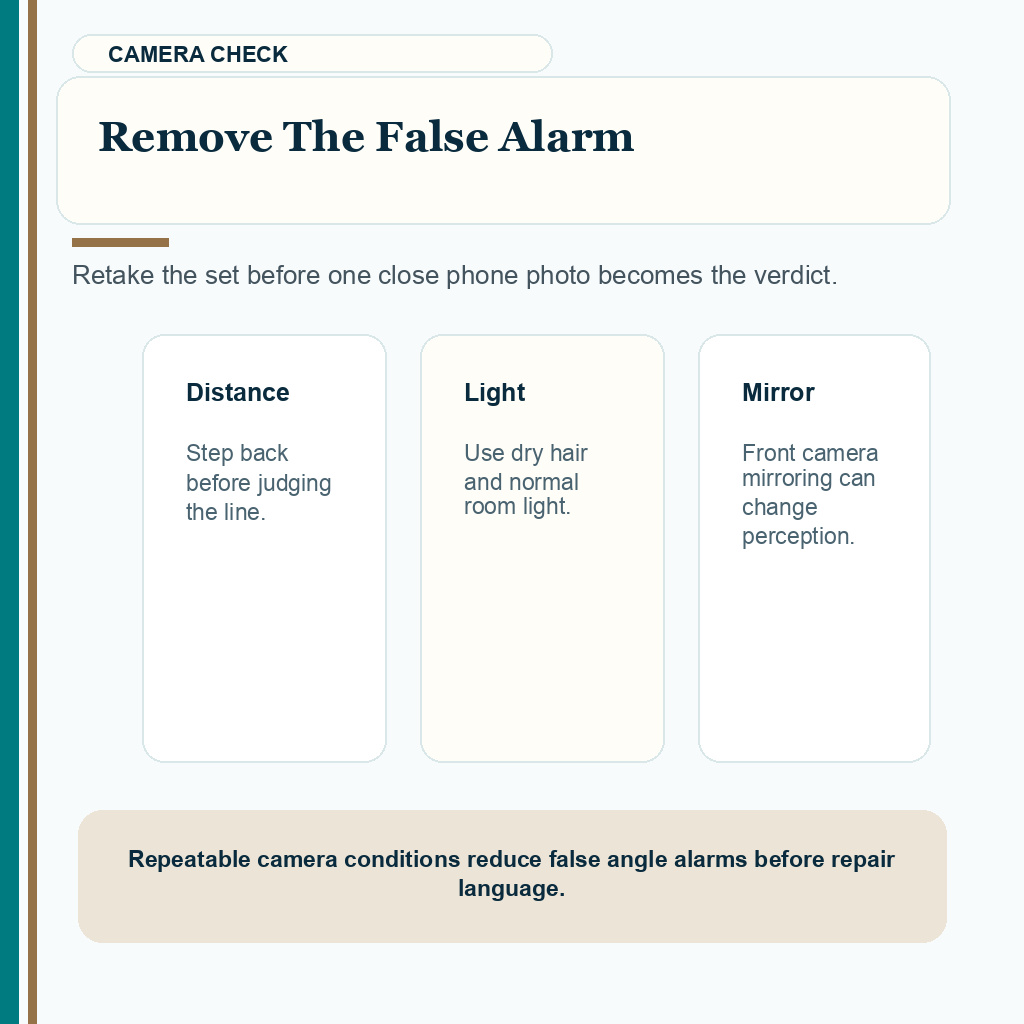
Close phone photos can distort facial proportions. A low camera, a tilted phone, or a lens held too near the face can make the forehead and hairline relationship look different from what another person sees at normal distance. Harsh bathroom light, wet hair, and a pulled back style can make the border look sharper as well.
Front camera mirroring can add another layer of confusion because the side you see on the screen may not feel like the side you see in a mirror. If the concern is one side looking lower, mirrored selfies can make the review feel inconsistent.
Fair hair transplant photos are more useful than dramatic closeups. Use the same room, same light, dry hair, neutral expression, and the same distance each time. For a clinic review, early review photos should include front, both sides, top, and a relaxed natural view rather than only the angle that bothers you most.
Sort the mismatch before deciding it is a mistake
When a hairline looks different from the front and top, I first decide which signal is driving the worry. The view read changes with the signal, whether it is face framing, top distribution, one side repeating as lower, close camera distortion, or a stable mismatch in fair photos.
View sorting map
Five signals I check before judging the mismatch
Choose the signal that best explains why one view feels reassuring and another feels alarming.- Front frameHeight, temple corners, brow balance, and facial proportion.
- Top distributionCurve, direction, density spread, and scalp contrast.
- Side repeatThe same corner looks lower in every fair photo.
- Close phoneShort distance, tilt, mirror reversal, or harsh light.
- Fair photo setThe mismatch stays visible after repeatable photos.
Front frame
If the front view is the only alarming view, compare the hairline to the relaxed face, not to a zoomed border. This view is best for height, flatness, temple transition, and whether the design fits the face.
Photo check Repeat the front photo at normal distance before deciding that the line is too low.
Top distribution
The top view is useful for distribution, direction, and scalp contrast. It cannot prove that the front edge is correctly placed because it removes the face from the judgment.
Top view role Use the top view to discuss density and direction, not to cancel a repeated front view concern.
Side repeat
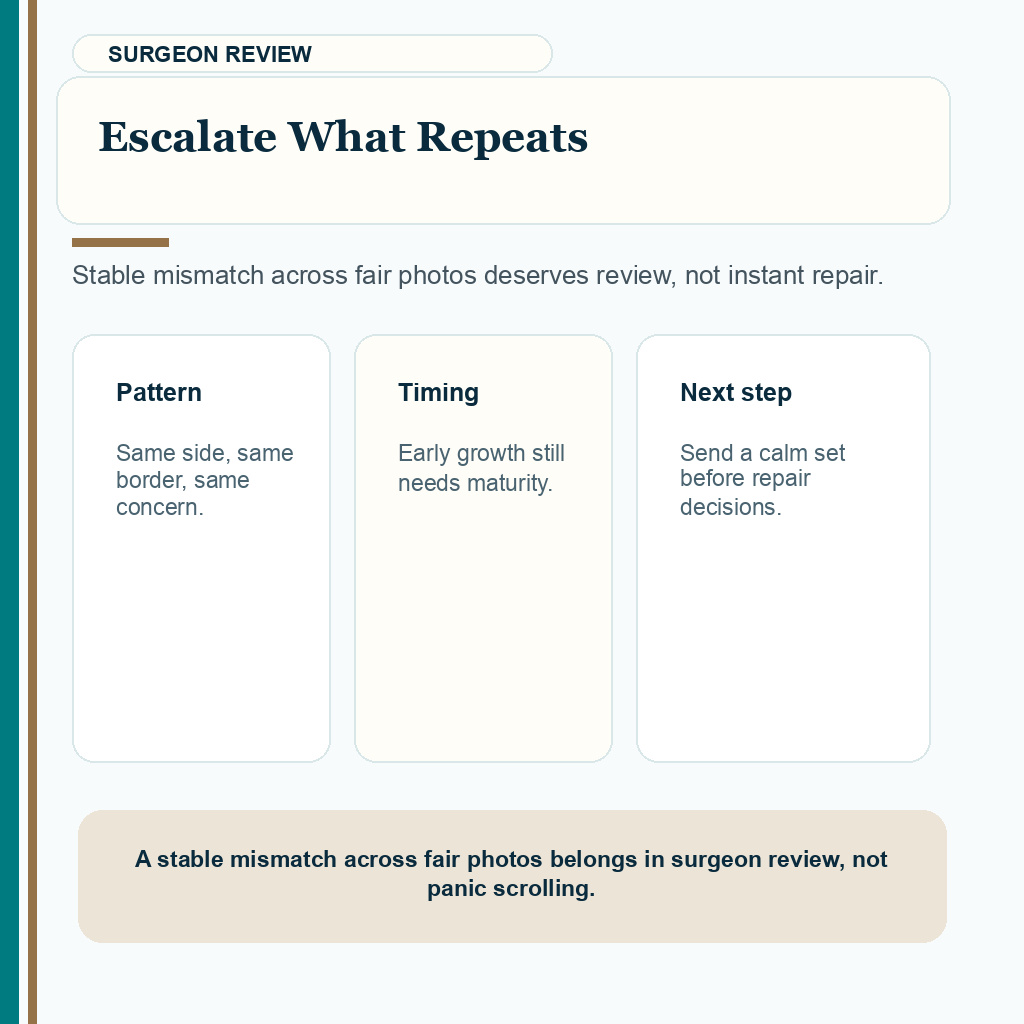
If the same side sits lower, flatter, or harsher in repeated fair photos, the concern deserves surgeon review. Early growth may still be part of the answer, but the pattern should be documented.
Review set Send matching front and side photos with the date and growth stage.
Close phone
Short distance, a tilted phone, front camera mirroring, wet hair, or harsh light can make a reasonable line look wrong. This is common when the patient compares a mirror image with a selfie.
Retake first Retake the set with the phone farther away and the scalp dry.
Fair photo set
If the mismatch remains visible in the same light, distance, hair length, and facial expression, it becomes better evidence. That does not mean repair is immediate. It means the operating surgeon should review the design and timing.
Before repair Ask for a follow-up opinion before planning any removal or a small repair.
Signals that deserve surgeon review
Surgeon review is appropriate when the same lower or flatter side appears in repeated fair photos, when the design looks very low in relaxed front view, when graft direction looks unnatural, or when the concern is getting clearer as growth improves rather than fading with length.
If one side is the main concern, the better next page is uneven hairline after a hair transplant. If the concern is that the whole line was placed too low or too flat, the decision belongs with whether the transplanted hairline may be too low.
Those are different decisions. An uneven corner may need observation, growth tracking, styling review, or later touch up. A truly low hairline can affect donor planning, age fit, and repair difficulty. Do not mix them into one panic label.
Repair thoughts should wait for better evidence
It is understandable to think about removing grafts if one side looks too low. But removal, laser, extraction, camouflage, or redesign should not start from a single early angle. Repair planning needs stable evidence, donor review, skin review, hair direction review, and a realistic understanding of what can be changed safely.
Removing bad hairline grafts can be part of repair in selected cases, but it is not a casual early step. Extraction can leave marks, reduce options, or require staged work. Sometimes the wiser path is to wait for maturation and then decide whether a small refinement, density adjustment, camouflage, or true repair is needed. A fair photo set helps decide whether the concern belongs to touch up planning, graft removal, or no surgery yet.
The earlier the result is, the more careful the repair language should be. Early concern can be valid, but early panic is a poor surgical planner.
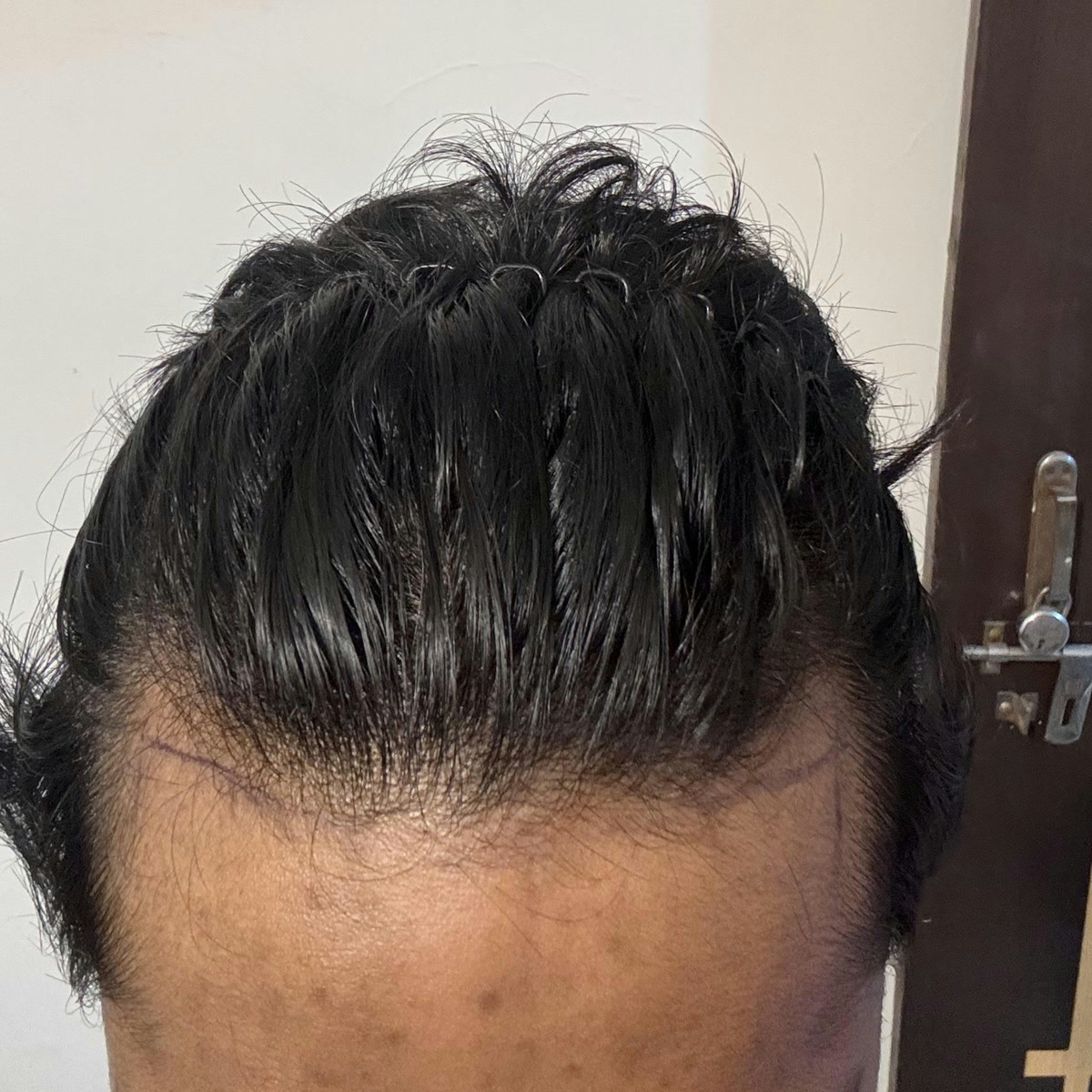
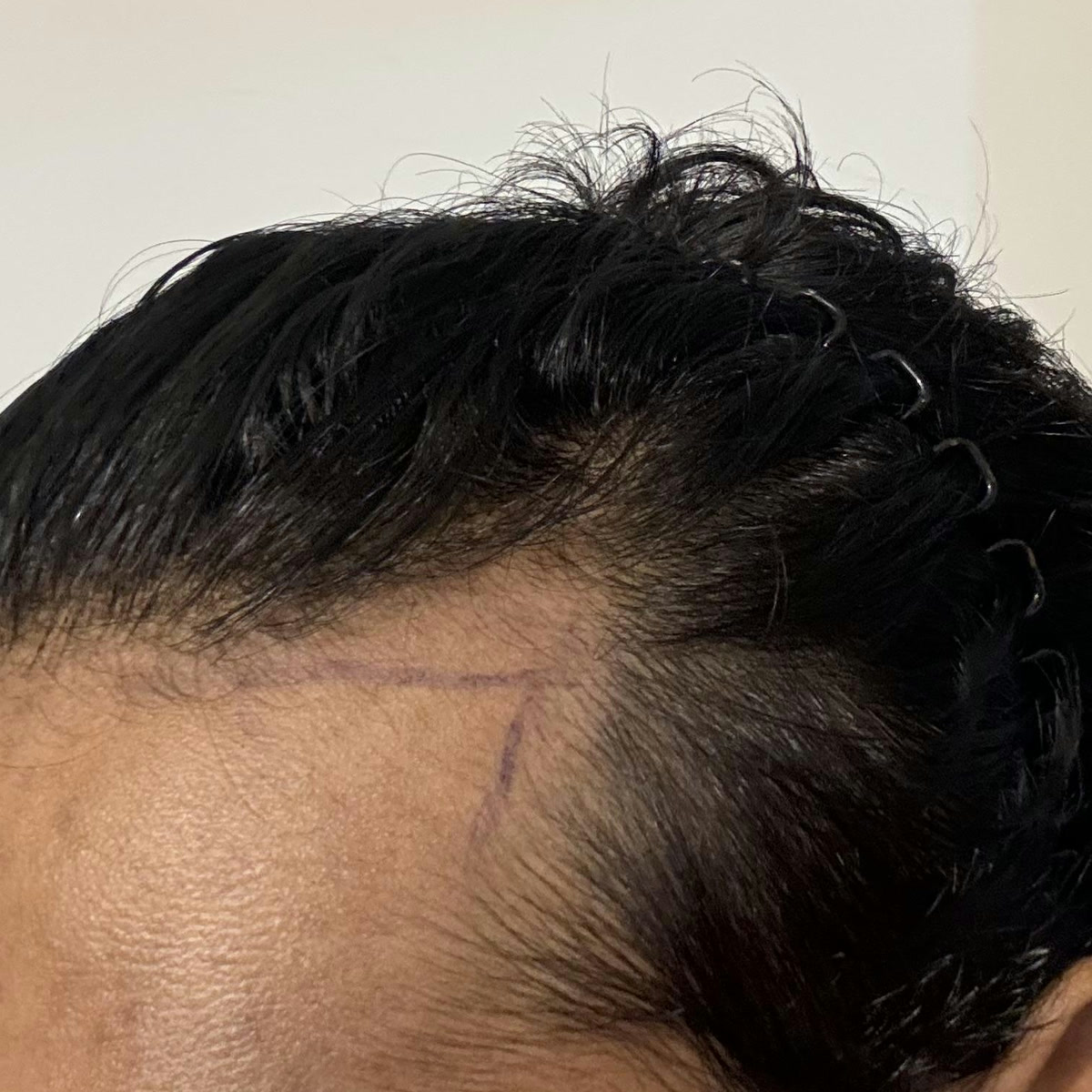
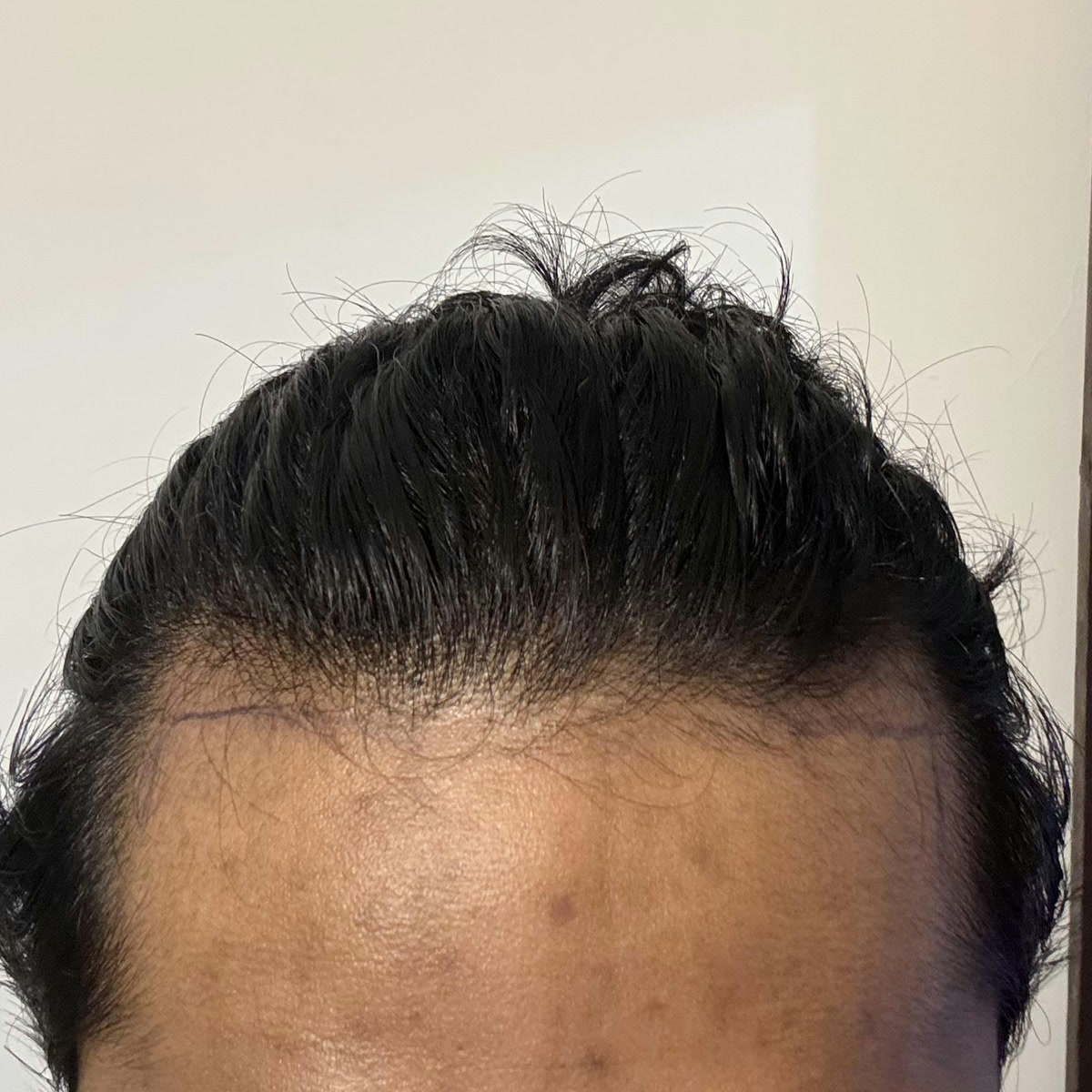
If the worry changes with every mirror, mirror checking may be turning recovery into a repeated inspection habit. If the same mismatch remains across calm repeat sets, tracking hair transplant growth gives the surgeon better evidence than one close phone photo.
Common front and top view questions
Does a better top view photo mean my hairline is fine?
No. A top view can show curve, direction, and density spread, but it cannot judge facial balance. If the front view repeatedly looks too low, too straight, or lower on one side in fair photos, I review the front view concern instead of using the top view to cancel it.
Which photos help a surgeon judge a front and top view mismatch?
Use the rear camera if possible. Keep the phone at normal distance, include the eyebrows, forehead, temples, hairline, and top view, and keep the hair dry. Send the same set again under similar light instead of sending many close crops of the corner that worries you.
The aim is not to talk yourself out of a real problem. The aim is to separate photo angle, growth timing, and design. Once those are separated, the next decision becomes easier to judge.
Read this review excerpt
We also had a levelled conversation about my hairline and results I could expect based on my donor density area.