


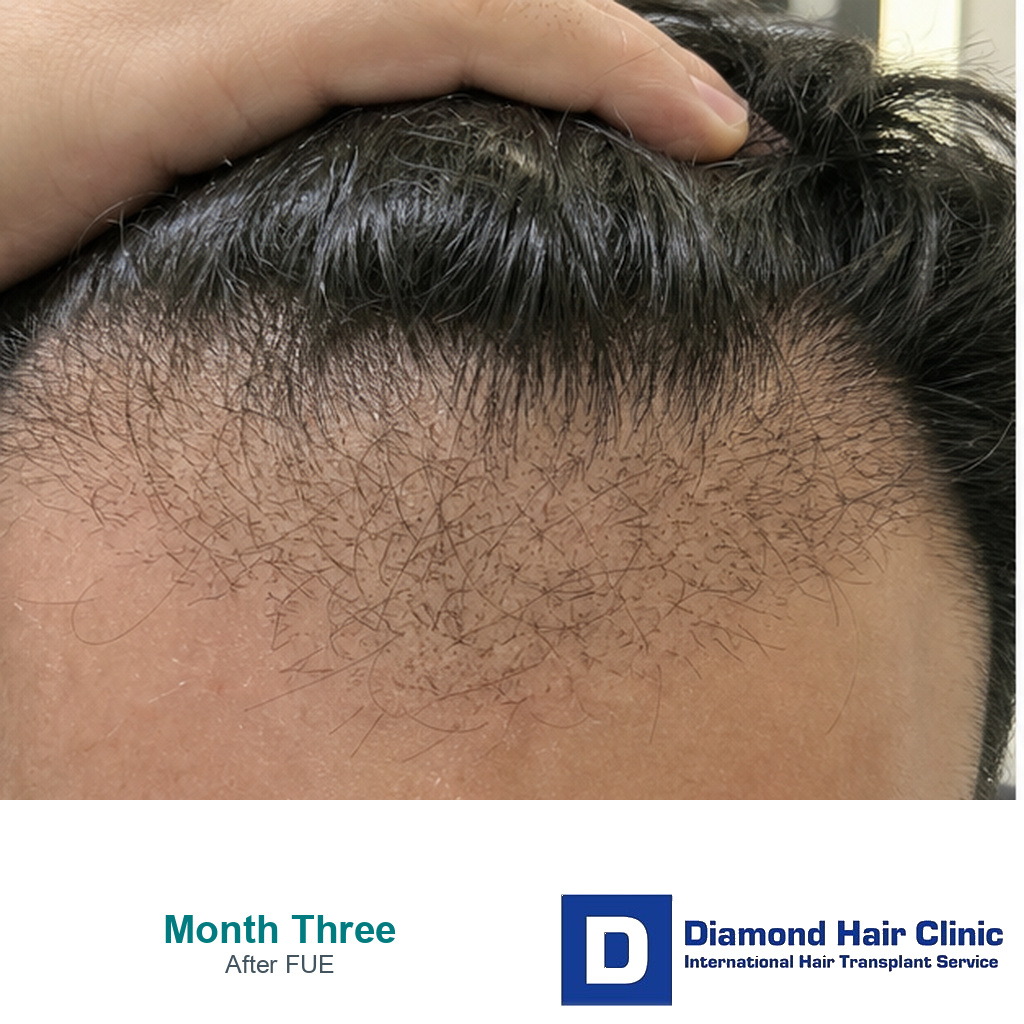
Early Growth Can Still Look Empty at Month Three
At the 10 to 16 week point, bare skin or a few weak hairs can still be part of the early growth window. Week 10, week 12, and week 16 are not the same visual checkpoint, but none of them is a final density verdict. You may see native hair growing faster than the transplanted area, a few short uneven hairs, or photos that make the transplanted zone look emptier than it feels in normal light.
I would not call a transplant failed at three months just because it looks empty. At this stage, I can read signals, but I cannot fairly judge the final density. The question is narrower. Is the scalp quiet, are the photos fair, are tiny hairs or texture appearing, is native hair confusing the picture, and is there any symptom or pattern that needs review now?
Month three can still be too early for a verdict
After FUE, many transplanted hairs shed before they grow again. That waiting period can make the recipient area look as if nothing is happening. It does not mean the roots have disappeared. It also does not guarantee that every graft will grow. It means month three is usually still too early for a final density verdict.
I separate the empty look from true graft loss because those are different clinical questions. If the fear is that shedding itself means the grafts are gone, first separate normal shaft shedding from a real injury pattern. The shedding boundary used for shedding at 2.5 months rarely means graft loss often still applies at month three, but the pressure feels stronger because patients expect the first signs to appear soon.
Shedding alone is not a score for final density. The timing and amount can differ between patients, so an early shed, a late shed, or very little shedding does not prove a better or worse result by itself. I read it together with the scalp condition, any trauma, medication changes, and matched photos. Marked shedding with persistent redness, pain, discharge, or folliculitis belongs in a clinical review, not a forum prediction.
The scalp can also look worse before it looks better. The transplanted area may be short, the native hair may be longer, the hairline may have no styling support, and the contrast between skin and hair can be strong. In close phone photos, that contrast can look stronger than it does in the room, especially when the hair is wet or combed away from the area.
The same patience applies after a large session. A patient who was told a high graft number may expect early density sooner, but month three still cannot prove the final result. The question is whether healing is quiet, the photos are comparable, and the original 5000 graft plan protected the donor area instead of chasing a trophy number.
Early growth can be fine, pale, or uneven
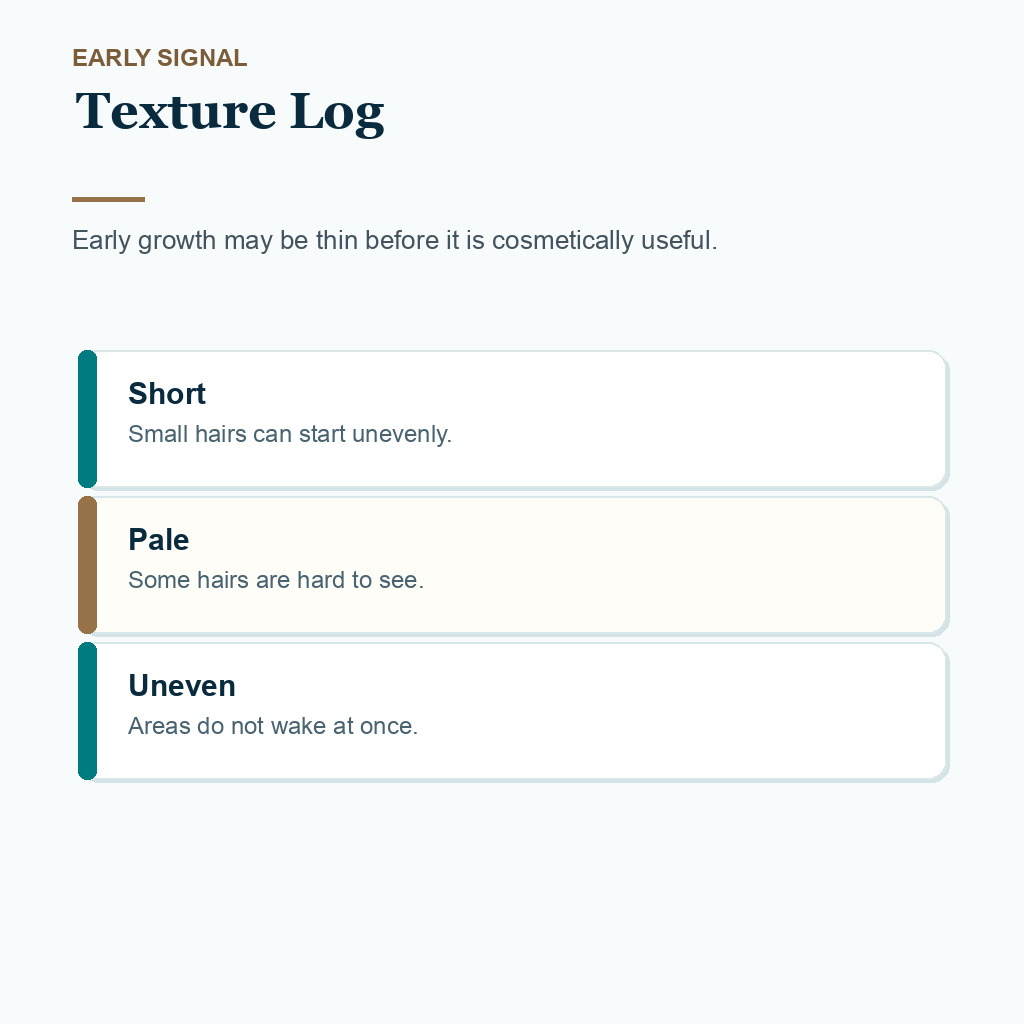
Early growth is not always dramatic. It may start as fine, pale, weak, or uneven hairs. Some zones wake up before others. Some hairs are visible only in a certain light. Some patients notice texture before they notice density.
If tiny hairs look stuck at the same length, do not pluck, scratch, or keep testing them. They may be early hairs, retained short shafts, or hairs that only show under one lighting condition. Matched photos over the next few weeks are more useful than trying to prove what one hair is with your fingers.
At month three, the result does not need to look good yet. The useful review is whether the same area is being photographed in the same way and whether small changes are appearing over time. That is the photo record behind tracking hair transplant growth without panicking.
A useful comparison at month three is usually quiet and boring. Wash and dry the hair the same way, avoid strong styling products, take the photos before you start touching the hairline, and keep the phone at the same steady distance. If you change three conditions at once, you are no longer comparing growth. You are comparing lighting, angle, hair length, and anxiety. Before sending another close photo, take one calm set with the same distance, dry hair, and the same room light instead of changing the comparison each time.
There is another trap here. Native hair often grows faster and thicker than the new transplanted hairs at this stage. When native hair frames a recipient area that still looks empty, the contrast can make the transplanted zone seem worse than it is. That contrast should be documented, not used as a final verdict.
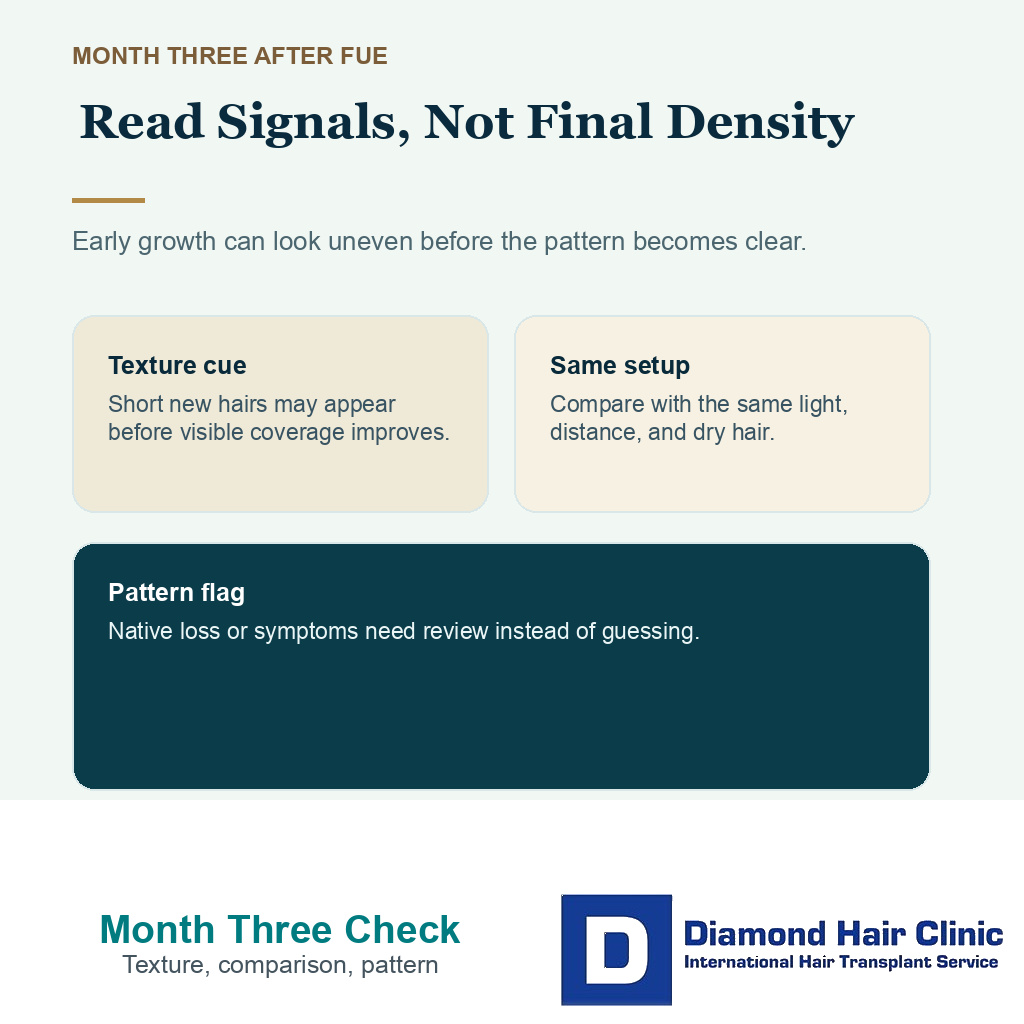
Useful photo sets beat harsh comparisons
Most panic at month three comes from unfair comparison. A wet, close, overhead bathroom photo compared with someone else’s best lit progress photo is not a medical comparison. It is a lighting experiment. Choose the next review date before you take the next photo, so the camera does not become a daily verdict. Compare zones, not isolated corners, because early growth rarely appears evenly everywhere.
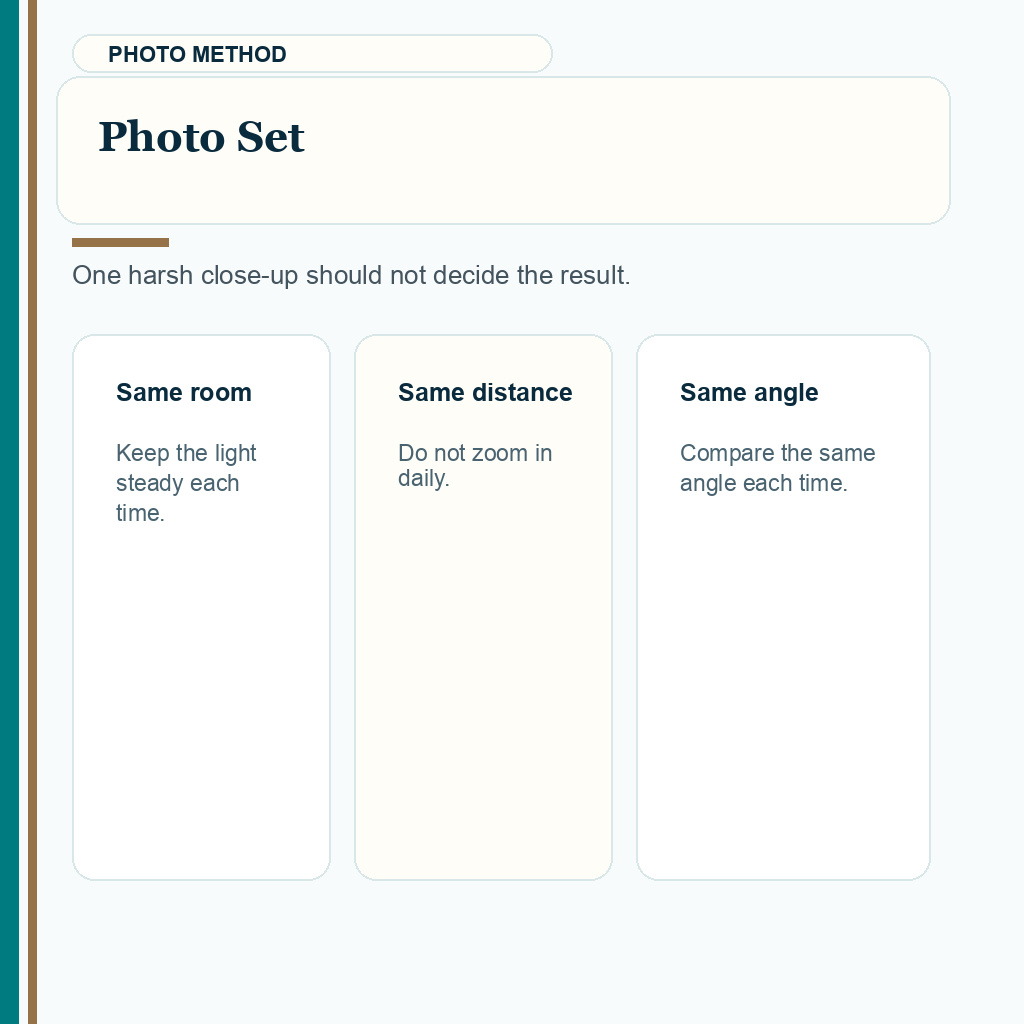
If you want your clinic to judge the pattern, make the photos useful. Use the same room, same light, same distance, and the same angles. Front, both sides, top, and donor views are more helpful than ten zoomed photos of one corner. A front photo can make the hairline look empty or uneven while the top view shows only fine early hairs, and that does not prove success or failure. It tells me to repeat the same angles and review sooner if there is pain, discharge, spreading redness, fever, trauma, fast swelling, or a pattern that gets worse instead of settling. A proper set of early hair transplant review photos gives the surgeon cleaner evidence than one cropped close photo.
Daily checking can also distort your judgment. If you check every morning, every shower, and every different light, small normal variation begins to feel like a new problem. That loop is close to mirror checking after hair transplant. The solution is not to ignore the scalp. It is to document it on a schedule that creates usable evidence.
Native hair can make month three look worse
Some patients see only native hair growing and assume the transplanted hair failed. Sometimes that is just timing. Native hair and transplanted hair are not always in the same phase, and the transplanted hairs may be too fine to create density yet.
Different lengths can be managed cosmetically without turning the haircut into a growth test. For matched progress photos, keep the surrounding native hair at a similar length from one review to the next. Between reviews, ask the clinic whether a light trim can blend the longer background while the recipient area remains undisturbed. Shortening the native hair may reduce the visual contrast, but it does not make transplanted hairs mature faster or prove anything about final density.
Temporary native hair shedding can add another layer. If the hair around or behind the transplanted area thins temporarily, the whole zone may look weaker. I separate native hair shock loss after FUE from transplanted graft growth before judging the transplant itself. When native shock loss is part of the picture, month three can look emptier, and sometimes worse than the early weeks before shedding, even if the transplanted follicles are beginning their own cycle.
Visible hair alone is not enough for me to judge the photo. I look at distribution, skin condition, donor and recipient patterns, native hair background, and whether the photos are comparable. A patient usually sees one frightening image. What matters to me is whether the same area is changing over time.
Patterns that deserve review
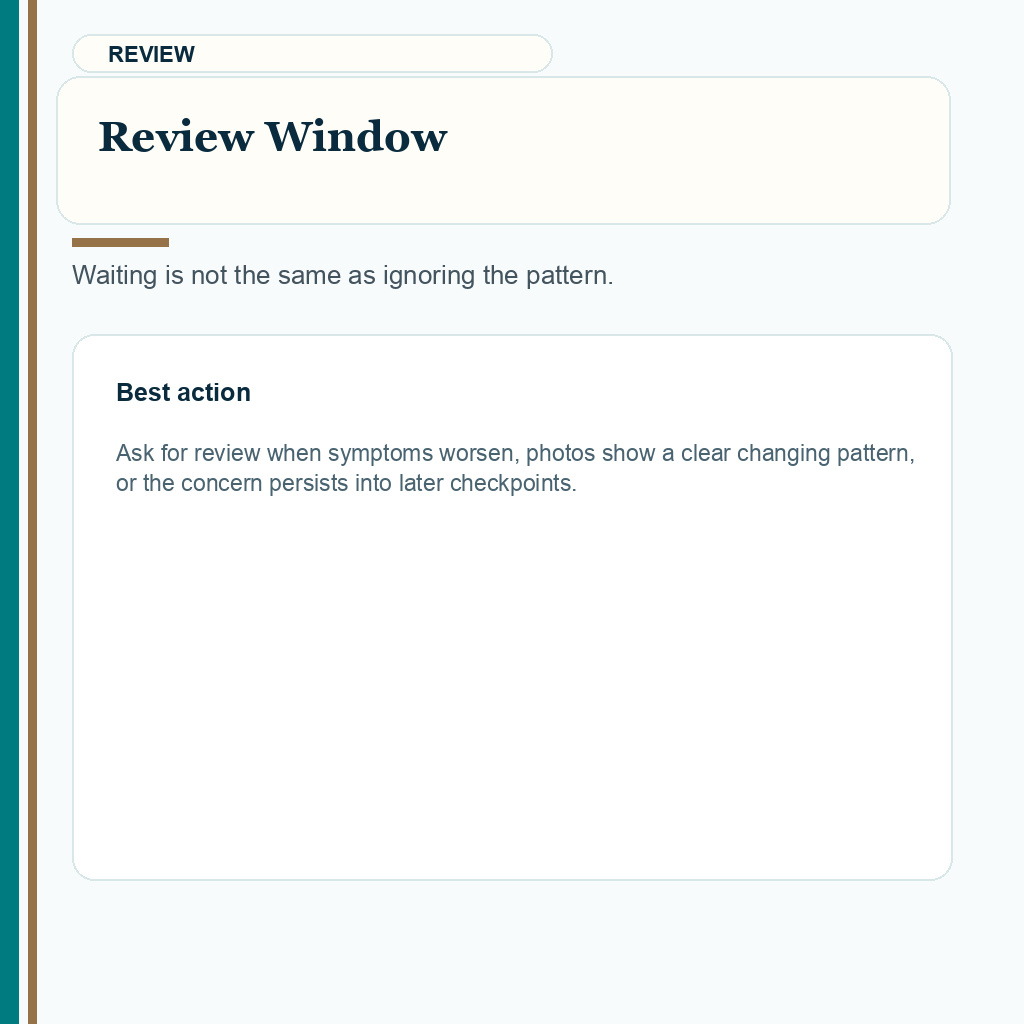
Waiting at month three should not become blind reassurance. If pain is increasing, redness is spreading, discharge appears, swelling worsens, bleeding restarts, or a trauma happened to the recipient area, ask for review. In those situations, the concern is wider than slow growth.
Visible skin findings also need context. Redness, small pimples, and scabs can mean different things depending on timing, severity, and trend. If that is part of the worry, the decision belongs with redness, scabs, or pimples after a hair transplant, not with density judgment alone.
Also tell the clinic if you recently changed minoxidil, finasteride, shampoo, PRP timing, supplements, or a topical product and the skin became red, itchy, scaly, hot, sore, or full of pimples. Do not start, stop, or intensify treatment because of one frightening photo. Dates, symptoms, and photos are more useful than experimenting silently.
Review is also reasonable when one side, one temple, or one zone looks unchanged in comparable photos, or when the concern is becoming intense enough that you are checking constantly. The goal of review is not to force a final judgment. It is to make sure the waiting period is being watched with the right evidence.
A simple test helps here. Ask what actually changed since the last matched photo set. If the answer is only lighting, wet hair, a shorter haircut, or a closer camera, the evidence is weak. If the answer is worsening skin symptoms, a trauma, a consistent silent area in matched photos, or a pattern that keeps moving in the wrong direction, send the full set for review.
Month Three Growth Sorter
Choose the closest pattern. The growth review changes when the area is simply early, when fine hairs are visible, when native shock loss is confusing the picture, or when symptoms need review.
Wait with comparable photos
A quiet month three that still looks empty can remain inside the early window. Use the same photo method and compare trend, not one close-up.
- Do not call failure from one harsh photo.
- Take front, side, top, and donor views.
- Compare every few weeks, not every hour.
Document fine early growth
Fine hairs are not density yet, but they can show that the cycle is beginning. Record them without expecting cosmetic coverage immediately.
- Look for uneven short hairs.
- Keep lighting consistent.
- Expect texture before fullness.
Separate native hair from graft growth
If native hair has thinned or shed temporarily, the transplant can look weaker. Review the native hair background before blaming the grafts.
- Check the surrounding hair.
- Compare dry and styled conditions fairly.
- Check whether shock loss fits the pattern.
Ask for pattern review
Worsening pain, spreading redness, discharge, bleeding, trauma, or a sharply changing pattern should be reviewed instead of watched silently.
- Send clear photo sets.
- Include the day after surgery.
- Do not hide symptoms behind reassurance.
The boundary between month three and month four
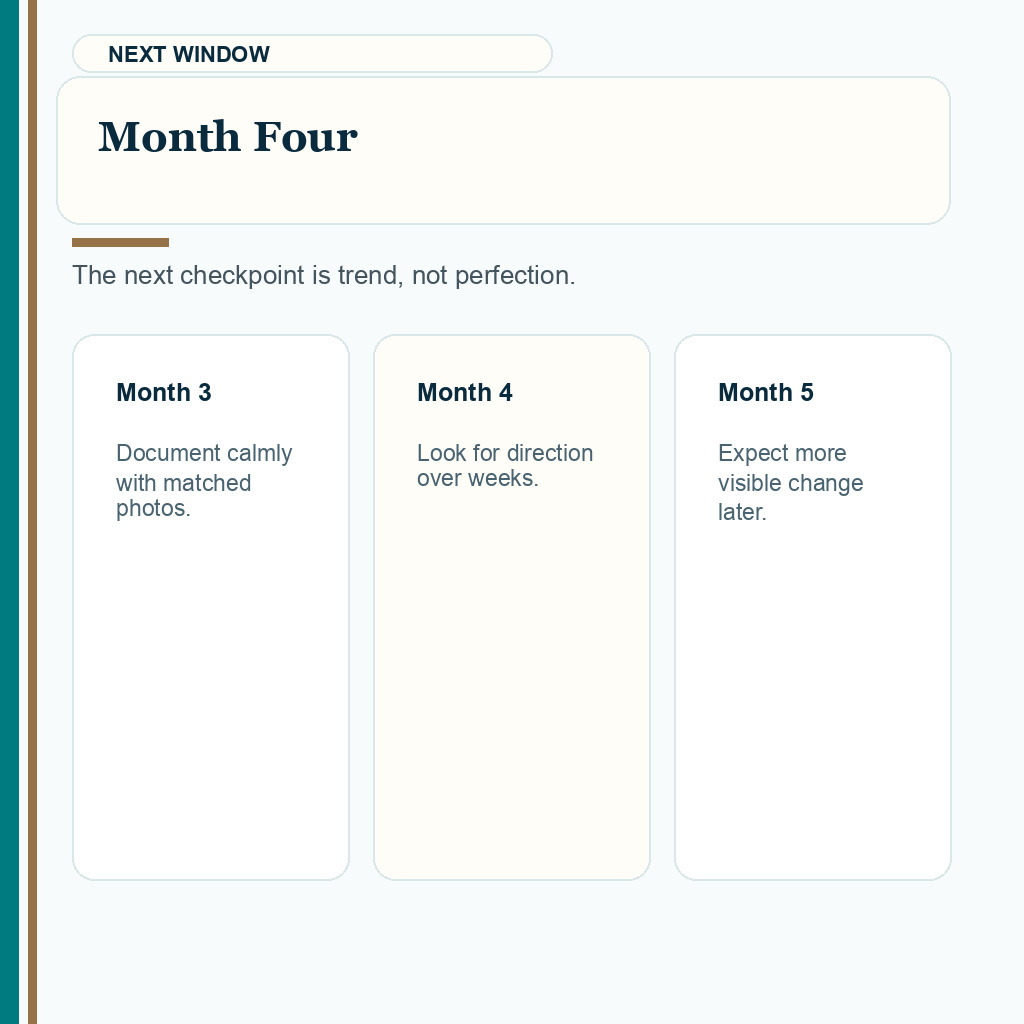
Month three is not the same as month four. By month four, we can often begin to discuss direction more clearly, although density can still be early. If that is the exact stage you are in, the question changes to low density at month four.
Month five is another checkpoint. If you are asking whether visible growth should now be more obvious, compare the pattern with hair transplant growth at month five. At month three, I still keep the question smaller. Are the photos comparable, is the scalp quiet, and is the pattern moving enough to deserve review?
Keep the verdict open
At three months, the most useful plan is simple. Do not declare failure from one close photo. Do not compare your worst light with someone else’s best update. Do not ignore symptoms. Take comparable photos, watch the trend, and ask for review when the pattern or symptoms deserve it.
If density is still low at later checkpoints, the discussion changes. At six months, I want more organized context before deciding whether the concern is late growth, native hair change, photo conditions, or a true density problem. That is the frame in low density at six months. But month three is usually too early to close the verdict.
A steady record is more useful than a dramatic conclusion. Month three can look empty and still be early. The evidence matters more than the fear when deciding whether the next review is useful.

Read this review excerpt
Every single one of my questions was answered and they made sure I had all the details I needed to make an informed decision.