


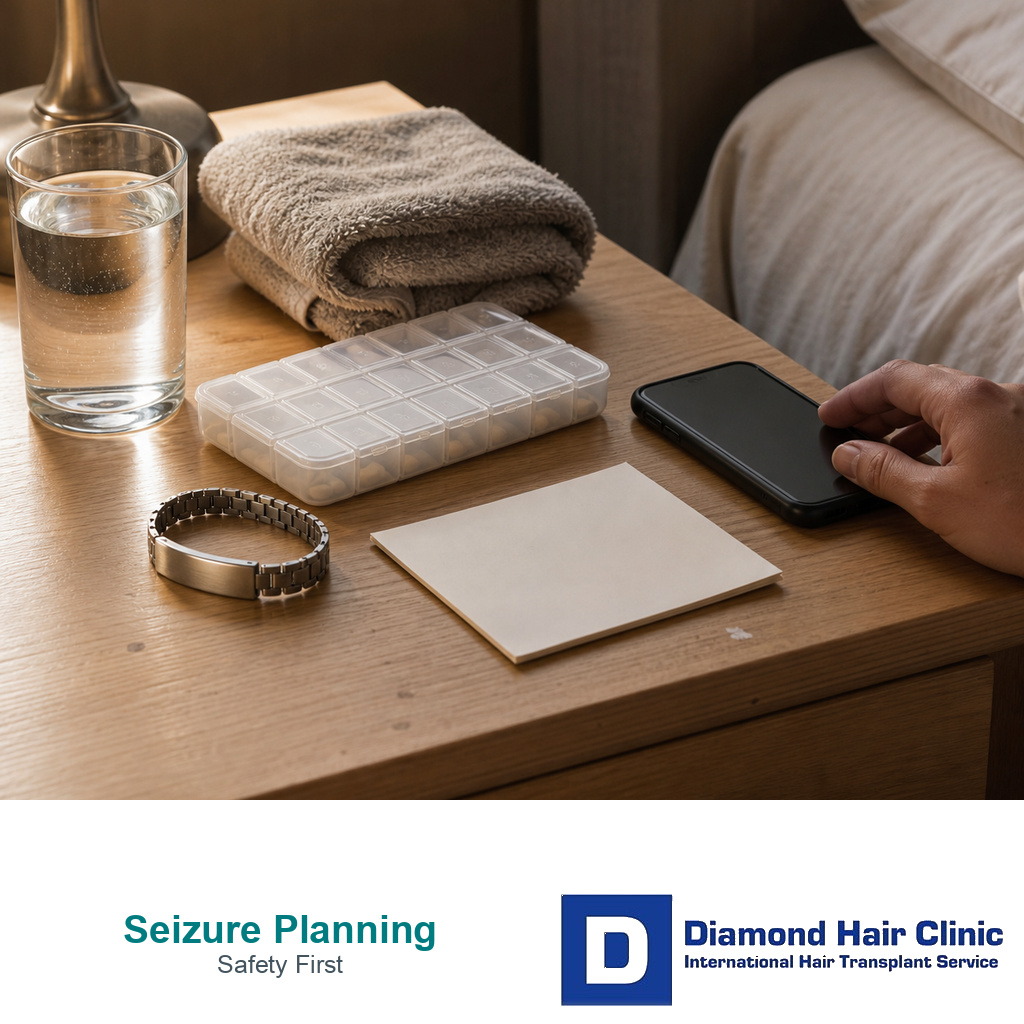
Epilepsy Before FUE Needs Seizure Planning
A hair transplant may be possible with epilepsy when seizures are well controlled, medication is stable, and the surgery day can be planned around known triggers. I do not treat it as a routine booking. Recent seizures, missed medication, poor sleep, alcohol use, medication changes, or neurologist concern can all make an elective procedure unsafe for now. Sleep and medication timing should be protected as carefully as the scalp plan.
The issue is not only whether epilepsy exists. It is whether the day can be made predictable enough. I need to understand your seizure history, current medicines, triggers, last seizure, sleep pattern, travel plan, and whether a neurologist wants any precautions before a long procedure under local anesthesia. Travel sleep loss and missed meals matter more if they already trigger seizures for you.
Epilepsy can be compatible with surgery when stable
Epilepsy can be compatible with hair transplant surgery when seizure control is stable, medicines are taken reliably, and you can safely complete a procedure that may last several hours. Hair transplantation is usually performed with local anesthesia, but it still involves stress, positioning, many small injections, and a long day in the clinic.
I judge the case differently if seizures are frequent, recent emergency treatment was needed, medication has just changed, sleep is poor, or the triggers are not clear. In those situations, the cosmetic goal should wait until the medical picture is steadier.
Procedure length also matters. A small, carefully planned session is not the same as a full day built around a high graft number. If seizure control is sensitive to fatigue, missed meals, stress, or disrupted sleep, the surgical plan has to respect that from the beginning.
Surgical suitability comes before the graft plan. That overlaps with the broader question of whether hair transplantation is the right choice for the hair loss pattern. With epilepsy, the scalp plan and the medical plan have to make sense together.
A transplant should not be treated as a simple booking form when epilepsy is part of the history. It should be a planned medical procedure with clear information, unrushed timing, and no pressure to proceed before the risk is understood.
Details to share before surgery
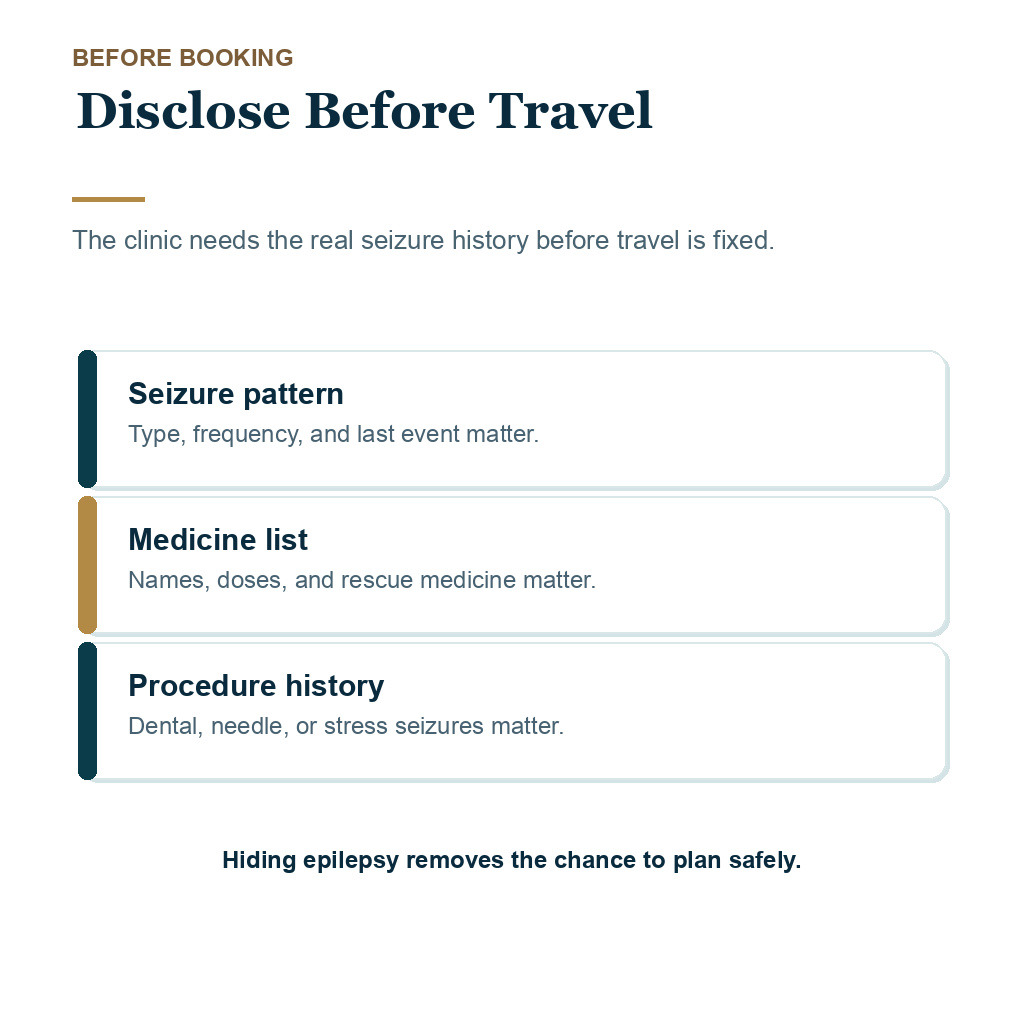
Before surgery, send the type of epilepsy, when the last seizure happened, how often seizures occur, what triggers them, and which medication you take. I also need to know whether you have missed doses recently, whether treatment has changed, and whether a seizure has ever happened during a medical, dental, needle, or stressful procedure.
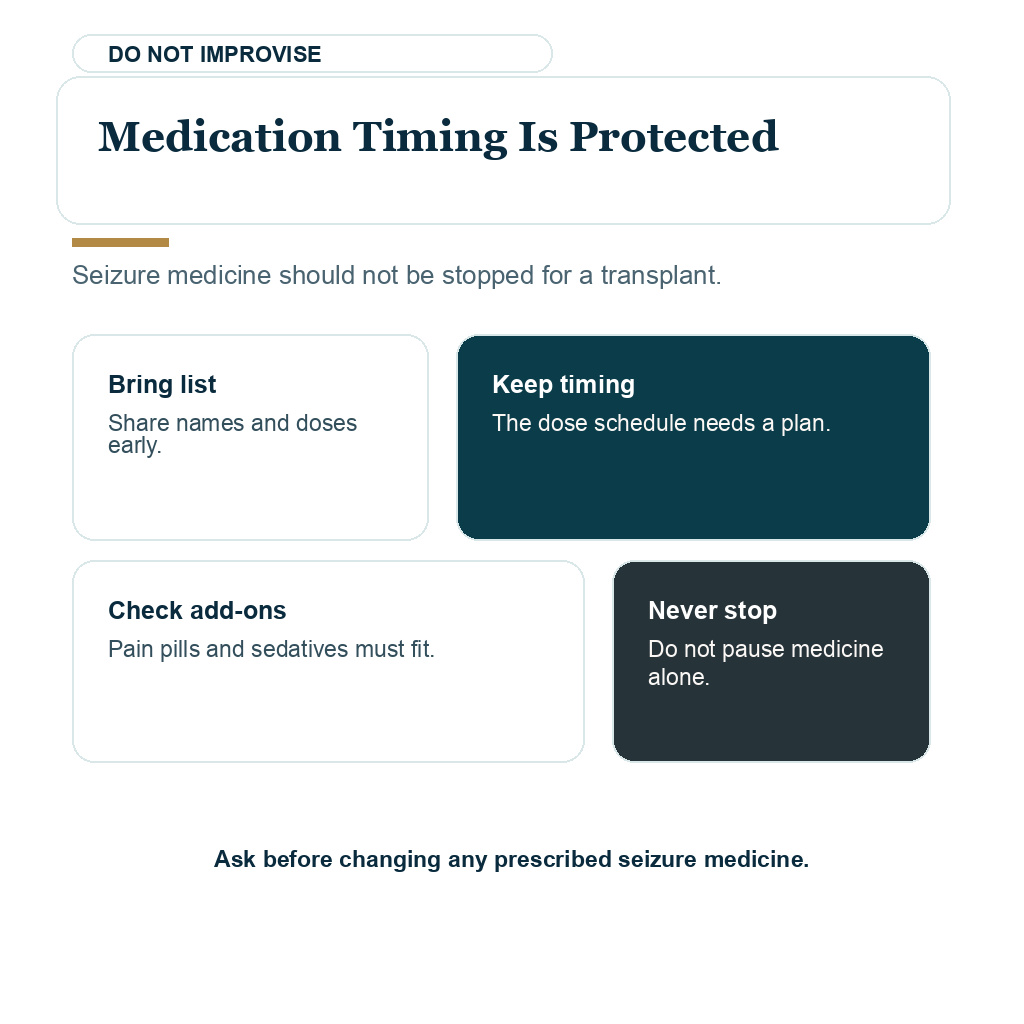
Medication names and doses matter. One stable seizure medicine is different from several medicines, recent dose changes, rescue medication, sedatives, antidepressants, sleep tablets, alcohol, stimulants, or supplements added around travel. The clinic should not guess about those details or casually tell you to stop treatment.
Depending on the case, blood tests before a hair transplant may be useful because some seizure medicines can affect liver function, blood counts, sodium level, or general medical planning. The purpose is not to make the process complicated. The purpose is to avoid surprises on a long surgical day.
Do not hide epilepsy because you are worried about being refused. A careful surgeon can only protect you if the history is clear. If the information is incomplete, the safer decision is to pause rather than pretend the risk is not there.
Neurology clearance should confirm stability and triggers
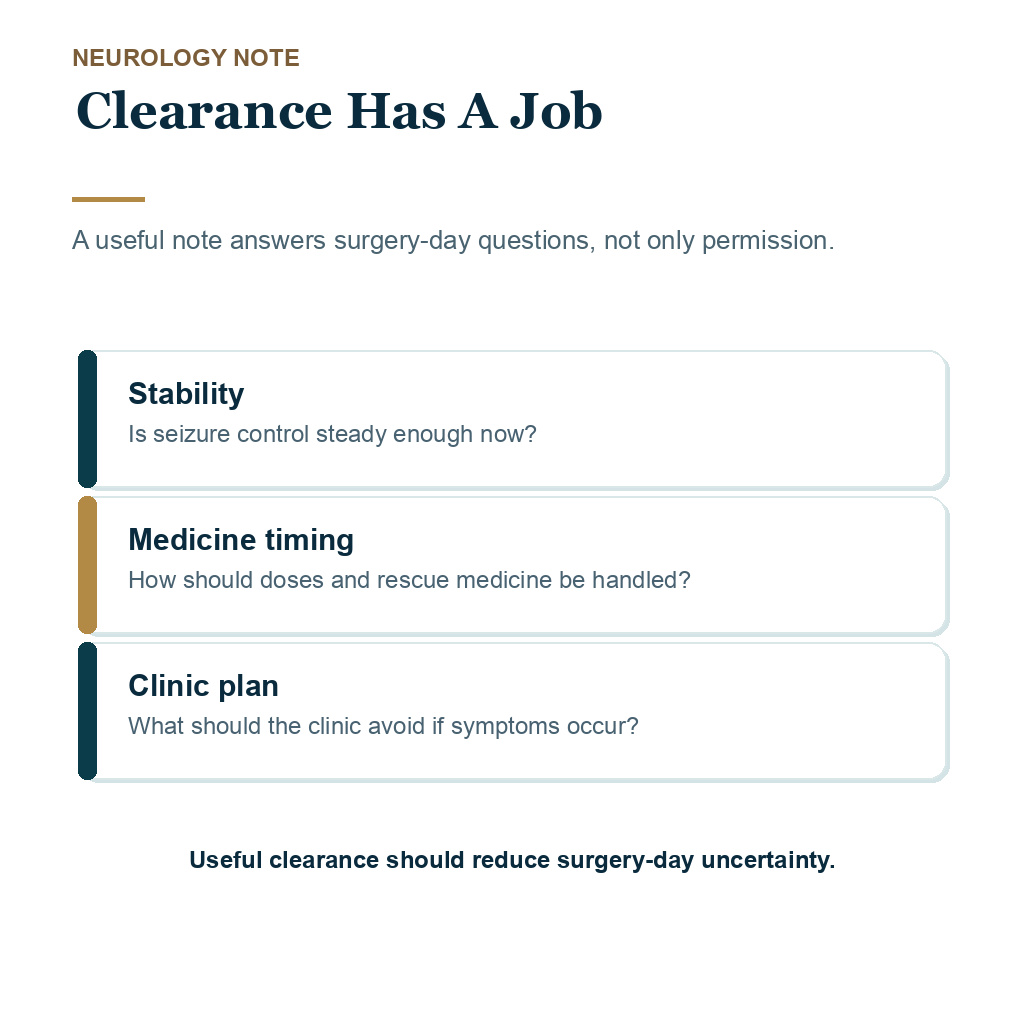
When epilepsy is active, complex, recently changed, or difficult to explain, a neurologist opinion is needed before elective surgery. A useful neurologist note should explain whether seizure control is stable, when the last seizure happened, whether medication doses are steady, whether any change is planned, and whether a long procedure could aggravate known triggers.

The neurologist can also advise how medication should be timed on surgery day, whether rescue medication is part of the plan, and what the clinic should know if a seizure occurs. That information should be available before you are lying in the chair, not discovered during the operation.
This is part of the same safety thinking I use for medication before a hair transplant. The point is not to make you feel medically difficult. It is to remove avoidable uncertainty from a long elective day.
Seizure triggers matter on surgery day
Many seizures are linked to triggers such as missed medication, sleep deprivation, stress, alcohol, illness, dehydration, skipped meals, or flashing lights in susceptible people. A hair transplant day can accidentally collect several of these triggers if the plan is weak.
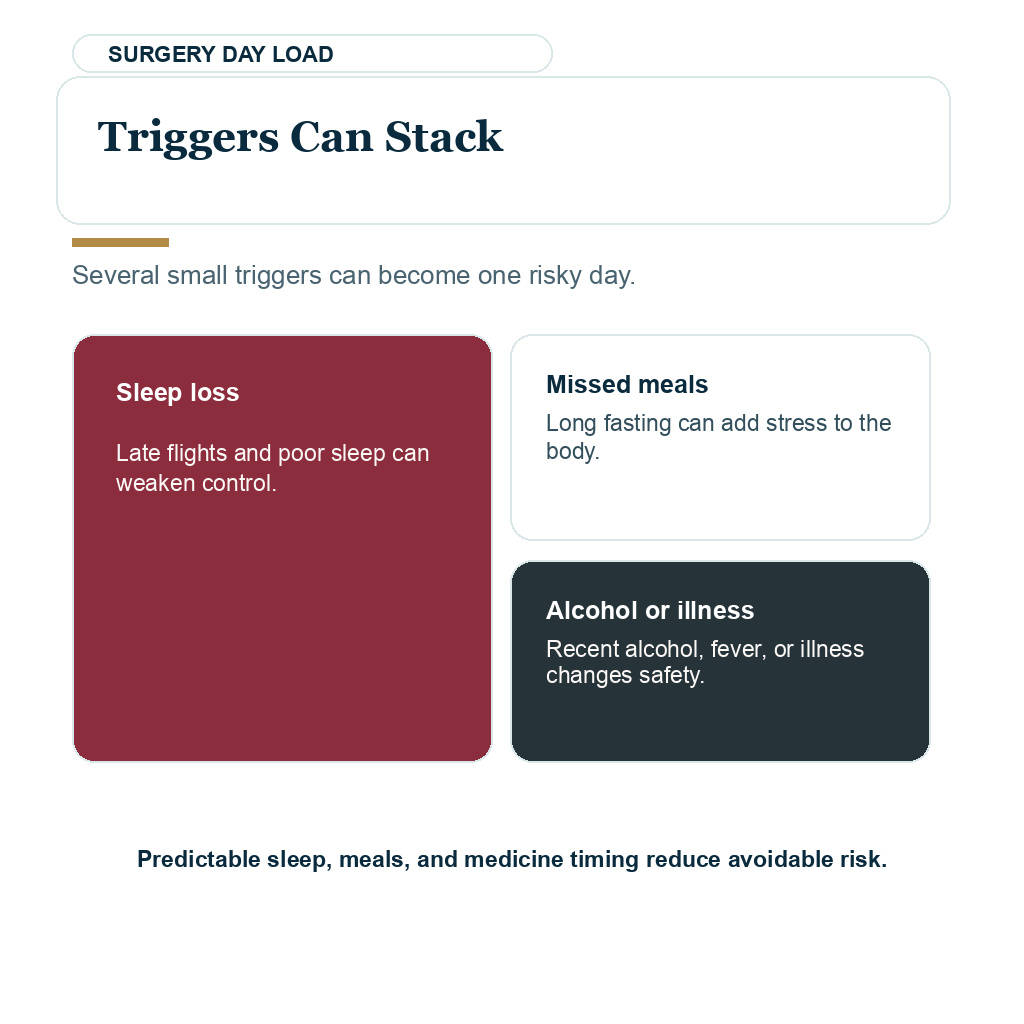
One controlled trigger is different from several triggers stacked together. A familiar early morning, normal medication, good sleep, and steady meals is different from arriving after a late flight, sleeping badly, skipping breakfast, feeling anxious, and delaying medication because nobody planned the schedule.
Good planning means prescribed medication is taken at the correct time unless the treating doctor gives different instructions. It also means avoiding unnecessary stress, long fasting, rushed scheduling, and poor communication. The practical details in before surgery instructions for hair transplant become more important when seizure control depends on rhythm and preparation.
The day should be steady, not rushed. A clinic that turns surgery into a crowded production line is a poor match for someone whose nervous system needs predictable conditions.
Travel planning also matters. If you are flying in, arriving late at night, sleeping badly, or skipping meals before surgery, seizure risk may become less predictable. A responsible plan gives you enough rest before the procedure rather than treating travel and surgery as one compressed event.
With epilepsy, travel planning should protect medication continuity. Keep seizure medicine in hand luggage with its original label, set phone reminders for transfer or clinic hours, and tell the clinic when doses fall around meals or the start of the procedure.
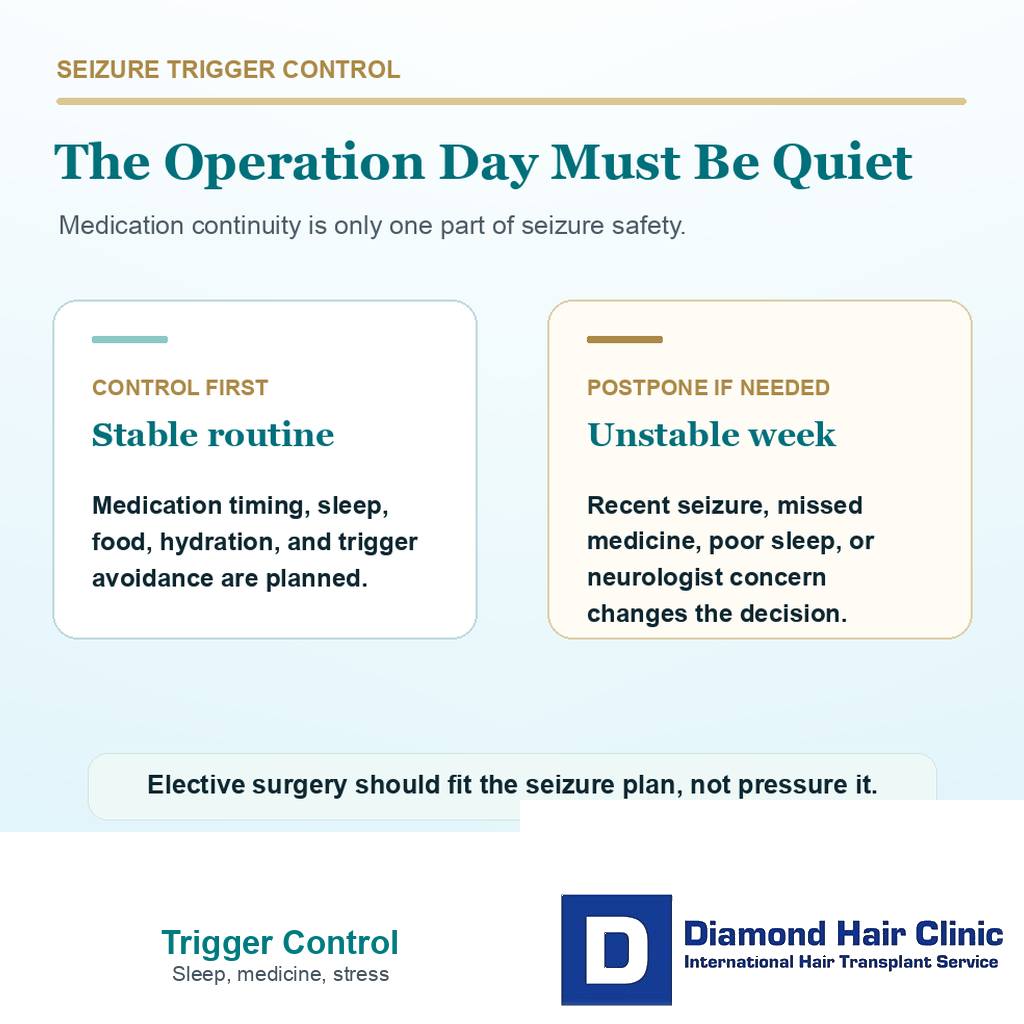
For epilepsy, the surgery day should be planned around medication continuity, sleep, stress, meals, travel timing, and known triggers.
Use these 10 epilepsy and hair transplant planning slides to separate seizure stability, stacked triggers, disclosure, medication timing, neurology clearance, anesthesia review, session length, delay signals, recovery safety, and consultation red flags. Swipe sideways, use the arrows one slide at a time, or choose a number below the image.
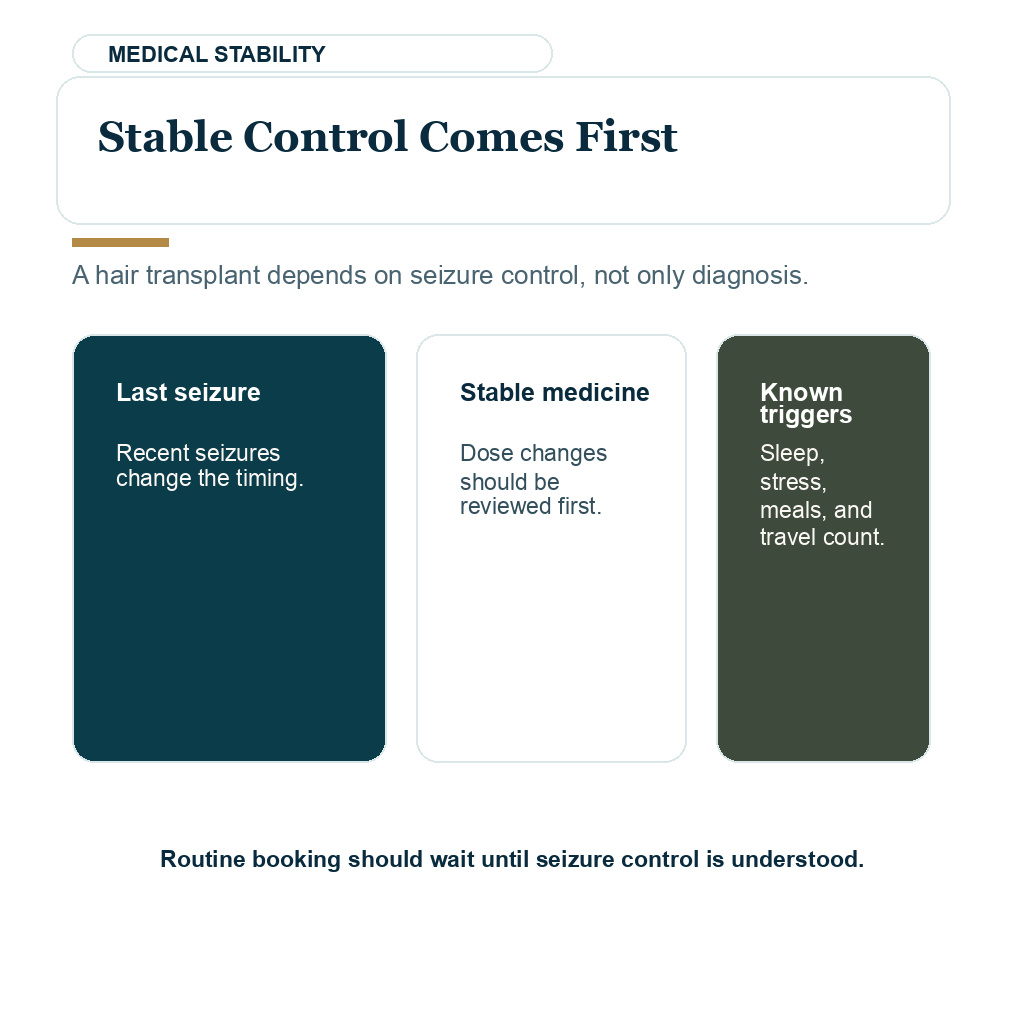

Local anesthesia and adrenaline need medical review
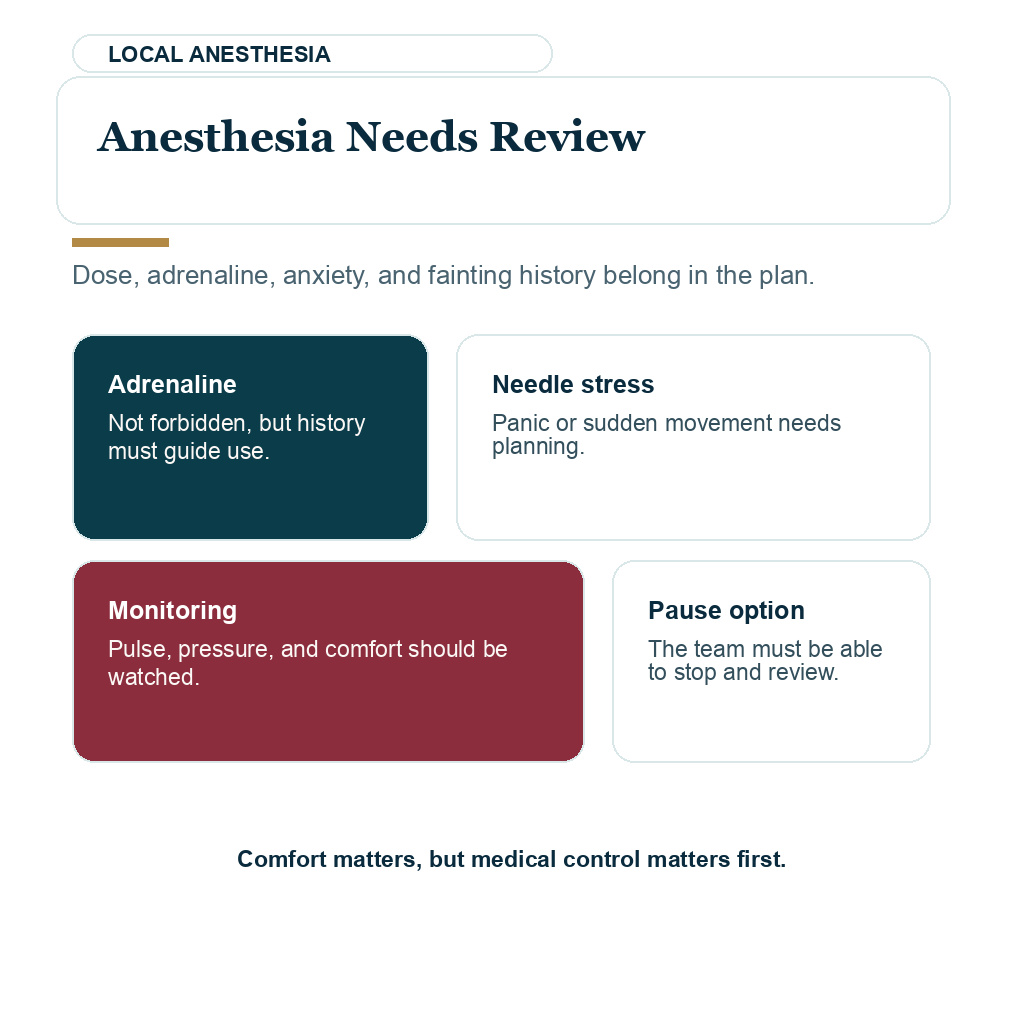
Most hair transplants are performed with local anesthesia. That can be appropriate for carefully chosen people with epilepsy, but the dose, timing, injection pace, monitoring, and medical history must be handled carefully.
Adrenaline is sometimes added to local anesthesia to reduce bleeding and prolong the effect. I do not treat that detail casually in epilepsy. The decision should consider seizure control, heart history, anxiety level, blood pressure, medication list, and any neurologist advice when the case is more complex.
The discussion overlaps with my explanation of adrenaline in hair transplant anesthesia. Adrenaline is not forbidden in every epilepsy case, but the clinic should understand the history before deciding the anesthetic plan.
If seizures are uncontrolled, if local anesthesia has caused a serious reaction before, or if needle fear, fainting, or panic could make you move suddenly, the operation should wait until the risk is clearer. Cosmetic surgery should not be used to test uncertain medical risk.
During anesthesia, communication matters. You need enough comfort and attention to say if anxiety, palpitations, dizziness, unusual sensations, or warning symptoms appear. A steady team can pause, reassess, and keep the day medically controlled instead of pushing forward mechanically.
Seizure medication should not be stopped casually
Do not stop seizure medication for a hair transplant unless your neurologist specifically tells you to. Missing or delaying seizure medication can increase risk for many people, and a hair transplant is not a reason to experiment with treatment.
The clinic also needs to check other medicines planned around surgery. Pain relief, antibiotics, sedatives, and supplements should be chosen with the medication history in mind. If pain control is needed after surgery, the advice should fit the medical background, just as it should when discussing painkillers after a hair transplant.
Some people also take antidepressants, anxiety medication, or sleep medication alongside seizure treatment. That does not always prevent surgery, but it changes the medication review. The same careful disclosure matters when someone asks about hair transplant while taking antidepressants.
When medication decisions are unclear, I speak with the prescribing doctor instead of giving a shortcut answer. Stopping the wrong medicine can be more dangerous than delaying a transplant.
The operation should be postponed when seizure control is unsafe
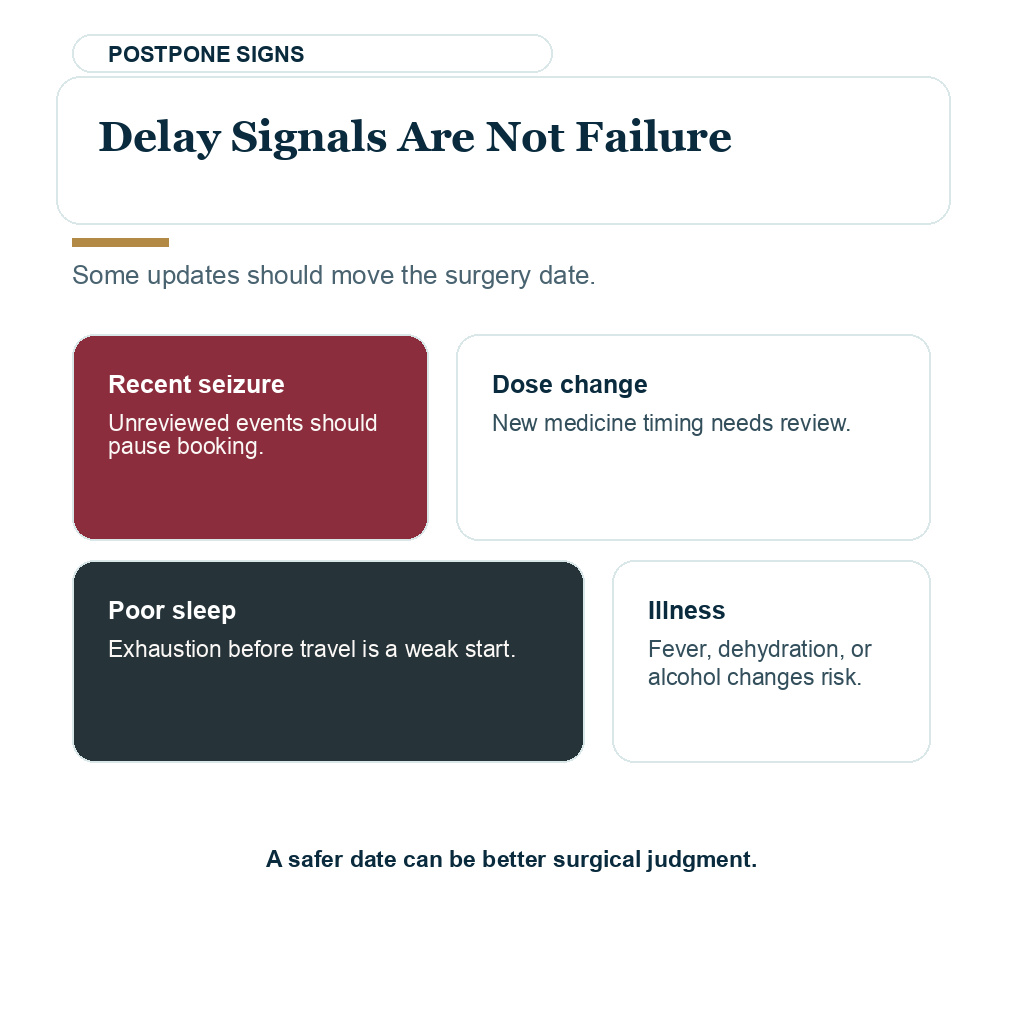
The operation should be postponed if seizures are not controlled, medication has recently changed, a recent seizure has not been reviewed, or the neurologist advises against elective surgery for now. It should also wait if you are exhausted, ill, dehydrated, sleeping badly, or unable to keep medication timing stable before travel. Pack enough antiseizure medicine for the trip, because a missed dose after arrival can turn into a surgery day problem.
I also delay surgery if the clinic cannot provide an unrushed schedule, proper monitoring, medication timing, breaks for meals and hydration, and clear communication. Epilepsy does not need drama, but it does need a more predictable day than a rushed high-volume setting can offer.
Other medical conditions can raise the level of planning needed. For example, someone who also has high blood pressure and wants a hair transplant or heart disease or a stent before hair transplant needs a broader safety review rather than a narrow hairline discussion.
Postponement is not failure. It may be the decision that keeps the transplant safe enough to do later.
There are also practical reasons to delay. If usual medication is not available during travel, if accommodation is unsafe, if you will be alone despite seizure risk, or if aftercare would cost you sleep for several nights, the timing is weak. A better date can make the same operation safer.
Procedure planning should reduce seizure risk
The procedure needs planning around lower stress, reliable medication timing, meals, hydration, breaks, and a controlled environment. The plan should make the day predictable, including what will happen, when medication and meals fit, and who is medically responsible if a problem occurs.
For some cases, a smaller session may be wiser than a very long session. Large graft numbers can sound attractive, but they also extend procedure time. In epilepsy, procedure length is not only a comfort issue. It can affect fatigue, meals, medication schedule, stress, and recovery sleep.
Surgeon involvement matters here. The consultation also needs to make clear who actually performs the hair transplant, who designs the recipient area, who manages anesthesia decisions, and who is available if the medical history changes the plan.
Reducing the graft plan can be safer than pushing through an unnecessarily long day. A natural result from a better protected plan is better than a dramatic number that ignores health.
The hairline design should also stay disciplined enough to make sense if the session is smaller. A low, aggressive hairline should not be used simply because the clinic wants the plan to look impressive. In a medically sensitive case, natural design and procedure safety have to work together.
Recovery instructions that matter more with epilepsy
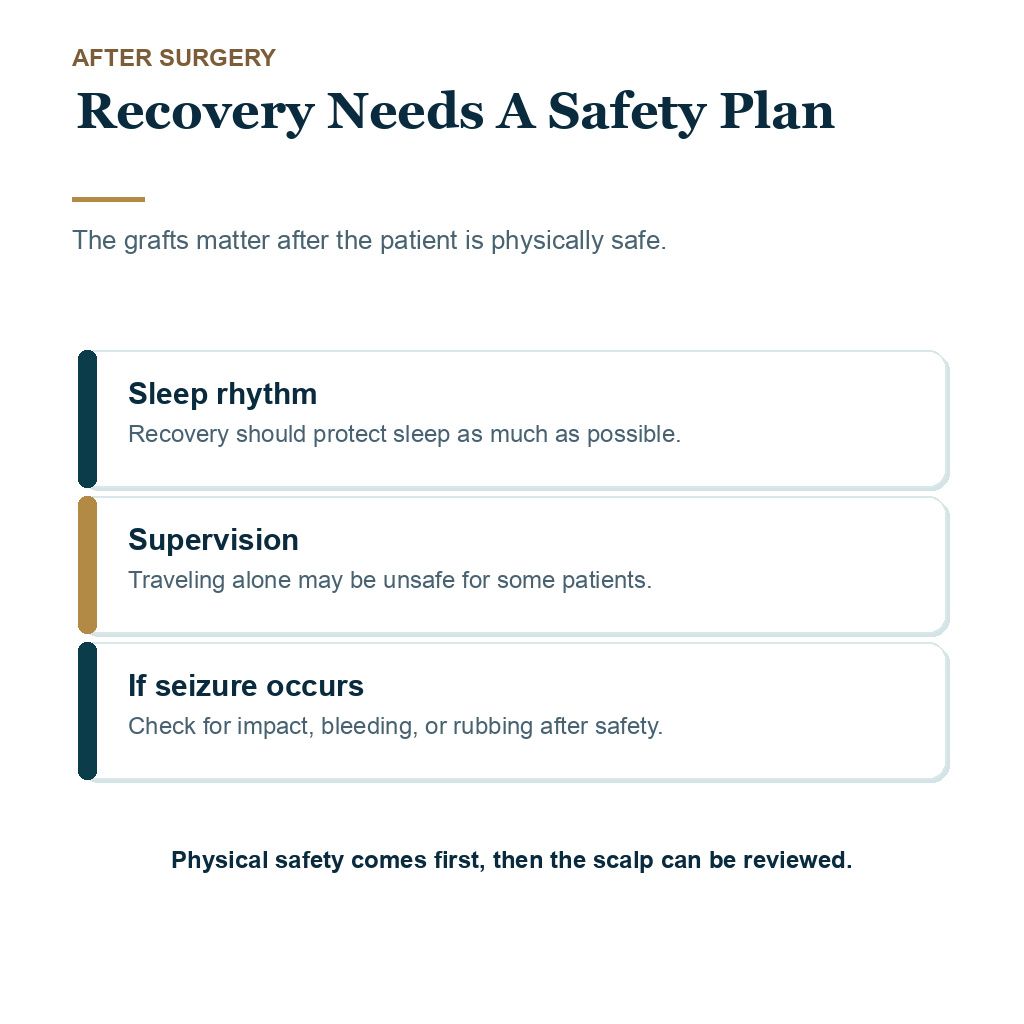
After surgery, the usual graft protection rules still apply. The recipient area must be protected from rubbing, scratching, pressure, and trauma. With epilepsy, I also think about what could happen if a seizure occurs during the early healing period.
Recovery needs to be safe, supervised when appropriate, and realistic. If seizures are possible, discuss the early recovery period with the neurologist and follow the clinic’s instructions closely. If a seizure happens, the first priority is physical safety. Once you are stable, the scalp can be checked for bleeding, rubbing, swelling, or graft trauma.
Sleep is also part of recovery. Poor sleep can affect seizure control for some people and can make the first days more stressful. If sleep apnea or CPAP is also part of the history, the planning may overlap with the concerns described in hair transplant with sleep apnea or CPAP.
A seizure after surgery does not prove grafts are lost by itself, but the scalp should be reviewed if there was rubbing, impact, bleeding, or visible change. Safety comes first, then the grafts can be assessed with clear photos instead of finger checking.
Clinic promises that need extra caution
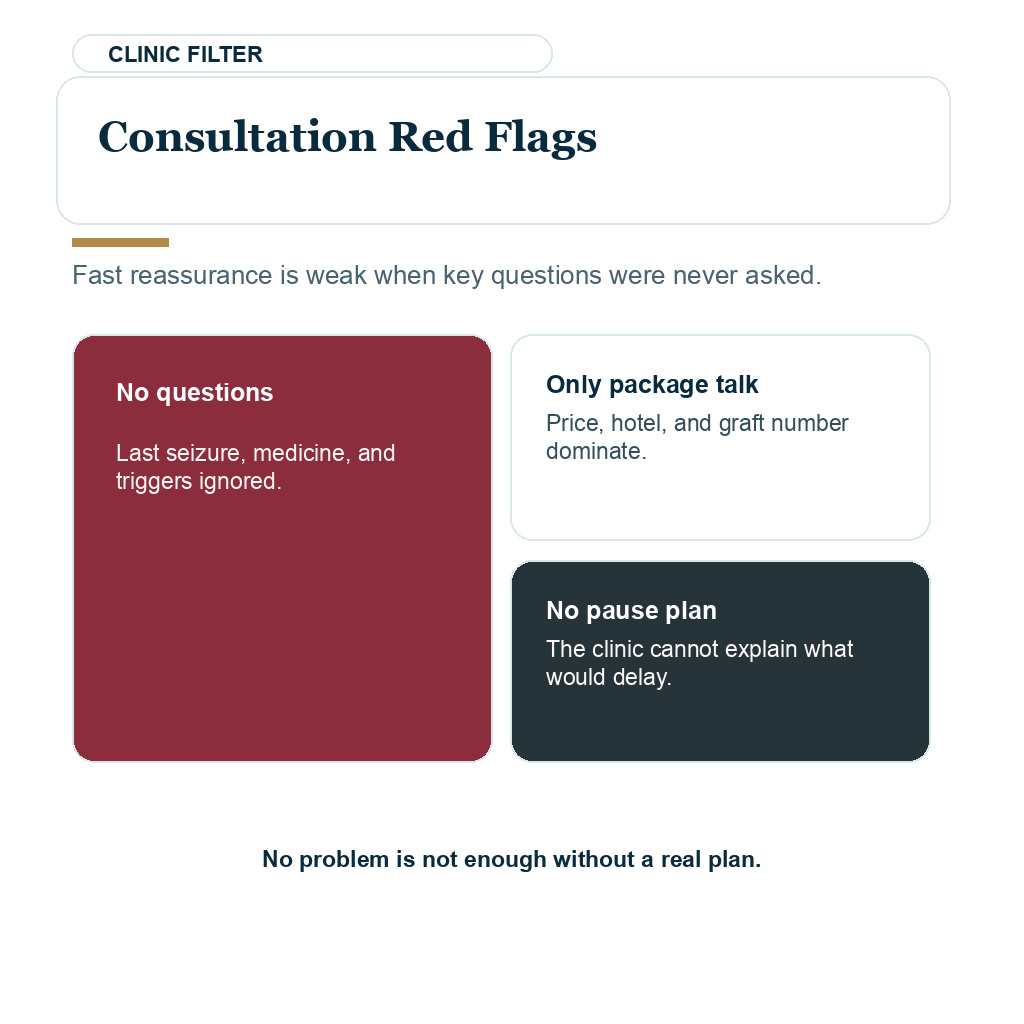
Be careful with any clinic that says epilepsy does not matter without asking about seizure control, medication, triggers, or neurologist input. A safe clinic does not need to exaggerate the risk, but it should not ignore it either.
A weak consultation may focus only on graft number, price, hotel, or date availability. That is not enough for this case. The medical history changes the planning, even when surgery remains possible.
I am also cautious with clinics that promise a large session in one day without discussing fatigue, meals, medication timing, local anesthesia, and recovery supervision. The consultation should leave you with a clear plan, not only a package.
The decision may be surgery, a smaller session, delayed surgery, or no surgery for now. The clinic should be able to explain the reason without making you feel rushed.
Quick reassurance also worries me. “No problem” is not enough when the clinic has not asked about the last seizure, current medication, and triggers. Confidence is useful only when it comes after proper assessment.
Seizure control sets the surgery conditions
The word epilepsy is not enough to approve or refuse surgery. I need to know seizure type, recent control, medication reliability, sleep pattern, triggers, neurologist advice when relevant, and whether the patient can complete a long local anesthesia day without avoidable risk.
Stable control can make hair transplant surgery reasonable for some patients. Recent uncontrolled seizures, missed medication, unclear triggers, or poor sleep can make an elective operation wait. The graft number and session length have to fit the medical history, not only the hair loss pattern.

Read this review excerpt
Every single one of my questions was answered and they made sure I had all the details I needed to make an informed decision.