


Creatine Restart Needs Recovery Stability
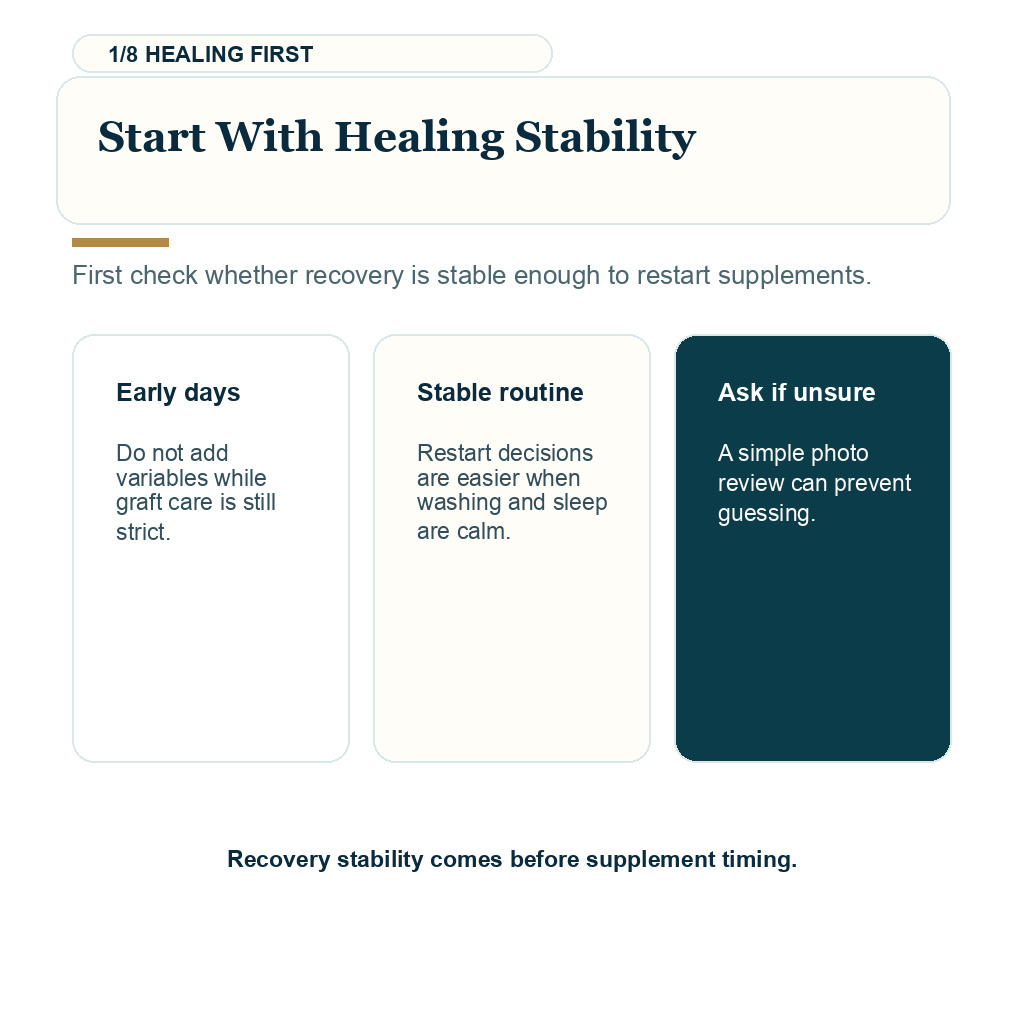
Many medically healthy patients can take plain creatine after a hair transplant, but I slow down around restarting it in the first days, and I do not let it become the excuse for hard training too early. My usual approach is to pause creatine on surgery day and during the first 10 to 14 days. After that, restarting only makes sense when the scabs are gone, washing is normal, swelling has settled, and exercise is returning gradually.
Creatine itself is rarely the main danger to transplanted grafts. The bigger concern is the training, sweating, stimulant use, and hydration changes that often come with it. Heavy lifting, sweating, dehydration, poor sleep, pre workout blends, tight hats, gym hygiene, and anxiety about DHT can all make the early recovery period harder to manage.
With creatine, I do not answer only the vitamin or supplement question after surgery. I ask what is happening with training, hydration, medications, stimulant products, and native hair loss during the same period. If anabolic steroids are also involved, I treat that as a separate medical and surgical planning issue.
Write your question as a routine, not just a supplement name. Creatine, pre workout, hard training, low water intake, and poor sleep should not be reviewed as the same issue.
Treat creatine as part of getting back to training. Restarting it alongside stimulant powders, heavy lifting, sweating, and poor hydration makes it harder to know which factor caused irritation or shedding worry. Restart one variable at a time. When creatine, stimulant powders, hard training, and low sleep all return together, the clinic has less useful information when irritation or shedding anxiety appears.
Creatine and gym return need separate timing
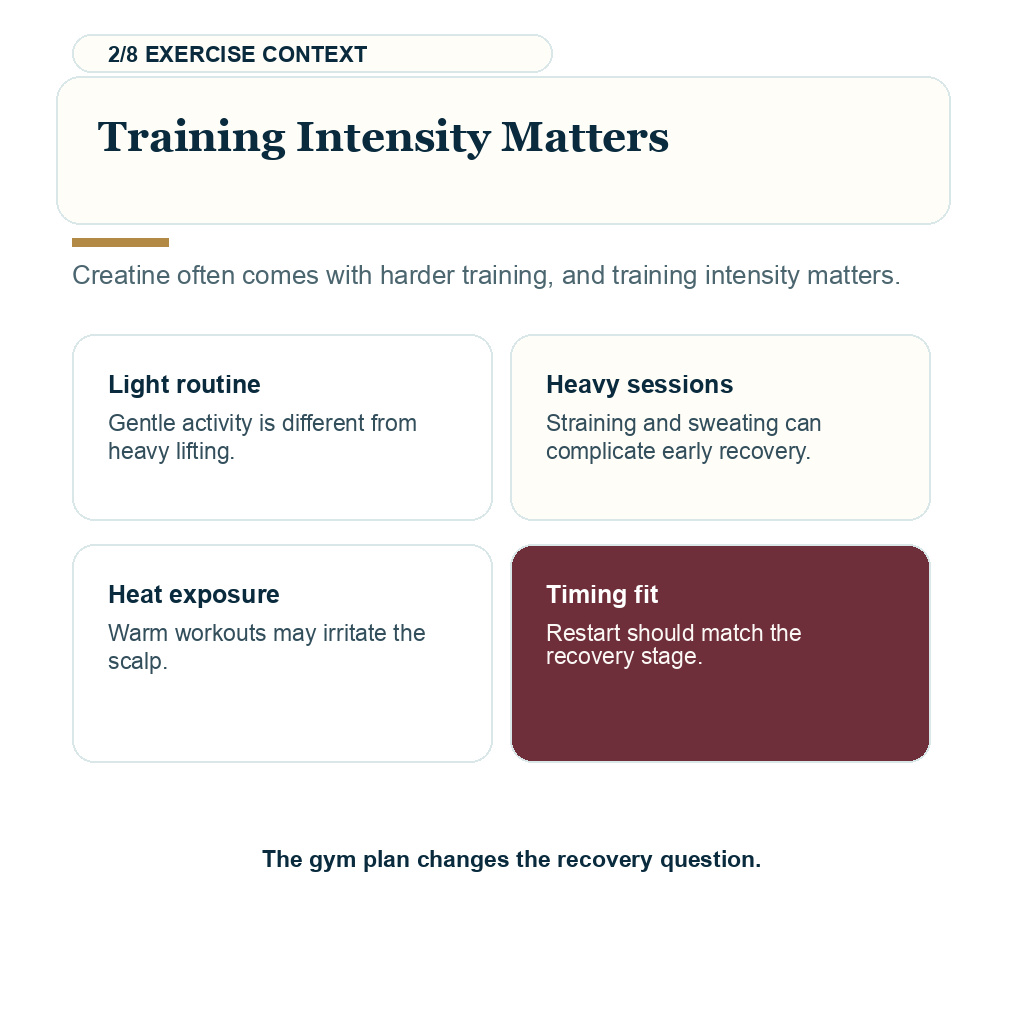
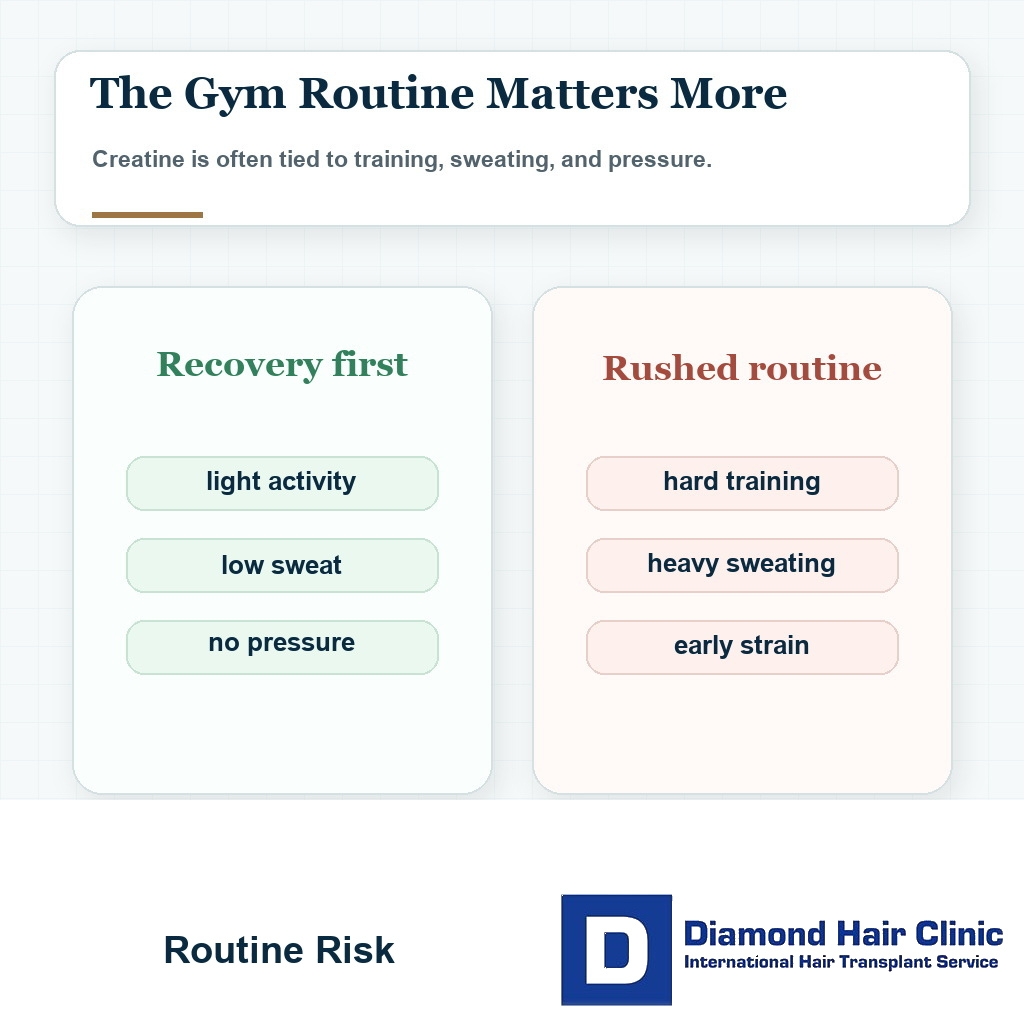
Most patients who ask about creatine are really asking when they can return to the gym. That is where the practical risk usually appears. The scalp needs quiet healing before it is exposed to heavy sweating, raised blood pressure, accidental contact, and towel rubbing.
Creatine may feel like a small routine, but for many patients it is tied to the whole gym pattern. They restart the powder, then the pre workout, then the heavy session, then the sweating and scalp checking. That sequence is what I try to prevent in early recovery.
The same recovery logic applies to exercise after a hair transplant. The scalp does not respond differently because the sweat came from ambition, habit, or impatience. It still has to heal.
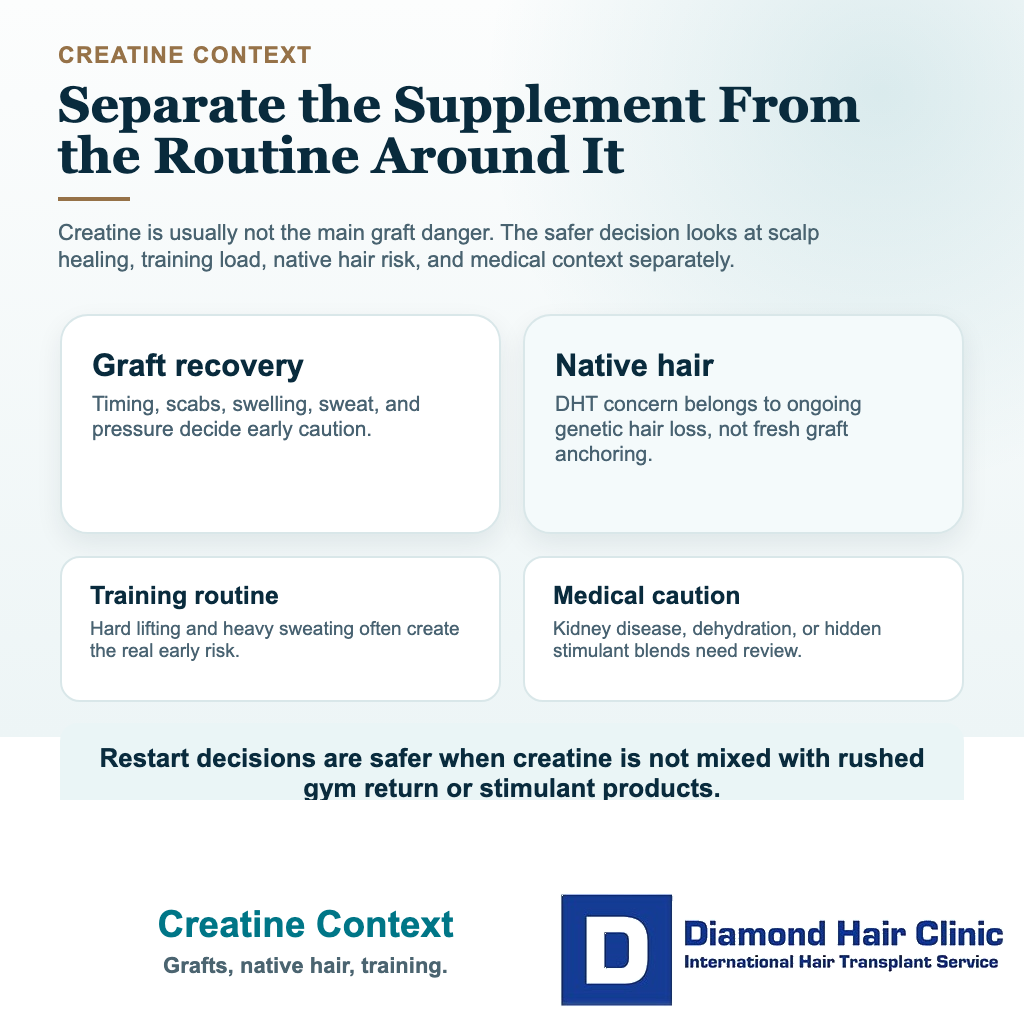
Creatine itself is rarely the graft risk
I do not usually see plain creatine monohydrate as a direct cause of graft damage. A transplanted follicle is not destroyed simply because a patient takes creatine after the early fragile period.
The early graft risks are more practical. Rubbing, scratching, trauma, poor washing, infection, swelling, and heavy activity matter much more. If creatine leads to harder workouts before the scalp is ready, then the real risk is the behavior around creatine, not creatine as an isolated powder.
I make this distinction because patients often look for one villain. Hair transplant recovery is usually affected by a collection of habits, not one supplement alone. Plain creatine that a patient already tolerates is not the same discussion as a stimulant heavy stack, a loading phase, dehydration, and early heavy lifting. The same separation helps with protein powder during hair transplant recovery. Plain nutrition support is not the same as a gym stack restart.
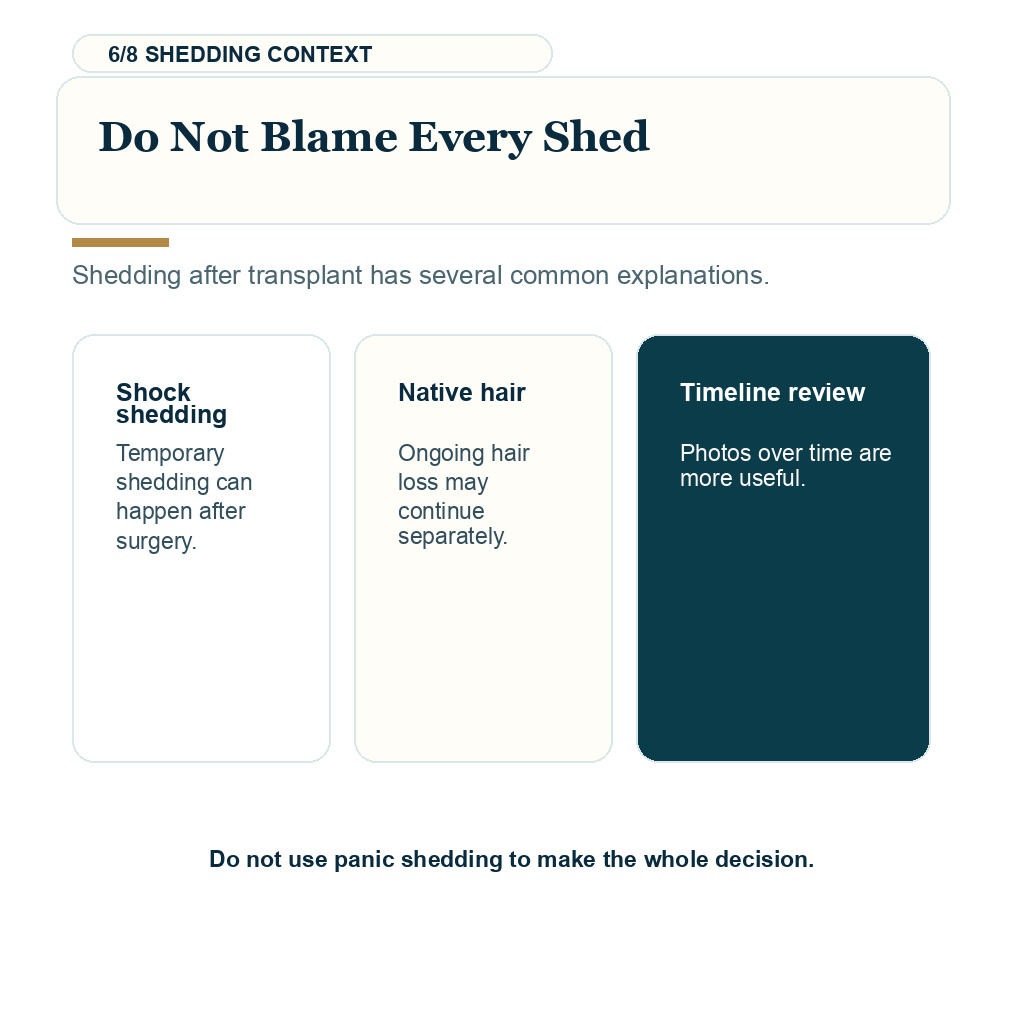
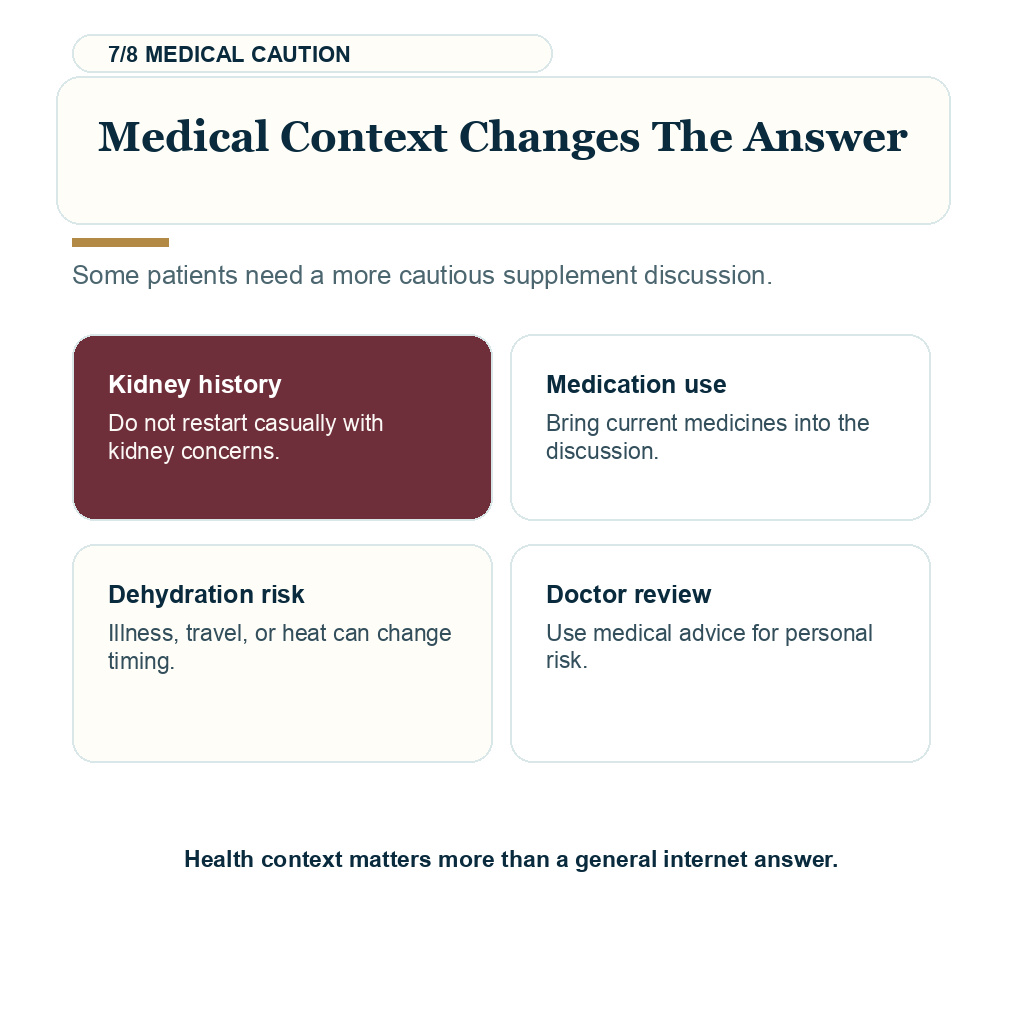
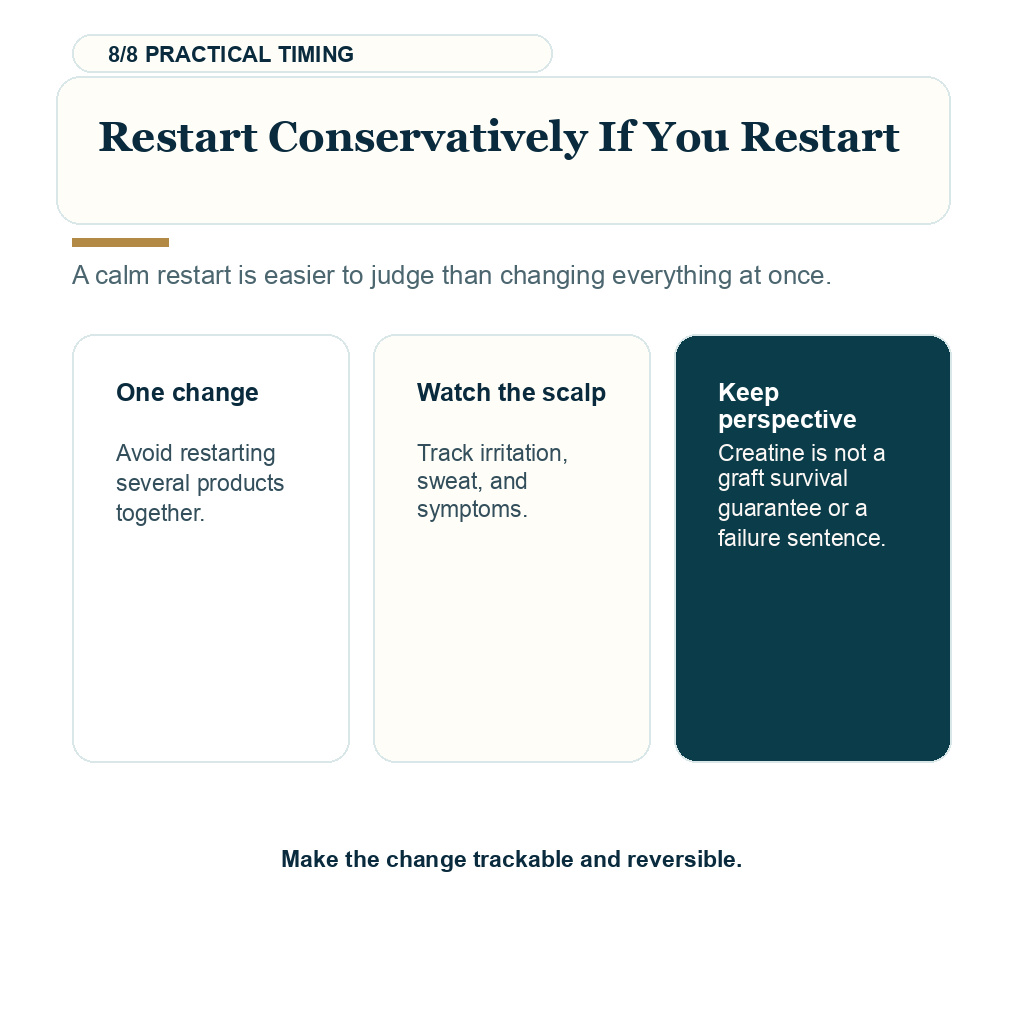
Use the 8 creatine restart slides below to separate graft healing, exercise intensity, sweat, hydration, supplement claims, and recovery stability. Swipe sideways, use the arrows, or choose a number below the image.


Reddit perspective
A clinical observation about creatine and hair growth
In this Reddit exchange, I described what I observed after creatine use was stopped in a hair transplant patient.
tressless on Reddit · Majority of online anecdotes have balding men saying their hair got worse on creatine but research says it doesn’t raise DHT, where does truth lie?
This is an exact Reddit comment describing a clinical observation. It is not proof that creatine causes hair loss or delayed graft growth, and it should not be treated as a universal instruction.
DHT worries need native hair context
Patients worry because DHT is involved in male pattern hair loss, and creatine is often discussed online as something that might increase DHT. I understand the concern, especially in patients who already lost hair at a young age. Current evidence does not prove that plain creatine alone causes baldness or ruins a transplant. The useful question is whether the native hair is already miniaturizing and whether the patient has a real plan for ongoing hair loss.
Fear alone is not enough to build a surgical plan. If a patient has androgenetic hair loss, I look at miniaturization, family history, donor quality, hairline pattern, crown pattern, medication tolerance, and photos over time.
If native hair is actively miniaturizing, the main issue is the disease pattern. Creatine anxiety should not distract from the bigger question of whether the patient has a stable plan for ongoing hair loss.
Native hair needs its own plan
For transplanted hair, the main concern is not creatine. For native hair, the discussion is different. If a patient has androgenetic hair loss and the native hair is unstable, stopping creatine alone should not be treated as protection.
I look at whether the native hair has been diagnosed correctly and whether medical treatment has been discussed. The question of whether hair loss can continue after a hair transplant matters because transplanted hair and native hair must be planned separately.
Some patients choose to pause creatine because it reduces anxiety. That is acceptable. But peace of mind should not replace proper hair loss management.
Creatine can return when early recovery is settled
For a healthy patient using a simple creatine product, the earliest practical discussion is usually after 10 to 14 days. At that point, grafts are no longer in the fragile first phase and the scalp is cleaner and easier to manage.
The conditions still matter. Scabs should be gone. Washing should be normal. Swelling should be settled. There should be no bleeding, infection, significant redness, or painful pimples. Training should be returning in stages, not suddenly.
If the patient is still anxious, swollen, sweating heavily, or checking the scalp constantly, waiting longer is cleaner. A supplement can return later. The early healing period cannot be repeated.
Loading phases are not a good early restart
A high dose creatine loading phase is not a good restart plan immediately after surgery. The first weeks are not the time to experiment with aggressive supplement routines, sudden diet changes, dehydration, stomach upset, or hard workouts.
A normal maintenance dose later in recovery is a different situation from restarting with a loading phase, pre workout caffeine, a heavy gym session, and poor hydration on the same day. If several things change together, it becomes harder to know what caused swelling, shedding, scalp irritation, or anxiety.
If creatine returns, it should be a simple product the patient already tolerates, not a new brand, a loading phase, or a mixed pre workout powder. Restarting creatine should not be treated as a signal that recovery is finished. It is only one small supplement decision inside the wider recovery plan.
The safer rhythm is simple. Let the scalp settle, bring training back gradually, then decide where creatine fits once sweat, gym hygiene, and hydration are no longer changing all at once.
Surgery day should stay simple
On surgery day, I want the patient hydrated, medically clear, and clear about every supplement. I avoid hidden stimulant blends, fat burners, or products that raise heart rate and make anesthesia planning less predictable.
Plain creatine monohydrate is different from a mixed pre workout product. Many gym products contain caffeine, stimulants, niacin, herbal extracts, or ingredients the patient may not even notice on the label.
Tell the clinic what you take before surgery. Simple routines are easier to manage than complicated supplement stacks.
Some patients need medical caution with creatine
Kidney disease, abnormal kidney blood tests, uncontrolled blood pressure, dehydration problems, heart concerns, or complicated medication use need medical caution. These patients should not treat creatine decisions as casual gym advice.
If there is any medical concern, I want the patient’s own doctor involved in the creatine decision. A hair transplant is elective surgery. The body should be stable before the operation and during recovery. Creatine can also make kidney related blood test discussions more confusing because creatinine is one of the markers doctors use when they assess kidney function.
Blood tests before a hair transplant matter because medical stability matters. Hair growth matters, but patient safety comes first.
Finasteride and minoxidil are separate decisions
If a patient takes finasteride, dutasteride, topical minoxidil, or oral minoxidil, the supplement question should be viewed inside the whole hair loss plan. Creatine should not be used to ignore medication tolerance, shedding patterns, or blood pressure symptoms.
For men with progressive hair loss, I often discuss medical stabilization before or after surgery. Finasteride before and after a hair transplant can matter for native hair, while oral minoxidil and hair transplant planning needs careful timing because blood pressure symptoms and shedding can confuse recovery.
If the patient cannot or does not want to use finasteride, that does not always make surgery impossible. It means the long term plan must be more careful, especially in a hair transplant without finasteride.
Recovery habits matter more than the powder
The result depends far more on diagnosis, donor area management, graft handling, hairline design, recipient area planning, aftercare, medical stability, smoking, and the future behavior of native hair. Creatine is rarely the central factor.
If a patient is not a strong candidate, creatine is not the reason. If the donor area is weak, creatine is not the solution. If the hair loss is moving quickly, the patient needs a real plan, not only a supplement pause.
This is also a candidacy question. Being a good candidate for hair transplant depends on timing and diagnosis before the operation, not only on supplement choices.
Shedding after restarting creatine needs context
Do not assume the answer too quickly. Shedding after a transplant can come from shock loss, normal post operative shedding, active native hair loss, medication changes, stress, illness, weight change, or simply paying closer attention to every hair in the sink.
If shedding appears after creatine returns, the first step is to compare timing, pattern, photos, medication changes, and whether the shedding is from transplanted hairs or native hairs. A clear timeline is more useful than fear.
Stopping creatine for peace of mind is reasonable. But if the pattern suggests ongoing male pattern hair loss, stopping creatine alone may not solve the real problem.
Restart creatine gradually and simply
Restart only when recovery is settled, and do not restart creatine, hard training, and stimulant pre workout together. Use a simple product you already tolerate. Drink enough water. Avoid high dose loading. Avoid stimulant blends and unfamiliar pre workout products. Return to exercise gradually and follow the clinic instructions for sweat, washing, hats, and contact with the scalp.
If creatine gives stomach upset, dehydration symptoms, palpitations, or any unusual reaction, stop and speak with a doctor. The transplant recovery period is not the best time to push through symptoms.
A conservative approach for a few weeks is better than creating confusion during the most emotionally sensitive part of recovery.
My guidance starts with recovery stability
Do not make creatine the center of the recovery story. Pause it on surgery day and through the first 10 to 14 days unless your clinic gives different instructions. Restart only when the scalp is clean, scab free, swelling has settled, washing is normal, and training is returning gradually.
Plain creatine is not usually the enemy of a hair transplant result. I pay more attention to rushed gym return, dehydration, stimulant heavy supplement stacks, poor sleep, heavy sweating, and untreated ongoing hair loss.
If creatine makes you anxious, pause it and keep the routine simple. If your native hair is unstable, diagnose that properly. The strongest plan is not based on panic or on one supplement theory. It is based on healed skin, clear medical history, and direct long term hair loss planning.
Read this review excerpt
First wash completed and visual instructions given to my daughter.