


Nicotine Pouches and Early Graft Healing
If you can avoid nicotine pouches after a hair transplant, avoid them during the early healing period, especially the first 10 to 14 days. A pouch is not the same as a cigarette. It does not expose the scalp to smoke, carbon monoxide, or heat. But it still gives your body nicotine, and that matters while the recipient area and donor area are trying to close cleanly.
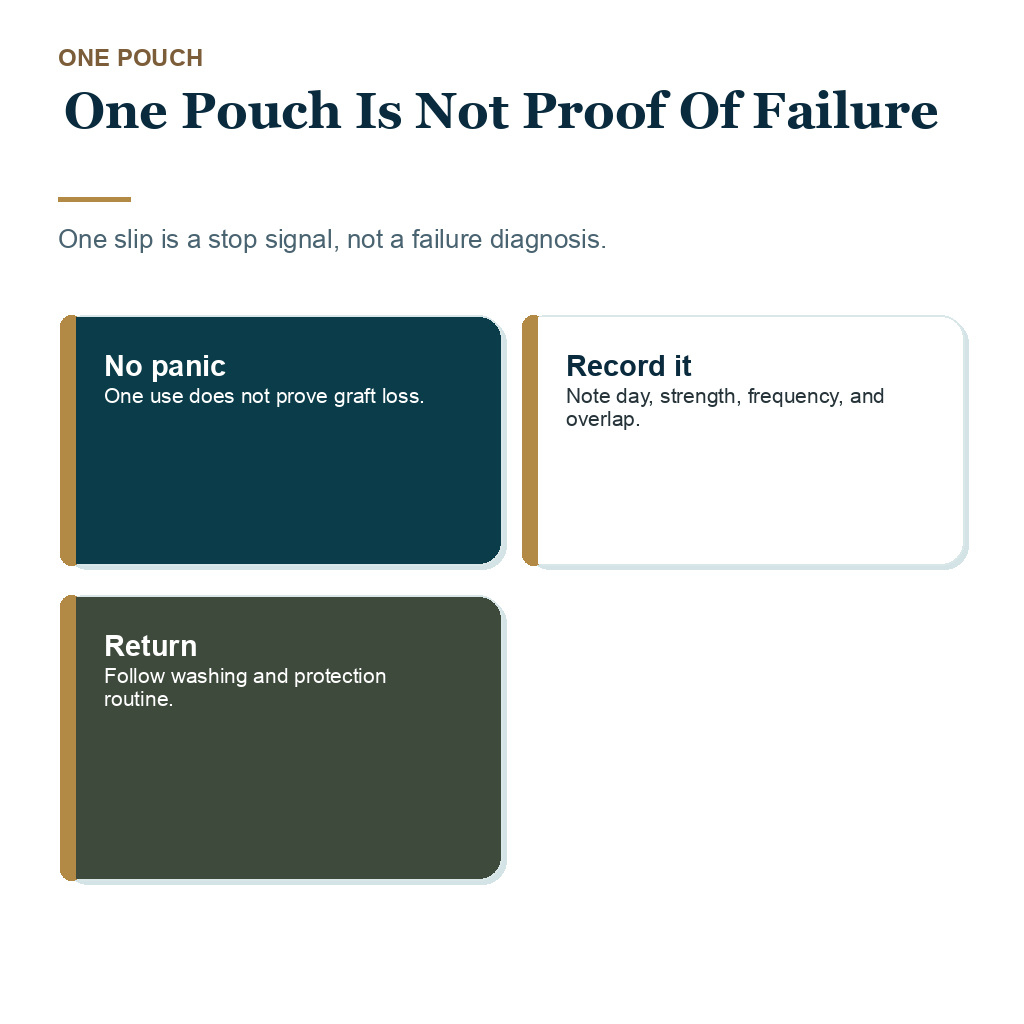
One pouch does not mean the grafts are ruined. Do not panic because you used one. The useful details are when it happened, how often it happened, what strength it was, whether you also smoked or vaped, and how the scalp looks now. The real concern is repeated nicotine pressure during the short window when healing should be as predictable as possible. If you are comparing pouches with cigarettes or vaping, smoking after a hair transplant carries wider smoke risks that should be understood separately. A pouch should not become a workaround for a no smoking rule, because the healing concern is nicotine exposure as well as smoke.
Smokeless does not mean neutral for surgery. Treat pouch strength, frequency, and timing as nicotine exposure, then report it without comparing your case with someone else’s result. A pouch diary should include the milligram strength and the hours used, not only the brand name.
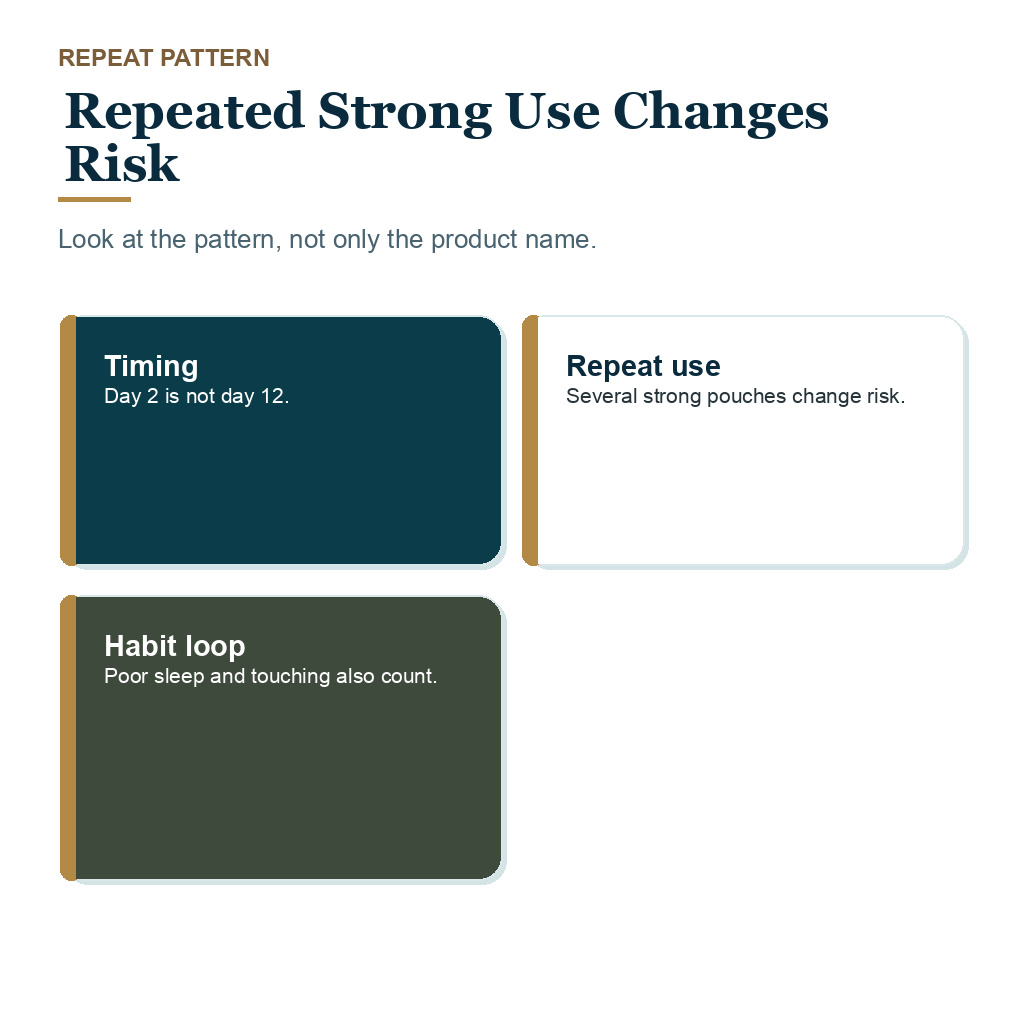
For pouches, the useful history is strength, timing, and repeat use. A single slip that stops is not the same exposure as strong pouches used through the early healing days. Clear reporting lets the aftercare advice match what actually happened instead of treating every nicotine question as smoking.
Why nicotine pouches still matter without smoke?
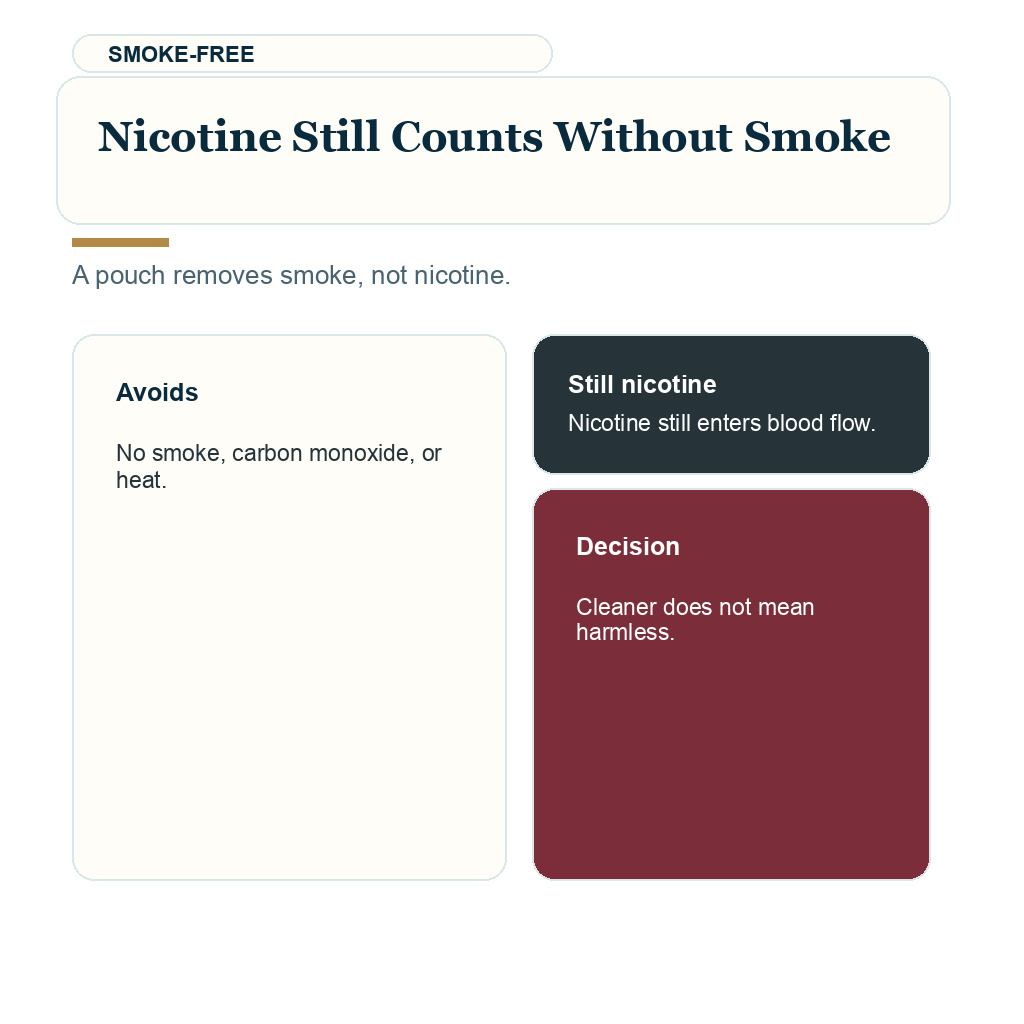
The absence of smoke removes one part of the problem, but it does not remove nicotine. A pouch sits in the mouth, nicotine is absorbed through the gum, and the body still responds to it. During hair transplant recovery, anything that can tighten small blood vessels, raise pulse or blood pressure in a sensitive person, disturb sleep, or make aftercare more careless deserves attention.
Hair transplantation depends on surgical precision, graft handling, recipient area design, and the body’s healing response. Nicotine is not the only factor, but it is an avoidable one. If you ask whether pouches are completely harmless after surgery, my answer is no. A pouch may be cleaner than a cigarette, but cleaner does not mean harmless for healing.
Early hair transplant aftercare works best when the scalp is protected from avoidable stress. The grafts should not be rubbed, scratched, pressed, overheated, or exposed to habits that make healing less predictable. Nicotine belongs in that same recovery conversation.
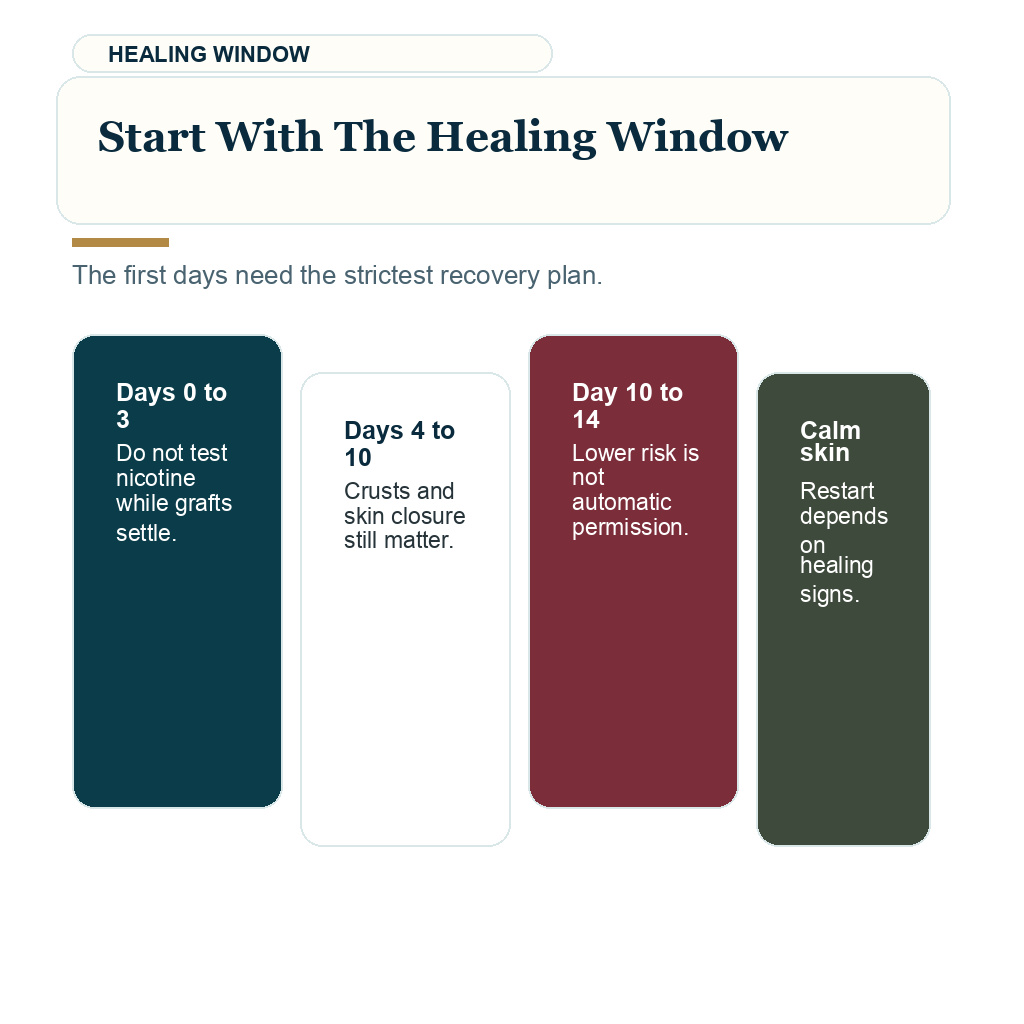
The first 10 to 14 days need the most protection
Nicotine pouches are a concern during the 10 to 14 day protection window because the recipient area is closing, crusts are forming and loosening, and the skin is recovering from thousands of tiny openings. I want that period kept calm, with low friction, low pressure, no scratching, no heavy sweating, no heat, and as little unnecessary inflammation as possible.
Nicotine pouches do not touch the scalp, so they can feel harmless. But the nicotine is systemic. A single low dose pouch around day 12 is not the same situation as repeated strong pouches on days 2, 3, and 4.
Timing, dose, frequency, and what the nicotine makes you do next matter most. If a pouch becomes part of a cycle of anxiety, mirror checking, scalp touching, poor sleep, and repeated use, the pattern matters more than the pouch alone. The same early recovery judgment that applies to touching grafts after a hair transplant also applies here. The scalp usually does better when you stop testing the result and follow the recovery plan.

One pouch is not the same as repeated nicotine use
One pouch is not a reliable way to predict graft failure. A hair transplant does not usually fail from one isolated action in such a simple way. Graft survival depends on the surgery itself, graft handling, placement, blood supply, healing quality, infection control, washing, sleeping position, and many details specific to the case.
Still, one pouch should not become permission to continue. The point is to stop again for now, return to the aftercare routine, avoid rubbing the recipient area, and not compensate by overwashing, inspecting crusts, or touching the grafts to reassure yourself.
If you are in the scab phase, do not try to inspect the scalp aggressively after a slip. Normal crusts, hairs, and shedding are often misread during this stage. Keep that in mind with whether grafts were lost with scabs.
Pouches reduce smoke exposure but still deliver nicotine
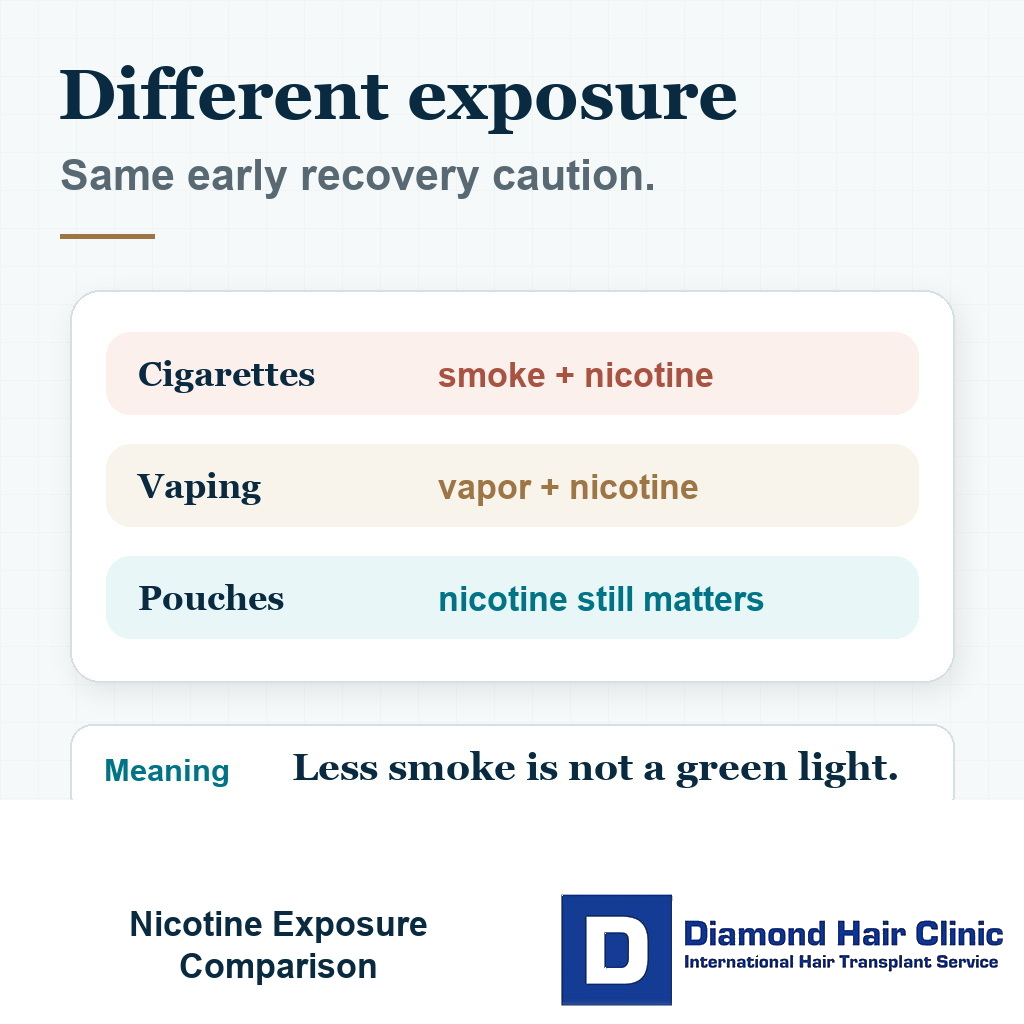
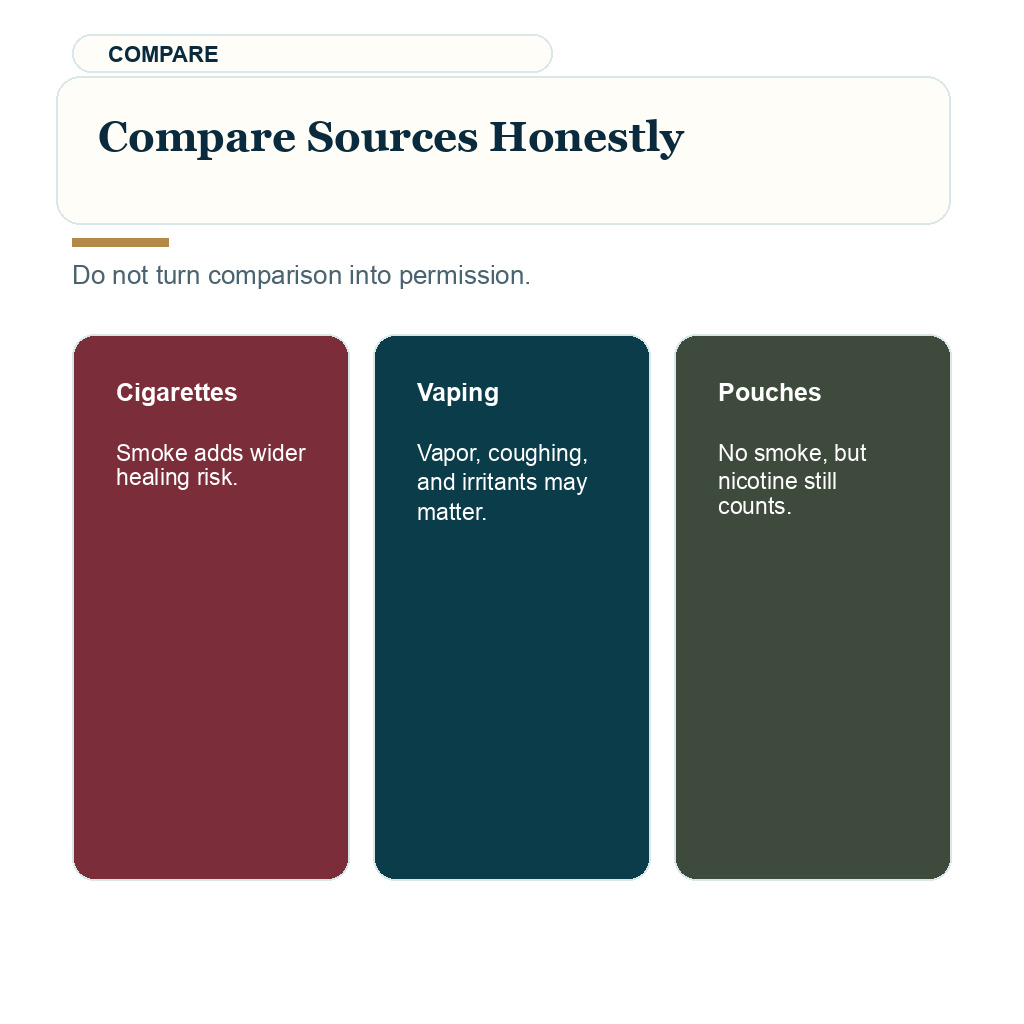
For the scalp, cigarettes are usually the bigger concern because they combine nicotine with smoke exposure and other effects related to combustion. Vaping removes combustion, but it can still deliver nicotine, irritants, coughing, dry mouth, and habit based behavior. Nicotine pouches remove smoke and vapor, but they do not remove nicotine itself. The same distinction matters with vapes and pouches before hair transplant surgery. If the exposure was a vape rather than a pouch, vaping after FUE is where I judge nicotine, vapor, coughing, and timing.
So the comparison is not a permission slip. If you have already stopped cigarettes and a pouch is the only thing preventing relapse, say that clearly to your doctor or clinic. Avoiding smoke may be better than returning to cigarettes. For a fresh hair transplant, the cleaner plan is still to avoid nicotine while the scalp is in its most delicate phase.
If you also use cannabis, the risks can become mixed quickly. Smoking weed after a hair transplant can involve smoke, coughing, delayed reactions, and aftercare behavior even when you are not using tobacco.
What to do after using nicotine by mistake?
First, do not panic. Panic often leads to worse decisions than the original mistake. You may wash too aggressively, rub the scalp to check for grafts, search for dramatic stories, or keep touching the recipient area for reassurance. None of that helps healing.
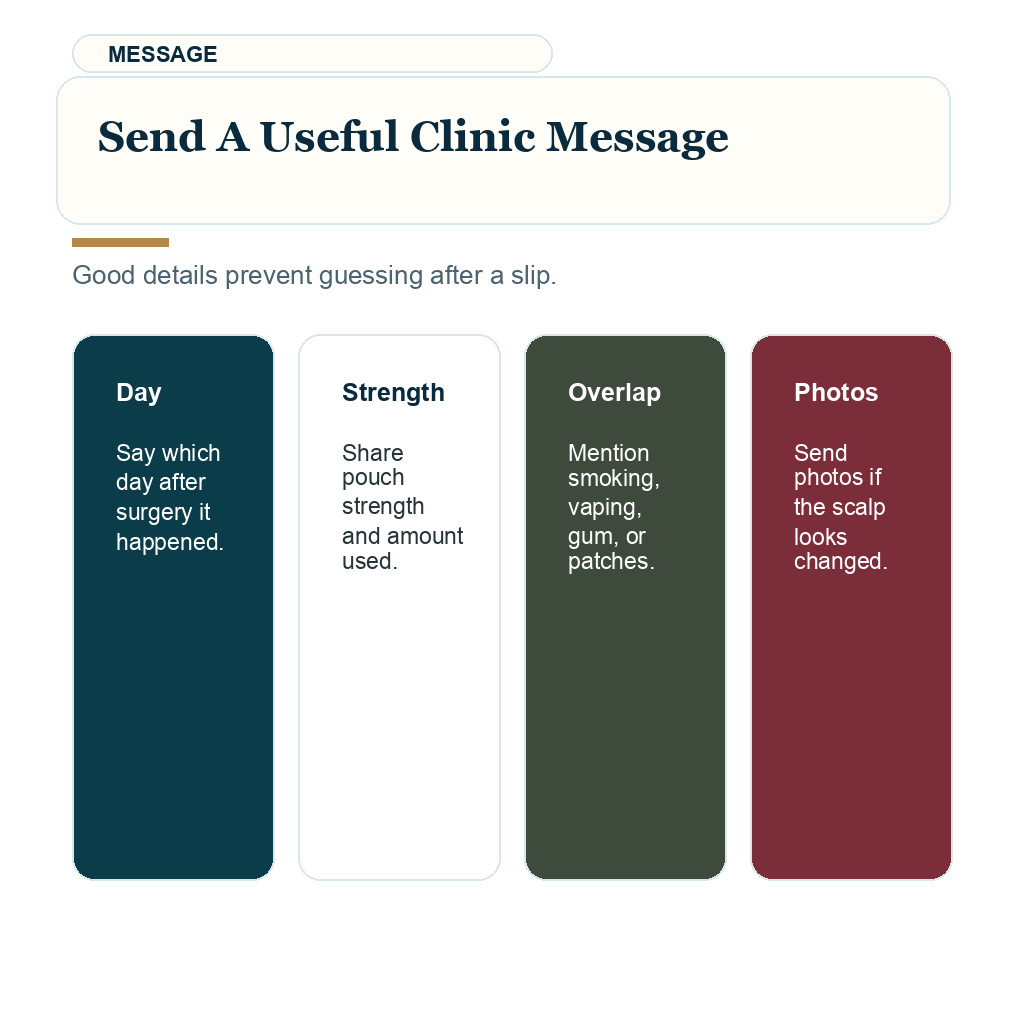
Second, be precise about what happened. Tell your clinic which day after surgery it happened, the dose or strength, how often you used it, and whether you also smoked or vaped. One low dose pouch on day 12 is not the same situation as repeated strong nicotine exposure during the first few days.
Third, return to the basics. Follow the washing schedule, avoid forceful scab removal, and keep the scalp clean without overhandling it. If you are unsure about the correct pressure, the separate guide on washing after a hair transplant explains why water, shampoo, friction, towel pressure, and scab removal do not all become safe at the same time.
Switching nicotine sources needs medical guidance
This decision should not be improvised after surgery. If you are strongly dependent on nicotine, a sudden stop can create anxiety, poor sleep, irritability, and stress. Those reactions can also disturb recovery. Continuing nicotine freely is not a clean solution either.
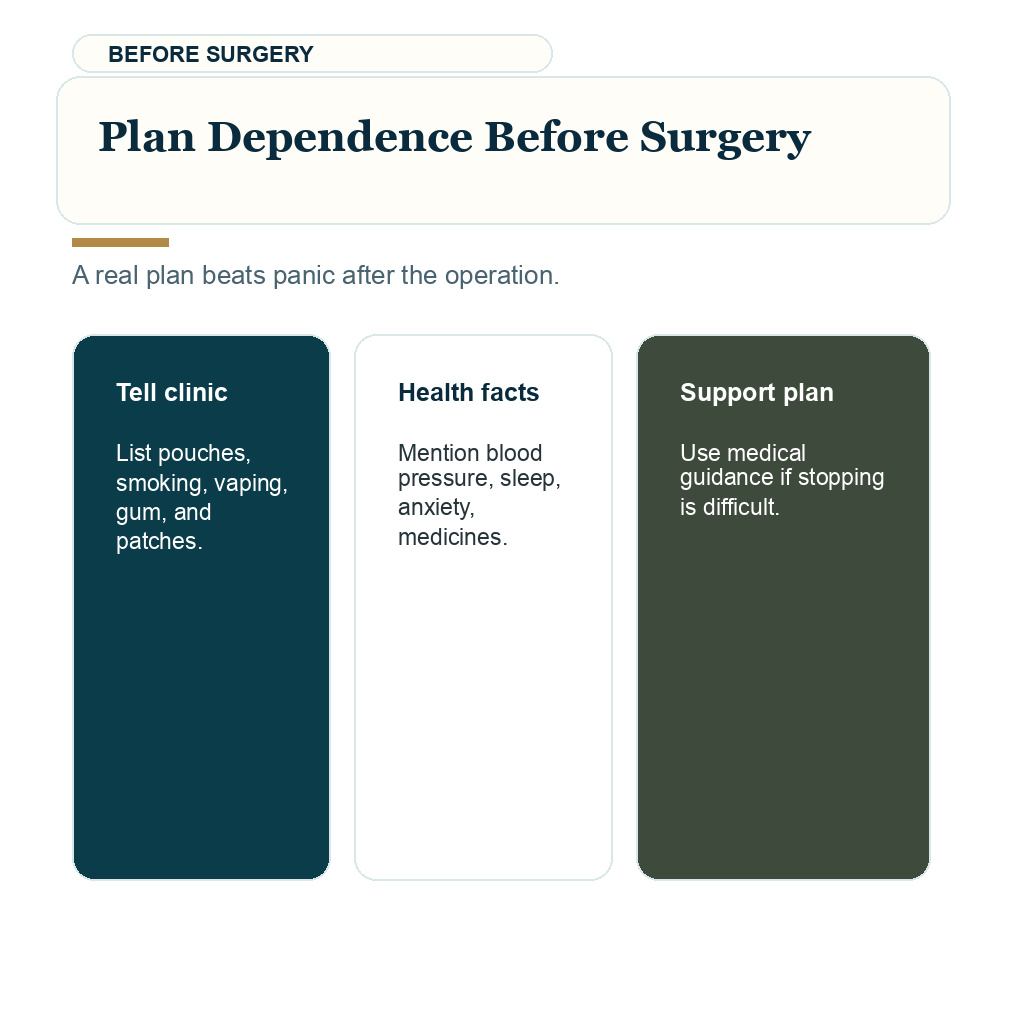
If nicotine replacement is being used under medical guidance to avoid cigarettes, tell the clinic before surgery. The plan can then be made properly. Approved nicotine replacement may be safer than returning to cigarettes, but it is still nicotine exposure. Dose, timing, general health, blood pressure, medication use, wound healing risk, and dependence pattern all change the advice.
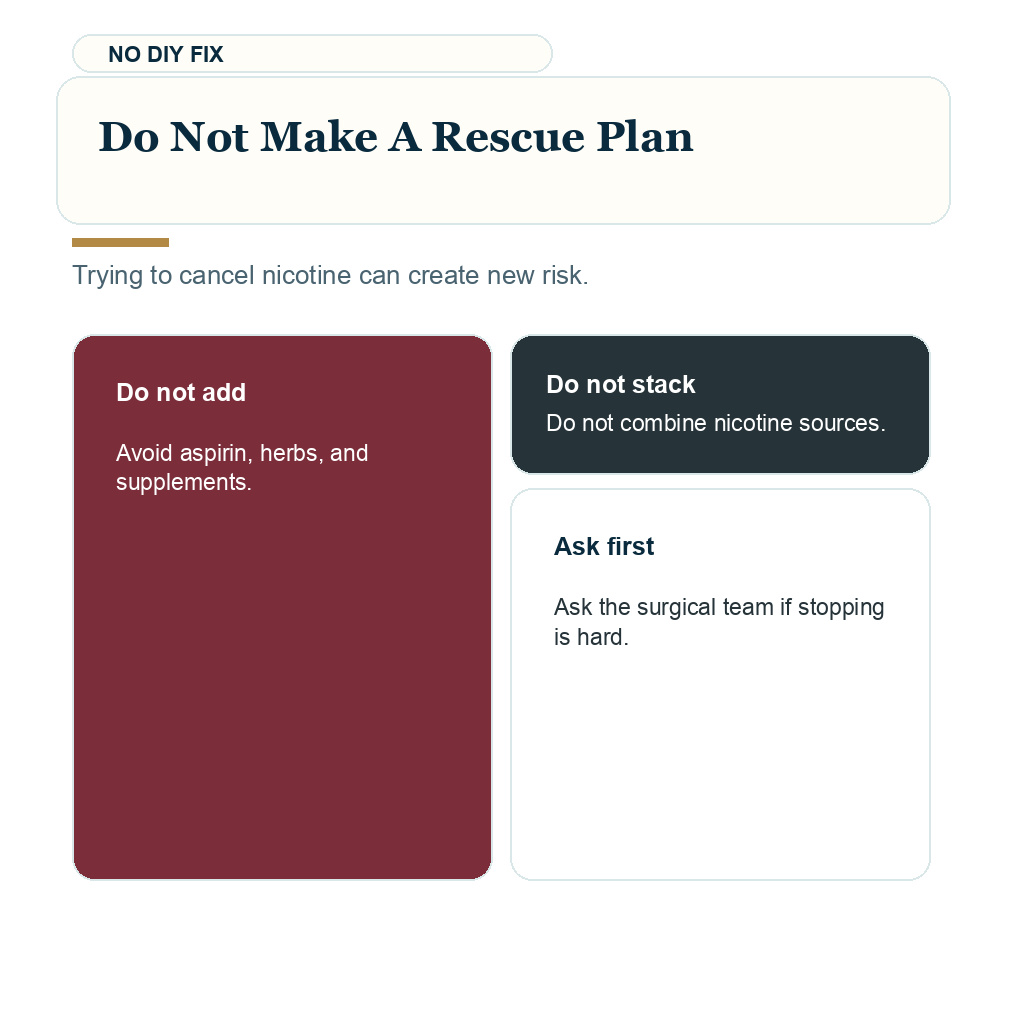
Do not stack several nicotine sources to get through withdrawal unless your doctor has specifically planned that with you. A patch plus pouches, gum, vaping, or cigarettes can turn a lower dose idea into higher total nicotine exposure.
Lower dose is not the same as no risk. It may simply be less pressure. Do not start aspirin, blood flow supplements, herbal products, or new medication on your own to cancel out nicotine. Trying to fix it yourself can create new risks. If medication questions arise during recovery, discuss them through your own surgical team or review the clinic guidance on medications after a hair transplant.
Redness, scabs, and pimples do not prove nicotine damage
Nicotine pouches do not usually create one obvious visible sign on the scalp immediately. You should not expect to use one pouch and then see a clear change in each graft in the mirror. Healing is more subtle than that.
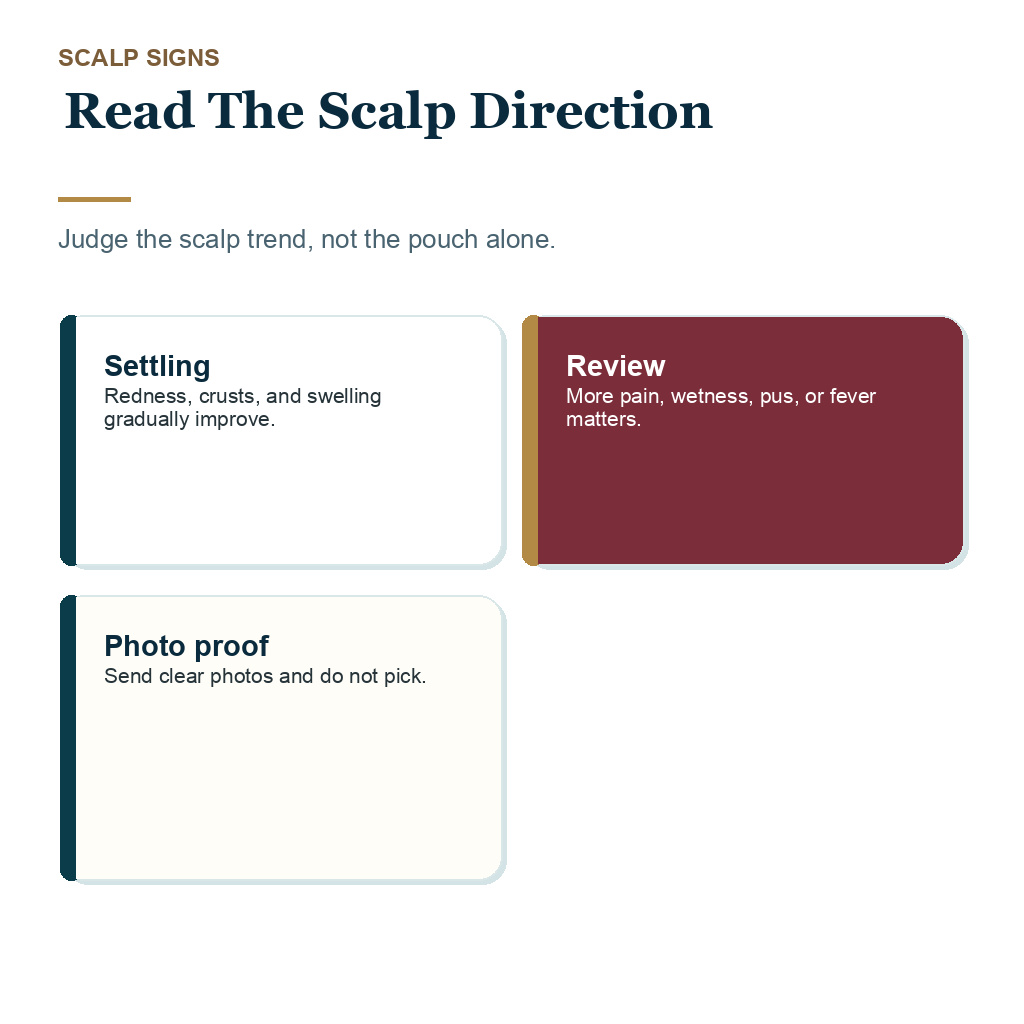
The concern is the direction of healing. If redness is settling, crusts are drying normally, swelling is improving, and there is no increasing pain or discharge, the scalp is usually moving in the right direction. If the scalp becomes more painful, warmer, wetter, swollen, or irritated, nicotine may not be the only explanation, but the change deserves review.
Normal healing and warning signs can look similar in the mirror. Ask whether redness, scabs, and pimples after a hair transplant are gradually settling or moving toward a problem that needs review.
Nicotine becomes more serious with timing and repetition
Nicotine becomes more concerning when it is repeated, strong, combined with smoking or vaping, used very early after surgery, or present in someone who already has healing risk factors. Diabetes, vascular disease, previous scalp surgery, dense packing, scarring, infection signs, and poor aftercare all change the risk picture.
Dark painful scabbing, increasing swelling, spreading redness, discharge, fever, or skin that looks gray, black, wet, or open should be taken seriously. Nicotine is one pressure, not a diagnosis. These signs should not be explained away as normal recovery or blamed only on nicotine. They need proper medical review.
Necrosis is a common fear because black scabbing can look frightening. Scalp necrosis after hair transplantation is uncommon, but it is serious when it occurs. If that fear is in your mind, read the separate explanation of necrosis warning signs after a hair transplant and contact your clinic quickly if your own scalp looks concerning.
Nicotine is less risky after early surface healing
Risk usually becomes lower after the skin has closed, crusts have come away, redness is settling, and you can wash normally without rubbing or bleeding. For many uncomplicated cases, that is around day 10 to 14. Even then, lower risk is not the same as ideal.
If you want a practical date, avoid nicotine completely during the first 10 to 14 days if you can. Day 14 is not automatic permission for every scalp. If you have healing problems, thick crusting, infection concerns, delayed wound closure, or significant swelling, extend the pause and ask your surgeon before restarting.
After the early healing phase, the grafts are no longer sitting in the same fragile surface condition. But long term hair planning still depends on health, medication decisions, future hair loss, donor management, and follow up. Nicotine should not become the habit that makes those decisions less stable.
Nicotine pouch use after the first month
If the scalp has healed, the crusts have cleared, and the skin is calm, nicotine pouches at month two or month three are much less likely to explain a result by themselves. I would not blame every slow area, shedding phase, or photo that looks thin on one pouch after the early healing window.
Many patients panic at the wrong time. Month three or month four can still look weak even after a normal operation. If you are worried, compare steady photos and use a calm method for tracking hair transplant growth instead of looking for one habit to explain every change.
That does not make ongoing nicotine ideal. It can still affect general health, skin quality, blood vessel behavior, sleep, and future surgery planning. If a second procedure may be needed later, nicotine dependence should be handled directly before more donor grafts are used.
The donor area still depends on blood supply and healing
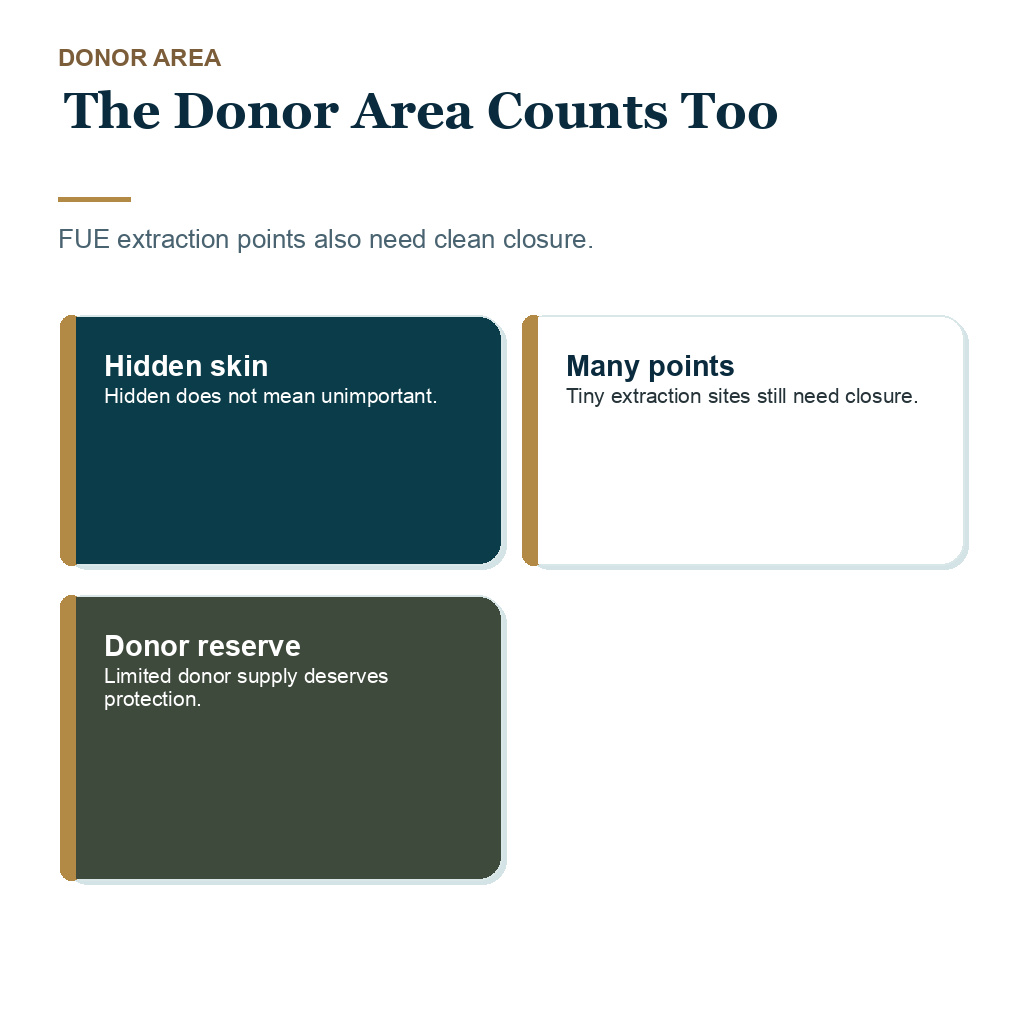
The donor area matters as well. Many people focus only on the recipient area because that is where the new hairline or crown work is visible. But the donor area has also been operated on. It is not just hidden skin. It also needs clean healing.
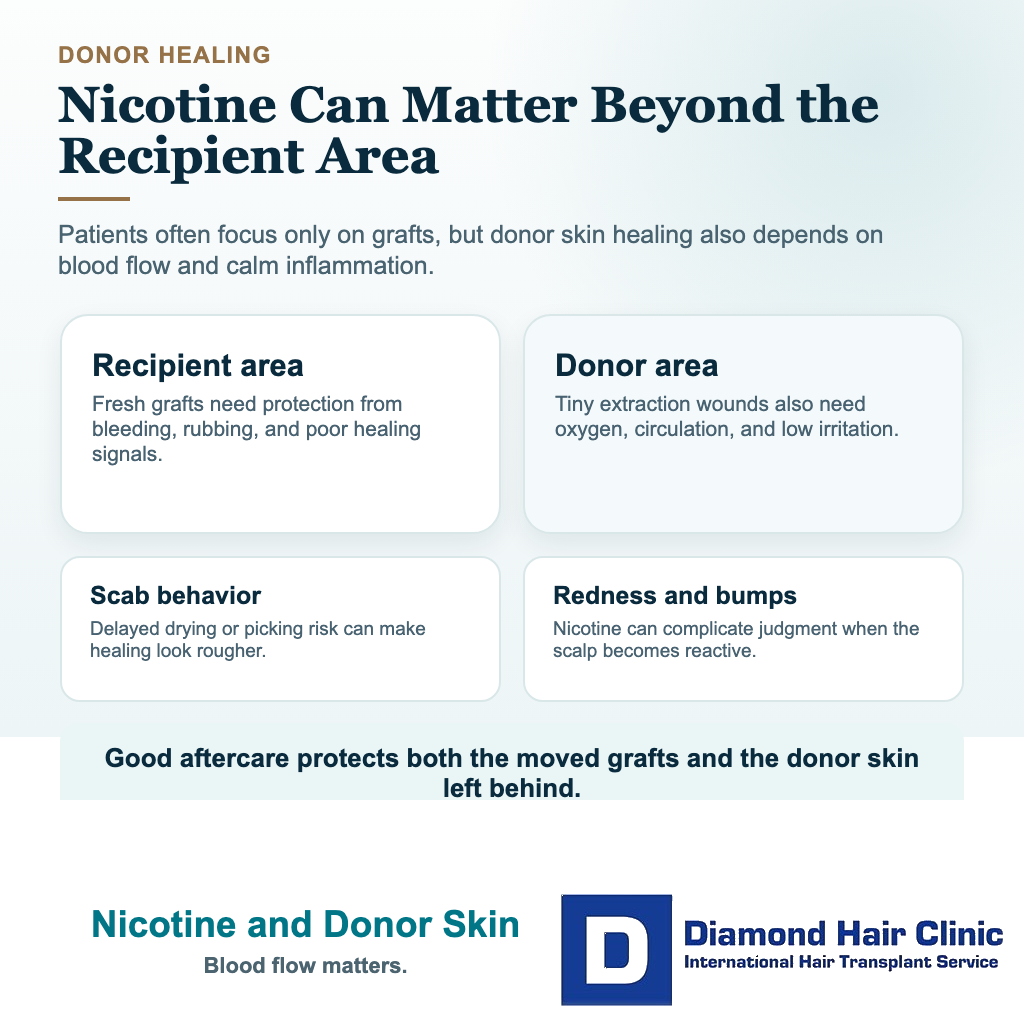
In FUE surgery, thousands of tiny extraction points must close properly. Poor healing, irritation, scratching, heavy sweating, infection, or delayed closure can make the donor area more uncomfortable and more noticeable during recovery. Nicotine is not the only reason those problems happen, but it is one more pressure to remove while the skin is repairing itself.
This is especially relevant if the donor area is limited, if there has been previous surgery, or if the extraction was dense. Diabetes, vascular concerns, and a history of slow wound healing also matter. Donor management is not only about how many grafts can be taken. It is also about protecting the area after surgery, because the donor reserve may be needed again in the future.
Warning signs that need clinic contact
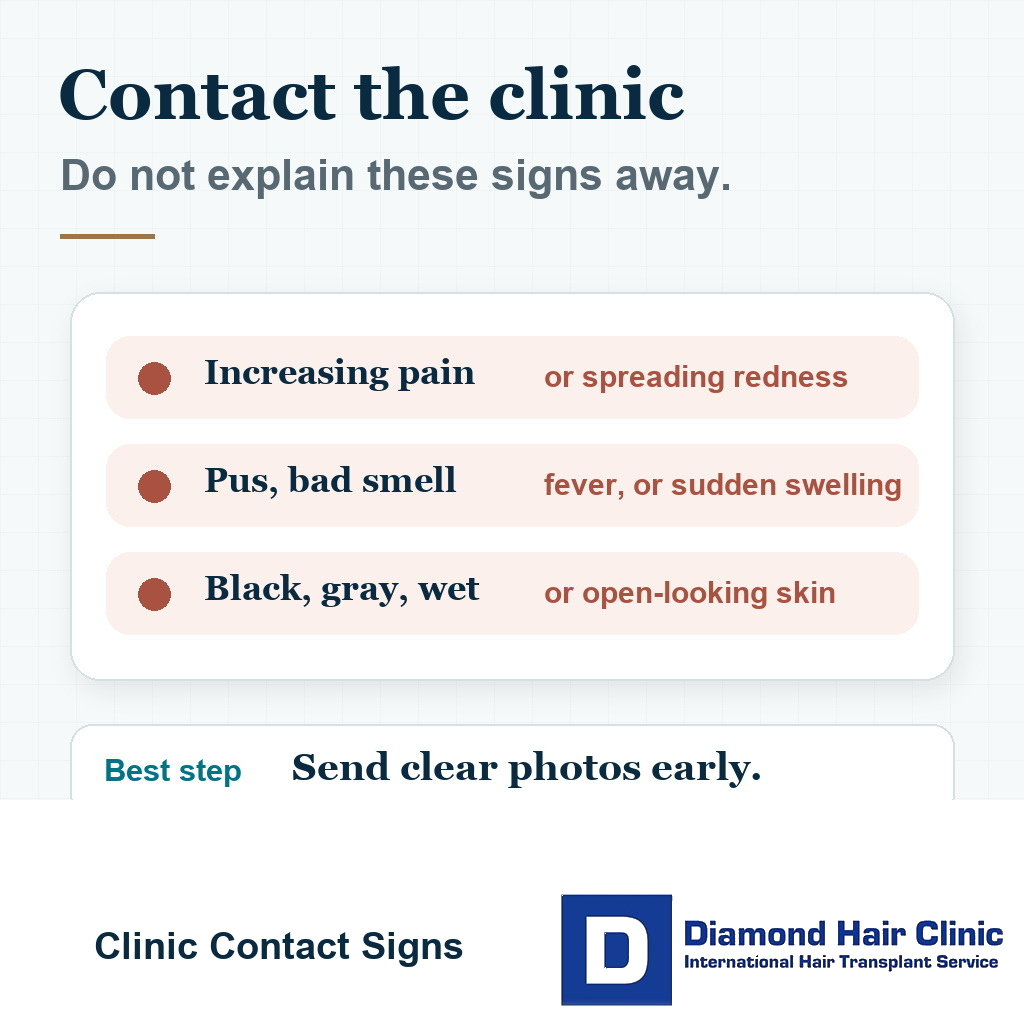
Contact your clinic if you see increasing pain, spreading redness, warmth, pus, bad smell, fever, sudden swelling, bleeding that does not settle, or black, gray, wet, or open looking skin. A pouch does not create these signs by itself in a predictable way, but if the signs appear, the reason matters less than getting proper review.
Do not squeeze pimples aggressively. Do not pick crusts to prove whether grafts are alive. Do not keep adding new products to the scalp. If the area may be infected, infection after a hair transplant needs timing and medical guidance, not extra trauma to the skin.
Clear, recent photos in normal light are useful. If the skin looks painful, open, wet, or dark, do not wait several days because the pouch itself felt harmless. Your own scalp is the case that matters.
Nicotine exposure is still nicotine exposure
A pouch avoids smoke, but it does not make nicotine neutral for early wound healing. Strength, frequency, timing, and whether the patient also smokes or vapes all matter.
If stopping creates strong withdrawal, do not hide that from the doctor. Withdrawal can affect sleep, anxiety, blood pressure, stomach symptoms, and how recovery medicines are interpreted. Support from a physician or a supervised replacement strategy is safer than a secret start and stop pattern.
For the grafts, the most important period is the early surface healing window. Keep nicotine away if you can. If you cannot, be direct about use so the recovery advice is based on reality.
Read this review excerpt
First wash completed and visual instructions given to my daughter.