


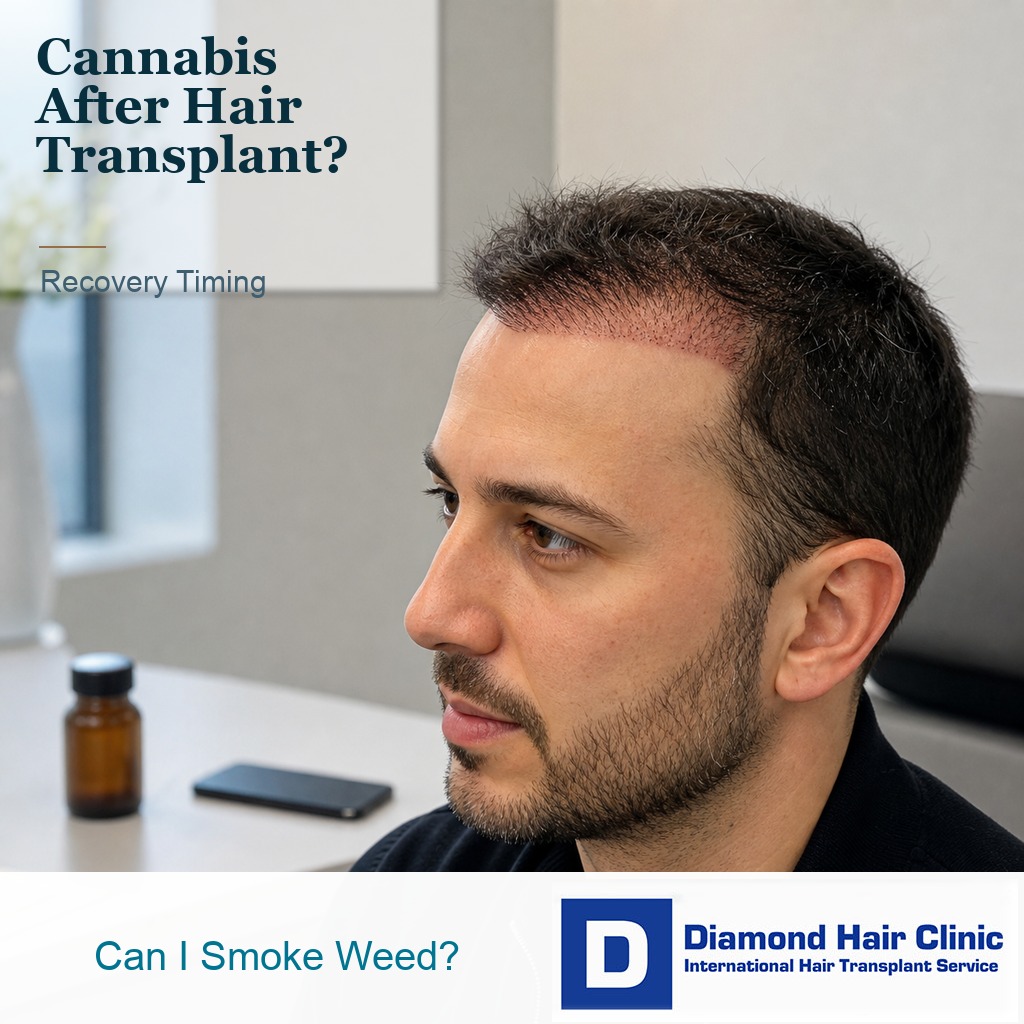
Cannabis Use Needs Careful Recovery Planning
Avoid smoking weed during the early healing period after a hair transplant, especially during the first 10 to 14 days. The issue is not only THC. Smoke, coughing, dry mouth, raised heart rate, slower reactions, and mixing cannabis with tobacco can all make recovery less controlled. If you use cannabis medically or daily, tell your surgeon before surgery so anesthesia, pain control, blood pressure, and aftercare can be planned safely. The same disclosure rule applies to alcohol before hair transplant surgery, especially when alcohol is mixed with cannabis, sedatives, or poor sleep.
If you already smoked once, do not panic and do not test the grafts with your fingers. One episode does not prove that the transplant has failed. The deciding detail is what happened afterward, especially whether you coughed heavily, rubbed the recipient area, had bleeding, felt faint, or disturbed the grafts during sleep.
Another patient’s smooth recovery after smoking is not medical clearance for yours. The clinic needs your route of use, timing, coughing risk, and any overlap with pain medicine or sedatives.
This is a recovery safety question, not a moral question. For a short period, the scalp, the donor area, and your judgment need to stay predictable. A clean recovery is usually more valuable than returning quickly to a habit that can wait.
Smoking cannabis is different from edibles
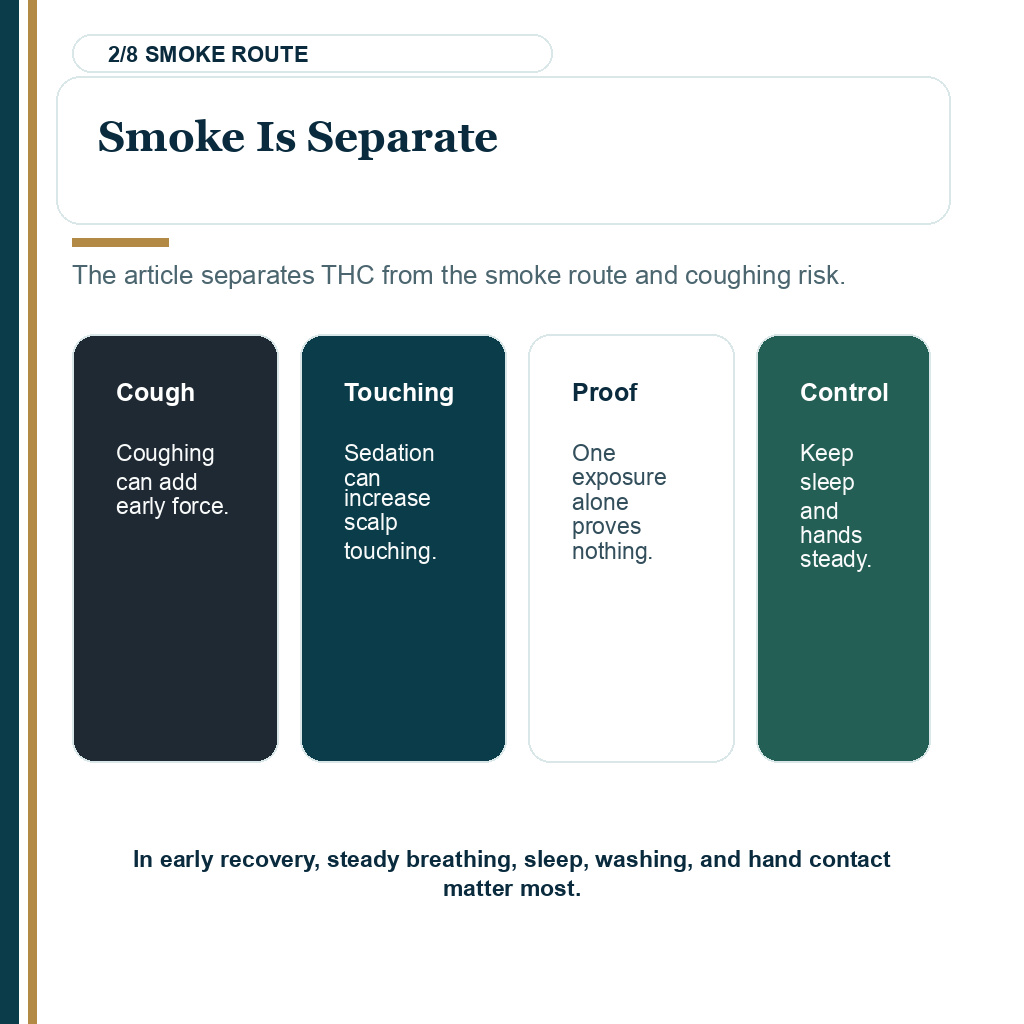
Smoking cannabis brings two separate issues into the recovery period. One is the effect of THC on alertness, heart rate, anxiety, sleep, and coordination. The other is the smoke itself.
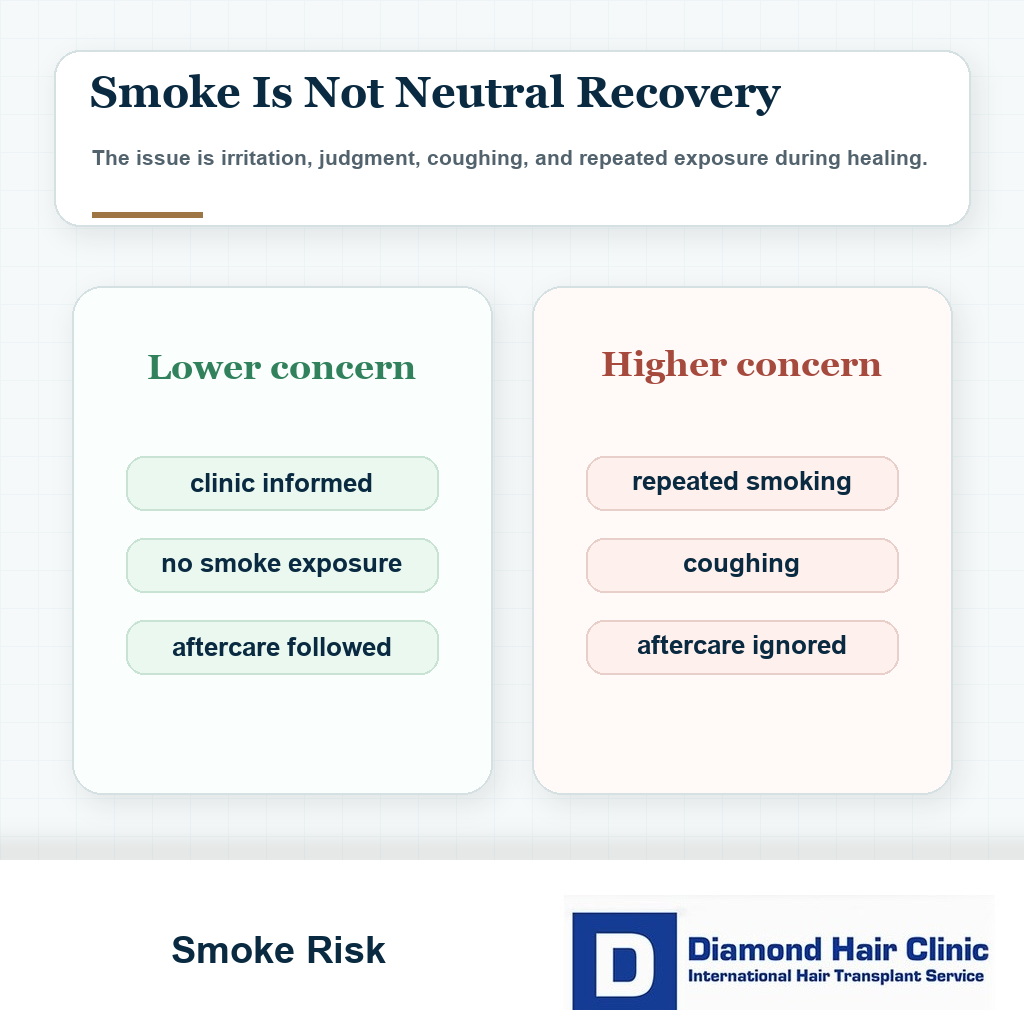
Smoke can irritate the airway and trigger coughing. In the first days after surgery, coughing is not usually a disaster, but strong repeated coughing can increase pressure, make swelling feel worse, and make you more likely to touch or rub the scalp. If cannabis is mixed with tobacco, then the problem becomes closer to smoking after a hair transplant, where nicotine exposure and smoke exposure are much more relevant to healing. If the exposure is a nicotine vape rather than cannabis smoke, I judge it separately in vaping after FUE.
Edibles or oils avoid smoke, but they are not harmless during early recovery. They can make you sleepy, dizzy, anxious, or less careful with the grafts. They may also interact poorly with alcohol, sedatives, or pain medication. If the episode also involved cocaine, MDMA, speed, or a club setting, read the separate guidance on party drugs after a hair transplant before treating it as an ordinary scalp question.
Edibles also have a timing problem. You may take more because the effect feels delayed, then become much more sedated later in the evening. During the first recovery nights, that can turn into careless sleep, missed medication timing, or repeated touching because anxiety rises instead of settling.
For recovery, I separate the route of cannabis use from the behavior it creates. Anything that makes you cough, rub, sleep carelessly, miss washing instructions, or mix substances in the first days is a problem even if the grafts themselves were placed well.
The first 10 to 14 days matter most
For most patients, avoiding smoked cannabis for at least the first 10 to 14 days is the cleaner plan. That is the period when the recipient area is healing, scabs are softening, washing needs to be gentle, and the grafts must be protected from rubbing, scratching, and unnecessary trauma.
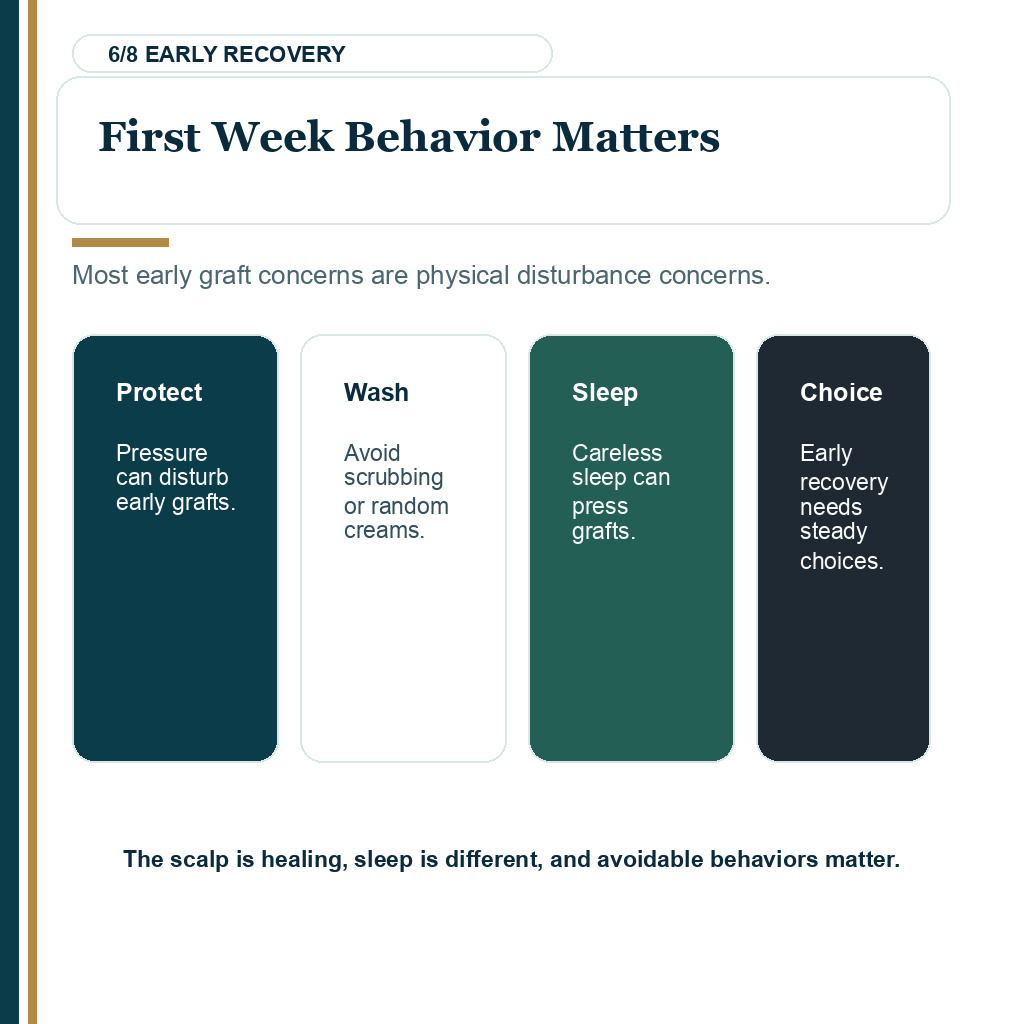
The first week matters most. The scalp is still sensitive, you may be sleeping in a different position, and swelling can still move around the forehead or face. Good early aftercare after a hair transplant is more important than returning quickly to every normal habit.
Some people need longer than 14 days. Heavy cannabis smoking, tobacco mixing, chronic coughing, asthma, unstable blood pressure, anxiety attacks, poor sleep, or a history of slow healing all change the answer. If you use cannabis for a medical reason, do not simply stop or restart without discussing it with the doctor who knows the full medical history.
The number of grafts also matters. A small hairline refinement and a large session with major recipient area work do not create the same early recovery burden. The larger the treated area, the more I focus on keeping swelling, washing, sleeping, and patient behavior predictable.
After the first two weeks, the discussion becomes less about fresh graft disturbance and more about coughing, sleep, blood pressure, medication mixing, and general scalp healing. That does not make smoking a good recovery habit. It simply changes which risks matter most.

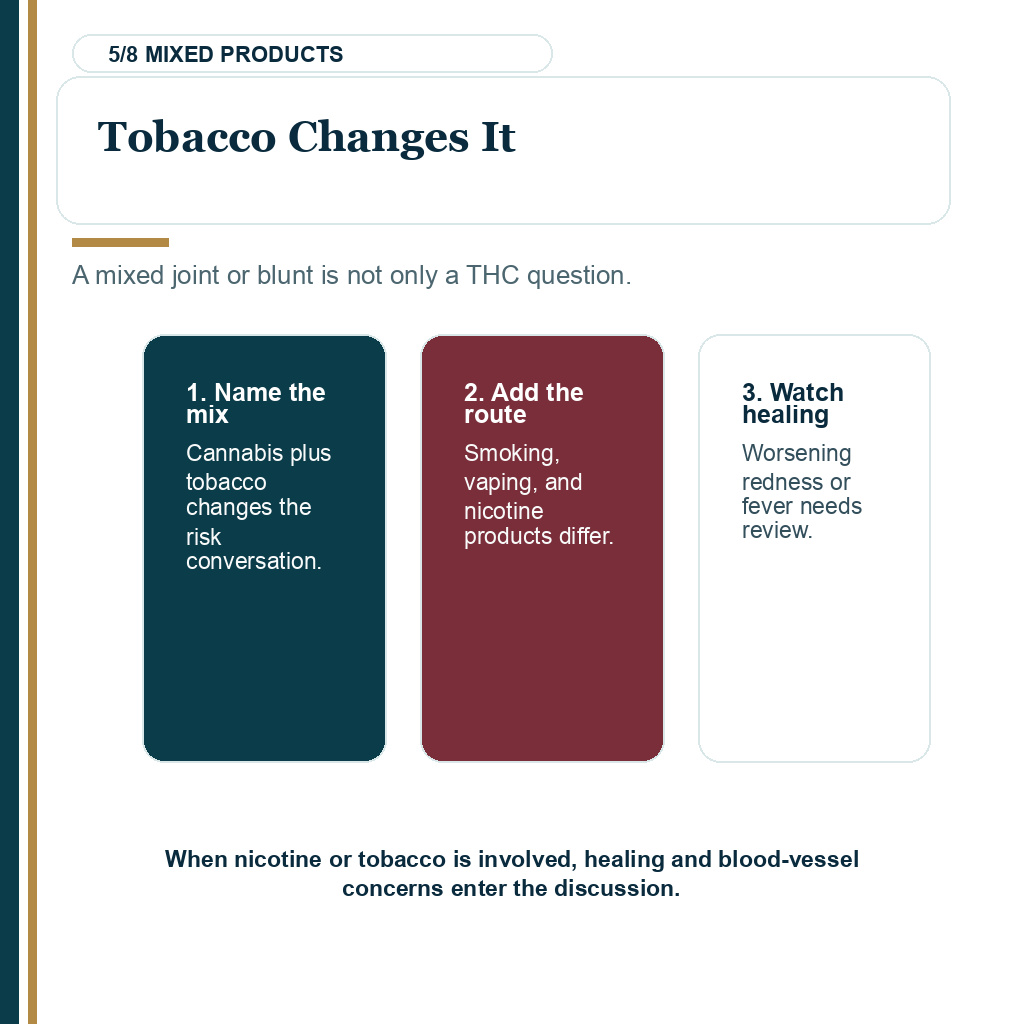
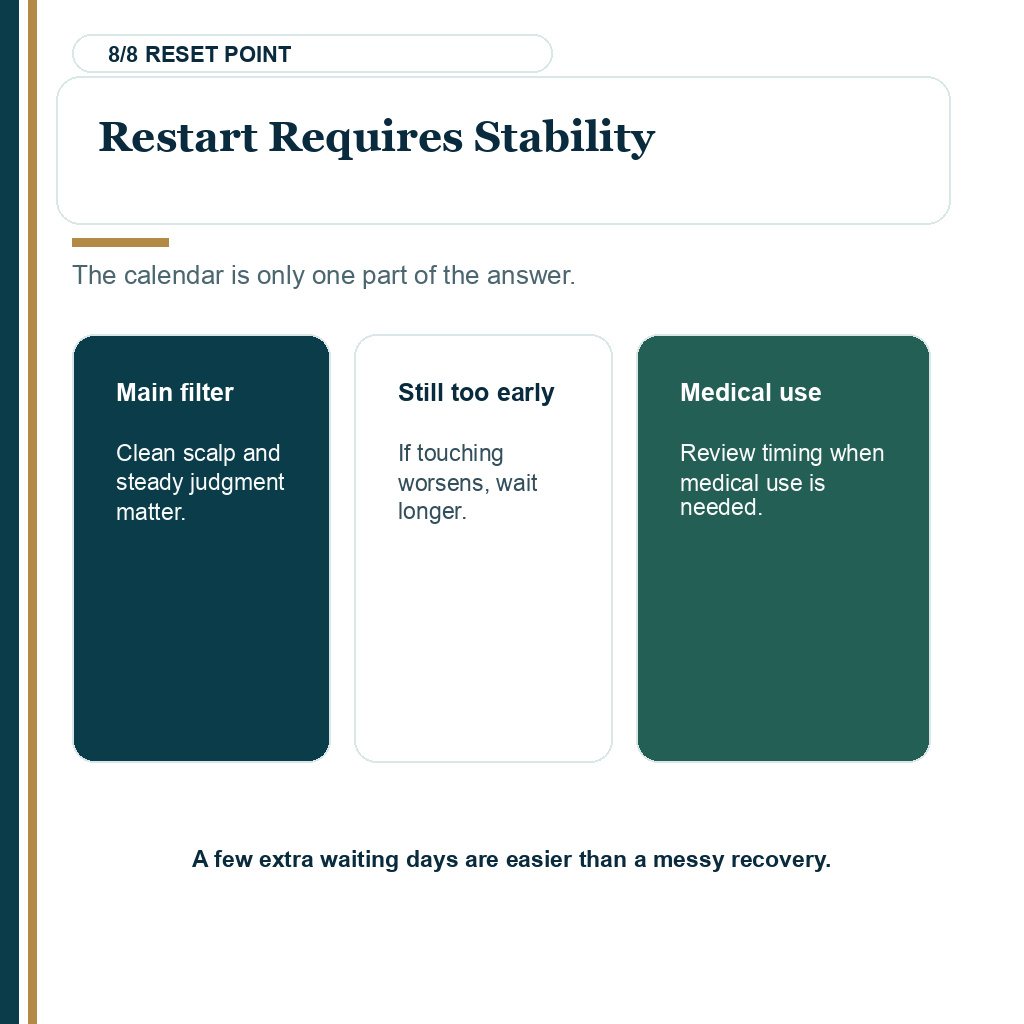
Use the 8 cannabis recovery planning slides below to separate disclosure, smoking route, what to do after one early use, edibles or oils, tobacco mixing, behavior in the first week, warning signs, and restart timing. Swipe sideways, use the arrows one slide at a time, or choose a number below the image to move through the points.




Cannabis is usually an indirect graft risk
One cannabis use does not directly prove graft failure. That would be too simplistic. Graft survival depends on careful handling during surgery, blood supply, recipient area trauma, infection control, washing, and your general healing condition.
The more realistic risk is indirect. Cannabis can change how you behave during the days when graft protection matters. You may scratch without thinking, sleep in a risky position, delay washing, or become anxious and repeatedly inspect the scalp.
Fresh grafts are more vulnerable to physical disturbance than to one isolated substance exposure. If a scab comes off with no bleeding and no visible graft tissue, it may be normal. If there is bleeding, clear graft tissue, or repeated trauma, treat it as a lost graft concern after scabs come off and arrange clinic review instead of waiting.
So I frame the issue carefully. Cannabis is usually an indirect risk, not an instant graft failure trigger, but it can create the kind of messy recovery where avoidable problems happen. During the first 10 to 14 days, small choices matter more than people expect.
Surgery day disclosure and blood pressure
Cannabis use can affect heart rate, anxiety, alertness, and the way you respond to medication. In hair transplantation, I want blood pressure, comfort, local anesthesia, and communication to be steady from the beginning of the day.
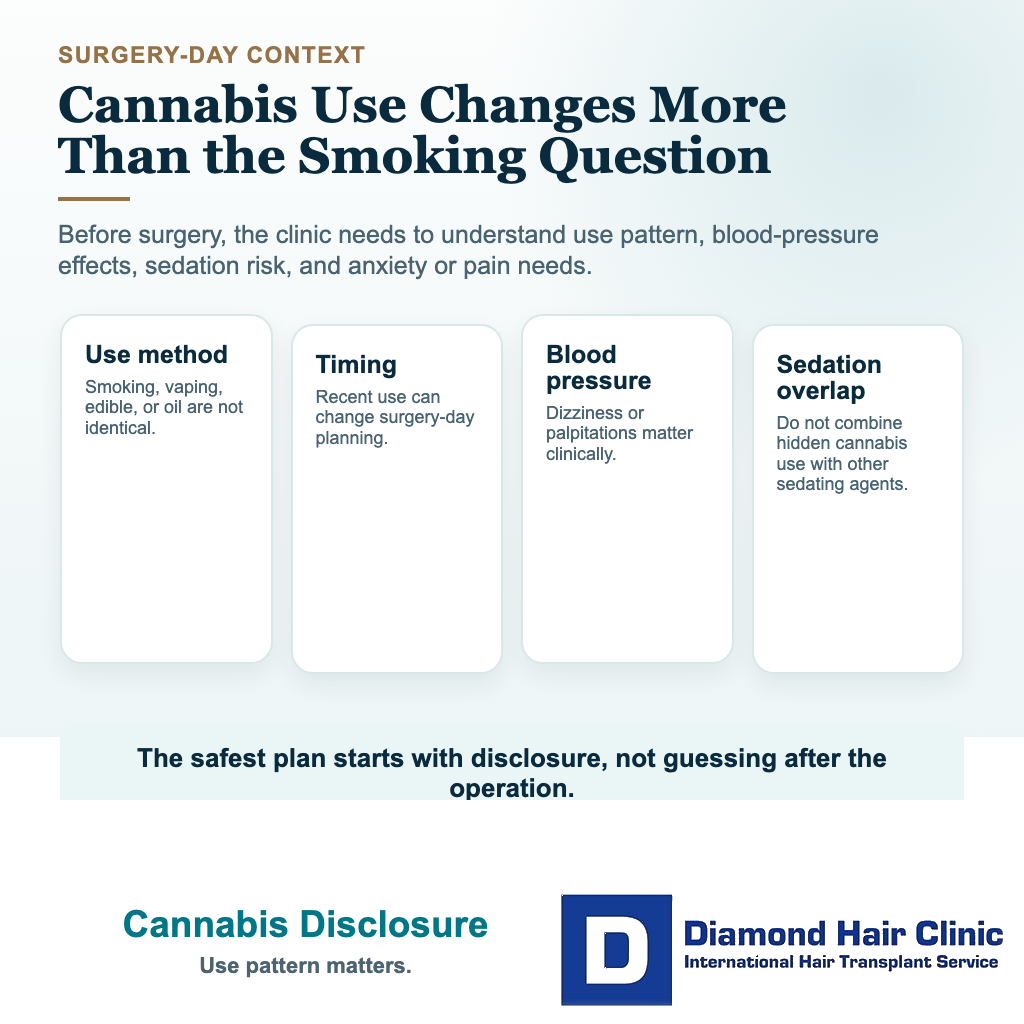
Do not use cannabis on the morning of surgery to calm yourself unless your surgical team has specifically cleared it. Arriving sedated, intoxicated, panicked from a strong edible, or affected by a strong dose can make consent, blood pressure, medication planning, and aftercare instructions less reliable. The same disclosure principle applies to nicotine before hair transplant surgery.
If your last cannabis use was very recent, tell the surgical team before local anesthesia starts rather than waiting until palpitations, dizziness, anxiety, or poor communication appear during the day.
General anesthesia is not the only anesthesia concern. Hair transplant patients still receive local anesthesia, sometimes with adrenaline, and the team needs a clear picture of substances that may affect heart rate, anxiety, or comfort. This planning matters, especially when judging anesthesia and adrenaline in hair transplant.
If you use cannabis daily, stopping suddenly may also change sleep, irritability, appetite, or anxiety. The right plan needs review before the operation, not improvised in the hotel room afterward.
Medical cannabis for sleep, anxiety, or pain
Some patients use cannabis because they sleep poorly, feel anxious, or want to reduce discomfort. I understand that reason. The difficulty is timing. Early recovery is also the period when you may be taking prescribed pain medication, antibiotics, or other medication from the clinic.
Mixing cannabis with medication can make dizziness, sleepiness, nausea, confusion, or poorer coordination worse. It can also make it harder for you to notice a real warning sign. If pain is the main reason, it is better to follow the clinic’s instructions about painkillers after a hair transplant rather than adjusting by yourself with cannabis.
This also applies to CBD oils or prescribed cannabinoid products. Even when they do not feel intoxicating, I still want them listed with medications and supplements, because product strength, other ingredients, and combinations can change the plan.
Alcohol makes this less predictable. Alcohol, cannabis, and pain medication together can turn a normal recovery night into a risky one. For alcohol after a hair transplant, the issue is not only grafts, but also bleeding risk, dehydration, sleep quality, and poor decision making.
If cannabis is part of a medical treatment plan, the surgical team needs to know before the operation. That allows the plan to be adjusted without guessing during recovery.
Coughing, dizziness, and touching after surgery
In the first days, recovery needs to stay predictable. Strong coughing can increase discomfort and swelling. Dizziness can make you less careful while standing, showering, or sleeping. Reduced judgment can lead to touching the recipient area too early.
Most graft problems in the first days are physical problems. Someone rubs, scratches, bumps, presses, or picks at the area. Cannabis can matter if it makes any of those behaviors more likely.
Sleeping is another practical issue. Some patients use cannabis to fall asleep, but deep or careless sleep can make you press the recipient area against the pillow. Sleep after a hair transplant has to stay controlled until the scalp no longer needs that protection.
I think about touching in the same way. If cannabis makes you repeatedly check the scalp, scratch an itch, or pick at scabs, the concern is no longer theoretical. Timing and force matter more than a light accidental contact. This is the practical point in touching grafts after a hair transplant.
Cannabis disclosure before surgery
Disclose cannabis before surgery if you use it regularly, medically, heavily, or together with tobacco. The same applies if you use edibles, vaping products, oils, or other substances that affect sleep, blood pressure, anxiety, or alertness.
Separate cannabis from smoke exposure in the question. An edible, a joint, vaping, tobacco mixing, sleep medicine, and anxiety use are different situations for a clinic to review.
I treat this as surgical planning, not a judgment about the habit. Cannabis use can matter for anesthesia or sedation discussions, blood pressure, anxiety control, medication after surgery, and your ability to follow the early recovery routine.
Medication and supplement history needs the same full disclosure. Give a complete picture, not a curated one, because anesthesia, blood pressure, sleep, anxiety, and aftercare all depend on the real history.
If you use cannabis daily and suddenly stop, sleep and anxiety can also change. That may affect the recovery period. For some patients, the conservative plan is not a sudden decision on surgery day, but a clear plan made before surgery with the right medical advice.
Read the instructions before hair transplant as real medical preparation, not as a formality to skim the night before travel. This matters more when cannabis, tobacco, sleep medication, anxiety medication, painkillers, or supplements are part of the picture.
If you already smoked after surgery
If you already smoked after surgery, look at the scalp without testing it. Do not rub the grafts to see whether they are secure. Do not pick scabs. Do not keep touching the hairline because you feel worried.
The details matter. Feeling guilty is not the same as losing grafts. A single small exposure with no coughing, no bleeding, no rubbing, and no change in the recipient area is very different from repeated smoking, heavy coughing, tobacco mixing, scratching, or falling asleep face down.
Timing also matters. Smoking on the evening of surgery is not the same as using cannabis after the scabs have loosened and the scalp has settled. Early exposure deserves more attention because the grafts, swelling, sleep position, and washing routine are all still fragile.
Send photos to the surgical team if you see bleeding, a piece that looks like graft tissue, increasing pain, unusual swelling, pus, fever, strong redness spreading beyond the expected area, or if you are unsure whether trauma occurred. A photo sent to the surgical team is usually more useful than guessing from online comparisons.
Do not try to compensate with excessive washing, scrubbing, random creams, or more substances to relax. Return to the clinic’s washing and medication instructions, then ask for guidance for your case.
Vaping, tobacco, and mixed joints change the answer
Vaping is not the same as smoke from a joint, but it still deserves caution in early recovery. Vaping can irritate the throat, trigger coughing, dry the mouth, and keep you in the habit of inhaling when recovery is easier if inhaled products are avoided for a short period.
Strong THC vapes, dabs, and concentrates can also be less predictable than people expect. A stronger effect can mean more dizziness, panic, coughing, palpitations, or poor coordination at exactly the time when the scalp needs quiet handling.
Mixed joints are a bigger issue because tobacco and nicotine change the discussion. Nicotine can narrow blood vessels and is a more direct concern for healing than cannabis alone. If the cannabis is mixed with tobacco, you are no longer asking only about THC.
Blood pressure and heart rate also matter. Some people feel palpitations, lightheadedness, or anxiety after THC. If you have known hypertension, heart disease, or unstable readings, high blood pressure and hair transplant planning needs more caution before surgery.
Before surgery, disclosure matters more than the exact label used. Cannabis, tobacco, vaping, recreational drugs, prescribed medication, and supplements all belong in the same medical conversation. That is one reason blood tests before a hair transplant and medical history are not just formalities. Cannabis should also be discussed separately from nicotine. Smoking, vaping, edibles, sleep, anxiety, coughing, and appetite do not create the same recovery question. If a patient hides the habit, the clinic cannot give a practical plan for the first days after FUE, when swelling, washing, sleep position, and accidental rubbing already need control.
If a clinic treats every patient the same regardless of cannabis use, tobacco use, blood pressure, anxiety, sleep medication, or pain control, the assessment is too thin. The point is not to reject every cannabis user. The point is to make sure the operation is planned around the real medical facts, not an ideal version of the patient.
Restarting cannabis more safely
Restart only after the early graft protection period has passed, the scalp is clean, the scabs are gone or nearly gone, coughing is controlled, and you are no longer relying on strong pain medication. For many patients, that means waiting at least 10 to 14 days, then still being careful.
The smoke route is the least helpful route during recovery. If cannabis is medically necessary, the route and timing should be reviewed with the prescribing doctor or the surgical team. Do not mix it with alcohol, sedatives, tobacco, or painkillers unless a doctor who knows your situation has cleared that combination.
Be realistic about behavior. If cannabis makes you sleepy, careless, anxious, hungry enough to ignore restrictions, or more likely to touch the grafts, it is too early for you even if the calendar says two weeks.
A few extra days of waiting is usually easier than turning a good surgery into a messy recovery through coughing, poor sleep, or mixed substances. The early restrictions are short. The result has to serve you for years.
A clean recovery is the one where the scalp stays clean, the grafts stay protected, the medication plan stays clear, and your judgment stays steady. If cannabis makes any of those weaker, wait longer.
Read this review excerpt
First wash completed and visual instructions given to my daughter.