A Clear Contact Route Matters Before Travel
Before you book flights or pay a deposit for FUE, you should know where medical questions after surgery go, who reviews photos, what response window is realistic, and which symptoms need local medical care. The danger is not a clinic taking a few hours to reply. The danger is being in a hotel or back home with no clear medical route.
Speed alone is not a clinic standard. What matters is whether you can see a real path from first message to surgery day and then to follow-up after returning home. Do not commit while the medical route is vague.
Someone traveling alone needs a backup contact before landing. The hotel, pickup timing, best phone route, and backup contact should be clear before you fly, because a lobby or airport queue is the wrong place to solve communication after surgery.
Communication is part of the surgical plan
A hair transplant is not finished when the last graft is placed. The early days after FUE still need clear instructions, photo review, and a route for questions that do not fit a sales script. That route belongs inside the plan before travel, just like graft number, donor protection, hairline design, and timing.
Many people judge communication by how quickly the clinic replies before payment. Speed helps, but it is not enough. A fast answer from a sales account can still leave you unsupported later if the surgery team, photo review process, and warning sign route are not defined.
This is close to the issue in hair transplant booking messages and the surgical plan. There, the main question is whether the booking message matches the operation. Here, the narrower question is what happens after the operation when you need an answer.
Slow replies are different from no medical route
Some good clinics are busy, and some teams answer in batches rather than instantly. That alone does not prove the surgery will be careless. The deeper concern appears when nobody can explain who will answer after surgery, which photos to send, or what happens when a symptom cannot wait.
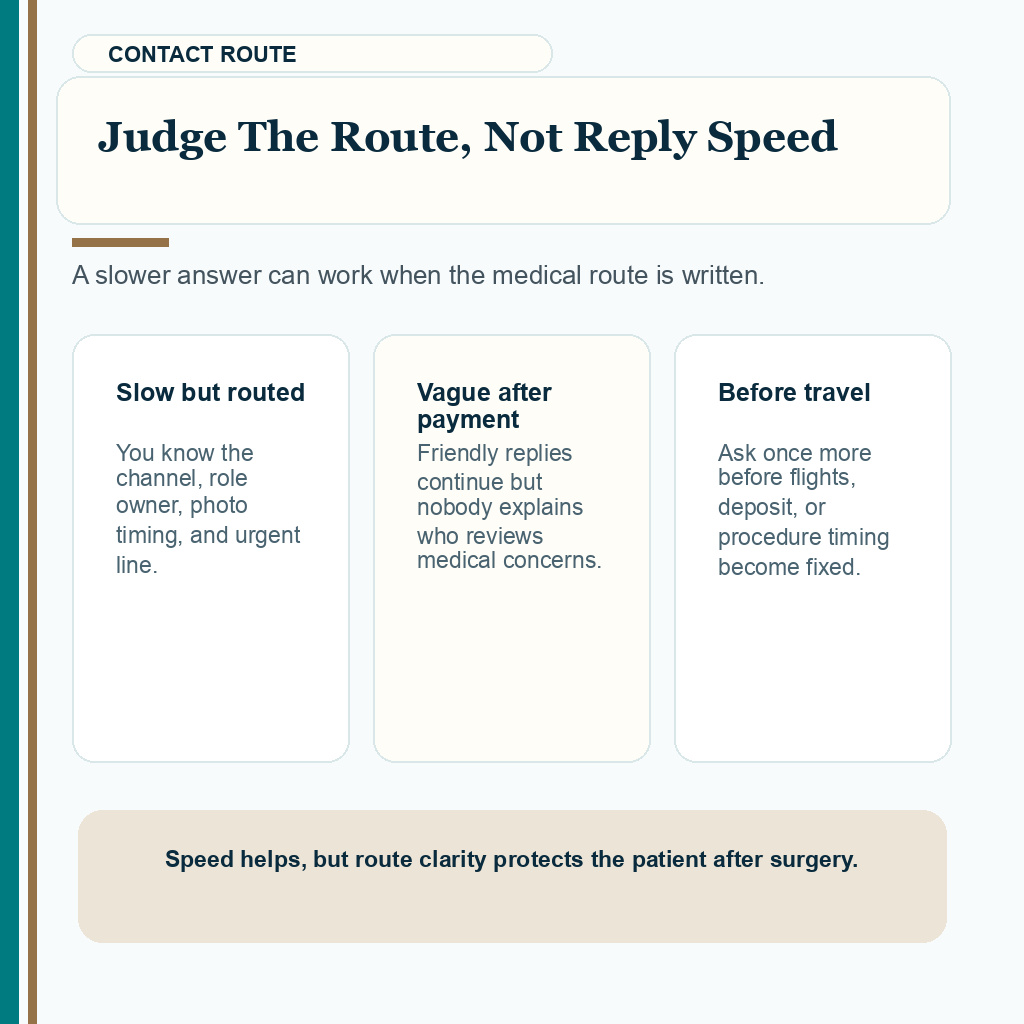
The difference matters before travel. If the clinic says replies may take several hours but gives a named channel, a role owner, a photo schedule, and an urgent symptom rule, you can plan around that. If the clinic keeps replying with friendly general lines and no structure, you are being asked to trust a blank space.
For international travel, that blank space feels larger. You may be in a hotel, in another time zone, or already home when a concern appears. The follow-up principles in hair transplant follow-up after surgery are much easier to follow when the contact route was explained before surgery.
The full review also describes a delayed initial quotation.
Read this review on REVIEWS.io
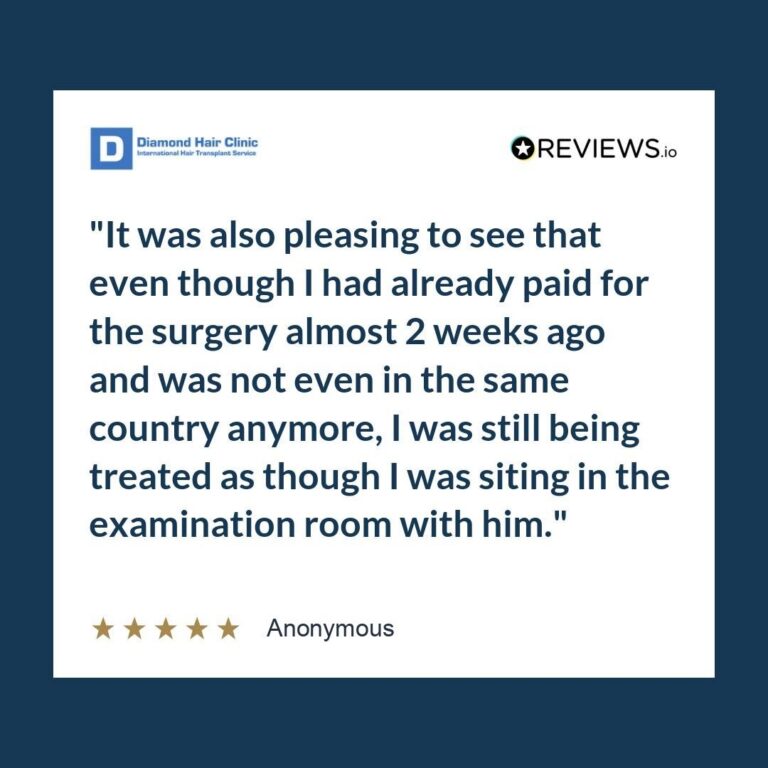
Read this review excerpt
“It was also pleasing to see that even though I had already paid for the surgery almost 2 weeks ago and was not even in the same country anymore, I was still being treated as though I was siting in the examination room with him.”
Details to clarify before deposit or travel
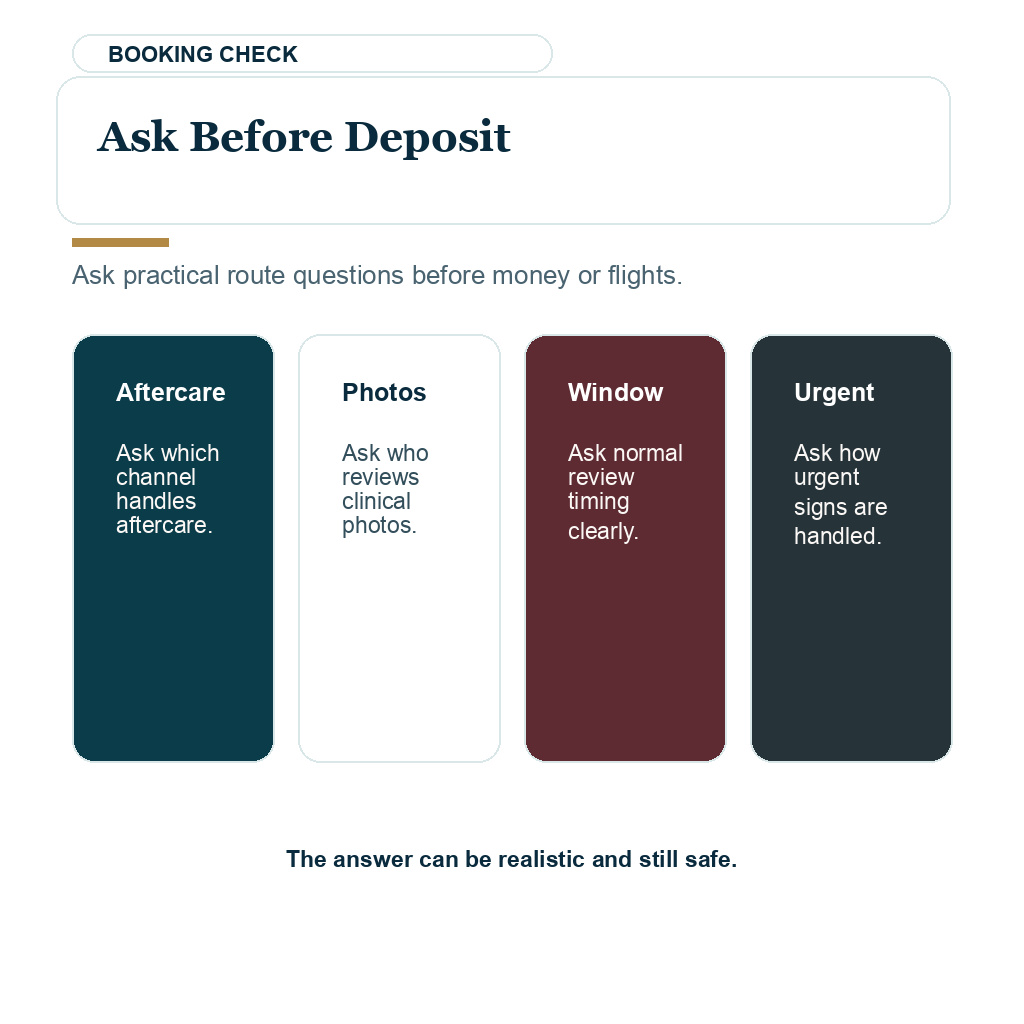
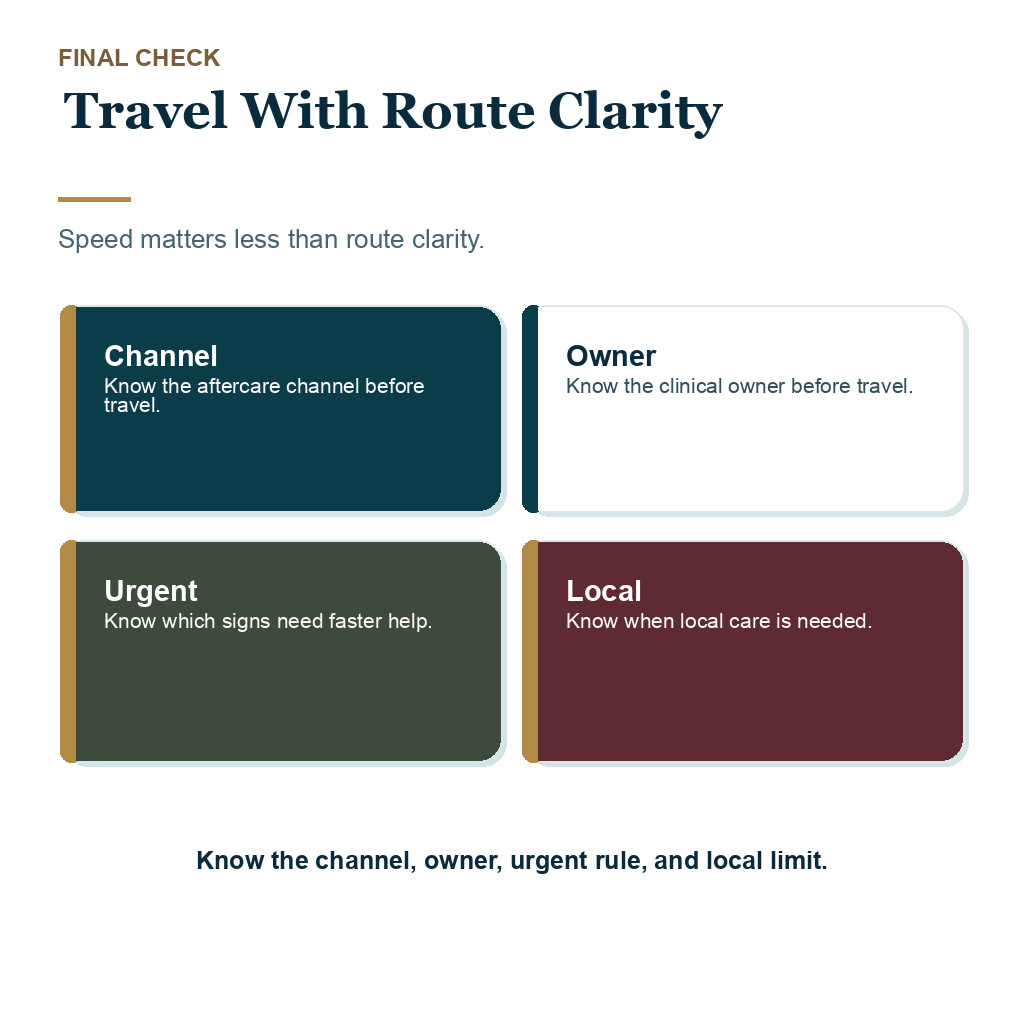
Commit money or flights only after the route names the aftercare channel, the photo reviewer, normal photo review timing, warning signs that need faster contact or local medical help, and who answers medicine questions.
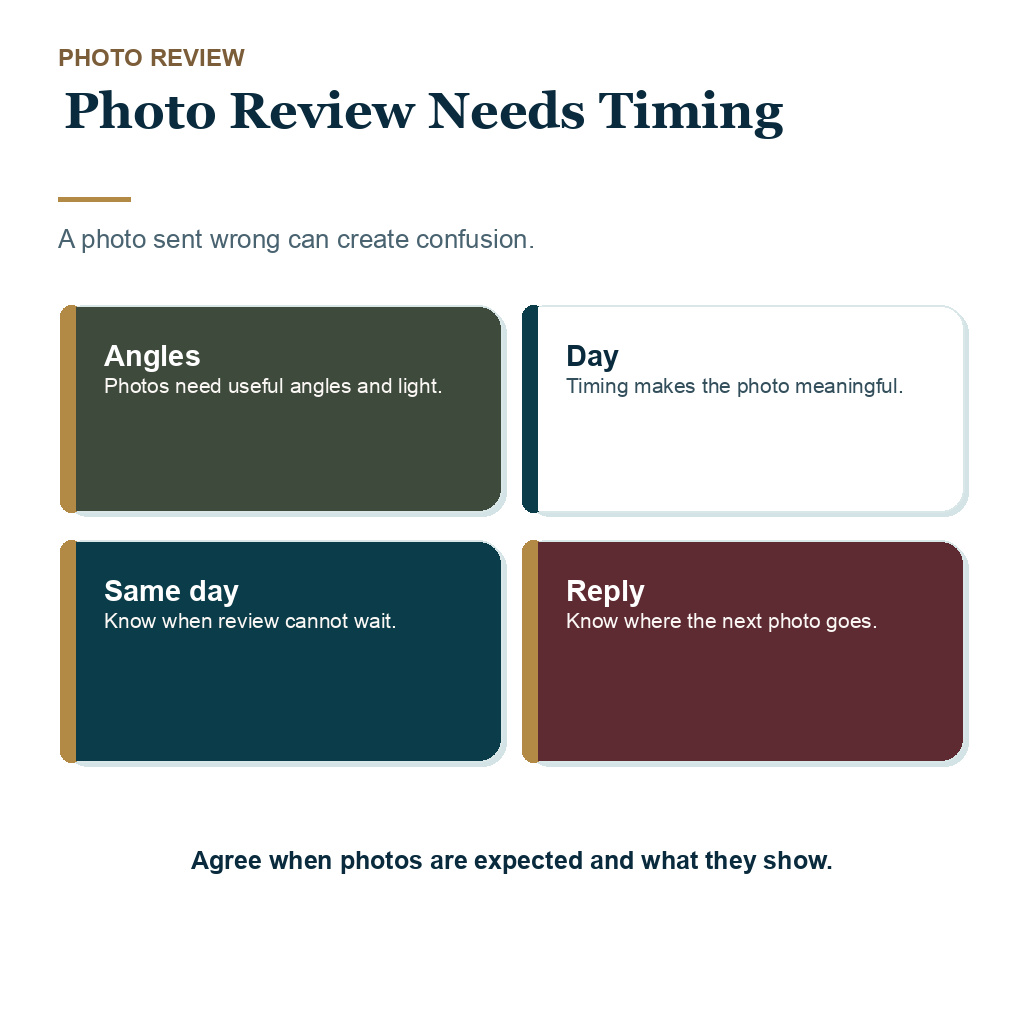
Test that promised follow up route with one ordinary nonurgent planning question before your first urgent concern. A channel that works for payment and scheduling is not the same as a clinical photo review route.
These questions do not need a dramatic tone. They are normal planning questions. A careful clinic can explain the route without promising instant replies at every hour of the day. The answer can be realistic and still be safe.
Medical review before travel should be specific before the flight is booked. If your case has donor limits, previous surgery, medical history, or unusual expectations, the case review before flying has to be specific. I cover that separately in case review before travel.
The contact route is part of the same before travel verification. If direct examination lowers the graft range, changes the hairline, or delays surgery, the clinic needs one clear channel for that explanation and for follow up after the patient returns home.
Contact evidence to confirm before FUE travel
Use this ladder before you pay a deposit or book travel. A clinic can reply slowly and still have a clear medical path. The warning sign is a vague path after payment, especially when you will soon be away from the clinic.
Where questions after surgery go.
Who reviews clinical concerns.
When and how images are checked.
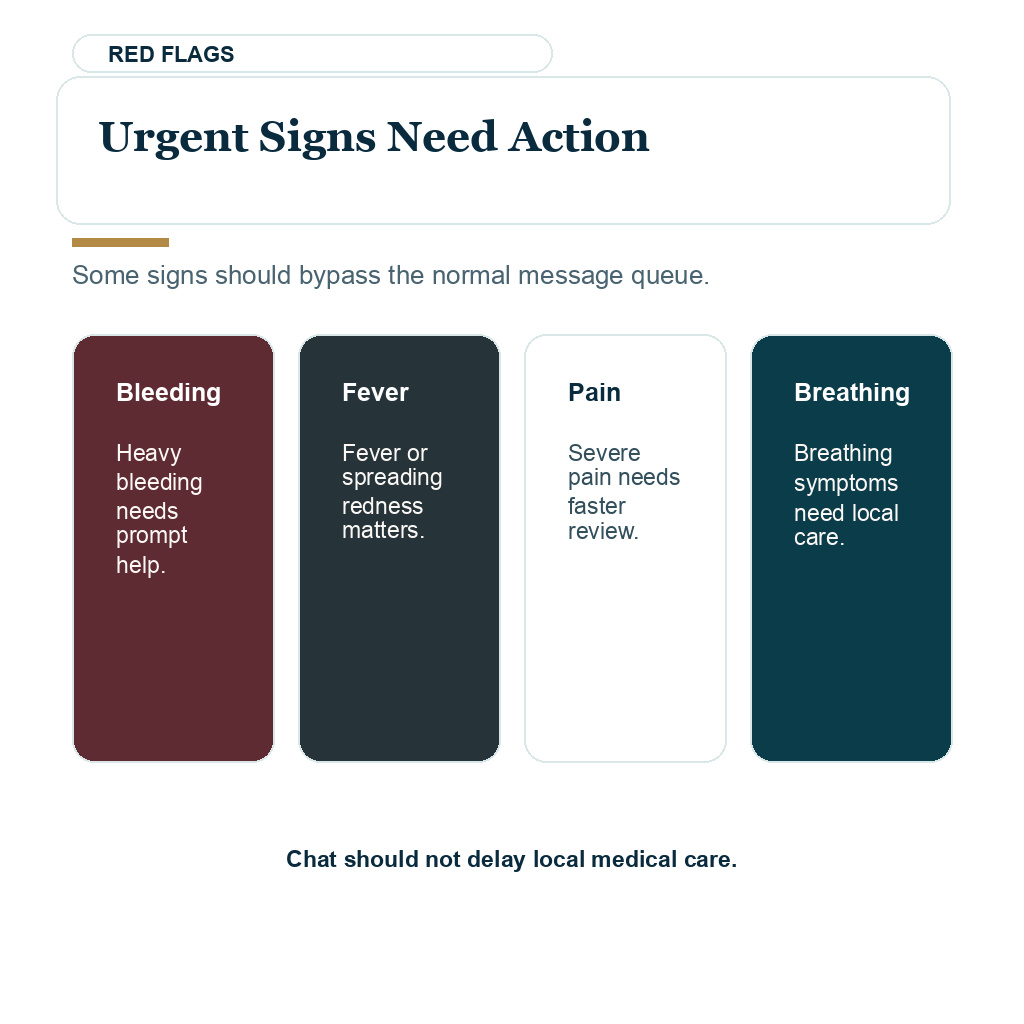
How a warning sign escalates.
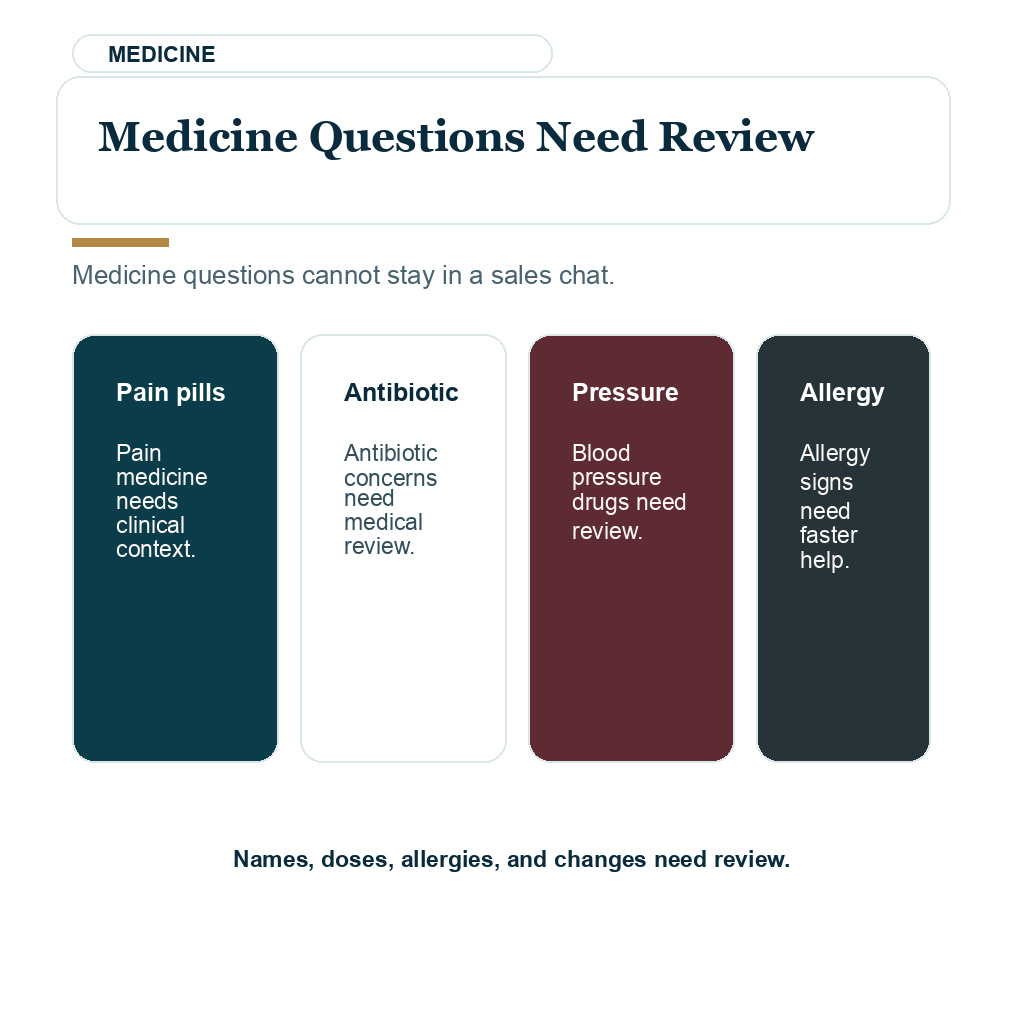
Who handles medicine uncertainty.
What happens after leaving Turkey.
A real channel is more than a sales inbox
Before travel, you need to know where questions after surgery go once the procedure is finished. A single sales chat that never names the aftercare path leaves too much uncertainty.
- Save the channel name.
- Keep the hours and language limits.
- Know what happens if the usual coordinator is unavailable.
Fast sales replies do not replace aftercare access
A fast reply before payment can feel reassuring. It can also hide the real question. The person who explains packages, hotels, and available dates may not be the person who can judge bleeding, swelling, pain, medicine, fever, allergy, graft trauma, or whether a photo needs attention the same day.
That separation is not a problem when the handoff is written clearly. Coordinators are useful. They can collect photos, organize timing, and make sure the right person sees the question. The problem begins when you can only reach a sales thread and that thread never names the medical route.
I connect communication with surgeon responsibility for that reason. In surgeon involvement in hair transplant surgery, the point is not that the surgeon types every message. The point is that clinical judgment has an accountable route.
The route after you leave Turkey
Many concerns after FUE appear after you leave the clinic. Some appear in the hotel that night. Some appear during the first wash. Some appear when you are already back home and looking at the recipient area under bathroom lighting. A safe plan has to survive that distance.

Read this review excerpt
The continued communication is something that you should not take for granted. It has been amazing to be able to quickly get answers for questions or concerns I have, even though there is a two hour time difference.
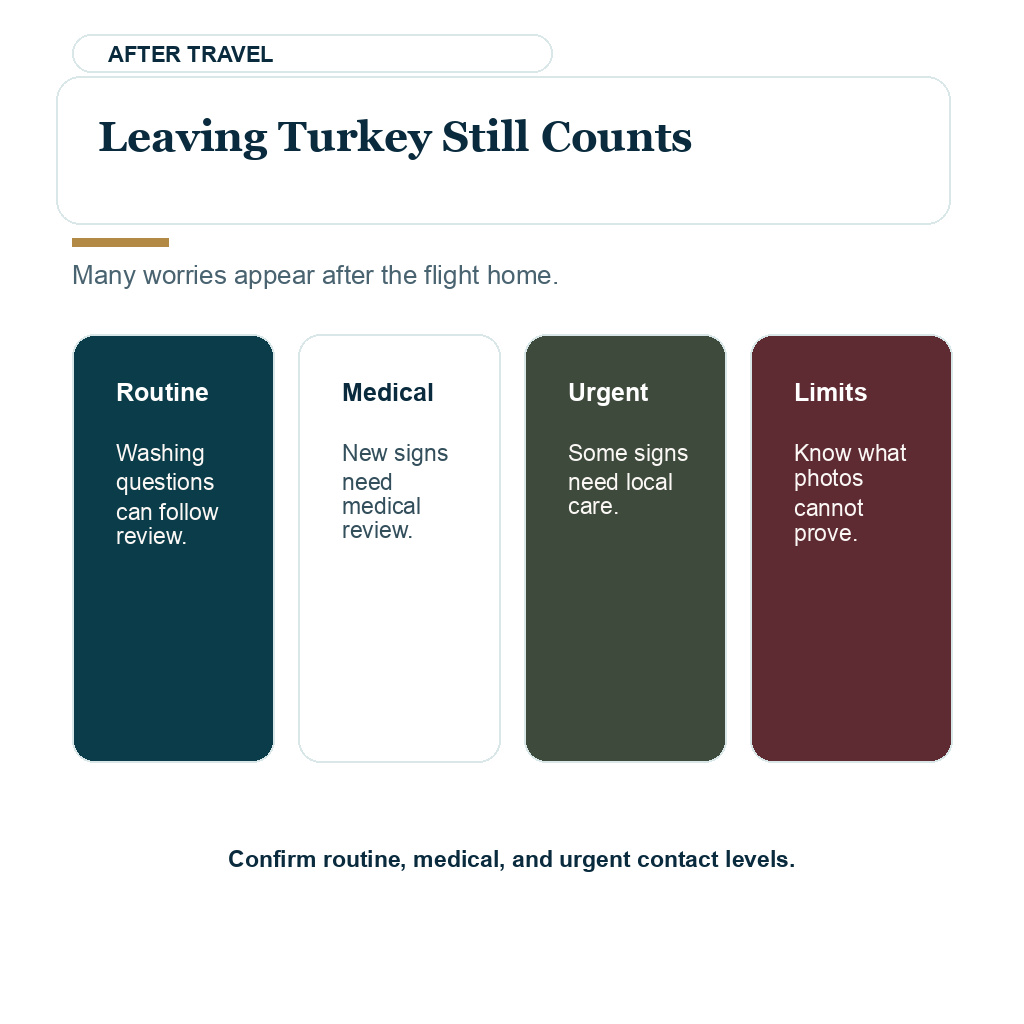
For me, a useful route has three levels. The first level is routine review, such as scheduled photos, washing questions, scab care, sleeping position, swelling, and normal discomfort. The second level is medical review, where a photo, symptom, or medicine question needs a clinician to judge whether the normal plan still fits. The third level is urgent care, where distance matters and local medical help may be safer than waiting for a clinic message.
The route should also cover the small problems that create panic, such as a split scab, fresh bleeding after washing, swelling that changes sides, or a gap you are not sure how to read. Those questions need a photo path before travel, not only a sales reply after you are already worried.
You do not need a long document for every possibility. You need enough detail to avoid guessing. If a photo is blurry, where should the next one go? If swelling looks different on one side, who decides whether it is expected? If a medicine causes a reaction, who tells you whether to stop, continue, or seek local care? Those answers are part of travel planning because they decide how safe the first week feels once you are away from Istanbul.
You also need clear limits. A clinic can review photos and give guidance, but some symptoms need local medical care. Heavy bleeding, severe pain, fever, fainting, chest symptoms, breathing problems, spreading infection signs, or a drug reaction should not wait for a normal message reply from another country.
The medical tourism decision is broader than one WhatsApp response. A clear contact route keeps Turkey hair transplant without the sales lens tied to surgeon review, aftercare access, and practical surgery questions. Here the important point is narrower. Before you travel, know how aftercare communication works when you are no longer in the clinic and what belongs with local care.