


Hemophilia Makes Hair Transplant Planning a Hematology Decision
A hair transplant may be possible for some patients with mild or well controlled hemophilia, but I do not treat it as routine cosmetic surgery. Before I would accept the case, I need to understand the hemophilia type, current factor activity if known, bleeding history, medicines, prior procedure bleeding, and the hematology plan for surgery. The safe decision is whether bleeding control is already planned before any donor graft is removed. The plan also needs to say who manages bleeding if it continues after the clinic visit.
That first answer matters because many patients with mild hemophilia live normal daily lives and may not think of themselves as high risk. Daily life is not the same as an operation. FUE is usually performed under local anesthesia and is less invasive than many hospital operations, but it still creates many small surgical openings in the donor and recipient areas. Hemophilia makes those small openings a hematology decision.
The answer depends on bleeding control, not the label alone
A hemophilia note in the medical history does not make the case impossible. It also does not make the operation acceptable because the patient says it is light, mild, or never caused a major problem. The label starts the discussion. It does not finish it.
Even mild hemophilia needs a written plan for the operation day. Rare treatment in normal life does not show whether several hours of donor and recipient work can be controlled from the first incision through the trip home.
What I need is a controlled story. Which factor is affected? Is it hemophilia A, hemophilia B, a carrier state with low factor activity, or another clotting factor disorder? What was the most recent factor activity, and when was it checked? Has the patient needed factor replacement, DDAVP, tranexamic acid, or another hematology treatment for dental work, injury, or surgery? Has bleeding ever lasted longer than expected after a small cut, tooth extraction, biopsy, or previous operation?
Those details decide whether the bleeding plan is careful review, hematology clearance, a smaller controlled plan, or postponement. The right answer may be different for two patients who both say they have mild hemophilia. One may have stable records and a hematologist who already knows how to cover minor procedures. Another may have unclear factor levels, recent bleeding, or medicines that make the plan unsafe until clarified. A patient who has never needed factor treatment still needs current factor status before the case is treated as low risk.
FUE still creates a bleeding control problem
FUE feels small because each opening is tiny. The total procedure is not tiny. A hair transplant can involve thousands of donor punches and recipient sites. The surgeon needs a clean field, steady visibility, careful graft handling, and predictable clotting. Even light extra bleeding can slow the operation, make the recipient area harder to judge, and create more aftercare anxiety in the hotel.
I separate hemophilia from ordinary recovery bleeding for that reason. A small amount of dried blood after FUE can be normal in many patients, but hemophilia changes the threshold for planning and response. The plan must be made before surgery, not invented after the patient notices bleeding and starts searching online.
There is also an important distinction from a platelet problem. A low platelet count changes the bleeding conversation, but hemophilia is usually a clotting factor question. A routine complete blood count may not answer the whole problem. Blood tests before a hair transplant are helpful, but they do not replace a hematology plan when a bleeding disorder is already known.
The pre-op review starts with factor level and bleeding history
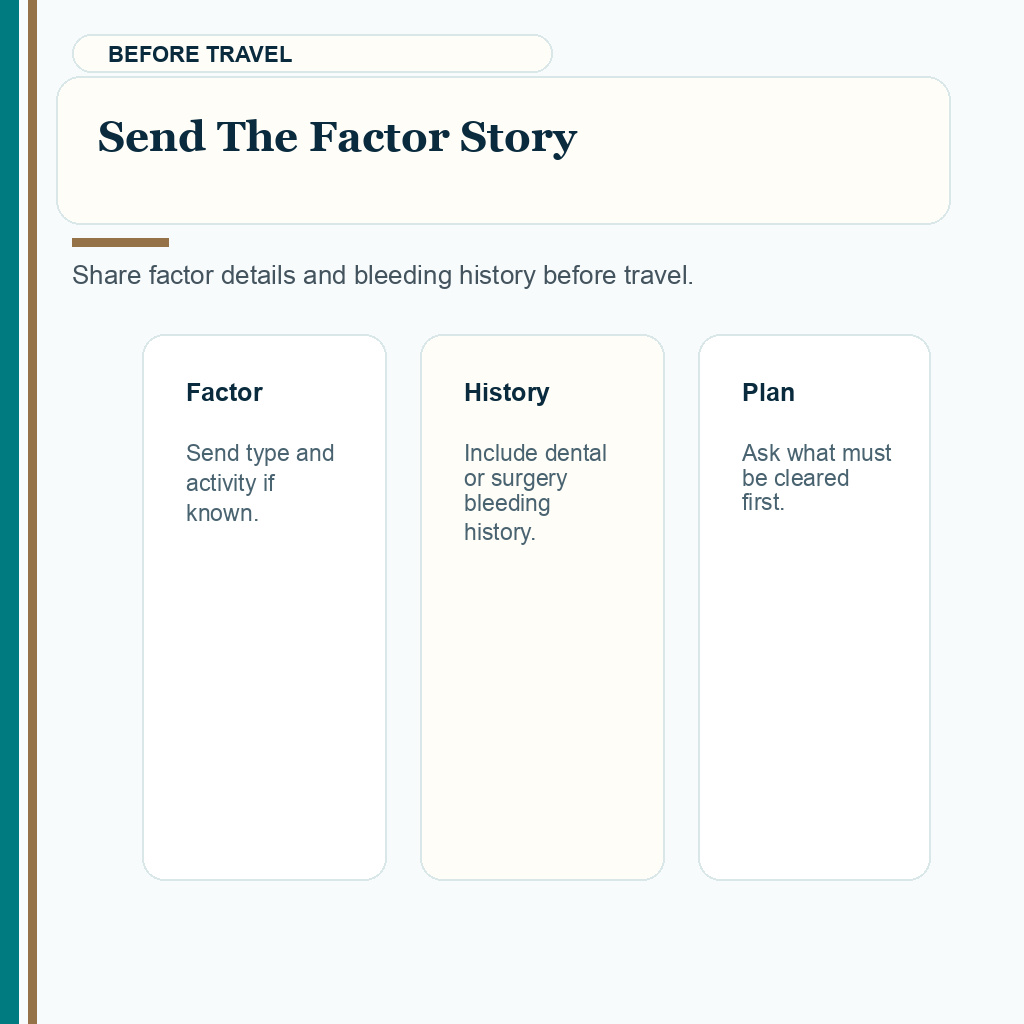
Before travel is booked, I want the patient to send the diagnosis, factor activity if available, treatment products, medicine list, prior bleeding history, and the name or report of the hematologist who follows the condition. I also ask about dental extractions, tonsil surgery, accidents, nosebleeds, gum bleeding, easy bruising, heavy bleeding after small wounds, and any previous operation under local anesthesia.
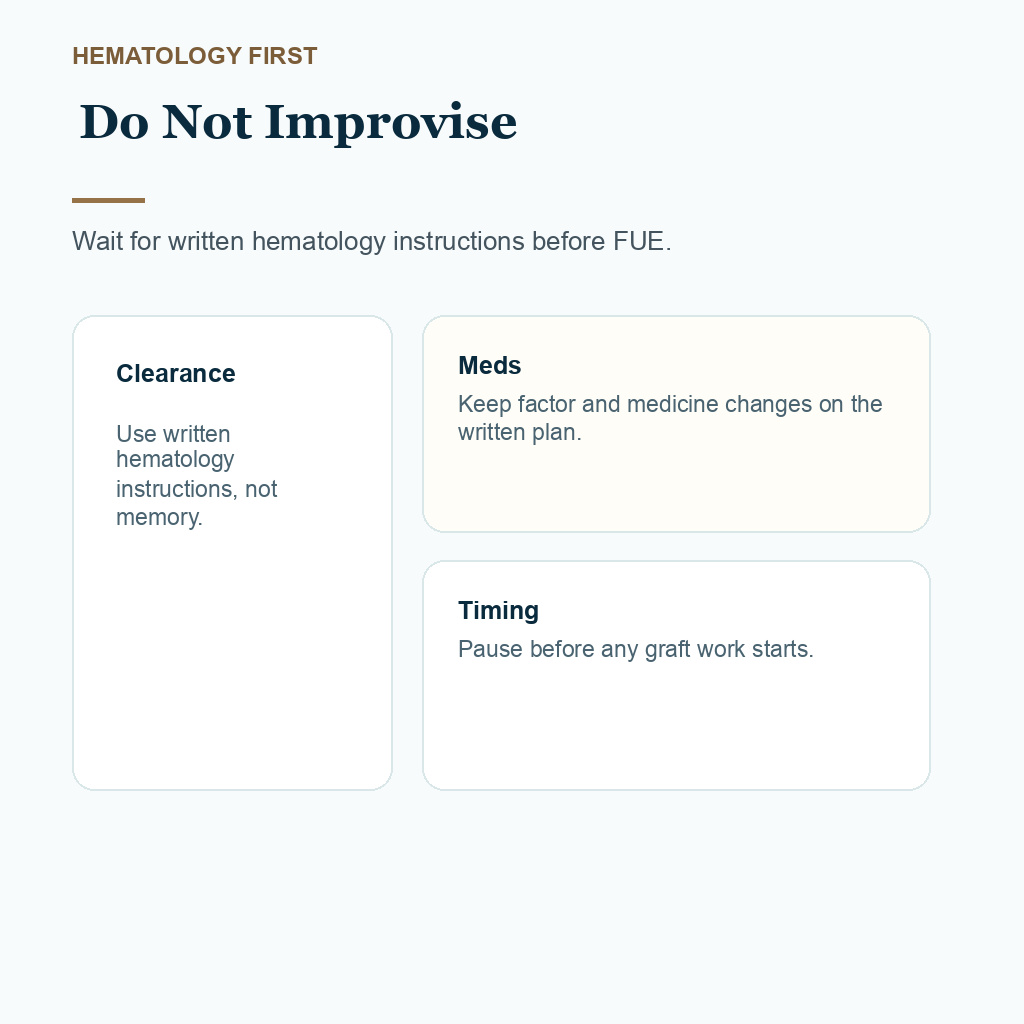
Every medicine must be listed before FUE, but in hemophilia the word medicine includes more than tablets. Factor products, DDAVP history, antifibrinolytic medicines, painkillers, aspirin, anticoagulants, supplements, and injections all belong in the review. Please do not stop or start anything privately to make the transplant date easier.
Hemostasis route map
Match the bleeding control status to the bleeding plan
- 1Stable record
- 2Missing clearance
- 3Moving risk
- 4Aftercare concern
Review the plan
Diagnosis, factor activity, prior dental or surgical bleeding, and treatment plan are available before travel.
Decision cue The case can move to surgeon review without pretending hemophilia is routine.
Hematology first
The diagnosis is known, but factor status, treatment timing, or written instructions are missing.
Decision cue Booking should wait until the hematology route is clear.
Pause the date
Recent uncontrolled bleeding, medicine conflict, unclear anticoagulant plan, infection, or impossible local follow-up changes the safety picture.
Decision cue The safer decision is to delay before any donor hair is removed.
Use urgent review
Fresh bleeding returns, spreads, soaks gauze, follows trauma, or comes with dizziness, fever, discharge, or worsening pain.
Decision cue The patient uses the agreed clinic contact route instead of guessing.
The review has to settle what will actually happen. A factor product plan needs timing, availability, monitoring, and aftercare instructions. When hematology considers elective surgery unsuitable at that moment, I respect that and postpone. Donor hair is limited, so I will not place it into a case while the medical plan is uncertain.
No hematology plan is a reason to pause
I pause the transplant plan when the factor status is unknown, the bleeding history is unclear, recent bleeding has been uncontrolled, the patient is using an anticoagulant or antiplatelet medicine without a prescribing doctor plan, or the patient cannot arrange follow-up if bleeding continues after leaving the clinic. I also pause when the patient feels pressured to travel first and solve the medical details later.
Here, hemophilia differs from a normal cosmetic scheduling question. A hair transplant can wait. A bleeding complication, a clotting medicine mistake, or a donor area problem cannot always be undone as neatly. Blood thinner planning before surgery follows the same safety logic. The danger is not only bleeding during FUE, but also the medical risk created by changing treatment without the right doctor involved.
Pausing is not failure. It is how an elective operation remains elective. If the hematology route is clear later, the transplant discussion can restart with better information, calmer timing, and less pressure on the surgery morning.
Surgery day needs slower bleeding checks and a clear contact route
If hematology clearance is complete and the case is accepted, the surgery day still changes. I would plan the graft number, session length, donor zones, local pressure checks, and observation time more conservatively than I would in a routine case. The team should know the agreed plan before the room is prepared.
The surgery morning plan review should confirm the hemophilia plan, not discover it. I want the patient to know what would make us continue, reduce the plan, pause, or stop. That includes bleeding that is harder to control than expected, missing treatment product, changed medicine use, recent new bleeding, or a hematology instruction that does not match the planned procedure.
A smaller or slower session is sometimes the safer design. Large sessions are not always better, especially when bleeding control is part of the operation. Good FUE is not only about how many grafts should be removed. The question is whether the grafts can be placed cleanly and whether the donor area is protected for the long term.
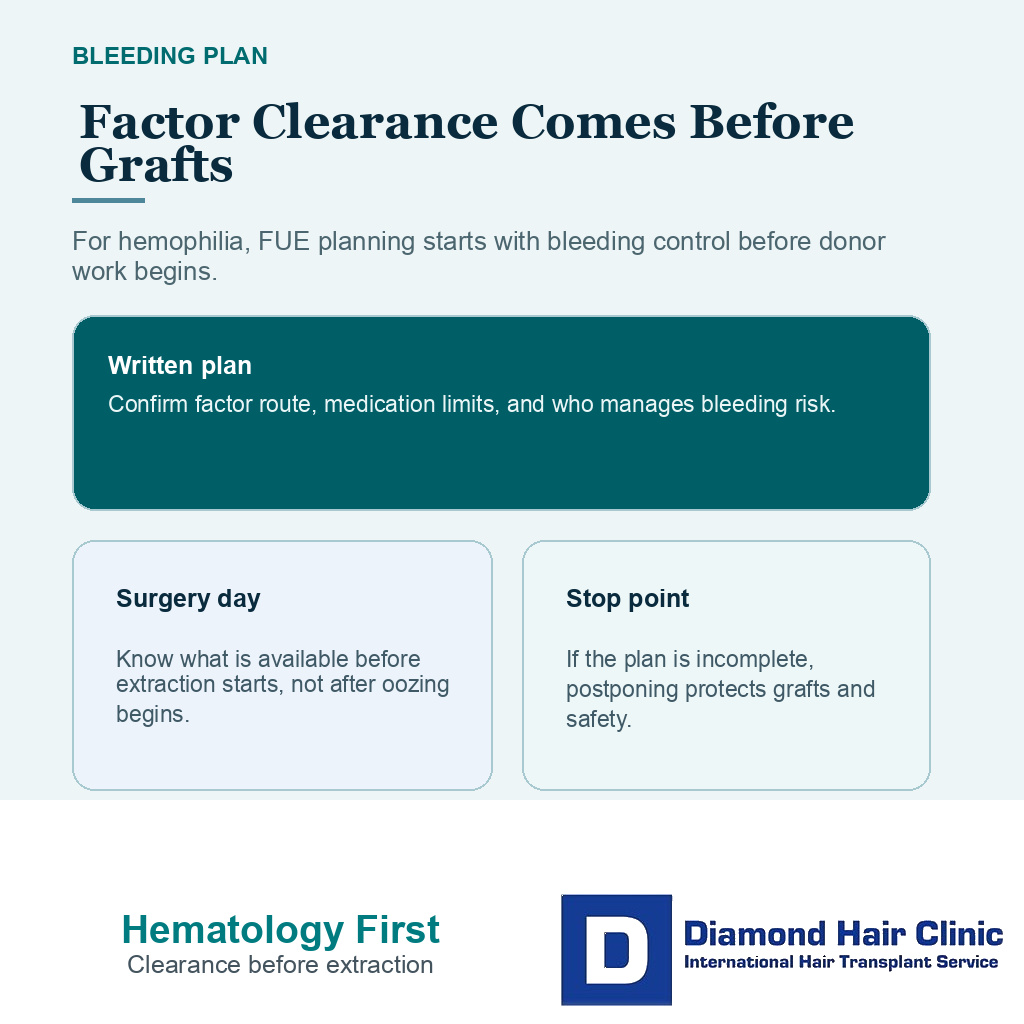
Use these 4 hemophilia planning slides to keep the surgery day sequence clear.

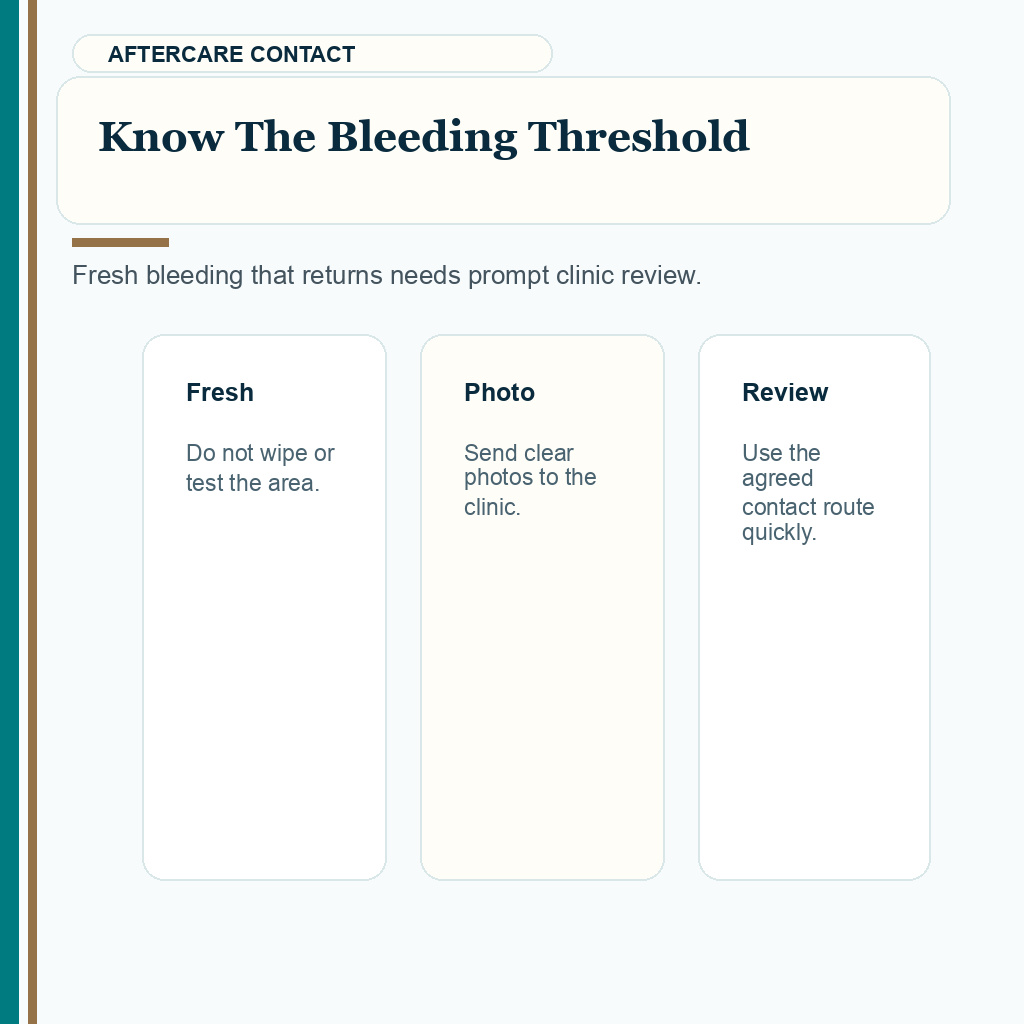
Bleeding that returns after pressure needs review
After surgery, the patient with hemophilia should leave with a clear contact route and clear thresholds. A light stain that has stopped is different from fresh bleeding that returns, spreads, soaks gauze, follows trauma, or comes with dizziness, increasing pain, discharge, fever, or an open looking area. Bleeding after hair transplant needs quick review when it does not settle, and that is even more important when a bleeding disorder is already known.
Wiping, picking, or testing the same spot again and again can disturb grafts and make the bleeding harder to interpret. The better response is controlled pressure only as instructed, clear photos if the clinic asks for them, and quick communication through the agreed route.
The aftercare plan should also fit travel. If the patient is flying home immediately, staying alone, or going somewhere without easy medical access, the threshold for postponement or extra observation may change. Hemophilia planning is not complete if it only covers the minutes inside the operating room.
Decide before grafts are removed
Here is the line I use. With controlled hemophilia, clear records, a written hematology plan, coordinated medicines, and realistic follow-up, FUE may be considered carefully. When factor status, bleeding history, treatment access, medicines, or aftercare response are unclear, I pause before donor hair is touched.
That pause protects the patient and the donor area. It prevents a cosmetic date from overruling medical judgment. It also keeps the surgeon from starting a graft plan without the information needed to finish it safely.
Bring the hematology plan first. Then the hairline, donor supply, graft number, and recovery plan can be discussed on clear ground. A good transplant decision starts before surgery, and in hemophilia it starts with bleeding control.

Read this review excerpt
Every single one of my questions was answered and they made sure I had all the details I needed to make an informed decision.