


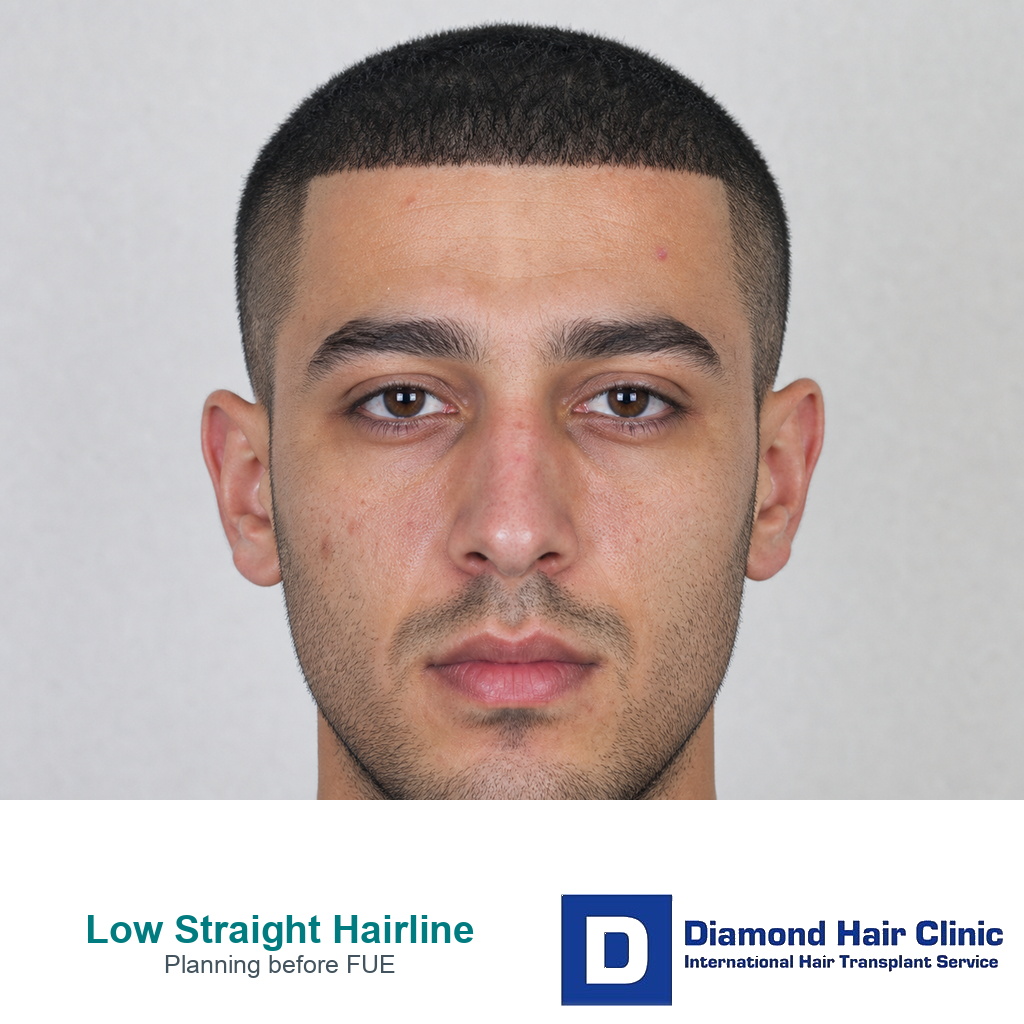
Before You Choose a Low Straight Hairline
A low straight hairline can be reasonable in the right patient. Some patients genuinely prefer a sharper, younger frame. The risk begins when that preference is treated like a drawing exercise rather than a surgical plan. Before I accept this design, I check the moving forehead, facial proportions, first row graft choice, donor reserve, current hair loss pattern, and future hair loss risk.
That is the difference between personal taste and a planning mistake. The real risk is not straightness by itself. It is spending donor grafts on a youthful border that may age badly or become difficult to repair. A patient may like the outline in one front photo. I still need to see whether the line works with dry hair, a relaxed forehead, normal light, donor reserve, and conversation distance.

Straightness alone is not the problem
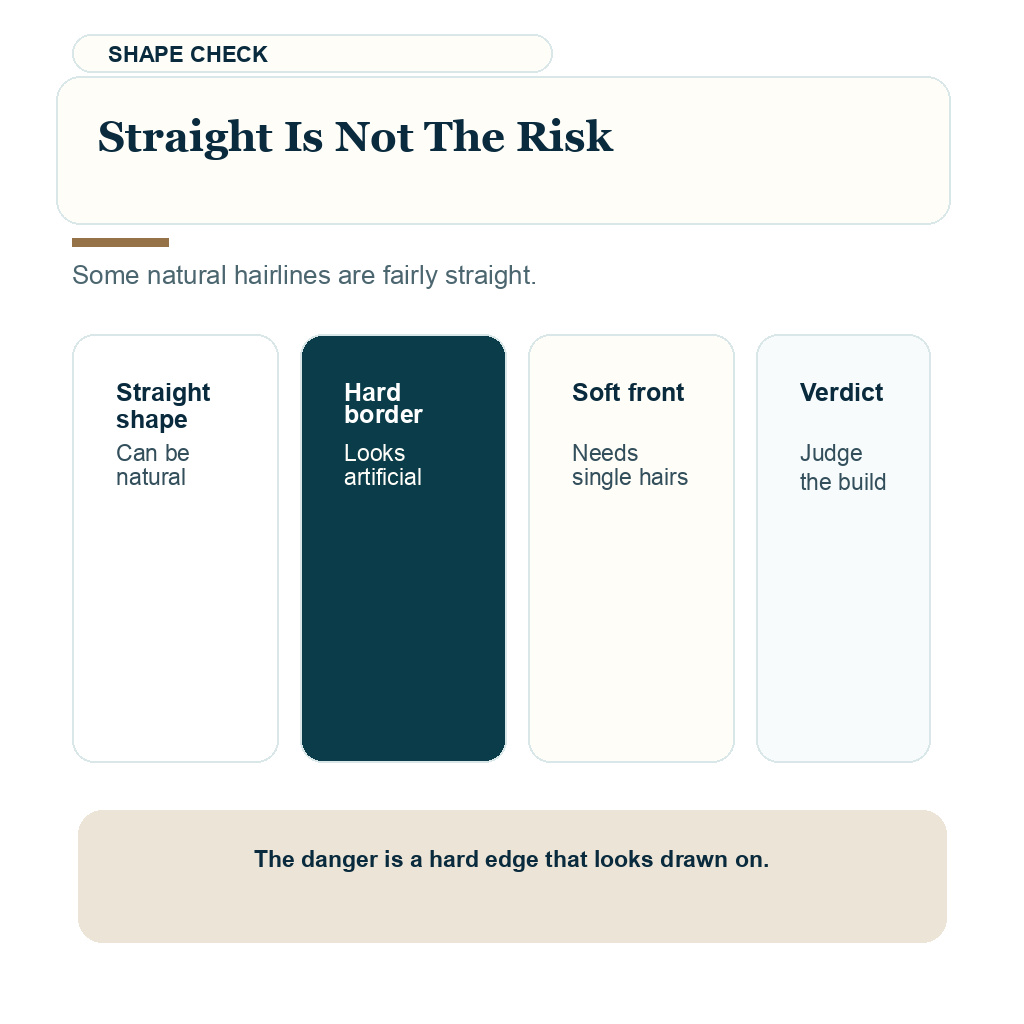
Patients often hear that a straight hairline is unnatural, then compare photos online and become unsure whether small irregularities are a design flaw or part of naturalness. That is too simple. Some natural hairlines are relatively straight. Some people have very little temple recession when they are young. A straight central frame can also suit certain faces. I do not reject a design just because it is not V shaped.
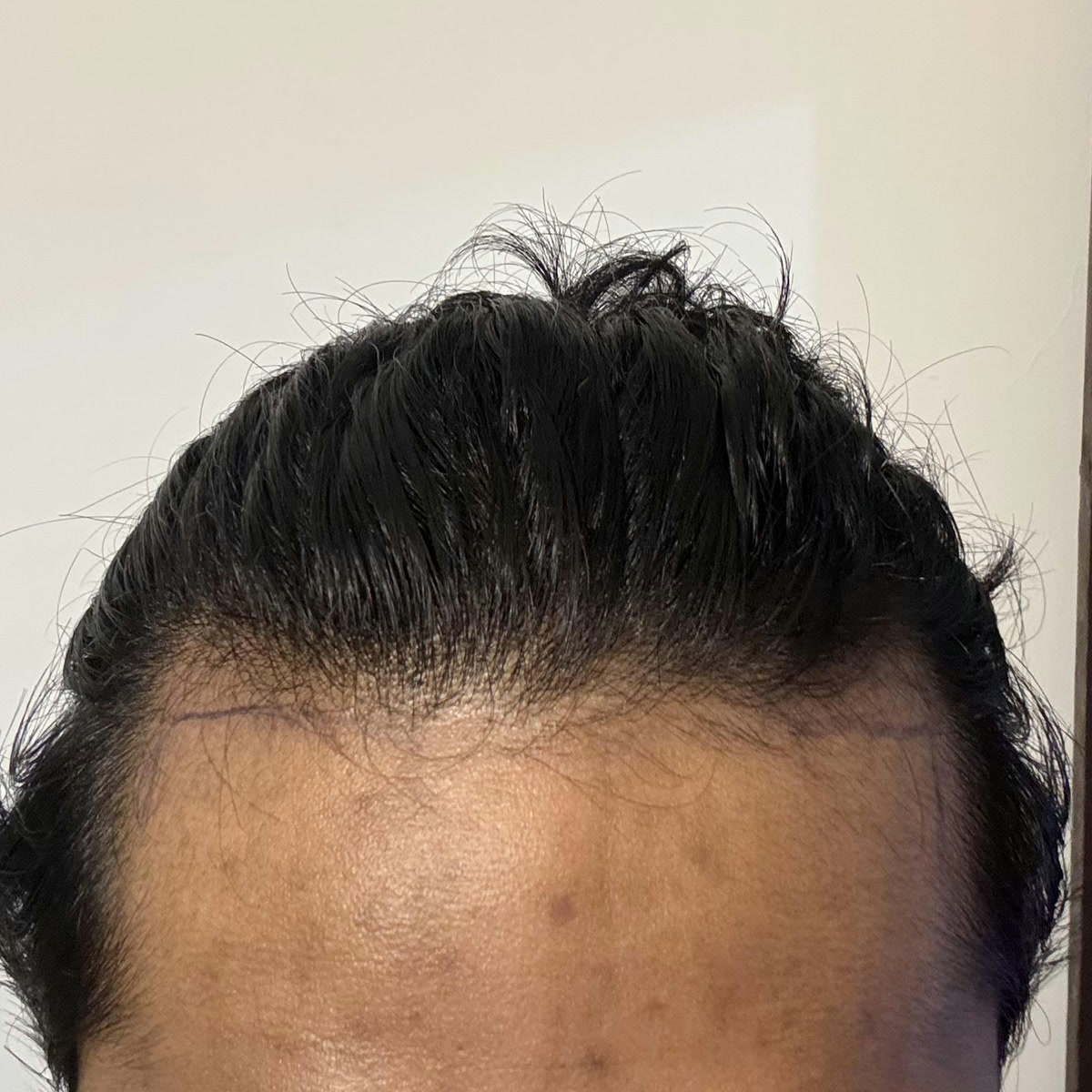
What matters is whether the line has the small changes that make hair look like hair rather than a border. A natural looking frontal edge usually has a transition zone, careful variation in graft placement, correct exit direction, and softer single hair grafts in the front. The line may be low or straight, but it should not look like a painted edge.
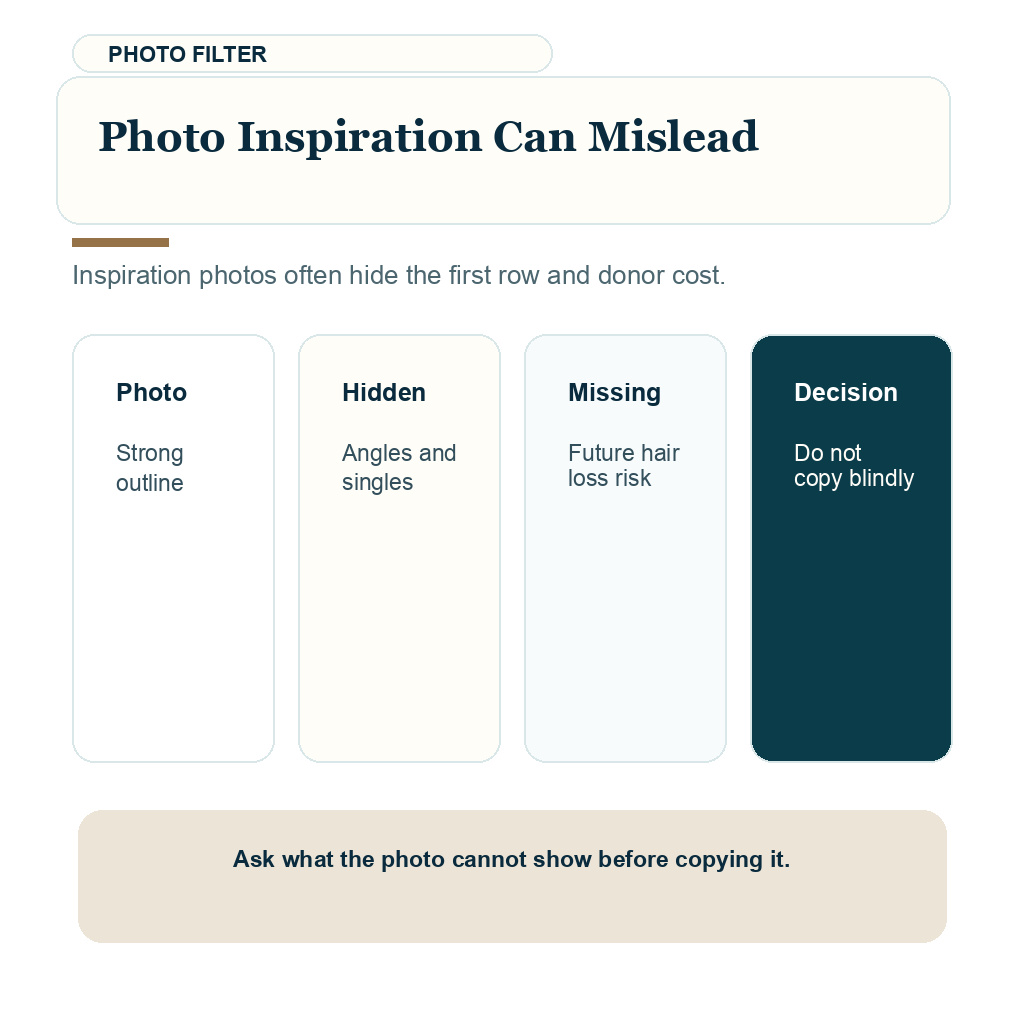
Broad inspiration photos can be misleading. A photo may show density and a strong shape, but it may hide the first row, the angle, the temple frame, and the donor cost. When I design a hairline, the question is not only whether the shape is attractive today. The construction also has to look natural as the patient ages.
Inspiration photos and AI mockups can help you show taste, but they should not become the surgical ruler. I still have to translate that preference into facial proportion, temple transition, first row softness, donor cost, and future hair loss risk. A line that looks perfect on a screen can be too low, too square, or too demanding once donor reserve and facial movement are considered.
A lower drawing can look attractive, but the cost is paid in donor reserve, temple balance, and long term softness. The line still has to look natural when the face moves.
Conservative does not describe one setting. It may mean a higher or softer hairline, restrained implanted density, or fewer grafts spent from the donor reserve. Those are separate decisions. A higher, softer outline can still use many grafts, while a lower line can still be planned with restrained density.
Why do I use a higher threshold?
As a hair transplant surgeon, I am cautious with low straight hairlines. This is not my default choice, because the design asks the donor area to spend more grafts for a lower border before we know how much hair the patient may need later.
Straightness also makes the eye less forgiving. Even when the first row is built with single hair grafts, small zigzags, and careful irregularity, a very straight overall shape can overpower those details. The patient may not see the problem on the drawing, but after growth the line can still read as a hard border instead of a natural hairline.
I treat this design as a rare exception, not a default plan. I consider it only when the patient strongly wants that look, the donor area is strong, future hair loss is stable enough, the forehead and temple frame support the lower border, and the tradeoff is understood. A clinic that lowers the line mainly because the patient will feel happier on surgery day is not doing careful planning. That pattern belongs close to high volume hair mill work. Many patients are tempted by the low straight drawing at first, then later regret that the result looks too low, too straight, or too artificial. A second opinion before a hair transplant is useful only when it compares the same low line, donor reserve, and crown plan. Otherwise the patient may only be comparing numbers, not the surgical plan behind them.
The lower border must respect the moving forehead
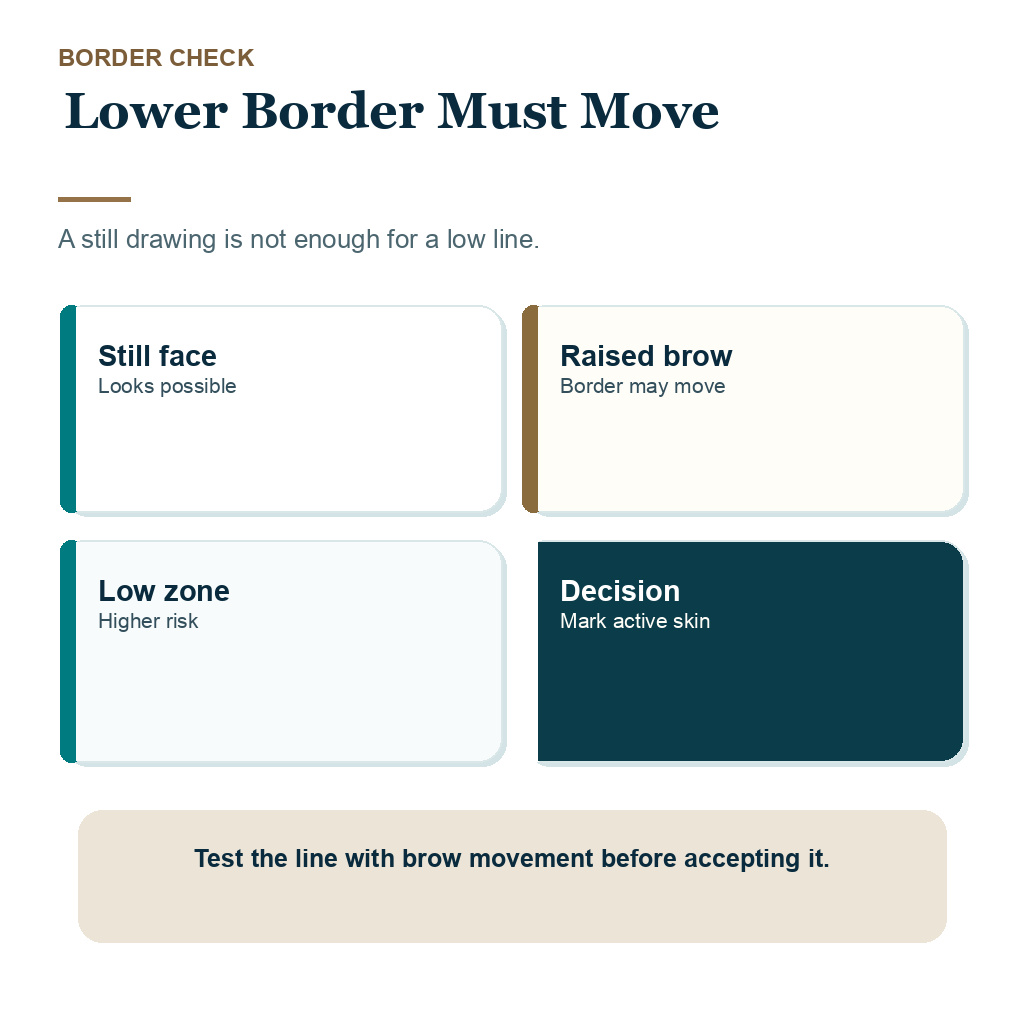
A hairline cannot be lowered by drawing a new border on a still face. The skin above the eyebrows moves when we raise the brows, smile, squint, or make facial expressions. If transplanted hair is placed too low into the active forehead area, the result can look strange because hair seems to move with expression in a place where scalp hair should not be sitting.
A single rule such as a fixed number of fingers or centimeters is not enough for hairline planning. The patient’s forehead height, eyebrow position, skull shape, age, facial expression, temple recession, and existing frontal tuft all matter. A design that looks acceptable on a still photograph can become less natural when the face moves.
The question of where hairline lowering should stop with FUE matters here because the lower border has to respect the moving forehead. In consultation, the narrow point is simple. If a low straight design ignores that anatomy, the patient is not only choosing a style. He is accepting a permanent anatomical mismatch.
The first row decides whether density looks natural
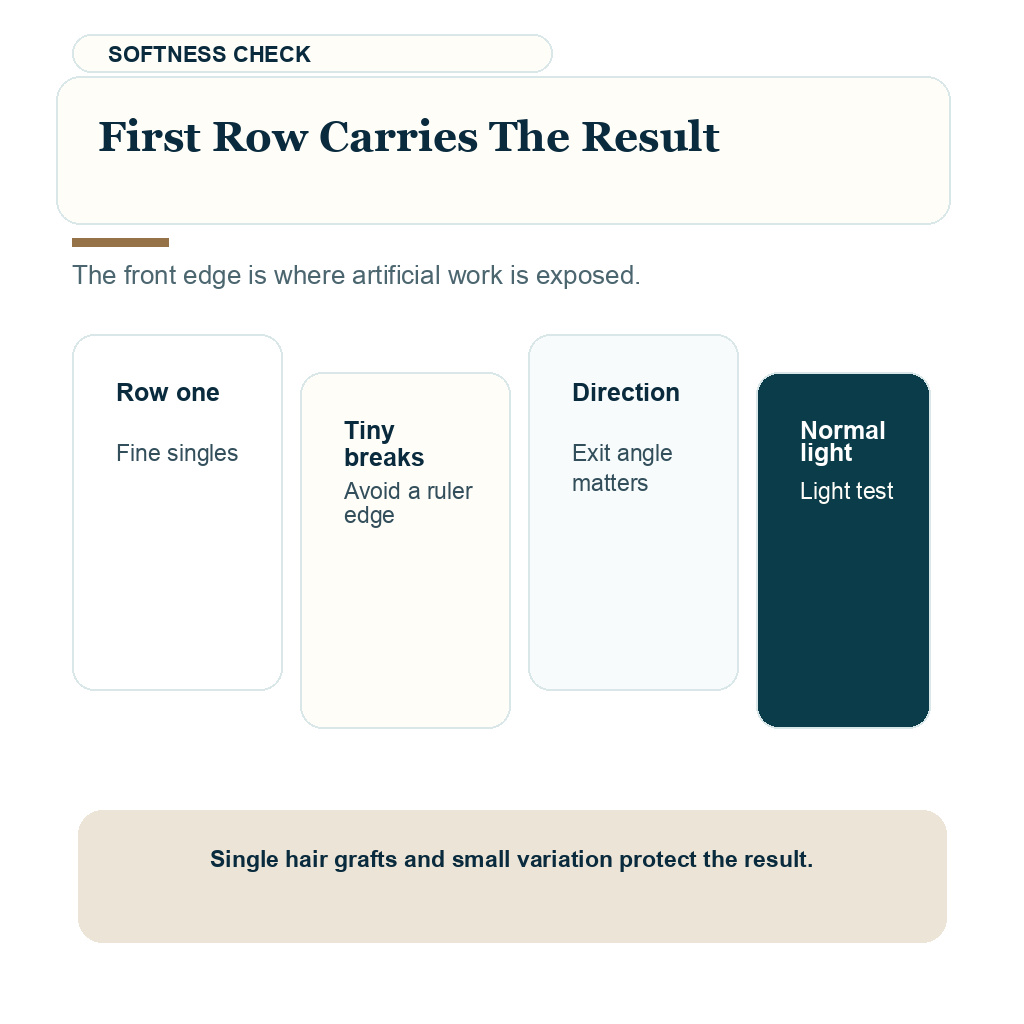
Many patients judge hairlines from a distance. I have to judge them close up. The first row is where a strong design either becomes soft or starts to look pluggy. If thicker multi hair grafts are placed too far forward, the hairline can look harsh even when the density is high.
The first rows are usually best built with finer single hair grafts and careful irregularity. The transition should not be random, but it should not be mathematically perfect either. The exit angle also matters. Hair that leaves the skin in the wrong direction catches light differently and can make a low line look heavier than planned.
Irregularity also needs a defined scale. A few larger changes in the outline, many smaller changes at the first edge, and a soft transition of finer single hair grafts are different choices. Agree on that separately from height, overall arc, corner recession, and temple point work. Otherwise, the patient and surgeon can both say natural while picturing different hairlines.
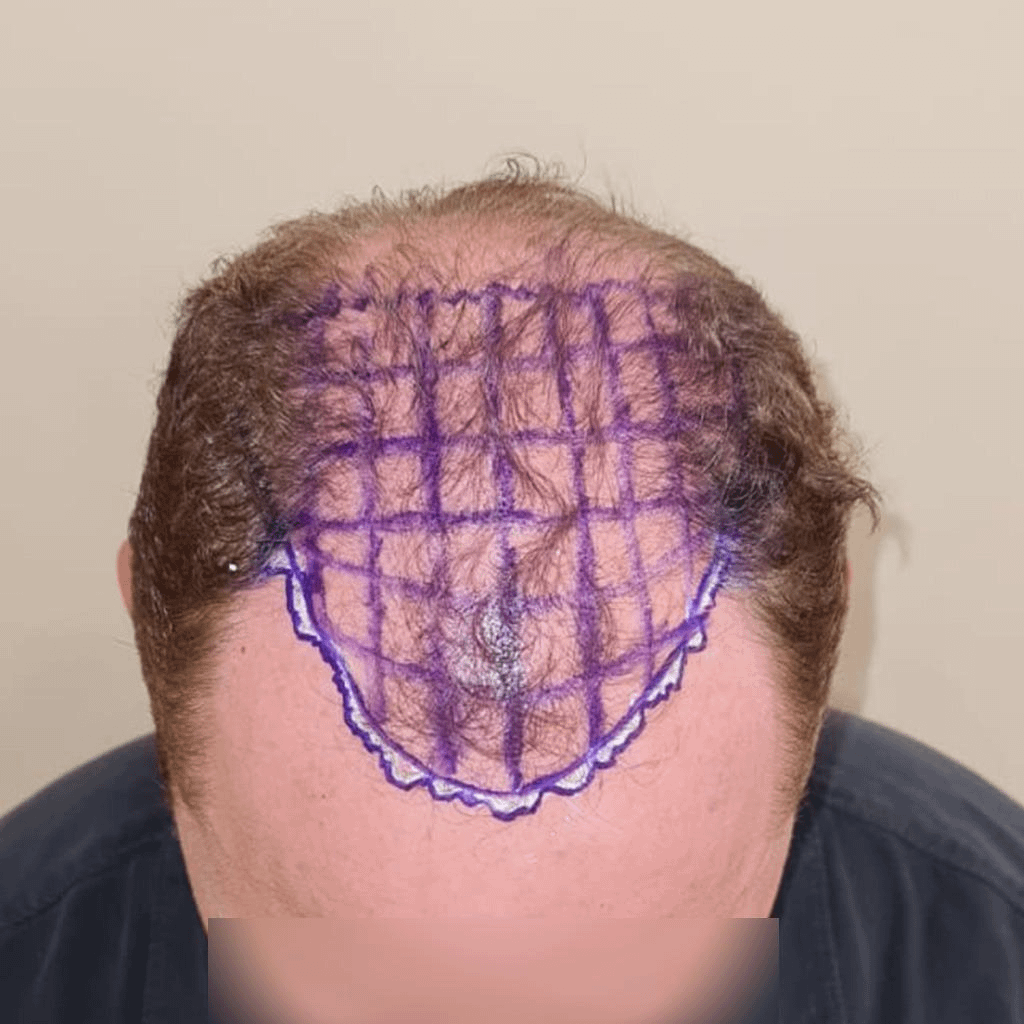
Height is only one part of the decision. The first row needs its own plan with finer front grafts, small irregularity, and the right angle for the surrounding hair. Grafts with multiple hairs in the hairline can make a result look artificial even when the outline looks attractive.
The outline gets attention, but the first row decides softness. If that first row is too thick, too regular, or angled poorly, the patient may later feel that the result looks like a transplant even if the hairline height is what he requested.
Donor reserve decides whether the design can age
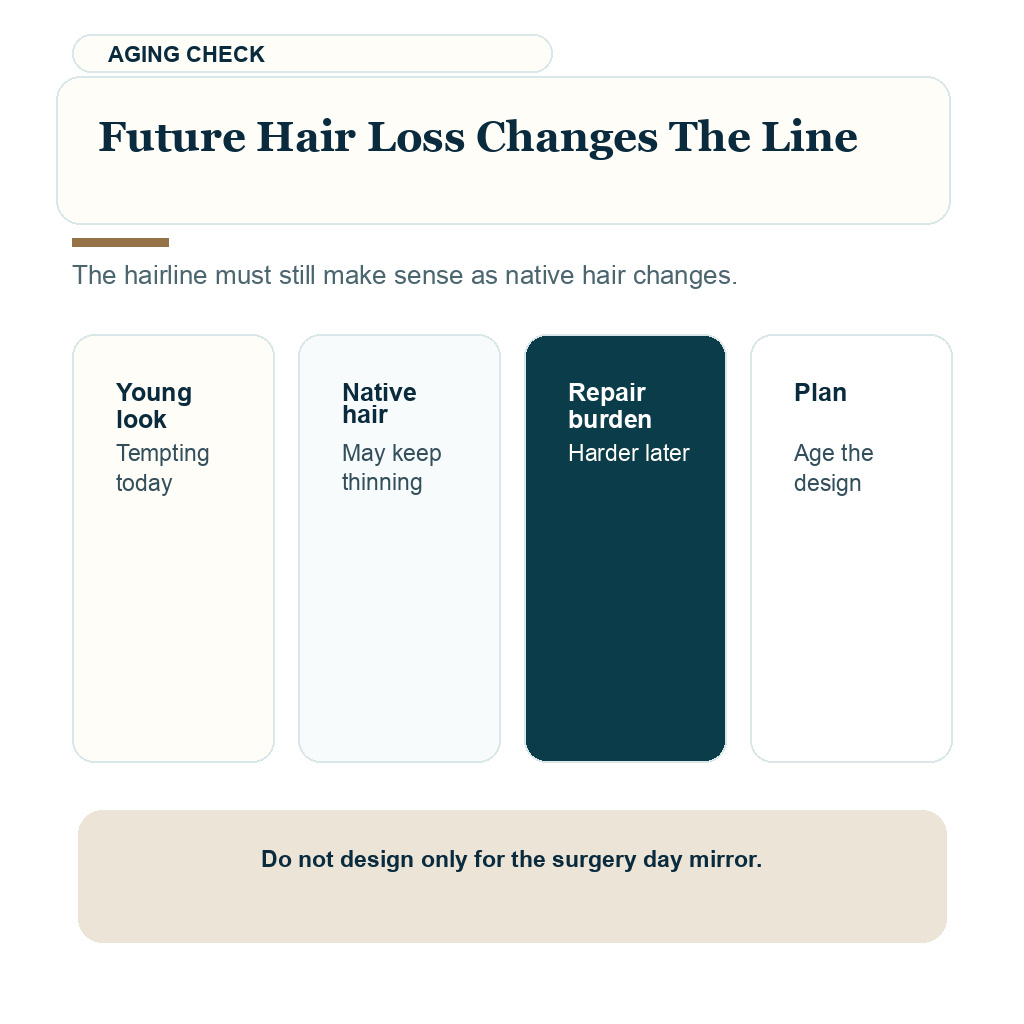
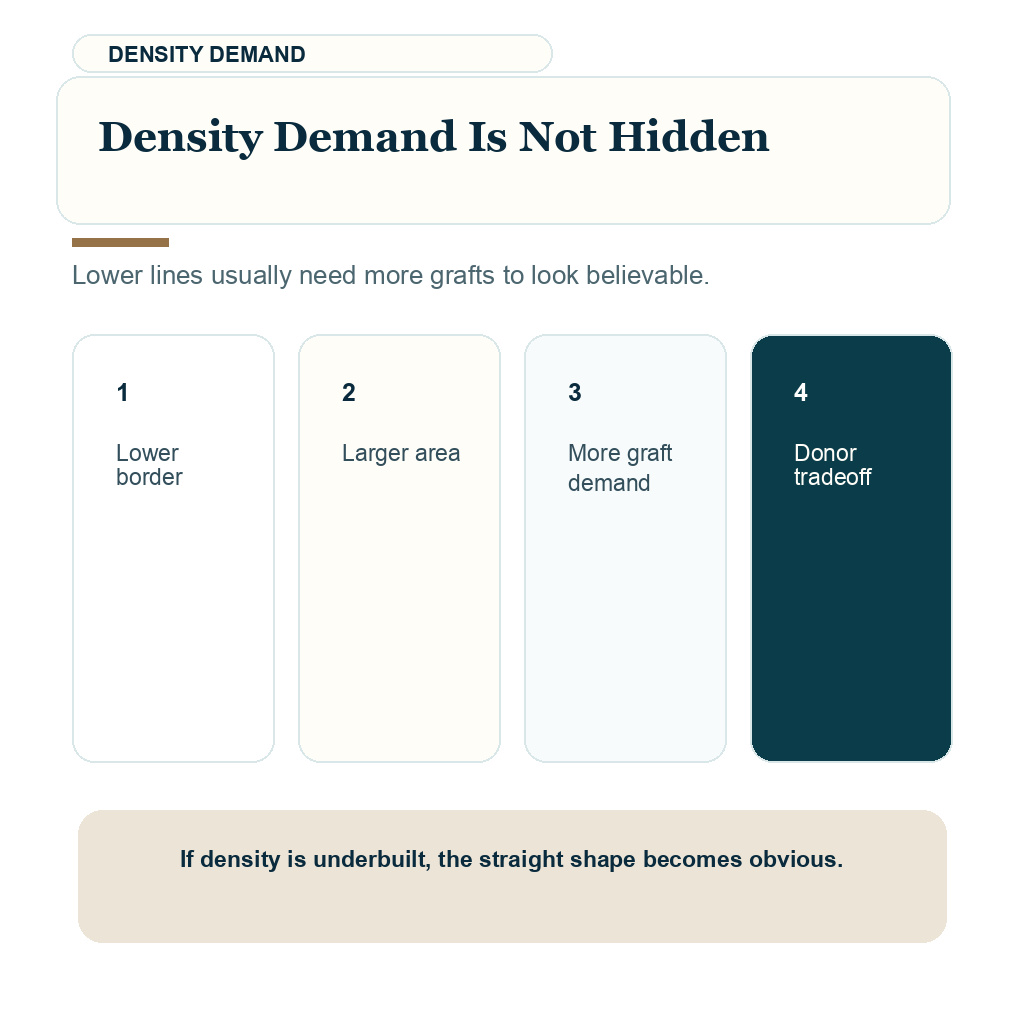
A low straight hairline spends grafts. It also increases the surface area that needs density. That does not mean it is impossible, but it means the donor area must be treated as a limited budget. If a young patient may continue losing hair behind the hairline, using too many grafts to create a very youthful front can weaken the plan for the midscalp and crown later.
I look at age, family history, current Norwood pattern, miniaturization, medication stability, donor density, hair caliber, contrast between hair and skin, and whether the patient is likely to need future procedures. A low line can be more reasonable in a stable patient with strong donor characteristics than in a young patient whose loss is still changing.
A low front also needs a density conversation before the line is accepted. The question is not only whether the drawing looks strong on the forehead. It is whether the donor can support that line, whether native hair behind it is likely to remain stable, whether medication is part of the plan, and whether the result can still look natural when the hair is not styled in one exact direction.
This connects directly to donor miniaturization and safe zone checks. If the donor itself is not reliable, an aggressive front becomes less safe. It also connects to the difference between a mature hairline and a receding hairline before FUE, because a teenage frame does not always match a stable pattern that can support it.
A hairline is designed for the next decade, not only the next haircut. A result that looks powerful at month twelve can still be a poor decision if it leaves no sensible reserve for future loss.
Face shape and temple framing change the same outline
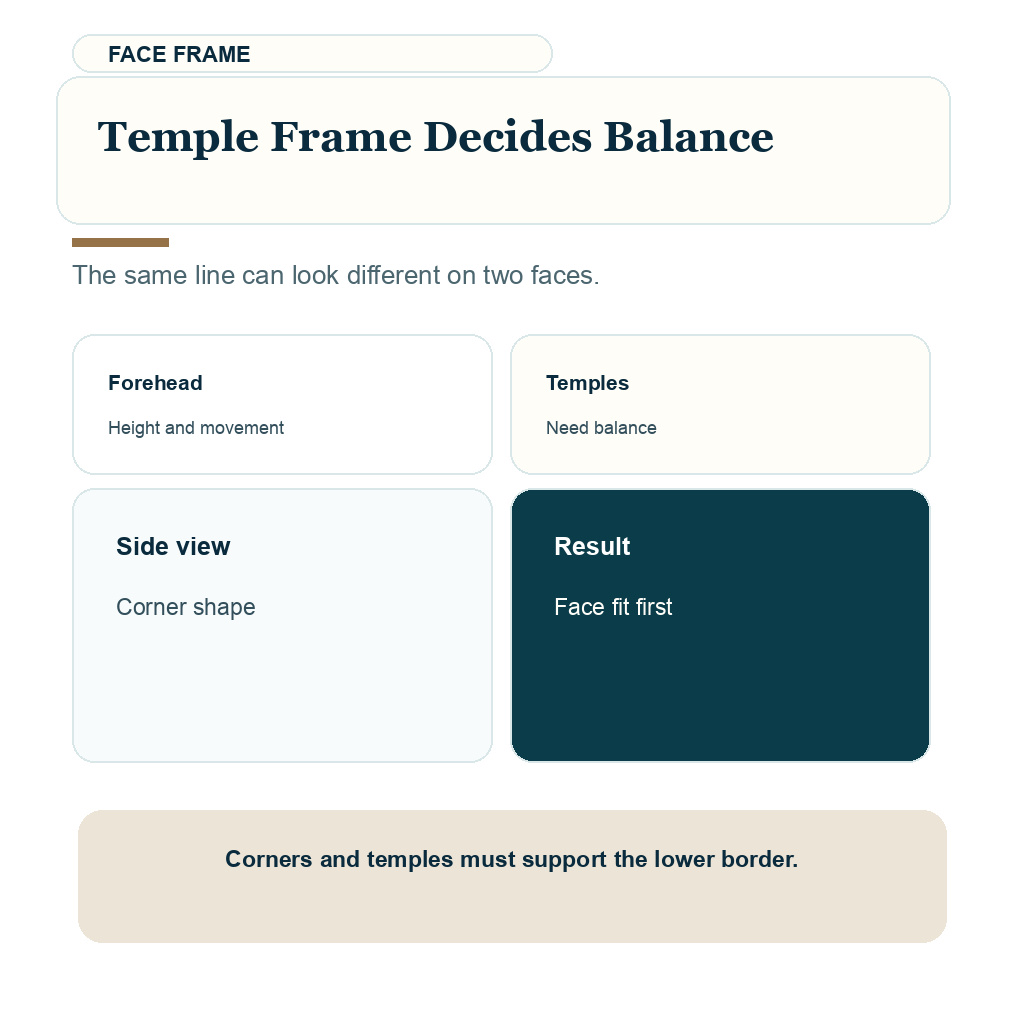
The same central hairline can look different on two faces. A low straight center may look balanced when the temples, lateral humps, forehead height, and jaw proportions support it. On another patient, the same line can make the forehead look too short, the temples too square, or the face less balanced.
I therefore do not design only from the front center. I check the temple points, side profile, temporal recession, and how the new line will meet the existing hair. A low center with weak side framing can look disconnected. Strong temple closure in the wrong patient can use many grafts and create a shape that is hard to maintain later.
The patient may still choose a sharper style. My role is to show the tradeoff clearly. A design that is slightly higher but better blended can look more natural than a lower design that forces the temples, side angles, and donor budget to serve one photograph. Straight dark hair, coarse caliber, or high contrast against the scalp can make a low line look harsher under ordinary light, so I treat Asian hairline planning as a separate check before using any photo as the model.
Low and flat is different from planned and strong
A strong hairline can be deliberate. Low, straight, and flat are not the same thing. Low describes height. Straight describes the outline. Flat usually means the front edge has no transition, no temple softness, and no small irregularity to break the border. A low flat hairline from a rushed clinic can be careless even when a planned strong frame may suit the right patient.
The warning about low and flat hairlines as a hair mill warning sign is not meant to say every low line is bad. It is meant to protect patients from clinics that say yes to an aggressive design without explaining the cost.
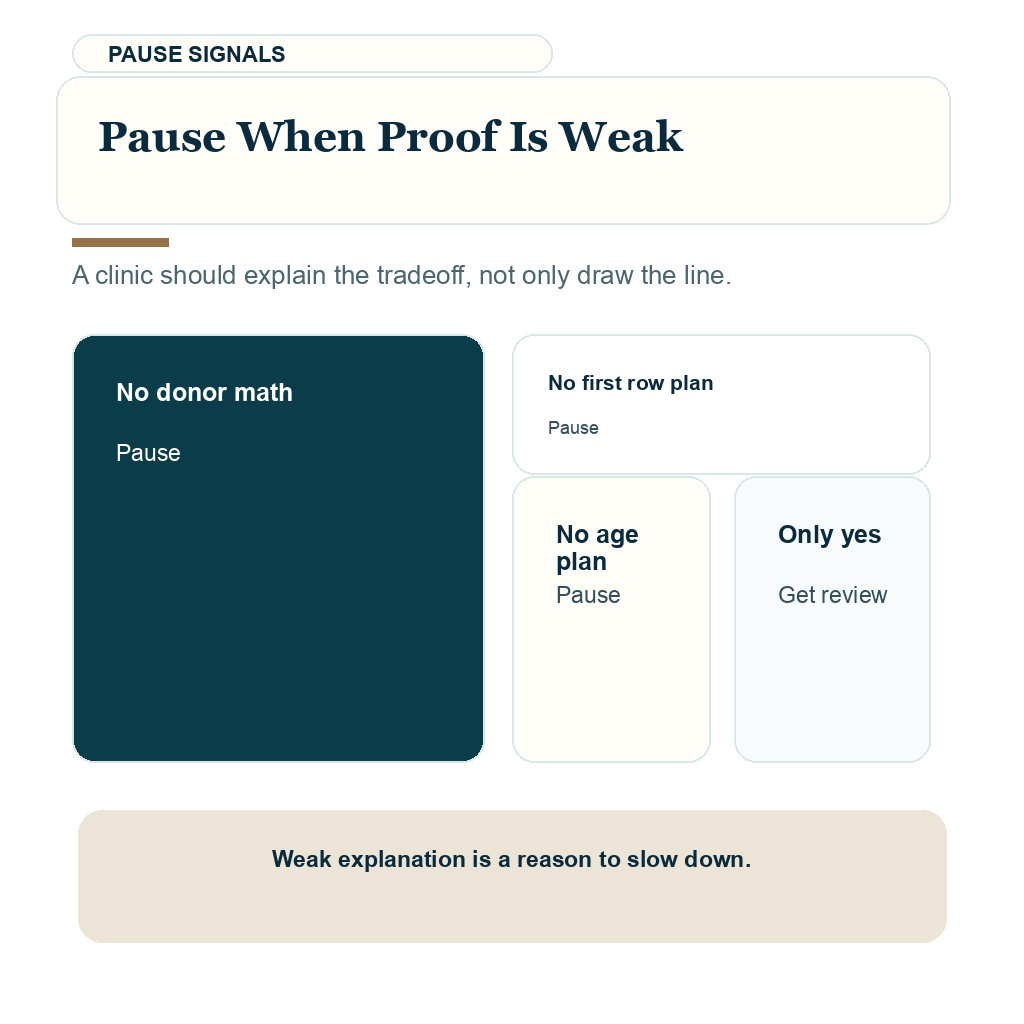
The consultation has to defend the design. If the clinic cannot explain why the height, corners, temple frame, graft number, first row graft selection, and future reserve make sense for your case, the line may be a marketing drawing rather than a surgical plan.
A low straight hairline proof check
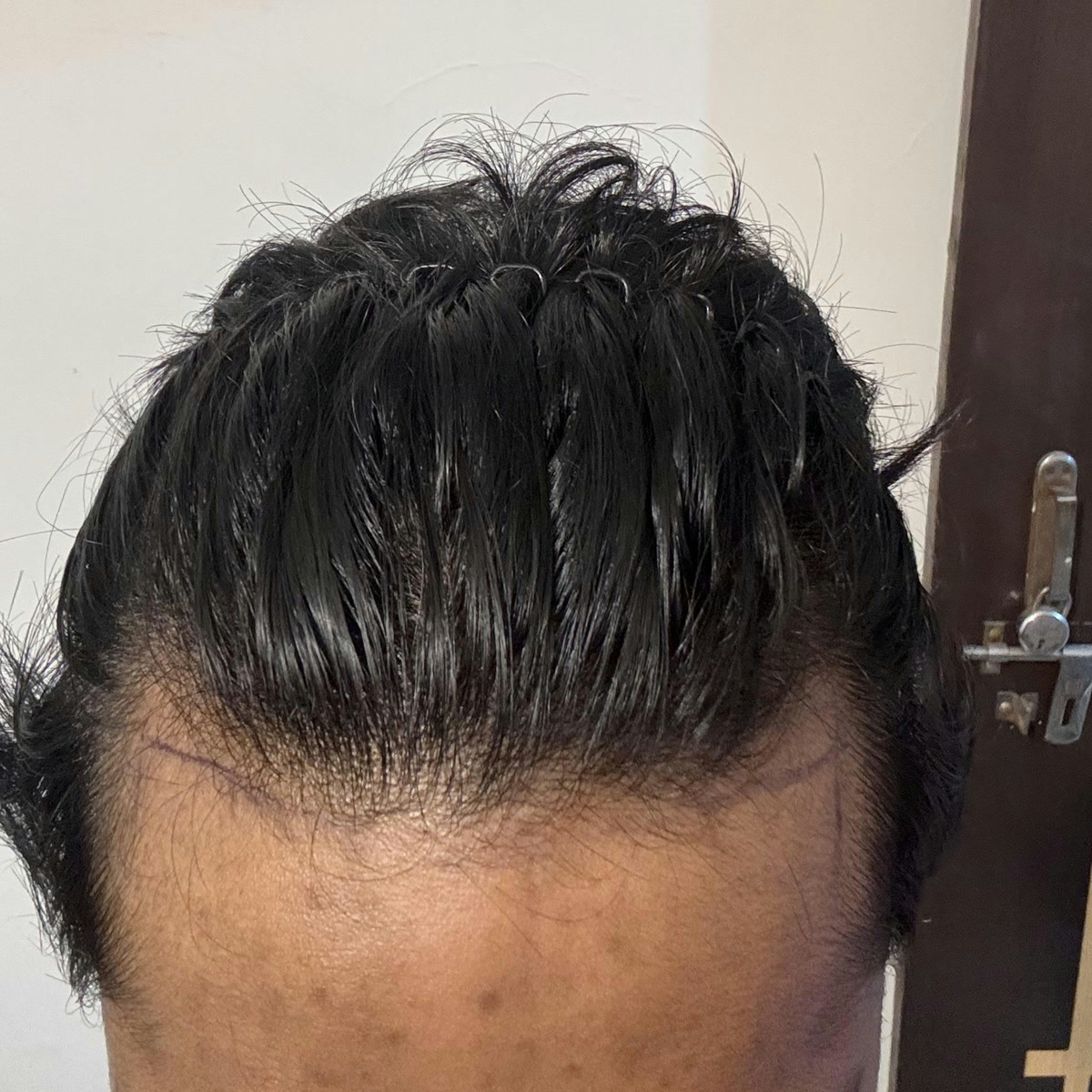
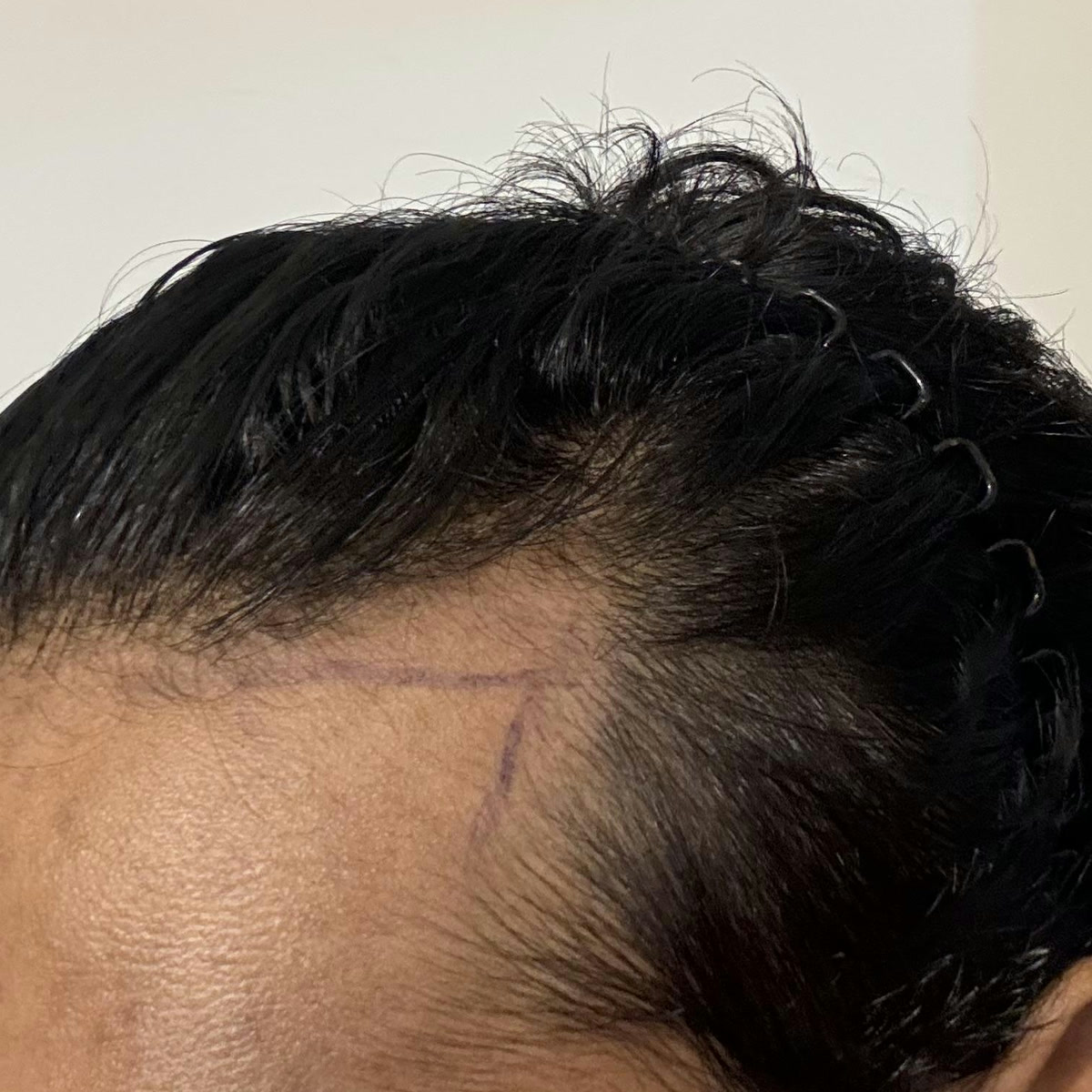

Choose the low straight line only if it can age naturally
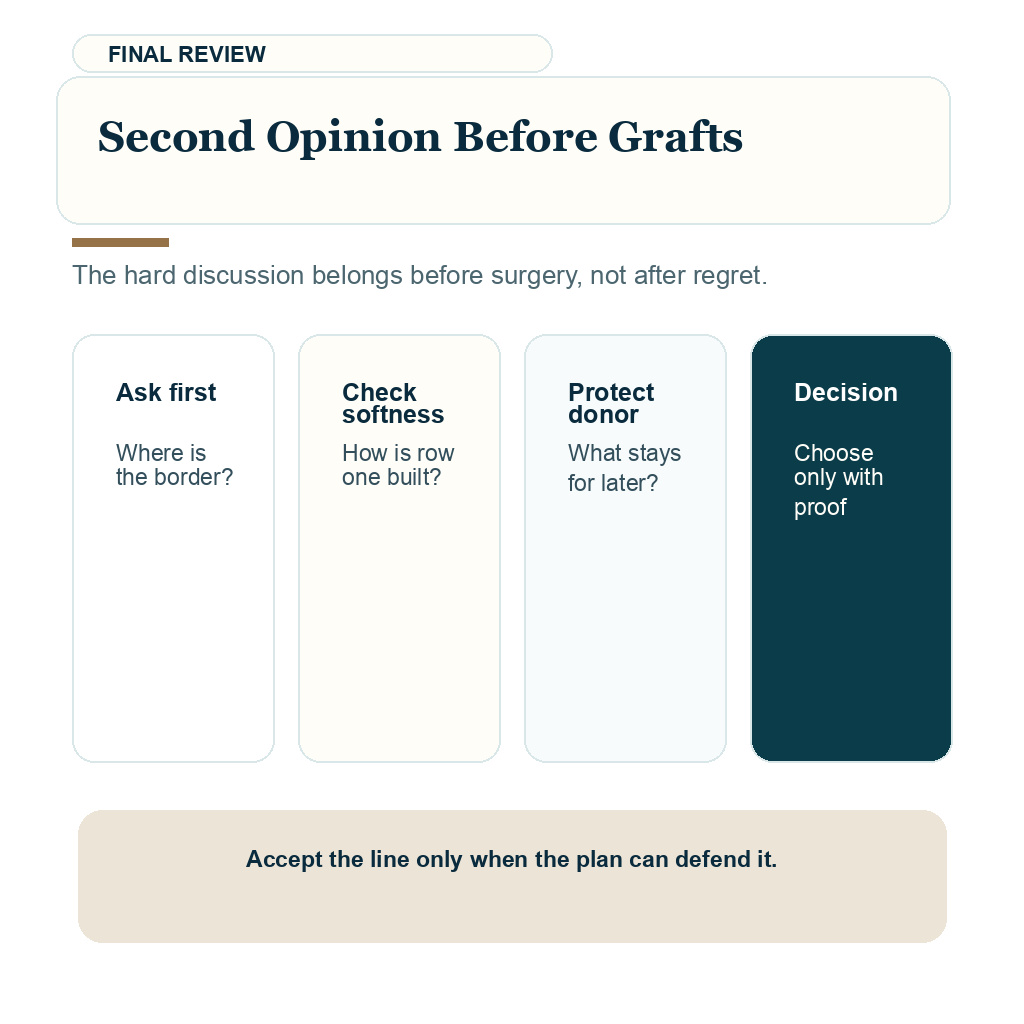
If you like a low straight hairline, say that clearly. I do not treat that preference as wrong. I still make the plan answer the clinical questions before grafts are placed. Where is the lower border? How is the first row built? What happens if hair loss progresses? How many grafts are being spent? What is being preserved for later?
Personal taste can start the conversation, but it should not overrule donor management and naturalness. A sharper hairline is reasonable only when the donor, face shape, first row plan, and future hair loss risk all support it. If the explanation is weak, the line is not a bold personal choice anymore. It is a risk the patient may have to wear every day.
The safest hairline is not always the highest one. It is the one that fits your face, uses the correct grafts in the correct place, protects the donor, and still makes sense when future hair loss is part of the plan.
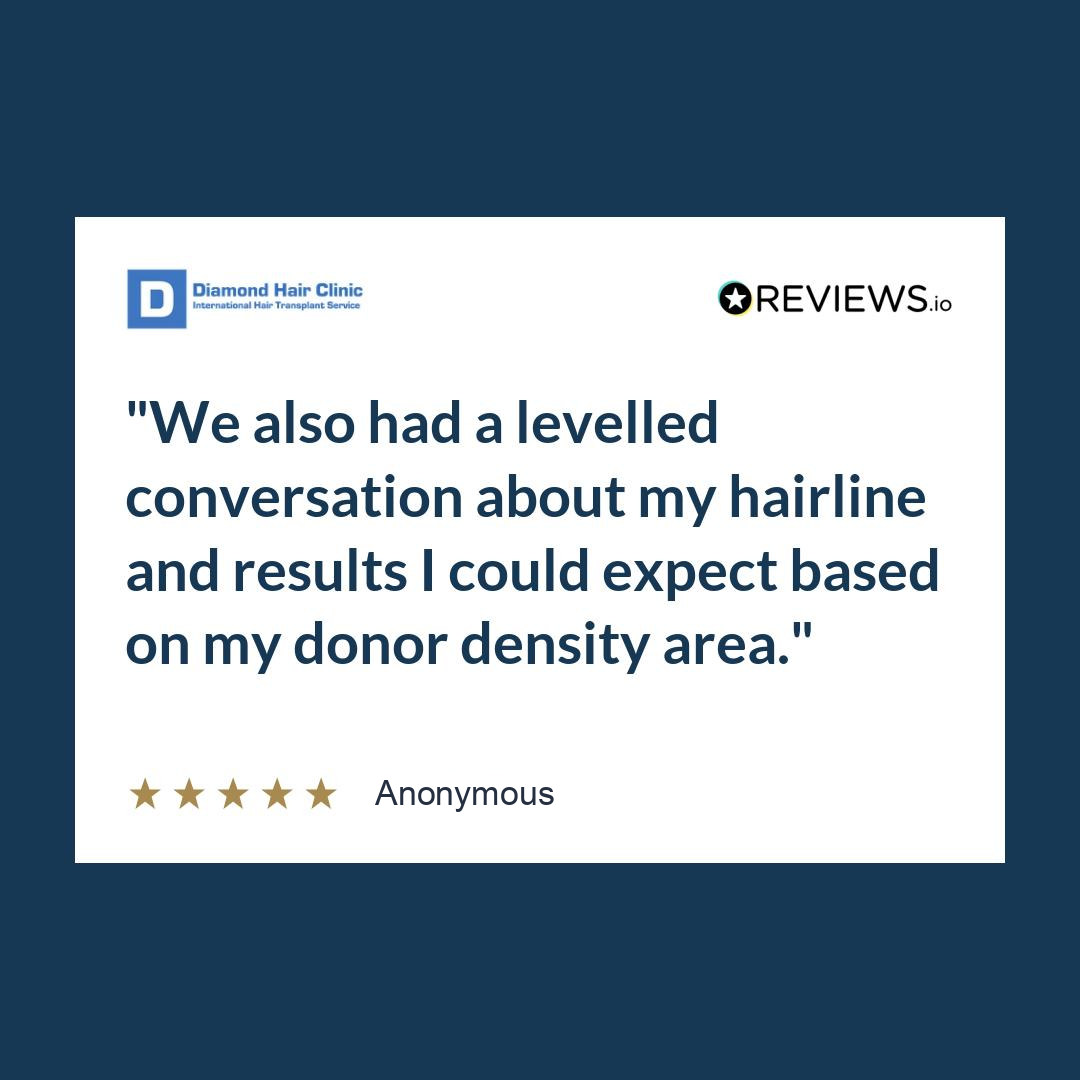
Read this review excerpt
We also had a levelled conversation about my hairline and results I could expect based on my donor density area.