


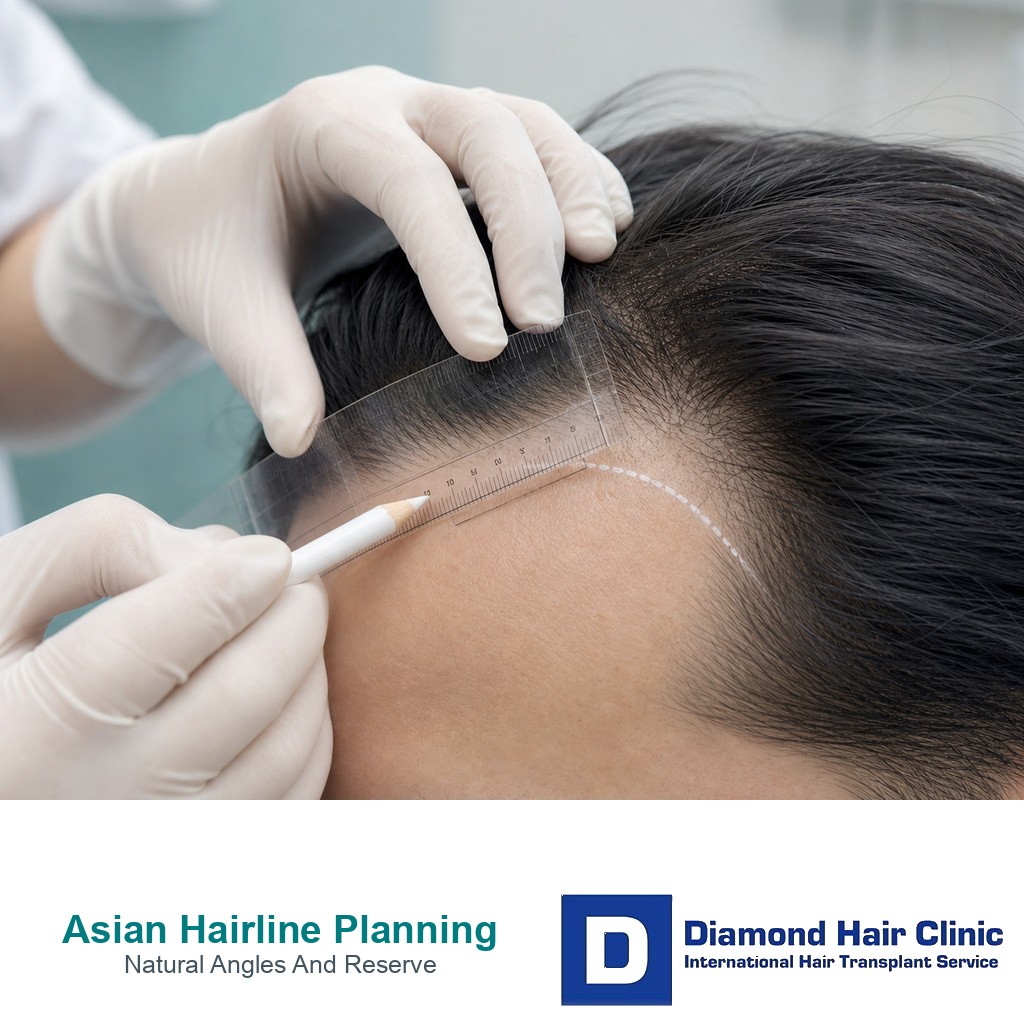
Asian Hair Transplant Planning for Natural Hairline Design
If you are Asian and comparing hair transplant clinics, the first question is not which country is best. The safer question is whether the surgeon can explain the hairline design from your actual hair shaft, skin contrast, growth direction, temple shape, donor reserve, and future hair loss pattern before any line is drawn. A naturally high but stable hairline needs its own discussion from progressive recession. A lower design can look appealing in a drawing, yet it still has to respect facial proportion, donor reserve, and the amount of change the patient genuinely wants.
Asian hair transplant planning is not a special template. It is a closer look at the details that can make a hairline look natural or obviously transplanted. Some patients have straight dark hair with strong contrast. Some have finer shafts, some have wave, and some have lower density, previous surgery, or a face shape that does not suit a low flat line. The plan has to come from examination, not from a label.
What makes Asian hair transplant planning different?
The difference is not that every Asian patient needs the same design. The difference is that several visible features can make a poor design easier to notice. Straight dark hair can expose a harsh front row. A very low or very flat line can look drawn on. Temple angles can change the face more than the patient expects. A dense proposal can spend too much donor reserve too early.
Bring examples from your own face and hair history, not only screenshots of another Asian result. The useful comparison is whether the height, temple shape, density, and side view would still look natural on you as hair loss changes.
So I look at variables, not stereotypes. Hair shaft caliber, curl or straightness, hair against skin contrast, follicular unit mix, natural direction, donor density, face shape, age, family history, and the patient’s haircut goals all change the plan. The broader guide to hairline design in hair transplant is only the starting point.
Before graft numbers matter, the design has to answer practical questions. Why does the line sit at that height? Why are the temples treated or left alone? Where will single hairs be used? How much donor reserve stays protected if future hair loss continues?
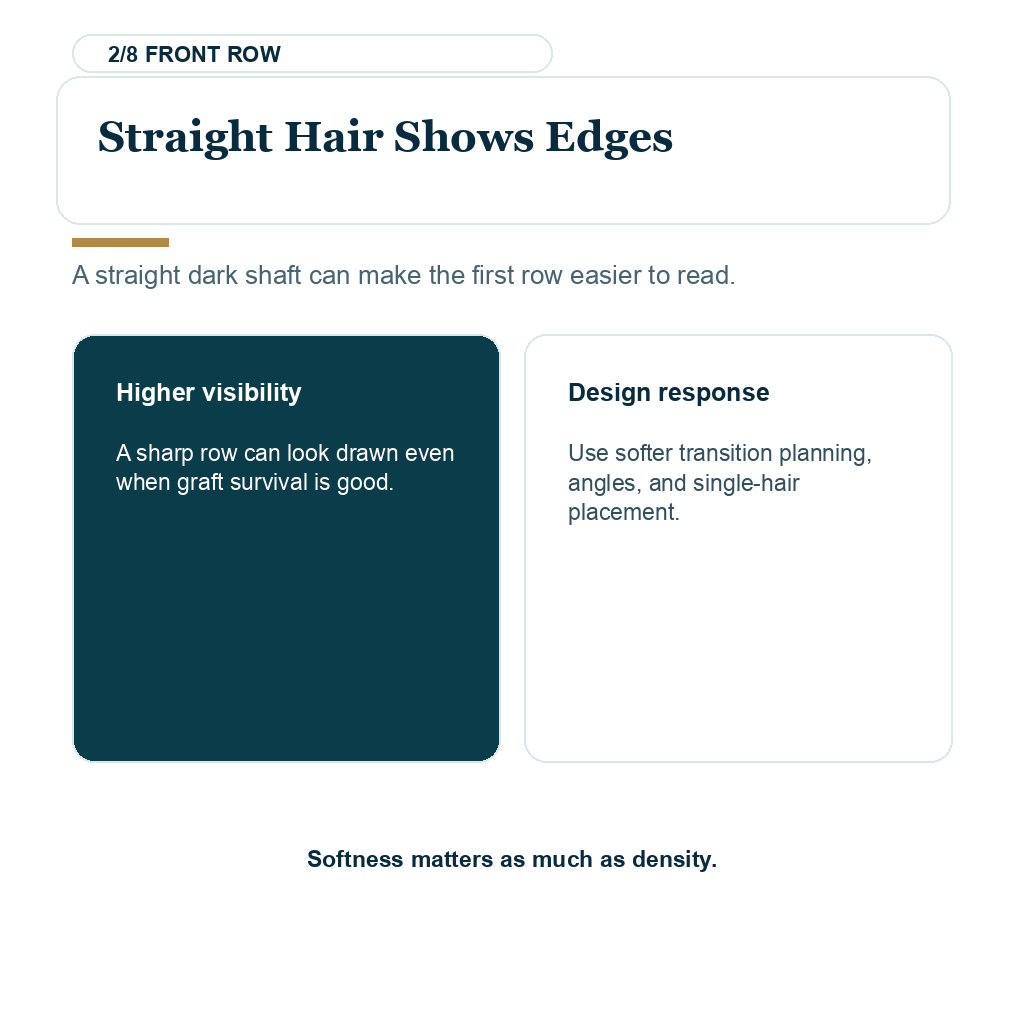
Avoid copying a low straight hairline from a photo
A reference photo can be useful for taste, but it cannot become the surgical plan. Many Asian patients bring examples with a low, straight, broad hairline because that looks clean from one angle or with one hairstyle. On a real scalp, a copied line can look too flat, too youthful, or too dense in the wrong place.
Low straight hairline planning is where this risk becomes very practical. For Asian patients, I pay special attention to how a straight dark front can catch light and shadow. If the transition zone is too abrupt, the eye sees a border instead of natural hair.
A natural result often needs small irregularities, soft single-hair placement, and a curve that belongs to the face. I also judge the design under less flattering conditions, because the line still has to look natural when the hair is wet, brushed up, cut shorter, or seen under hard light.
Straight dark hair can expose the front row
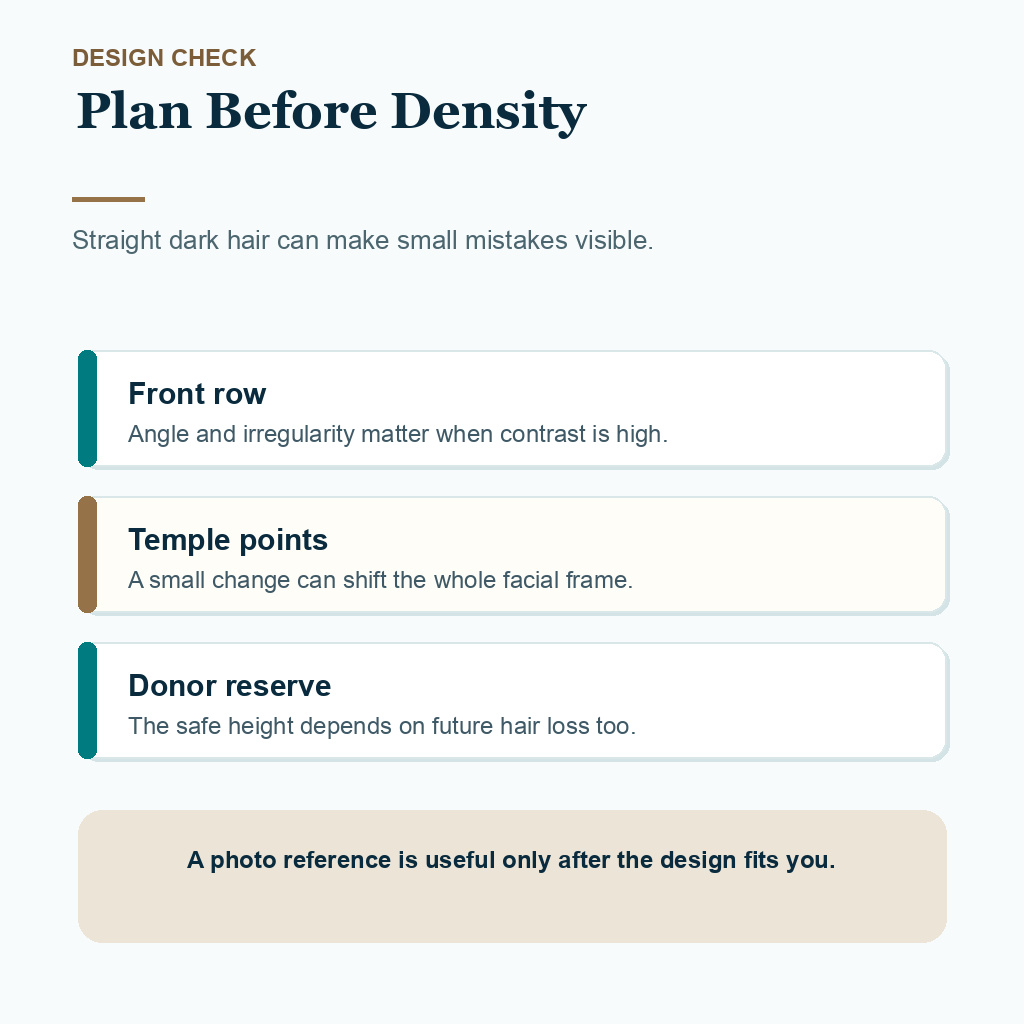
Straight dark hair can be an advantage because each hair may give strong visual coverage. It can also be unforgiving when the front row is too thick, too even, or angled incorrectly. A pluggy front is not always caused by too many grafts. Sometimes it is caused by the wrong graft type in the wrong place.
In the front millimeters, I protect softness before density. Direction cannot compensate for a weak design. The graft still has to leave the skin in a direction that matches native growth, or a strong straight hair can look lifted and artificial even when the density number is reasonable. Single hair units, direction control, and gradual density matter. If the patient has thicker shafts, the first row needs even more discipline because each hair is visually stronger.
The first row has to look soft before it looks dense. That is the detail patients notice when the hair is wet, lifted, or seen from the side.
Patients with fine hair face a different problem. They may need more careful density planning because coverage is weaker. That contrast is explained in fine hair hair transplant. The useful comparison is not one ethnicity against another. It is how shaft caliber changes the way density appears.
Temple points can change the whole face
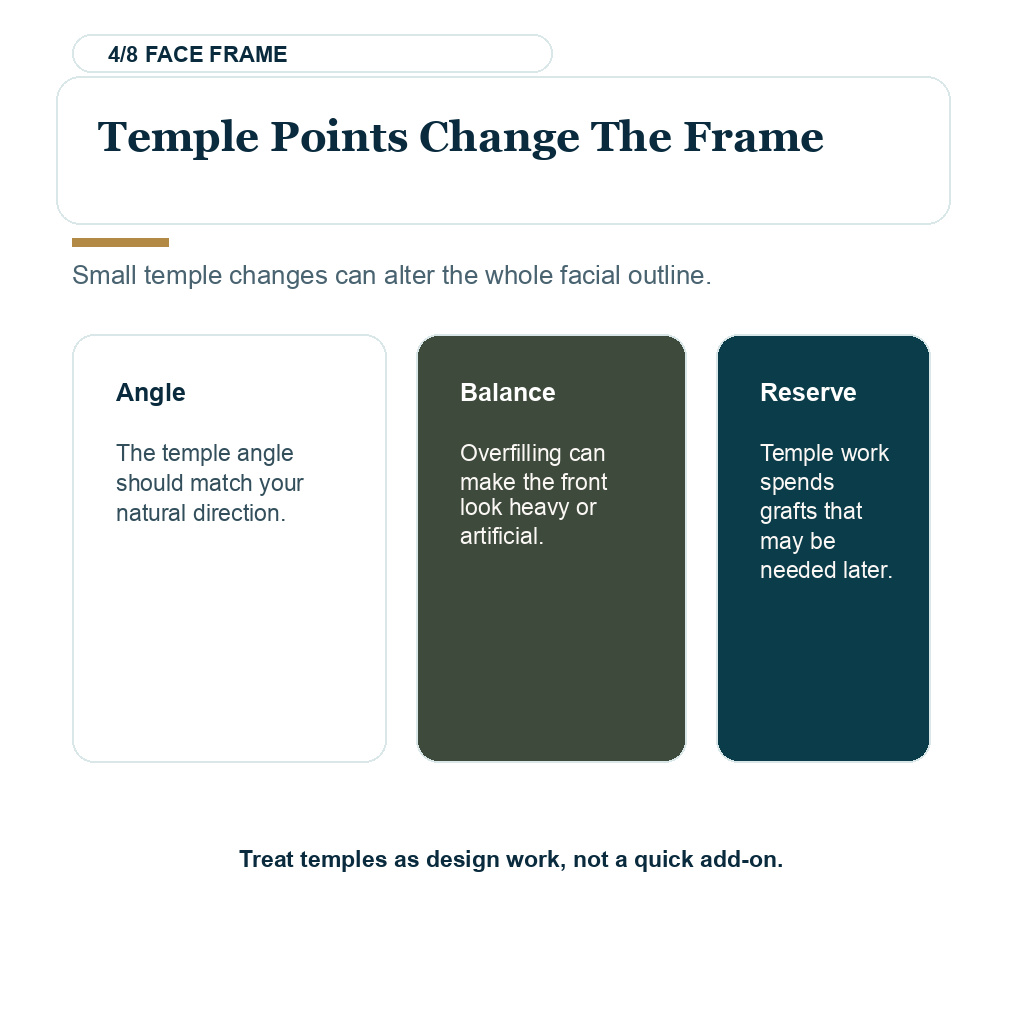
Temples can make an Asian hairline look natural or artificial very quickly. If the temple points are pushed too far forward, made too sharp, or angled against the native direction, the result can change the whole face. Aggressive temple promises during a quick online quote are a warning sign.
Temple point hair transplant planning has its own anatomy and limits. The point is judgment. Temple work may be useful, but it should not consume donor grafts just because the front hairline photo looks more dramatic with filled corners.
The temple plan should match existing direction, sideburn relationship, face width, age, and future recession risk. If those details are not discussed, the design is not ready.
Donor reserve limits how low the design can go
A hairline can look attractive on a drawing and still be a poor surgical decision if the donor area cannot support it. Donor density, safe zone stability, hair shaft size, scalp laxity, previous extraction, and future loss all affect how much can be spent safely.
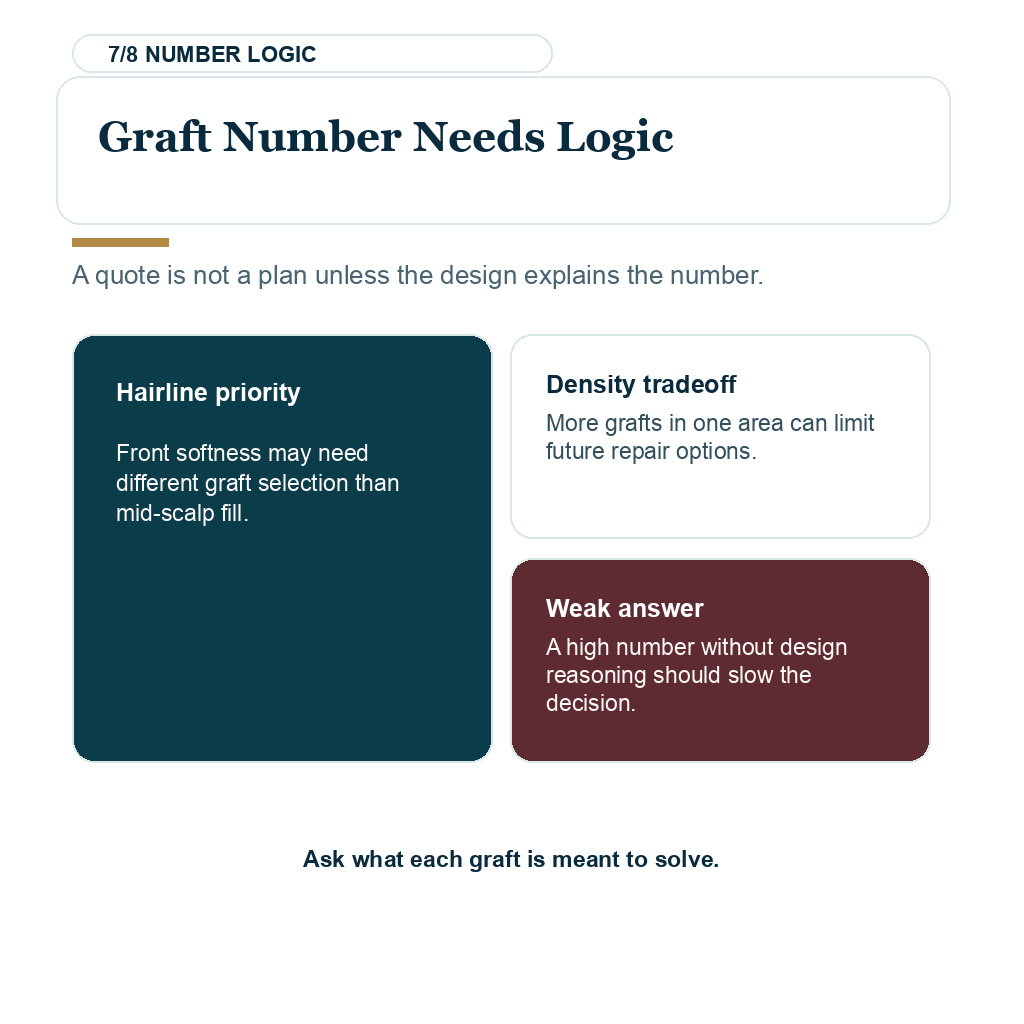
How a surgeon calculates graft number is part of hairline design, not a separate accounting exercise. A high graft quote can sound reassuring, but I need to know whether those grafts are being used in the right zones and whether enough donor reserve remains.
For that reason, lifetime hair transplant grafts belongs in the same conversation. A patient may be young, have family history of future loss, or later want crown work. The first hairline cannot spend the options that may be needed later.
How should case photos be judged?
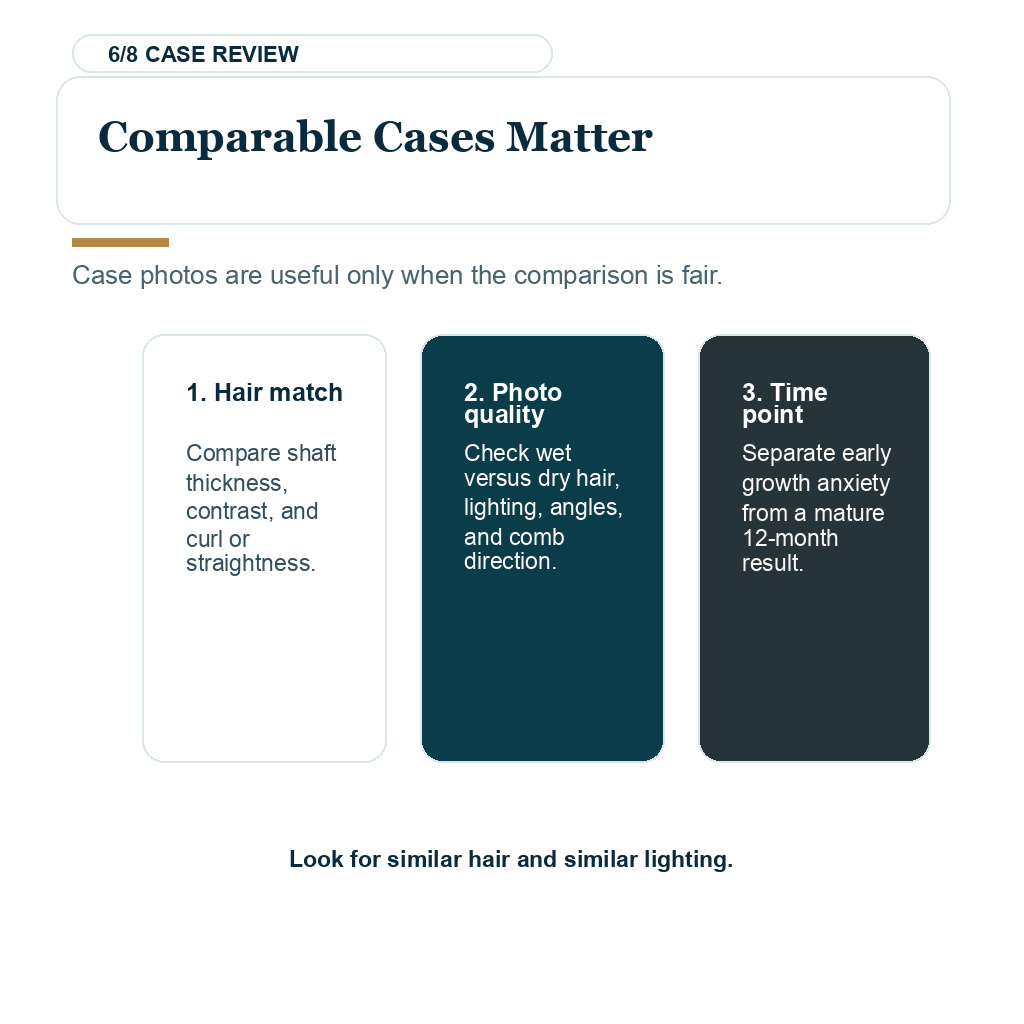
For Asian hair transplant planning, case photos are useful only when they are comparable. The useful set shows similar shaft thickness, similar contrast, similar recession pattern, similar age range, and similar styling. A case can come from another Asian patient and still be a poor comparison if the hair behavior, graft plan, and face shape are different.
Look at the hairline under different conditions if possible. Dry styled hair can hide problems. Wet hair, harsh light, close side angles, and lifted fringe can reveal whether the front row is soft and whether the temple direction sits naturally.
The guide to whether a hair transplant looks natural as you get older is relevant here. A design that only suits one photo today may not age well.
Which planning checks matter before grafts are removed?
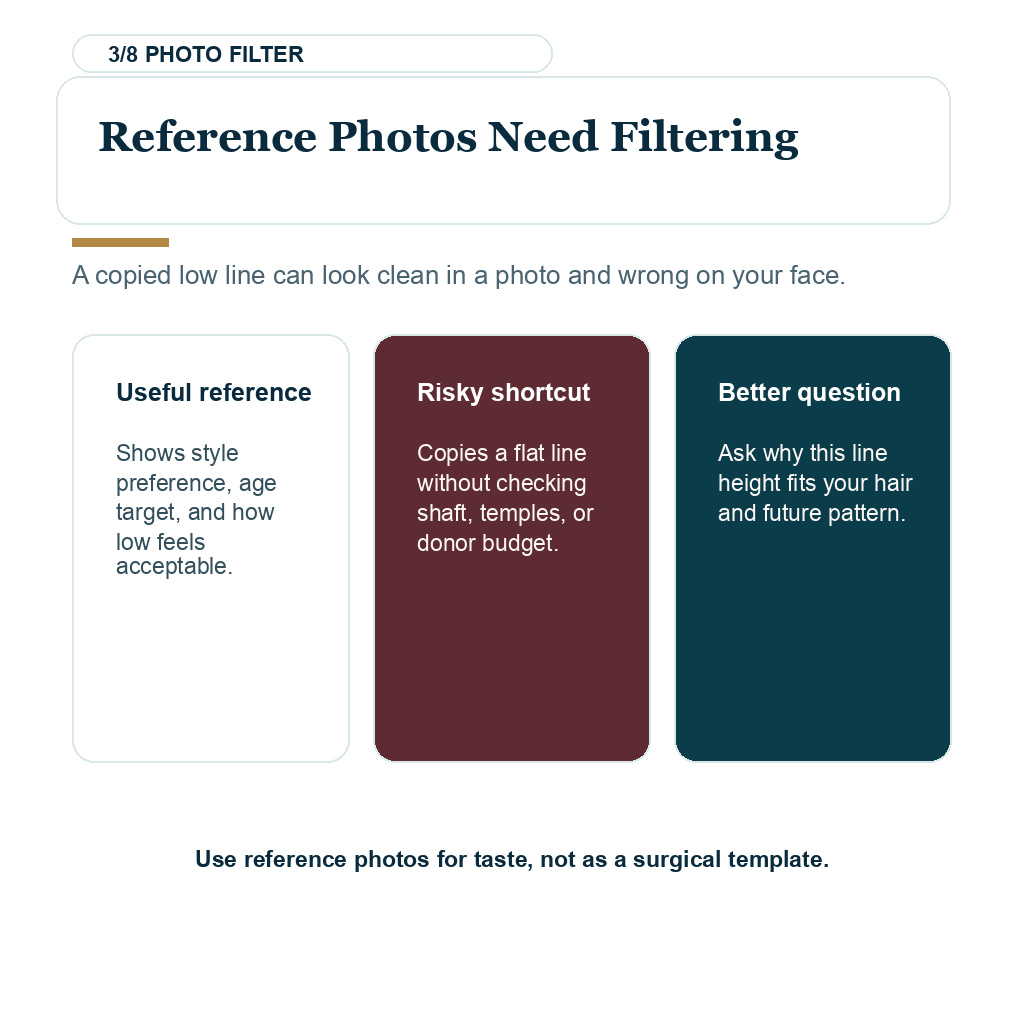
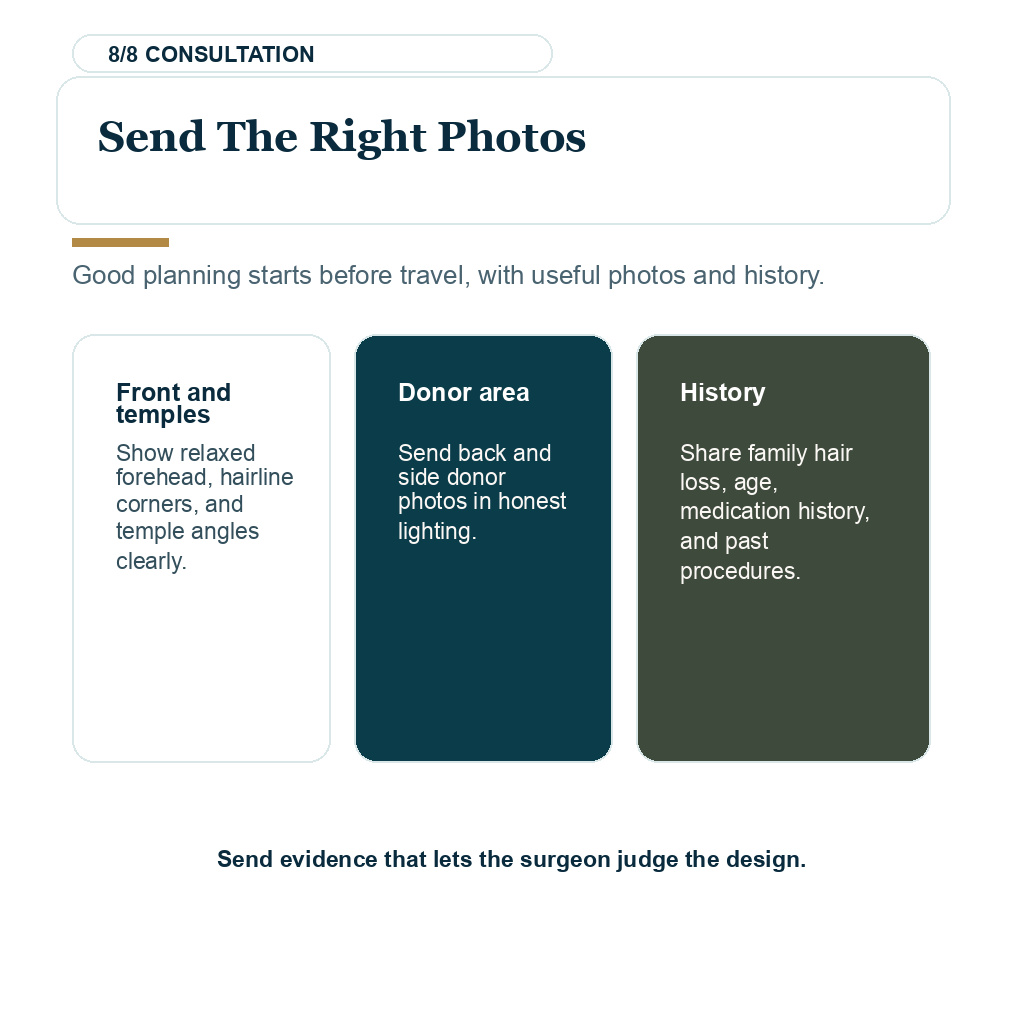
These 8 Asian hairline planning slides separate hair shaft, scalp contrast, reference photos, temple frame, donor reserve, case photo evidence, graft count logic, and consultation photos. Swipe sideways or use an arrow one slide at a time.


Asian hair planning lens
Which hair feature changes the design most?
I do not use one hairline rule for Asian patients. Shaft thickness, scalp contrast, temple shape, and future thinning can each change the safe design.
Hair shaft
With thick, straight, or dark hair, each follicular unit can be more visible at the front edge. The first rows need softer planning than a copied hairline from another hair type.
This changes the design conversation from only lowering the line to controlling how the edge is built. The clinic should explain graft selection, angles, irregularity, and donor limits before drawing a final shape.
During consultation, ask how the first rows will be softened. A low hairline without that explanation can look too sharp once the hair grows.
If the answer is only more density, slow down. Density matters, but it cannot replace hairline softness, graft choice, and careful front row placement.
Scalp contrast
Strong contrast between hair color and scalp color can make gaps or straight lines easier to notice. Judge the plan in realistic photos, not only under flattering light.
The plan may need a softer irregular edge and more conservative density expectations. The review should include the front, temples, and side frame together.
Before agreeing to the final line, review front, temple, and side photos together. A line that looks acceptable from the front can still feel unnatural from an oblique angle.
Be careful if the plan promises a dense edge without discussing scalp contrast or future thinning. That can separate the cosmetic promise from the long-term donor plan.
Temple frame
The temple corners and side frame can change how natural the whole hairline looks. For many Asian patients, this transition is as important as the central hairline.
A straight, low central line may look artificial if the temples and side transition are ignored. The drawn design should therefore be checked from the front and both oblique angles.
Review the drawn temple transition from more than one view. If the side frame is not planned, the hairline can look separate from the rest of the face.
I slow the plan down if only the central hairline is drawn and temple planning is avoided. A natural result needs the front edge and the side frame to belong together.
Future thinning
Native hair behind the transplant can continue to thin after surgery. The first operation should be planned with that possibility in mind, not as if hair loss has stopped forever.
This changes how aggressively grafts should be spent in the first session. Donor reserve has to be protected so the hairline does not become too strong for future loss behind it.
Ask how the plan preserves options for the midscalp and crown. A good answer should connect today’s hairline choice with the grafts that may be needed later.
Be cautious with any lifetime promise from a single session. Without donor reserve discussion, the plan is not really long-term planning.
Country reputation cannot replace surgeon review
Many patients compare Turkey, Korea, Thailand, Europe, or North America when they search for Asian hair transplant results. That comparison is understandable, but it can distract from the real safety questions. A country does not design the hairline. A surgeon and team do.
Sharing your ethnicity does not make a surgeon a better match by itself. Look for experience with comparable cases and an explanation of how your own hair and facial features change the design.
A serious consultation shows who evaluates the donor, who designs the line, how the graft count was chosen, and what happens if the patient is not a strong candidate for the requested density. A clinic with many general results may still be the wrong choice if it cannot explain the specific plan for your hair characteristics.
If another quote sounds too aggressive, a second opinion before hair transplant can be more useful than collecting another price. The second review should test the design logic, not just the number of grafts.
How does this differ from other hair type planning?
Hair type pages can overlap, so the distinction matters. Afro curly hair transplant planning focuses on curl, exit angle, and donor handling, not only on the visible hairline shape.
Blonde or red hair transplant planning focuses on color contrast and coverage visibility.
Gray hair transplant planning focuses on age, contrast, and long-term styling.
This page is not trying to compare ethnic groups against each other. It is separating the visible hair behavior that affects planning, including shaft thickness, straightness, skin contrast, temple direction, and how much donor reserve the design spends.
Asian hair transplant planning shares some of those principles but has its own common decision points. Straight dark hair visibility, temple shape, hairline height, donor reserve, and the risk of making the front too flat or too dense all belong in the review.
This is also why a mature hairline conversation may be helpful. The mature hairline versus receding hairline guide explains why not every high hairline should be lowered aggressively.
What should you send before an online consultation?
Good planning starts with complete visual evidence. A hair transplant plan from photos is only useful when the photos show the front, both temples, both sides, top, crown, donor area, and lifted hair in natural light. Wet or unstyled photos and older photos of the original hairline can also prevent a flattering single angle from becoming the whole plan.
Also send your age, family history, medication use, previous procedures, preferred haircut length, and what bothers you most, whether that is height, corners, temples, density, crown, or styling. If you have a photo reference, send it as a taste reference, not as a demand to copy.
Reference photos should include side and oblique views, not only the front. The same drawn height can look different when the temples are exposed, the hair is lifted, or the normal haircut is shorter.
A useful reply is not only a graft number. It explains what is realistic now, what can wait, what may never be safe, and what needs to be preserved for later.
The hairline has to work in real light
Asian hair characteristics can make small design choices very visible. Caliber, straightness, contrast with the scalp, temple shape, and direction all affect how dense or harsh a line appears.
For Asian hair transplant planning, I avoid templates. A lower line, sharper temple, or larger graft number may look appealing in a drawing, but the result has to work when the hair is wet, lifted, shorter, older, and seen under strong light.
A natural result usually comes from restraint in the right places. The design should frame the face, protect donor reserve, and respect how the hair actually behaves, instead of forcing the patient into a pattern copied from someone else.

Read this review excerpt
told me the quality of my donor hair and what he could take out and advised me what will the be best outcome with what donor hair I had.