Blonde and Red Hair Transplants Need Contrast Planning
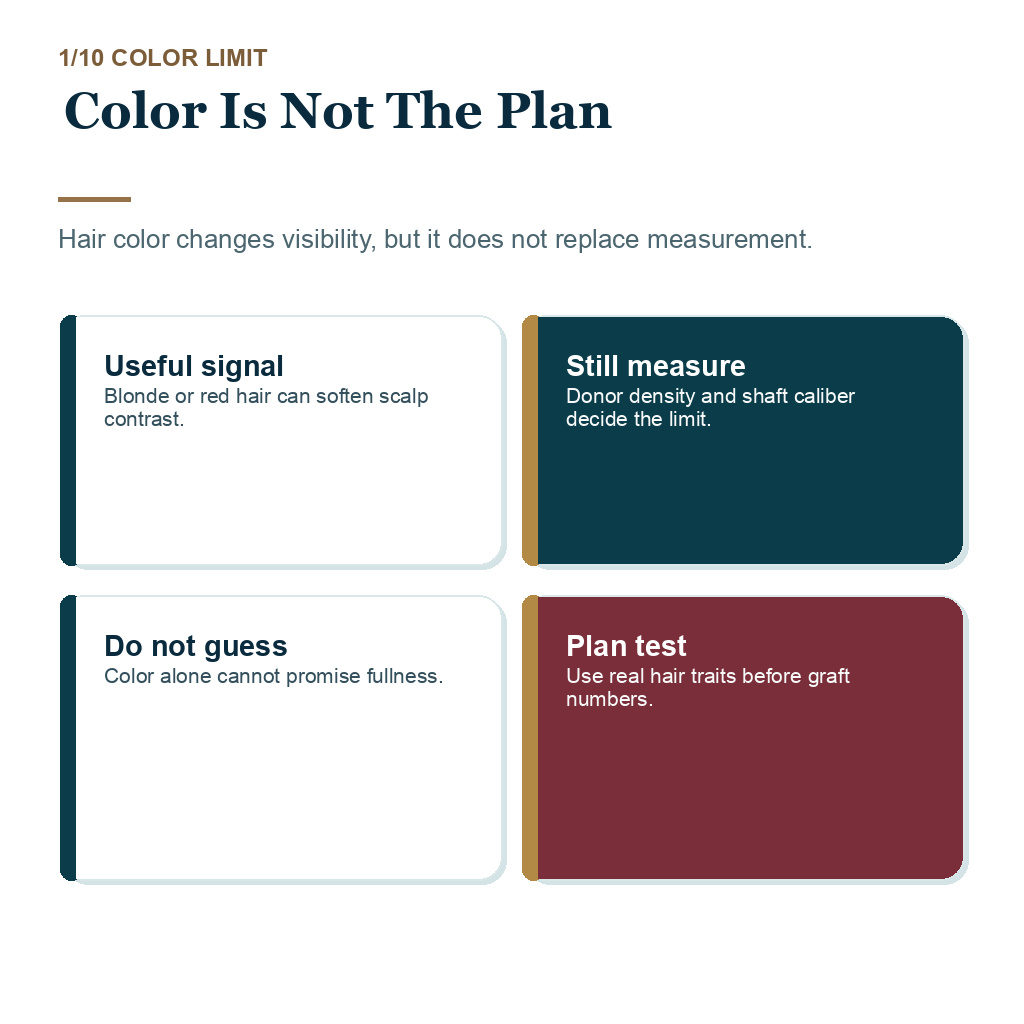
Blonde or red hair can be transplanted when the donor area is strong enough and the plan is realistic. The color itself does not make a follicle weak. What changes is how the result is seen. Color contrast, shaft caliber, curl, graft selection, and lighting all change the visual density a patient expects after FUE.
I explain this carefully because light hair can be forgiving in one patient and limiting in another. A blond patient with thick wavy donor hair may get a soft natural look with moderate graft use. A blond patient with very fine straight hair may need a more careful plan because each hair covers less surface. Red and copper hair can also look excellent, but the blending has to respect the donor tone, skin contrast, and future thinning pattern.
Color changes how density is seen
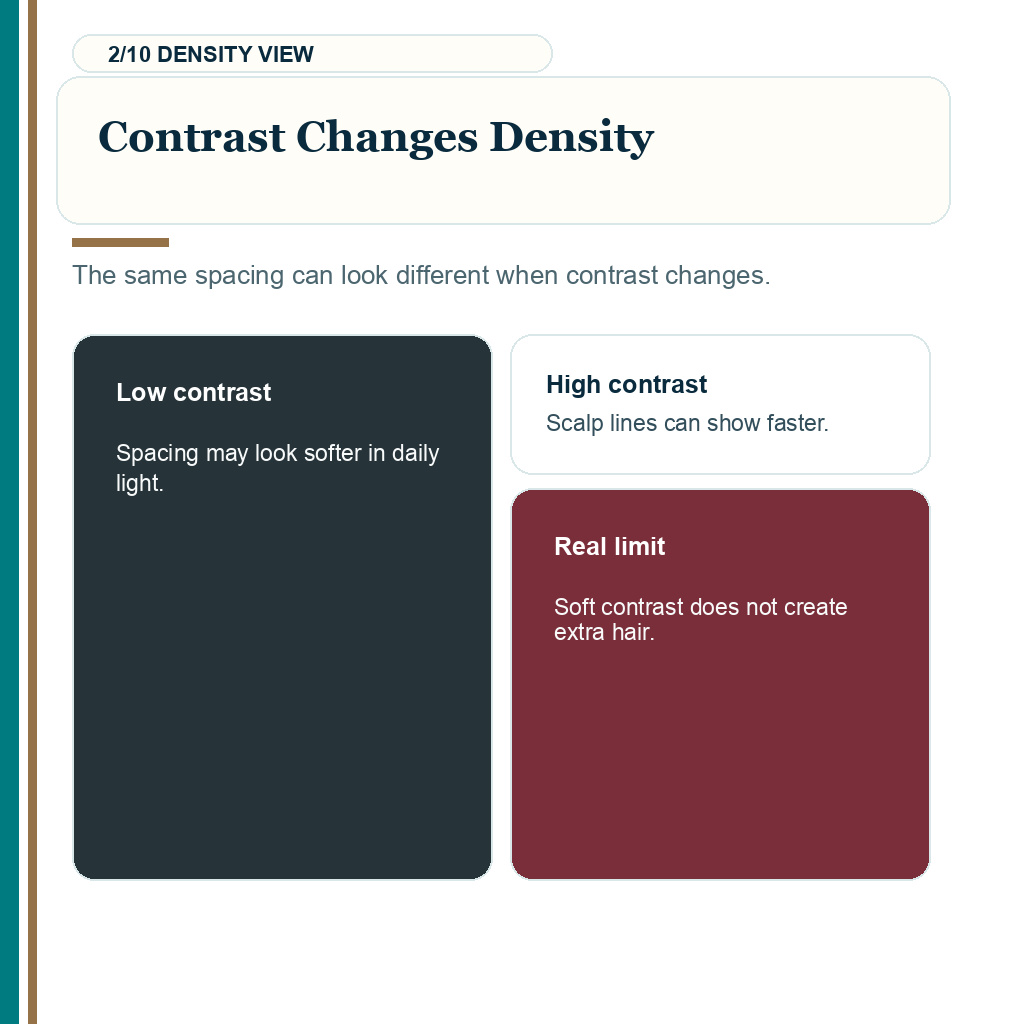
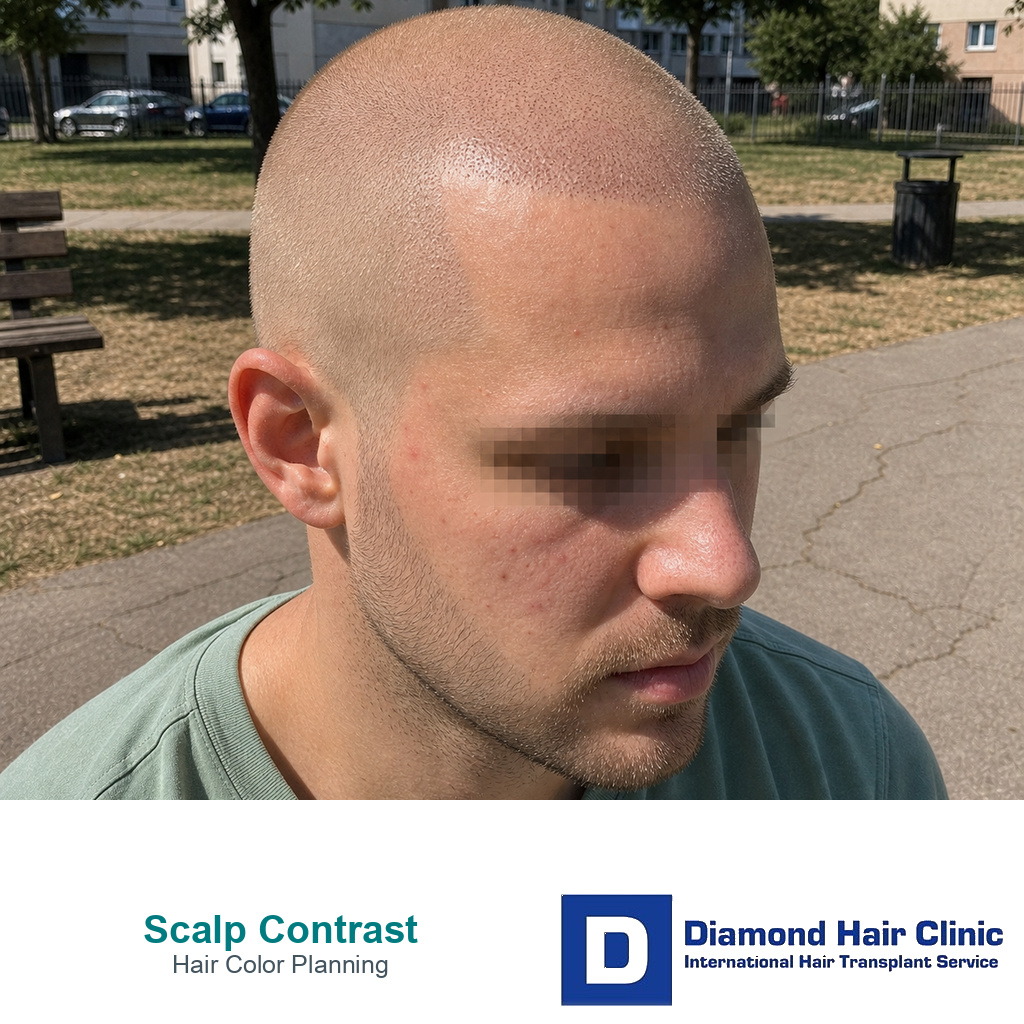
Hair transplant density is not judged only by counting grafts. The eye reads the space between hairs. Dark hair against light skin exposes the scalp more clearly. Light hair against light skin may soften that border. Red hair can sit anywhere between those two situations depending on the skin tone, the shade of the donor hair, and how much native hair remains.
Color is neither a simple advantage nor a simple disadvantage. If the hair is light but thick, the coverage can be visually kind. If the hair is light but very fine, the low contrast helps only partly. This is the point patients often miss. Low contrast can hide spacing, but it does not make a fine shaft behave like a thick shaft. I explain the shaft caliber side of this decision in planning hair transplants for fine hair. A similar pigment question appears in gray hair transplant planning, where color and caliber also need to be separated.
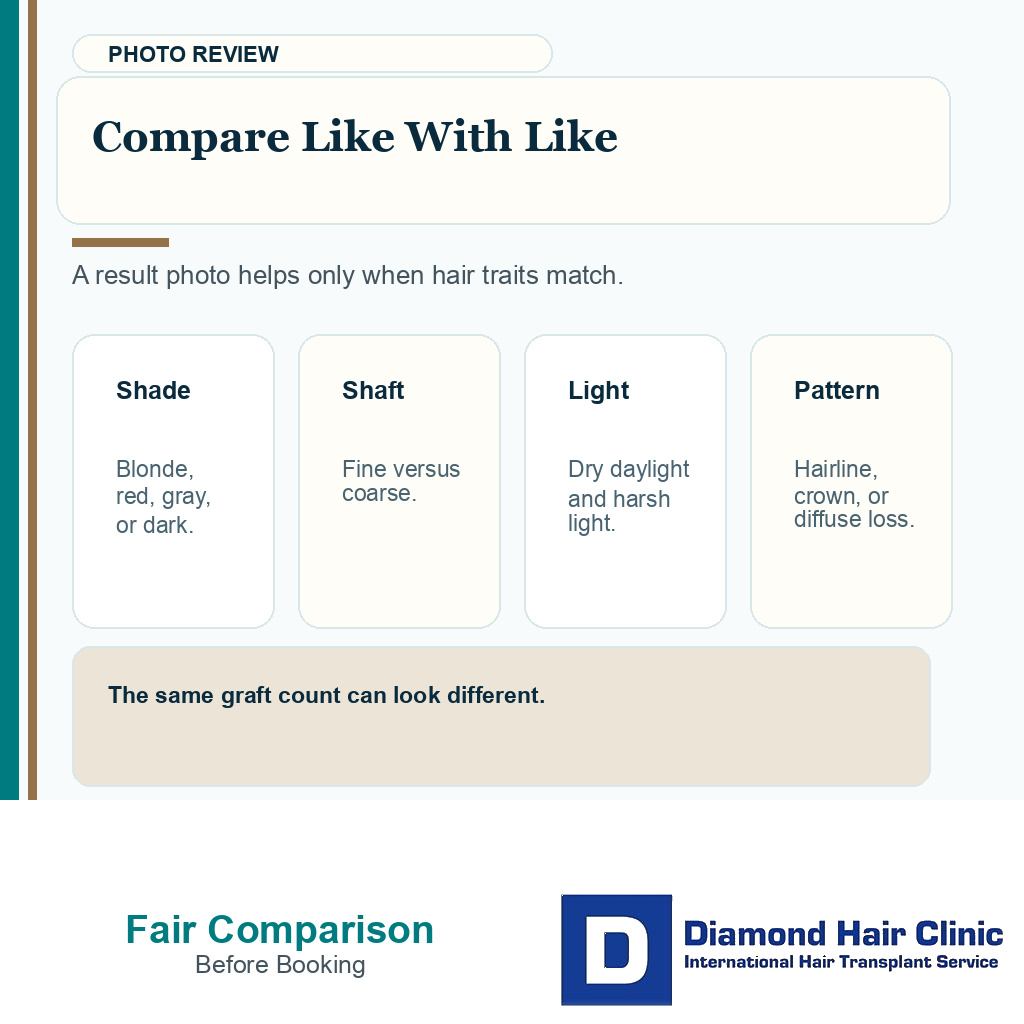
Use comparison photos from people with a similar hair color and shaft thickness when possible. A dark coarse hair result can make a fine blond or red hair plan look weaker than it really is, or more generous than the donor area can support.
Hair color alone does not decide the case. The plan has to use the right density, direction, distribution, and donor reserve for that exact head of hair.
Blonde hair can look soft, but fine shafts need respect
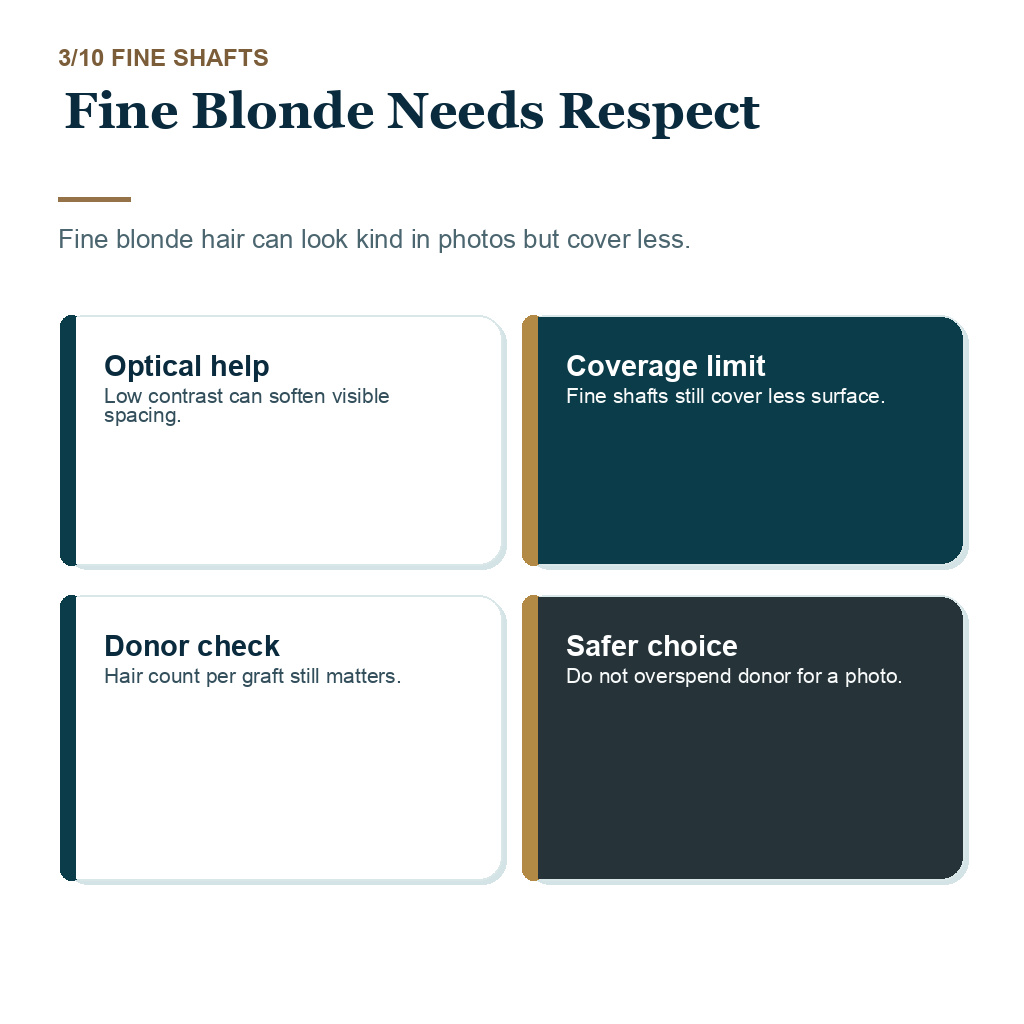
Many blond patients have a real optical benefit because the contrast between hair and scalp can be lower. That can make spacing less visible in daily life. It can also make a hairline look softer when the grafts are placed well. I still measure the donor and inspect the hair under normal light because softness does not equal unlimited coverage.
Fine blond hair is the situation where patients are most likely to misunderstand the advantage. The scalp may not show through the hair as strongly, but each shaft may cover less surface. If the treated area is wide, the result can still look light. A plan that chases full coverage everywhere can spend too many grafts before the patient has a strong frame in the front.
Very blonde or yellow blonde hair should not push the graft number higher just because of color. The planning question is whether the light color is lowering scalp contrast or whether very fine straight shafts are reducing coverage. Those are different problems. Low contrast can make spacing softer to the eye, while fine caliber can still make a wide area look light.
For very light hair, result photos should not be judged from one polished image. A useful comparison shows similar skin tone, similar donor caliber, dry hair, ordinary daylight, hairline closeups, donor area views, and enough follow up to show whether the result still looks natural outside flattering light.
Keep one planning photo set with dry hair and one with the hair gently parted. Light color can soften contrast, while parted photos give me another view of how visible the scalp is.

I look at color together with hair diameter, average hairs per graft, curl, donor density, age, family history, and the size of the balding area. The result is not planned from one attractive photo. It is planned from what the donor can safely support.
Red hair needs careful blending, not a special promise
Red hair, copper hair, and light auburn hair can produce very natural results. The risk is not the color by itself. The risk is assuming that a unique color behaves like every other donor pattern. Some red hair is coarse and wavy. Some is fine and straight. Some patients have strong contrast against pale skin, while others have a softer mix of tones.
A result should not be promised just because the color is unusual or attractive. I check whether the donor hair has the right quality for the recipient area. I also check whether the front edge can be built with soft single hair grafts and whether stronger grafts can be hidden behind that edge. If the donor has mixed shades, the placement should avoid a hard block of one color at the hairline.
Patients with red hair often ask whether transplanted hair will keep the same shade. In most cases, transplanted hair carries the characteristics of the donor area. It can still look different while short, wet, or newly growing because the shaft angle, length, and light reflection are changing. A temporary mismatch is not proof that the color has failed. The result has to be judged after growth, with dry hair, and in normal conditions.
Dark hair graft counts can mislead
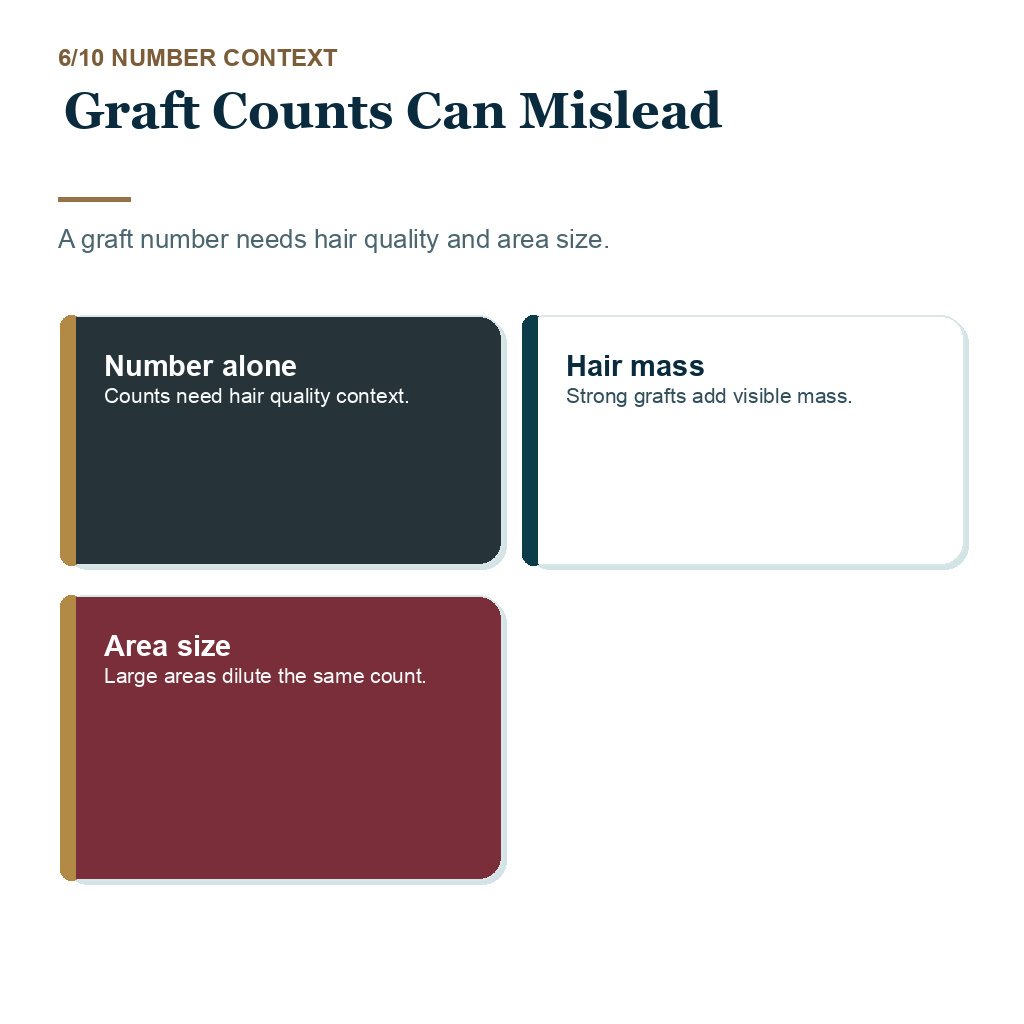
A common mistake is comparing graft numbers across unlike hair. A dense dark hair result may not predict what the same number will do in fine blond hair. A result on thick, curly red hair may not predict what straight light brown hair can hide. Even two blond patients can need different planning if one has coarse donor hair and the other has delicate donor hair.
A graft quote only becomes useful after it is tied to the actual hair in front of me. A patient may hear 3,000 grafts and feel reassured, but those grafts still have to work with that hair color, shaft diameter, curl, skin contrast, and recipient area size.
When patients review photos, I want them to compare hair traits before they compare graft totals. Hair transplant results from hair like yours explains this broader proof problem. Graft count still matters, but only after area size, planned density, hair caliber, contrast, and donor reserve are understood. In how surgeons calculate graft number, I explain why the number is only the start of the map.
The same graft count can look different because every graft is not visually equal. A graft with two or three strong hairs creates more visual mass than a graft with one fine hair. A lower contrast scalp may hide spacing better, but it does not create extra hair. This distinction protects patients from both disappointment and overaggressive surgery.
The hairline still needs single hair softness
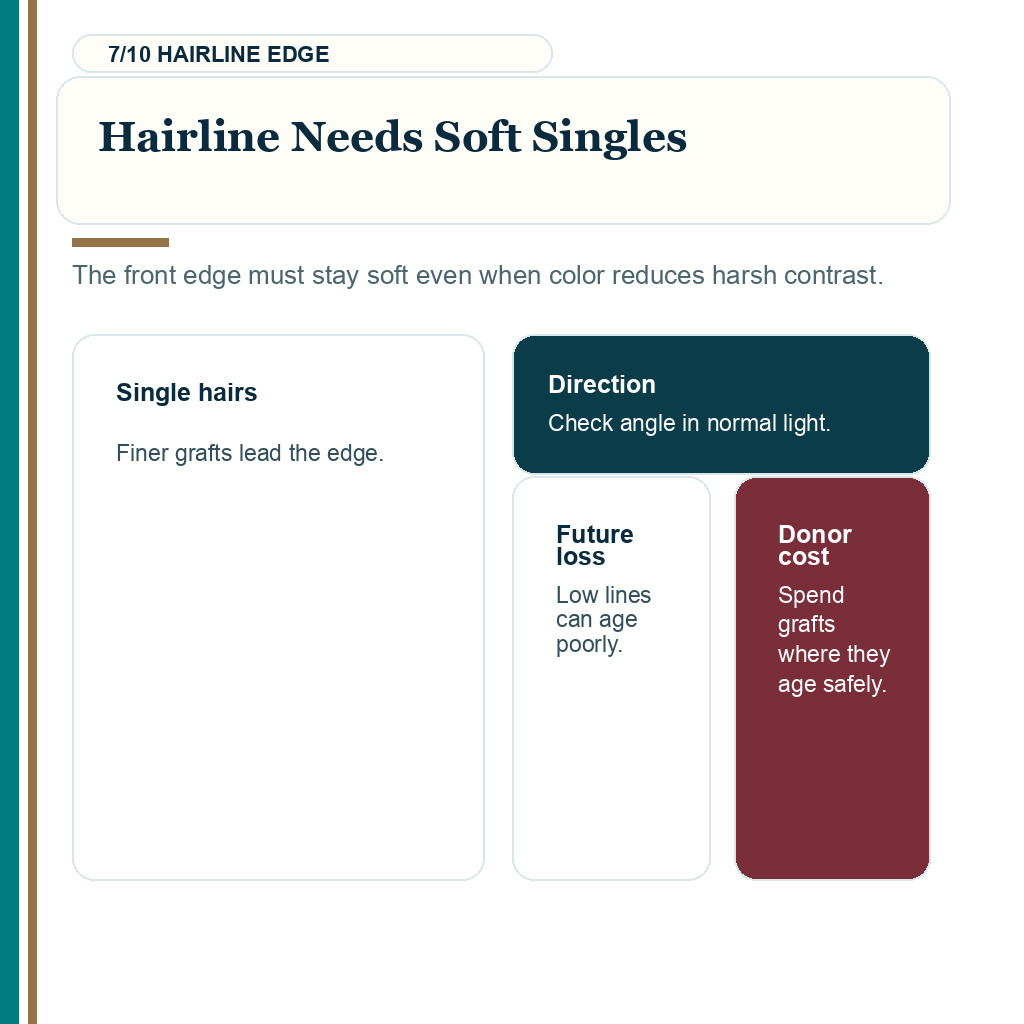
The hairline is where color and graft selection become very visible. The first few millimeters should not look like a wall. Blonde hair can make a poor hairline less harsh in some lighting, but it will not hide wrong direction, heavy grafts at the front, or a line that is too straight. Red hair can look very natural when the transition is soft, but it can also make an artificial row noticeable if the density changes too abruptly.
In my planning, the leading edge is built with single hair grafts and small irregularities. Behind that edge, stronger grafts can build more visual support. In hairline design in hair transplant surgery, I explain why the best line is not simply the lowest line. Light hair makes that restraint more important. A soft, age appropriate design is usually easier to live with than a low sharp line that needs too many grafts.
Hairline planning also has to consider the future. If the patient continues to lose native hair behind the transplanted front, a very aggressive first design can become a burden. Color contrast may make early spacing look less obvious, but it cannot protect the donor area from poor spending.
Recipient area contrast and donor area visibility are not the same problem. Low contrast in the front can soften spacing, but the donor can still look thin if fine light hair is extracted too aggressively or unevenly, especially when the patient prefers short hair. This is how future repair options start to narrow. A low, dense front or an overused donor may look acceptable in one set of photos but leave fewer good options later.
Crown coverage is where expectations often stretch
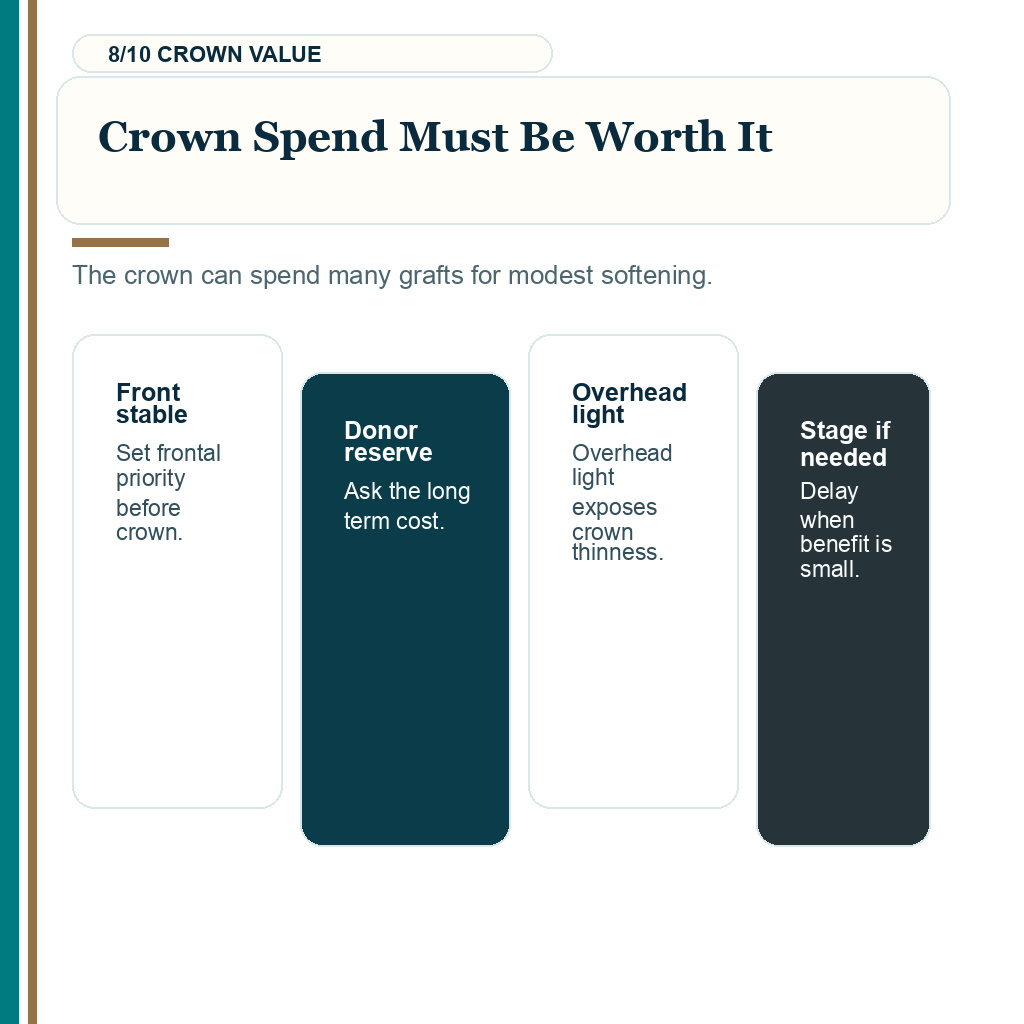
The crown is often the hardest area for a patient with light hair to judge. Low contrast can help the scalp look softer, but the crown has a circular growth pattern and a wide surface area. It can consume many grafts and still look lighter under overhead light. This is not always a failure. It is often the normal optical behavior of hair direction, hair length, and light.
If the donor is strong and the front is already stable, crown work can be reasonable. If the patient is young, still thinning, or has limited reserve, I may slow down. I explain the donor protection side in donor area overharvesting risk before any large coverage promise is made. Why some hair transplant results look thin is also useful when a patient is trying to separate biology from poor design.
For blonde and red hair, the crown decision is not only about whether grafts will grow. I ask whether the grafts create enough visual benefit for the number spent. A softer scalp contrast can make crown thinning less harsh, but the crown still spreads hair in a spiral over a large area. Sometimes the strongest surgical value is the frontal frame. Sometimes the crown is worth treating in a staged way. Sometimes it should wait.
Photos must match hair color, caliber, and light
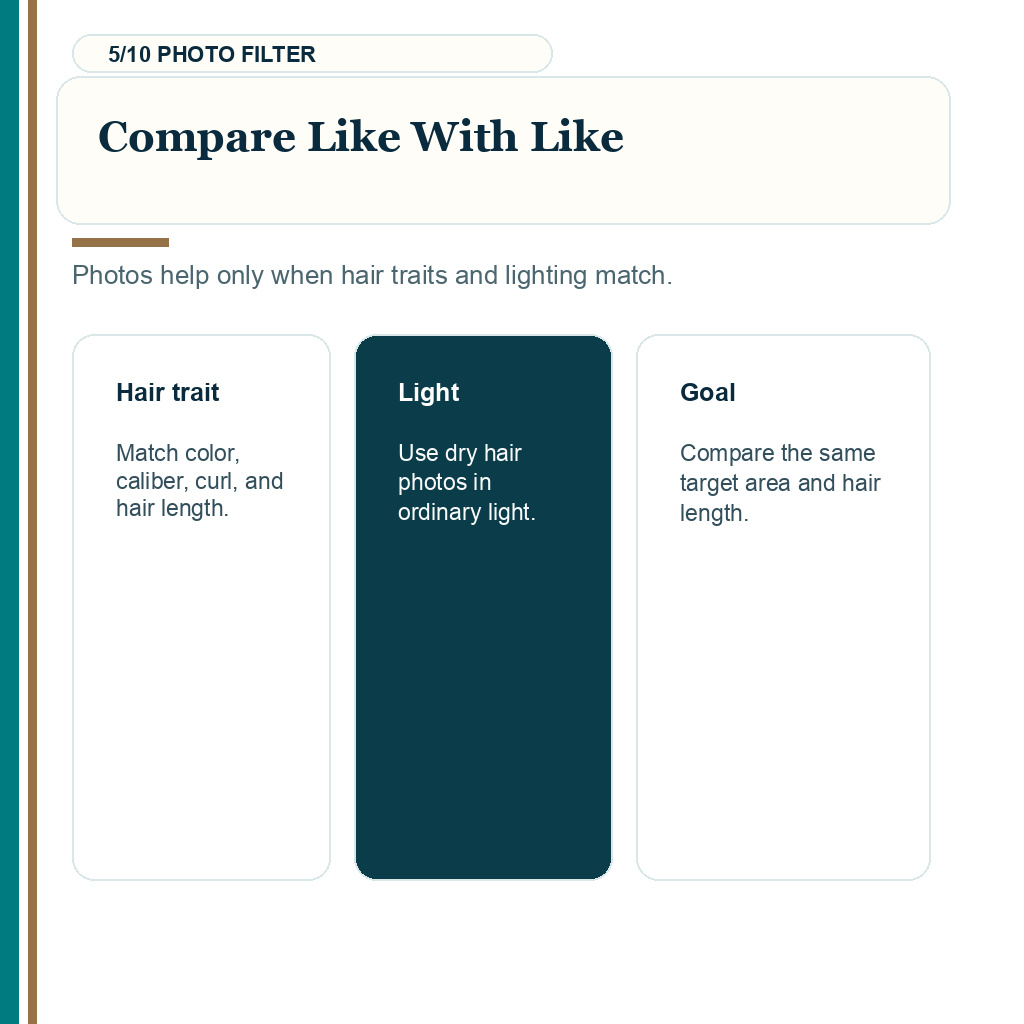
Before and after photos can help, but only when the comparison is fair. A blond patient is better compared with similar hair under ordinary light, not thick dark hair under soft indoor lighting. A red haired patient is better compared with dry crown photos rather than a short wet photo taken under a harsh bathroom light. Hair color, skin tone, shaft caliber, curl, length, styling, and lighting all change the impression.
I use dry hair photos in ordinary light, short videos when possible, and several angles. If the hair is dyed or blended, photos in normal light should show the current root and donor shade, because freshly colored or styled hair can hide the contrast I have to plan around. I also want to know whether the patient in the example had similar hair loss, similar donor strength, and a similar goal. Hair transplant results in harsh light and wet hair explains why a result can look different when light hits the scalp directly.
If you color your hair, send at least one planning set before the next dye appointment. Fresh color can make contrast look easier than it will be when the roots return.
A fair comparison does not remove uncertainty, but it makes the conversation clearer. It helps the patient understand whether the goal is natural framing, stronger frontal coverage, crown softening, or full coverage that may not be safe for the donor area.
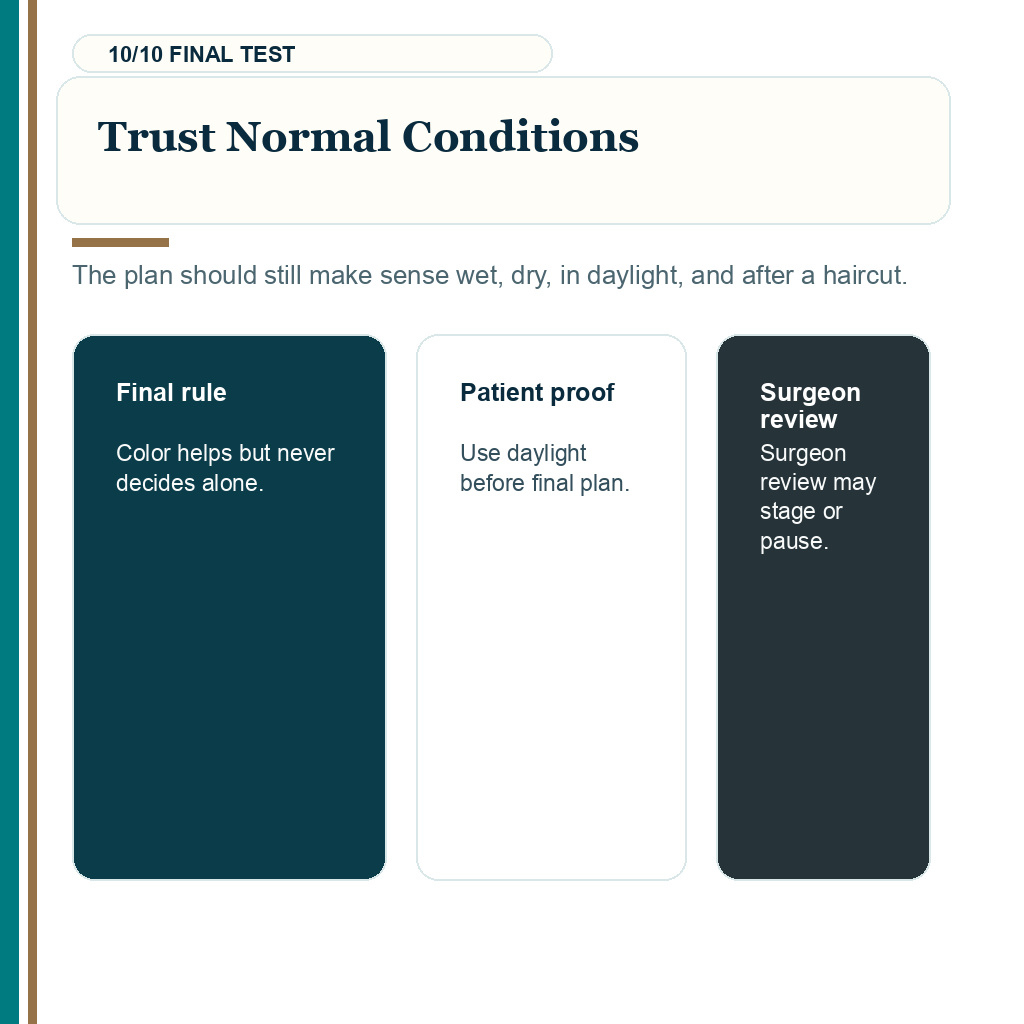
A contrast plan has to pass normal conditions
The same graft number can look different when contrast, caliber, and donor reserve change
What has to match before I trust the plan?
Blonde, red, and copper hair can soften scalp contrast, but I still test the plan against normal light, hair length, donor strength, and future loss. Color can help the eye. It cannot replace density or careful graft spending.
When light hair calls for restraint
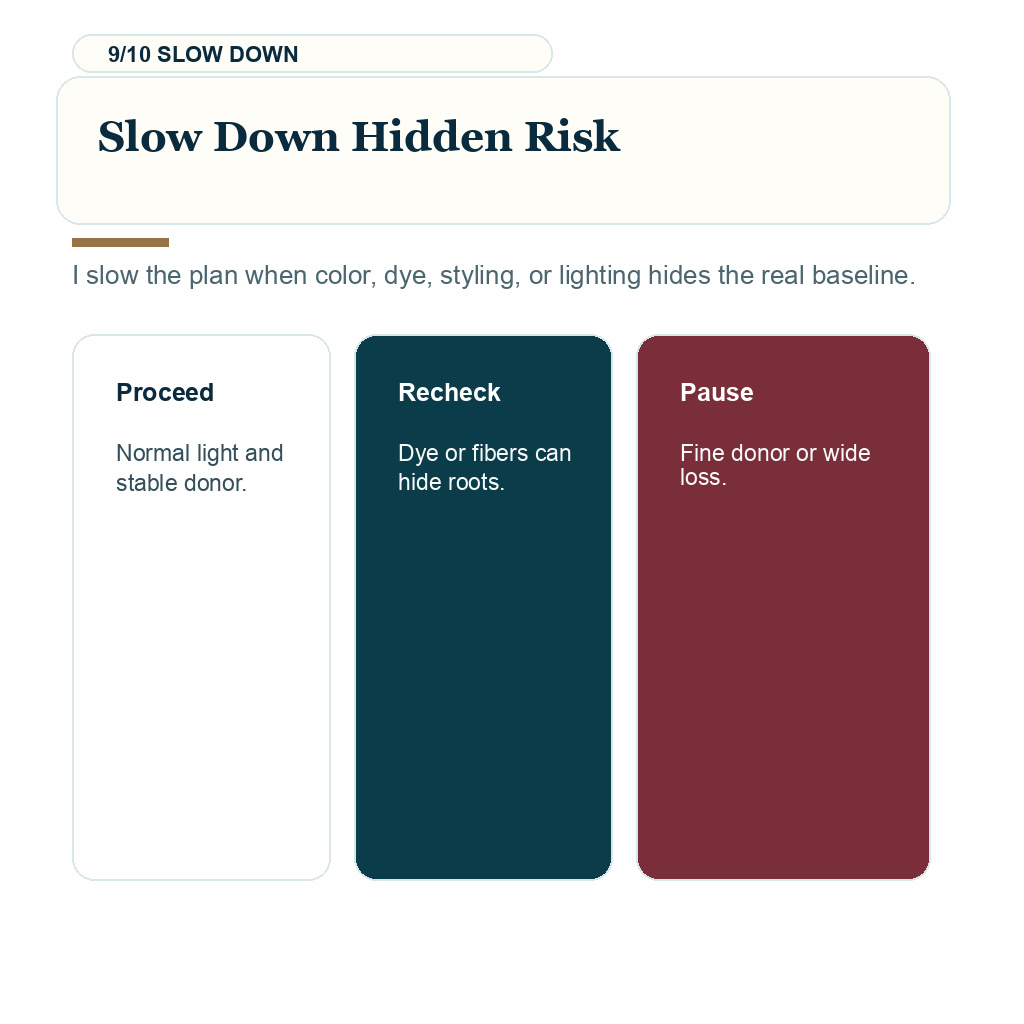
I slow the plan down when the requested density depends on a photo from very different hair. I also slow down when the donor is fine, the balding area is wide, the crown demand is high, or the hairline request is too low for the available reserve. A patient may still be a candidate, but the first surgery should not spend grafts as if future loss will stop.
I am also careful when color is being used to hide uncertainty. Dye, fibers, styling, and flattering light can make the baseline look better than it really is. Surgery should be planned from the real donor and the real loss pattern. If a result only looks convincing under one chosen condition, I need comparable views before using it to set expectations for your hair.
If the scalp donor is limited, beard or body hair is not an automatic solution for a blonde or red hairline. These hairs can differ in color, caliber, curl, texture, and growth cycle. If I consider them at all, they belong behind a buffer of scalp hair or in selected secondary areas, not as the answer for the first row.
My practical test is whether the plan still makes sense with dry hair, wet hair, ordinary daylight, overhead light, and a normal haircut. It does not need to look identical in every condition, but it should not collapse when the flattering condition is removed.
A good transplant with light hair is not a trick of color. It is a controlled plan that uses color as one visual factor among many.

Read this review excerpt
Every single one of my questions was answered and they made sure I had all the details I needed to make an informed decision.