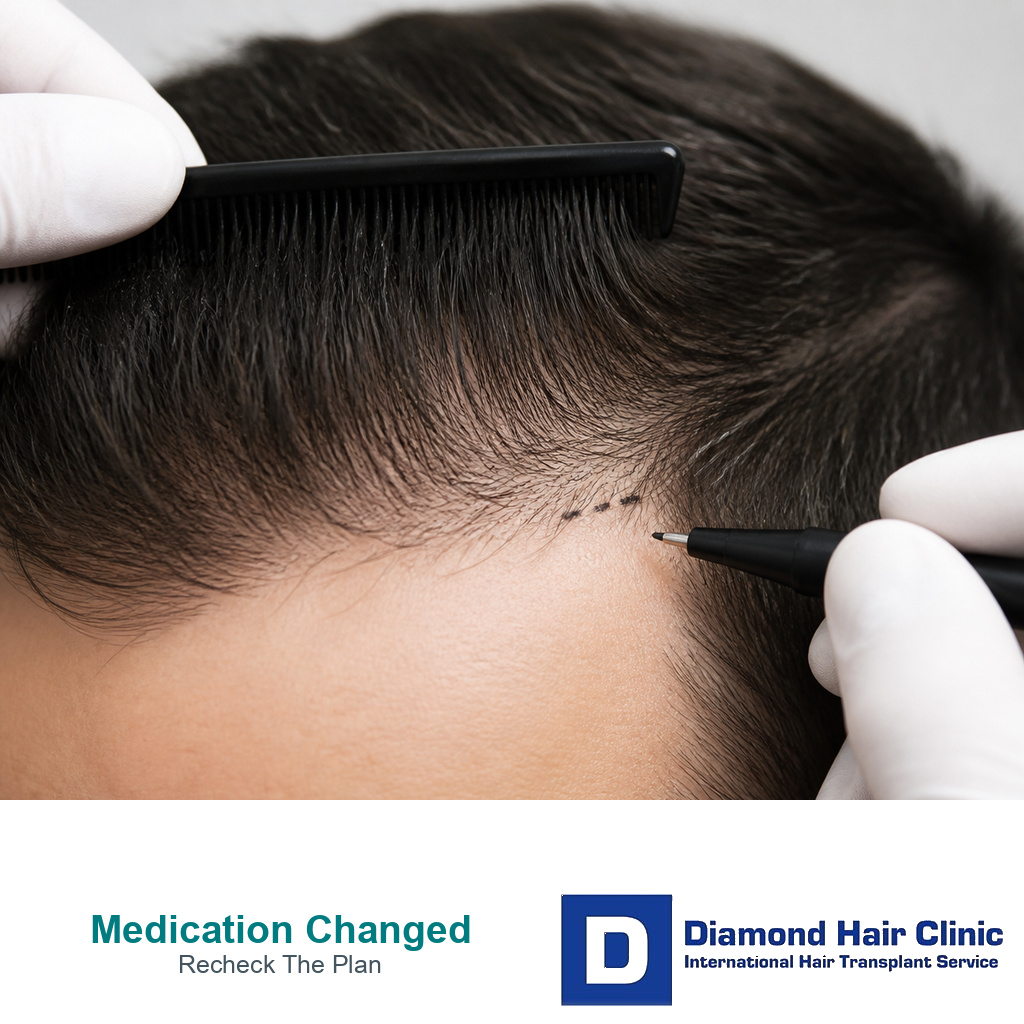
Should I Cancel or Delay a Hair Transplant if Medication Improves My Hair Before Surgery?
Medication improvement before a booked hair transplant should make the surgical plan move back onto the table, not stay fixed. I would not tell a patient to cancel automatically, and I would not tell him to proceed just because a deposit, flight, or date already exists before the plan is reviewed again. A safer first step is a fresh plan review before donor grafts are spent.
The reason is simple. Finasteride, dutasteride, and minoxidil can change the visible amount of native hair before surgery. Sometimes the improvement is real enough that the old graft number is too high. Sometimes the hair looks better in photos, but the temples, hairline edge, or crown still need surgery. Sometimes the medication response is still moving, so neither cancelling nor operating immediately is the right call.
The old plan is no longer the plan
A hair transplant plan is a map of today’s scalp, donor reserve, native hair, and future risk. When medication changes that map before surgery, the old plan becomes a draft. It may still be useful, but it needs to be checked again.
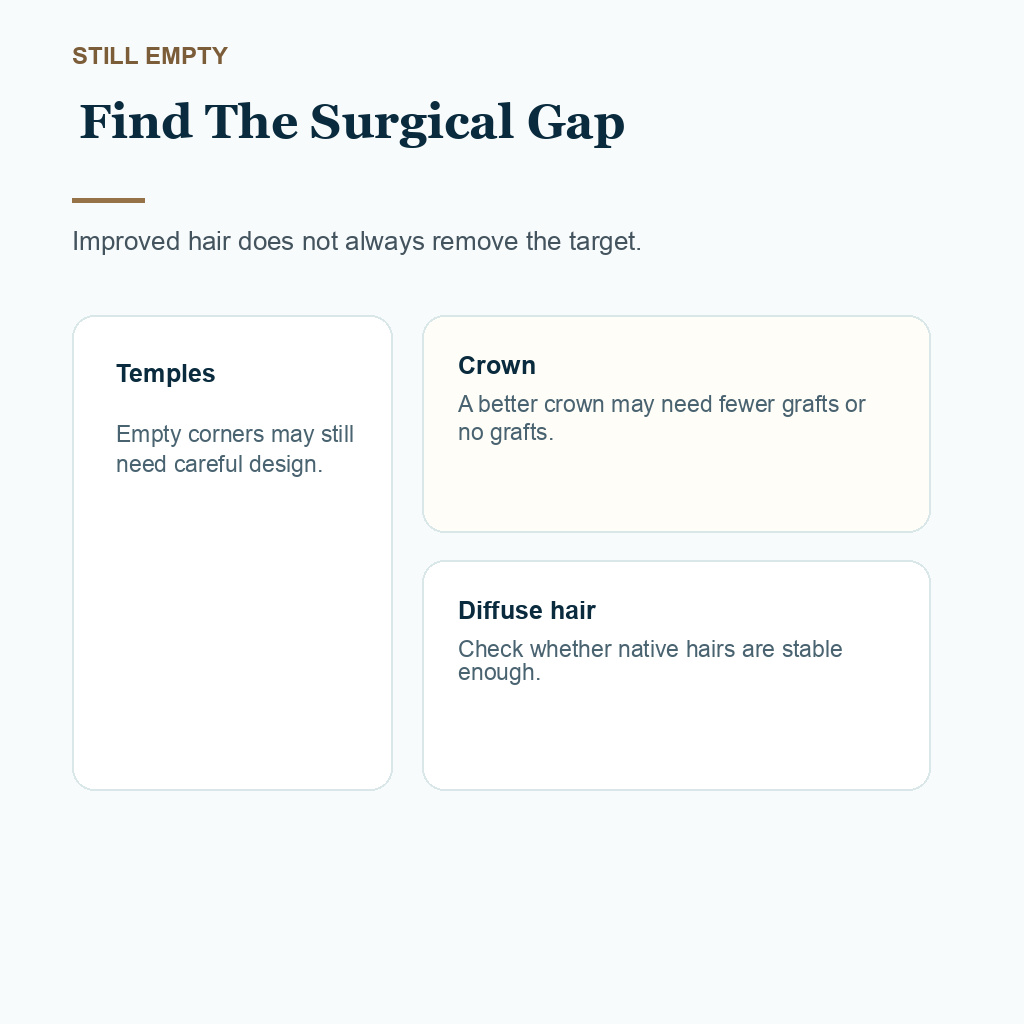
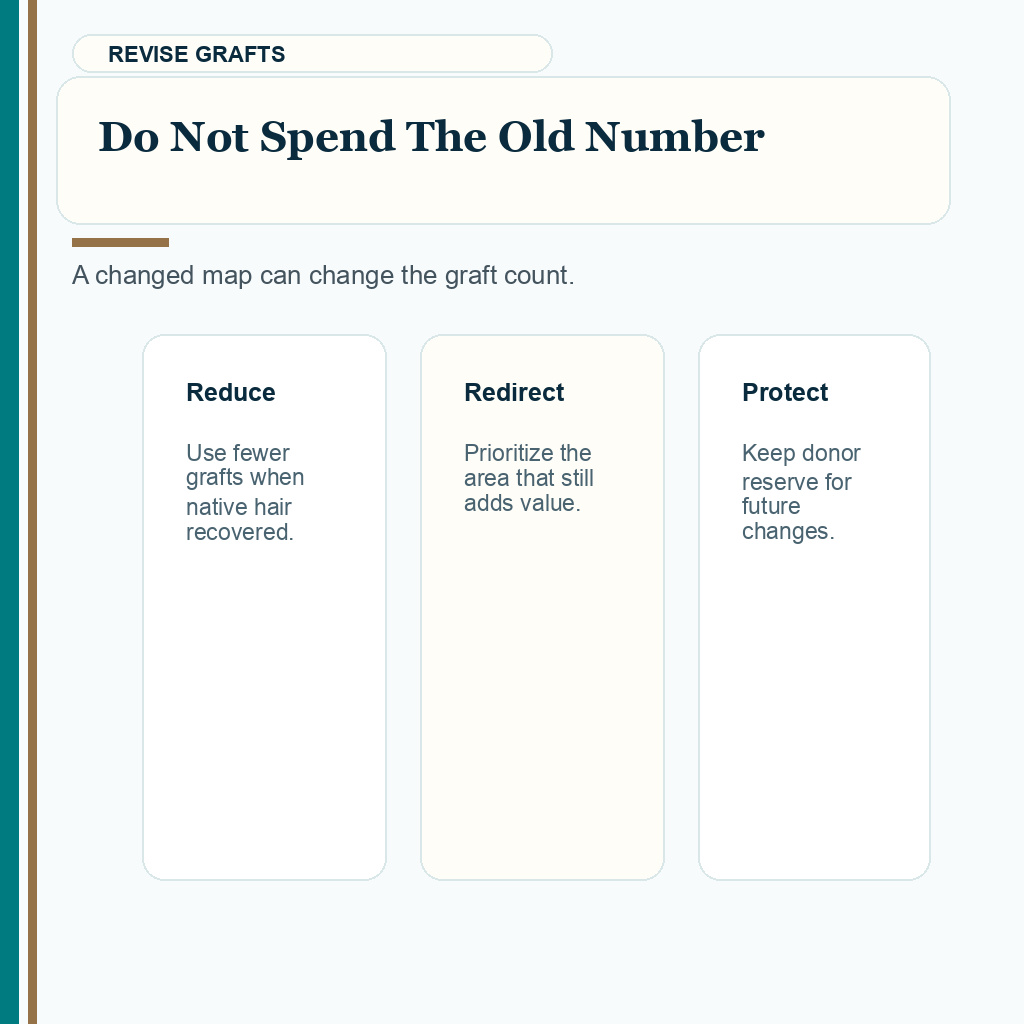
I look at three things first. The first is where native hair improved. The second is where a true empty zone remains. The third is whether the original graft number still protects the lifetime donor graft budget. If a patient was quoted for crown density but the crown has improved, the plan may need to shrink. If the crown improved but the frontal hairline is still structurally weak, surgery may still have a clear role.
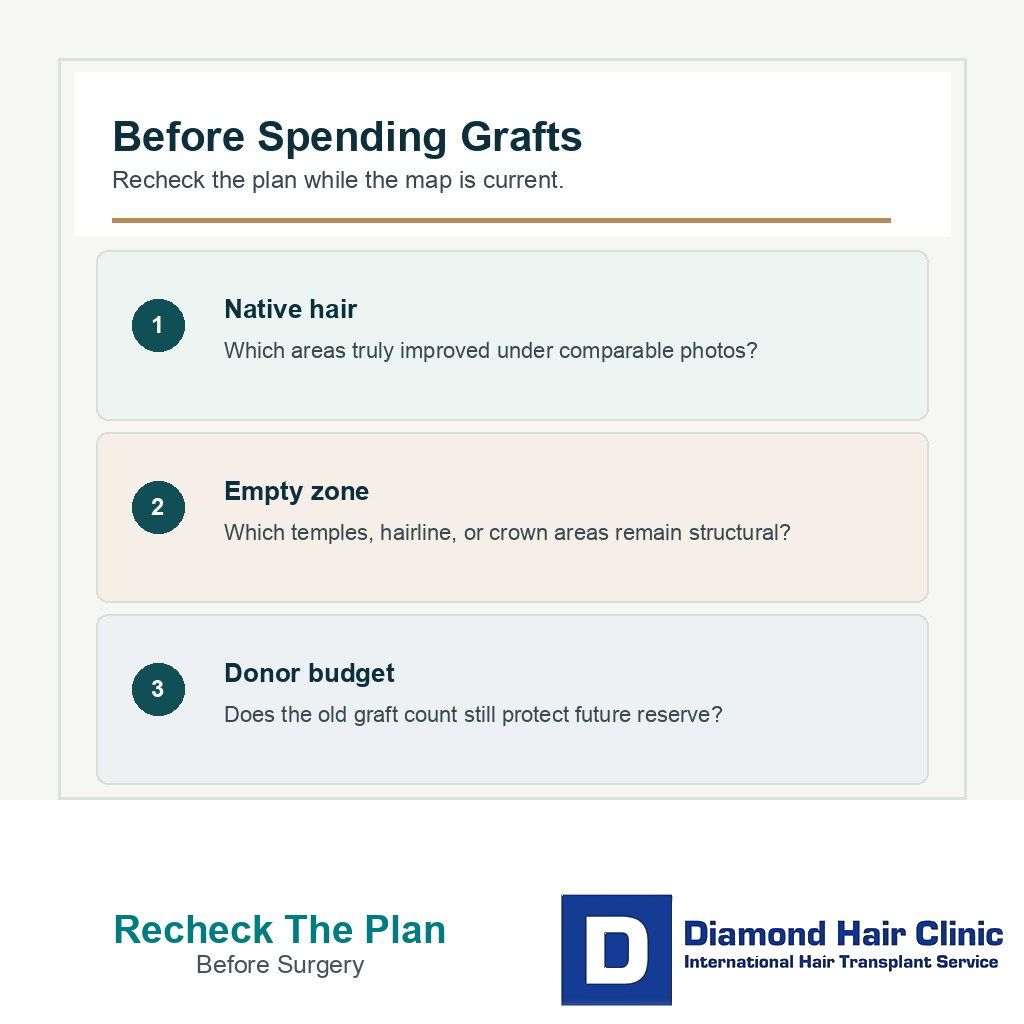
Last minute guessing creates a bad surgery day problem. If your hair changed before travel, send updated information early through the same route you would use for medical changes after booking a hair transplant. The clinic can then revise the plan before anyone relies on old photos.
Improvement is not the same as permanent stability
A strong response to medication is good news, but it is not proof that hair loss is finished. Androgenetic alopecia can keep changing over time. Medication can slow loss and improve the look of native hair, but the benefit depends on continued tolerance, correct use, and individual response.
I separate visible improvement from stability because the two can look similar in photos. Better density under longer hair or different lighting can be encouraging. It is not the same as stable miniaturization, stable shedding, and a pattern that has stopped moving. If you are still losing hair on medication, the timing question becomes different from a patient whose photos have been stable for months.
I also ask how recent the change is. Minoxidil can create a shedding phase after starting or changing treatment, and active minoxidil shed can distort the map. I review a finasteride or dutasteride response with the prescribing doctor’s safety guidance, not by panic after one good or bad photo week. Do not stop, restart, or switch medication only to fit a surgery date.
Delay can protect the donor plan
Delaying can protect the donor plan when medication is still changing the surgical target. If the crown is filling in, the midscalp looks less sparse, or diffuse thinning is improving, placing grafts too early can waste donor hair between recovering native hairs. In that setting, medication can make waiting safer because it gives the map time to declare itself.
I am especially cautious with diffuse thinning. When many native hairs are present but weak, the surgeon is not simply filling an empty area. He is deciding whether it is safe to place grafts among existing hairs without creating unnecessary trauma or density that will age poorly. That is the same reason diffuse thinning needs stability first.
Delay also makes sense when side effects or tolerance are not clear. If a patient improved but cannot continue the medication safely or comfortably, the plan cannot assume that improvement will last. The surgeon and prescribing doctor need to know whether the result is sustainable enough to change graft spending.
A smaller surgery may still make sense
Some patients improve a lot and still have one clear surgical problem. The most common example is a stronger midscalp with persistent temple recession. Another is a crown that looks better but still has a small empty center. In these cases, the right answer may be a smaller, more conservative operation rather than a full cancellation.
A smaller plan is not a consolation prize. It can be the better plan if the medication has protected native hair and reduced the amount of donor hair needed. The question becomes where grafts add real value. If most of the density is now native hair, I pay more attention to transplanting between existing hairs and to the long-term appearance of the transition zone.
The new plan may also change the order of priorities. A patient who first wanted crown and hairline work may now need only the hairline. Another patient may keep the date but lower the graft count. A third patient may need no surgery now but should keep monitoring because future native loss can still change the picture.
Cancelling for now can be reasonable
Cancelling for now is reasonable when three things line up. The patient is satisfied with the current look, medication is tolerated and stable, and the remaining surgical gain is too small to justify donor use. Here, protecting donor reserve can be more valuable than forcing an operation that no longer has a strong target.
This decision is not a promise that you will never need surgery. It means the timing is no longer right today. Hair transplant surgery moves donor hair. It does not stop native hair from changing later. If your current improvement is doing enough, waiting can keep more choices open.
I am more careful when the improvement is mainly in the crown. The crown can consume many grafts for a visual gain that is judged from above and behind. If medication has improved that area, read the separate discussion on crown improvement before grafts before spending a large part of the donor supply there.
Update the clinic before travel
Do not wait until surgery morning to reveal that medication changed your hair. The surgery morning consultation should confirm the plan, but it should not be the first moment the clinic learns that the scalp has changed.
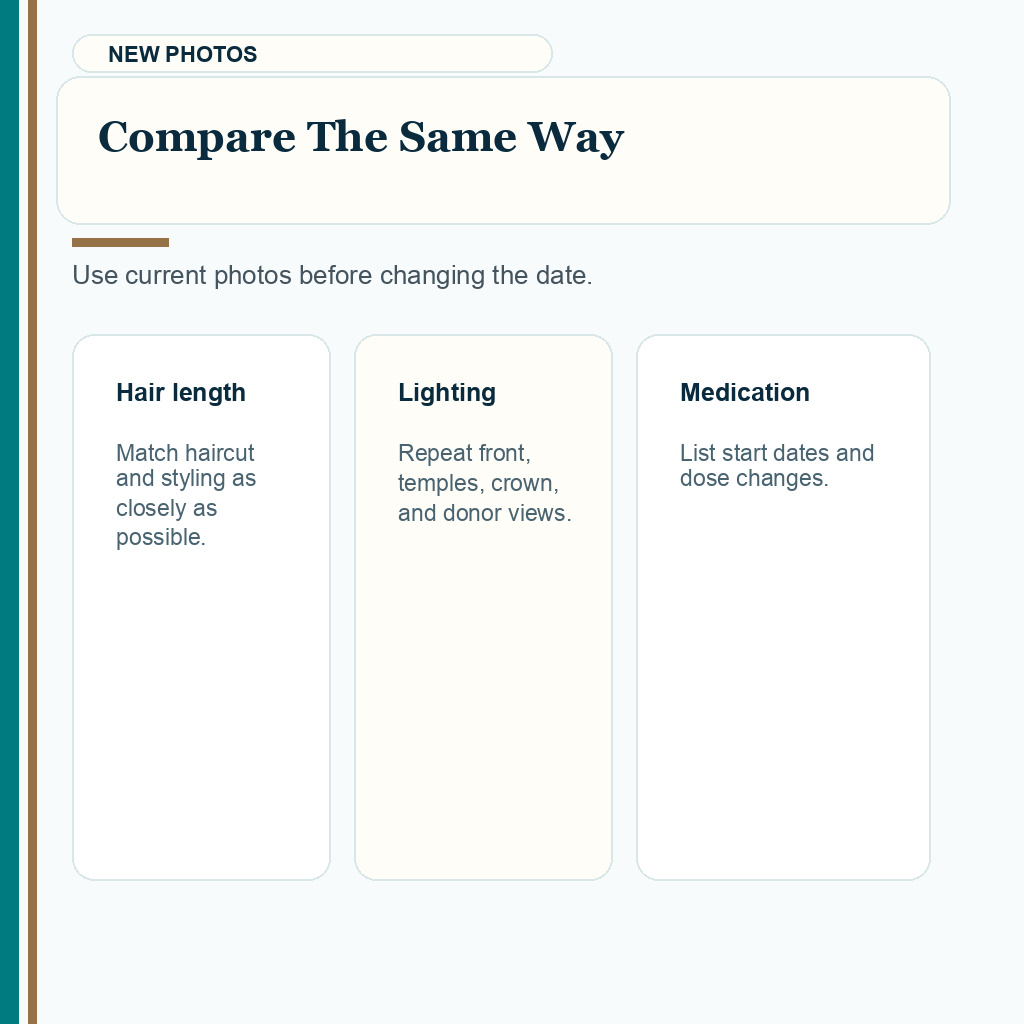
Send the current medication list, start dates, dose changes, side effects, and whether you expect to continue treatment. Send comparable photos with dry hair, wet or parted hair if relevant, front, temples, midscalp, crown, donor area, and the same hair length when possible. Tell the clinic what still bothers you in daily life, because a photo that looks improved can still hide a hairline problem that matters to the patient.
Booked surgery reassessment board
What changed after medication started working?
- Changed mapRecheck before surgery
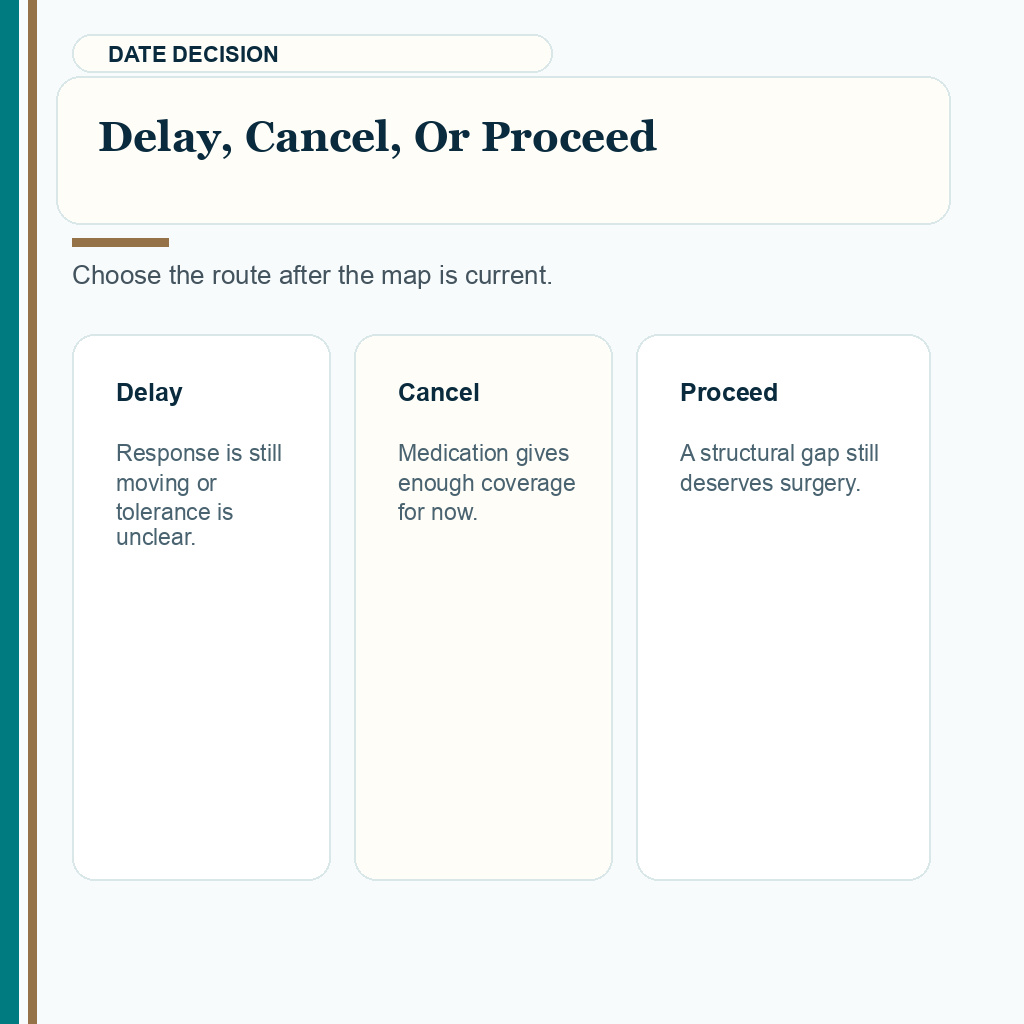
- Unstable responseDelay for clarity
- Smaller targetRevise the plan
- Enough coverageCancel for now
Recheck before surgery
Use comparable photos and a fresh exam to see whether the original graft number still fits the scalp.
Next move Do not treat the old quote as permanent if native hair now changes the treated area.
Delay for clarity
If shedding, side effects, or recent medication changes make the picture unreliable, surgery may be safer after the response is clearer.
Next move This is especially important when grafts would be placed between many native hairs.
Revise the plan
If the crown or midscalp improved but temples remain structurally empty, a smaller hairline or temple plan may still make sense.
Next move The goal is to spend fewer grafts only where surgery still adds value.
Cancel for now
If the patient is happy, the hair is stable, and no clear surgical gap remains, cancelling for now can protect donor reserve.
Next move Keep monitoring and do not stop a useful medication plan without the prescribing doctor.
If another clinic gives blanket advice to stop treatment, ask for the reason. A medication pause needs a reason, especially when that medication is the reason the surgical map changed. The final medication decision should stay with the prescribing doctor and the surgical team, not with a generic instruction sheet.
Let the current scalp lead
Patients often feel trapped between two emotional answers. One answer says, “I improved, so I should cancel everything.” The other says, “I already booked it, so I should continue.” I do not trust either answer by itself. I trust a new examination, comparable photos, donor math, and a clear explanation of what surgery still adds.
If the plan still has a real target, proceed with a revised plan. If the response is still changing, delay. If medication has done enough and the remaining gain is small, cancel for now. If a structural hairline or temple gap remains, a smaller operation may be the most balanced answer.
Use these 4 reassessment slides before changing the date or graft count.