


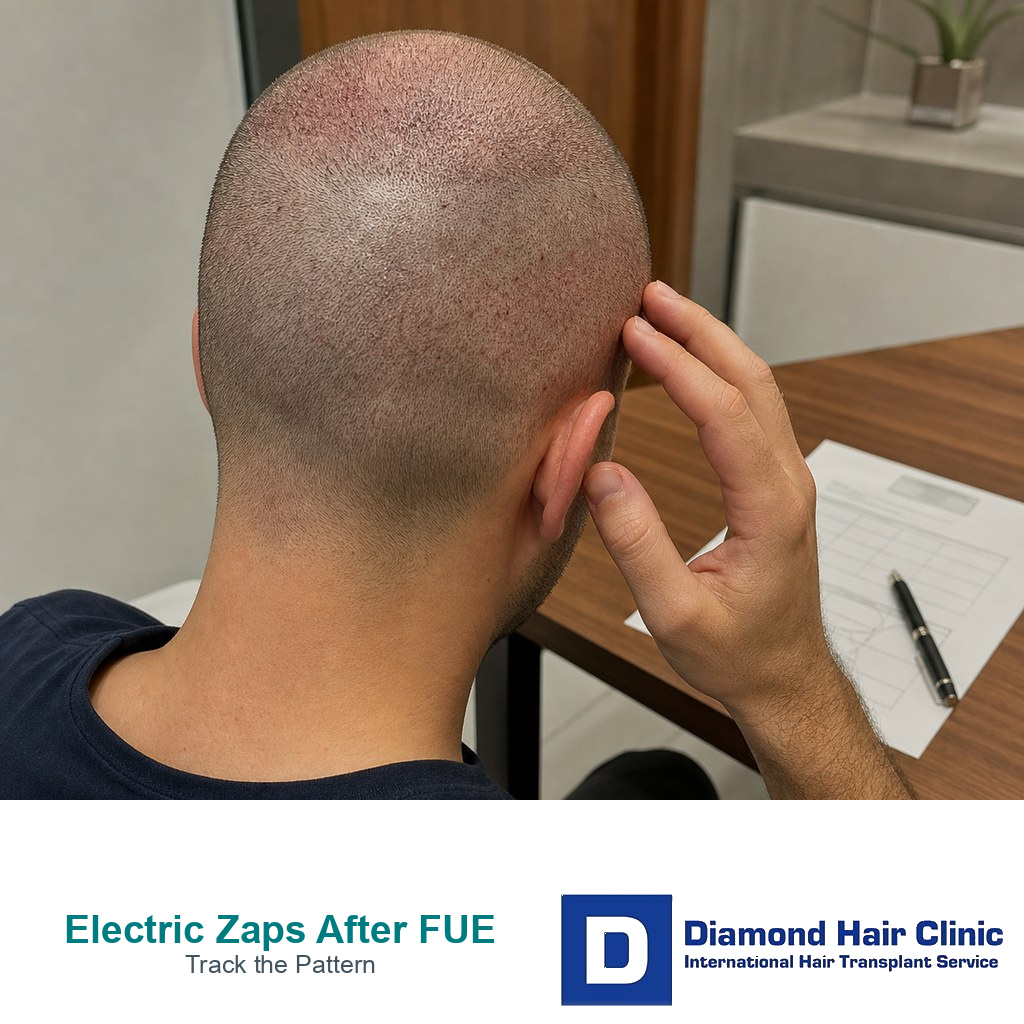
Electric Shock Feelings During Early FUE Recovery
If you feel a sharp electric shock sensation after FUE, a brief zap by itself does not prove graft loss, permanent nerve damage, or infection. First separate it from pain that becomes constant, wakes you from sleep, keeps worsening on one side, or comes with heat, swelling, drainage, fever, or spreading redness.
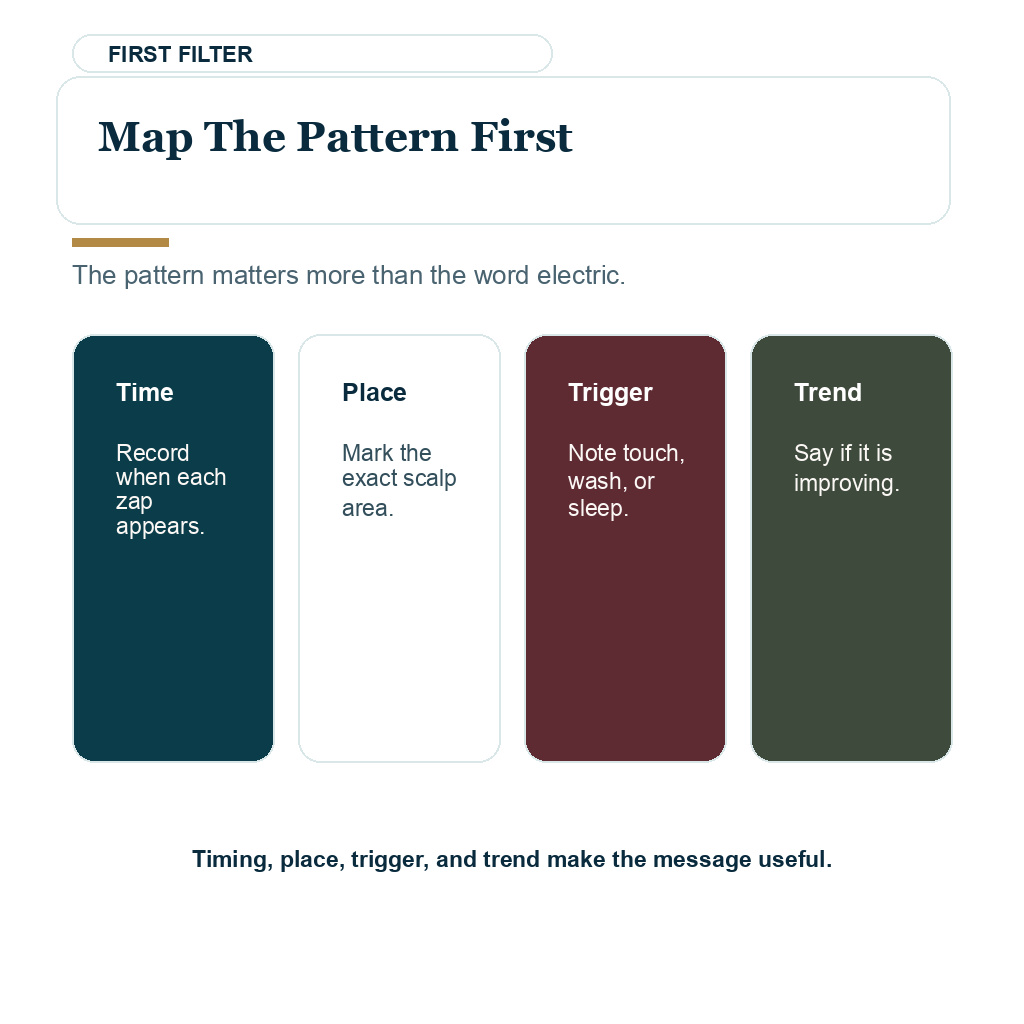
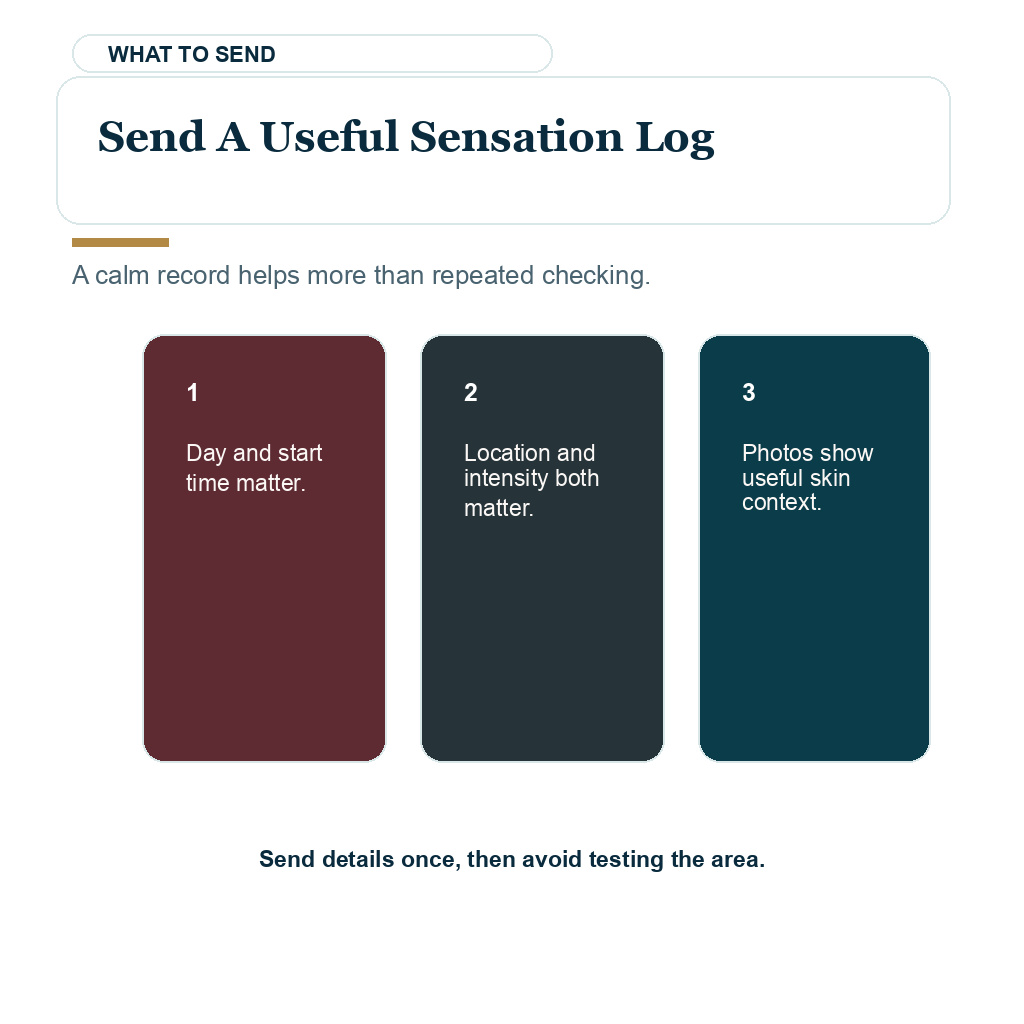
I still take the symptom seriously because the same words can describe mild nerve irritation, pressure sensitivity, inflammation, or a warning sign that needs review. Tell the clinic when it started, where it is, how long it lasts, what triggers it, whether it is improving, what the skin looks like, and what medicine you already took. That gives me a safer picture than the word electric alone.
Describe the trigger in plain words. A zap during scab washing or when a pillow touches the donor area is a different story from pain that appears without contact and keeps intensifying. What touched the area before the feeling started can matter as much as the feeling itself. Record whether it followed pillow pressure, hat contact, rubbing, and whether the timing or trend is changing.
The first question is timing, trigger, and trend
Patients often use the same phrase for very different feelings. One patient means a one second zap near the temple. Another means constant burning in the donor area. Another feels a sharp jolt only when he touches the scalp or turns his neck. Those are not the same clinical problem.
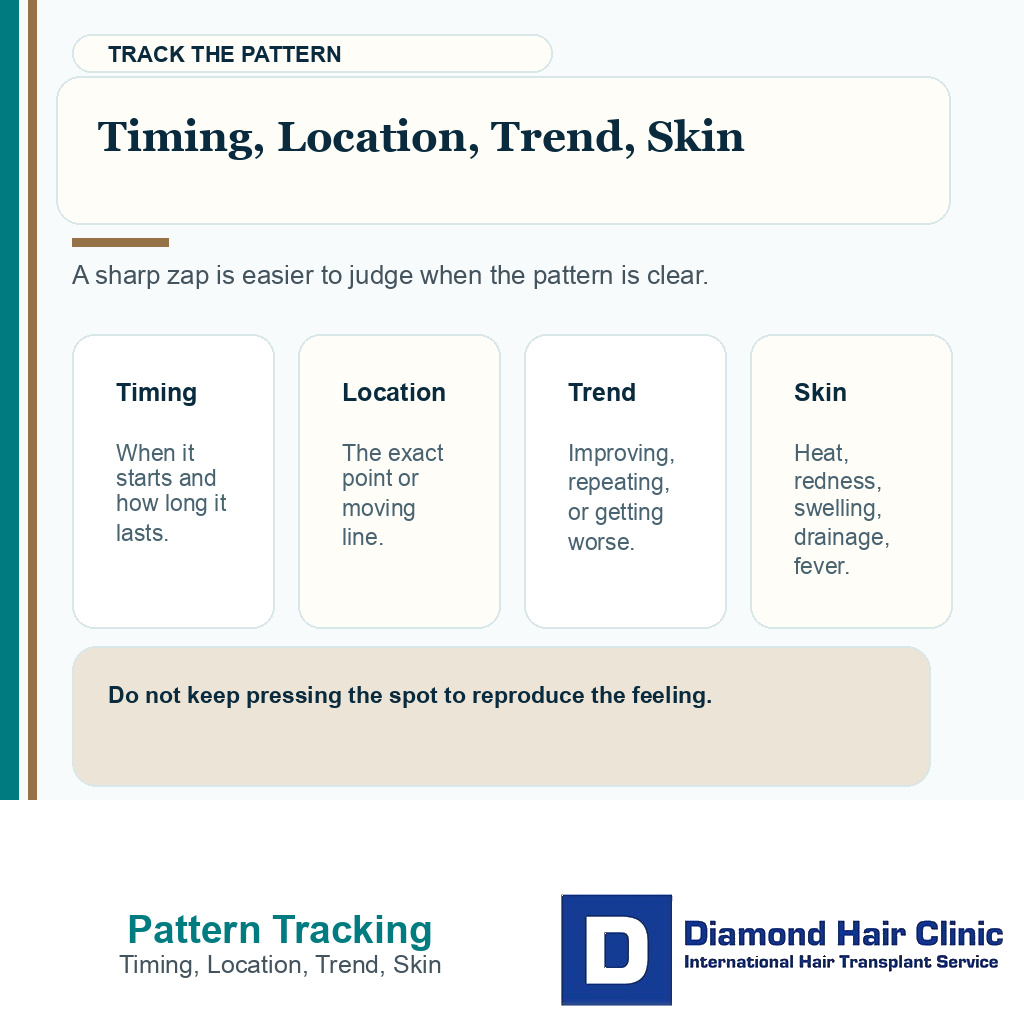
I start with timing. When did it begin? How many days after surgery? Is it seconds, minutes, or constant? Is it appearing less often, more often, or only with a trigger? The timeline matters more than the strongest word in the message.
Location also matters. A sensation in the recipient hairline is different from one behind the ear, across the donor area, or along one temple. If the feeling stays in one small point, say that. If it spreads, say that. If the skin also looks hotter, redder, swollen, wet, or pimpled, the symptom route changes.
A scalp that looks quiet lowers concern about visible infection, but it does not erase severe pain, pain that is worsening on one side, or sleep disruption. A photo helps me judge the skin. The pain story tells me whether the symptom is settling or becoming more serious. The direction of change matters, so a short zap that fades is different from pain that grows stronger each day.
Why can a healing scalp send sharp nerve signals?
FUE is a skin procedure as well as a hair procedure. Tiny recipient area openings and donor extractions disturb skin, small superficial nerve endings, and local inflammation. During healing, some patients feel numbness, tingling, tightness, burning, or sharp signals as the scalp settles.
That does not mean every sharp feeling is harmless. It means I do not judge the sensation in isolation. When the main issue is reduced or dull feeling, I separate it from numbness after hair transplant. When the sensation feels hot or burning rather than like a zap, I compare it with burning scalp after hair transplant.
A patient may also mix several sensations together. Tightness can pull, donor tenderness can sting, and anxiety can make the same spot feel more urgent because it is checked again and again. The pain can still be real. I need the timeline, trigger, skin appearance, and severity together before deciding the symptom route.
Some altered sensations settle over days or weeks, and small sensitive or numb patches can last longer. The useful sign is improvement. A feeling that becomes softer, shorter, or less frequent is different from one that is fixed, spreading, worsening, or still affecting daily life after several months.
This guidance is for early recovery. Pain, sensitivity, or another scalp symptom that lasts for months or first appears years later needs assessment by a clinician in person rather than a plan based on online reports.
Which electric sensations can usually be watched?
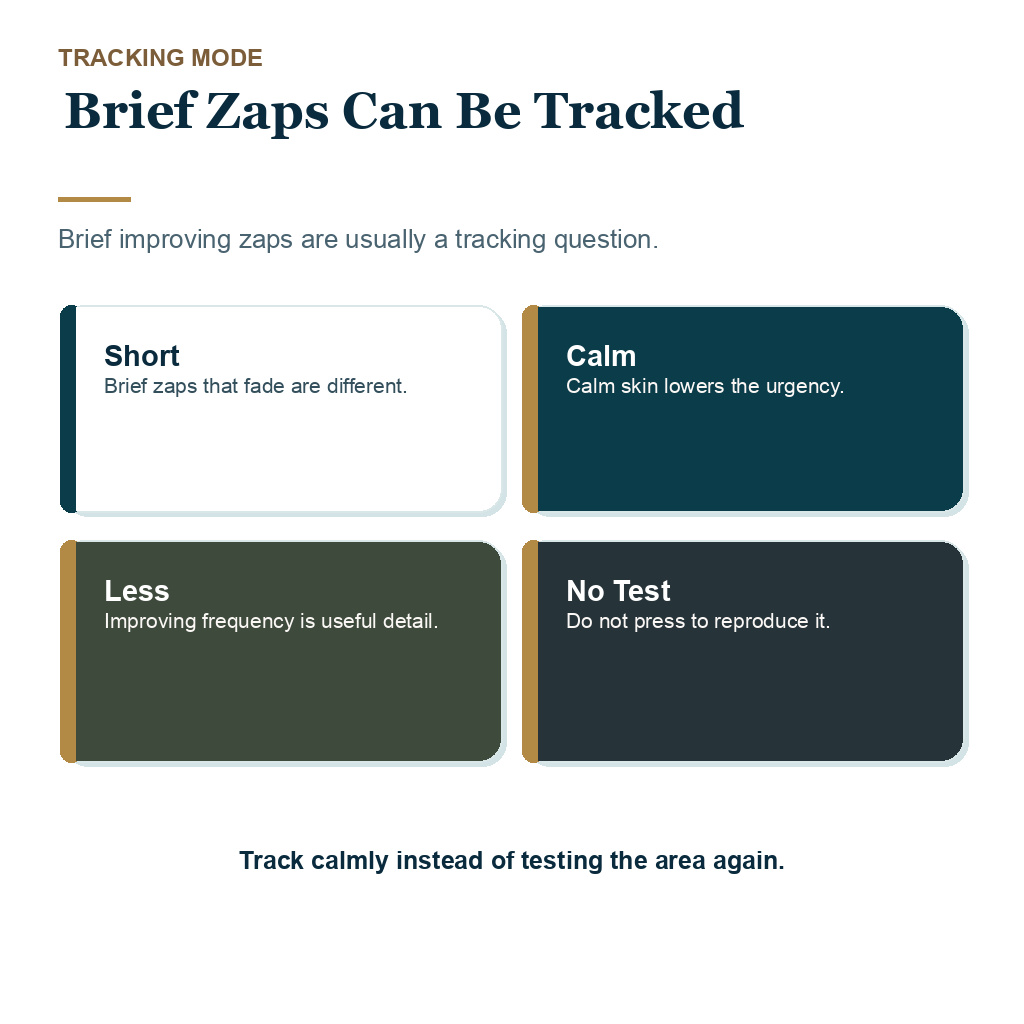
A brief, mild, intermittent shock type feeling that is already becoming less frequent can often be tracked while you document it. That is especially true when the skin looks quiet, there is no fever, and the sensation is not stopping sleep or normal movement.
Tracked does not mean ignored. It means the next useful action is a clear record rather than repeated touching, extra washing, tapping the area, or changing medicine on your own. Reduce direct pressure from a pillow edge, headrest, or tight hat. Keep washing gentle and do not rub the spot to test it.
Remove a clear trigger first. A zap that appears only with neck turning, one sided leaning, or a pillow edge tells a different story from pain that arrives on its own and keeps building.
If you are my patient and you are unsure, send the detail. A short message that says the zap is on day five, behind the right temple, lasts two seconds, appears three times a day, and the skin photo looks quiet is much easier to judge than a message that only says electric shock.
Which pain pattern should be checked quickly?
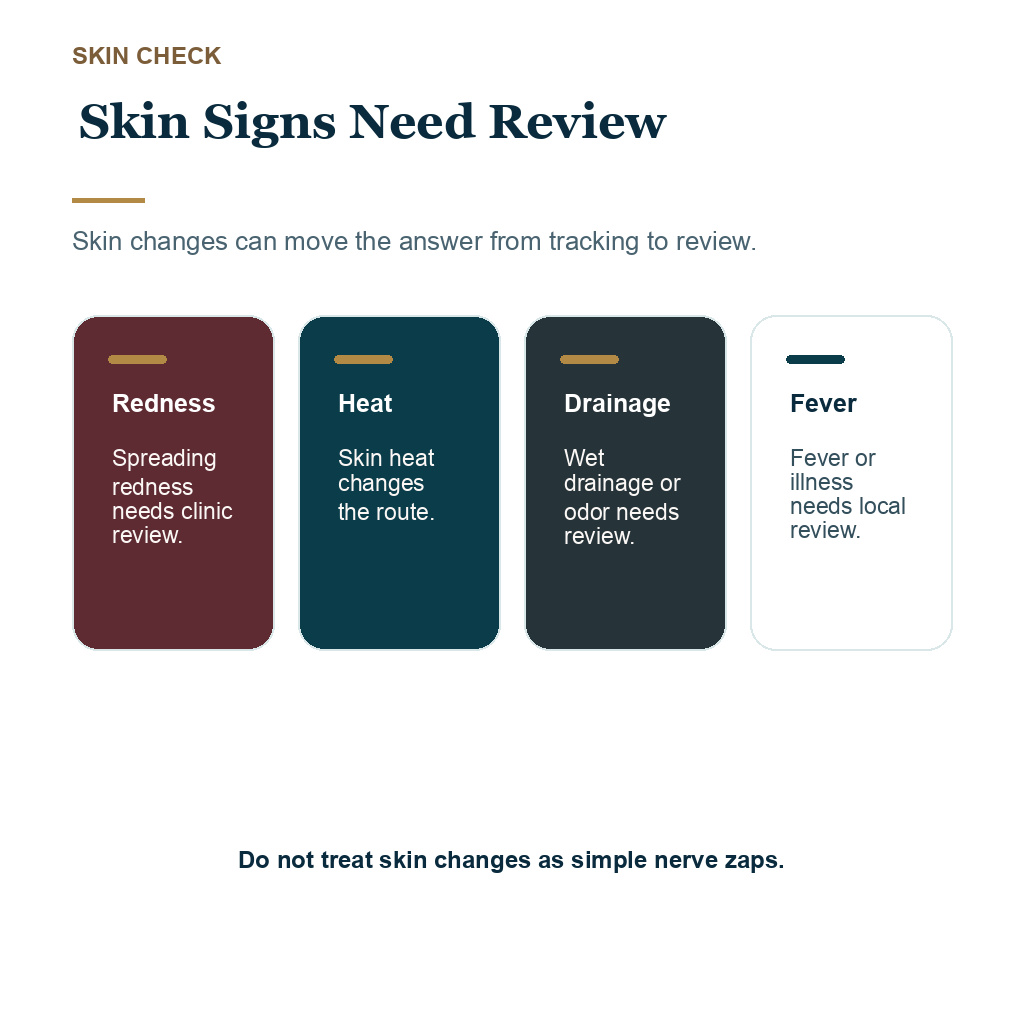
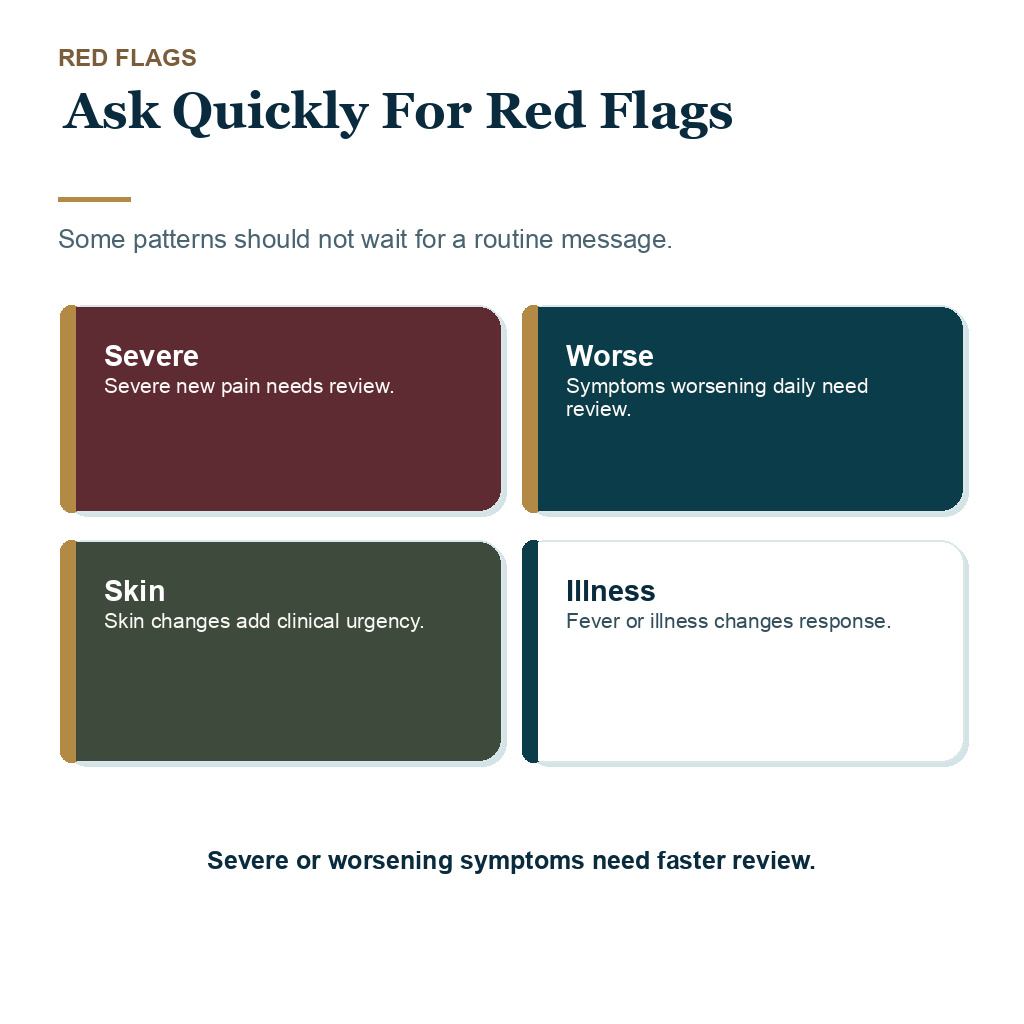
Pain deserves faster review when it is severe, constant, worsening, mostly on one side, or strong enough to wake you repeatedly. I also want timely review when the scalp feels hot, looks increasingly red, drains fluid, swells, smells unusual, or is paired with fever.
When the donor zone is the center of the complaint, I judge the problem closer to severe pain in donor area after hair transplant. When redness, warmth, swelling, discharge, or fever enters the picture, I stop treating it as only a nerve sensation and review it as a possible infected hair transplant concern.
Do not wait just because the sensation has an electric quality. Calling it nerve pain does not rule out inflammation, folliculitis, pressure injury, infection signs, or another medical issue. If fever, spreading hot redness, pus or cloudy drainage, wound opening, rapidly worsening pain, dark skin change, fainting, confusion, breathing symptoms, or feeling medically unwell is present and you cannot reach your clinic quickly, seek local medical care and keep the clinic informed.
What should you send before changing medicines?
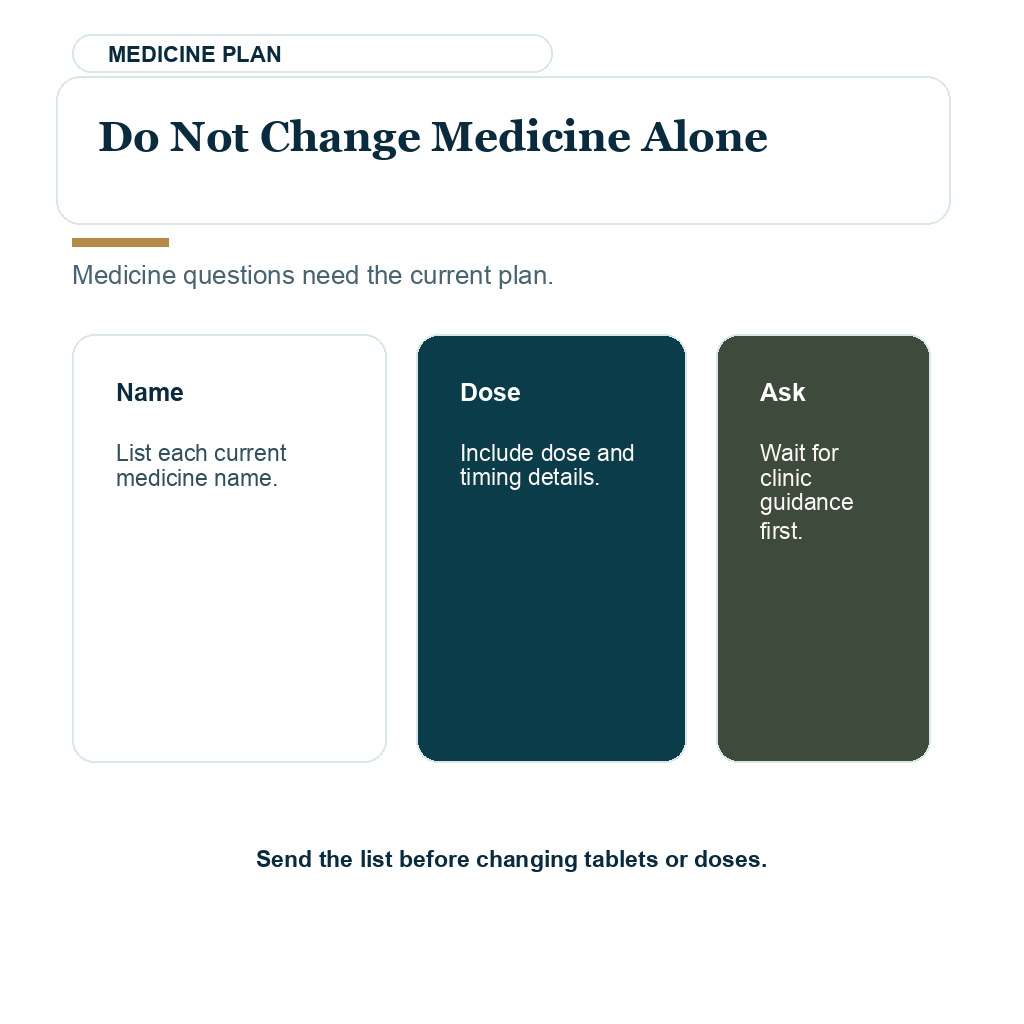
Do not increase, mix, restart, or stop medicine only because a sensation feels sharp. Send what you already took, when you took it, and whether the symptom changed after that. This is especially important if you use prescription medicines, alcohol, supplements, blood thinners, or medicines for inflammation such as ibuprofen, naproxen, or aspirin unless your doctor approved them.
Painkillers after hair transplant should stay within the clinic’s plan. A stronger feeling does not by itself mean a stronger medicine is the correct answer. If the approved medicine is not helping, or pain is breaking your sleep, say that directly instead of silently adding tablets.
Send the current medicine name, dose, and time taken. Send a photo of the area in good light. If there are pimples or tender bumps, I separate one quiet bump from folliculitis after hair transplant, repeated painful bumps, drainage, or a spreading patch. If the complaint is mainly a pulling feeling or tight band sensation, scalp tightness after FUE may be the closer match.


Use the sensation route map before deciding what to do
The route map below is not a diagnosis tool. It is a way to organize your message before you ask for advice. Choose the situation closest to yours, then send the details instead of testing the area again with your fingers.
FUE electric sensation route map
Use the map to decide what information matters before you describe the feeling to the clinic. The symptom route changes when the sensation is brief, triggered by pressure, getting worse, linked to skin changes, or tied to medicine questions.
Brief and improving zaps are usually a record question
A short shock type feeling that appears, fades, and becomes less frequent belongs in the symptom record. It is still worth writing down because the trend is more useful than the label.
If more than one route fits, use the more cautious route. A brief zap with calm skin is one thing. A brief zap plus heat, swelling, drainage, or fever is no longer only a sensation question.
The symptom pattern sets the urgency
An electric feeling after FUE is worth tracking, but the record should not become repeated pressing or panic zooming. Write down when it happens, where it is, how strong it feels, how long it lasts, what triggers it, what the skin looks like, and whether fever, sleep disruption, or medicine changes are part of the picture. If a follow-up route is already planned, hair transplant follow-up after surgery works best when the description is specific instead of built from panic zooming into one point.
Brief zaps with quiet skin do not by themselves prove graft failure or permanent nerve damage. They still deserve a clean record because the same word can describe normal healing irritation or a problem that needs faster review.
If the sensation is improving and the skin stays calm, follow the recovery plan and share the pattern through your follow-up route. If pain is worsening, constant, waking you from sleep, paired with fever, or appears with heat, swelling, drainage, spreading redness, open skin, or feeling medically unwell, treat that as urgent medical review rather than a normal healing sensation.

Read this review excerpt
First wash completed and visual instructions given to my daughter.