


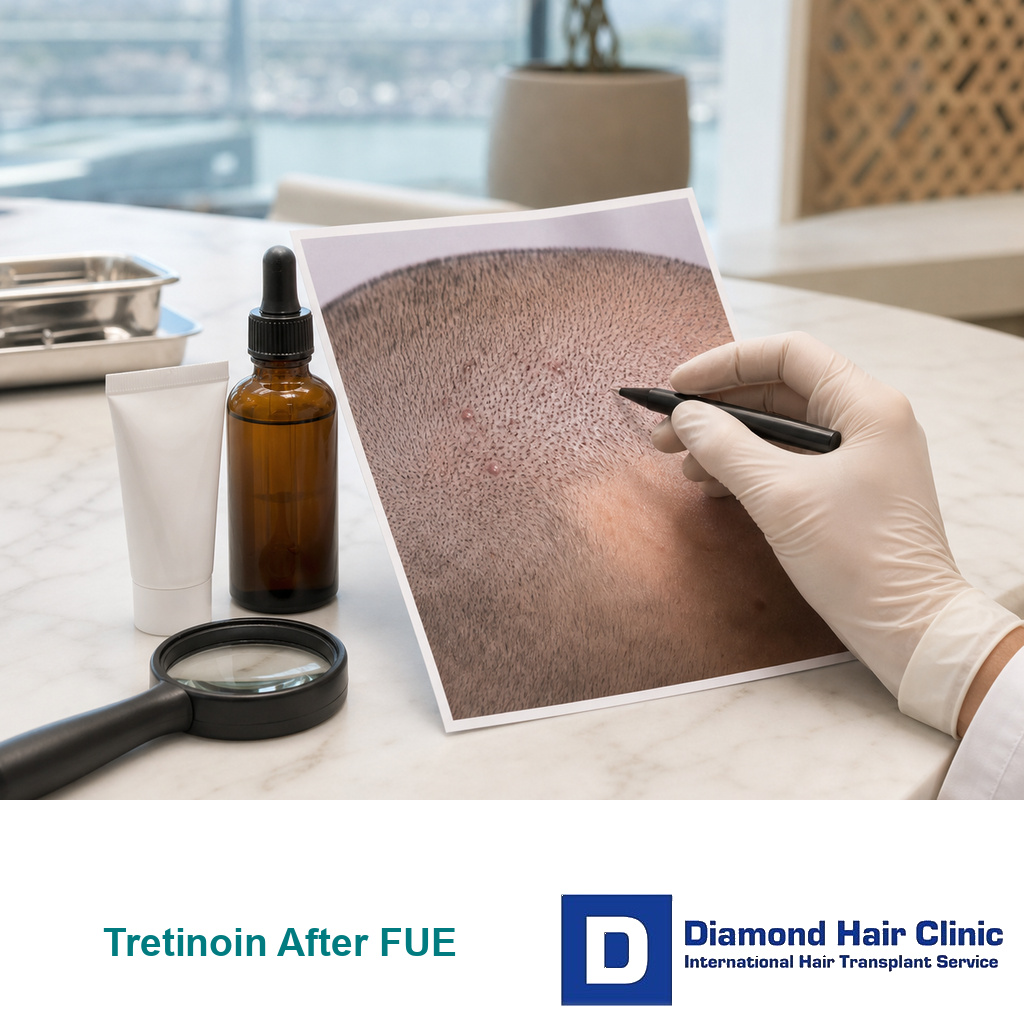
Tretinoin Restart Needs Calm Skin
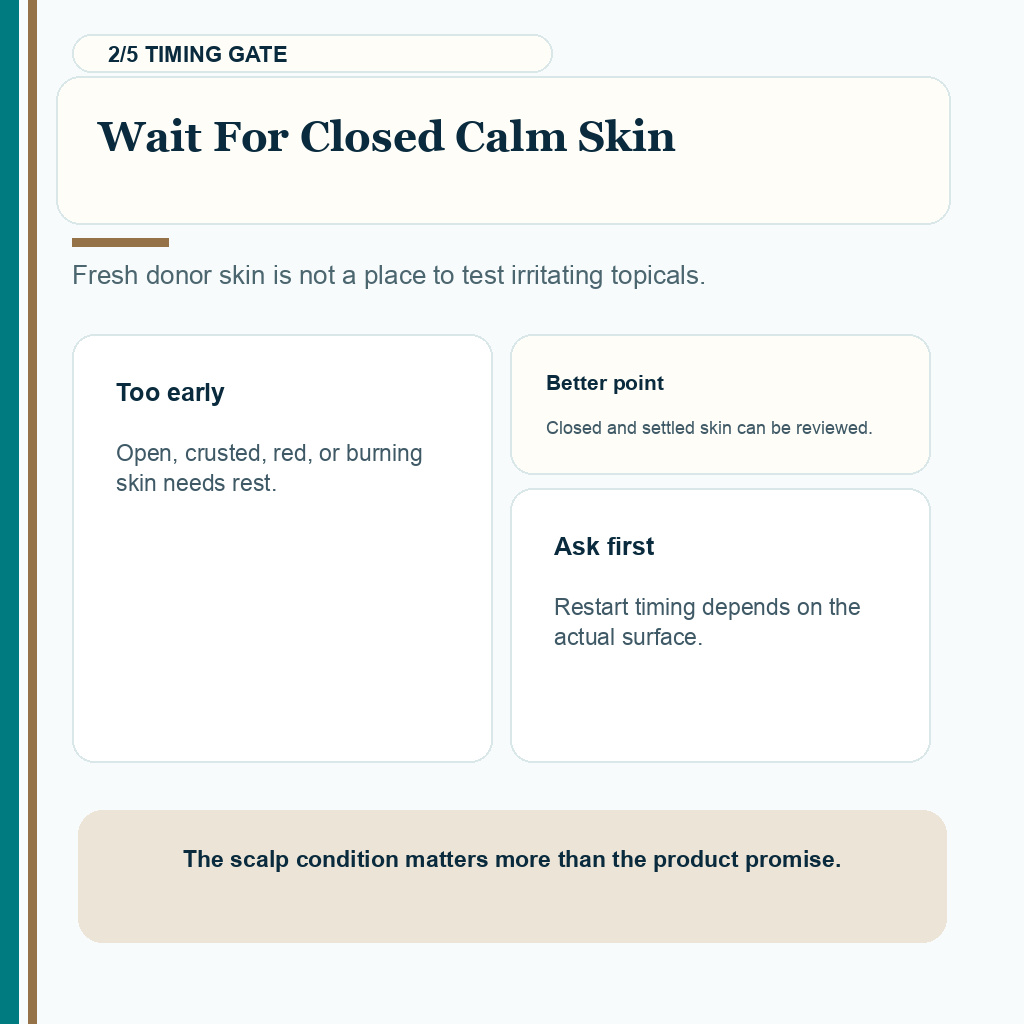
Do not apply tretinoin, retinol, adapalene, or a mixed retinoid formula to the donor or recipient area while the scalp is open, crusted, painful, sunburned, very red, infected, or easily irritated. Restart only when the surface is closed, the skin is settled, and the exact product has been reviewed for a clear reason.
Location, timing, and scalp irritation change the answer. Face use away from the transplanted scalp is not the same as rubbing prescription tretinoin, retinol, or a formula that contains both minoxidil and tretinoin across a healing FUE scalp. If the breakout is on the face but close to a healing hairline, I first separate the location in facial acne after FUE recovery.
If facial use is approved before scalp use, keep a clear margin below the healing hairline. Wash your hands after application, let the product dry, and prevent wet cream or gel from transferring through hair, a headband, or the pillowcase. Tolerating tretinoin on the cheek does not prove that the donor area or recipient area is ready for it.
A similar restart principle applies to research topicals after FUE, especially when the active ingredient, carrier, or concentration is uncertain.
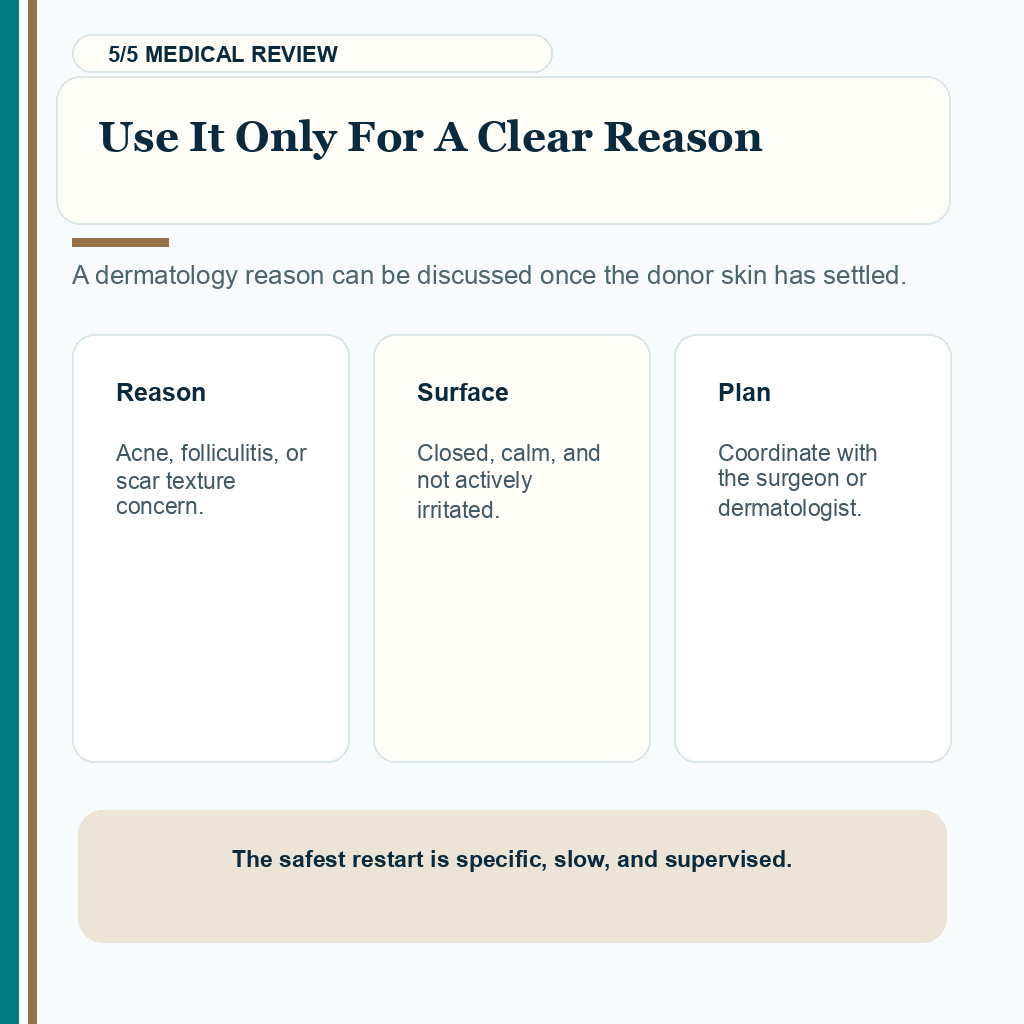
Later, topical tretinoin may have a place for the right dermatology reason, such as acne prone skin, blocked follicles, or a real ingrown hair tendency. It is not a shortcut for faster graft growth, and it is not a cream for guessing at every bump after surgery.
Do not turn an ingrown hair story from another body area into a scalp plan. The transplanted area needs the diagnosis, strength, and carrier checked before an active product touches it.
A product that can dry, peel, sting, or redden facial skin can also inflame a healing scalp when the timing, strength, and diagnosis are wrong.
The scalp must be healed enough for tretinoin
Before I think about the brand name, I look at the skin barrier. Tretinoin changes how skin cells turn over. That can be useful in dermatology, but early FUE skin is a recently operated surface, not normal facial skin.
The recipient area has thousands of tiny healing openings, and the donor area has many extraction points. Even when grafts are becoming secure, the outer barrier may still be dry, sensitive, or reactive.
If there are scabs, open points, strong burning, spreading redness, discharge, worsening pain, or tenderness that is increasing instead of settling, a retinoid is the wrong first step. Those signs need review, not another active product.
Closed skin can still be too sensitive for every active medicine. I separate cosmetic routine from medical recovery because the transplanted scalp has a different surface, different wounds, and a lower tolerance for avoidable inflammation than ordinary facial skin.
Other active products need the same clarity. With online hair loss topicals before FUE, the product list matters because many mixed formulas contain more than one active drug. After surgery, I need the same clarity before an active product touches the scalp.
Topical tretinoin is different from oral isotretinoin
Accutane, isotretinoin, tretinoin, retinol, retinoid creams, and acne treatment often get placed in one mental category. They are related, but they are not the same surgical decision.
Oral isotretinoin affects the whole body and has its own timing discussion. Topical tretinoin is applied to the skin surface, so the transplant question is more local. Will this irritate the healing donor or recipient area?
That difference matters. Someone taking oral isotretinoin may need a wider medical review before surgery, which is why isotretinoin and hair transplant timing has its own page. Someone asking about topical tretinoin after FUE may be dealing with bumps, oily skin, acne history, ingrown hairs, or a minoxidil combination.
The plan is different, but it still cannot be casual.
Strength and vehicle matter. Prescription tretinoin cream, tretinoin gel, OTC retinol, adapalene, exfoliating acids, and compounded scalp formulas are not interchangeable.
The label matters because irritation risk changes with the active ingredient, concentration, vehicle, frequency, and the skin area being treated. A gel used nightly on the face is a different question from a compounded scalp drop placed over recent grafts.
Before scalp use is considered, identify whether the product is a cream, gel, alcohol based solution, compounded minoxidil mix, or another active formula.
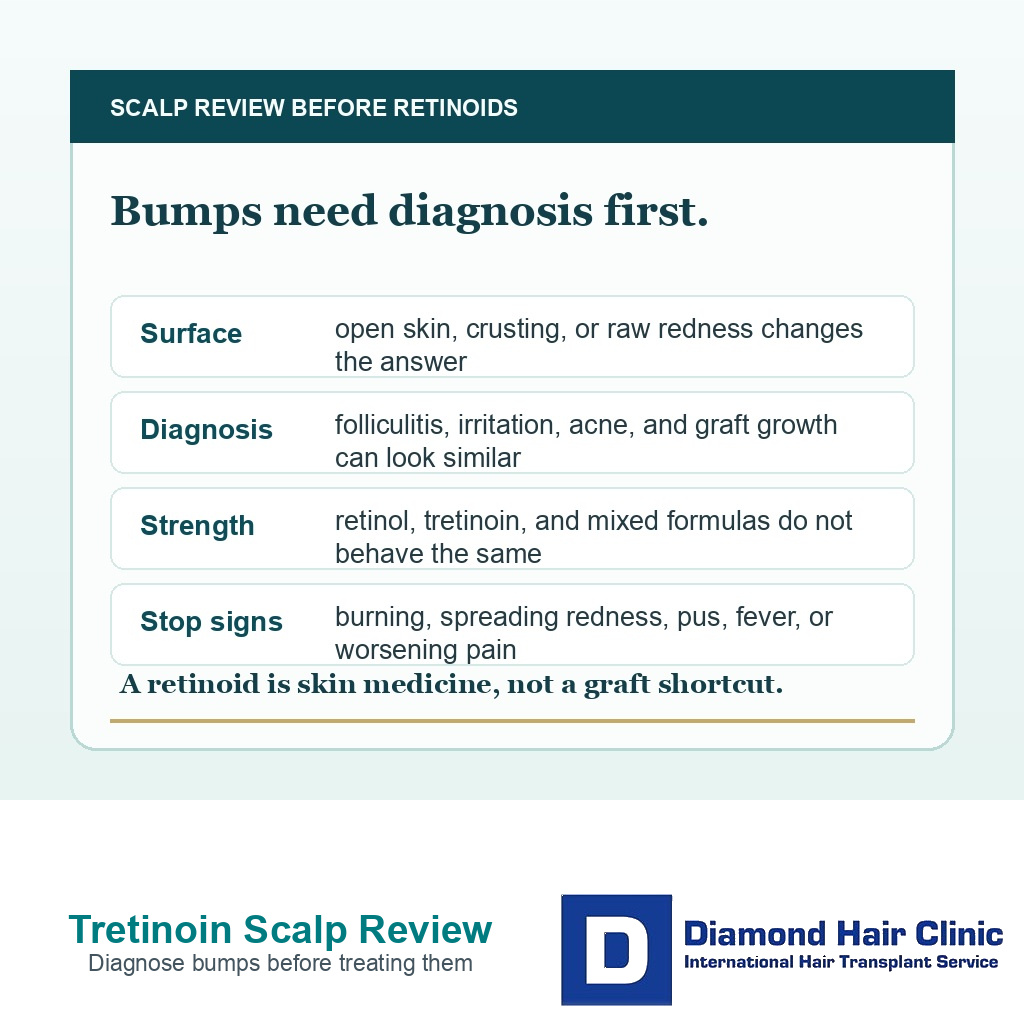
Small bumps after FUE need diagnosis before a drying or irritating topical medicine is added.
Ingrown hairs, pimples, and folliculitis are not the same diagnosis
Small bumps after FUE can come from several causes. A new hair may be trying to break through the surface. A follicle may be inflamed. There may be irritation from product residue, sweat, friction, scratching, shaving, or a heavy oil.
One quiet bump belongs in a different category from a pattern that is painful, hot, spreading, draining, or repeatedly returning. A quiet bump may only need observation or simple care. An active pattern needs diagnosis before a retinoid.
Sometimes there is folliculitis that needs a different treatment path. A retinoid may help certain acne or ingrown hair patterns later, but it is not a disinfectant and it is not the answer to every bump after surgery.
Photos help before product changes. I need to see the donor area and recipient area in normal light, because an extreme close image can make every pore look dramatic.
Also include the month after surgery, whether the bump is painful, whether it has pus, whether redness is spreading, whether fever or tenderness is present, and whether the same area was recently scratched, shaved, or covered with another topical.
If the concern is infection or folliculitis, folliculitis and hair transplant surgery is the closer match. If the concern is normal recovery redness, scabs, or small pimples, redness, scabs, and pimples after hair transplant gives the broader warning sign frame.
Tretinoin belongs only after the diagnosis is clear enough to make the scalp easier to manage, not harder to read.
Minoxidil absorption claims do not decide FUE timing
Some people hear that tretinoin can make minoxidil work better or improve absorption. That claim is not enough to add tretinoin to a fresh FUE scalp.
Even if a dermatologist uses this idea in a hair loss plan, the surgical question is different. Can this healing skin tolerate another active topical medicine without extra burning, peeling, redness, or confusion?
Minoxidil already has its own timing and shedding questions. I treat it mainly as a native hair support medicine, not a magic graft growth switch.
If minoxidil is part of the plan, minoxidil after a hair transplant and stopping minoxidil before surgery are more relevant than trying to force absorption with a retinoid.
More absorption is not a useful goal when the skin is healing. More burning, more redness, more peeling, and more uncertainty can make recovery harder to read.
If a formula contains both minoxidil and tretinoin, I need the exact concentration, vehicle, dose, and application area before it touches the transplanted scalp. Do not use tretinoin to force minoxidil through a healing barrier or to compensate for missed doses.
Tretinoin and FUE donor scars need realistic expectations
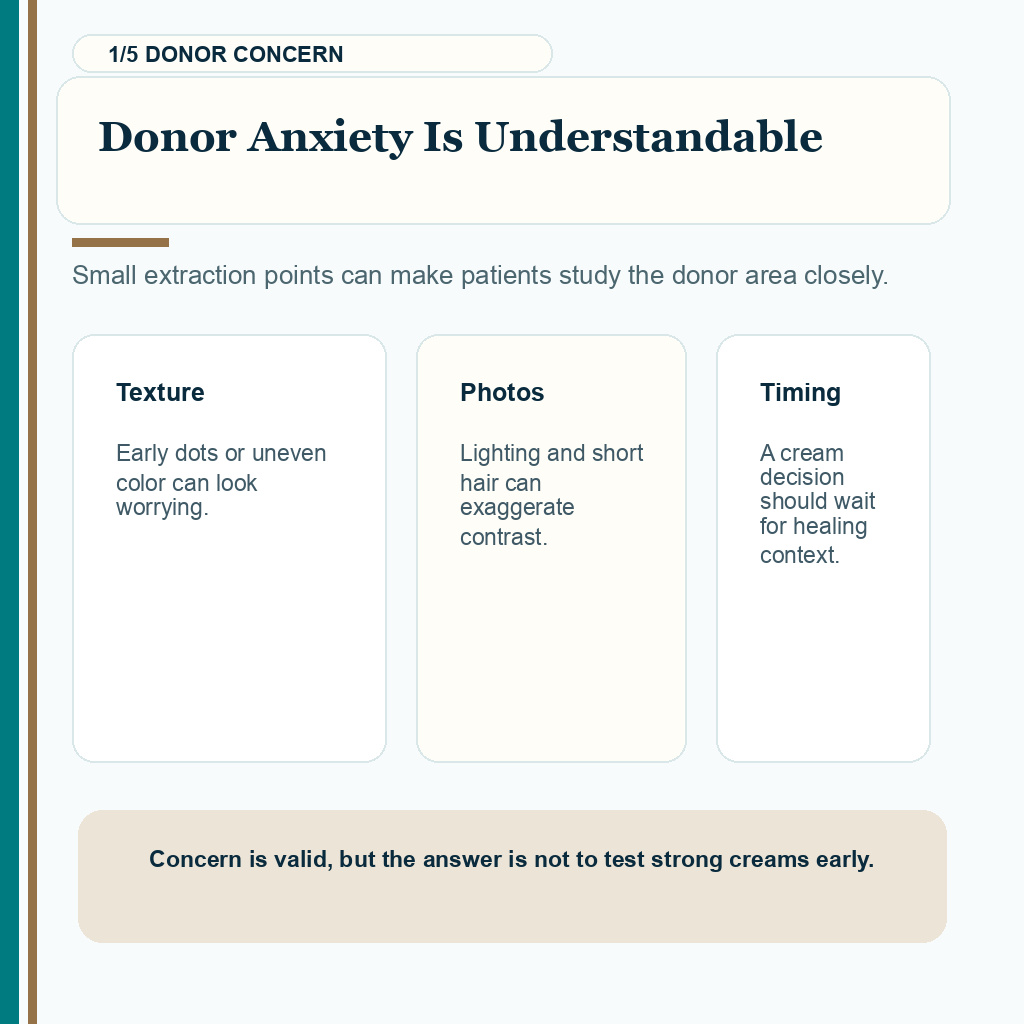
Donor area anxiety is understandable. FUE leaves many small extraction points, and people who wear short hair can become very focused on white dots, texture changes, or patchy healing.
But the donor area is not a place to test every cream that sounds promising online.
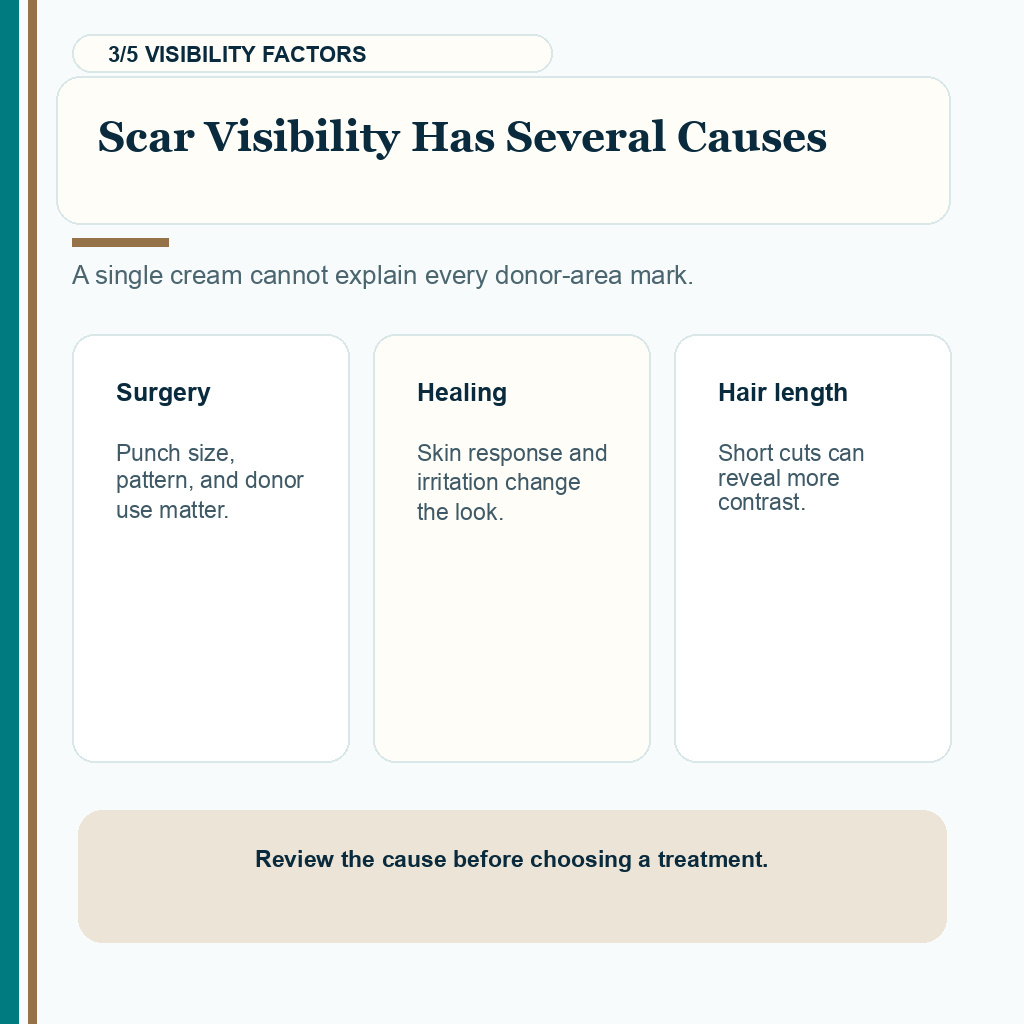
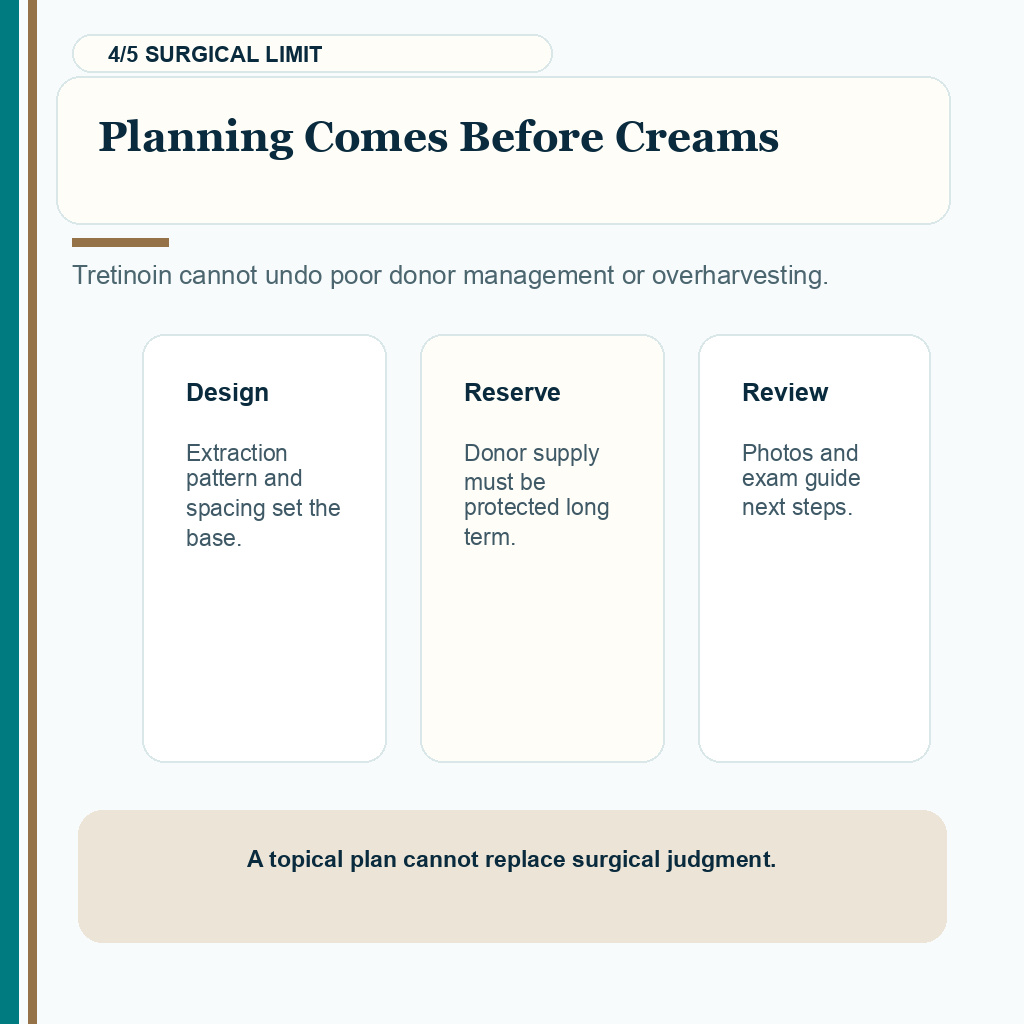
Scar visibility depends on punch size, extraction pattern, skin healing, density, contrast between hair and skin, haircut length, and whether the donor area was overused. Those decisions are planned during surgery, not rescued afterward by a strong topical.
FUE punch size and donor scarring explains the surgical side of that problem.
Topical tretinoin may be discussed for certain dermatology scar, acne, or photoaging contexts, but I do not present it as a proven way to erase FUE donor marks or regrow extracted donor follicles.
Donor hair removed in FUE does not grow back in the same donor spot, so a cream cannot restore grafts that have already been spent.
The 5 slides here separate a healed scalp from skin that is still too sensitive for tretinoin. Swipe sideways, use the arrows, or choose a number below the image.
If a dermatologist already prescribed tretinoin
If a dermatologist already prescribed tretinoin, I do not ignore that prescription. I check why it was prescribed, where it is applied, how often it is used, what strength and vehicle it is, and whether the same skin area was involved in the transplant.
Tretinoin used on the face for acne is different from tretinoin rubbed into a newly transplanted scalp. If the dermatologist and transplant surgeon are not the same doctor, both sides need the same timeline and scalp photos.
Bring or send the actual product name and concentration. Include the rest of the skin routine as well, such as benzoyl peroxide, acids, medicated cleansers, steroid creams, antifungal shampoos, antibiotic gels, minoxidil, topical finasteride, oils, and cosmetic camouflage products.
Many irritation problems are not caused by one product alone. They come from stacking too many active products on skin that is not ready, especially when several were restarted in the same week.
If medication history is already complex, I treat the retinoid as part of the broader medication before a hair transplant conversation. A topical medicine can still matter, especially when it is applied to the scalp that will be operated on or has recently been operated on.
Products to avoid early after FUE
In the early healing phase, keep the scalp routine limited. That means no aggressive exfoliation, no scrubs, no acids, no retinoid experiments, no strong cosmetic peels, no strong drying products with alcohol, and no mixed online formula unless it has been reviewed.
If sun exposure after a hair transplant has already made the scalp red or burned, tretinoin should wait. Adding a retinoid to sunburned or chemically irritated skin only makes the clinical picture harder to read.
The scalp needs washing, protection from trauma, and clear instructions more than it needs a complex skin routine.
It is also easy to misread irritation as progress. Peeling does not prove healing. Redness does not prove circulation. Burning does not prove the product is working.
If the skin becomes angry after a new topical, the useful step is to stop the irritant and ask for review, not to add another product to settle the first reaction.
When someone is also using topical finasteride before or after hair transplant surgery, the plan needs even more clarity. Two or three topical medicines can make it difficult to know which one caused irritation, shedding, residue, or redness.
One active topical at a time is easier to judge than a stack of products restarted together.
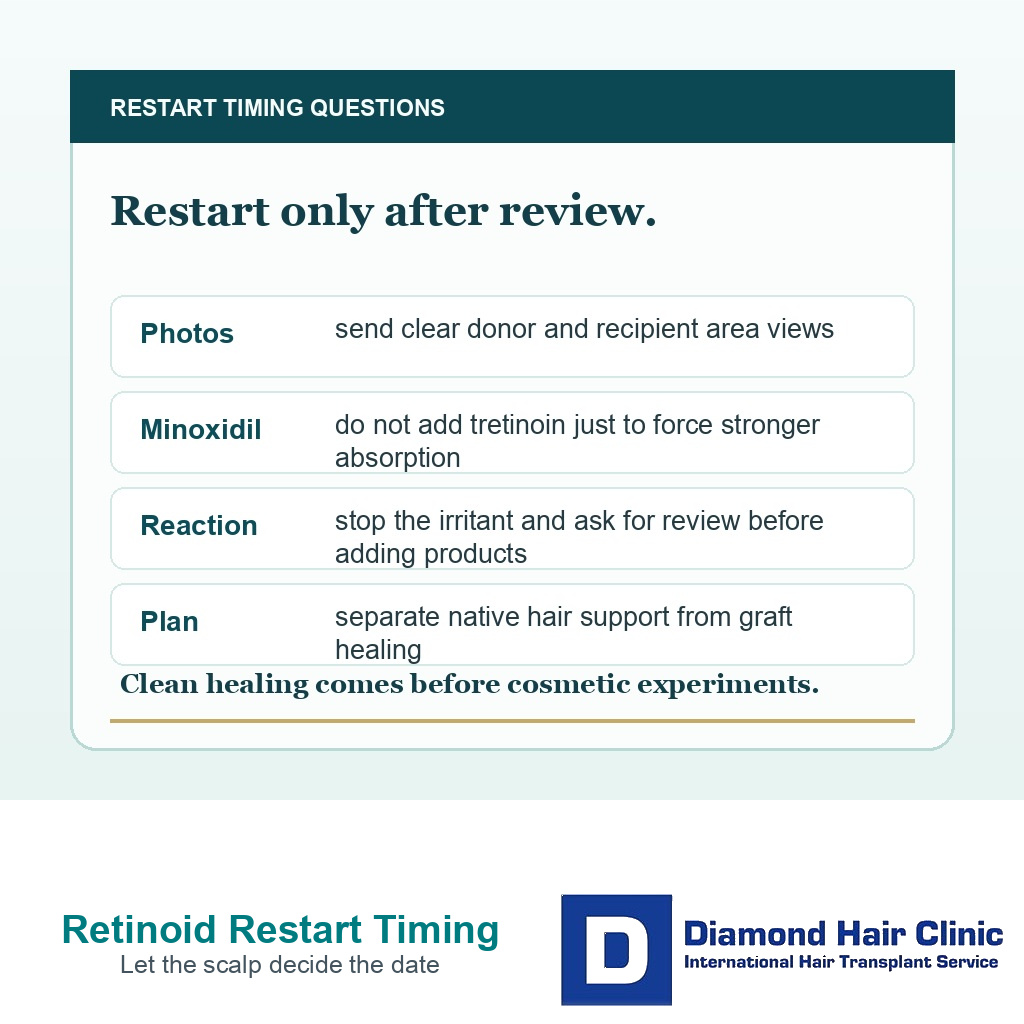
The timing depends on the scalp surface, product strength, and reason for using the retinoid.
Review these points before restarting a retinoid
Before restarting tretinoin or retinol on the scalp, the surface should be healed with no open wounds, no active infection, no heavy crusting, no spreading redness, no unusual tenderness, and no sunburned or chemically irritated skin.
I also consider the month after surgery, the product strength, the planned frequency, and whether minoxidil or another active topical is being used on the same skin. A few bumps during early growth are not the same as a long standing acne problem.
Photos help if they are consistent. Send front, temples, hairline, crown if relevant, donor area, and close photos of the exact bumps in normal light before adding a new cream. Add the product name, strength, how often it was used, when it was last applied, and whether minoxidil or another topical was used on the same day.
I judge the restart from what the scalp is showing. If the scalp looks settled and the reason is dermatologic, restarting may be possible in a limited area with close monitoring.
One change at a time helps us recognize irritation early. If the scalp is reactive, infected, crusted, sunburned, chemically irritated, or unclear, waiting protects the transplant more than adding a stronger product.
Tretinoin with other hair loss topicals
Topical tretinoin is not the only product people ask about. Minoxidil, topical finasteride, copper peptides, caffeine serums, growth factor products, creams meant to reduce inflammation, and newer compounded formulas all appear in online routines.
Curiosity is understandable, but starting several active products at once makes the scalp less reliable to assess.
For experimental scar or donor area claims, I use careful review before comparing it with topical metformin after FUE donor scar claims. Interesting research does not mean a healing FUE scalp should become a testing ground.
The donor and recipient areas need a controlled recovery environment.
The best routine is often more limited than the internet makes it sound. One product with a clear reason is easier to monitor than a stack of creams, drops, and serums.
When the goal is native hair support, we can discuss medication. When the goal is healing skin, the surface first needs to settle.
Before restarting tretinoin
If you used tretinoin before surgery, share that with the clinic before the operation. If you want to restart it after FUE, send photos and the exact product details first.
If you are asking because of bumps, pimples, or ingrown hairs, do not assume the diagnosis from a mirror photo or an online routine. Treatment depends on whether the bump pattern is folliculitis, irritation, acne, normal growth, infection, or product stacking.
I am not against topical tretinoin when it has a real dermatology reason and the scalp is ready. I am against using it early, blindly, or as a shortcut for faster graft growth.
The decision is practical. Heal the surface first, confirm the reason, and restart one controlled product only if it makes the scalp easier to manage. If tretinoin mainly adds burning, redness, peeling, or confusion, waiting is the better decision.
Do not put tretinoin or retinol on a healing FUE scalp until the surface is settled, the reason is clear, and the product has been reviewed.
The transplanted grafts, the donor area, and the native hair plan need a decision based on skin condition, product details, and timing, not an online routine copied too early.
Read this review excerpt
He was very thorough in every little detail and I never felt pressure to do anything I wasn’t sure of.