



Facial Acne Near the Hairline Needs Location Review
Facial acne after a hair transplant usually does not mean the grafts have failed. The first thing I ask is where the spots are and how they are behaving. A small cheek or jawline breakout is usually a skin care question, not a graft survival question.
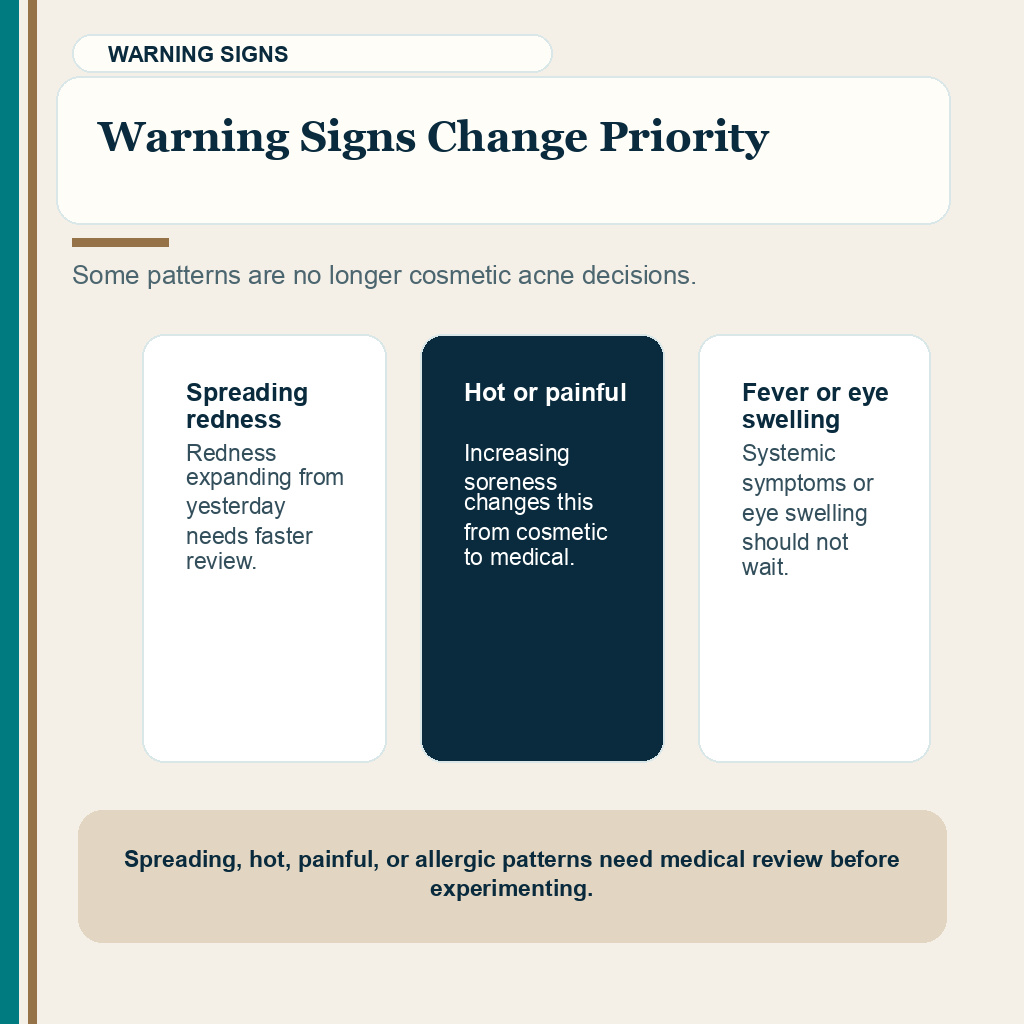
I become more cautious when bumps sit inside the transplanted hairline, appear in the donor area, spread quickly, feel hot or painful, produce pus, come with fever, rash, swelling, or involve the eyes.
Not every spot has the same meaning for graft safety. A cheek breakout, forehead irritation near the hairline, donor or recipient area folliculitis, allergy, infection, and acne related to medication can look similar in a close photo. They are not handled the same way.
Keep the routine simple. Keep ordinary face products away from healing graft skin, do not squeeze bumps near the scalp, and ask for review before starting strong creams, tablets, or home remedies. The wrong acne treatment can irritate the recipient area even when the original breakout was harmless.
Location and warning sign review
Map the breakout before choosing acne treatment
Before choosing any cream, I place the spot on the map. A cheek breakout away from grafts is not the same as a pustule around an implanted hair, and the same cream that is reasonable on the cheek can irritate a healing hairline if it spreads upward.
Face acne check
Mild cheek or jaw spots are usually a skin issue
Cheek, jaw, chest, or back spots that are shallow, stable, not painful, and away from the transplanted hairline.
When it started, whether it is improving, and which cleanser, sunscreen, pillow, mask, or travel factor changed.
Check what touched the skin during sleep before blaming the grafts. Pillowcase residue, sunscreen, hair spray, sweat, or mask friction can make a face breakout worse without meaning the transplanted area is failing.
You are tempted to squeeze, scrub, or let acne products run upward toward healing graft skin.
Ordinary face acne does not equal graft failure, but treatment still needs to stay away from the recipient area.
For photo review, include one wider face and hairline photo before the close view so the spot location is clear. It shows whether the spot is away from the transplanted border or sitting inside the area that needs careful graft handling.
Facial acne rarely means the grafts failed
When acne appears soon after FUE, the timing makes it feel connected to the transplant. I separate timing from anatomy. A cheek pimple is not sitting in the recipient area, and it does not tell me that implanted grafts have failed.
A face breakout is read as a skin signal first, not as automatic graft loss. I still assess the scalp separately by redness, swelling, pain, discharge, crust behavior, rubbing, scratching, and infection risk.
That distinction matters because panic can lead to the wrong treatment. Some acne products are too irritating near a healing hairline. Scrubbing the face harder can accidentally disturb the recipient area. Starting antibiotic ointment, retinoids, or acids before the diagnosis is clear can make the pattern harder to read.
Timing helps, but it does not diagnose the spot by itself. A few cheek pimples in the first days often point to changed washing, sweat, travel, pillows, masks, or products. Bumps around grafts in the first weeks or during early regrowth need the donor or recipient area reviewed. A new forehead breakout months later may be more of a dermatology acne question unless it is painful, spreading, or close to surgical skin.
Breakout location changes the meaning
Forehead acne can be caused by sweat, ointment transfer, hat pressure, sleeping position, hairline crusts, or product residue. Cheek and jawline acne may reflect normal acne tendency, travel stress, shaving changes, pillow contact, or a medication change. Chest and back acne raise different questions about sweat, hormones, gym return, anabolic steroid exposure, or a wider acne flare.
Spots directly inside the recipient area need more caution. A tiny whitehead around a graft can be minor, but it should not be squeezed. Those bumps belong with redness, scabs, and pimples after a hair transplant before they belong with a normal facial acne routine.
Donor area pustules need the same kind of separation. They may behave more like blocked follicles, irritation, or folliculitis after a hair transplant than ordinary facial acne. If they are in the donor zone, I need the exact location, pain, warmth, discharge, and timing before treating them as face acne.
At home, start with a simple map. Is it on the cheek, the forehead skin below the hairline, the transplanted hairline, the donor area, the neck, the chest, or the back? The answer changes the next step.

Sweat, oil, and occlusion can trigger facial breakouts
The first week after surgery can change ordinary skin behavior. You may sleep differently, avoid your normal washing routine, wear travel clothing, stay in hotel rooms, use pillows differently, or avoid washing the face confidently because you are afraid to touch the scalp. Oil and sweat can build up more than usual.
Occlusion is another simple cause. A loose cap, headband edge, face mask, travel pillow, or towel can trap heat and oil against the forehead or cheeks. This does not mean you did something wrong. It means recovery routines can accidentally create acne conditions.
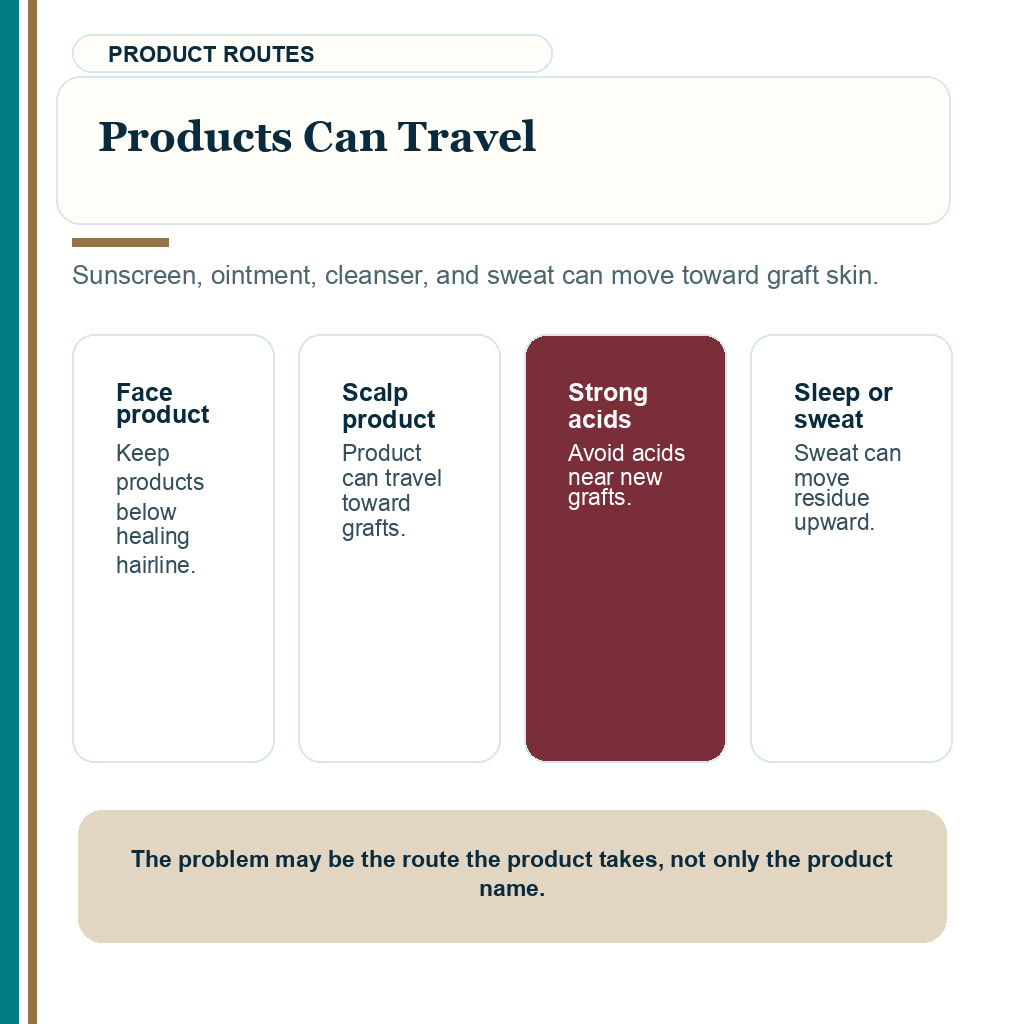
Products can also travel farther than intended. Moisturizer, sunscreen, aloe, antibiotic ointment after a hair transplant, styling product, or scalp spray can migrate to the forehead. If a product reaches healing skin near the hairline, irritation can look like acne or folliculitis.
Gentle face hygiene is different from aggressive scrubbing. Clean the face without dragging cleanser, towel pressure, or acne treatment into the transplanted hairline.
Medication or hormones can change the cause
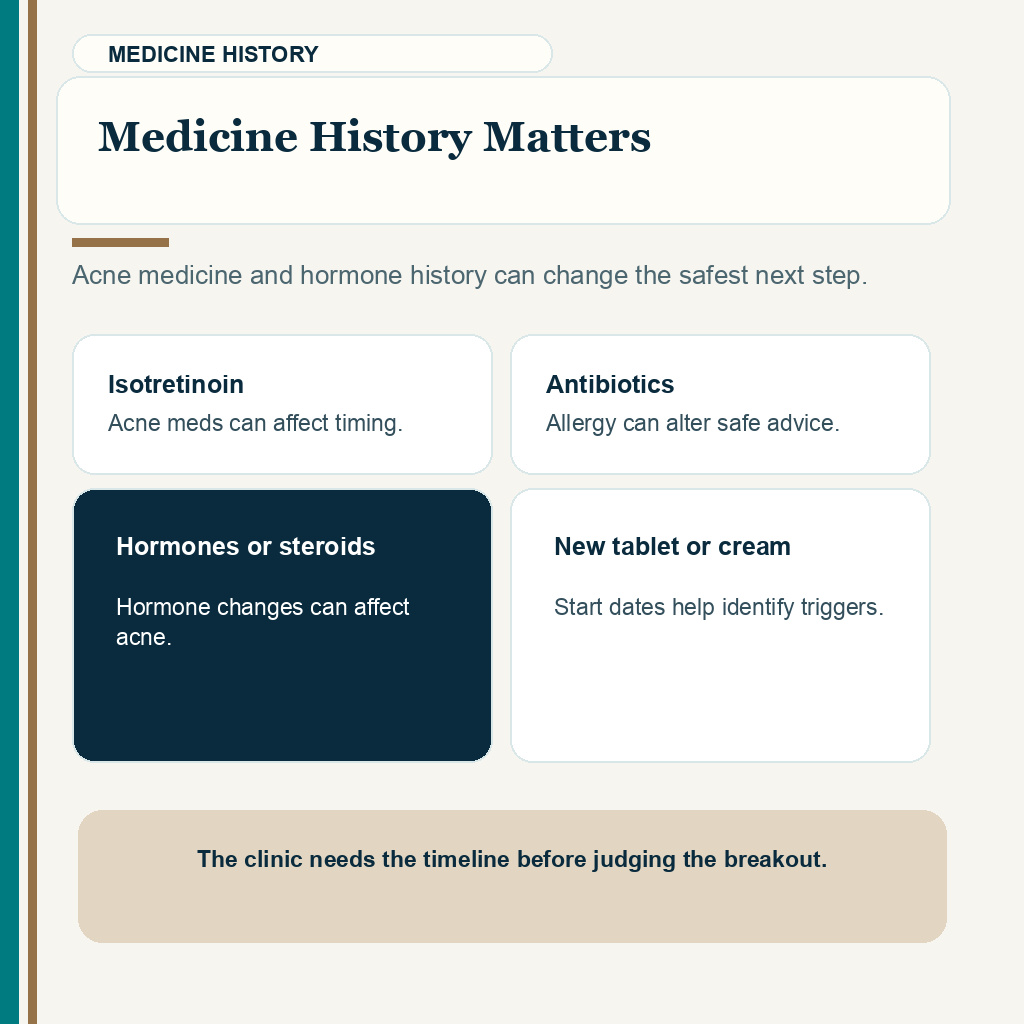
Start with what changed recently. Some patients receive short courses of medicine around surgery. Others already use acne treatment, hormone treatment, bodybuilding drugs, medicines that affect the immune system, supplements, or hair loss products. A photo without this timeline can make me look at the wrong cause.
Do not blame every pimple on transplant medicine, and do not hide medication because it feels unrelated. Steroid exposure, anabolic steroid use after a hair transplant, testosterone changes, paused acne treatment, antibiotics, supplements, and topical products can all change what I am looking at.
If you have a known acne history, tell the clinic what normally works for you and where you usually apply it. Benzoyl peroxide, salicylic acid, retinoids, topical antibiotics, oral antibiotics, isotretinoin, and prescription creams are not interchangeable during early FUE healing.
I am not only asking whether this is acne. I am asking whether it behaves like ordinary acne, acne related to medication, irritation, allergy, folliculitis, or infection, and whether the treatment could touch healing graft skin.
Warning signs need clinic review
Spreading, hot, painful, draining, or symptoms near the eyes are not a cosmetic acne question. Contact the clinic if redness is spreading, the skin feels hot, pain is increasing, pus is present, swelling is worsening, fever appears, or the bumps are close to the eyes. A rash with itching, hives, lip swelling, breathing symptoms, or a widespread skin reaction needs a different level of review from ordinary acne.
Seek urgent local medical care, not only a clinic message, if there is trouble breathing, lip or throat swelling, rapidly spreading facial swelling, fever with worsening redness, eye pain, vision change, or swelling around the eye. Update the clinic when you are safe.
The difference between acne and infection is sometimes unclear from one close photo. A pimple can have a small white center. A pattern closer to infection after a hair transplant is usually more painful, hot, swollen, spreading, or connected with fever and feeling unwell. Symptom direction matters more than the label you put on one bump.
Allergy can also imitate a breakout. Itching, scattered rash, sudden swelling, or a reaction after a new tablet or product belongs with allergy signs during hair transplant recovery, not with ordinary acne treatment.
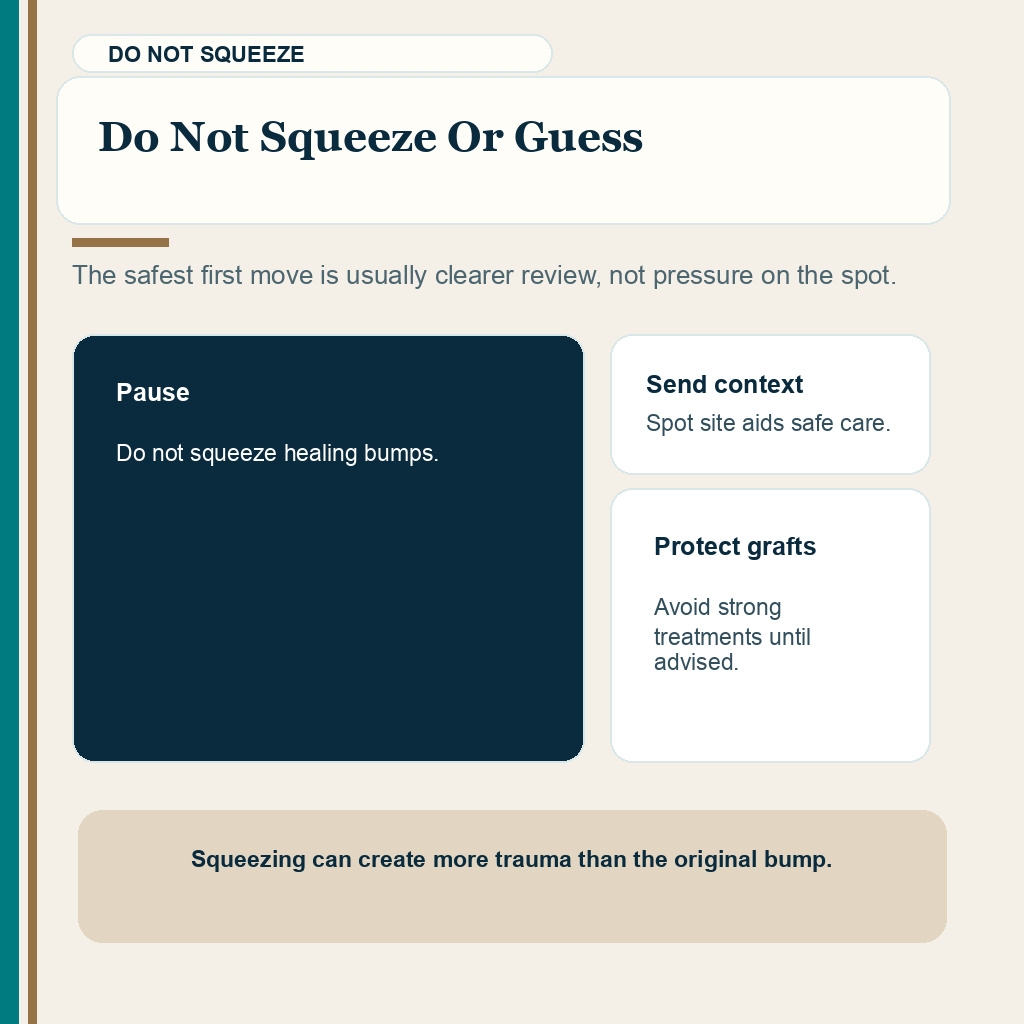
Do not squeeze, lance, pick, or use warm compresses on bumps near grafts unless your clinic has specifically told you to. Mechanical trauma can become a bigger problem than the original spot.
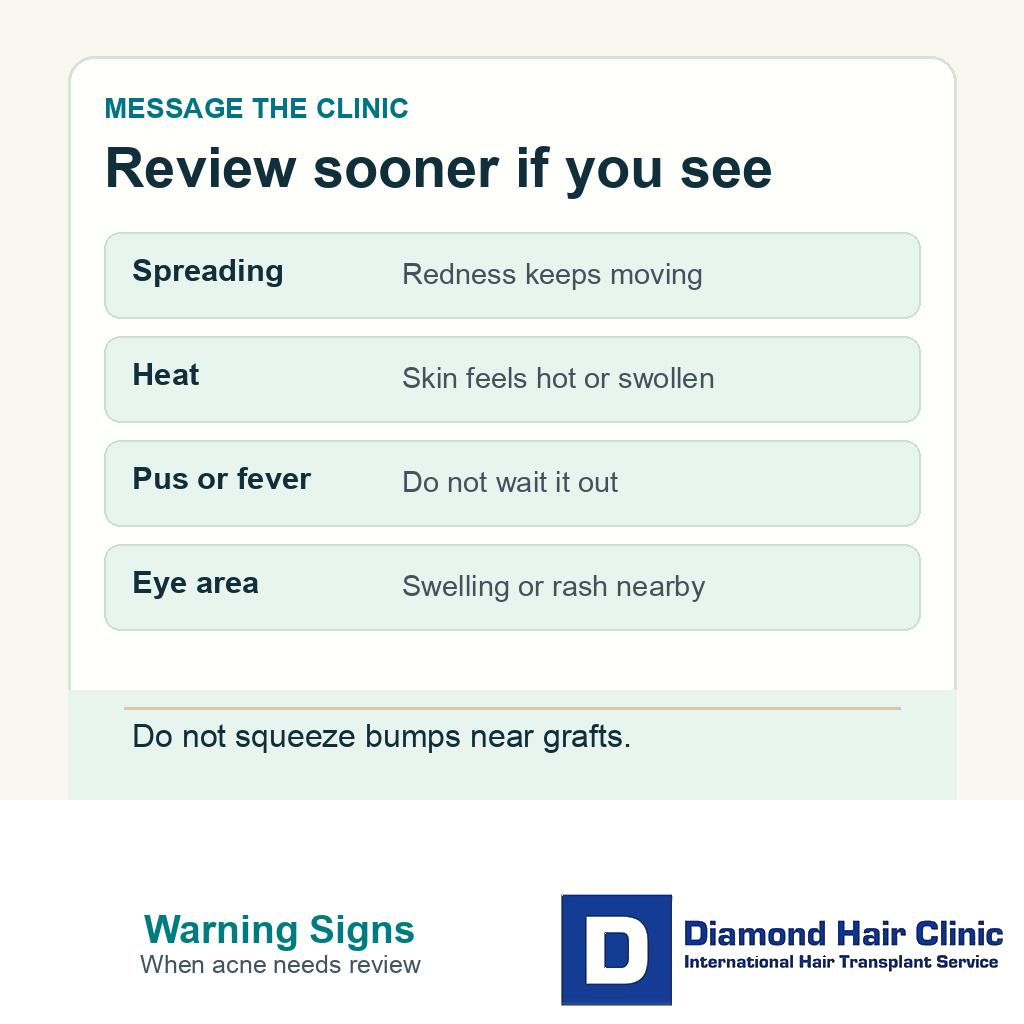
Face acne and graft area bumps need different rules
The cheek can usually tolerate more than a fresh recipient area. A cleanser or spot treatment that has been safe for years may sting, dry, or irritate the transplanted hairline if it spreads upward.
If the breakout is clearly on the cheek or jaw, leave a clean buffer between the product and the grafts, wash your hands, and avoid wiping upward toward the scalp. Forehead spots need more caution because sweat, gravity, and sleep can move product toward the hairline.
For spots clearly below the hairline, keep the plan boring. Use a gentle cleanser, clean hands, a clean pillowcase, and a simple moisturizer or sunscreen if needed. Leave a clear gap below the transplanted border so benzoyl peroxide, acids, retinoids, alcohol toners, or prescription creams do not drift into healing scalp skin.
Retinoids, acids, benzoyl peroxide, exfoliating scrubs, strong alcohol toners, and peeling treatments should not be improvised close to healing grafts. Tretinoin after a hair transplant needs a settled skin surface, a clear reason, and clinic approval.
If the bumps are inside a beard recipient area and the cheek surface looks pebbled rather than like ordinary acne, I review it as a beard transplant cobblestoning concern, not as a normal face breakout.
Makeup timing needs similar caution. Covering redness with makeup too early can trap product near crusts or healing skin. If you are planning concealer, foundation, or powder around the hairline, check makeup timing after a hair transplant before treating the scalp like normal skin.
Isotretinoin needs a separate conversation
Do not start, stop, or restart isotretinoin around FUE without coordinated medical advice. It is not the same as a mild face wash. It can affect dryness, irritation, wound healing discussions, blood tests, liver enzymes, triglycerides, mood history, pregnancy prevention rules, and timing decisions.
If acne becomes severe after surgery, restarting the strongest medicine immediately may be the wrong move. The surgeon and the doctor prescribing acne treatment need the surgery timing, healing status, dose, and reason for use. Isotretinoin and hair transplant timing needs its own decision instead of an improvised restart.
Oral antibiotics for acne also need context. Some are reasonable in the right situation, but allergies, stomach problems, sun sensitivity, drug interactions, and current post-operative medication plans matter. A clinic cannot judge that safely from a close photo without the medication list.
For strong acne medication, tell the clinic before starting, stopping, or restarting it around FUE, especially if the scalp is still crusted, dry, itchy, or inflamed.
Useful photos show location and timing
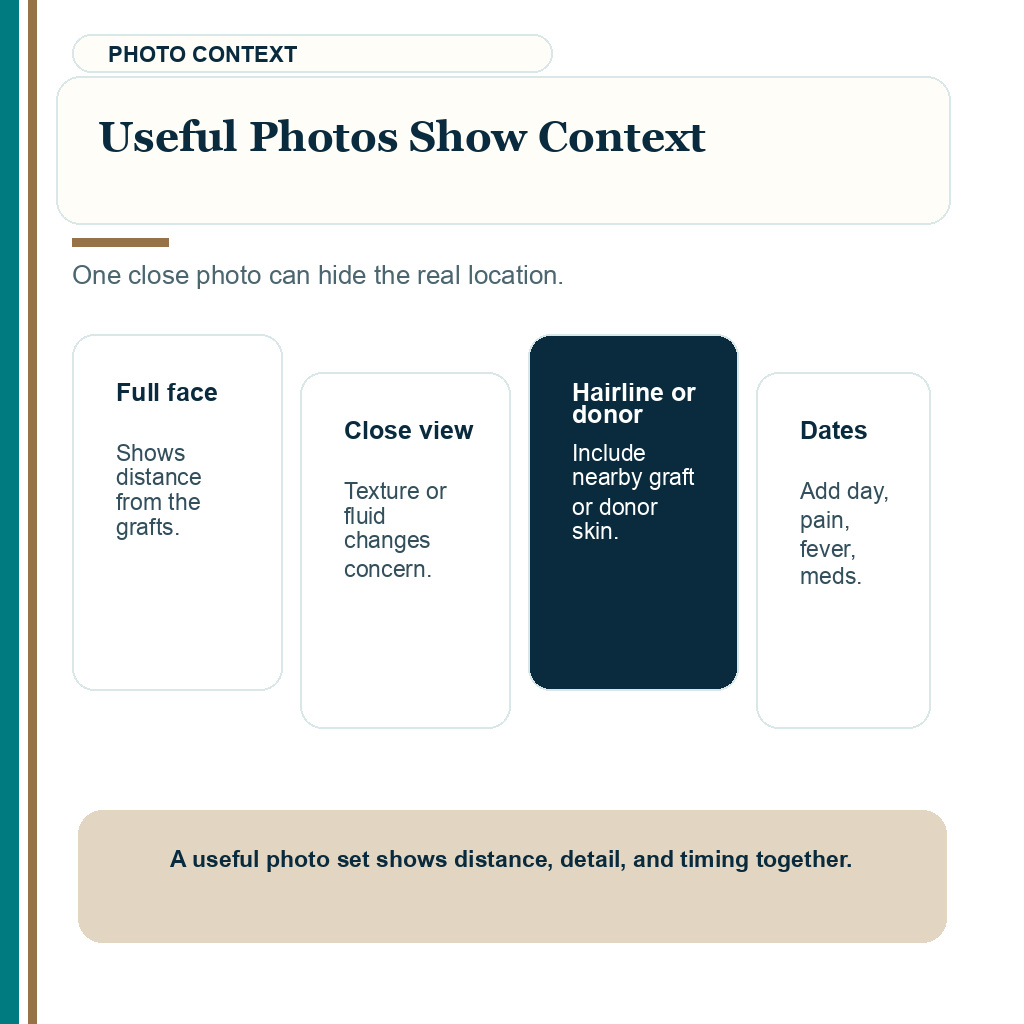
When you send photos, do not send only one extreme close photo. A close photo can exaggerate redness and remove the location from view. Send one clear full face photo, one closer photo of the breakout, and a hairline or scalp photo if the bumps are near the transplanted area. Use steady light and avoid filters.
Include timing. Say which day after surgery it is, when the spots started, whether pain or itching is present, whether the area is hot, whether there is fluid, and what products or medicines touched the skin. Mention fever, swelling, eye symptoms, or swollen lymph nodes if present.
This prevents two mistakes. It reduces panic over a few ordinary facial pimples, and it reduces the chance of missing infection, allergy, or folliculitis. A surgeon cannot feel heat through a photograph, so the symptom description matters.
If the acne is improving, say that. If it is worsening day by day, say that too. Direction matters more than a dramatic photograph.
The carousel below follows the same review path I use for face spots, hairline proximity, donor or graft area bumps, warning signs, product transfer, medicine history, useful photos, and the rule not to squeeze or guess.
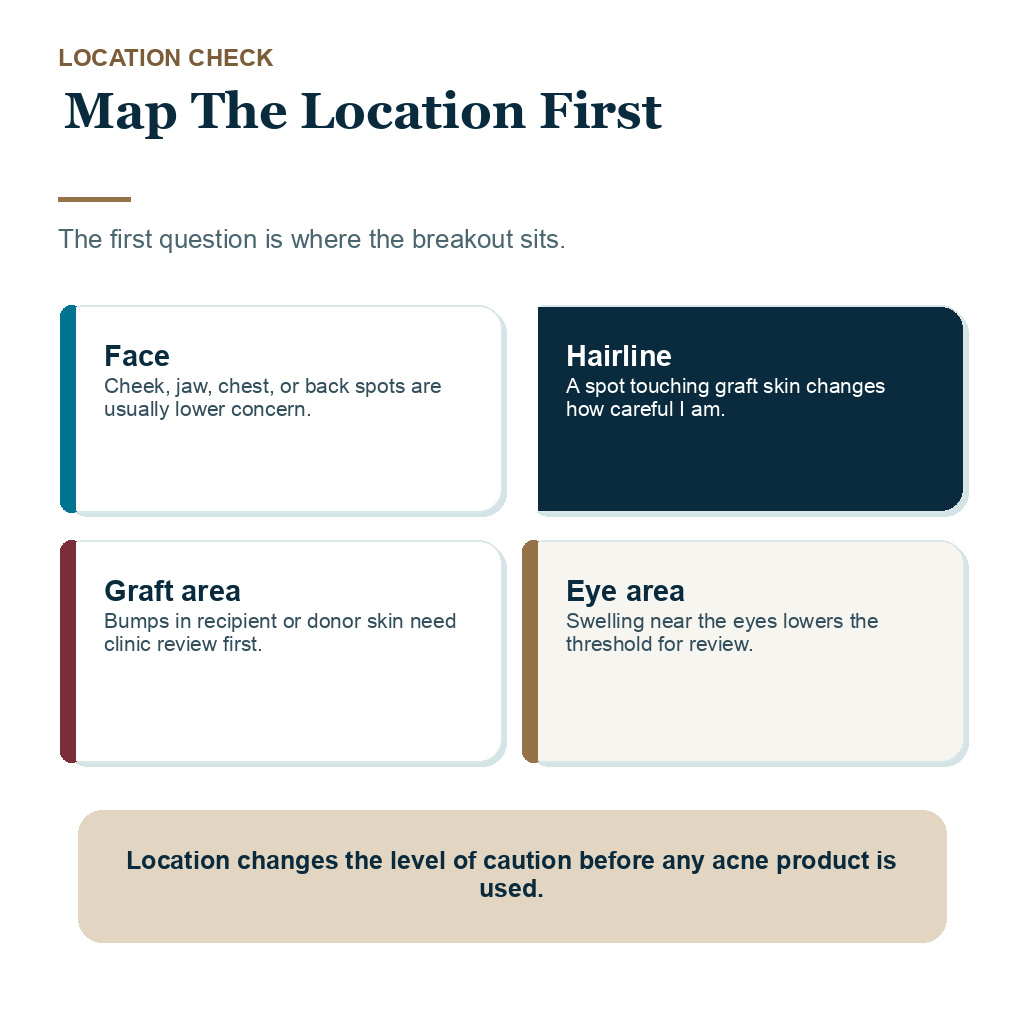
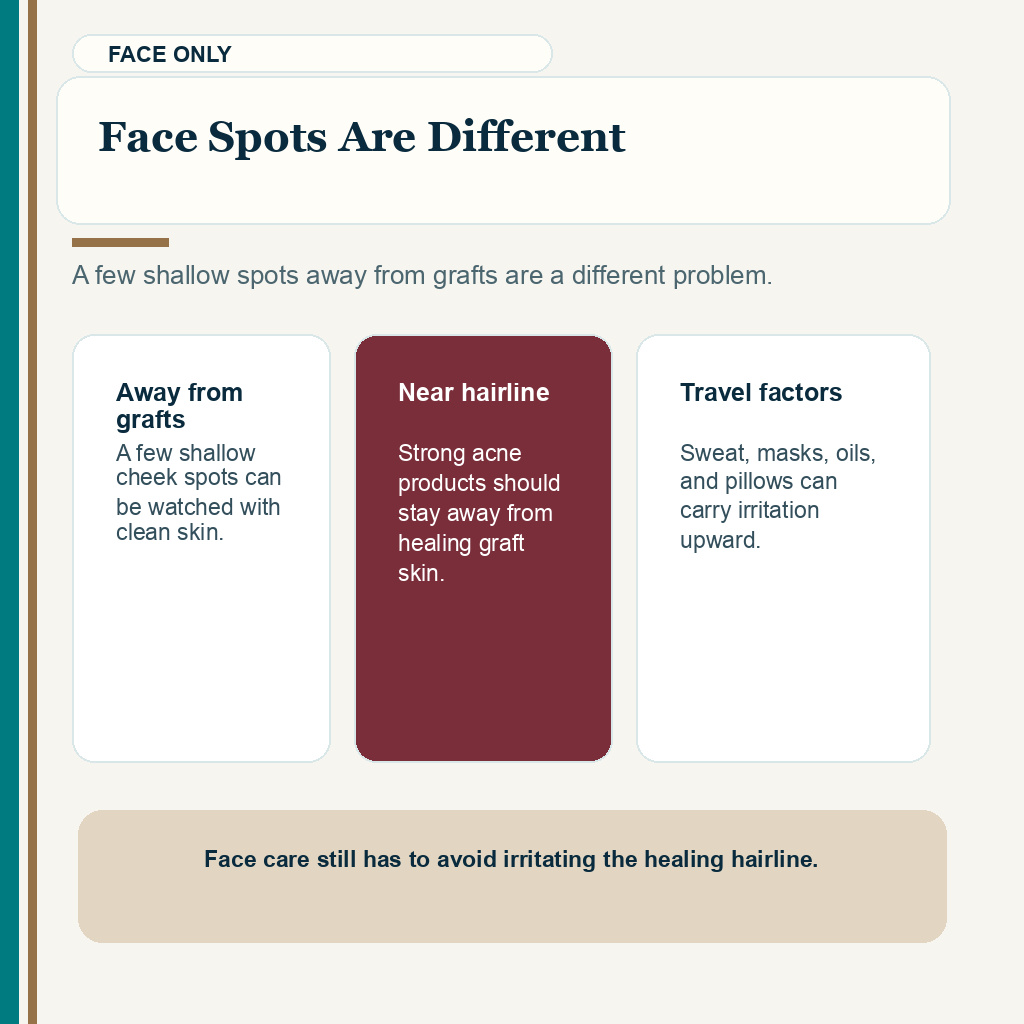
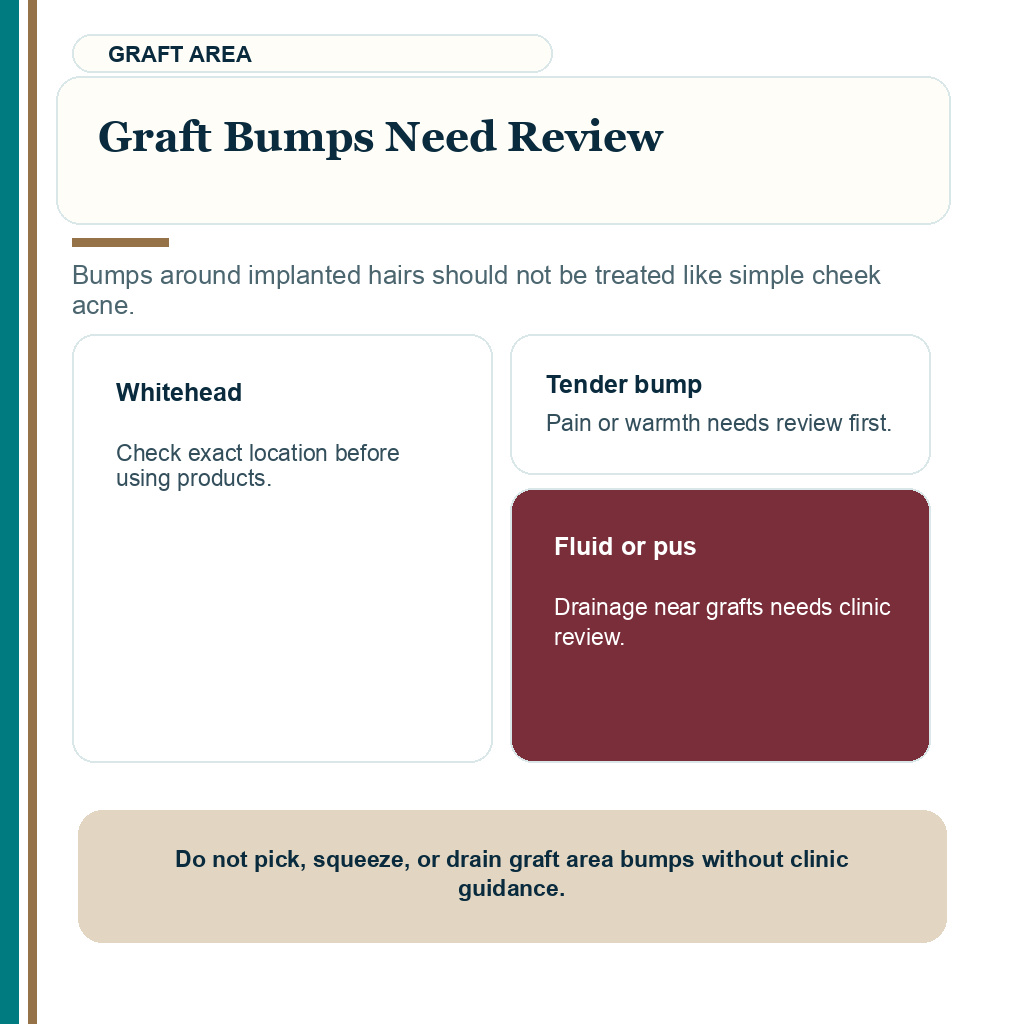
A wider breakout is a different question
Chest or back acne does not usually affect graft survival. The question changes when the breakout is widespread, very itchy, paired with fever or swelling, spreading redness, or starts after a new medicine. That is no longer a simple facial acne question. Send the clinic the timing, symptoms, body areas involved, and medication list.
A few spots away from the grafts do not mean the result is ruined. What matters is whether the pattern is isolated, stable, improving, or part of a wider skin reaction.
Location changes the acne question
A small breakout away from the grafts is different from painful pustules in the recipient area, hot spreading redness, fever, allergy symptoms, or swelling near the eyes.
Keep strong acne products away from the healing hairline unless the clinic has cleared them. Do not squeeze spots to prove what they are, and do not start another person’s cream or tablet near fresh grafts.
When the breakout is mild and separate from the grafted skin, simple hygiene and observation may be enough. When location, pain, heat, discharge, or swelling changes, send photos and get review before treating it yourself.
Read this review excerpt
We also had a levelled conversation about my hairline and results I could expect based on my donor density area.