


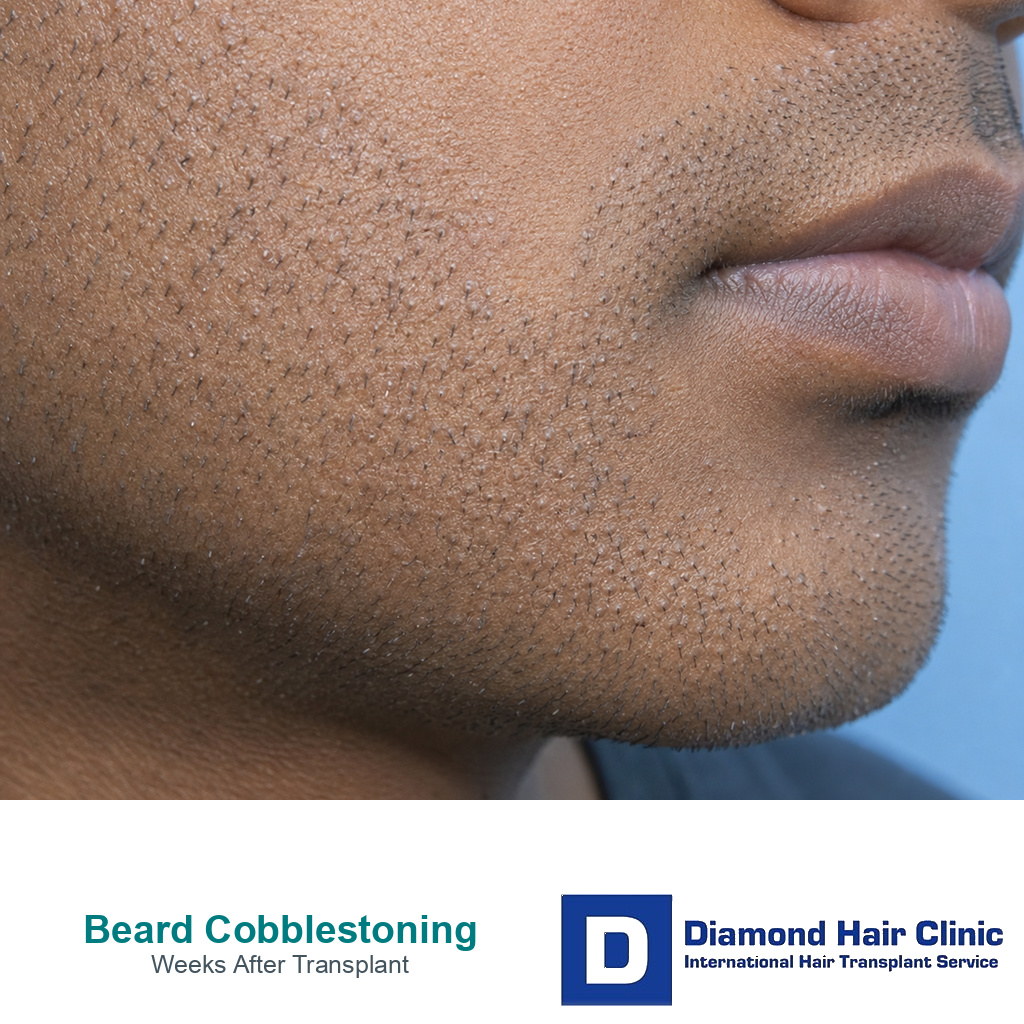
Beard Transplant Cobblestoning in the Weeks After Surgery
In the weeks after surgery, raised bumps after a beard transplant can still come from swelling, crusts, keratin around short hairs, shedding, ingrown hairs, shaving irritation, or folliculitis. They should not be dismissed if the cheek surface looks pebbled, firm, or progressively uneven. A close photo alone cannot prove true cobblestoning. The right step now is a surgeon review with clear photos, symptoms, shaving history, product history, and timing, not home laser treatment, squeezing, close shaving, or panic extraction.
I take this concern seriously because beard recipient skin is exposed. A small texture change on the cheek is more visible than the same change would be inside scalp hair. The useful review starts with the pattern today, whether infection or irritation is present, and whether the texture is improving, stable, or becoming more fixed over time.
The first several weeks can be misleading
The first several weeks can sit in an uncomfortable middle zone. The grafts are usually secure, many transplanted hairs may be shedding, and the skin can still be reacting to tiny openings in the recipient area, shaving, washing, friction, or ingrown hairs. A soft bump with crust is different from a pustule that is red, warm, painful, or draining. Both are different from a firm raised dot that stays in the same place after inflammation has settled. A few cases may be early evidence that the grafts were placed too shallow, too bulky, or at an angle that has disturbed the surface.
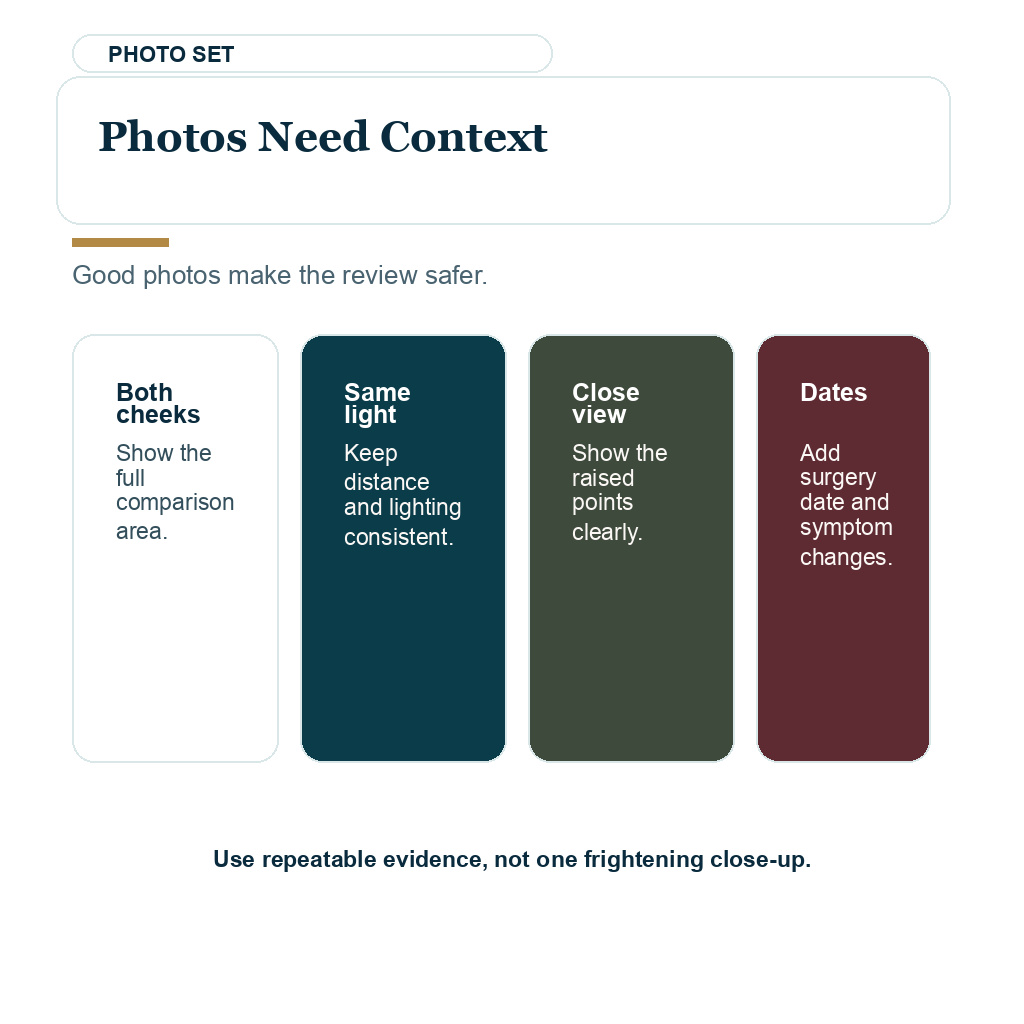
One close photograph cannot show whether early bumps are settling or becoming fixed. Keep comparison photographs at the same angle, light, and stubble length, ideally before applying a product that changes redness or shine. Record pain, warmth, drainage, itching, firmness, shaving, picking, and any acids, benzoyl peroxide, steroid creams, or home devices, so the surgeon can judge change over time rather than one alarming image.
Do not take the main review photos right after shaving. Razor irritation can make small raised dots look more dramatic and can hide whether the texture is actually settling.
Judge texture at the shave length you normally wear. Very close shaving can make small raised points look worse than they do with short stubble, so repeat photos should use the same length.
The closest shave is the hardest way to judge beard texture. If the skin looks acceptable with short stubble but rough only when shaved flat, the review should separate graft angle, skin irritation, and normal shave trauma before repair is discussed.
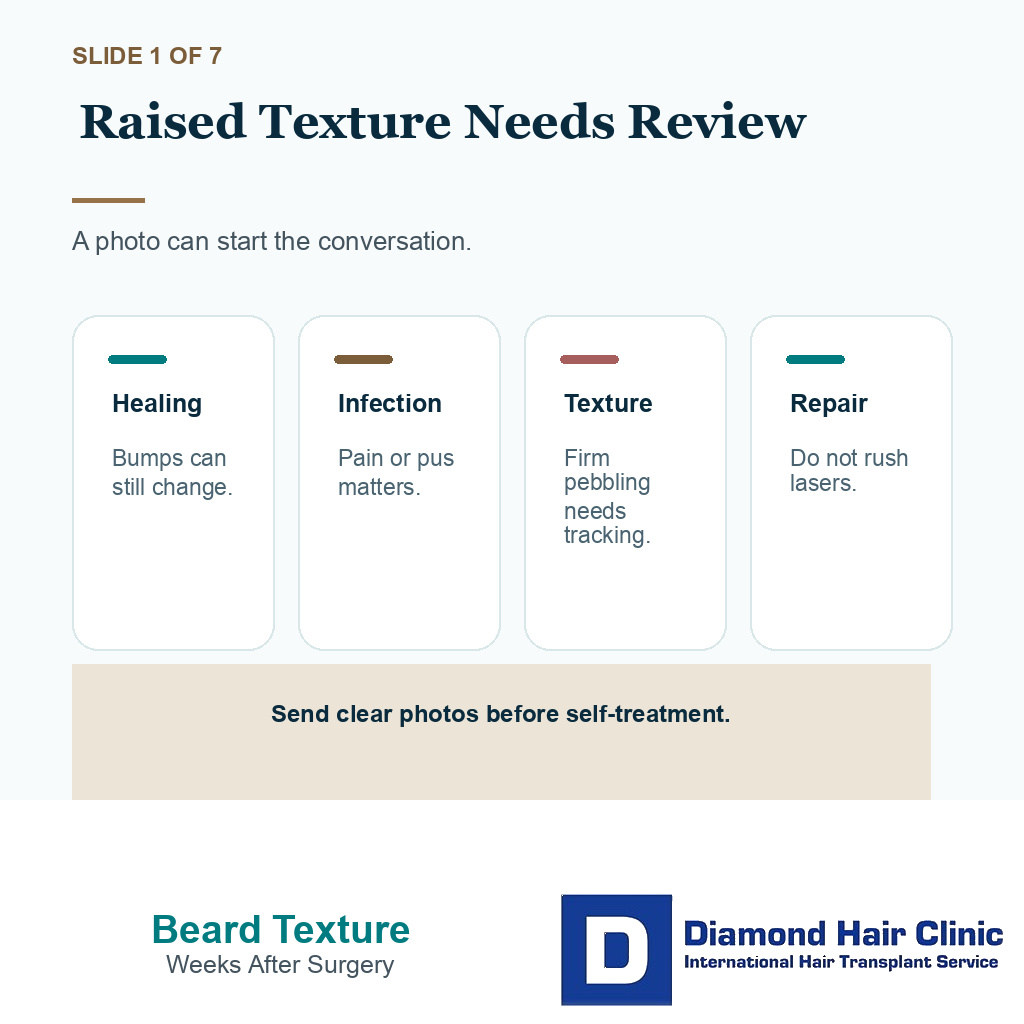
Broader regret and late repair planning belong with beard transplant regret and repair limits. This page is narrower. It is for the patient who is only a few weeks out, looking at raised cheek bumps, and trying to decide whether to wait, report symptoms, or seek a second opinion.
What does cobblestoning really mean?
Cobblestoning is not just any pimple after surgery. In hair restoration, patients usually use the word for an uneven raised surface around grafted units, as if the skin has little pebbles. It can happen when the openings made in the recipient area, graft size, graft depth, density, angle, or tissue handling do not respect the skin. On the cheek, the margin for error is smaller because the skin is visible and the beard pattern must lie naturally.
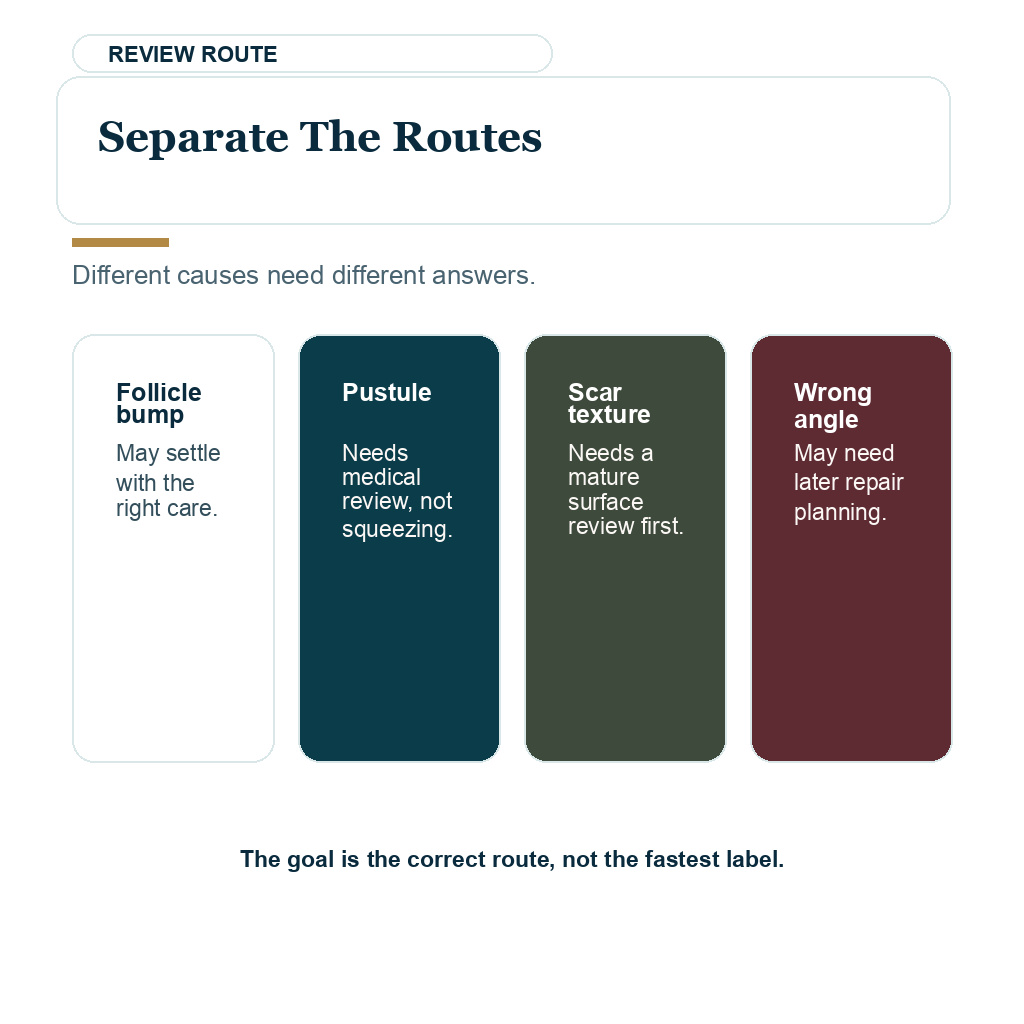
A temporary follicle bump can settle. A pustule can improve after the correct medical review. A crust can lift. Pseudofolliculitis from shaving or an ingrown hair can imitate a graft problem on the cheek. True cobblestoning is more concerning when the raised texture becomes fixed, not tender, not pustular, and remains visible after the early inflammatory phase has passed. The difficulty in the weeks after surgery is that these categories can overlap on the surface.
This is also different from a broad scalp bumps and ridges after hair transplant problem. The scalp has thicker coverage, different shaving habits, and different cosmetic visibility. Beard transplant planning must account for how every graft exits facial skin.
Signs that need a surgeon review now
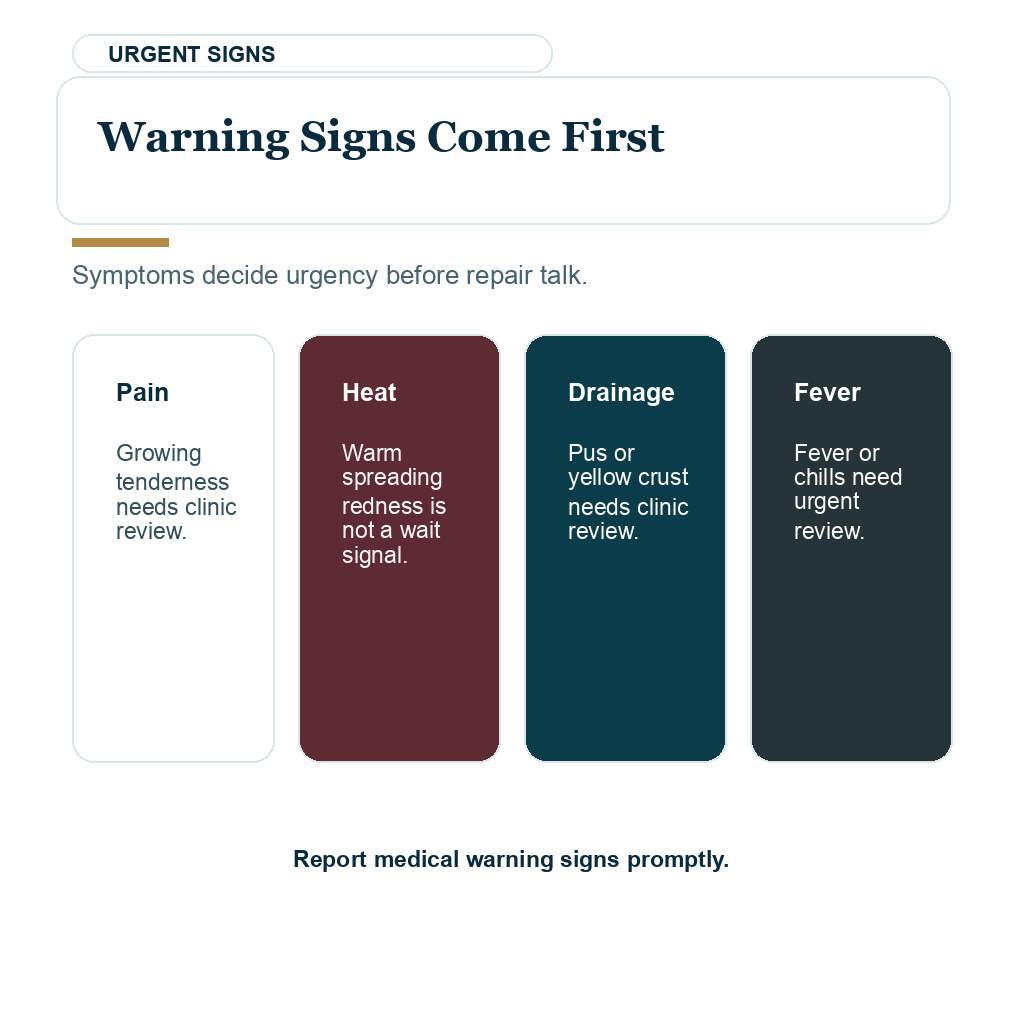
Some signs should be reported promptly rather than watched silently. Increasing redness, heat, swelling, tenderness, pus, yellow crust, spreading rash, fever, or a bump that becomes larger and painful should be reviewed. Those signs can point toward folliculitis, ingrown hairs, contact irritation, or infection. When folliculitis and hair transplant timing overlap with normal healing, squeezing or picking makes the review less clear and can irritate the skin further.
Other signs are less urgent but still important. Firm raised dots that match graft placement, a texture that looks the same in every photo, hairs exiting at awkward angles, or a cheek surface that looks pebbled after swelling has settled all deserve a careful follow-up. They do not always mean immediate repair. They mean the case should be documented before time, shaving, and home treatments make the original pattern harder to interpret.
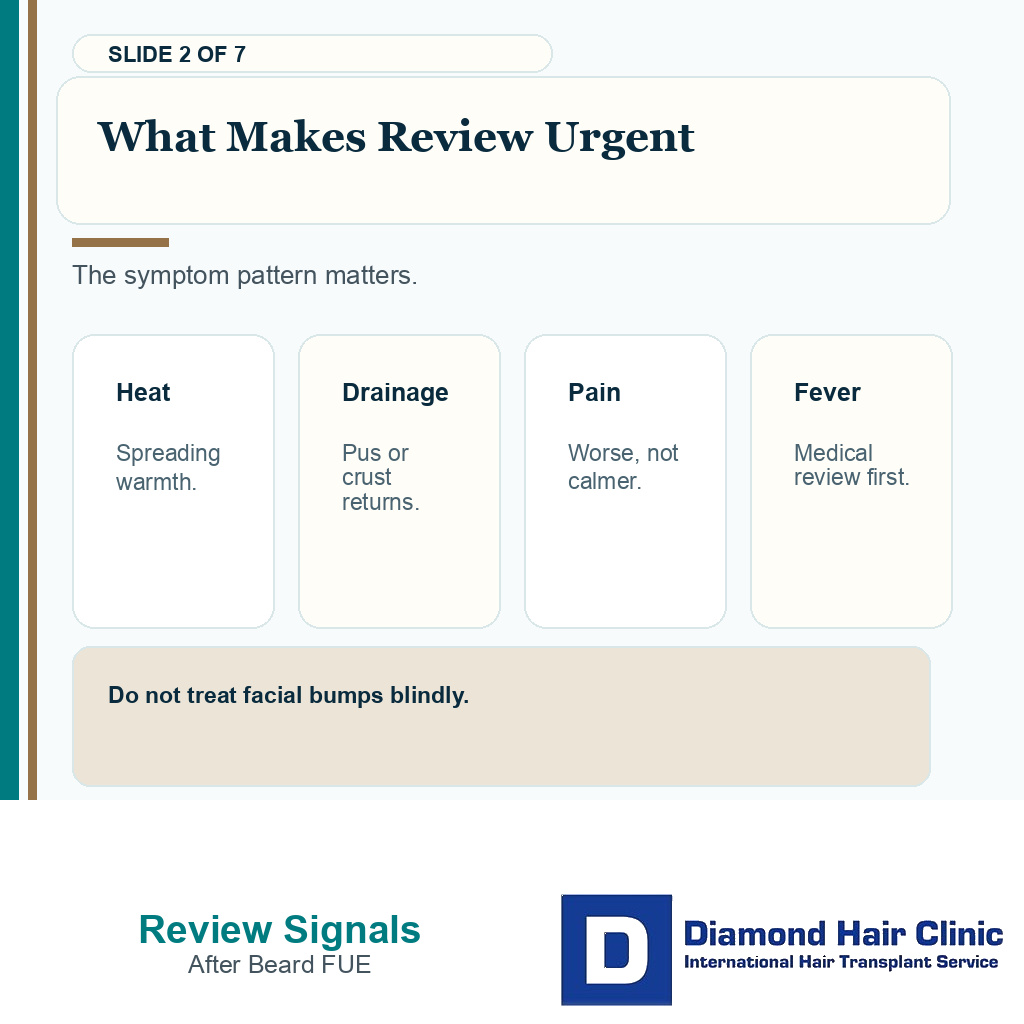
If the face breaks out widely, location and timing matter, but facial acne during recovery is not the same as bumps centered on transplanted beard hairs. I still need to know exactly where the bumps are and how they relate to the implanted hairs.
Why does beard skin make small texture changes more obvious?
Scalp hair can hide small surface irregularities. A cheek cannot. Beard grafts also need the right angle because facial hair should lie with the natural direction of the beard. A graft that sits too proud, exits too steeply, or carries too much surrounding tissue can look unnatural even if the hair grows. For that reason, I plan beard density carefully and do not treat the face as a place to chase maximum graft count.
Patients sometimes ask whether beard transplant into acne scars is different. It is. A scarred cheek or acne scar area may have altered thickness, color, blood supply, and texture before surgery. The decision discussed in beard transplant for acne scars has to be made before placing grafts, not after the skin reacts poorly.
Hair direction needs its own review. If hairs are growing but pointing the wrong way, that belongs closer to wrong hair direction after hair transplant. If the main problem is raised skin without useful hair growth yet, the first review should focus on the recipient surface and inflammation.
Shaving, picking, and home treatments can blur the review
The cheek is tempting to test. Patients may shave closer to see the bumps, squeeze the raised dots, scrub, or cover the area with product before sending photos. They may try acids, retinoids, benzoyl peroxide, steroid creams, antibiotic ointments, peels, derma rollers, or home laser devices. I understand the anxiety, but this can blur the diagnosis and sometimes irritate the skin further.
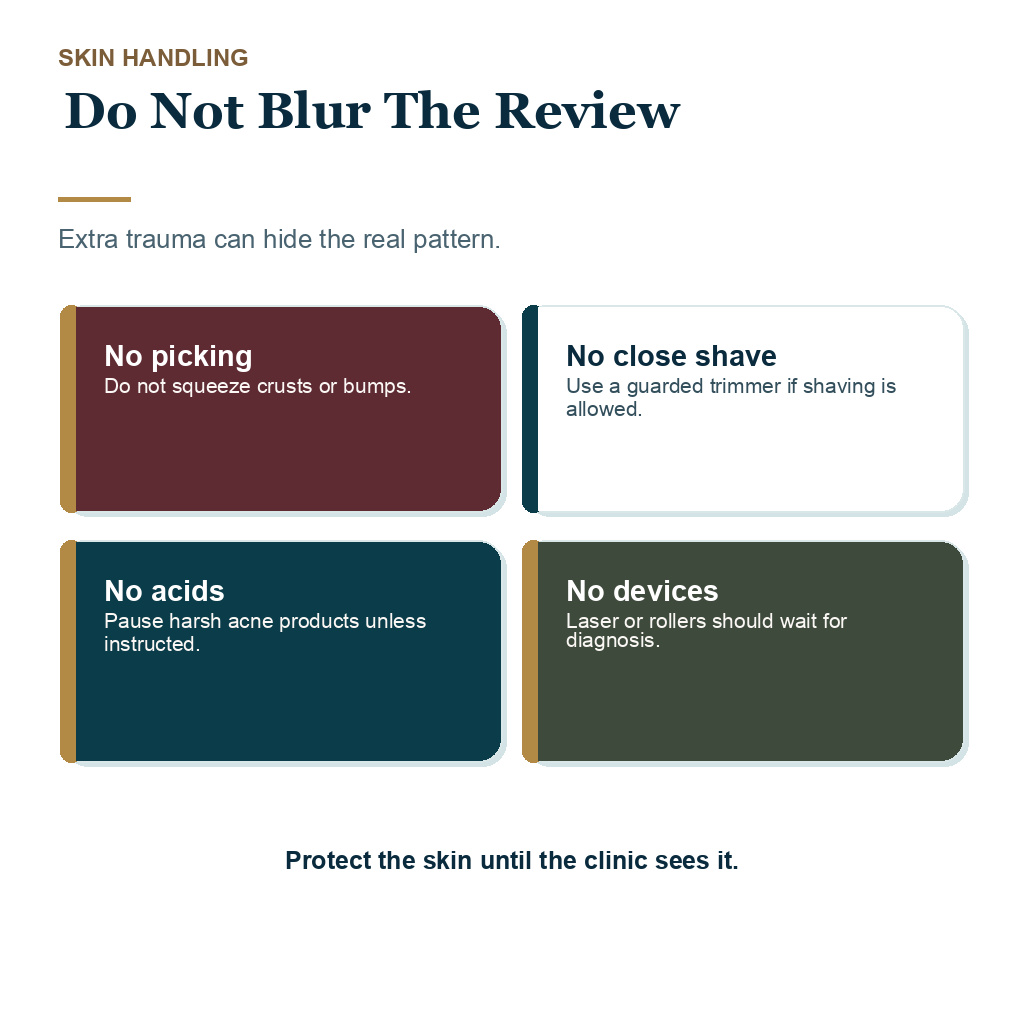
Before the clinic reviews the photos, avoid irritating the area unless you were given a specific instruction. Do not pick crusts or pustules. Do not close wet shave over raised grafts. If shaving is already allowed, a guarded trimmer that leaves short stubble is often less confusing than scraping the skin smooth. Do not start fractional laser, microneedling, peels, or steroid injections because you heard they helped another case. Facial skin treatment should wait until we know what we are treating.
If you already used something on the skin, say so. The surgeon needs to know whether redness came from the transplant, shaving, an acne product, sun exposure, or a topical medicine. This is not blame. It gives the photos the right context.
What proof should you send before repair advice?
A short, complete message is more useful than a long, anxious one. Take the photos on dry skin before shaving or applying product, without filters, and keep enough beard length visible to judge hair direction. I need to see both cheeks, understand the timing, and identify whether there are medical warning signs or signs of shaving irritation.
Before asking for repair advice, send the details that let the clinic judge timing, symptoms, shaving history, and skin texture safely.
This proof check also helps if you later need a second opinion. A repair surgeon will want a clean timeline, not only the most frightening photo. If the original clinic ignores clear warning signs or gives only vague reassurance, an in person review with an experienced hair restoration surgeon or dermatologist is reasonable.
When should laser, steroid, or graft removal wait?
Fractional laser, steroid injection, punch removal, electrolysis, and graft extraction are not interchangeable choices. Each can help in the right case and harm in the wrong case. A pustule does not need the same plan as scar type texture. A shaving bump does not need the same plan as a raised graft. Removing grafts too early can also create marks, leave gaps, or spend donor supply without solving the skin problem.
When there are no urgent medical signs, repair planning becomes clearer after the tissue matures. That does not mean doing nothing. Active infection or folliculitis is reviewed first. Inflammation is controlled before scar procedures are discussed. Laser, steroid injection, or microneedling should wait until the skin barrier and diagnosis are clear. Punch removal, electrolysis, or extraction should wait until hair growth, angle, and mature texture can be judged. Removing transplanted hair is a planning decision, not a reflex.
When a later review shows a clearly unnatural beard border, wrong angle, or overpacked cheek design, repair may include selective removal or redistribution. That belongs after careful assessment, not during the first anxious weeks. In bad hairline graft removal, I use one standard that also matters in beard repair. The repair should be smaller, more precise, and more protective than the first mistake.
How does this change future beard transplant planning?
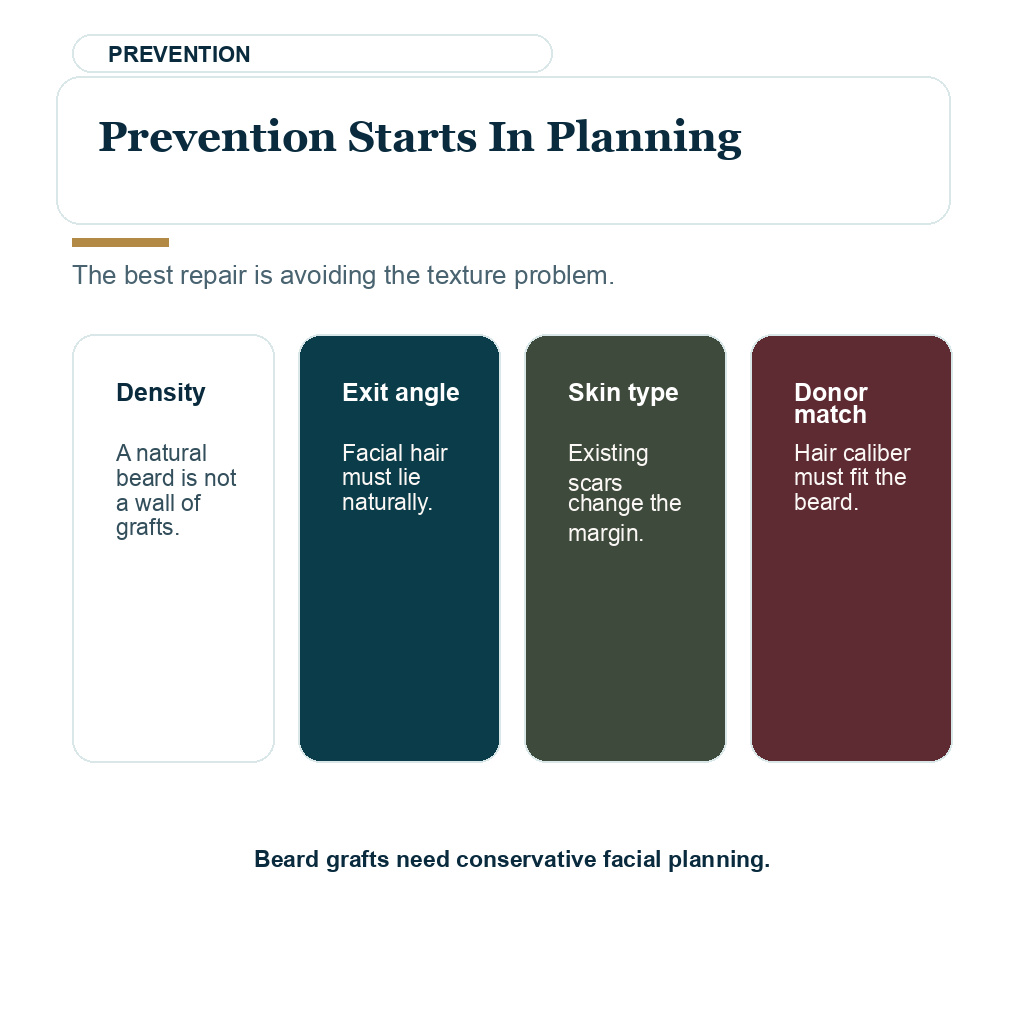
The best treatment for cobblestoning is prevention. Before a beard transplant, the surgeon should decide whether the goal is realistic, whether donor hair matches the beard, how dense the cheek should be, and whether the skin is suitable. The small details matter here. Recipient area opening size, depth, graft trimming, exit angle, hair caliber, and density all change how the cheek surface looks later. In a beard transplant, the cheek texture issue is the reason I emphasize planning over simply filling every patch.
A natural beard is not a wall of grafts. It has direction changes, softer transitions, and areas where lower density can look more natural than dense plugs. If a clinic promises to make a sparse cheek fully dense in one session without discussing caliber, angle, skin type, and repair limits, slow down before committing.
For patients with existing raised scars, acne scars, keloid tendency, or prior facial procedures, the consultation should be even more careful. A beard transplant can be useful in selected scars, but facial skin that already has texture can make bumps more visible if the plan is too aggressive.
Judge texture by evidence before repair
In the weeks after surgery, do not label every raised beard recipient bump as permanent cobblestoning, but do not ignore a pebbled cheek surface either. Send a clean photo set and symptom timeline to the clinic. Ask whether the pattern looks like early healing, folliculitis, ingrown hair, irritation, or a recipient area texture problem. Report pain, heat, pus, spreading redness, fever, or worsening swelling promptly.
The review map below is not a diagnosis. It separates early overlap, warning signs, photo proof, skin handling, texture tracking, repair timing, review routes, and prevention planning so the follow-up is based on evidence, not the most frightening close-up.
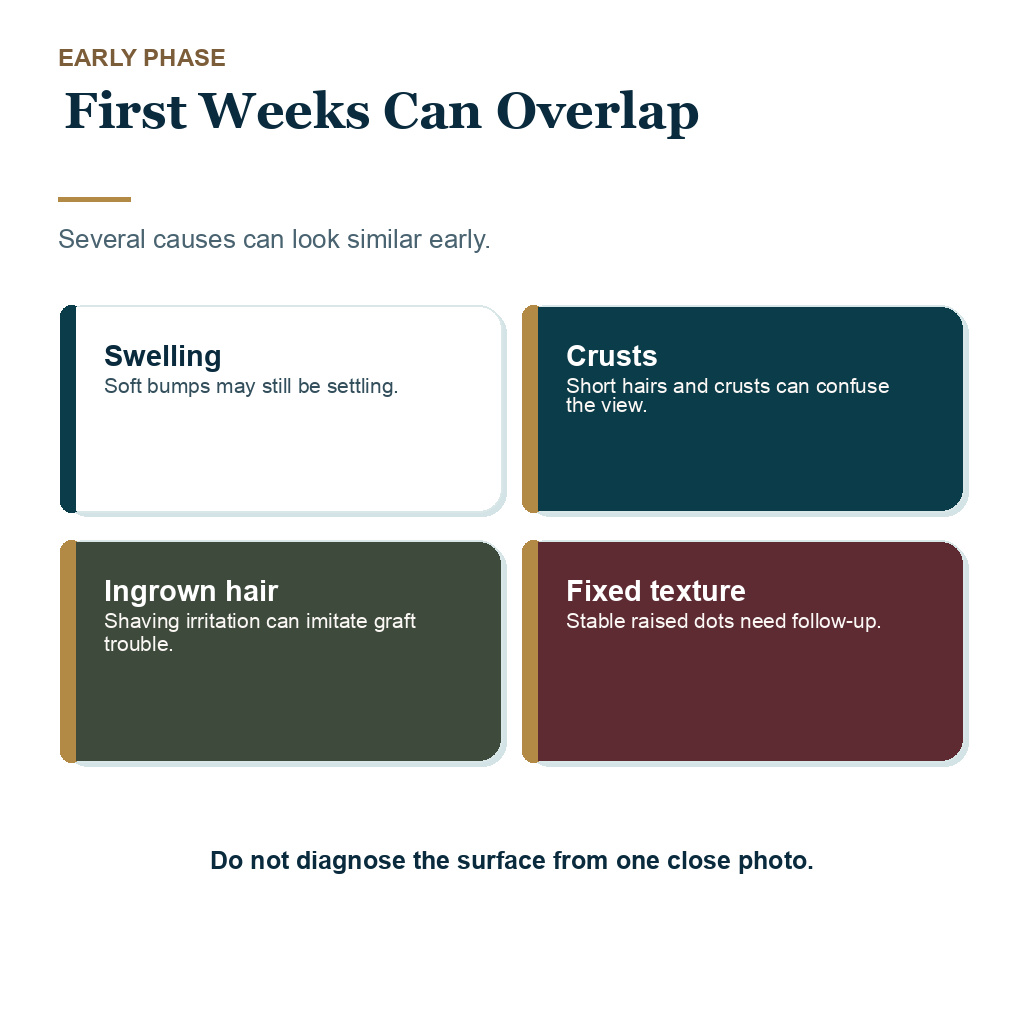
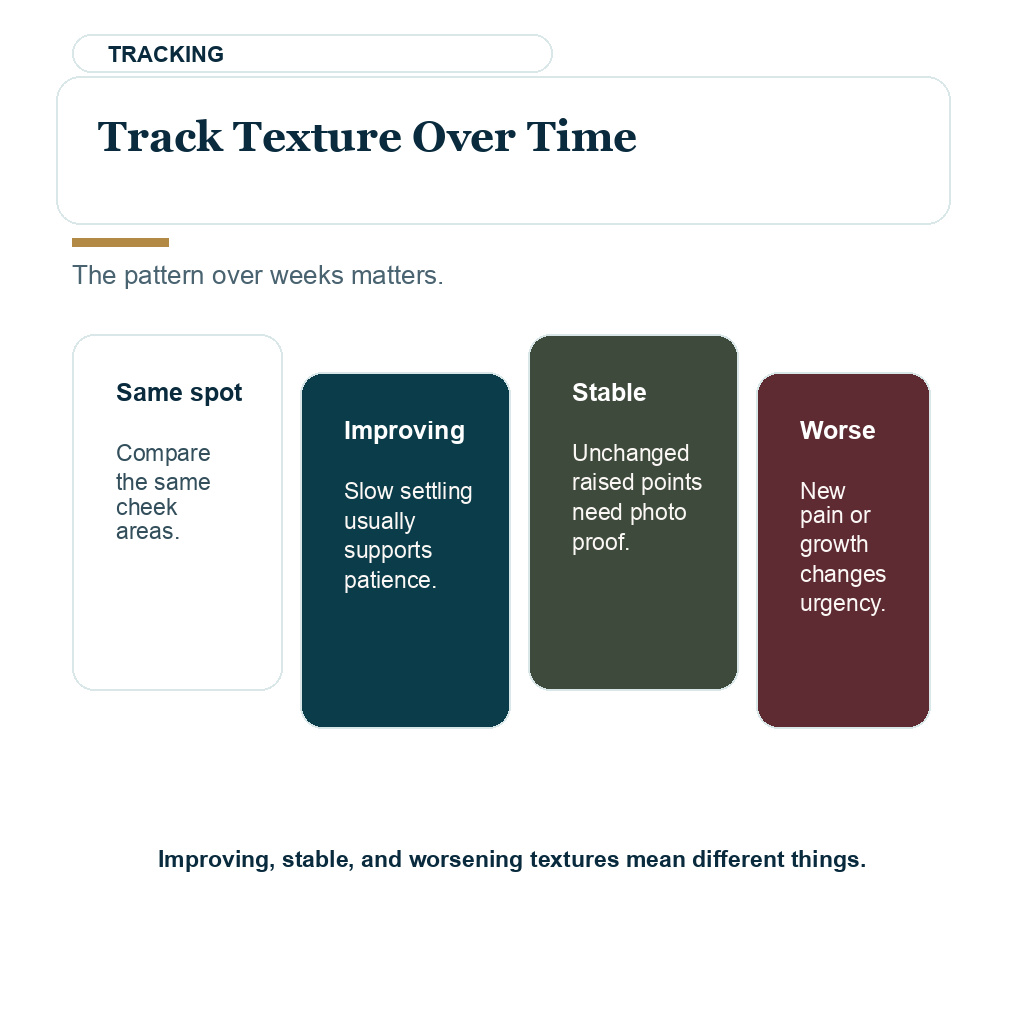

If the area is not hot, draining, or painful but remains visibly uneven, protect the skin and track it. If the texture becomes fixed over months, a repair review may be needed. If there are active medical signs, review comes sooner. The face deserves a slower and more careful answer than a quick photo opinion can give.
The most useful thing you can do in the first weeks after a beard transplant is to stop guessing and make the review easy. Good photos, clear symptom details, and no extra trauma give the surgeon a cleaner starting point. From there, the choice can be observation, medical treatment, delayed review of scar texture, or repair planning for the actual problem rather than the fear of the problem.
Read this review excerpt
We also had a levelled conversation about my hairline and results I could expect based on my donor density area.