


Viagra or Cialis Timing Needs Medical Context After Surgery
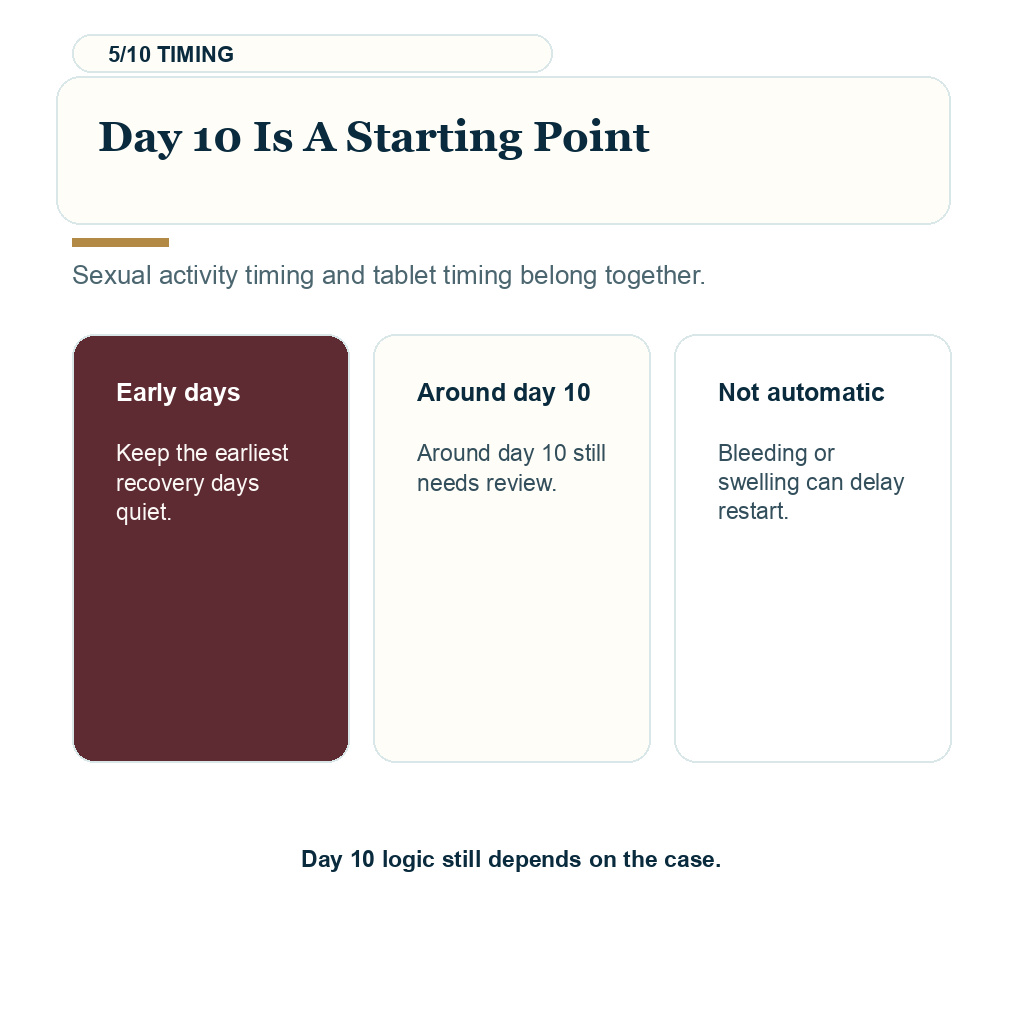
If you are otherwise healthy, I usually do not restart Viagra, Cialis, sildenafil, tadalafil, or similar erectile dysfunction medication until sexual activity is allowed again. In my aftercare logic, that is usually around day 10 after a hair transplant, not day 2 or day 3. Even then, share the exact medicine, dose, and timing. If you use nitrates, riociguat, chest pain medication, have unstable heart disease, fainting, low blood pressure, uncontrolled high blood pressure, or a recent heart problem, this is not a private guess. It needs medical approval.
These medicines are not graft survival treatments. They also are not judged only by the tablet name. I look at why you want to use it, whether you take it regularly, whether sexual activity is already safe, whether there was bleeding or swelling after surgery, and whether any heart or blood pressure medicine is involved. Do not restart it secretly just because the scalp looks quiet after a few days.
Viagra or Cialis needs a separate discussion after surgery
Viagra and Cialis are often discussed casually, but they are still real medications. They affect blood vessels and blood pressure, and that matters during the same period when the scalp is healing, the grafts are settling, and the clinic is trying to read swelling, redness, bleeding, dizziness, or discomfort clearly.
The mistake is to think of the medicine only as a private sexual matter. Around surgery, it becomes part of the medical history. If you are also using blood pressure medicine, heart medication, alcohol, recreational drugs, stimulants used before training, or pain medication, the decision becomes less straightforward.
I separate this question from ordinary sex after a hair transplant. Sexual activity creates physical strain, sweating, pressure, and sometimes accidental rubbing of the recipient area. Viagra or Cialis adds a medication layer on top of that activity question.
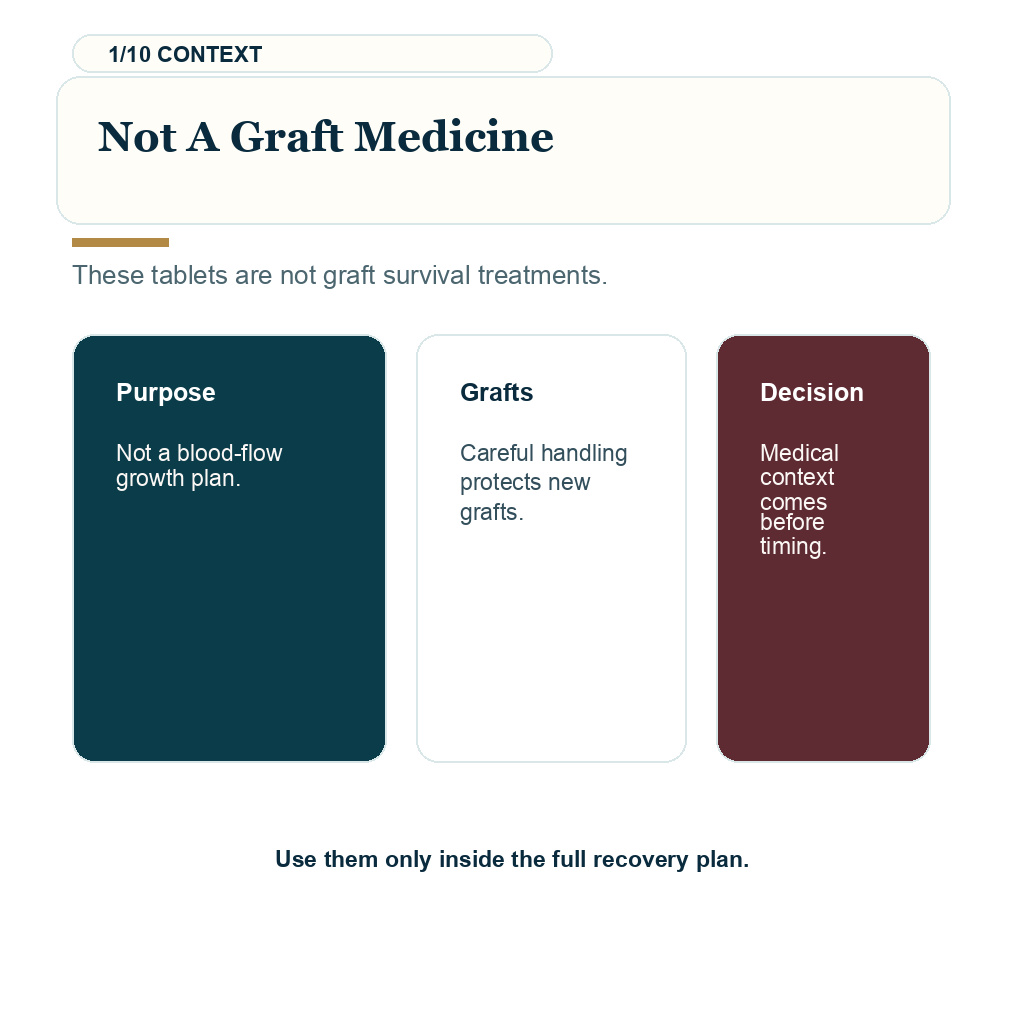
Cialis or Viagra does not improve graft survival
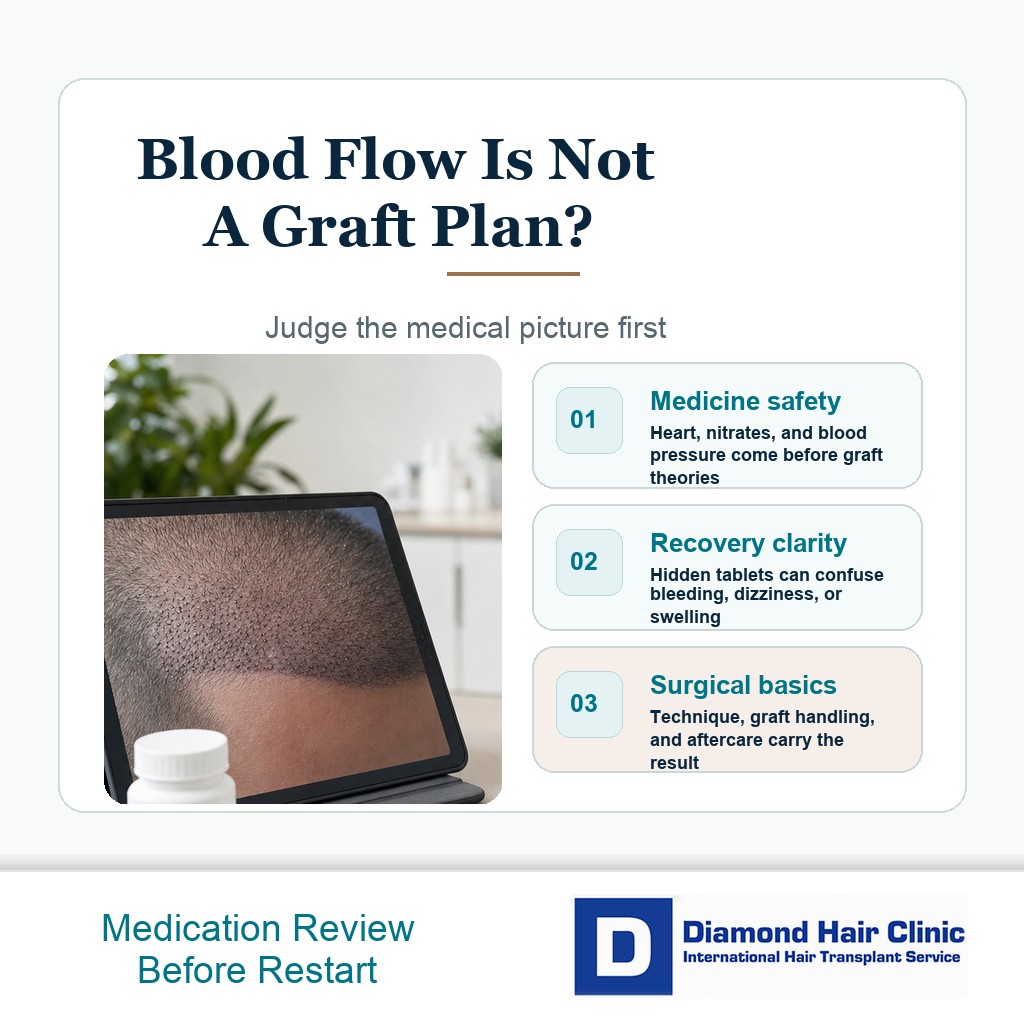
Cialis and Viagra should not be used as graft survival shortcuts. The idea sounds attractive because people hear the phrase blood flow and assume more blood flow means better growth. Hair transplant healing is more precise than that.
A blood flow theory is not a recovery plan. These tablets should answer a medical need, not a hope that extra circulation will rescue grafts. If someone online frames tadalafil or sildenafil as a graft booster, treat that as a safety question for the clinician, not as an aftercare shortcut to copy. These tablets are not graft boosters, so they should stay within the medical reason they were prescribed for.
Grafts need clean extraction, careful handling, correct storage, accurate placement, gentle recipient area work, stable tissue contact, oxygen supply, and a protected early healing period. A tablet cannot repair poor graft handling, aggressive dense packing, a weak donor plan, infection, heavy trauma, or a clinic that rushed the operation.
PRP and exosomes after a hair transplant are part of a different recovery conversation. Supportive treatments may have a role in selected cases, but they should not be sold as a way to rescue weak surgery. Viagra and Cialis are even less appropriate as hair transplant recovery promises because their main medical use is not hair growth. If growth support is being considered, that belongs in a separate discussion about minoxidil after a hair transplant, not in a Viagra or Cialis shortcut.
The clinic needs specific medication details
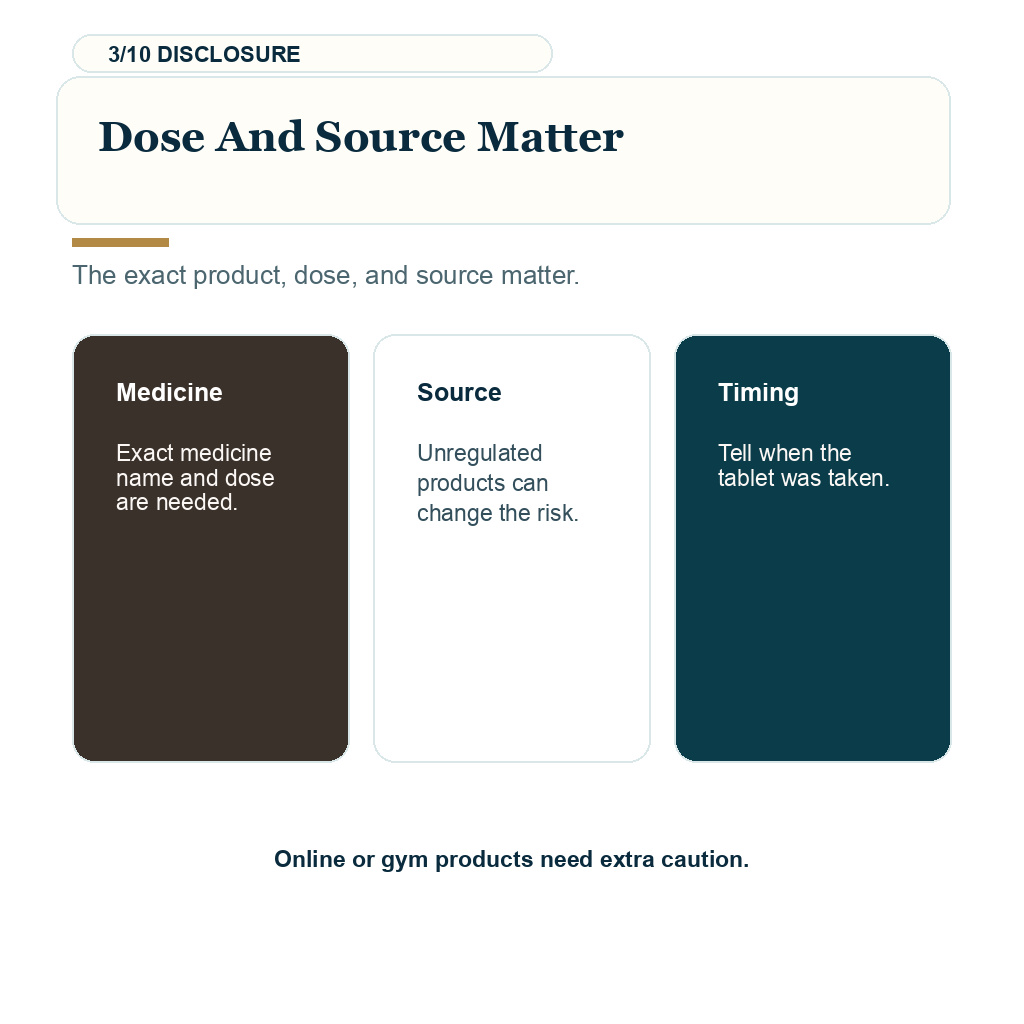
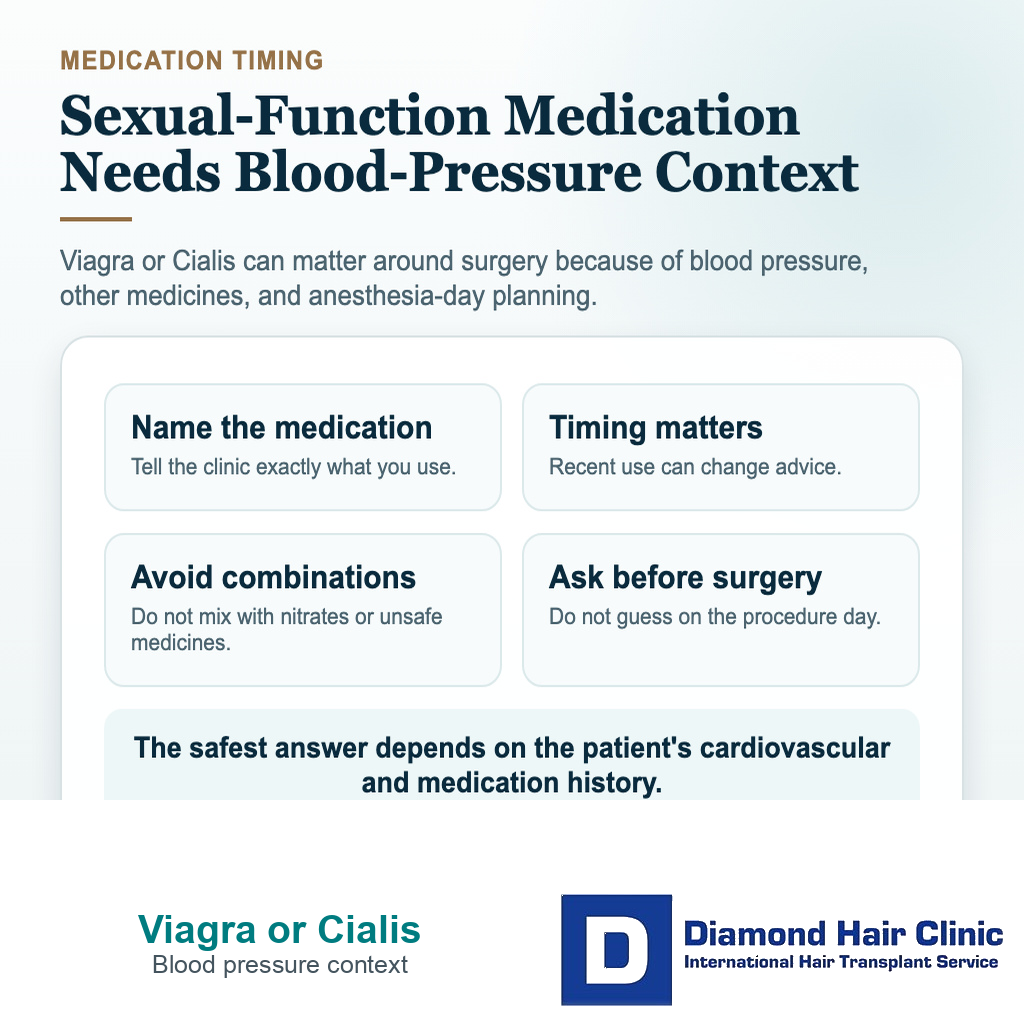
Share the exact name, dose, frequency, and timing. Say whether it is sildenafil, tadalafil, vardenafil, a combined product, an online prescription, or an unregulated sexual performance supplement. If you use it only sometimes, the last dose still matters.
Timing before surgery matters too. Sildenafil or Viagra within the previous 24 hours should be disclosed. Tadalafil or Cialis within the previous 48 to 72 hours matters even more because tadalafil can remain active longer. Surgery may still be possible, but the medication and blood pressure discussion changes.
The clinic also needs to know why you take it. A small dose for erectile dysfunction is not the same as daily tadalafil for urinary symptoms or sildenafil/tadalafil prescribed by a specialist for a medical condition. It is also different from mixing Cialis with gym supplements, nitric oxide products, stimulants, recreational drugs, testosterone, or other performance compounds.
This belongs with the wider medication plan after surgery. A good medication review is not only about the tablets the clinic gives you. It also includes the medicines and supplements you bring into the operation.
Online or gym products carry different risk
This becomes more serious when the product is not a known prescribed tablet. Some online erectile dysfunction tablets, gym performance products, or sexual performance supplements may contain sildenafil, tadalafil, another PDE5 inhibitor, a higher dose than expected, or a hidden combination.
That uncertainty is a poor match for elective surgery. If the label is unclear, the source is informal, or you do not know the dose, the product should not be treated like a normal prescribed medicine. Around a hair transplant, unknown tablets are not worth the risk.
The practical difference is simple. A prescribed tablet with a known dose can be discussed and planned around. An unknown tablet, a mixed supplement, or a second tablet taken because the first one did not work creates a different safety problem, especially if alcohol, stimulants, blood pressure medication, or chest pain medication is also involved. If the tablet came from a friend, an online seller, or a mixed product, treat the source as part of the medical history, not a private detail.
You may feel embarrassed to mention it, but embarrassment is not a medical reason to stay silent. I do not need the detail to judge you. I need it to protect you, the grafts, and the operation day plan.
Viagra or Cialis is riskier in some recovery situations
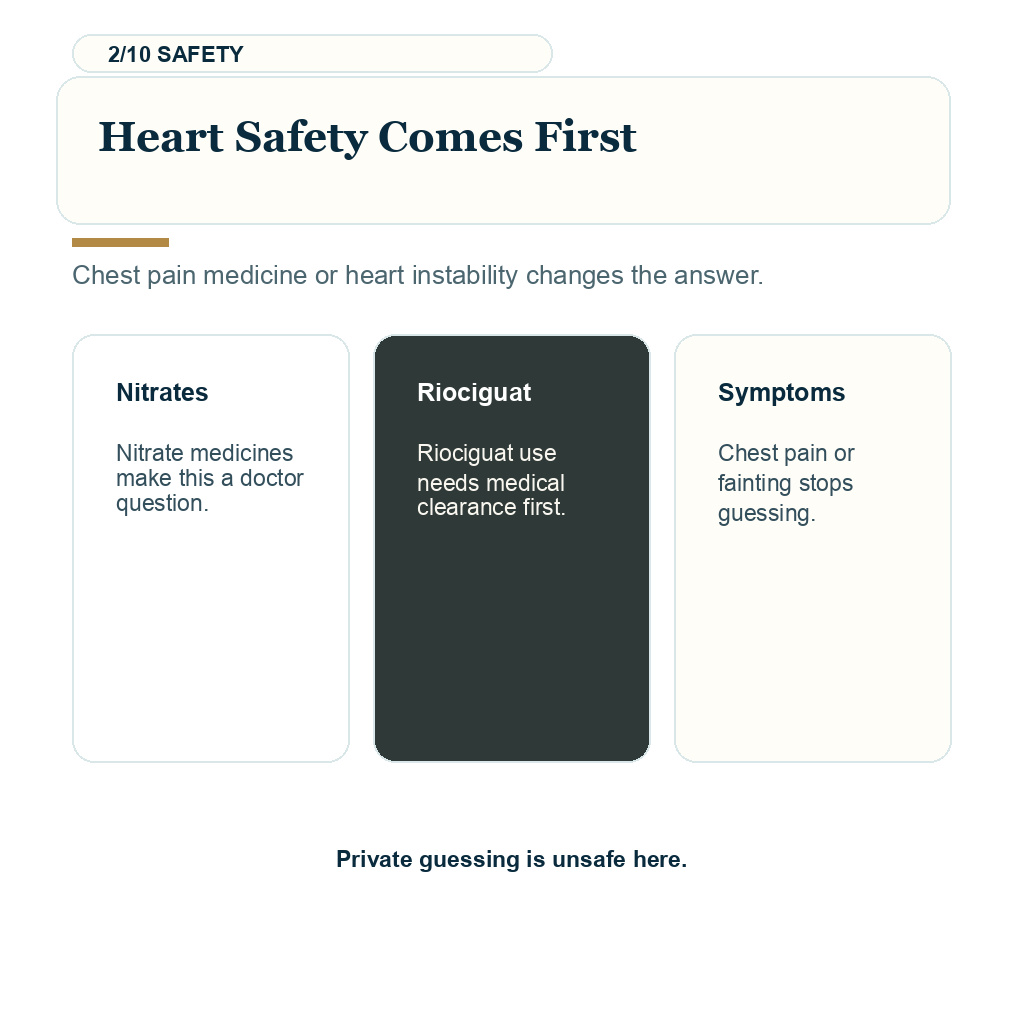
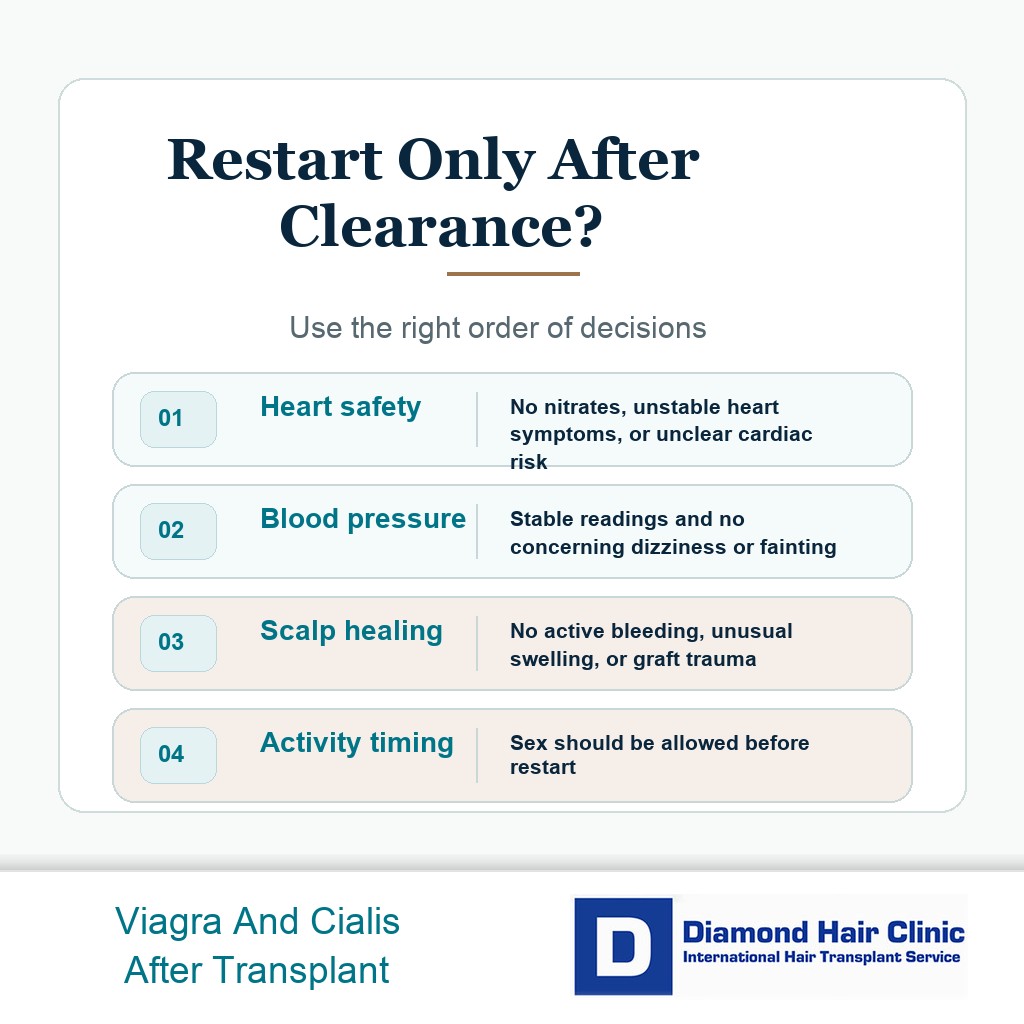
The highest concern is heart and blood pressure safety. If you use nitrates for chest pain, use riociguat for pulmonary hypertension, have unstable heart disease, have recently had a heart attack or stroke, have low blood pressure, or have uncontrolled high blood pressure, this medication question must be handled by the medical doctor who manages that condition.
A hair transplant is elective surgery. It should not create pressure to ignore a cardiovascular warning. If you have a stent, angina, rhythm problems, fainting episodes, or medication for blood pressure, delaying the cosmetic plan is safer than accepting a hidden risk.
This broader decision also appears in high blood pressure and hair transplant surgery and hair transplant planning with heart disease or a stent. Viagra and Cialis do not necessarily make surgery impossible, but they force the decision to include the heart, blood pressure, and medication list, not only the scalp.
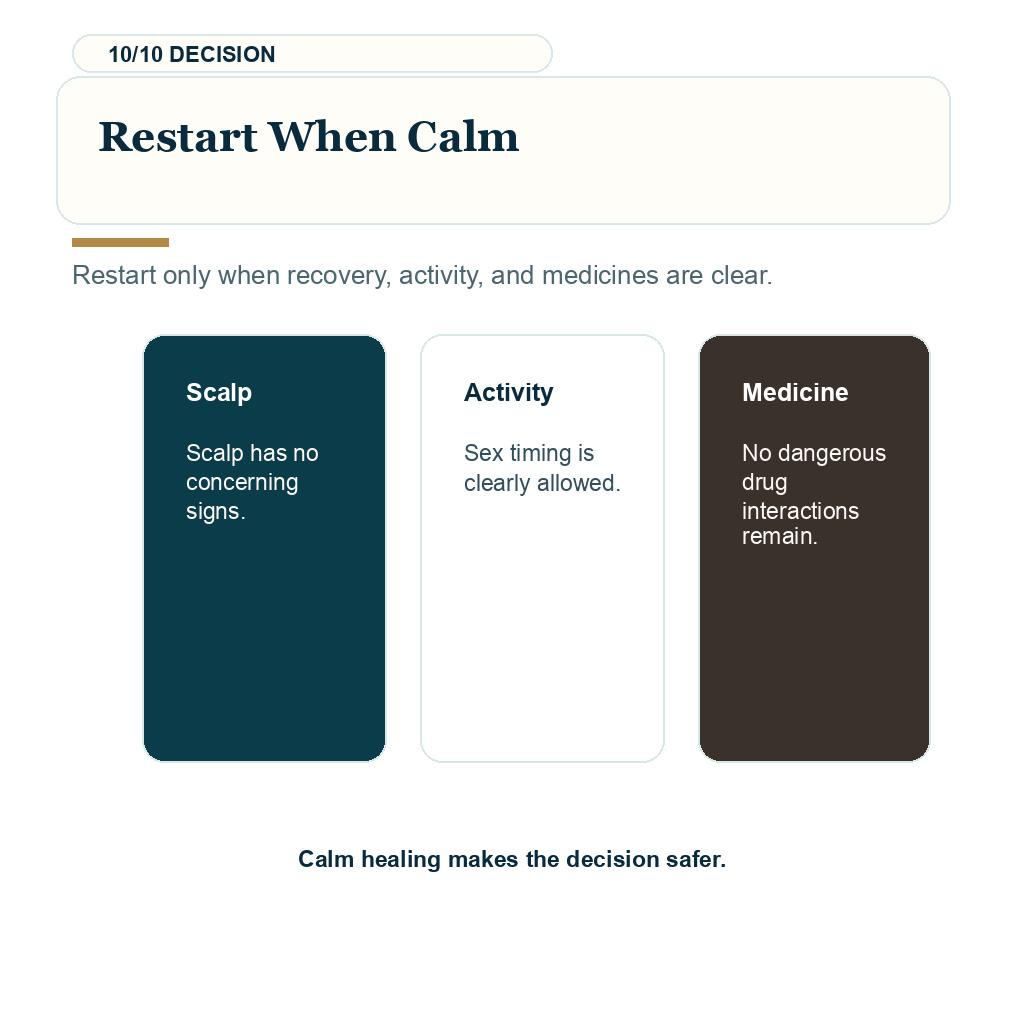
These 10 slides explain the Viagra/Cialis restart decision after hair transplant. Swipe sideways, use the arrows, or choose a number below the image.


Recovery signs can become harder to interpret
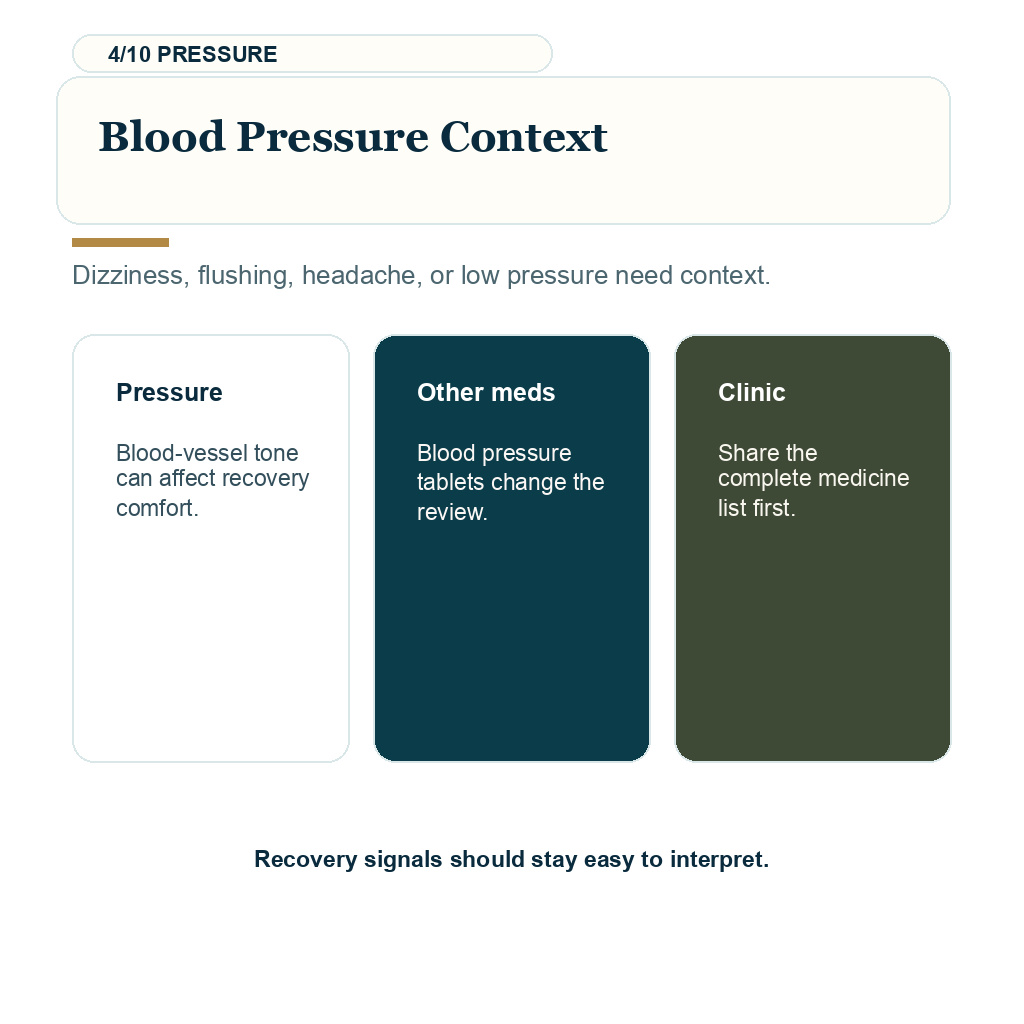
Viagra and Cialis are not blood thinners in the same way as anticoagulant or antiplatelet medication, and those categories should not be confused. The concern is different. These medicines can affect blood vessel tone and blood pressure, so the surgical team needs to know whether they may influence bleeding during the operation, dizziness after surgery, facial flushing, headache, or swelling that becomes harder to interpret.
In a hair transplant, small differences can matter. If the recipient area bleeds more than expected, graft placement becomes less clean. If you become dizzy or faint after surgery, the clinic needs enough detail to separate dehydration, anxiety, pain medication, blood pressure change, or another drug effect.
If you disclose the medicine, the situation can be judged properly. If you hide it, a normal recovery can become harder to read. The safest surgery day is one where the medical history is clear and complete.
Cialis can matter because it lasts longer
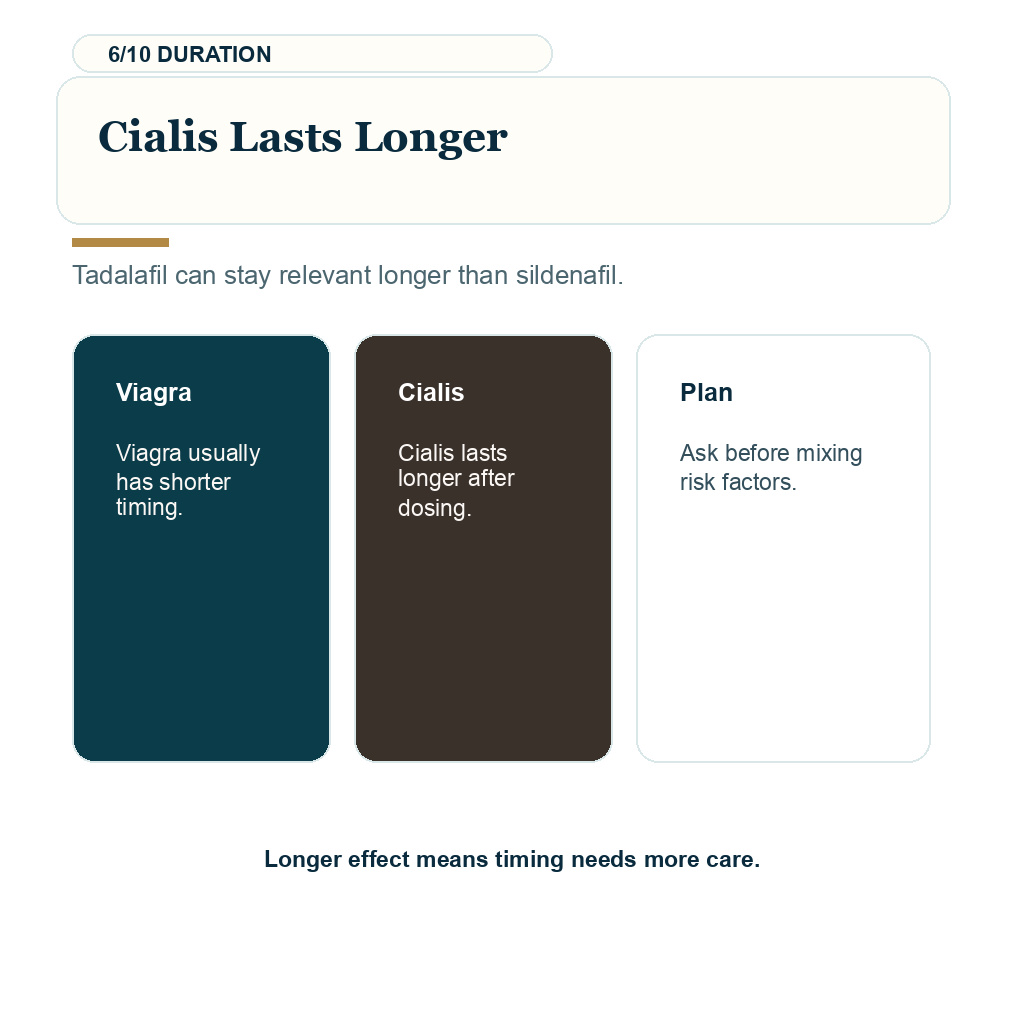
Cialis can remain active longer than Viagra. That may be useful in normal life, but around surgery it means the clinic needs a clearer timeline. If you took tadalafil recently, medication effects may still matter when you arrive for surgery or during the early recovery period.
Vague answers such as it was only a small dose or it was only yesterday are not enough. Exact timing lets the clinic decide before blood pressure, dizziness, flushing, swelling, or other medicines become confusing. The exact medicine matters because sildenafil and tadalafil do not behave identically. The dose, the time since the last tablet, liver or kidney problems, alcohol use, and other medicines can all change the decision.
A proper medication history before surgery is not a formality. Timing matters. Keep that in mind with medication before a hair transplant. A medicine that seems unrelated to hair can still affect the operation day plan.
Sex timing matters as much as tablet timing
Many people ask about Viagra or Cialis, but the real situation is often sexual activity soon after surgery. Early sex can raise sweating, heart rate, pressure, and the chance of accidental contact with the grafts. The tablet may help the erection, but it does not protect the scalp.
If the recipient area is still tender, crusted, swollen, or easy to bump, medication should not be treated as permission. The scalp first needs quiet healing. You also need to avoid positions, rubbing, pillows, hands, hats, and sweating that can disturb the recipient area.
Training raises recovery variables beyond the drug name. Once activity becomes intense, sweating, pressure, and heat may matter more than the drug name. Sexual activity is a physical stress during early healing, so I judge it with clinical caution rather than as a separate exception to exercise after a hair transplant.
Regular sildenafil or tadalafil use needs direct review
If you already take sildenafil or tadalafil regularly, do not hide it and do not stop or restart it on your own without medical guidance. Some men take these medicines for erectile dysfunction, some take tadalafil for urinary symptoms, and some have other medical reasons. The reason changes the conversation.
For a healthy person with no heart disease, no nitrate use, stable blood pressure, and no unusual surgical bleeding, the clinic may allow use again after the early recovery period. If you have cardiovascular disease, blood pressure instability, multiple medications, dizziness, chest pain history, pulmonary hypertension, or use prescribed by a specialist, the timing belongs with the prescribing doctor too.
Blood thinner or antiplatelet use changes surgery planning. If you take aspirin, anticoagulants, antiplatelet medicine, or other medication that affects surgery planning, hair transplant surgery while taking blood thinners cannot be approached by ignoring medical risk to protect the cosmetic plan.
Report Viagra or Cialis taken without telling the clinic
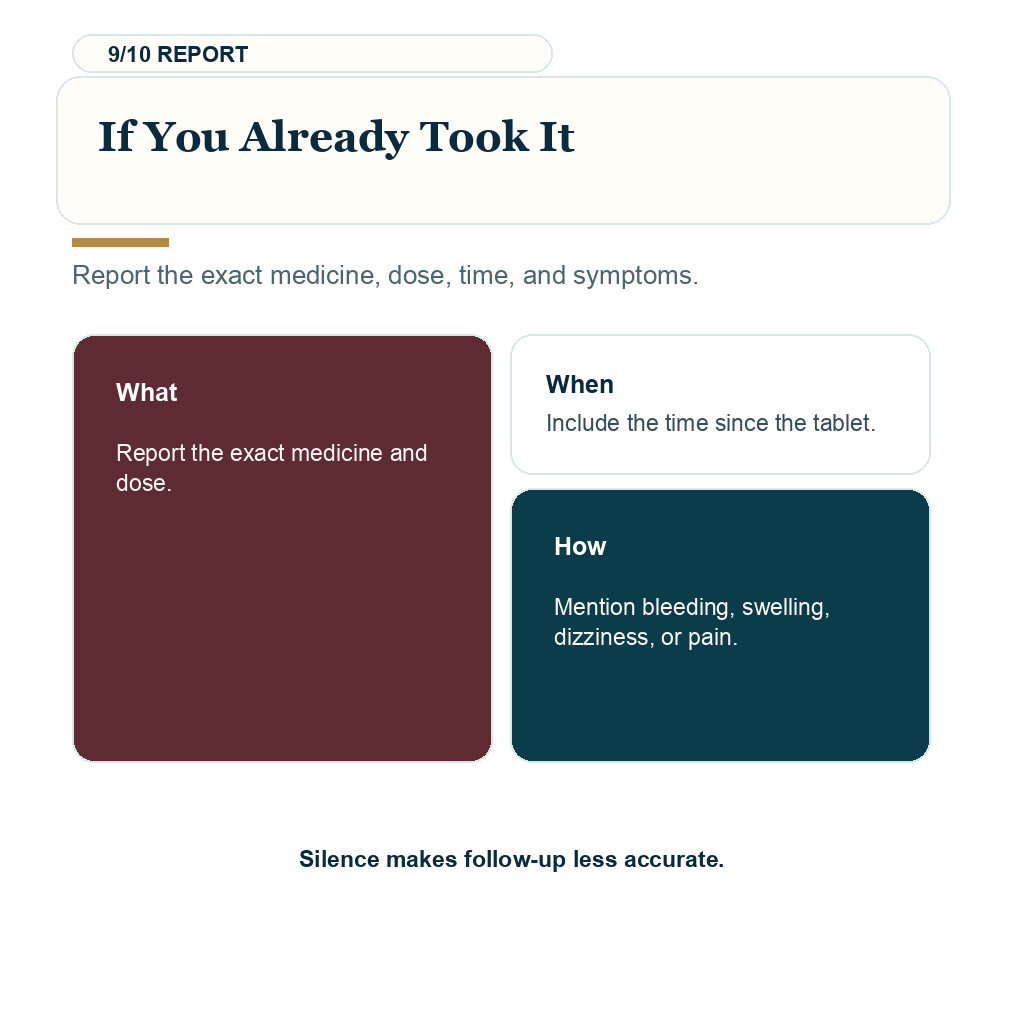
Report it immediately and give the exact time, dose, and product. Do not try to correct the situation with another tablet, alcohol, extra water, supplements, or internet advice. The clinic can only judge safely when the information is complete.
If this happened before surgery, the operation may need to be delayed or modified depending on the medicine, dose, timing, blood pressure, and medical history. If it happened after surgery, report whether there is bleeding, unusual swelling, dizziness, headache, chest discomfort, or increased heart rate.
If chest pain, fainting, severe dizziness, shortness of breath, or a prolonged erection occurs, seek urgent medical attention. Tell the doctor exactly when Viagra, Cialis, sildenafil, tadalafil, or any similar product was taken.
Clear photos can help, but photos do not replace medical disclosure. The page about blood tests before a hair transplant makes a similar point. Surgery is safer when the clinic has the full medical picture before the operation, not after a problem appears.
Blood flow promises can be a reason to slow down
Be careful if a clinic presents Cialis, Viagra, nitric oxide boosters, PRP, exosomes, peptides, or any extra product as a guaranteed way to improve graft survival. A serious plan should start with diagnosis, donor management, hairline design, graft handling, recipient area quality, and safe aftercare.
Weak clinics sometimes sell confidence by adding products around the operation. More products can make the plan feel advanced, but they can also hide poor surgical reasoning. If the consultation spends more time on extras than on donor capacity, future hair loss, medical history, and realistic density, pause before committing.
Aftercare also becomes confusing when too many unnecessary products enter the first days. The safest foundation is still clean surgical technique, clear instructions, proper washing, no trauma to the grafts, and direct follow up. These basics are part of hair transplant aftercare.
Restart timing depends on the case
Use a medical decision, not a private guess. If you have heart disease, chest pain medication, unstable blood pressure, fainting, recent surgery complications, or a doctor who prescribed the medicine for a specific condition, ask that doctor and tell the hair transplant clinic too.
If you are otherwise healthy, ask the clinic when sexual activity is allowed again and whether your specific medicine can be restarted at that point. In my aftercare logic, that is usually around day 10, not day 2 or day 3. The decision should include the dose, the exact drug, your blood pressure, the amount of swelling, whether the grafts are still crusted, and whether the donor or recipient area had any unusual bleeding.
Feeling well is different from being medically clear. You may see no bleeding and still have a reason to wait because of another medicine, a heart history, or a recovery sign that needs review. Cialis also deserves patience because tadalafil can stay active longer than sildenafil. Feeling normal is useful information, but it is not the whole surgical decision.
Do not restart Viagra or Cialis because someone online said it increases blood flow. Restart only when the early healing period is stable, the clinic knows the plan, and the medication is safe for your heart, blood pressure, and other medicines. When there is uncertainty, waiting a few more days is usually safer than adding a medication during a confusing recovery sign.

Read this review excerpt
Every single one of my questions was answered and they made sure I had all the details I needed to make an informed decision.