


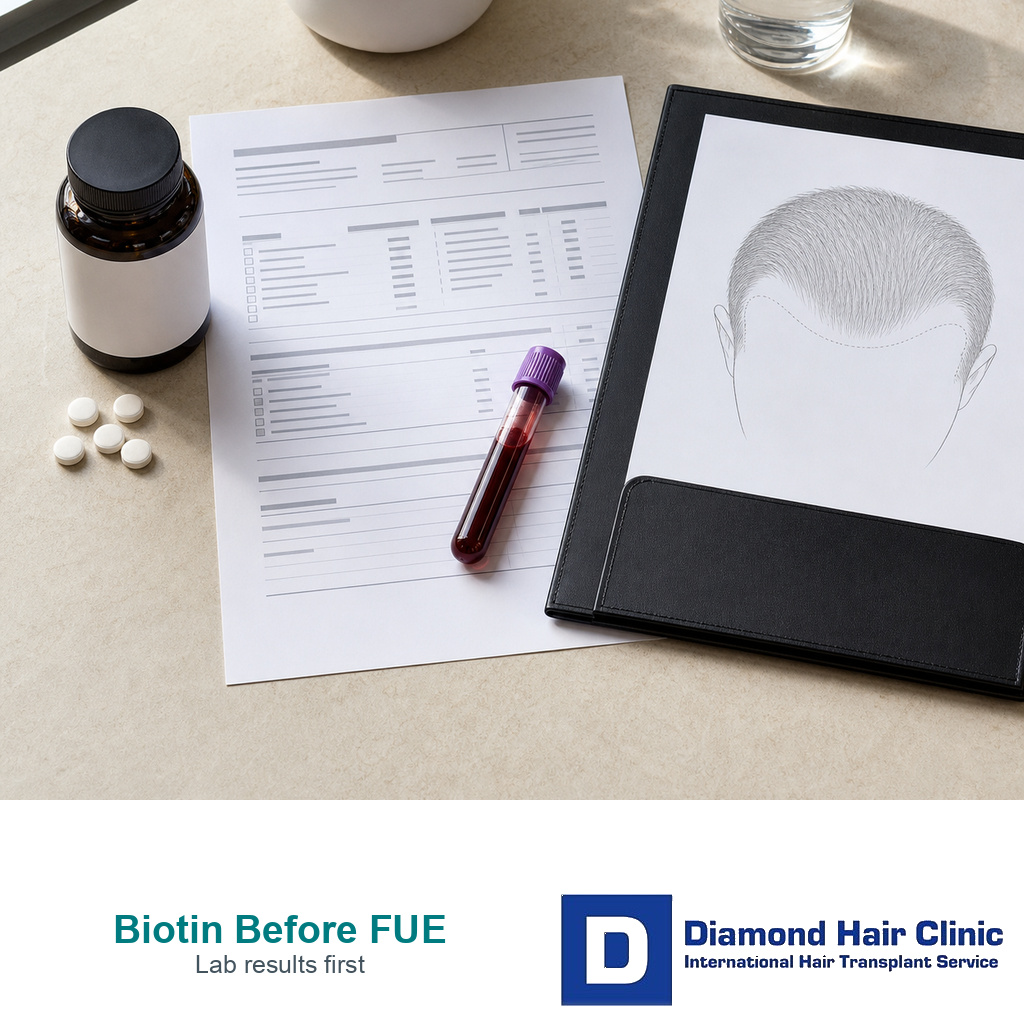
Biotin Before FUE Can Affect Lab Results
Do not start high dose biotin before FUE just because you want the grafts to grow faster. If you already take biotin, the useful step is to share that with the clinic before blood tests, with the product name, dose, reason for use, and the last time you took it.
Biotin is usually not a graft survival issue by itself. The bigger concern is that high dose supplements can interfere with some laboratory tests. A hair and nail tablet can make a thyroid, hormone, vitamin, or heart marker look different from what is really happening before a medical procedure.
The safest biotin plan before FUE is disclosure before testing. A small amount inside a regular multivitamin is not the same discussion as a high dose hair supplement taken close to bloodwork. I do not want patients guessing, hiding supplements, or stopping medically advised treatment without coordination.
Check the label on hair, nail, and multivitamin products, not only bottles named biotin. Many blends contain biotin, and the dose matters when blood tests are being interpreted.
Look beyond tablets when checking supplement labels. Gummies, powders, and multivitamins can contain biotin even when the front label only says hair support.
Practical answer before surgery
If you are not taking biotin now, I would not start a strong biotin product in the final weeks before FUE, because it adds confusion without giving the grafts a proven shortcut. If you already take it, I want the exact label early enough to decide whether blood tests, timing, or medical review need adjustment. A supplement started from anxiety is different from a supplement your doctor prescribed for a specific deficiency.
Pending blood tests before hair transplant surgery make supplement details more than a routine note. Those tests are meant to help us see risk clearly. If a supplement can distort the result, the doctor and lab need to know before the result is treated as a true medical finding.
The answer is not the same for every patient. A routine multivitamin, a high dose hair gummy, and biotin prescribed for a documented deficiency are different situations. The dose, timing, test type, kidney function, and reason for taking it can all change the advice.
The timing of blood tests matters here. If the result looks unusual and the patient was taking a strong biotin product, the next step may be repeat testing or lab review rather than rushing into a transplant decision based on one confusing number.
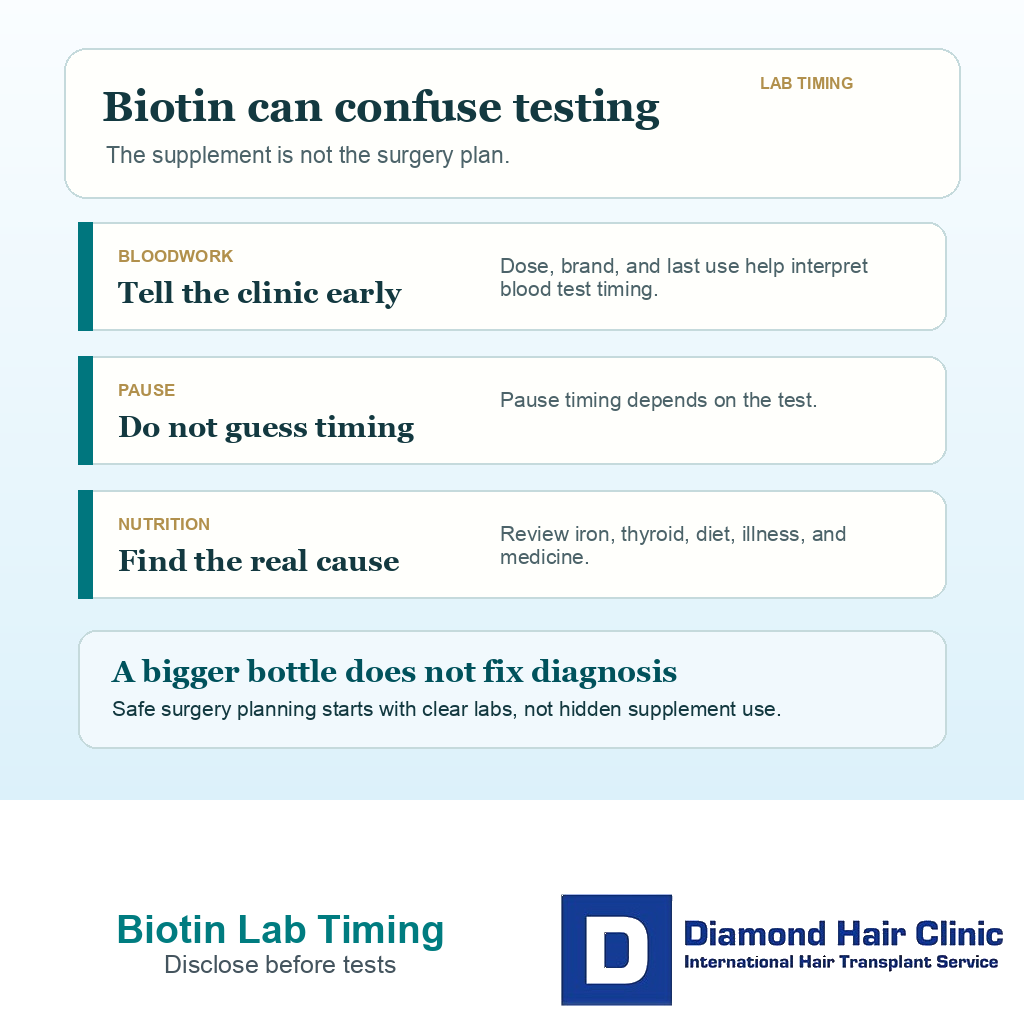
Biotin can confuse bloodwork
Some lab tests use biotin as part of the measuring system. If enough supplemental biotin is in the blood sample, certain tests can read falsely high or falsely low, depending on the assay. You may feel the same, but the number on the report may not reflect the true level.
Thyroid testing is the example I watch most closely in hair restoration planning. Hair shedding and thyroid imbalance can overlap in a confusing way. If a thyroid panel is distorted by a supplement, the patient can be sent in the wrong direction before surgery. Biotin disclosure belongs beside thyroid problems before hair transplant surgery, not hidden under “just vitamins.”
Cardiac markers and some hormone or vitamin tests can also be affected in certain systems. That does not mean every clinic orders every test before FUE. It means the blood result should be interpreted with the supplement list in front of the clinician. A strange lab result should be matched against the patient, not accepted blindly.
The risk can go in either direction. A false alarm can delay surgery and create anxiety. A falsely reassuring result can be more dangerous because it may hide a problem that should have been reviewed before anesthesia, travel, or a long surgical day.
Stopping biotin should be coordinated, not guessed
If blood tests are planned and you take a strong biotin product only for hair or nails, pausing before testing is often simple. The exact pause should come from the clinic, laboratory, or doctor responsible for the test, because assay systems and doses vary.
If biotin was recommended for a deficiency, pregnancy related need, metabolic condition, neurologic reason, or another medical issue, I do not want the patient stopping it in panic for a hair transplant date. The doctor who recommended it should be part of the timing decision.
I also separate prescription or supervised use from cosmetic use chosen by the patient. The first may be part of a medical plan. The second is usually optional and can often be delayed until blood tests are finished. Mixing those two categories is where patients make avoidable mistakes.
Supplements before hair transplant surgery belong in the medical history even when they are sold as natural products. Biotin is different from herbs that may affect bleeding or sedation planning, but it still belongs on the same disclosed list because it can affect interpretation.
Details I need from the patient
A useful supplement history is specific. Send the brand or a clear product photo, the biotin amount per serving, how many tablets you take each day, how long you have used it, why you take it, the last dose, and whether blood tests are planned or already completed.
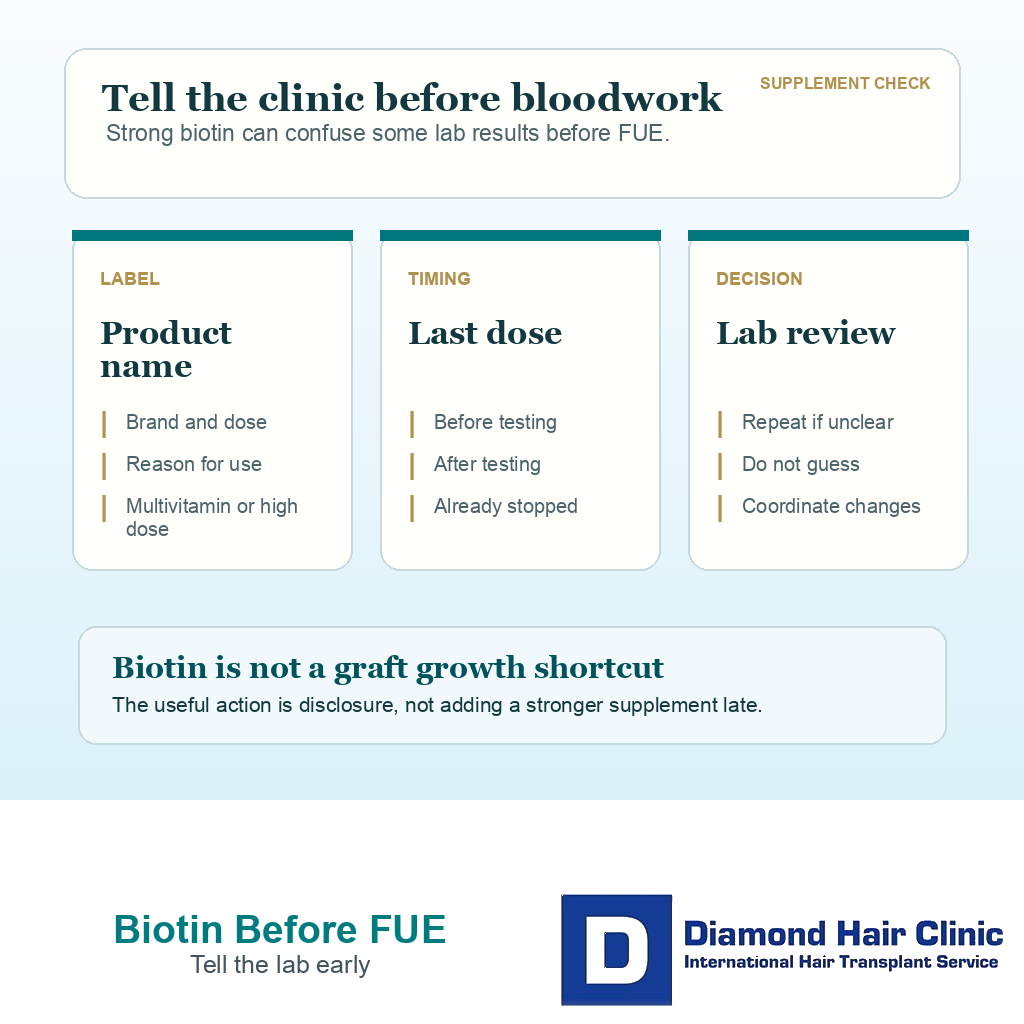
Send the whole routine, not only the biotin bottle. Many patients combine biotin with minoxidil, finasteride, dutasteride, saw palmetto, collagen, protein powder, creatine, vitamin D, zinc, or iron. If I see only one bottle, I may miss the real issue.
Product labels can be misleading when several ingredients are grouped together. Some gummies and hair blends list biotin in micrograms, while others list milligrams. Micrograms and milligrams are easy to misread, and some patients take more than the serving size. A photo of the label is safer than a message saying “I take vitamins.”
If the deeper concern is active hair loss, the conversation may need to shift toward finasteride before or after hair transplant surgery or minoxidil after hair transplant surgery. These decisions depend on the pattern, medication tolerance, and whether the loss is stable enough for surgery.
Saw palmetto should be mentioned if it is part of the supplement plan. If the patient is still losing hair on medication before a transplant, biotin should not distract from pattern stability.
Biotin does not speed the transplant timeline
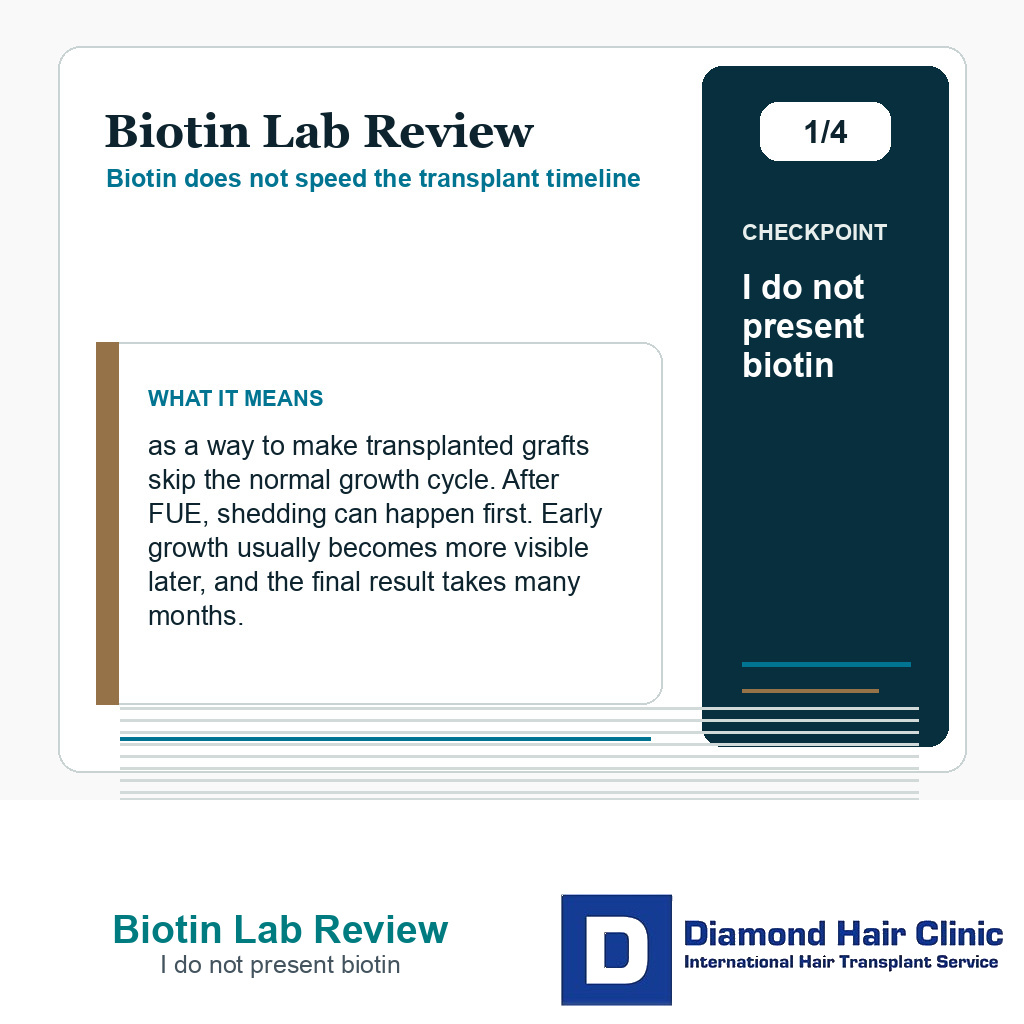
I do not present biotin as a way to make transplanted grafts skip the normal growth cycle. After FUE, shedding can happen first. Early growth usually becomes more visible later, and the final result takes many months. A supplement cannot convert that biology into an instant result.
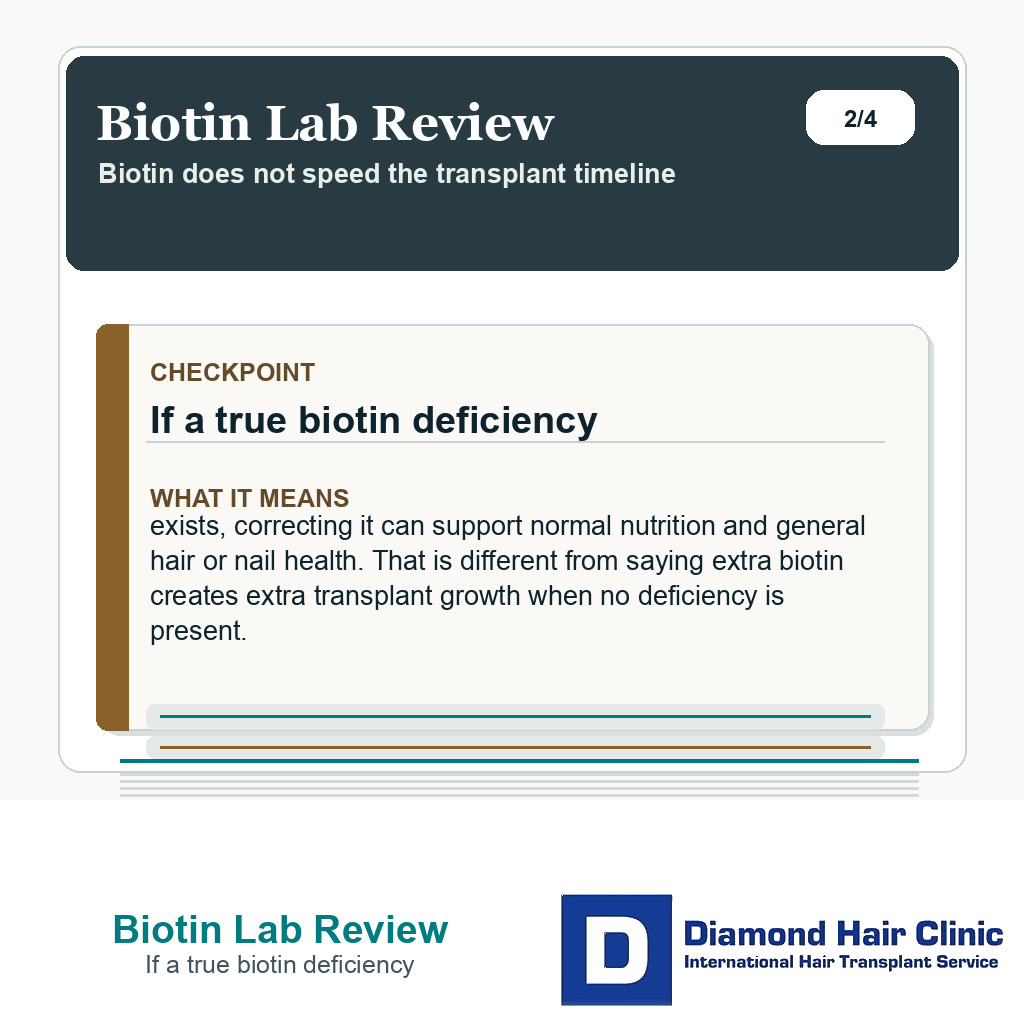
If a true biotin deficiency exists, correcting it can support normal nutrition and general hair or nail health. That is different from saying extra biotin creates extra transplant growth when no deficiency is present. More supplement does not mean more graft survival.
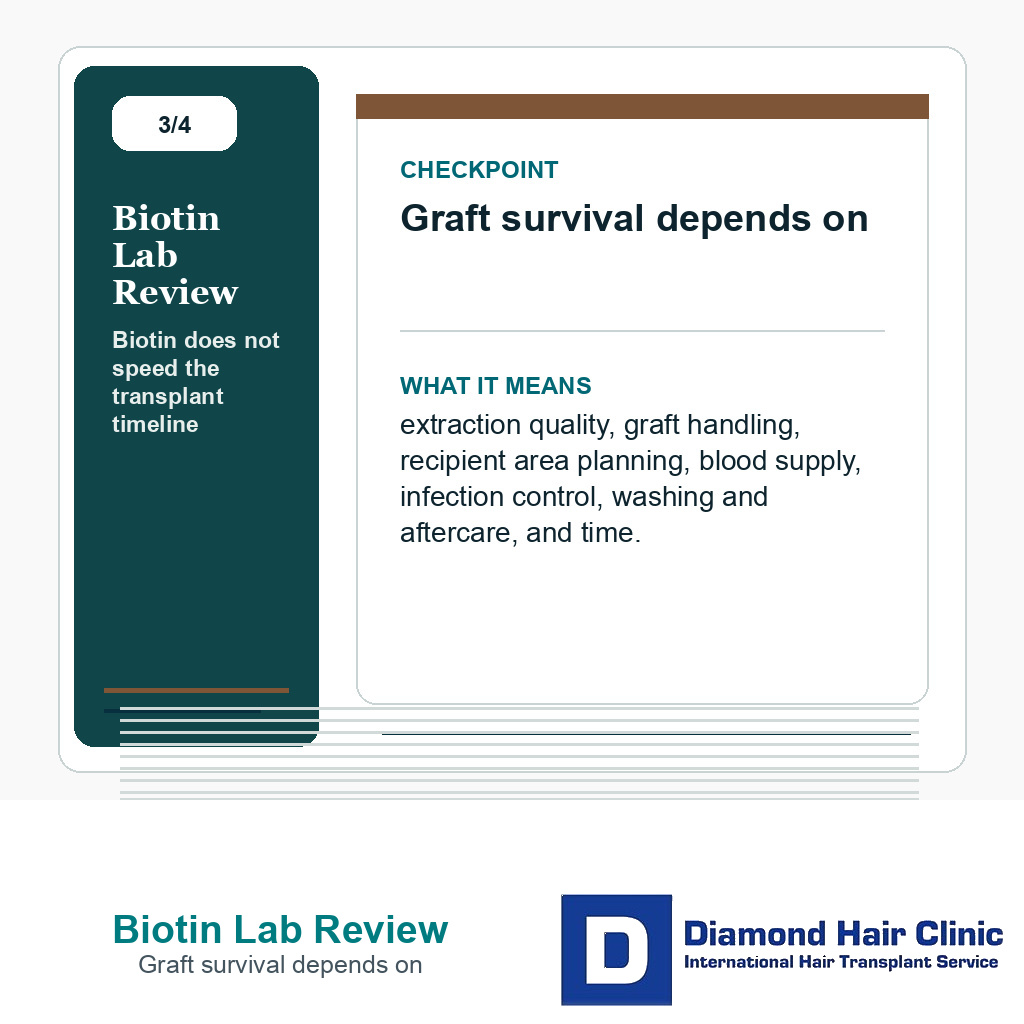
Graft survival depends on extraction quality, graft handling, recipient area planning, blood supply, infection control, washing and aftercare, and time. Native hair stability depends on diagnosis, pattern, donor planning, and medical treatment when appropriate. Biotin sits far below those decisions.
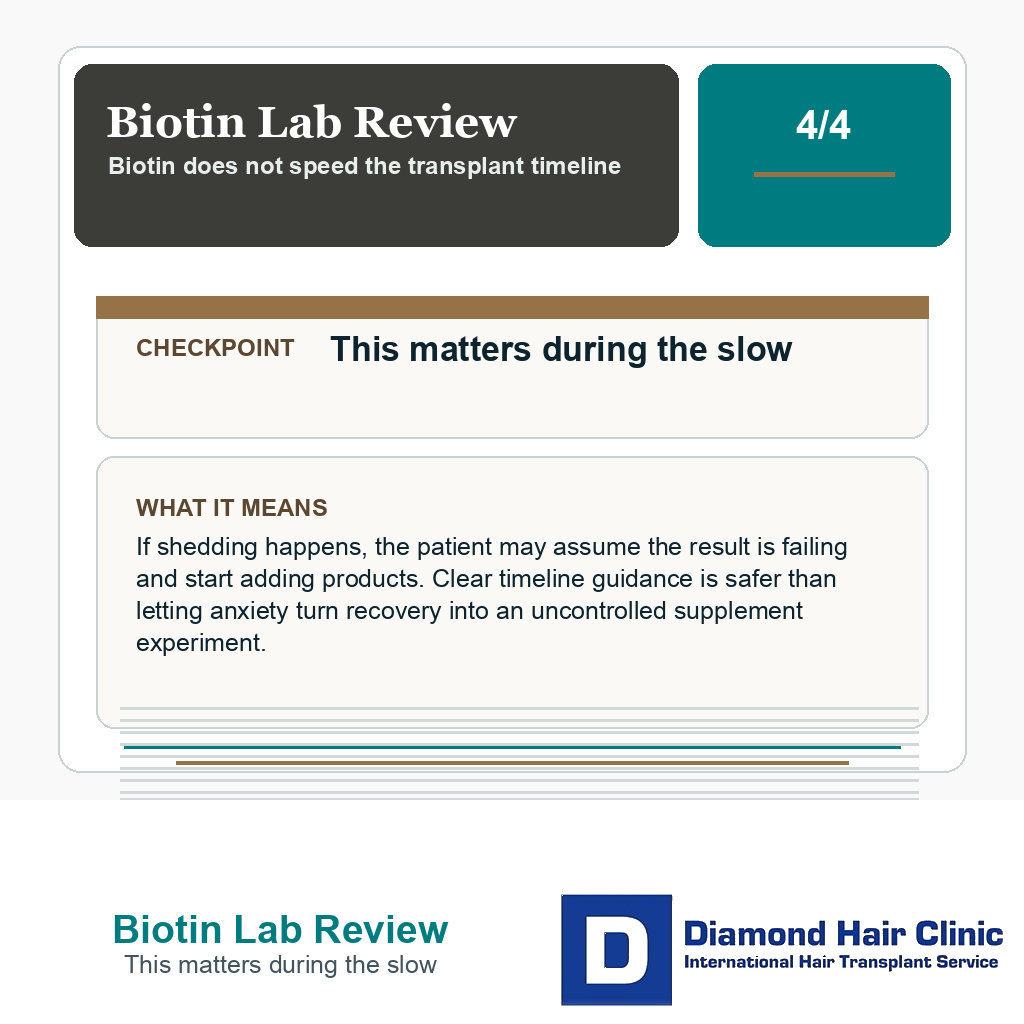
This matters during the slow months after surgery. If shedding happens, the patient may assume the result is failing and start adding products. Clear timeline guidance is safer than letting anxiety turn recovery into an uncontrolled supplement experiment.
The four slides below keep the biotin question in its proper place. It is a lab accuracy and diagnosis issue before it is a graft growth issue. Swipe sideways, use the arrows, or choose a number below the image.
Nutrition problems need diagnosis, not a larger bottle
If you are shedding because of poor intake, rapid dieting, illness, digestive disease, low vitamin D, low ferritin, or anemia, I want to understand that cause. A large biotin tablet can make you feel proactive while the real deficiency remains untreated.
When low ferritin or anemia affects hair transplant planning, the answer is not to bury the problem under a random supplement. The blood result needs to be understood, and the correction should match the diagnosis.
Nutrition support has a place, but it should follow the reason. A patient with restricted diet, recent illness, or confirmed deficiency needs a different plan from a patient who eats well and is anxious about shedding at month two. A supplement plan is useful only when it answers a real problem.
Biotin deficiency is not the most common explanation for hair loss in the patients I review. Pattern hair loss, telogen shedding, thyroid disease, iron deficiency, recent weight change, and medication changes usually deserve more attention before a transplant plan is built around a vitamin.
After FUE, keep the recovery routine simple
In the first recovery days, a clean routine is easier to monitor. Prescribed medicines, washing instructions, hydration, rest, normal food, and the hair transplant aftercare plan matter more than adding several new products at once.
Oral biotin is not rubbed onto the grafts, so it is different from topical products on the recipient area. Still, adding new supplements immediately after surgery can create confusion if the patient develops stomach upset, rash, itching, or an abnormal blood result. A quiet routine makes healing easier to judge.
If a patient needs medical testing after surgery for any reason, the supplement list still matters. A clinic, hospital, or family doctor should know about high dose biotin before interpreting bloodwork, even if the test is unrelated to the hair transplant.
Other recovery products need exact product review. Protein powder during hair transplant recovery depends on the exact product, not the category name. Vitamins after hair transplant surgery should have a reason grounded in diet, deficiency, or recovery needs rather than fear.
Biotin changes the transplant conversation when it confuses testing
Biotin rarely decides whether FUE can be performed by itself. It changes the conversation when it hides, confuses, or distracts from something more important. If bloodwork looks abnormal, I need to know whether the result is real before the surgery date is built around it. Sometimes I need the test repeated or interpreted correctly before changing any supplement plan.
It can also change the consultation when the patient is using supplements to avoid a harder diagnosis. If someone is shedding quickly, changing medicines, or losing density diffusely, I need the medical story first. A transplant is not a substitute for understanding why the hair is changing.
If a thyroid result looks inconsistent with symptoms, the doctor or lab may need to consider supplement interference before accepting the result as the full explanation. If shedding is heavy, I also need to know whether the cause is pattern hair loss, thyroid disease, iron deficiency, weight loss, medication change, stress, or another diagnosis.
A transplant should not be used to cover an active medical problem that has not been understood. This matters most in diffuse shedding. The operation can be technically careful and the donor area can be strong, but the patient may still feel disappointed if untreated native hair keeps changing around the transplanted zone.
Biotin is a disclosure issue, not a hair shortcut
Biotin matters because it can sit inside hair, nail, gummy, powder, and multivitamin products that patients do not think to mention. The label and dose are more useful than the bottle name, especially when blood tests are being interpreted.
If blood work is planned, ask the clinic or lab whether biotin should be paused and for how long. If testing has already been done while taking a high dose and the result does not fit the symptoms, the doctor reading the report needs to know.
Do not add a strong supplement because surgery is approaching or shedding feels stressful. After FUE, keep the early routine simple until the scalp and medical questions are settled. The useful record is what you take, why you take it, and when tests are being done.

Read this review excerpt
told me the quality of my donor hair and what he could take out and advised me what will the be best outcome with what donor hair I had.