



Extra protein does not speed up graft growth
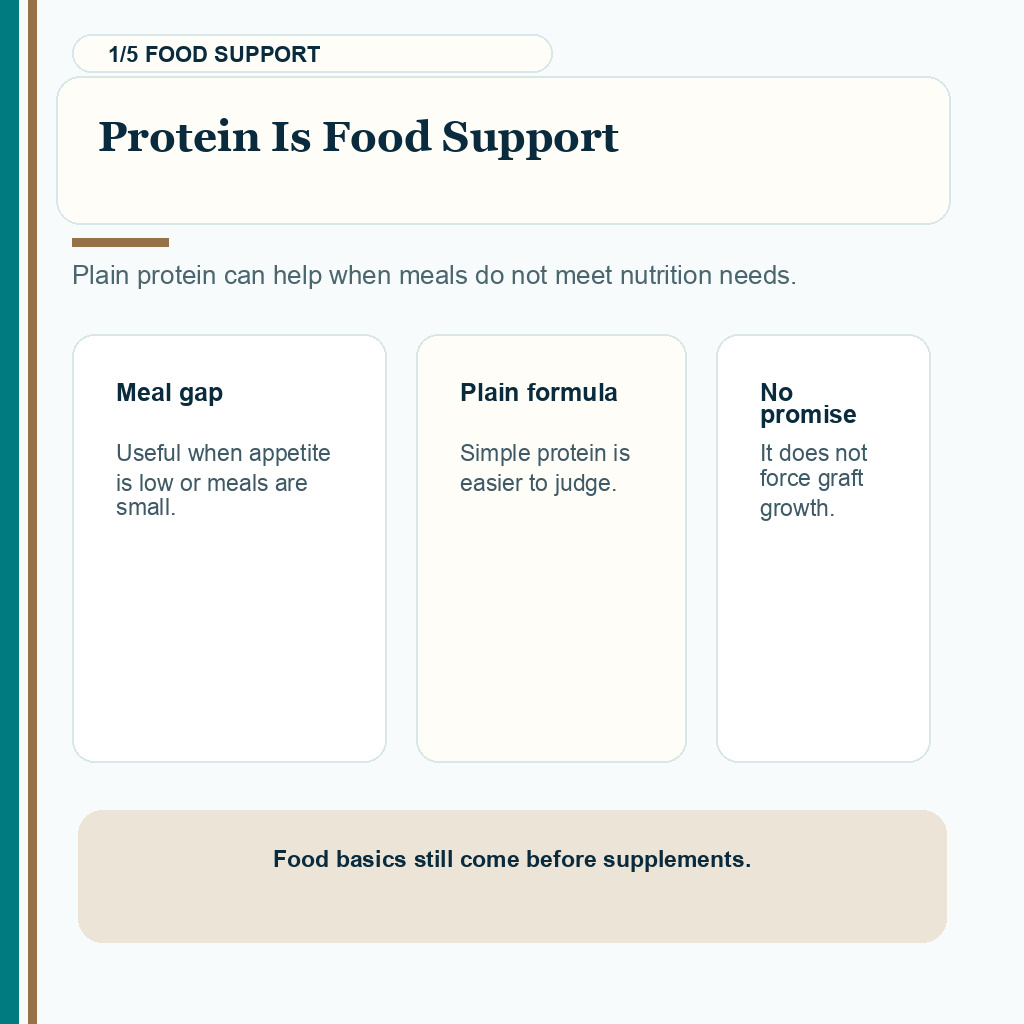
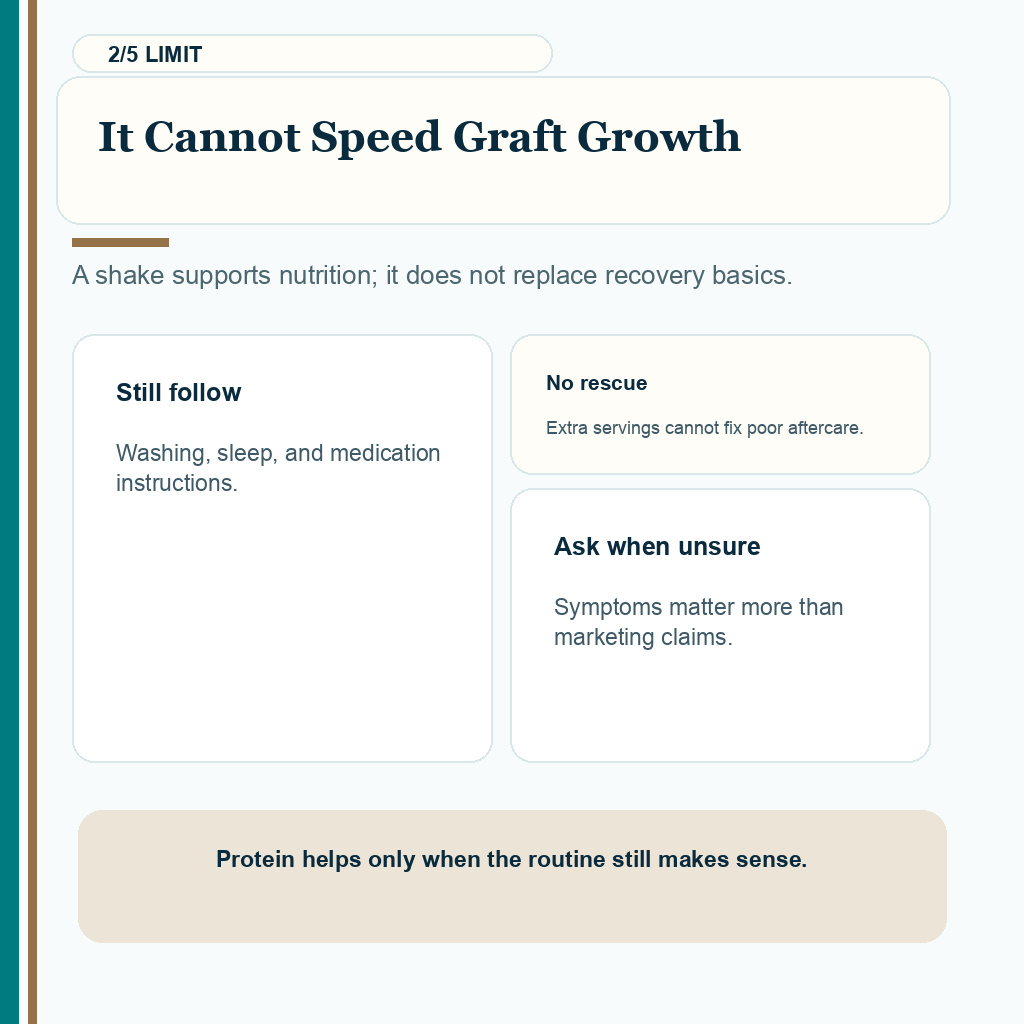
Hair follicles need adequate nutrition, but transplanted grafts do not grow faster because you force extra protein beyond your normal needs. After implantation, the grafts go through early anchoring, possible temporary shedding, resting, and gradual regrowth over months. That timeline cannot be bullied by a larger scoop.
Supplement marketing can create false pressure at this point. It is easy to think, “If protein builds muscle, maybe more protein builds grafts.” The scalp does not work that way. Normal protein intake supports general healing and hair biology. Excessive intake does not turn the recovery clock forward.
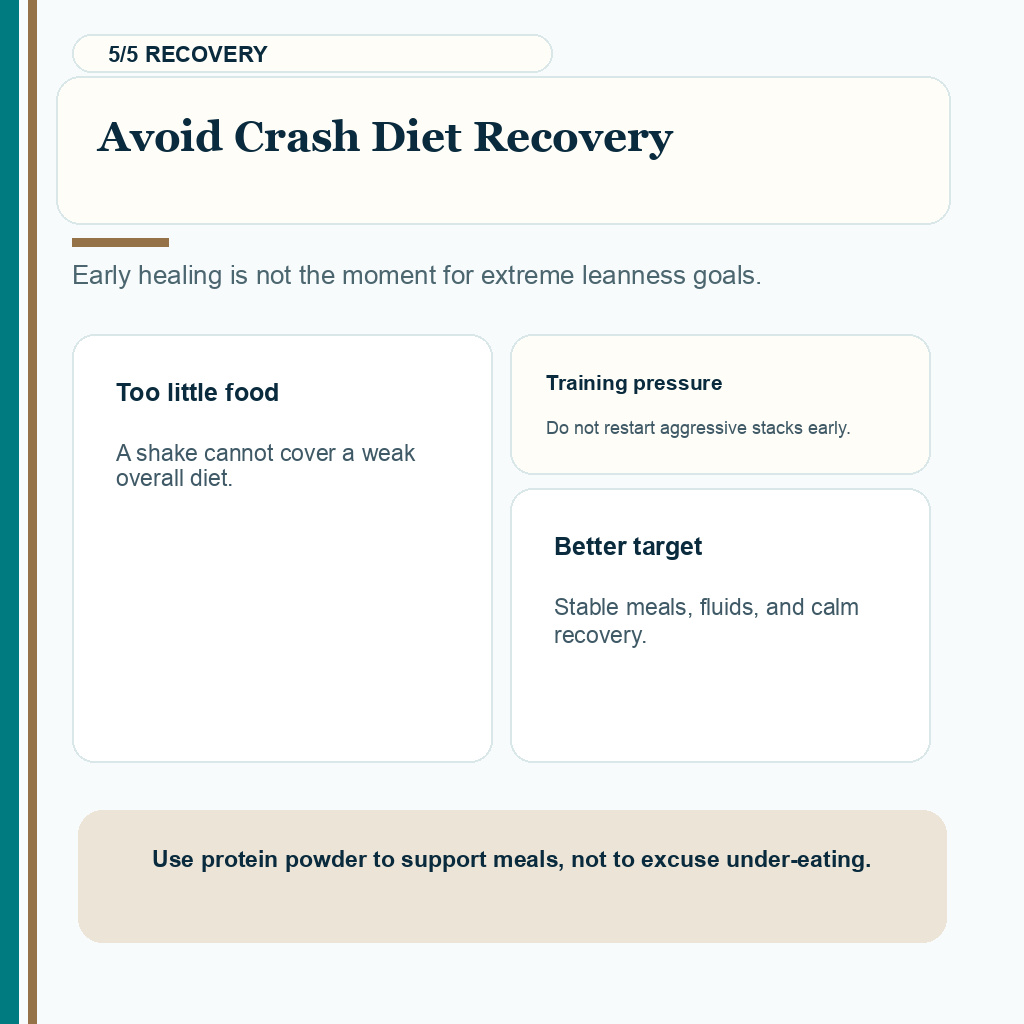
The bigger risk is eating too little because of appetite loss, travel, anxiety, or extreme dieting. Low calorie intake, poor protein intake, iron deficiency, illness, surgery stress, and rapid weight change can all make hair shedding harder to interpret. That does not mean every shed hair is caused by diet. It means recovery is easier to judge when the basics are stable.
I do not present protein powder as a miracle tool. I present it as a fallback option when normal meals are not enough. A steady routine beats a dramatic supplement push.
Ingredients that change the decision
The ingredient list matters more than the word protein on the front of the tub. A product can look like a protein powder and still contain ingredients that belong in a separate discussion. Marketing words such as clean, natural, anabolic, detox, hormone support, lab tested, or doctor approved should not replace reading the actual supplement facts panel.
When a clinic tells you to pause a protein product, clarify whether the concern is the plain protein base or the extra ingredients around it. A simple whey or plant protein serving is a different question from a blend with stimulants, creatine, hormone support, fat burners, or a long proprietary label.
Words such as proprietary blend, pump, fat burner, testosterone support, or stimulant formula mean the full label matters more than the protein claim.
Plain whey protein and a stimulant heavy pre workout are not equivalent. Protein plus creatine is not the same conversation as protein alone. A mass gainer with large sugar loads may be a poor fit for some people. A product with “testosterone support,” “hormonal optimization,” “prohormone,” “fat burner,” or an unclear proprietary blend should not be treated as a harmless nutrition shake.
Supplement disclosure before surgery matters more than guessing from the label design. For this question, I need the real product name, ingredient list, dose, and timing. Screenshots are helpful if the label is long. A product being sold as a supplement is not the same as a prescription medicine being reviewed for your surgery, so unclear quality control deserves caution.
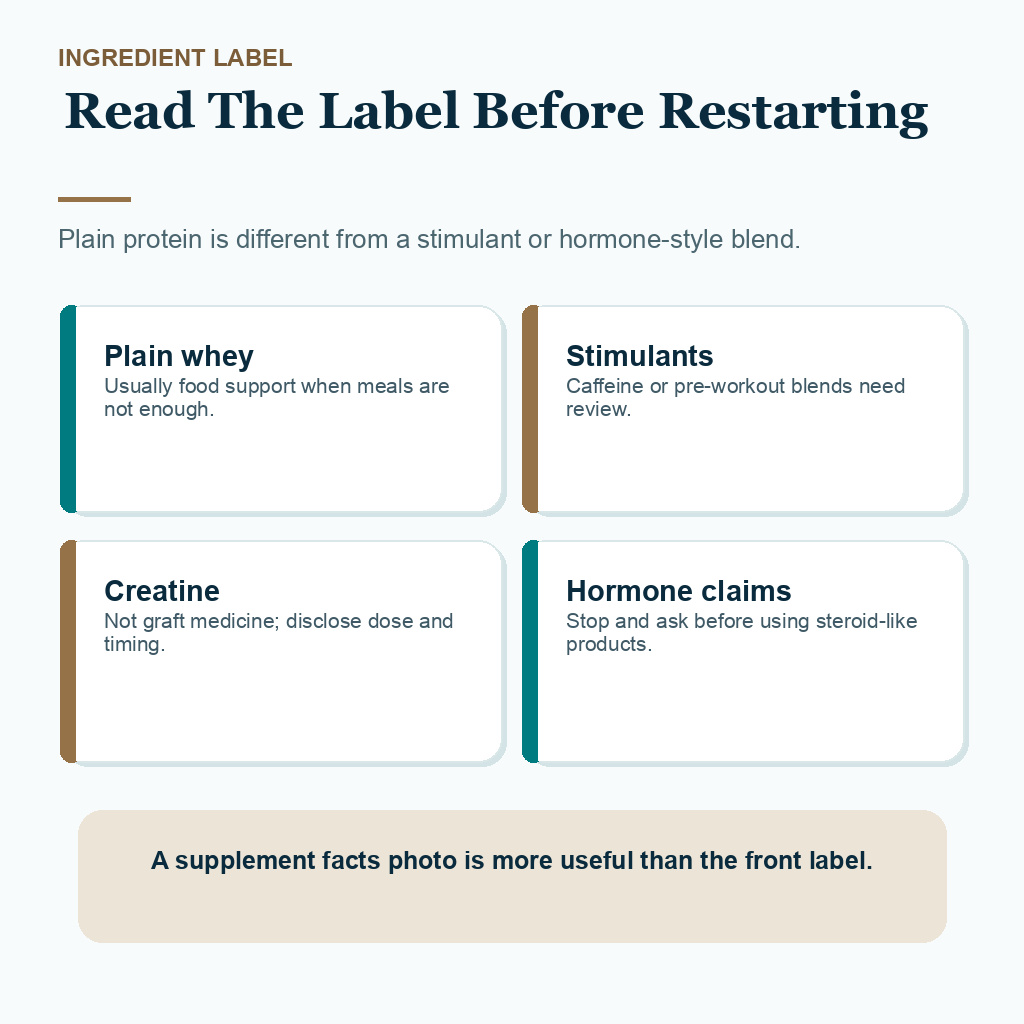
The ingredient label matters more than the word protein.
The same product can also behave differently depending on your body. Caffeine, niacin flush, large sugar loads, artificial sweeteners, lactose, and magnesium heavy formulas can affect sleep, stomach comfort, flushing, or bowel habits. Contamination or undeclared active ingredients are not what I expect from reputable simple protein products, but they are one reason transparent labels and third party testing are useful when available. None of that means protein powder damages grafts directly. It means the extras around the protein can make recovery harder to judge.
A shake should not replace real meals
A protein shake can help when it fills a gap. It becomes less helpful when it replaces a balanced diet for several days. Hair transplant recovery is not only about protein. You still need fluids, calories, salt balance, carbohydrates, fats, micronutrients, and a stomach that can tolerate what you are taking. Recovery is not the time to test a new brand, sweetener, or large serving just because eating has been difficult.
If you drink a shake because chewing is inconvenient for one meal, that is different from living on powder because you are afraid to eat normally. If you skip meals to stay lean, your body may read that as stress. If you take a shake but do not drink water, you have not solved the recovery problem.
Some people do better with gentle food for the first day or two, such as soup, yogurt, eggs, rice, fish, chicken, lentils, fruit, and water. Once the stomach feels settled, a plain shake can be added if needed. If the shake causes bloating, reflux, loose stool, or nausea, stop and simplify the routine.
Creatine, pre workout, and gym stacks
Many protein powder questions are really gym return questions. You may say “protein powder,” but the routine may include creatine, pre workout, caffeine, pump products, fat burners, high dose vitamins, and sometimes anabolic steroid use. That is no longer plain nutrition support.
I treat creatine after hair transplant as its own decision because it changes water handling, training habits, and supplement behavior for some people. I treat pre workout after hair transplant with even more caution because stimulants can affect heart rate, sleep, blood pressure, sweating, and anxiety.
The timing of exercise also matters. Returning to a protein shake is not the same as returning to heavy lifting. Training too early can increase sweating, pressure, accidental graft contact, and swelling concerns. The exercise after hair transplant timeline is separate from the supplement discussion.
If you sweat heavily when you train or use stimulant products that push you into intense sessions, the recovery issue may be sweating and scalp hygiene, not protein itself. For that part of the routine, sweating after hair transplant becomes the relevant issue.
Whey protein and shedding after surgery
A plain whey protein serving is not something I view as a direct graft damaging product. If grafts were placed correctly and you are following aftercare, the shake itself is not the factor I worry about most.
Shedding after a hair transplant can happen because transplanted hairs often enter a resting phase before later growth. Native hair can also shed from stress, illness, medication changes, nutrition disruption, or ongoing androgen related miniaturization. I separate protein powder from medication timing, including minoxidil after hair transplant. It is easy to blame the most visible new habit, especially if a shake is sitting on the counter every day.
Still, context matters. Some patients believe their whey caused hair loss because they started a bodybuilding routine at the same time, changed calories, used creatine, added anabolic agents, trained aggressively, or stopped medications. If anabolic steroids are part of the picture, anabolic steroids after hair transplant changes the risk profile completely.
When I review shedding, I look at the full story, including transplant timing, donor and recipient healing, medicine changes, family pattern, nutrition, weight change, illness, stress, and product use. I do not reduce the whole picture to one scoop of whey.
Stomach upset changes the protein powder decision
Stomach comfort is a practical safety issue during recovery. If a shake causes nausea, vomiting, diarrhea, reflux, or poor hydration, it is not helping you recover even if the label looks clean.
If vomiting after hair transplant happens, it can create strain, dehydration, and anxiety during the early days. The priority is not to force protein powder. The priority is to simplify intake. Loose stool or stomach irritation changes the decision. Diarrhea after hair transplant may mean pausing the shake, hydrating, and contacting the clinic.
Many protein powders contain lactose, sugar alcohols, thickeners, artificial sweeteners, magnesium, or high fiber. These can bother the stomach even when protein itself is not the problem. A smaller serving, a different protein type, or waiting until your stomach settles may be better than pushing through. If you have never used a particular powder before, the first few recovery days are a poor time to test it.

A shake can support routine intake but cannot force graft growth.
Athletes returning to shakes and training
Athletes often want a precise date for restarting everything. Use a staged return. First, keep the early recovery simple. Then reintroduce normal meals and hydration. Then, if the scalp is healing well and the product is simple, restart a basic shake. Training intensity comes later and should follow the clinic’s timeline.
A staged return prevents one common mistake. Restarting the shake, the gym, the pre workout, the creatine, and the calorie deficit on the same day makes recovery harder to read. If swelling, sweating, dizziness, itching, stomach upset, or shedding anxiety appears after that, nobody can tell which change mattered.
Use one change at a time. A plain protein shake can be tested separately from a heavy workout. Creatine can be discussed separately from caffeine. A training session can be restarted without a stimulant stack. Separate the variables so recovery is clear enough to judge.
Details to send the clinic
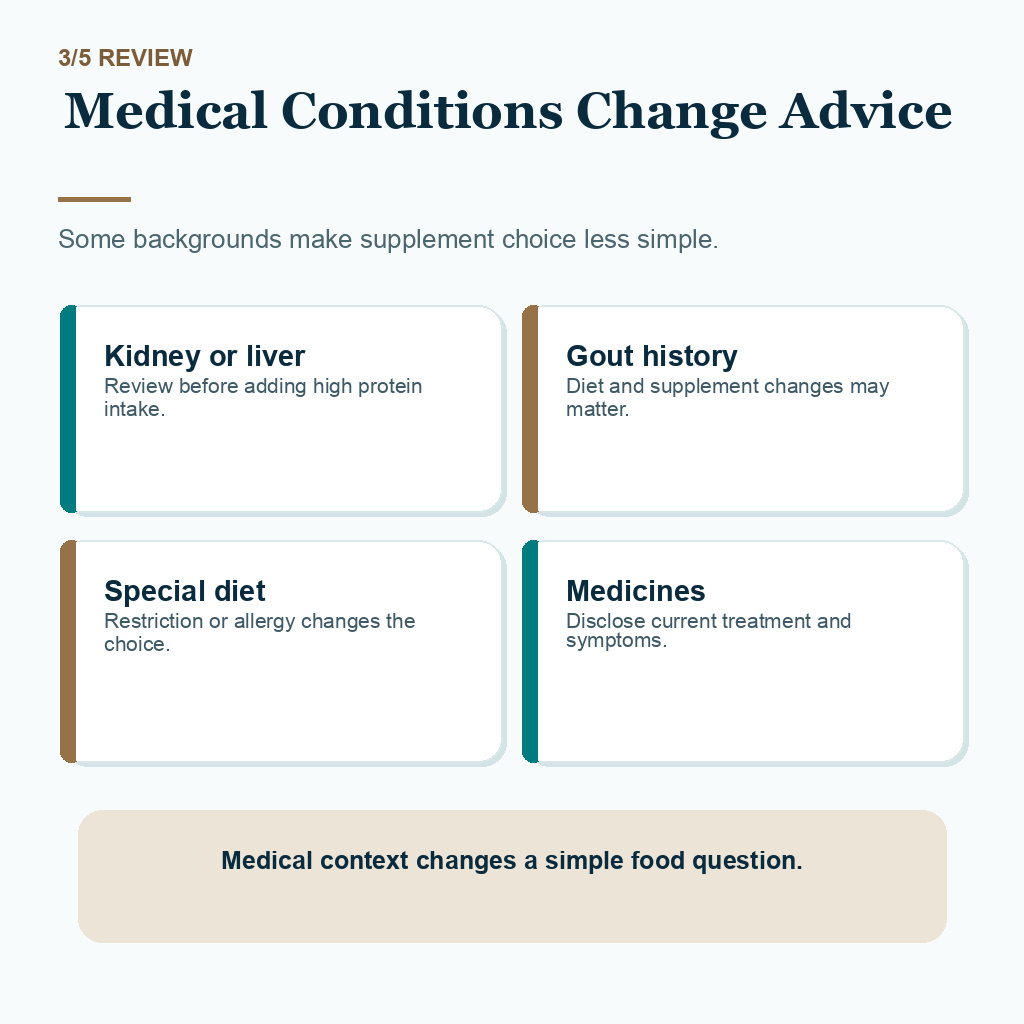
For a protein powder question, send the clinic the product name, the full supplement facts panel, the ingredient list, serving size, timing, and why you want to use it. Do not send only the front label or the marketing name. Include the lot number or expiry date if there was a reaction, and any third party testing mark if the product has one. Also mention whether you are taking creatine, pre workout, fat burners, testosterone related products, anabolic steroids, blood pressure medicine, diabetes medication, anticoagulants, antidepressants, or any other regular medicine.
The most useful message is short and complete. “This is the product, this is the label, this is the dose, I used it before surgery without stomach problems, I want to take it once daily because I cannot eat enough breakfast, and I have no nausea or diarrhea.” That gives us something real to judge.
A message that only asks about taking protein is too broad. A clean whey isolate and a stimulant heavy performance blend may sit on the same store shelf, but they do not create the same recovery decision.

A useful protein powder question includes the product, label, dose, timing, reason for use, symptoms, medicines, training plan, and any other supplement stack.
My protein powder recovery rule
Plain protein powder is usually a nutrition tool, not something I treat as a direct danger to the grafts. Use it if it helps you eat normally, tolerate recovery better, or fill a real protein gap. Do not use it to replace proper meals, hide dehydration, push a crash diet, or restart a full gym stack too early.
If the product has only a plain protein base and your stomach feels fine, the risk concern is usually low. Keep the serving normal. One ordinary shake is different from doubling scoops or restarting a full performance stack because you feel behind. If the product includes stimulants, creatine, fat burner ingredients, hormone claims, steroid like compounds, or a proprietary blend you cannot explain, pause and ask. If vomiting, diarrhea, dizziness, swelling, poor hydration, or unusual symptoms appear, stop forcing the shake and message the clinic.
The recovery routine should be easy to understand. Eat enough, drink enough, sleep properly, protect the grafts, keep training conservative until cleared, and disclose products that are more than simple food support. That is less dramatic than supplement panic, but it gives the grafts and the rest of your body a cleaner recovery environment.

Read this review excerpt
Diamond Hair was the only clinic asking for medications, treatments I've done before, and other type of questions that make me feel confident on the professionalism that they practice with their clients.